


The world of integrated amplifiers has split into two distinct camps over the past few years. On one side, you have traditional hi-fi companies continuing to refine analog amplification with minimal digital additions. On the other, newer companies are building complete streaming ecosystems that happen to include amplification. This fundamental difference shapes everything from how these products sound to how you'll use them daily.
At the time of writing, this choice comes down to paying a moderate premium for modern convenience versus getting proven traditional performance at a lower cost. The Eversolo Play represents the streaming-first approach, while the Denon PMA-600NE embodies the traditional integrated amplifier philosophy with just enough modern features to stay relevant.
The amplifier market has evolved significantly since 2020, driven largely by how people consume music. Traditional integrated amplifiers were designed when most people owned physical media and maybe a CD player. Today's reality involves streaming services, multiple digital sources, and the expectation that everything should "just work" together.
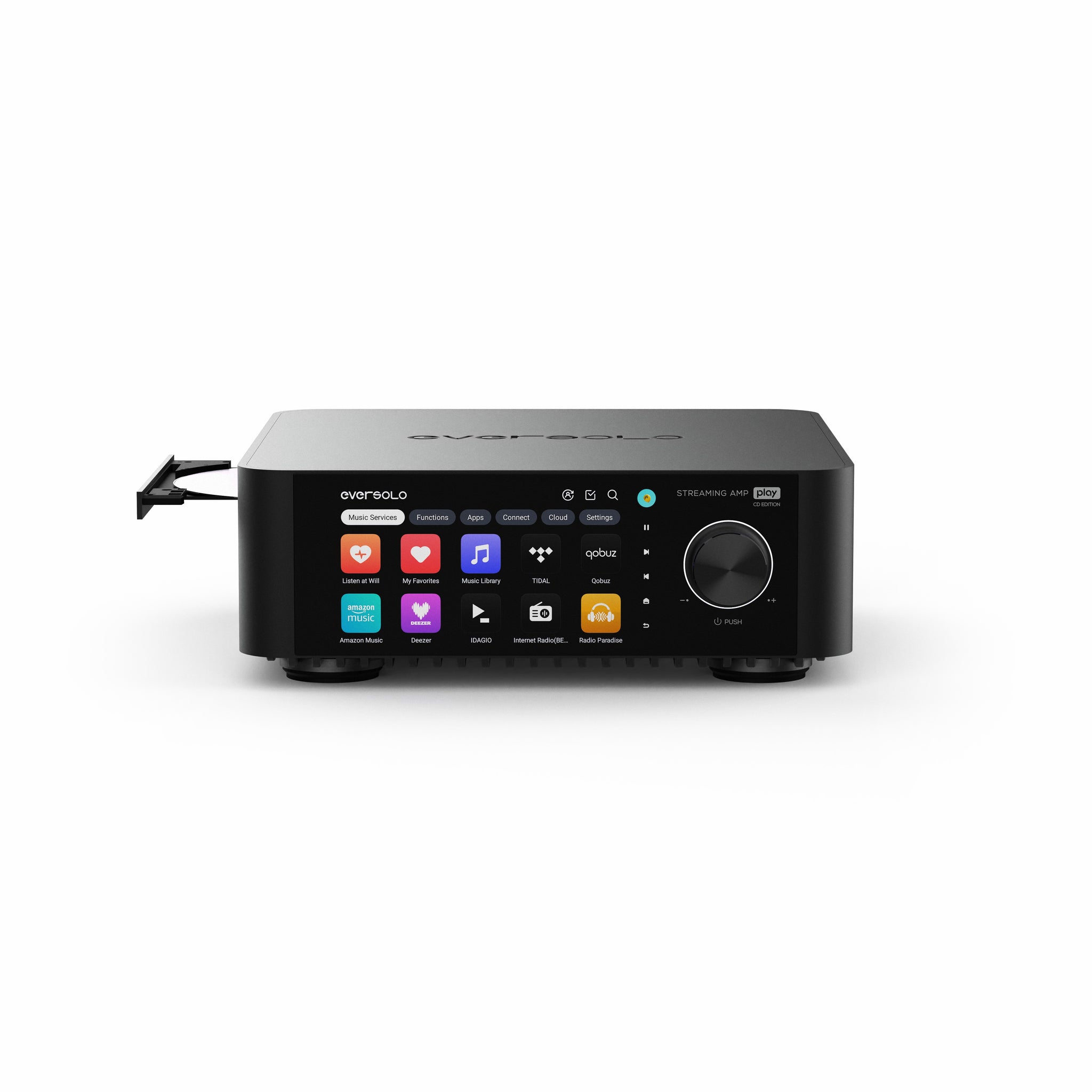
The Eversolo Play, released in 2025, tackles this head-on by building streaming capabilities directly into the amplifier. Instead of needing separate components for different functions, everything lives in one compact box with a touchscreen interface. This isn't just about convenience—it's a fundamental rethinking of what an amplifier should be in the streaming age.
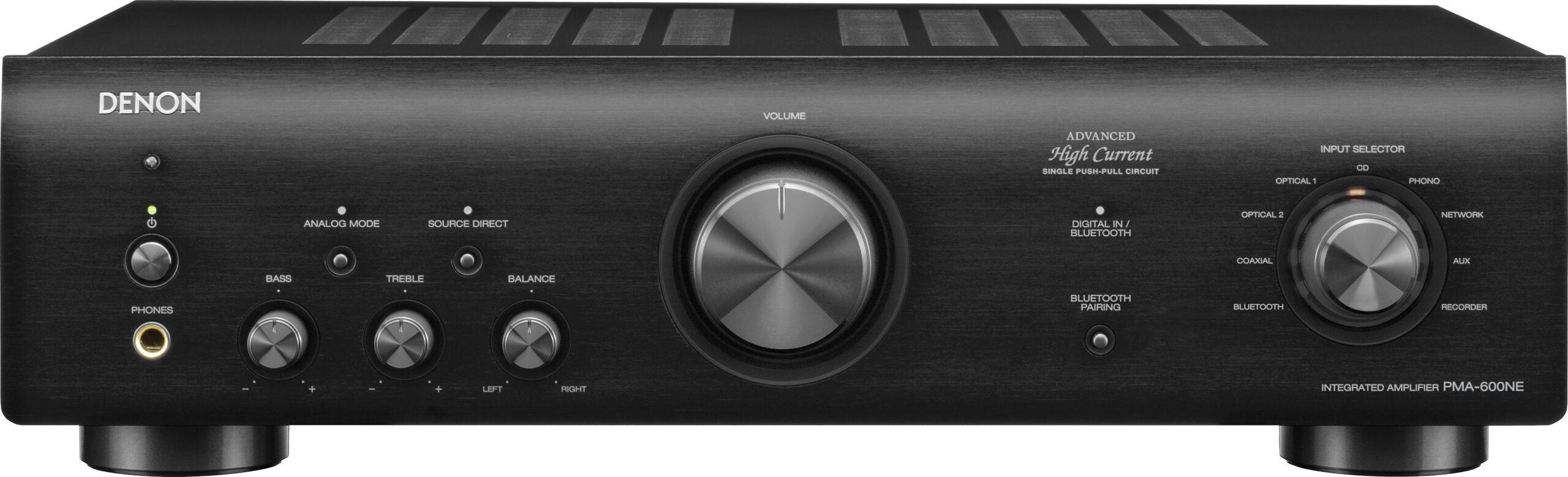
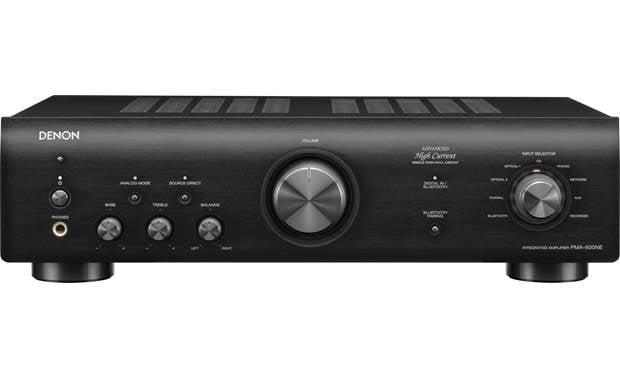
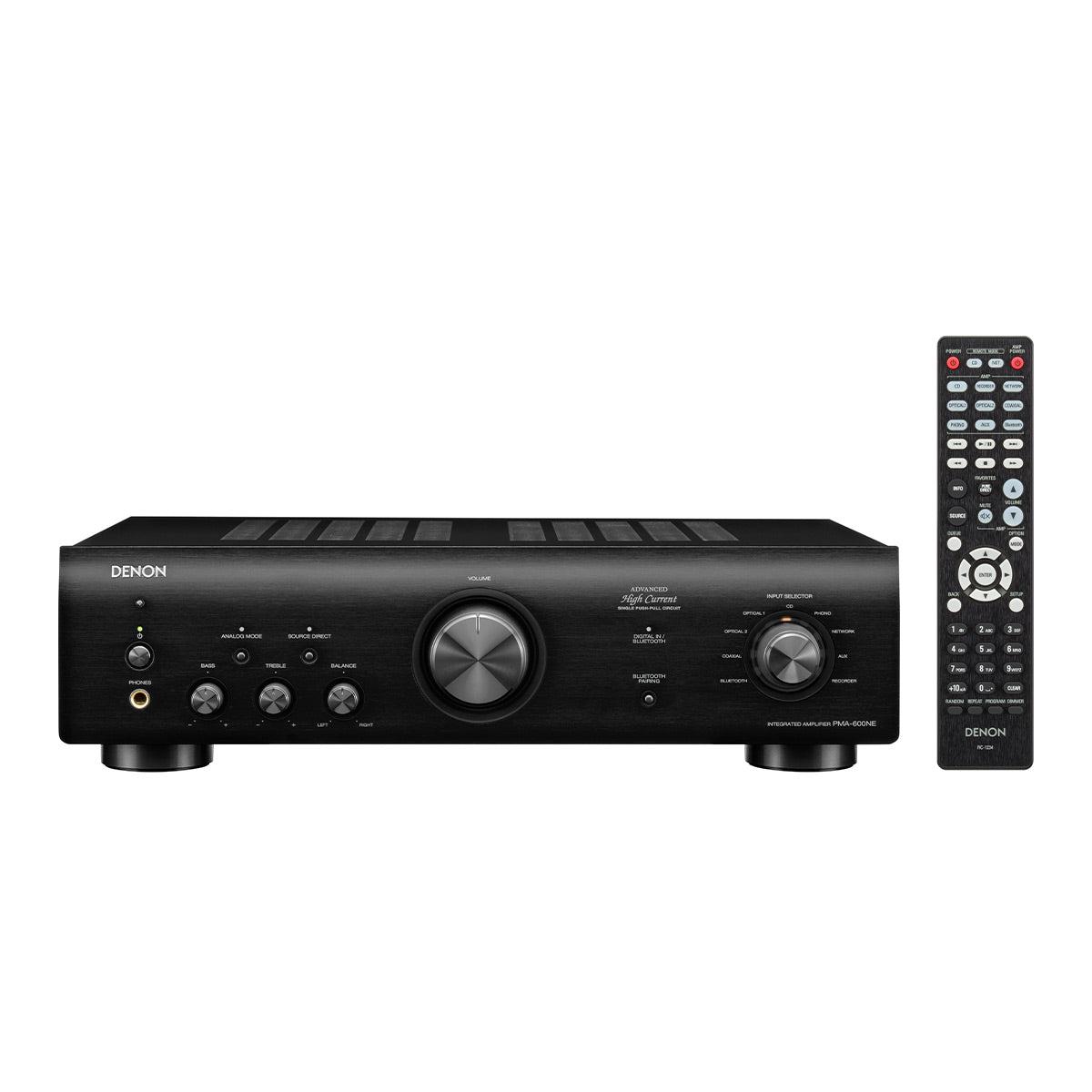
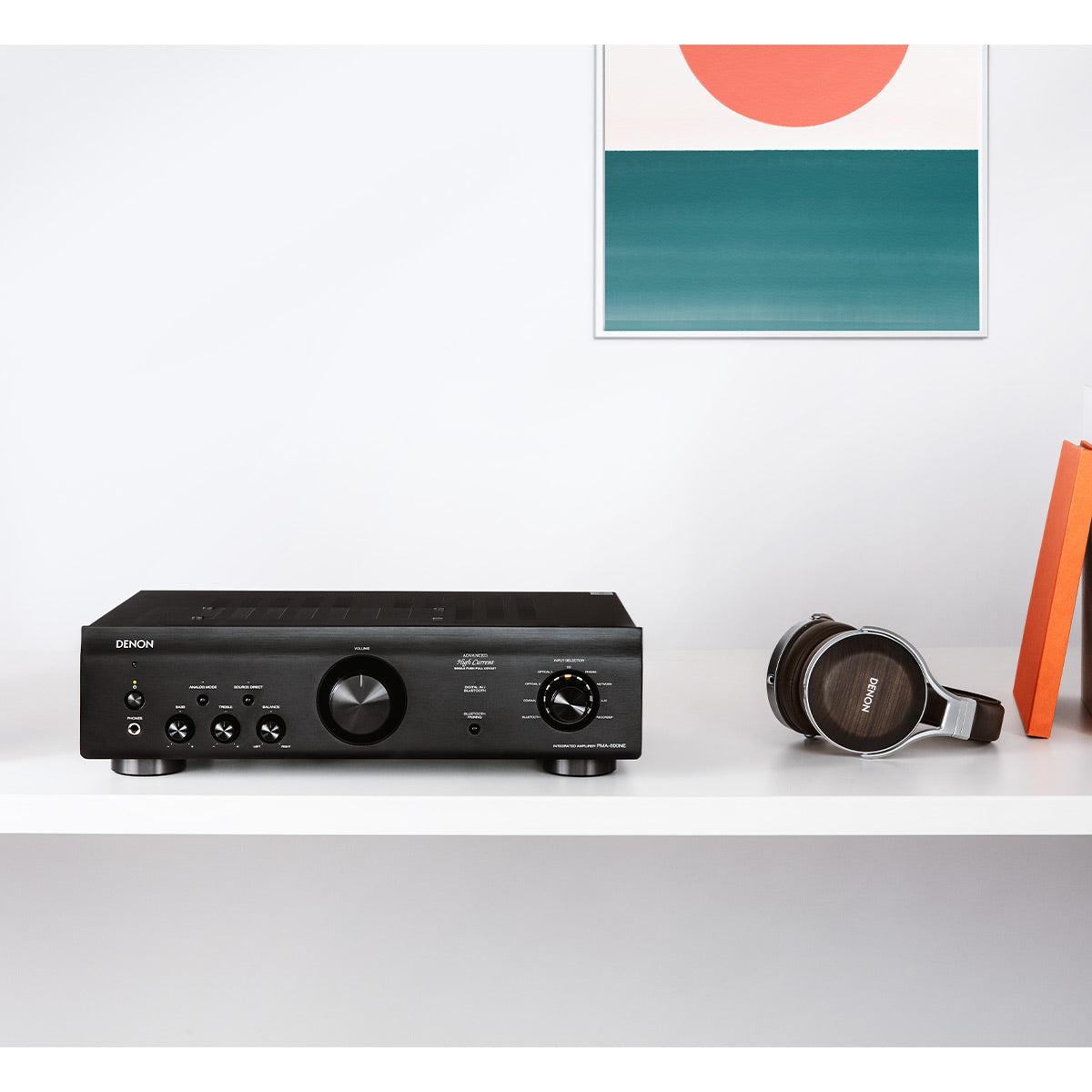
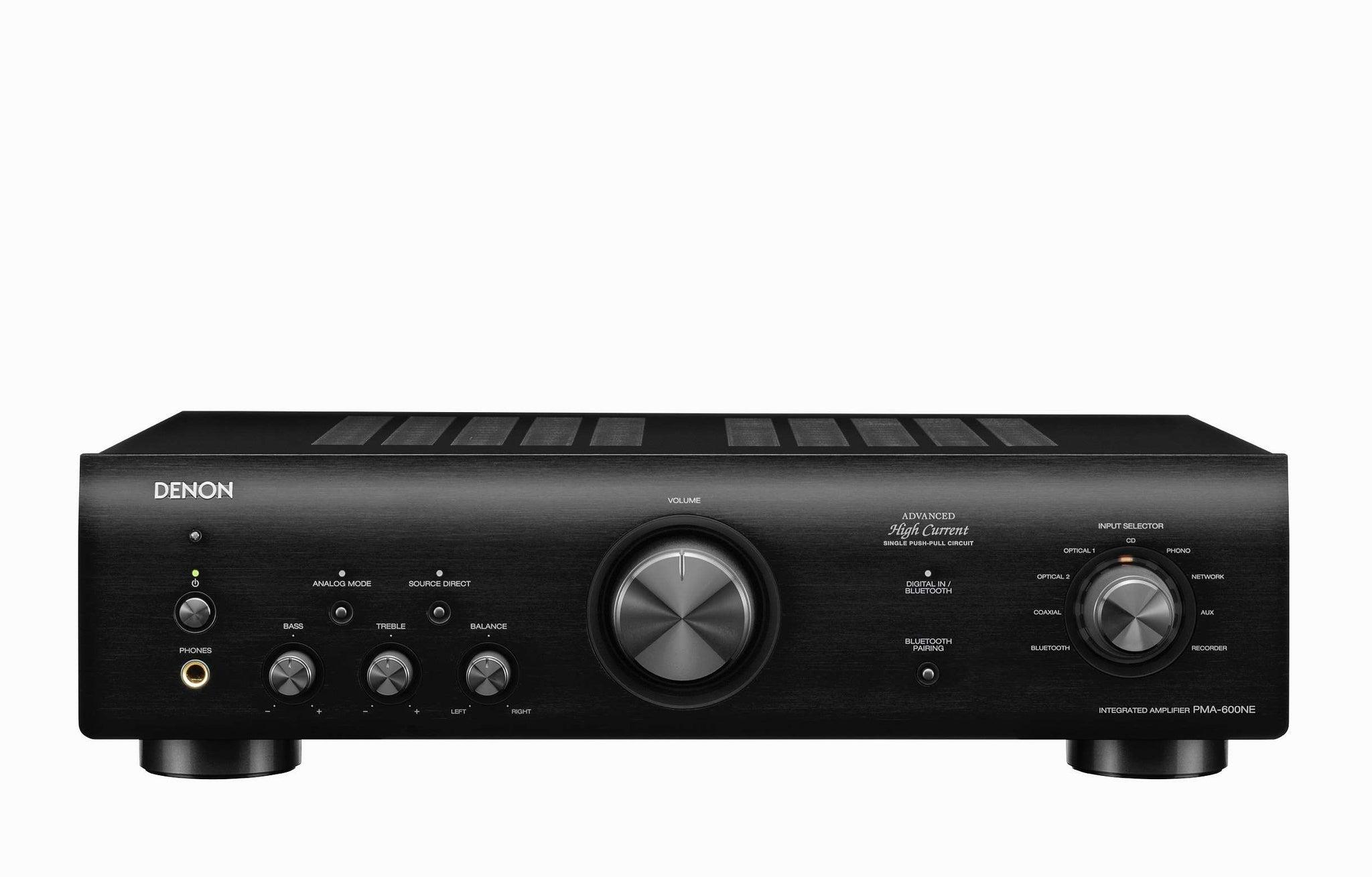
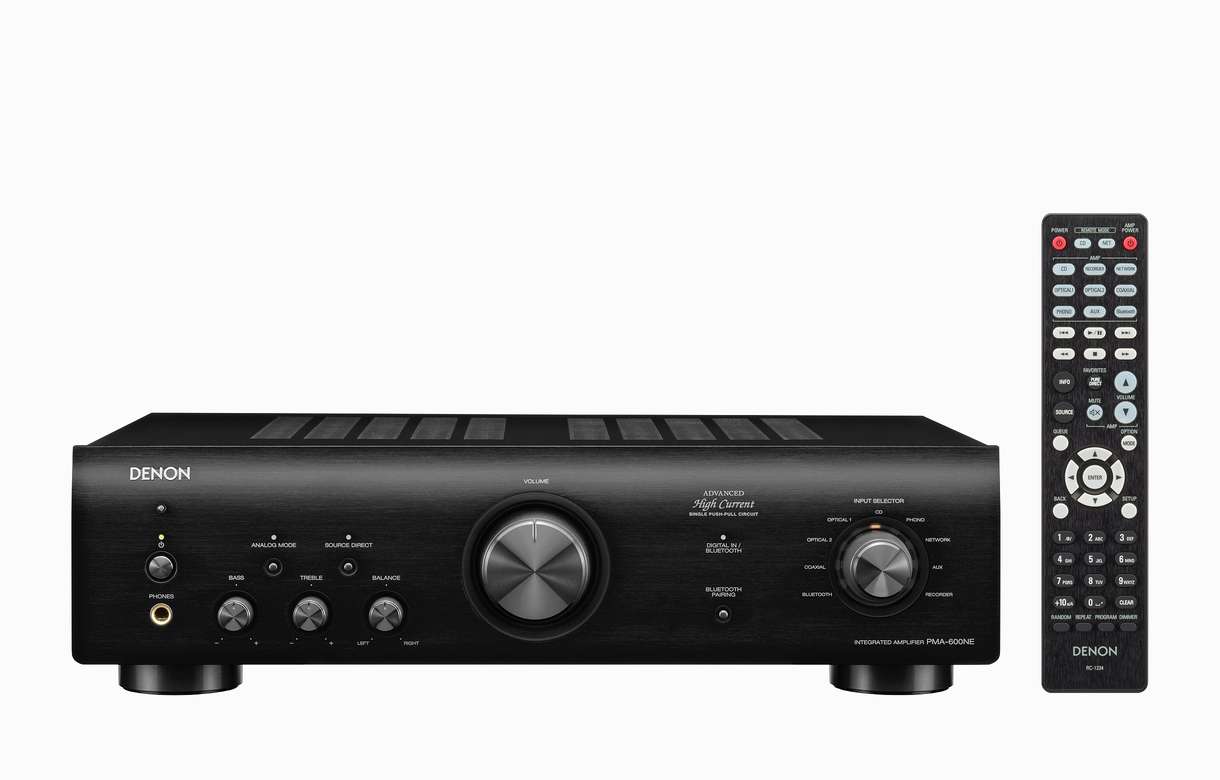
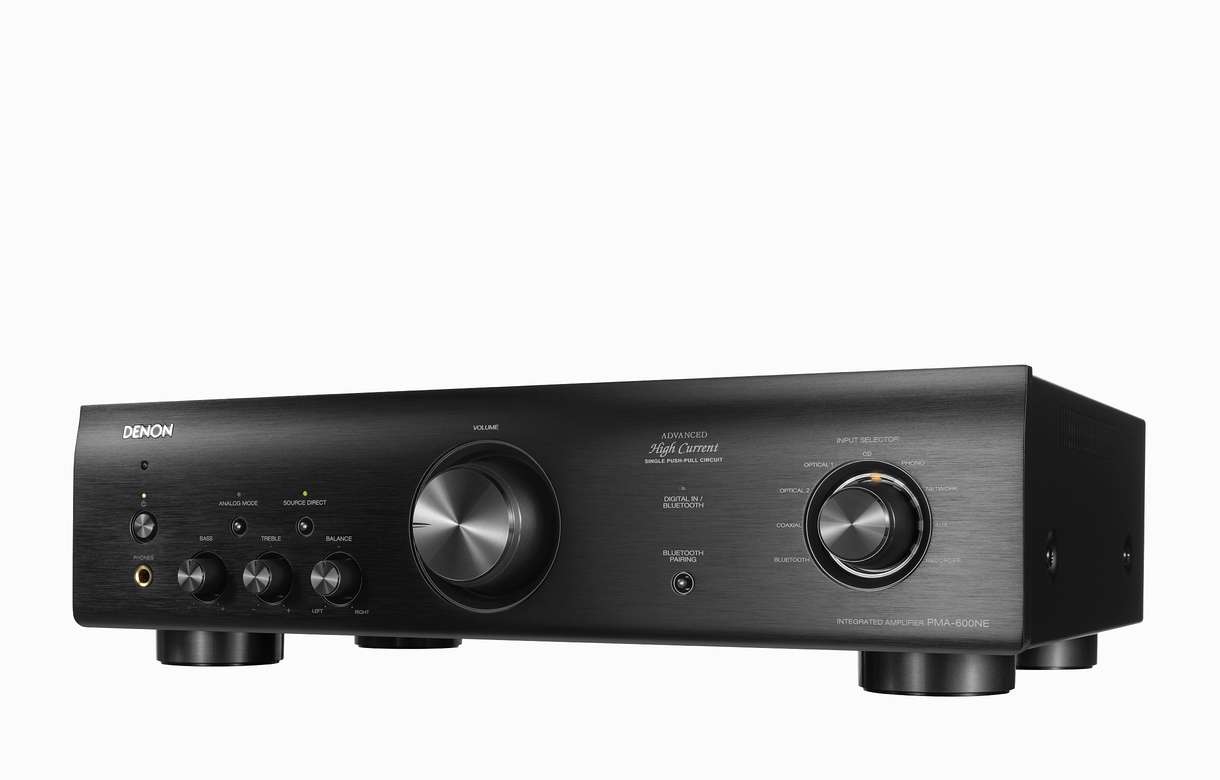
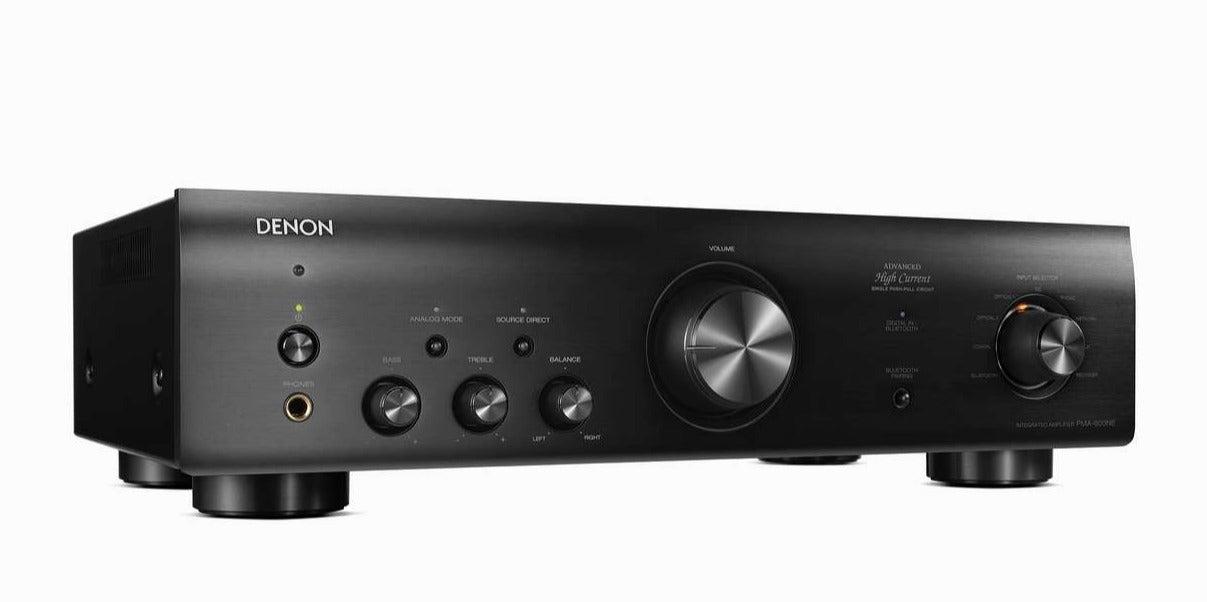
The Denon PMA-600NE, representing a more established approach, focuses on doing amplification really well while adding just enough digital capability to handle modern sources. This philosophy assumes you'll either use physical media, add your own streaming solution, or primarily rely on simple Bluetooth connectivity.
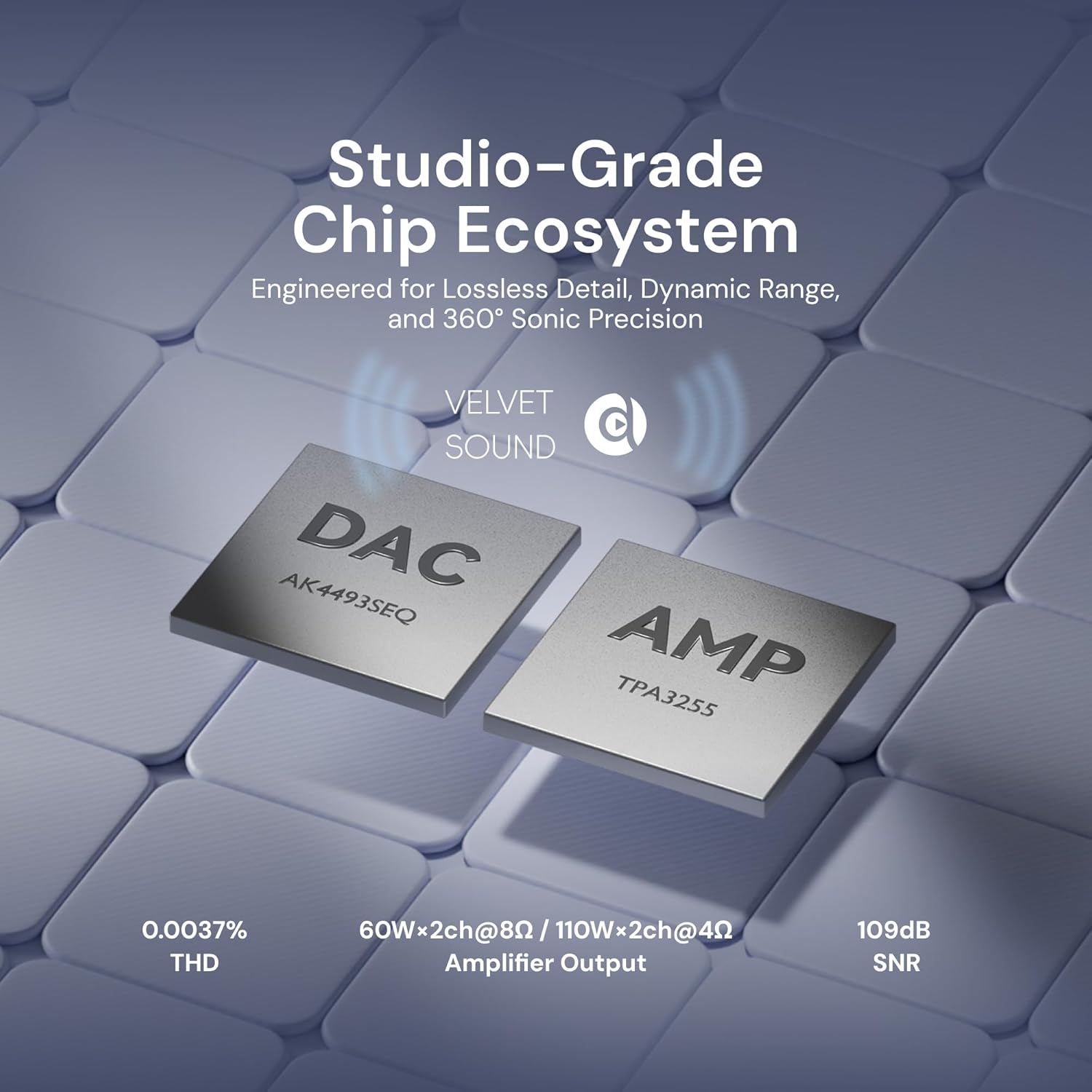
Power specifications tell only part of the story, but they're still crucial for matching amplifiers to speakers. The Eversolo Play delivers 60 watts per channel into 8-ohm speakers and 110 watts into 4-ohm speakers. The Denon PMA-600NE provides 45 watts into 8 ohms and 70 watts into 4 ohms.
These numbers matter because they determine how loud your system can play without distortion and how well it controls your speakers. The Eversolo's higher power output gives it an advantage with demanding speakers or if you listen at higher volumes. However, both amplifiers provide enough power for most bookshelf speakers and many floor-standing models in typical home environments.
More important than raw power is how cleanly these amplifiers deliver it. This is where amplifier design philosophy becomes audible. The Eversolo Play uses Class D amplification, which is incredibly efficient and can deliver substantial power from a compact chassis. Class D amplifiers work by rapidly switching the power supply on and off thousands of times per second, creating the audio signal through precise timing rather than continuous analog processing.
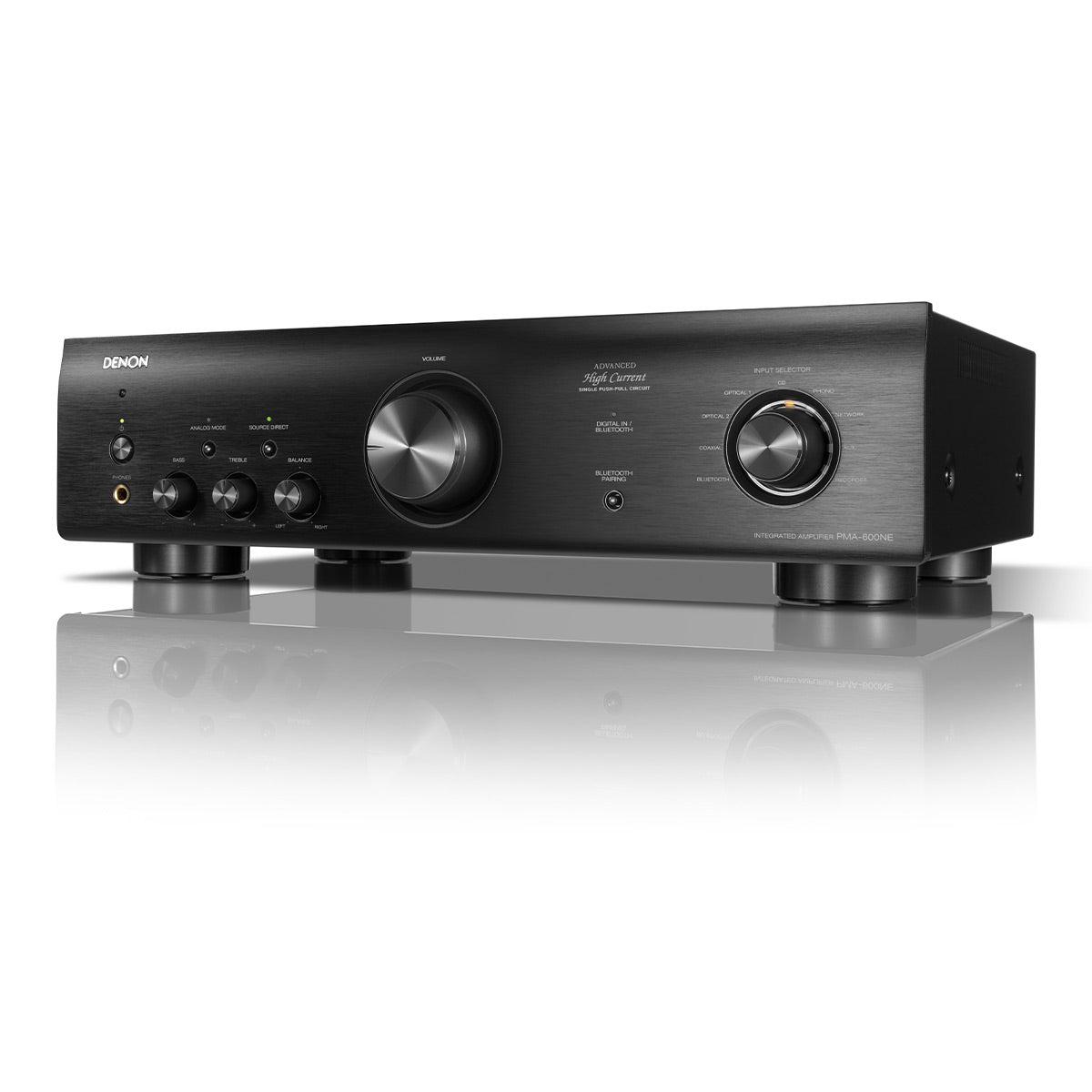
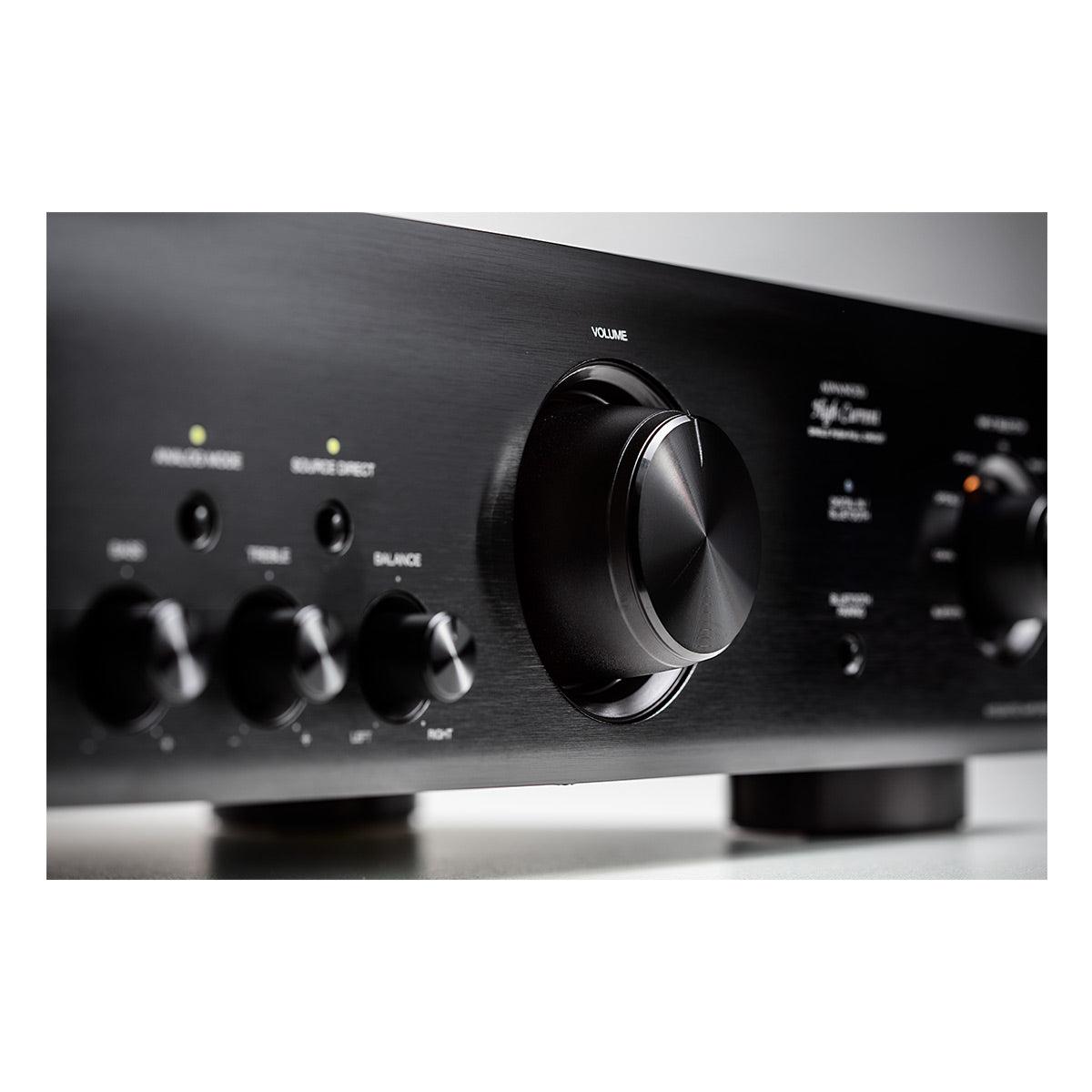
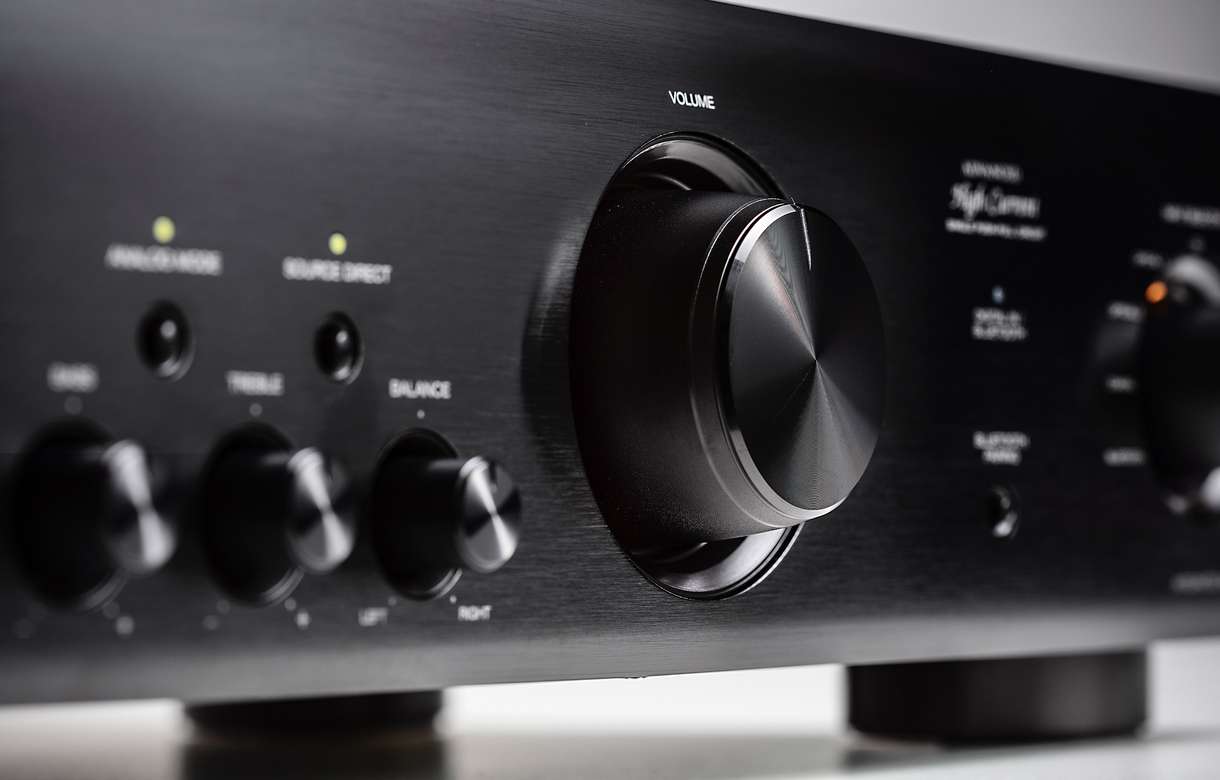
The Denon PMA-600NE uses Class AB amplification, the traditional approach where transistors operate in a more linear fashion. Class AB amplifiers tend to generate more heat and require larger chassis, but many audiophiles prefer their sound character. Denon's Advanced High Current design uses transistors capable of delivering 2-3 times more current than typical implementations, helping with speaker control and dynamic performance.
Here's where these amplifiers diverge dramatically. The Eversolo Play includes a high-end AK4493SEQ DAC (digital-to-analog converter) that supports virtually every digital audio format you'll encounter. It can handle DSD512 files and PCM audio up to 32-bit/768kHz—specifications that exceed what any streaming service currently offers but provide future-proofing as audio technology advances.
The Denon PMA-600NE includes a more basic PCM5141 DAC limited to 24-bit/192kHz, which covers all current streaming service requirements but doesn't support DSD formats or higher-resolution files that audiophile labels sometimes release. For most users, this limitation won't matter, but if you collect high-resolution downloads or want maximum flexibility, it's worth considering.
Signal-to-noise ratio and total harmonic distortion are the key measurements for DAC quality. The Eversolo Play achieves a signal-to-noise ratio above 109dB with total harmonic distortion below 0.0037%. The Denon PMA-600NE hits 105dB signal-to-noise ratio with 0.07% distortion. While both are excellent, the Eversolo's measurements approach reference-level performance.
In practical terms, better measurements translate to a "blacker" background between musical notes, more detail in quiet passages, and less audible distortion at higher volumes. The difference becomes more apparent with high-quality headphones or revealing speakers.
Based on our research of user experiences and professional reviews, these amplifiers have distinctly different personalities. The Eversolo Play is described as energetic and balanced, with tight bass control, clear midrange, and airy highs. Users note its spacious soundstage—the sense of width and depth in the musical presentation.
The Denon PMA-600NE earns consistent praise for its warm, smooth character with particular strength in midrange presentation. This warmth comes from subtle emphasis in the lower midrange frequencies, which adds body and richness to vocals and instruments. Denon's house sound has evolved over decades to achieve this musicality, and longtime users often describe it as "forgiving" with harsh recordings.
The choice between these sound signatures often comes down to personal preference and musical taste. The Eversolo's more neutral presentation works well with all genres and lets you hear exactly what the recording engineer intended. The Denon's warmth can make rock, jazz, and acoustic music particularly engaging, though some listeners find it slightly colored compared to more neutral designs.
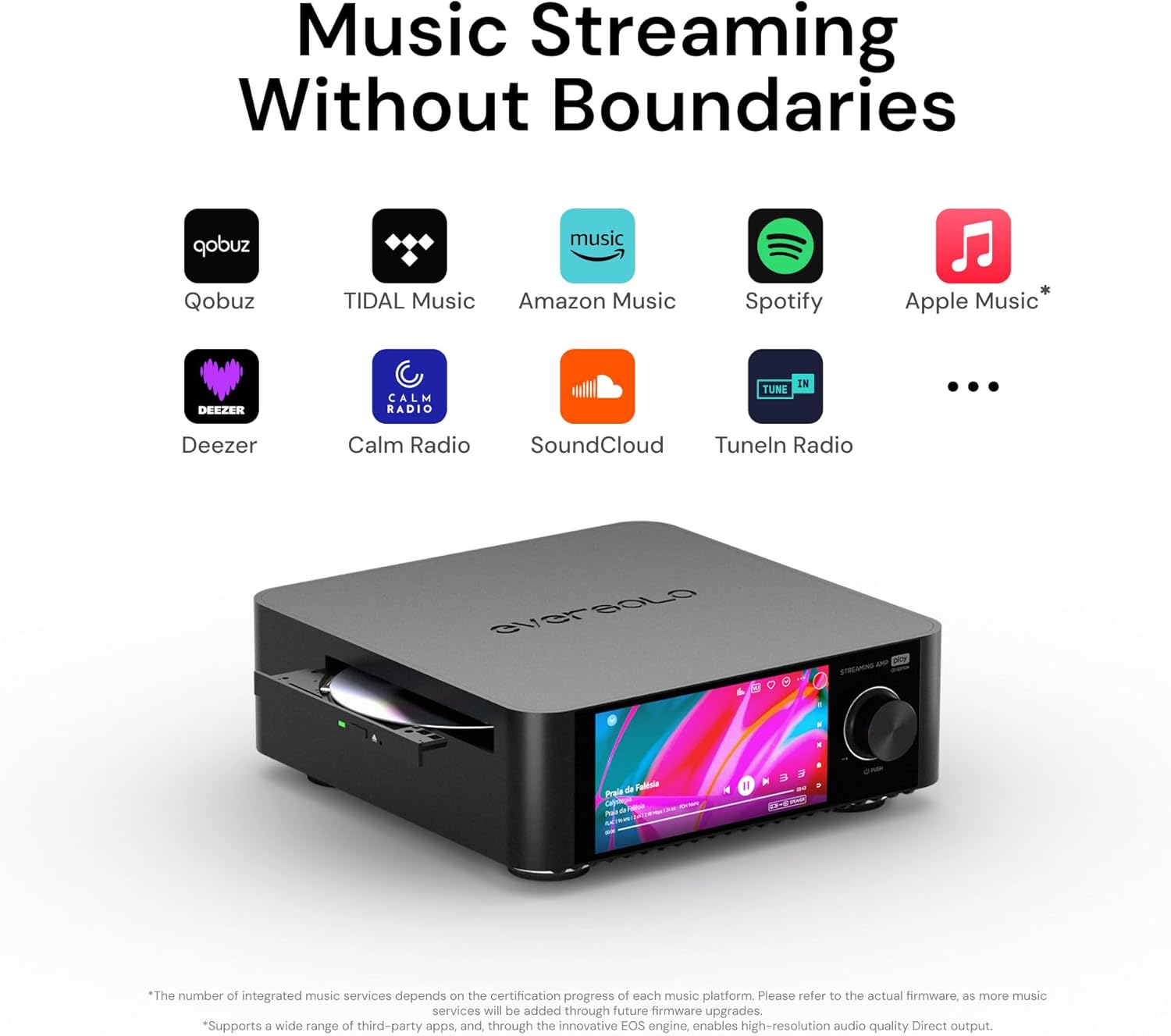
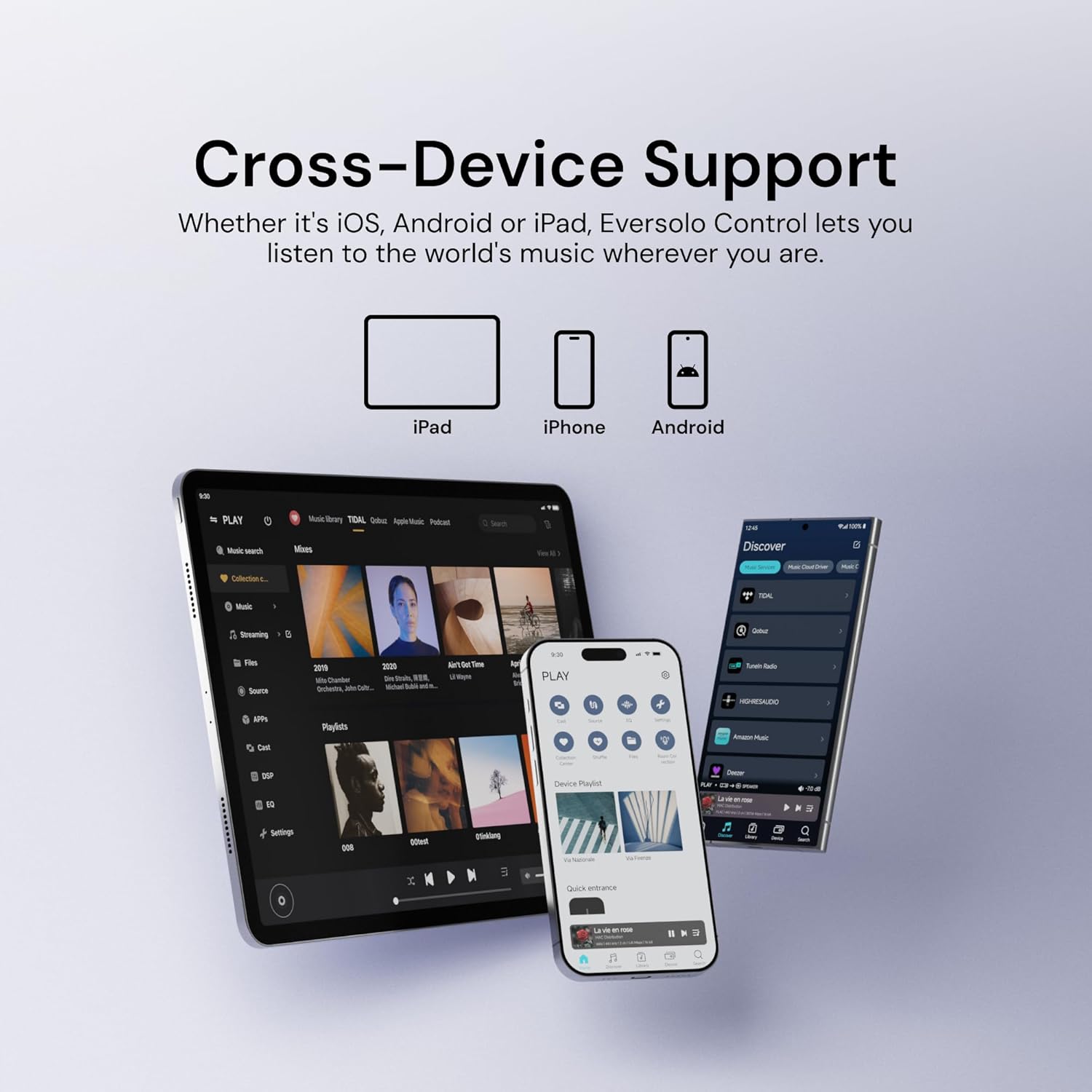
This is where the Eversolo Play shows its modern design most clearly. It includes native applications for major streaming services including Tidal, Qobuz, Amazon Music, Spotify, and Deezer. This means the amplifier connects directly to these services without needing your phone or computer as an intermediary.
The advantage goes beyond convenience. When you use Spotify Connect or Tidal Connect, the audio streams directly from the service to your amplifier at maximum quality, bypassing any processing or conversion that might happen on your phone. The Eversolo Play is also Roon Ready, meaning it integrates seamlessly with Roon's advanced music management software.
The Denon PMA-600NE takes a more basic approach with Bluetooth 4.2 connectivity. While this works for casual listening, Bluetooth audio is compressed and limited to lower quality codecs. If you want high-quality streaming with the Denon, you'll need to add a separate network streamer, which increases system complexity and cost.
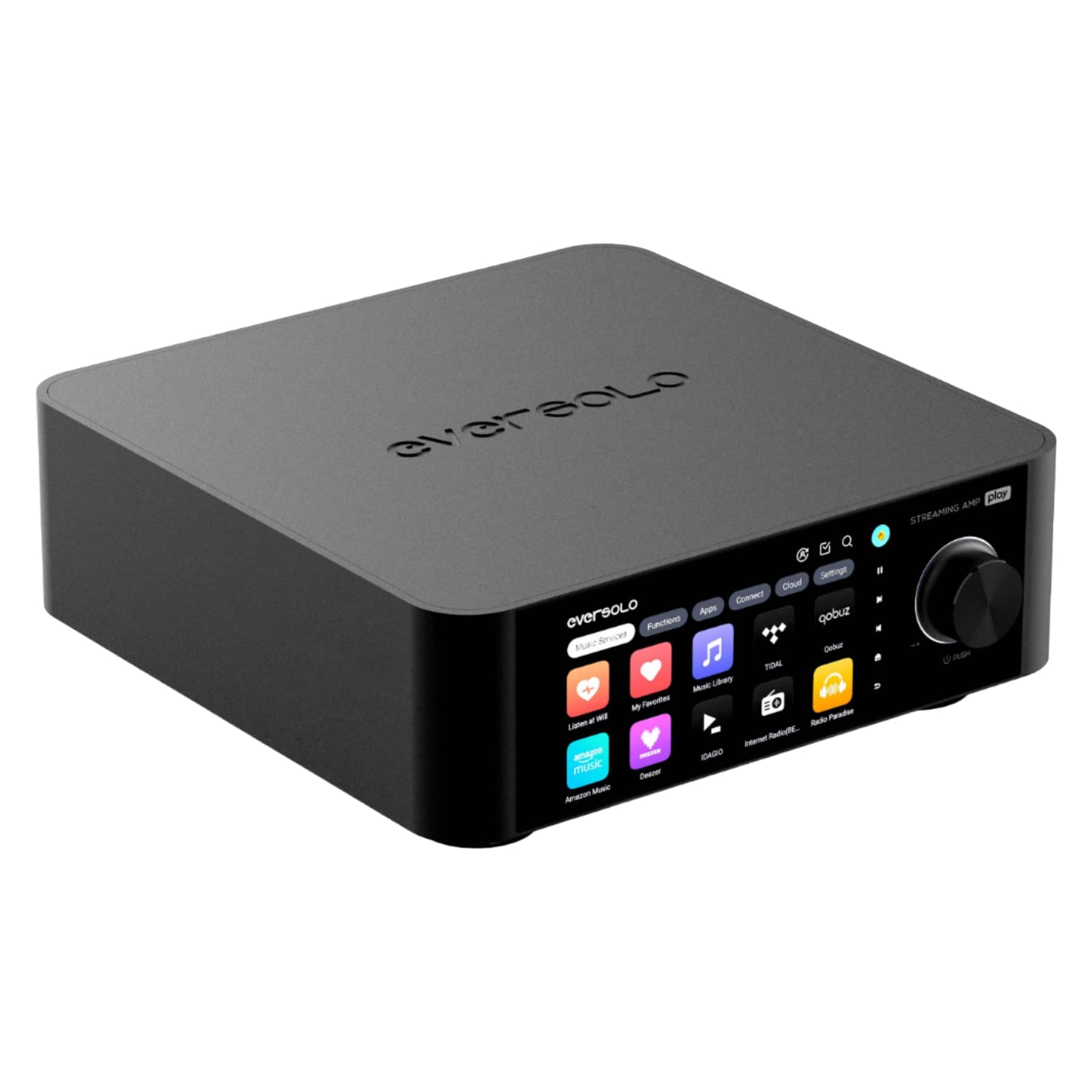
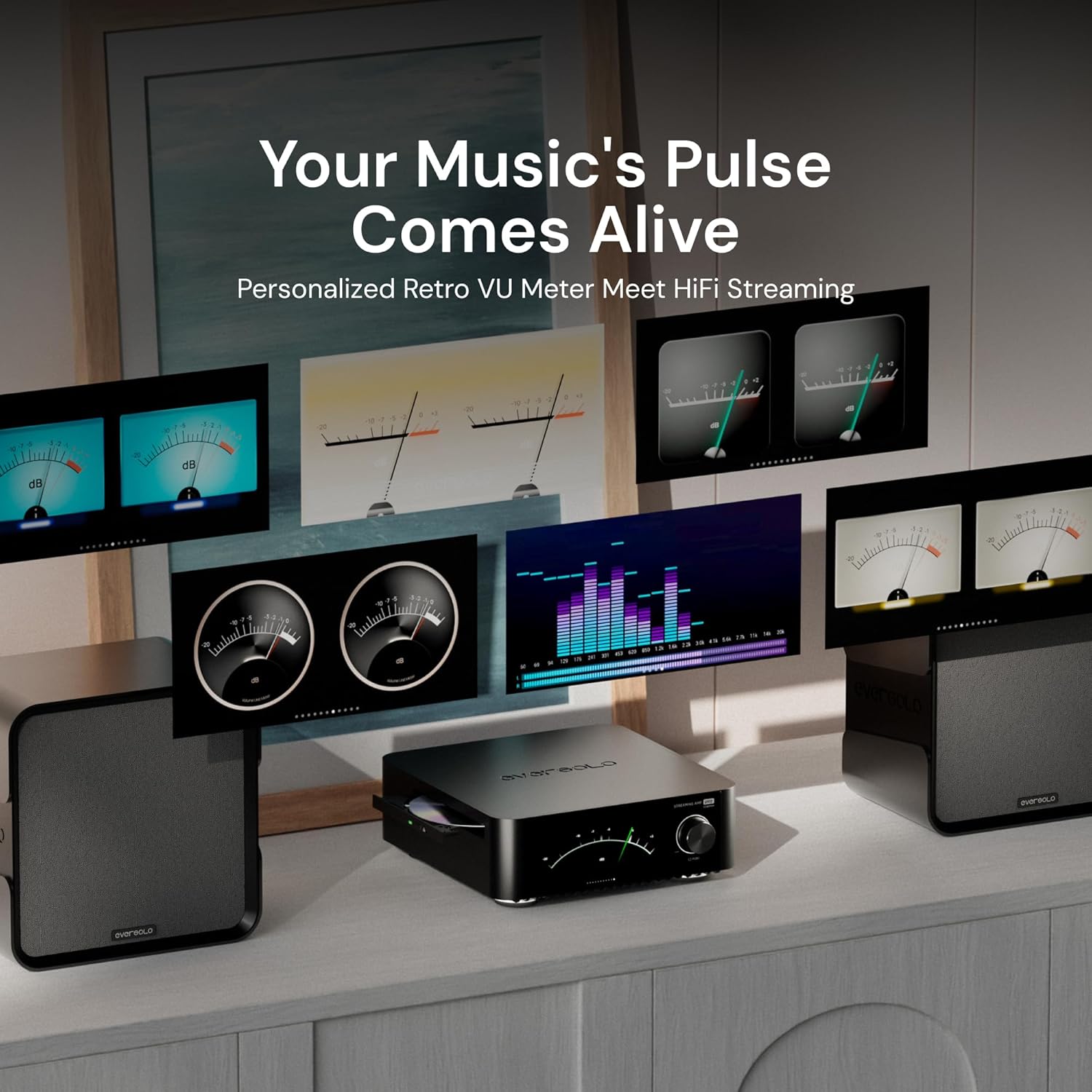
The Eversolo Play's 5.5-inch touchscreen runs a custom Android-based operating system designed specifically for audio applications. The interface provides direct access to streaming services, local music files, and system settings. You can customize the display with VU meters, spectrum analyzers, or album artwork, and an RGB light ring changes color based on the music genre you're playing.
While some traditional audiophiles prefer physical controls, the touchscreen interface offers advantages for managing large music libraries and accessing streaming service features like playlists and recommendations. The companion smartphone app provides additional functionality including advanced equalizer settings and room correction.
The Denon PMA-600NE uses traditional analog controls with a basic remote. There's no learning curve if you're familiar with classic hi-fi components, and the simplicity appeals to users who want to focus on music rather than technology. However, you'll need to use other devices to access streaming services and manage digital music libraries.
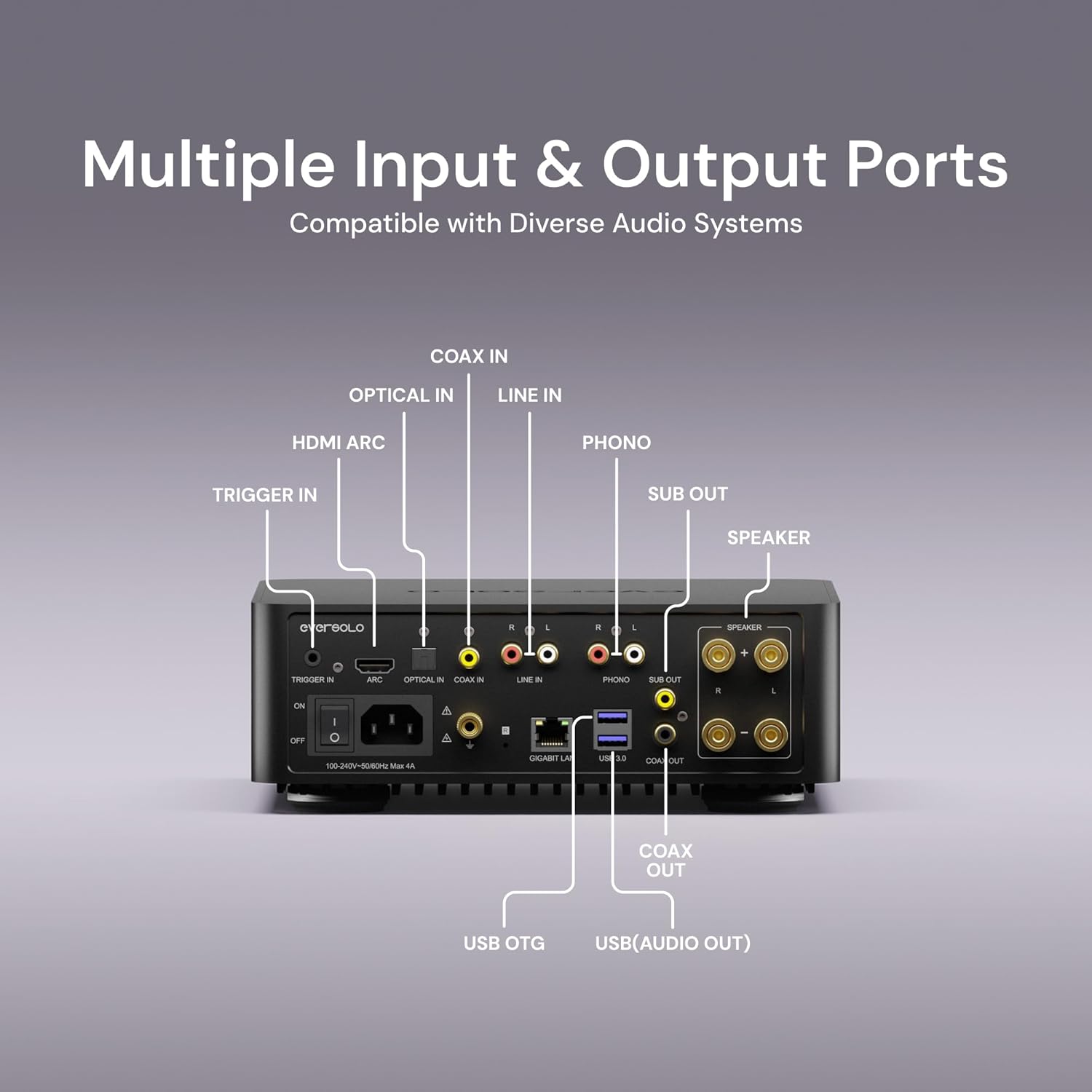
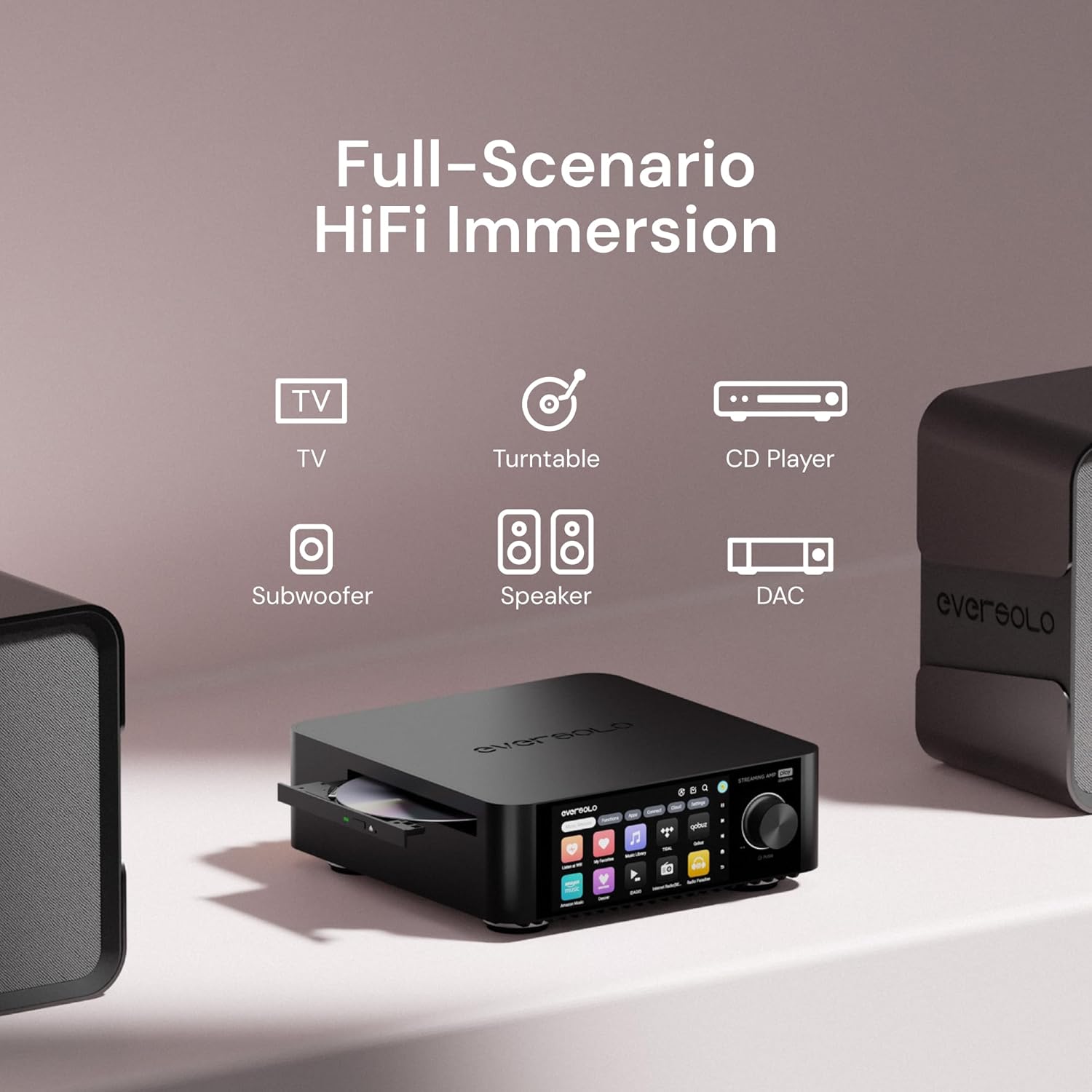
Both amplifiers include phono inputs for turntables, but with different capabilities. The Eversolo Play supports both Moving Magnet (MM) and Moving Coil (MC) cartridges through its built-in phono stage. MC cartridges typically offer better performance but require more amplification due to their lower output levels. Having both options provides flexibility for upgrading your turntable system.
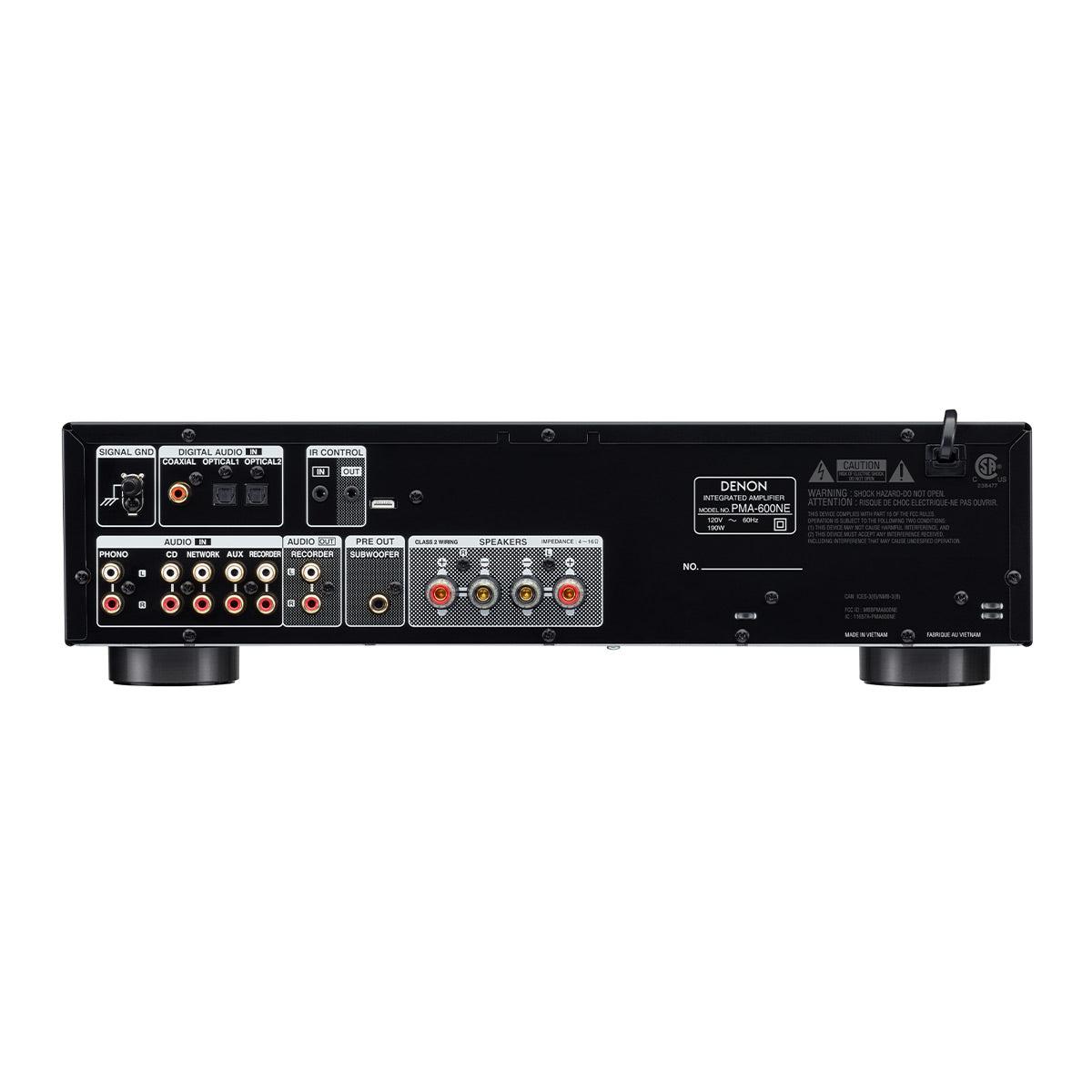
The Denon PMA-600NE includes only MM phono input, which covers most entry-level and mid-range turntables but limits options for future upgrades to high-end cartridges.
For digital sources, the Eversolo Play provides optical, coaxial, and USB inputs, plus HDMI ARC for connecting to TVs. HDMI ARC (Audio Return Channel) is particularly useful in modern homes where the TV serves as a hub for streaming services and gaming systems. This connection allows high-quality audio from your TV to play through your stereo system.
The Denon PMA-600NE offers two optical and one coaxial digital input, covering most external sources like CD players or streaming devices, but lacks HDMI connectivity.
While neither amplifier is designed primarily for home theater use, both can function in hybrid music/TV systems. The Eversolo Play's HDMI ARC input makes it particularly suitable for this role. You can connect it to your TV and enjoy high-quality audio from streaming services, gaming consoles, and broadcast content through your stereo speakers.
The compact size of the Eversolo Play also works well in entertainment centers where space is limited. Its modern aesthetic fits naturally with contemporary TV and gaming equipment.
The Denon PMA-600NE can work in home theater setups, but you'll need to run analog or digital audio cables from your TV or receiver. Its larger traditional form factor might not integrate as seamlessly with modern entertainment systems.
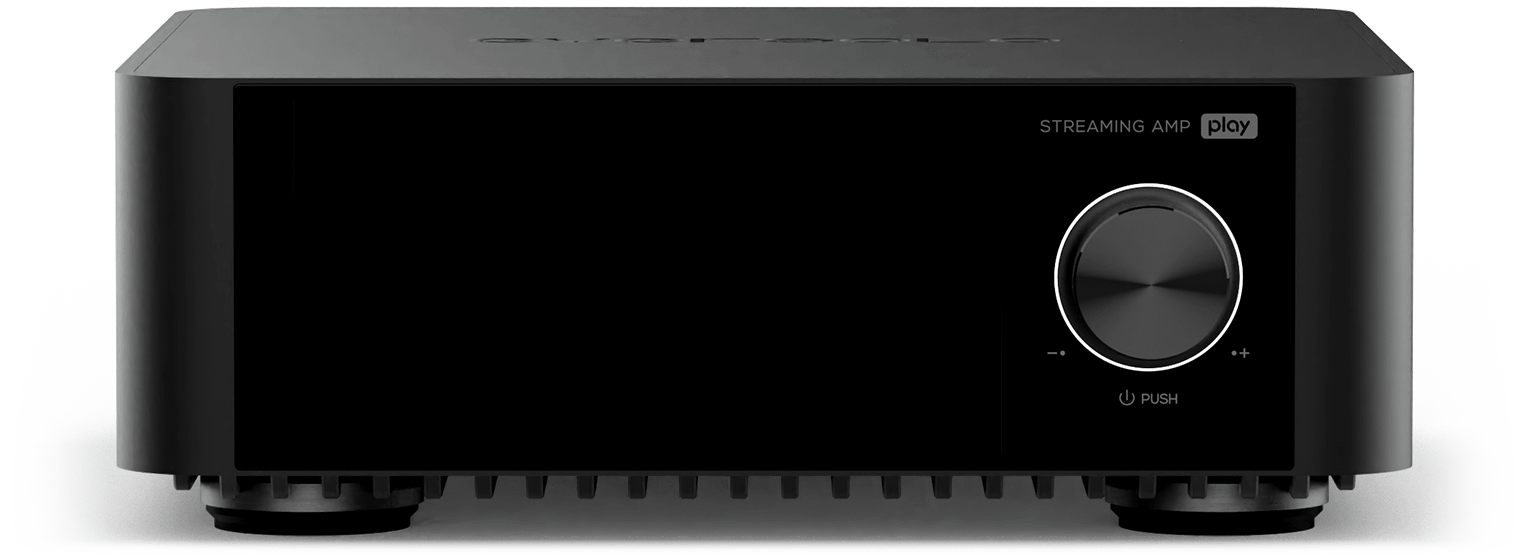
The Eversolo Play packs impressive technology into a remarkably compact chassis measuring just 9 inches wide and 3.25 inches tall. The CNC-machined aluminum construction with glass fascia gives it a premium feel despite the small size. The compact footprint makes it ideal for desktop setups or small rooms where traditional components would overwhelm the space.
The Denon PMA-600NE follows traditional hi-fi proportions at 17 inches wide, requiring dedicated shelf space in an audio rack. However, this larger size allows for more robust power supply components and better heat dissipation. Denon's Direct Mechanical Ground Construction uses strategic mounting points to reduce vibration effects on audio performance.
Both amplifiers include subwoofer outputs, but the Eversolo Play offers more sophisticated bass management with adjustable crossover frequency (40Hz to 500Hz), gain control, and phase adjustment. This level of control helps integrate subwoofers seamlessly with main speakers.
Class D amplification in the Eversolo Play generates less heat than traditional designs, contributing to its compact size and potentially longer component life. The aluminum chassis provides adequate heat dissipation for the moderate power output.
The Denon PMA-600NE's Class AB design generates more heat, requiring the larger chassis and internal heat sinks. However, this traditional approach has decades of proven reliability in similar applications.
At the time of writing, the Eversolo Play commands a moderate premium over the Denon PMA-600NE, reflecting its advanced feature set and newer technology. However, when you consider that a quality network streamer typically costs several hundred dollars separately, the price difference becomes more reasonable.
The Denon PMA-600NE represents excellent value in the traditional integrated amplifier category. Years of positive user reviews confirm its sound quality and reliability, and the lower entry price makes it accessible to more buyers.
For budget-conscious buyers who already own or plan to purchase a separate streaming device, the Denon offers a clear path to high-quality amplification without paying for features they won't use. However, users who want everything integrated and value convenience might find the Eversolo's premium worthwhile.
The Eversolo Play makes the most sense for users building a new system around streaming services. If Spotify, Tidal, or Qobuz represent your primary music sources, having native integration eliminates the complexity and potential quality compromises of using multiple devices.
It's also ideal for space-conscious setups like desktop systems or small rooms where traditional components would be overwhelming. The combination of compact size, modern aesthetic, and comprehensive functionality works particularly well in contemporary living spaces.
Users who want future-proofing should also consider the Eversolo Play. Its advanced DAC and streaming capabilities position it well for audio format evolution over the next several years.
The Denon PMA-600NE appeals to traditional hi-fi enthusiasts who prefer the flexibility of separate components. If you already own a quality network streamer or primarily use analog sources like vinyl and CDs, the Denon's excellent amplification at a lower price point makes perfect sense.
It's also the better choice for users who prioritize the specific sound character that Denon has refined over decades. The warm, musical presentation works particularly well with jazz, rock, and acoustic music.
Budget-conscious buyers who want proven performance should strongly consider the Denon PMA-600NE. Its track record of reliability and user satisfaction provides confidence that's harder to establish with newer products.
These amplifiers represent two valid approaches to modern hi-fi systems. The Eversolo Play embraces the streaming age with comprehensive integration and advanced technology, while the Denon PMA-600NE focuses on traditional strengths with enough modern capability to remain relevant.
Your choice ultimately depends on how you listen to music and what you value most in an audio system. If convenience, space efficiency, and future-proofing matter most, the streaming-integrated approach offers clear advantages. If you prefer traditional hi-fi flexibility and proven sound quality at a lower price, the conventional integrated amplifier remains compelling.
Both amplifiers can anchor satisfying music systems, but they'll appeal to different users with different priorities. Consider your current sources, future plans, and listening preferences when making this decision—there's no universally "correct" choice, only the right choice for your specific situation.
| Eversolo Play Streaming Amplifier | Denon PMA-600NE Integrated Amplifier |
|---|---|
| Power Output - Determines how loud your system can play and speaker compatibility | |
| 60W @ 8Ω, 110W @ 4Ω (adequate for most speakers) | 45W @ 8Ω, 70W @ 4Ω (sufficient for bookshelf speakers) |
| Amplifier Class - Affects sound character, efficiency, and heat generation | |
| Class D with PurePath Ultra HD (compact, efficient) | Class AB with Advanced High Current (traditional, warmer) |
| DAC Quality - Critical for digital music streaming and file playback | |
| AK4493SEQ: DSD512, 32-bit/768kHz, 109dB SNR | PCM5141: 24-bit/192kHz PCM only, 105dB SNR |
| Native Streaming Services - Eliminates need for separate streamer | |
| Built-in apps for Tidal, Qobuz, Spotify, Amazon Music | Bluetooth 4.2 only (requires external streamer) |
| Roon Ready Certification - Premium music management integration | |
| Yes (seamless Roon integration) | No (requires separate Roon endpoint) |
| User Interface - Daily interaction and ease of use | |
| 5.5" touchscreen with custom Android OS | Traditional analog controls with remote |
| Phono Input - Turntable compatibility and cartridge support | |
| MM/MC support with professional-grade preamp | MM only (limits cartridge upgrade options) |
| HDMI ARC - TV audio integration for modern setups | |
| Yes (direct high-quality TV audio connection) | No (requires separate audio cables) |
| Form Factor - Space requirements and aesthetic integration | |
| Compact desktop: 9" × 9.5" × 3.25" | Traditional component: 17" × 12.7" × 4.75" |
| EQ and Room Correction - Sound customization capabilities | |
| 15-band graphic, 10-band parametric, auto room correction | Basic bass/treble controls, source direct mode |
| Digital Audio Formats - Future-proofing and file compatibility | |
| DSD512, PCM 768kHz/32-bit (exceeds current streaming) | PCM 192kHz/24-bit (covers all streaming services) |
| Bluetooth Quality - Wireless streaming performance | |
| v5.0 with standard codecs (basic wireless) | v4.2 with standard codecs (basic wireless) |
| Release Year - Product maturity and proven track record | |
| 2025 (latest technology, limited user feedback) | Earlier generation (extensive user reviews, proven reliability) |
The Eversolo Play is significantly better for streaming music services. It includes built-in apps for Tidal, Qobuz, Spotify, Amazon Music, and other major platforms, allowing direct streaming without additional devices. The Denon PMA-600NE only offers basic Bluetooth connectivity, requiring a separate streaming device for high-quality access to music services.
The Eversolo Play delivers 60 watts per channel into 8-ohm speakers and 110 watts into 4-ohm speakers. The Denon PMA-600NE provides 45 watts into 8 ohms and 70 watts into 4 ohms. Both offer adequate power for most bookshelf speakers, but the Eversolo Play has more headroom for demanding speakers or higher listening volumes.
Sound quality depends on personal preference. The Eversolo Play offers a more neutral, energetic sound with excellent technical measurements and tight bass control. The Denon PMA-600NE provides Denon's signature warm, smooth sound that many users find musical and engaging, particularly with jazz, rock, and acoustic music.
The Eversolo Play includes HDMI ARC connectivity, making it excellent for TV audio integration in home theater setups. You can get high-quality sound from streaming services, gaming, and broadcast content. The Denon PMA-600NE lacks HDMI but can connect to TVs through optical or analog outputs, though with more setup complexity.
The Eversolo Play has a slight advantage with both MM and MC phono inputs, supporting a wider range of turntable cartridges. The Denon PMA-600NE includes only MM phono input, which covers most entry-level turntables but limits future cartridge upgrades. Both offer quality phono stages for vinyl playback.
You don't need a separate streaming device with the Eversolo Play since it includes native streaming apps and Roon Ready support. The Denon PMA-600NE requires an external streaming device for high-quality access to music services beyond basic Bluetooth connectivity, adding to the overall system cost.
The Eversolo Play is much more compact at 9" × 9.5" × 3.25", making it ideal for desktops or small entertainment centers. The Denon PMA-600NE follows traditional hi-fi dimensions at 17" × 12.7" × 4.75", requiring dedicated rack space but offering more robust internal components.
The Eversolo Play features a high-end AK4493SEQ DAC supporting DSD512 and PCM up to 32-bit/768kHz with superior measurements. The Denon PMA-600NE includes a basic DAC limited to 24-bit/192kHz PCM. For most users, both handle current streaming quality, but the Eversolo Play offers better future-proofing.
Value depends on your needs. The Denon PMA-600NE offers excellent traditional amplifier performance at a lower entry point with proven reliability. The Eversolo Play costs more but eliminates the need for a separate streamer, potentially saving money and complexity in a complete system.
The Eversolo Play works well in home theater setups thanks to HDMI ARC connectivity and compact size that fits modern entertainment centers. The Denon PMA-600NE can work for home theater but requires additional audio connections and takes up more space in entertainment systems.
The Eversolo Play offers easier daily operation with its touchscreen interface, direct streaming service access, and smartphone app control. The Denon PMA-600NE uses traditional controls that some users prefer for simplicity, but requires additional devices for streaming and digital music management.
The Eversolo Play represents newer technology with advanced features but limited long-term user feedback. The Denon PMA-600NE has years of positive reviews confirming reliability and sound quality. Choose the Eversolo Play for latest features or the Denon PMA-600NE for proven performance.
We've done our best to create useful and informative comparisons to help you decide what product to buy. Our research uses advanced automated methods to create this comparison and perfection is not possible - please contact us for corrections or questions. These are the sites we've researched in the creation of this article: blog.son-video.com - audio46.com - upscaleaudio.com - audioadvice.com - musicdirect.com - audio46.com - whathifi.com - whathifi.com - bloomaudio.com - youtube.com - the-ear.net - whathifi.com - soundstagesimplifi.com - youtube.com - stevehuffphoto.com - darko.audio - youtube.com - eversolo.com - theaudiotailor.com.au - forums.whathifi.com - crutchfield.com - youtube.com - av.com - youtube.com - audiosciencereview.com - emotivalounge.proboards.com - forums.whathifi.com - audiosciencereview.com - crutchfield.com - melbournehifi.com.au - musicdirect.com - avstore.in - polkaudio.com - turntablelab.com

Privacy Policy
Terms and Conditions - Affiliate Policy
Home Security
© Copyright 2008-2026.
11816 Inwood Rd #1211, Dallas, TX 75244