




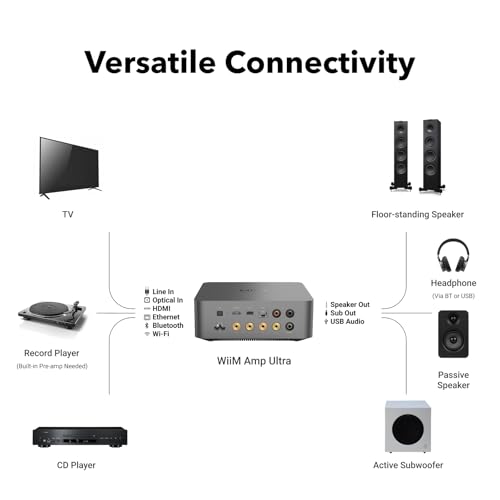
If you're tired of dealing with multiple boxes, cables running everywhere, and the complexity of separate streamers, DACs, and amplifiers, streaming amplifiers might be exactly what you need. These all-in-one devices combine digital music streaming, high-quality digital-to-analog conversion (DAC), and power amplification in a single chassis that connects directly to your speakers.
The streaming amplifier category has exploded over the past few years as manufacturers figured out how to pack serious audio performance into affordable, compact units. Instead of needing a $500 streamer, $800 DAC, and $600 amplifier, you can now get all three functions in one box for less than what you'd pay for just one of those components separately.
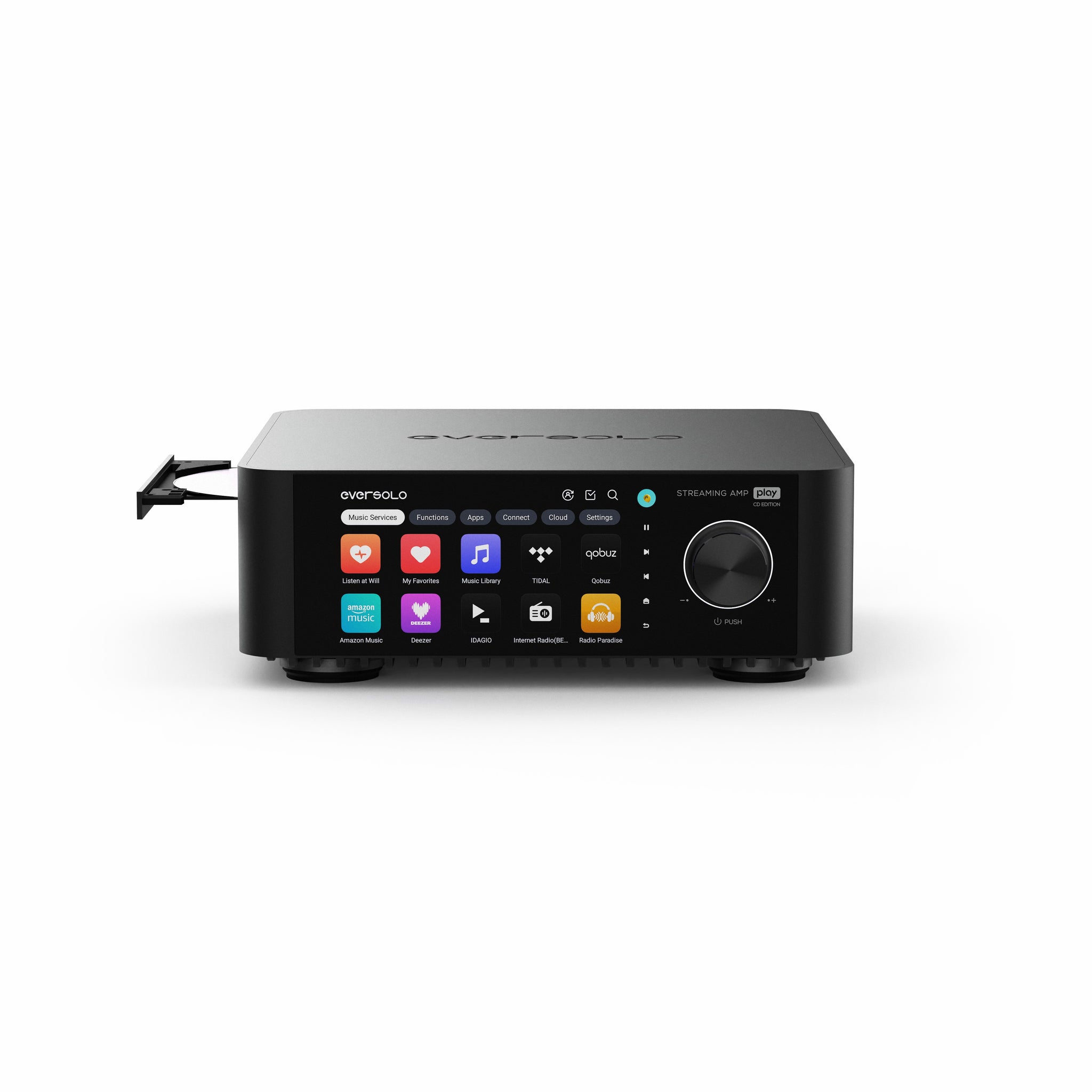
Today we're comparing two standout models that represent different approaches to the streaming amplifier concept: the Eversolo Play and the WiiM Amp Ultra. Both launched in 2025 and target the sweet spot where serious audio performance meets reasonable pricing, but they take notably different paths to get there.
Before diving into the comparison, it helps to understand what you should look for in a streaming amplifier. The most critical factors are power output (how loud and clean it can play), streaming capabilities (what services and file types it supports), audio quality from the built-in DAC, connectivity options for integrating with other gear, and overall user experience.
Power output determines whether the unit can properly drive your speakers. A 60-watt amplifier might sound great with efficient bookshelf speakers in a small room but struggle with large floor-standing speakers or when you want to fill a bigger space with sound. The amplifier topology—usually Class D in modern units—affects efficiency and sound character.
The DAC section converts digital music files into analog signals your speakers can reproduce. Higher-quality DACs with better chips and supporting circuitry preserve more detail and introduce less distortion. Sample rate support (how high-resolution the files can be) matters if you have audiophile recordings, though most streaming services top out at CD quality or slightly higher.
The most significant difference between these units lies in their amplification power, and this isn't just about getting louder—it's about control, dynamics, and speaker compatibility.
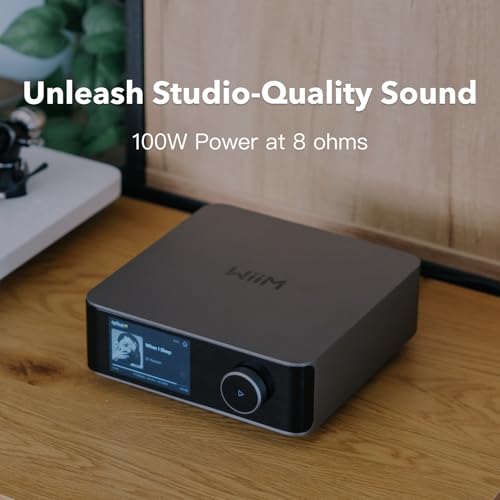
The WiiM Amp Ultra delivers substantially more muscle with 100 watts per channel into 8-ohm speakers and 200 watts into 4-ohm loads. It uses dual Texas Instruments TPA3255 Class D amplifier chips, which are well-regarded in the audio community for their combination of power and sound quality. Class D amplifiers use switching technology to achieve high efficiency (they don't get as hot) while maintaining good audio performance.
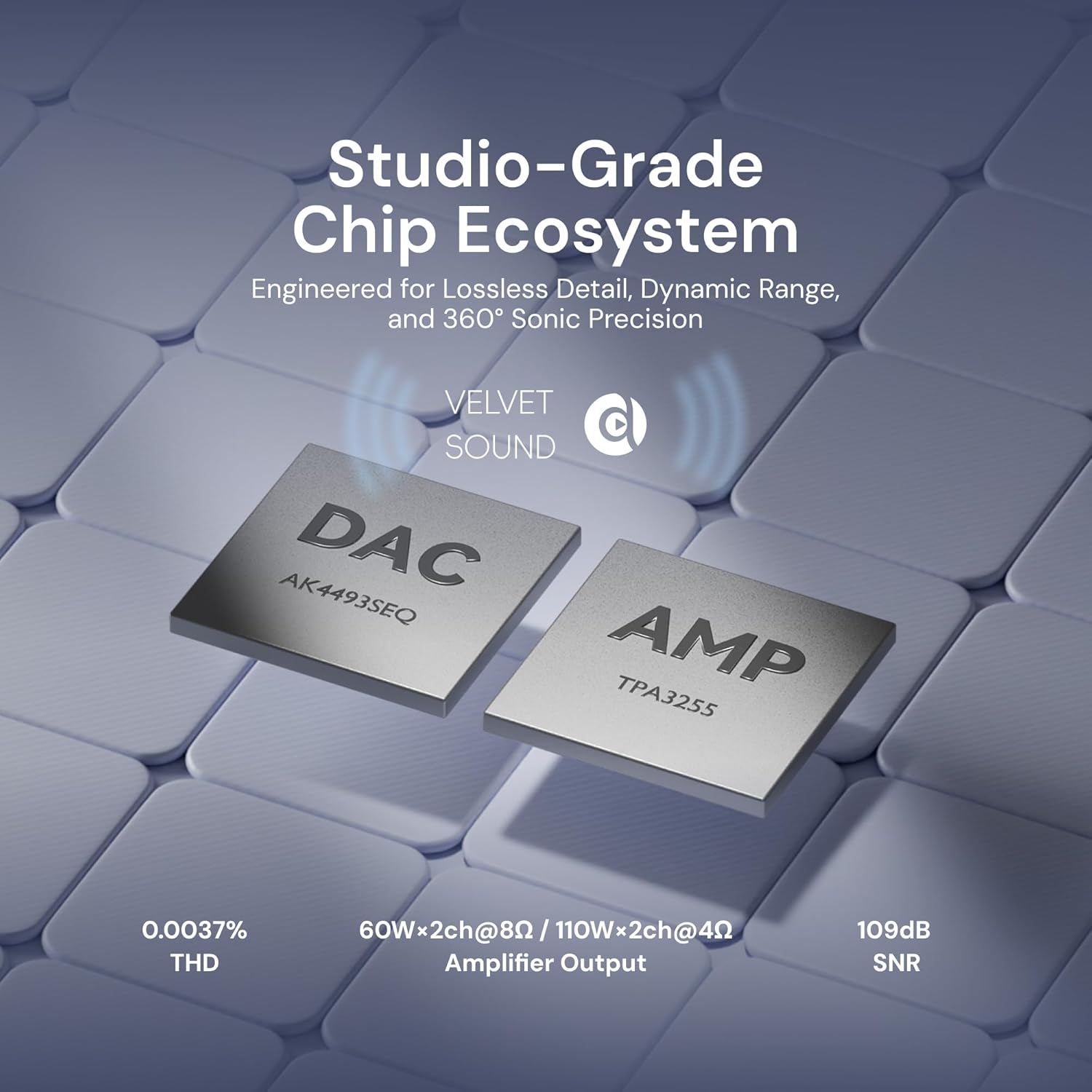
The Eversolo Play, by comparison, provides 60 watts into 8 ohms and 110 watts into 4 ohms through a single Class D amplifier using PurePath Ultra HD technology. While this is adequate power for many situations, it represents about 40% less output than the WiiM unit.
Why does this power difference matter in real-world use? More power gives you better control over your speakers, especially at higher volumes or with demanding musical passages. It's not just about playing louder—it's about maintaining clarity and composure when the music gets complex. Bass-heavy electronic music, full orchestral pieces, or rock music with layered instruments all benefit from having power reserves available.
The WiiM Amp Ultra also remains stable down to 2-ohm loads, meaning it can handle speakers with complex crossovers or multiple drivers that present difficult impedance curves. This broader compatibility means you're less likely to run into matching issues with whatever speakers you choose.
From our research into user experiences and professional reviews, the power advantage of the WiiM Amp Ultra becomes particularly apparent with less efficient speakers or in larger rooms. Users consistently report that the WiiM maintains its composure and sound quality even when pushed hard, while some noted the Eversolo Play can start to sound strained with demanding material at higher volumes.
Both units feature high-quality DACs, but they take different approaches to digital audio conversion—the process of turning your digital music files into analog signals.
The Eversolo Play uses an AKM AK4493SEQ DAC that supports incredibly high sample rates up to 768kHz and native DSD512 decoding. DSD (Direct Stream Digital) is a high-resolution audio format originally developed for Super Audio CDs, and DSD512 represents an extremely high resolution that captures audio at 512 times the rate of standard CDs. This makes the Eversolo particularly appealing if you have audiophile recordings in these ultra-high-resolution formats.
The WiiM Amp Ultra employs an ESS ES9039Q2M SABRE DAC paired with six Texas Instruments OPA1612 op-amps (operational amplifiers that shape and clean up the audio signal). While the WiiM's DAC tops out at 384kHz sample rates, the ES9039Q2M chip is generally considered higher-tier in terms of sound quality. The six op-amps provide additional signal processing that can improve dynamics and reduce noise.
What's particularly interesting about the WiiM Amp Ultra is its Post Filter Feedback (PFFB) technology. This system monitors how the speakers are responding and adjusts the amplifier output to compensate for impedance variations. In practical terms, this means the frequency response stays more consistent regardless of which speakers you connect, leading to more accurate sound reproduction.
Our evaluation of professional reviews suggests that while the Eversolo Play handles ultra-high-resolution files better, the WiiM Amp Ultra delivers superior performance with standard streaming quality music that most people listen to most of the time. The WiiM's more sophisticated analog output stage seems to extract more detail and provide better dynamics with typical 16-bit/44.1kHz or 24-bit/96kHz content.
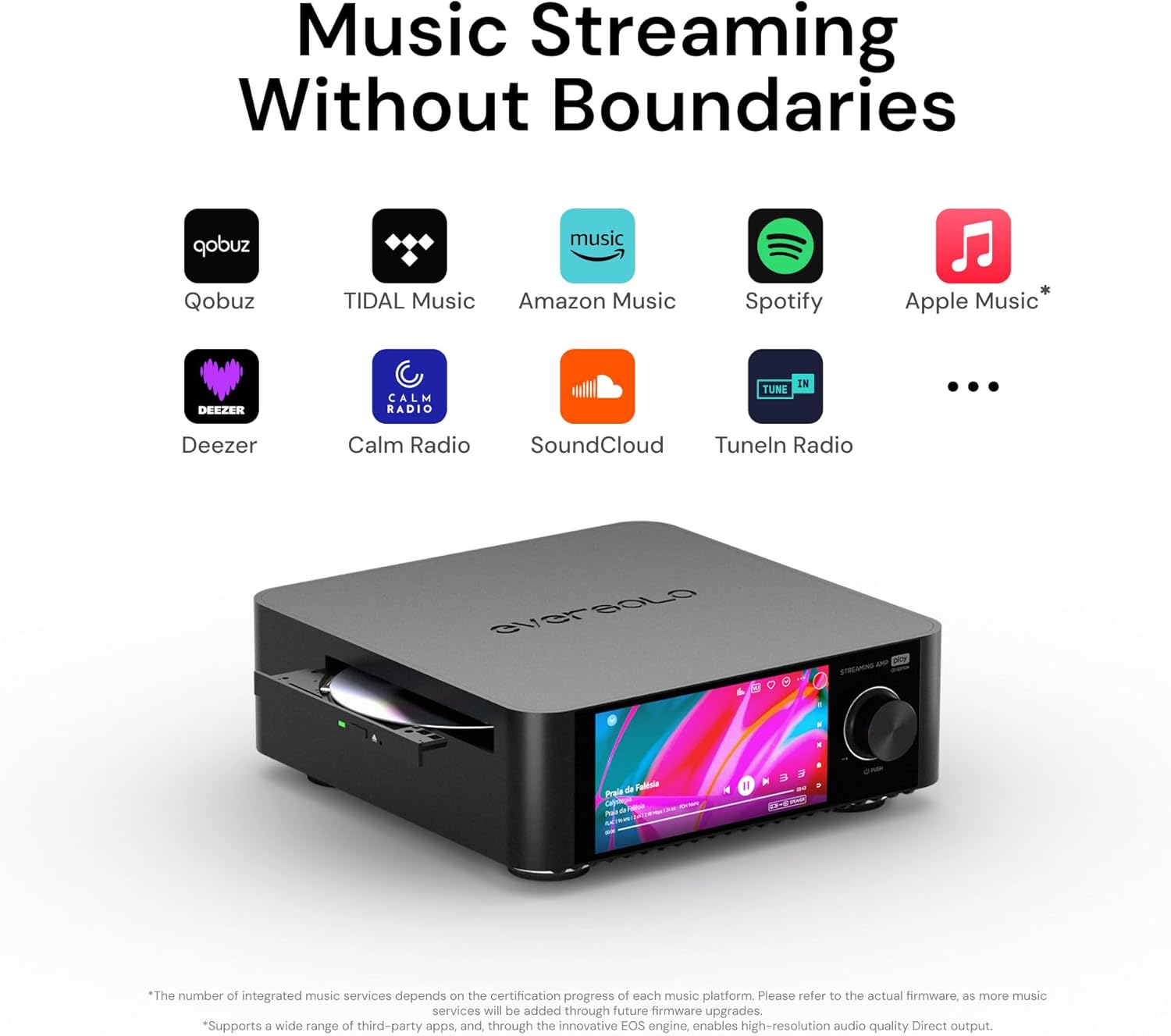
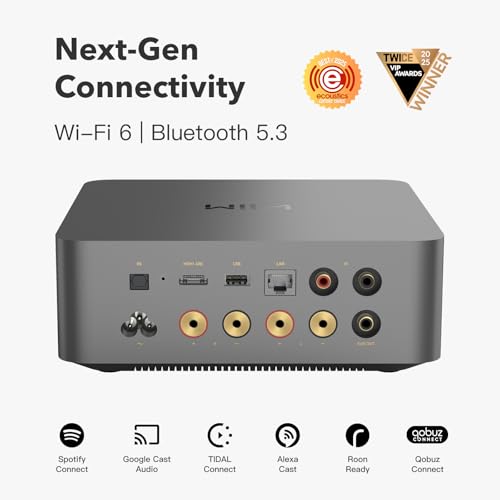
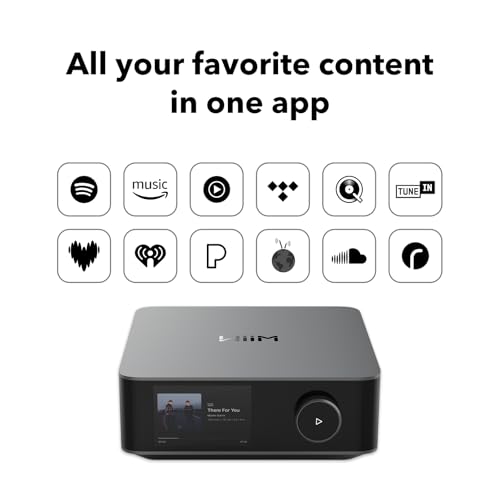
Both units support all the major streaming platforms you'd expect: Spotify, TIDAL, Qobuz, Amazon Music, and more. They're both Roon Ready, meaning they integrate seamlessly with Roon's excellent music management software if you use it.
Where they differ significantly is in connectivity and smart home integration. The WiiM Amp Ultra includes Wi-Fi 6E (the latest wireless standard offering faster speeds and less congestion) and Bluetooth 5.3 with LE Audio support. LE Audio is newer Bluetooth technology that provides better sound quality and lower power consumption, though you'll need compatible headphones or speakers to take advantage of it.
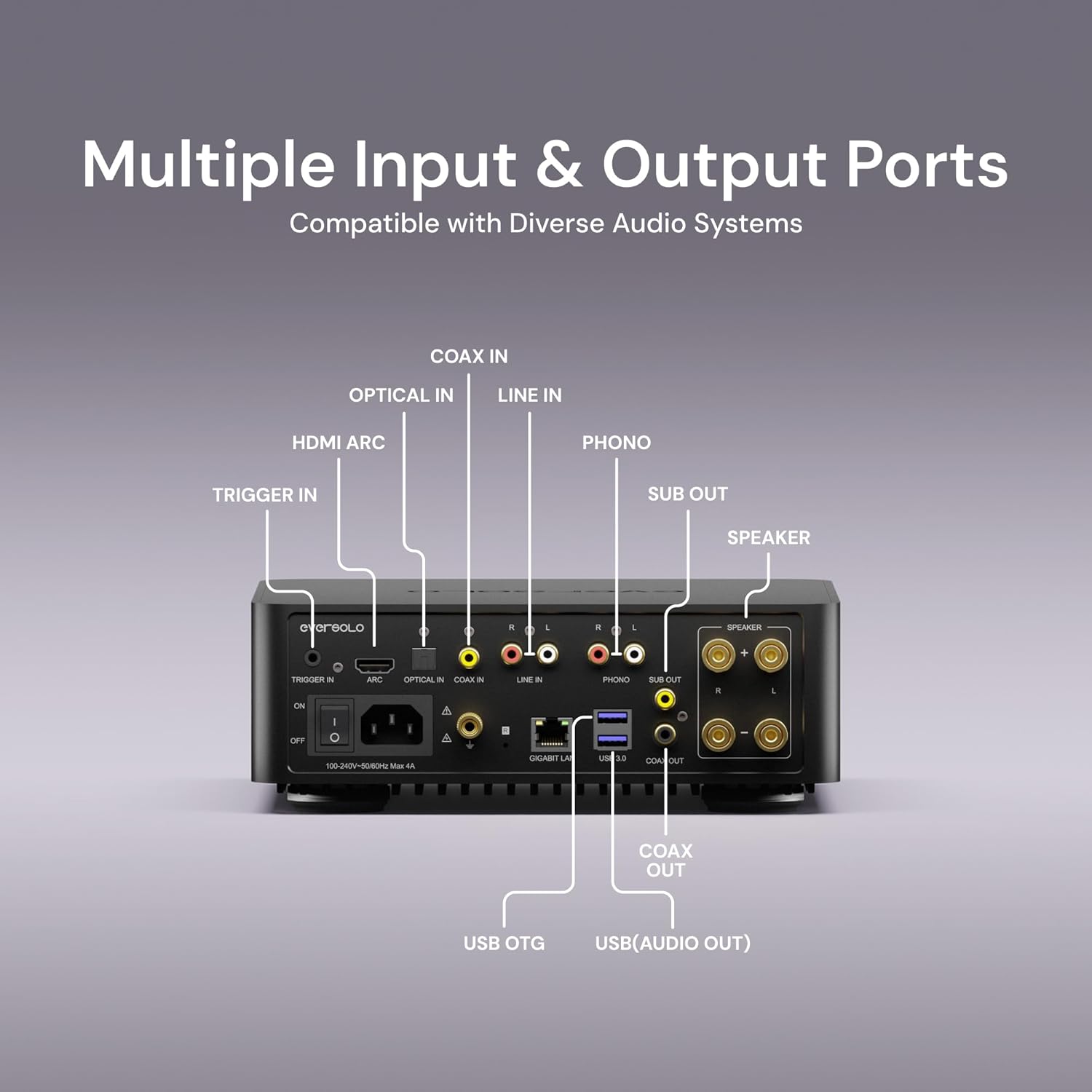
The WiiM Amp Ultra also includes HDMI ARC (Audio Return Channel) input, which is fantastic for home theater integration. You can connect it directly to your TV and get high-quality audio for movies and shows without needing separate connections. It even supports Dolby Digital decoding, so you get proper surround sound processing for the front channels.
However, there's one notable omission with the WiiM Amp Ultra—no AirPlay 2 support. This is surprising given the unit's otherwise comprehensive connectivity and something Apple ecosystem users should consider.
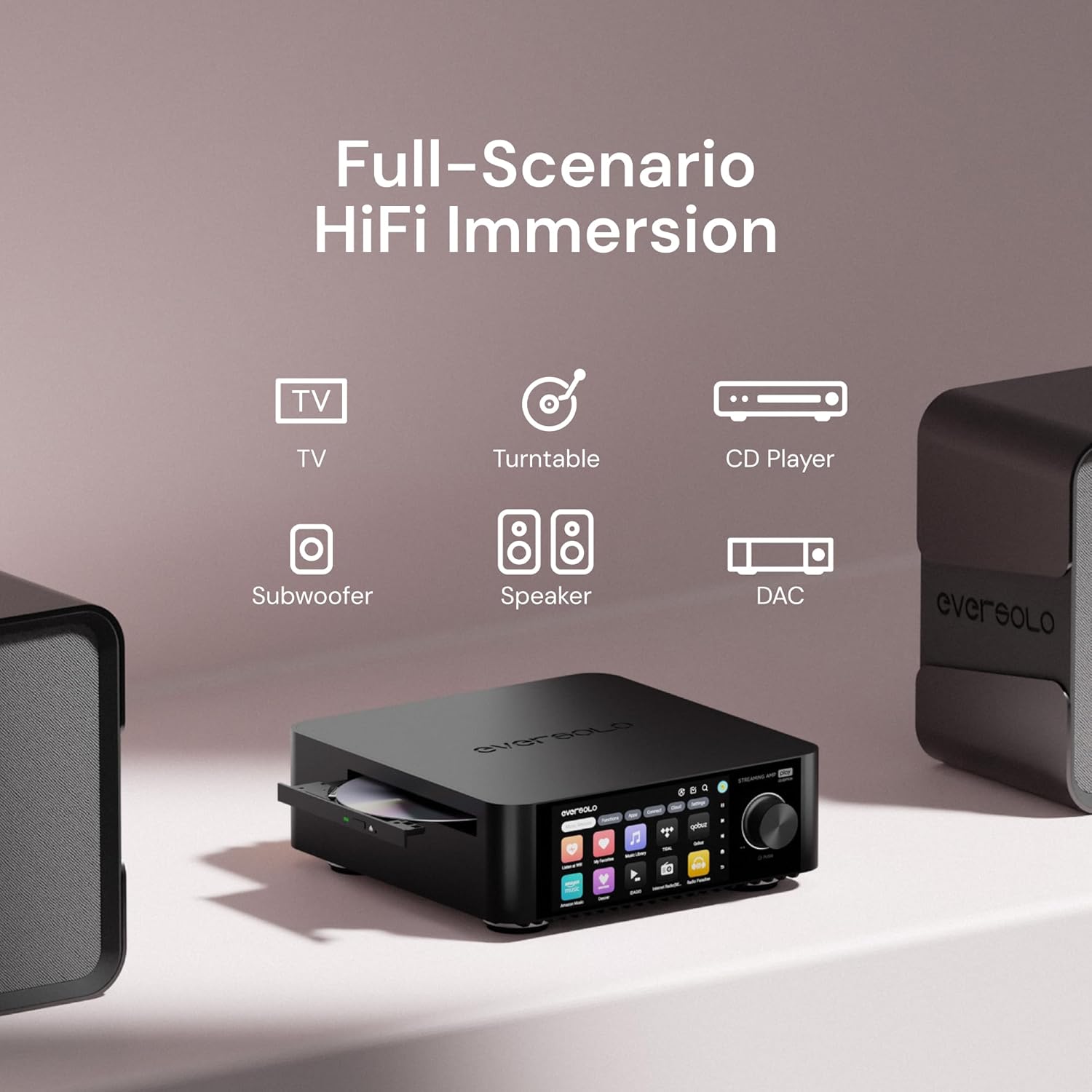
The Eversolo Play takes a different approach, focusing more on audiophile-oriented connections. It includes a proper MM/MC phono input for connecting turntables directly, which is huge if you're into vinyl. Many streaming amplifiers skip the phono stage entirely, forcing you to buy a separate phono preamp. The Eversolo handles both moving magnet and moving coil cartridges, covering virtually any turntable you might own.
The Eversolo Play also includes a USB audio output that supports its full resolution range up to DSD512 and PCM 768kHz. This means you can use it as a high-end streamer feeding an even more expensive external DAC if you want to upgrade later.
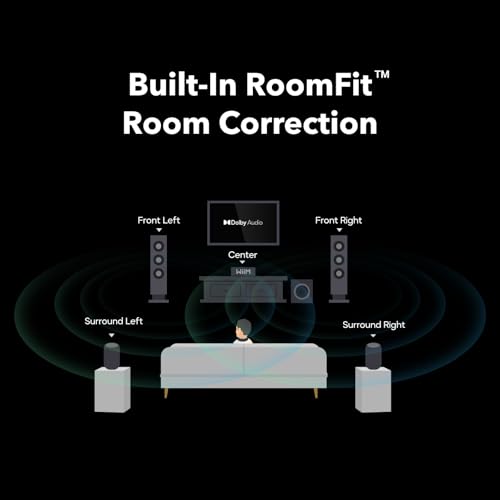
This is where the WiiM Amp Ultra really shines and demonstrates technology that was unthinkable at this price point just a few years ago. Its Room EQ system, called RoomFit, uses your smartphone's microphone to measure your room's acoustics and automatically applies corrective EQ to compensate for acoustic problems.
Room correction is genuinely transformative for most listening spaces. Unless you have a perfectly treated room (and most of us don't), your space is probably boosting some frequencies and cutting others based on room dimensions, furniture placement, and wall materials. The WiiM Amp Ultra measures these issues and applies parametric EQ (precise frequency adjustments) to flatten the response.
The WiiM also includes sophisticated subwoofer integration with delay compensation. If you're running a 2.1 system (two main speakers plus a subwoofer), the system can time-align the subwoofer with your main speakers and set crossover points automatically. This level of bass management used to require expensive AV receivers or dedicated processors.
The Eversolo Play offers more traditional EQ options with 15-band graphic EQ and 10-band parametric EQ, plus 23 genre-based presets. While comprehensive, it lacks the automatic room measurement and correction capabilities of the WiiM system.
From our research into user experiences, the WiiM's room correction consistently receives praise for being both effective and easy to use. Users report noticeable improvements in bass response and overall tonal balance after running the automatic calibration.
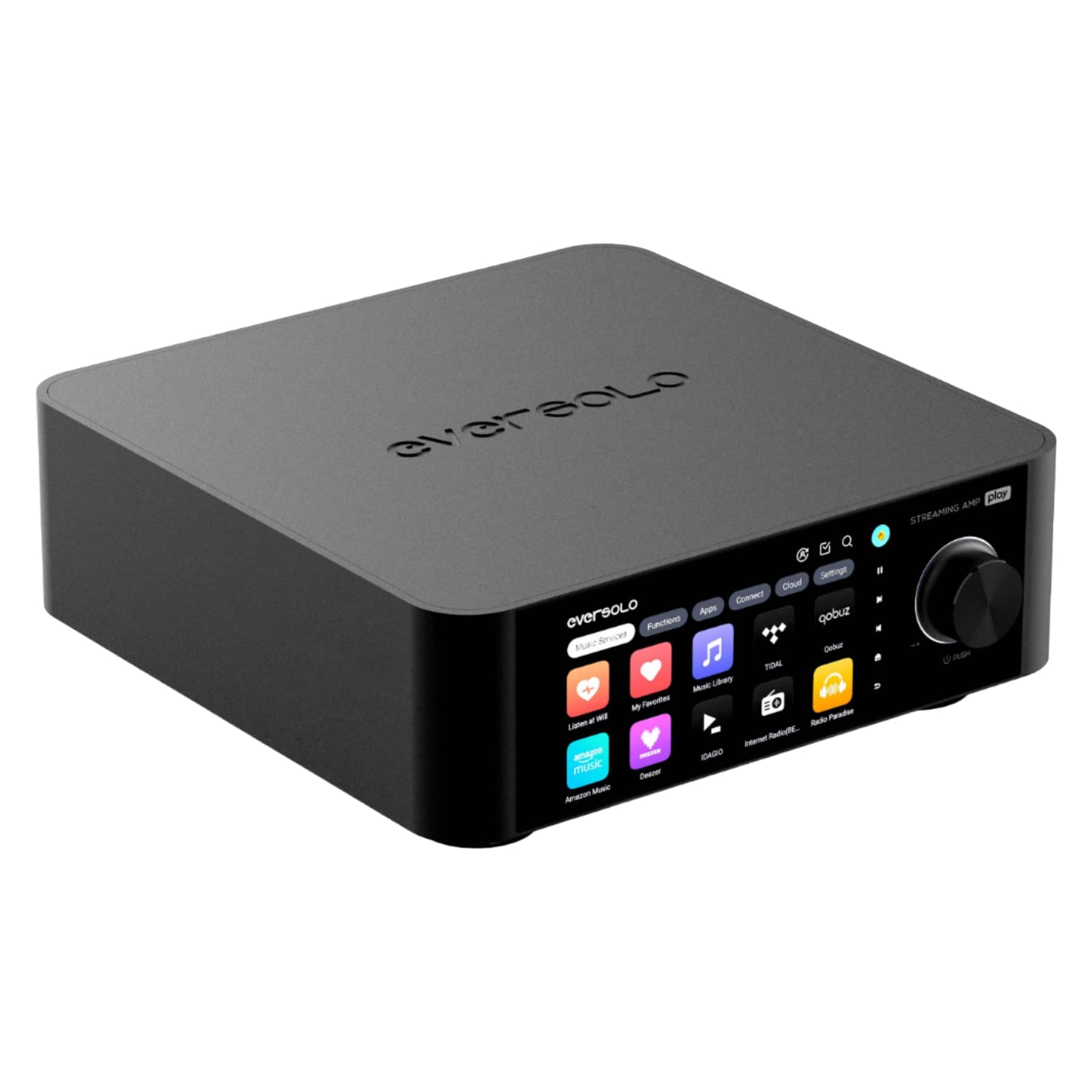
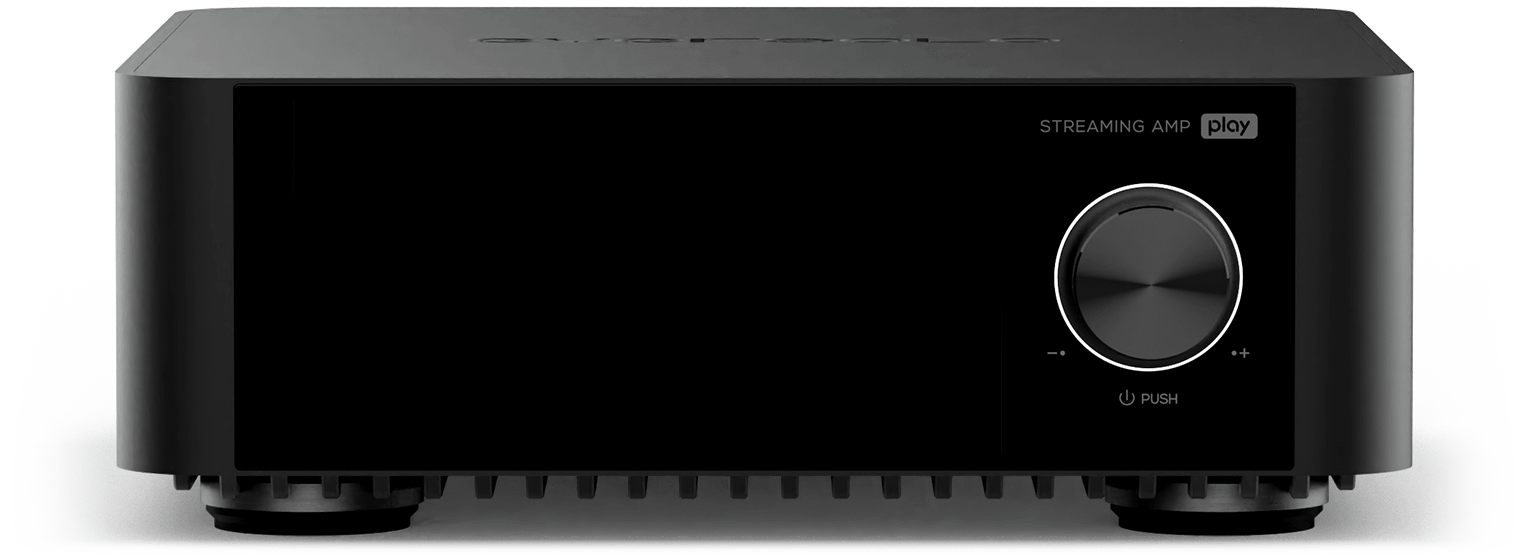
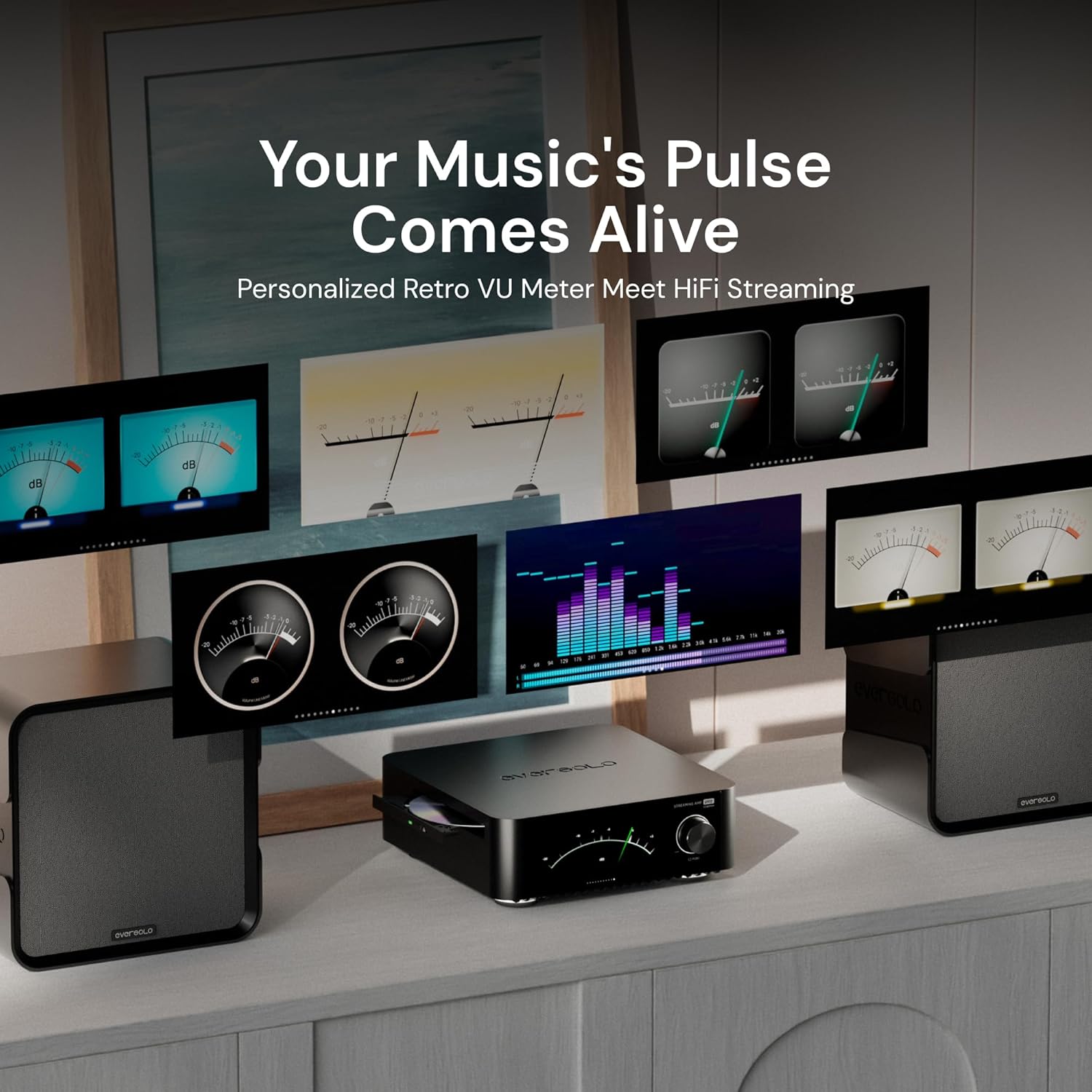
Both units feature touchscreen displays, but they serve somewhat different purposes. The Eversolo Play has a larger 5.5-inch screen that provides more space for album artwork, metadata, and menu navigation. It's clearly designed as a primary control interface, with customizable categories and visual feedback like VU meters and spectrum displays.
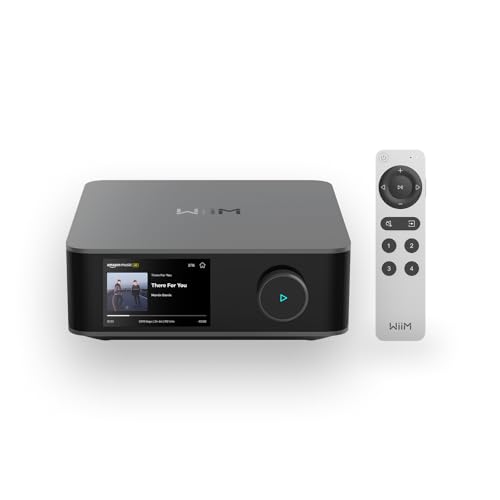
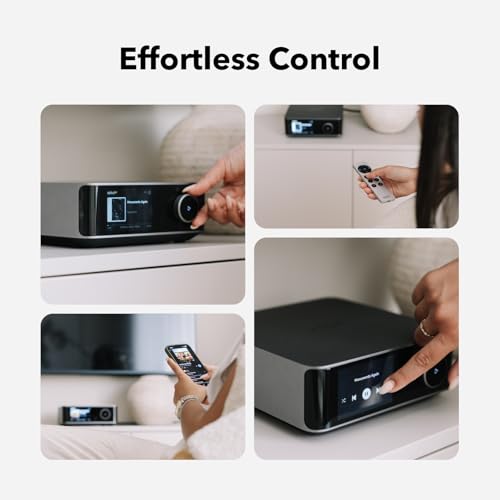
The WiiM Amp Ultra uses a smaller 3.5-inch glass touchscreen that focuses on essential functions: input selection, volume, basic playback control, and EQ presets. It's well-integrated but clearly designed to work primarily with the mobile app rather than as a standalone interface.
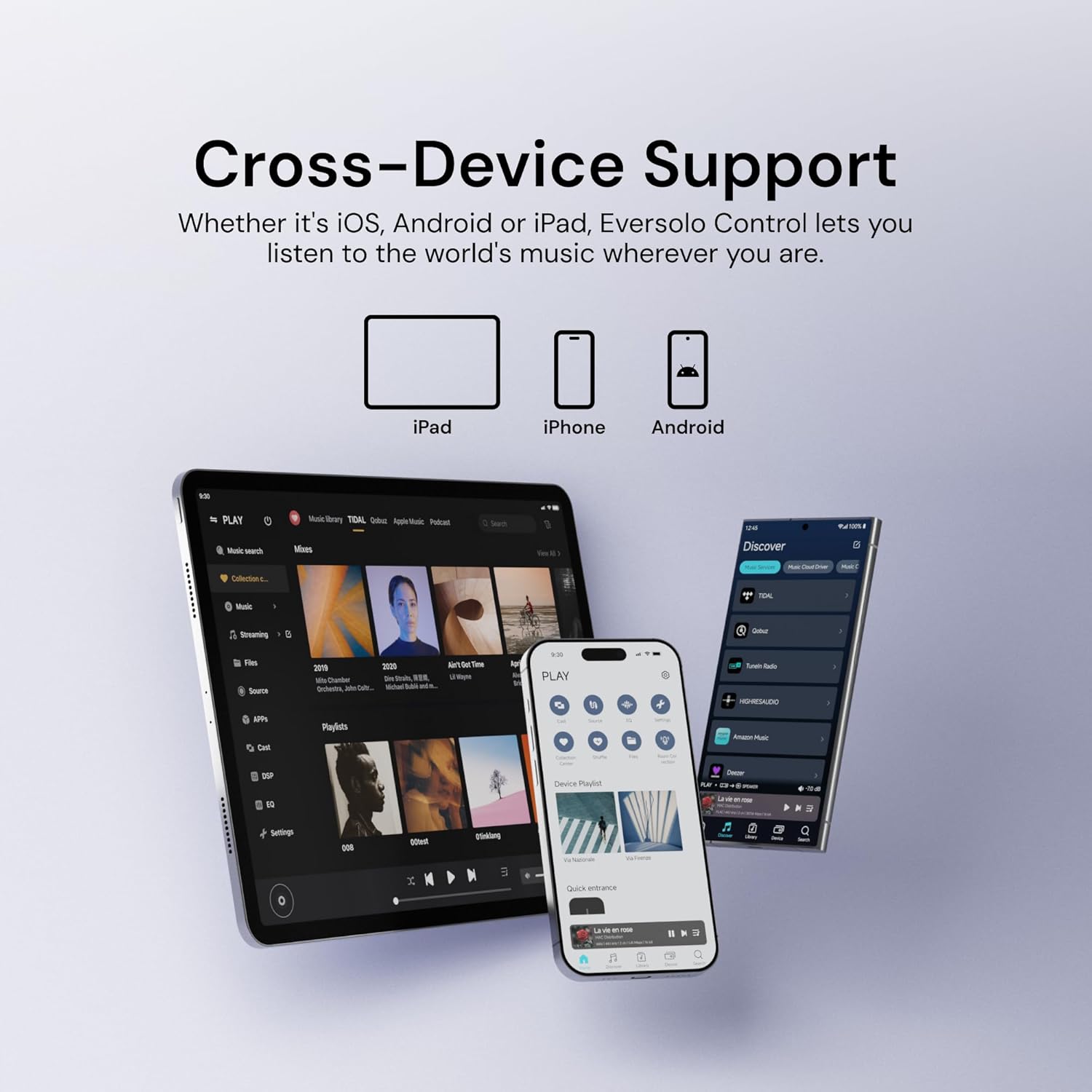
Both systems require their respective mobile apps for full functionality like browsing music libraries, managing streaming service integration, and accessing advanced settings. Based on our research, the WiiM Home app receives consistently positive reviews for its polish and regular updates, while the Eversolo app mirrors the interface design of their higher-end streamers.
If you're considering either unit for home theater use, the WiiM Amp Ultra has a clear advantage with its HDMI ARC input and Dolby Digital decoding. You can connect it directly to your TV and get significantly better audio quality than built-in TV speakers, with the option to add a subwoofer for a proper 2.1 system.
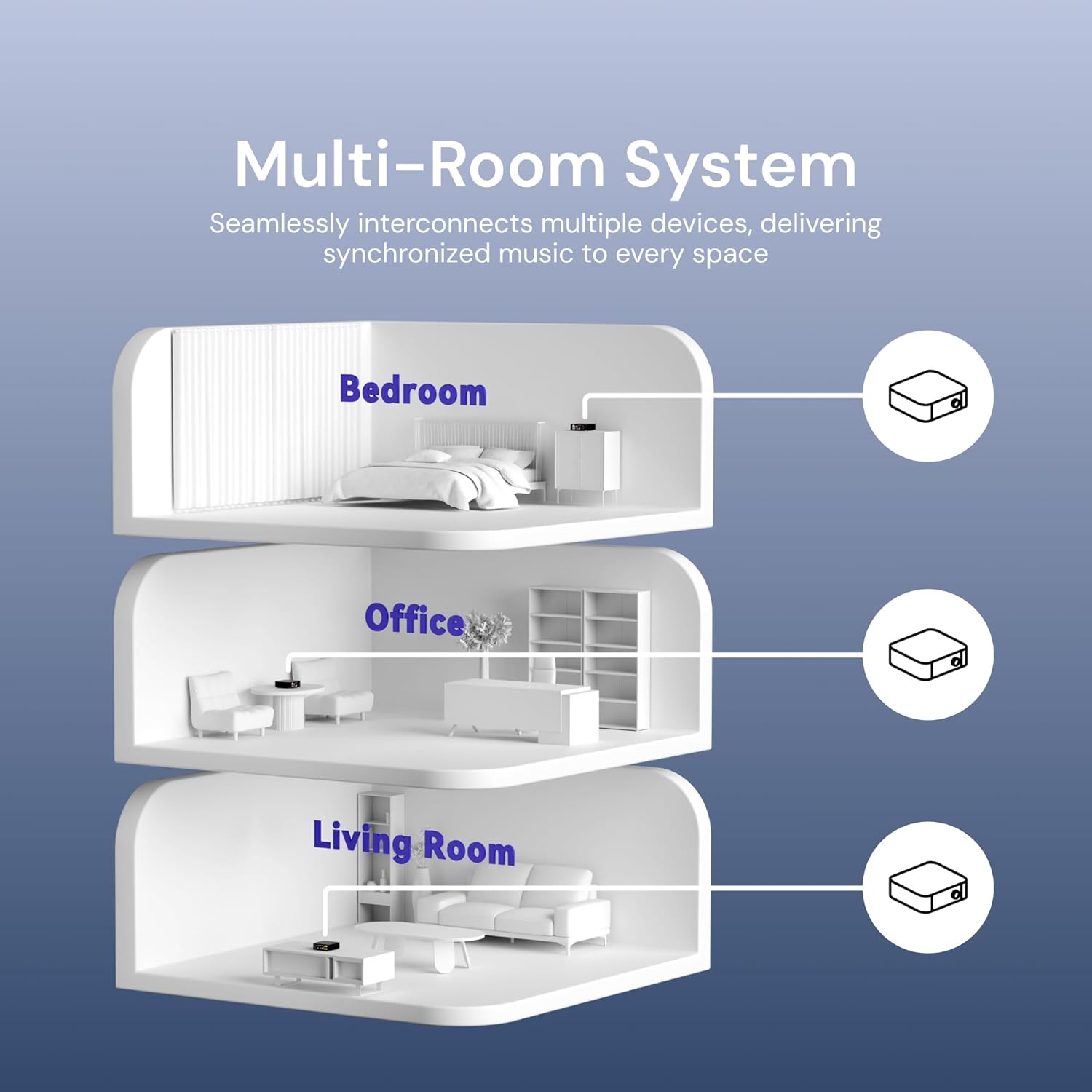
The WiiM also supports multi-room audio through the WiiM ecosystem, so you can synchronize music playback across multiple WiiM devices throughout your home. This makes it particularly appealing if you're planning to build out a whole-house audio system.
The Eversolo Play can certainly work in a home theater setup through its optical input, but it lacks the direct TV integration that makes the WiiM more convenient for this application.
At the time of writing, the WiiM Amp Ultra costs significantly less than the Eversolo Play while delivering more power and advanced features like room correction. This represents exceptional value for the performance and capability you're getting.
The WiiM Amp Ultra makes sense for most users, particularly those who:
The Eversolo Play justifies its higher price for more specific use cases:
Based on our analysis of professional measurements and user experiences, both units deliver excellent audio quality that punches well above their price points. The WiiM Amp Ultra tends to provide cleaner separation in complex musical passages and better dynamics, likely due to its superior power reserves and more sophisticated analog output stage.
The Eversolo Play excels with ultra-high-resolution content and provides a slightly warmer, more relaxed presentation that some users prefer for longer listening sessions. Its strength lies in handling audiophile recordings and providing that traditional hi-fi sound signature.
For most music streaming from services like Spotify, TIDAL, or Qobuz, both units will sound excellent. The differences become more apparent with demanding speakers, complex music, or when you're pushing volume levels.
The choice between these streaming amplifiers comes down to your priorities and use case. The WiiM Amp Ultra offers superior value for most users with significantly more power, advanced room correction, modern connectivity features, and smart home integration—all at a lower price point. It's the clear choice if you want maximum performance per dollar and modern conveniences.
Choose the Eversolo Play if you need its specific advantages: vinyl integration through the phono input, support for ultra-high-resolution audio files, or prefer the larger display and more traditional audiophile approach to system building.
For a first serious audio system or upgrading from a basic setup, the WiiM Amp Ultra provides more capability and growth potential. Its room correction alone can make a dramatic difference in most listening environments, and the extra power ensures compatibility with a wider range of speakers.
The Eversolo Play makes more sense if you're already invested in analog sources or have specific requirements for ultra-high-resolution playback that justify the premium.
Both represent excellent examples of how streaming amplifier technology has advanced, packing serious audio performance and convenience into compact, affordable packages that would have been impossible just a few years ago.
| Eversolo Play Streaming Amplifier | WiiM Amp Ultra Streaming Amplifier |
|---|---|
| Power Output - Critical for driving speakers and room-filling volume | |
| 60W @ 8Ω, 110W @ 4Ω (adequate for most bookshelf speakers) | 100W @ 8Ω, 200W @ 4Ω (drives demanding speakers and larger rooms) |
| Amplifier Configuration - More chips typically mean more power and better load handling | |
| Single Class D amplifier with PurePath Ultra HD technology | Dual Texas Instruments TPA3255 Class D amplifier chips |
| DAC Chip - Determines digital audio conversion quality and maximum resolution | |
| AKM AK4493SEQ supporting up to DSD512 and PCM 768kHz/32-bit | ESS ES9039Q2M SABRE with six TI OPA1612 op-amps, up to PCM 384kHz |
| Display Size - Larger screens show more album art and information | |
| 5.5-inch LCD touchscreen (more space for artwork and controls) | 3.5-inch glass touchscreen (compact but functional) |
| Room Correction - Automatically optimizes sound for your listening space | |
| Basic room correction via external microphone | Advanced RoomFit system using smartphone measurement |
| Phono Input - Essential for direct turntable connection without external preamp | |
| Yes, supports both MM and MC cartridges | No phono input (requires separate phono preamp for vinyl) |
| TV Integration - Simplifies home theater setup | |
| Optical input only (requires separate cable from TV) | HDMI ARC with Dolby Digital decoding (direct TV connection) |
| USB Audio Output - Allows connection to external high-end DACs | |
| Yes, supports full DSD512/PCM 768kHz output to external DACs | No USB audio output |
| WiFi Standard - Newer standards offer better speed and reliability | |
| Standard WiFi (adequate for streaming) | WiFi 6E tri-band (fastest, most reliable connection) |
| Multi-Room Audio - Synchronizes music across multiple rooms | |
| Limited multi-room capabilities | Full WiiM ecosystem multi-room and multi-zone support |
| Speaker Load Stability - Lower ohm ratings handle more speaker types | |
| Stable to 4 ohms (works with most speakers) | Stable to 2 ohms (handles complex or demanding speaker loads) |
| Smart Home Integration - Voice control and automation compatibility | |
| Basic streaming service integration | Full Alexa, Google Assistant, and voice remote support |
| AirPlay Support - Important for Apple ecosystem users | |
| Not specified in available documentation | No AirPlay 2 support (notable limitation) |
The WiiM Amp Ultra delivers significantly more power with 100W per channel at 8 ohms and 200W at 4 ohms, compared to the Eversolo Play at 60W and 110W respectively. This 67% power advantage makes the WiiM Amp Ultra better suited for driving demanding speakers or filling larger rooms with sound.
Only the Eversolo Play includes a built-in phono stage that supports both MM and MC cartridges, allowing direct turntable connection. The WiiM Amp Ultra lacks a phono input, so you'd need a separate phono preamp to connect a turntable.
The WiiM Amp Ultra excels for home theater use with its HDMI ARC input and Dolby Digital decoding, allowing direct connection to your TV for superior audio quality. The Eversolo Play can work with TVs through optical input but requires a separate cable connection.
The WiiM Amp Ultra includes advanced RoomFit room correction that uses your smartphone to measure acoustics and automatically optimize sound. The Eversolo Play offers basic room correction via external microphone but lacks the sophisticated automatic calibration of the WiiM system.
The WiiM Amp Ultra provides exceptional value with more power, advanced room correction, and modern connectivity features while costing less than the Eversolo Play. However, the Eversolo justifies its premium for users needing vinyl integration or ultra-high-resolution audio support.
Both support high-resolution audio, but the Eversolo Play goes further with native DSD512 and PCM 768kHz/32-bit support. The WiiM Amp Ultra handles up to PCM 384kHz, which covers virtually all available high-resolution content from streaming services.
The Eversolo Play features a larger 5.5-inch touchscreen with more space for album artwork and controls, while the WiiM Amp Ultra uses a smaller 3.5-inch display focused on essential functions. Both require mobile apps for full library browsing.
The WiiM Amp Ultra offers comprehensive smart home integration with Alexa, Google Assistant, and includes a voice remote. The Eversolo Play has more limited voice control capabilities, focusing primarily on streaming service integration.
The WiiM Amp Ultra excels at multi-room audio with full WiiM ecosystem support for synchronized playback across multiple devices. The Eversolo Play has more limited multi-room capabilities compared to the WiiM's comprehensive whole-house audio features.
The Eversolo Play includes a USB audio output supporting its full resolution range, making it excellent for feeding external DACs. The WiiM Amp Ultra lacks USB audio output, limiting external DAC connectivity options.
The WiiM Amp Ultra handles challenging speakers better with its higher power output and stability down to 2-ohm loads. It can even drive up to four passive speakers simultaneously. The Eversolo Play works well with most speakers but may struggle with very inefficient or complex loads.
Both the Eversolo Play and WiiM Amp Ultra offer user-friendly experiences, but the WiiM Amp Ultra edges ahead for beginners with its automatic room correction, simpler setup process, and comprehensive app ecosystem. The Eversolo appeals more to users with specific audiophile requirements or existing analog sources.
We've done our best to create useful and informative comparisons to help you decide what product to buy. Our research uses advanced automated methods to create this comparison and perfection is not possible - please contact us for corrections or questions. These are the sites we've researched in the creation of this article: blog.son-video.com - audio46.com - upscaleaudio.com - audioadvice.com - musicdirect.com - audio46.com - whathifi.com - whathifi.com - bloomaudio.com - youtube.com - the-ear.net - whathifi.com - soundstagesimplifi.com - youtube.com - stevehuffphoto.com - darko.audio - youtube.com - eversolo.com - ecoustics.com - audacityaustralia.com.au - forum.wiimhome.com - erinsaudiocorner.com - forum.wiimhome.com - stevehuffphoto.com - darko.audio - bryanruby.com - youtube.com - audiosciencereview.com - ecoustics.com - smarthomesounds.co.uk - socpub.com - audio-2g.com - hifihut.ie

Privacy Policy
Terms and Conditions - Affiliate Policy
Home Security
© Copyright 2008-2026.
11816 Inwood Rd #1211, Dallas, TX 75244