


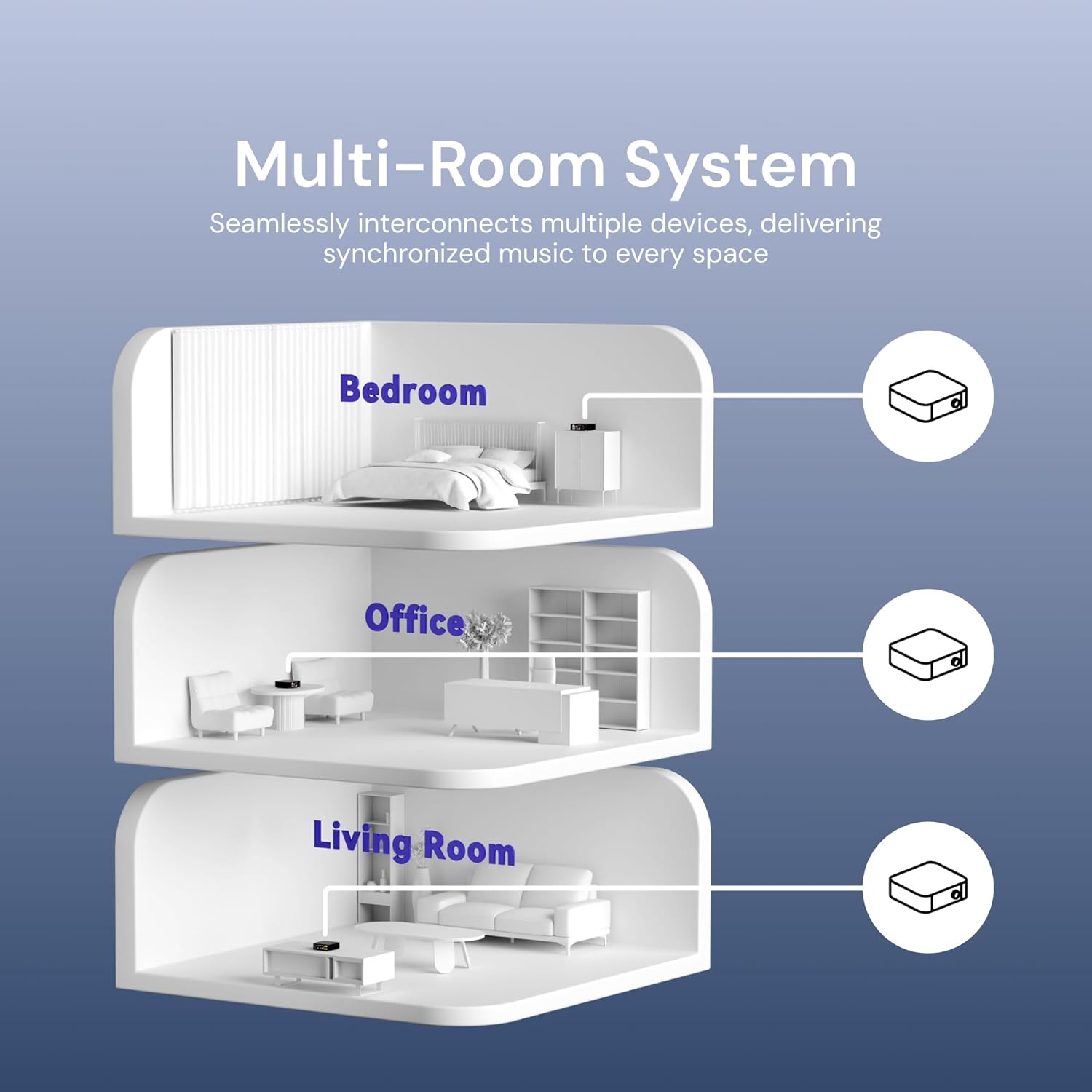
When it comes to upgrading your audio setup without taking over your entire living space, compact integrated amplifiers offer an appealing solution. These all-in-one units pack a preamplifier, power amplifier, and digital-to-analog converter (DAC) into a single box that can fit on your desk or bookshelf. The question isn't whether you need one—it's which approach makes the most sense for your listening habits and budget.
Two products perfectly illustrate the current divide in this market: the Eversolo Play, a 2025 streaming-first amplifier that embraces our connected world, and the NAD D 3020 V2, a 2018 traditional integrated amplifier that focuses on core audio functionality. At the time of writing, these products are separated by roughly $300, which might seem significant until you understand what that difference actually buys you.
Before diving into specifics, it helps to understand what we're dealing with. An integrated amplifier combines two essential functions: a preamplifier (which handles source selection, volume control, and tone shaping) and a power amplifier (which drives your speakers). Modern versions add a DAC to convert digital signals from sources like streaming services, CD players, or your computer into analog signals that can be amplified and sent to speakers.
The beauty of this approach is simplicity. Instead of buying separate components that need to work together, you get everything in one box. This saves money, reduces complexity, and eliminates the cable management headaches that come with multi-component systems.
The most fundamental difference between the Eversolo Play and NAD D 3020 V2 lies in their power output, and this isn't just about raw numbers—it's about real-world usability.
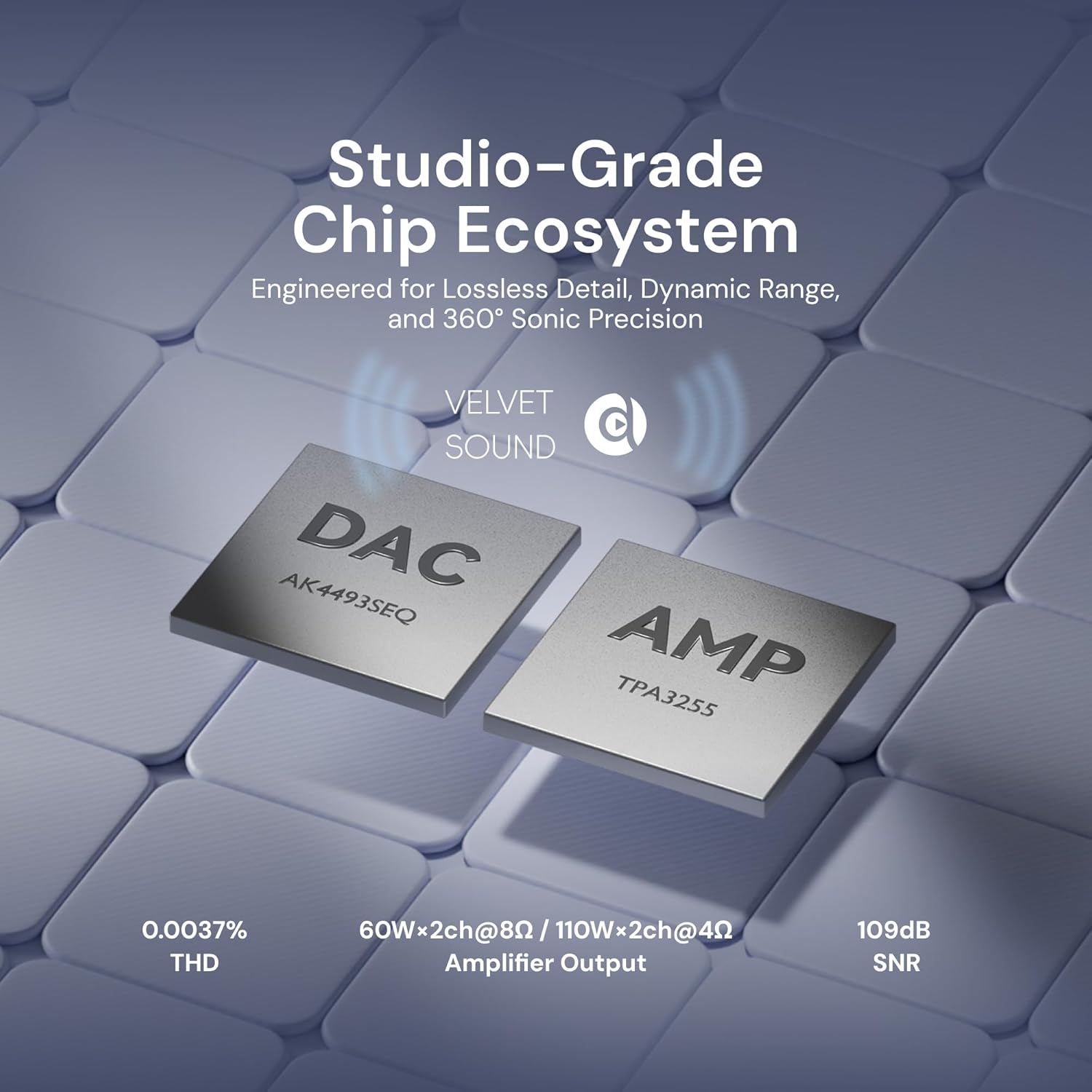
The Eversolo Play delivers 60 watts per channel into 8-ohm speakers (the standard impedance for most bookshelf speakers) and 110 watts into 4-ohm speakers. This represents genuine, continuous power that the amplifier can maintain without strain. The NAD D 3020 V2, meanwhile, provides 30 watts per channel into both 8-ohm and 4-ohm loads.
Here's why this matters in practice: power requirements aren't linear. To sound twice as loud, you need roughly ten times the power. But more importantly, having power in reserve means your amplifier isn't working at its limits during dynamic music passages—those moments when drums hit hard or orchestras swell. Running an amplifier near its maximum output often results in compression, distortion, and a general sense that the music is being held back.
User reports consistently highlight this issue with the NAD D 3020 V2. Many owners find themselves running the volume control near maximum for moderate listening levels, especially when using the phono input for vinyl records. This leaves no headroom for dynamic peaks and can make the system sound strained.
The Eversolo Play doubling the continuous power output means it can drive a much wider range of speakers comfortably. Whether you're using compact bookshelf speakers in a small room or larger floorstanding speakers in a medium-sized living space, you'll have adequate power reserves.
Both amplifiers use Class D technology, which is essentially a highly efficient switching amplifier design. Unlike traditional Class A or Class AB amplifiers that waste energy as heat, Class D amplifiers can achieve over 90% efficiency. This means they run cooler, use less electricity, and can be built into smaller enclosures without massive heat sinks.
The digital-to-analog converter might be the most critical component in any modern audio system, as it's responsible for translating the zeros and ones of digital music into the analog waveforms your ears actually hear. The quality of this conversion directly impacts everything you hear.
The Eversolo Play uses an AKM AK4493SEQ DAC, a premium chip that supports incredibly high-resolution audio formats. It can handle DSD512 (a format used for some of the highest-quality digital recordings available) and PCM audio up to 768kHz/32-bit resolution. To put this in perspective, CD-quality audio is 44.1kHz/16-bit, so we're talking about roughly 17 times the resolution in the frequency domain and 65,000 times the resolution in amplitude.
More importantly, the Eversolo Play achieves exceptional technical specifications: a signal-to-noise ratio of 109dB (meaning the music is 109 decibels louder than any background noise the unit produces) and total harmonic distortion of just 0.0037%. These numbers indicate that the amplifier adds virtually nothing unwanted to your music signal.
The NAD D 3020 V2 uses a Cirrus Logic CS42528 DAC configured in what NAD calls "dual differential mode," using eight DAC channels mixed down to two stereo channels. This approach, borrowed from high-end AV receivers, can improve performance, but the chip itself is limited to 24-bit/192kHz resolution—still excellent, but not as future-proof as the Eversolo's capabilities.
The NAD's specifications are respectable: signal-to-noise ratio between 90-98dB depending on the source, and total harmonic distortion below 0.01%. These numbers indicate clean performance, but they're a step behind what the Eversolo Play achieves.
Perhaps the biggest philosophical difference between these amplifiers is how they approach modern music consumption. The Eversolo Play embraces streaming as a primary source, while the NAD D 3020 V2 treats it as an afterthought.
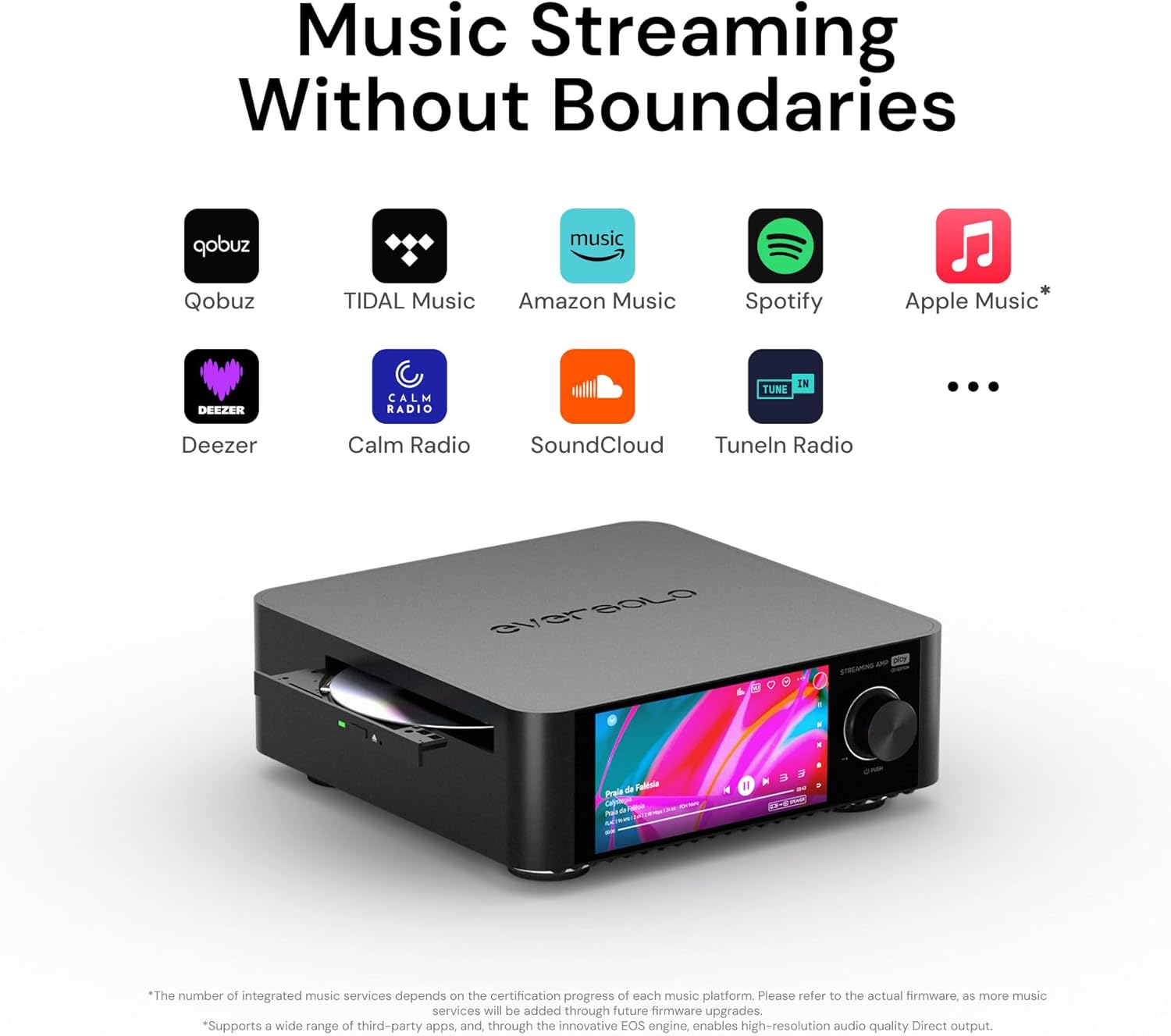
The Eversolo Play offers native integration with virtually every major streaming service: TIDAL Connect, Qobuz Connect, Amazon Music, Spotify Connect, and others. It's also Roon Ready, meaning it works seamlessly with Roon's sophisticated music management software. The unit can stream directly from these services without needing a separate device, and it supports the highest quality streams available—including TIDAL's Master Quality Authenticated (MQA) files and Qobuz's hi-res offerings.
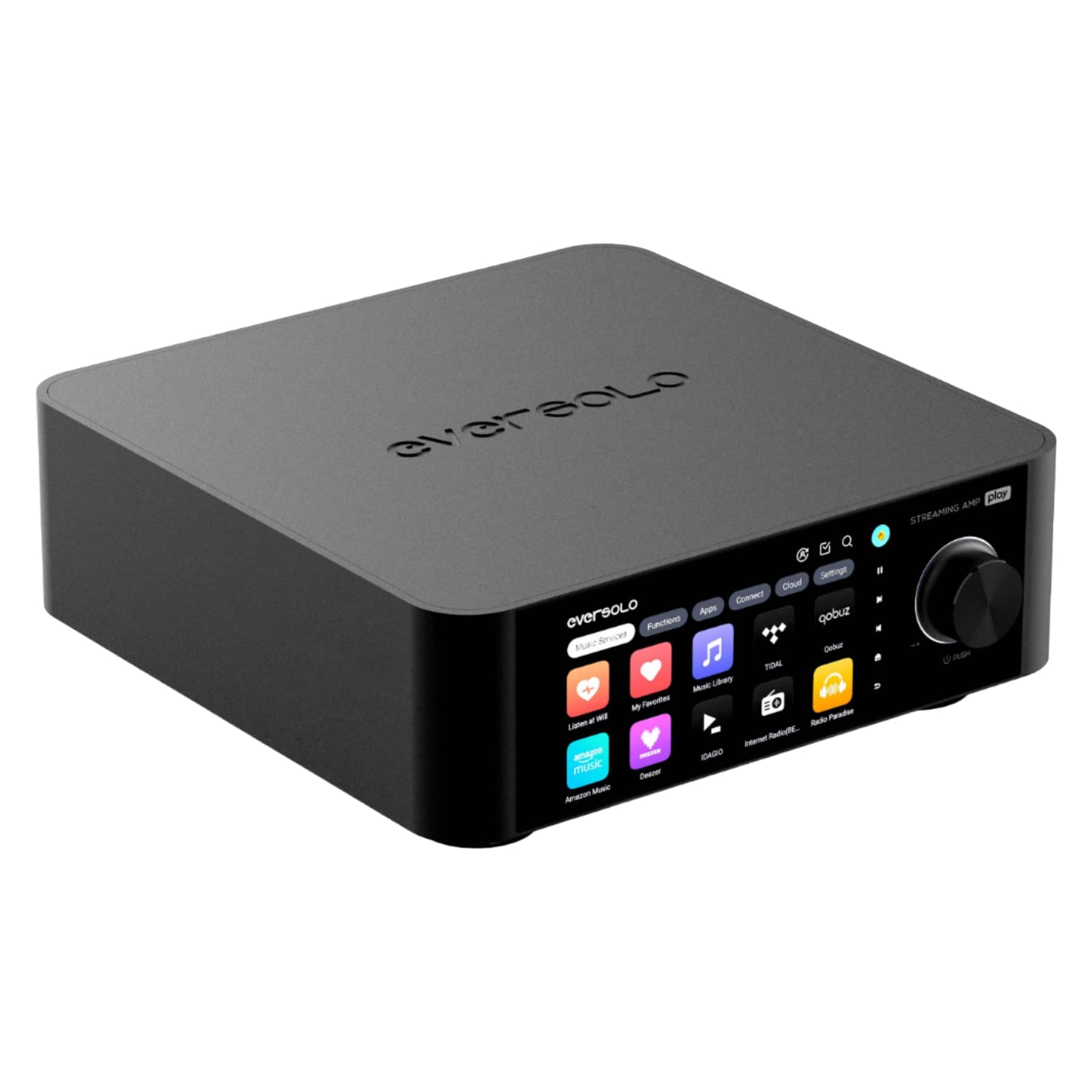
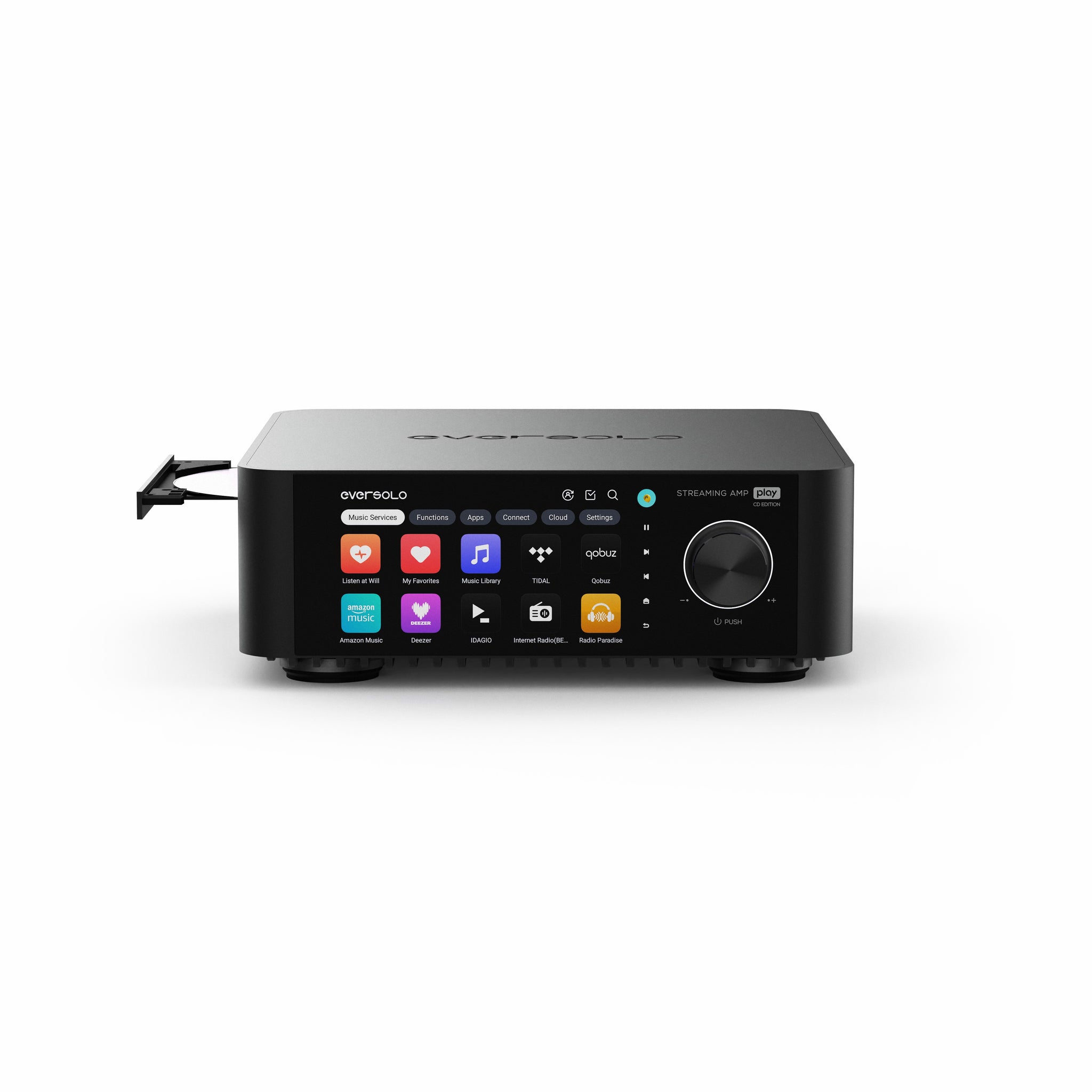
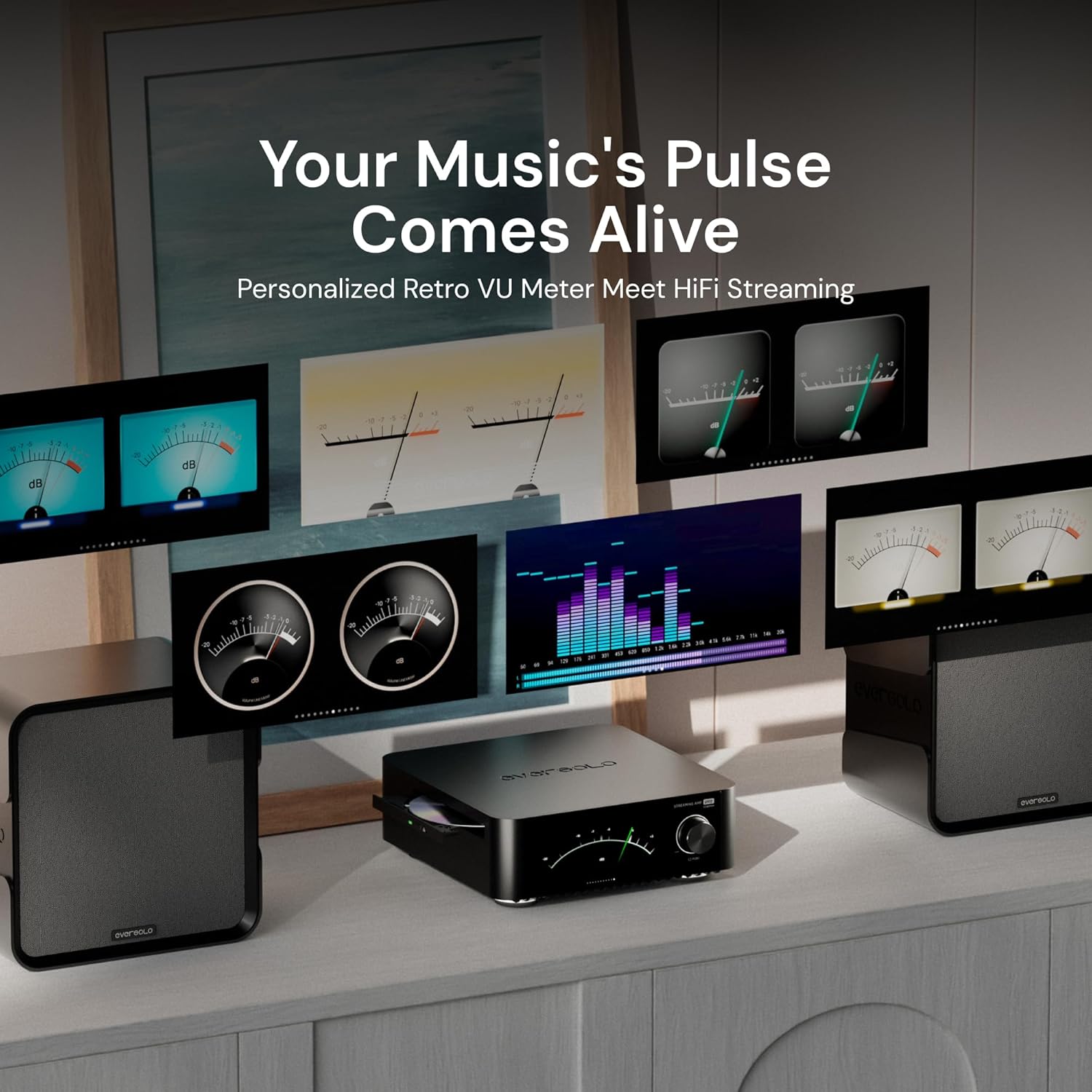
The 5.5-inch touchscreen on the Eversolo Play transforms how you interact with your music. Instead of fumbling with phone apps or separate streaming devices, you can browse, search, and control playback directly from the amplifier itself. The interface shows album artwork, lyrics, and detailed information about what you're playing.
The NAD D 3020 V2 takes a different approach. It includes Bluetooth with aptX encoding (a higher-quality Bluetooth codec), but that's essentially the extent of its wireless capabilities. There's no Wi-Fi, no native streaming service integration, and no network connectivity. You'll need to stream from your phone or computer to the amplifier via Bluetooth.
Unfortunately, user reports consistently describe the NAD's Bluetooth implementation as problematic. Many owners report frequent connection drops, pairing difficulties, and audio glitches that make the feature frustrating to use regularly. This significantly limits the amplifier's convenience for casual listening.
Both amplifiers recognize that many users have multiple sources, but they approach connectivity differently.
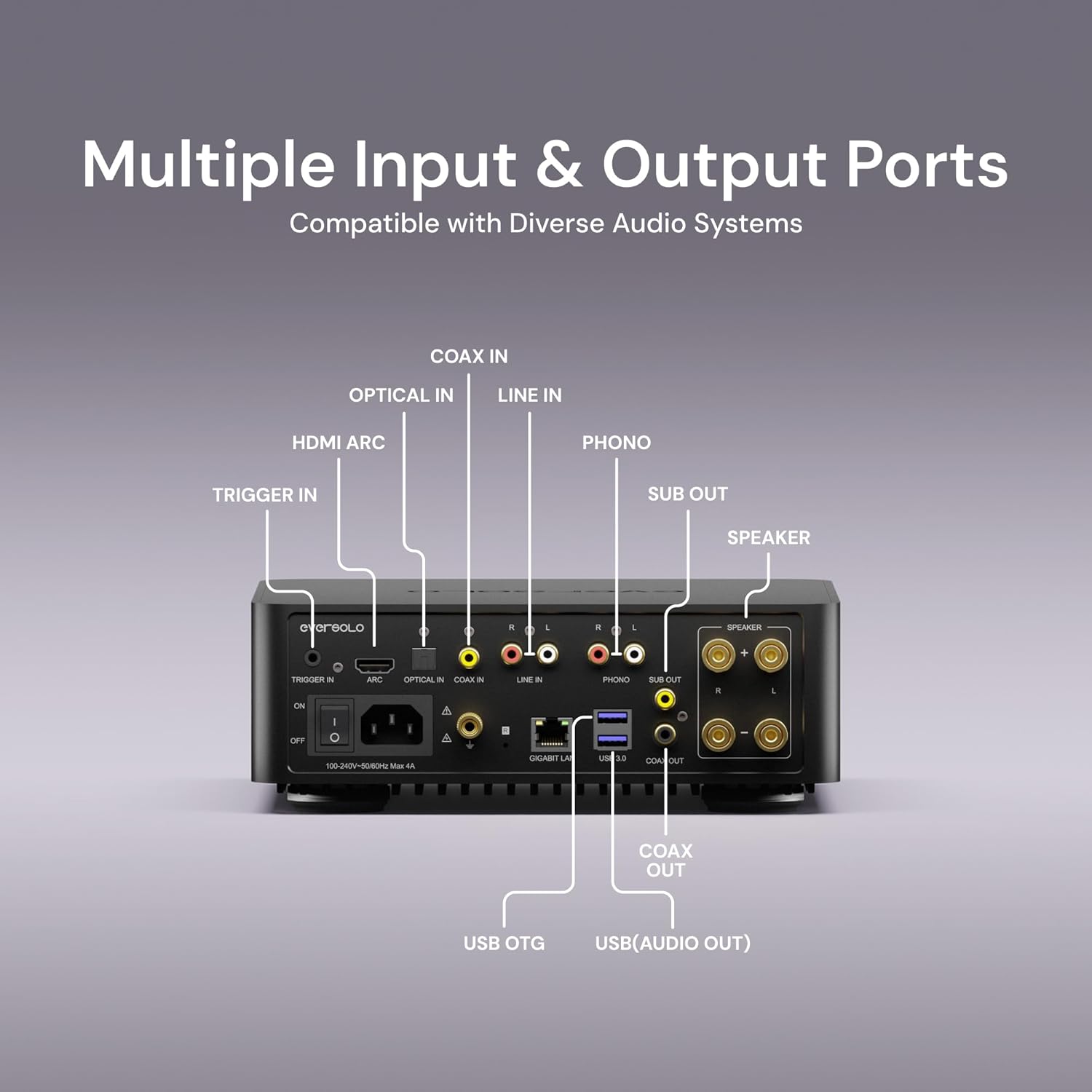
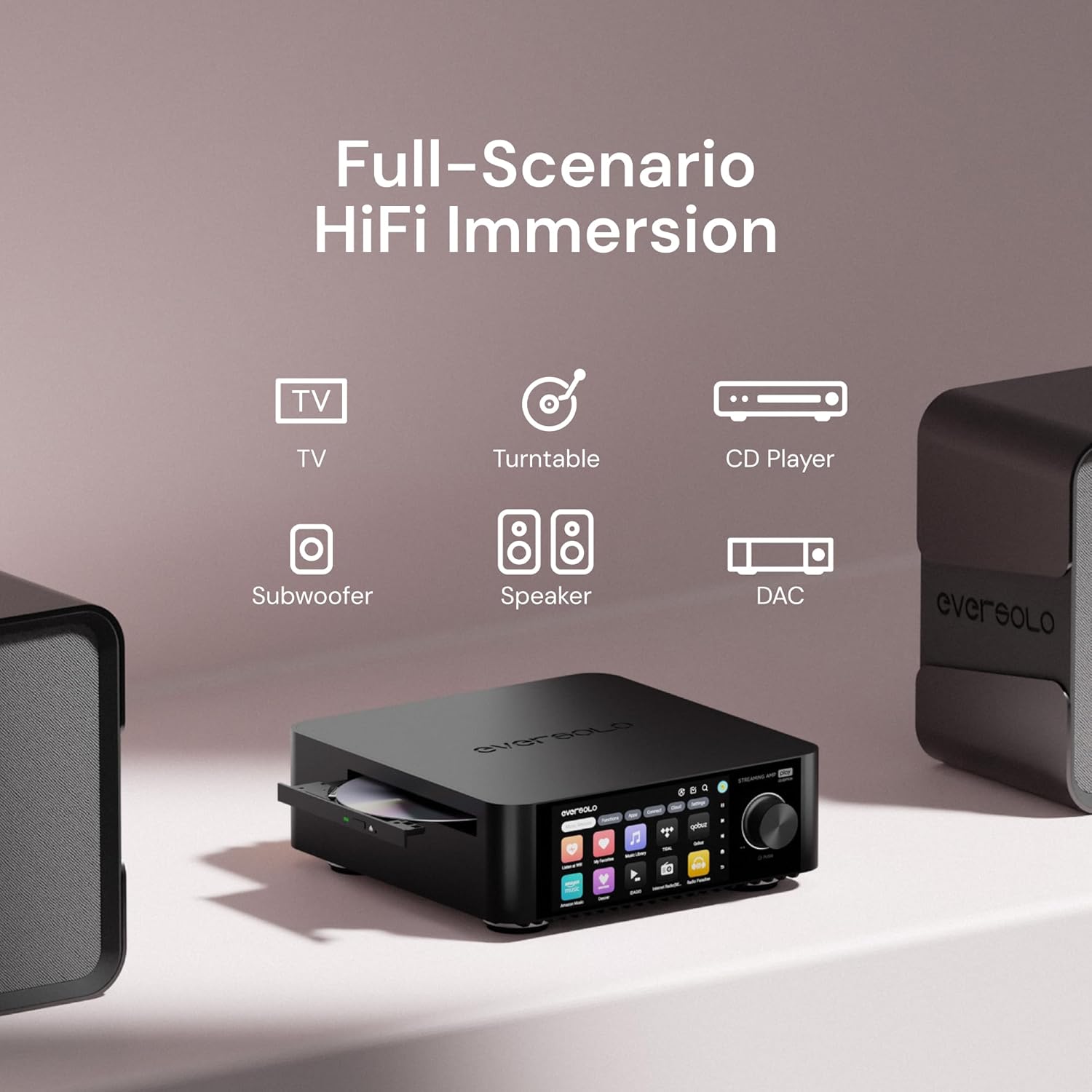
The Eversolo Play offers comprehensive modern connectivity: HDMI ARC (for connecting directly to your TV), optical and coaxial digital inputs, analog line inputs, and both MM (moving magnet) and MC (moving coil) phono inputs for turntables. The HDMI ARC connection is particularly valuable for home theater integration—it allows the amplifier to receive high-quality audio directly from your TV, eliminating the need for separate audio cables and supporting advanced audio formats.
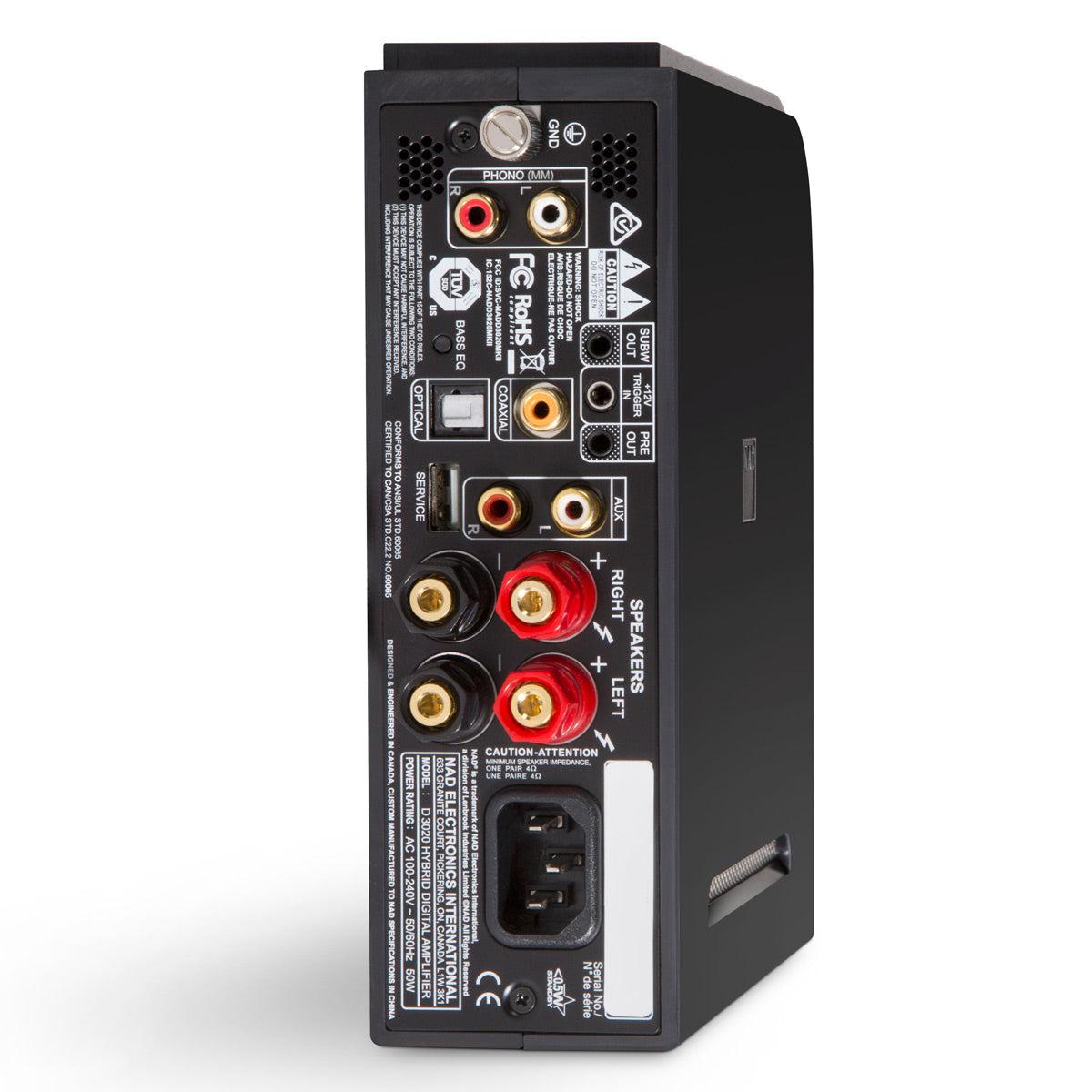
The NAD D 3020 V2 provides the essentials: MM phono input, one set of analog line inputs, optical and coaxial digital inputs, plus headphone and subwoofer outputs. While adequate for basic setups, the limited analog inputs mean you'll need to swap cables if you have multiple analog sources.
Both units include phono stages for connecting turntables, which is increasingly important as vinyl experiences a renaissance. However, the Eversolo Play supports both moving magnet and moving coil cartridges (MC cartridges typically offer better performance but require more amplification), while the NAD D 3020 V2 only handles moving magnet cartridges. Additionally, several NAD users report noise issues with the phono stage at higher volume levels, which can be problematic for quieter vinyl recordings.
The user interface represents another fundamental divide between these approaches. The Eversolo Play embraces touchscreen control with a comprehensive mobile app, while the NAD D 3020 V2 relies on traditional knobs and buttons.
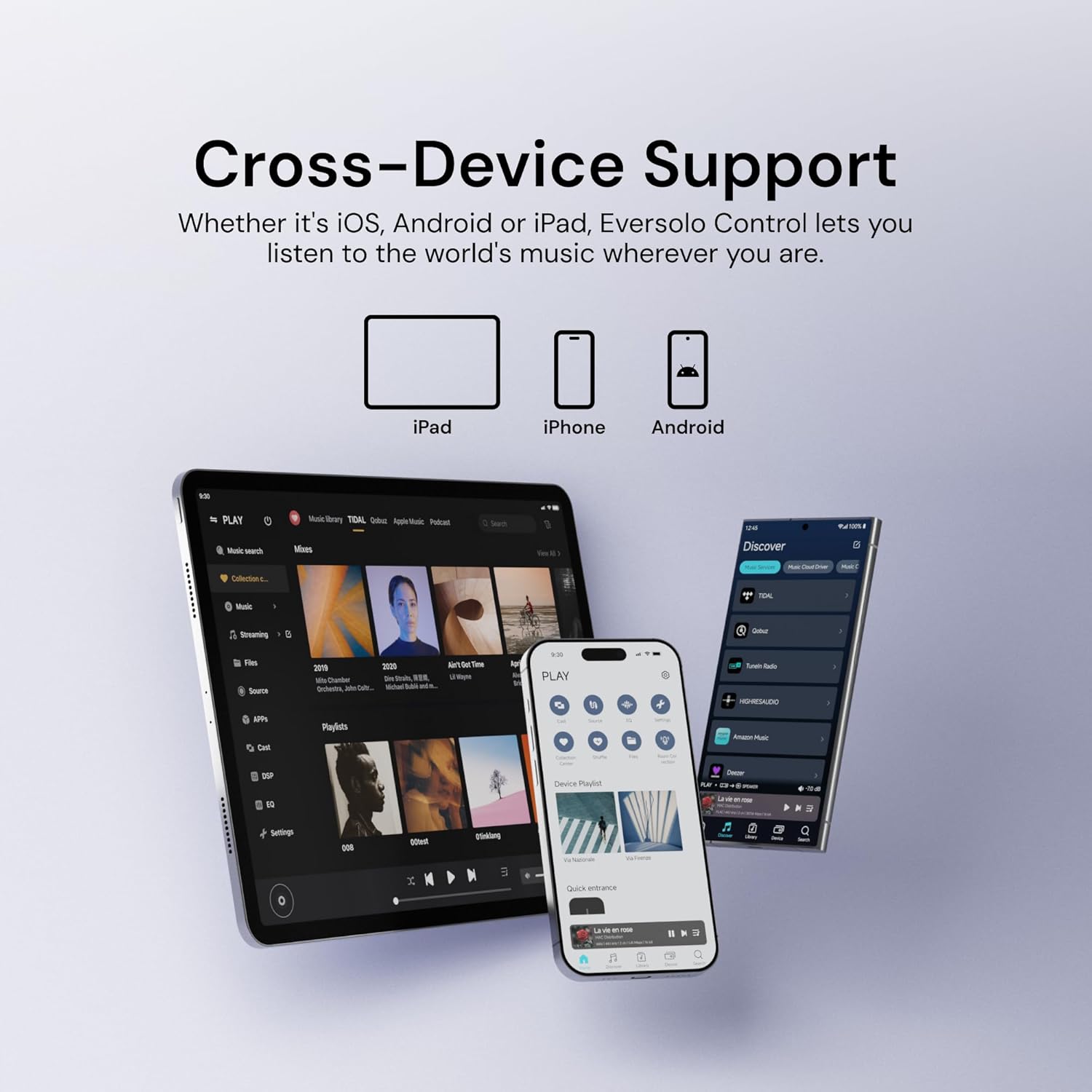
The Eversolo's touchscreen isn't just flashy—it's genuinely functional. You can adjust the extensive equalization options, manage streaming services, view detailed track information, and control room correction settings. The accompanying mobile app extends this control to your smartphone or tablet, letting you manage your music from anywhere in the room.
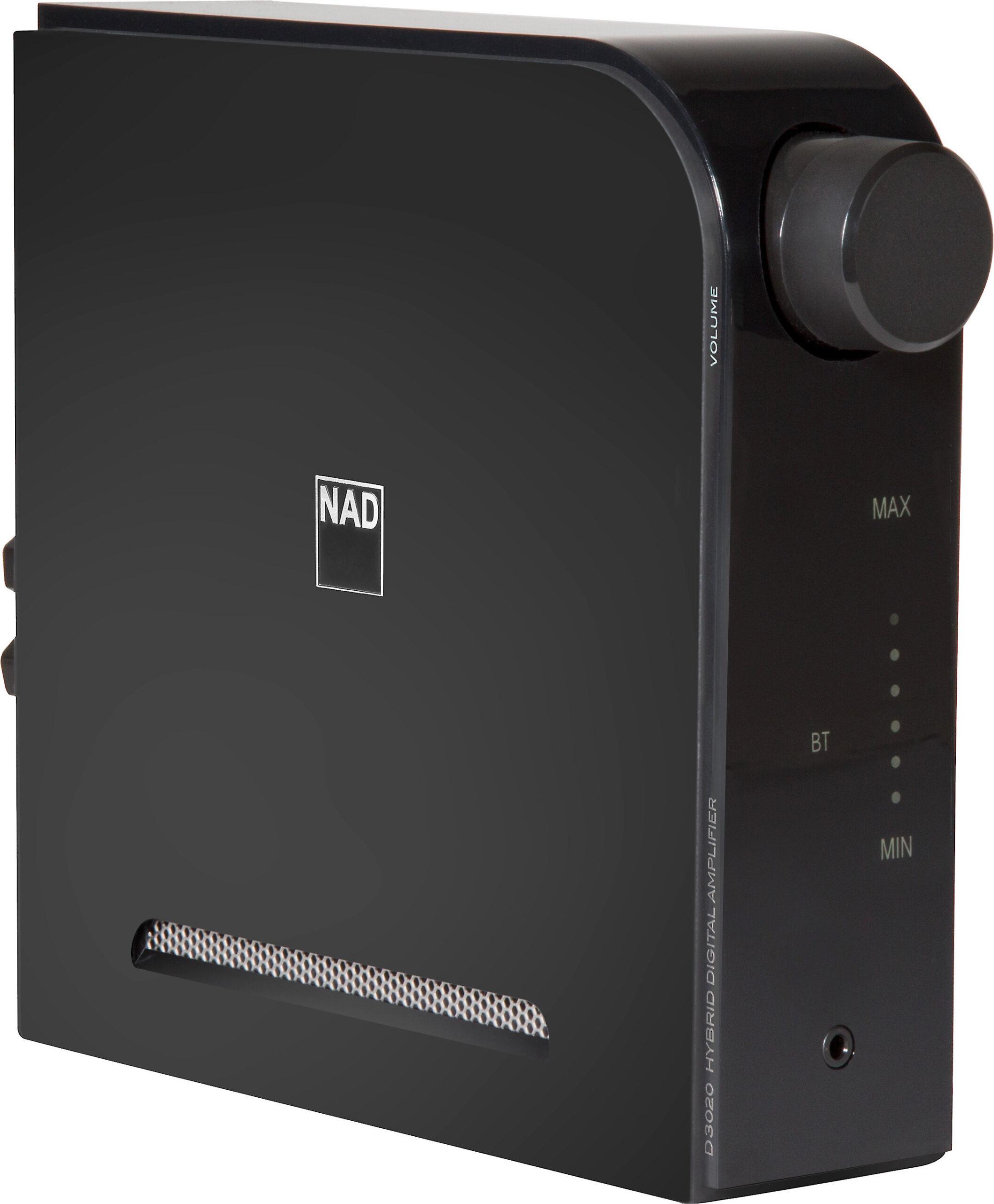
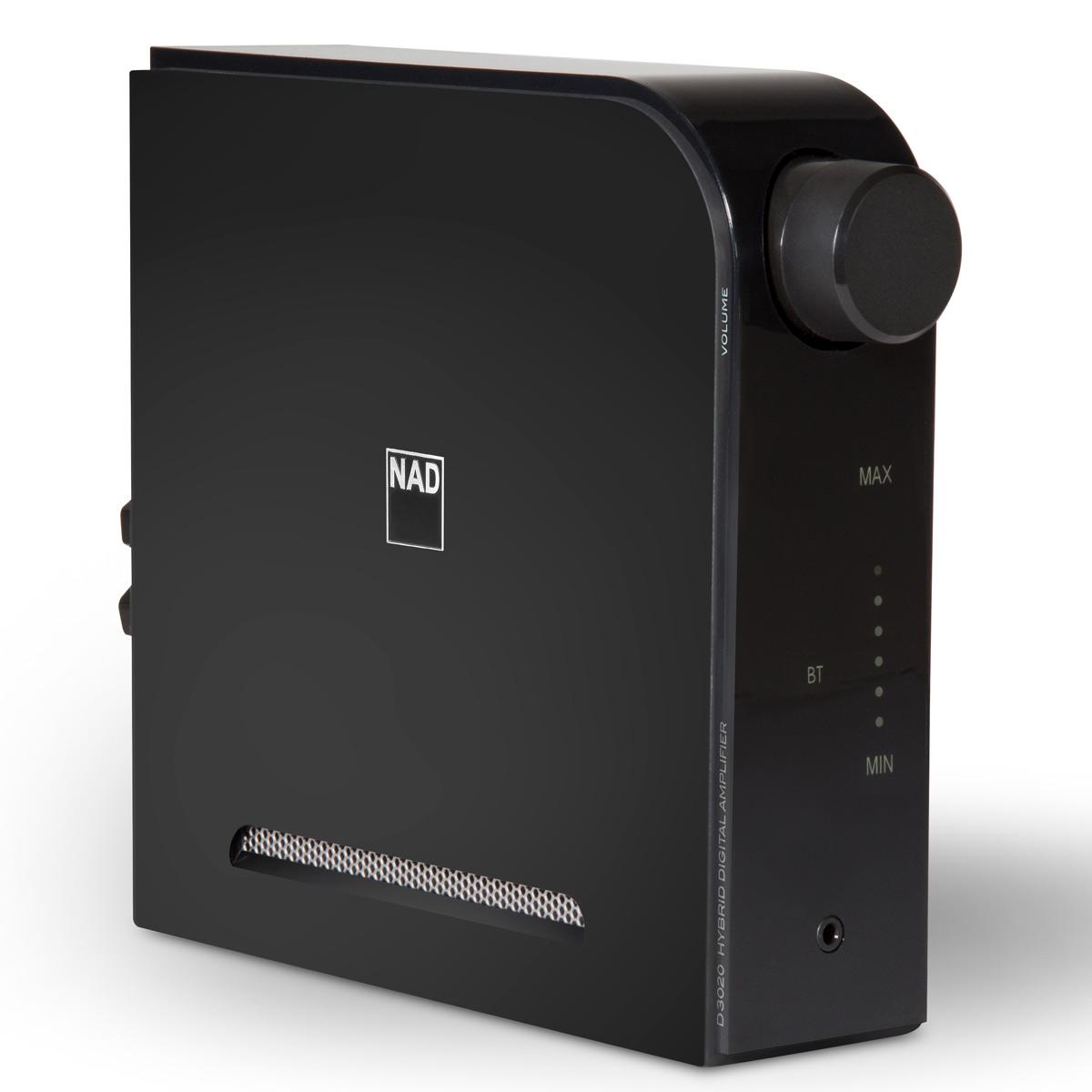
The NAD D 3020 V2 uses a more traditional approach with a volume dial and source selection buttons. While some purists prefer physical controls, user reports consistently criticize the included remote control as tiny, unresponsive, and requiring multiple button presses to register commands.
Modern listening environments are rarely acoustically perfect. Most of us listen in living rooms with furniture, windows, and other obstacles that affect sound quality. The Eversolo Play addresses this with comprehensive room correction and equalization options.
The unit includes a 15-band graphic equalizer, 10-band parametric equalizer, and over 20 genre-specific presets. More importantly, it offers automatic room correction using either an external USB microphone or your smartphone's microphone. This feature analyzes your room's acoustic properties and adjusts the sound accordingly, potentially making a dramatic improvement in systems where speaker placement isn't optimal.
The NAD D 3020 V2 includes only a basic bass EQ circuit designed to help small speakers sound fuller without overdriving their woofers. While useful, this is a far cry from the comprehensive adjustment capabilities of the Eversolo.
These amplifiers represent different approaches to physical design that reflect their target users.
The NAD D 3020 V2 prioritizes space efficiency above all else. Its compact vertical design can fit almost anywhere, and it can be oriented horizontally if needed. At just over 3 pounds, it's genuinely portable. The trade-off is a somewhat plasticky feel that some users find disappointing at this price level.
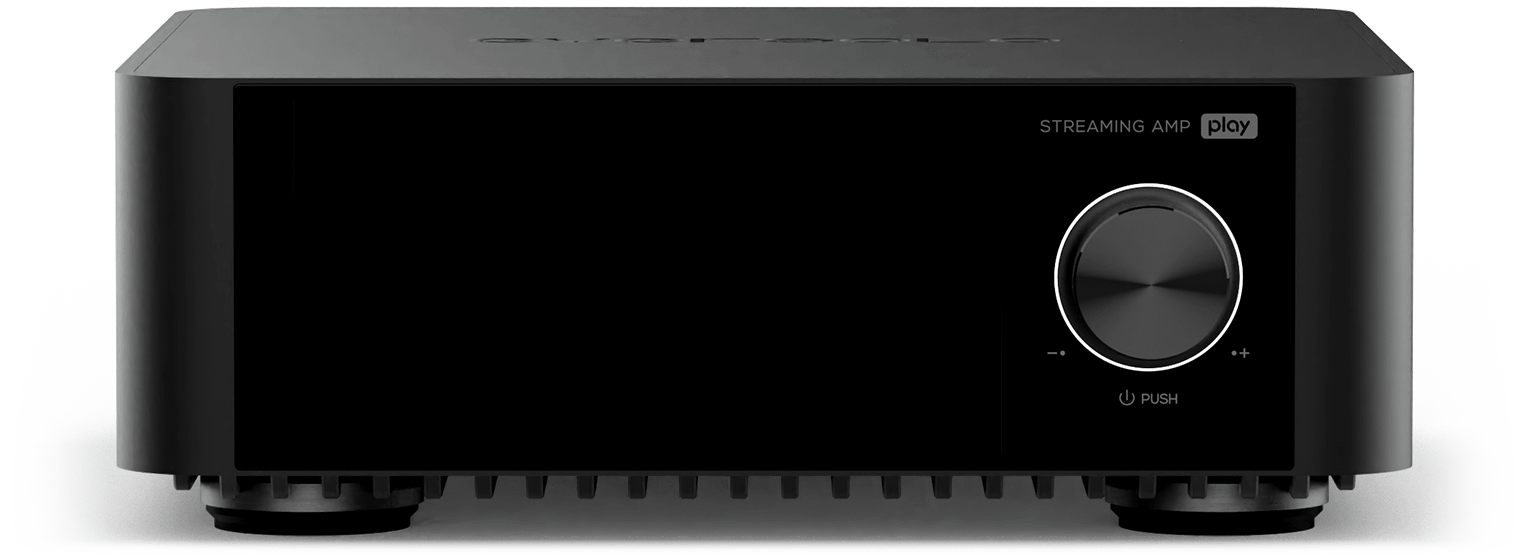
The Eversolo Play takes up more desk space with its square footprint, but the CNC-machined aluminum construction with glass front panel feels appropriately substantial. The larger size accommodates the touchscreen and more comprehensive internal circuitry, but it's definitely more of a permanent installation.
For users interested in connecting their amplifier to a TV or projector, the Eversolo Play offers significant advantages through its HDMI ARC connection. This single cable can carry high-quality audio from your TV back to the amplifier, supporting advanced formats and eliminating the need for separate optical or analog audio cables.
This makes the Eversolo an excellent choice for users who want to improve their TV's audio quality while maintaining a simple, elegant setup. The NAD D 3020 V2 can certainly work with TVs through its optical input, but the setup is less convenient and doesn't support the latest audio formats.
At the time of writing, the price difference between these amplifiers is substantial but not insurmountable for most buyers seriously considering either option. The question is whether the Eversolo Play's additional features justify the extra cost.
Consider what the price premium buys: double the power output, comprehensive streaming integration that eliminates the need for separate streaming devices, superior DAC specifications, modern touchscreen control, extensive room correction capabilities, and more comprehensive connectivity including HDMI ARC.
For many users, the streaming capabilities alone could justify the difference. A quality standalone network streamer often costs several hundred dollars, and the Eversolo Play essentially includes this functionality while providing better specifications than many dedicated streamers.
The NAD D 3020 V2 represents excellent value for users with specific requirements: those who primarily use analog sources, have very limited space, maintain a strict budget, or simply prefer traditional controls. The NAD's compact size and efficient design make it ideal for desktop systems or installations where space is at an absolute premium.
The Eversolo Play makes the most sense for users who:
The NAD D 3020 V2 is better suited for users who:
These amplifiers represent two valid but different philosophies. The Eversolo Play embraces the connected, feature-rich approach that defines modern audio, while the NAD D 3020 V2 focuses on essential functionality at an accessible price point.
Based on our research and evaluation of user experiences, the Eversolo Play provides significantly more capability and future-proofing for the price difference. Unless space or budget constraints are absolute priorities, the Eversolo's combination of adequate power, comprehensive streaming, and modern conveniences makes it the more versatile choice for most users building a system in 2025.
However, the NAD D 3020 V2 remains a viable option for specific use cases where its compact size and lower cost outweigh its limitations. The key is honestly assessing your priorities: if you value streaming convenience and have moderate power requirements, the Eversolo justifies its premium pricing. If you need basic amplification in the smallest possible package and can work within its constraints, the NAD delivers solid performance at a lower entry point.
Both represent quality engineering within their respective design philosophies. Your choice should depend on which approach better matches your listening habits, space constraints, and long-term audio goals.
| Eversolo Play Streaming Amplifier | NAD D 3020 V2 Integrated Amplifier |
|---|---|
| Power Output - Critical for driving speakers and listening volume headroom | |
| 60W @ 8Ω, 110W @ 4Ω continuous power | 30W @ 8Ω/4Ω continuous, 65W/105W/150W dynamic @ 8Ω/4Ω/2Ω |
| DAC Quality - Determines digital audio clarity and resolution support | |
| AK4493SEQ 32-bit, 109dB SNR, 0.0037% THD, DSD512/PCM 768kHz support | Cirrus Logic CS42528 24-bit/192kHz, 90-98dB SNR, <0.01% THD |
| Streaming Integration - Essential for modern music consumption | |
| Native TIDAL Connect, Qobuz Connect, Roon Ready, Spotify Connect, Amazon Music, Wi-Fi 6E | Bluetooth with aptX only (no Wi-Fi or native streaming services) |
| User Interface - Affects daily usability and convenience | |
| 5.5" HD touchscreen with mobile app control | Physical controls with problematic small remote |
| Digital Inputs - Connectivity options for various sources | |
| HDMI ARC, optical, coaxial, USB 3.0 | Optical, coaxial (no HDMI or USB) |
| Analog Inputs - For turntables and other analog sources | |
| MM/MC phono input, line input | MM phono input only, single line input |
| Audio Customization - Room optimization and sound tuning | |
| 15-band graphic EQ, 10-band parametric EQ, automatic room correction | Basic bass EQ circuit only |
| Physical Footprint - Space requirements and placement flexibility | |
| 9" × 9" × 3.25", 5.7 lbs (larger desktop footprint) | 7.3" × 2.3" × 8.6", 3.1 lbs (ultra-compact, vertical/horizontal) |
| Build Quality - Construction materials and durability | |
| CNC-machined aluminum with glass fascia | Mixed materials with plastic components |
| Home Theater Integration - TV connectivity and audio format support | |
| HDMI ARC for direct TV connection with advanced audio formats | Optical input only for TV connection |
The Eversolo Play Streaming Amplifier delivers significantly more power with 60W per channel into 8-ohm speakers and 110W into 4-ohm speakers. The NAD D 3020 V2 Integrated Amplifier provides 30W per channel continuous power into both 8-ohm and 4-ohm loads. This means the Eversolo Play can drive a wider range of speakers and provide better headroom for dynamic music.
The Eversolo Play Streaming Amplifier offers comprehensive native streaming with built-in support for TIDAL Connect, Qobuz Connect, Spotify Connect, Amazon Music, and Roon Ready certification. The NAD D 3020 V2 Integrated Amplifier only provides Bluetooth streaming with aptX support, but lacks Wi-Fi connectivity and native streaming service integration.
The NAD D 3020 V2 Integrated Amplifier is much more compact at 7.3" × 2.3" × 8.6" and weighs only 3.1 pounds, making it ideal for desktop setups or tight spaces. The Eversolo Play Streaming Amplifier has a larger 9" × 9" footprint but includes a touchscreen interface that requires more space.
Yes, both amplifiers include phono inputs for turntables. However, the Eversolo Play Streaming Amplifier supports both moving magnet (MM) and moving coil (MC) cartridges, while the NAD D 3020 V2 Integrated Amplifier only supports MM cartridges. The Eversolo Play also reportedly has a cleaner, less noisy phono stage.
The Eversolo Play Streaming Amplifier is superior for home theater use with its HDMI ARC input that connects directly to your TV and supports advanced audio formats. The NAD D 3020 V2 Integrated Amplifier can connect to TVs through its optical input, but this setup is less convenient and doesn't support the latest audio formats.
The Eversolo Play Streaming Amplifier includes comprehensive room correction using either an external USB microphone or smartphone microphone, plus 15-band graphic and 10-band parametric equalizers. The NAD D 3020 V2 Integrated Amplifier only has a basic bass EQ circuit designed to help small speakers sound fuller.
The Eversolo Play Streaming Amplifier supports much higher resolution audio formats including DSD512 and PCM up to 768kHz/32-bit using its premium AK4493SEQ DAC. The NAD D 3020 V2 Integrated Amplifier is limited to 24-bit/192kHz PCM formats and doesn't support DSD files.
The Eversolo Play Streaming Amplifier features a modern 5.5" touchscreen interface with comprehensive app control for smartphones and tablets. The NAD D 3020 V2 Integrated Amplifier uses traditional physical controls with a volume knob and basic remote control that users frequently criticize as small and unresponsive.
The NAD D 3020 V2 Integrated Amplifier offers a lower entry point for budget-conscious buyers who need basic amplification without streaming features. The Eversolo Play Streaming Amplifier provides significantly more features including streaming integration, double the power, superior DAC quality, and modern connectivity that can justify its higher cost for most users.
The NAD D 3020 V2 Integrated Amplifier includes a dedicated 3.5mm headphone output. The Eversolo Play Streaming Amplifier does not have a headphone output, so you'd need to use powered headphones connected to other outputs or use Bluetooth headphones if supported.
The Eversolo Play Streaming Amplifier offers more comprehensive connectivity with HDMI ARC, optical, coaxial, MM/MC phono, line input, USB 3.0, and trigger inputs. The NAD D 3020 V2 Integrated Amplifier provides MM phono, single line input, optical, coaxial, and 12V trigger inputs, but lacks HDMI and USB connectivity.
Both the Eversolo Play Streaming Amplifier and NAD D 3020 V2 Integrated Amplifier use efficient Class D amplification that runs cool and should provide reliable operation. However, user reports indicate Bluetooth connectivity issues with the NAD D 3020 V2, while the Eversolo Play is too new to have extensive long-term reliability data but uses higher-grade components and construction.
We've done our best to create useful and informative comparisons to help you decide what product to buy. Our research uses advanced automated methods to create this comparison and perfection is not possible - please contact us for corrections or questions. These are the sites we've researched in the creation of this article: blog.son-video.com - audio46.com - upscaleaudio.com - audioadvice.com - musicdirect.com - audio46.com - whathifi.com - whathifi.com - bloomaudio.com - youtube.com - the-ear.net - whathifi.com - soundstagesimplifi.com - youtube.com - stevehuffphoto.com - darko.audio - youtube.com - eversolo.com - hifinews.com - youtube.com - forum.psaudio.com - crutchfield.com - forum.audiogon.com - crutchfield.com - iiwireviews.com - crutchfield.ca - audiosciencereview.com - soundstagesimplifi.com - nadelectronics.com - hifiheaven.net - crutchfield.com - projectorscreen.com - upscaleaudio.com - dedicatedaudio.com - twitteringmachines.com - nadelectronics.com

Privacy Policy
Terms and Conditions - Affiliate Policy
Home Security
© Copyright 2008-2026.
11816 Inwood Rd #1211, Dallas, TX 75244