

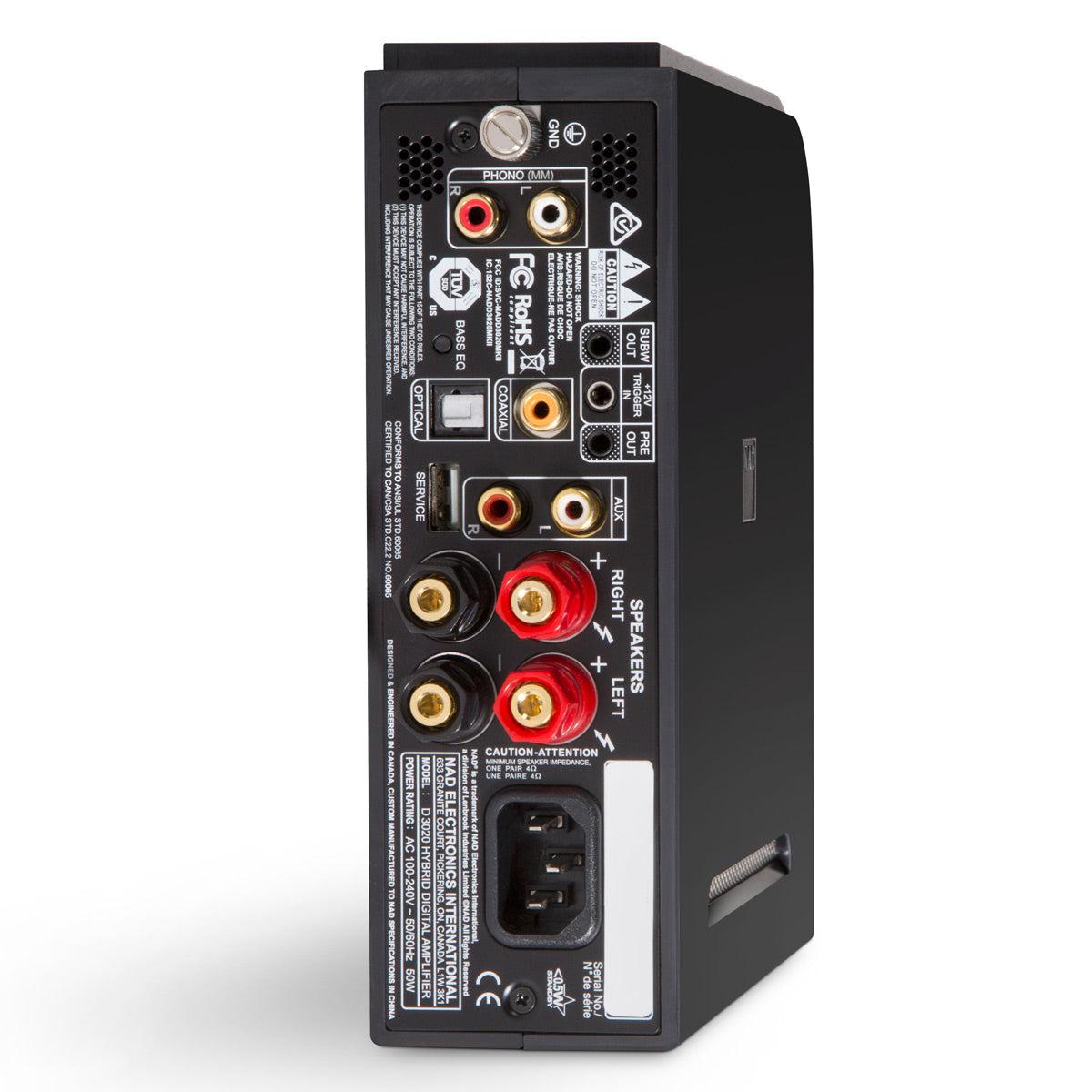
When you're building an audio system, the integrated amplifier sits at the heart of everything. It takes weak signals from your sources—whether that's a turntable, CD player, or streaming device—and amplifies them to drive your speakers. Think of it as the conductor of your audio orchestra, controlling volume, switching between sources, and delivering the power your speakers need to create sound.
NAD, a Canadian company with over 50 years of audio expertise, offers two compelling options that represent very different approaches to integrated amplification. The NAD C 368, released in 2016, targets serious audiophiles with its full-featured design and substantial power output. The D 3020 V2, launched in 2017 as an update to the original D 3020, takes a compact, desktop-friendly approach while maintaining NAD's signature sound quality.
Both amplifiers use Class D technology—a modern amplification method that's extremely efficient and runs cool compared to traditional designs. But that's where the similarities end. Let's dive into what makes each amplifier unique and which one might be right for your specific needs.
Before comparing specific models, it's important to understand what separates good amplifiers from great ones. Power output gets most of the attention, but it's just one piece of the puzzle. The quality of that power delivery, how cleanly the amplifier handles complex musical passages, and how well it controls your speakers matter just as much.
Total Harmonic Distortion (THD) measures how much the amplifier changes your music's original signal—lower numbers mean cleaner sound. Signal-to-noise ratio tells you how quiet the amplifier's background noise is compared to your music. Frequency response shows whether the amplifier reproduces all frequencies equally, from deep bass to sparkling highs.
Dynamic range—the difference between the softest and loudest sounds an amplifier can handle—often determines whether music sounds compressed and flat or vibrant and alive. This is where many budget amplifiers fall short, not in their rated power but in their ability to handle sudden loud passages or complex orchestral pieces without strain.
The most obvious difference between these amplifiers is power output. The NAD C 368 delivers 80 watts per channel into both 8-ohm and 4-ohm speaker loads, while the D 3020 V2 provides 30 watts per channel. But raw numbers don't tell the complete story.
The C 368 uses a sophisticated Hypex UcD Class D module—the same technology found in amplifiers costing several times more. This isn't your typical Class D implementation. Hypex modules are renowned for their linearity, meaning they reproduce music without adding their own sonic signature. The amplifier can deliver up to 200 watts into 4-ohm loads when the music demands it, thanks to NAD's PowerDrive technology that monitors the musical signal and provides extra power for transient peaks.
This power advantage translates into real-world benefits. Large floor-standing speakers, inefficient bookshelf monitors, and planar magnetic speakers like Magnepans all benefit from the C 368's substantial power reserves. You'll hear this as better bass control, cleaner high-volume listening, and the ability to reproduce complex orchestral pieces without compression.
The D 3020 V2, despite its modest 30-watt rating, punches above its weight class through clever engineering. NAD's PowerDrive circuitry can deliver up to 150 watts into 2-ohm loads for brief musical transients—those sudden drum strikes or orchestral crescendos that need instant power. For bookshelf speakers in small to medium rooms, this approach works remarkably well.
However, physics ultimately wins. In larger rooms or with power-hungry speakers, the D 3020 V2 will reach its limits first. You might notice this as a slight compression during loud passages or an inability to fill larger spaces with sound.
Both amplifiers include built-in digital-to-analog converters (DACs), but their implementations reveal the price difference clearly. A DAC's job is converting the digital music files from your phone, computer, or streaming device into the analog signals your speakers need.
The NAD C 368 employs a Texas Instruments PCM1795 32-bit DAC—professional-grade hardware typically found in studio equipment. This chip offers 123dB of dynamic range, which means it can handle everything from the softest pianissimo to the loudest fortissimo without losing detail. The amplifier also includes an asynchronous sample rate converter that eliminates digital jitter—tiny timing errors that can make digital music sound harsh or fatiguing.
Supporting high-resolution audio up to 24-bit/192kHz, the C 368 can fully utilize files from services like Qobuz or Tidal's Master quality tracks. These files contain more musical information than standard CDs, potentially offering better soundstage depth and instrumental separation.
The D 3020 V2 uses a Cirrus Logic CS42528 DAC configured in dual differential mode—a clever approach that uses multiple DAC channels to improve performance. While not quite matching the C 368's specifications, this implementation still supports 24-bit/192kHz playback and delivers clean, musical sound that belies the amplifier's modest price point.
In practice, both DACs sound excellent with well-recorded music. The C 368 offers slightly better resolution of fine details and a more expansive soundstage, but the differences aren't night-and-day dramatic. For most listeners, the D 3020 V2's DAC provides more than adequate performance.
Despite living in a digital world, many music lovers still treasure vinyl records. Both amplifiers include moving magnet (MM) phono stages for connecting turntables, but their approaches differ significantly.
The C 368's phono stage, designed by renowned engineer Björn Erik Edvardsen, represents serious vinyl playback capability. It features high overload margins (meaning it won't distort with loud record passages), accurate RIAA equalization that properly restores the frequency balance encoded on records, and infrasonic filtering to eliminate turntable rumble and record warpage effects.
Our research into user experiences reveals that this phono stage competes with dedicated units costing several hundred dollars. Vinyl enthusiasts consistently praise its ability to extract detail from records while maintaining the warmth and musicality that draws people to analog playback.
The D 3020 V2's phono stage is more basic but still functional. It handles standard MM cartridges adequately for casual vinyl listening, though some users report it can be noisy at higher volume levels. For serious vinyl playback, you might want to consider an external phono preamp, but for occasional record spinning, it does the job.
Both amplifiers maintain pure analog signal paths when using analog inputs—meaning your vinyl or CD player's signal never gets converted to digital and back. This approach preserves the natural character of analog sources.
This is where the generational gap between these products becomes most apparent. The NAD C 368 was designed with future expansion in mind, while the D 3020 V2 focuses on essential connectivity.
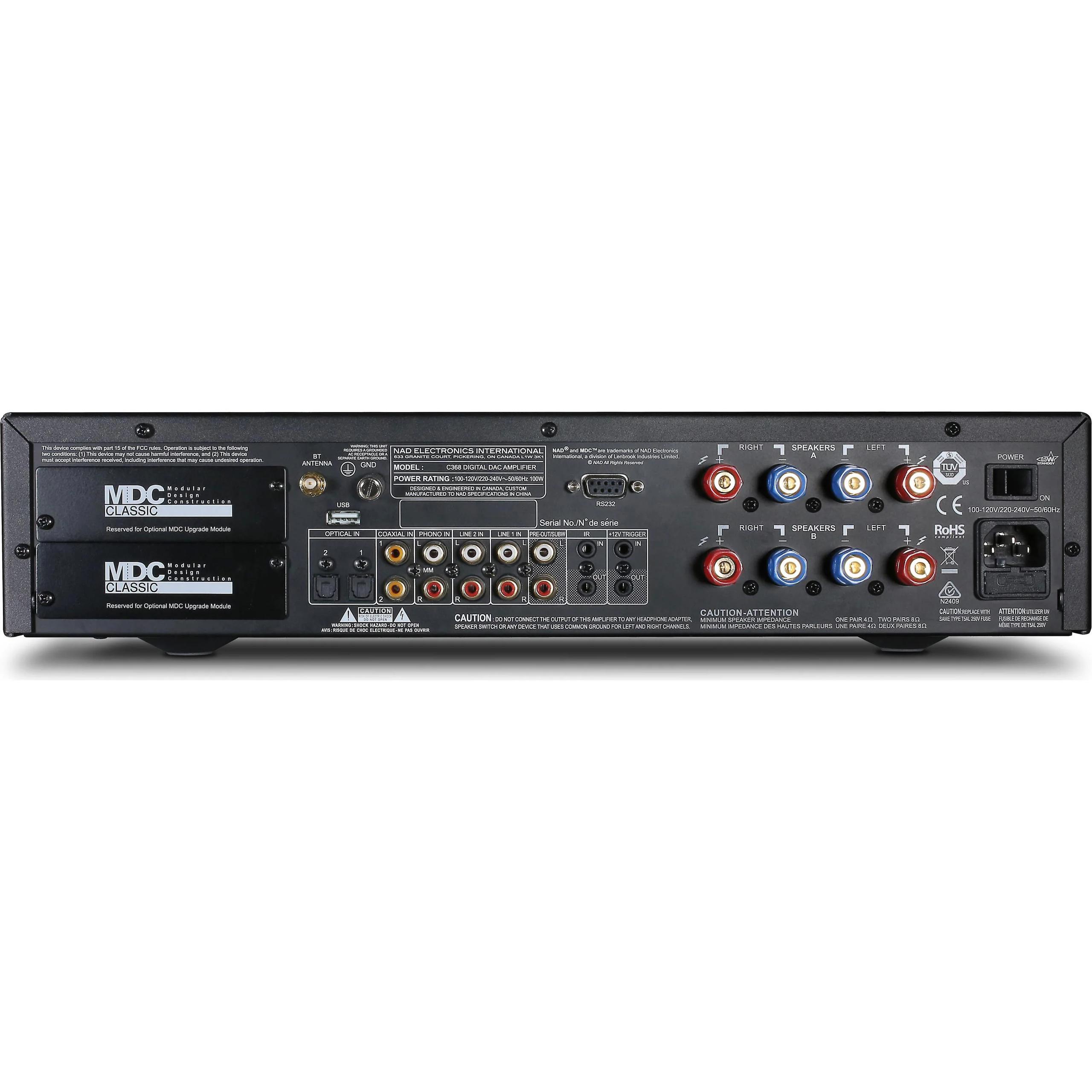
The C 368 features NAD's Modular Design Construction (MDC) with two expansion slots. The most popular upgrade is the BluOS streaming module, which transforms the amplifier into a network music player supporting Wi-Fi streaming, Apple AirPlay 2, and Roon Ready certification. This ecosystem allows multi-room audio throughout your home, with smartphone apps controlling everything seamlessly.
Without the BluOS module, the C 368 still offers Bluetooth with aptX support for high-quality wireless streaming from phones and tablets. The implementation is rock-solid, maintaining stable connections and delivering audio quality that's remarkably close to wired sources.
The D 3020 V2 relies primarily on Bluetooth for wireless connectivity. While it supports the same aptX codec for improved audio quality, user reports suggest the Bluetooth implementation can be finicky. Some experience pairing difficulties or occasional dropouts, though many users find it works fine once properly connected.
For home theater use, both amplifiers can serve as stereo components in larger systems. The C 368 offers preamp outputs for connecting to AV receivers or adding powered subwoofers, while the D 3020 V2 includes a basic preamp output as well. However, neither is designed primarily for home theater duty—they're stereo music amplifiers first and foremost.
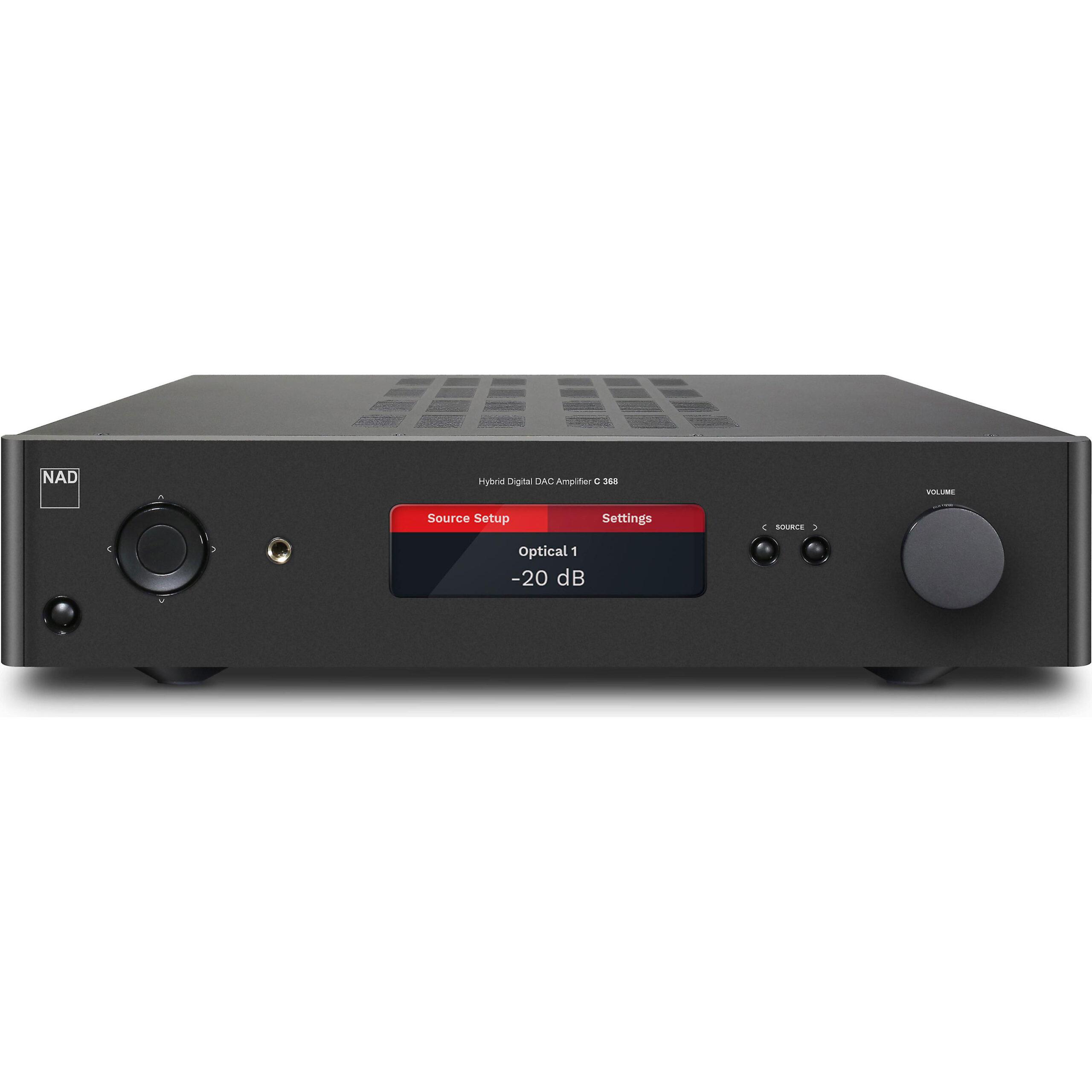
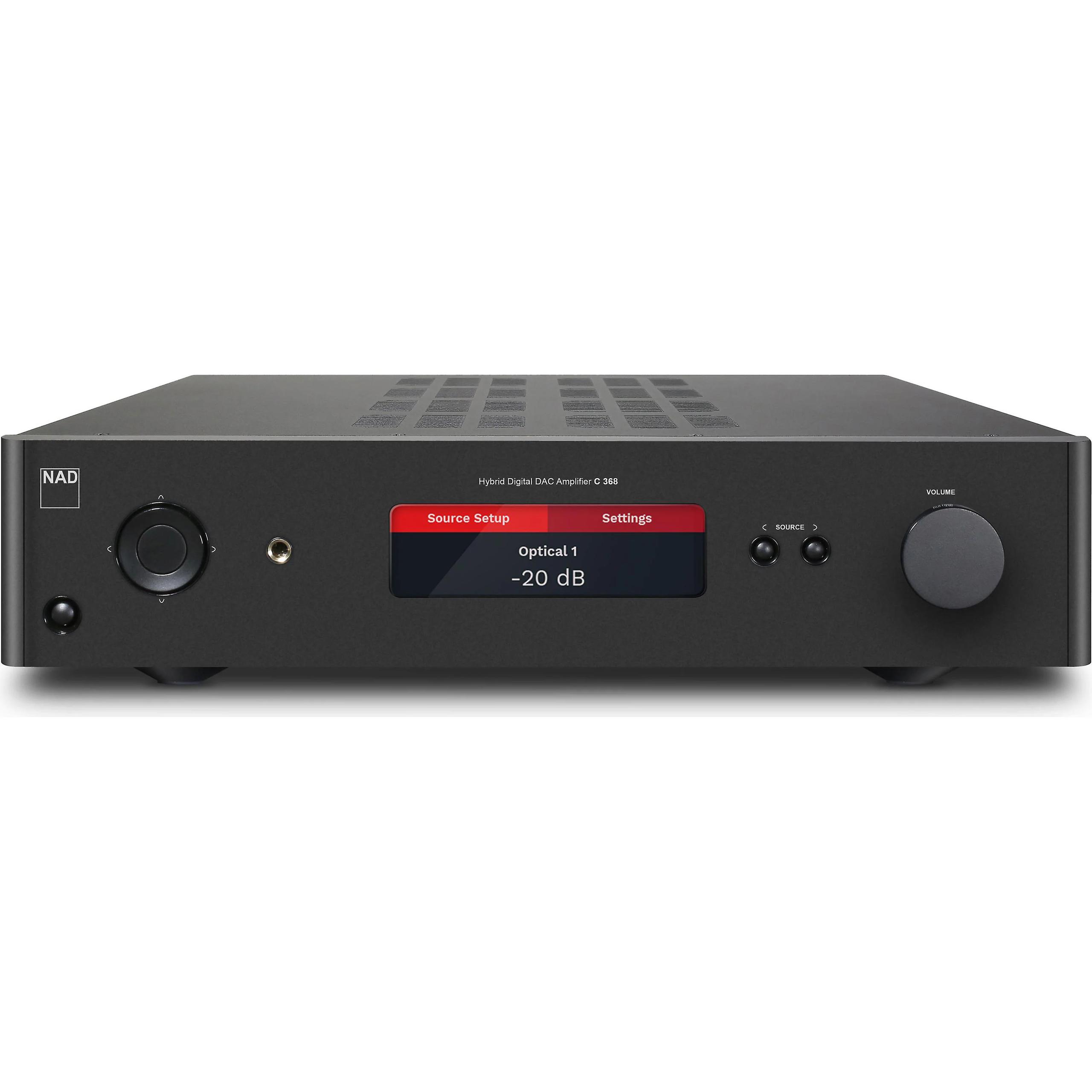
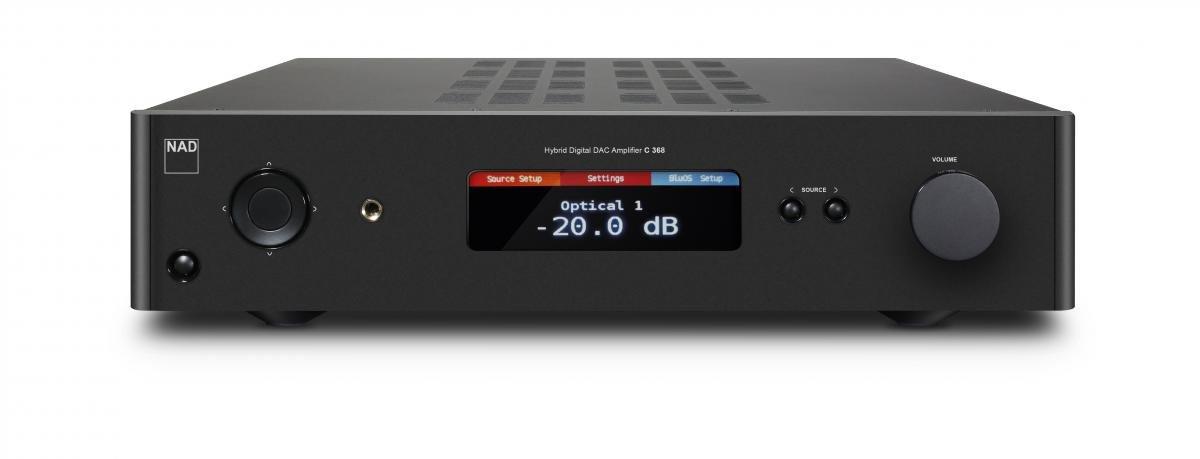
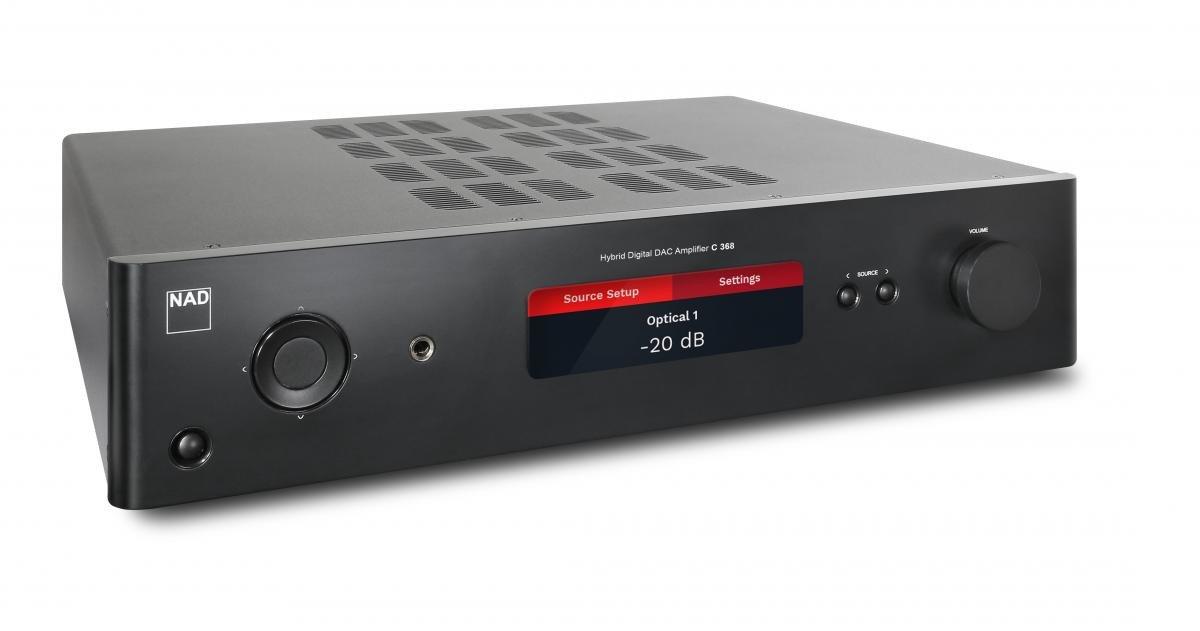
Physical construction tells a story about each product's target market. The C 368 follows traditional full-width component sizing, designed to sit in an equipment rack alongside other separates. Its aluminum chassis feels substantial, with smooth volume controls and a clear color LCD display showing source information and volume levels.
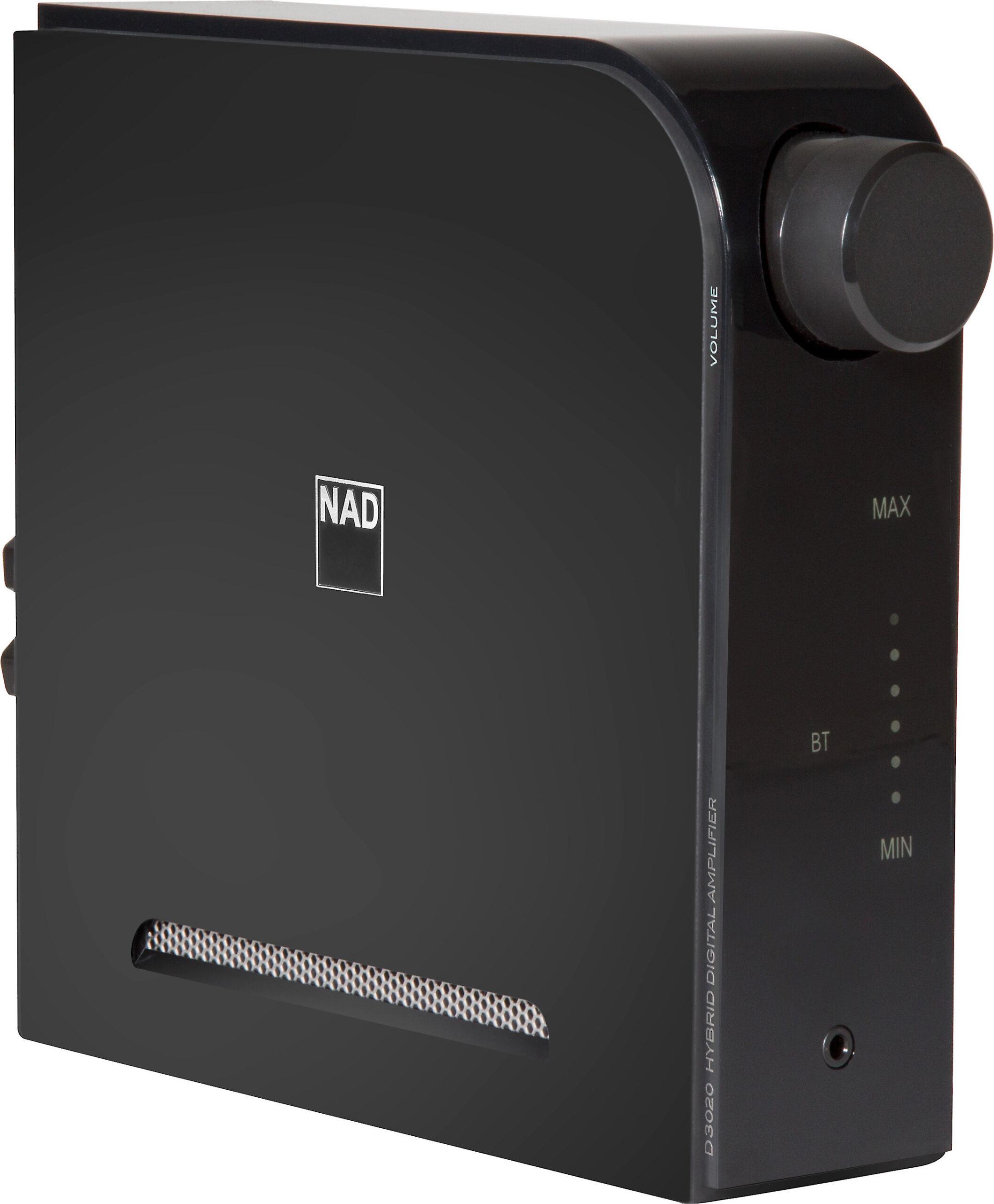
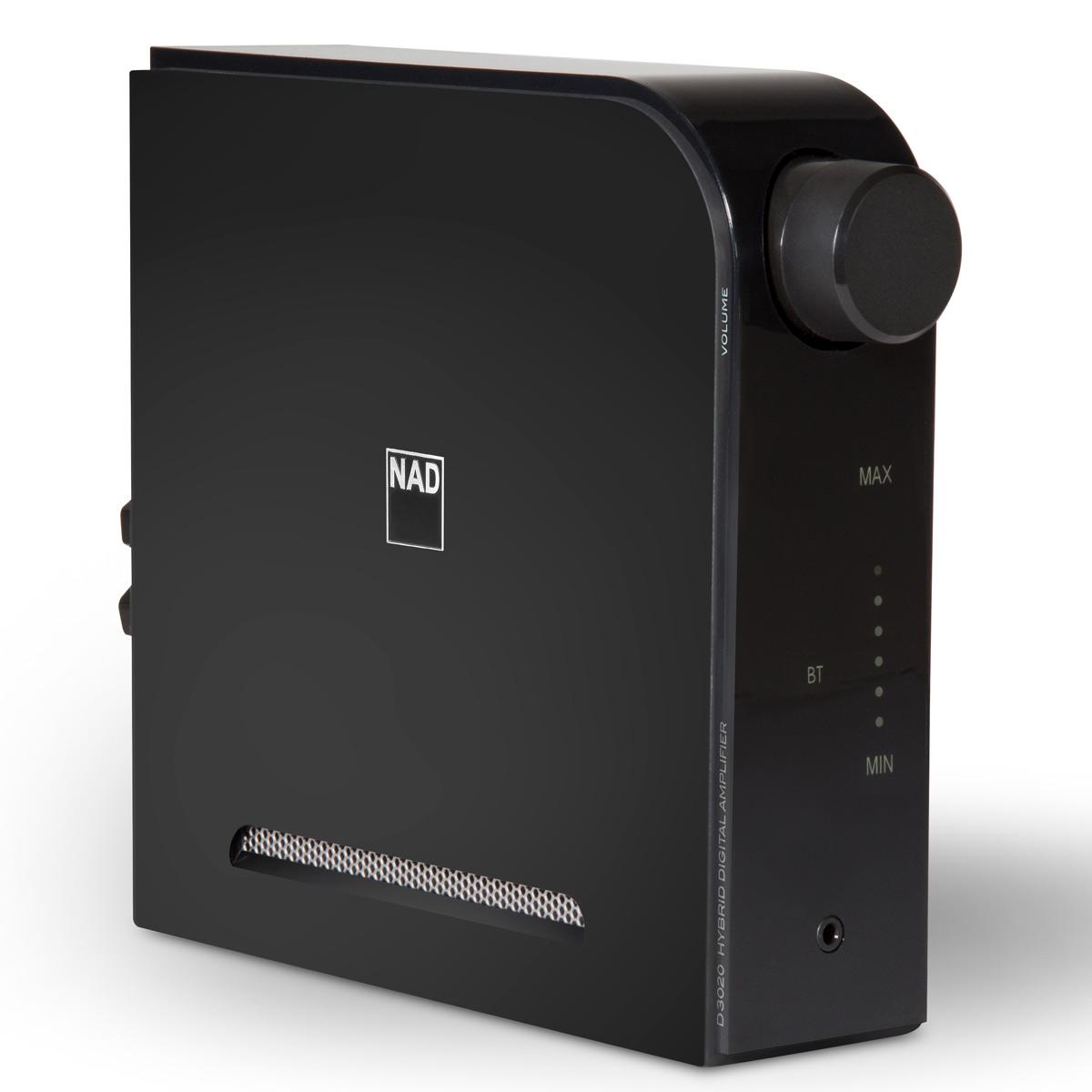
The D 3020 V2 breaks from convention with its vertical orientation and compact footprint. About the size of a thick hardcover book, it's designed for desktop use or small shelving. The chassis feels more plasticky than the C 368, but it's still well-constructed for its price point. The design is polarizing—some love its space-saving approach, while others prefer traditional component styling.
Both include remote controls, though the C 368's feels more premium with better button layout and response. The D 3020 V2's remote is functional but basic.
At the time of writing, these amplifiers occupy very different price tiers, with the C 368 costing roughly two and a half times more than the D 3020 V2. This price difference reflects genuine performance and feature gaps, not just marketing positioning.
The C 368 delivers components and performance typically found in amplifiers costing significantly more. Its modular design provides future-proofing that extends its useful life as streaming technologies evolve. For serious music listeners building dedicated stereo systems, it represents excellent value despite the higher initial investment.
The D 3020 V2 democratizes NAD's sound quality, offering their musical presentation at a more accessible price point. It's perfect for people wanting better sound than typical computer speakers or soundbars without the complexity and expense of traditional hi-fi components.
Your living situation often determines which amplifier makes more sense. If you have a dedicated listening room or space for traditional audio components, the C 368 offers superior performance and flexibility. Its power reserves handle demanding speakers, while its expansion options keep pace with evolving technology.
The D 3020 V2 shines in modern living scenarios—small apartments, desktop setups, or secondary systems where space is premium. It delivers surprisingly good sound from its compact chassis, making it ideal for listeners who want quality audio without dominating their living space.
Speaker compatibility is crucial. The C 368 can drive virtually any home speaker, from efficient bookshelf monitors to power-hungry tower speakers. The D 3020 V2 works best with efficient bookshelf speakers in smaller rooms. If you're considering floor-standing speakers or have a large listening area, the extra power of the C 368 becomes essential.
For vinyl enthusiasts, the C 368's superior phono stage might justify the price difference alone. If streaming is your primary source, the C 368's expansion capabilities provide better long-term value, though the D 3020 V2 handles basic Bluetooth streaming adequately.
Both amplifiers represent NAD's core philosophy—delivering musical, engaging sound without breaking the bank. The C 368 offers more of everything: power, features, and future flexibility. The D 3020 V2 provides the essence of that experience in a space-conscious, budget-friendly package.
Choose based on your space, speakers, and long-term plans. Neither will disappoint within their intended roles, but understanding those roles is key to making the right decision for your musical journey.
| NAD C 368 Integrated Amplifier | NAD D 3020 V2 Integrated Amplifier |
|---|---|
| Power Output - Determines maximum volume and speaker compatibility | |
| 80W per channel (8/4 ohms) - handles demanding speakers and larger rooms | 30W per channel - adequate for efficient bookshelf speakers in small-medium rooms |
| Amplifier Technology - Affects sound quality and efficiency | |
| Hypex UcD Class D module (premium implementation found in high-end amps) | Standard Class D with PowerDrive circuitry (efficient but more basic) |
| DAC Quality - Critical for digital music sources | |
| TI PCM1795 32-bit DAC with 123dB dynamic range (professional-grade) | Cirrus Logic CS42528 dual differential (good performance for price point) |
| Phono Stage - Essential for vinyl playback quality | |
| Björn Erik Edvardsen design with high overload margins (competes with dedicated $300+ phono preamps) | Basic MM phono stage (functional but can be noisy at higher volumes) |
| Streaming Capabilities - Future-proofing and convenience | |
| Optional BluOS module adds Wi-Fi, AirPlay 2, Roon Ready, multi-room audio | Bluetooth with aptX only (can be finicky with connections) |
| Expandability - Long-term value and upgrade potential | |
| 2 MDC slots for modules like streaming, HDMI, future technologies | No expansion options - what you buy is what you get |
| Form Factor - Space requirements and aesthetic integration | |
| Full-width component (17" W) for traditional rack mounting | Compact vertical design (2.3" W) perfect for desktops and small spaces |
| Digital Inputs - Connectivity for modern sources | |
| 2 optical, 2 coaxial SPDIF inputs (comprehensive digital connectivity) | 1 optical, 1 coaxial input (covers basic needs) |
| Analog Inputs - Traditional source compatibility | |
| 2 line inputs plus premium phono stage (accommodates multiple analog sources) | 1 line input plus basic phono stage (minimal but adequate) |
| Build Quality - Durability and premium feel | |
| Aluminum chassis with professional-grade components and color LCD display | Plastic construction with basic LED indicators (solid but budget-conscious) |
| Price Positioning - Value consideration at time of writing | |
| Premium tier - significant investment justified by performance and features | Budget-friendly entry point into NAD quality without breaking the bank |
The NAD C 368 delivers significantly more power at 80 watts per channel compared to the NAD D 3020 V2's 30 watts per channel. This means the C 368 can drive larger speakers and fill bigger rooms with sound, while the D 3020 V2 is better suited for bookshelf speakers in smaller spaces.
The NAD C 368 is a full-width component designed for traditional audio racks, measuring 17 inches wide. The NAD D 3020 V2 features a compact vertical design that's only 2.3 inches wide, making it perfect for desktops and small spaces where the larger C 368 wouldn't fit.
While both amplifiers can serve as stereo components in larger home theater systems, they're primarily designed for two-channel music listening. The NAD C 368 offers better integration options with preamp outputs for connecting to AV receivers, but neither the C 368 nor D 3020 V2 is specifically designed for home theater duty.
Both amplifiers deliver excellent sound quality relative to their prices. The NAD C 368 provides superior performance with professional-grade components and a high-end DAC, while the D 3020 V2 offers NAD's signature sound quality at a more accessible price point. Your choice depends on your budget and performance requirements.
The NAD D 3020 V2 is specifically designed for small spaces with its compact vertical form factor and adequate power for bookshelf speakers. The C 368 would be overkill for most small rooms and takes up significantly more space than the space-efficient D 3020 V2.
The NAD C 368 provides better long-term value for serious music listeners due to its modular upgrade capability, superior components, and ability to grow with your system. The D 3020 V2 offers excellent immediate value for budget-conscious buyers who want NAD quality without the premium features of the C 368.
We've done our best to create useful and informative comparisons to help you decide what product to buy. Our research uses advanced automated methods to create this comparison and perfection is not possible - please contact us for corrections or questions. These are the sites we've researched in the creation of this article: avnirvana.com - crutchfield.com - hometheaterhifi.com - hifiheaven.net - crutchfield.com - projectorscreen.com - theabsolutesound.com - dedicatedaudio.com - soundstagesimplifi.com - nadelectronics.com - musicdirect.com - crutchfield.com - safeandsoundhq.com - hifinews.com - youtube.com - forum.psaudio.com - crutchfield.com - forum.audiogon.com - crutchfield.com - iiwireviews.com - crutchfield.ca - audiosciencereview.com - soundstagesimplifi.com - nadelectronics.com - hifiheaven.net - crutchfield.com - projectorscreen.com - upscaleaudio.com - dedicatedaudio.com - twitteringmachines.com - nadelectronics.com

Privacy Policy
Terms and Conditions - Affiliate Policy
Home Security
© Copyright 2008-2026.
11816 Inwood Rd #1211, Dallas, TX 75244