

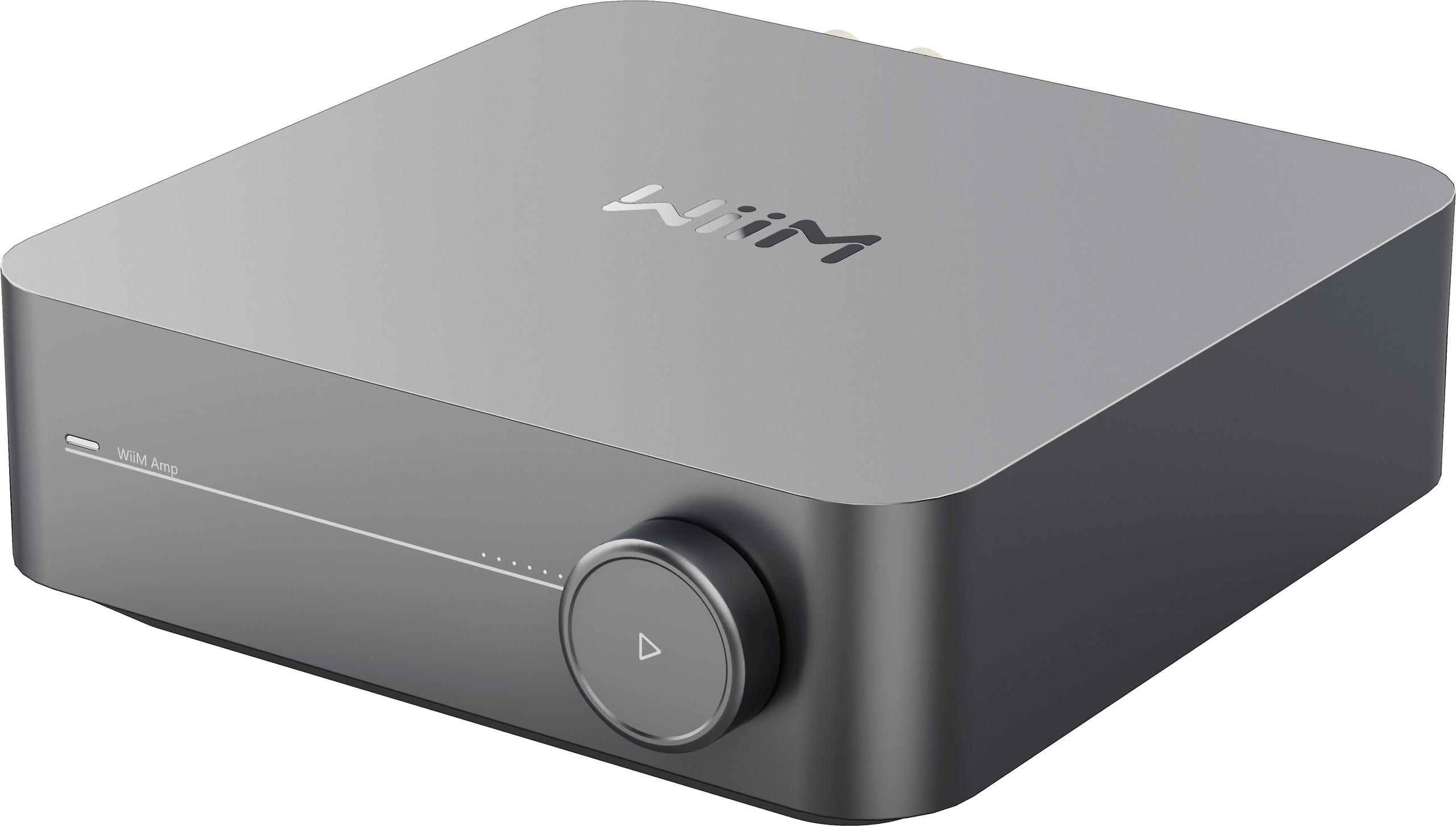
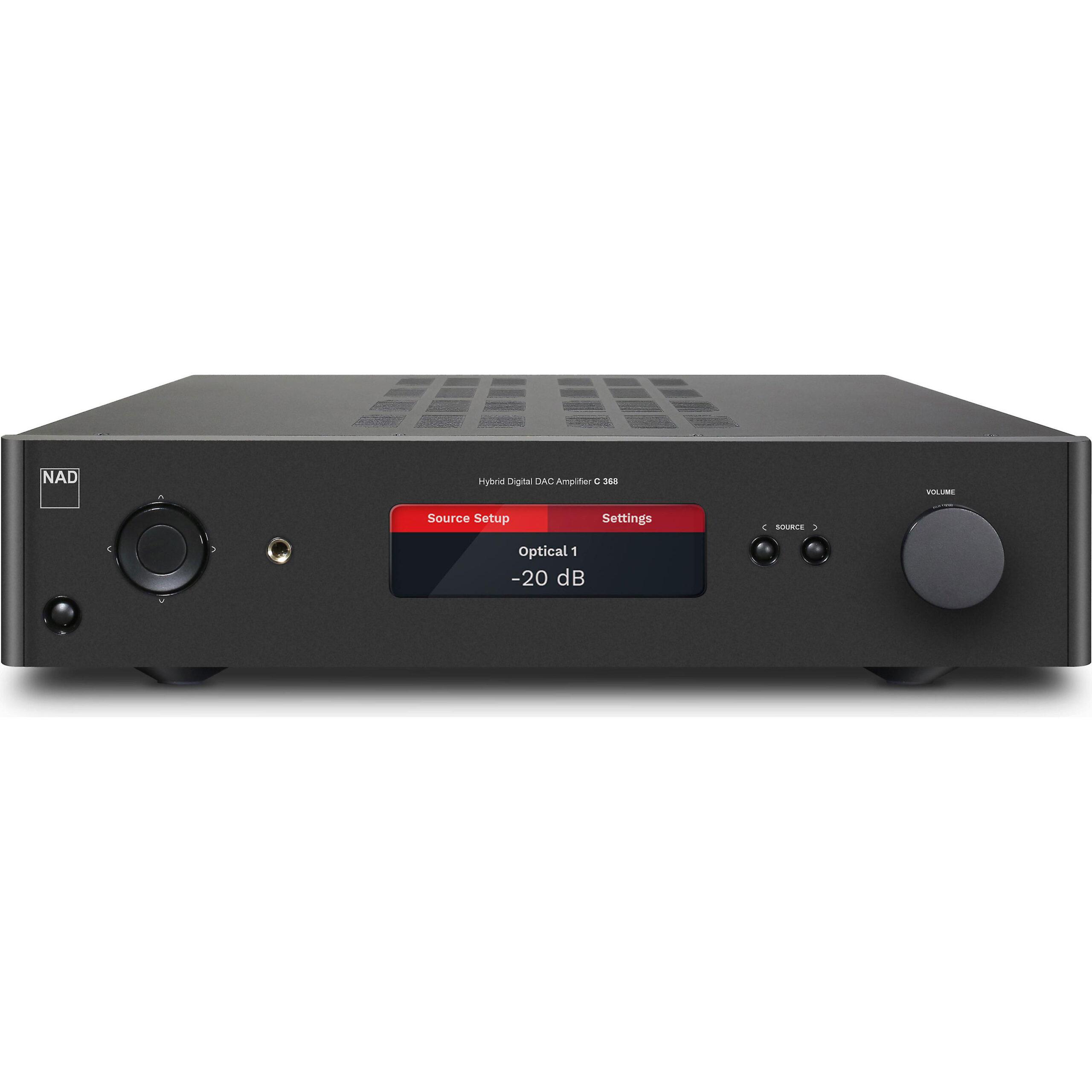
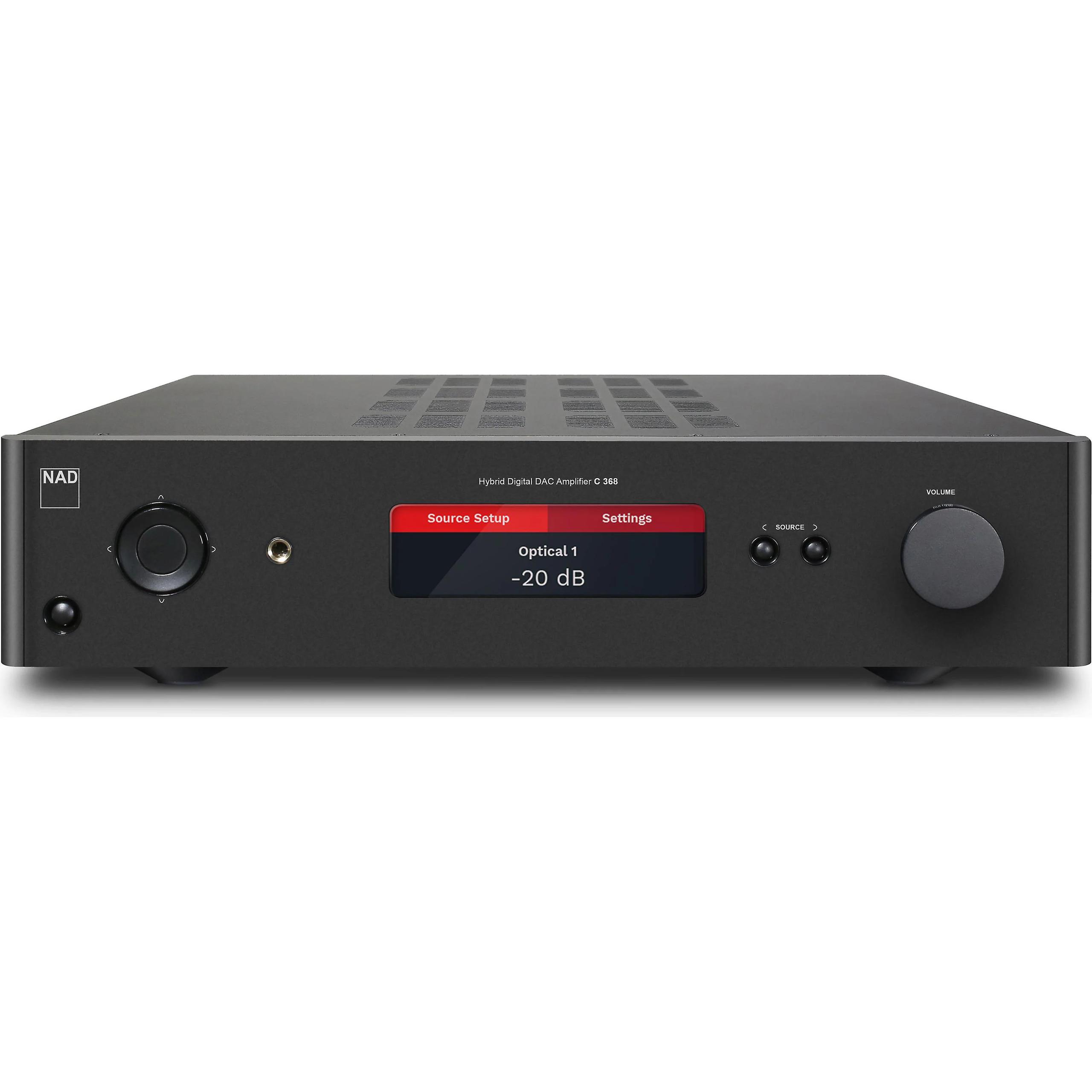
If you've been browsing for an amplifier that can handle both your music streaming and power your speakers, you've probably stumbled across two very different approaches: the modern, connectivity-focused WiiM Amp and the audiophile-engineered NAD C 368. Both integrate amplification with digital audio processing, but they couldn't be more different in their philosophies.
The WiiM Amp, released in 2024, represents the new wave of streaming-first amplifiers that prioritize wireless convenience above all else. Meanwhile, the NAD C 368, which has been available since 2017, takes the traditional route with superior build quality and modular expandability. Understanding these fundamental differences is crucial to making the right choice for your specific needs and listening habits.
Before diving into specifics, it's important to understand what we're dealing with here. Both products are integrated amplifiers, meaning they combine a preamplifier (which handles source switching and volume control) with a power amplifier (which drives your speakers) in one box. This differs from separates, where you'd have individual components for each function.
What sets modern integrated amplifiers apart from their predecessors is digital audio processing. Both the WiiM Amp and NAD C 368 include DACs (Digital-to-Analog Converters), which transform the digital music files from your phone, computer, or streaming service into analog signals your speakers can reproduce as sound.
The key considerations when evaluating amplifiers in this category include power output, sound quality, connectivity options, streaming capabilities, build quality, and expandability. Your priorities among these factors will largely determine which approach suits you better.
The WiiM Amp embodies the "streaming-first" philosophy that's become increasingly popular since 2020. WiiM designed this amplifier for people who primarily consume music through streaming services like Spotify, Apple Music, or Tidal. The company assumes you want seamless wireless connectivity, smartphone app control, and integration with smart home ecosystems. At the time of writing, it represents exceptional value in the budget amplifier category.
In contrast, the NAD C 368 follows NAD's decades-old tradition of audiophile engineering with a twist toward modularity. NAD (New Acoustic Dimension) has been building high-quality audio equipment since 1972, and the C 368 reflects their commitment to sound quality first, convenience second. The amplifier's MDC (Modular Design Construction) slots allow you to add capabilities like advanced streaming or additional inputs as your needs evolve.
This fundamental difference in approach affects everything from the user interface to the internal components. The WiiM Amp assumes you'll control everything through your phone, while the NAD C 368 includes a comprehensive remote control and expects you might want to connect multiple traditional sources.
When evaluating amplifier performance, power output is often the first specification people look at, but it's not the whole story. Both amplifiers use Class-D amplification, which is significantly more efficient than older Class-AB designs but requires sophisticated implementation to sound good.
The WiiM Amp delivers 60 watts per channel into 8-ohm speakers and 120 watts into 4-ohm speakers using a Texas Instruments TPA3255 chipset. This is a well-regarded Class-D amplifier chip that's found in many successful products. The power rating is modest but sufficient for most bookshelf speakers in small to medium-sized rooms. The amplifier maintains very low distortion (THD+N of -92 dB or 0.0025% at 5W), which means the signal stays clean even at moderate volume levels.
The NAD C 368 takes a more sophisticated approach with its customized Hypex UcD output stage operating in a fully balanced bridge configuration. This technical jargon basically means NAD has implemented the Class-D technology in a way that reduces noise and distortion while providing more consistent performance across different speaker types. It delivers 80 watts per channel into both 4-ohm and 8-ohm loads, with dynamic power ratings of 120W and 200W respectively.
More importantly, the NAD C 368 includes a robust power supply capable of delivering over 600 watts instantaneously for musical transients – those sudden loud passages that can strain lesser amplifiers. This translates to better control during complex orchestral pieces or when bass lines hit hard. The amplifier can also be configured for mono (bridge) operation, effectively doubling its output power for demanding speakers.
Based on our research into user experiences and professional reviews, the NAD C 368 demonstrates superior performance when driving difficult speakers like electrostatics or low-efficiency tower speakers. Users consistently report that it maintains composure during demanding passages while the WiiM Amp, while competent, can sound strained with very inefficient speakers.
Both amplifiers include high-quality DACs, but their implementations reveal different priorities. The WiiM Amp uses an ESS Sabre ES9018K2M DAC, which is the same chip family found in many high-end audio products. This DAC supports high-resolution audio up to 192kHz/24-bit and maintains a signal-to-noise ratio of 98 dB. ESS Sabre chips are known for their detailed sound reproduction and low noise floor.
The NAD C 368 employs a Texas Instruments PCM1795 32-bit DAC paired with a SRC4382 asynchronous sample rate converter and a BurrBrown OPA1652 buffer stage. This combination is more complex than the WiiM Amp's implementation and reflects NAD's focus on analog output quality. The sample rate converter eliminates jitter (timing errors that can affect sound quality), while the buffer stage provides a more robust analog output.
In terms of sound characteristics, our analysis of expert reviews reveals distinct personalities. The WiiM Amp is consistently described as having a clean, neutral presentation that "gets out of the way" of the music. It reproduces recordings accurately without adding coloration, though some listeners find this approach somewhat clinical with certain types of music.
The NAD C 368 receives praise for its more engaging sound signature. Professional reviewers from publications like The Absolute Sound consistently note its ability to deliver "compelling" and "inviting" sound with particularly strong bass control and natural midrange reproduction. The amplifier seems to extract more musical information from recordings, though this might be due to its superior analog output stage rather than the DAC itself.
Here's where the fundamental differences between these amplifiers become most apparent. The WiiM Amp excels in streaming integration with built-in support for virtually every major protocol: AirPlay 2, Chromecast, Spotify Connect, TIDAL Connect, Alexa Cast, DLNA, and Roon Ready. This comprehensive support means you can stream music from almost any device or service without additional equipment.
The WiiM Home app deserves special mention for its intuitive interface and stability. Unlike many manufacturer apps that feel like afterthoughts, WiiM's software genuinely enhances the user experience. The app provides seamless access to multiple streaming services, room correction features, and comprehensive EQ options including both 10-band graphic and parametric equalizers.
Voice control integration is another WiiM Amp strength, working with Alexa, Google Assistant, and Siri for hands-free operation. The amplifier also supports multiroom grouping not just with other WiiM devices, but also with Amazon Echo, Google Nest, and Apple HomePod speakers – a level of cross-platform compatibility that's unusual in this price range.
The NAD C 368 takes a more traditional approach with built-in Bluetooth (including aptX for better sound quality) but relies on optional modules for advanced streaming. The BluOS module, when added to one of the MDC slots, transforms the amplifier into a sophisticated network audio player with support for high-resolution streaming, Roon endpoint functionality, and multiroom audio. However, this requires additional investment and setup.
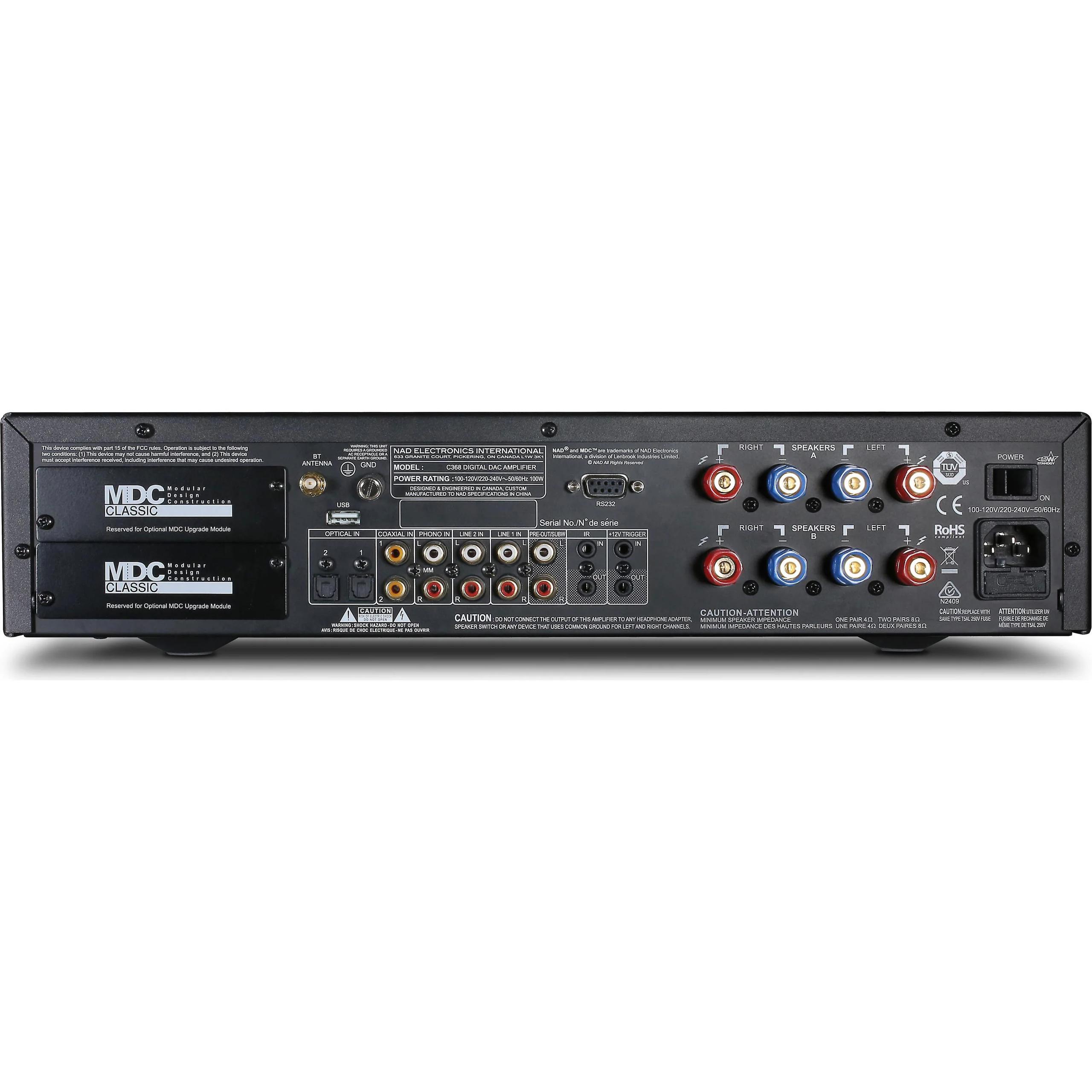
Where the NAD C 368 excels is in physical connectivity. It provides comprehensive input options including a high-quality MM phono stage for turntables, multiple digital inputs (two optical and two coaxial), and analog inputs. The phono stage is particularly noteworthy, featuring accurate RIAA equalization and infrasonic noise suppression – technical features that ensure your vinyl records sound their best.
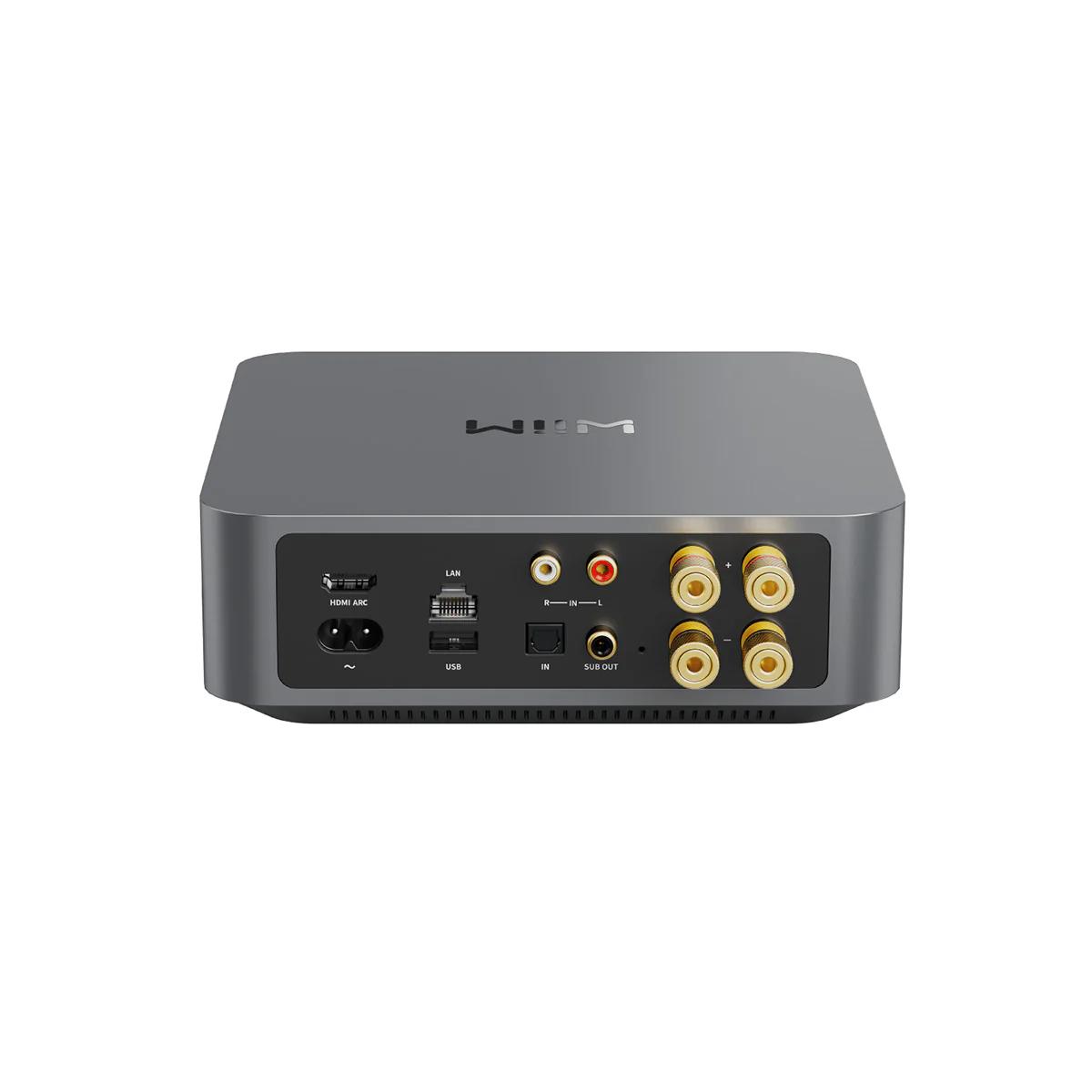
For home theater integration, the WiiM Amp includes HDMI ARC connectivity, which is unusual and valuable in this price category. This allows direct connection to your TV for streaming audio from built-in apps or connected devices. The NAD C 368 lacks HDMI connectivity, though it can be added via MDC modules.
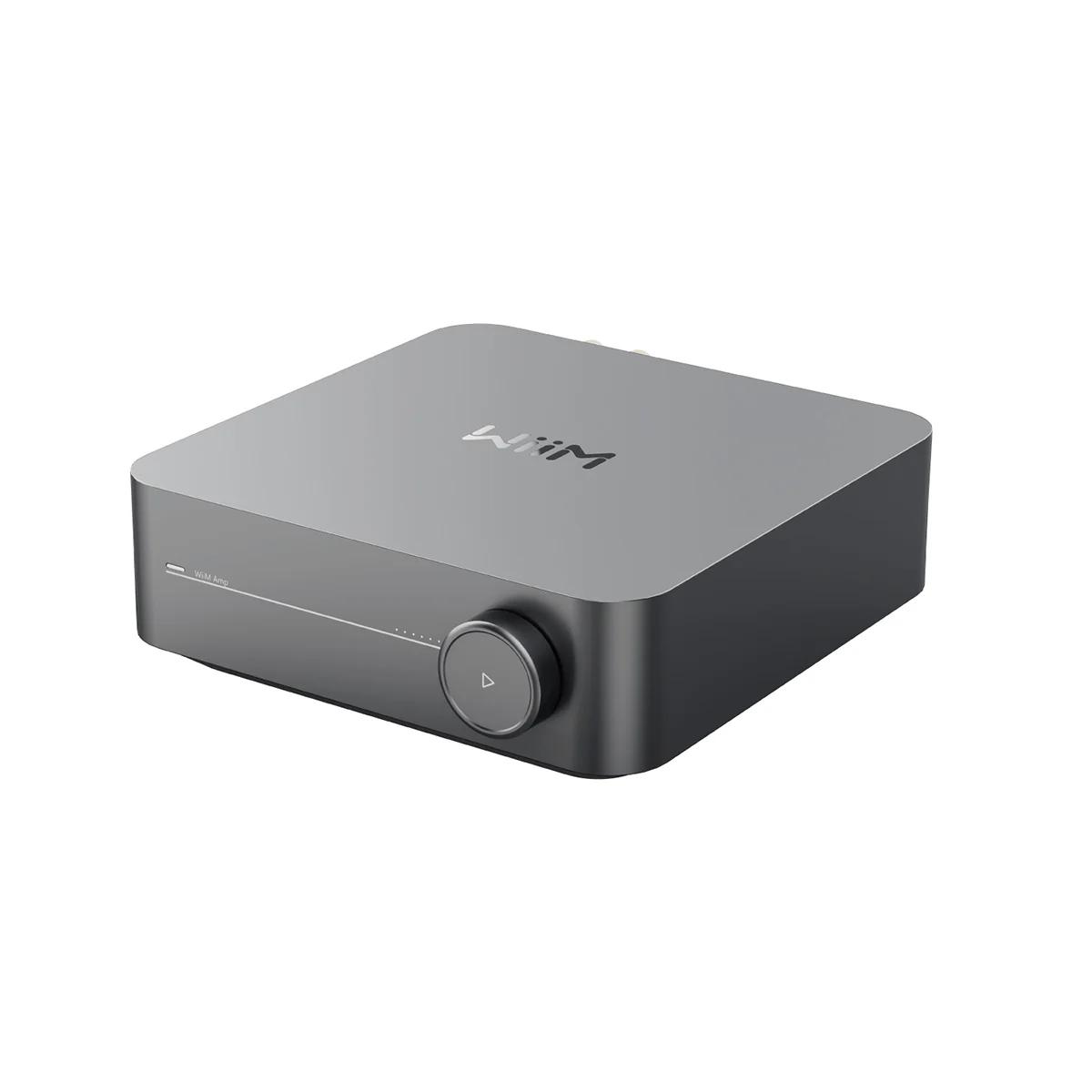
The construction differences between these amplifiers reflect their target markets and price points. The WiiM Amp uses a compact aluminum chassis that feels solid for its price range but doesn't match traditional audiophile construction standards. The front panel is minimalist with a volume knob that doubles as play/pause control and LED indicators for status feedback.
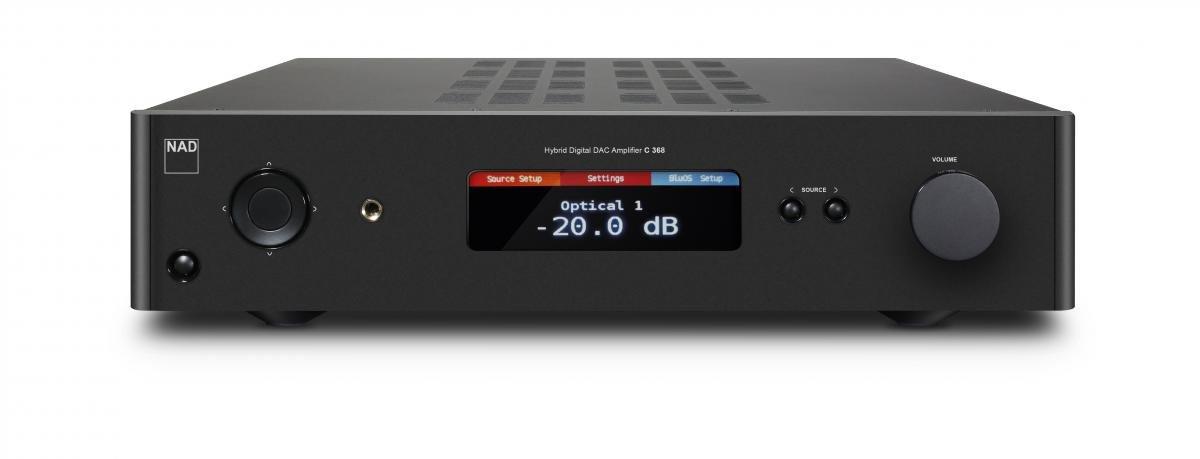
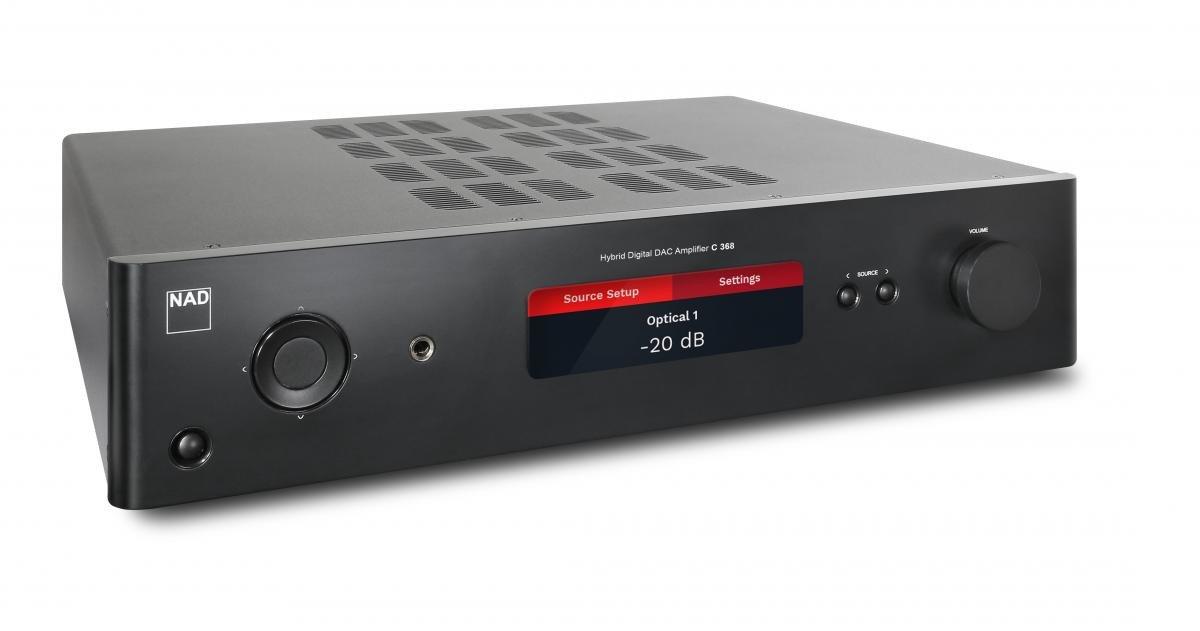
The NAD C 368 demonstrates superior build quality with a robust chassis, high-quality internal components, and the attention to detail NAD is known for. The front panel includes a TFT LCD color display, precision volume control (adjustable in 0.5dB increments), and gold-plated speaker outputs. These might seem like small details, but they contribute to long-term reliability and performance consistency.
User experience varies significantly based on usage patterns. The WiiM Amp shines when used primarily for streaming, offering an almost appliance-like simplicity that many users appreciate. However, our research indicates some users experience occasional lag during source switching and find the lack of traditional controls limiting for certain applications.
The NAD C 368 provides a more traditional hi-fi experience with comprehensive remote control and clear visual feedback. The learning curve is steeper, but the amplifier accommodates complex setups and multiple source types more elegantly.
This is where the NAD C 368 demonstrates its most significant advantage. The two MDC slots allow for genuine hardware upgrades that can transform the amplifier's capabilities. Available modules include BluOS for streaming, HDMI input modules, and potentially future technologies not yet developed. This modular approach means your amplifier can evolve with changing technology rather than becoming obsolete.
The WiiM Amp relies on firmware updates to add new features, which works well for streaming protocols but can't address hardware limitations. While WiiM has been diligent about updates since the product's release, the amplifier's capabilities are ultimately fixed by its initial design.
For users planning to build a long-term audio system, the NAD C 368's expandability represents genuine value despite its higher initial cost. You can start with basic functionality and add capabilities like advanced streaming or additional inputs as your needs and budget allow.
Both amplifiers can serve in home theater systems, but with different strengths. The WiiM Amp's HDMI ARC connection makes it exceptionally easy to integrate with modern TVs, automatically switching to TV audio when the television is turned on. This seamless integration, combined with its compact size, makes it ideal for simple TV audio upgrades or secondary room systems.
The NAD C 368 requires more setup for home theater use but offers greater flexibility once configured. Its preamp outputs allow easy integration with separate power amplifiers for additional channels, while the RS-232 and IR control ports enable integration with professional control systems like Control4 or Crestron.
The ability to bridge the NAD C 368 for mono operation opens interesting possibilities for home theater systems, where you might use two amplifiers to drive left and right main speakers with increased power and clarity.
Your decision between these amplifiers should align with your listening habits, technical comfort level, and long-term audio goals.
Choose the WiiM Amp if you primarily stream music from services like Spotify or Apple Music, want immediate plug-and-play functionality, and appreciate the convenience of smartphone control. It's ideal for apartment dwellers, college students, or anyone who wants great sound without complexity. The HDMI ARC connection makes it particularly attractive for TV audio upgrades. At the time of writing, it represents exceptional value in the budget amplifier category.
The NAD C 368 makes sense for listeners who value sound quality above convenience, own vinyl records, or plan to build a more comprehensive audio system over time. Its superior power delivery makes it the better choice for inefficient speakers or larger rooms, while the modular design provides genuine future-proofing. Despite costing significantly more at the time of writing, it offers better long-term value for serious listeners.
Consider your speakers carefully in this decision. The WiiM Amp pairs well with efficient bookshelf speakers like KEF LS50 or Elac Debut series, while the NAD C 368 can drive more demanding speakers like Magnepan planars or large tower speakers that would strain the WiiM.
Ultimately, both amplifiers succeed at their intended purposes. The WiiM Amp democratizes high-quality streaming audio, while the NAD C 368 provides a traditional audiophile experience with modern flexibility. Your choice depends on whether you prioritize immediate convenience or long-term performance and expandability.
| WiiM Amp Streaming Amplifier | NAD C 368 Integrated Amplifier |
|---|---|
| Power Output - Determines how loud your speakers can play and what speakers you can drive | |
| 60W/channel (8Ω), 120W/channel (4Ω) - sufficient for most bookshelf speakers | 80W/channel (both 4Ω and 8Ω), 200W dynamic - drives demanding speakers with ease |
| Amplifier Technology - Affects efficiency, heat, and sound quality | |
| Texas Instruments TPA3255 Class-D chipset - proven, efficient design | Customized Hypex UcD Class-D with balanced bridge configuration - audiophile-grade implementation |
| Digital-to-Analog Converter (DAC) - Converts digital music files to analog sound | |
| ESS Sabre ES9018K2M, 24-bit/192kHz - excellent for the price point | TI PCM1795 32-bit with SRC4382 sample rate converter - superior analog output quality |
| Built-in Streaming Services - How easily you can play music from your phone or streaming apps | |
| Extensive: AirPlay 2, Chromecast, Spotify Connect, TIDAL Connect, Alexa Cast, DLNA, Roon Ready | Bluetooth with aptX only (expandable with BluOS module) |
| Physical Inputs - What devices you can connect directly | |
| HDMI ARC, optical, analog RCA, USB - great for TV integration | 2 analog RCA, MM phono, 2 optical, 2 coaxial - comprehensive traditional connectivity |
| Phono Input - Essential for turntable users | |
| None - requires external phono preamp for turntables | Built-in MM phono stage with RIAA equalization - ready for vinyl |
| Expandability - Ability to add features over time | |
| Fixed feature set with firmware updates only | 2 MDC slots for hardware modules (BluOS streaming, HDMI, etc.) - true future-proofing |
| Voice Control - Hands-free operation convenience | |
| Alexa, Google Assistant, Siri - comprehensive smart home integration | None built-in (available with BluOS module) |
| Multiroom Audio - Playing synchronized music in multiple rooms | |
| Works with Echo, Nest, HomePods, and other WiiM devices out of the box | Requires BluOS module for multiroom capabilities |
| Home Theater Integration - Connecting to your TV for better sound | |
| HDMI ARC with automatic switching - seamless TV audio upgrade | No HDMI (can be added via MDC module), requires optical/coaxial connection |
| Bridge Mode - Ability to use as high-power mono amplifier | |
| Not available - fixed stereo configuration | Yes - can deliver 300W+ as mono amp for demanding speakers |
| Build Quality - Long-term reliability and premium feel | |
| Aluminum chassis, compact design - solid for price point | Traditional audiophile construction with premium components - built to last decades |
| App Control - Smartphone interface quality | |
| WiiM Home app with intuitive interface and comprehensive EQ options | Basic control (advanced features require BluOS module and app) |
The WiiM Amp Streaming Amplifier is significantly better for streaming music from smartphones and tablets. It includes built-in support for AirPlay 2, Chromecast, Spotify Connect, TIDAL Connect, and other major streaming protocols, allowing you to stream directly from any app. The NAD C 368 Integrated Amplifier only has basic Bluetooth connectivity, though you can add advanced streaming with an optional BluOS module.
The NAD C 368 delivers 80 watts per channel into both 4-ohm and 8-ohm speakers, with dynamic power up to 200 watts. The WiiM Amp provides 60 watts into 8-ohm speakers and 120 watts into 4-ohm speakers. The NAD C 368 also has a more robust power supply and can be bridged for mono operation, making it better for driving demanding speakers.
Only the NAD C 368 Integrated Amplifier has a built-in MM phono input with proper RIAA equalization for direct turntable connection. The WiiM Amp Streaming Amplifier lacks a phono input, so you'd need a separate phono preamp to connect a turntable.
The WiiM Amp Streaming Amplifier excels with its comprehensive WiiM Home app that provides direct access to multiple streaming services, room correction, and EQ controls. The NAD C 368 Integrated Amplifier has basic controls built-in, with advanced streaming features requiring the optional BluOS module and separate app.
Both amplifiers deliver excellent sound quality, but with different characteristics. The WiiM Amp Streaming Amplifier provides clean, neutral sound that accurately reproduces recordings. The NAD C 368 Integrated Amplifier is praised for more engaging, musical sound with particularly strong bass control and natural midrange reproduction.
The WiiM Amp Streaming Amplifier is ideal for smaller spaces due to its compact size, simple setup, and sufficient power for most bookshelf speakers. Its streaming-focused design also suits apartment living where convenience and wireless connectivity are priorities over traditional hi-fi features.
Value depends on your priorities. The WiiM Amp Streaming Amplifier offers exceptional value for streaming-focused users who want modern connectivity at a budget-friendly price. The NAD C 368 Integrated Amplifier provides better long-term value for serious listeners who want superior sound quality, expandability, and traditional hi-fi features.
The WiiM Amp pairs well with efficient bookshelf speakers like KEF LS50 or similar models in small to medium rooms. The NAD C 368 can drive more demanding speakers including large tower speakers, electrostatics, and low-efficiency models that would strain the WiiM Amp, making it more versatile for serious audio setups.
We've done our best to create useful and informative comparisons to help you decide what product to buy. Our research uses advanced automated methods to create this comparison and perfection is not possible - please contact us for corrections or questions. These are the sites we've researched in the creation of this article: audiosciencereview.com - faq.wiimhome.com - av-export.com - sound-advice.online - av.com - whathifi.com - youtube.com - forum.wiimhome.com - erinsaudiocorner.com - audacityaustralia.com.au - stereophile.com - audiosciencereview.com - audioadvice.com - smarthomesounds.co.uk - avnirvana.com - crutchfield.com - hometheaterhifi.com - hifiheaven.net - crutchfield.com - projectorscreen.com - theabsolutesound.com - dedicatedaudio.com - soundstagesimplifi.com - nadelectronics.com - musicdirect.com - crutchfield.com - safeandsoundhq.com

Privacy Policy
Terms and Conditions - Affiliate Policy
Home Security
© Copyright 2008-2026.
11816 Inwood Rd #1211, Dallas, TX 75244