

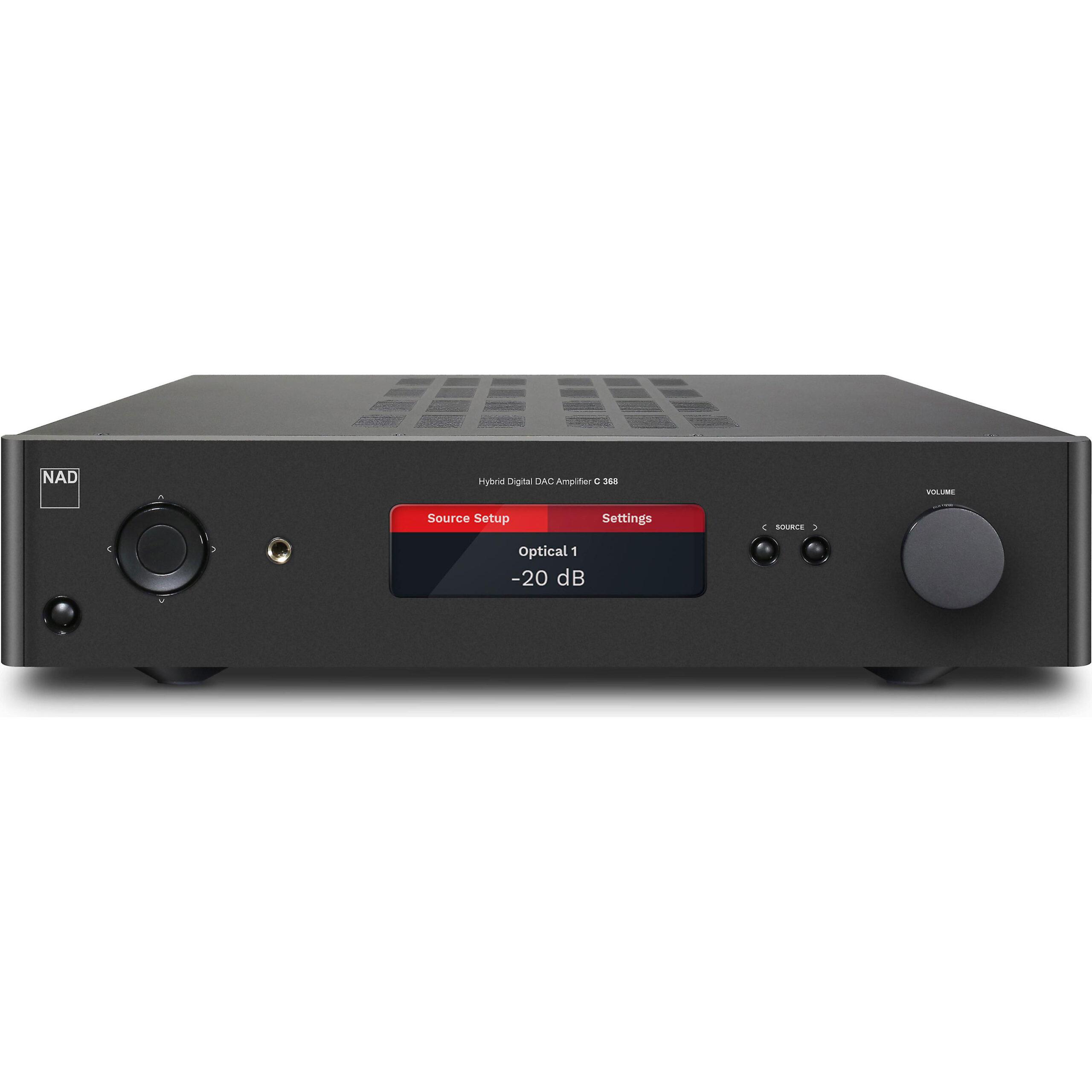
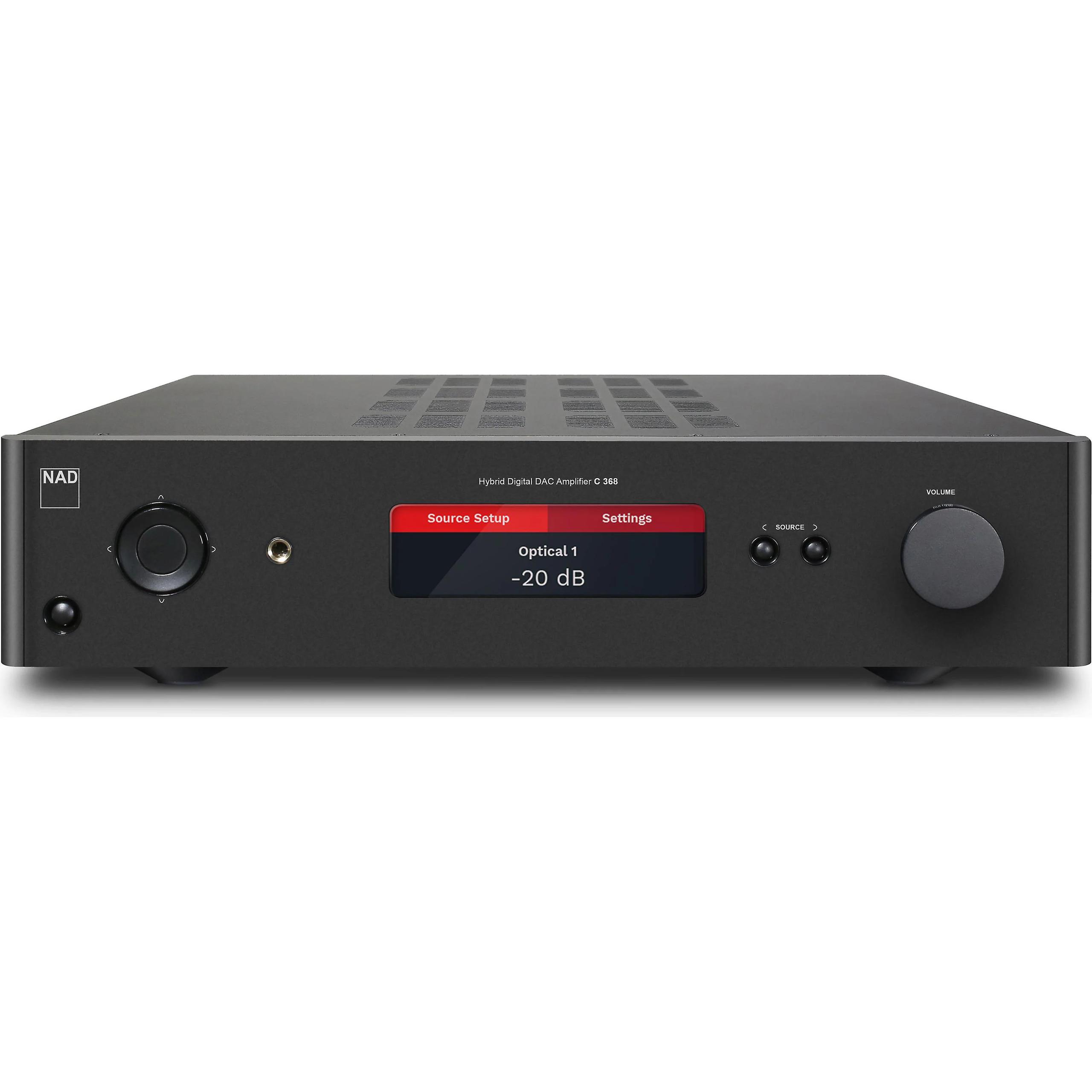
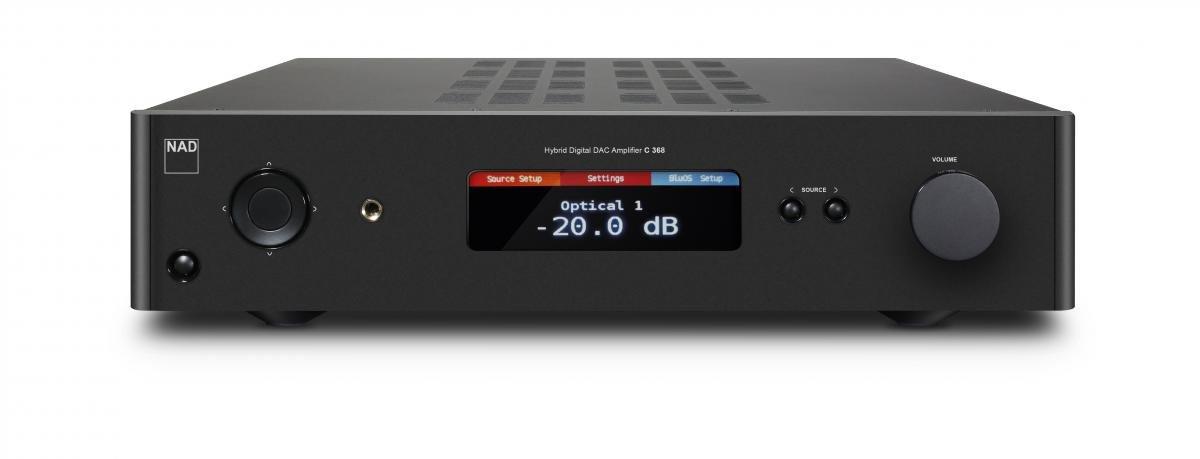
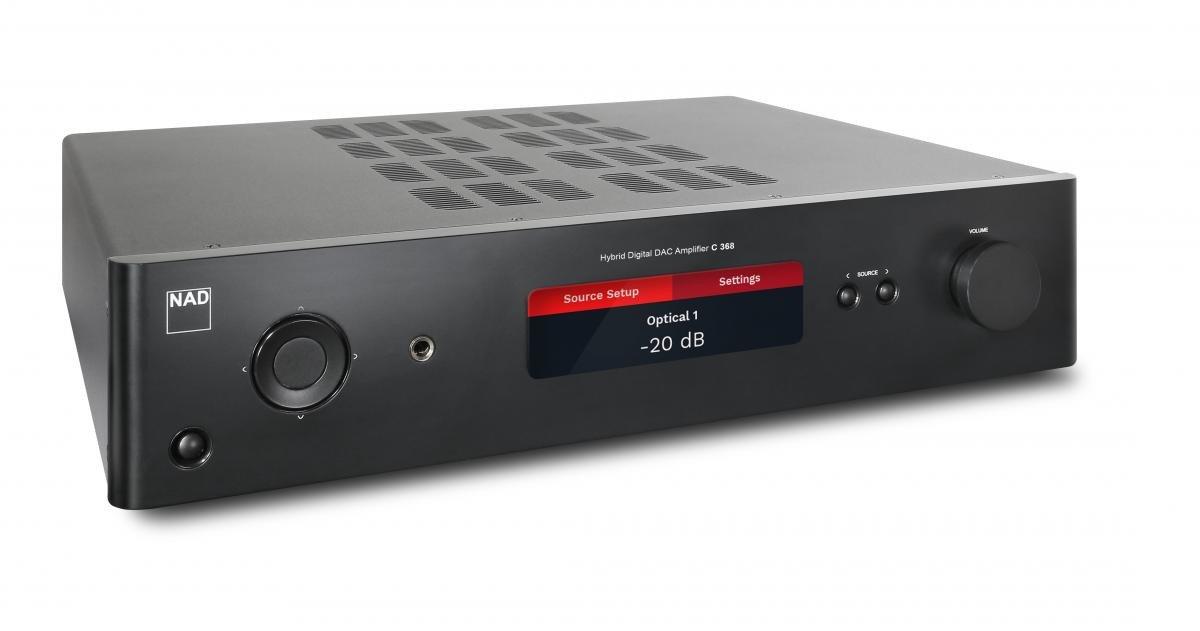
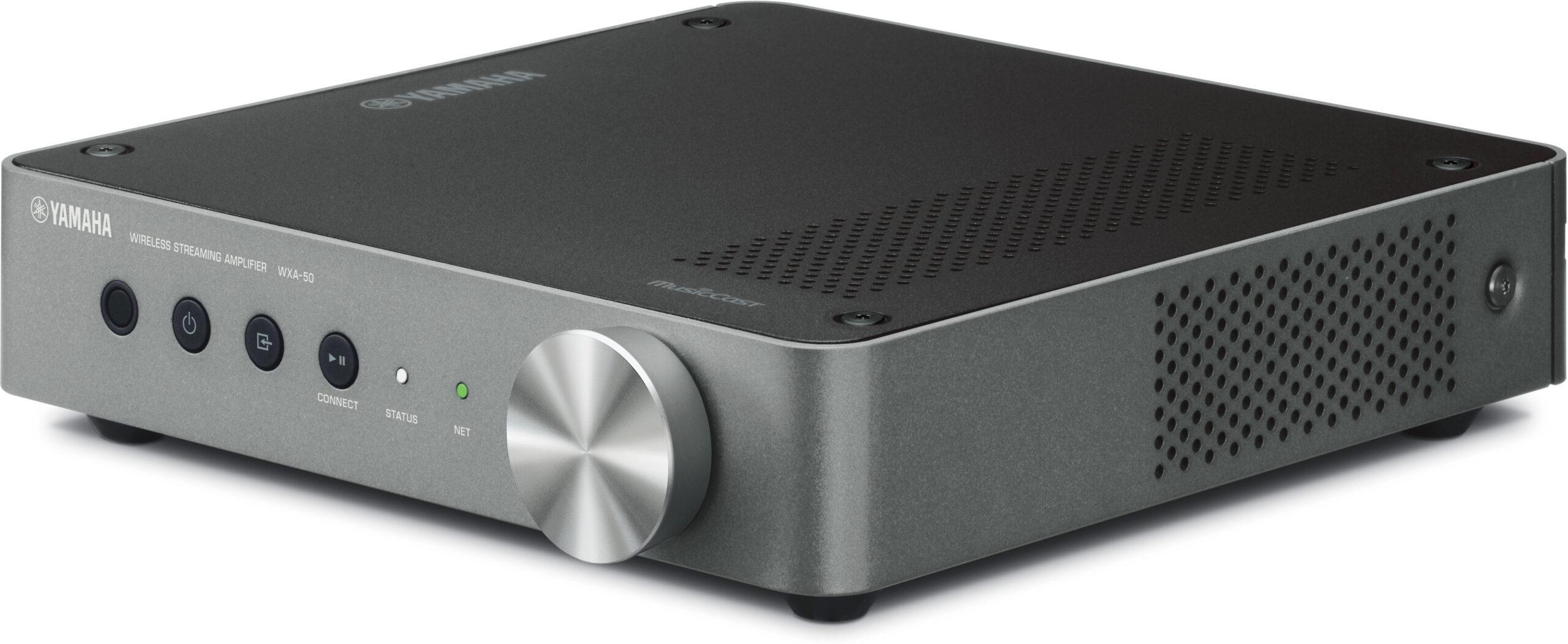
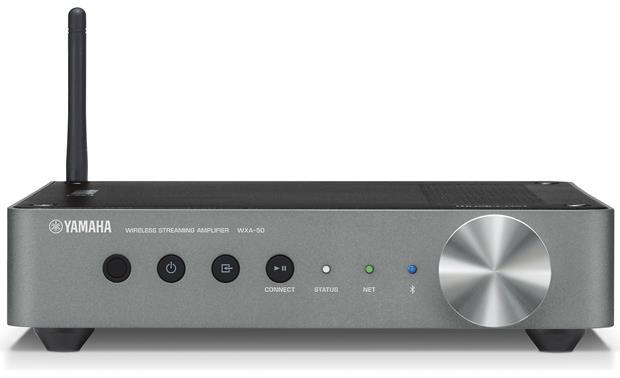
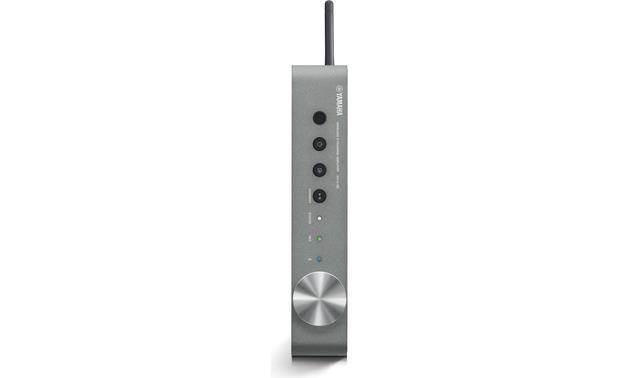
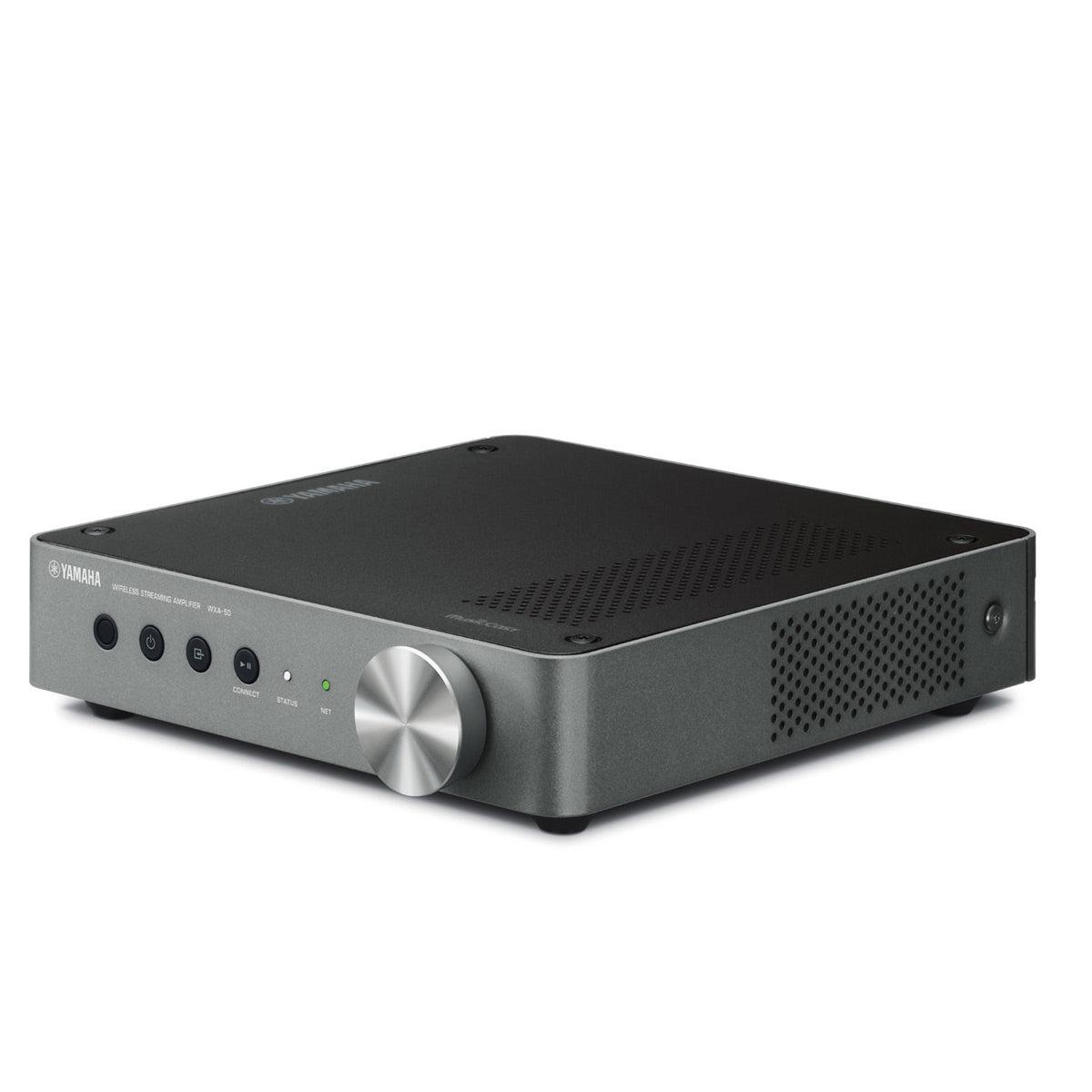
When shopping for an amplifier today, you're faced with two fundamentally different philosophies about how we should listen to music. The NAD C 368 represents the traditional audiophile approach—serious power, excellent sound quality, and the flexibility to handle everything from vinyl records to high-resolution digital files. The Yamaha MusicCast WXA-50, on the other hand, embraces our streaming-focused world with multi-room capabilities and app-based control that prioritizes convenience over raw power.
Both amplifiers were released around 2016-2017, during a pivotal time when the audio industry was grappling with how to balance traditional hi-fi values with modern streaming demands. Since then, we've seen significant improvements in streaming quality, wireless technology, and digital-to-analog conversion—improvements that both companies have continued to refine in their respective approaches.
The distinction between these products goes deeper than just features—it's about two different ways of thinking about home audio. Integrated amplifiers like the NAD C 368 combine a preamplifier (which controls volume and switches between sources) with a power amplifier (which actually drives your speakers) in one box. This traditional approach prioritizes sound quality and gives you maximum flexibility for different audio sources.
Streaming amplifiers like the Yamaha WXA-50 are more specialized. They're designed primarily for network audio, meaning they excel at pulling music from streaming services, your phone, or network-attached storage devices. Think of them as the audio equivalent of a smart TV—they do one thing really well and make it incredibly convenient.
The key considerations when choosing between these approaches are power requirements (how loud do you want to go and what speakers will you use?), source priorities (do you still spin vinyl or CDs?), installation flexibility (one main system or music throughout the house?), and how important future upgradeability is to you.
When it comes to driving speakers, the NAD C 368 is in a completely different league. It delivers 80 watts per channel continuously into both 8-ohm and 4-ohm speakers—a specification that tells us NAD built this amplifier with a robust power supply. More impressive is its dynamic power capability: 240 watts into 4-ohm loads when the music demands it, with instantaneous peaks over 600 watts for those explosive musical moments.
This power delivery comes from NAD's implementation of a Class D amplifier design using a customized Hypex UcD module. Class D amplifiers switch on and off thousands of times per second, which makes them incredibly efficient while generating less heat than traditional designs. NAD's version is particularly sophisticated because it runs in a fully balanced configuration, which helps cancel out distortion and noise.
The Yamaha WXA-50 takes a more modest approach with 55 watts into 8-ohm speakers, scaling up to 105 watts into 4-ohm loads. These numbers aren't necessarily bad—they'll drive most bookshelf speakers and many tower speakers to reasonable volumes in typical rooms. However, the difference becomes apparent with demanding speakers or in larger spaces.
Total Harmonic Distortion (THD) is where both amplifiers show their quality, but in different ways. THD measures how much the amplifier changes the original signal—lower numbers mean cleaner sound. The NAD C 368 achieves 0.03% THD at full power, dropping to less than 0.01% over most of its operating range. The Yamaha WXA-50 specifies 0.06% THD, which is still excellent by any standard.
From our research into user experiences and professional reviews, the power difference is most noticeable with inefficient speakers—those that need more watts to reach the same volume levels. Planar magnetic speakers like Magnepans, or some high-end bookshelf monitors, really come alive with the NAD's extra headroom. The Yamaha, meanwhile, excels with efficient speakers in smaller to medium-sized rooms.
Both amplifiers include sophisticated digital-to-analog converters (DACs), but they approach the task differently. The NAD C 368 uses a Texas Instruments PCM1795, a 32-bit DAC known for its neutral, transparent sound. This is paired with an asynchronous sample rate converter—a device that eliminates timing errors when converting different digital formats—and a high-quality analog buffer stage using a BurrBrown operational amplifier.
NAD's philosophy here is transparency: take the digital signal, convert it as accurately as possible, and let the music speak for itself. The result, based on consensus from reviews, is a clean, uncolored sound that reveals what's actually in your recordings.
The Yamaha WXA-50 uses an ESS Sabre DAC, another well-regarded chip, but Yamaha's approach includes more active processing. Their Compressed Music Enhancer attempts to restore some of the musical information lost when files are compressed to MP3 or streaming formats. Volume-Adaptive EQ automatically adjusts the tonal balance as you change volume, compensating for how our ears perceive bass and treble at different levels.
These are fundamentally different philosophies. NAD says "here's your music, exactly as recorded." Yamaha says "here's your music, optimized for how you're listening to it." Neither approach is inherently right or wrong, but they appeal to different listeners. Purists tend to prefer NAD's transparency, while casual listeners often appreciate Yamaha's enhancements.
The NAD C 368 bridges the analog and digital worlds more completely. Its moving magnet (MM) phono input includes proper RIAA equalization—the special curve applied during vinyl record manufacturing that must be reversed during playback. This means you can connect a turntable directly without needing a separate phono preamp. The implementation, designed by renowned engineer Bjorn Erik Edvardsen, offers high overload margins and low noise, making it suitable for serious vinyl listening.
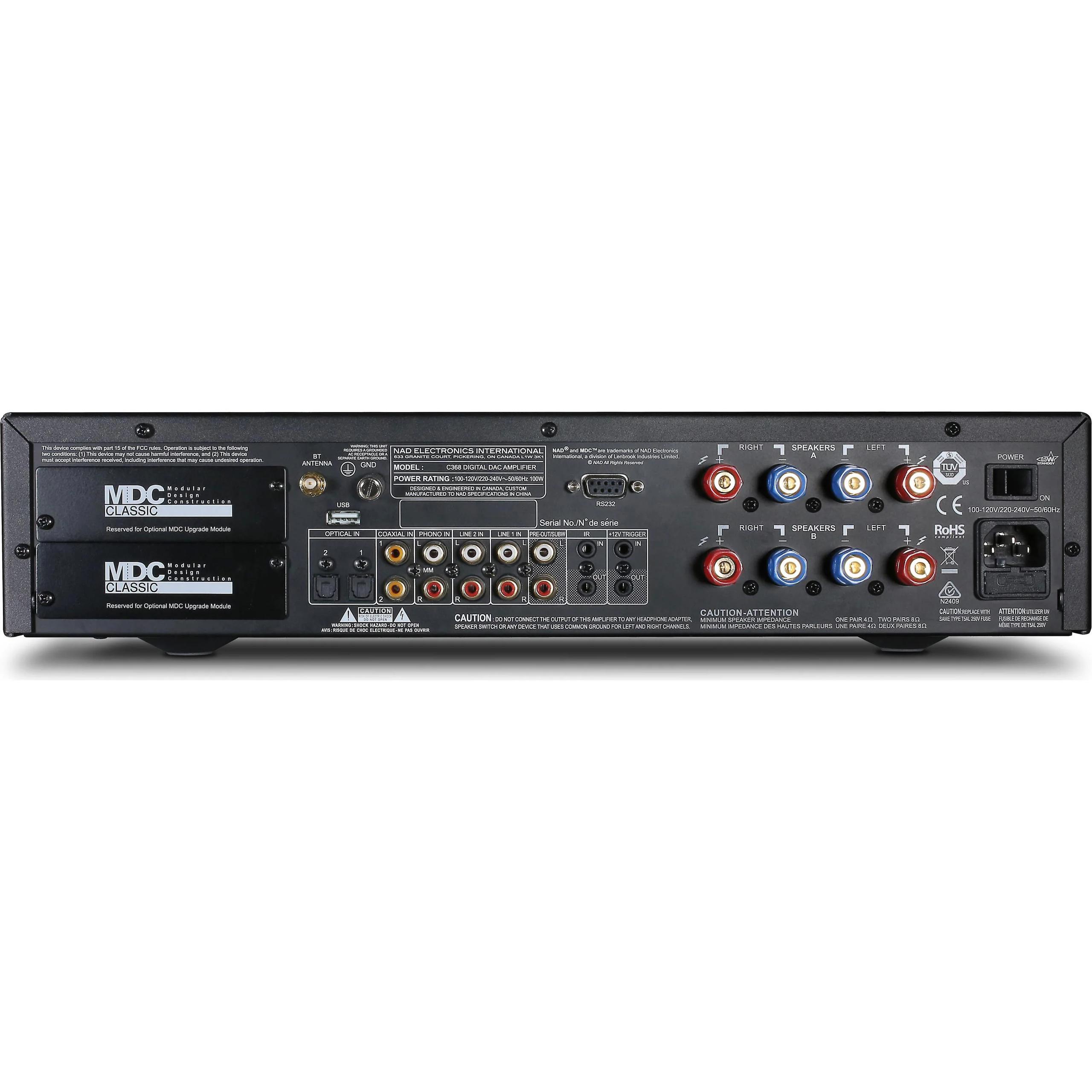
For digital sources, the NAD provides four SPDIF inputs (two optical, two coaxial), which handle most CD players, streaming devices, and game consoles. Bluetooth is included with aptX support—a codec that provides near-CD quality over wireless connections.
Where the NAD gets really interesting is its Modular Design Construction (MDC) system. Two expansion slots allow future upgrades, with the most popular being the BluOS module. This $400-500 add-on (at the time of writing) transforms the amplifier into a fully-capable network streamer with support for high-resolution files, MQA unfolding, Apple AirPlay 2, and voice control integration.
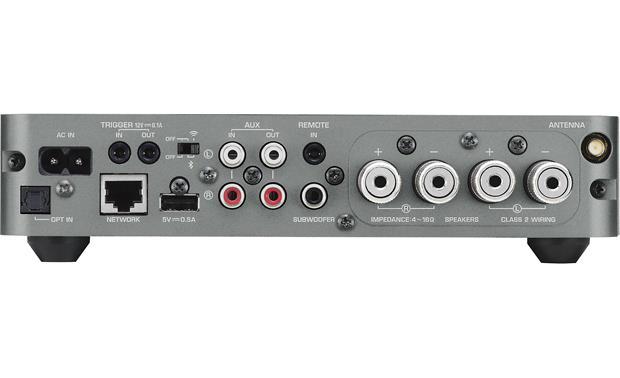
The Yamaha WXA-50 is network-native from day one. Wi-Fi, Ethernet, Bluetooth, and AirPlay are all built-in, along with DLNA 1.5 support for streaming from computers and network storage. The MusicCast platform provides direct access to Spotify, TIDAL, Pandora, and other services without needing your phone as an intermediary.
MusicCast's strength lies in multi-room capability. You can synchronize playback across multiple Yamaha devices throughout your home, or play different music in each room. The system also supports DSD files up to 5.6MHz and high-resolution PCM up to 192kHz/24-bit—formats that contain more musical information than standard CDs.
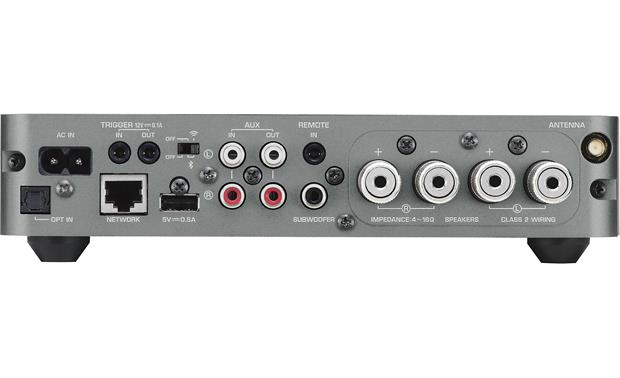
However, the Yamaha makes a significant trade-off: just one analog input and no phono stage. If you have a turntable, CD player, or other analog sources, you'll need additional equipment.
In our evaluation of user experiences and professional reviews, some clear patterns emerge about where each amplifier excels.
The NAD C 368 consistently impresses reviewers with its ability to drive challenging speakers. One professional review noted its success with Magnepan 1.7 planar speakers—notoriously difficult loads that expose weaknesses in lesser amplifiers. Users frequently mention the amplifier's "effortless" sound, particularly its ability to maintain composure during complex musical passages.
The Class D design means the NAD stays cool even during extended listening sessions, and its switch-mode power supply provides consistent performance regardless of AC line voltage variations—important for areas with unreliable electrical service.
For home theater use, the NAD works well as a two-channel component in a larger system. Its preamp outputs can feed a home theater processor for multichannel sources, while maintaining dedicated stereo performance for music listening. The configurable subwoofer output with digital crossover at 150Hz integrates seamlessly with powered subwoofers.
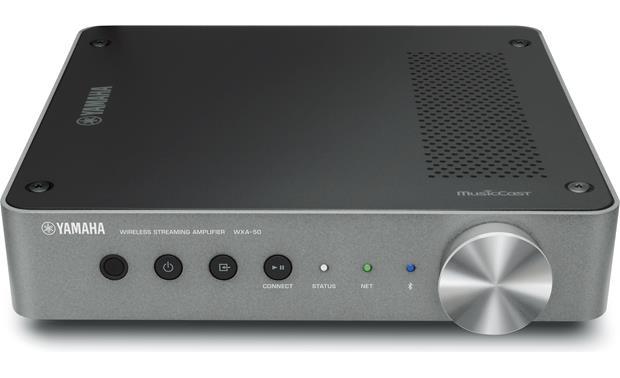
The Yamaha WXA-50 shines in distributed audio applications. Users report excellent reliability in multi-room installations, with the MusicCast app providing intuitive control over multiple zones. The compact form factor—just 2 inches tall—allows placement in locations where traditional amplifiers won't fit.
Energy efficiency is another Yamaha strength, consuming less than 2 watts in standby mode compared to higher consumption from traditional amplifier designs. For always-on multi-room systems, this adds up to meaningful electricity savings over time.
In home theater contexts, the Yamaha works best for secondary zones or stereo rooms within a larger system. Its limited power output makes it less suitable as a main theater amplifier, but perfect for bedroom, kitchen, or office integration.
The NAD C 368 represents a more future-proof investment, largely due to its MDC expansion capability. Since its 2016 release, NAD has introduced multiple upgrade modules, including the BluOS streaming module, HDMI modules for home theater integration, and various digital input expansions.
NAD's hybrid digital architecture was ahead of its time, combining the efficiency advantages of Class D amplification with audiophile-grade analog stages. The implementation has proven durable, with few reported reliability issues and consistent firmware updates for expanded functionality.
The Yamaha WXA-50 represents Yamaha's early embrace of the streaming revolution. While it lacks physical expansion options, the company has continuously updated the MusicCast platform with new streaming services, improved app functionality, and enhanced integration capabilities. Recent updates have added Amazon Alexa and Google Assistant support, along with improved high-resolution audio handling.
Both amplifiers have benefited from their manufacturers' ongoing software development, but the NAD's modular hardware design provides more dramatic upgrade potential.
Based on extensive research into professional reviews and user experiences, the decision between these amplifiers comes down to priorities and use cases.
Choose the NAD C 368 if you're building a serious stereo system where sound quality is paramount. It's ideal for listeners who own or plan to purchase demanding speakers, use multiple source types including vinyl, and want room for future expansion. The higher power output and superior analog stages make it suitable for larger rooms and more critical listening applications.
The NAD also makes sense for listeners who appreciate having physical controls and don't want to depend entirely on smartphone apps for system operation. While the BluOS module adds comprehensive streaming capabilities, the amplifier remains fully functional without it.
Choose the Yamaha WXA-50 for convenience-focused applications where streaming is your primary source. It excels in multi-room installations, space-constrained environments, and situations where simple operation is more important than ultimate sound quality.
The Yamaha is particularly appealing for users building distributed audio systems throughout their homes, those with efficient speakers in smaller rooms, and anyone who prioritizes app-based control and wireless convenience over traditional hi-fi flexibility.
At the time of writing, the NAD typically costs about 60-70% more than the Yamaha, before considering the additional cost of the BluOS module for streaming parity. However, this price difference often represents genuine value for listeners who can utilize the NAD's superior power delivery and expansion capabilities.
For most listeners, the choice comes down to whether you're building a traditional stereo system that happens to include streaming, or a streaming system that happens to have traditional amplifier functionality. Both approaches have merit, but they serve fundamentally different listening philosophies in our increasingly connected audio world.
| NAD C 368 Integrated Amplifier | Yamaha MusicCast WXA-50 |
|---|---|
| Power Output - Critical for driving demanding speakers and filling large rooms | |
| 80W continuous (8/4Ω), 240W dynamic (4Ω) - Drives inefficient speakers with authority | 55W (8Ω), 105W (4Ω) - Adequate for efficient speakers in smaller rooms |
| Amplifier Technology - Affects efficiency, heat generation, and sound character | |
| Hypex UcD Class D (custom implementation) - Audiophile-grade efficiency with low distortion | Traditional Class AB design - Proven technology with moderate efficiency |
| Digital-to-Analog Converter - Determines digital source sound quality | |
| 32-bit TI PCM1795 with asynchronous sample rate conversion - Transparent, audiophile-focused | ESS Sabre DAC with sound enhancement processing - Consumer-friendly with music optimization |
| Analog Inputs - Essential for turntables, CD players, and other traditional sources | |
| 3 inputs including dedicated MM phono stage with RIAA equalization | 1 line input only (no phono stage for turntables) |
| Digital Connectivity - Handles modern streaming and digital sources | |
| 4 SPDIF inputs, Bluetooth aptX, optional BluOS module for streaming | Wi-Fi, Bluetooth, AirPlay, USB, 1 optical - Built-in streaming ready |
| Streaming Capabilities - Important for modern music consumption habits | |
| Requires optional BluOS module (~$400-500 additional cost) for full streaming | Native MusicCast with Spotify, TIDAL, Pandora, internet radio included |
| Multi-Room Audio - Key for whole-home music distribution | |
| Available with BluOS module upgrade | Built-in MusicCast platform supports synchronized multi-room playback |
| Future Expansion - Protects your investment as technology evolves | |
| 2 MDC slots for hardware modules (BluOS, HDMI, etc.) | Software updates only - no hardware expansion options |
| Physical Size - Affects placement flexibility and room integration | |
| Traditional integrated amp size (17" W x 4" H x 16" D) | Compact streaming design (8.4" W x 2" H x 9.6" D) |
| Control Methods - How you'll actually operate the system daily | |
| Traditional front panel + remote, app control with BluOS module | Primarily app-based with slim remote and basic front panel controls |
| Total Harmonic Distortion - Measure of audio accuracy and clarity | |
| 0.03% at rated power, <0.01% over most range - Exceptional transparency | 0.06% (2-channel driven) - Very good performance for the category |
| Best Use Cases - Who should consider each amplifier | |
| Serious stereo systems, demanding speakers, mixed analog/digital sources | Multi-room streaming, space-constrained installs, convenience-focused users |
For beginners, the Yamaha MusicCast WXA-50 is typically easier to set up and use. It connects directly to your Wi-Fi network and includes built-in streaming services, so you can start listening to music immediately after connecting speakers. The NAD C 368 offers superior sound quality but requires more knowledge about audio sources and may need the optional BluOS module for streaming, making it better suited for users who want to learn about hi-fi systems.
Both amplifiers work in home theater systems, but in different ways. The NAD C 368 excels as a dedicated stereo amplifier for music listening within a larger home theater, using its preamp outputs to integrate with a surround sound processor. The Yamaha MusicCast WXA-50 is better for secondary zones in a home theater system, like powering speakers in a bedroom or kitchen connected to your main system.
The NAD C 368 delivers significantly more power with 80 watts continuous and up to 240 watts dynamic power into 4-ohm speakers. This makes it much better suited for large rooms and demanding speakers. The Yamaha MusicCast WXA-50 provides 55-105 watts depending on speaker impedance, which works well for smaller to medium rooms but may struggle in large spaces.
The Yamaha MusicCast WXA-50 includes built-in Wi-Fi, Bluetooth, and streaming services like Spotify and TIDAL, so no additional equipment is needed. The NAD C 368 includes Bluetooth but requires the optional BluOS module (sold separately) for Wi-Fi streaming and access to streaming services, adding to the total system cost.
The NAD C 368 is significantly better for vinyl records because it includes a built-in moving magnet (MM) phono stage with proper RIAA equalization, allowing direct connection of most turntables. The Yamaha MusicCast WXA-50 has no phono input, so you'd need to purchase a separate phono preamp to connect a turntable.
The NAD C 368 handles difficult speakers much better due to its robust power supply and high current delivery capability. It can drive planar magnetic speakers, low-efficiency monitors, and 4-ohm loads without strain. The Yamaha MusicCast WXA-50 works best with efficient speakers (87dB sensitivity or higher) and may struggle with demanding loads.
The NAD C 368 generally offers superior sound quality with its audiophile-grade components, lower distortion (0.03% vs 0.06%), and transparent sound character. The Yamaha MusicCast WXA-50 provides good sound quality but focuses more on convenience features and sound enhancement processing rather than ultimate transparency.
The NAD C 368 offers excellent expandability through its Modular Design Construction (MDC) system, with two slots for upgrade modules like BluOS streaming, HDMI inputs, or future technologies. The Yamaha MusicCast WXA-50 receives software updates for new features and streaming services but has no hardware expansion options.
The Yamaha MusicCast WXA-50 excels at multi-room audio with built-in MusicCast platform support, allowing synchronized or independent playback across multiple rooms. The NAD C 368 can participate in multi-room systems with the optional BluOS module, but the Yamaha is specifically designed for this application.
The Yamaha MusicCast WXA-50 is much more compact at just 2 inches tall and can be mounted horizontally or vertically, making it ideal for tight spaces or in-wall installations. The NAD C 368 has traditional integrated amplifier dimensions and requires standard equipment rack space or sturdy shelf placement.
Value depends on your priorities. The Yamaha MusicCast WXA-50 offers excellent value for streaming-focused users who want built-in multi-room capability and don't need high power output. The NAD C 368 provides better value for serious listeners who prioritize sound quality, power, and future expandability, despite its higher initial cost.
Both amplifiers support smart home integration but through different methods. The Yamaha MusicCast WXA-50 includes native Amazon Alexa and Google Assistant support, plus integration with control systems like Control4. The NAD C 368 offers professional control system integration through RS-232 and trigger connections, with voice control available when the BluOS module is added.
We've done our best to create useful and informative comparisons to help you decide what product to buy. Our research uses advanced automated methods to create this comparison and perfection is not possible - please contact us for corrections or questions. These are the sites we've researched in the creation of this article: avnirvana.com - crutchfield.com - hometheaterhifi.com - hifiheaven.net - crutchfield.com - projectorscreen.com - theabsolutesound.com - dedicatedaudio.com - soundstagesimplifi.com - nadelectronics.com - musicdirect.com - crutchfield.com - safeandsoundhq.com - crutchfield.ca - usa.yamaha.com - avluxurygroup.com - crutchfield.com - crutchfield.com - teamiu.com - audiosciencereview.com - snapav.com - avsforum.com - youtube.com - hifiheaven.net - usa.yamaha.com - usa.yamaha.com - audiokarma.org - usa.yamaha.com - bestbuy.com - usa.yamaha.com - ooberpad.com - dugoutnorthbrook.com - parts-express.com

Privacy Policy
Terms and Conditions - Affiliate Policy
Home Security
© Copyright 2008-2026.
11816 Inwood Rd #1211, Dallas, TX 75244