

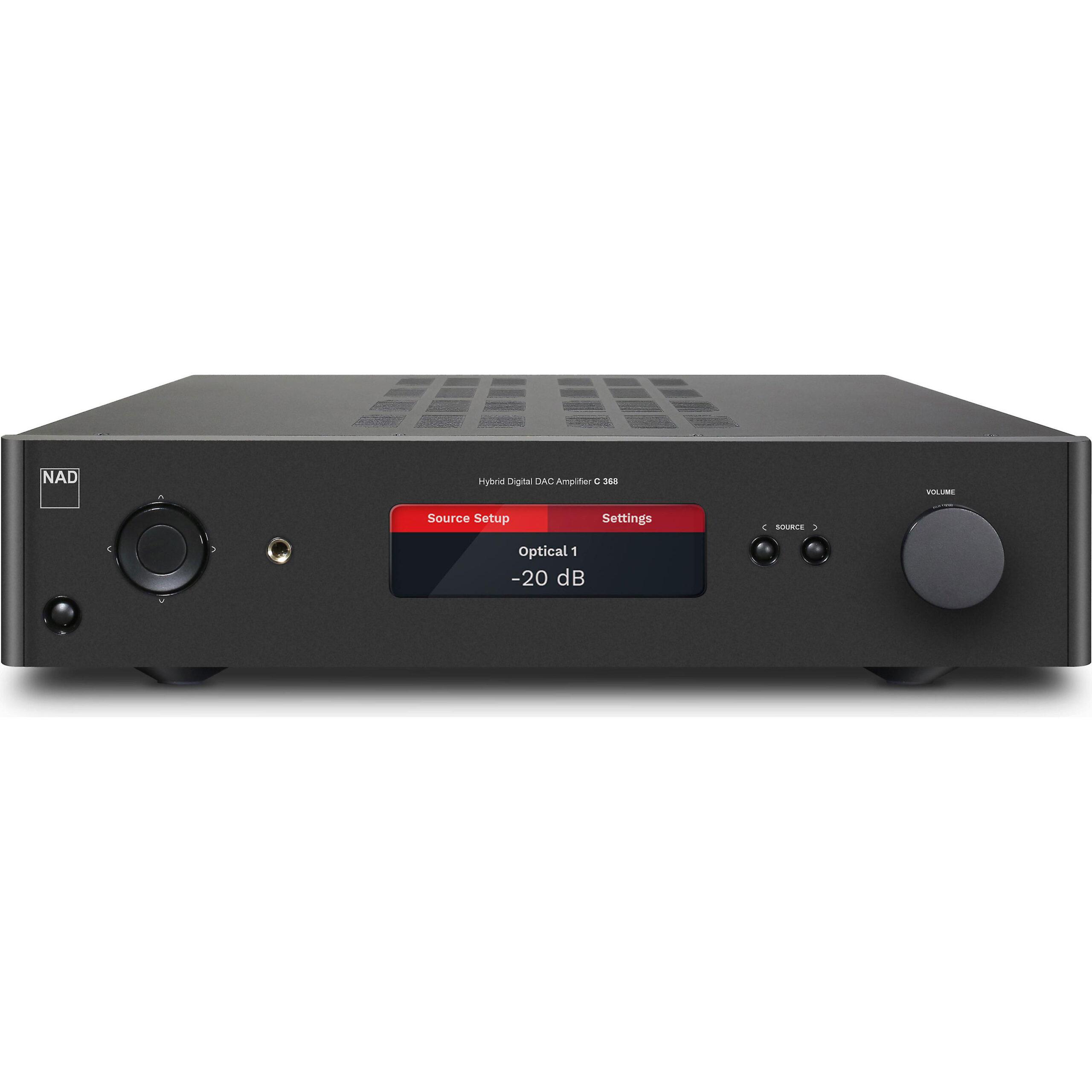
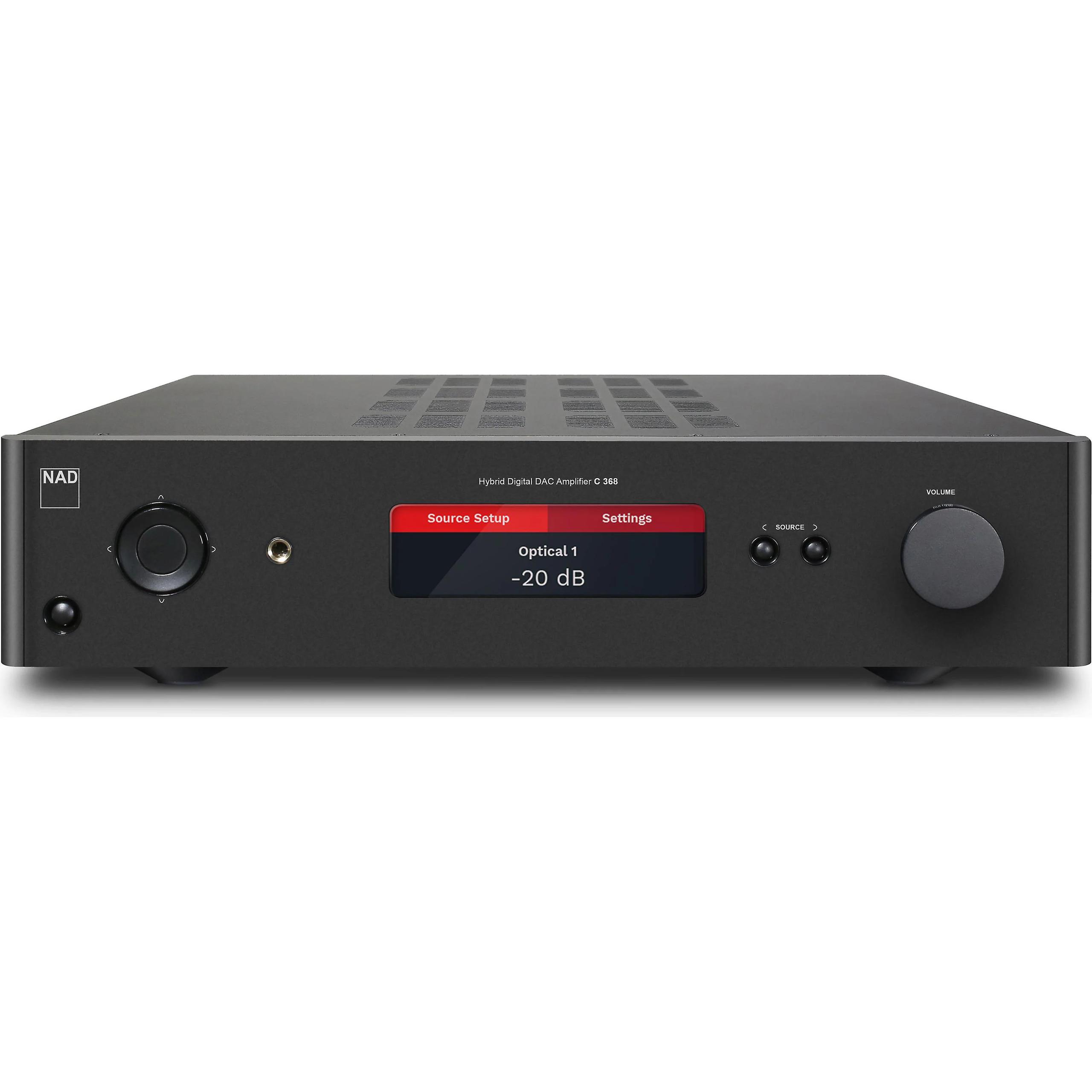
When you're building a high-quality stereo system, the integrated amplifier sits at the heart of everything. It's the component that takes the low-level signals from your sources—whether that's a CD player, turntable, or streaming device—and amplifies them with enough power to drive your speakers. Think of it as the conductor of your audio orchestra, controlling volume, switching between sources, and delivering the power your speakers need to sing.
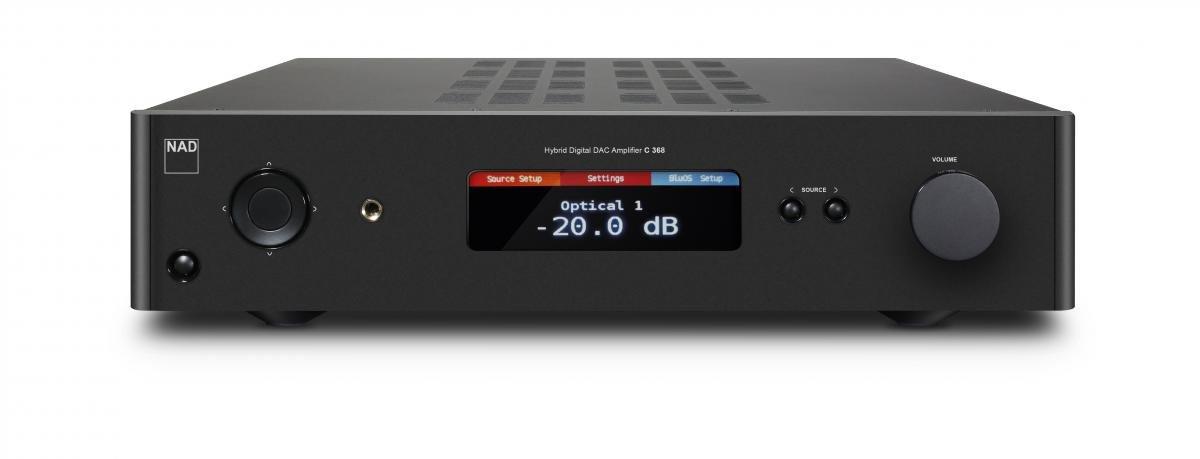
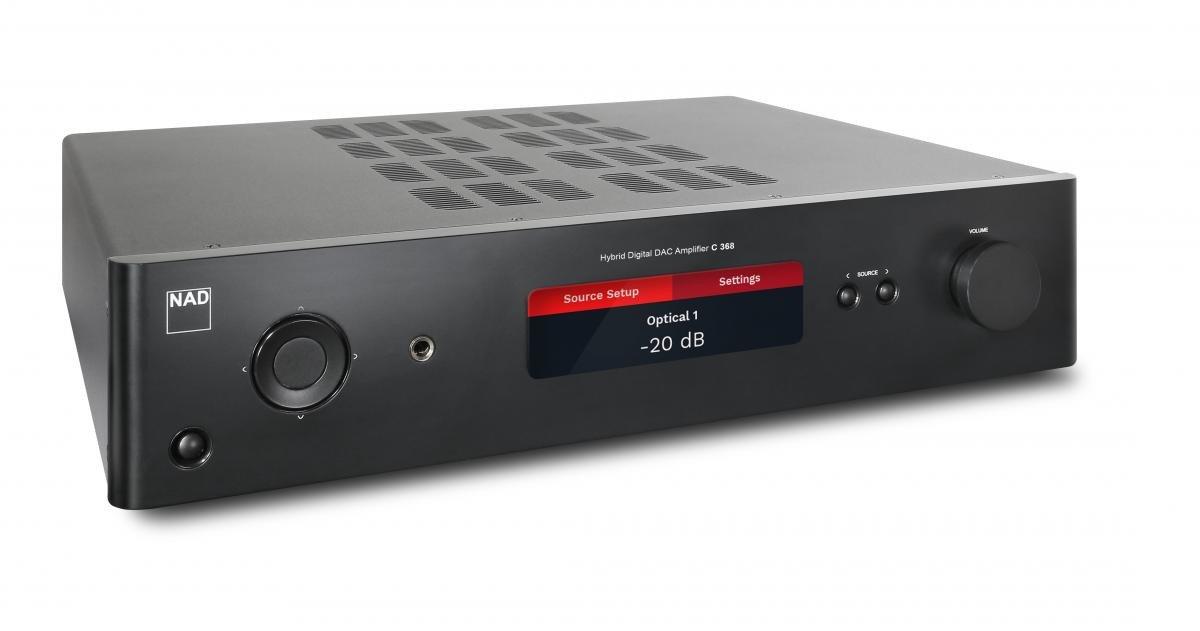
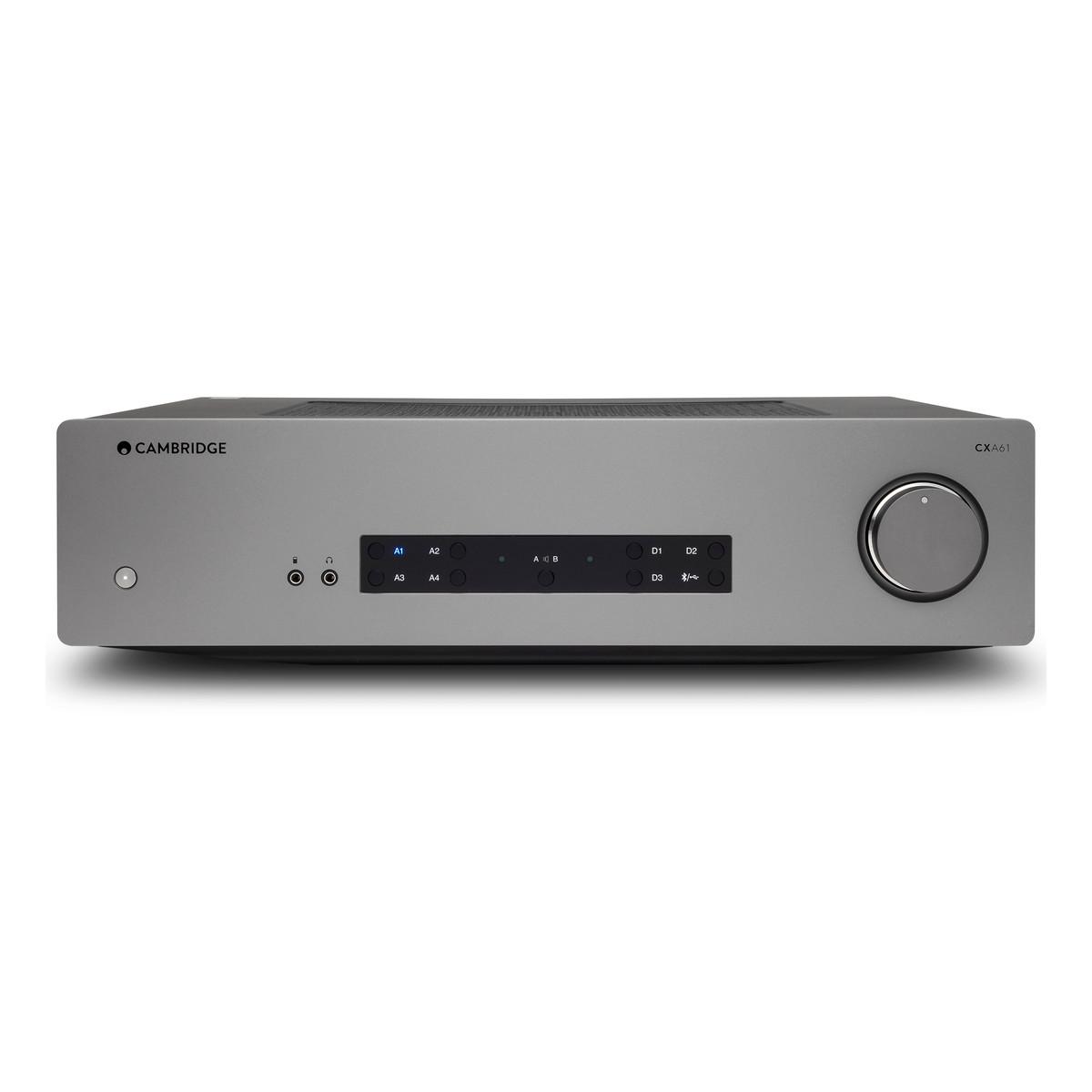
The integrated amplifier market has two compelling options that represent different philosophies: the NAD C 368 and the Cambridge Audio CXA61. Both launched around 2017-2018, these amplifiers showcase how the audio world has evolved to embrace digital sources while maintaining analog excellence. Since their release, both companies have refined their designs with firmware updates and minor revisions, but the core technologies remain current and competitive.
The most fundamental job of any amplifier is delivering clean power to your speakers. The NAD C 368 outputs 80 watts per channel, while the Cambridge Audio CXA61 delivers 60 watts per channel into 8-ohm speakers. But here's where it gets interesting—watts alone don't tell the whole story.
The NAD C 368 uses Class D amplification technology, specifically a customized Hypex UcD output stage. Class D amplifiers are incredibly efficient (think 90%+ versus 60% for traditional designs), which means they waste less energy as heat and can deliver more consistent power. NAD's implementation is particularly sophisticated because it operates in a fully balanced bridge configuration, essentially using four amplifier channels to drive two speakers. This approach dramatically reduces distortion and provides exceptional control over the speakers.
The Cambridge Audio CXA61 takes the traditional Class AB route, using an oversized toroidal transformer—that's the heavy, donut-shaped component that converts wall power into the clean DC voltage the amplification circuits need. While Class AB amplifiers are less efficient, many audiophiles prefer their sound characteristics, describing them as more "natural" or "musical."
What does this mean in real-world listening? The NAD C 368's advanced power supply can deliver up to 600 watts instantaneously for short musical peaks, making it exceptional at handling dynamic music like orchestral pieces or rock concerts. The Cambridge Audio CXA61, while lower in continuous power, maintains excellent control and can actually deliver 90 watts per channel into 4-ohm speakers, showing its robust design.
Through our research of expert reviews and user experiences, these amplifiers reveal distinctly different sonic personalities. The NAD C 368 earned recognition from The Absolute Sound with Product of the Year and Editors' Choice awards, praised for its dynamic, engaging sound with "lots of power, deep, punchy bass, smooth midrange and highs." It's the kind of amplifier that makes you want to turn up the volume and rediscover your music collection.
The Cambridge Audio CXA61 takes a more neutral approach. Reviews consistently describe it as sitting "right in the centre of the tonal ladder" with disciplined neutrality. It's incredibly precise—treble never becomes harsh, midrange never smears, and bass stays tight and controlled. However, this precision can feel somewhat conservative, with some reviewers noting it sounds more "predictable" and can feel "short of breath" compared to more spacious alternatives.
For home theater use, both amplifiers can handle movie soundtracks effectively, but the NAD C 368's superior dynamic range and power reserves make it better suited for action movies with explosive soundtracks. The Cambridge Audio CXA61 excels with dialogue-heavy content and more intimate scenes where its precise imaging shines.
Both amplifiers recognize that digital sources now dominate how we listen to music, but they handle this reality differently.
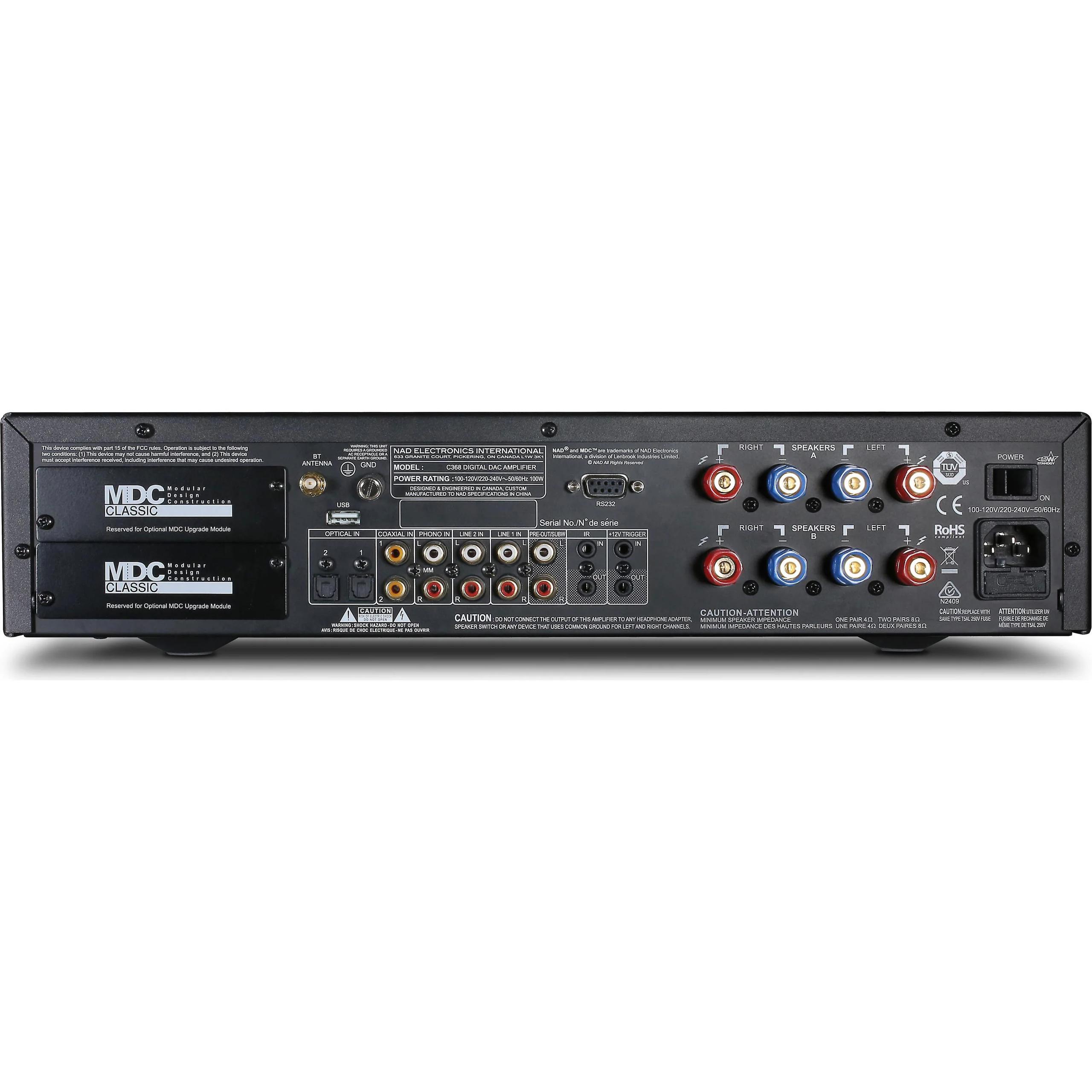
The NAD C 368 includes a built-in DAC (Digital-to-Analog Converter) using a Texas Instruments PCM1795 chip that handles up to 24-bit/192kHz files. DACs are crucial because they convert the digital 1s and 0s from your computer or streaming device into the analog signals that speakers can reproduce. The C 368 provides four digital inputs—two optical and two coaxial—plus built-in Bluetooth with aptX support for CD-quality wireless streaming.
The Cambridge Audio CXA61 steps up the digital game with an ESS Sabre ES9010K2M DAC, considered a premium chip typically found in more expensive units. It supports even higher resolution files up to 32-bit/384kHz and includes DSD256 support (a different digital audio format favored by some audiophiles). The CXA61 also includes Bluetooth, but with aptX HD support, which can handle 24-bit/48kHz wireless streaming—technically superior to the NAD's implementation.
In practical terms, both DACs perform excellently, but the Cambridge's higher resolution support future-proofs your system for ultra-high-quality downloads, while the NAD's implementation focuses on real-world performance with the vast majority of available music.
Here's where the NAD C 368 reveals its ace card: Modular Design Construction (MDC). This isn't just marketing speak—it's two physical slots in the amplifier where you can install upgrade modules. The most popular is the BluOS module, which transforms the C 368 into a full-featured network streamer supporting Apple AirPlay 2, Amazon Alexa voice control, and high-resolution streaming services.
This modular approach means your amplifier can evolve. When new streaming standards emerge or connection types change, you're not stuck with obsolete technology. It's like having a smartphone that you can actually upgrade instead of replacing entirely.
The Cambridge Audio CXA61 takes a different approach—it delivers exceptional performance in its current form but doesn't offer upgradability. This isn't necessarily a weakness; it keeps costs down and ensures the entire design is optimized for its intended purpose without compromise.
Beyond digital inputs, these amplifiers handle analog sources differently. The NAD C 368 includes a built-in MM phono preamp, crucial if you own a turntable with a moving magnet cartridge. It also provides dedicated subwoofer outputs with a built-in crossover, making integration with a powered subwoofer simple and effective.
The Cambridge Audio CXA61 focuses on line-level sources with four analog RCA inputs plus a convenient front-panel 3.5mm jack for phones or tablets. It provides dual speaker outputs (labeled A and B) for running speakers in different rooms or bi-wiring a single pair of speakers.
For custom installation, the NAD C 368 includes RS-232 control ports, IR inputs and outputs, and 12V triggers that professional installers use to integrate the amplifier with whole-house control systems from companies like Control4 or Crestron.
At the time of writing, these amplifiers sit in different price tiers, with the NAD C 368 commanding a premium over the Cambridge Audio CXA61. The price difference reflects genuine technological advantages: the modular design, higher power output, professional installation features, and award-winning performance justify the NAD's higher cost.
However, the Cambridge Audio CXA61 delivers remarkable value, offering premium DAC technology and excellent sound quality at a more accessible price point. For many listeners, especially those who prioritize neutral sound reproduction and don't need streaming features, it provides everything necessary for audiophile-level performance.
Value future-proofing: The modular design means this amplifier can adapt to changing technology over many years. Add the BluOS module now or later, and you have network streaming that rivals dedicated streamers costing thousands.
Need more power: If you have large speakers, difficult-to-drive models, or a large listening room, the C 368's superior power reserves and advanced power supply design provide better dynamics and control.
Want award-winning performance: Multiple industry awards validate this amplifier's exceptional sound quality, particularly its engaging, dynamic presentation that works well with all music genres.
Have a turntable: The built-in MM phono preamp eliminates the need for an external phono stage, simplifying your system and reducing costs.
Plan custom installation: The professional control features make it suitable for integrated whole-house systems.
Prioritize neutral accuracy: This amplifier excels at revealing exactly what's in your recordings without coloration, making it ideal for critical listening and acoustic music.
Have a tighter budget: You get premium performance and features at a more accessible price point, with no compromise on core sound quality.
Want the highest digital resolution: Support for 32-bit/384kHz and DSD256 files provides compatibility with the most demanding digital audio formats.
Prefer traditional amplification: The Class AB design and toroidal transformer represent time-tested approaches many audiophiles prefer.
Don't need streaming now: If you're satisfied with physical media and external streaming devices, the CXA61 provides everything else you need.
Start by honestly assessing your needs and budget. If you're building a system to last decades and value flexibility, the NAD C 368's modular design and superior power make it a smart long-term investment. The ability to add network streaming later means you're not paying for features you might not use immediately.
If you want exceptional sound quality now at a lower price, and you're comfortable with the amplifier's current feature set, the Cambridge Audio CXA61 delivers audiophile performance without premium pricing.
Consider your speakers too—inefficient or difficult speakers benefit from the NAD C 368's superior power reserves, while the Cambridge Audio CXA61 works beautifully with most modern speakers.
Both amplifiers represent excellent engineering and will serve you well for years. The NAD offers more features and future flexibility at a higher price, while the Cambridge delivers pure audio excellence focused on the fundamentals. Either choice puts you on a path to exceptional music reproduction—the decision comes down to whether you prioritize adaptability and power or prefer focused performance at a more accessible price.
The beauty of this choice is that there's no wrong answer, only different approaches to achieving great sound. Both the NAD C 368 and Cambridge Audio CXA61 will reveal details in your music you never knew existed and provide years of listening pleasure.
| NAD C 368 | Cambridge Audio CXA61 |
|---|---|
| Power Output - Higher watts drive demanding speakers and larger rooms better | |
| 80W per channel (8Ω), 120W (4Ω) - More headroom for dynamics | 60W per channel (8Ω), 90W (4Ω) - Adequate for most speakers |
| Amplifier Technology - Different approaches to sound reproduction | |
| Class D with Hypex UcD (high efficiency, clean power) | Class AB with toroidal transformer (traditional audiophile preference) |
| Future Upgradability - Ability to add features over time | |
| 2 MDC slots for modules (BluOS streaming, HDMI, etc.) | Fixed feature set, no upgrade options |
| Digital Audio Resolution - Maximum quality for high-res files | |
| Up to 24-bit/192kHz PCM | Up to 32-bit/384kHz PCM, DSD256 support |
| Built-in Streaming - Wireless music from phones/tablets | |
| Bluetooth aptX (CD quality) + optional BluOS module | Bluetooth aptX HD (better than CD quality) built-in |
| Analog Inputs - Connecting turntables and other sources | |
| MM phono stage included + line inputs | 4 line inputs only (no phono stage) |
| Digital Connectivity - Number of digital sources you can connect | |
| 4 inputs (2 optical, 2 coaxial) + USB | 3 inputs (2 optical, 1 coaxial) + USB |
| Professional Integration - Custom installation features | |
| RS-232, IR, 12V triggers (full automation support) | Basic remote control only |
| DAC Chip - Digital-to-analog conversion quality | |
| Texas Instruments PCM1795 | ESS Sabre ES9010K2M (premium chip) |
| Award Recognition - Industry validation of performance | |
| The Absolute Sound Product of the Year + Editor's Choice | No major industry awards noted |
| Speaker Outputs - Flexibility for multiple speaker setups | |
| Single pair + subwoofer output with crossover | Dual A/B outputs for multi-room or bi-wiring |
| Value Positioning - Performance per dollar spent | |
| Premium pricing for modular design and award-winning sound | Excellent performance at more accessible price point |
The NAD C 368 delivers 80 watts per channel into 8-ohm speakers, while the Cambridge Audio CXA61 provides 60 watts per channel. The NAD C 368 offers 33% more power, making it better suited for demanding speakers or larger rooms that need extra headroom for dynamic music passages.
Yes, both the NAD C 368 and Cambridge Audio CXA61 include high-quality built-in DACs. The Cambridge Audio CXA61 uses a premium ESS Sabre chip supporting up to 32-bit/384kHz files, while the NAD C 368 features a Texas Instruments chip handling 24-bit/192kHz resolution—both excellent for modern digital sources.
The Cambridge Audio CXA61 has superior built-in Bluetooth with aptX HD support for high-quality wireless streaming. However, the NAD C 368 can be upgraded with an optional BluOS module that adds Wi-Fi streaming, Apple AirPlay 2, and multi-room capabilities, making it more flexible for serious streaming needs.
Only the NAD C 368 includes a built-in MM phono preamp, allowing direct connection of most turntables. The Cambridge Audio CXA61 requires an external phono preamp or a turntable with built-in preamp to connect vinyl sources.
The Cambridge Audio CXA61 typically costs significantly less while delivering excellent sound quality and premium features like high-resolution DAC support. The NAD C 368 costs more but justifies the premium with higher power output, modular upgrades, and award-winning performance.
Both work well for stereo home theater setups. The NAD C 368 excels with action movies due to its superior power reserves and dynamic range, while the Cambridge Audio CXA61 provides excellent dialogue clarity and precise imaging. Neither supports surround sound processing—you'd need an AV receiver for full home theater systems.
Sound preference varies by listener. The NAD C 368 offers a more dynamic, engaging presentation with powerful bass and smooth highs, earning industry awards. The Cambridge Audio CXA61 provides neutral, accurate sound reproduction that reveals recording details without coloration—ideal for critical listening.
The NAD C 368 features modular design with two upgrade slots for adding streaming, HDMI, or future technologies. The Cambridge Audio CXA61 cannot be upgraded but delivers all its features from day one, keeping the design focused and cost-effective.
The NAD C 368 offers more digital connectivity with four inputs (two optical, two coaxial) plus USB. The Cambridge Audio CXA61 provides three digital inputs (two optical, one coaxial) plus USB, which is adequate for most setups but less flexible for multiple digital sources.
The NAD C 368 handles challenging speakers better due to its higher power output (80W vs 60W) and advanced Class D design that maintains consistent performance into 4-ohm loads. The Cambridge Audio CXA61 works well with most speakers but may struggle with very inefficient or low-impedance models.
Both the NAD C 368 and Cambridge Audio CXA61 feature front-panel headphone jacks. The NAD C 368 can also transmit audio wirelessly to Bluetooth headphones, while the Cambridge Audio CXA61 automatically mutes speakers when headphones are connected for convenience.
The NAD C 368 excels in custom installations with RS-232 control ports, IR inputs/outputs, and 12V triggers for integration with whole-house automation systems from Control4, Crestron, and similar platforms. The Cambridge Audio CXA61 offers basic remote control but lacks professional installation features.
We've done our best to create useful and informative comparisons to help you decide what product to buy. Our research uses advanced automated methods to create this comparison and perfection is not possible - please contact us for corrections or questions. These are the sites we've researched in the creation of this article: avnirvana.com - crutchfield.com - hometheaterhifi.com - hifiheaven.net - crutchfield.com - projectorscreen.com - theabsolutesound.com - dedicatedaudio.com - soundstagesimplifi.com - nadelectronics.com - musicdirect.com - crutchfield.com - safeandsoundhq.com - themasterswitch.com - theaudiophileman.com - youtube.com - forums.whathifi.com - crutchfield.com - youtube.com - youtube.com - hifihaven.org - crutchfield.com - audioguru.com - listenup.com - forums.whathifi.com - manuals.cambridgeaudio.com - alpha-audio.net - hifichoice.com - cambridgeaudio.com - the-ear.net - speakerdecision.com

Privacy Policy
Terms and Conditions - Affiliate Policy
Home Security
© Copyright 2008-2026.
11816 Inwood Rd #1211, Dallas, TX 75244