

When you're building a stereo system, the integrated amplifier sits at the heart of everything. It's the component that takes weak signals from your sources—whether that's a turntable, CD player, or streaming device—amplifies them to a level that can drive your speakers, and gives you control over volume and source selection. Think of it as the conductor of your audio orchestra, making sure everything plays together harmoniously.
NAD, a Canadian company with over 50 years of experience in audio engineering, has built a reputation for creating amplifiers that punch above their weight class. Today we're comparing two of their most popular models: the NAD C 368 and the NAD D 3045. While both are integrated amplifiers that can power your speakers and handle multiple sources, they take notably different approaches to modern audio needs.
Before diving into the comparison, it's worth understanding what sets modern integrated amplifiers apart from their predecessors. Both the C 368 and D 3045 use Class D amplification technology, which is quite different from the traditional Class AB designs you might remember from decades past.
Class D amplifiers work by rapidly switching the audio signal on and off thousands of times per second, then filtering out the switching noise to leave just the music. This approach delivers several key advantages: they run much cooler (meaning less heat and lower electricity bills), they're more compact, and they can deliver impressive power output from relatively lightweight packages. The trade-off used to be sound quality, but modern Class D designs—particularly NAD's implementation using specialized Hypex modules—have largely eliminated those concerns.
Both amplifiers also feature built-in digital-to-analog converters (DACs), which convert the digital audio files from your computer, streaming device, or CD player into analog signals that the amplifier can work with. Having a high-quality DAC built in means you don't need a separate component, saving space and often money while ensuring optimal signal quality.
The NAD C 368, released in 2016, delivers 80 watts per channel into both 8-ohm and 4-ohm speakers. The D 3045, which came out in 2018, provides 60 watts per channel. That 20-watt difference might not sound like much, but in audio terms, it represents about a 1 decibel increase in maximum volume potential—and more importantly, better headroom for handling sudden loud passages in music without strain.
Both amplifiers maintain their rated power output across the full frequency range (20Hz to 20kHz) with incredibly low distortion (0.03% Total Harmonic Distortion). This specification, called "Full Disclosure Power Rating," is something NAD pioneered to combat the industry's tendency to quote unrealistic power figures measured only at single frequencies under ideal conditions.
What does this mean in practical terms? If you're listening at moderate volumes in a typical living room with reasonably efficient speakers (around 87-89 dB sensitivity), either amplifier will have plenty of power. The C 368's extra watts become meaningful if you're driving demanding speakers like large floor-standing models, planar magnetic speakers (which typically need lots of current), or if you enjoy concert-level volumes.
Both amplifiers feature impressive damping factors (over 300 for the C 368 and over 100 for the D 3045). The damping factor measures how well an amplifier can control speaker cone movement, particularly in the bass region. Higher numbers generally mean tighter, more controlled bass response—though the real-world differences between these two levels are minimal.
Based on extensive research into professional reviews and user experiences, these two amplifiers have distinctly different sonic personalities, despite sharing similar underlying technology.
The NAD C 368 consistently receives praise for its smooth, balanced presentation. Reviewers describe it as clean and inviting, with a slightly forgiving character that makes even mediocre recordings enjoyable. It excels particularly with acoustic music, jazz, and classical recordings, where its ability to present realistic soundstaging and natural tonal balance really shines. The amplifier doesn't add warmth or brightness artificially—instead, it presents music in a way that feels engaging and musical.
The D 3045, in contrast, takes a more analytical approach. Professional measurements show it maintains ruler-flat frequency response and extremely low noise floors. Users consistently describe its sound as accurate and revealing—sometimes brutally so. Poor recordings will sound poor, but high-quality source material is presented with remarkable clarity and detail. The bass response is particularly noteworthy, described as tight and controlled, while the overall presentation maintains a dark, quiet background that allows subtle details to emerge.
This difference in approach reflects their intended markets. The C 368 aims to be the centerpiece of a dedicated listening system, where musical engagement is paramount. The D 3045 prioritizes accuracy and transparency, making it ideal for situations where you want to hear exactly what's in the recording without any editorial commentary from the amplifier.
Here's where the two amplifiers really start to diverge in their approach to modern audio needs.
The D 3045 takes digital audio seriously. Its built-in DAC, based on the AKM AK4490 chipset, supports incredibly high-resolution audio—up to 24-bit/384kHz via its USB input. It also handles DSD (Direct Stream Digital) files, the format used for Super Audio CDs, and MQA (Master Quality Authenticated) files from services like Tidal. In professional measurements, this DAC achieves SINAD (Signal-to-Noise-And-Distortion) figures above 100dB, putting it in the same performance category as many standalone DACs costing hundreds of dollars.
The C 368 uses a Texas Instruments PCM1795 DAC chip, which handles up to 24-bit/192kHz resolution. While not quite as specification-heavy as the D 3045, it includes sophisticated upsampling and digital filtering that ensures excellent sound quality across all digital sources.
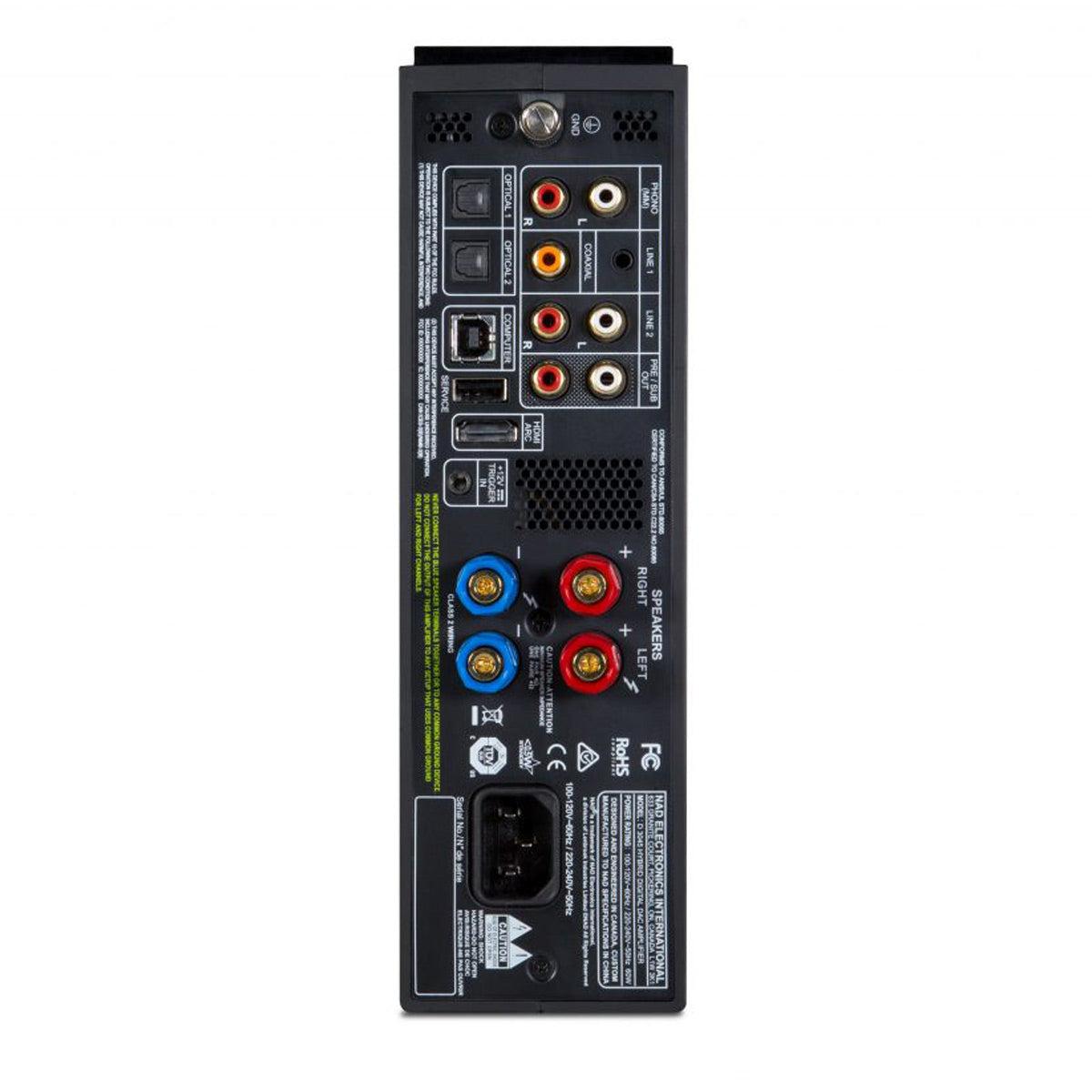
Where the D 3045 really stands out is in its connectivity options. It includes an HDMI ARC (Audio Return Channel) input—a rare feature in integrated amplifiers. This allows direct connection to modern TVs, automatically switching to the TV's audio when you turn it on and even allowing the TV remote to control volume. For anyone using their stereo system for both music and television, this single feature can be worth the price of admission.
Both amplifiers include Bluetooth connectivity, but the D 3045 supports the newer aptX HD codec, which delivers CD-quality audio over wireless connections. The C 368 includes standard aptX, which is still very good but not quite as high-resolution.
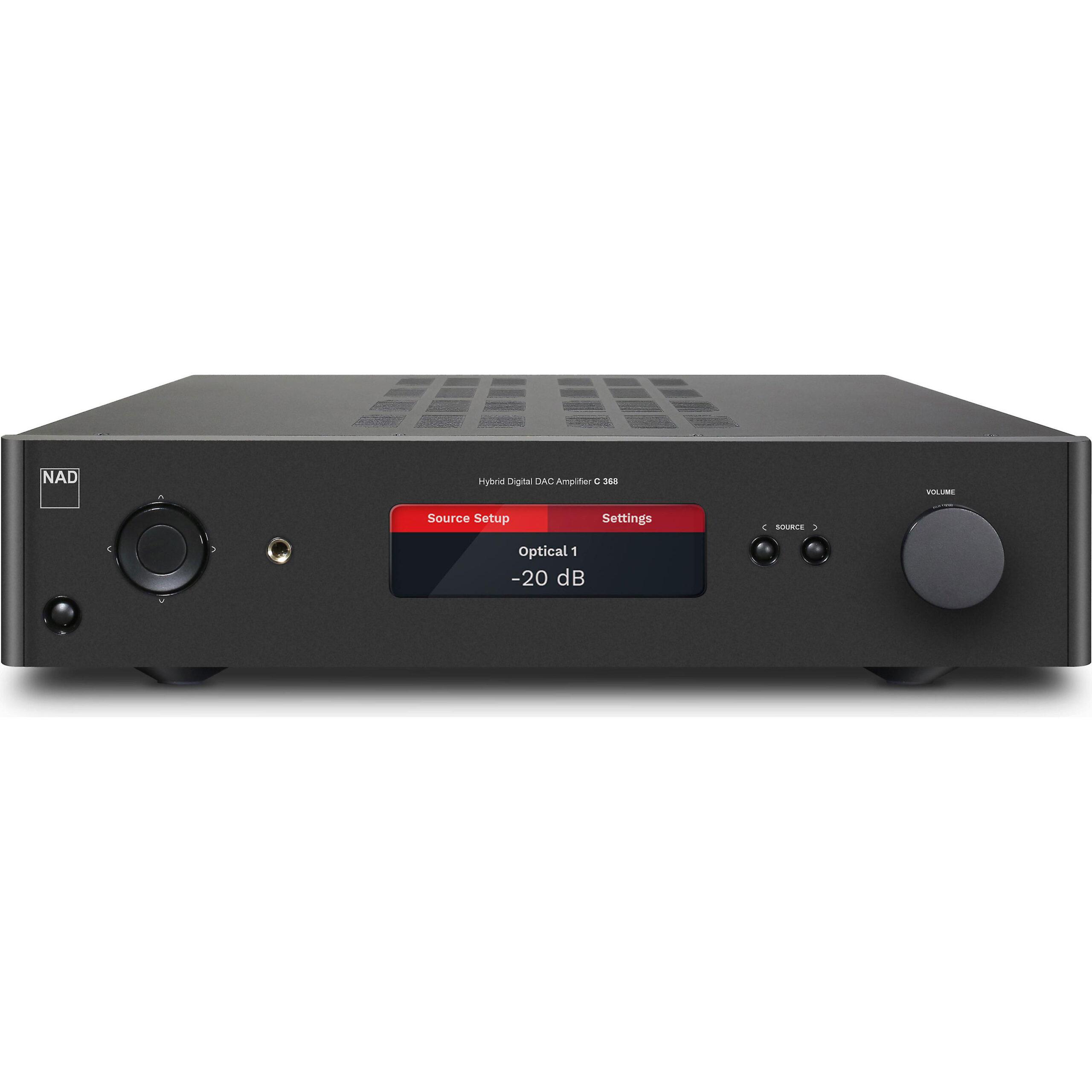
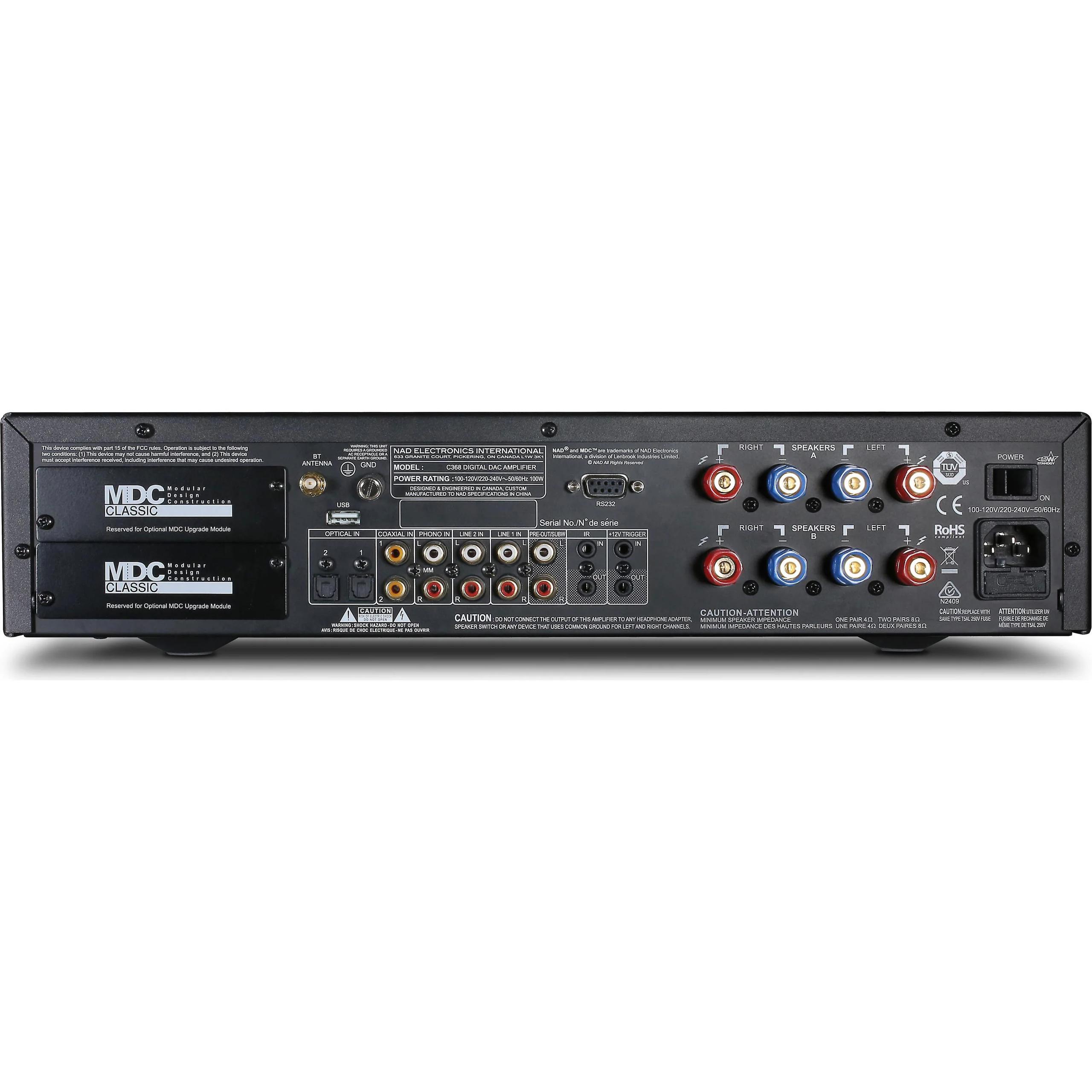
Perhaps the most significant differentiator between these amplifiers is the C 368's Modular Design Construction (MDC). This system includes two slots that accept upgrade modules, allowing you to add capabilities as your needs evolve or as new technologies emerge.
The most popular module is BluOS, which transforms the C 368 into a full-featured network streamer. With BluOS installed, the amplifier can connect to your home network via Wi-Fi or Ethernet, stream from services like Spotify, Tidal, and Qobuz, support Apple AirPlay 2, and even function as a Roon endpoint for audiophile-grade network audio. The BluOS system also enables multi-room audio, letting you sync music throughout your home.
Other available modules include HDMI inputs (for those who want the TV connectivity that comes standard on the D 3045) and potential future modules as technology advances. This modularity represents a fundamental philosophical difference: the C 368 is designed to grow with your needs, while the D 3045 provides everything upfront in a compact package.
The trade-off is complexity and cost. Adding BluOS streaming to the C 368 requires purchasing and installing an additional module, while the D 3045 includes extensive digital connectivity from day one.
Both amplifiers include moving magnet (MM) phono preamplifiers for connecting turntables directly. This is increasingly important as vinyl experiences a resurgence, and having a quality phono stage built-in saves the expense and complexity of adding an external one.
The D 3045's phono stage receives particular praise from reviewers, with some describing it as "astonishingly fine" and capable of rivaling dedicated phono preamps in this price range. It implements proper RIAA equalization (the standard frequency response curve applied during vinyl playback) and includes infrasonic filtering to remove record warps and rumble.
The C 368's phono stage is similarly well-regarded, with accurate RIAA equalization and adequate headroom for most cartridges. Both phonos stages are designed for moving magnet cartridges, which represent the majority of turntables sold today.
Many integrated amplifiers treat headphone outputs as checkbox features—present but poorly implemented. Both NAD amplifiers take headphone listening seriously, though they approach it differently.
The D 3045 features what NAD calls their most powerful headphone amplifier to date. It's capable of driving demanding headphones with authority, though professional measurements show it's not quite at the level of dedicated desktop headphone amplifiers for noise performance with very sensitive in-ear monitors.
The C 368 includes a capable headphone amplifier that delivers 700mW into 32-ohm headphones—enough power for most full-size headphones. The amplifier also supports two-way Bluetooth, meaning you can use it to send audio wirelessly to Bluetooth headphones while maintaining full amplifier functionality.
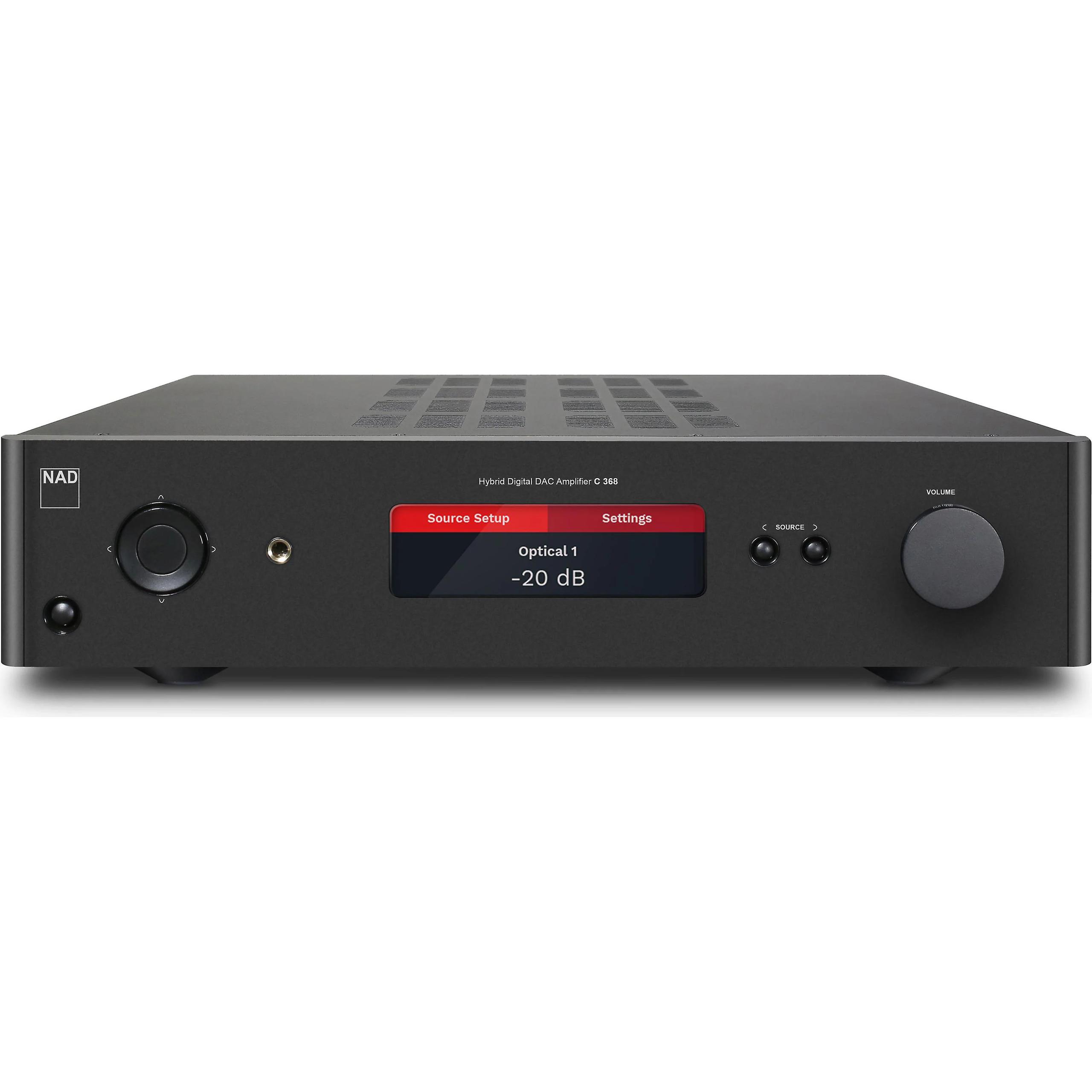
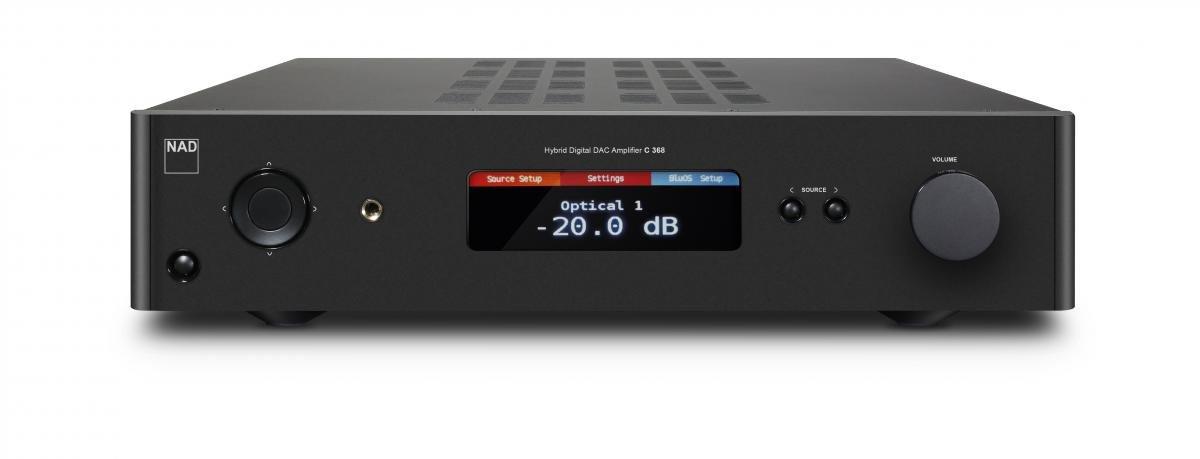
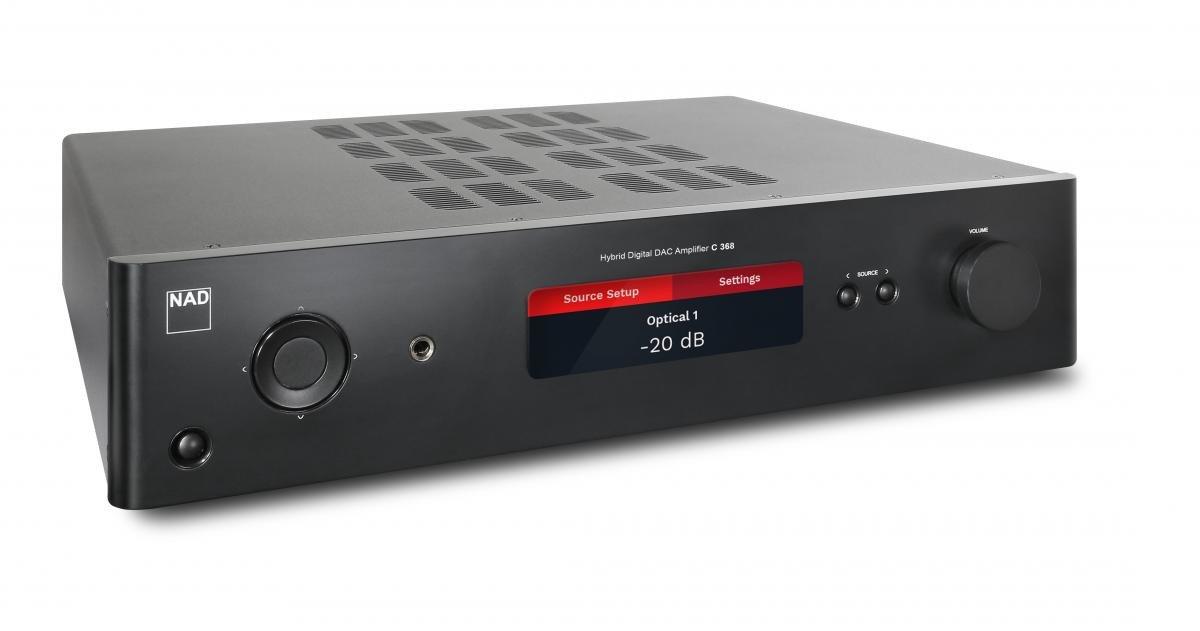
The physical differences between these amplifiers reflect their different intended uses. The C 368 follows traditional hi-fi component sizing at 17 inches wide, designed to stack with other full-width components. It features a clean front panel with a color TFT display, precise volume control (adjustable in 0.5dB steps), and source selection buttons.
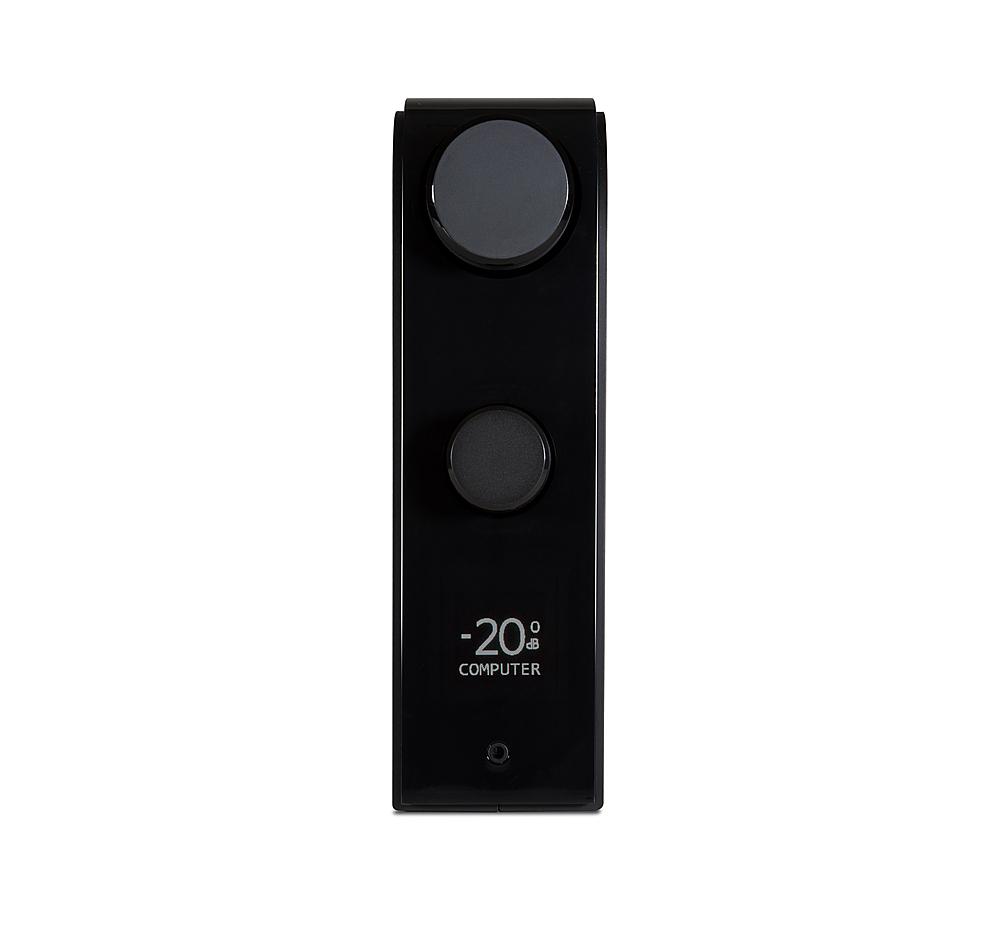
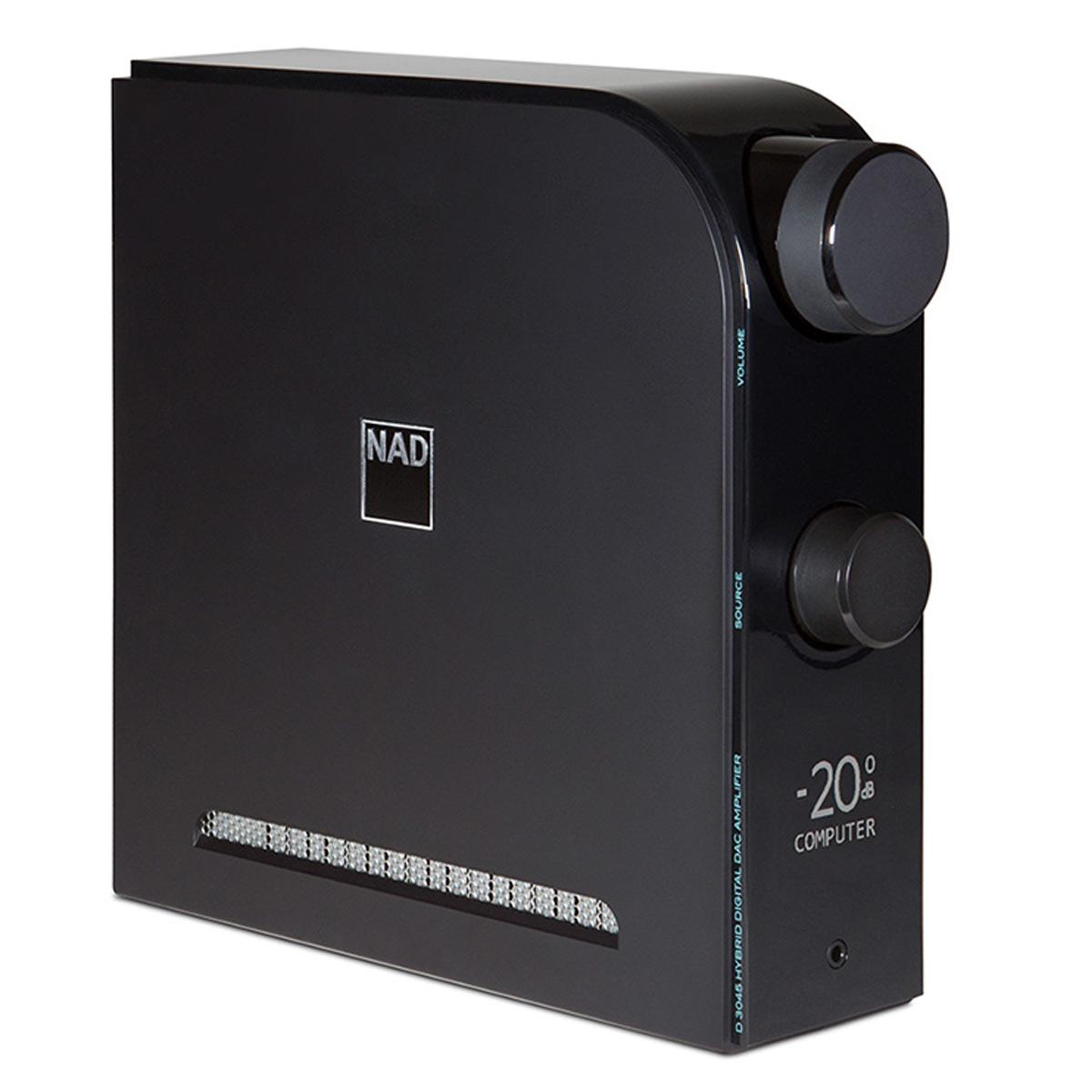
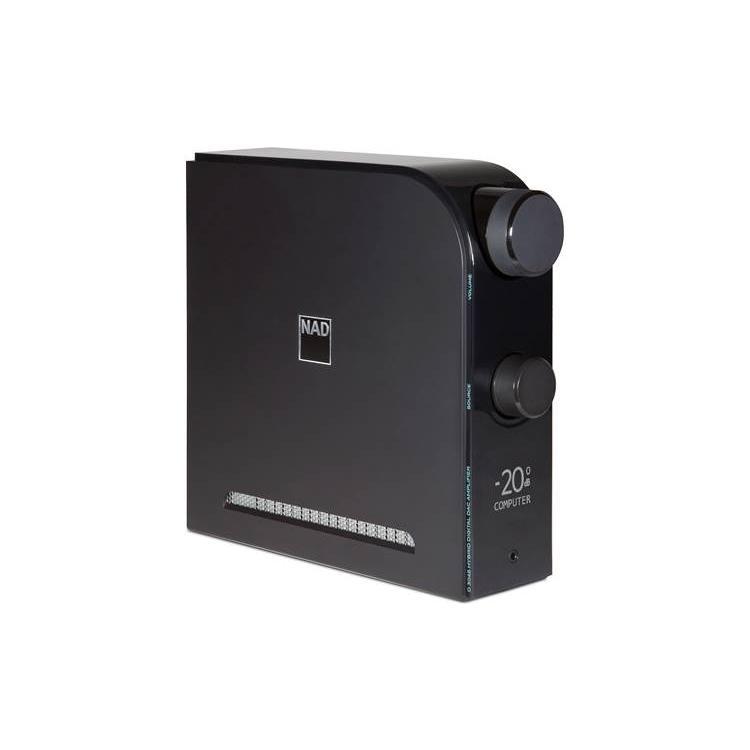
The D 3045 breaks from convention with its compact 9.3-inch width and ability to be oriented vertically or horizontally. This flexibility makes it perfect for desktop setups, small apartments, or anywhere space is at a premium. However, some users report issues with the touch-sensitive power button being overly sensitive and the volume control feeling stiff.
Both amplifiers include remote controls, though the C 368's is more comprehensive and better suited to across-the-room use.
For those wanting to use their stereo system as part of a home theater setup, both amplifiers offer solutions, though they approach it differently.
The D 3045 excels here with its HDMI ARC input. Connect it to your TV's HDMI ARC output, and the amplifier will automatically switch to TV audio when you turn on the television. Many users find this seamless integration worth choosing the D 3045 over alternatives that require manual source switching.
The C 368 can achieve similar functionality with the optional HDMI module, though this requires additional investment. However, its preamp/subwoofer output with built-in 150Hz crossover makes it easier to integrate a powered subwoofer for movie watching.
Both amplifiers include 12V trigger inputs for integration with home automation systems, allowing them to power on automatically when other components are activated.
At the time of writing, these amplifiers represent different value propositions within NAD's lineup. The D 3045, being the more affordable option, offers remarkable value by including well-engineered implementations of multiple functions: amplification, DAC, phono stage, and headphone amplifier. It's hard to find another single component that handles all these tasks with similar competence at this price point.
The C 368, while requiring a higher initial investment, provides more power, better build quality, superior user experience, and most importantly, room to grow. When you factor in the potential for modular upgrades, it may offer better long-term value for users who plan to expand their systems.
Choose the NAD D 3045 if you value compact size, maximum digital connectivity (especially HDMI ARC), and want excellent performance from a space-efficient package. It's ideal for desktop setups, small rooms, apartment living, or anyone who prioritizes having everything built-in from day one. The analytical, accurate sound signature suits those who want to hear their music and movies exactly as recorded.
The NAD C 368 makes more sense if you want maximum power and dynamics, plan to use streaming services, value the ability to upgrade over time, or prefer traditional component aesthetics. Its slightly more forgiving sound signature and superior build quality make it ideal as the centerpiece of a dedicated listening system that may grow and evolve over the years.
Both amplifiers represent excellent engineering and offer genuine value in their respective niches. The D 3045 maximizes capability per dollar spent today, while the C 368 maximizes flexibility and potential for tomorrow. Your choice should ultimately depend on your specific space constraints, power requirements, upgrade plans, and whether you prioritize absolute accuracy or musical engagement in your listening experience.
| NAD C 368 | NAD D 3045 |
|---|---|
| Power Output - More watts = louder volumes and better headroom for demanding speakers | |
| 80W per channel (8Ω/4Ω) | 60W per channel (8Ω/4Ω) |
| Form Factor - Determines where the amp fits in your setup | |
| Full-width component (17"W × 4"H × 16"D, 18.9 lbs) | Compact desktop size (9.3"W × 2.8"H × 10.5"D, 7.9 lbs) |
| Digital Audio Resolution - Higher numbers support more detailed music files | |
| Up to 24-bit/192kHz via digital inputs | Up to 24-bit/384kHz via USB, supports DSD and MQA |
| Streaming Capabilities - Determines access to Spotify, Tidal, and wireless music | |
| Bluetooth only (upgradeable with BluOS module) | Bluetooth aptX HD, no network streaming |
| Modular Upgrades - Future-proofing for new technologies | |
| 2 MDC slots for BluOS streaming, HDMI, future modules | No upgrade slots - what you buy is what you get |
| TV Integration - How easily it connects to your television | |
| Requires optional HDMI module | Built-in HDMI ARC for seamless TV audio |
| Analog Inputs - Connections for turntables, CD players, other sources | |
| 3 inputs including MM phono stage | 3 inputs including MM phono stage |
| Digital Inputs - Connections for modern digital sources | |
| 4 inputs: 2 optical, 2 coaxial, Bluetooth | 5 inputs: 2 optical, 1 coaxial, USB-B, HDMI ARC, Bluetooth |
| Headphone Output - Quality and power for headphone listening | |
| 1/4" jack, 700mW into 32Ω | 3.5mm jack, notably powerful output |
| Sound Character - How the amp colors or presents music | |
| Smooth, balanced, slightly forgiving presentation | Accurate, analytical, reveals recording quality |
| Build Quality - Reflects durability and premium feel | |
| Traditional hi-fi component with premium materials | Compact consumer-friendly design with some interface issues |
The NAD C 368 delivers 80 watts per channel compared to the NAD D 3045's 60 watts per channel. This 20-watt difference provides the C 368 with better headroom for driving demanding speakers and achieving higher volumes without strain.
The NAD D 3045 is much more compact at 9.3 inches wide, making it perfect for desktop setups or small spaces. The NAD C 368 follows traditional hi-fi sizing at 17 inches wide, designed to stack with other full-width components in a dedicated audio rack.
The NAD C 368 offers superior streaming capabilities when equipped with the optional BluOS module, providing Wi-Fi streaming, multi-room audio, and support for services like Spotify and Tidal. The NAD D 3045 only offers Bluetooth streaming without network connectivity options.
The NAD D 3045 includes a built-in HDMI ARC input for seamless TV audio connection, automatically switching sources when you turn on your television. The NAD C 368 requires an optional HDMI module to achieve similar TV integration capabilities.
The NAD D 3045 supports higher resolution digital audio up to 24-bit/384kHz via USB, plus DSD and MQA formats. The NAD C 368 handles up to 24-bit/192kHz, which is still excellent for most high-resolution music files.
Yes, both the NAD C 368 and NAD D 3045 include high-quality moving magnet (MM) phono stages, allowing direct connection of most turntables without requiring an external phono preamp.
The NAD C 368 features two MDC (Modular Design Construction) slots for future upgrades like BluOS streaming or HDMI modules. The NAD D 3045 has no upgrade slots, so you get all features upfront with no expansion possibilities.
The NAD C 368 delivers a smooth, balanced, and slightly forgiving sound that makes most recordings enjoyable. The NAD D 3045 takes a more analytical approach, providing accurate and revealing sound that exposes both the best and worst in your recordings.
Both amplifiers offer capable headphone outputs, but the NAD D 3045 features what NAD calls their most powerful headphone amplifier to date. The NAD C 368 provides 700mW output and supports wireless Bluetooth headphone transmission.
Yes, both the NAD C 368 and NAD D 3045 include preamp/subwoofer outputs. The C 368 offers a configurable output with a built-in 150Hz crossover filter, making subwoofer integration particularly straightforward.
The NAD D 3045 provides exceptional value by combining amplifier, DAC, phono stage, and headphone amplifier in one compact, affordable package. The NAD C 368 costs more initially but offers greater long-term value through its upgrade flexibility and higher power output.
Both can work in home theater systems, but the NAD D 3045 excels with its HDMI ARC input for seamless TV integration. The NAD C 368 works well for stereo music in a home theater setup and can be expanded with additional modules for video connectivity when needed.
We've done our best to create useful and informative comparisons to help you decide what product to buy. Our research uses advanced automated methods to create this comparison and perfection is not possible - please contact us for corrections or questions. These are the sites we've researched in the creation of this article: avnirvana.com - crutchfield.com - hometheaterhifi.com - hifiheaven.net - crutchfield.com - projectorscreen.com - theabsolutesound.com - dedicatedaudio.com - soundstagesimplifi.com - nadelectronics.com - musicdirect.com - crutchfield.com - safeandsoundhq.com - crutchfield.com - crutchfield.com - audio-head.com - safeandsoundhq.com - hifiplus.com - nadelectronics.com - whathifi.com - hometheaterhifi.com - audiosciencereview.com - soundstageaccess.com - soundandvision.com - youtube.com - turntablelab.com - audiosciencereview.com

Privacy Policy
Terms and Conditions - Affiliate Policy
Home Security
© Copyright 2008-2026.
11816 Inwood Rd #1211, Dallas, TX 75244