

If you're building a stereo system or upgrading from a basic receiver, an integrated amplifier sits at the heart of great sound. Think of it as the conductor of your audio orchestra – it takes weak signals from your sources (like turntables, CD players, or streaming devices) and boosts them with enough power and clarity to drive your speakers properly.
The integrated amplifier market has evolved dramatically over the past decade. Where once you'd find simple analog designs with basic inputs, today's models pack sophisticated digital processing, wireless streaming, and computer-grade components into traditional chassis. This evolution has created some fascinating choices, particularly when comparing traditional hi-fi approaches against modern hybrid designs.
Before diving into specifics, let's clarify what really matters in amplifier performance. Power output gets the most attention, but it's just one piece of the puzzle. More critical is how cleanly that power is delivered, how well the amplifier controls your speakers, and whether it can handle the dynamic swings of real music.
Total Harmonic Distortion (THD) measures how much the amplifier changes your music signal – lower numbers mean cleaner sound. Signal-to-noise ratio tells you how quiet the amplifier's background is when no music is playing – higher numbers mean you'll hear more musical detail and less hiss. Damping factor indicates how well the amplifier can control speaker cone movement – higher numbers typically mean tighter bass and better speaker control.
The amplifier topology (how it's designed internally) significantly impacts sound character. Class AB amplifiers use traditional transistor designs that stay "always on" and typically sound warm and musical, but run less efficiently. Class D amplifiers switch on and off thousands of times per second, running much cooler and more efficiently, but historically sounded more clinical – though modern designs have largely solved this issue.
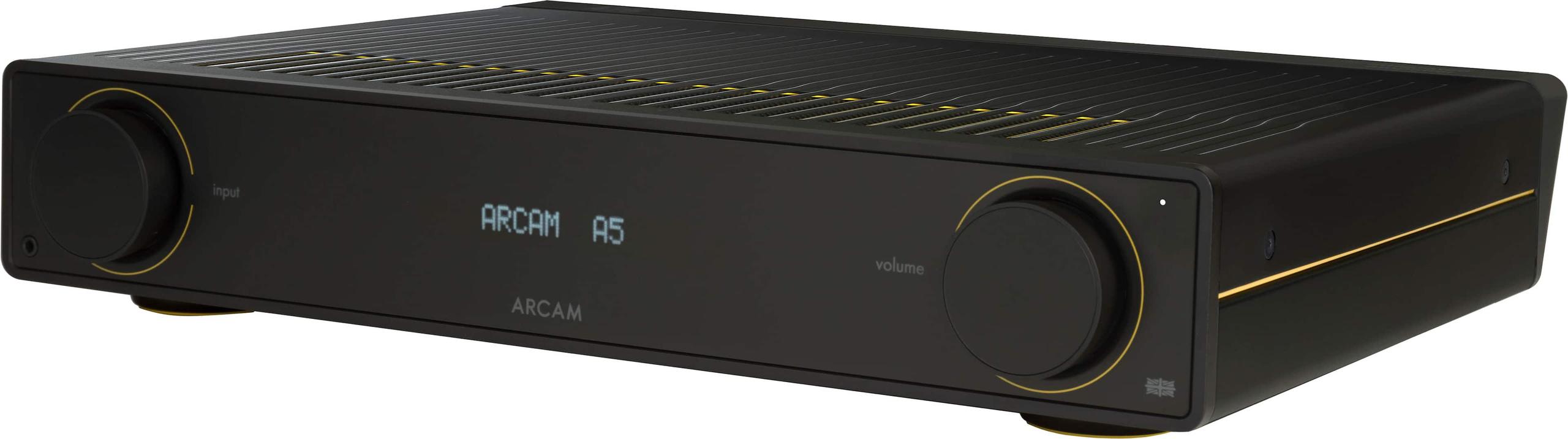
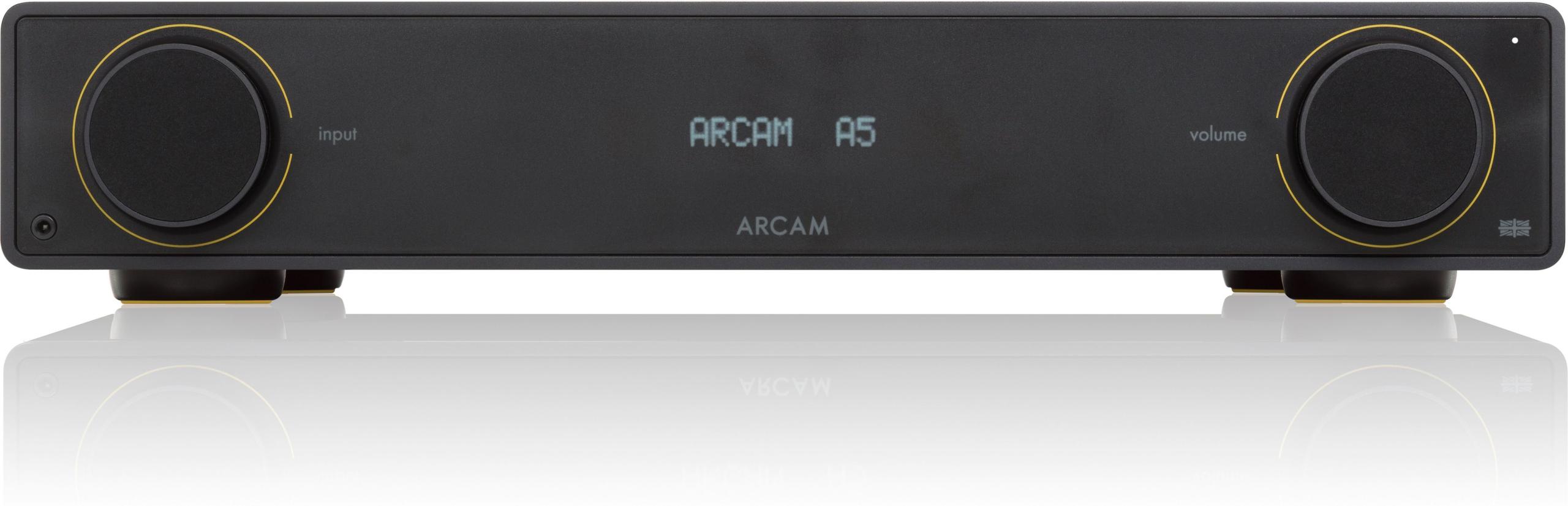
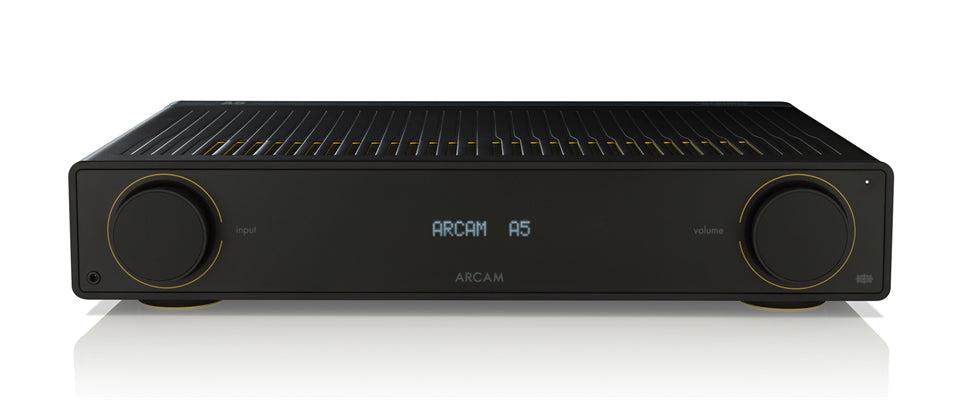
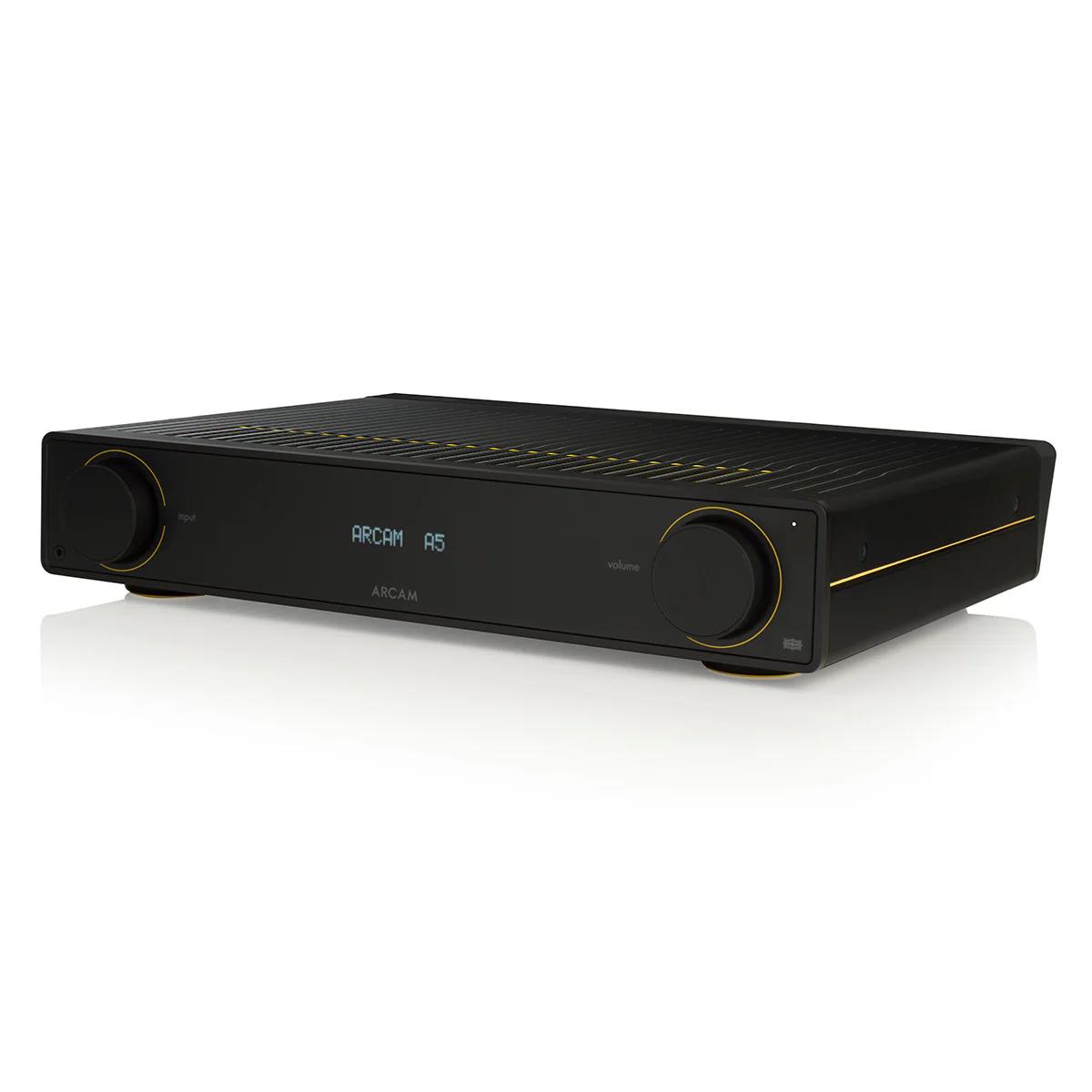
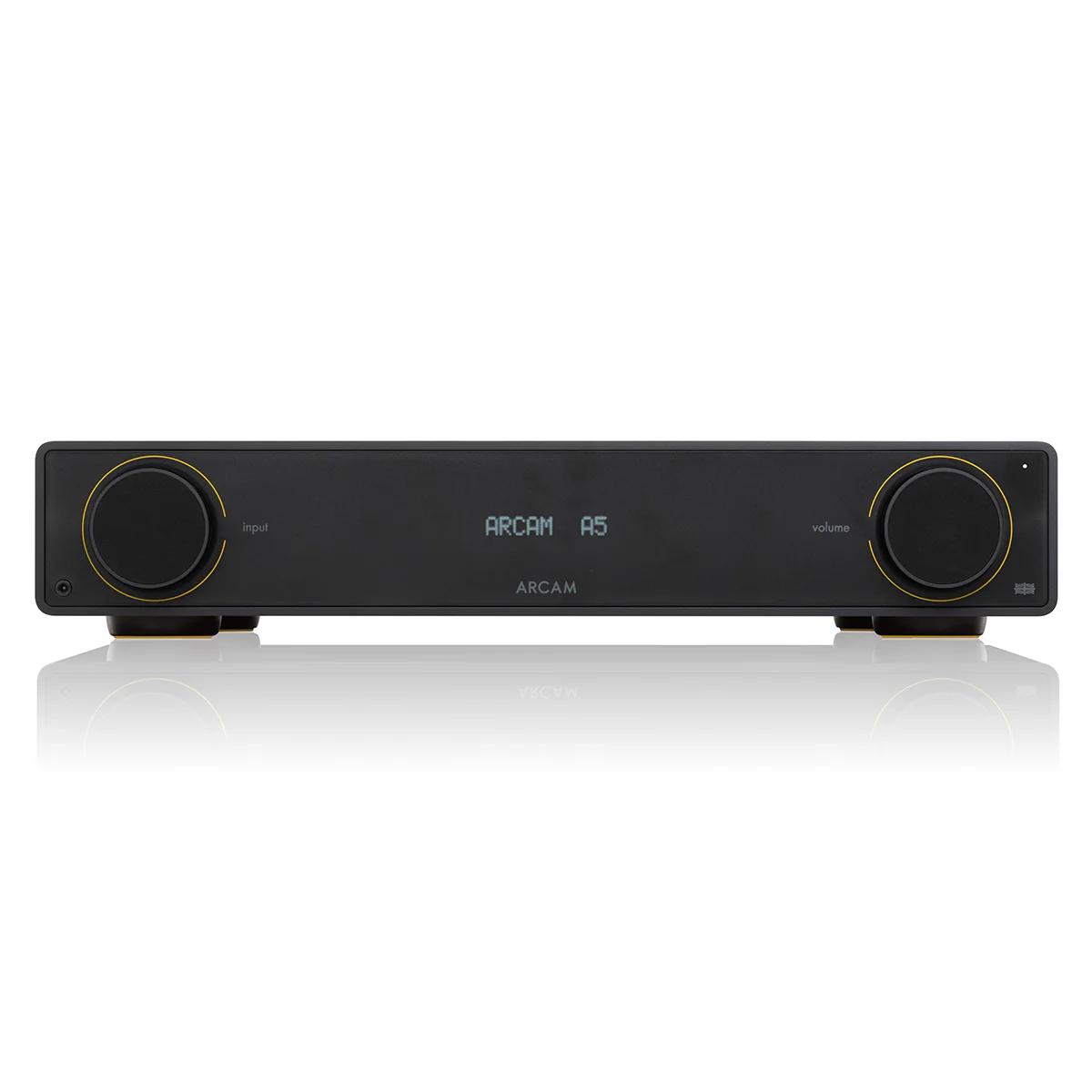
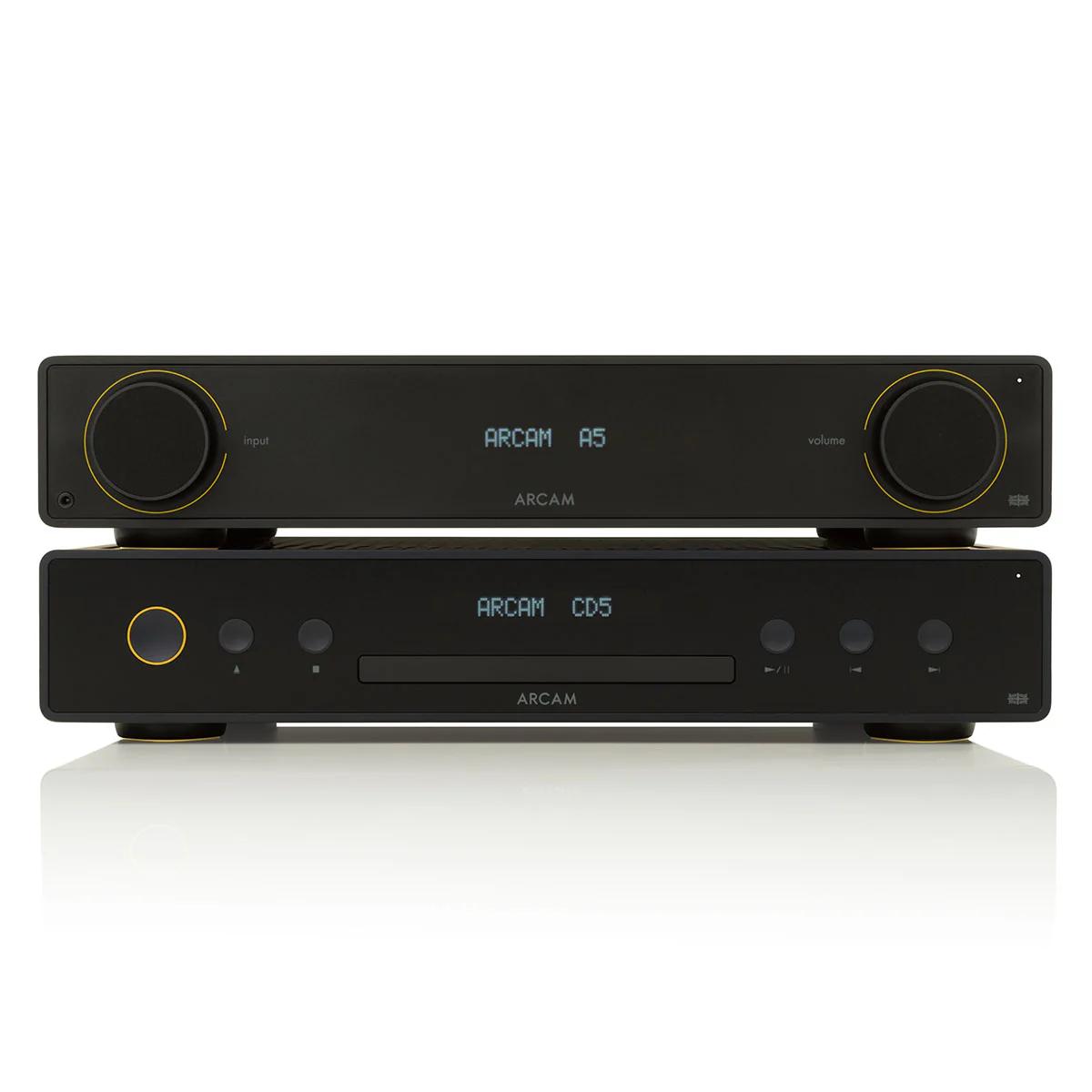
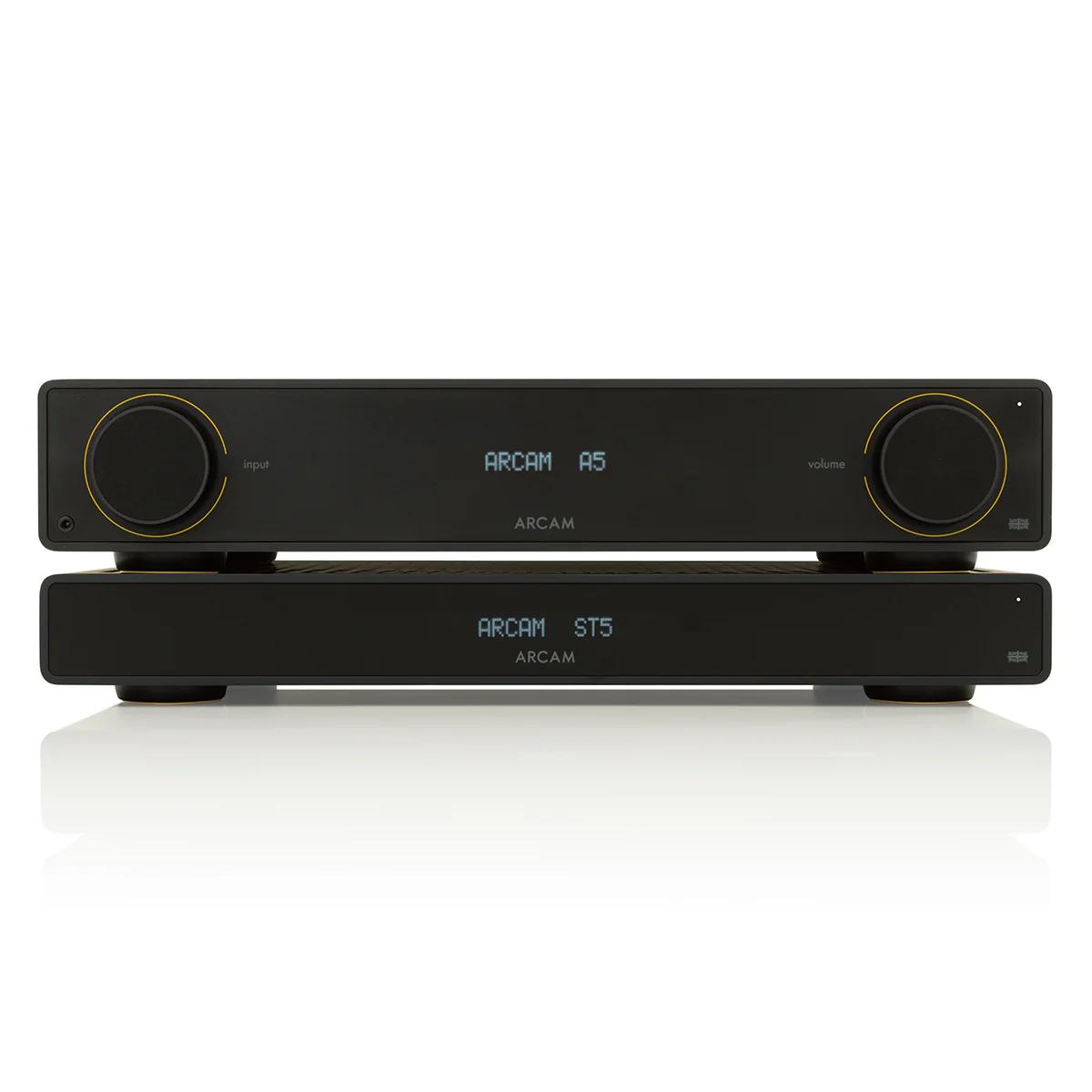
The Arcam Radia A5, launched in 2024, represents traditional British hi-fi values updated with modern conveniences. At the time of writing, it sits in the lower price bracket while delivering components typically found in more expensive units.
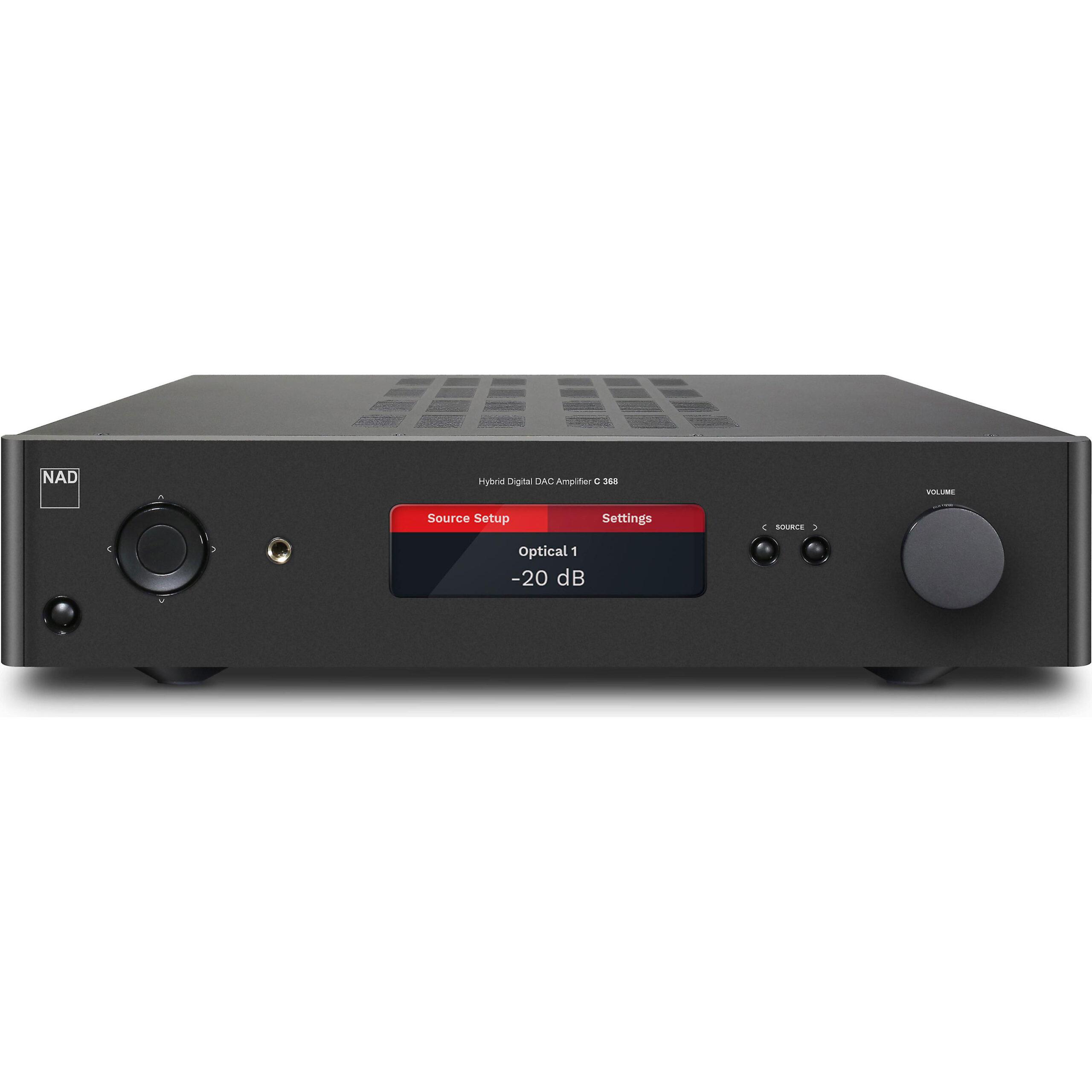
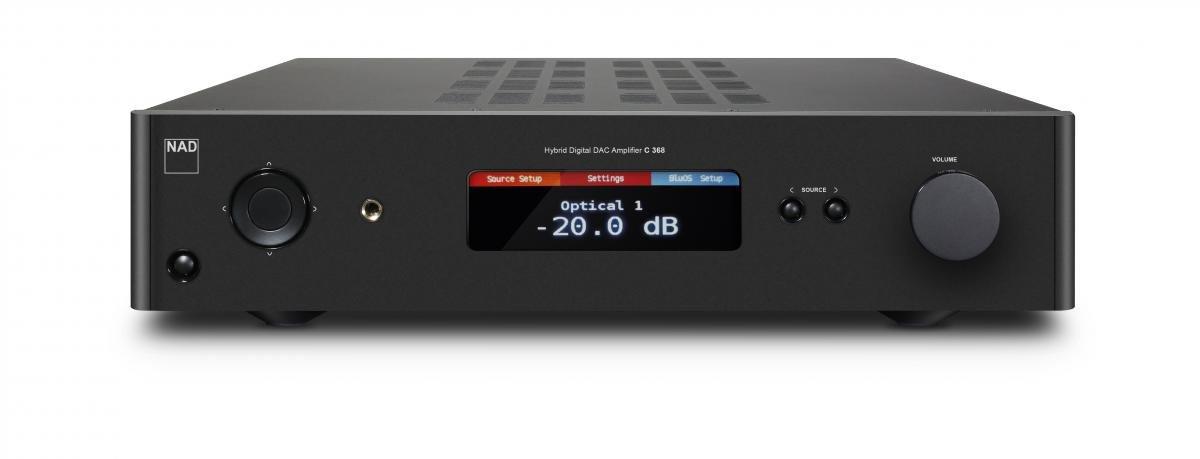
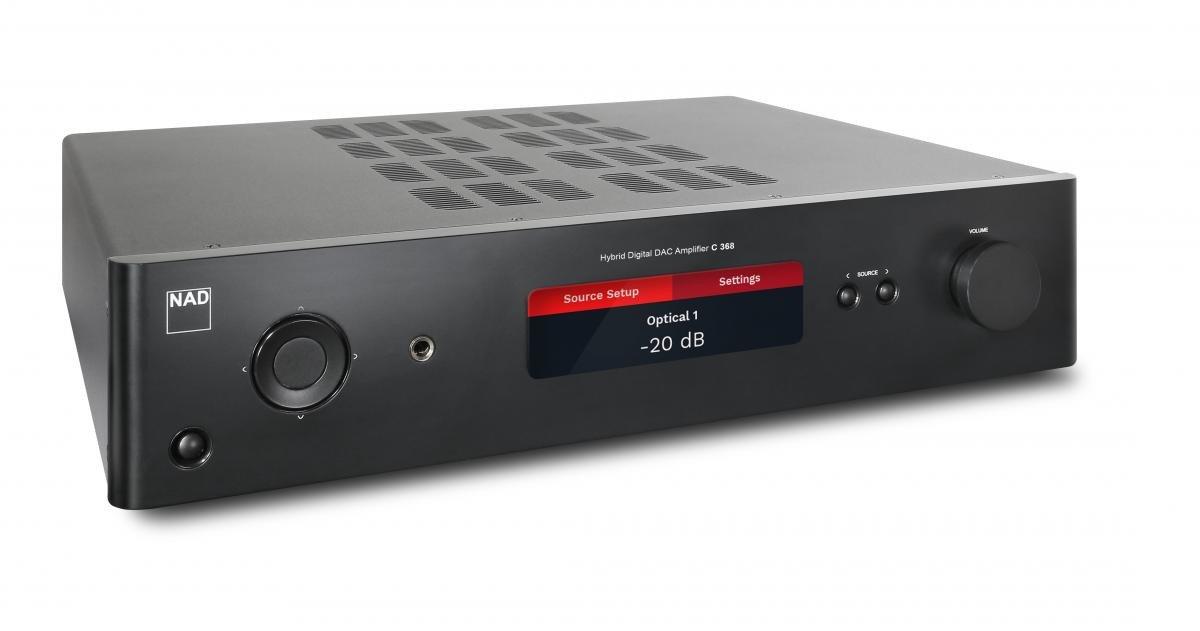
The NAD C 368, introduced in 2017, pioneered the "hybrid digital" approach that combines traditional preamp sections with modern Class D power stages. Despite being older, it remains competitive due to its modular upgrade system and higher power output, though it commands a higher price point.
The power difference between these amplifiers is more significant than the numbers suggest. The Arcam Radia A5 delivers 50 watts per channel into 8-ohm speakers, increasing to 75 watts into 4-ohm loads. This follows the typical pattern where amplifiers produce more power into lower-impedance speakers, though the increase isn't dramatic.
The NAD C 368 provides 80 watts per channel into both 8-ohm and 4-ohm speakers – an unusual characteristic that demonstrates excellent power supply design. More impressively, its dynamic power capabilities reach 120 watts into 8 ohms and 200 watts into 4 ohms. Dynamic power refers to the amplifier's ability to deliver short bursts of extra power for musical peaks, like a drum hit or orchestral crescendo.
In practical terms, this power difference matters most with demanding speakers. If you're driving efficient bookshelf speakers in a small room, the Arcam A5's 50 watts will sound effortless. But with large floor-standing speakers or in bigger rooms, the NAD C 368's extra headroom becomes valuable. The NAD's ability to maintain consistent power into 4-ohm loads makes it particularly suitable for speakers that drop to low impedances – common with many modern designs.
The amplification technologies tell different stories. The Arcam A5 uses Class AB design with extremely low distortion (0.003% THD), delivering the warm, engaging sound signature that made British amplifiers famous. Our research into user experiences consistently shows this translates to involving, musical presentations that make long listening sessions enjoyable.
The NAD C 368 employs a customized Hypex UcD Class D output stage – not just any Class D design, but one specifically tuned for musical performance. Hypex modules are considered among the best Class D implementations available, and NAD's customization addresses the clinical sound that plagued early switching amplifiers. Reviews consistently praise its smooth, controlled character without the harshness sometimes associated with budget Class D designs.
Digital audio processing has become crucial as physical media declines and streaming dominates. Both amplifiers include built-in DACs (Digital-to-Analog Converters), but their approaches differ significantly.
The Arcam Radia A5 incorporates an ESS Sabre ES9018 DAC – a chip typically found in amplifiers costing significantly more. This DAC is renowned for its low noise floor and detailed sound reproduction, supporting high-resolution audio up to 24-bit/192kHz. The implementation includes careful power supply design and analog filtering that extracts maximum performance from this premium component.
The NAD C 368 uses a Texas Instruments SRC4382 sample-rate converter paired with a PCM1795 32-bit DAC. While not as prestigious as the ESS chip, this combination includes asynchronous sample-rate conversion, which can improve sound quality with sources that have timing issues. The NAD's DAC section runs in "Dual Differential" mode using multiple DAC channels for each audio channel, theoretically improving resolution and reducing noise.
From our evaluation of expert reviews and user experiences, the Arcam A5's DAC implementation consistently receives higher praise for naturalness and detail retrieval, particularly with complex music. The ESS Sabre chip's superior specifications translate into audible improvements, especially when comparing high-resolution files.
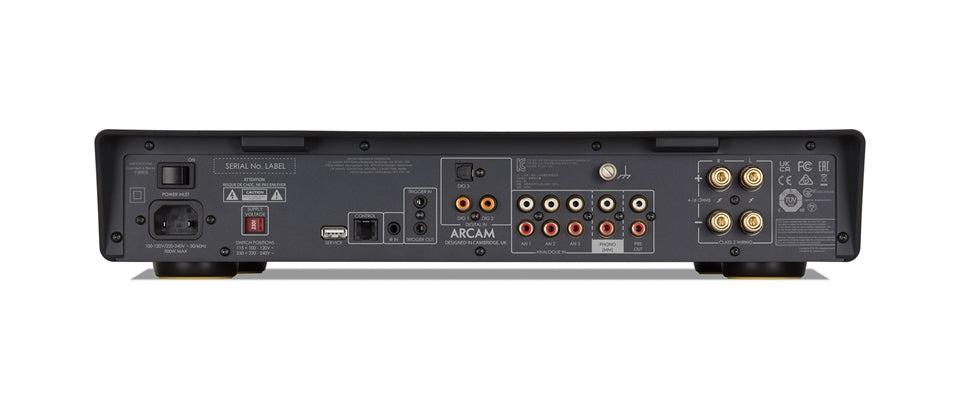
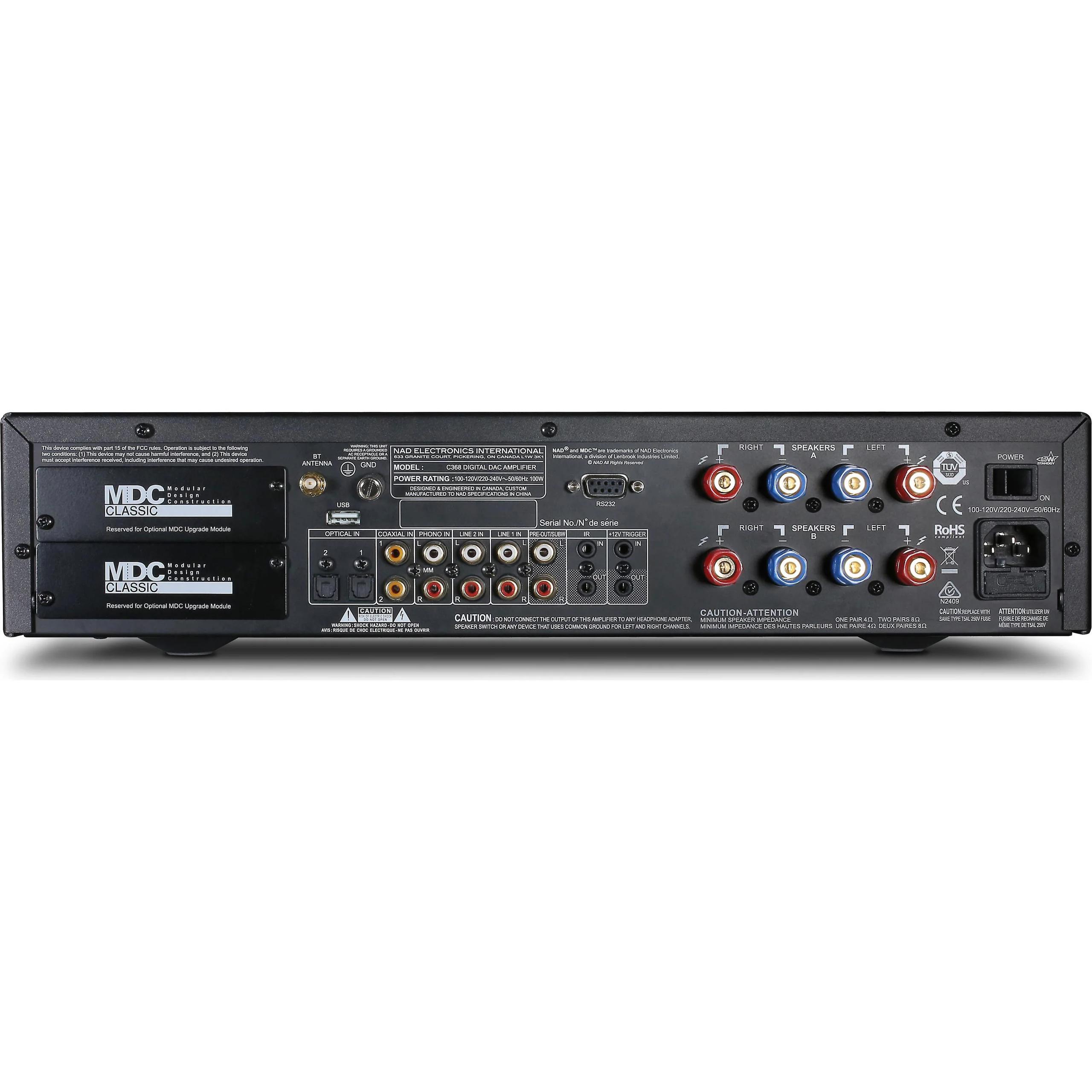
For digital inputs, the NAD C 368 offers more connections – two coaxial and two optical compared to the Arcam A5's two coaxial and one optical. However, neither includes USB inputs for direct computer connection, which might disappoint some users in 2024.
Wireless audio has exploded since the NAD C 368 launched in 2017, and this age difference shows clearly in their capabilities.
The Arcam A5 includes Bluetooth 5.2 with aptX Adaptive codec, supporting high-resolution wireless streaming up to 24-bit quality. More uniquely, it offers two-way Bluetooth – meaning it can both receive audio from your phone and transmit audio to Bluetooth headphones. This flexibility proves surprisingly useful for late-night listening or when you want to share music wirelessly.
The NAD C 368 includes basic Bluetooth with aptX support, adequate for CD-quality streaming but limited compared to modern standards. However, NAD's real wireless strength lies in its optional BluOS streaming module, which transforms the amplifier into a sophisticated network player supporting Wi-Fi streaming, Apple AirPlay 2, and Roon Ready certification for audiophile-grade network audio.
For users prioritizing built-in wireless features, the Arcam A5 delivers immediately. But for those wanting comprehensive streaming capabilities, the NAD C 368 with BluOS module (requiring additional investment) provides superior long-term functionality.
Despite digital dominance, analog inputs remain crucial for vinyl enthusiasts and users with older sources. Both amplifiers include moving magnet (MM) phono stages for turntables, but their implementations differ.
The Arcam A5 provides three line inputs plus a dedicated phono input, accommodating users with multiple analog sources. Its phono stage uses carefully selected components with proper RIAA equalization (the standard curve for vinyl playback) and appropriate loading for moving magnet cartridges. User experiences consistently praise the A5's analog section for bringing out vinyl's warmth and detail without added coloration.
The NAD C 368 offers two line inputs plus phono, fewer analog connections but including tone controls and a configurable preamp/subwoofer output with built-in 150Hz crossover. This flexibility helps users integrate powered subwoofers without external processors.
From our research into user experiences and professional reviews, the Arcam A5's analog section receives consistently higher marks for musicality and engagement, particularly with vinyl sources. The British approach to analog circuit design, emphasizing musical flow over strict neutrality, appeals to users who prioritize emotional connection to their music.
Physical construction reflects each company's priorities. The Arcam A5 weighs about 18 pounds and features traditional linear power supply design with a substantial transformer. This approach typically provides excellent voltage regulation and low noise, contributing to the amplifier's musical character.
The NAD C 368 at nearly 19 pounds includes a switch-mode power supply – more efficient and capable of higher instantaneous power delivery, but historically associated with electrical noise. NAD's implementation addresses these concerns through careful design and filtering.
Both amplifiers include comprehensive control features. The Arcam A5 provides 12V triggers for automated system power-up, IR input for custom remote controls, and a well-designed included remote. The NAD C 368 adds RS-232 communication for professional installation systems, making it attractive for custom installers and home theater integration.
Perhaps the NAD C 368's most distinctive feature is its Modular Design Construction (MDC) system. Two slots accept upgrade modules, currently including the BluOS streaming module and an HDMI input module. This approach provides genuine future-proofing – as audio technology evolves, new modules can extend the amplifier's capabilities rather than requiring complete replacement.
The Arcam A5 offers no similar expandability, relying on its comprehensive initial feature set. For users who prefer buying complete solutions rather than building systems over time, this simplicity appeals.
While both amplifiers excel in stereo music reproduction, their home theater utility differs. The NAD C 368's higher power output better suits larger rooms common in home theaters, and its modular HDMI input option provides direct TV connection. The configurable subwoofer output with built-in crossover simplifies integration with powered subwoofers essential for movie soundtracks.
The Arcam A5's preamp output allows connection to external power amplifiers for bi-amping or driving additional speakers, but lacks built-in subwoofer management. Its strengths lie more in stereo music reproduction than multi-channel integration.
Our evaluation of extensive user feedback reveals distinct personality differences. Arcam A5 owners consistently describe engaging, musical experiences that make them want to keep listening. The Class AB design's natural dynamics and the premium DAC's resolution create presentations that feel immediate and alive.
NAD C 368 users emphasize control, power, and versatility. The amplifier handles difficult speakers with ease, maintains composure at high volumes, and provides excellent system-building flexibility. With the BluOS module installed, it becomes a comprehensive hub for modern and traditional sources.
Both amplifiers receive praise for reliability and customer support, though Arcam's longer warranty period provides additional peace of mind.
Choose the Arcam Radia A5 if you prioritize immediate musical engagement and value exceptional components at a reasonable price point. It excels with efficient speakers in small to medium rooms, particularly for users who appreciate vinyl and traditional hi-fi values. The superior DAC and engaging Class AB sound make it ideal for listeners who want to be drawn into their music rather than analytically dissecting it.
Select the NAD C 368 if you need higher power output, plan to expand your system over time, or require professional installation features. It's the better choice for demanding speakers, larger rooms, or users who want streaming capabilities to grow with technology. The modular design provides genuine future-proofing, though at higher initial or eventual cost.
For home theater use, the NAD C 368's power advantage and subwoofer integration make it more suitable, while the Arcam A5 serves dedicated music systems better.
At the time of writing, both represent excellent value in their respective approaches – the Arcam A5 for immediate gratification and musical engagement, the NAD C 368 for long-term flexibility and power. Your choice should align with your listening priorities, room requirements, and upgrade philosophy rather than simply comparing specifications.
| Arcam Radia A5 | NAD C 368 |
|---|---|
| Power Output - Critical for driving speakers and room size | |
| 50W (8Ω), 75W (4Ω) - Good for efficient speakers, small-medium rooms | 80W (8Ω/4Ω), 200W dynamic (4Ω) - Better for demanding speakers, large rooms |
| Amplifier Technology - Affects sound character and efficiency | |
| Class AB (0.003% THD) - Traditional warm, musical sound | Hypex Class D - Modern efficiency with smooth, controlled sound |
| DAC Quality - Determines digital source sound quality | |
| ESS Sabre ES9018 - Premium chip found in expensive units | TI PCM1795 32-bit - Good performance, older technology |
| Digital Inputs - Number of digital sources you can connect | |
| 2 coaxial, 1 optical (24-bit/192kHz) | 2 coaxial, 2 optical (24-bit/192kHz) |
| Analog Inputs - For turntables, CD players, and other sources | |
| 3 line inputs + MM phono - More flexibility for analog sources | 2 line inputs + MM phono - Fewer connections but includes tone controls |
| Wireless Connectivity - Modern streaming capabilities | |
| Bluetooth 5.2 with aptX Adaptive, two-way streaming built-in | Basic Bluetooth + optional BluOS module for advanced streaming |
| Expandability - Future upgrade potential | |
| Fixed feature set - Buy complete, no upgrades possible | 2 MDC slots for modules like BluOS streaming or HDMI inputs |
| Signal-to-Noise Ratio - Background noise level (higher is better) | |
| 106dB analog, 109dB digital - Very quiet operation | 98dB - Good but not exceptional noise performance |
| Headphone Output - For private listening quality | |
| 3.5mm jack, 2.5V/5V output (32Ω/300Ω) | 1/4" jack, 700mW into 32Ω - Higher power output |
| Home Theater Integration - Subwoofer and multi-room features | |
| Basic preamp output, 12V triggers | Configurable sub output with 150Hz crossover, RS-232 control |
| Physical Size - Desktop space requirements | |
| 431 x 344 x 83mm, 8.1kg - Compact footprint | 435 x 391 x 100mm, 8.6kg - Slightly larger chassis |
| Best Use Case - Who should choose each amplifier | |
| Music-focused listeners wanting premium components immediately | Power users needing flexibility, expansion, and streaming growth |
The NAD C 368 delivers significantly more power with 80 watts per channel into both 8-ohm and 4-ohm speakers, plus up to 200 watts dynamic power into 4 ohms. The Arcam Radia A5 provides 50 watts into 8 ohms and 75 watts into 4 ohms. For larger rooms or demanding speakers, the NAD C 368 offers better headroom and control.
The Arcam Radia A5 uses Class AB amplification for a warm, musical sound signature with extremely low distortion (0.003% THD). The NAD C 368 employs Hypex Class D technology for clean, controlled, and neutral sound. The Arcam excels at musical engagement, while the NAD provides accuracy and power. Both offer excellent sound quality but with different characters.
The Arcam Radia A5 includes built-in Bluetooth 5.2 with aptX Adaptive for high-quality wireless streaming and unique two-way Bluetooth capability. The NAD C 368 has basic Bluetooth but can be upgraded with the optional BluOS streaming module for Wi-Fi, AirPlay 2, and multi-room capabilities. For immediate wireless use, choose the Arcam A5; for advanced streaming features, the upgraded NAD C 368 is superior.
Yes, both the Arcam Radia A5 and NAD C 368 include built-in moving magnet (MM) phono stages for direct turntable connection. The Arcam A5 offers three additional line inputs for other analog sources, while the NAD C 368 provides two line inputs plus tone controls for sound adjustment.
The Arcam Radia A5 features a premium ESS Sabre ES9018 DAC typically found in more expensive amplifiers, supporting up to 24-bit/192kHz resolution with exceptional detail and low noise. The NAD C 368 uses a Texas Instruments PCM1795 32-bit DAC with asynchronous sample rate conversion. The Arcam A5 generally provides superior digital audio processing for the price point.
Both can serve in stereo home theater roles, but the NAD C 368 is better suited with its higher power output, configurable subwoofer output with built-in 150Hz crossover, and optional HDMI module. The Arcam Radia A5 works well for stereo music in home theaters but lacks dedicated subwoofer management and has lower power for large rooms.
The NAD C 368 features Modular Design Construction (MDC) with two slots for upgrade modules like BluOS streaming or HDMI inputs, making it future-proof. The Arcam Radia A5 has a fixed feature set with no expansion options. If you want upgrade flexibility, the NAD C 368 is the clear choice.
The Arcam Radia A5 offers more total inputs: three analog line inputs, one phono input, two coaxial digital, and one optical digital input. The NAD C 368 provides two analog line inputs, one phono input, two coaxial digital, and two optical digital inputs. The Arcam A5 accommodates more analog sources, while both handle similar digital source counts.
For small, efficient bookshelf speakers, the Arcam Radia A5 provides ample power with its musical Class AB design. For large floor-standing speakers or inefficient designs, the NAD C 368 offers superior power reserves and consistent performance into low-impedance loads. Choose based on your speaker demands rather than just preference.
Both include headphone outputs but with different approaches. The Arcam Radia A5 has a front-panel 3.5mm jack with variable output voltage for different headphone types. The NAD C 368 features a 1/4" headphone jack with 700mW output power. Both provide good headphone performance, though some users prefer the Arcam A5's implementation.
The Arcam Radia A5 typically offers better immediate value with premium components like the ESS Sabre DAC at a lower price point. The NAD C 368 costs more initially but provides higher power and upgrade potential through its modular design. Consider the Arcam A5 for immediate gratification and the NAD C 368 for long-term investment.
The Arcam Radia A5's main limitations are lower power output for demanding speakers and no upgrade path for future features. The NAD C 368 requires additional investment for advanced streaming (BluOS module) and may be overkill for simple stereo setups. Both lack USB inputs for direct computer connection, which some users may find limiting in modern setups.
We've done our best to create useful and informative comparisons to help you decide what product to buy. Our research uses advanced automated methods to create this comparison and perfection is not possible - please contact us for corrections or questions. These are the sites we've researched in the creation of this article: whathifi.com - upscaleaudio.com - hifiverse.io - theaudiotailor.com.au - crutchfield.com - musicdirect.com - crutchfield.com - listenup.com - audioadvice.com - houseofstereo.com - skybygramophone.com - arcam.co.uk - fidelity-magazine.com - arcam.co.uk - sweetwater.com - skybygramophone.com - avnirvana.com - crutchfield.com - hometheaterhifi.com - hifiheaven.net - crutchfield.com - projectorscreen.com - theabsolutesound.com - dedicatedaudio.com - soundstagesimplifi.com - nadelectronics.com - musicdirect.com - crutchfield.com - safeandsoundhq.com

Privacy Policy
Terms and Conditions - Affiliate Policy
Home Security
© Copyright 2008-2026.
11816 Inwood Rd #1211, Dallas, TX 75244