

When building a stereo system, the integrated amplifier is arguably the most crucial component you'll buy. It's the central hub that takes all your music sources—whether that's a turntable, CD player, or streaming device—and amplifies the signal to drive your speakers. Think of it as the conductor of your audio orchestra, controlling everything from volume to tone while providing the power your speakers need to sing.
The world of integrated amplifiers has evolved dramatically over the past decade. We've seen the rise of Class D amplification (which uses digital switching technology for efficiency), hybrid designs that blend old and new technologies, and modular systems that let you upgrade components over time. Two amplifiers that represent very different approaches to this evolution are the Dayton Audio HTA200 and the NAD C 368.
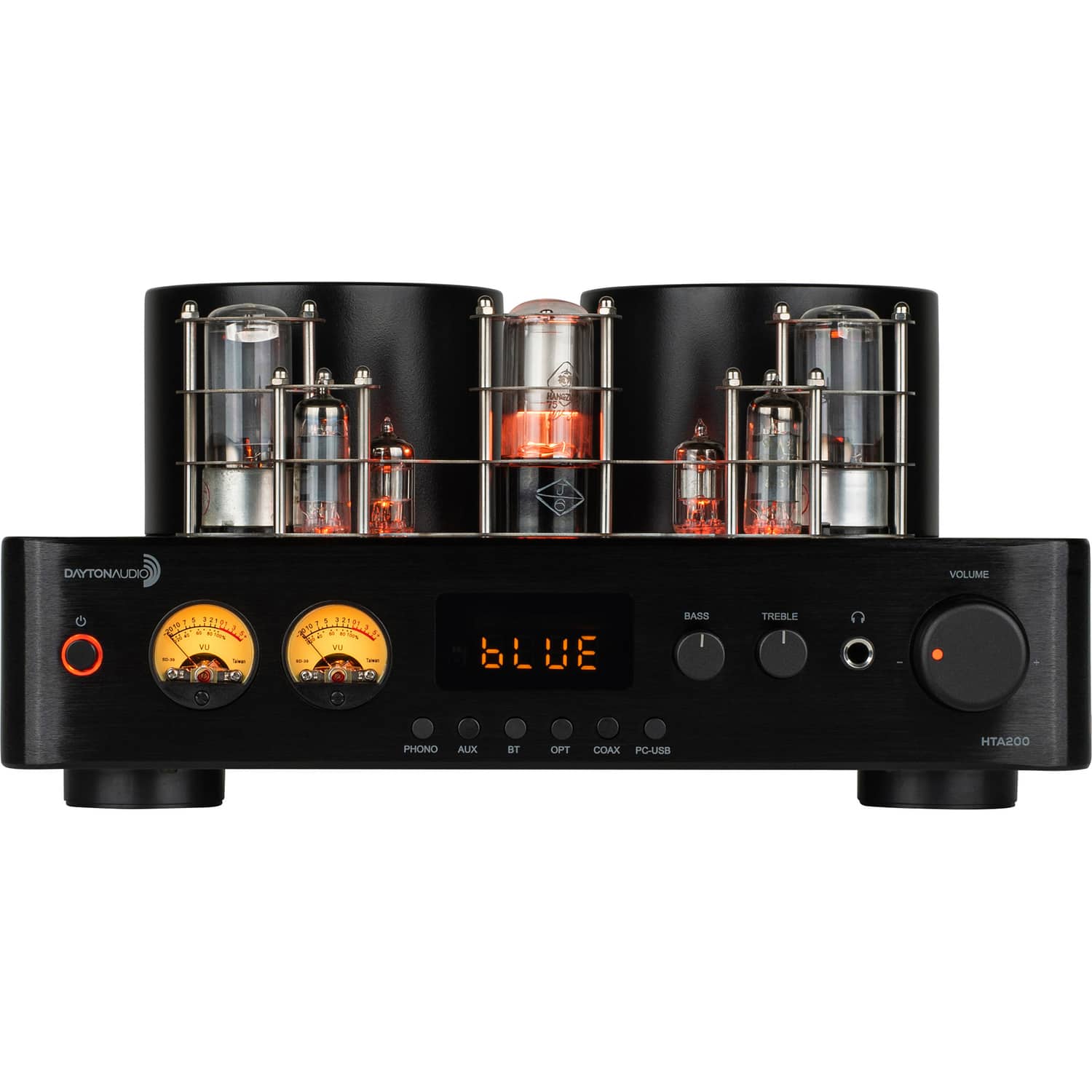
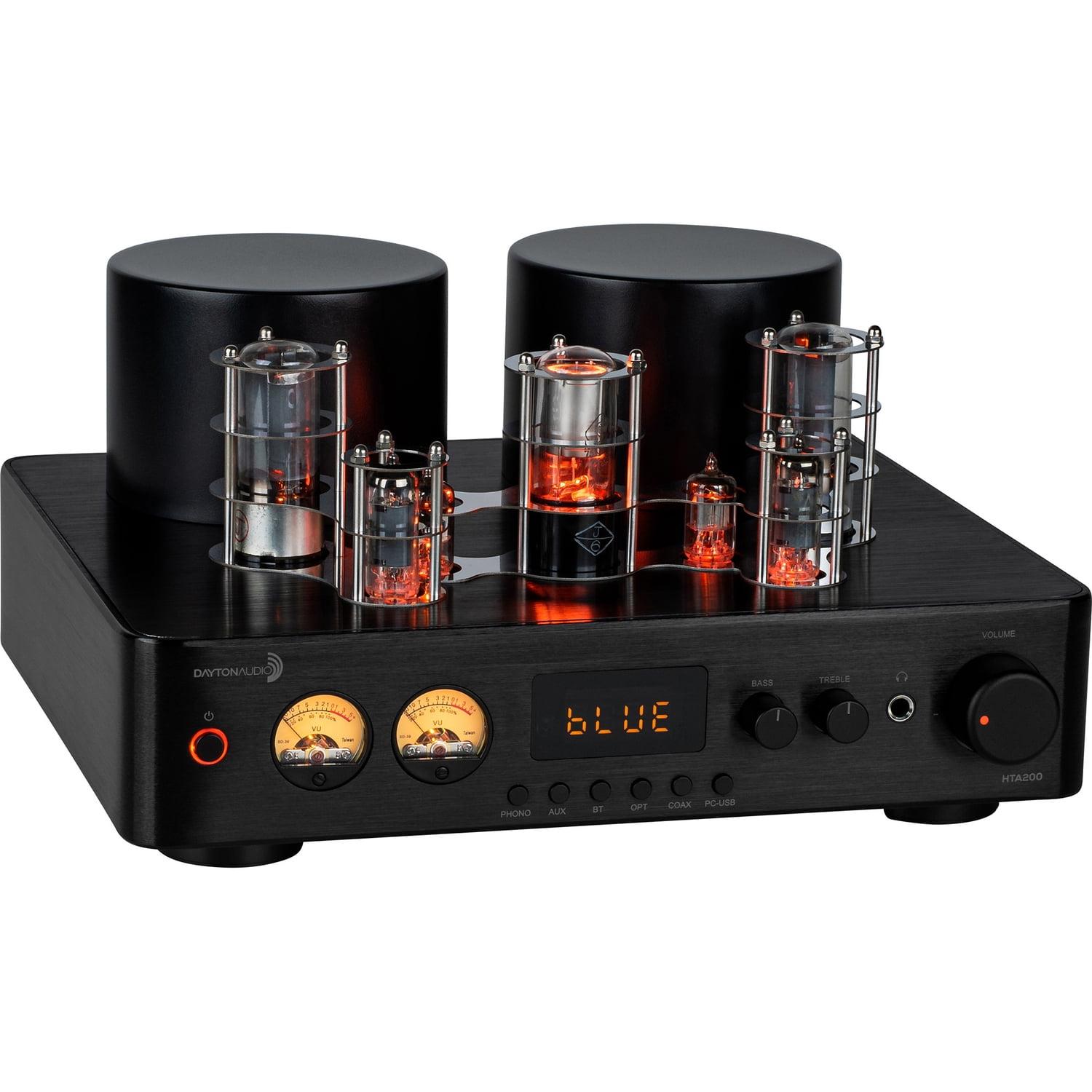
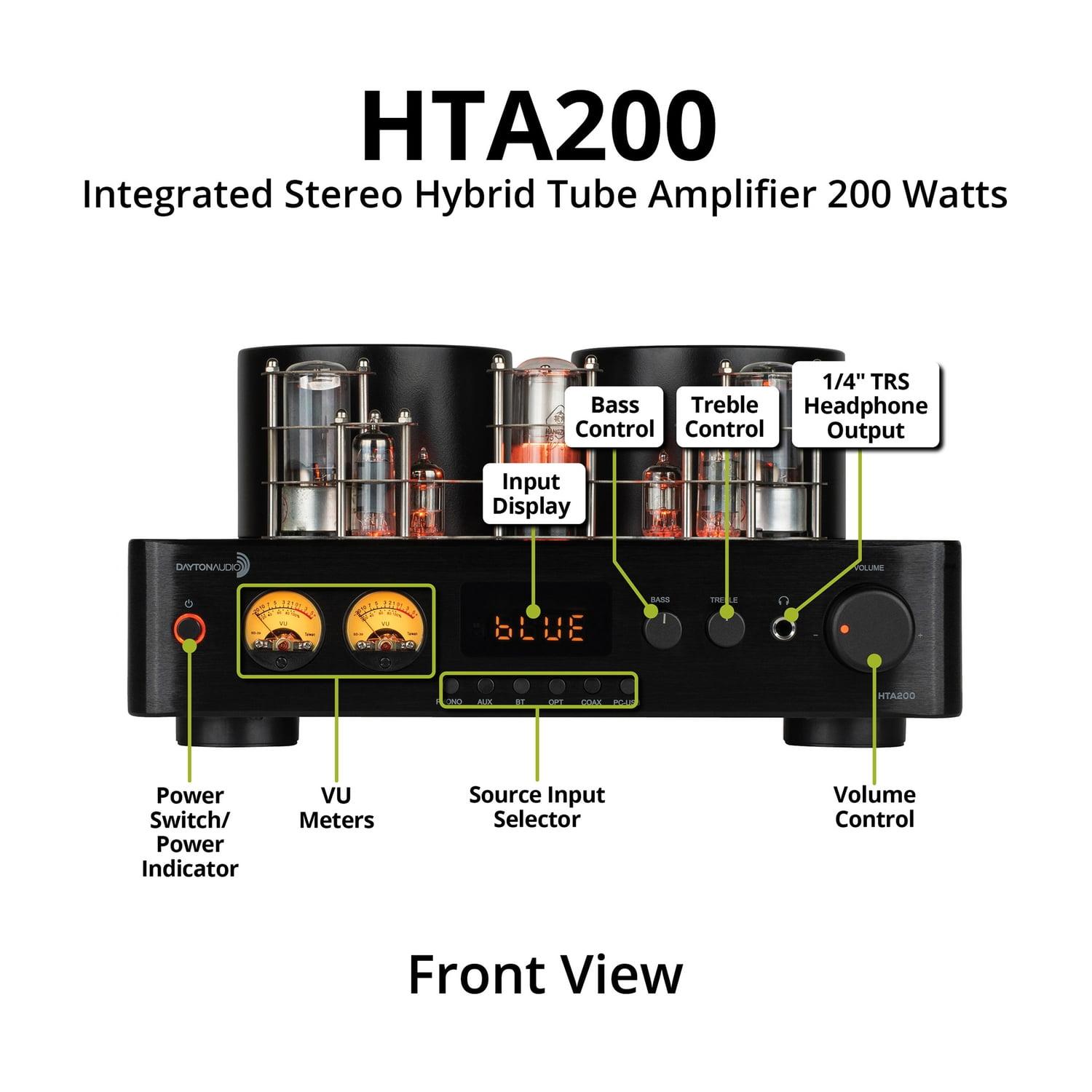
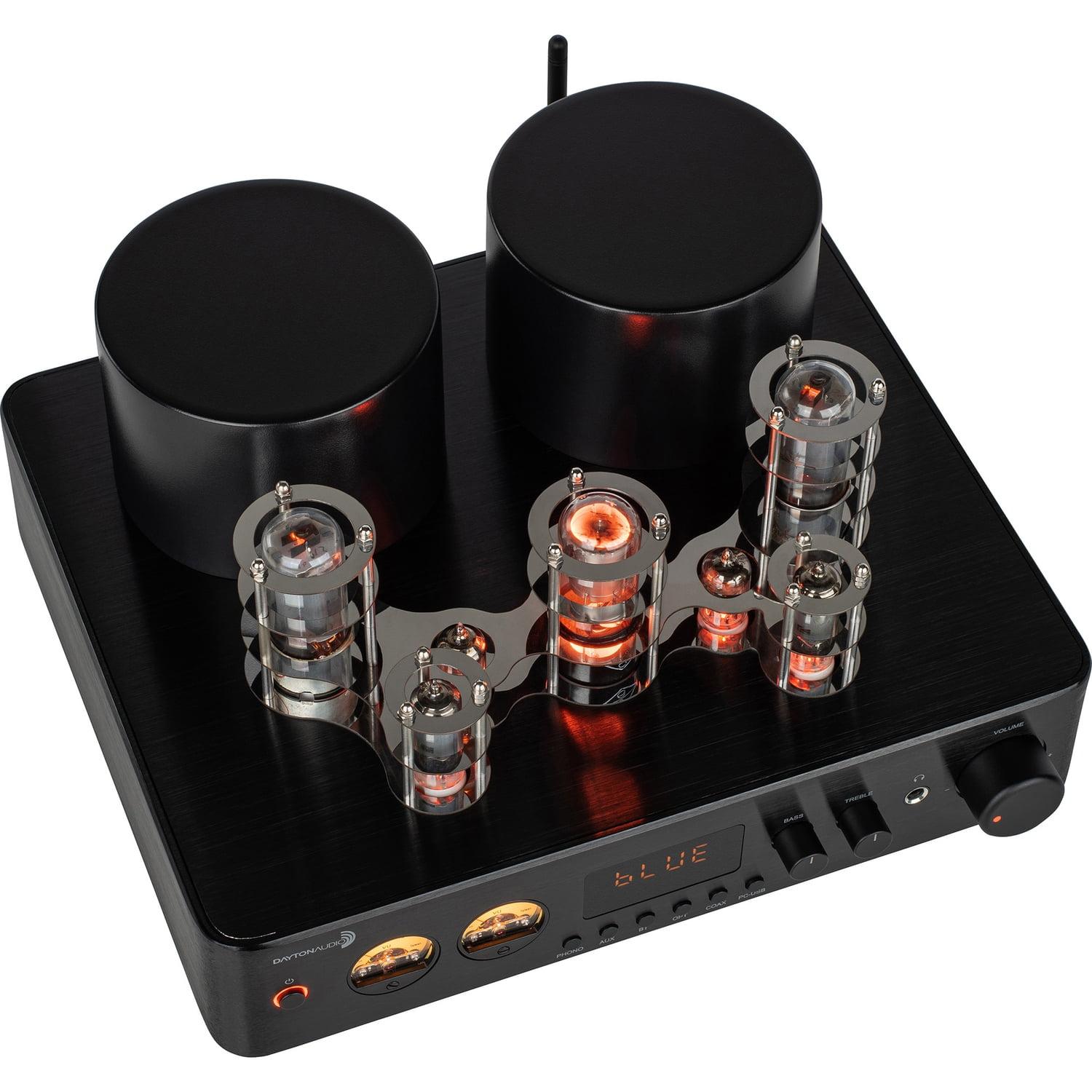
Released in 2019, the Dayton Audio HTA200 takes a hybrid approach by combining genuine vacuum tubes in the preamplifier section with modern solid-state power amplification. This design philosophy aims to capture the warmth and musicality that tube enthusiasts love while maintaining the reliability and power output of transistor technology.
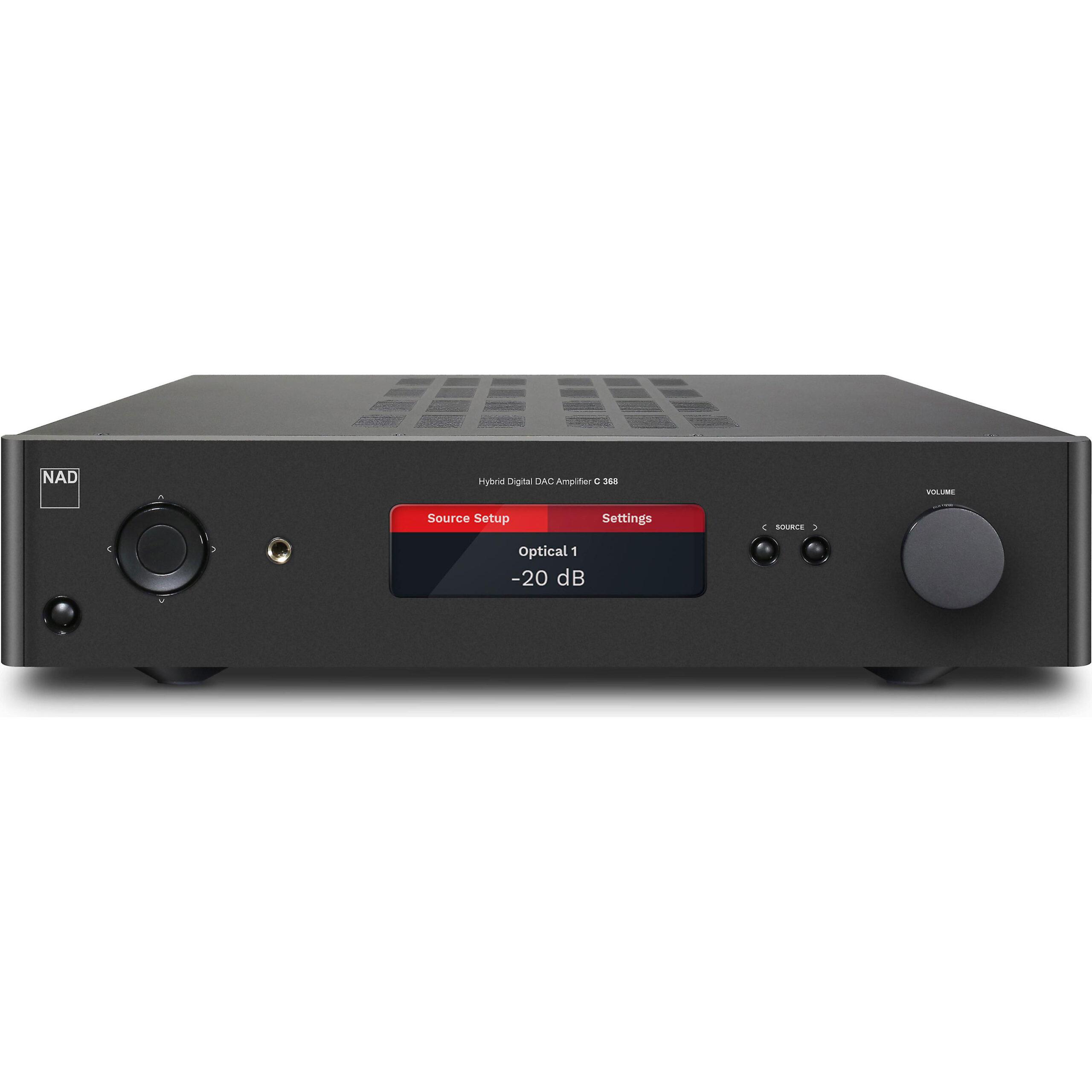
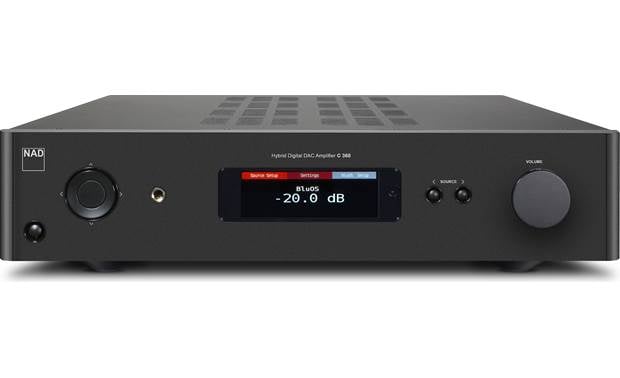
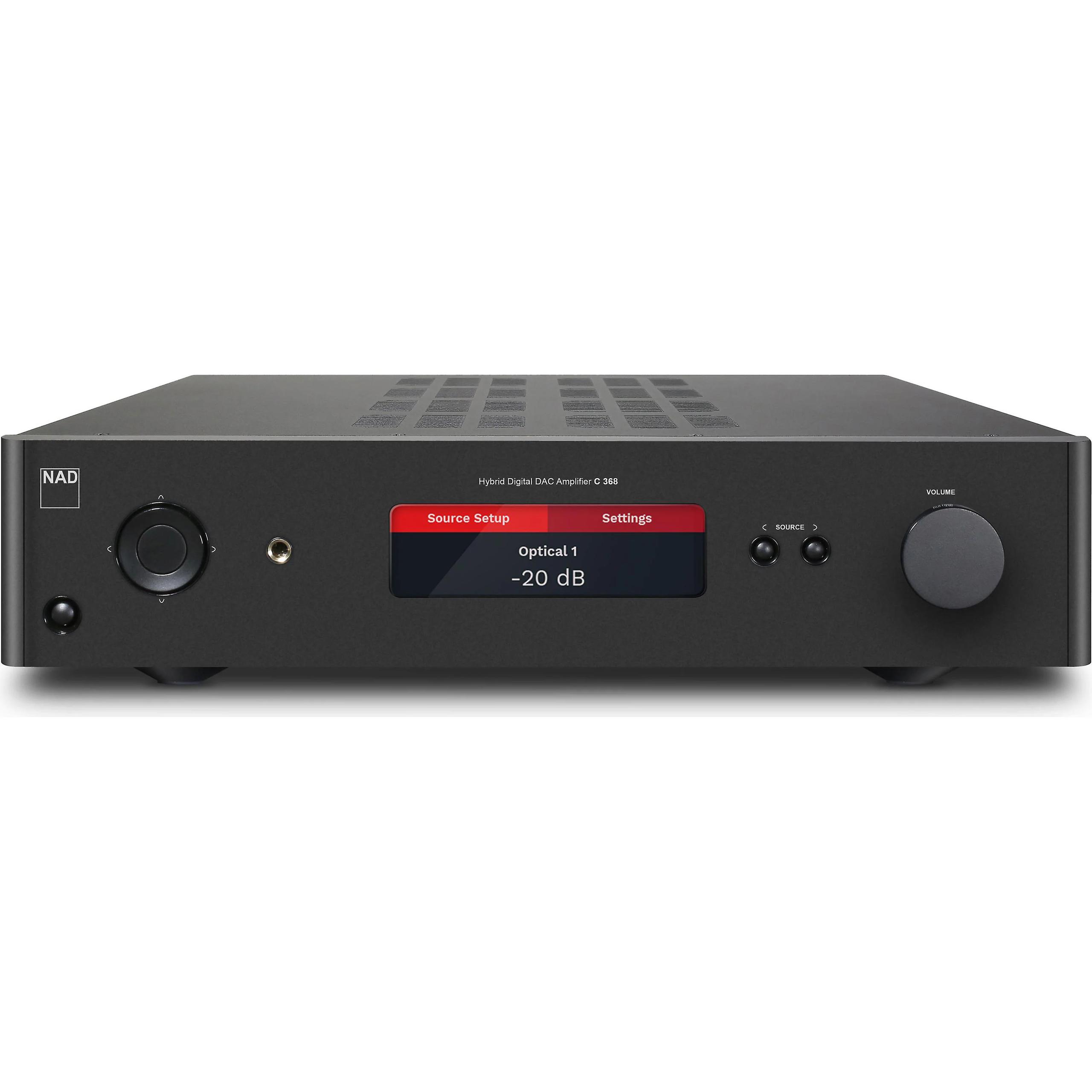
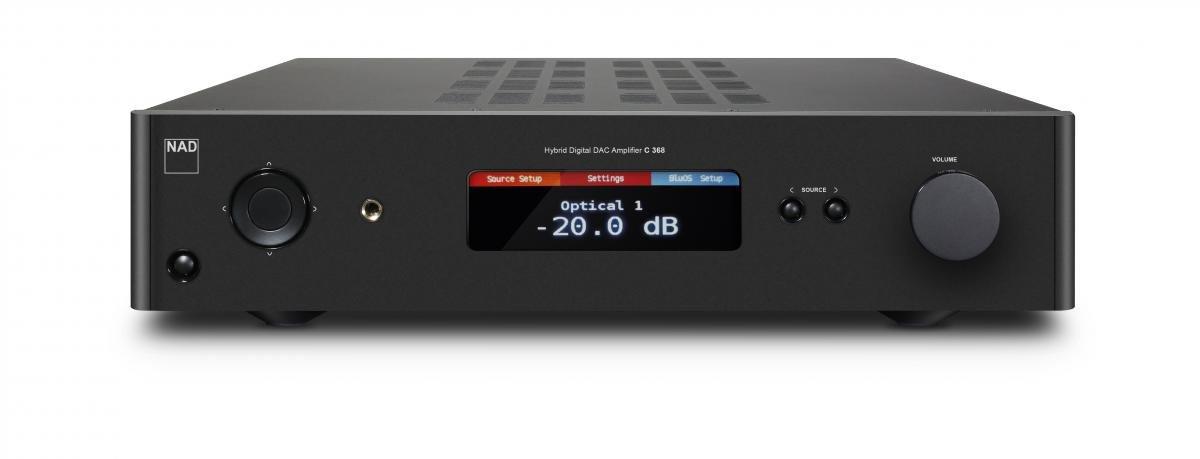
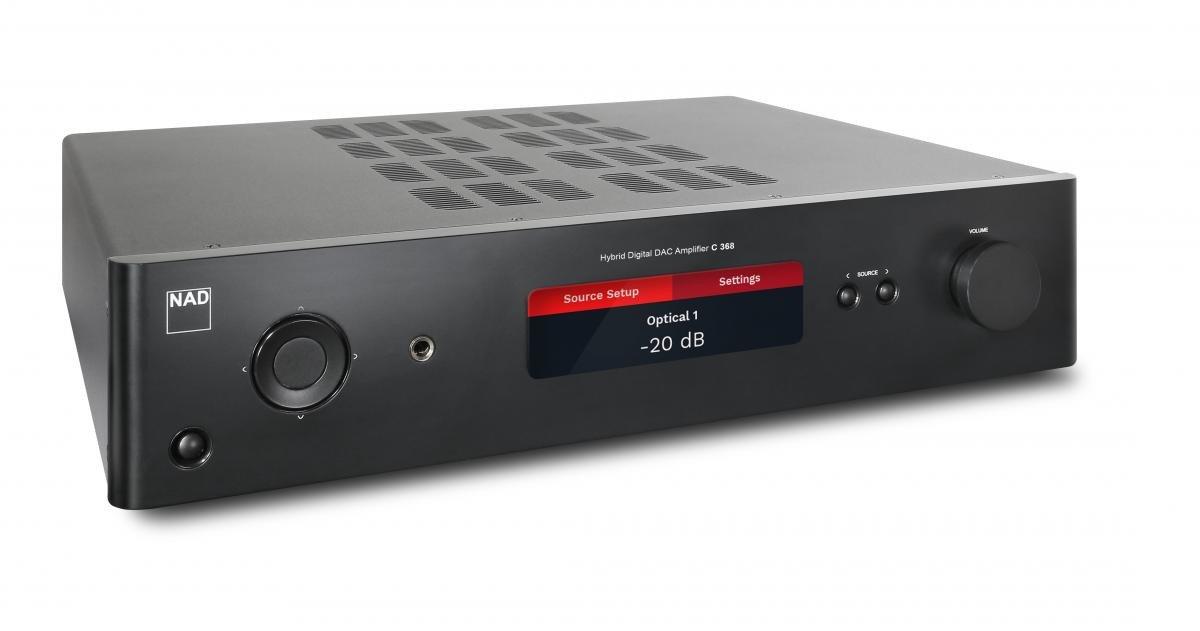
The NAD C 368, launched in 2016, represents a completely different philosophy. It embraces modern Class D amplification technology and focuses on clean, accurate sound reproduction with extensive digital processing capabilities. NAD has been refining this approach since its introduction, and the C 368 has remained relevant thanks to its modular upgrade system.
Before diving deep into these specific models, it's worth understanding the fundamental differences between tube and solid-state amplification, as this forms the core distinction between our two contenders.
Vacuum tubes, also called valves, were the original amplifying devices used in electronics. They work by controlling the flow of electrons through a vacuum-filled glass envelope. When you see those glowing amber bulbs in vintage audio equipment, you're looking at tubes in action. The Dayton Audio HTA200 uses several types: 13P1P tubes for voltage amplification, 6H2 and 6A2 tubes for additional gain stages, and a WY3P stabilivolt tube for voltage regulation.
The magic of tubes lies in how they distort audio signals. Unlike solid-state devices, tubes introduce what audiophiles call "harmonic distortion"—they add subtle harmonic overtones that many listeners find pleasing. It's similar to how a vintage guitar amp adds character to an electric guitar's sound. This distortion tends to be predominantly second-order harmonics, which our ears perceive as warmth and richness rather than harshness.
Solid-state amplification, on the other hand, uses transistors to amplify signals. The NAD C 368 takes this concept further with Class D amplification, which uses high-frequency switching to control power delivery. Think of it like a light dimmer that turns on and off thousands of times per second—so fast that what emerges is a smooth, continuous signal. This approach offers exceptional efficiency (often over 90%) and generates minimal heat compared to traditional amplifier designs.
When evaluating amplifier power, the story goes much deeper than the basic wattage ratings suggest. The Dayton Audio HTA200 is rated at 100 watts per channel into 4-ohm speakers and 50 watts per channel into 8-ohm speakers. These are respectable figures that should drive most bookshelf and tower speakers to satisfying levels in typical home environments.
However, the NAD C 368 tells a more complex story. While it's rated at 80 watts per channel continuous into both 4-ohm and 8-ohm loads, NAD's engineering philosophy focuses on dynamic power delivery. The amplifier can deliver 200 watts into 4 ohms and 120 watts into 8 ohms for short bursts—exactly what's needed for musical transients like drum strikes or orchestral crescendos.
This difference in approach reflects the underlying technologies. The HTA200's traditional linear power supply stores energy in large capacitors and transformers, providing steady power but with limited reserves for sudden demands. The C 368's switch-mode power supply can respond much more quickly to power demands, making it particularly effective with speakers that have complex impedance curves or low sensitivity ratings.
In practical terms, both amplifiers will drive typical home speakers effectively, but the NAD C 368 shows its strength with demanding loads. If you're planning to use speakers like Magnepan planars or certain KEF models that dip to 3-4 ohms, the NAD's superior current delivery becomes a significant advantage.
The sonic character of these two amplifiers represents fundamentally different philosophies about what reproduced music should sound like.
The Dayton Audio HTA200 deliberately colors the sound through its tube preamplifier section. Those glowing tubes don't just look pretty—they're actively shaping your music by adding subtle harmonic content and gentle compression. The result is what many describe as a more "musical" or "organic" presentation. Vocals tend to sound warmer and more intimate, instruments have more body and presence, and harsh digital recordings become more listenable.
This coloration isn't a flaw—it's the whole point. Many listeners, particularly those who grew up with vinyl records and vintage equipment, find this sonic signature more emotionally engaging than clinically accurate reproduction. The HTA200 makes poor recordings sound better at the expense of absolute fidelity to the source material.
The NAD C 368 takes the opposite approach. Its Class D amplification aims for what engineers call "wire with gain"—amplifying the input signal as faithfully as possible without adding character. The result is exceptional detail retrieval, pinpoint imaging (the ability to locate instruments in the stereo field), and dynamic range that can make well-recorded music sound startlingly realistic.
The C 368's signal-to-noise ratio of 98 dB means that background noise is virtually inaudible, allowing you to hear deep into recordings. Channel separation exceeding 75 dB at 1 kHz ensures that stereo imaging remains precise even at high volumes. These technical achievements translate to a listening experience where every instrument occupies its own space in the soundstage.
Which approach is "better" depends entirely on your priorities and musical preferences. If you listen primarily to jazz, classical, or acoustic music and value emotional engagement over analytical precision, the HTA200's tube warmth may be more satisfying. If you're drawn to complex electronic music, prefer to hear exactly what the recording engineer intended, or simply want to hear every detail in your favorite albums, the C 368's accuracy will likely appeal more.
Modern music listening often involves digital sources, making DAC (Digital-to-Analog Converter) quality increasingly important. A DAC takes the digital information from sources like CD players, computers, or streaming devices and converts it back into the analog signals that amplifiers can work with.
The Dayton Audio HTA200 includes a basic USB DAC that supports audio up to 16-bit/48kHz resolution—adequate for CD-quality audio and most streaming services. It also provides coaxial and optical digital inputs for connecting external sources. While not cutting-edge, this implementation covers the needs of most casual listeners and represents good value at the amplifier's price point.
The NAD C 368 takes digital processing much more seriously. Its heart is a Texas Instruments PCM1795 32-bit DAC, considered among the better converter chips available. More importantly, NAD pairs this with an SRC4382 asynchronous sample-rate converter, which re-clocks incoming digital signals to reduce jitter—timing errors that can blur musical details.
This sophisticated digital section allows the C 368 to extract more information from high-resolution audio files and provides superior rejection of digital noise. If you're building a library of high-resolution downloads or streaming from services like Qobuz or Amazon Music HD, the NAD's digital superiority becomes immediately apparent.
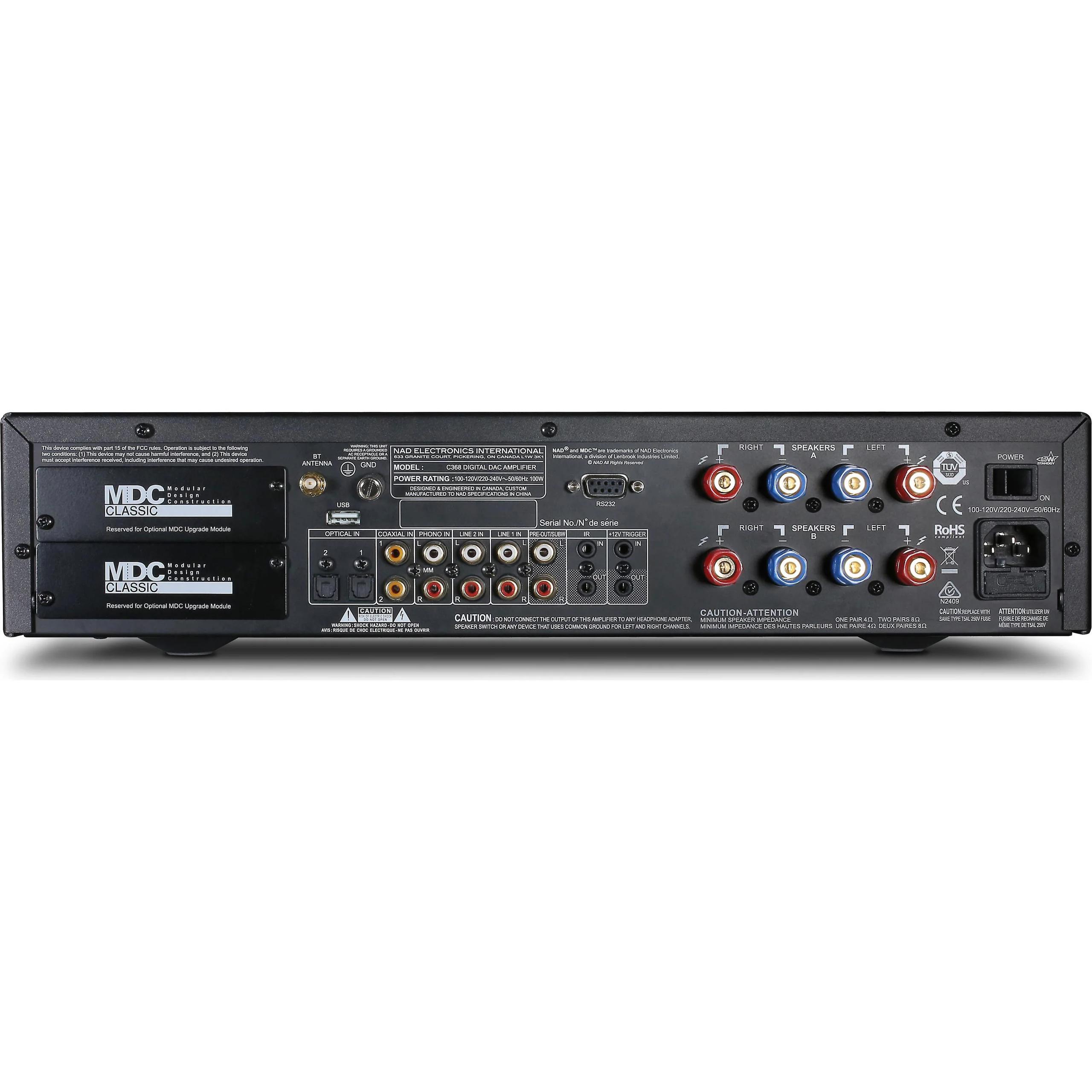
However, there's an interesting connectivity quirk with the C 368: it lacks a USB input, relying instead on traditional SPDIF connections (coaxial and optical). This means connecting a computer requires either a USB-to-SPDIF converter or using the amplifier's Bluetooth connection. While this seems like an oversight in 2024, NAD's reasoning likely centers on avoiding the complexity and potential noise issues of USB audio implementation.
Both amplifiers offer comprehensive connectivity, but with different strengths reflecting their target markets.
The Dayton Audio HTA200 prioritizes convenience and compatibility. Its built-in phono stage accepts both moving magnet (MM) and moving coil (MC) cartridges, making it immediately compatible with virtually any turntable setup. The USB DAC provides plug-and-play computer connectivity, while Bluetooth 5.0 with SBC and AAC codec support enables wireless streaming from smartphones and tablets.
The inclusion of bass and treble controls (±6 dB adjustment at 200 Hz and 4,000 Hz) gives users the ability to tailor the sound to their preferences or room acoustics. The motorized volume control and backlit VU meters add both convenience and visual appeal. A dedicated subwoofer output with full-range signal makes it easy to add low-frequency reinforcement to smaller speakers.
The NAD C 368 takes a more audiophile-focused approach to connectivity. Its moving magnet phono input includes excellent RIAA equalization and infrasonic filtering, though it doesn't support moving coil cartridges without an external step-up transformer. Bluetooth includes aptX codec support, which provides noticeably better sound quality than standard Bluetooth compression.
Where the C 368 truly distinguishes itself is in its modular expandability through MDC (Modular Design Construction) slots. The optional BluOS module transforms the amplifier into a sophisticated network streamer supporting Wi-Fi, Ethernet, Apple AirPlay 2, and Roon Ready integration. This isn't just wireless streaming—it's a complete ecosystem that enables multi-room audio, high-resolution network playback, and control through smartphone apps.
The C 368 also includes professional installation features like RS-232 control, IR repeater connections, and 12V triggers. These might seem irrelevant to casual users, but they enable integration with sophisticated home automation systems from companies like Control4 or Crestron.
While both amplifiers are primarily designed for stereo music listening, their home theater applicability differs significantly.
The Dayton Audio HTA200 can certainly drive the front speakers in a home theater system, and its subwoofer output makes integration straightforward. However, the tube coloration that makes it appealing for music can work against the neutral sound reproduction that many prefer for movies and TV. Dialog might sound overly warm, and the overall presentation may lack the dynamic punch that action sequences demand.
The NAD C 368 proves much more versatile for home theater use. Its clean, uncolored sound reproduction makes it excellent for the front channels of a surround system. The optional HDMI MDC module adds multiple HDMI inputs with ARC (Audio Return Channel) support, effectively turning the amplifier into a two-channel home theater receiver.
The C 368's high current output capability also makes it well-suited to driving demanding tower speakers that might serve double duty for music and movies. Its precise imaging helps maintain the spatial accuracy that modern surround sound processing relies upon.
When considering amplifiers at different price points—with the HTA200 positioned as an entry-level option and the C 368 in premium territory at the time of writing—long-term value becomes crucial.
The Dayton Audio HTA200 represents exceptional value for buyers seeking authentic tube sound at an accessible price. The genuine tube complement would cost significantly more in competing products, making this an attractive entry point into tube amplification. However, its fixed feature set means that future needs may require a complete amplifier replacement.
The NAD C 368 commands a significantly higher price but offers superior long-term value through its modular design. Rather than replacing the entire amplifier when streaming technology evolves or your needs change, you can simply add or upgrade MDC modules. This approach can actually save money over time while ensuring your investment remains current with technological developments.
Consider that high-quality standalone streamers often cost $500-1000, making the C 368's optional BluOS module reasonably priced for the functionality it adds. The amplifier's core engineering is built to last decades, with the modular system ensuring continued relevance as digital audio standards evolve.
The choice between these amplifiers ultimately comes down to your priorities, budget, and listening preferences.
Choose the Dayton Audio HTA200 if you're drawn to the warmth and musicality of tube sound, value comprehensive connectivity at an entry-level price, or simply love the aesthetic appeal of glowing tubes and analog VU meters. It's perfect for listeners who want their system to make everything sound musical rather than analytically precise. The built-in phono stage supporting both MM and MC cartridges makes it particularly attractive for vinyl enthusiasts on a budget.
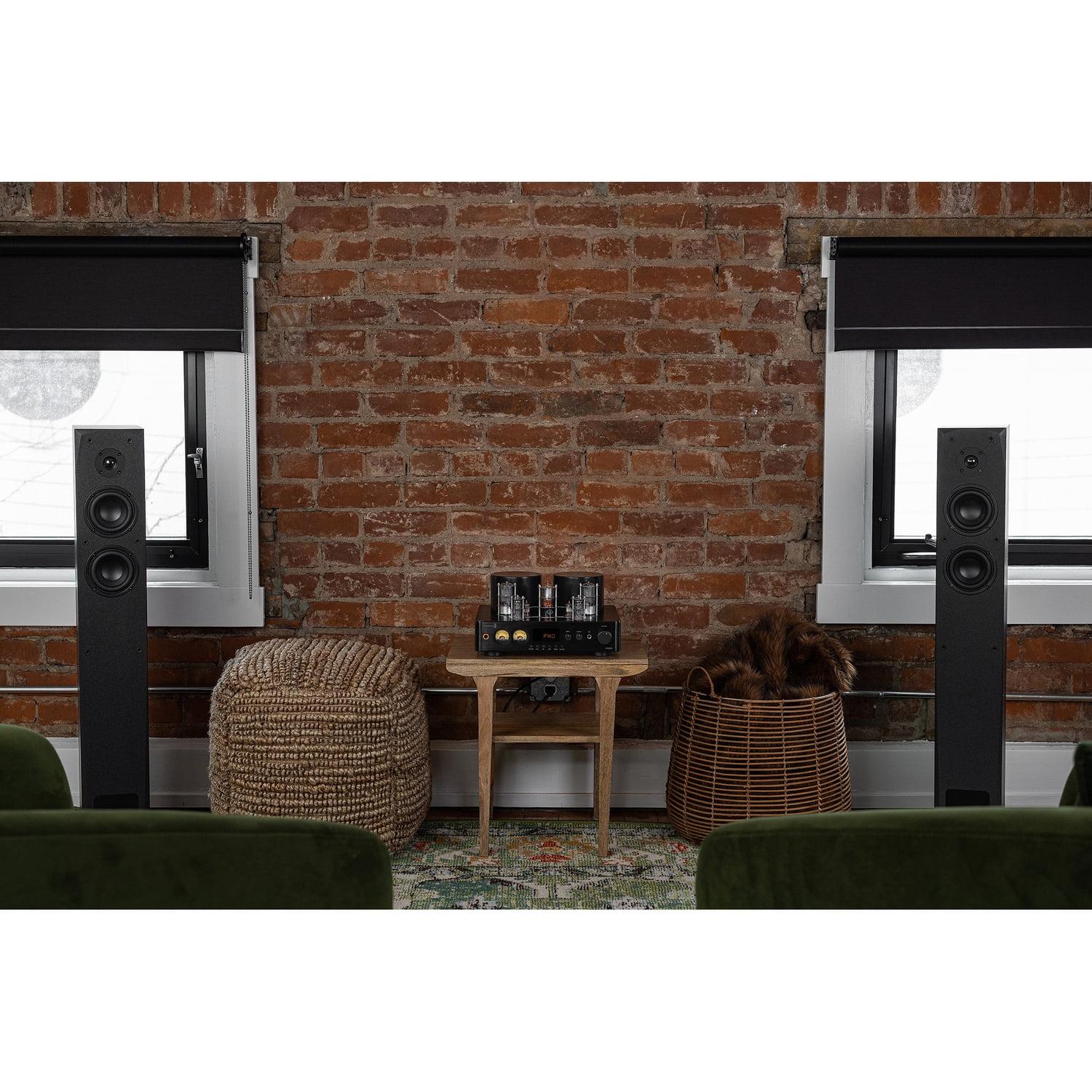
The HTA200 excels in smaller rooms with moderately sensitive speakers, where its 50-100 watts per channel provides ample power. It's also ideal for listeners who prefer a more forgiving sound that makes poorly recorded music more enjoyable.
Choose the NAD C 368 if you prioritize accuracy, detail, and long-term flexibility over immediate affordability. Its superior current delivery makes it the better choice for demanding speakers, while its modular design ensures your investment remains relevant as technology evolves. The premium DAC section justifies the higher cost for listeners with high-resolution music collections.
The C 368 particularly suits listeners who value precision over coloration, own or plan to purchase demanding speakers, or want the flexibility to add streaming capabilities later. Its home theater compatibility through optional modules makes it attractive for dual-purpose systems.
Both amplifiers represent strong values in their respective price categories, but they serve distinctly different audio philosophies. The HTA200 prioritizes musical enjoyment and emotional connection, while the C 368 focuses on accurate reproduction and system flexibility. Your personal preferences, room requirements, and long-term plans should guide your decision between these two excellent but very different approaches to integrated amplification.
| Dayton Audio HTA200 | NAD C 368 |
|---|---|
| Power Output - Critical for matching speakers and room size | |
| 100W @ 4Ω / 50W @ 8Ω (good for most bookshelf speakers) | 80W continuous @ 4Ω & 8Ω, 200W dynamic @ 4Ω (better current delivery) |
| Amplifier Technology - Determines sound character and reliability | |
| Hybrid tube preamp + Class A/B power (warm, musical sound) | Class D with Hypex UcD (clean, efficient, accurate sound) |
| Tube Complement - Adds warmth but requires eventual replacement | |
| 6 genuine preamp tubes (13P1P x2, 6H2 x2, 6A2 x2, WY3P) | No tubes (solid-state throughout for maintenance-free operation) |
| Digital Audio Quality - Important for streaming and computer sources | |
| Basic USB DAC (16-bit/48kHz), adequate for most users | Premium PCM1795 32-bit DAC with advanced jitter reduction |
| Wireless Connectivity - Essential for smartphone streaming | |
| Bluetooth 5.0 with SBC/AAC codecs (standard quality) | Bluetooth with aptX codec (near CD-quality wireless) |
| Phono Input - Critical for turntable users | |
| Built-in preamp for MM and MC cartridges (versatile) | Moving magnet only (requires external preamp for MC) |
| Computer Connectivity - Important for digital music libraries | |
| USB DAC input (plug-and-play with computers) | No USB input (requires SPDIF converter for computers) |
| Expandability - Future-proofs your investment | |
| Fixed features (no upgrade options) | 2 MDC slots for streaming, HDMI, and future modules |
| Tone Controls - Useful for room tuning and personal preference | |
| Bass/treble controls ±6dB (helps tailor sound) | No tone controls (purist approach maintains signal purity) |
| Visual Appeal - Matters for living room placement | |
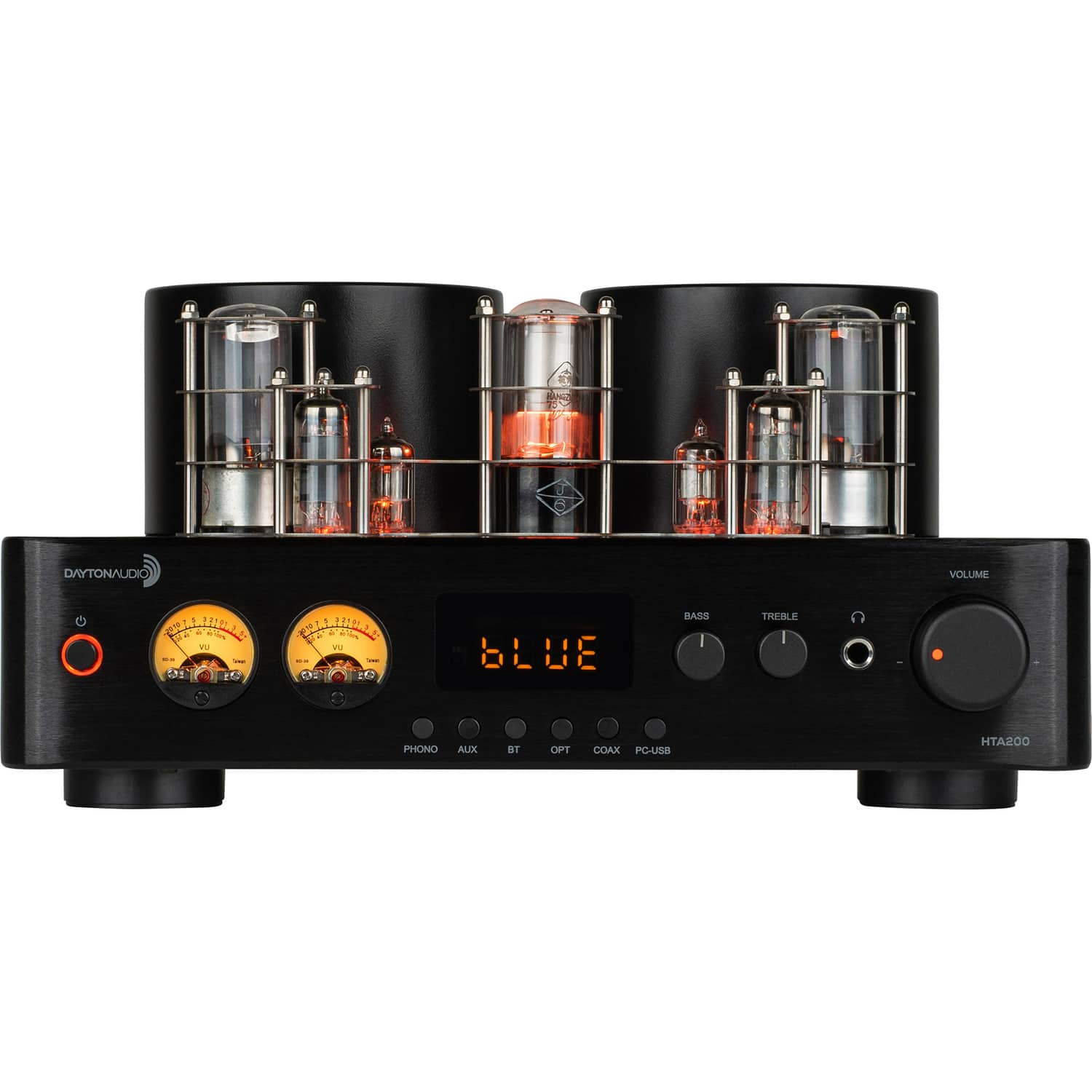
| Glowing tubes + backlit VU meters (vintage aesthetic) | Modern minimalist design with TFT display |
| Signal-to-Noise Ratio - Affects background noise levels | |
| >80dB (good, minimal audible noise) | 98dB (excellent, virtually silent background) |
| Subwoofer Integration - Important for full-range sound | |
| Dedicated full-range sub output (simple connection) | Configurable pre-out with 150Hz digital crossover |
| Custom Installation Features - Matters for whole-home systems | |
| Basic remote control only | RS-232, IR, 12V triggers (professional integration ready) |
The Dayton Audio HTA200 delivers 100 watts per channel into 4-ohm speakers and 50 watts into 8-ohm speakers. The NAD C 368 provides 80 watts continuous into both 4-ohm and 8-ohm loads, but can deliver up to 200 watts dynamically into 4-ohm speakers. While the HTA200 has higher continuous ratings, the C 368 offers better real-world performance with demanding speakers due to its superior current delivery capabilities.
The Dayton Audio HTA200 uses vacuum tubes in its preamplifier section, which adds warmth and harmonic richness to the sound that many listeners find more musical and engaging. The NAD C 368 is fully solid-state, providing clean, accurate sound reproduction without coloration. Tube amplifiers like the HTA200 make music sound more romantic and forgiving, while solid-state designs like the C 368 reveal every detail in recordings.
The Dayton Audio HTA200 is more beginner-friendly due to its comprehensive connectivity options, including USB DAC for easy computer connection, Bluetooth for wireless streaming, and support for both moving magnet and moving coil turntable cartridges. The NAD C 368 requires more technical knowledge to fully utilize its capabilities and may need additional components for certain sources.
Yes, both amplifiers include phono inputs for turntables. The Dayton Audio HTA200 supports both moving magnet (MM) and moving coil (MC) cartridges with its built-in preamp, making it compatible with virtually any turntable. The NAD C 368 has a high-quality moving magnet phono stage but requires an external step-up transformer for moving coil cartridges.
Sound preference is subjective. The Dayton Audio HTA200 produces a warmer, more musical sound that many find emotionally engaging, especially for jazz, classical, and acoustic music. The NAD C 368 delivers more accurate, detailed sound reproduction that reveals nuances in recordings. Choose the HTA200 for warmth and musicality, or the C 368 for precision and detail.
The Dayton Audio HTA200 includes a USB DAC input for direct plug-and-play connection to computers. The NAD C 368 lacks USB input, so you'll need a USB-to-SPDIF converter to connect a computer, or you can use Bluetooth wireless connection. The HTA200 offers more convenient computer connectivity.
Both offer Bluetooth connectivity, but with different quality levels. The Dayton Audio HTA200 features Bluetooth 5.0 with standard SBC and AAC codecs. The NAD C 368 includes Bluetooth with aptX codec support, providing near CD-quality wireless streaming. For serious wireless streaming, the C 368 can be upgraded with an optional BluOS module for Wi-Fi streaming and multi-room capabilities.
The NAD C 368 is better suited for home theater use due to its clean, uncolored sound reproduction and optional HDMI module for multiple video sources. The Dayton Audio HTA200 can drive front speakers in a home theater but its warm tube coloration may not be ideal for accurate movie dialog and effects reproduction.
The Dayton Audio HTA200 provides exceptional value for those seeking authentic tube sound at an entry-level price point, with comprehensive features and connectivity. The NAD C 368 costs significantly more but offers premium engineering, superior digital processing, and modular expandability that can save money long-term through upgrades rather than replacement.
The Dayton Audio HTA200 will eventually need tube replacement, typically every 2-5 years depending on usage, adding to long-term costs. The tubes are readily available and replacement is straightforward. The NAD C 368 is maintenance-free solid-state design that should provide decades of reliable operation without component replacement.
The NAD C 368 features modular design with two upgrade slots for adding capabilities like network streaming, HDMI inputs, or future technologies. The Dayton Audio HTA200 has a fixed feature set with no upgrade options, meaning you'd need to replace the entire amplifier to add new capabilities.
Choose the Dayton Audio HTA200 if you want warm, engaging sound, comprehensive connectivity including USB and full turntable support, and don't mind eventual tube replacement. Pick the NAD C 368 if you prioritize accuracy, plan to upgrade components over time, need professional installation features, or want the option to add advanced streaming capabilities later.
We've done our best to create useful and informative comparisons to help you decide what product to buy. Our research uses advanced automated methods to create this comparison and perfection is not possible - please contact us for corrections or questions. These are the sites we've researched in the creation of this article: daytonaudio.com - audiosciencereview.com - daytonaudio.com - audioholics.com - soundstageaccess.com - youtube.com - avsforum.com - solen.ca - daytonaudio.com - soundstagenetwork.com - parts-express.com - homedepot.com - device.report - soundstagenetwork.com - petra.com - manualslib.com - audiophonics.fr - manualshelf.com - avnirvana.com - crutchfield.com - hometheaterhifi.com - hifiheaven.net - crutchfield.com - projectorscreen.com - theabsolutesound.com - dedicatedaudio.com - soundstagesimplifi.com - nadelectronics.com - musicdirect.com - crutchfield.com - safeandsoundhq.com

Privacy Policy
Terms and Conditions - Affiliate Policy
Home Security
© Copyright 2008-2026.
11816 Inwood Rd #1211, Dallas, TX 75244