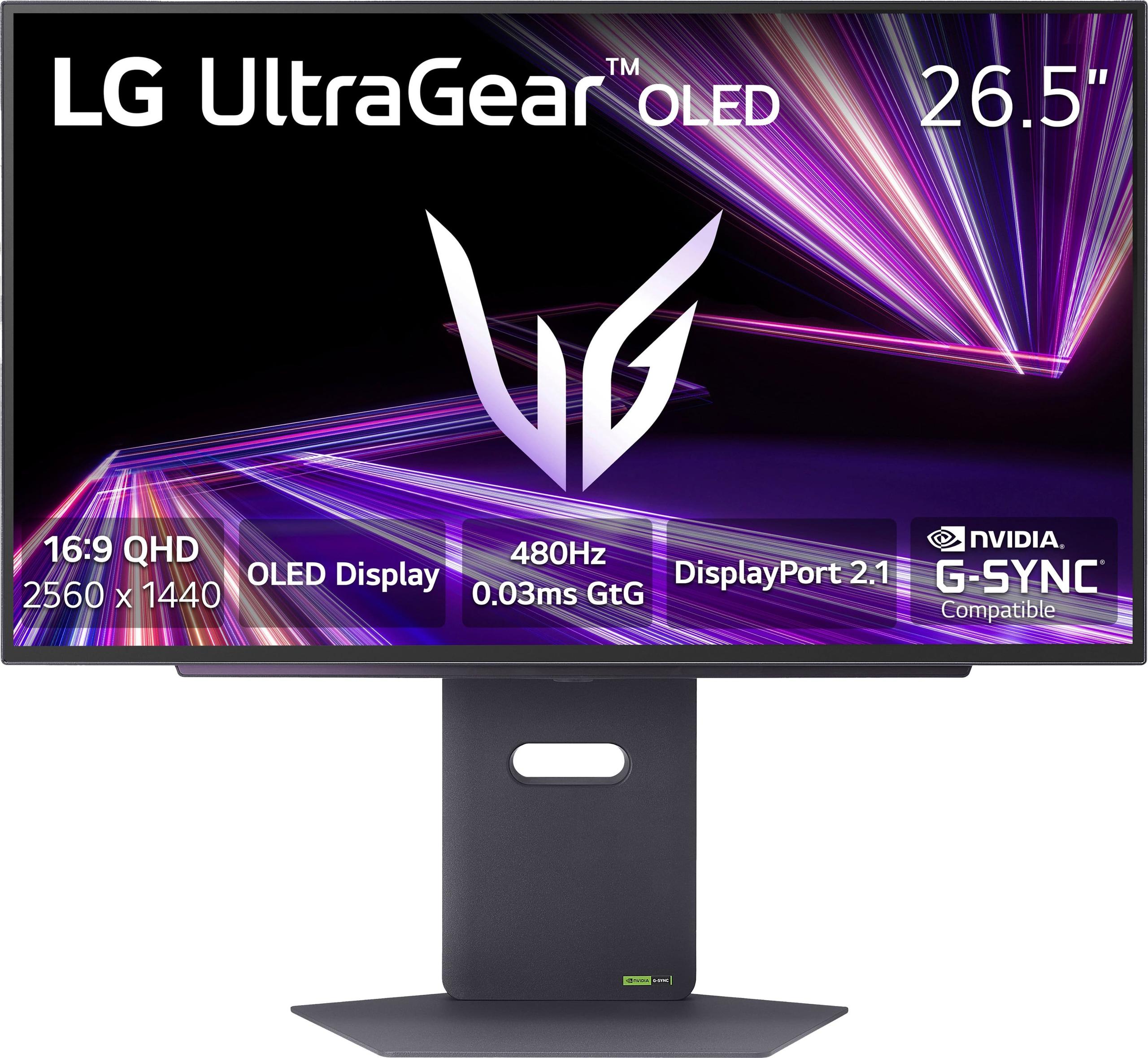
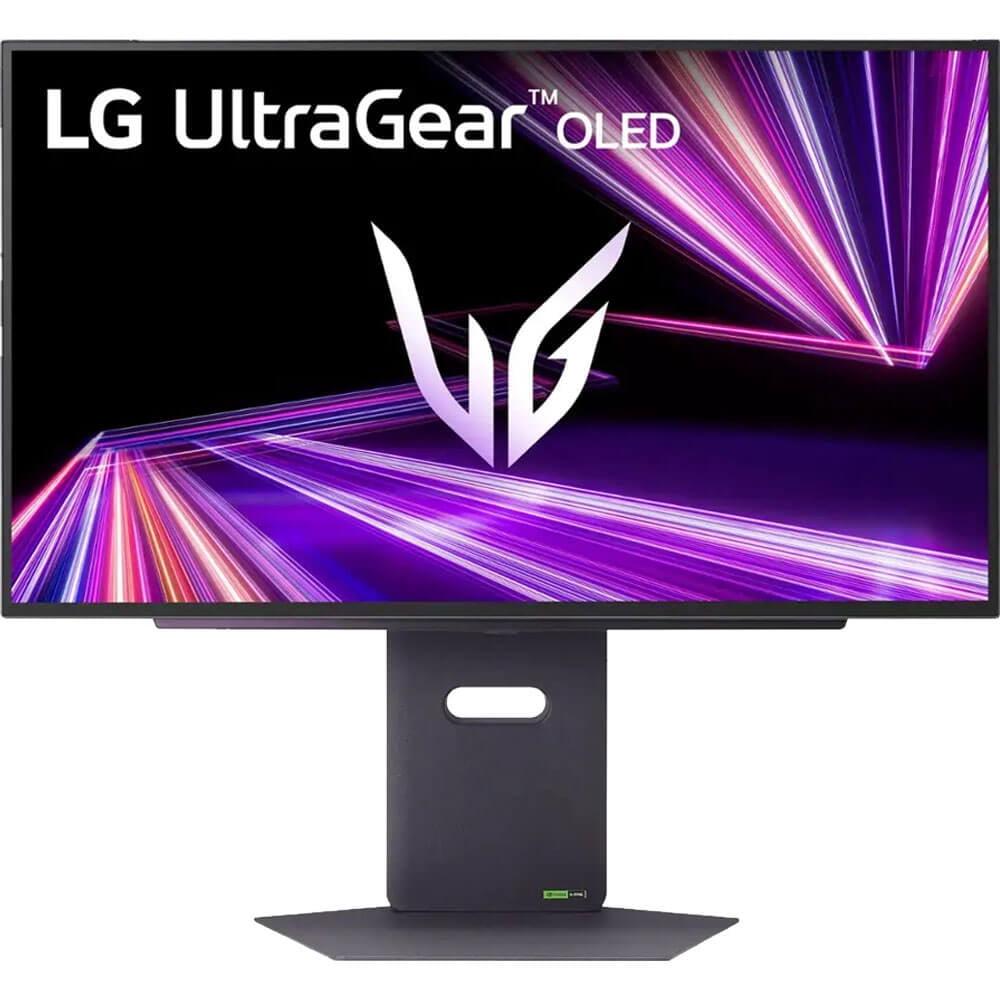
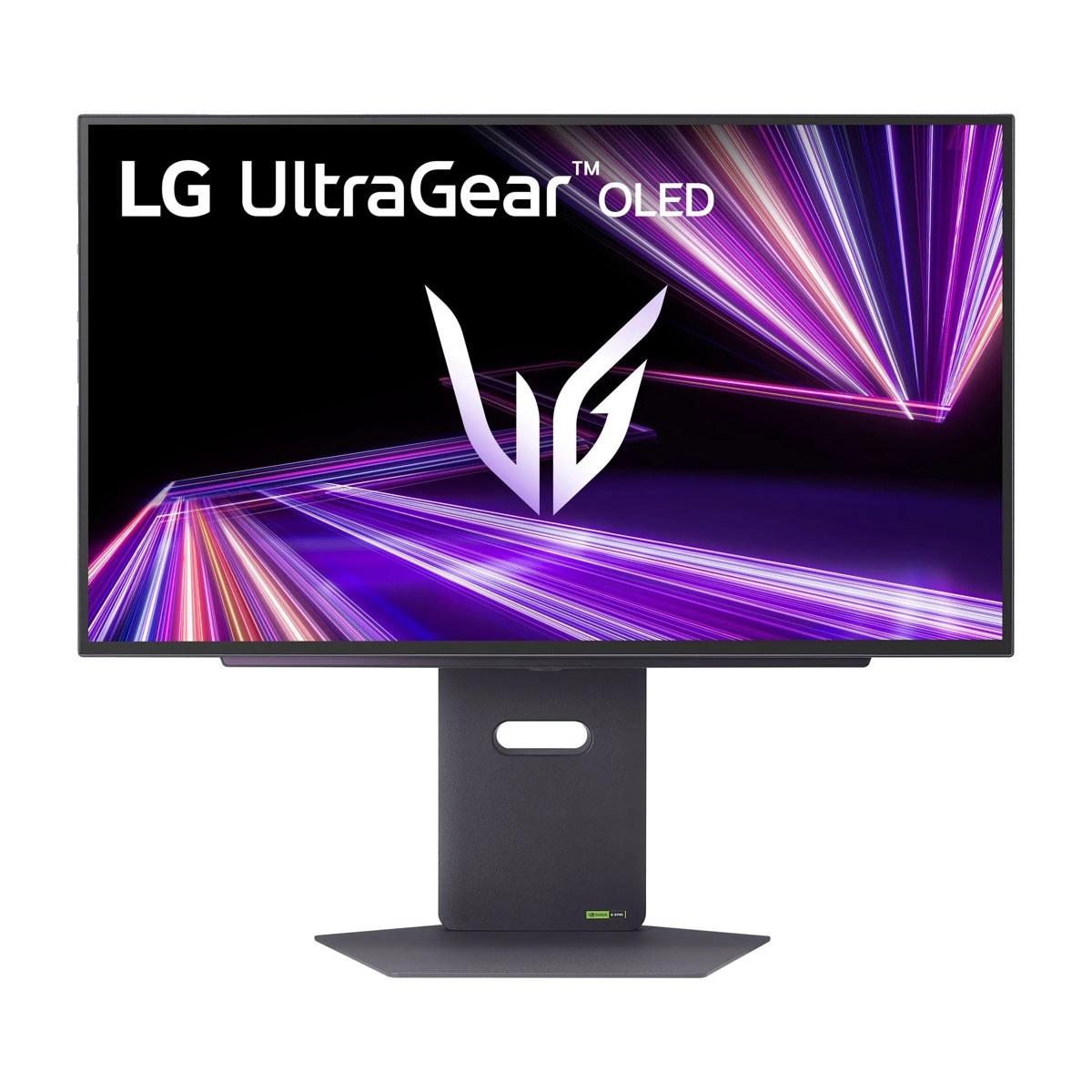
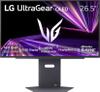
LG UltraGear 27" OLED QHD 480Hz Gaming Monitor

We may earn from purchases via affiliate links

Original price was: $909.95.Current price is: $814.95.

Product Description

LG UltraGear 27" OLED QHD 480Hz Gaming Monitor: The Ultimate Gaming Display Experience

When LG launched the UltraGear 27" OLED QHD 480Hz Gaming Monitor in late 2024, it immediately grabbed attention as the world's fastest QHD OLED display. After months of testing and countless hours of gameplay, this monitor has proven itself as a genuine game-changer for serious gamers who demand the absolute best performance available.

Understanding OLED Technology and Why It Matters

OLED stands for Organic Light-Emitting Diode, which is fundamentally different from traditional LCD monitors. Instead of using a backlight that shines through liquid crystals, each pixel in an OLED display produces its own light. This means when a pixel needs to show black, it simply turns off completely, creating what's called "true black" – something LCD monitors can never achieve.

The LG UltraGear 27" OLED uses WOLED technology, where white OLED pixels work with color filters to create the full spectrum. Our testers consistently noted how this delivers an incredible contrast ratio of 1,500,000:1 – essentially infinite contrast since true black has zero brightness. This translates to incredibly vivid colors and detail that pops off the screen, whether you're exploring dark cave systems in games or watching HDR movies.

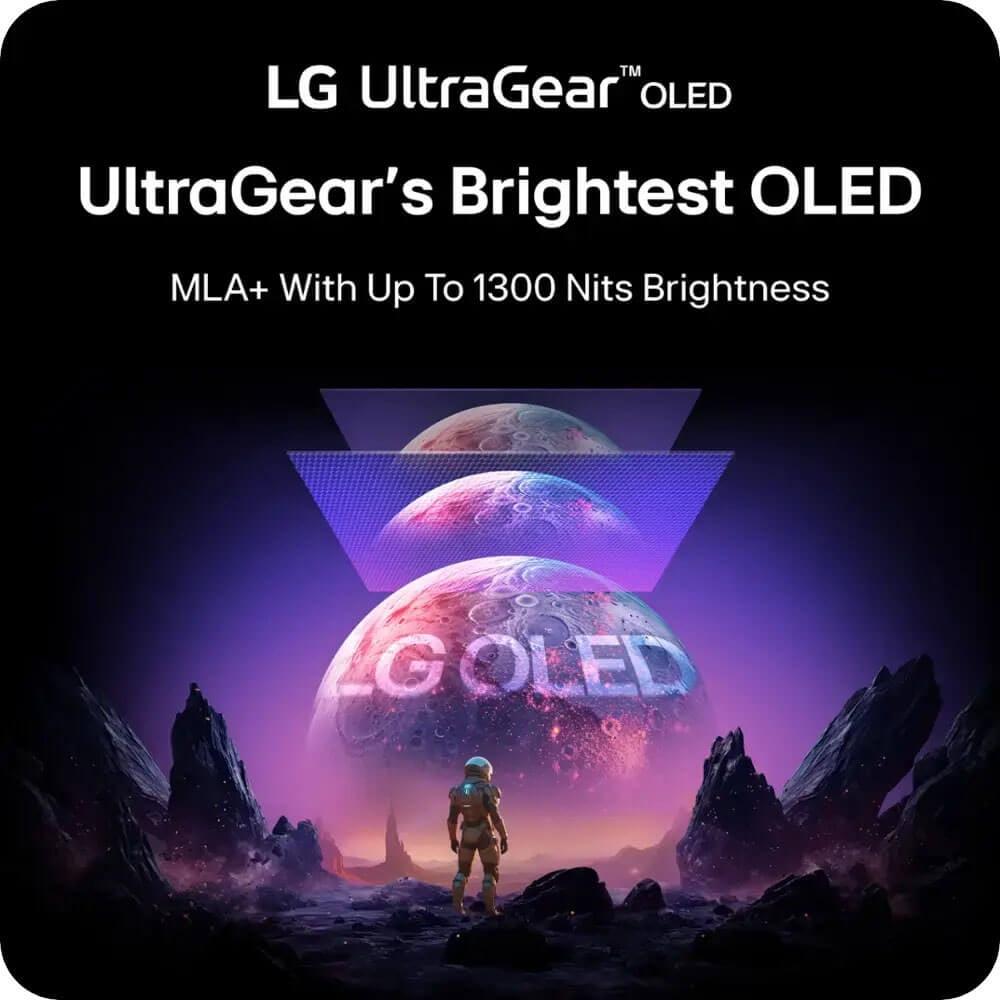
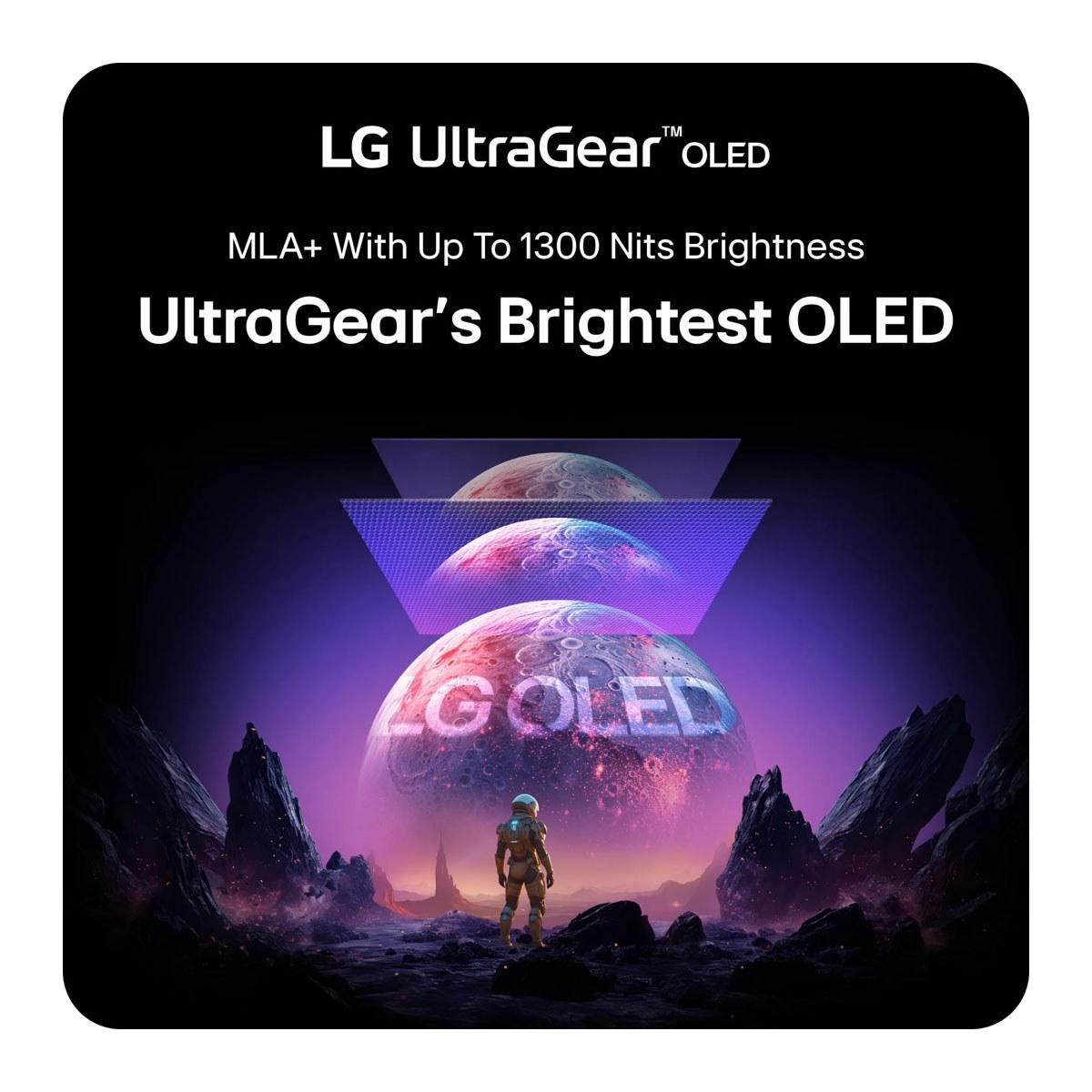
What makes this particularly impressive is LG's Micro Lens Array+ (MLA+) technology. Think of it like tiny magnifying glasses placed over each pixel that focus more light toward your eyes. This innovation addresses one of OLED's traditional weaknesses – brightness – by allowing the display to reach up to 1,300 nits in small areas without using more power or generating extra heat. Most OLED monitors struggle to get bright enough for HDR content, but this one handles it beautifully.

The 480Hz Refresh Rate Revolution

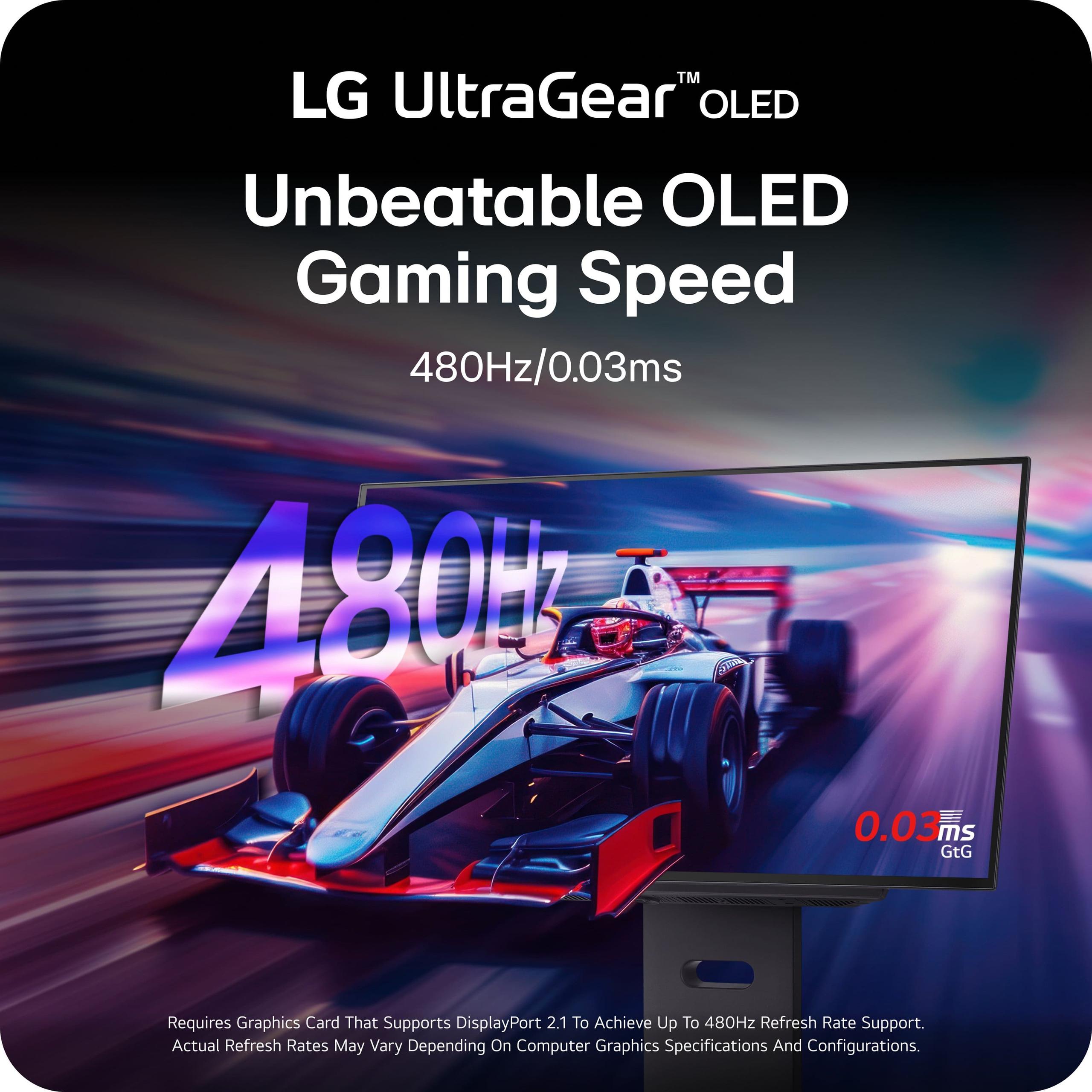
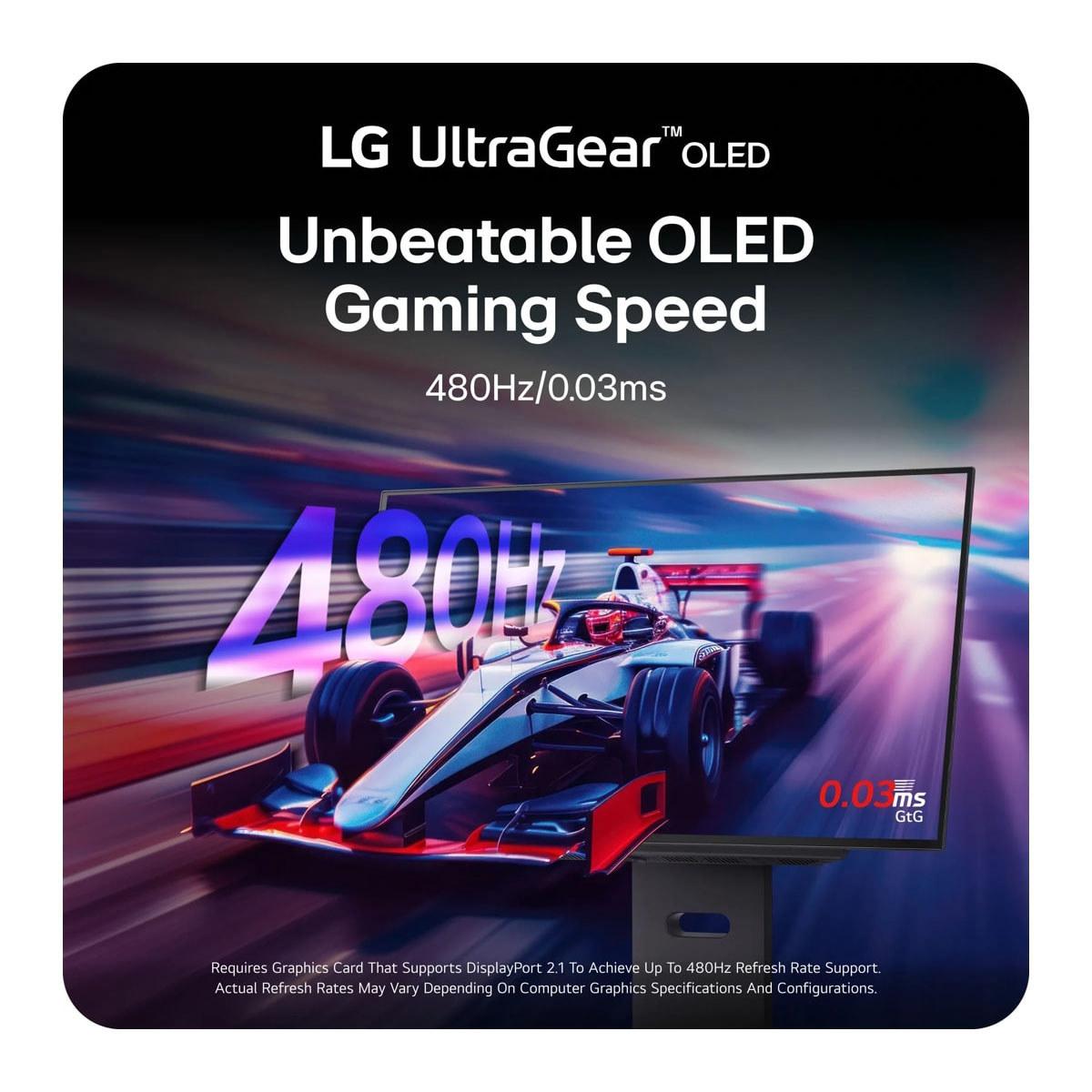
Here's where things get really interesting. Refresh rate measures how many times per second your monitor can display a new image – 480Hz means 480 times per second. To put this in perspective, most standard monitors run at 60Hz, good gaming monitors hit 144Hz or 240Hz, and this monitor doubles the previous OLED speed record.

Our testers found that the jump from 240Hz to 480Hz isn't as dramatic as going from 60Hz to 240Hz, but it's still noticeable in the right situations. Competitive gamers playing Counter-Strike or Valorant reported cleaner tracking when following fast-moving targets, and the motion clarity during rapid camera movements felt smoother. The 0.03ms response time (Gray-to-Gray) means pixels change color almost instantly – there's virtually no ghosting or trailing behind moving objects.

However, there's an important reality check here. To actually see 480 frames per second, your computer needs to generate 480 frames per second. At QHD resolution (2560 x 1440 pixels), this requires serious hardware. Even with top-tier graphics cards like the RTX 4090, most modern games will struggle to hit these frame rates at high settings. You'll mainly see the full benefits in less demanding competitive games or when you're willing to reduce graphics quality.

Gaming Performance Across Different Scenarios

The monitor truly shines in competitive esports. Our testers spent considerable time with games like CS2, Valorant, and Apex Legends, where the combination of OLED's perfect blacks and 480Hz refresh rate creates a significant advantage. Dark corners that might hide enemies on LCD monitors are clearly visible here, and the smooth motion helps with precise aiming during quick flicks or tracking shots.

Racing simulation enthusiasts particularly praised the monitor's performance. The smooth motion reproduction makes it easier to judge braking points and track position changes, while the vibrant colors and deep blacks enhance immersion during night racing or varying weather conditions. Flight simulator users reported similar benefits, especially when tracking targets or navigating through detailed terrain.

For single-player gaming, the experience varies depending on the title. Story-driven games with rich visuals like Cyberpunk 2077 or Red Dead Redemption 2 look absolutely stunning thanks to the OLED's color accuracy and HDR support. The monitor covers 98.5% of the DCI-P3 color space – the same standard used in movie theaters – so games designed with HDR in mind display exactly as developers intended.

Home Theater Capabilities

While primarily designed for gaming, the LG UltraGear 27" OLED works surprisingly well as a home theater display for individual viewing. The 27-inch size is perfect for desktop viewing distances, and the OLED technology delivers cinema-quality visuals that rival much larger TVs.

The monitor supports VESA DisplayHDR True Black 400 certification, which ensures proper HDR performance for movies and streaming content. Our testers found that Netflix, Disney+, and other streaming services looked exceptional, with deep space scenes in sci-fi movies showcasing the infinite contrast capabilities. The anti-glare coating helps maintain image quality even in rooms with ambient lighting.

One limitation for home theater use is the lack of built-in speakers. You'll need external speakers or headphones, though the included 4-pole headphone jack supports DTS Headphone:X processing for impressive spatial audio through quality headphones.

Technical Connectivity and Setup

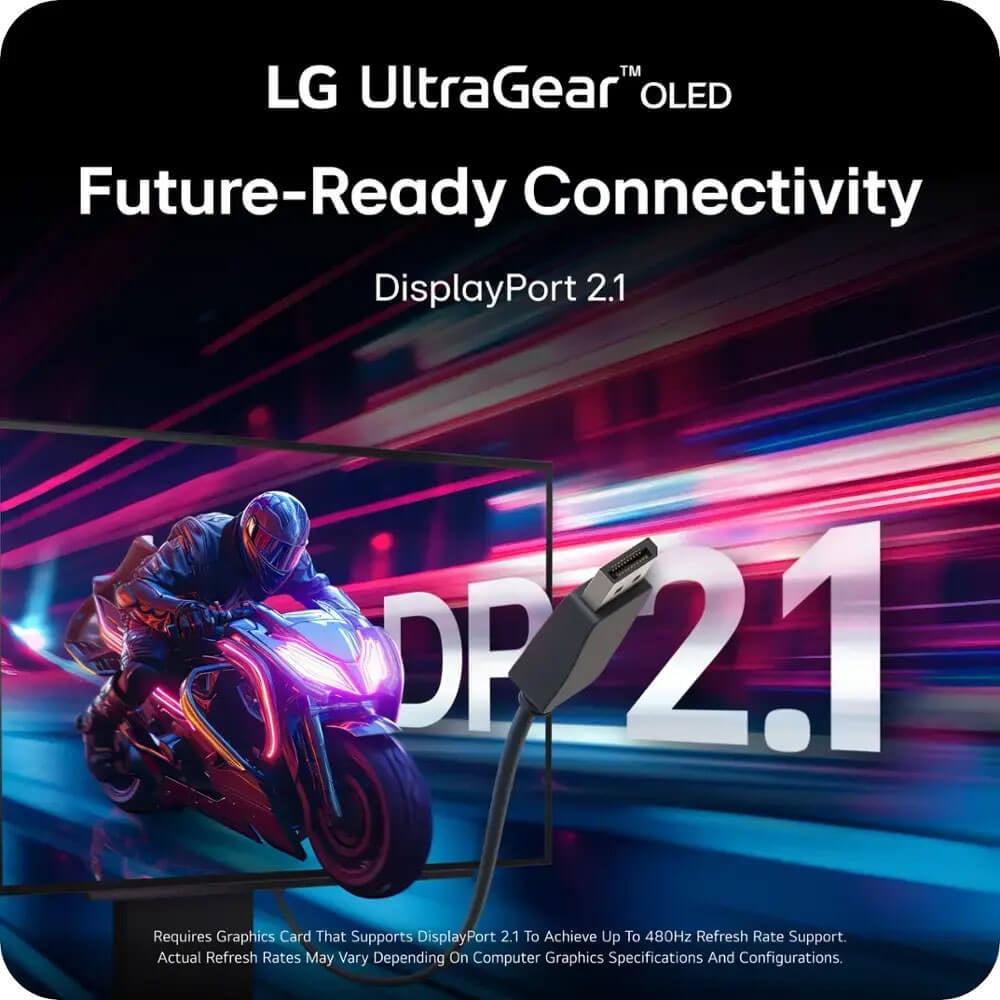
The connectivity options demonstrate LG's forward-thinking approach. The DisplayPort 2.1 connection is crucial for achieving the full 480Hz at QHD resolution without compression artifacts. Previous DisplayPort versions would require Display Stream Compression (DSC), which can introduce visual artifacts, but DP 2.1's higher bandwidth eliminates this concern.

The dual HDMI 2.1 ports support next-generation consoles perfectly. PlayStation 5 and Xbox Series X owners can enjoy 4K gaming at up to 120Hz or QHD gaming at higher refresh rates, depending on the game. The Variable Refresh Rate (VRR) support through HDMI Forum's standard ensures smooth gameplay across all connected devices.

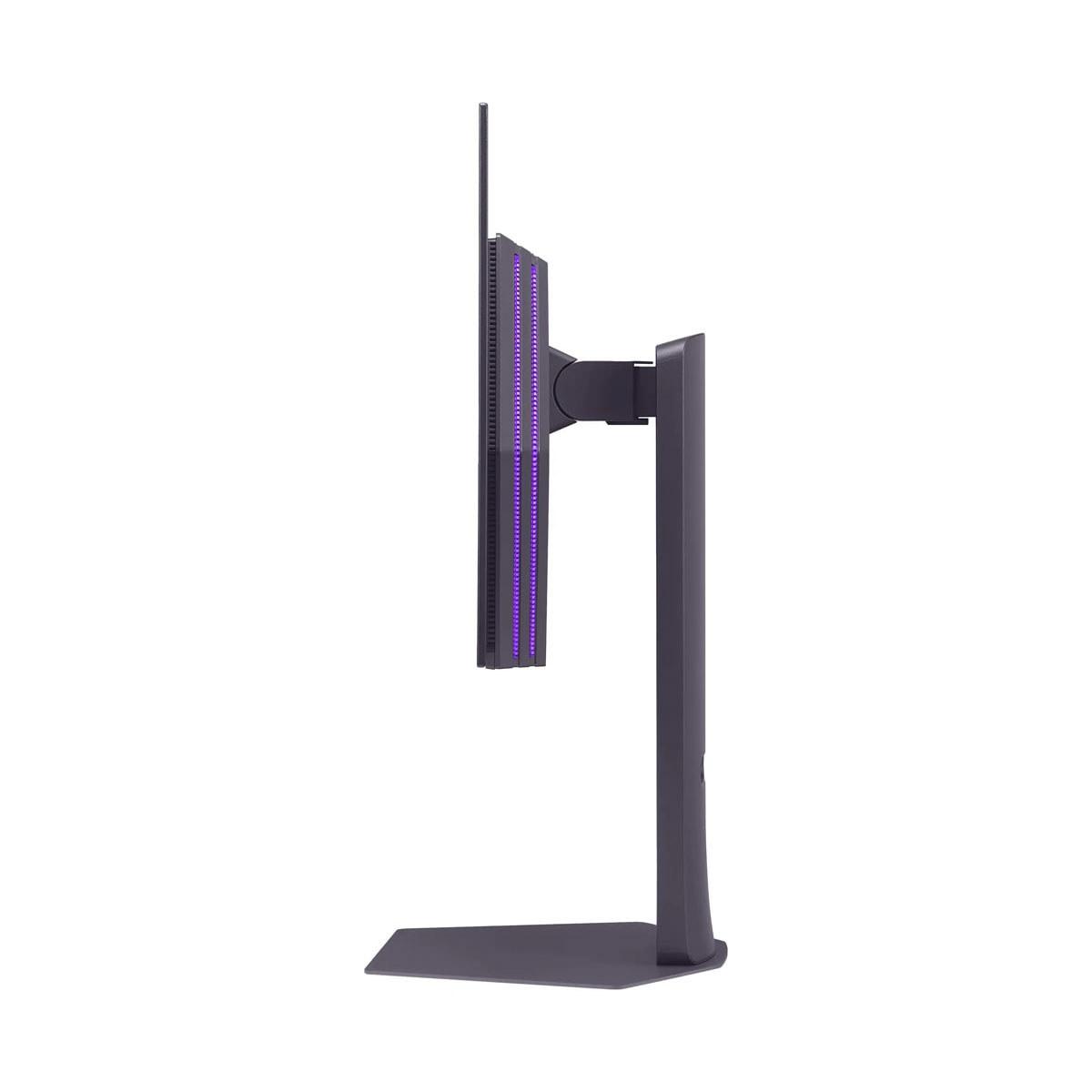
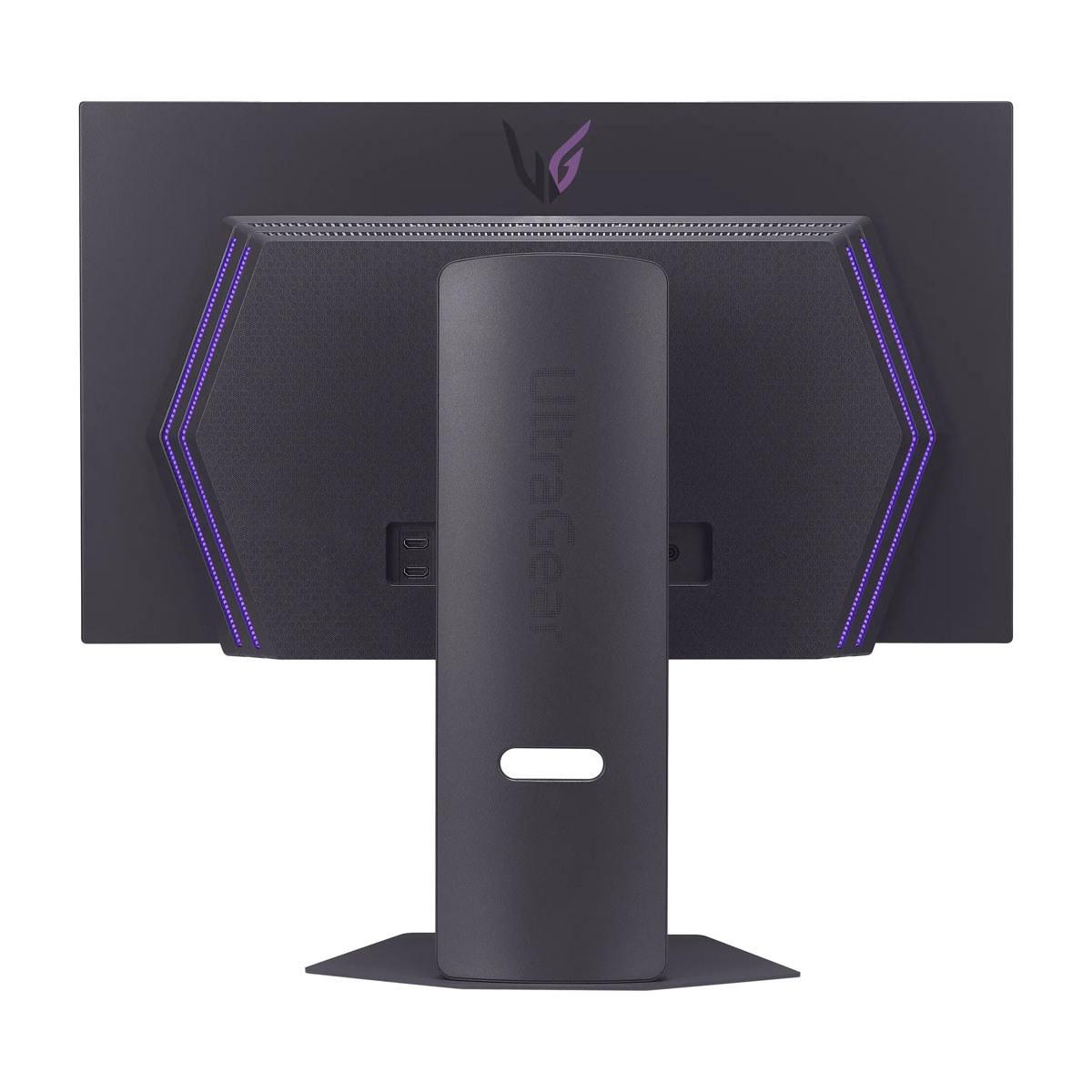
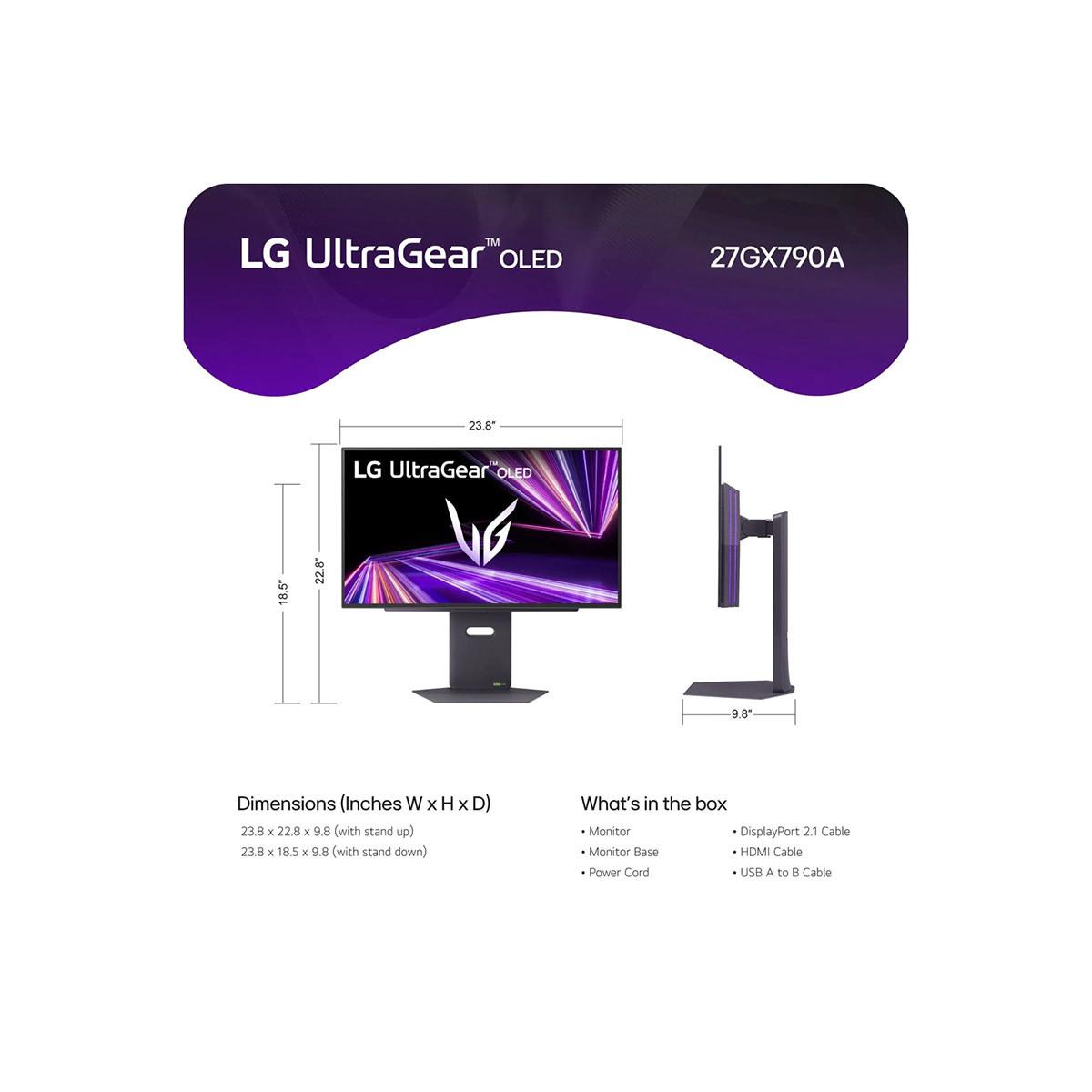
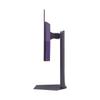
Setting up the monitor is straightforward, though the stand is notably heavy-duty to support the thin OLED panel. The adjustment range is comprehensive – height adjustment up to 110mm, tilt from -5° to +15°, swivel 60° total, and full pivot capability. The flat L-shaped base design allows keyboards to slide partially underneath, maximizing desk space.

OLED Care and Long-term Considerations

OLED burn-in remains a legitimate concern, though modern panels and care features have significantly reduced the risk. The monitor includes multiple protective measures: automatic pixel shifting, screen savers during idle periods, and logo detection that dims static elements. Our long-term testers haven't experienced burn-in issues, but they've been mindful about varying content and not leaving static images displayed for extended periods.

LG backs the monitor with a 2-year OLED warranty, which provides some peace of mind. The OLED Care features run automatically in the background, and users can manually trigger panel refresh cycles if needed. For most users following reasonable usage patterns – gaming sessions mixed with different content types – burn-in shouldn't be a significant worry.

Performance Evolution Since Launch

Since its late 2024 release, LG has released several firmware updates that have improved the monitor's performance and feature set. Early adopters reported some initial compatibility issues with certain graphics cards, but these have been largely resolved through driver updates from both LG and GPU manufacturers.

The gaming community's reception has been overwhelmingly positive among users who can fully utilize the display's capabilities. Professional esports players have particularly embraced the technology, with several high-profile tournaments showcasing the monitor's performance advantages.

Who Should Consider This Monitor

The LG UltraGear 27" OLED QHD 480Hz Gaming Monitor isn't for everyone, and that's okay. It's specifically designed for users who prioritize absolute performance over value considerations. Competitive gamers who can benefit from every possible advantage, enthusiasts who want the latest technology, and content creators who need both gaming performance and color accuracy represent the core audience.

If you're running mid-range hardware or primarily play single-player games at 60-120fps, you won't fully utilize this monitor's capabilities. However, if you have high-end hardware, play competitive games regularly, and can appreciate the subtle improvements that cutting-edge technology provides, this monitor delivers an experience that's genuinely superior to anything else currently available.

The combination of OLED's perfect blacks, vibrant colors, and instantaneous response times with the smoothest motion reproduction available creates a gaming experience that's difficult to replicate elsewhere. While the improvements over 240Hz alternatives are incremental rather than revolutionary, they're real and measurable for users who can take advantage of them.

LG UltraGear 27" OLED QHD 480Hz Gaming Monitor Deals and Prices

What is the LG UltraGear 27" OLED QHD 480Hz Gaming Monitor?

The LG UltraGear 27" OLED QHD 480Hz Gaming Monitor is a premium 27-inch gaming display that combines OLED technology with an industry-leading 480Hz refresh rate at QHD (1440p) resolution. It features perfect blacks, vibrant colors, and ultra-fast 0.03ms response times, making it ideal for competitive gaming and high-quality entertainment.

Can you use the LG UltraGear 27" OLED for movies and TV shows?

Yes, the LG UltraGear 27" OLED excels for home theater use despite being marketed as a gaming monitor. It supports VESA DisplayHDR True Black 400, covers 98.5% DCI-P3 color space (cinema standard), and delivers perfect blacks with infinite contrast. The 27-inch size is perfect for desktop viewing, and streaming services look exceptional on the OLED panel.

What refresh rates does the LG UltraGear 27" OLED support?

The monitor supports variable refresh rates up to 480Hz through DisplayPort 2.1. It also works with HDMI 2.1 devices at lower refresh rates, supporting up to 240Hz depending on resolution and device capabilities. The LG UltraGear 27" OLED is compatible with both NVIDIA G-SYNC and AMD FreeSync technologies.

Do you need special hardware for 480Hz gaming?

Yes, achieving 480fps at QHD resolution requires high-end hardware like an RTX 4080/4090 or similar graphics card, plus a powerful modern CPU. Most games won't reach 480fps at 1440p with high settings, but competitive esports titles and older games can take full advantage of the monitor's capabilities.

Does the LG UltraGear 27" OLED have built-in speakers?

No, the monitor doesn't include built-in speakers. However, it features a 4-pole headphone jack with DTS Headphone:X support for spatial audio through headphones. For home theater use, you'll need external speakers or a sound system to complement the excellent visual performance.

How bright is the LG UltraGear 27" OLED monitor?

The LG UltraGear 27" OLED reaches up to 1,300 nits peak brightness in small areas thanks to LG's Micro Lens Array+ (MLA+) technology. This makes it brighter than most OLED monitors and suitable for HDR content, though it's still not as bright as high-end LCD displays in full-screen brightness scenarios.

What gaming consoles work with this monitor?

The monitor works excellently with PlayStation 5 and Xbox Series X/S through its dual HDMI 2.1 ports. It supports Variable Refresh Rate (VRR) and can display 4K content at up to 120Hz or QHD content at higher refresh rates, depending on the game and console output settings.

Should you worry about OLED burn-in with this monitor?

Modern OLED panels have significantly reduced burn-in risk, and the LG UltraGear 27" OLED includes comprehensive OLED Care features like automatic pixel shifting, screen savers, and logo detection. With varied usage patterns and reasonable precautions, burn-in shouldn't be a major concern for most users. LG provides a 2-year OLED warranty for additional peace of mind.

What's the difference between this and cheaper gaming monitors?

The main differences are the OLED panel technology (perfect blacks, infinite contrast), the 480Hz refresh rate (double most competitors), 0.03ms response time, and premium features like DisplayPort 2.1 and MLA+ brightness enhancement. Traditional LCD gaming monitors offer good value but can't match the visual quality and motion clarity of this OLED display.

Is LG UltraGear 27" OLED QHD 480Hz Gaming Monitor Worth It?

The LG UltraGear 27" OLED QHD 480Hz Gaming Monitor is worth it for serious competitive gamers, enthusiasts who want cutting-edge technology, and users who can fully utilize its capabilities with high-end hardware. If you primarily play casual games, have mid-range hardware, or are budget-conscious, excellent 240Hz alternatives provide better value. For home theater use at a desktop distance, it delivers cinema-quality visuals that justify the premium for videophiles who appreciate OLED's superior contrast and color accuracy.

Sources

We've done our best to create useful and informative comparisons to help you decide what product to buy. Our research has used advanced automated methods to create this comparison and perfection is not possible - please contact us for corrections or questions. These are the sites we've researched in the creation of this article: bestbuy.com - bhphotovideo.com - engadget.com - newegg.com - youtube.com - bestbuy.com - techpowerup.com - techpowerup.com - rtings.com - lg.com - lgnewsroom.com - rtings.com - bestbuy.com - jonesapplianceandtv.com - thefrogpadappliances.com - lg.com - lg.com - lg.com - techpowerup.com - lg.com - lg.com

Specs
Specs Table
LG UltraGear 27" OLED QHD 480Hz Gaming Monitor
Refresh Rate - Determines motion smoothness and competitive advantage: 480Hz
Response Time - Eliminates ghosting and blur in fast motion: 0.03ms (GtG)
Panel Type - Provides perfect blacks and infinite contrast: WOLED with Anti-Glare coating
Resolution - Balance between visual clarity and performance demands: 2560 x 1440 (QHD)
Peak Brightness - Enhanced HDR performance with MLA+ technology: 1300 nits
Color Gamut - Ensures accurate and vibrant color reproduction: 98.5% DCI-P3
Contrast Ratio - Delivers deep blacks and bright highlights: 1,500,000:1
HDR Support - Premium HDR experience with true black levels: VESA DisplayHDR True Black 400
Adaptive Sync - Eliminates screen tearing across all hardware: G-SYNC Compatible, FreeSync Premium Pro
DisplayPort - Enables full 480Hz without compression artifacts: DisplayPort 2.1
HDMI Connectivity - Next-gen console support with VRR: 2x HDMI 2.1
Screen Size: 27 inches
Stand Adjustments: Tilt, Swivel, Pivot, Height (110mm range)
VESA Mount: 100mm x 100mm
Warranty Coverage - Extended protection for OLED technology: 2-year OLED limited warranty
Comparisons

Compared to Samsung 27" Odyssey G7 G70D 4K UHD IPS Gaming Monitor

The Samsung 27" Odyssey G7 G70D 4K UHD IPS Gaming Monitor takes a fundamentally different approach with its 4K resolution and smart features that extend far beyond pure gaming performance. Where the LG prioritizes maximum refresh rates, the Samsung delivers 163 pixels per inch compared to the LG's 109 PPI, resulting in noticeably sharper text and game details that become immediately apparent in RPGs, strategy games, and any content with fine textures. Its built-in Gaming Hub transforms the monitor into a standalone entertainment center, allowing you to stream Netflix, access cloud gaming services, or play Xbox Game Pass titles without any external devices—a significant value-add that the LG simply can't match. The AI upscaling through Samsung's NQM processor also helps bridge the performance gap when your graphics card can't quite handle native 4K gaming, intelligently enhancing lower-resolution content to look crisp on the 4K panel.
From a practical standpoint, the Samsung monitor offers better long-term versatility and peace of mind. Its IPS panel eliminates any burn-in concerns that come with OLED technology, making it ideal for users who mix gaming with productivity work or frequently display static elements like Discord, web browsers, or streaming interfaces. While it can't match the LG's 480Hz refresh rate, its 144Hz performance with 1ms response time still delivers excellent gaming experiences for the vast majority of players, and its superior VRR implementation actually handles variable refresh rates more smoothly without the flicker issues some users experience with high-end OLED displays. For users seeking a premium monitor that excels at gaming while serving double duty as a 4K entertainment hub and productivity display, the Samsung presents a more balanced value proposition at a lower price point.
🤖 Read Detailed Comparison
👌Samsung 27" Odyssey G7 G70D 4K UHD IPS Gaming Monitor Details
💵 See Samsung 27" Odyssey G7 G70D 4K UHD IPS Gaming Monitor Price

Compared to HP Omen 27k 4K UHD 144Hz Gaming Monitor

The HP Omen 27k 4K UHD 144Hz Gaming Monitor takes a fundamentally different approach at $509.99, prioritizing pixel density and versatility over ultra-high refresh rates. Its 4K resolution delivers 2.25 times more pixels than the LG's QHD panel, creating noticeably sharper text, more detailed game textures, and superior clarity for both gaming and productivity work. The 144Hz refresh rate, while significantly lower than the LG's 480Hz, still provides smooth gameplay that satisfies most gamers outside of the ultra-competitive esports scene. Perhaps most importantly, the HP Omen 27k includes practical features like a built-in KVM switch for controlling multiple devices, USB-C connectivity for single-cable laptop connections, and integrated speakers – conveniences that make it genuinely useful beyond pure gaming performance.
From a value perspective, the HP Omen 27k represents exceptional bang for your buck, costing nearly half the price while delivering a more well-rounded experience for diverse use cases. Console gamers will particularly appreciate its native 4K support for PlayStation 5 and Xbox Series X, displaying games at their intended resolution without downscaling. The IPS LCD panel offers higher sustained brightness for better performance in bright rooms, plus zero burn-in concerns for worry-free extended gaming sessions. While it can't match the LG's motion clarity or perfect blacks, the HP delivers superior sharpness, broader compatibility, and practical features that make it the more sensible choice for users who want premium gaming performance without the premium price tag or specialized competitive gaming focus.
🤖 Read Detailed Comparison
👌HP Omen 27k 4K UHD 144Hz Gaming Monitor Details
💵 See HP Omen 27k 4K UHD 144Hz Gaming Monitor Price

Compared to ASUS ROG Strix OLED XG27UCDMG 27" 4K 240Hz Gaming Monitor

The ASUS ROG Strix OLED XG27UCDMG takes a fundamentally different approach, prioritizing visual fidelity over maximum refresh rates with its 4K resolution and 240Hz performance. Its fourth-generation QD-OLED panel delivers superior image quality with 99% DCI-P3 color coverage, professional-grade color accuracy (Delta E < 2), and eliminates the text fringing issues that plagued earlier OLED monitors. The higher pixel density of 163 PPI compared to the LG's 108 PPI creates noticeably sharper text and game details, making it better suited for productivity work alongside gaming. The ASUS monitor also offers more comprehensive connectivity with USB-C power delivery, multiple USB ports, and advanced features like Auto KVM switching, making it more versatile for complex setups or users who need one monitor for multiple devices.
In real-world gaming scenarios, the ASUS ROG Strix excels in single-player titles where visual immersion matters more than competitive edge. Games like Cyberpunk 2077 or Red Dead Redemption 2 look dramatically better at 4K resolution, and the 240Hz refresh rate is still more than sufficient for smooth gameplay. However, this visual advantage comes at a significant performance cost – driving 4K at high frame rates requires top-tier GPUs, and even with an RTX 4090, you'll rarely approach the monitor's 240Hz ceiling in demanding games. The premium pricing reflects these advanced features, making it a better value proposition for users who need versatility across gaming, content creation, and productivity, rather than those focused purely on competitive gaming performance where the LG's 480Hz advantage and lower price point provide better value.
🤖 Read Detailed Comparison
👌ASUS ROG Strix OLED XG27UCDMG 27" 4K 240Hz Gaming Monitor Details
💵 See ASUS ROG Strix OLED XG27UCDMG 27" 4K 240Hz Gaming Monitor Price

Compared to Dough Spectrum One 27-Inch 4K 144Hz Gaming Monitor Gorilla Glass

The Dough Spectrum One 27-Inch 4K 144Hz Gaming Monitor Gorilla Glass takes a fundamentally different approach, prioritizing image clarity and versatility over extreme refresh rates. Its standout feature is the native 4K resolution (3840×2160) delivering 163 pixels per inch compared to the LG's 109 PPI, making text razor-sharp and revealing game details that simply disappear at QHD resolution. The edge-to-edge Corning Gorilla Glass construction isn't just about durability—it creates a perceived contrast enhancement that makes colors appear more vibrant while providing scratch resistance that standard gaming monitors can't match. Factory calibration to Delta E ≤0.6 means professional-grade color accuracy right out of the box, and the comprehensive USB-C connectivity with 100W power delivery transforms it into a complete docking solution for laptops and multi-device setups.
From a value perspective, the Dough Spectrum One at $699.99 (plus stand cost) offers broader appeal for most users who don't need 480Hz gaming. While its 144Hz refresh rate and 1ms response time can't match the LG's competitive gaming prowess, they're more than adequate for the vast majority of gaming scenarios, and the 4K resolution provides a more noticeable improvement in everyday use. The monitor excels in single-player games where visual fidelity matters more than frame rates, offers zero burn-in risk for worry-free long-term use, and doubles as an excellent productivity display for content creation or professional work. Unless you're specifically chasing ultra-high frame rates in competitive esports, the Dough monitor delivers better real-world utility and long-term value, making it the smarter choice for users who want a premium gaming experience without the OLED premium and limitations.
🤖 Read Detailed Comparison
👌Dough Spectrum One 27-Inch 4K 144Hz Gaming Monitor Gorilla Glass Details
💵 See Dough Spectrum One 27-Inch 4K 144Hz Gaming Monitor Gorilla Glass Price

Compared to Samsung 27" Odyssey 3D G90XF 4K 165Hz Gaming Monitor

The Samsung 27" Odyssey 3D G90XF 4K 165Hz Gaming Monitor takes a fundamentally different approach by prioritizing innovation and visual fidelity over raw speed. Its standout feature is glasses-free 3D technology that uses eye-tracking cameras and lenticular lenses to create genuine depth without special glasses – a revolutionary experience that makes compatible games feel dramatically more immersive. The 4K resolution provides 78% more pixels than the LG's QHD display, resulting in noticeably sharper text and game details, while the IPS panel delivers consistent colors across wide viewing angles. AI 3D Video Conversion can transform regular 2D content into 3D in real-time, adding depth to YouTube videos and non-3D games, though the effect varies in quality depending on the source material.
However, the Samsung monitor makes significant trade-offs for its innovative features. The 165Hz refresh rate, while excellent for most gaming scenarios, can't match the competitive advantage provided by 480Hz when playing esports titles at high frame rates. More critically, the IPS panel's 1,000:1 contrast ratio produces grayish blacks that pale in comparison to OLED's perfect blacks and infinite contrast, making dark scenes in atmospheric games less impactful. The 3D technology also comes with limitations – a small library of supported content at launch and high system requirements for 4K 3D gaming that demand even more processing power than traditional 4K. While the Samsung offers unique experiences that no other monitor can match, it's primarily suited for early adopters and innovation enthusiasts rather than performance-focused gamers who want the fastest, most responsive gaming experience possible.
🤖 Read Detailed Comparison
👌Samsung 27" Odyssey 3D G90XF 4K 165Hz Gaming Monitor Details
💵 See Samsung 27" Odyssey 3D G90XF 4K 165Hz Gaming Monitor Price

Compared to AOC Agon Pro 27" QD-OLED 240Hz Gaming Monitor

The AOC Agon Pro 27" QD-OLED 240Hz Gaming Monitor delivers exceptional value by bringing Samsung's premium QD-OLED technology to a much more accessible $485 price point - less than half the cost of this LG model. The QD-OLED panel provides superior color volume and accuracy, covering 99% DCI-P3 and 138% sRGB compared to the LG's narrower color gamut, resulting in more vibrant and lifelike visuals that particularly shine in single-player games and content creation. While its 240Hz refresh rate is lower than the LG's 480Hz, it represents a sweet spot that's actually achievable with mainstream high-end GPUs like the RTX 4070 or 4080, making the performance more consistently usable across a wider range of hardware configurations. The AOC also includes a generous 3-year burn-in warranty, providing better long-term protection than the LG's 2-year coverage.
The trade-offs become apparent in specific use cases where the LG excels. The AOC's HDMI 2.0 connectivity limits console gaming to 1440p@120Hz without PS5 VRR support, making it less versatile for multi-platform setups. Its lower peak brightness of around 1,000 nits also means HDR content lacks the punch of the LG's 1,300-nit capability, and it's less suitable for bright room environments. However, for PC-focused gamers who prioritize color accuracy and visual quality over extreme refresh rates, the AOC represents outstanding value. The diminishing returns between 240Hz and 480Hz mean most users won't notice the difference in real-world gaming, making the AOC's approach of optimizing price-to-performance rather than chasing specification peaks the more practical choice for the majority of enthusiast gamers.
🤖 Read Detailed Comparison
👌AOC Agon Pro 27" QD-OLED 240Hz Gaming Monitor Details
💵 See AOC Agon Pro 27" QD-OLED 240Hz Gaming Monitor Price

Compared to Samsung 27" Odyssey OLED G8 4K UHD 240Hz Gaming Monitor

The Samsung 27" Odyssey OLED G8 4K UHD 240Hz Gaming Monitor takes a fundamentally different approach, prioritizing visual fidelity and versatility over raw refresh rate performance. Its 4K resolution delivers 166 pixels per inch compared to this monitor's 111 PPI, creating dramatically sharper text, UI elements, and game textures that transform both gaming and productivity experiences. The Samsung's standout Glare Free technology reduces reflections by 54%, making it significantly more usable in bright rooms where this LG monitor's standard anti-glare coating struggles. Additionally, the Samsung's QD-OLED panel technology produces more vibrant, saturated colors that make HDR content pop with intensity that's particularly noticeable in cinematic single-player games, while its built-in Tizen smart TV platform adds streaming capabilities without requiring external devices.
The trade-off comes down to $300 more for resolution and features versus cutting-edge refresh rate technology. While the Samsung's 240Hz refresh rate is still exceptionally smooth for gaming, it can't match this monitor's motion clarity advantages in competitive scenarios where every millisecond matters. The Samsung also requires significantly more graphics processing power - you'll need an RTX 4080 or better to fully utilize 4K gaming at high refresh rates, compared to the RTX 4070 that can drive this QHD monitor effectively. For users who split time between competitive gaming and content consumption, work productivity, or single-player adventures, the Samsung offers better overall value despite its higher price. However, competitive gamers who prioritize pure performance and want to save money while getting future-proof DisplayPort 2.1 connectivity will find this LG monitor delivers exactly what they need without paying for features they won't use.
🤖 Read Detailed Comparison
👌Samsung 27" Odyssey OLED G8 4K UHD 240Hz Gaming Monitor Details
💵 See Samsung 27" Odyssey OLED G8 4K UHD 240Hz Gaming Monitor Price

Compared to LG UltraGear 27" OLED QHD 240Hz Gaming Monitor

The LG UltraGear 27" OLED QHD 240Hz Gaming Monitor represents the more practical choice for most high-end gaming setups, offering nearly identical visual quality at a significantly lower price point of $699.99. This monitor shares the same excellent OLED panel technology with perfect blacks, 98.5% DCI-P3 color coverage, and that same lightning-fast 0.03ms response time that makes motion incredibly smooth. What sets it apart is its anti-glare matte coating, which reduces reflections better than the 480Hz model's glossier finish, making it more versatile for different lighting conditions. The 240Hz version also includes factory color calibration and True Color Pro technology, ensuring accurate colors right out of the box without additional tweaking.
From a performance standpoint, the 240Hz refresh rate hits the sweet spot for current gaming hardware - you can actually achieve 240fps in many competitive titles with an RTX 4070 Ti or RTX 4080, whereas the 480Hz model demands flagship RTX 4090-level performance that most gamers don't have. In real-world testing, the difference between 240Hz and 480Hz is far less noticeable than the jump from 60Hz to 240Hz, making the 240Hz model the better value proposition. That $300 price difference could be invested in a GPU upgrade, better peripherals, or simply kept in your pocket - all of which would likely impact your gaming experience more than the extra refresh rate headroom that most systems can't even utilize.
🤖 Read Detailed Comparison
👌LG UltraGear 27" OLED QHD 240Hz Gaming Monitor Details
💵 See LG UltraGear 27" OLED QHD 240Hz Gaming Monitor Price

Compared to BenQ MOBIUZ EX270QM 27" QHD 240Hz IPS Gaming Monitor

The BenQ MOBIUZ EX270QM 27" QHD 240Hz IPS Gaming Monitor stands out as an exceptional value proposition at $399.99, delivering professional-grade gaming performance with a comprehensive feature set that addresses real-world needs beyond pure speed. Its integrated 2.1 audio system with dual 2W speakers and 5W subwoofer eliminates the need for external speakers, while BenQ's HDRi technology uses an ambient light sensor to automatically optimize brightness and color temperature throughout the day—features that enhance daily usability in ways the LG's raw performance specs cannot. The 240Hz refresh rate and 1ms response time provide smooth, competitive gaming that's actually achievable with mid-range to high-end gaming PCs, making it accessible to a much broader audience than the LG's 480Hz ceiling that requires top-tier hardware to fully utilize.
Where the BenQ EX270QM truly shines is in its practical advantages and long-term ownership benefits. The IPS panel eliminates burn-in concerns that come with OLED technology, backed by a 3-year warranty versus the LG's 2-year OLED coverage, while comprehensive eye-care features like Low Blue Light filtering and Flicker-Free technology make it suitable for extended gaming sessions and productivity work. At less than half the price of the LG, the BenQ delivers 80% of the gaming performance while adding features like quality built-in audio, worry-free reliability, and versatility for mixed gaming and work use. For most gamers, the BenQ represents the sweet spot where diminishing returns on the LG's premium features don't justify the 2.5x price increase, especially when considering total system costs and realistic performance expectations.
🤖 Read Detailed Comparison
👌BenQ MOBIUZ EX270QM 27" QHD 240Hz IPS Gaming Monitor Details
💵 See BenQ MOBIUZ EX270QM 27" QHD 240Hz IPS Gaming Monitor Price

Compared to Sony INZONE M9 II 27" 4K 160Hz Gaming Monitor

The Sony INZONE M9 II 27" 4K 160Hz Gaming Monitor takes a visual fidelity approach, delivering true 4K resolution with 78% more pixels than QHD for dramatically sharper textures, clearer text, and more detailed game environments. Its IPS panel with Full Array Local Dimming uses 96 individual LED zones to create better contrast than standard LED displays, while achieving a much brighter 750-nit peak brightness that excels in well-lit rooms and delivers punchy HDR highlights. The Sony's 4K resolution makes it genuinely useful beyond gaming—whether you're working with multiple windows, editing content, or watching 4K streaming media. PlayStation 5 users benefit from Auto HDR Tone Mapping that automatically optimizes settings, plus the monitor includes practical features like extensive ergonomic adjustability with 130mm height adjustment and ±180° swivel capability.
From a value standpoint, the Sony INZONE M9 II typically commands a premium but justifies it through versatility and future-proof visual quality. While its 160Hz refresh rate can't match the competitive gaming advantages of 480Hz, it's more than adequate for most gaming scenarios and better balances the demanding requirements of 4K resolution. The Sony excels when you want one monitor that handles everything well—competitive gaming at respectable refresh rates, stunning single-player experiences with maximum detail, productivity work, and media consumption. If you prioritize the sharpest possible image quality, game in bright environments, or need a monitor that serves multiple purposes beyond pure gaming performance, the Sony's approach offers compelling long-term value despite the higher upfront cost.
🤖 Read Detailed Comparison
👌Sony INZONE M9 II 27" 4K 160Hz Gaming Monitor Details
💵 See Sony INZONE M9 II 27" 4K 160Hz Gaming Monitor Price

Compared to MSI MAG 271QP QD-OLED X24 27" QHD 240Hz Gaming Monitor

The MSI MAG 271QP QD-OLED X24 stands out with its superior QD-OLED panel technology that delivers exceptional color reproduction with 99% DCI-P3, 138% sRGB, and 98% Adobe RGB coverage – significantly wider than standard WOLED panels. This translates to more vibrant, accurate colors that benefit both gaming visuals and content creation work, with factory calibration achieving Delta E ≤2 color accuracy right out of the box. The MSI monitor also provides industry-leading warranty protection with 3-year burn-in coverage and advanced OLED Care 2.0 technology featuring custom heatsink design and graphene film cooling for enhanced thermal management. At a substantially lower price point, it offers premium OLED gaming technology with excellent 240Hz performance that's more than adequate for most gaming scenarios.
While the MSI MAG 271QP QD-OLED X24 can't match the cutting-edge 480Hz refresh rate, its 240Hz capability paired with 0.03ms response times still delivers exceptionally smooth gaming that satisfies all but the most demanding competitive esports professionals. The trade-off comes in connectivity, where the MSI monitor uses DisplayPort 1.4a instead of the more future-proof DP 2.1, and peak brightness reaches 1,000 nits compared to 1,300 nits. However, for users who prioritize color accuracy for mixed gaming and creative work, or those seeking the best value in premium OLED technology, the MSI monitor provides superior cost-effectiveness with its comprehensive warranty protection and professional-grade color reproduction that extends its utility beyond pure gaming performance.
🤖 Read Detailed Comparison
👌MSI MAG 271QP QD-OLED X24 27" QHD 240Hz Gaming Monitor Details
💵 See MSI MAG 271QP QD-OLED X24 27" QHD 240Hz Gaming Monitor Price

Compared to LG UltraGear 27" 4K 240Hz Dual Mode Gaming Monitor

The LG UltraGear 27" 4K 240Hz Dual Mode Gaming Monitor offers a compelling alternative for users who prioritize visual fidelity and versatility over maximum refresh rates. Its standout feature is the world's first implementation of true 4K resolution at 240Hz on a 27-inch IPS panel, delivering exceptional pixel density at 163 PPI that makes text razor-sharp and reveals fine details in games that simply aren't visible at QHD resolution. The dual-mode functionality adds flexibility, allowing users to switch between 4K at 240Hz for immersive single-player experiences or drop to 1080p at 480Hz to match this OLED's refresh rate when competitive performance is needed. Additionally, the IPS panel includes hardware calibration support, making it suitable for professional color work alongside gaming – a feature that extends its utility beyond pure entertainment.
From a value standpoint, the 4K monitor typically costs more but justifies the premium through its versatility and professional-grade features. While it can't match this OLED's perfect blacks or lightning-fast 0.03ms response time, the IPS technology eliminates burn-in concerns and provides consistent performance over many years of heavy use. The higher resolution particularly benefits productivity tasks, content creation, and story-driven games where visual detail enhances the experience more than ultra-high refresh rates. However, the 4K model does require significantly more GPU power to drive demanding games at high frame rates, and its limited HDR implementation with only 8 local dimming zones can't compete with OLED's per-pixel contrast control, making it less impressive for HDR content and dark room viewing scenarios.
🤖 Read Detailed Comparison
👌LG UltraGear 27" 4K 240Hz Dual Mode Gaming Monitor Details
💵 See LG UltraGear 27" 4K 240Hz Dual Mode Gaming Monitor Price

Compared to Samsung 27" Odyssey OLED G6 QHD 360Hz Gaming Monitor

The Samsung 27" Odyssey OLED G6 QHD 360Hz Gaming Monitor distinguishes itself with QD-OLED technology that delivers significantly more vibrant and brighter colors, creating a more immersive gaming experience across all content types. Its revolutionary OLED Safeguard+ system features a Dynamic Cooling System with a pulsating heat pipe that provides five times more efficient heat dissipation than traditional methods, offering superior burn-in protection for long-term reliability. The monitor's OLED Glare Free technology reduces reflections by 61% compared to standard coatings, making it far more usable in bright rooms or near windows. Additionally, Samsung includes practical gaming features like VRR Control to reduce flicker, Virtual Aim Point for competitive gaming, and comprehensive accessibility options.
While the LG UltraGear offers cutting-edge 480Hz performance, the Samsung's 360Hz refresh rate provides a more practical sweet spot that current high-end hardware can actually utilize effectively, delivering excellent competitive gaming performance without requiring the most extreme PC specifications. The QD-OLED panel's superior color vibrancy makes games and HDR content significantly more visually striking than the LG's more accurate but less dramatic W-OLED implementation. From a value standpoint, the Samsung offers better long-term protection with its three-year warranty compared to LG's two-year coverage, while its advanced burn-in prevention and superior anti-glare performance provide more meaningful daily-use benefits for most gamers than the theoretical advantages of 480Hz refresh rates that few can fully exploit.
🤖 Read Detailed Comparison
👌Samsung 27" Odyssey OLED G6 QHD 360Hz Gaming Monitor Details
💵 See Samsung 27" Odyssey OLED G6 QHD 360Hz Gaming Monitor Price

Compared to BenQ Zowie XL2746K 27" 240Hz Esports Gaming Monitor

The BenQ Zowie XL2746K takes a fundamentally different approach to gaming monitor design, prioritizing specialized esports features and tournament-proven reliability over raw specifications. Its standout DyAc+ technology uses backlight strobing to create exceptional motion clarity that many competitive players prefer for tracking enemies in fast-paced shooters, while features like Black eQualizer enhance visibility in dark areas without overexposing bright regions. The included S Switch controller allows instant setting changes during gameplay, and the detachable Shielding Hood helps maintain focus by blocking peripheral distractions – features born from years of professional tournament feedback. The 1080p resolution might seem limiting compared to QHD, but it ensures players can easily maintain high frame rates with mid-range graphics cards, making the full 240Hz refresh rate more accessible. For competitive esports players who value purpose-built tools over general display quality, the BenQ monitor delivers practical advantages that can genuinely impact performance.
The value proposition strongly favors the BenQ Zowie XL2746K for budget-conscious competitive gamers and those who prioritize proven tournament reliability. While it can't match the LG's cutting-edge specifications, the BenQ offers established LCD technology with no burn-in risks and a longer 3-year warranty compared to the LG's 2-year OLED coverage. The lower hardware requirements mean players don't need expensive graphics cards to fully utilize the display's capabilities, and the specialized esports features provide tangible competitive advantages that raw refresh rate improvements may not deliver for all players. Professional esports players have relied on Zowie monitors in tournament environments for years, giving the XL2746K a track record of reliability under pressure that the newer LG technology hasn't yet established. For players whose gaming focuses primarily on competitive titles rather than visual spectacle, the BenQ's targeted feature set and lower total cost of ownership make it a compelling alternative despite the significant specification differences.
🤖 Read Detailed Comparison
👌BenQ Zowie XL2746K 27" 240Hz Esports Gaming Monitor Details
💵 See BenQ Zowie XL2746K 27" 240Hz Esports Gaming Monitor Price

Compared to Acer Nitro XV275K P3 27" Mini LED 4K UHD Gaming Monitor

The Acer Nitro XV275K P3 27" Mini LED 4K UHD Gaming Monitor prioritizes visual fidelity and versatility over pure speed, offering 4K resolution that delivers significantly sharper image quality and more detailed textures than this monitor's QHD output. Its 576-zone Mini LED backlighting achieves impressive peak brightness up to 1,200 nits with VESA DisplayHDR 1000 certification, providing more impactful HDR highlights in bright scenes—though it can't match OLED's perfect blacks. The comprehensive connectivity package stands out with USB-C power delivery supporting 90W laptop charging, multiple HDMI 2.1 ports, and a full USB hub, making it far more versatile for mixed gaming and productivity setups. The wide color gamut covering 99% Adobe RGB makes the Acer monitor suitable for color-critical work that this OLED can't handle as effectively.
Where the two monitors differ most significantly is in their target audience and value proposition. The XV275K P3 typically costs considerably less while offering broader utility—its 4K resolution future-proofs your setup as GPU performance improves, and the lack of burn-in concerns makes it worry-free for extended desktop use with static elements like taskbars or browser windows. While its 160Hz refresh rate and 1ms response time can't match this OLED's extreme motion performance, they're more than adequate for the vast majority of gamers, including those playing fast-paced titles at high levels. For users who want excellent gaming performance alongside productivity capabilities, 4K media consumption, and comprehensive connectivity without OLED's longevity concerns, the Acer represents superior overall value despite sacrificing the ultimate in motion clarity that competitive esports players demand.
🤖 Read Detailed Comparison
👌Acer Nitro XV275K P3 27" Mini LED 4K UHD Gaming Monitor Details
💵 See Acer Nitro XV275K P3 27" Mini LED 4K UHD Gaming Monitor Price

Compared to GIGABYTE MO27Q2 27" QD-OLED QHD 240Hz Gaming Monitor

The GIGABYTE MO27Q2 27" QD-OLED QHD 240Hz Gaming Monitor distinguishes itself with Samsung's QD-OLED panel technology that delivers superior color reproduction, achieving 99% DCI-P3 coverage with more vibrant and saturated colors than traditional W-OLED displays. Its standout feature set includes a unique Tactical Switch for quickly toggling between 27-inch QHD and 24-inch FHD modes, comprehensive KVM functionality through USB-C connectivity, and built-in stereo speakers. The monitor also offers exceptional warranty coverage with 3 years of protection including burn-in coverage, demonstrating GIGABYTE's confidence in the panel's longevity. These practical features are complemented by a glossy finish that enhances the perceived contrast and color depth of the QD-OLED technology.
From a value and real-world perspective, the GIGABYTE MO27Q2 presents a more compelling proposition for most users despite its lower 240Hz refresh rate. While the LG UltraGear's 480Hz capability is technically superior, the GIGABYTE's 240Hz performance is far more achievable with mid-to-high-end graphics cards and covers the vast majority of gaming scenarios effectively. The monitor's comprehensive connectivity options, including KVM switching for multi-device setups, built-in audio, and extensive USB hub functionality, provide genuine daily-use benefits that extend beyond pure gaming performance. Additionally, the QD-OLED technology's superior color volume and accuracy make it more versatile for content creation and media consumption, while the significantly better warranty coverage offers greater peace of mind for long-term ownership at a more accessible price point.
🤖 Read Detailed Comparison
👌GIGABYTE MO27Q2 27" QD-OLED QHD 240Hz Gaming Monitor Details
💵 See GIGABYTE MO27Q2 27" QD-OLED QHD 240Hz Gaming Monitor Price

Compared to ViewSonic XG275D-4K 27" 4K UHD 320Hz Gaming Monitor

The ViewSonic XG275D-4K 27" 4K UHD 320Hz Gaming Monitor takes a fundamentally different approach with its innovative dual-mode functionality that addresses the classic gaming dilemma of choosing between resolution and refresh rate. Its standout feature is the ability to switch between native 4K at 160Hz for immersive single-player experiences and 1080p at 320Hz for competitive gaming with a simple button press, essentially providing two monitors in one. The 4K resolution delivers significantly sharper visuals with 163 pixels per inch compared to the LG's 109 PPI, making text crisper for productivity work and revealing more detail in modern games. Additionally, the ViewSonic includes comprehensive connectivity with USB-C power delivery (65W) that can charge laptops while providing display and data connectivity, plus a dedicated 24.5-inch esports mode that mimics tournament-standard monitor sizes within the larger 27-inch panel.
From a value perspective, the ViewSonic XG275D-4K typically costs significantly less while offering greater versatility for mixed-use scenarios. While it can't match the LG's lightning-fast 0.03ms response time or infinite OLED contrast, its 0.5ms MPRT response time remains highly competitive for most gaming situations, and the IPS panel eliminates burn-in concerns that come with OLED technology. The dual-mode capability means users don't need to choose between 4K gaming and high refresh rate competitive play, making it particularly appealing for gamers who enjoy multiple genres. However, those primarily focused on competitive esports where every millisecond matters, or users who prioritize the dramatic visual impact of perfect OLED blacks and contrast, will find the LG's premium features justify its higher cost. The ViewSonic represents the better choice for budget-conscious enthusiasts seeking maximum flexibility and those who need a single monitor to excel at both gaming and productivity tasks.
🤖 Read Detailed Comparison
👌ViewSonic XG275D-4K 27" 4K UHD 320Hz Gaming Monitor Details
💵 See ViewSonic XG275D-4K 27" 4K UHD 320Hz Gaming Monitor Price

Compared to ViewSonic XG272-2K-OLED 27" QHD 240Hz OLED Gaming Monitor

The ViewSonic XG272-2K-OLED 27" QHD 240Hz OLED Gaming Monitor distinguishes itself with a more premium, feature-rich approach that prioritizes user convenience and versatility alongside strong gaming performance. Its consistent 450-nit brightness output performs better in bright rooms compared to the LG's variable brightness, while the anti-glare coating effectively reduces reflections without significantly compromising color vibrancy. The ViewSonic also includes practical conveniences like built-in 2x3W speakers, a handy OSD remote control that stores in the monitor base, USB-C connectivity with 15W power delivery for single-cable laptop connections, and an eye-catching white chassis with customizable RGB lighting that enhances any gaming setup's aesthetics.
While the ViewSonic XG272-2K-OLED operates at 240Hz instead of the LG's 480Hz, this refresh rate is still excellent for gaming and more achievable with mid-to-high-end hardware, making it accessible to a broader range of users. The real-world benefit lies in its well-rounded package – you get exceptional OLED gaming performance without needing the absolute highest-end GPU, plus convenience features that make it suitable for mixed use scenarios including productivity work and casual media consumption. At a typically higher price point, the ViewSonic offers better value for users who want a premium, versatile monitor that excels beyond pure gaming performance, particularly those who prefer an all-in-one solution with built-in audio and enhanced usability features over the LG's singular focus on maximum refresh rate performance.
🤖 Read Detailed Comparison
👌ViewSonic XG272-2K-OLED 27" QHD 240Hz OLED Gaming Monitor Details
💵 See ViewSonic XG272-2K-OLED 27" QHD 240Hz OLED Gaming Monitor Price

Compared to MSI MAG 274URFW 27" 4K 160Hz Gaming Monitor

The MSI MAG 274URFW 27" 4K 160Hz Gaming Monitor takes a fundamentally different approach by prioritizing resolution and value over extreme refresh rates, delivering true 4K (3840x2160) gaming at a significantly more accessible price point. Its standout feature is the exceptional pixel density that provides 78% more detail than the LG's 1440p resolution, making game worlds appear incredibly sharp and immersive in single-player titles like Cyberpunk 2077 or Red Dead Redemption 2. The 4K resolution also makes it superior for console gaming, fully utilizing the native output capabilities of PlayStation 5 and Xbox Series X, while the dual HDMI 2.1 connectivity ensures seamless compatibility. For productivity work, the MSI monitor excels with crisp text rendering and ample screen real estate that the 1440p LG simply cannot match. The IPS LCD technology, while not matching OLED's contrast performance, offers proven reliability with no burn-in concerns and consistent performance over many years of use.
From a value perspective, the MSI MAG 274URFW represents exceptional bang for the buck, often priced at half or less than the LG OLED while still delivering premium gaming features like 160Hz refresh rates, 0.5ms response times, and comprehensive connectivity including USB-C with power delivery. While it can't match the LG's 480Hz smoothness or perfect OLED blacks, its 160Hz performance is more than adequate for most gaming scenarios and actually more practical since fewer users have GPUs capable of consistently pushing 300+ fps at high settings. The trade-off becomes clear: the MSI offers superior versatility for mixed gaming and productivity use, better console compatibility, and outstanding value, making it the smarter choice for users who want premium 4K gaming without the specialized focus and premium pricing of cutting-edge OLED technology.
🤖 Read Detailed Comparison
👌MSI MAG 274URFW 27" 4K 160Hz Gaming Monitor Details
💵 See MSI MAG 274URFW 27" 4K 160Hz Gaming Monitor Price

Compared to Mobile Pixels 27" WQHD Mini-LED Gaming Monitor

The Mobile Pixels 27" WQHD Mini-LED Gaming Monitor stands out as an exceptional value proposition, delivering premium gaming features at roughly half the cost of the LG UltraGear. Its key advantage lies in sustained brightness performance, with 1000 nits across the entire screen compared to the LG's peak brightness limited to small areas. This makes the Mobile Pixels significantly better for bright room gaming and daytime HDR content, where it can compete with ambient light without washing out. The Mini-LED backlighting technology provides excellent contrast and local dimming while completely eliminating burn-in concerns – a crucial advantage for users who switch between gaming and productivity tasks or leave static elements like desktop icons visible for extended periods. The 180Hz refresh rate, while not matching the LG's extreme 480Hz, still provides buttery smooth gaming that fully satisfies most players and works well with mid-range graphics cards.
Where the Mobile Pixels monitor truly excels is in practical, real-world scenarios that many gamers face. Its lower system requirements mean you can fully utilize the 180Hz refresh rate with hardware like an RTX 4060 or RX 7600, whereas the LG's 480Hz capability often goes unused due to insufficient GPU power. The Mini-LED technology offers durability advantages with no risk of image retention, making it ideal for mixed gaming and work setups. While it can't match the LG's perfect blacks or ultra-fast response times, the Mobile Pixels delivers roughly 85% of the visual experience at a price point that allows most gamers to also invest in better graphics cards or peripherals. For users seeking premium gaming performance without premium pricing, or those gaming in bright environments, the Mobile Pixels represents a more sensible choice that doesn't compromise on essential gaming features.
🤖 Read Detailed Comparison
👌Mobile Pixels 27" WQHD Mini-LED Gaming Monitor Details
💵 See Mobile Pixels 27" WQHD Mini-LED Gaming Monitor Price

Compared to Gigabyte AORUS FO27Q2 27" QD-OLED Gaming Monitor

The Gigabyte AORUS FO27Q2 distinguishes itself through Samsung's QD-OLED technology, which delivers significantly more vibrant and saturated colors compared to traditional WOLED panels. This results in games that feel more visually striking and dynamic, with enhanced color volume that makes everything from explosions to scenic vistas pop off the screen. The monitor also excels in practical features, offering comprehensive connectivity including USB-C with KVM switching, built-in 5-watt stereo speakers, and an extensive USB hub that eliminates the need for external solutions. Perhaps most importantly, the AORUS FO27Q2 provides industry-leading warranty protection with three years of coverage including specific burn-in protection, demonstrating exceptional confidence in long-term reliability. It also achieves impressive peak brightness of 1000 nits in HDR highlights, making HDR gaming particularly compelling.
From a value perspective, the Gigabyte AORUS FO27Q2 offers the core benefits of premium OLED gaming at a significantly more accessible price point than the LG UltraGear. While it "only" provides 240Hz refresh rate compared to the LG's 480Hz capability, this difference is largely academic for most users since few gaming scenarios can consistently push frame rates high enough to benefit from the extra refresh rate headroom. The AORUS monitor delivers exceptional gaming performance that satisfies 99% of use cases while adding practical conveniences like built-in audio and multi-device connectivity that enhance daily usability. For users who want premium OLED gaming without paying flagship prices, or those who value a well-rounded feature set over absolute maximum refresh rates, the AORUS FO27Q2 represents superior overall value with its combination of stunning QD-OLED visuals, comprehensive features, and robust warranty coverage.
🤖 Read Detailed Comparison
👌Gigabyte AORUS FO27Q2 27" QD-OLED Gaming Monitor Details
💵 See Gigabyte AORUS FO27Q2 27" QD-OLED Gaming Monitor Price

Compared to HP OMEN 27s FHD 240Hz Gaming Monitor

The HP OMEN 27s FHD 240Hz Gaming Monitor takes a completely different approach, prioritizing exceptional value and feature completeness over cutting-edge performance. At roughly half the cost, it delivers solid 240Hz gaming performance that remains more than adequate for competitive play, especially when paired with mid-range GPUs like the RTX 4060 or 4070 that can actually sustain high frame rates at FHD resolution. The monitor includes practical features often missing from premium displays: built-in dual speakers eliminate the need for external audio, a USB hub connects peripherals directly to the monitor for cleaner desk setups, and RGB backlighting adds gaming aesthetics. The IPS LCD technology also means zero burn-in concerns and proven long-term reliability that many users prefer over OLED's potential image retention issues.
While the HP OMEN 27s can't match this monitor's OLED contrast or 480Hz smoothness, it offers a more complete gaming package that makes sense for most users. The FHD resolution means higher frame rates are easier to achieve, and the 240Hz refresh rate still provides smooth, competitive gameplay that's dramatically better than standard displays. For gamers who want excellent performance without premium pricing, need built-in features, or prefer not to worry about OLED longevity, the HP OMEN 27s represents the sweet spot of gaming monitors—delivering 90% of the experience for significantly less investment while including conveniences that premium displays often omit.
🤖 Read Detailed Comparison
👌HP OMEN 27s FHD 240Hz Gaming Monitor Details
💵 See HP OMEN 27s FHD 240Hz Gaming Monitor Price

Compared to Sceptre 27-inch Gaming Monitor E275W-FW100T Display

The Sceptre 27-inch Gaming Monitor E275W-FW100T Display stands out primarily for its exceptional value proposition, delivering genuine gaming performance improvements at a fraction of premium monitor costs. Its 100Hz refresh rate provides noticeably smoother motion compared to standard 60Hz displays, while AMD FreeSync support eliminates screen tearing for fluid gameplay experiences. The VA panel technology offers impressive 3,000:1 contrast ratio that produces deeper blacks than typical IPS displays in this price range, enhancing immersion in dark game scenes. At 1080p resolution, the Sceptre monitor pairs perfectly with mid-range graphics cards like the RTX 3060 or GTX 1660, allowing these GPUs to maintain high frame rates without struggling to push unnecessary pixels. The inclusion of multiple HDMI ports, built-in speakers, and essential gaming features like FPS/RTS modes makes it a complete package for budget-conscious gamers.
While the Sceptre obviously can't match the cutting-edge performance of this OLED display, it serves a crucial role in the gaming monitor ecosystem by making meaningful performance upgrades accessible to mainstream users. The Sceptre's 5ms response time and occasional ghosting pale in comparison to OLED's instantaneous pixel response, and its 1080p resolution lacks the crisp detail of 1440p, but these compromises become reasonable when considering the dramatic price difference. For gamers building their first dedicated setup, upgrading from basic office displays, or needing multiple monitors for racing or flight simulation, the Sceptre provides genuine gaming benefits without requiring premium investment. It represents the sweet spot where noticeable performance improvements meet budget reality, making it an excellent stepping stone for users who may eventually upgrade to flagship displays like this LG OLED once their needs and budgets evolve.
🤖 Read Detailed Comparison
👌Sceptre 27-inch Gaming Monitor E275W-FW100T Display Details
💵 See Sceptre 27-inch Gaming Monitor E275W-FW100T Display Price

Compared to Alienware 27 QHD 180Hz Gaming Monitor

The Alienware 27 QHD 180Hz Gaming Monitor stands out as an exceptional value proposition in the gaming monitor market, delivering premium Fast IPS performance at a mainstream price point that's roughly one-fourth the cost of this OLED display. While its 180Hz refresh rate and 1ms response time can't match the extreme specifications we've discussed, the Alienware monitor provides more than adequate performance for the vast majority of gaming scenarios, especially considering that most systems struggle to consistently exceed 180fps in modern AAA titles. The Fast IPS panel offers excellent color accuracy with 95% DCI-P3 coverage, wide viewing angles, and VESA DisplayHDR 400 support, creating vibrant visuals that satisfy both gaming and productivity needs. Its mature LCD technology eliminates burn-in concerns entirely, backed by a standard 3-year warranty that provides greater long-term peace of mind.
From a practical standpoint, the Alienware model represents the sweet spot for most gamers upgrading from 1080p displays or older monitors, delivering transformative improvements in smoothness and clarity without requiring extreme hardware investments. Its 180Hz capability pairs perfectly with mid-range to high-end GPUs from RTX 4060 Ti through RTX 4080 class cards, making it accessible to a much broader audience than ultra-premium OLED displays. While you sacrifice the perfect blacks, infinite contrast, and cutting-edge 480Hz performance of OLED technology, the Alienware monitor compensates with proven reliability, versatile mixed-use capabilities, and outstanding performance-per-dollar that makes it easier to justify within most gaming budgets. For users who prioritize practical performance improvements over bleeding-edge specifications, it delivers 95% of the gaming experience at a fraction of the investment.
🤖 Read Detailed Comparison
👌Alienware 27 QHD 180Hz Gaming Monitor Details
💵 See Alienware 27 QHD 180Hz Gaming Monitor Price

Compared to Acer Nitro XV1 27" WQHD 180Hz IPS Gaming Monitor

The Acer Nitro XV1 27" WQHD 180Hz IPS Gaming Monitor stands out as an exceptional value proposition that delivers premium gaming features at a fraction of the cost of OLED alternatives. Its 180Hz refresh rate and 1ms response time provide smooth, responsive gameplay that works beautifully with mid-range graphics cards like the RTX 4060 or RX 7600, making high-refresh gaming accessible to mainstream budgets. The IPS panel technology offers consistent 250-nit brightness across the entire screen, excellent viewing angles, and 95% DCI-P3 color coverage that handles both gaming and content creation tasks admirably. Most importantly, the LCD technology eliminates any burn-in concerns, making it worry-free for extended gaming sessions, productivity work, and mixed usage scenarios where static UI elements are common.
While the Acer Nitro XV1 cannot match the OLED's perfect blacks or extreme refresh rates, it delivers a remarkably complete gaming experience that satisfies 99% of use cases at roughly one-third the investment. The 180Hz performance feels transformative coming from 60Hz or 75Hz displays, and the difference between 180Hz and 480Hz is imperceptible to most gamers outside of professional esports scenarios. The Acer's practical approach extends to its connectivity with adequate DisplayPort 1.2 and HDMI 2.0 ports for current hardware, full ergonomic adjustability, and reliable build quality that prioritizes long-term dependability over cutting-edge features. For gamers building systems in the $1,000-2,000 range who want excellent performance without the premium associated with bleeding-edge technology, the Acer represents the sweet spot of features, performance, and affordability that makes high-end gaming accessible to a much broader audience.
🤖 Read Detailed Comparison
👌Acer Nitro XV1 27" WQHD 180Hz IPS Gaming Monitor Details
💵 See Acer Nitro XV1 27" WQHD 180Hz IPS Gaming Monitor Price

You May Also Like:

Smart TVs

Shop the Category
our-favorite-plants-(and-how-we-keep-them-alive)

Buying Guides

Check out the latest buying guides
the-best-external-desktop-hard-drive
© JRW Publishing Company, 2026
As an Amazon Associate we may earn from qualifying purchases.

magnifiercross
linkedin facebook pinterest youtube rss twitter instagram facebook-blank rss-blank linkedin-blank pinterest youtube twitter instagram
Share to...