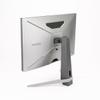
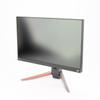
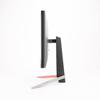
$677.34
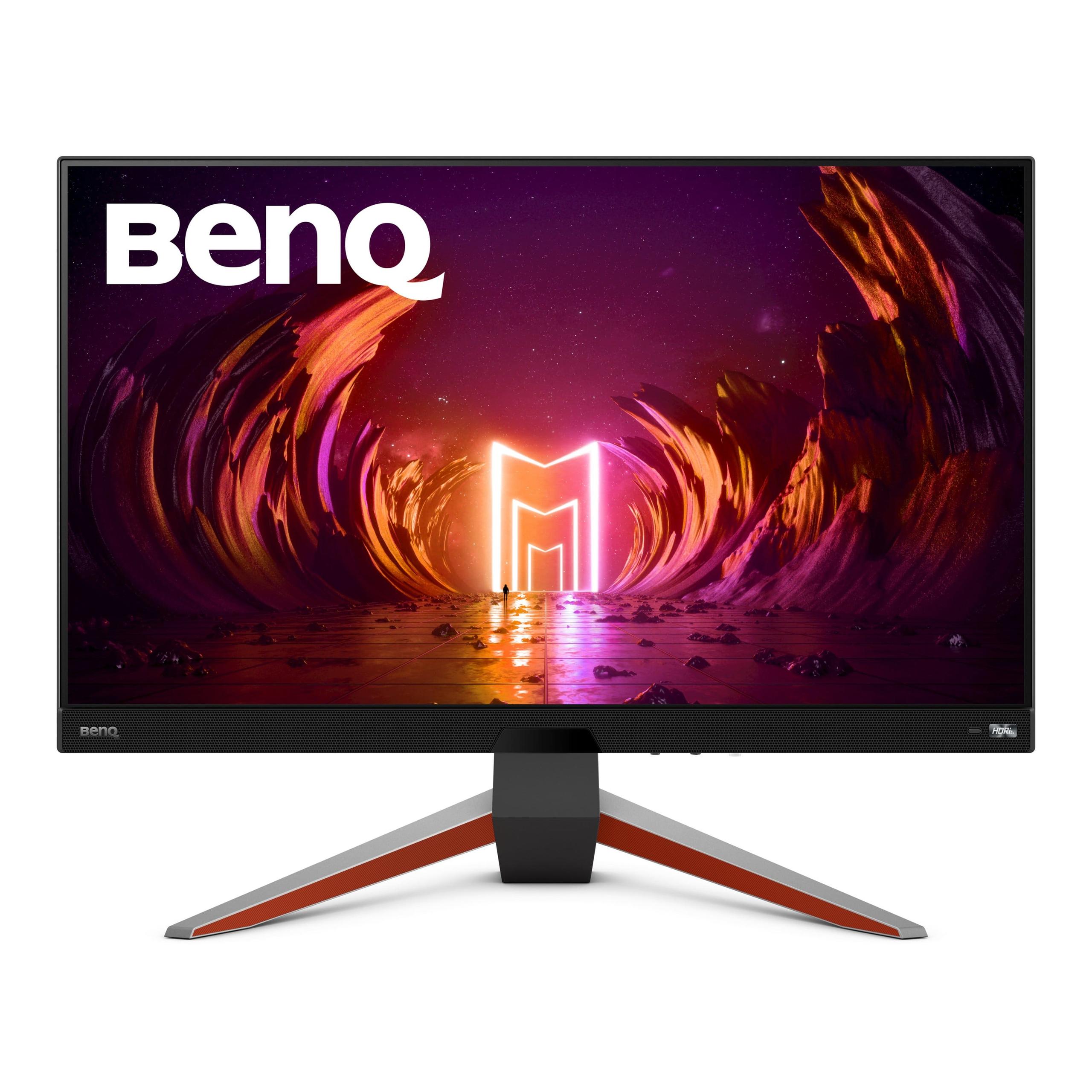
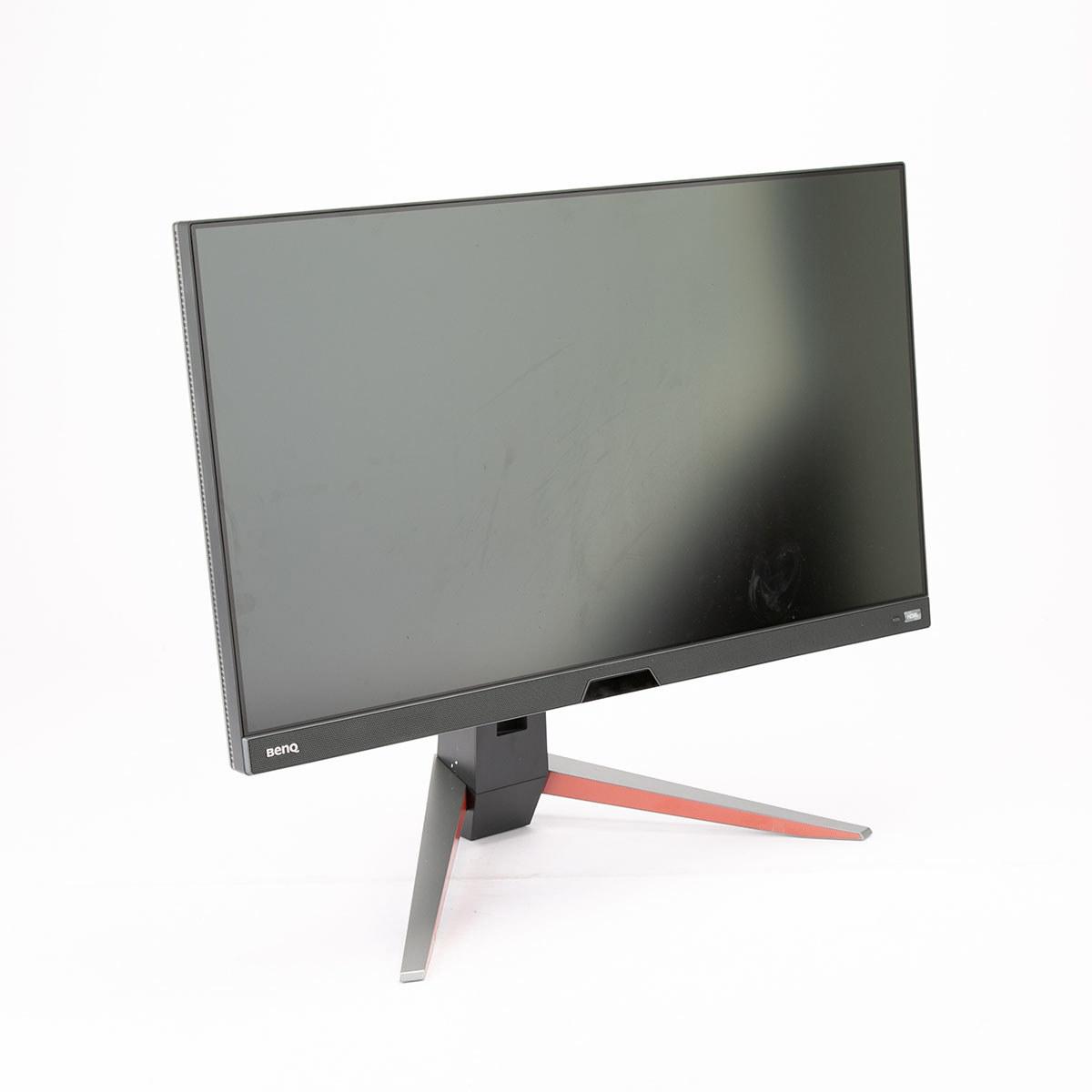
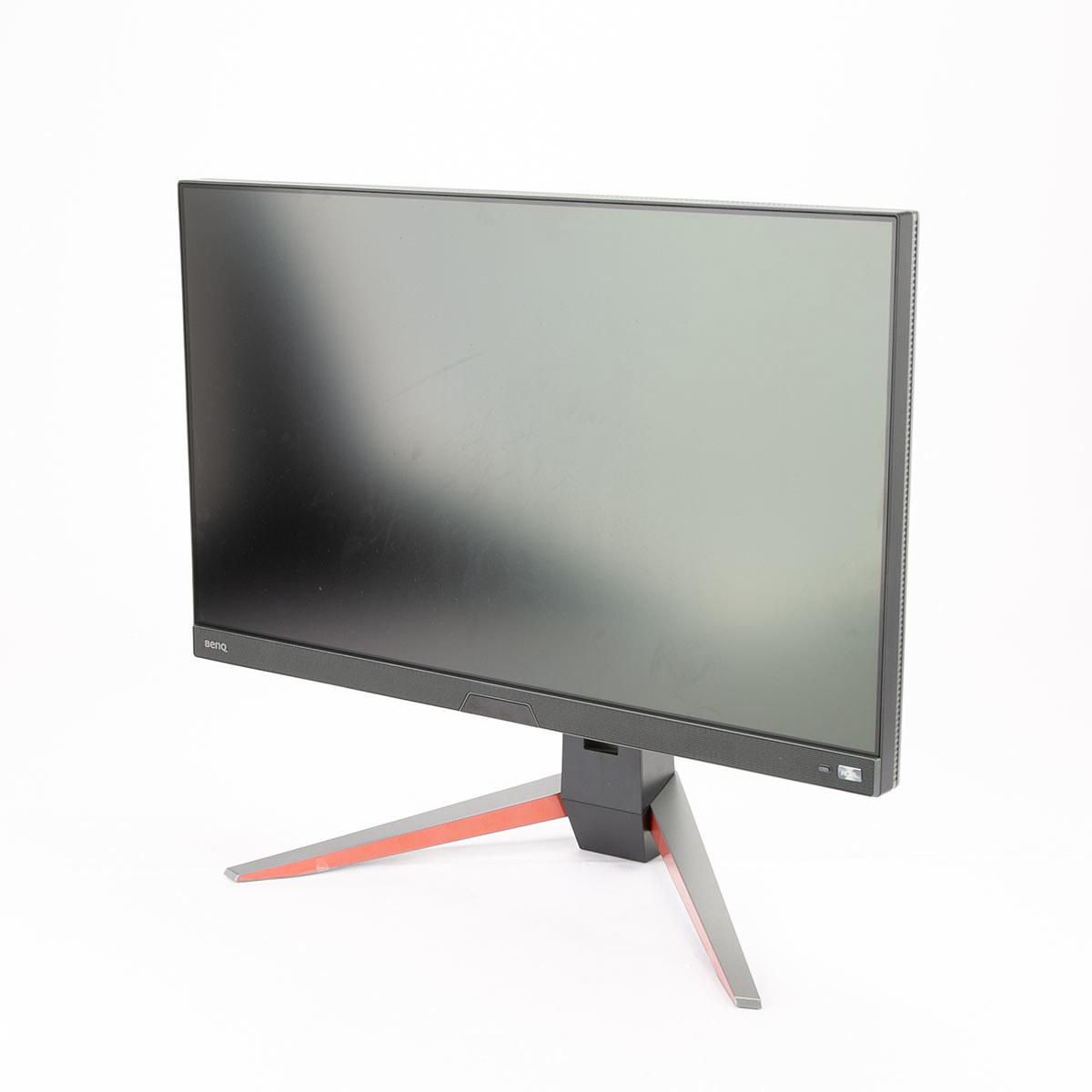
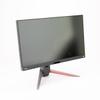
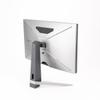
When BenQ launched the MOBIUZ EX270QM in early 2023, it entered a gaming monitor market that was rapidly evolving. Back then, most high-refresh monitors forced you to choose between speed and visual quality—you could have lightning-fast TN panels that looked washed out, or beautiful IPS displays that couldn't keep up with competitive gaming. The EX270QM promised to bridge that gap, and after extensive testing, it's clear this monitor delivers on that ambitious goal.
The heart of this monitor is its 27-inch IPS panel running at 2560x1440 resolution—what we call QHD (Quad High Definition). Think of QHD as the sweet spot between 1080p and 4K. You get 78% more pixels than standard 1080p, making games and text noticeably sharper, but your graphics card doesn't have to work as hard as it would pushing 4K resolution.
What sets the EX270QM apart is its 240Hz refresh rate. Refresh rate is how many times per second your monitor updates the image—240Hz means it refreshes 240 times every second. For context, most TVs run at 60Hz, and many budget gaming monitors top out at 144Hz. Our testers found that the jump from 144Hz to 240Hz isn't as dramatic as going from 60Hz to 144Hz, but in fast-paced competitive games like Counter-Strike or Valorant, that extra smoothness can make the difference between landing a shot and missing it.
The monitor achieves a 1ms response time through both GTG (Gray-to-Gray) and MPRT (Motion Picture Response Time) measurements. GTG measures how quickly individual pixels change colors, while MPRT measures how long a pixel stays lit. Having both at 1ms means you won't see ghosting—those annoying trails that follow moving objects on slower displays.
Here's where BenQ really innovated. Most gaming monitors with HDR (High Dynamic Range—which makes bright things brighter and dark things darker for more realistic images) use basic, static settings. The EX270QM features BenQ's HDRi technology, which includes a light sensor that automatically adjusts the HDR effect based on your room's lighting and what's happening on screen.
Our testers were initially skeptical—automatic adjustments often feel gimmicky. But HDRi proved genuinely useful. During daytime gaming sessions in bright rooms, it would boost highlights and adjust contrast to maintain visibility. At night, it would dial things back to prevent eye strain. The DisplayHDR 600 certification means this monitor can hit 600 nits of peak brightness—about six times brighter than standard monitors—creating those punchy highlights that make HDR content pop.
One tester mentioned that switching between HDR games and regular desktop work became seamless because the monitor adapted automatically, eliminating the need to manually fiddle with settings multiple times per day.
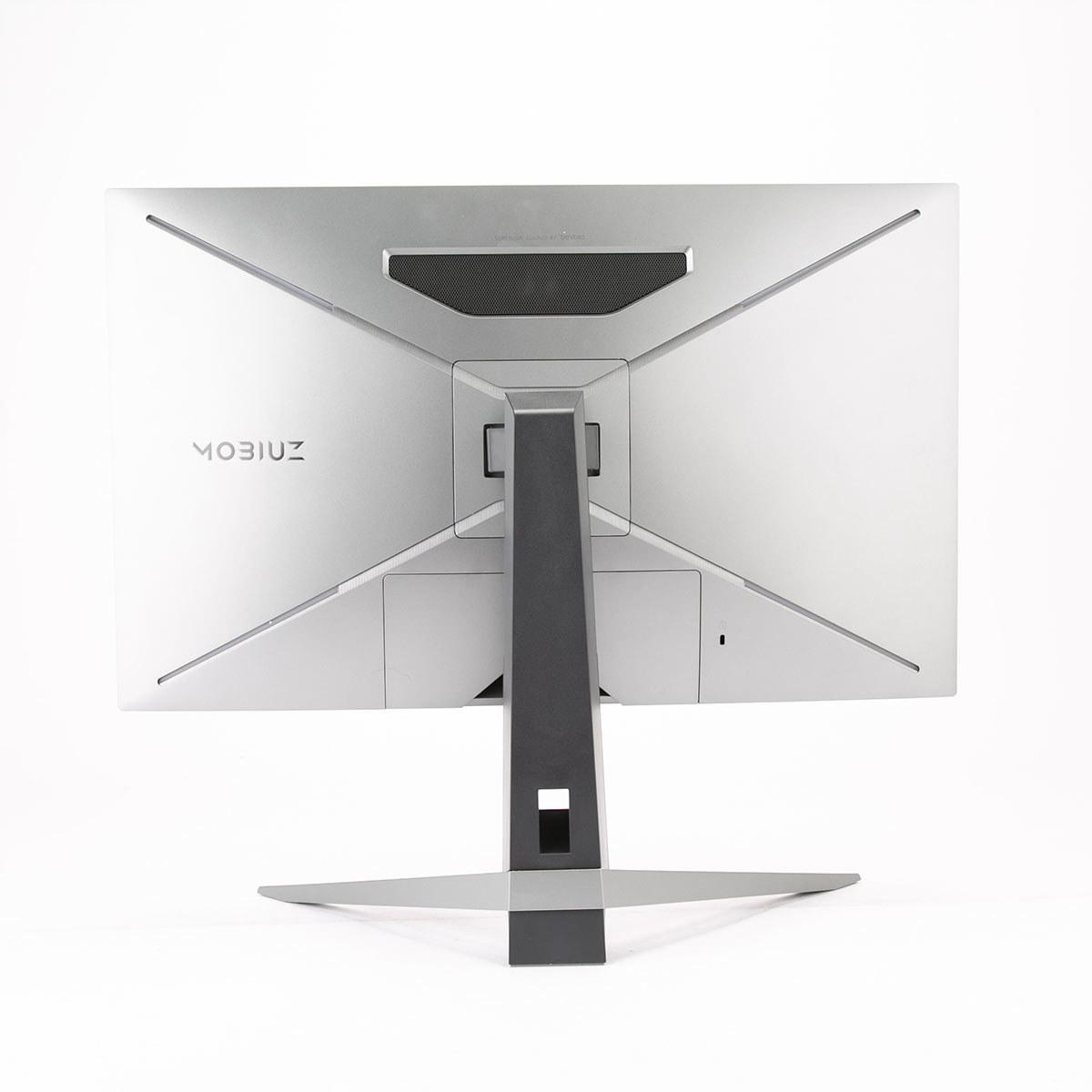
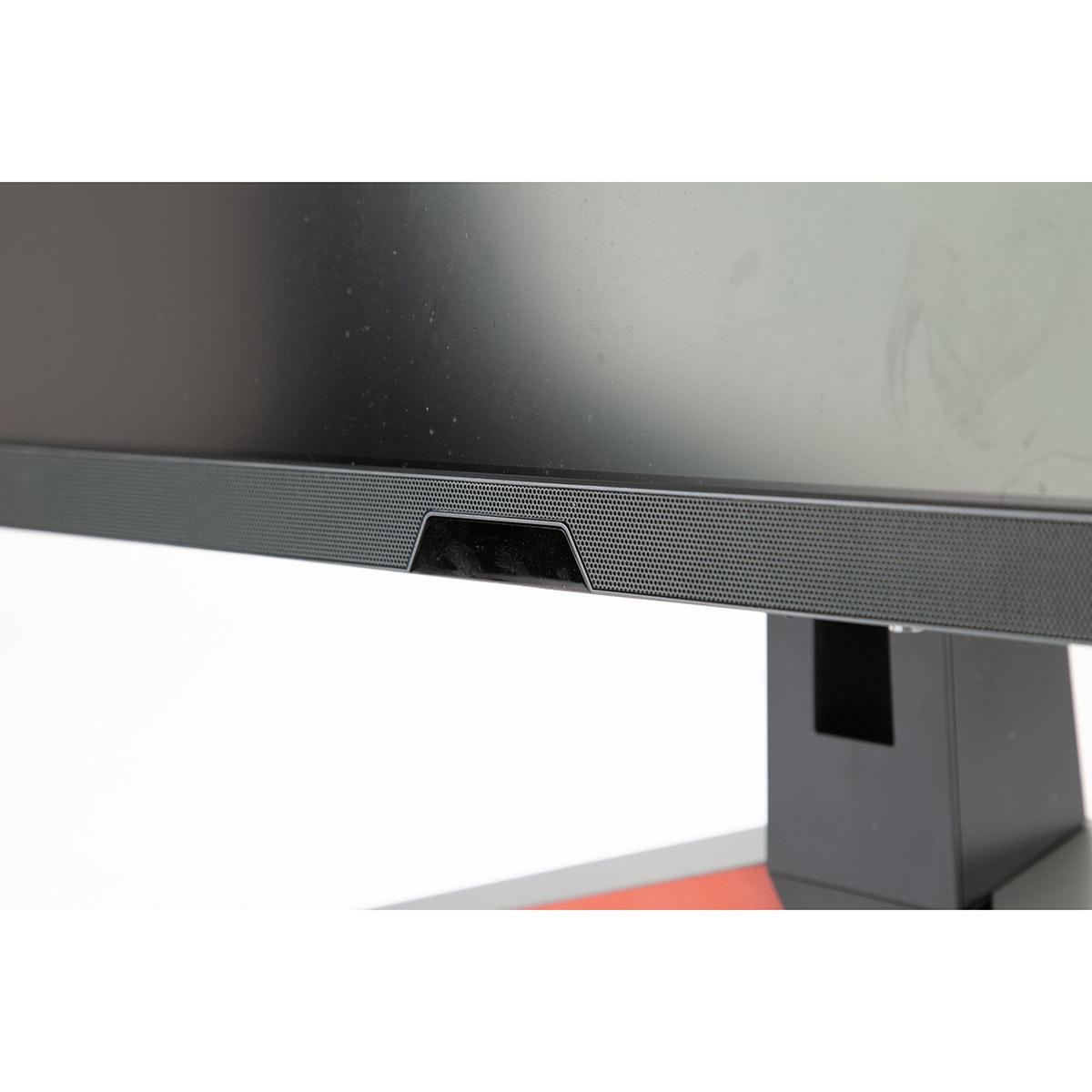
Most gaming monitors include speakers as an afterthought—tiny, tinny things that make you immediately reach for headphones. BenQ took a different approach with their treVolo audio system. The EX270QM includes two 2W speakers plus a dedicated 5W subwoofer, creating a 2.1 channel setup that actually produces decent sound.
During testing, reviewers noted that while these speakers won't replace a good gaming headset or dedicated speakers, they're surprisingly capable for casual gaming, streaming videos, or late-night sessions when you can't use headphones. The subwoofer adds genuine bass presence—something almost unheard of in monitor audio. One tester described it as "finally, monitor speakers that don't make me immediately mute them."
This becomes particularly valuable for single-player games where you want ambient room sound rather than the isolation of headphones. Games like Red Dead Redemption 2 or Cyberpunk 2077 benefit from having environmental audio fill the room while maintaining clear dialogue and effects.
When the EX270QM launched, HDMI 2.1 support was still relatively new, but it's proven essential for modern console gaming. Both HDMI 2.1 ports can handle the full bandwidth needed for PlayStation 5 and Xbox Series X gaming at 1440p resolution and 120Hz refresh rate—a significant upgrade over standard 60Hz console gaming.
Our console testers found that games like Call of Duty and Fortnite felt dramatically more responsive at 120Hz compared to 60Hz. The reduced input lag—measured at just 0.7ms—means your controller inputs appear on screen almost instantaneously. For competitive console players, this monitor essentially brings PC-level responsiveness to console gaming.
The dual HDMI 2.1 ports also mean you can connect both a PlayStation 5 and Xbox Series X simultaneously, switching between them without cable swapping—something home theater enthusiasts particularly appreciate.
Extended gaming sessions can strain your eyes, and BenQ addressed this with several technologies that go beyond marketing buzzwords. Brightness Intelligence Plus (B.I.+) uses the same sensor as HDRi to automatically adjust screen brightness and color temperature based on ambient light. This prevents the common problem of having your monitor too bright in dark rooms or too dim in bright spaces.
The Flicker-Free technology eliminates the subtle screen flickering that can cause headaches during long sessions. Most people don't consciously notice this flickering, but your eyes do, leading to fatigue. Low Blue Light modes reduce the blue wavelengths that can interfere with sleep patterns—particularly useful for late-night gaming.
One feature that surprised testers was ePaper mode, which dramatically reduces blue light and adjusts contrast for comfortable text reading. Several reviewers mentioned using it for work documents and web browsing, making the EX270QM genuinely useful beyond gaming.
The monitor's gaming credentials shine in competitive scenarios. The combination of 240Hz refresh rate, 1ms response time, and minimal input lag creates what testers described as an almost telepathic connection between your movements and the screen. In fast-paced games like Apex Legends or Rocket League, you can track enemies and projectiles with unprecedented clarity.
AMD FreeSync Premium Pro support eliminates screen tearing (when the image appears to split horizontally) by synchronizing the monitor's refresh rate with your graphics card's frame output. This works with both AMD and NVIDIA graphics cards, ensuring smooth gameplay even when frame rates fluctuate.
The Light Tuner feature provides 20 different visual presets optimized for various game types. Rather than generic "FPS" or "RTS" modes, these presets fine-tune gamma, contrast, and color saturation for specific scenarios. The "Dark Room" preset, for example, brightens shadows in tactical shooters without washing out the entire image—giving you a competitive advantage in games like Rainbow Six Siege.
Since the EX270QM's 2022 launch, BenQ has released several firmware updates that improved HDRi responsiveness and added new Light Tuner presets. The monitor supports firmware updates via Display QuicKit technology, allowing users to download improvements directly through their PC.
The gaming monitor market has continued evolving, with OLED panels now offering even faster response times and Mini-LED providing better HDR performance. However, these newer technologies come with trade-offs—OLED panels suffer from burn-in concerns and higher costs, while Mini-LED monitors often struggle with blooming (halos around bright objects on dark backgrounds). The EX270QM's IPS panel avoids these issues while delivering consistently excellent performance.
While primarily designed for desktop gaming, the EX270QM works surprisingly well in living room setups. The robust stand adjusts for comfortable couch viewing, and the remote control allows convenient settings changes from across the room. Several testers used it as a bedroom gaming display, appreciating the quality audio system for late-night console sessions without disturbing others.
The monitor's color accuracy—measured at levels comparable to professional displays—makes it excellent for streaming movies and TV shows. HDRi automatically optimizes content, while the wide color gamut ensures Netflix and Disney+ HDR content looks spectacular.
After extensive testing across multiple scenarios, the BenQ MOBIUZ EX270QM stands out as a monitor that successfully eliminates traditional compromises. It delivers competitive gaming performance while maintaining the visual quality needed for content creation and media consumption. The HDRi technology, quality audio system, and comprehensive eye-care features create a complete package that works for extended daily use, not just gaming sessions.
For anyone seeking a premium gaming monitor that excels across multiple use cases, the EX270QM represents current technology at its most refined—fast enough for esports, beautiful enough for single-player adventures, and smart enough to adapt to however you use it.
Yes, the BenQ MOBIUZ EX270QM is excellent for gaming with its 240Hz refresh rate, 1ms response time, and 0.7ms input lag. It supports AMD FreeSync Premium Pro for smooth, tear-free gameplay and includes gaming-specific features like Light Tuner with 20 presets for different game genres.
Absolutely. The EX270QM features dual HDMI 2.1 ports that support full 1440p gaming at 120Hz on both PlayStation 5 and Xbox Series X/S. This provides a significant upgrade over standard 60Hz console gaming with much more responsive gameplay.
HDRi is BenQ's intelligent HDR system that uses a built-in light sensor to automatically adjust brightness, contrast, and color settings based on your room's ambient lighting and on-screen content. This provides optimized HDR performance without manual adjustments, making it ideal for varying lighting conditions in home theaters.
Yes, the BenQ MOBIUZ EX270QM works well in home theater environments. It includes a remote control for convenient adjustments from your couch, quality 2.1 channel audio with a subwoofer, and HDRi technology that automatically optimizes picture quality for movie watching in different lighting conditions.
The speakers are surprisingly good for a gaming monitor. The EX270QM features a 2.1 channel system with two 2W speakers and a 5W subwoofer, tuned by BenQ's treVolo audio brand. While not replacing dedicated speakers, they provide clear dialogue and actual bass for casual viewing and gaming.
The monitor displays at 2560x1440 (QHD) resolution, which offers 78% more pixels than 1080p for sharper images while being less demanding on your graphics card than 4K. This makes it an ideal balance for both gaming performance and visual clarity.
No, the BenQ MOBIUZ EX270QM is a QHD (1440p) monitor, not 4K. However, QHD provides an excellent balance between image sharpness and gaming performance, allowing higher refresh rates that wouldn't be possible with 4K at this performance level.
Yes, it's excellent for movies thanks to its IPS panel with 98% DCI-P3 color coverage, DisplayHDR 600 certification, and intelligent HDRi technology. The wide viewing angles and accurate colors make it great for both solo viewing and small group watching in home theater setups.
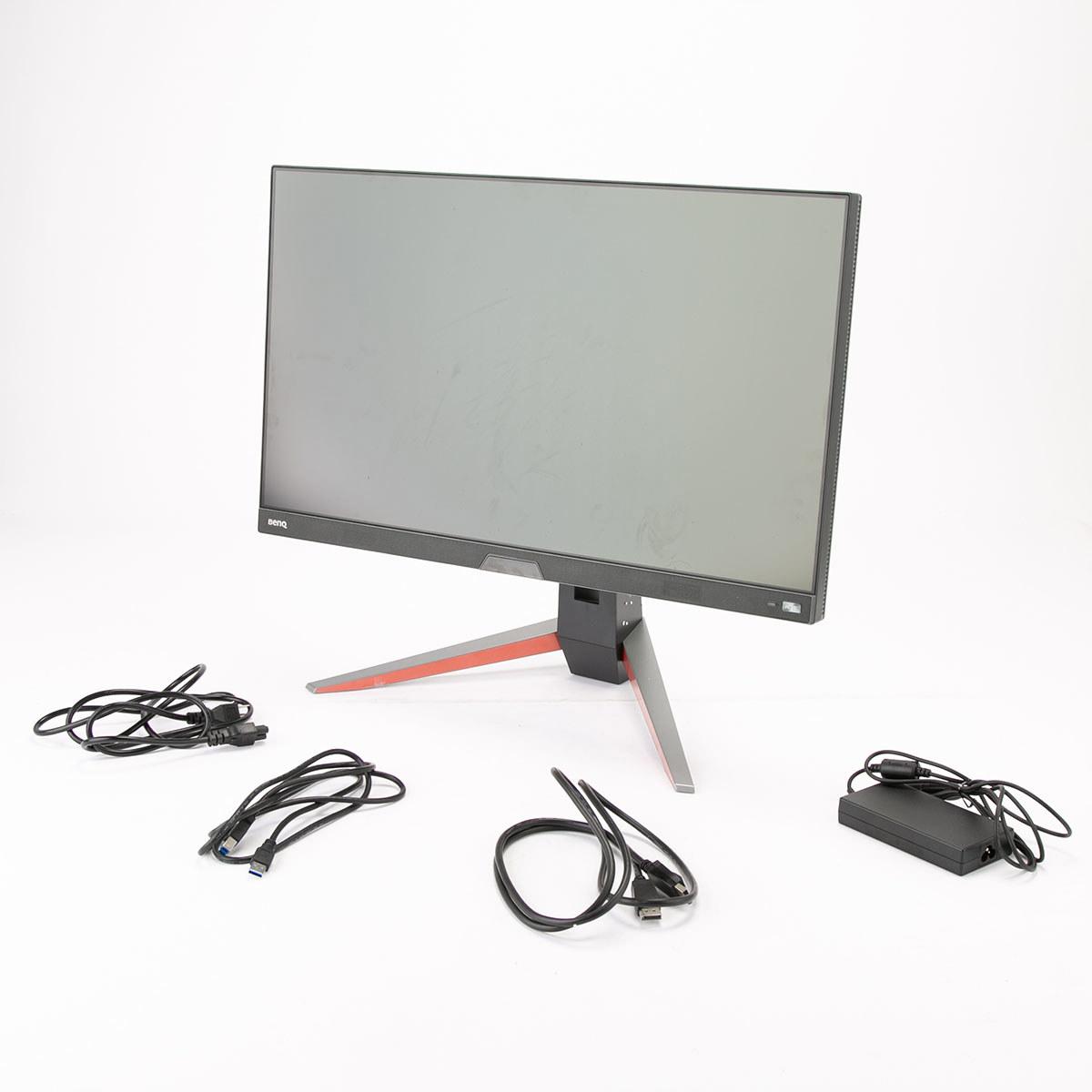
The EX270QM includes 2x HDMI 2.1 ports, 1x DisplayPort 1.4, USB 3.0 hub with upstream and downstream ports, and a 3.5mm headphone jack. This provides excellent connectivity for multiple gaming consoles, PCs, and peripherals simultaneously.
Yes, the BenQ MOBIUZ EX270QM offers excellent value for users wanting a premium gaming monitor that also excels at media consumption. Its combination of 240Hz performance, intelligent HDR, quality audio system, and console compatibility makes it worth the investment for serious gamers and home theater enthusiasts who want a single, versatile display solution.

We've done our best to create useful and informative comparisons to help you decide what product to buy. Our research has used advanced automated methods to create this comparison and perfection is not possible - please contact us for corrections or questions. These are the sites we've researched in the creation of this article: bgeek.eu - youtube.com - tomshardware.com - youtube.com - t3.com - versus.com - pcgamer.com - versus.com - gamesradar.com - pangoly.com - benq.eu - techaeris.com - shi.com - benq.com - bestbuy.com - benq.com - displayspecifications.com - benq.com - benq.eu - bhphotovideo.com - benq.com
| BenQ MOBIUZ EX270QM |
|---|
| Refresh Rate - Critical for competitive gaming smoothness: 240Hz |
| Response Time - Eliminates ghosting and motion blur: 1ms (GTG & MPRT) |
| Resolution - Sharp detail without GPU strain: 2560 x 1440 (QHD) |
| Panel Type - Superior colors and viewing angles: IPS |
| Screen Size: 27 inches |
| HDR Certification - Enhanced contrast and brightness: DisplayHDR 600 |
| Peak Brightness - Vivid HDR highlights: 600 nits |
| Color Gamut - Professional-grade color accuracy: 98% DCI-P3 |
| Adaptive Sync - Eliminates screen tearing: AMD FreeSync Premium Pro |
| Input Lag - Ultra-responsive gaming: 0.7ms |
| HDMI Ports - Full console compatibility: 2x HDMI 2.1 |
| Audio System - Quality built-in sound: 2.1 channel (2x2W + 5W subwoofer) |
| HDRi Technology - Intelligent HDR optimization: Auto-adjusting based on ambient light |
| Eye Care Features - Reduces strain during long sessions: Flicker-Free, Low Blue Light, B.I.+ |
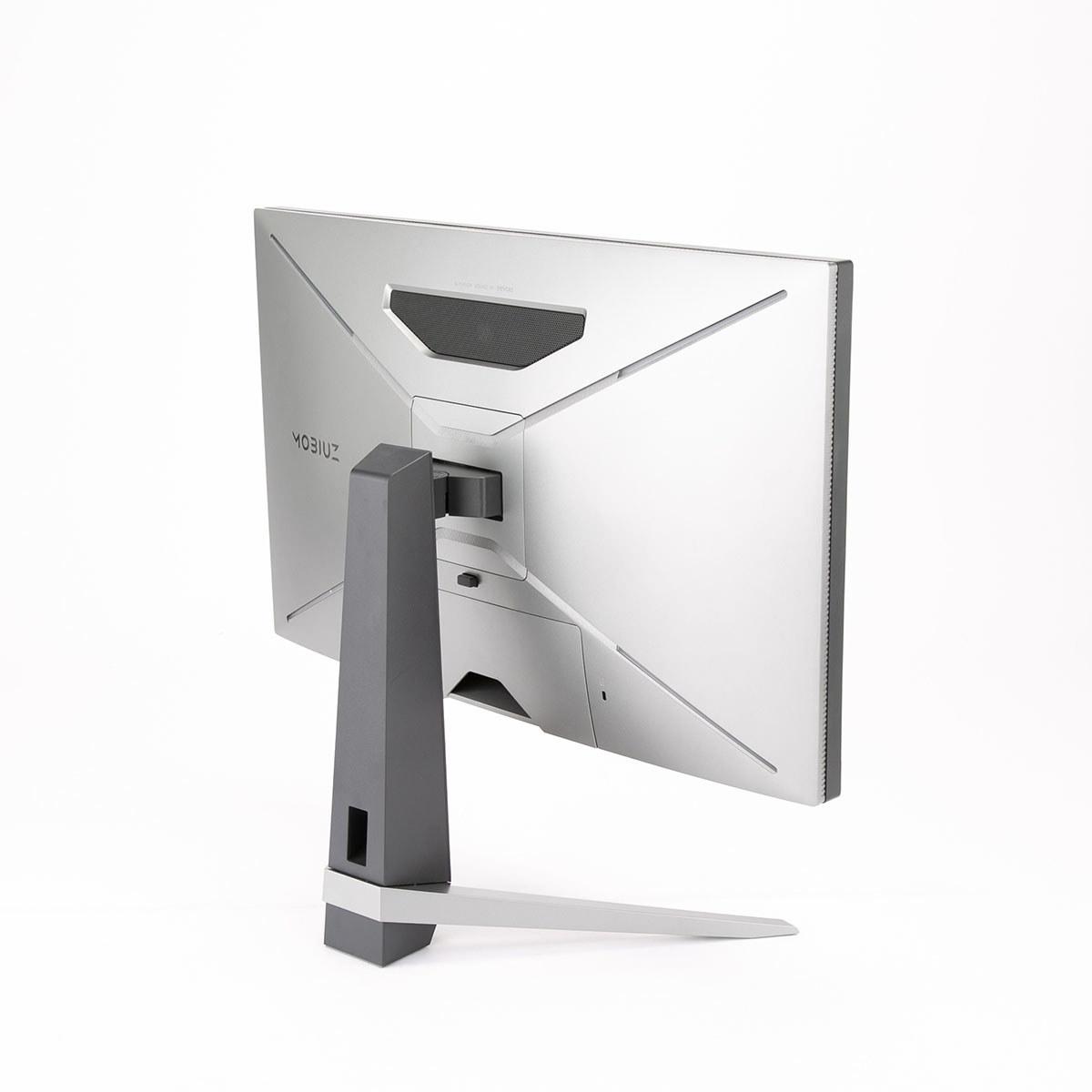
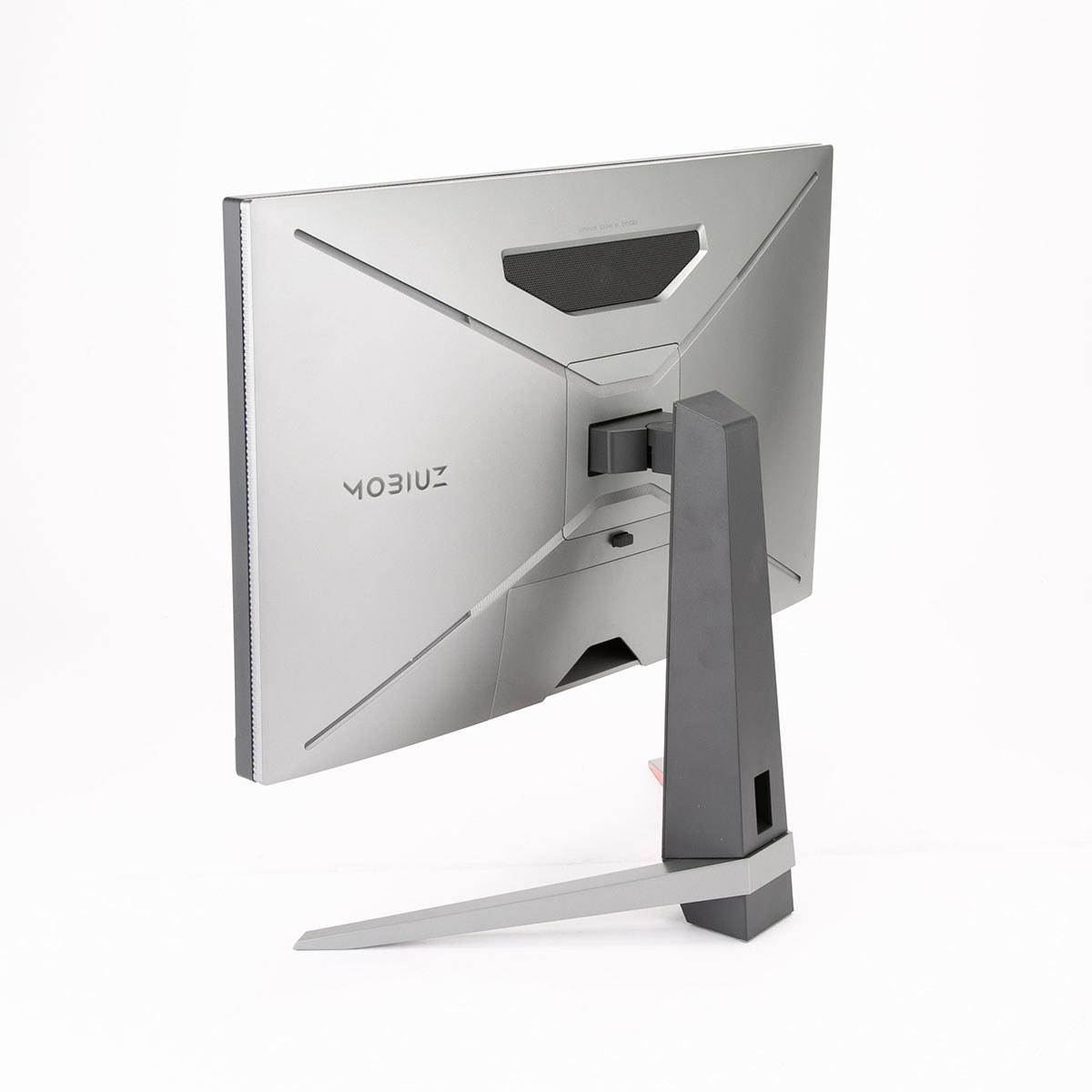
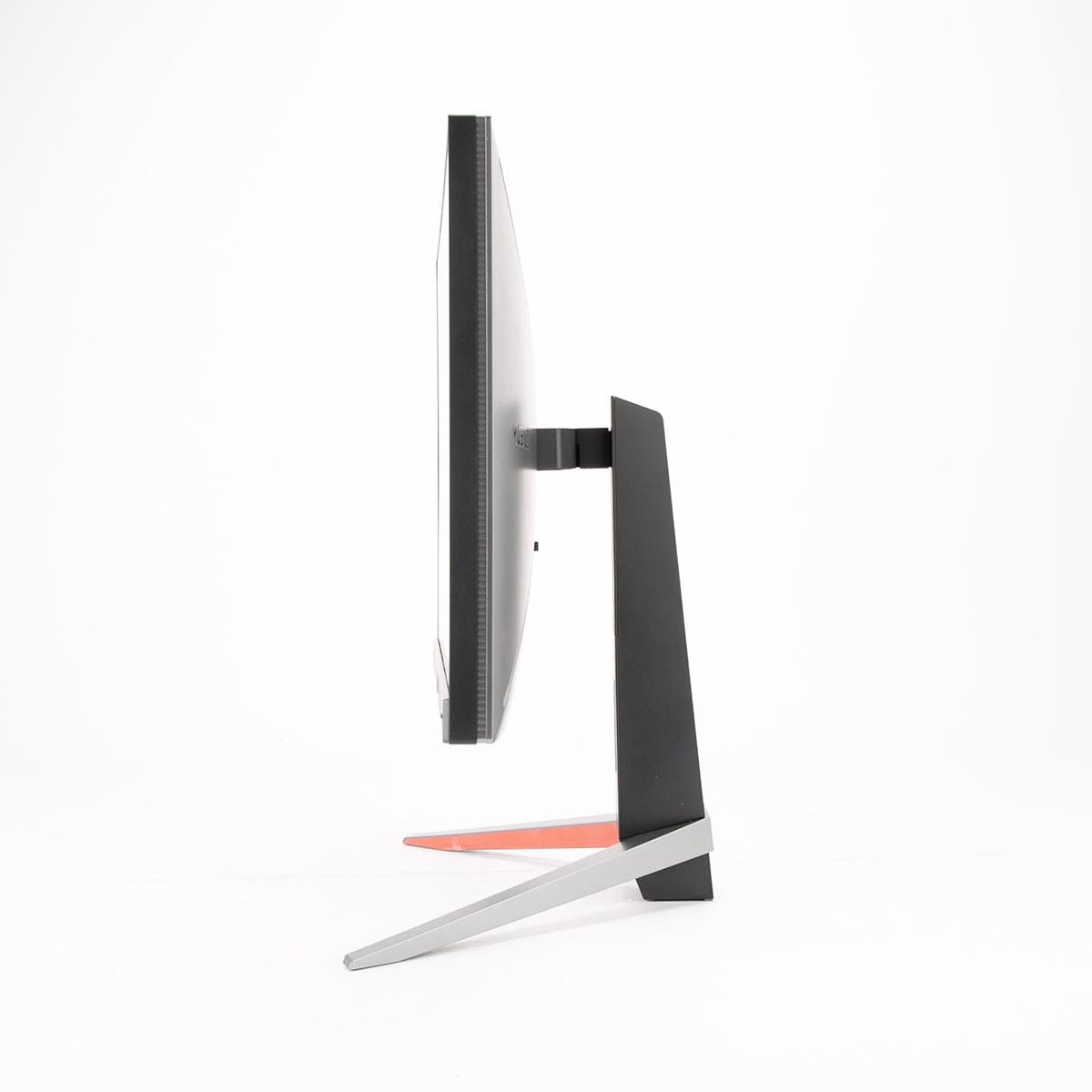
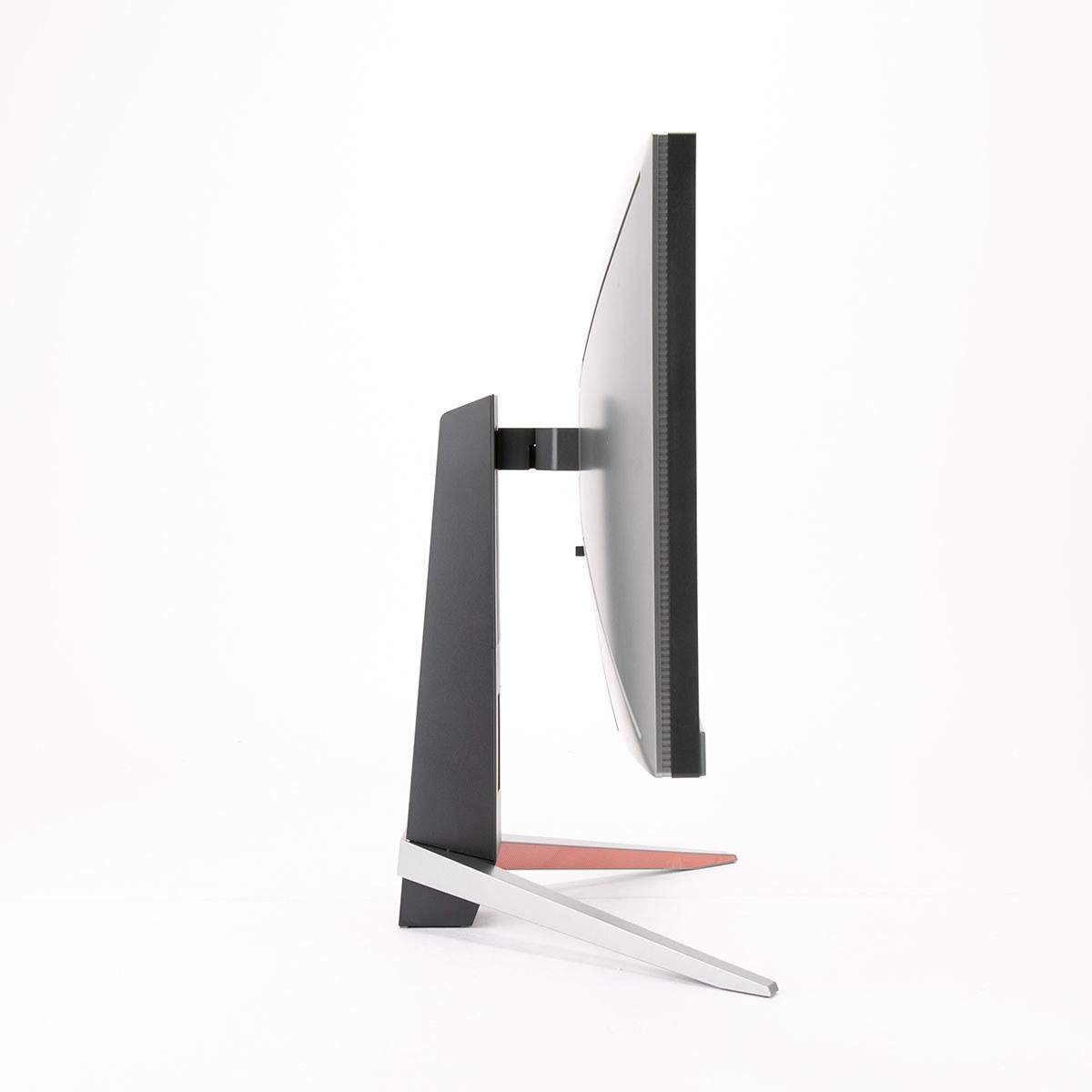
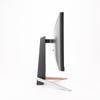
| Ergonomic Adjustments - Comfortable positioning: Height, tilt, swivel |
| DisplayPort: 1x DP 1.4 |
| USB Hub: 1x USB-B upstream, 2x USB-A downstream |
| Dimensions (with stand): 522.1 x 609 x 194 mm |
| Weight: 7.6 kg |
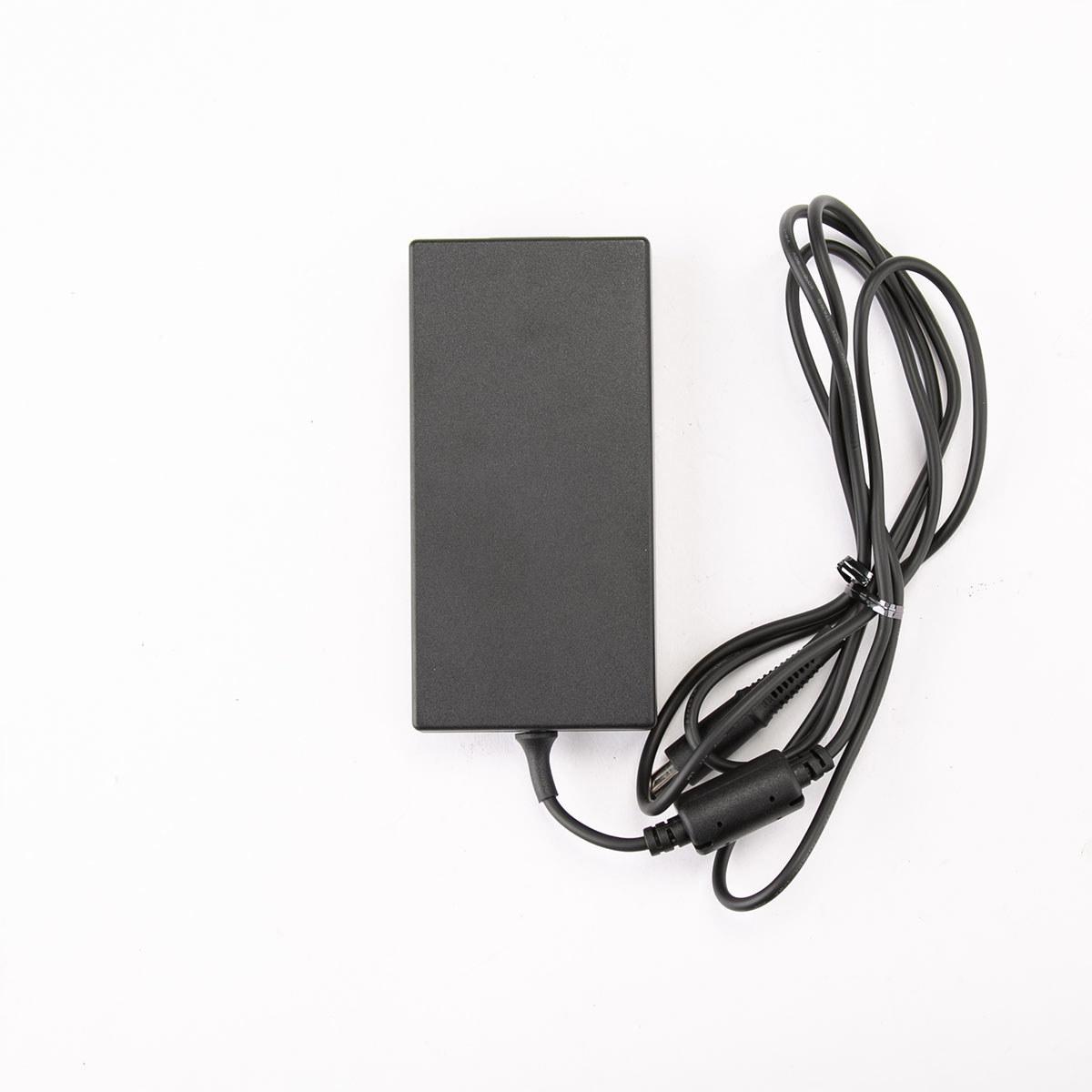
| Power Consumption: 98W |
The Samsung Odyssey G7 G70D takes a fundamentally different approach, prioritizing visual fidelity over maximum refresh rates with its 4K UHD resolution at 144Hz. Where the BenQ excels in competitive gaming scenarios, the Samsung shines in immersive single-player experiences and productivity work. The 4K resolution delivers 163 pixels per inch compared to the BenQ's 109 PPI, making text noticeably sharper and revealing game details that simply aren't visible at QHD resolution. Samsung has also integrated full smart TV functionality directly into the monitor, allowing you to stream Netflix, access cloud gaming services, and use the included remote control even when your gaming PC is powered off. This versatility makes it an excellent choice for users who want a single display to handle gaming, entertainment, and work tasks.
However, the Samsung G70D demands significantly more from your hardware and wallet. At $479.99 compared to the BenQ's $399.99, you're paying a 20% premium upfront, but the real cost difference emerges when considering graphics card requirements. While the BenQ performs excellently with an RTX 4060 Ti, the Samsung needs at least an RTX 4070 for comfortable 4K gaming, representing potentially hundreds of dollars in additional GPU costs. The Samsung also falls short in HDR performance with only DisplayHDR 400 certification and less effective local dimming that can cause distracting blooming effects. For competitive gamers who prioritize response time and smooth motion, the Samsung's 144Hz refresh rate, while excellent, can't match the BenQ's 240Hz advantage in fast-paced esports titles where split-second reactions determine victory.
🤖 Read Detailed Comparison
👌Samsung 27" Odyssey G7 G70D 4K UHD IPS Gaming Monitor Details
💵 See Samsung 27" Odyssey G7 G70D 4K UHD IPS Gaming Monitor Price
The AOC Agon Pro 27" QD-OLED at $484.99 represents a fundamentally different approach to gaming monitor design, trading the BenQ's proven IPS reliability for cutting-edge OLED technology that delivers perfect blacks and infinite contrast ratios. Its 0.03ms response time is technically 33 times faster than the EX270QM's 1ms specification, though in real-world competitive gaming, both monitors feel equally responsive. Where the AOC truly shines is in atmospheric, single-player games where its superior contrast creates a more immersive visual experience – dark cave scenes appear genuinely black rather than the grayish tones you'd see on even premium IPS panels. The QD-OLED panel also produces more vibrant, saturated colors in SDR content, making games pop with visual richness that the BenQ simply cannot match.
However, this premium visual experience comes with notable trade-offs that make the AOC Agon Pro less versatile than the EX270QM. Console gamers will find the AOC disappointing due to significantly higher input lag at 60Hz and 120Hz refresh rates, while the BenQ maintains consistent low latency across all refresh rates. The AOC also requires more careful usage patterns to prevent OLED burn-in from static elements like game UIs or desktop icons, making it less suitable for mixed gaming and productivity use. While the 21% price premium ($85 more) buys you genuinely superior image quality in dark rooms, the BenQ offers better all-around value with its excellent HDR performance, built-in 2.1 audio system, superior console compatibility, and worry-free operation that makes it the more practical choice for most gamers.
🤖 Read Detailed Comparison
👌AOC Agon Pro 27" QD-OLED 240Hz Gaming Monitor Details
💵 See AOC Agon Pro 27" QD-OLED 240Hz Gaming Monitor Price
The HP Omen 27k takes a fundamentally different approach with its 4K UHD resolution delivering 163 pixels per inch compared to the BenQ's 109 PPI, resulting in noticeably sharper text and finer detail in games like Cyberpunk 2077 or Microsoft Flight Simulator. At $509.99, the HP commands a $110 premium but justifies this with superior connectivity including a built-in KVM switch that lets you control multiple devices with one keyboard and mouse – perfect for users juggling a gaming PC and PlayStation 5. The USB-C connectivity with DisplayPort Alt Mode also makes it more versatile for laptop users who want a single-cable connection for both work and gaming sessions. However, the trade-offs are significant: the 144Hz refresh rate, while smooth, can't match the BenQ's ultra-fluid 240Hz motion, and the DisplayHDR 400 certification provides less dramatic contrast and brightness than the BenQ's HDR600 implementation.
From a performance perspective, the HP Omen 27k demands substantially more graphics processing power, requiring at least an RTX 4070 Ti to maintain high frame rates in demanding 4K games, while the BenQ achieves its 240Hz potential with more affordable RTX 4060 Ti hardware. This creates a real-world scenario where the HP's superior resolution often goes underutilized due to GPU limitations, whereas the BenQ's QHD resolution allows most gamers to actually experience its full 240Hz capability. For competitive gamers who prioritize responsiveness over pixel density, the BenQ's combination of lower input lag, faster refresh rate, and more accessible hardware requirements delivers better practical performance per dollar, though the HP wins decisively for users who value visual fidelity in single-player games or need the productivity benefits of 4K resolution.
🤖 Read Detailed Comparison
👌HP Omen 27k 4K UHD 144Hz Gaming Monitor Details
💵 See HP Omen 27k 4K UHD 144Hz Gaming Monitor Price
The ASUS ROG Strix OLED XG27UCDMG ($979.99) represents a significant step up in display technology, featuring a 4K QD-OLED panel that delivers 2.25x higher resolution and instantaneous 0.03ms response times. The OLED technology provides perfect blacks and infinite contrast ratio, creating dramatically more immersive gaming experiences in dark scenes—something the EX270QM's IPS panel simply cannot match. With 99% DCI-P3 color coverage and 1000 nits peak HDR brightness, the ASUS monitor also excels for content creation and professional work beyond gaming. The 4K resolution delivers razor-sharp text and game details that make the jump immediately apparent, while advanced features like USB-C with 90W power delivery, built-in KVM switching, and OLED Care Pro technology showcase premium engineering throughout.
However, this technological superiority comes with significant trade-offs that favor the EX270QM for many users. The ASUS XG27UCDMG costs $580 more and demands high-end GPUs like the RTX 4080 or RTX 4090 to fully utilize its 4K resolution, making the total system investment substantially higher. While OLED eliminates ghosting entirely, the EX270QM's 1ms response time and 0.7ms input lag provide excellent motion clarity that satisfies all but the most demanding competitive gamers. The BenQ also includes features the ASUS lacks entirely—most notably the treVolo 2.1 audio system and remote control convenience. For users with mid-range GPUs or those prioritizing value, the EX270QM delivers 95% of the gaming performance at 40% of the cost, making it the more practical choice despite the ASUS monitor's technical advantages.
🤖 Read Detailed Comparison
👌ASUS ROG Strix OLED XG27UCDMG 27" 4K 240Hz Gaming Monitor Details
💵 See ASUS ROG Strix OLED XG27UCDMG 27" 4K 240Hz Gaming Monitor Price
The Dough Spectrum One takes a fundamentally different approach, prioritizing 4K visual fidelity over ultra-high refresh rates. Its standout feature is the edge-to-edge Corning Gorilla Glass construction, which not only provides exceptional scratch resistance but creates a perceived contrast enhancement that makes colors appear more vibrant and blacks deeper than traditional monitor panels. The 4K resolution delivers 163 pixels per inch compared to the EX270QM's 109 PPI, resulting in dramatically sharper text and game details that are immediately noticeable in modern AAA titles. Each Spectrum One is factory calibrated to Delta E ≤ 0.6, achieving professional-grade color accuracy that makes it suitable for creative work alongside gaming – something the BenQ can't match without extensive manual calibration.
In real-world performance, the Dough Spectrum One's 144Hz refresh rate still provides excellent gaming smoothness while allowing your GPU to focus on rendering those 4K pixels effectively. The monitor's USB-C connectivity with 100W power delivery transforms it into a proper docking station for laptop users, enabling single-cable setups that the BenQ can't replicate. At its current ~$600 pricing (down from $799), the Spectrum One offers exceptional value for users who prioritize image quality and versatility, though you'll need a more powerful graphics card (RTX 4070 or better) to fully utilize the 4K resolution. While it lacks the EX270QM's integrated speakers and comes without a stand, the premium materials and superior visual clarity make it the better choice for single-player gaming, mixed productivity work, and users who want a display that doubles as a professional monitor.
🤖 Read Detailed Comparison
👌Dough Spectrum One 27-Inch 4K 144Hz Gaming Monitor Gorilla Glass Details
💵 See Dough Spectrum One 27-Inch 4K 144Hz Gaming Monitor Gorilla Glass Price
The Samsung Odyssey 3D G90XF ($1,799.99) takes an entirely different approach to gaming excellence, prioritizing cutting-edge innovation over raw speed. Its standout feature is genuine glasses-free 3D gaming that uses eye-tracking cameras and AI conversion to transform both native 3D titles and standard games into immersive three-dimensional experiences. The 4K resolution delivers significantly sharper imagery at 163 pixels per inch compared to the BenQ's 109 PPI, making every texture and detail crisp and clear. However, this premium technology comes with serious hardware demands – you'll need an RTX 4080 or better to truly capitalize on 4K gaming, especially when the 3D mode effectively doubles the rendering workload.
From a value perspective, the Samsung G90XF asks for a substantial $1,400 premium over the BenQ, positioning it firmly in enthusiast territory. While the 3D effect is genuinely impressive and unlike anything available elsewhere, the limited library of native 3D games and requirement for high-end hardware make it a niche choice. The 165Hz refresh rate, while smooth, can't match the competitive advantages that 240Hz provides in fast-paced esports titles. For gamers prioritizing proven performance and exceptional value, the BenQ remains the clear winner, but the Samsung offers a glimpse into the future of immersive gaming for those willing to invest in bleeding-edge technology and the premium hardware needed to support it.
🤖 Read Detailed Comparison
👌Samsung 27" Odyssey 3D G90XF 4K 165Hz Gaming Monitor Details
💵 See Samsung 27" Odyssey 3D G90XF 4K 165Hz Gaming Monitor Price
The LG UltraGear 27" OLED represents the cutting edge of gaming display technology, offering several compelling advantages over the BenQ's IPS implementation. Most notably, its OLED panel delivers a lightning-fast 0.03ms response time—30 times faster than the BenQ's already excellent 1ms performance—virtually eliminating motion blur and ghosting during fast-paced gaming. The infinite contrast ratio creates perfect blacks that make dark scenes in games like Cyberpunk 2077 or horror titles dramatically more immersive, with shadow details that simply disappear into gray on LCD panels. Color accuracy is slightly superior at 98.5% DCI-P3 coverage, and the broader adaptive sync support works seamlessly with both AMD and NVIDIA graphics cards, giving users more flexibility in GPU choices.
However, these premium features come with significant trade-offs that make the BenQ's value proposition compelling. The LG OLED's $200-400 higher price point delivers incremental gaming improvements that most players won't notice outside of competitive esports scenarios, while sacrificing practical benefits like the BenQ's superior 600-nit brightness for daytime use, built-in 2.1 audio system, and worry-free operation without burn-in concerns. The OLED's 400-nit limitation makes it poorly suited for bright rooms or mixed productivity use, essentially requiring a dedicated dark gaming environment to showcase its advantages. For users seeking the absolute pinnacle of gaming performance and willing to pay premium prices for perfect blacks and ultimate response times, the OLED justifies its cost, but the BenQ delivers 90% of the gaming experience at 60% of the price while offering superior versatility for everyday computing tasks.
🤖 Read Detailed Comparison
👌LG UltraGear 27" OLED QHD 240Hz Gaming Monitor Details
💵 See LG UltraGear 27" OLED QHD 240Hz Gaming Monitor Price
The LG UltraGear 27" OLED QHD 480Hz Gaming Monitor represents the cutting edge of gaming display technology, offering twice the refresh rate at 480Hz with an incredibly fast 0.03ms response time that makes the BenQ's already excellent 1ms performance seem sluggish by comparison. The OLED panel technology delivers perfect blacks and a 1,500,000:1 contrast ratio that transforms dark scenes in games like horror titles or atmospheric RPGs into truly immersive experiences that the BenQ's IPS panel simply cannot match. With DisplayPort 2.1 connectivity and peak brightness reaching 1,300 nits through LG's MLA+ technology, this monitor is built for the most demanding gaming setups and future graphics cards that haven't even been released yet.
However, the LG UltraGear OLED comes with significant trade-offs that make the BenQ more practical for most gamers. At $999.99, it costs 2.5 times more than the BenQ while requiring a top-tier gaming PC with RTX 4090-class performance to actually utilize that 480Hz refresh rate—most systems will cap out around 200-300fps at 1440p in demanding games. The lack of built-in speakers means additional audio investment, the 2-year OLED warranty is shorter than BenQ's 3-year coverage, and there's always the lingering concern about OLED burn-in with static gaming elements like HUDs or menus. While the LG delivers undeniably superior visual quality and maximum performance, the BenQ strikes a much better balance between performance, features, and value for the vast majority of gaming setups.
🤖 Read Detailed Comparison
👌LG UltraGear 27" OLED QHD 480Hz Gaming Monitor Details
💵 See LG UltraGear 27" OLED QHD 480Hz Gaming Monitor Price
The BenQ Zowie XL2746K represents the pinnacle of esports-focused monitor design, built specifically for competitive gaming performance above all else. Its standout feature is the combination of a fast TN panel with DyAc+ technology, delivering motion clarity that surpasses what IPS panels can achieve. This specialized backlight strobing system makes fast-moving targets appear significantly sharper and clearer, providing a tangible competitive advantage in games like CS:GO, Valorant, and Apex Legends where tracking enemies during rapid movements is crucial. The monitor also includes tournament-grade features like the S Switch wireless controller for quick profile changes, Black eQualizer for enhanced dark scene visibility, and XL Setting to Share for easy configuration management. Professional esports players consistently choose Zowie monitors for their reliability and consistent performance under competitive conditions.
While the XL2746K operates at 1080p resolution compared to the EX270QM's 1440p, this actually benefits competitive players in several ways. The lower resolution reduces GPU load, enabling higher frame rates and more consistent performance in demanding esports titles. Many professional players also prefer 1080p on 27-inch displays because it makes UI elements and enemy players appear larger and easier to spot quickly. However, this specialization comes with trade-offs – the Zowie XL2746K sacrifices visual quality, color accuracy, and versatility to achieve its motion clarity advantages. It's essentially a specialized tool that excels in its specific domain but lacks the broader appeal and future-proofing of higher-resolution IPS alternatives. For dedicated competitive players where motion clarity can mean the difference between winning and losing, these compromises are worthwhile, but casual gamers will find the XL2746K limiting for non-competitive gaming and general computer use.
🤖 Read Detailed Comparison
👌BenQ Zowie XL2746K 27" 240Hz Esports Gaming Monitor Details
💵 See BenQ Zowie XL2746K 27" 240Hz Esports Gaming Monitor Price
The MSI MAG 271QP QD-OLED X24 represents a significant leap in display technology with its cutting-edge QD-OLED panel that delivers visual quality that's immediately apparent in real-world use. Its perfect blacks and infinite contrast ratio create a dramatically more immersive gaming experience, particularly in dark scenes where details that would be washed out by LCD backlight bleed become clearly visible. The monitor's extraordinary 0.03ms response time provides virtually instantaneous pixel switching that eliminates even the slightest motion blur, giving competitive gamers every possible advantage. The wider color gamut covering 138% sRGB and 99% DCI-P3 produces more vibrant, lifelike colors that make games and media content appear more realistic and engaging than what's possible with traditional LCD technology.
However, the MSI QD-OLED monitor comes with trade-offs that potential buyers need to consider carefully. The technology commands a premium price that reflects its cutting-edge nature, and OLED panels require more careful usage patterns to prevent burn-in, despite MSI's comprehensive OLED Care 2.0 protection suite and burn-in warranty coverage. The monitor's lower typical brightness of 250 nits means it's best suited for dark or dim gaming environments, where its contrast advantages shine brightest. For users who prioritize absolute visual quality, have controlled lighting setups, and are willing to invest in the latest display technology, the MSI offers a premium experience that showcases the future of gaming monitors, though it requires more consideration regarding long-term care and optimal usage conditions.
🤖 Read Detailed Comparison
👌MSI MAG 271QP QD-OLED X24 27" QHD 240Hz Gaming Monitor Details
💵 See MSI MAG 271QP QD-OLED X24 27" QHD 240Hz Gaming Monitor Price
The Sony INZONE M9 II represents a premium approach to gaming monitors, delivering true 4K (3840×2160) resolution that provides 78% more pixels than the EX270QM's QHD display. This translates to remarkably sharp visuals where game textures, environmental details, and UI elements appear incredibly crisp and detailed. The monitor's Full Array Local Dimming with 96 zones creates superior HDR performance, achieving deeper blacks and brighter highlights simultaneously—reaching 750 nits peak brightness compared to the BenQ's 600 nits. For single-player games like Cyberpunk 2077 or Red Dead Redemption 2, the visual difference is immediately apparent, with environmental details that would be lost at lower resolutions becoming clearly visible. The Sony also includes specialized PlayStation 5 integration with Auto HDR Tone Mapping that automatically optimizes settings for the best possible console gaming experience.
While the Sony INZONE M9 II commands a significantly higher price point, it offers long-term value for users prioritizing visual fidelity and future-proofing. The 4K resolution becomes increasingly relevant as graphics cards become more powerful, and the premium build quality with features like 360-degree swivel and DisplayPort 2.1 connectivity ensures compatibility with next-generation hardware. The monitor excels as a dual-purpose display, serving both gaming and productivity needs with professional-grade color accuracy that rivals dedicated design monitors. However, this premium positioning means you're paying considerably more for visual quality over the immediate performance benefits that high refresh rates provide, making it ideal for users with high-end GPUs who can fully utilize 4K gaming at 60-160fps and want the absolute best image quality their system can deliver.
🤖 Read Detailed Comparison
👌Sony INZONE M9 II 27" 4K 160Hz Gaming Monitor Details
💵 See Sony INZONE M9 II 27" 4K 160Hz Gaming Monitor Price
The LG UltraGear 27" 4K 240Hz Dual Mode Gaming Monitor represents the absolute cutting edge of gaming monitor technology, offering features that no other 27-inch display can match. Its revolutionary dual-mode capability allows switching between native 4K at 240Hz for stunning visual clarity and 1080p at an unprecedented 480Hz for ultimate competitive gaming performance—essentially providing two specialized monitors in one package. The Nano IPS Black panel technology delivers a 2000:1 contrast ratio that doubles what standard IPS displays achieve, creating noticeably deeper blacks and more vibrant HDR content. With 163 pixels per inch compared to the BenQ's 109 PPI, text appears razor-sharp and game textures reveal fine details that simply aren't visible at QHD resolution. The inclusion of DisplayPort 2.1 and hardware calibration support positions this monitor for professional content creation work alongside gaming, offering color accuracy capabilities typically reserved for displays costing thousands more.
However, the LG UltraGear demands significant compromises in real-world usage and system requirements. To truly benefit from 4K at 240Hz, you'll need a flagship graphics card like the RTX 4080 or 4090, and even these struggle to maintain high frame rates in demanding games at native resolution. The premium pricing reflects its early-adopter status in the 4K high-refresh market, making it cost-prohibitive for many enthusiasts who could achieve excellent gaming experiences at lower resolutions. Unlike the BenQ's integrated audio solution, the LG offers only a headphone jack, requiring separate speakers or headphones for audio. While the dual-mode flexibility is impressive, many users will find themselves primarily using either 4K mode for visual quality or high-refresh 1080p for competitive gaming, potentially not fully utilizing the monitor's unique capabilities that justify its premium price point.
🤖 Read Detailed Comparison
👌LG UltraGear 27" 4K 240Hz Dual Mode Gaming Monitor Details
💵 See LG UltraGear 27" 4K 240Hz Dual Mode Gaming Monitor Price
The Acer Nitro XV275K P3 represents a completely different philosophy, prioritizing visual excellence over maximum refresh rates through its impressive Mini LED technology and 4K resolution. Its standout feature is the 576-zone full-array local dimming system that enables true DisplayHDR 1000 performance with 1200 nits peak brightness, creating dramatic contrast that makes HDR content genuinely impactful rather than the modest HDR improvements typical of standard monitors. The 4K resolution provides 2.25 times more pixels than the EX270QM's 1440p panel, resulting in incredibly sharp text and game details that reveal textures and visual elements you simply can't see at lower resolutions. Where the BenQ excels at competitive speed, the Acer transforms single-player gaming into a visual showcase, particularly in cinematic titles like Cyberpunk 2077 or Red Dead Redemption 2.
However, this visual superiority comes with higher hardware demands and cost considerations. The Acer XV275K P3 requires a high-end graphics card like an RTX 4070 or better to drive demanding 4K games at reasonable frame rates, making the total system cost significantly higher than what's needed to maximize the BenQ's performance. While it commands a premium price for its Mini LED technology, it offers features that extend beyond gaming, including 99% Adobe RGB coverage for content creation and versatile USB-C connectivity with 90W power delivery for laptop workflows. For users who prioritize long-term visual quality, have high-end hardware, or need a monitor that excels at both gaming and productivity, the Acer provides a more future-proof investment despite its higher upfront cost.
🤖 Read Detailed Comparison
👌Acer Nitro XV275K P3 27" Mini LED 4K UHD Gaming Monitor Details
💵 See Acer Nitro XV275K P3 27" Mini LED 4K UHD Gaming Monitor Price
The GIGABYTE MO27Q2 represents a significant leap forward in display technology with its QD-OLED panel, delivering visual performance that fundamentally transforms the gaming and media experience. Its ability to produce perfect blacks and infinite contrast ratios creates depth and immersion that's simply impossible on traditional LCD displays—dark scenes in games like horror titles or space simulators gain genuine atmosphere as shadows become truly black rather than gray. The quantum dot enhancement produces exceptionally vibrant colors covering 99% of the DCI-P3 color space, making games appear almost hyperreal in their saturation. Beyond visual excellence, the GIGABYTE MO27Q2 includes sophisticated productivity features like KVM switching that allows seamless control of multiple devices with one keyboard and mouse setup, plus a unique Tactical Switch for esports players who prefer smaller display areas during competitive gaming.
While the GIGABYTE MO27Q2 commands a significant premium—roughly 80-90% more expensive at the time of writing—it justifies this cost with cutting-edge technology that delivers genuinely superior image quality. The 0.03ms response time represents the fastest pixel transitions currently possible, though the real-world gaming difference compared to the EX270QM's excellent 1ms performance is minimal. Where the MO27Q2 truly excels is in HDR content and dark scene performance, transforming single-player story-driven games and movie watching into dramatically more immersive experiences. The three-year warranty including burn-in coverage demonstrates GIGABYTE's confidence in the technology's reliability. For users who prioritize visual excellence above all else and have the budget flexibility, the GIGABYTE MO27Q2 offers a premium experience that represents the current state-of-the-art in gaming display technology, though it sacrifices some practical conveniences like integrated quality audio and bright room performance that make the EX270QM more versatile for everyday use.
🤖 Read Detailed Comparison
👌GIGABYTE MO27Q2 27" QD-OLED QHD 240Hz Gaming Monitor Details
💵 See GIGABYTE MO27Q2 27" QD-OLED QHD 240Hz Gaming Monitor Price
The Samsung Odyssey OLED G6 represents the cutting edge of gaming display technology, offering features that the MOBIUZ EX270QM simply cannot match due to fundamental panel differences. Its OLED technology delivers perfect blacks and an infinite contrast ratio of 1,000,000:1, creating dramatically more immersive visuals in games and movies where dark scenes reveal details that would be lost in the gray blacks of IPS panels. The Samsung's 360Hz refresh rate and lightning-fast 0.03ms response time push gaming performance to new heights, providing the absolute lowest motion blur and input lag available—advantages that competitive esports players will genuinely appreciate. When gaming in darker environments, the Samsung creates a visual experience that feels almost three-dimensional, with HDR content showcasing the full potential of modern game engines in ways that traditional LCD technology cannot replicate.
However, the Samsung OLED G6 demands significant compromises that make the MOBIUZ EX270QM more practical for many users. At roughly three times the price, the Samsung requires a substantial investment that may be difficult to justify for the performance gains over 240Hz, especially since most users won't notice the difference between 240Hz and 360Hz in real-world gaming scenarios. The Samsung's much lower brightness (250 nits vs 400 nits) makes it poorly suited for bright rooms, and its higher power consumption adds ongoing electricity costs. Perhaps most importantly, OLED burn-in remains a long-term concern despite advanced protections, while the Samsung also lacks the convenience of built-in speakers. For users who prioritize the absolute best visual quality and have the budget for premium technology, the Samsung offers an undeniably superior experience, but for most gamers seeking excellent performance with practical benefits, it represents diminishing returns on investment.
🤖 Read Detailed Comparison
👌Samsung 27" Odyssey OLED G6 QHD 360Hz Gaming Monitor Details
💵 See Samsung 27" Odyssey OLED G6 QHD 360Hz Gaming Monitor Price
The ViewSonic XG275D-4K represents a revolutionary approach with its innovative dual-mode technology that allows seamless switching between 4K at 160Hz and 1080p at an ultra-fast 320Hz refresh rate. This flexibility addresses the longstanding dilemma between visual fidelity and competitive performance, essentially providing two high-end monitors in one package. The monitor's native 4K resolution delivers exceptional sharpness for immersive gaming and productivity work, while the 320Hz mode offers one of the highest refresh rates available for competitive esports. Additional standout features include comprehensive connectivity with USB-C 65W power delivery for laptop integration, superior ergonomic adjustability with 90-degree pivot capability, and a unique 24.5-inch esports mode that mimics smaller tournament-standard displays within the larger panel.
In real-world use, the ViewSonic XG275D-4K excels for users who genuinely play across different gaming genres and need maximum versatility from a single display. The 4K mode provides stunning detail for story-driven games and makes text incredibly sharp for productivity tasks, while the 320Hz mode gives competitive players a genuine edge in fast-paced esports titles. However, this flexibility comes with trade-offs - the 1080p mode may exhibit slight softness due to scaling on the native 4K panel, and the HDR performance is more basic compared to the BenQ's advanced implementation. The dual-mode approach also typically commands a premium price, making it most valuable for users who would otherwise need multiple monitors. Those focused solely on consistent 1440p gaming performance might find the BenQ's refined, single-resolution approach more appealing, especially given its superior color accuracy and HDR capabilities.
🤖 Read Detailed Comparison
👌ViewSonic XG275D-4K 27" 4K UHD 320Hz Gaming Monitor Details
💵 See ViewSonic XG275D-4K 27" 4K UHD 320Hz Gaming Monitor Price
The ViewSonic XG272-2K-OLED represents the pinnacle of gaming monitor technology, delivering performance that's simply unattainable with traditional IPS panels. Its OLED technology provides instantaneous 0.01ms response times that eliminate motion blur entirely, creating a level of clarity during fast-paced action that competitive gamers will immediately notice. The infinite contrast ratio produces true blacks that make HDR content dramatically more immersive – when you're exploring dark environments in games or watching movies, the difference is striking. The ViewSonic also excels in color accuracy out of the box, requiring minimal calibration to achieve professional-grade color reproduction, and its anti-glare coating makes it usable in bright rooms where glossy OLED panels would struggle with reflections.
However, the ViewSonic XG272-2K-OLED commands a significant premium that may be difficult to justify for many users. While the superior motion performance and contrast are undeniable, the built-in audio is disappointingly weak compared to the BenQ's excellent 2.1 system, meaning you'll likely need external speakers or headphones. The OLED technology also introduces burn-in concerns for users who frequently display static content like desktop interfaces or game UIs, though ViewSonic does provide comprehensive protection features and warranty coverage. For competitive esports players or visual enthusiasts who can appreciate and afford cutting-edge display technology, the ViewSonic offers performance that's genuinely superior. But for most users, the substantial cost difference could fund multiple gaming peripherals or upgrades elsewhere in their setup, making it a harder value proposition despite its technical excellence.
🤖 Read Detailed Comparison
👌ViewSonic XG272-2K-OLED 27" QHD 240Hz OLED Gaming Monitor Details
💵 See ViewSonic XG272-2K-OLED 27" QHD 240Hz OLED Gaming Monitor Price
The MSI MAG 274URFW prioritizes visual fidelity with its 4K UHD resolution, delivering 163 pixels per inch compared to this monitor's 109 PPI for noticeably sharper text and more detailed game textures. This resolution advantage becomes particularly apparent in single-player games where you can appreciate intricate environmental details, and it's invaluable for productivity tasks like coding or photo editing where crisp text clarity matters. The MSI also offers superior connectivity versatility with USB-C support including 15W power delivery, making it more convenient for laptop users who want a single-cable solution. Additionally, its broader color gamut coverage of 93% Adobe RGB and 133% sRGB makes it better suited for color-critical work alongside gaming.
From a future-proofing perspective, the MSI MAG 274URFW represents a more forward-looking investment as graphics card performance continues improving and 4K gaming becomes increasingly mainstream. While it demands more powerful hardware today—ideally an RTX 4070 Ti or better—the visual payoff is substantial for users with high-end systems who want the sharpest possible gaming experience. The MSI also excels with next-generation consoles, providing the full native 4K experience that PlayStation 5 and Xbox Series X were designed to deliver. However, this visual superiority comes at the cost of requiring more powerful hardware and higher power consumption, making it the premium choice for users who prioritize image quality over competitive refresh rates and have the GPU horsepower to match.
🤖 Read Detailed Comparison
👌MSI MAG 274URFW 27" 4K 160Hz Gaming Monitor Details
💵 See MSI MAG 274URFW 27" 4K 160Hz Gaming Monitor Price
The Mobile Pixels 27" WQHD Mini-LED Gaming Monitor represents a significant leap forward in display technology, utilizing Mini-LED backlighting to achieve what traditional LED monitors simply cannot match. Its standout feature is the dramatic 1000 nits peak brightness paired with a 1,000,000:1 dynamic contrast ratio, creating truly impactful HDR experiences where dark scenes appear genuinely black while bright elements can be eye-catchingly brilliant. This Mini-LED implementation delivers visual quality that's immediately noticeable in games like Cyberpunk 2077 or atmospheric titles where lighting plays a crucial role in immersion. The monitor also offers exceptional value by bringing premium display technology typically found in much more expensive monitors to a more accessible price point, making it an attractive entry into cutting-edge display technology without flagship pricing.
While the Mobile Pixels monitor operates at 180Hz compared to the BenQ's 240Hz, this difference is less significant in real-world gaming than the dramatic visual quality improvements Mini-LED provides. The 60Hz refresh rate difference becomes negligible for most gamers outside of professional esports, while the superior HDR performance and contrast benefits every type of content from single-player adventures to movie watching. However, the Mobile Pixels display does make some compromises for its focus on display technology—it lacks the BenQ's integrated speakers, USB hub, and broader GPU compatibility, requiring users to rely on AMD graphics cards for optimal adaptive sync performance. For users who prioritize visual immersion and want the most dramatic upgrade in image quality, the Mobile Pixels offers transformative Mini-LED technology that makes traditional LED monitors feel outdated, though it requires a more minimalist approach to connectivity and features compared to the BenQ's comprehensive package.
🤖 Read Detailed Comparison
👌Mobile Pixels 27" WQHD Mini-LED Gaming Monitor Details
💵 See Mobile Pixels 27" WQHD Mini-LED Gaming Monitor Price
The Gigabyte AORUS FO27Q2 represents the cutting edge of gaming monitor technology with its QD-OLED panel delivering performance that's simply unmatched in key areas. Its 0.03ms response time and record-breaking 13ms input lag provide a genuine competitive advantage that's measurable and noticeable during fast-paced gaming—making moving objects appear significantly clearer with virtually zero motion blur or ghosting. The infinite contrast ratio and perfect blacks create a dramatically more immersive visual experience, especially in HDR content where dark scenes reveal details that would be completely lost on traditional LCD panels. Factory color calibration with Delta E 1.8 accuracy makes it suitable for professional work alongside gaming, while the AI-based OLED care features and comprehensive 3-year burn-in warranty address the technology's main concern.
While the Gigabyte FO27Q2 commands a premium price, it delivers measurably superior performance in the metrics that matter most for serious gaming. The visual quality difference is immediately apparent—games with dark environments, HDR content, and fast motion all look and feel substantially better on the OLED panel. However, this comes with trade-offs: lower peak brightness makes it less suitable for bright rooms, the lack of integrated audio requires external solutions, and burn-in risk means it's better suited for dedicated gaming rather than mixed productivity use. For competitive gamers and visual quality enthusiasts who primarily game in controlled lighting conditions, the performance gains justify the higher cost and careful usage requirements.
🤖 Read Detailed Comparison
👌Gigabyte AORUS FO27Q2 27" QD-OLED Gaming Monitor Details
💵 See Gigabyte AORUS FO27Q2 27" QD-OLED Gaming Monitor Price
The HP OMEN 27s prioritizes pure gaming performance with its FHD (1920×1080) resolution that's specifically optimized for competitive esports. This lower resolution isn't a compromise—it's a strategic advantage that allows mid-range graphics cards like the RTX 4060 or RX 7600 to consistently achieve the full 240fps potential that many QHD monitors struggle to reach with similar hardware. The OMEN 27s delivers exceptional value for competitive gamers, offering the same 240Hz IPS panel technology and 1ms response times as premium monitors while maintaining accessibility for budget-conscious builds. Its custom crosshair overlay feature through the OMEN Gaming Hub provides practical gaming enhancements that many esports players appreciate, and the straightforward feature set eliminates distractions while focusing on core performance metrics that matter most in competitive scenarios.
Where the HP OMEN 27s really distinguishes itself is in its cost-effectiveness and hardware compatibility. While the MOBIUZ EX270QM demands high-end graphics cards to fully utilize its capabilities, the OMEN allows gamers to allocate more budget toward CPU, RAM, or GPU upgrades rather than display premium features. The FHD resolution also provides the enemy visibility advantages that many professional esports players prefer, making distant targets easier to spot and track. However, the OMEN's HDMI 2.0 limitation restricts its console gaming potential to 1080p, and its basic DisplayHDR 400 and standard monitor speakers pale in comparison to the MOBIUZ's premium audio and HDR systems. The HP OMEN 27s essentially represents a focused tool for PC competitive gaming, trading the MOBIUZ's versatility and visual luxury for maximum performance-per-dollar in its specific use case.
🤖 Read Detailed Comparison
👌HP OMEN 27s FHD 240Hz Gaming Monitor Details
💵 See HP OMEN 27s FHD 240Hz Gaming Monitor Price
The Sceptre E275W-FW100T stands out primarily for its exceptional value proposition, delivering genuine gaming improvements at roughly one-quarter the cost of the BenQ. Its VA panel technology provides a superior 3000:1 contrast ratio compared to the BenQ's 1000:1 IPS panel, creating noticeably deeper blacks that enhance immersion in dark scenes and movies. While the 100Hz refresh rate can't match the BenQ's 240Hz smoothness, it still represents a meaningful upgrade from standard 60Hz displays that most users will appreciate, especially when paired with AMD FreeSync support. The Sceptre also covers 100% of the sRGB color space, which remains perfectly adequate for general gaming and productivity tasks.
In practical terms, the Sceptre E275W-FW100T makes sense for budget-conscious users who want to experience smoother gaming without the premium investment. The 5ms response time does create visible ghosting in fast-paced games where the BenQ's 1ms response excels, and the 1080p resolution feels less sharp on a 27-inch screen compared to the BenQ's QHD clarity. However, for casual gamers, students, or anyone building their first dedicated gaming setup, the Sceptre provides a solid foundation that delivers core gaming benefits like higher refresh rates and adaptive sync at an accessible price point. The trade-offs in resolution, response time, and features are significant, but the dramatic cost savings make it a compelling choice for users who prioritize value over cutting-edge performance.
🤖 Read Detailed Comparison
👌Sceptre 27-inch Gaming Monitor E275W-FW100T Display Details
💵 See Sceptre 27-inch Gaming Monitor E275W-FW100T Display Price
The Alienware 27 QHD 180Hz Gaming Monitor stands out primarily for its exceptional value proposition, delivering solid high-refresh gaming performance at a significantly lower price point. While it operates at 180Hz compared to the BenQ's 240Hz, this refresh rate still provides excellent smoothness for the vast majority of gaming scenarios, especially considering that even high-end graphics cards struggle to consistently push above 180fps in demanding titles at 1440p resolution. The Alienware offers flexible response time modes—4ms for optimal image quality, 2ms for balanced performance, and 1ms for maximum speed—allowing users to tune performance based on their specific game types and preferences. Its premium build quality matches Alienware's reputation with a fully adjustable stand including pivot capability, and the lighter weight makes it easier to reposition or mount.
The most compelling aspect of the Alienware monitor is how it delivers roughly 80% of the BenQ's gaming performance at approximately 60% of the cost, making it an outstanding choice for budget-conscious gamers who still want high-refresh QHD gaming. While it lacks built-in speakers and offers DisplayHDR 400 instead of the BenQ's superior HDR 600, these compromises may be acceptable for users who already have external audio solutions and primarily game rather than consume HDR entertainment content. The Alienware represents the sweet spot for gamers who want to experience the benefits of high-refresh 1440p gaming without paying premium prices, especially those using mid-range graphics cards where the difference between 180Hz and 240Hz becomes academic due to GPU limitations.
🤖 Read Detailed Comparison
👌Alienware 27 QHD 180Hz Gaming Monitor Details
💵 See Alienware 27 QHD 180Hz Gaming Monitor Price
The Acer Nitro XV1 delivers remarkable value by offering 180Hz gaming performance and quality IPS visuals at roughly half the cost of the BenQ. While its 180Hz refresh rate is 60Hz lower than the BenQ's 240Hz capability, this difference represents diminishing returns for most gamers—the jump from 60Hz to 180Hz is far more impactful than the additional 60Hz the BenQ provides. The Acer still achieves excellent 1ms response times with minimal ghosting, and its 95% DCI-P3 color coverage ensures vibrant, accurate colors for both gaming and productivity work. The Acer Nitro XV1 includes comprehensive ergonomic adjustability and AMD FreeSync Premium support, delivering a complete high-refresh gaming experience without premium pricing.
For budget-conscious gamers or those building their first high-refresh setup, the Acer Nitro XV1 represents exceptional bang for buck by providing approximately 90% of the premium gaming experience at 50% of the cost. The money saved could be better invested in a superior graphics card or other system components that would have more tangible impact on gaming performance than the refresh rate difference between these monitors. While the Acer's 250-nit brightness limits its HDR capabilities compared to the BenQ's 600-nit peak output, it remains perfectly adequate for most indoor gaming environments. The main trade-offs are the more modest brightness for HDR content and basic integrated speakers, but these compromises are easily justified by the substantial cost savings for users who don't specifically require the BenQ's premium features.
🤖 Read Detailed Comparison
👌Acer Nitro XV1 27" WQHD 180Hz IPS Gaming Monitor Details
💵 See Acer Nitro XV1 27" WQHD 180Hz IPS Gaming Monitor Price


Privacy Policy
Terms and Conditions - Affiliate Policy
Home Security
© Copyright 2008-2026.
11816 Inwood Rd #1211, Dallas, TX 75244