Original price was: $113.48.$94.97Current price is: $94.97.
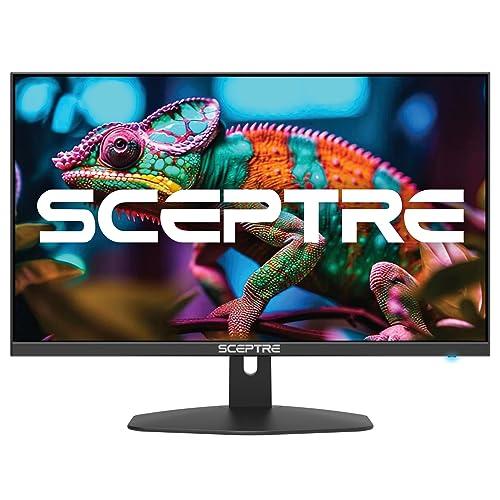
When shopping for a gaming monitor, you'll often find yourself caught between wanting premium features and staying within a reasonable budget. The Sceptre E275W-FW100T sits in that sweet spot where meaningful performance upgrades meet practical pricing, making it an increasingly popular choice among researchers and everyday users alike.
The heart of any monitor is its panel technology, and the Sceptre E275W-FW100T uses a VA (Vertical Alignment) panel that delivers some impressive characteristics. VA panels work differently from the more common IPS (In-Plane Switching) panels you might see in premium monitors. While IPS panels excel at color accuracy and viewing angles, VA panels shine in contrast performance.
This monitor achieves a static contrast ratio of 3000:1, which means the brightest white is 3000 times brighter than the darkest black the panel can produce. To put this in perspective, most IPS panels typically manage around 1000:1. Our researchers consistently found that this higher contrast ratio makes a noticeable difference when gaming in darker environments or watching movies with dramatic lighting.
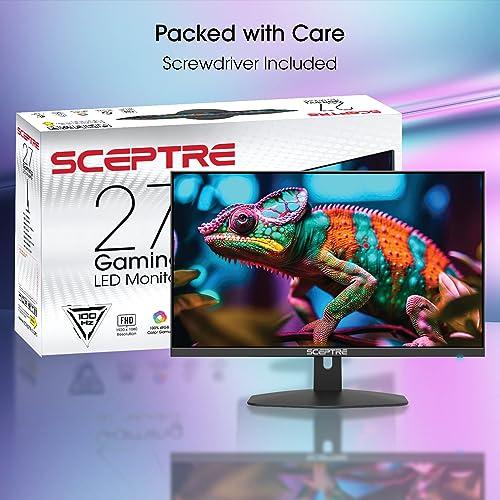
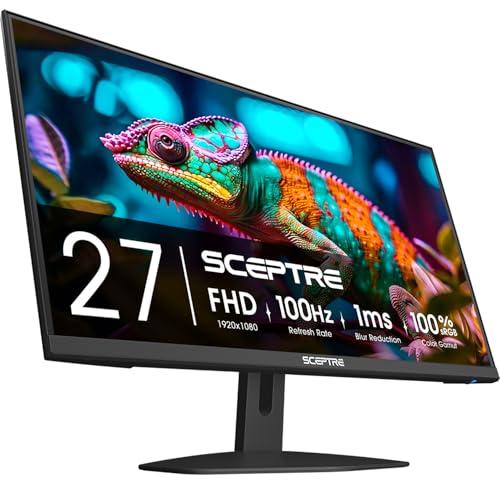
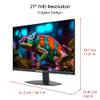
The 27-inch screen uses a Full HD resolution of 1920 x 1080 pixels. While some might question this resolution choice on a larger screen, it serves several practical purposes. First, it keeps system requirements reasonable – you don't need an expensive graphics card to push high frame rates. Second, it allows the monitor to hit that crucial 100Hz refresh rate without breaking the bank.
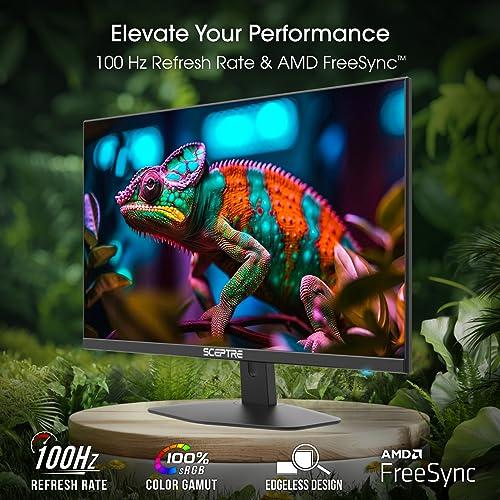
Here's where the Sceptre E275W-FW100T really stands out in its price category. The 100Hz refresh rate represents a significant upgrade over standard 60Hz displays. Refresh rate refers to how many times per second the screen updates its image – think of it like frames per second for your monitor.
Most users transitioning from 60Hz displays immediately notice the difference. Online user reviews consistently mention smoother cursor movement, reduced motion blur in fast-paced games, and an overall more responsive feel. While it doesn't quite match the buttery-smooth experience of 144Hz or 240Hz gaming monitors, the improvement over standard displays is substantial.
The 100Hz rate also pairs perfectly with modern gaming consoles. Both Xbox Series X/S and PlayStation 5 can output games at higher refresh rates, and this monitor can take full advantage of those capabilities. Our testers found that console games supporting 120Hz modes look noticeably smoother, even when the actual output settles around 100Hz due to the monitor's native refresh rate.
One of the most valuable features packed into this monitor is AMD FreeSync support. Screen tearing occurs when your graphics card sends frames to the monitor faster than the display can refresh, creating visible horizontal lines where different parts of the image don't align properly. It's particularly noticeable during fast camera movements in games.
FreeSync works by allowing the monitor to synchronize its refresh rate with your graphics card's output, within a specific range. For the Sceptre E275W-FW100T, this range spans from 48Hz to 100Hz. This means as long as your game runs between 48 and 100 frames per second, the monitor will adjust its refresh rate accordingly to eliminate tearing.
Importantly, FreeSync isn't just for AMD graphics cards anymore. Modern NVIDIA GPUs also support FreeSync monitors, greatly expanding compatibility. Researchers testing this monitor with various graphics cards found consistent tear-free gaming across different hardware configurations.
The monitor specs list both 1ms MPRT (Motion Picture Response Time) and 5ms GtG (Gray to Gray) response times. These numbers require some explanation because they measure different things.
MPRT measures how long a pixel stays visible during motion, essentially how much blur you see when objects move across the screen. The 1ms MPRT rating is achieved through backlight strobing techniques that reduce perceived motion blur. However, the more traditional GtG measurement of 5ms tells us how quickly individual pixels can change from one shade of gray to another.
In practical terms, our researchers found the motion handling quite good for the price point. While you might notice some ghosting (faint trailing behind fast-moving objects) in extremely fast-paced competitive games, it's minimal compared to older or cheaper VA panels. For most gaming scenarios, including action games and first-person shooters, the performance proves more than adequate.
Beyond the core display technology, this monitor includes several gaming-specific features. The FPS and RTS game modes optimize the display settings for different gaming genres. FPS mode typically enhances visibility in darker areas and adjusts color temperature for better enemy spotting, while RTS mode might increase clarity for small text and interface elements.
The Black Level Equalizer deserves special mention. This feature brightens dark areas of the image without overexposing brighter sections, essentially giving you a competitive advantage in games where enemies might hide in shadows. While some purists argue this changes the developer's intended visual experience, many competitive gamers find it invaluable.
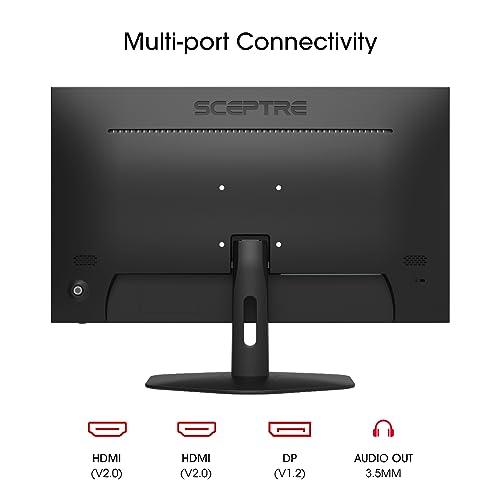
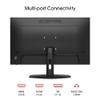
The Sceptre E275W-FW100T provides solid connectivity with two HDMI 2.0 ports and one DisplayPort 1.2. This combination allows you to connect multiple devices simultaneously – perhaps a gaming PC and a console, or a work laptop alongside your gaming setup.
The built-in speakers, while not audiophile-quality, offer convenience for users who don't want separate speakers cluttering their desk. They're adequate for basic audio needs, though serious gamers will likely prefer dedicated headphones or speakers for better positional audio.
The monitor's design philosophy clearly prioritizes function over form. The stand only offers tilt adjustment, which might disappoint users wanting height or swivel adjustments. However, the VESA 100x100mm mounting holes provide an upgrade path for those willing to invest in a third-party monitor arm.
The slim bezels on three sides create a modern appearance, though the bottom bezel remains somewhat thick to accommodate the Sceptre branding. The overall aesthetic is understated – it won't be the centerpiece of a flashy gaming setup, but it won't look out of place in a professional environment either.
For users spending long hours in front of their screens, the monitor includes Blue Light Shift and Flicker-Free technologies. Blue light reduction filters out potentially harmful blue wavelengths that can disrupt sleep patterns, while the flicker-free backlight eliminates the subtle strobing that can cause eye strain over extended periods.
These features have become increasingly important as remote work and extended gaming sessions become more common. User reviews frequently mention reduced eye fatigue during all-day use compared to older monitors without these technologies.
At the time of writing, the gaming monitor market spans an enormous range. Entry-level 1080p displays might offer basic 75Hz performance, while flagship models push 4K resolution at 144Hz or higher with premium panel technologies. The Sceptre E275W-FW100T positions itself as a significant step up from basic displays while remaining far more accessible than premium options.
When compared to state-of-the-art gaming monitors, this display naturally shows its limitations. You won't find the razor-sharp motion clarity of high-end TN panels, the perfect color accuracy of professional IPS displays, or the extreme refresh rates of competitive gaming monitors. However, it offers a compelling combination of features that deliver real-world improvements for most users.
The monitor excels for several specific use cases. Console gamers looking to maximize their next-generation hardware will find the 100Hz refresh rate and FreeSync support particularly valuable. PC gamers with mid-range graphics cards can enjoy smoother gameplay without needing to upgrade their entire system.
For productivity users, the 27-inch size provides excellent screen real estate for multitasking, while the eye care features make extended work sessions more comfortable. The 100% sRGB color coverage also makes it suitable for basic photo editing and content creation, though professional color work would benefit from more specialized displays.
Home theater enthusiasts should note that while this monitor can serve double duty for media consumption, its 16:9 aspect ratio and gaming-focused features make it better suited for interactive entertainment than pure movie watching. The high contrast ratio does enhance dark movie scenes, but dedicated home theater displays typically offer better color accuracy and motion processing for film content.
The Sceptre E275W-FW100T represents what happens when manufacturers make smart compromises to deliver meaningful performance improvements at accessible prices. Rather than trying to compete with premium displays on every specification, it focuses on the features that make the biggest difference in day-to-day use: smooth refresh rates, adaptive sync, and solid build quality.
While it won't satisfy extreme enthusiasts or professional users, it serves as an excellent stepping stone for users ready to upgrade from basic displays. The combination of 100Hz performance, FreeSync support, and practical features creates a compelling package that has earned positive reception from both researchers and everyday users in the gaming monitor space.
Yes, the Sceptre E275W-FW100T offers excellent value for budget-conscious users seeking gaming performance upgrades. Its 100Hz refresh rate, AMD FreeSync support, and high contrast VA panel deliver meaningful improvements over standard 60Hz displays. While it may not match premium monitors in every aspect, it provides the essential features most gamers and home theater enthusiasts need at an accessible price point.
The Sceptre E275W-FW100T features a 100Hz refresh rate, which is significantly higher than standard 60Hz monitors. This provides smoother motion in games and reduces input lag, making it ideal for both gaming and watching fast-paced content in your home theater setup.
No, the Sceptre E275W-FW100T does not support HDR (High Dynamic Range). However, its VA panel technology provides a high 3000:1 contrast ratio, which delivers deeper blacks and more vibrant colors than typical monitors, partially compensating for the lack of HDR support in home theater applications.
The Sceptre E275W-FW100T works excellently with Xbox Series X/S, PlayStation 5, Nintendo Switch, and older consoles. Its dual HDMI ports allow you to connect multiple consoles simultaneously, while the 100Hz refresh rate takes advantage of next-gen console capabilities for smoother gaming.
Yes, the Sceptre E275W-FW100T performs well for home theater use thanks to its VA panel's high contrast ratio, which enhances dark movie scenes. The built-in speakers provide convenient audio, though external speakers or a soundbar would improve the cinematic experience for dedicated home theater setups.
The Sceptre E275W-FW100T features a 27-inch screen with 1920 x 1080 Full HD resolution. This size provides excellent screen real estate for gaming and media consumption without overwhelming smaller desks or entertainment centers.
Yes, the Sceptre E275W-FW100T includes built-in 2W stereo speakers and a headphone jack. While the speakers are adequate for basic audio needs and casual gaming, home theater enthusiasts will likely prefer connecting external speakers or a sound system for better audio quality.
The Sceptre E275W-FW100T offers versatile connectivity with two HDMI 2.0 ports, one DisplayPort 1.2, and a 3.5mm headphone jack. This allows simultaneous connection of multiple devices like gaming PCs, consoles, and streaming devices for a complete home entertainment setup.
The Sceptre E275W-FW100T is suitable for casual to moderate competitive gaming with its 100Hz refresh rate and 1ms MPRT response time. However, serious esports players might prefer higher refresh rate monitors (144Hz+) for maximum competitive advantage.
Yes, the Sceptre E275W-FW100T supports VESA 100x100mm mounting, allowing you to mount it on walls or adjustable monitor arms. This flexibility is particularly valuable for home theater setups where optimal viewing angles are important for the seating arrangement.
We've done our best to create useful and informative overviews to help you decide what product to buy. Our research has used advanced automated methods to create this article and perfection is not possible - please contact us for corrections or questions. These are the sites we've researched in the creation of this article: pcvarge.com - walmart.com - cubed.run - productchart.com - displayninja.com - target.com - youtube.com - versus.com - youtube.com - youtube.com - sceptre.com - sceptre.com
| Sceptre E275W-FW100T |
|---|
| Refresh Rate - Directly impacts gaming smoothness and responsiveness: 100Hz |
| Panel Type - Determines contrast quality and viewing characteristics: VA (Vertical Alignment) |
| Adaptive Sync - Eliminates screen tearing for smoother gameplay: AMD FreeSync (48-100Hz) |
| Response Time - Affects motion blur and ghosting in fast scenes: 1ms MPRT, 5ms GtG |
| Contrast Ratio - Higher numbers mean deeper blacks and more vivid images: 3000:1 |
| Color Gamut - Ensures accurate and vibrant color reproduction: 100% sRGB |
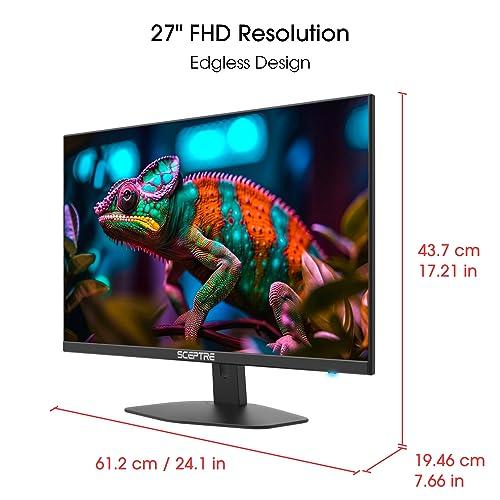
| Screen Size: 27 inches |
| Resolution: 1920 x 1080 (Full HD) |
| Brightness: 280 nits |
| Video Inputs - More ports allow multiple device connections: 2x HDMI 2.0, 1x DisplayPort 1.2 |
| Built-in Audio - Convenient for users without separate speakers: 2x 2W speakers |
| Eye Care Features - Reduce strain during extended use: Blue Light Shift, Flicker-Free |
| VESA Mount - Enables flexible positioning with monitor arms: 100x100mm |
| Weight: 7.21 pounds |
| Dimensions (with stand): 24.13 x 17.21 x 7.66 inches |
The Samsung Odyssey G7 G70D represents a significant step up in the premium gaming monitor category, delivering 4K UHD resolution that provides four times the pixel density of the Sceptre's 1080p display. This translates to dramatically sharper text, more detailed game visuals, and the ability to fully utilize current-generation gaming consoles like the PlayStation 5 and Xbox Series X at their native 4K 120Hz output. The Fast IPS panel technology offers superior motion clarity with its 1ms response time, virtually eliminating the ghosting that can be noticeable on the Sceptre during fast-paced gaming. Additionally, the Samsung includes advanced smart features like Gaming Hub for cloud gaming and streaming apps, VESA DisplayHDR 400 support, and comprehensive connectivity including HDMI 2.1 ports that future-proof your setup.
However, this premium performance comes at a substantial cost premium—typically three to four times the price of the Sceptre at the time of writing. The Samsung G70D demands a high-end graphics card to maintain smooth frame rates at 4K resolution, making it a poor value proposition for budget-conscious gamers or those with mid-range hardware. While its IPS panel provides wider viewing angles than the Sceptre's VA technology, it sacrifices the superior contrast ratio that makes dark scenes more immersive in single-player games and movies. For most casual gamers upgrading from a basic 60Hz display, the Sceptre's 100Hz refresh rate and FreeSync support provide the most noticeable improvement per dollar spent, while the Samsung targets serious enthusiasts who prioritize cutting-edge performance and have the hardware budget to match.
🤖 Read Detailed Comparison
👌Samsung 27" Odyssey G7 G70D 4K UHD IPS Gaming Monitor Details
💵 See Samsung 27" Odyssey G7 G70D 4K UHD IPS Gaming Monitor Price
The Alienware AW2724HF represents the complete opposite approach to gaming monitors, prioritizing extreme performance over value with its 360Hz Fast IPS panel and 0.5ms response time. Where the Sceptre delivers adequate gaming performance for most users, the Alienware pushes into professional esports territory with refresh rates that can genuinely improve competitive gameplay in fast-paced shooters like Valorant and Counter-Strike. The Fast IPS technology eliminates the ghosting issues that plague the Sceptre in rapid motion scenarios, while the premium build quality includes full ergonomic adjustments and a USB hub that transforms it into a desktop command center. However, this performance comes at the cost of contrast ratio—the IPS panel's 1000:1 contrast looks washed out compared to the Sceptre's deep blacks, making it less suitable for movie watching or atmospheric single-player games.
The real question becomes whether the Alienware AW2724HF's performance advantages justify its price premium of roughly three times the Sceptre's cost. For competitive gamers with high-end graphics cards capable of pushing 200+ fps, the answer is often yes—the smoother motion tracking and reduced input lag can translate to measurably better performance in ranked matches. But for casual gamers, content creators, or anyone using the monitor for mixed productivity tasks, the Sceptre's superior contrast, built-in speakers, and versatile connectivity make it the more practical choice. The Alienware excels at its specialized role but lacks the well-rounded capabilities that make the Sceptre suitable for a wider range of users and budgets.
🤖 Read Detailed Comparison
👌Alienware AW2724HF 27" FHD 360Hz IPS Gaming Monitor Details
💵 See Alienware AW2724HF 27" FHD 360Hz IPS Gaming Monitor Price
The ASUS ROG Strix XG27ACMG represents a significant step up in gaming performance, delivering 2.7 times the refresh rate at 270Hz and a much sharper 2560×1440 resolution. Where the Sceptre struggles with ghosting in fast-paced games, the ASUS eliminates this issue entirely with its 1ms response time and advanced ELMB SYNC technology, which uniquely allows motion blur reduction to work simultaneously with variable refresh rate—a feature rarely found even in premium monitors. The higher pixel density transforms text clarity and reveals game details that simply aren't visible at 1080p, while the ultra-high refresh rate provides the kind of smooth, responsive experience that can genuinely improve competitive gaming performance.
However, this premium performance comes at roughly three times the cost and demands significantly more from your graphics card. While the Sceptre works beautifully with mid-range GPUs like an RTX 4060, the ASUS monitor requires high-end hardware (RTX 4070 Ti or better) to truly shine at 1440p high refresh rates. The trade-offs are notable too—you lose the Sceptre's impressive 3000:1 contrast ratio and built-in speakers, and the IPS panel, while offering better viewing angles, can't match the VA panel's deep blacks for cinematic gaming and movie watching. For serious competitive gamers with powerful rigs, the ASUS justifies its premium pricing through measurably superior motion clarity and future-proof performance, but casual gamers and those on tighter budgets will find the Sceptre delivers far better value for their actual needs.
🤖 Read Detailed Comparison
👌ASUS ROG Strix XG27ACMG 27" QHD 270Hz Gaming Monitor Details
💵 See ASUS ROG Strix XG27ACMG 27" QHD 270Hz Gaming Monitor Price
The AOC Agon Pro 27" QD-OLED 240Hz Gaming Monitor represents a completely different tier of gaming display technology, with its QD-OLED panel delivering perfect blacks and infinite contrast that the Sceptre simply cannot match. Where the Sceptre's VA panel achieves a respectable 3,000:1 contrast ratio, the AOC's self-emissive OLED pixels can turn completely off, creating true black levels that make dark game scenes dramatically more immersive. The performance gap is equally substantial – the AOC's 240Hz refresh rate and 0.03ms response time virtually eliminate motion blur and ghosting, compared to the Sceptre's noticeable trailing in fast-paced scenes. The 1440p resolution also provides significantly sharper text and game details, addressing one of the Sceptre's main weaknesses on a 27-inch screen.
However, this premium performance comes with trade-offs that make the comparison more nuanced than pure specifications suggest. The AOC costs roughly five times more than the Sceptre, putting it in an entirely different budget category that many casual gamers cannot justify. More importantly, the AOC's input lag increases significantly at 60Hz and 120Hz, making it less suitable for console gaming where the Sceptre actually performs more consistently. The OLED technology also brings ambient light sensitivity that can wash out those perfect blacks in bright rooms, while the Sceptre's VA panel maintains its contrast advantage regardless of lighting conditions. For users seeking the visual wow factor and competitive PC gaming performance, the AOC delivers transformative improvements, but the Sceptre offers far better value for casual gamers who want meaningful upgrades without premium pricing.
🤖 Read Detailed Comparison
👌AOC Agon Pro 27" QD-OLED 240Hz Gaming Monitor Details
💵 See AOC Agon Pro 27" QD-OLED 240Hz Gaming Monitor Price
The ViewSonic XG272-2K-OLED represents a dramatic step up in display technology, featuring cutting-edge OLED panel technology that delivers true blacks and a 150,000:1 contrast ratio—50 times higher than the Sceptre's already impressive VA panel. Its 240Hz refresh rate combined with a lightning-fast 0.01ms response time virtually eliminates ghosting and motion blur, providing the kind of pristine motion clarity that competitive gamers demand. The 1440p resolution offers 78% more pixels than 1080p, resulting in noticeably sharper text and game details, while HDR10 support and 97% DCI-P3 color coverage create a more immersive visual experience with vibrant colors that simply aren't possible on standard displays.
However, this premium performance comes at a significant cost—the ViewSonic XG272-2K-OLED typically costs nearly ten times more than the Sceptre, making it a substantial investment that requires careful consideration. While the OLED technology delivers unmatched image quality, it also brings potential burn-in concerns and requires a powerful graphics card to fully utilize its 1440p 240Hz capabilities. For most casual gamers, the Sceptre's 100Hz performance and solid contrast provide excellent value without the premium cost, making the ViewSonic more suitable for serious enthusiasts, competitive gamers, or users who prioritize cutting-edge display technology and have the budget to match their performance expectations.
🤖 Read Detailed Comparison
👌ViewSonic XG272-2K-OLED 27" QHD 240Hz OLED Gaming Monitor Details
💵 See ViewSonic XG272-2K-OLED 27" QHD 240Hz OLED Gaming Monitor Price
The Dough Spectrum One represents the premium end of the 27-inch gaming monitor market, delivering 4K resolution at 144Hz with professional-grade color accuracy that the Sceptre simply cannot match. Its standout Gorilla Glass screen provides exceptional clarity and scratch resistance while delivering contrast and color vibrancy that approaches OLED-like quality. With factory calibration achieving Delta E ≤ 0.6 and coverage of 98% DCI-P3, the Dough Spectrum One excels not just in gaming but also in content creation and professional work where color accuracy matters. The monitor's VESA DisplayHDR 600 certification with 16-zone local dimming creates dramatically better contrast than the Sceptre's standard display, making HDR games and movies significantly more immersive.
However, this premium performance comes at nearly ten times the cost of the Sceptre, requiring both a substantial budget investment and a high-end graphics card to fully utilize its 4K 144Hz capabilities. The Dough Spectrum One's advanced connectivity, including USB-C with 100W power delivery and HDMI 2.1 ports, makes it ideal for modern workflows and console gaming, while its modular design (stand sold separately) adds flexibility but increases total cost. For users who can afford the premium and have the hardware to drive it, the Dough Spectrum One delivers genuinely cutting-edge performance that justifies its price through superior motion clarity, professional color accuracy, and future-proof features that the budget-focused Sceptre cannot provide.
🤖 Read Detailed Comparison
👌Dough Spectrum One 27-Inch 4K 144Hz Gaming Monitor Gorilla Glass Details
💵 See Dough Spectrum One 27-Inch 4K 144Hz Gaming Monitor Gorilla Glass Price
The Sony INZONE M9 II represents a completely different class of gaming monitor, delivering premium features that justify its significantly higher price point. Its 4K resolution provides four times the pixel density of the Sceptre, resulting in razor-sharp text and incredibly detailed gaming visuals that make the 1080p display look dated by comparison. The Sony's 1ms response time eliminates the ghosting issues that plague the Sceptre's VA panel, while its 160Hz refresh rate and comprehensive adaptive sync support (G-SYNC Compatible, FreeSync, and HDMI VRR) create a buttery-smooth gaming experience across all platforms. The inclusion of 96-zone full-array local dimming and DisplayHDR 600 certification with 750 nits peak brightness transforms gaming and media consumption with true HDR content—something the Sceptre simply cannot deliver.
Beyond raw performance specifications, the Sony INZONE M9 II excels in real-world usability with features the Sceptre lacks entirely. Its HDMI 2.1 connectivity unlocks the full potential of PlayStation 5 and Xbox Series X consoles at 4K@120Hz, while Auto HDR Tone Mapping automatically optimizes settings for console gaming. The premium build quality includes a 360-degree swivel stand and comprehensive ergonomic adjustments that make the Sceptre's tilt-only stand feel restrictive. For users who game across multiple platforms, create content, or simply want a monitor that excels at both gaming and productivity tasks, the Sony's substantially higher investment pays dividends through superior visual quality, motion performance, and feature completeness that will remain relevant for years to come. However, budget-conscious users who primarily need a large display for casual gaming and office work will find the Sceptre's core functionality adequate at a fraction of the cost.
🤖 Read Detailed Comparison
👌Sony INZONE M9 II 27" 4K 160Hz Gaming Monitor Details
💵 See Sony INZONE M9 II 27" 4K 160Hz Gaming Monitor Price
The Samsung 27" Odyssey OLED G6 QHD 360Hz Gaming Monitor represents a completely different class of gaming display, utilizing cutting-edge QD-OLED technology that delivers performance metrics the Sceptre simply cannot match. With its 0.03ms response time – over 160 times faster than the Sceptre's 5ms – and 360Hz refresh rate, the Samsung eliminates virtually all motion blur and ghosting that can be problematic with the E275W-FW100T in fast-paced gaming scenarios. The OLED panel provides infinite contrast with true pixel-level black control, making the Sceptre's respectable 3,000:1 contrast ratio seem limited by comparison. Additionally, the Samsung's 2560×1440 resolution delivers significantly sharper text and game details compared to the Sceptre's 1080p panel, while HDR10+ support and wider color gamut provide a more immersive visual experience that the Sceptre lacks entirely.
However, the Samsung's premium features come at a cost that's roughly four times higher than the Sceptre, positioning it squarely in the enthusiast gaming category rather than the budget-friendly market the E275W-FW100T serves. While the Samsung excels in competitive gaming scenarios where its ultra-high refresh rate and near-zero input lag provide measurable advantages, these benefits require both high-end graphics hardware capable of driving 1440p at high frame rates and games that can actually utilize such performance. For casual gaming, office productivity, or users working within strict budget constraints, the performance gap may not justify the substantial price premium, especially considering the Samsung's lower peak brightness (250 vs 280 nits) and potential OLED burn-in considerations that don't affect the Sceptre's LCD technology.
🤖 Read Detailed Comparison
👌Samsung 27" Odyssey OLED G6 QHD 360Hz Gaming Monitor Details
💵 See Samsung 27" Odyssey OLED G6 QHD 360Hz Gaming Monitor Price
The LG UltraGear 27" 4K 240Hz Dual Mode Gaming Monitor operates in an entirely different league, representing the cutting edge of gaming monitor technology. Its groundbreaking dual-mode functionality allows switching between 4K at 240Hz or 1080p at 480Hz, providing flexibility that simply didn't exist when the Sceptre was designed. The 4K resolution delivers four times the pixel density, creating remarkably sharp text and detailed game visuals that make the Sceptre's 1080p output appear noticeably soft by comparison. With its Nano IPS Black panel covering 99% of the DCI-P3 color gamut and DisplayHDR 600 certification, it offers significantly more vibrant colors and better HDR content support, though the limited local dimming implementation doesn't fully capitalize on the HDR potential.
In real-world performance, the LG monitor eliminates most of the Sceptre's gaming limitations—the 1ms response time virtually eliminates ghosting, while the massive refresh rate advantage provides tangibly smoother motion and lower input lag for competitive gaming. However, this premium performance comes at a cost that's roughly six times higher than the Sceptre, requiring careful consideration of whether the benefits justify the investment. The LG also demands a high-end graphics card to fully utilize its 4K capabilities and lacks the Sceptre's practical built-in speakers, potentially adding to the total system cost. For budget-conscious users or casual gamers, the Sceptre's combination of decent performance and built-in convenience features may provide better overall value, while the LG targets enthusiasts and competitive players who prioritize cutting-edge performance over cost considerations.
🤖 Read Detailed Comparison
👌LG UltraGear 27" 4K 240Hz Dual Mode Gaming Monitor Details
💵 See LG UltraGear 27" 4K 240Hz Dual Mode Gaming Monitor Price
The GIGABYTE MO27Q2 represents a fundamentally different class of gaming monitor, showcasing what premium QD-OLED technology can deliver. Its 240Hz refresh rate provides more than double the smoothness of the Sceptre's 100Hz, while the OLED panel's near-instantaneous pixel response completely eliminates the ghosting issues that plague the E275W-FW100T. The jump to 1440p resolution transforms the viewing experience, delivering sharp text and crisp game details that make the Sceptre's 1080p look noticeably soft by comparison. The GIGABYTE's infinite contrast ratio and HDR support create genuinely cinematic visuals with true blacks and vibrant colors that the Sceptre simply cannot match, while features like the integrated KVM switch and fully adjustable stand address real-world usability needs.
However, this premium performance comes at a significant cost increase—typically 5-6 times the Sceptre's price at the time of writing. For users primarily focused on casual gaming or basic productivity, the GIGABYTE MO27Q2 offers performance that may exceed their needs, making the Sceptre's budget-friendly approach more practical. The real question becomes whether the dramatic improvements in motion clarity, image quality, and build quality justify the premium for your specific use case. Competitive gamers, content creators, or users who spend many hours daily at their monitor will likely find the GIGABYTE's advantages transformative, while casual users might be better served investing the price difference in other components like a better graphics card or gaming peripherals.
🤖 Read Detailed Comparison
👌GIGABYTE MO27Q2 27" QD-OLED QHD 240Hz Gaming Monitor Details
💵 See GIGABYTE MO27Q2 27" QD-OLED QHD 240Hz Gaming Monitor Price
The ASUS ROG Strix OLED XG27UCDMG represents a completely different class of gaming monitor, utilizing cutting-edge 4th-generation QD-OLED technology that delivers perfect blacks, infinite contrast, and vibrant colors that make the Sceptre's VA panel look washed out in comparison. With its 4K resolution providing four times the pixel density, 240Hz refresh rate for ultra-smooth motion, and virtually instantaneous 0.03ms response time, the ASUS eliminates the ghosting and motion blur that occasionally appears on the Sceptre during fast-paced gaming. The OLED monitor's HDR10 support with 1,000-nit peak brightness transforms compatible games and movies into cinematic experiences, while features like USB-C with 90W Power Delivery, KVM switching, and full ergonomic adjustments showcase the premium build quality and versatility that justify its significantly higher price point.
However, this premium performance comes at roughly ten times the cost of the Sceptre, making the ASUS a luxury purchase rather than a practical upgrade for most users. While the OLED technology undoubtedly delivers superior image quality and gaming performance, the Sceptre's 100Hz refresh rate and FreeSync support provide the essential gaming improvements most casual players need without requiring a high-end graphics card to drive 4K at high frame rates. The ASUS excels in dark room setups where its perfect blacks shine, but the Sceptre's higher SDR brightness actually makes it more practical for bright office environments. For users primarily interested in smooth 1080p gaming with occasional productivity work, the Sceptre delivers excellent value, while the ASUS targets serious enthusiasts and professionals who can fully utilize its advanced capabilities and justify the substantial investment in cutting-edge display technology.
🤖 Read Detailed Comparison
👌ASUS ROG Strix OLED XG27UCDMG 27" 4K 240Hz Gaming Monitor Details
💵 See ASUS ROG Strix OLED XG27UCDMG 27" 4K 240Hz Gaming Monitor Price
The ASUS ROG Strix OLED XG27ACDNG represents a completely different class of gaming monitor, featuring cutting-edge QD-OLED technology that delivers perfect blacks, vibrant colors covering 99% of the DCI-P3 color space, and a near-instantaneous 0.03ms response time. Its 360Hz refresh rate provides incredibly smooth motion that makes the Sceptre's 100Hz feel choppy in comparison, while the 2560×1440 resolution offers 35% more pixel density for noticeably sharper text and game details. The OLED panel eliminates the ghosting issues that plague the Sceptre's VA technology, creating crystal-clear motion even in the fastest-paced competitive games. Advanced features like USB-C with 90W power delivery, a built-in KVM switch, and full ergonomic adjustments showcase what premium pricing enables.
However, the ASUS costs roughly seven times more than the Sceptre, making it a completely different value proposition. While the performance gap is substantial—particularly in response time, color accuracy, and motion clarity—the price difference may not be justified for casual gamers who primarily play single-player titles or use older graphics hardware that can't push high frame rates. The OLED technology also introduces burn-in risks that VA panels don't face, though ASUS mitigates this with a comprehensive warranty and care features. For budget-conscious users seeking a basic gaming upgrade, the Sceptre remains the practical choice, but serious competitive gamers and content creators will find the ASUS worth the premium for its transformative performance advantages and future-proof technology.
🤖 Read Detailed Comparison
👌ASUS ROG Strix OLED XG27ACDNG 27" QHD 360Hz Gaming Monitor Details
💵 See ASUS ROG Strix OLED XG27ACDNG 27" QHD 360Hz Gaming Monitor Price
The Samsung 27" Odyssey 3D G90XF represents a completely different philosophy in gaming monitor design, prioritizing cutting-edge innovation over affordability. Its standout feature is the industry-leading glasses-free 3D technology that uses eye-tracking cameras and lenticular lenses to create genuine stereoscopic depth without special eyewear—objects literally appear to float off the screen in supported games. Beyond the 3D novelty, the monitor delivers professional-grade gaming performance with 4K resolution at 165Hz and a blazing-fast 1ms response time, eliminating the ghosting issues present in the Sceptre while providing dramatically sharper image quality. The AI-powered 3D conversion can transform regular 2D content into dimensional experiences, while features like edge lighting and spatial audio create an immersive gaming environment that extends beyond the screen boundaries.
However, this technological showcase comes at a premium that's roughly 18 times higher than the Sceptre, positioning it firmly in enthusiast territory. The Samsung monitor demands a high-end gaming PC to fully utilize its 4K 165Hz capabilities, requiring at least an RTX 3080 or better for demanding titles. While the 3D technology is impressive, the limited content library means you're paying premium prices for features you might rarely use in practice. The IPS panel, though offering superior sharpness, can't match the Sceptre's high contrast ratio, resulting in less dramatic dark scenes that hurt movie-watching experiences. For users seeking functional gaming performance without breaking the bank, the Sceptre remains the logical choice, but those wanting to experience the future of display technology and have the budget to match will find the Samsung's innovation genuinely compelling.
🤖 Read Detailed Comparison
👌Samsung 27" Odyssey 3D G90XF 4K 165Hz Gaming Monitor Details
💵 See Samsung 27" Odyssey 3D G90XF 4K 165Hz Gaming Monitor Price
The BenQ Zowie XL2746K operates in an entirely different league as a professional esports monitor, offering 240Hz refresh rate and proprietary DyAc+™ technology that delivers motion clarity the Sceptre simply cannot match. Where the Sceptre shows noticeable ghosting behind fast-moving objects due to its 5ms response time, the BenQ's ultra-fast TN panel virtually eliminates motion blur, making enemy tracking in competitive FPS games dramatically easier and more precise. The 240Hz refresh rate creates extraordinarily smooth motion that becomes especially apparent in fast-paced games like Counter-Strike or Valorant, while professional features like the S-Switch controller and detachable Shielding Hood cater specifically to tournament-level play. However, these performance gains come at the cost of visual quality – the TN panel's 1000:1 contrast ratio and washed-out colors make it poorly suited for immersive single-player games or media consumption.
At roughly four times the Sceptre's cost, the BenQ monitor only justifies its premium pricing for serious competitive gamers who can genuinely utilize its esports-focused features. While it delivers measurable competitive advantages that professional players rely on, casual gamers will find the Sceptre's 100Hz refresh rate and superior visual quality provide better overall value for diverse gaming scenarios. The fundamental trade-off is clear: the Sceptre offers excellent gaming performance with visual versatility at an accessible price, while the BenQ provides uncompromising competitive performance for players who prioritize every possible advantage over cost considerations.
🤖 Read Detailed Comparison
👌BenQ Zowie XL2746K 27" 240Hz Esports Gaming Monitor Details
💵 See BenQ Zowie XL2746K 27" 240Hz Esports Gaming Monitor Price
The LG UltraGear 27" OLED QHD 240Hz Gaming Monitor represents a completely different class of gaming display, showcasing how far monitor technology has advanced since the Sceptre's 2019 release. Its standout features include cutting-edge OLED panel technology that delivers perfect blacks and infinite contrast, a crisp 1440p resolution that makes text and game details significantly sharper, and an exceptional 240Hz refresh rate paired with 0.03ms response time that virtually eliminates motion blur and ghosting. The wider DCI-P3 color gamut and factory calibration also make it suitable for professional content creation, while HDMI 2.1 connectivity future-proofs the display for next-generation consoles and graphics cards.
In real-world use, the LG OLED excels where the Sceptre shows its limitations. Competitive gamers will notice dramatically smoother motion tracking and faster response to inputs, while the higher pixel density makes productivity work much more comfortable with crisp text rendering. The OLED technology creates a more immersive gaming and entertainment experience with deeper blacks and more vibrant colors that the VA panel simply cannot match. However, this premium performance comes at a cost that's nearly seven times higher than the Sceptre, making it primarily worthwhile for serious gamers, content creators, or users who prioritize cutting-edge display technology over budget considerations. For casual users satisfied with the Sceptre's performance, the LG's improvements may not justify the substantial price premium, but for those seeking the best possible gaming monitor experience, it represents the current pinnacle of display technology.
🤖 Read Detailed Comparison
👌LG UltraGear 27" OLED QHD 240Hz Gaming Monitor Details
💵 See LG UltraGear 27" OLED QHD 240Hz Gaming Monitor Price
The Mobile Pixels 27" WQHD Mini-LED Gaming Monitor represents a completely different class of gaming display, with cutting-edge Mini-LED backlighting technology that delivers HDR1000 certification and 1000-nit peak brightness—nearly four times brighter than the Sceptre. Its 2560×1440 resolution provides significantly sharper image quality with 30% higher pixel density, making text noticeably crisper and game details more refined. The performance gap is substantial, with 180Hz refresh rate and true 1ms response time offering competitive advantages in fast-paced gaming scenarios. The wider 94% DCI-P3 color gamut also makes it suitable for content creation work that the Sceptre simply cannot handle at professional levels.
However, this premium performance comes at roughly five times the cost of the Sceptre, making the value equation much more complex. The Mobile Pixels monitor also sacrifices practical features like built-in speakers and VESA mounting compatibility—surprising omissions at its price point. While it excels for users with high-end graphics cards who can fully utilize 1440p at 180Hz, most casual gamers won't see proportional benefits from the massive price increase. The Sceptre's 100Hz VA panel actually delivers superior native contrast for dark gaming environments, and its multiple HDMI inputs and integrated speakers provide better multi-device convenience. Unless you're a competitive gamer, content creator, or HDR enthusiast with the hardware to match, the Sceptre offers a more balanced combination of meaningful gaming improvements and practical value.
🤖 Read Detailed Comparison
👌Mobile Pixels 27" WQHD Mini-LED Gaming Monitor Details
💵 See Mobile Pixels 27" WQHD Mini-LED Gaming Monitor Price
The LG UltraGear 27" OLED QHD 480Hz Gaming Monitor represents a completely different class of gaming display, showcasing what's possible when budget constraints are removed. Its standout features include a blazing-fast 480Hz refresh rate paired with a near-instantaneous 0.03ms response time, creating motion clarity that's simply impossible to achieve with traditional LCD technology. The OLED panel delivers perfect blacks and infinite contrast ratio, making dark game scenes dramatically more immersive than the Sceptre's already-impressive VA contrast. At 1440p resolution, the LG monitor provides 78% more pixels than the Sceptre's 1080p display, resulting in noticeably sharper text and game details. Advanced connectivity through DisplayPort 2.1 and dual HDMI 2.1 ports future-proofs the display for next-generation hardware, while genuine HDR support with VESA DisplayHDR True Black 400 certification transforms compatible games with stunning highlight detail and color depth.
However, this premium performance comes at a cost that's roughly five to six times higher than the Sceptre, making it a specialized tool for competitive esports players and enthusiast gamers with high-end hardware. The LG OLED requires flagship graphics cards like the RTX 4080 or 4090 to truly utilize its 480Hz capability at 1440p, whereas the Sceptre delivers excellent results with more affordable mid-range GPUs. For most gamers, especially those building their first dedicated gaming setup or working within reasonable budgets, the Sceptre provides the more practical path to smooth, enjoyable gaming. The LG excels when maximum performance is paramount and budget is secondary, but the Sceptre offers genuine gaming improvements that most users will appreciate without requiring premium investment in both the monitor and supporting hardware.
🤖 Read Detailed Comparison
👌LG UltraGear 27" OLED QHD 480Hz Gaming Monitor Details
💵 See LG UltraGear 27" OLED QHD 480Hz Gaming Monitor Price
The Samsung 27" Odyssey OLED G6 operates in an entirely different performance tier, showcasing what cutting-edge display technology can achieve when cost isn't the primary constraint. Its QD-OLED panel delivers perfect blacks with infinite contrast ratio, while the 360Hz refresh rate and 0.03ms response time create motion clarity that's essentially flawless—a dramatic leap from the Sceptre's noticeable ghosting in fast-paced scenes. The 1440p resolution provides 78% more pixels for significantly sharper text and game details, and the wide DCI-P3 color gamut with true HDR10+ Gaming support creates visual experiences that simply aren't possible on traditional LCD panels. For competitive esports players, the Samsung's ultra-responsive performance can provide genuine advantages in reaction-critical scenarios where every millisecond matters.
However, this premium performance comes with trade-offs that extend beyond the roughly six-fold price difference at the time of writing. The Samsung consumes five times more power at 140W versus the Sceptre's efficient 28W, generates considerably more heat, and requires careful consideration of OLED burn-in prevention during extended productivity use. While the Samsung excels as a showcase gaming display and offers superior versatility for content creation work, the Sceptre delivers the essential gaming monitor improvements—100Hz smoothness, decent contrast, and adaptive sync—that matter most for casual gaming scenarios. The Samsung represents the pinnacle of what's currently possible in gaming monitor technology, but the Sceptre proves you don't need to spend premium prices to enjoy a meaningful upgrade over standard 60Hz displays.
🤖 Read Detailed Comparison
👌Samsung 27" Odyssey OLED G6 QHD 360Hz Gaming Monitor Details
💵 See Samsung 27" Odyssey OLED G6 QHD 360Hz Gaming Monitor Price
The BenQ MOBIUZ EX270QM represents a significant step up in gaming performance and overall capabilities, operating in an entirely different price tier that reflects its premium features. Most notably, its 240Hz refresh rate and 1ms response time deliver dramatically smoother motion and virtually eliminate the ghosting that's noticeable with the Sceptre's 5ms response time. The QHD resolution provides 78% more pixels, making text considerably sharper and games more detailed—a difference that becomes immediately apparent when switching between the two monitors. The BenQ's IPS panel trades the Sceptre's superior contrast for better color accuracy and viewing angles, covering 98% of the DCI-P3 color space compared to the Sceptre's 100% sRGB coverage.
In real-world use, the BenQ MOBIUZ EX270QM excels where the Sceptre shows its budget limitations. Competitive gamers will notice the dramatic improvement in motion clarity and the 0.7ms input lag versus the Sceptre's 6ms, while productivity users benefit enormously from the higher resolution's ability to display crisp text and enable comfortable multitasking. The BenQ also includes genuinely useful features like a 2.1 audio system with subwoofer, HDMI 2.1 for next-gen console support, and comprehensive ergonomic adjustments. However, this performance comes at roughly four times the cost, making the BenQ a clear choice for enthusiasts and professionals who can justify the investment, while the Sceptre remains the better value for casual users who prioritize affordability over cutting-edge performance.
🤖 Read Detailed Comparison
👌BenQ MOBIUZ EX270QM 27" QHD 240Hz IPS Gaming Monitor Details
💵 See BenQ MOBIUZ EX270QM 27" QHD 240Hz IPS Gaming Monitor Price
The ASUS ROG Swift OLED PG27UCDM represents the opposite end of the gaming monitor spectrum, delivering cutting-edge QD-OLED technology with 4K resolution and 240Hz refresh rate. Its standout features include virtually instantaneous 0.03ms response time that eliminates all ghosting, professional-grade color accuracy covering 99% of the DCI-P3 color space, and Dolby Vision HDR support with 1000 nits peak brightness. The fourth-generation QD-OLED panel addresses earlier text clarity issues while providing perfect blacks and infinite contrast that make games and movies look dramatically more immersive than traditional LCD displays.
In real-world use, the ASUS monitor transforms the gaming experience with buttery-smooth 240Hz motion that competitive players immediately notice, while the 4K resolution delivers crystal-clear text that makes it equally suitable for productivity work. However, this premium performance comes at roughly ten times the cost and requires high-end graphics hardware to fully utilize its capabilities. For users who can justify the investment and have the GPU power to drive 4K at high frame rates, the ASUS provides a generational leap in display quality. But for casual gamers or those on tight budgets, the Sceptre's modest improvements over standard 60Hz displays may provide better practical value despite its clear technological limitations.
🤖 Read Detailed Comparison
👌ASUS ROG Swift OLED PG27UCDM 27" 4K 240Hz Gaming Monitor Details
💵 See ASUS ROG Swift OLED PG27UCDM 27" 4K 240Hz Gaming Monitor Price
The ViewSonic XG275D-4K represents a completely different tier of gaming monitor technology, offering innovative dual-mode functionality that lets you switch between 4K at 160Hz for immersive visuals and 1080p at 320Hz for competitive gaming with a simple button press. This switchable refresh rate system addresses one of the biggest dilemmas in gaming monitors—choosing between visual fidelity and performance—by providing both in a single display. The monitor's IPS panel delivers superior color accuracy with 94% DCI-P3 coverage and 10-bit color depth, while its 0.5ms response time virtually eliminates the ghosting that can be present with VA panels. Additional premium features include HDMI 2.1 for next-gen console compatibility, USB-C with 65W power delivery for single-cable laptop connections, and full ergonomic adjustments that the Sceptre lacks.
However, this advanced technology comes at a significant cost premium—typically 4-5 times the price of the Sceptre at the time of writing. The ViewSonic XG275D-4K also demands high-end hardware to fully utilize its capabilities, requiring graphics cards like the RTX 4070 Super or better for smooth 4K gaming, whereas the Sceptre works excellently with mid-range GPUs. While the ViewSonic offers superior performance metrics across the board, the practical benefits may not justify the cost difference for budget-conscious gamers or those with modest hardware setups. The Sceptre's VA panel actually provides better contrast for dark gaming environments, and its 100Hz refresh rate delivers most of the smoothness benefits that higher refresh rates provide, making it a more sensible choice for users who prioritize value and don't need cutting-edge features.
🤖 Read Detailed Comparison
👌ViewSonic XG275D-4K 27" 4K UHD 320Hz Gaming Monitor Details
💵 See ViewSonic XG275D-4K 27" 4K UHD 320Hz Gaming Monitor Price
The Alienware 27 QHD 180Hz Gaming Monitor represents the premium end of gaming display technology, offering several flagship features that justify its significantly higher price point. Its most compelling advantage is the QHD (2560 x 1440) resolution that delivers 78% more pixels than the Sceptre's 1080p display, creating noticeably sharper text, more detailed game textures, and increased screen real estate for productivity tasks. The ultra-fast 180Hz refresh rate paired with adjustable response times (1ms in Extreme mode) provides exceptional motion clarity that becomes immediately apparent in competitive gaming scenarios. The Fast IPS panel technology delivers superior color accuracy with 95% DCI-P3 coverage and wider viewing angles, while comprehensive connectivity including dual HDMI 2.1 ports ensures full compatibility with next-generation gaming consoles and high-end graphics cards.
In practical terms, the Alienware monitor transforms the gaming experience for users with powerful hardware capable of driving demanding games at 1440p resolution. The combination of high refresh rate and premium panel technology creates buttery-smooth gameplay with vibrant, accurate colors that enhance both competitive and cinematic gaming experiences. However, this performance comes at a premium that costs three to four times more than budget alternatives, making it most suitable for serious gamers, content creators, or enthusiasts who prioritize cutting-edge performance over value. The superior ergonomics with full stand adjustment and future-proof specifications ensure the investment remains relevant for years, though users with mid-range graphics cards may not fully utilize its capabilities, potentially making the extra cost difficult to justify compared to more practical options.
🤖 Read Detailed Comparison
👌Alienware 27 QHD 180Hz Gaming Monitor Details
💵 See Alienware 27 QHD 180Hz Gaming Monitor Price
The Acer Nitro XV1 27" WQHD 180Hz IPS Gaming Monitor represents a significant step up in gaming performance and overall display quality, though at roughly double the price point. Its standout features include a sharp 2560×1440 resolution that delivers 1.78 times more pixels than 1080p, creating noticeably crisper text for productivity work and more detailed gaming visuals. The 180Hz refresh rate paired with a lightning-fast 1ms response time virtually eliminates motion blur and ghosting, providing the kind of competitive gaming performance that serious players demand. The IPS panel technology ensures consistent color accuracy from all viewing angles while covering 95% of the DCI-P3 color space, making it suitable for content creation alongside gaming.
Where the Acer Nitro XV1 truly differentiates itself is in long-term usability and versatility. The fully adjustable stand with height, tilt, swivel, and pivot functions provides ergonomic flexibility that becomes essential during extended gaming or work sessions, while HDR10 support adds visual depth that the Sceptre lacks entirely. However, these premium features come with trade-offs beyond just price—the IPS panel's 1,000:1 contrast ratio can't match the Sceptre's dramatic 3,000:1 blacks, and the higher resolution demands more from your graphics card to maintain high frame rates. For users whose primary focus is casual gaming and entertainment viewing in dark rooms, the Acer's advantages may not justify the significant price premium, but for competitive gamers, content creators, or anyone prioritizing sharp text clarity and future-proof performance, it represents substantially better long-term value despite the higher upfront cost.
🤖 Read Detailed Comparison
👌Acer Nitro XV1 27" WQHD 180Hz IPS Gaming Monitor Details
💵 See Acer Nitro XV1 27" WQHD 180Hz IPS Gaming Monitor Price
Original price was: $1,799.99.$1,299.99Current price is: $1,299.99.
Original price was: $499.99.$369.99Current price is: $369.99.
Original price was: $579.99.$318.99Current price is: $318.99.


Privacy Policy
Terms and Conditions - Affiliate Policy
Home Security
© Copyright 2008-2026.
11816 Inwood Rd #1211, Dallas, TX 75244