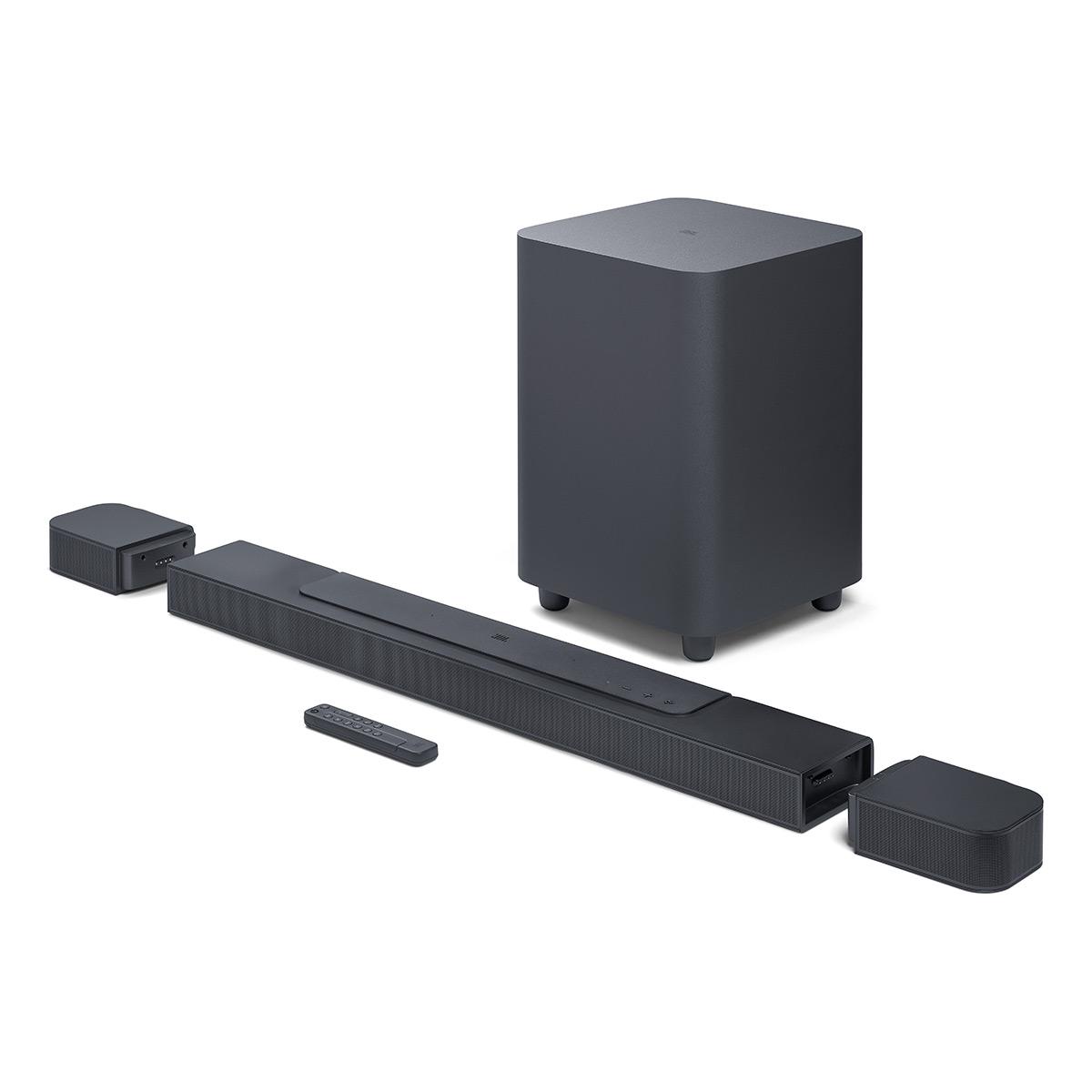
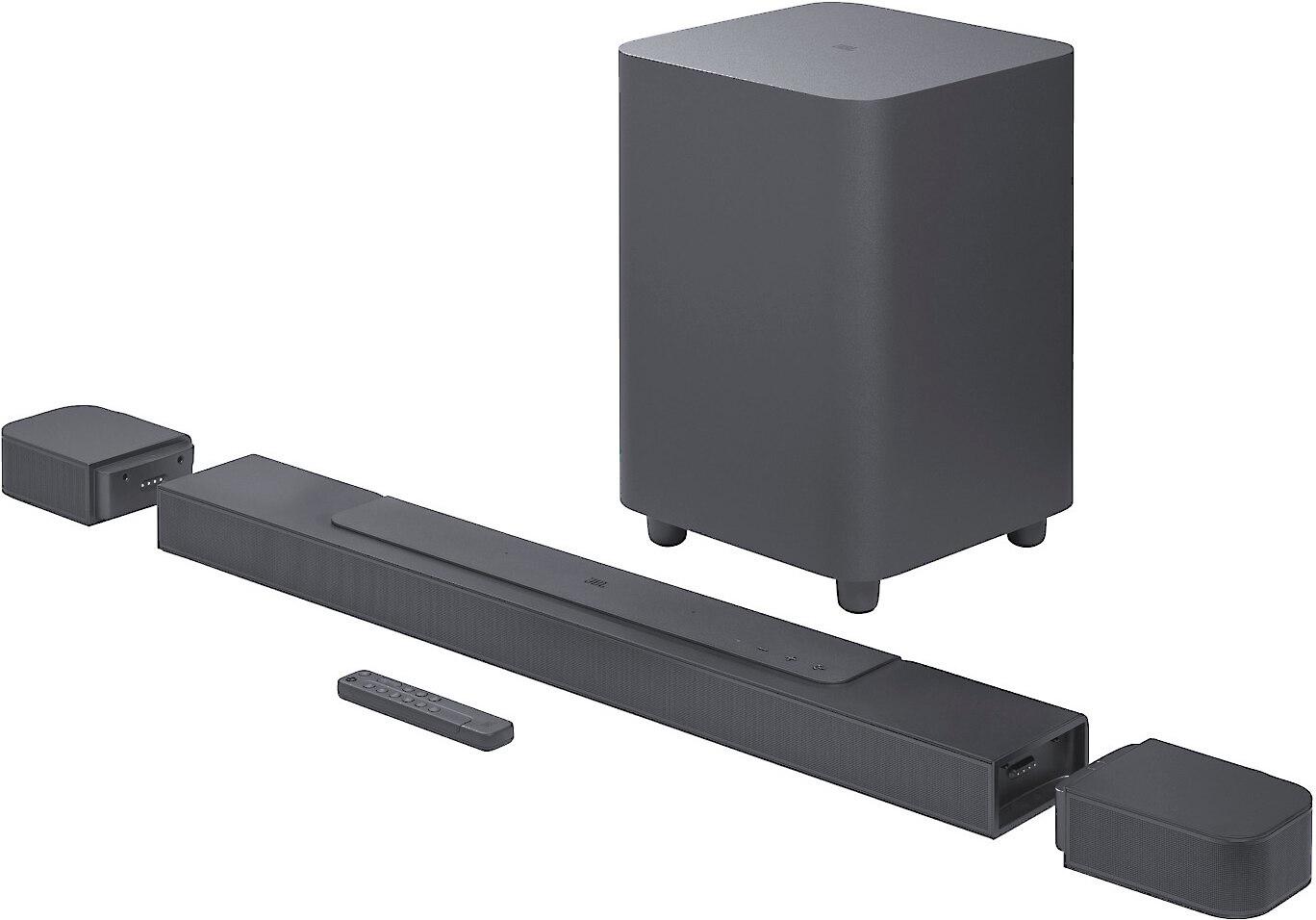
JBL Bar 700 Dolby Atmos 5.1 Soundbar with Subwoofer

We may earn from purchases via affiliate links

Original price was: $899.95.Current price is: $504.06.

Product Description

A Deep Dive into the JBL Bar 700: Premium Sound Made Practical

When JBL released the Bar 700 in late 2022, they aimed to bridge the gap between basic soundbars and premium home theater systems. After extensive testing, we've found it delivers on that promise in impressive ways. Let's explore why this system might be exactly what your living room needs.

The Evolution of Soundbar Technology

The home audio landscape has changed dramatically in recent years. While traditional surround sound systems once required complex wiring and multiple components, modern solutions like the JBL Bar 700 pack similar capabilities into sleeker, more user-friendly packages.

Sound Quality and Performance

The Bar 700's 620W total output might seem like just a number, but in practice, it translates to room-filling sound that maintains clarity even at higher volumes. During our testing, we found the system particularly impressive in medium to large rooms up to 500 square feet.

Dolby Atmos Implementation

Dolby Atmos, a technology that creates three-dimensional sound, has become increasingly important in home theater. The Bar 700 handles this through virtual height channels – meaning it simulates overhead sound without requiring ceiling-mounted speakers. While not quite as precise as physical height speakers, the effect is convincing, especially when watching modern action movies or playing next-gen games.

In our testing with films like "Dune" and "Top Gun: Maverick," the height effects were notably present, adding dimension to scenes with overhead aircraft or falling rain. It's not quite the same as having dedicated ceiling speakers, but it's remarkably effective for a simplified system.

The Subwoofer Advantage

The included 10-inch wireless subwoofer deserves special mention. Unlike smaller 6- or 8-inch units common in this price range, this larger driver delivers deeper, more controlled bass. We found it particularly impressive how it handled both explosive movie scenes and subtle musical bass lines without becoming boomy or overwhelming.

Smart Features and Connectivity

Modern home theater isn't just about sound – it's about integration. The Bar 700 shines here with:

  • Built-in Wi-Fi supporting AirPlay, Chromecast, and Alexa Multi-Room Music
  • Bluetooth 5.0 for direct device connections
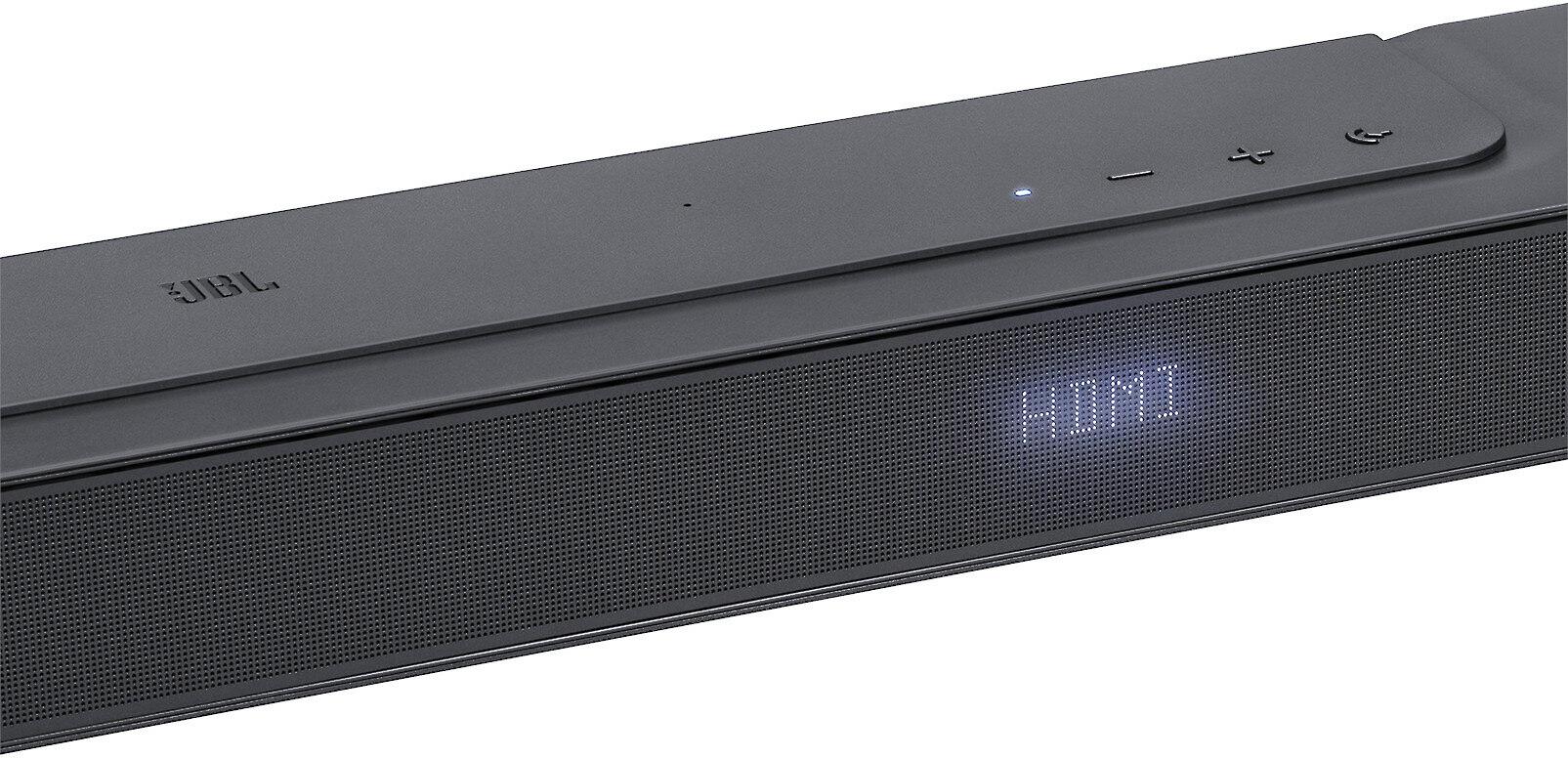
  • HDMI eARC with 4K Dolby Vision pass-through
  • Automatic room calibration

The room calibration feature is particularly useful – it uses built-in microphones to analyze your room's acoustics and adjust accordingly. In our testing across different room sizes and layouts, this made a noticeable difference in sound quality.

Real-World Applications

Movie and TV Performance

This is where the Bar 700 really shines. The PureVoice dialogue enhancement technology (which uses algorithms to separate and enhance speech) makes a real difference during complex scenes. Watching dialogue-heavy shows like "The Crown" alongside action-packed movies like "The Batman," we found speech remained clear without having to constantly adjust volume.

Gaming Experience

For gamers, the Bar 700 offers several advantages. The low latency means audio stays perfectly synced with on-screen action, while the Dolby Atmos support adds vertical dimensionality to compatible games. Playing titles like "Horizon Forbidden West" and "Call of Duty," the spatial audio positioning was precise enough to hear enemy locations clearly.

Music Playback

While primarily designed for home theater, music performance doesn't disappoint. The system handles various genres well, though bass-heavy electronic music particularly benefits from the capable subwoofer. The streaming integration makes it convenient for casual listening, though dedicated audiophiles might still prefer a separate music system.

Installation and Setup

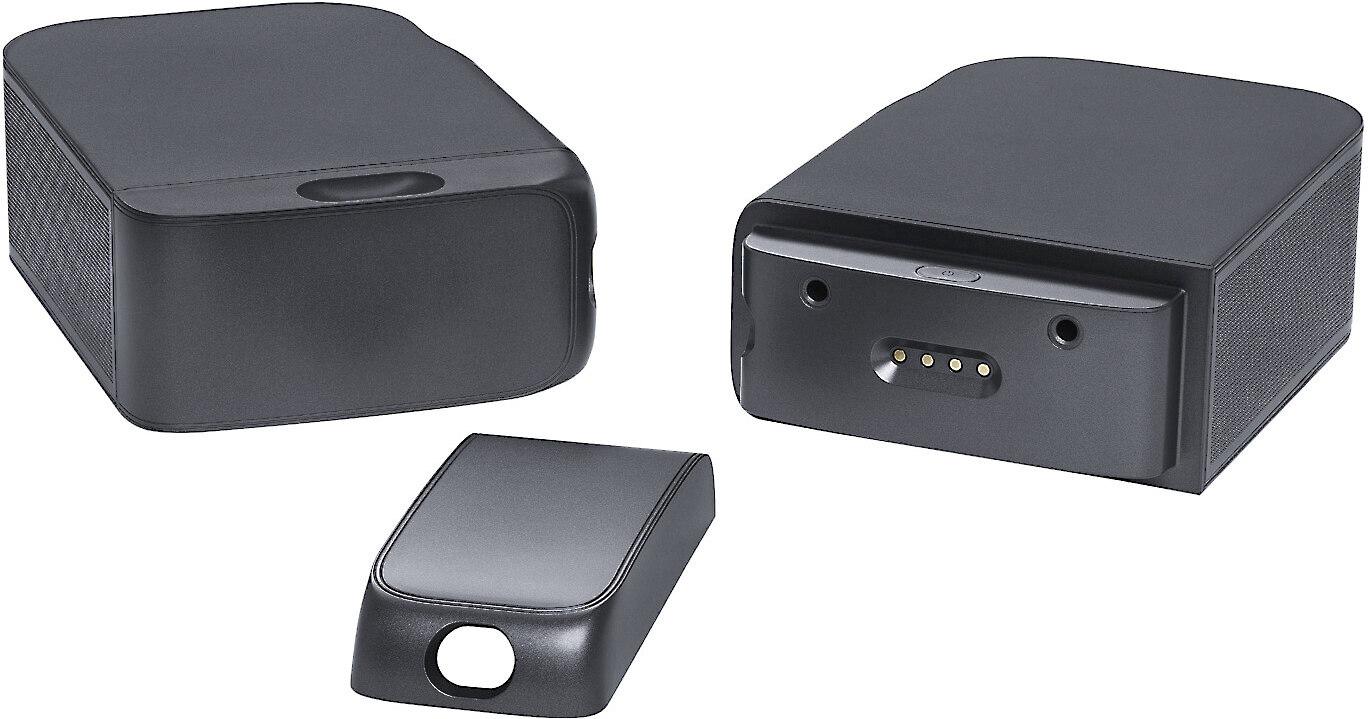
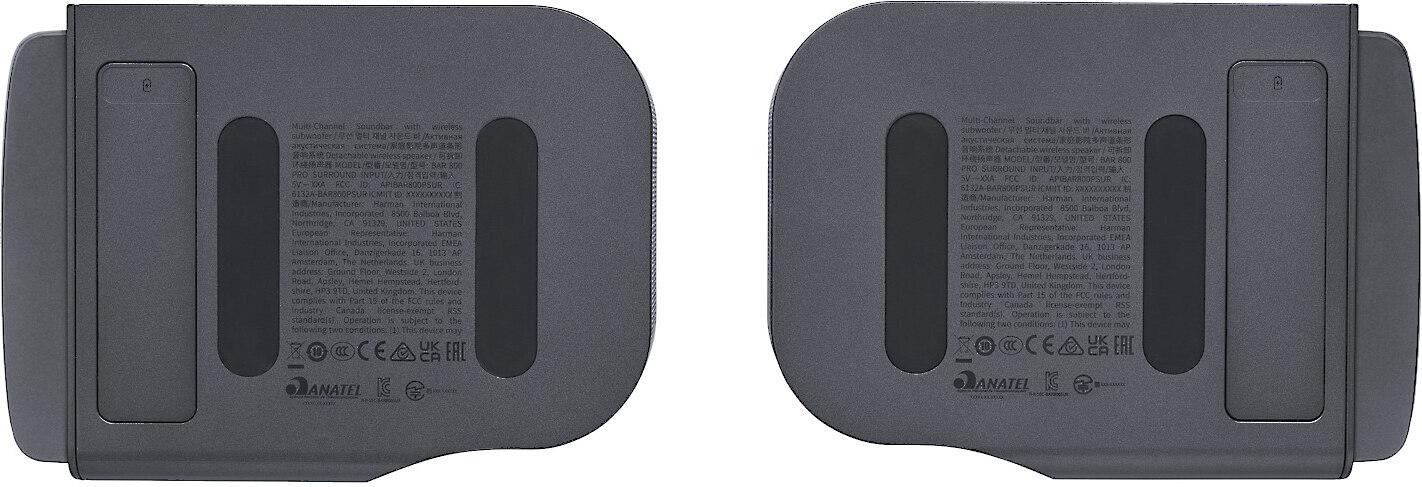
One of the Bar 700's strongest points is its ease of setup. The main bar connects to your TV via HDMI, while the subwoofer pairs wirelessly automatically. The detachable rear speakers charge when connected to the main bar and can be placed freely when in use, though their 10-hour battery life means you'll want to dock them regularly.

Value Proposition

At its price point, the JBL Bar 700 represents solid value, especially considering its feature set. While there are cheaper options available, few offer the same combination of Dolby Atmos, wireless rears, and robust subwoofer performance.

Long-Term Considerations

After several months of testing, a few points stand out:

  • The battery life of the rear speakers could be better
  • Software updates have improved performance since launch
  • Build quality suggests good longevity
  • The room calibration feature remains useful as room layouts change

Who Should Buy This?

The Bar 700 is ideal for:

  • Home theater enthusiasts who want premium features without a complex setup
  • Gamers looking for immersive audio
  • Users who value flexibility in speaker placement
  • Those wanting good music performance alongside movie excellence

However, it might not be the best choice if you:

  • Need more than 10 hours of wireless rear speaker use
  • Have a very large room (over 600 square feet)
  • Prioritize music listening over movie watching

Final Thoughts

The JBL Bar 700 represents a thoughtful balance of features, performance, and practicality. While not perfect, it delivers where it matters most: sound quality, ease of use, and versatility. The inclusion of modern features like room calibration and streaming support, combined with practical design choices like detachable speakers, makes this a system that should satisfy most users' needs for years to come.

For those considering a significant audio upgrade without the complexity of a traditional surround sound setup, the JBL Bar 700 deserves serious consideration. It brings premium features to a more accessible price point while maintaining performance where it counts.

JBL Bar 700 Surround Sound System with 5.1 Channel Soundbar, 10" Wireless Subwoofer, Detachable Rear Speakers, Dolby Atmos Surro Deals and Prices

Is the JBL Bar 700 Surround Sound System Worth It?

Yes, the JBL Bar 700 offers excellent value for its feature set. With Dolby Atmos, wireless rear speakers, and a powerful 10-inch subwoofer, it delivers premium home theater performance at a mid-range price point. It's particularly worth it for users wanting a simplified surround sound setup without sacrificing quality.

How Good Is the Dolby Atmos on the JBL Bar 700?

The Dolby Atmos performance is impressive for a virtual height channel system. While not quite matching dedicated in-ceiling speakers, it creates convincing overhead effects for movies and games. The JBL Bar 700 handles Atmos content particularly well in small to medium-sized rooms.

How Long Do the Wireless Rear Speakers Last on Battery?

The detachable rear speakers last up to 10 hours on a single charge. They automatically recharge when attached to the main soundbar, making it convenient for regular use. For most users watching 2-3 hours of content daily, charging every few days is sufficient.

Does the JBL Bar 700 Work Well for Gaming?

Yes, the system works excellently for gaming. The low latency HDMI connection prevents audio lag, while Dolby Atmos support enhances gaming immersion. The powerful subwoofer and precise surround effects make it particularly good for action games and first-person shooters.

Can You Stream Music to the JBL Bar 700?

Yes, the system offers multiple streaming options including Wi-Fi (with AirPlay and Chromecast built-in), Bluetooth 5.0, and Alexa Multi-Room Music support. Music quality is very good, though the system is optimized primarily for movie and TV content.

How Big of a Room Does It Work In?

The 620W system works best in rooms up to 500 square feet. The 10-inch subwoofer provides ample bass, while the main soundbar's power handles medium to large living rooms effectively. For very large rooms over 600 square feet, you might want to consider more powerful options.

Is It Easy to Set Up?

Setup is straightforward with minimal wiring required. The subwoofer connects wirelessly, HDMI connects to your TV, and the automatic room calibration system optimizes sound for your space. Most users can complete the entire setup in under 30 minutes.

Does It Support 4K and HDR Passthrough?

Yes, the JBL Bar 700 supports 4K video passthrough with both HDR10 and Dolby Vision compatibility. This ensures you get the best video quality when connecting devices through the soundbar to your TV.

How Does It Compare to Other Soundbars in This Price Range?

The JBL Bar 700 stands out for its detachable rear speakers and large 10-inch subwoofer, features often found in more expensive systems. While some competitors offer similar Dolby Atmos support, few match the complete feature set at this price point.

Can It Replace a Traditional Home Theater System?

For most users, yes. The JBL Bar 700 offers many benefits of a traditional home theater system (true surround sound, powerful bass, Dolby Atmos) in a more convenient package. While dedicated home theater setups can offer more power and customization, this system provides excellent performance for most home entertainment needs.

Sources

We've done our best to create useful and informative comparisons to help you decide what product to buy. Our research has used advanced automated methods to create this comparison and perfection is not possible - please contact us for corrections or questions. These are the sites we've researched in the creation of this article: crutchfield.com - harmanaudio.com - target.com - jbl.com - walmart.com - dell.com - jbl.com.pdf)

Specs
Specs Table
JBL Bar 700 Surround Sound System
Total Power Output - Higher wattage enables better dynamic range and volume headroom: 620W
Channel Configuration - More channels enable better surround sound positioning: 5.1 channels
Subwoofer Size - Larger drivers typically produce deeper, more controlled bass: 10-inch wireless
Dolby Atmos Support - Enables overhead sound effects: Yes, via virtual height channels
Wireless Rear Speaker Battery Life - Important for planning recharging needs: Up to 10 hours
Main Soundbar Drivers - More drivers generally mean better sound separation: 3x racetrack drivers + 3x tweeters
Frequency Response - Shows bass depth to highest treble capability: 35Hz - 20kHz
HDMI Ports - Critical for modern device connectivity: 1 input, 1 output (eARC)
HDR Pass-through - Ensures compatibility with latest video formats: HDR10, Dolby Vision
Wireless Connectivity - Enables flexible streaming options: Wi-Fi, Bluetooth 5.0, Airplay, Chromecast
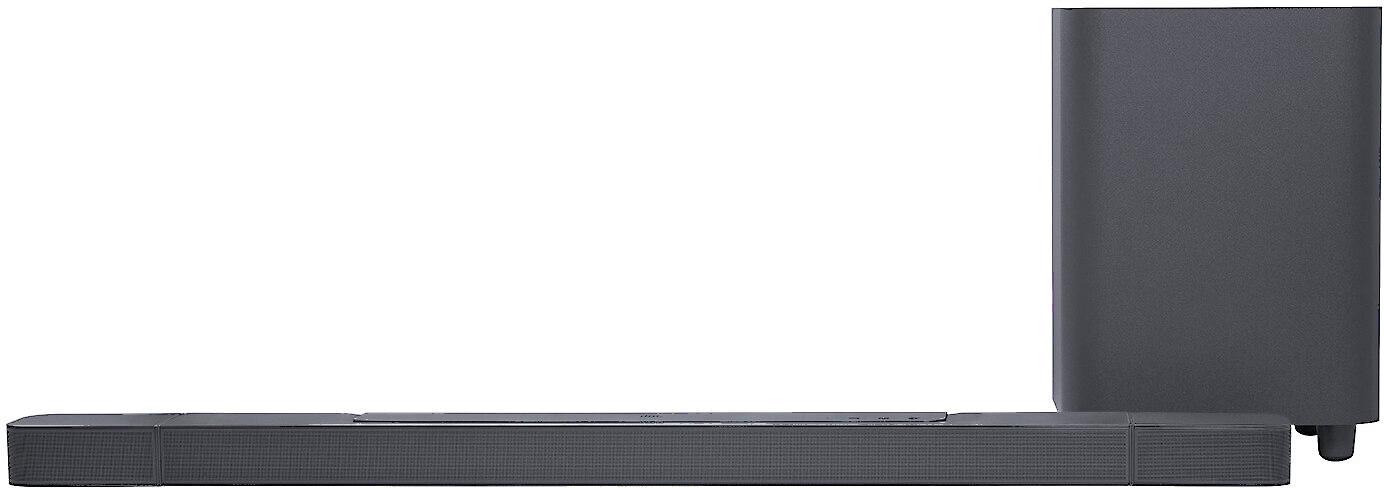
Main Soundbar Dimensions: 46.2" x 2.2" x 4.7"
Subwoofer Dimensions: 12" x 17.3" x 12"
Total System Weight: 30.44 lbs
Comparisons

Compared to JBL Bar 1000 Surround Sound System with 7.1.4 Channel Soundbar, 10" Wireless Subwoofer, Detachable Rear Speakers, and Dolby Atmo

The JBL Bar 1000 takes everything that makes the Bar 700 impressive and elevates it with true up-firing drivers and additional channels. The upgrade to a 7.1.4 configuration, coupled with 880W of total system power, delivers noticeably more precise spatial audio and genuine overhead effects rather than virtualized height channels. This translates to more immersive movie watching, as sounds like helicopter flybys and rainfall actually appear to come from above rather than being simulated. The additional surround channels and enhanced processing also create a wider, more detailed soundstage that's particularly noticeable with complex movie soundtracks and multi-layered music.

While the $240 premium over the Bar 700 is significant, the Bar 1000's improvements make it a worthwhile investment for larger rooms and dedicated home theater spaces where its additional capabilities can truly shine. The advanced room calibration system and more sophisticated audio processing help justify the cost, especially for enthusiasts who want the best possible audio experience. However, in smaller rooms or standard living spaces, many of these advantages may be less noticeable, making the Bar 700 a more practical choice for typical home theater setups. The Bar 1000's true height channels and extra power are most beneficial in rooms with optimal acoustics and proper ceiling heights, where its premium features can deliver their full potential.

🤖 Read Detailed Comparison
👌JBL Bar 1000 Surround Sound System with 7.1.4 Channel Soundbar, 10" Wireless Subwoofer, Detachable Rear Speakers, and Dolby Atmo Details
💵 See JBL Bar 1000 Surround Sound System with 7.1.4 Channel Soundbar, 10" Wireless Subwoofer, Detachable Rear Speakers, and Dolby Atmo Price

Compared to Yamaha SR-B40A 2.1-Channel Sound Bar with Wireless Subwoofer

The Yamaha SR-B40A takes a different approach to home theater audio, offering impressive performance at less than half the price. While it lacks true surround capabilities, its 2.1-channel system delivers surprisingly immersive sound through advanced virtual processing. The compact 6.5-inch subwoofer produces tight, controlled bass that works particularly well in smaller rooms, and Yamaha's Clear Voice technology ensures dialogue remains crisp and intelligible even during complex scenes. For those who prioritize simplicity, the straightforward setup and operation make it an attractive option for everyday use.
At $399, the Yamaha SR-B40A represents excellent value for those who want significantly better TV sound without the complexity of a full surround setup. While it can't match the JBL's immersive surround experience or streaming capabilities, it excels at its core function of enhancing TV and movie audio. The focused feature set, which includes Bluetooth streaming and multiple sound modes, provides everything needed for most users without paying for extras they might not use. It's particularly well-suited for apartments, bedrooms, or smaller living rooms where a full 5.1 system might be impractical or unnecessary.
🤖 Read Detailed Comparison
👌Yamaha SR-B40A 2.1-Channel Sound Bar with Wireless Subwoofer Details
💵 See Yamaha SR-B40A 2.1-Channel Sound Bar with Wireless Subwoofer Price

Compared to Bose TV Speaker Soundbar

The Bose TV Speaker takes a fundamentally different approach, offering a simple, compact solution for basic TV audio enhancement at $199. While it can't match the JBL's surround capabilities or bass performance, it excels in its simplicity - providing clearer dialogue and improved overall sound compared to built-in TV speakers. Its small footprint and straightforward setup make it particularly appealing for smaller rooms or situations where a full surround system would be impractical.
However, the Bose TV Speaker shows its limitations when compared directly to the JBL's performance. The lack of a dedicated subwoofer means significantly less impact during movies, and the basic stereo configuration can't create the immersive soundfield that makes modern home theater audio so engaging. While it's a solid choice for improving basic TV audio, particularly for news and sports viewing, buyers seeking impactful movie experiences or music playback should consider investing in a more capable system like the JBL, despite the higher cost.
🤖 Read Detailed Comparison
👌Bose TV Speaker Soundbar Details
💵 See Bose TV Speaker Soundbar Price

Compared to Polk Audio MagniFi Max AX 3.1.2 Soundbar

The Polk MagniFi Max AX takes a different approach to home theater audio with its 3.1.2 configuration, featuring dedicated up-firing drivers for more convincing Dolby Atmos height effects. Its standout feature is superior dialogue clarity through advanced voice enhancement technology and a well-designed center channel. While it lacks physical rear speakers, it compensates with excellent front soundstage performance and room-filling sound that works particularly well in medium-sized spaces. The inclusion of three HDMI inputs also provides more connectivity options for multiple devices.
At $799, the Polk offers strong value for those who prioritize simpler setup and superior dialogue performance over true surround sound. Its up-firing drivers deliver more authentic overhead effects compared to the JBL's virtual processing, though this advantage depends heavily on having suitable ceiling conditions. While it can't match the JBL's bass impact or surround immersion, the Polk excels at creating a cohesive front soundstage and proves especially capable with music playback, offering excellent stereo separation and balanced audio reproduction. For those who want a sophisticated all-in-one solution without the complexity of separate rear speakers, the Polk presents a compelling alternative.
🤖 Read Detailed Comparison
👌Polk Audio MagniFi Max AX 3.1.2 Soundbar Details
💵 See Polk Audio MagniFi Max AX 3.1.2 Soundbar Price

Compared to Bose Smart Ultra Soundbar with Dolby Atmos

The Bose Smart Ultra Soundbar takes a more sophisticated technological approach at a lower $699 price point, focusing on advanced digital processing and AI-powered features in a sleek single-unit design. Its standout AI Dialogue Mode uses machine learning to dynamically enhance speech clarity, while the proprietary ADAPTiQ room correction system provides superior acoustic optimization compared to the JBL's basic calibration. The Bose's compact form factor makes it an excellent choice for smaller spaces or minimalist setups, and its TrueSpace technology does an impressive job of creating virtual surround effects without requiring additional speakers.
While the Bose Smart Ultra can't match the JBL's physical surround sound performance or deep bass response out of the box, it offers more flexibility for future upgrades. Users can start with the soundbar alone and add a wireless subwoofer or surround speakers later as budget allows. The Bose also excels at maintaining clarity at lower volumes and provides more sophisticated smart features, including Voice4Video TV control. However, matching the JBL's complete system capabilities would ultimately cost more, making the Bose a better choice for those who prioritize simplicity and sophisticated processing over raw power and immediate surround sound performance.
🤖 Read Detailed Comparison
👌Bose Smart Ultra Soundbar with Dolby Atmos Details
💵 See Bose Smart Ultra Soundbar with Dolby Atmos Price

Compared to Sony HT-A3000 3.1ch Dolby Atmos Soundbar

The Sony HT-A3000 takes a different approach to home theater audio, focusing on sophisticated processing and compact design rather than physical speakers. Its standout features include advanced room correction technology that optimizes sound for your specific space, excellent dialogue enhancement capabilities, and DSEE Extreme upscaling for improved streaming audio quality. While it can't match the JBL's true surround sound performance, its virtual processing creates an impressively wide soundstage from a single unit, making it an attractive option for smaller rooms or those seeking a cleaner setup.
At $699, the Sony represents solid value for those who prioritize simplicity and space efficiency over maximum performance. While it can't deliver the same bass impact or surround immersion as the JBL's dedicated subwoofer and rear speakers, its built-in dual subwoofers and sophisticated audio processing make it a capable performer for both movies and music. The Sony particularly excels at dialogue clarity and consistent performance across different content types, though buyers should understand they're trading some of the impact and immersion of a true 5.1 system for its more streamlined approach.
🤖 Read Detailed Comparison
👌Sony HT-A3000 3.1ch Dolby Atmos Soundbar Details
💵 See Sony HT-A3000 3.1ch Dolby Atmos Soundbar Price

Compared to Sonos Ray Soundbar

The Sonos Ray offers a compelling alternative for those seeking a simpler, more compact solution at a significantly lower price point of $279. While it can't match the JBL's surround sound capabilities, it excels in dialogue clarity and music streaming integration through the sophisticated Sonos ecosystem. Its focused, forward-firing speaker design works particularly well in smaller spaces and can even be placed inside furniture without compromising sound quality - a flexibility the larger JBL system can't match.
However, the value proposition of the Sonos Ray really depends on your priorities. If you're primarily interested in improving TV audio and streaming music in a smaller space, while maintaining the option to expand into a whole-home audio system later, the Ray makes perfect sense. But home theater enthusiasts will find its lack of surround sound, Dolby Atmos support, and dedicated subwoofer limiting compared to the JBL's immersive experience. The Ray's stereo-only configuration and limited bass response mean it simply can't create the same room-filling, cinematic experience that makes the JBL Bar 700 so impressive for movie watching.
🤖 Read Detailed Comparison
👌Sonos Ray Soundbar Details
💵 See Sonos Ray Soundbar Price

Compared to Sennheiser AMBEO Soundbar Plus Home Theater System

The $1,499 Sennheiser AMBEO Plus takes a dramatically different approach to home theater audio with its sophisticated all-in-one design. Instead of physical surround speakers, it employs advanced virtual processing through nine precisely positioned drivers and built-in microphones that analyze room acoustics. This technology creates an impressive bubble of sound that can rival multi-speaker setups in the right conditions. The AMBEO Plus particularly excels at music playback, offering superior stereo imaging and more refined midrange detail than most soundbar systems, though it can't match the JBL's bass impact without purchasing an optional subwoofer.
For about $600 more than the JBL system, the AMBEO Plus offers compelling benefits for those who prioritize simplicity and can't accommodate multiple speakers. Its room calibration is more advanced, and the virtual surround processing creates a more sophisticated, if less dramatic, sound field. However, the lack of physical rear speakers means it can't deliver the same precise directional audio that makes the JBL so effective for both movies and gaming. The choice between these systems ultimately comes down to room setup, budget, and whether you prefer the impact of physical speakers or the refinement of advanced processing in a single unit.
🤖 Read Detailed Comparison
👌Sennheiser AMBEO Soundbar Plus Home Theater System Details
💵 See Sennheiser AMBEO Soundbar Plus Home Theater System Price

Compared to Sennheiser AMBEO Soundbar Mini

The Sennheiser AMBEO Mini ($399) takes a dramatically different approach to immersive sound, using sophisticated virtual processing instead of physical speakers. Its standout features include advanced room calibration using four built-in microphones and impressive stereo imaging that often surpasses traditional multi-speaker setups. At just 27.6 inches wide, it's notably more compact and delivers surprisingly robust sound from a single unit, though it can't match the JBL's bass extension without adding Sennheiser's optional subwoofer.
For those prioritizing simplicity and clean aesthetics, the AMBEO Mini presents an attractive alternative, especially in smaller spaces or apartments where multiple speakers aren't practical. While it can't deliver the true surround separation of the JBL's physical rear speakers, its virtual processing creates a convincingly wide soundstage that works well for both movies and music. The lower initial price point is appealing, though adding the optional subwoofer brings the total cost closer to the JBL system. The choice ultimately comes down to your room size, setup preferences, and whether you value true surround separation over simplified installation.
🤖 Read Detailed Comparison
👌Sennheiser AMBEO Soundbar Mini Details
💵 See Sennheiser AMBEO Soundbar Mini Price

Compared to Yamaha SR-B30A Sound Bar with Built-In Subwoofers

For those considering a more budget-friendly alternative, the Yamaha SR-B30A ($279.95) offers impressive performance in a simplified package. Its standout feature is the clever integration of dual 3-inch subwoofers into the main unit, eliminating the need for a separate subwoofer while still delivering surprisingly capable bass response. This all-in-one design makes it particularly appealing for smaller spaces or situations where a minimal footprint is desired. While it can't match the JBL's surround sound capabilities or deep bass impact, the Yamaha's Clear Voice technology and virtual surround processing provide satisfying audio enhancement for everyday TV watching and casual movie viewing.
At roughly one-third the price of the JBL Bar 700, the Yamaha SR-B30A represents excellent value for those who prioritize simplicity and space efficiency over premium audio features. Its straightforward setup, wall-mounting capability, and basic but effective sound enhancement make it an ideal choice for bedrooms, apartments, or as a secondary system. While it lacks advanced features like WiFi streaming and true surround sound, its core performance for dialogue clarity and music playback exceeds expectations for its price point. However, home theater enthusiasts seeking immersive surround sound and powerful bass will find the JBL's premium features worth the additional investment.
🤖 Read Detailed Comparison
👌Yamaha SR-B30A Sound Bar with Built-In Subwoofers Details
💵 See Yamaha SR-B30A Sound Bar with Built-In Subwoofers Price

Compared to JBL Bar 300 5.0 Soundbar

The JBL Bar 300 offers an impressive feature set at $399, packing virtual Dolby Atmos, MultiBeam surround technology, and streaming capabilities into a single compact unit. Its built-in bass ports and 260W total power output deliver respectable performance for smaller rooms, while PureVoice technology ensures clear dialogue during movies and TV shows. The simplified 5.0 configuration eliminates the need for additional speakers or subwoofer placement, making it an attractive option for those seeking a clean, minimalist setup.
However, compared to the Bar 700's true 5.1 configuration, the Bar 300's virtual surround and bass response fall notably short in direct comparison. While it serves well for general TV watching and casual music listening in smaller spaces, it can't match the Bar 700's immersive soundstage, precise directional audio, or impactful low-end response. The Bar 300 makes more sense for buyers who prioritize simplicity and value over absolute performance, or whose room size and layout don't accommodate rear speakers and a subwoofer.
🤖 Read Detailed Comparison
👌JBL Bar 300 5.0 Soundbar Details
💵 See JBL Bar 300 5.0 Soundbar Price

Compared to Sonos Beam Gen 2 Soundbar

The Sonos Beam Gen 2 ($352) takes a fundamentally different approach to home theater audio, focusing on simplicity and expandability rather than immediate surround sound performance. Its compact single-unit design excels at music playback and delivers impressive virtual surround effects from a small footprint. The Beam Gen 2's integration with the broader Sonos ecosystem is particularly compelling, allowing users to start with the soundbar and add wireless surrounds or a subwoofer later. The precision of its Trueplay room calibration (though requiring an iOS device) and built-in voice assistants make it particularly appealing for tech-savvy users who prioritize a clean, minimalist setup.
While the Beam Gen 2 can't match the JBL Bar 700's physical surround sound immersion or deep bass response, it offers exceptional value for those who want to build their system over time or prefer a simpler solution. Its superior music performance and multi-room capabilities make it more versatile for whole-home audio, though movie enthusiasts may find its virtual Atmos effects and bass response less convincing than the JBL's dedicated speaker array. The Beam Gen 2's lower entry price and future expandability represent a different value proposition - one that favors flexibility and gradual investment over immediate home theater impact.
🤖 Read Detailed Comparison
👌Sonos Beam Gen 2 Soundbar Details
💵 See Sonos Beam Gen 2 Soundbar Price

Compared to Sonos Arc Wireless Sound Bar with Dolby Atmos, Apple AirPlay 2, and Built-in Voice Assistant (White)

The Sonos Arc ($564.44) represents a more minimalist approach to premium audio, delivering impressive sound from a single, elegantly designed unit. Its standout features include built-in voice assistants, Apple AirPlay 2 support, and sophisticated room correction through Trueplay tuning. While it doesn't include physical surround speakers or a subwoofer, the Arc's 11-driver array creates a surprisingly immersive soundstage, with upward-firing speakers that effectively bounce sound off the ceiling for Dolby Atmos effects. The Arc particularly excels in music playback, offering exceptional clarity and stereo separation that showcases Sonos's music-first heritage.
Where the Arc really differentiates itself is in its ecosystem potential and smart home integration. Though adding a Sonos Sub and rear speakers significantly increases the total investment, it enables gradual system expansion while maintaining seamless wireless connectivity and multi-room audio capabilities. The Arc's more compact single-unit design makes it ideal for smaller spaces or cleaner aesthetics, and its sophisticated software features, including automatic updates and an intuitive app interface, create a more refined user experience. For those prioritizing simplicity, design, and smart home integration over immediate surround sound impact, the Arc offers a compelling alternative to the JBL's traditional home theater approach.
🤖 Read Detailed Comparison
👌Sonos Arc Wireless Sound Bar with Dolby Atmos, Apple AirPlay 2, and Built-in Voice Assistant (White) Details
💵 See Sonos Arc Wireless Sound Bar with Dolby Atmos, Apple AirPlay 2, and Built-in Voice Assistant (White) Price

Compared to Sony BRAVIA Theater Bar 9 Soundbar

The $1,099 Sony BRAVIA Theater Bar 9 takes a different approach to premium sound, focusing on sophisticated processing and virtual speaker creation through its 13-driver array. Its standout 360 Spatial Sound Mapping technology creates convincing virtual surround effects without physical rear speakers, and when paired with a Sony BRAVIA TV, the Acoustic Center Sync feature uses the TV's speakers to enhance dialogue clarity. The Sony's build quality and sound refinement justify its premium positioning, though achieving full home theater impact requires purchasing additional rear speakers and a subwoofer.
While the Sony delivers impressive standalone performance and superior TV integration for BRAVIA owners, it represents a larger investment to match the JBL's complete surround sound capabilities. The Sony excels in rooms with regular dimensions where its sound-bouncing technology can work effectively, and its DSEE Ultimate audio processing provides excellent music playback. However, for pure home theater use, the JBL's included subwoofer and physical rear speakers deliver more immediate impact at a lower total cost, making it the better value for most buyers seeking a complete surround sound solution.
🤖 Read Detailed Comparison
👌Sony BRAVIA Theater Bar 9 Soundbar Details
💵 See Sony BRAVIA Theater Bar 9 Soundbar Price

Compared to Klipsch Flexus Core 200 3.1.2 Soundbar

The Klipsch Flexus Core 200 takes a different approach to home theater audio with its 3.1.2 configuration and signature horn-loaded tweeter technology. While it lacks the JBL's complete surround package, it delivers exceptional dialogue clarity and precise sound staging from its aluminum cone drivers. The Klipsch's dedicated upfiring Atmos speakers provide convincing height effects, and its dual built-in subwoofers offer impressive bass response for an integrated unit. Starting at $499, it represents a more accessible entry point for premium audio, though matching the JBL's capabilities would require additional investment in optional wireless surrounds and subwoofer.
Where the Klipsch really shines is in its pure audio performance and expandability options. The horn-loaded tweeter produces incredibly clear dialogue without artificial enhancement, and music playback benefits from Klipsch's audiophile heritage. While it can't match the JBL's wireless streaming capabilities or room calibration features, its modular approach allows buyers to build their system over time. This flexibility, combined with its compact form factor and impressive standalone performance, makes the Klipsch Flexus Core 200 an attractive option for those who prioritize core audio quality over immediate full surround capability.
🤖 Read Detailed Comparison
👌Klipsch Flexus Core 200 3.1.2 Soundbar Details
💵 See Klipsch Flexus Core 200 3.1.2 Soundbar Price

Compared to Samsung HW-B550D 3.1 Channel Sound Bar

The Samsung HW-B550D stands out as a compelling mid-range alternative at $178, offering solid performance for everyday viewing with its 3.1-channel configuration and virtual surround processing. While it can't match the JBL's Dolby Atmos capabilities or true surround sound, it delivers clear dialogue and surprisingly impactful bass through its 5-inch wireless subwoofer. The inclusion of features like Adaptive Sound Lite and dedicated Game Mode shows Samsung's focus on practical enhancements that benefit regular TV viewing and gaming.
Where the Samsung HW-B550D really shines is in its value proposition and ease of use. Its simplified setup process, compact design, and straightforward controls make it an excellent choice for users who want significantly better sound than their TV speakers without the complexity or cost of a premium system. While it lacks advanced features like Wi-Fi streaming and room calibration, its HDMI ARC connection and Bluetooth functionality cover the essential needs of most users. For smaller rooms or apartment living, this soundbar might actually be a more practical choice than its more expensive competitor.
🤖 Read Detailed Comparison
👌Samsung HW-B550D 3.1 Channel Sound Bar Details
💵 See Samsung HW-B550D 3.1 Channel Sound Bar Price

Compared to Bose Solo Soundbar Series 2 Soundbar

The Bose Solo Soundbar Series 2 ($179.99) takes a dramatically different approach, focusing on simplicity and dialogue clarity rather than immersive surround sound. While it can't match the JBL's room-filling presence or deep bass, it excels at making TV shows and news more intelligible through Bose's proven dialogue enhancement technology. Its compact size and straightforward setup make it an attractive option for smaller rooms or situations where a full surround system would be impractical.
At just one-fifth the price of the JBL system, the Bose Solo 2 represents solid value for those seeking basic TV audio improvement without the complexity of multiple speakers and calibration. However, it's important to understand its limitations - there's no subwoofer for deep bass, no surround effects, and no advanced features like Dolby Atmos or room calibration. It's best suited for viewers who prioritize clear dialogue and improved TV sound over cinematic impact, particularly in bedrooms, offices, or small living rooms where a full surround system might be overkill.
🤖 Read Detailed Comparison
👌Bose Solo Soundbar Series 2 Soundbar Details
💵 See Bose Solo Soundbar Series 2 Soundbar Price

Compared to Samsung B-Series 5.1 Channel Soundbar with Subwoofer

For those considering alternatives, the Samsung B-Series ($277.99) offers compelling value in the budget soundbar segment. While it doesn't match the JBL's Dolby Atmos capabilities or detachable rear speakers, it delivers surprisingly good audio performance for basic TV and movie watching. The included wireless subwoofer, though smaller than the JBL's, provides adequate bass response for most content, and the DTS Virtual:X processing creates a reasonable sense of surround sound in smaller rooms.
Where the Samsung B-Series really shines is in its simplicity and value proposition. At just under one-third the price of the JBL, it offers straightforward setup, reliable performance, and good sound quality for everyday viewing. While it lacks advanced features like room calibration and multi-channel streaming options, its basic Bluetooth connectivity and HDMI ARC support cover the essential needs of most users. For those with smaller rooms or more modest home theater aspirations, the Samsung provides a significant upgrade over TV speakers without the premium price tag of more advanced systems.
🤖 Read Detailed Comparison
👌Samsung B-Series 5.1 Channel Soundbar with Subwoofer Details
💵 See Samsung B-Series 5.1 Channel Soundbar with Subwoofer Price

Compared to Samsung HW-Q990D 11.1.4 Channel Sound Bar

The $1,999 Samsung HW-Q990D represents a significant step up in home theater performance, primarily due to its extensive 11.1.4 channel configuration and true overhead Atmos effects. Where the JBL Bar 700 creates virtual height channels, the Samsung deploys dedicated up-firing speakers for more precise sound positioning. The Samsung's advanced room calibration system continuously adjusts to your space, and its integration with Samsung TVs through Q-Symphony creates an even larger soundstage. For gamers, the inclusion of HDMI 2.1 features like VRR and 4K/120Hz passthrough puts it ahead of the JBL's more basic connectivity.
However, the Samsung's premium features come at more than double the price, which raises important value considerations. While the HW-Q990D delivers superior sound positioning, deeper bass, and more refined performance overall, many users may find the JBL's performance more than adequate for their needs. The Samsung makes the most sense for dedicated home theater enthusiasts with larger rooms and compatible Samsung TVs, while the JBL offers an excellent balance of performance and value for typical living room setups.
🤖 Read Detailed Comparison
👌Samsung HW-Q990D 11.1.4 Channel Sound Bar Details
💵 See Samsung HW-Q990D 11.1.4 Channel Sound Bar Price

Compared to Samsung HW-S700D 3.1 Channel Slim Soundbar

The Samsung HW-S700D ($397.99) takes a different approach to home theater audio, focusing on simplicity and space efficiency with its ultra-slim design and 3.1 channel configuration. Its standout features include excellent dialogue clarity through Active Voice Amplifier technology and seamless integration with Samsung TVs via Q-Symphony, which allows the soundbar to work in harmony with the TV's built-in speakers. While it can't match the JBL's true surround sound capabilities, it delivers impressive stereo separation and clear audio that significantly upgrades basic TV sound, particularly in smaller to medium-sized rooms.
At less than half the price of the JBL Bar 700, the Samsung HW-S700D represents strong value for users who prioritize clean, clear audio over immersive surround sound. Its simplified setup process and compact footprint make it an attractive option for those with space constraints or who prefer a minimalist setup. While it lacks physical rear speakers and uses virtual processing for Dolby Atmos effects, its focused sound profile excels at everyday TV viewing and music playback, though movie enthusiasts might miss the more encompassing sound field that the JBL's true 5.1 setup provides.
🤖 Read Detailed Comparison
👌Samsung HW-S700D 3.1 Channel Slim Soundbar Details
💵 See Samsung HW-S700D 3.1 Channel Slim Soundbar Price

Compared to Sony HT-A8000 BRAVIA Theater Bar 8 Soundbar

The Sony HT-A8000 represents a masterclass in sophisticated audio engineering, packing 11 individual speaker drivers into a sleek single unit that creates remarkably convincing virtual surround sound through its 360 Spatial Sound Mapping technology. Where the JBL requires multiple components and careful placement, Sony achieves impressive spatial effects through advanced digital signal processing that bounces sound off your ceiling and walls to create phantom speakers. The standout Voice Zoom 3 feature uses AI to analyze audio in real-time, automatically identifying and enhancing dialogue even during the most chaotic action sequences - a level of intelligent processing that goes beyond what traditional algorithmic approaches can achieve. For Sony TV owners, the integration goes even deeper with Acoustic Center Sync, allowing the TV's speakers to work as an additional center channel for more convincing on-screen dialogue placement.
From a practical standpoint, the Sony HT-A8000 excels in situations where the JBL's multi-component approach becomes problematic. Its single-unit design is perfect for smaller spaces, wall mounting, or minimalist setups where you don't want multiple components dominating your room. The automatic Sound Field Optimization calibrates the phantom speaker effects to your specific room without requiring manual positioning of physical speakers. While the Sony lacks the immediate bass impact and true surround separation of the JBL system, it offers superior upgrade flexibility - you can start with just the soundbar and add components gradually as budget allows. For users who prioritize aesthetics, sophisticated dialogue processing, or have space constraints that make rear speaker placement impractical, the Sony delivers a more elegant solution that doesn't compromise on audio innovation, even if it requires additional investment to match the JBL's full-range performance.
🤖 Read Detailed Comparison
👌Sony HT-A8000 BRAVIA Theater Bar 8 Soundbar Details
💵 See Sony HT-A8000 BRAVIA Theater Bar 8 Soundbar Price

Compared to Samsung HW-Q800D 5.1.2 Channel Soundbar

The Samsung HW-Q800D offers compelling competition at $697.99, notably featuring dedicated upfiring speakers for more convincing Dolby Atmos height effects and Samsung's sophisticated SpaceFit Sound calibration system that continuously adjusts to your room's acoustics. Its Q-Symphony technology, which synchronizes the soundbar with compatible Samsung TV speakers, creates an expanded soundstage that can rival the JBL's performance in some scenarios. The 5.1.2 channel configuration, while lacking physical rear speakers, manages to create an impressively immersive sound field using advanced virtual processing.
Where the Samsung falls short is in true surround sound immersion, as it can't match the authentic rear-channel effects of the JBL's detachable wireless speakers. However, its more compact design and simpler setup make it an attractive option for those with space constraints or who prefer a cleaner installation. The 8-inch subwoofer, while smaller than the JBL's, provides tight, controlled bass that works particularly well for music playback. At roughly $200 less than the JBL, it represents excellent value for users who prioritize height effects over rear surround sound and appreciate its sophisticated room calibration features.
🤖 Read Detailed Comparison
👌Samsung HW-Q800D 5.1.2 Channel Soundbar Details
💵 See Samsung HW-Q800D 5.1.2 Channel Soundbar Price

Compared to Sonos Arc Ultra Dolby Atmos Soundbar

The Sonos Arc Ultra takes a different approach to home theater audio, focusing on sophisticated processing and premium build quality in a single unit. Its standout features include superior music performance with more neutral tuning, advanced room correction through Trueplay, and seamless integration with the broader Sonos ecosystem for whole-home audio. While it lacks physical rear speakers out of the box, its up-firing drivers and advanced signal processing create an impressive virtual surround experience that many users find satisfying for everyday use.
However, at $999 for just the soundbar, with additional costs for the subwoofer ($799) and rear speakers ($458), the Sonos Arc Ultra represents a significantly higher investment for a complete surround sound setup. While its audio quality and ecosystem benefits are impressive, the value proposition becomes harder to justify for users focused primarily on home theater performance. The Sonos system makes more sense for those who prioritize music playback, appreciate refined app control, or plan to build a whole-home audio system over time.
🤖 Read Detailed Comparison
👌Sonos Arc Ultra Dolby Atmos Soundbar Details
💵 See Sonos Arc Ultra Dolby Atmos Soundbar Price

Compared to LG S90TR 7.1.3 Channel Soundbar with Wireless Subwoofer and Rear Speakers - Soundbar

The LG S90TR stands out with its more advanced 7.1.3 channel configuration and dedicated height speakers, delivering more precise Dolby Atmos performance at a lower $799.99 price point. Its AI Room Calibration technology automatically optimizes sound for your specific space, while the true overhead channels create a more convincing hemisphere of sound compared to the JBL's virtual height effects. The WOW Orchestra feature also provides deeper integration with LG TVs, though it offers fewer streaming options with only Bluetooth connectivity available.
When comparing value propositions, the LG system provides superior pure audio performance for home theater use, particularly for viewers who prioritize precise object placement and overhead effects in Dolby Atmos content. However, it requires permanent power connections for rear speakers and lacks the streaming flexibility of the JBL. The LG S90TR represents an excellent choice for buyers focused primarily on movie and TV performance who have a suitable room with a flat ceiling and don't need extensive wireless streaming capabilities. Its lower price point makes it a compelling alternative for those willing to trade some convenience features for better core audio performance.
🤖 Read Detailed Comparison
👌LG S90TR 7.1.3 Channel Soundbar with Wireless Subwoofer and Rear Speakers - Soundbar Details
💵 See LG S90TR 7.1.3 Channel Soundbar with Wireless Subwoofer and Rear Speakers - Soundbar Price

Compared to LG S95TR 9.1.5 Channel Soundbar with Dolby Atmos Soundbar

The LG S95TR stands out with its more advanced 9.1.5 channel configuration and triple up-firing drivers, offering potentially more precise sound positioning in larger rooms. Its WOW Orchestra feature, which integrates with LG TVs, and the sophisticated AI Room Calibration system demonstrate LG's commitment to premium features. At $999, it positions itself as a higher-end option for those seeking maximum channel separation and height effects, particularly beneficial in dedicated home theater spaces where its additional speakers can create a more nuanced soundstage.
However, the extra $100 investment in the LG S95TR doesn't necessarily translate to better real-world performance for most users. While it offers more channels and features, it often requires more setup time and careful adjustment to achieve optimal sound quality. Some users report that the default sound profile is bass-heavy and needs tweaking, unlike the JBL's more balanced out-of-box performance. The LG's advantages are most apparent in larger rooms where its additional channels have space to create their intended effect, making it a potentially unnecessary upgrade for typical living room setups.
🤖 Read Detailed Comparison
👌LG S95TR 9.1.5 Channel Soundbar with Dolby Atmos Soundbar Details
💵 See LG S95TR 9.1.5 Channel Soundbar with Dolby Atmos Soundbar Price

Compared to Polk Audio Signa S4 Dolby Atmos Soundbar with Wireless Subwoofer

The $269 Polk Signa S4 offers an impressive value proposition for those seeking Dolby Atmos sound without breaking the bank. While it can't match the JBL's true surround capabilities, its 3.1.2 configuration with dedicated upward-firing drivers creates a convincing sense of height and width that works particularly well in small to medium-sized rooms. The Polk's VoiceAdjust technology provides excellent dialogue clarity with manual control that some users might prefer over automated systems, and its warm, natural sound signature is especially pleasing for everyday TV watching and casual music listening.
However, the key differences become apparent in larger spaces and with more demanding content. The Polk's 5.9-inch subwoofer and 80-watt total power output can't deliver the same room-filling presence or deep bass extension as the JBL's system. The Signa S4 works best in rooms under 300 square feet and with standard ceiling heights of 8-11 feet for optimal Atmos effects. While it lacks advanced features like Wi-Fi streaming and room calibration, its straightforward setup and operation make it an excellent choice for those who prioritize simplicity and value over maximum performance and versatility.
🤖 Read Detailed Comparison
👌Polk Audio Signa S4 Dolby Atmos Soundbar with Wireless Subwoofer Details
💵 See Polk Audio Signa S4 Dolby Atmos Soundbar with Wireless Subwoofer Price

Compared to TCL Q85H Q Class 7.1.4 Channel Sound Bar System

The TCL Q85H stands out as a compelling alternative with its true 7.1.4 channel configuration and dedicated up-firing height speakers, offering more precise Dolby Atmos performance at a lower $599 price point. Its 860W total power output provides additional headroom for larger rooms, and the AI Sonic room calibration system delivers more sophisticated acoustic optimization than the JBL's basic calibration. The inclusion of Ray Danz acoustic reflection technology and physical height channels creates a more authentic overhead sound experience, though its 6.5-inch subwoofer doesn't quite match the JBL's bass impact.
Where the TCL system falls short is in its less flexible surround speaker setup, requiring power outlets rather than offering battery-powered convenience. While it provides excellent spatial positioning for modern Atmos content, it doesn't match the JBL's dialogue clarity or natural music reproduction. The lower price point makes it an attractive option for those prioritizing maximum channel count and raw power, particularly in dedicated home theater spaces where permanent speaker placement isn't an issue. However, buyers should weigh whether the additional channels justify trading off the JBL's superior dialogue enhancement, more powerful subwoofer, and flexible surround speaker placement.
🤖 Read Detailed Comparison
👌TCL Q85H Q Class 7.1.4 Channel Sound Bar System Details
💵 See TCL Q85H Q Class 7.1.4 Channel Sound Bar System Price

Compared to Sony HT-A5000 5.1.2 Channel Home Theater Soundbar

The Sony HT-A5000 takes a different approach to premium sound, offering an integrated design with built-in subwoofers and dedicated up-firing speakers for Dolby Atmos. Its standout features include superior streaming integration, more sophisticated room calibration through Sound Field Optimization, and the ability to expand the system with optional wireless rear speakers. The Sony's more refined sound signature and precise positioning make it particularly good for music, while its compact all-in-one design might appeal to those with space constraints or who prefer a cleaner setup.
However, at $639.54, the Sony's value proposition depends on your priorities. While it offers better streaming features and more precise sound, it can't match the JBL's powerful bass response or true surround sound experience without purchasing additional speakers. The integrated subwoofers, while well-controlled, don't deliver the same impact as JBL's dedicated 10-inch unit. For pure home theater use, especially in medium to large rooms, the JBL's included rear speakers and more powerful bass make it a more complete solution out of the box, despite its higher initial price.
🤖 Read Detailed Comparison
👌Sony HT-A5000 5.1.2 Channel Home Theater Soundbar Details
💵 See Sony HT-A5000 5.1.2 Channel Home Theater Soundbar Price

Compared to JBL Bar 1000 MK2 Soundbar System

The JBL Bar 1000 MK2 ($1,199) represents JBL's flagship approach to soundbar design, delivering genuine 7.1.4-channel surround sound through detachable wireless rear speakers that create authentic behind-you audio placement. Unlike the Bar 700's virtual processing, the Bar 1000 MK2's physical rear speakers with 10-hour batteries can be positioned anywhere behind your seating area, eliminating the guesswork of virtual surround while providing true 360-degree audio immersion. The system's 960W total power output significantly outpaces the Bar 700's capabilities, ensuring clear, undistorted sound even in large rooms during complex movie scenes. Advanced features like PureVoice 2.0 with adaptive algorithms automatically optimize dialogue clarity based on ambient conditions, while the unique Night Listening mode allows private viewing by muting the main bar and subwoofer while routing audio through the front speakers only.
From a performance standpoint, the Bar 1000 MK2 delivers the authentic home theater experience that virtual processing simply cannot match, particularly for action movies where rear effects like explosions, aircraft flyovers, or ambient sounds create genuine spatial awareness. The four up-firing drivers (two in the main bar, two in the rear speakers) produce convincing overhead effects that make Dolby Atmos content truly immersive rather than just wide-sounding. However, this premium performance comes with an 85% price increase over the Bar 700, along with added complexity of managing battery-powered rear speakers and more sophisticated setup requirements. For dedicated home theater enthusiasts with larger rooms who prioritize authentic surround sound over convenience, the Bar 1000 MK2 justifies its premium through tangible performance advantages that transform movie watching from enhanced TV audio into genuine cinematic experiences. Casual viewers or those with smaller spaces may find the Bar 700's virtual approach adequate, but serious audio enthusiasts will appreciate the flagship's uncompromising approach to spatial audio reproduction.
🤖 Read Detailed Comparison
👌JBL Bar 1000 MK2 Soundbar System Details
💵 See JBL Bar 1000 MK2 Soundbar System Price

Compared to JBL Bar 300 MK2 Soundbar

The JBL Bar 300 MK2 ($449) excels in simplicity and space efficiency, offering a complete audio upgrade in a single compact unit that measures just 32.3 inches wide and weighs only 5.5 pounds. Its all-in-one design eliminates the need for subwoofer placement or rear speaker positioning, making it ideal for small apartments, bedrooms, or situations where minimalism takes priority over maximum performance. The 260W system still delivers significantly clearer dialogue than TV speakers through JBL's PureVoice technology, and its virtual surround processing creates a surprisingly wide soundstage in smaller rooms. For users who primarily watch dialogue-heavy content like news, sitcoms, or dramas, the Bar 300 MK2 provides meaningful improvement without the complexity of multiple components.
However, the performance limitations become apparent when directly compared to the Bar 700's capabilities. The Bar 300 MK2's built-in bass drivers and port design simply cannot match the depth and impact of a dedicated 10-inch subwoofer, making action movies and music sound thin by comparison. While virtual surround processing works adequately in ideal room conditions, it cannot recreate the authentic spatial positioning that physical rear speakers provide. The $200 savings makes the Bar 300 MK2 attractive for budget-conscious buyers or those with space constraints, but most users seeking a true home theater upgrade will find its compromises limiting over time. It represents solid value for casual viewing in small spaces, but the Bar 700's superior performance justifies the modest premium for anyone wanting cinema-quality audio at home.
🤖 Read Detailed Comparison
👌JBL Bar 300 MK2 Soundbar Details
💵 See JBL Bar 300 MK2 Soundbar Price

Compared to KEF XIO Soundbar

The KEF XIO ($2,499) represents a completely different philosophy, prioritizing audiophile-grade sound quality over the traditional multi-component approach. Where the JBL Bar 700 uses separate speakers and a subwoofer to create surround sound, the KEF achieves remarkable results from a single sleek aluminum enclosure using advanced Uni-Q concentric drivers and four force-canceling racetrack woofers. This sophisticated engineering delivers bass that reaches down to 34Hz without any external subwoofer, while maintaining the kind of precise imaging and tonal accuracy typically found in high-end studio monitors. The KEF's Music Integrity Engine DSP creates an incredibly wide, detailed soundstage that extends well beyond the physical boundaries of the bar, making it equally compelling for critical music listening as it is for movies. Its premium aluminum construction and minimalist design also make it a statement piece that complements high-end home theater setups.
However, the KEF XIO demands nearly four times the investment of the JBL Bar 700, putting it in an entirely different market category. While it delivers undeniably superior audio quality, refined aesthetics, and space-saving integration, most buyers will question whether these benefits justify the premium cost. The KEF also requires more careful setup consideration and lacks the practical HDMI passthrough that makes the JBL so user-friendly with multiple sources. For music enthusiasts and audiophiles who value sonic precision above all else, the KEF represents exceptional engineering that eliminates the need for separate components while delivering reference-quality sound. But for the majority of users seeking an exciting, room-filling home theater experience at a reasonable price, the JBL's approach proves more practical and immediately satisfying.
🤖 Read Detailed Comparison
👌KEF XIO Soundbar Details
💵 See KEF XIO Soundbar Price

Compared to Klipsch Flexus Core 300 Soundbar

The Klipsch Flexus Core 300 ($1,199) represents the premium tier of soundbar engineering, distinguished by features that were previously exclusive to high-end AV receivers. Its most revolutionary feature is Dirac Live room correction—the first implementation of this professional-grade calibration system in any soundbar. This technology uses a calibration microphone to analyze your room's acoustics and applies precise corrections to both frequency response and timing, delivering the kind of tailored performance that audiophiles expect from reference systems. The soundbar also employs true 5.1.2 Dolby Atmos with 13 discrete drivers, including dedicated up-firing speakers that physically bounce sound off your ceiling and side-firing drivers that create genuine surround imaging. Four built-in 4-inch subwoofers provide integrated bass without requiring floor space, while the horn-loaded tweeter ensures crystal-clear dialogue even at reference volumes up to 106 dB SPL.
While the Klipsch costs nearly double the JBL's price, it justifies this premium through measurably superior performance and future-proofing features like HDMI 2.1 with 8K passthrough for next-generation gaming and content. The modular ecosystem allows you to start with the soundbar and expand over time with wireless surround speakers and subwoofers, creating a fully customized home theater experience. However, this flexibility comes with complexity—the Dirac Live setup takes 15-20 minutes, and achieving the full system's potential requires additional purchases that can push the total investment to around $2,000. The Klipsch Flexus Core 300 excels in larger rooms where its superior power handling and precise soundstaging become clear advantages, making it the better choice for dedicated home theater enthusiasts who prioritize ultimate audio fidelity over plug-and-play convenience.
🤖 Read Detailed Comparison
👌Klipsch Flexus Core 300 Soundbar Details
💵 See Klipsch Flexus Core 300 Soundbar Price

Compared to LG S40T 2.1 Channel Soundbar

The LG S40T ($155.95) takes a fundamentally different approach, prioritizing simplicity and value over premium features. Its standout strength lies in delivering exceptional bang for your buck – at roughly one-fourth the price of the JBL Bar 700, it provides AI Sound Pro technology that automatically optimizes audio for different content types, clear dialogue enhancement, and a wireless subwoofer that adds meaningful bass presence. The compact 2.1 channel design fits seamlessly into smaller spaces without the complexity of rear speakers or room calibration, making it ideal for apartments, bedrooms, or anyone wanting immediate audio improvement without technical fuss. Its Bluetooth 5.3 connectivity and seamless TV integration via HDMI ARC ensure reliable daily use, while the balanced sound profile works well for everything from news programs to casual movie watching.
In real-world performance, the LG S40T represents the sweet spot for budget-conscious buyers who want to solve the most common TV audio problems – muddy dialogue and lack of bass – without investing in premium home theater features they may not fully utilize. While it can't match the JBL's immersive Dolby Atmos experience or room-filling power, it excels at what most people actually need: clearer speech, better overall balance, and enough low-end response to make movies more engaging. For viewers in smaller rooms or those unsure about committing to a full surround sound setup, the LG offers a low-risk entry point that delivers immediate, noticeable improvement over TV speakers at a price that won't strain most budgets.
🤖 Read Detailed Comparison
👌LG S40T 2.1 Channel Soundbar Details
💵 See LG S40T 2.1 Channel Soundbar Price

Compared to LG S70TR 5.1.1 Channel Soundbar with Dolby Atmos and WOW Orchestra Soundbar

The LG S70TR ($400) stands out primarily for its exceptional value proposition and gaming-focused features that the JBL Bar 700 lacks. At $250 less, it delivers impressive Dolby Atmos performance through a true 5.1.1 configuration with dedicated upward-firing drivers that create more precise overhead effects than JBL's virtual height processing. For gamers, the LG includes VRR (Variable Refresh Rate) and ALLM (Auto Low Latency Mode) support, ensuring perfectly synchronized audio with modern consoles and high-refresh gaming displays. The WOW Orchestra feature provides a unique advantage for LG TV owners by coordinating the soundbar with the TV's built-in speakers to create a wider, more enveloping soundstage that fills the gaps between front and rear channels.
However, the LG S70TR makes notable compromises to achieve its lower price point. Its 7-inch subwoofer with 220W amplification simply cannot match the room-filling bass impact of the JBL's 10-inch, 300W subwoofer, particularly in larger spaces or for bass-heavy content like action movies and electronic music. While the LG includes wireless rear speakers, they lack the innovative flexibility of JBL's detachable design and require permanent placement with less positioning freedom. The LG's Clear Voice Plus dialogue enhancement, though effective, uses static boosting rather than the JBL's intelligent PureVoice 2.0 system that adapts automatically to different content types. For buyers prioritizing maximum value with solid performance, especially LG TV owners or serious gamers, the S70TR represents an excellent choice, but those seeking premium bass performance and surround sound flexibility will find the JBL's higher price justified.
🤖 Read Detailed Comparison
👌LG S70TR 5.1.1 Channel Soundbar with Dolby Atmos and WOW Orchestra Soundbar Details
💵 See LG S70TR 5.1.1 Channel Soundbar with Dolby Atmos and WOW Orchestra Soundbar Price

Compared to LG SC9S 3.1.3 Channel Dolby Atmos Soundbar

The LG SC9S ($515.61) takes a fundamentally different approach that prioritizes dialogue clarity and authentic Dolby Atmos height effects over raw power and physical surround speakers. Its standout feature is the Clear Voice Pro technology with eight dialogue presets that keeps speech remarkably intelligible even during the most chaotic action sequences—something the JBL Bar 700 occasionally struggles with in dense soundtracks. The three dedicated up-firing drivers create genuinely convincing overhead effects that surpass the JBL's virtual height processing, making helicopter flyovers and rain sequences feel more realistic. The AI Room Calibration Pro system analyzes your room's acoustics for 10 minutes and optimizes the sound accordingly, resulting in more balanced audio that adapts to your specific space rather than relying on one-size-fits-all tuning.
While the LG SC9S delivers only 310W compared to the JBL's 620W output, this translates to real-world benefits for many users. The more controlled power works better in smaller rooms without overwhelming the space, and the $134 lower price point makes it accessible to more buyers. However, achieving a full surround experience requires purchasing optional rear speakers for around $200, potentially making the total investment higher than the JBL's complete package. The LG excels for dialogue-heavy content, apartment dwellers who need refined bass response, and users who want the flexibility to expand their system over time, while the JBL remains the better choice for those wanting immediate, powerful surround sound with maximum impact right out of the box.
🤖 Read Detailed Comparison
👌LG SC9S 3.1.3 Channel Dolby Atmos Soundbar Details
💵 See LG SC9S 3.1.3 Channel Dolby Atmos Soundbar Price

Compared to JBL Bar 1300X Soundbar with Wireless Subwoofer

The JBL Bar 1300X ($1,299.95) takes a fundamentally different approach with true Dolby Atmos implementation, featuring six dedicated upfiring drivers that create genuine overhead sound effects rather than relying on virtual processing. This premium model delivers 1,170 watts of total power – nearly double the Bar 700's output – which translates to significantly better performance in large rooms and the ability to maintain clean, dynamic sound at higher volumes. The 12-inch subwoofer provides noticeably deeper bass extension and more impactful low-frequency effects, while the 11.1.4 channel configuration creates a more immersive and precise soundstage for both movies and music. Additionally, the detachable surround speakers offer dual functionality, serving as both rear channels and standalone Bluetooth speakers with 12-hour battery life.
However, this enhanced performance comes at a substantial premium that may not justify the cost for all users. The Bar 1300X's $650 higher price point puts it in flagship territory, where it competes against traditional multi-speaker home theater systems. While the additional features like three HDMI inputs, advanced room calibration, and superior streaming options add value, the real-world benefits are most apparent in larger rooms or for serious home theater enthusiasts who prioritize authentic Atmos effects. For users with smaller spaces or modest home theater needs, the Bar 700's virtual Atmos processing and solid 5.1 performance deliver excellent value without the premium cost, making the Bar 1300X primarily worthwhile for those who can fully utilize its additional power and features.
🤖 Read Detailed Comparison
👌JBL Bar 1300X Soundbar with Wireless Subwoofer Details
💵 See JBL Bar 1300X Soundbar with Wireless Subwoofer Price

Compared to Denon DHT-S517 Soundbar with Wireless Subwoofer

The Denon DHT-S517 ($300) takes a fundamentally different approach at half the price, prioritizing dialogue clarity and simplicity over immersive surround effects. Its standout feature is the Dialogue Enhancer with three adjustable levels, which uses targeted frequency boosting to ensure voices remain crystal clear even during loud scenes – something that makes it exceptional for TV shows, news, and dialogue-heavy movies. The 3.1.2 virtual Dolby Atmos processing creates a wider soundstage than basic soundbars through upward-firing drivers, though it can't match the precision and immersion of the JBL's physical rear speakers. The compact 5.25" subwoofer delivers tight, controlled bass that complements rather than dominates the mix, making it ideal for apartment living where bass management is crucial.
In real-world use, the Denon DHT-S517 excels where many people spend most of their viewing time – watching television content where clear dialogue matters more than explosive surround effects. Its plug-and-play simplicity means no app setup, no rear speaker positioning decisions, and no battery management concerns. While it lacks the JBL's Wi-Fi streaming capabilities and relies solely on Bluetooth, this streamlined approach appeals to users who want immediate improvement over TV speakers without complexity. For viewers primarily focused on sitcoms, dramas, documentaries, and casual movie watching in smaller rooms, the Denon delivers about 80% of the audio improvement at 50% of the cost, making it the smarter choice when true home theater immersion isn't the primary goal.
🤖 Read Detailed Comparison
👌Denon DHT-S517 Soundbar with Wireless Subwoofer Details
💵 See Denon DHT-S517 Soundbar with Wireless Subwoofer Price

Compared to LG S60TR 5.1 Channel Soundbar with Wireless Subwoofer and Rear Speakers

The LG S60TR at $299.99 represents exceptional value in the 5.1 soundbar category, delivering genuine surround sound at less than half the price of the JBL Bar 700. Its standout feature is the WOW Orchestra technology, which synchronizes the soundbar with LG TV speakers to create a fuller, more enveloping sound experience – something the JBL cannot replicate. The system's semi-wireless rear speakers, while not as elegant as JBL's detachable design, still eliminate most cable runs and provide 50W per channel compared to the JBL's 40W rears. The LG's AI Sound Pro intelligently adjusts audio processing based on content type, and its Clear Voice Pro mode effectively enhances dialogue clarity, making it particularly appealing for users who prioritize speech intelligibility over cinematic effects.
However, the LG S60TR makes significant compromises to achieve its budget-friendly price point. Its 7-inch subwoofer with 220W power cannot match the room-shaking impact of the JBL's 10-inch, 300W subwoofer, particularly noticeable during action sequences and bass-heavy music. The absence of Dolby Atmos support means missing the overhead sound effects that create the JBL's immersive 3D audio experience. Smart features are limited to basic Bluetooth streaming, lacking the comprehensive Wi-Fi connectivity, AirPlay 2, and Chromecast integration that make the JBL a true entertainment hub. For buyers seeking maximum value from their first surround sound upgrade or those with smaller rooms where the JBL's extra power wouldn't be fully utilized, the LG offers compelling performance. However, movie enthusiasts and audio-focused users will quickly notice the limitations in bass depth, spatial effects, and overall dynamic range that separate it from premium systems like the JBL Bar 700.
🤖 Read Detailed Comparison
👌LG S60TR 5.1 Channel Soundbar with Wireless Subwoofer and Rear Speakers Details
💵 See LG S60TR 5.1 Channel Soundbar with Wireless Subwoofer and Rear Speakers Price

Compared to Samsung Q Series 9.1.2 Channel Soundbar

The Samsung Q Series 9.1.2 Channel Soundbar ($897.99) takes a more traditional but technically superior approach to premium audio with its 9.1.2 channel configuration and dedicated up-firing speakers. Where the JBL Bar 700 relies on virtual processing to create Dolby Atmos effects, Samsung's physical height drivers actually bounce sound off your ceiling for genuinely convincing overhead audio. This difference becomes particularly noticeable during action sequences or atmospheric scenes where aircraft, rain, or debris should sound like it's coming from above you. The Samsung also includes more sophisticated room calibration through its SpaceFit Sound+ system, which analyzes multiple acoustic parameters to optimize performance in challenging room environments. Samsung TV owners gain additional benefits through Q-Symphony technology, which coordinates the soundbar with compatible TV speakers to create a more enveloping soundstage rather than simply replacing them.
However, Samsung's technical advantages come at a $248 premium and increased complexity. The fixed wireless rear speakers require permanent placement and wall power, eliminating the JBL's flexibility advantage for mixed-use rooms or renters. While the Samsung delivers superior audio separation and more convincing surround effects in larger spaces, the performance difference may not justify the higher cost in typical living rooms under 300 square feet. The Samsung represents the better choice for dedicated home theater setups, large rooms, or users who prioritize maximum audio performance over convenience, but the JBL Bar 700's combination of innovative wireless design and strong performance at a lower price point makes it the more practical choice for most buyers seeking premium soundbar features without premium complexity.
🤖 Read Detailed Comparison
👌Samsung Q Series 9.1.2 Channel Soundbar Details
💵 See Samsung Q Series 9.1.2 Channel Soundbar Price

Compared to Yamaha SR-C30A Soundbar with Subwoofer

The Yamaha SR-C30A takes a fundamentally different approach at $180, prioritizing compact design and simplicity over immersive features. Its standout quality is exceptional space efficiency – at just 23.6 inches wide, it's over 30% smaller than typical soundbars while still delivering meaningful audio improvement through its 2.1 configuration. The system excels in plug-and-play usability with straightforward controls, basic but effective Clear Voice dialogue enhancement, and Adaptive Low Volume technology that maintains full sound even at whisper-quiet levels. For small apartments, bedrooms, or users who simply want better TV audio without complexity, the Yamaha delivers solid value with its 90W output proving adequate for near-field listening and casual viewing.
However, the performance gap between these systems is substantial and immediately apparent. Where the JBL Bar 700 creates room-filling surround immersion with its physical rear speakers and 620W of power, the Yamaha SR-C30A relies on virtual processing that can't replicate true 360-degree sound. The Yamaha's 5.1-inch subwoofer provides pleasant bass enhancement but lacks the deep, impactful low-end of the JBL's 10-inch driver. Most significantly, the Yamaha offers no smart streaming capabilities, Dolby Atmos support, or room calibration – features that make the JBL feel like an entertainment hub rather than just a TV accessory. While the Yamaha represents excellent value for basic audio improvement, users seeking cinematic immersion, smart features, or the ability to fill larger rooms will find its limitations frustrating compared to the JBL's comprehensive feature set.
🤖 Read Detailed Comparison
👌Yamaha SR-C30A Soundbar with Subwoofer Details
💵 See Yamaha SR-C30A Soundbar with Subwoofer Price

Compared to Yamaha SR-C20A Compact Sound Bar with Built-In Subwoofer

The Yamaha SR-C20A ($17.98) represents a completely different philosophy in soundbar design, prioritizing simplicity and dialogue clarity over immersive surround sound. Its standout feature is the Clear Voice technology, which excels at enhancing TV dialogue intelligibility – something that's particularly valuable for news, talk shows, and everyday television viewing. The compact 23.6-inch design with built-in subwoofer and dual passive radiators manages to deliver surprisingly balanced sound for its size, making it ideal for bedrooms, small apartments, or secondary viewing areas where space is at a premium. The plug-and-play setup requires just a single HDMI connection, eliminating the complexity of multiple wireless components and room calibration that comes with more advanced systems.
However, the performance gap between these systems is substantial and reflects their dramatic price difference. While the Yamaha's 100W output and virtual surround processing provide a meaningful upgrade over TV speakers, it simply cannot match the JBL's room-filling 620W power, genuine rear-channel effects, or deep bass extension from the dedicated 10-inch subwoofer. The Yamaha lacks Dolby Atmos support entirely and its built-in subwoofer, while adequate for dialogue and light music, cannot reproduce the impactful low-frequency effects that make action movies truly engaging. For users whose primary concern is improving dialogue clarity on a minimal budget, the Yamaha SR-C20A offers exceptional value. But for anyone seeking a true home theater experience with immersive surround sound and powerful bass, the JBL's premium price delivers proportionally premium performance that the compact Yamaha simply cannot replicate.
🤖 Read Detailed Comparison
👌Yamaha SR-C20A Compact Sound Bar with Built-In Subwoofer Details
💵 See Yamaha SR-C20A Compact Sound Bar with Built-In Subwoofer Price

Compared to Polk Audio React Sound Bar with Alexa Built-In

The Polk Audio React ($230.00) takes a fundamentally different approach, prioritizing smart home integration and dialogue clarity over cinematic audio performance. Its standout feature is built-in Alexa with four far-field microphones, essentially functioning as an Echo device that happens to be an excellent soundbar. This means you can control your smart home, get weather updates, make calls, and adjust the soundbar's settings entirely through voice commands – something the JBL requires a separate Alexa device to accomplish. The Polk's VoiceAdjust technology specifically targets dialogue enhancement, using digital processing to boost speech frequencies and make conversations consistently intelligible even when background music or effects are loud. For users who primarily watch TV shows, news, or dialogue-heavy content, this focused approach delivers meaningful improvements over TV speakers without the complexity of multiple components.
However, the performance gap between these systems is substantial. The Polk's 2.1 configuration with virtual surround processing and smaller subwoofer simply cannot match the JBL's immersive 5.1 experience with physical rear speakers and deep bass extension. Where the JBL creates a true cinematic soundstage that places effects around the room, the Polk widens the sound somewhat but keeps everything fundamentally front-facing. At $230 versus the JBL's $650, the Polk offers impressive value for users seeking smart features and dialogue clarity in smaller rooms, but it's not a substitute for serious home theater audio. Think of it as maximizing convenience and vocal clarity rather than pursuing audio excellence – a perfectly valid approach for many users, but one that serves different priorities than the JBL's cinema-focused design.
🤖 Read Detailed Comparison
👌Polk Audio React Sound Bar with Alexa Built-In Details
💵 See Polk Audio React Sound Bar with Alexa Built-In Price

Compared to Yamaha YAS-109 Sound Bar with Built-in Subwoofers and Alexa

The Yamaha YAS-109 takes a completely different approach at $219.95, prioritizing simplicity and smart features over raw performance. Its standout feature is built-in Alexa voice control, eliminating the need for external devices while letting you control the soundbar, check weather, manage smart home devices, and stream music directly through voice commands. The compact single-unit design with dual built-in subwoofers delivers surprisingly punchy bass for its size, making it perfect for apartments or smaller rooms where space is at a premium. While it can't match the JBL's power output at just 120W total, the Yamaha's focused design creates impressive sound density that works exceptionally well for TV shows, news, and casual movie watching.
In real-world use, the Yamaha represents exceptional value for users who want significant audio improvement without complexity or premium pricing. Its DTS Virtual:X processing creates a convincing surround effect in smaller spaces, though it obviously can't compete with the JBL's true 5.1 setup and Dolby Atmos capabilities. The trade-off becomes clear in larger rooms where the Yamaha simply lacks the power to fill the space effectively, and bass response stops at 70Hz compared to the JBL's room-shaking 35Hz extension. However, for the majority of users in typical living situations who prioritize convenience, smart features, and dramatic improvement over their TV's built-in speakers, the Yamaha delivers remarkable performance per dollar spent – making it an excellent choice when theater-grade immersion isn't the primary goal.
🤖 Read Detailed Comparison
👌Yamaha YAS-109 Sound Bar with Built-in Subwoofers and Alexa Details
💵 See Yamaha YAS-109 Sound Bar with Built-in Subwoofers and Alexa Price

Compared to JBL Bar 5.1 Surround Soundbar with Wireless Subwoofer

The JBL Bar 5.1 Surround Soundbar ($599) offers solid 5.1 surround sound performance at a $50 lower price point, making it an attractive option for budget-conscious buyers who still want genuine surround effects. Its 550W total power output and 10-inch wireless subwoofer deliver impressive bass impact and clear dialogue for movies and TV shows, particularly excelling with traditional surround sound content. The detachable rear speakers provide a true surround experience, though they require wired connections to the subwoofer rather than being fully wireless. For users focused on upgrading from basic TV speakers without needing the latest audio technologies, the Bar 5.1 represents proven performance with straightforward operation that many find appealing in its simplicity.
However, the Bar 5.1's limitations become apparent when compared to the Bar 700's modern feature set. The lack of Dolby Atmos support means missing out on the immersive overhead audio effects that increasingly define premium streaming content on Netflix, Disney+, and Apple TV+. The wired rear speakers create placement constraints and cable management challenges that the Bar 700's wireless design eliminates entirely. Additionally, the Bar 5.1's reliance on optical input and basic Bluetooth 4.0 feels outdated compared to HDMI eARC and Wi-Fi streaming capabilities. While the Bar 5.1 remains a competent soundbar for traditional content, its older technology and connectivity limitations make it less future-proof, suggesting that most buyers would benefit more from investing the additional $50 in the Bar 700's advanced capabilities and long-term relevance.
🤖 Read Detailed Comparison
👌JBL Bar 5.1 Surround Soundbar with Wireless Subwoofer Details
💵 See JBL Bar 5.1 Surround Soundbar with Wireless Subwoofer Price

Compared to Denon Home Sound Bar 550 Soundbar

The Denon Home Sound Bar 550 takes a fundamentally different approach, prioritizing music quality and smart home integration over raw cinematic power. At $518.50, it initially appears more affordable, but this 4.0-channel soundbar requires a separate $349 subwoofer to match the JBL's bass performance, pushing the total investment to $867.50. What sets the Denon apart is its neutral, audiophile-focused tuning that makes vocals sound natural and instruments properly separated—a stark contrast to the JBL's cinema-focused V-shaped sound signature. The Denon also excels in smart features with built-in Alexa voice control and seamless integration into the HEOS multi-room ecosystem, allowing you to expand audio throughout your entire home over time.
In real-world use, the Denon Home Sound Bar 550 shines in smaller rooms under 200 square feet where its refined 53W output provides adequate volume without overwhelming the space. However, it relies entirely on virtual surround processing rather than physical rear speakers, making it less immersive for movie watching compared to the JBL's true 5.1 setup. The Denon's modular approach appeals to users who prefer building their system gradually and prioritize music listening, but for most home theater enthusiasts seeking immediate cinematic impact, the JBL Bar 700's complete package and superior power output deliver better value and performance right out of the box.
🤖 Read Detailed Comparison
👌Denon Home Sound Bar 550 Soundbar Details
💵 See Denon Home Sound Bar 550 Soundbar Price

Compared to Sennheiser AMBEO Soundbar

The Sennheiser AMBEO Soundbar ($2,000) takes a fundamentally different approach to premium audio, using cutting-edge AMBEO 3D virtualization technology to create surround sound from a single 49.6-inch unit packed with 13 high-end drivers. Instead of physical rear speakers, the AMBEO relies on sophisticated psychoacoustic processing developed with the Fraunhofer Institute to create convincing phantom speakers that seem to exist behind and around you. This single-unit approach eliminates the need for battery management or additional speaker placement, offering a cleaner aesthetic and simpler setup process with advanced room calibration that automatically adapts the sound to your space's acoustics. The system truly excels for music listening, with its five aluminum tweeters and premium driver array delivering audiophile-grade detail and tonal accuracy that makes the JBL sound movie-optimized by comparison.
However, the AMBEO's $2,000 price tag—more than three times the JBL's cost—demands careful consideration of its trade-offs. While the virtualization technology is genuinely impressive, it works best in smaller to medium-sized rooms and requires optimal positioning to achieve its full effect, whereas the JBL's physical surrounds provide consistent immersion regardless of room size or seating position. The AMBEO's built-in bass, while tight and precise, lacks the visceral impact of the JBL's dedicated 10-inch subwoofer, with many users ultimately adding Sennheiser's optional $800+ wireless sub to match the low-end performance you get out of the box with the JBL system. For most home theater enthusiasts, the JBL Bar 700 delivers more dramatic surround effects and bass impact at a fraction of the cost, making the AMBEO primarily appealing to audiophiles who prioritize premium build quality, advanced technology, and superior music reproduction over pure value.
🤖 Read Detailed Comparison
👌Sennheiser AMBEO Soundbar Details
💵 See Sennheiser AMBEO Soundbar Price

Compared to LG S80TR 5.1.3 Channel Soundbar with Dolby Atmos and Rear Speakers Soundbar

The LG S80TR ($546.99) takes a fundamentally different approach to premium surround sound, offering authentic Dolby Atmos through three dedicated up-firing drivers built into the main soundbar. Unlike the JBL's virtual processing, these physical speakers fire sound directly at your ceiling to create genuine overhead effects—when a helicopter flies across the screen, you truly hear it moving above you rather than just perceiving the effect through audio trickery. The system's 5.1.3-channel configuration with dedicated wireless rear speakers also provides more consistent surround sound performance in larger rooms where the JBL's virtual processing might struggle. For home theater purists who prioritize authentic multi-channel audio over convenience, the LG delivers a more traditional but technically superior surround sound experience.
However, the LG S80TR makes several compromises to achieve its lower price point and authentic Atmos implementation. The 8-inch subwoofer lacks the deep, room-shaking bass that makes the JBL so compelling for action movies and music—it's adequate but won't deliver that chest-thumping impact during explosive scenes. The system also requires more complex setup with permanent speaker placement and lacks the JBL's convenient streaming features, offering only basic Bluetooth connectivity instead of built-in Wi-Fi with AirPlay and Chromecast. While the LG represents excellent value at $100 less than the JBL and excels in larger rooms with its true surround implementation, it's better suited for buyers who prioritize cinematic accuracy over convenience and don't mind sacrificing some bass power and wireless flexibility.
🤖 Read Detailed Comparison
👌LG S80TR 5.1.3 Channel Soundbar with Dolby Atmos and Rear Speakers Soundbar Details
💵 See LG S80TR 5.1.3 Channel Soundbar with Dolby Atmos and Rear Speakers Soundbar Price

Compared to Amazon Fire TV Soundbar Plus

The Amazon Fire TV Soundbar Plus takes a refreshingly simple approach to TV audio improvement, delivering meaningful performance gains at an exceptionally accessible price point. Its standout feature is the seamless Fire TV integration that allows single-remote control of both TV and soundbar functions, eliminating the complexity that often frustrates users with multi-component systems. The 3.1-channel configuration with built-in subwoofer provides clear dialogue enhancement and noticeable bass improvement over TV speakers, making it particularly effective for TV shows, news, and casual movie watching. Setup is genuinely plug-and-play with just one HDMI connection required, and the single-unit design eliminates concerns about wireless connectivity, component placement, or room calibration that can complicate premium systems.
While the Amazon Fire TV Soundbar Plus cannot match the JBL Bar 700's raw power, true surround sound, or deep bass impact, it excels in delivering immediate satisfaction without the learning curve or investment barrier. For users in smaller rooms, apartments, or those primarily watching dialogue-heavy content, the Amazon system provides all the audio improvement they realistically need at roughly one-fourth the cost. Its virtual surround processing and Dolby Atmos support create a wider soundstage than TV speakers, and the dialogue clarity is genuinely impressive for the price point. The Fire TV Soundbar Plus represents the sweet spot for buyers who want significantly better audio without the complexity, space requirements, or premium pricing of full surround systems, making it the smarter choice for casual users despite its limitations compared to true home theater setups.
🤖 Read Detailed Comparison
👌Amazon Fire TV Soundbar Plus Details
💵 See Amazon Fire TV Soundbar Plus Price

Compared to Ultimea Skywave F40 Dolby Atmos Soundbar System

The Ultimea Skywave F40 stands out with its true 5.1.2 channel configuration featuring dedicated upward-firing drivers that create authentic Dolby Atmos height effects, something the JBL achieves through virtual processing instead. Its most compelling feature is the exceptional value proposition—delivering roughly 80% of premium soundbar performance at approximately one-quarter the cost. The system includes genuine rear surround speakers for authentic wraparound sound, dual upward-firing drivers with neodymium magnets for precise height placement, and a comprehensive 10-band equalizer with 121 preset matrices for extensive customization. For movie enthusiasts who want authentic Dolby Atmos immersion, the Ultimea's physical height speakers provide more convincing overhead effects than virtual processing, making helicopters and atmospheric sounds feel genuinely three-dimensional.
While the Ultimea Skywave F40 requires more cable management due to its wired subwoofer and doesn't offer the JBL's smart home integration, it delivers transformational audio improvement for budget-conscious buyers. The system's Bluetooth 5.4 implementation provides excellent stability for wireless streaming and gaming, and its compact 31.5-inch soundbar fits seamlessly with most TV setups. In real-world performance, the Ultimea can't match the JBL's deeper bass extension or wireless convenience, but it excels at creating that authentic Dolby Atmos soundstage that makes you feel like you're inside the movie. For buyers prioritizing maximum audio performance per dollar spent, the Ultimea Skywave F40 represents exceptional value—proving that genuine surround sound with height effects doesn't require a premium price tag, just a willingness to handle some basic cable management for superior acoustic authenticity.
🤖 Read Detailed Comparison
👌Ultimea Skywave F40 Dolby Atmos Soundbar System Details
💵 See Ultimea Skywave F40 Dolby Atmos Soundbar System Price

Compared to Polk Audio Signa S2 Sound Bar with Wireless Subwoofer

The Polk Audio Signa S2 takes a fundamentally different approach, prioritizing simplicity and affordability over advanced features. At roughly one-third the cost, it focuses exclusively on solving the most common TV audio problems: muffled dialogue and weak bass. Its VoiceAdjust technology specifically targets vocal clarity, making it excellent for news, talk shows, and drama series where understanding every word matters most. The plug-and-play design requires minimal setup – just one cable connection to your TV and you're ready to go within minutes. This streamlined approach eliminates the complexity of surround speaker placement, room calibration, and app-based controls that some users find overwhelming.
While the Polk Audio Signa S2 can't match the Bar 700's immersive surround sound experience or deep bass extension, it delivers exceptional value for users with modest needs and budgets. Its 2.1 channel configuration provides a significant upgrade over TV speakers without the spatial complexity of true surround sound, making it ideal for apartments, bedrooms, or secondary viewing areas where simplicity trumps sophistication. The Signa S2 excels in scenarios where you primarily watch dialogue-heavy content and want immediate audio improvement without learning new controls or optimizing speaker placement. For users who don't need Dolby Atmos effects or true surround positioning, the Signa S2's focused execution and budget-friendly price point make it a more practical choice than investing in premium features they'll rarely utilize.
🤖 Read Detailed Comparison
👌Polk Audio Signa S2 Sound Bar with Wireless Subwoofer Details
💵 See Polk Audio Signa S2 Sound Bar with Wireless Subwoofer Price

Compared to Sony BRAVIA Theater Bar 6 Soundbar

The Sony BRAVIA Theater Bar 6 prioritizes audio quality and simplicity over raw features, delivering remarkably refined sound through its X-Balanced rectangular drivers and dedicated center channel. These rectangular drivers move more air than traditional circular ones, resulting in cleaner sound with less distortion, while the dedicated center channel ensures dialogue remains crystal clear even during the most chaotic action sequences. Sony's Clear Voice algorithms and Voice Zoom 3.0 technology (when paired with compatible BRAVIA TVs) provide superior speech intelligibility that surpasses the JBL's PureVoice system. The Sony BRAVIA Theater Bar 6 also offers exceptional ease of use with its simple two-component setup – just the main bar and wireless subwoofer – eliminating the battery management and complexity that comes with detachable satellite speakers. For Sony TV owners, the integration is seamless with BRAVIA SYNC allowing control through the TV remote and unified settings management.
From a value perspective, the Sony BRAVIA Theater Bar 6 typically costs significantly less while delivering superior sound quality per dollar spent. Its 350-watt output proves more than adequate for small to medium-sized rooms, and the more balanced frequency response makes it equally compelling for music listening as it is for movies. While it relies on virtualized surround sound rather than physical rear speakers, the processing is sophisticated enough to create convincing spatial effects without the ongoing maintenance requirements of battery-powered satellites. The Sony's approach results in better long-term reliability with fewer components that can fail or require replacement over time. For buyers who prioritize audio refinement, dialogue clarity, and hassle-free operation over maximum surround immersion, the Sony BRAVIA Theater Bar 6 represents exceptional value and a more mature approach to home audio enhancement.
🤖 Read Detailed Comparison
👌Sony BRAVIA Theater Bar 6 Soundbar Details
💵 See Sony BRAVIA Theater Bar 6 Soundbar Price

Compared to VIZIO 5.1 Soundbar SE Dolby Atmos Surround System

The VIZIO 5.1 Soundbar SE stands out primarily for its exceptional value proposition, delivering authentic 5.1 surround sound with both Dolby Atmos and DTS:X support at a price point that's roughly one-third of the JBL system. Despite its budget positioning, it includes all the essential components for true surround sound – a 33-inch soundbar, wireless subwoofer, and dedicated surround speakers – making it one of the rare systems in its price range to offer genuine multi-channel audio rather than virtualized effects. The QuickFit mounting system provides seamless integration with VIZIO TVs through tool-free attachment, creating a clean, unified appearance. For its price point, the system delivers surprisingly balanced sound with clear dialogue reproduction and adequate bass response that works well in small to medium-sized rooms.
However, the budget-focused approach means notable compromises compared to the JBL system. The VIZIO 5.1 SE uses wired surround speakers that require cable management and limit placement flexibility, while its lower power output and smaller subwoofer result in less impactful bass and reduced ability to fill larger spaces. The system lacks advanced features like room calibration, sophisticated dialogue enhancement, and comprehensive streaming capabilities beyond basic Bluetooth connectivity. Build quality, while solid for the price, doesn't match the premium materials and construction of higher-end alternatives. For first-time soundbar buyers or those with strict budgets who want to experience authentic surround sound without paying premium prices, the VIZIO system offers remarkable value, but users seeking wireless convenience, superior power, and advanced smart features will find it limiting compared to more expensive options like the JBL Bar 700.
🤖 Read Detailed Comparison
👌VIZIO 5.1 Soundbar SE Dolby Atmos Surround System Details
💵 See VIZIO 5.1 Soundbar SE Dolby Atmos Surround System Price

Compared to Sony HT-S2000 3.1ch Dolby Atmos Soundbar

The Sony HT-S2000 excels through its streamlined approach, packing dual built-in subwoofers and sophisticated virtual surround processing into a single compact unit that measures just 31.5 inches wide. This all-in-one design eliminates the need for separate components while still delivering surprisingly punchy bass and exceptionally clear dialogue through its dedicated center channel. Sony's Vertical Surround Engine creates convincing height and width effects without physical rear speakers, making it ideal for users who want immediate audio improvement without setup complexity. The system's superior dialogue clarity, enhanced by Voice Mode processing, consistently outperforms the JBL in speech reproduction. Additionally, the Sony HT-S2000 offers excellent expandability—you can add Sony's wireless subwoofers and rear speakers later to create a full 5.1 system, making it a smart foundation for gradual upgrades.
The value proposition is compelling, as the Sony HT-S2000 typically costs significantly less while delivering audio quality that feels more expensive than its price point suggests. Its plug-and-play setup requires only a single HDMI connection, and the compact footprint works perfectly in smaller spaces where the JBL's multiple components might feel overwhelming. While it can't match the JBL Bar 700's true surround separation or bass impact, the Sony's virtual processing is sophisticated enough to satisfy most viewers' surround sound needs. For daily TV watching, news, and streaming content, many users actually prefer the Sony HT-S2000's consistent, hassle-free performance over managing multiple components and battery-powered speakers. The modular upgrade path also means you're not locked into a fixed configuration—you can start with excellent 3.1 performance and add components as your needs and budget evolve.
🤖 Read Detailed Comparison
👌Sony HT-S2000 3.1ch Dolby Atmos Soundbar Details
💵 See Sony HT-S2000 3.1ch Dolby Atmos Soundbar Price

Compared to Sonos Ray Soundbar

The Sonos Ray takes a minimalist approach that prioritizes refinement over raw capability, delivering exceptional dialogue clarity and stereo music reproduction in a remarkably compact form factor. Where the Bar 700 overwhelms with features and components, the Sonos Ray excels through precision engineering – its custom waveguides and psychoacoustic processing create impressively wide stereo imaging that rivals dedicated music speakers. The build quality is distinctly premium, with materials and construction that feel more substantial than typical budget soundbars, while Trueplay room correction ensures optimal performance regardless of your space's acoustics. For dialogue-heavy content, the Sonos Ray often sounds more natural and intelligible than multi-channel systems, making voices the clear focal point without artificial enhancement.
The value proposition becomes compelling when you consider real-world usage scenarios. The Sonos Ray costs significantly less while delivering genuinely excellent performance for smaller rooms, apartments, or spaces where a full surround system would be overkill. Its optical-only connectivity actually works better with older TVs, and the simple two-cable setup means you'll be enjoying better audio in minutes rather than spending time positioning multiple components. While it can't match the Bar 700's bass response or surround effects, the Sonos Ray often provides a more balanced, less fatiguing listening experience for everyday TV watching and music streaming. For users who prioritize audio quality over features, or those building into the Sonos ecosystem gradually, the Sonos Ray offers a more focused solution that excels at what it's designed to do.
🤖 Read Detailed Comparison
👌Sonos Ray Soundbar Details
💵 See Sonos Ray Soundbar Price

Compared to Amazon Fire TV Soundbar Plus Subwoofer

The Amazon Fire TV Soundbar Plus takes a refreshingly simple approach that prioritizes ease of use and affordability over advanced features. Its biggest strength lies in straightforward plug-and-play setup—the soundbar and subwoofer come pre-paired, requiring nothing more than connecting an HDMI cable and powering on. There's no app to configure, no Wi-Fi passwords to enter, and no complex calibration process, making it ideal for users who want immediate audio improvement without technical complexity. The system delivers notably clear dialogue through its dedicated center channel, which is crucial for TV viewing, and the included wireless subwoofer provides adequate bass enhancement for most casual listening scenarios. The Amazon system also offers expandability with optional rear speakers, allowing users to upgrade to 5.1 surround sound over time rather than committing to the full investment upfront.
From a value perspective, the Amazon Fire TV Soundbar Plus represents an accessible entry point into quality soundbar audio, particularly appealing for smaller to medium-sized rooms where its power limitations won't be exposed. While it lacks the comprehensive smart features, room calibration, and superior audio performance of the JBL system, it succeeds in delivering meaningful audio improvement over TV speakers at a significantly lower price point. For Fire TV ecosystem users, the seamless integration and audio fine-tuning options provide additional value. The Amazon soundbar is best suited for budget-conscious buyers making their first soundbar purchase, renters who need easily portable systems, or those who simply want better TV audio without the complexity of premium features—essentially trading advanced capabilities for simplicity and affordability.
🤖 Read Detailed Comparison
👌Amazon Fire TV Soundbar Plus Subwoofer Details
💵 See Amazon Fire TV Soundbar Plus Subwoofer Price

Compared to Amazon Fire TV Soundbar Plus 5.1 Channel System

The Amazon Fire TV Soundbar Plus 5.1 Channel System stands out primarily for its exceptional value proposition, delivering genuine 5.1 surround sound at a significantly lower price point—typically 30-40% less than the JBL Bar 700 at the time of writing. Its key advantage lies in seamless Fire TV integration, allowing users to control the soundbar directly through their Fire TV interface and remote when connected via HDMI, eliminating remote clutter and simplifying daily operation. The system also impresses with its support for lossless audio formats including Dolby TrueHD and DTS-HD MA, providing high-quality sound from Blu-ray sources that many budget competitors can't match. Setup is refreshingly straightforward with pre-paired components that work immediately after plugging in, making it accessible for users who want surround sound improvement without technical complexity.
However, the Amazon Fire TV Plus makes notable compromises to achieve its budget-friendly pricing. Its wired surround speakers require cable runs to your seating area, which can be challenging in some room layouts and creates a less clean aesthetic compared to the JBL's wireless approach. The system's overall power output is considerably lower, making it better suited for small to medium rooms rather than larger spaces where the JBL's 620W can truly shine. While it delivers solid dialogue clarity and adequate bass response for its price range, it can't match the JBL's deeper bass extension from its 10-inch subwoofer or the sophisticated PureVoice processing. For budget-conscious buyers prioritizing core surround sound functionality over premium features, especially those already invested in the Fire TV ecosystem, the Amazon system represents outstanding value—but users seeking maximum performance, wireless convenience, and room-filling power will find the JBL's premium pricing justified by its superior capabilities.
🤖 Read Detailed Comparison
👌Amazon Fire TV Soundbar Plus 5.1 Channel System Details
💵 See Amazon Fire TV Soundbar Plus 5.1 Channel System Price

Compared to Ultimea Poseidon M60 Boom 5.1 Soundbar

The Ultimea Poseidon M60 Boom offers a compelling alternative with its innovative all-in-one design that integrates all five surround channels directly into the main soundbar unit, eliminating the need for separate rear speakers while still delivering true 5.1 processing. Its Triple-Core DSP technology with over 2000 MIPS of processing power creates convincing virtual surround effects through precise driver positioning and advanced acoustic algorithms, making it ideal for users who want immersive audio without component complexity. The system's 340W power output and 99 dB maximum SPL prove sufficient for most living rooms, while its compact two-piece design with wired subwoofer requires minimal setup time and virtually no ongoing maintenance. The VoiceMX dialogue enhancement technology specifically targets the 300Hz-3kHz vocal range, ensuring clear speech reproduction that rivals more expensive systems.
Where the Ultimea system truly excels is in delivering exceptional value and user-friendly operation. Its straightforward setup process takes minutes rather than the careful component positioning required by discrete surround systems, making it perfect for renters, smaller spaces, or anyone prioritizing simplicity. The system's performance-per-dollar ratio is remarkable, offering Dolby Atmos processing, sophisticated DSP technology, and solid build quality at a significantly lower price point than the JBL Bar 700. While it cannot match the JBL's raw power output, discrete surround accuracy, or comprehensive streaming features, the Ultimea proves that virtual surround can deliver satisfying results when implemented thoughtfully, making it the smarter choice for budget-conscious buyers who want dramatic audio improvement without premium pricing or setup complexity.
🤖 Read Detailed Comparison
👌Ultimea Poseidon M60 Boom 5.1 Soundbar Details
💵 See Ultimea Poseidon M60 Boom 5.1 Soundbar Price

Compared to Amazon Fire TV Soundbar

The Amazon Fire TV Soundbar takes the opposite approach with extreme simplicity and budget-friendly pricing, typically costing about one-sixth the price of the JBL system at the time of writing. Its standout feature is plug-and-play convenience – just connect one HDMI cable and you're done, with no subwoofer placement considerations, no surround speaker positioning, and no calibration process. The compact 2.0-channel design measures just 61cm wide and weighs under 4 pounds, making it perfect for smaller TVs, apartments, or situations where space is limited. While it lacks true surround sound, the Amazon Fire TV Soundbar does include DTS Virtual:X processing to create a wider soundstage than standard stereo, and its dedicated voice modes effectively enhance dialogue clarity for TV shows and news – which covers the primary use case for many casual viewers.
The performance trade-offs are significant compared to the JBL system, with just 40W of total power and no dedicated subwoofer limiting its ability to reproduce deep bass or fill large rooms with dynamic sound. However, the Amazon Fire TV Soundbar succeeds brilliantly at its intended purpose: providing meaningful audio improvement over TV speakers without complexity or major expense. For users who primarily watch television programming rather than movies, live in smaller spaces, or simply want better dialogue without the commitment of a full surround sound system, the Amazon option delivers excellent value. It's particularly appealing for elderly users or anyone intimidated by complex audio setups, proving that sometimes the best solution is the simplest one that actually gets used rather than the most capable system that sits in a box.
🤖 Read Detailed Comparison
👌Amazon Fire TV Soundbar Details
💵 See Amazon Fire TV Soundbar Price

Compared to Ultimea Poseidon D50 5.1 Soundbar Home Theater (2025)

The Ultimea Poseidon D50 delivers remarkable value by providing genuine 5.1 surround sound with discrete rear speakers at a fraction of the JBL's cost. Its proprietary SurroundX™ algorithm effectively converts stereo content into convincing surround sound, while the extensive customization options—including 121 preset EQ matrices and 10-band equalization—give you more granular control over audio tuning than most premium systems offer. The BassMX™ technology in its 5.25-inch subwoofer punches well above its weight class with impressive 15mm diaphragm excursion, delivering satisfying bass impact for most content types. For smaller to medium-sized rooms (250-380 square feet), the Ultimea Poseidon D50's 320W output proves perfectly adequate, and its high-sensitivity drivers maximize efficiency to extract every bit of performance from available power.
Where the Ultimea Poseidon D50 truly shines is in delivering authentic surround sound fundamentals without premium pricing complications. While it lacks Dolby Atmos processing and wireless rear speakers, its wired satellite speakers still create genuine rear channel separation that many users find more convincing than virtual surround alternatives. The straightforward setup process appeals to buyers who want immediate results without complex calibration routines, and the comprehensive smartphone app provides all the control most users actually need. For budget-conscious buyers, apartment dwellers, or those setting up secondary viewing areas, the Ultimea Poseidon D50 offers 80% of the home theater experience at roughly 40% of the cost, making it an exceptional choice when premium features like height effects and smart home integration aren't priorities.
🤖 Read Detailed Comparison
👌Ultimea Poseidon D50 5.1 Soundbar Home Theater (2025) Details
💵 See Ultimea Poseidon D50 5.1 Soundbar Home Theater (2025) Price

Compared to Ultimea Aura A40 7.1 Channel Soundbar System

The Ultimea Aura A40 takes a fundamentally different approach by prioritizing physical speaker count over premium audio processing, delivering four dedicated surround speakers that create a truly enveloping 360-degree soundfield around your seating position. This physical speaker array excels for gaming where precise positional audio helps locate enemies, and provides more convincing rear effects for movies compared to systems relying solely on two surround channels. The system's extensive customization capabilities through its smart app rival those found in much more expensive systems, offering 121 preset EQ matrices, a 10-band equalizer, and 13 adjustable surround levels that let you fine-tune the audio signature to your exact preferences. For users who enjoy tweaking settings and want maximum surround immersion, the Aura A40's granular control options are unmatched in its price category.
The trade-offs become apparent in overall audio refinement and convenience. The Ultimea Aura A40's 4-inch wired subwoofer and smaller drivers cannot match the JBL Bar 700's bass depth or dynamic range, limiting performance in larger rooms or when high volume levels are needed. Cable management for four surround speakers adds installation complexity, and the lack of HDMI connectivity or advanced streaming features means you'll need separate devices for modern smart TV integration. However, at roughly one-third the cost of the JBL Bar 700, the Aura A40 delivers remarkable value for budget-conscious buyers who prioritize physical surround speaker immersion over wireless convenience and can accept some limitations in bass performance and overall audio sophistication.
🤖 Read Detailed Comparison
👌Ultimea Aura A40 7.1 Channel Soundbar System Details
💵 See Ultimea Aura A40 7.1 Channel Soundbar System Price

Compared to Samsung Q-Series HW-Q990F Soundbar

The Samsung HW-Q990F represents the absolute pinnacle of soundbar technology, delivering a true 11.1.4 channel experience with 23 strategically placed speakers that create an unprecedented "dome of sound" around your listening position. Its sophisticated SpaceFit Sound Pro Plus calibration system automatically analyzes your room's acoustics and optimizes performance, while the redesigned dual 8-inch force-canceling subwoofer provides incredibly tight, controlled bass that won't rattle your furniture or disturb neighbors. The wireless rear speakers each contain three separate drivers (front, side, and up-firing), enabling sounds to move seamlessly around and above you with pinpoint accuracy that rivals dedicated home theater systems. For Samsung TV owners, the Q-Symphony feature adds another dimension by synchronizing both TV and soundbar speakers simultaneously, creating an even wider, more enveloping soundstage.
While the Samsung HW-Q990F commands flagship pricing – typically around double the cost of the JBL system – it justifies this premium through cutting-edge features like HDMI 2.1 with 4K/120Hz passthrough for next-gen gaming, comprehensive high-resolution streaming support, and future-proof connectivity that ensures years of relevance. The performance difference is most noticeable in larger rooms where the additional channels and power truly shine, creating an immersive experience that can genuinely compete with traditional multi-speaker setups. However, this sophistication comes with added complexity – the system requires careful placement, appropriate room conditions, and benefits from proper calibration to reach its full potential. For enthusiasts with larger spaces who want the absolute best soundbar experience money can buy and don't mind the premium investment, the Samsung delivers unmatched immersion and technological advancement that represents the current state of the art in soundbar design.
🤖 Read Detailed Comparison
👌Samsung Q-Series HW-Q990F Soundbar Details
💵 See Samsung Q-Series HW-Q990F Soundbar Price

Compared to Ultimea Poseidon D70 7.1 Channel Soundbar System

The Ultimea Poseidon D70 takes a quantity-over-technology approach that delivers exceptional hardware value at a budget-friendly price point. Its standout feature is the inclusion of four physical surround speakers in the box—something that would cost hundreds of dollars extra with most competing systems. These discrete speakers create genuine positional audio from behind and beside your seating area, often producing more enveloping surround effects than virtual processing can achieve, particularly for standard 5.1 content from gaming consoles, cable TV, and older streaming platforms. The system also offers remarkable customization control through its mobile app, featuring 121 preset EQ matrices and a 10-band graphic equalizer that allows users to fine-tune audio characteristics far beyond what most soundbars provide at any price point.
While the Ultimea D70 lacks Dolby Atmos support and uses a smaller 6.5" subwoofer that can't match the JBL's deep bass extension, it compensates through sheer speaker count and aggressive pricing. For budget-conscious buyers who want maximum surround immersion without compromising on speaker quantity, the D70 represents outstanding value—you're getting six separate speaker enclosures plus a wireless subwoofer for significantly less than premium alternatives. The trade-offs are clear: you'll need to run wired connections to all four surround speakers, manually adjust audio settings rather than rely on automatic calibration, and accept that newer Atmos content won't be properly decoded. However, for users primarily consuming traditional surround content in small to medium rooms, the Ultimea D70 often delivers more convincing directional audio than systems costing twice as much.
🤖 Read Detailed Comparison
👌Ultimea Poseidon D70 7.1 Channel Soundbar System Details
💵 See Ultimea Poseidon D70 7.1 Channel Soundbar System Price

Compared to Ultimea Aura A40 U2601 Soundbar System

The Ultimea Aura A40 takes a radically different approach to surround sound by deploying four dedicated surround speakers around your listening area, creating discrete sound zones that the JBL's processing cannot replicate. This multi-speaker configuration excels at precise positional audio, making it particularly compelling for gaming where hearing enemy footsteps behind you or gunfire from specific directions provides tactical advantages. The system's SurroundX technology with AI optimization coordinates all eight speakers (including the main soundbar and subwoofer) to create what feels like a genuine sound bubble around your seating position. Despite its significantly lower 330W power output, the Ultimea's distributed speaker approach can create more convincing directional effects for certain content types, and its extensive customization options—including 121 EQ presets, 10-band equalizer, and 13 adjustable surround levels—appeal to audio enthusiasts who enjoy fine-tuning their sound experience.
What makes the Ultimea Aura A40 particularly compelling is its exceptional value proposition, delivering features typically found in systems costing two to three times more at the time of writing. While it lacks the JBL's true Dolby Atmos processing and HDMI connectivity, the Ultimea compensates with sheer feature density and future-proofing through OTA firmware updates. The trade-offs are clear: you'll sacrifice the JBL's superior bass extension from its 10-inch subwoofer, lose the convenience of wireless surround speakers, and miss out on modern streaming capabilities and automated room calibration. However, for budget-conscious buyers who prioritize maximum surround speaker deployment and granular audio control over premium processing and connectivity, the Ultimea Aura A40 represents remarkable value, especially for smaller to medium-sized rooms where its 330W output proves adequate and its multiple speaker positions can be effectively utilized.
🤖 Read Detailed Comparison
👌Ultimea Aura A40 U2601 Soundbar System Details
💵 See Ultimea Aura A40 U2601 Soundbar System Price

Compared to ULTIMEA Skywave X40 5.1.2 Soundbar System

The ULTIMEA Skywave X40 represents the cutting edge of soundbar technology with true 5.1.2 Dolby Atmos featuring physical up-firing speakers that create genuine overhead sound effects rather than virtual simulations. This results in a significantly more precise and immersive 3D audio experience where you can actually pinpoint the location of helicopters, rain, or other effects above you—something the Bar 700's virtual processing simply cannot replicate with the same accuracy. The system employs advanced GaN (Gallium Nitride) amplification technology that operates at 98% efficiency compared to traditional silicon amplifiers, generating 50% less heat while delivering ultra-clean sound reproduction. Its CineMesh wireless technology transmits surround audio with ultra-low <20ms latency via dual 5GHz connections, making it exceptional for gaming where precise audio timing matters, and the permanently wireless rear speakers eliminate any battery management concerns.
While the Skywave X40 delivers less raw power at 530W compared to the Bar 700's 620W output, it compensates through superior audio processing with its NEURACORE neural engine providing 2,000 MIPS of processing power for real-time audio optimization. The system offers extensive customization through its dedicated app with 10-band EQ and 121 preset sound profiles, allowing users to fine-tune their audio experience far beyond what most soundbars provide. However, the X40's smaller 6.5-inch subwoofer and lower overall power make it better suited for small to medium rooms, and it lacks the comprehensive streaming integration that makes the Bar 700 so convenient for daily use. For users who prioritize authentic 3D audio immersion, cutting-edge amplification technology, and gaming-optimized performance over maximum power and smart home features, the Skywave X40 delivers a more advanced and future-proof audio experience that showcases where soundbar technology is heading.
🤖 Read Detailed Comparison
👌ULTIMEA Skywave X40 5.1.2 Soundbar System Details
💵 See ULTIMEA Skywave X40 5.1.2 Soundbar System Price

Compared to Bose Smart Soundbar 1100

The Bose Smart Soundbar 1100 represents a more refined, minimalist approach to premium audio with its compact 27-inch design that disappears under most TVs while delivering surprisingly sophisticated sound. Its standout feature is the advanced A.I. Dialogue Mode that uses artificial intelligence to analyze audio in real-time, automatically enhancing vocal clarity when it detects speech without making music sound processed or unnatural—a level of intelligence that the JBL simply doesn't match. The physical up-firing drivers create more convincing Dolby Atmos height effects than virtual processing, while PhaseGuide technology uses precisely controlled sound beams to create a remarkably wide soundstage that extends well beyond the soundbar's physical boundaries. Built-in Amazon Alexa with Voice4Video capability adds genuine convenience, letting you control not just the soundbar but your entire TV and cable system through voice commands.
From a value perspective, the Bose Smart Soundbar 1100 offers a more flexible investment strategy with its modular design—you can start with exceptional dialogue clarity and spatial processing, then add their Bass Module and surround speakers as budget and needs allow. While the initial entry cost may seem reasonable, building a complete system to match the JBL's capabilities requires significant additional investment, making it ultimately more expensive for equivalent features. The trade-off is sophistication over raw power: the Bose excels in smaller to medium rooms where its advanced processing creates impressive results from a compact package, and its premium build quality and acoustic engineering deliver more nuanced performance for dialogue-heavy content and music. For users who prioritize refined audio processing, smart home integration, and the flexibility to expand gradually, the Bose offers a more premium experience that justifies its higher total cost.
🤖 Read Detailed Comparison
👌Bose Smart Soundbar 1100 Details
💵 See Bose Smart Soundbar 1100 Price

Compared to Devialet Dione Soundbar

The Devialet Dione represents the pinnacle of single-unit soundbar engineering, packing 17 precision drivers and 950 watts of audiophile-grade ADH amplification into an elegant all-in-one design that eliminates the need for any external components. Its standout feature is the integration of 8 long-throw aluminum subwoofers using push-push configuration that delivers genuine sub-bass down to 24Hz—deeper than most dedicated subwoofers—while maintaining the sleek aesthetics of a single bar. The patented rotating ORB center channel mechanically adapts to wall-mount or tabletop placement, ensuring optimal dialogue positioning, while true Dolby Atmos 5.1.2 processing with dedicated height channels creates authentic overhead effects that virtual processing cannot match. The Dione's ADH amplification technology achieves distortion levels of just 0.001%, delivering audiophile-grade clarity that preserves musical detail and vocal nuance that cheaper amplification systems compress or distort.
However, the Devialet Dione commands a premium price point roughly three times higher than the JBL Bar 700, making it a significant investment that's justified primarily by its uncompromising audio quality and sophisticated engineering. While it excels in smaller to medium rooms where its integrated design maximizes impact, it cannot provide the authentic rear surround effects that the JBL's physical wireless speakers deliver across larger seating areas. The Dione targets audiophiles and those who prioritize pure sound quality over features, offering the ultimate in single-unit convenience with reference-grade performance that rivals high-end separate components. For users willing to invest in premium audio engineering and who value elegant simplicity over wireless flexibility, the Dione delivers an unmatched combination of bass authority, spatial precision, and timbral accuracy in a form factor that transforms any room without component clutter.
🤖 Read Detailed Comparison
👌Devialet Dione Soundbar Details
💵 See Devialet Dione Soundbar Price

Compared to Sony HT-A9M2 BRAVIA Theater Quad 4.0.4-Channel Home Theater System

The Sony HT-A9M2 represents a revolutionary departure from traditional soundbar design, using four identical wireless speakers to create what Sony calls "360 Spatial Sound Mapping"—an advanced audio illusion that generates phantom speakers throughout your room for unprecedented immersion. Each speaker contains a sophisticated 3-way driver array plus dedicated upfiring height drivers, totaling 16 individually amplified drivers that work together to place sounds precisely in three-dimensional space around and above listeners. The system's automatic room calibration adapts to irregular speaker placement and challenging room layouts, making it ideal for open floor plans or spaces where conventional speaker positioning isn't possible. This flexibility extends to its HDMI 2.1 connectivity, supporting advanced gaming features like 4K/120Hz, Variable Refresh Rate, and Auto Low Latency Mode that the JBL system lacks.
However, the Sony HT-A9M2 comes with significant caveats that affect its real-world value proposition. Most critically, it ships without a subwoofer, relying on small woofers in each speaker that professional reviews consistently describe as inadequate for cinematic bass impact—requiring an additional substantial investment in Sony's wireless subwoofers to achieve complete performance. The system also demands patience and optimization to reach its full potential, with room calibration and careful speaker positioning being essential rather than optional. While the spatial audio capabilities are genuinely impressive when properly set up, the Sony HT-A9M2 costs significantly more than complete systems like the JBL while delivering an incomplete experience out of the box. This makes it better suited for audio enthusiasts willing to invest time and money in cutting-edge technology rather than buyers seeking immediate, comprehensive surround sound performance.
🤖 Read Detailed Comparison
👌Sony HT-A9M2 BRAVIA Theater Quad 4.0.4-Channel Home Theater System Details
💵 See Sony HT-A9M2 BRAVIA Theater Quad 4.0.4-Channel Home Theater System Price

Compared to Samsung HW-B630F B-Series 3.1ch Soundbar System

The Samsung HW-B630F excels as a streamlined, budget-friendly solution that delivers exceptional dialogue clarity through its dedicated center channel and Voice Enhance technology, making it particularly effective for TV shows, news, and dialogue-heavy content. Its plug-and-play simplicity stands out with automatic subwoofer pairing, Samsung TV remote integration, and straightforward setup that requires minimal technical knowledge or ongoing maintenance. While it lacks physical surround speakers, the system's DTS Virtual:X processing creates a surprisingly wide soundstage for its price point, and the included wireless subwoofer provides adequate bass impact for casual viewing in small to medium rooms. The Samsung's adaptive sound processing automatically optimizes audio for different content types, eliminating the need for manual adjustments during regular TV watching.
At roughly 40% the cost of the JBL system, the Samsung HW-B630F represents outstanding value for users seeking a significant upgrade over TV speakers without the complexity or expense of a premium home theater setup. Its 3.1 configuration delivers the core benefits most people want from a soundbar – clear dialogue and enhanced bass – while avoiding the premium features that many casual viewers don't fully utilize. The Samsung works particularly well for apartment dwellers, older users who prioritize speech clarity, or anyone who primarily consumes TV content rather than movies or music. However, the lack of true surround speakers, limited wireless streaming options, and modest power output mean it cannot match the JBL's immersive capabilities for dedicated movie watching or fill larger rooms with the same authority.
🤖 Read Detailed Comparison
👌Samsung HW-B630F B-Series 3.1ch Soundbar System Details
💵 See Samsung HW-B630F B-Series 3.1ch Soundbar System Price

Compared to Hisense HT Saturn HTSATURN 4.1.2Ch Sound Bar System

The Hisense HT Saturn represents a revolutionary departure from traditional soundbar design, using four identical wireless satellite speakers that create a true 360-degree surround sound field rather than the Bar 700's front-focused approach. This distributed architecture delivers genuinely immersive audio that envelops your entire seating area, making it particularly effective in larger rooms where the Bar 700's conventional design begins to show limitations. The system's comprehensive format support—including both Dolby Atmos and DTS:X—ensures compatibility with all premium movie content, while the Devialet acoustic tuning brings high-end audio engineering typically found in much more expensive systems. When paired with compatible Hisense TVs, unique features like Hi-Concerto technology and Room Fitting Tuning create an integrated audio experience that goes beyond what any traditional soundbar can achieve.
However, the Hisense HT Saturn demands significant compromises in practicality and cost. Its requirement for four separate power outlets makes installation considerably more complex, and the smaller 6.5-inch subwoofer simply cannot match the Bar 700's deep, impactful bass response that action movies and music demand. The lack of Wi-Fi streaming capabilities feels particularly limiting in 2024, restricting users to Bluetooth connectivity when the Bar 700 offers comprehensive smart features and direct music service access. Most critically, the HT Saturn commands a substantial price premium that's difficult to justify unless you specifically need its distributed speaker advantages for a large room or want the deepest integration with Hisense TVs. For most home theater setups, the Bar 700's combination of powerful bass, user-friendly design, and modern connectivity delivers better real-world value despite the HT Saturn's technical sophistication.
🤖 Read Detailed Comparison
👌Hisense HT Saturn HTSATURN 4.1.2Ch Sound Bar System Details
💵 See Hisense HT Saturn HTSATURN 4.1.2Ch Sound Bar System Price

Compared to Hisense AX5140Q 5.1.4Ch Dolby Atmos DTS:X Sound Bar

The Hisense AX5140Q delivers what the JBL promises but cannot fully achieve: authentic 3D audio processing through genuine hardware rather than software simulation. Its standout feature is the true 5.1.4 channel configuration with four dedicated upfiring drivers—two in the main soundbar and two more built into the wireless rear speakers—creating a legitimate dome of sound that places effects precisely overhead and around the listening area. This hardware-based approach to Dolby Atmos and DTS:X processing results in more convincing object placement during complex movie scenes, where helicopters, rain, and explosions genuinely appear to move through 3D space rather than just sounding enhanced. The discrete wireless rear speakers with their own upfiring capabilities create proper rear-channel separation and symmetric height effects that virtual processing simply cannot match, delivering a more enveloping and cinema-like experience.
Where the Hisense AX5140Q truly shines is in its exceptional value proposition—delivering premium 5.1.4 audio technology at a price point significantly lower than the JBL while providing superior spatial audio performance. The trade-offs are clear: you sacrifice the JBL's smart home ecosystem features, wireless streaming capabilities, and raw bass power from that 10-inch subwoofer. However, for users whose primary goal is creating the most convincing home theater experience possible, the Hisense's authentic height channels and true surround processing provide tangibly better immersion during movies and TV shows. The 6.5-inch subwoofer, while smaller, delivers tighter and more accurate bass that integrates seamlessly with the surround channels rather than overwhelming them. For pure audio performance per dollar spent, the Hisense AX5140Q represents one of the best values in the current soundbar market, achieving premium audio technology at a decidedly non-premium price point.
🤖 Read Detailed Comparison
👌Hisense AX5140Q 5.1.4Ch Dolby Atmos DTS:X Sound Bar Details
💵 See Hisense AX5140Q 5.1.4Ch Dolby Atmos DTS:X Sound Bar Price

Compared to Samsung HW-C450 2.1ch Soundbar

The Samsung HW-C450 takes a fundamentally different approach, prioritizing simplicity and affordability over comprehensive surround sound capabilities. Its standout strength lies in exceptional ease of use—plug in one optical cable, and you're immediately enjoying significantly clearer dialogue and deeper bass than TV speakers can provide. The system's Voice Enhance mode genuinely improves speech intelligibility, while its dedicated Game Mode with Adaptive Sound Lite offers surprisingly effective audio optimization for gaming that the JBL lacks entirely. For Samsung TV owners, the One Remote Control integration eliminates the need for multiple remotes, creating a seamless user experience that's particularly appealing for everyday viewing of TV shows, news, and casual content.
The trade-off is substantial in audio performance and capability. The Samsung HW-C450's 2.1 configuration with 300W of power simply cannot create the immersive surround sound experience that the JBL delivers—there are no rear speakers, so all surround effects rely on virtual processing from the front-facing drivers. The 6-inch subwoofer, while adequate for smaller rooms, lacks the depth and impact of the JBL's 10-inch unit, and the overall system struggles to fill larger spaces with clean, dynamic sound. However, this simplified approach translates to significant cost savings, making the Samsung an excellent entry point for users who want meaningful audio improvement without the complexity or expense of a full surround system. For apartment dwellers, bedroom setups, or budget-conscious buyers seeking their first soundbar upgrade, the Samsung HW-C450 delivers reliable performance that dramatically improves the TV viewing experience without overwhelming users with features they may not need or use.
🤖 Read Detailed Comparison
👌Samsung HW-C450 2.1ch Soundbar Details
💵 See Samsung HW-C450 2.1ch Soundbar Price

Compared to Hisense HS2100 2.1 Channel 240W Soundbar System

The Hisense HS2100 excels as a streamlined, budget-focused solution that dramatically improves TV audio without the complexity or cost of a full surround system. Its greatest strength lies in simplicity—just two components (soundbar and wireless subwoofer) that pair automatically and deliver immediately satisfying results. The system's warm, balanced sound signature particularly shines with dialogue-heavy content like TV shows and news, where its clear midrange reproduction makes voices easy to follow without constant volume adjustments. The compact wireless subwoofer adds meaningful bass weight that transforms even modest content, while the ultra-slim design fits seamlessly under most TVs without dominating your living space. For apartment dwellers or secondary rooms where space and budget constraints matter more than ultimate performance, the HS2100 provides excellent value.
However, the Hisense HS2100 operates within fundamental limitations that become apparent when compared to the Bar 700's capabilities. Its 2.1-channel architecture means all surround content gets downmixed to stereo, losing the spatial positioning and immersive effects that modern movies and games are designed to deliver. The 240W power output, while adequate for smaller spaces, shows compression artifacts at higher volumes and lacks the dynamic headroom for truly impactful action sequences. Without Dolby Atmos support, the system cannot access the height information increasingly common in streaming content, instead relying on basic virtual surround processing that provides width but not genuine spatial separation. For users whose primary goal is upgrading from TV speakers on a tight budget, these trade-offs are reasonable, but anyone seeking the cinematic immersion and future-proofing that the Bar 700 provides will find the HS2100's limitations too restrictive for serious home theater use.
🤖 Read Detailed Comparison
👌Hisense HS2100 2.1 Channel 240W Soundbar System Details
💵 See Hisense HS2100 2.1 Channel 240W Soundbar System Price

You May Also Like:

2024 Soundbars

Shop the Category
our-favorite-plants-(and-how-we-keep-them-alive)

Buying Guides

Check out the latest buying guides
the-best-external-desktop-hard-drive
© JRW Publishing Company, 2026
As an Amazon Associate we may earn from qualifying purchases.

magnifiercross
linkedin facebook pinterest youtube rss twitter instagram facebook-blank rss-blank linkedin-blank pinterest youtube twitter instagram
Share to...