

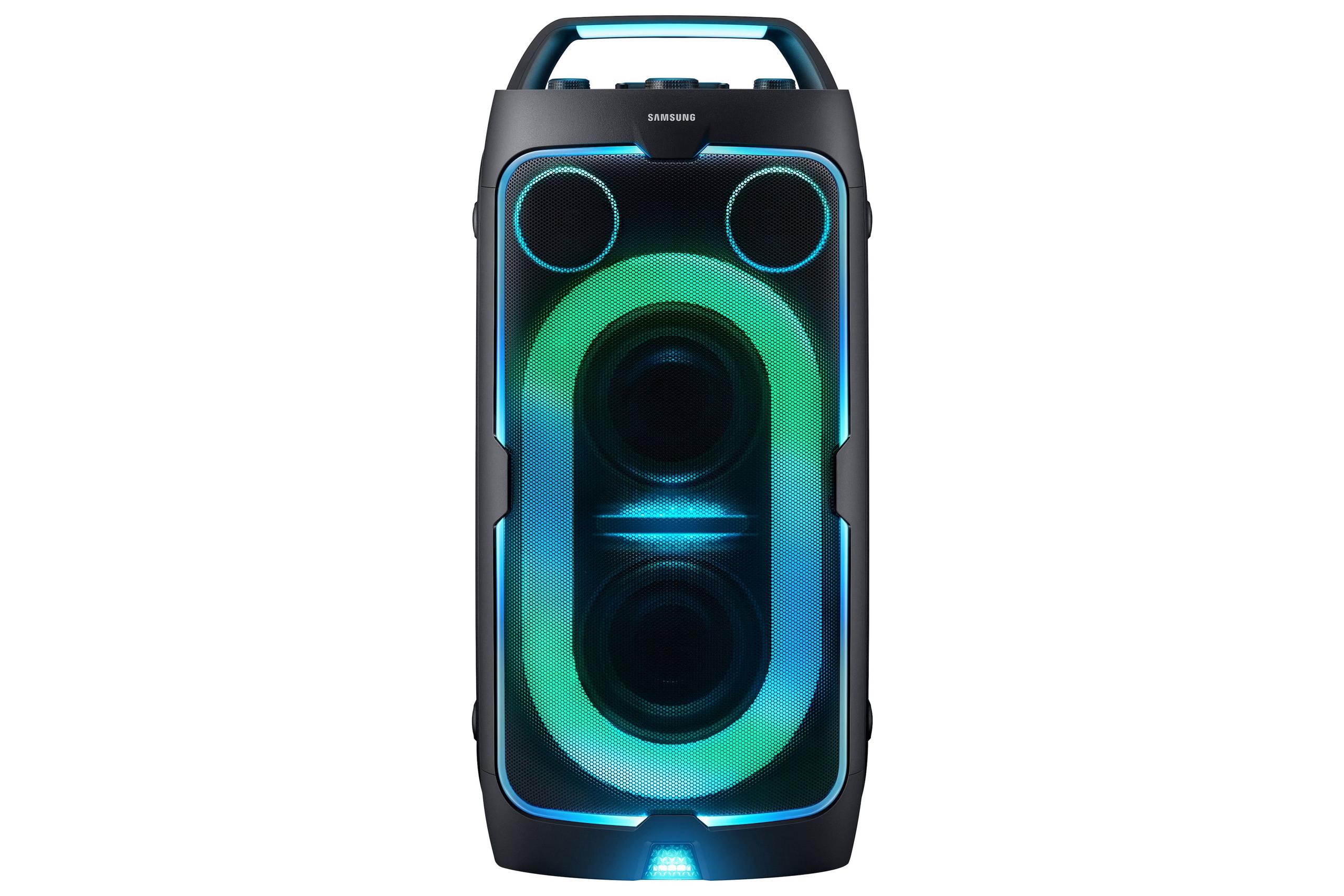
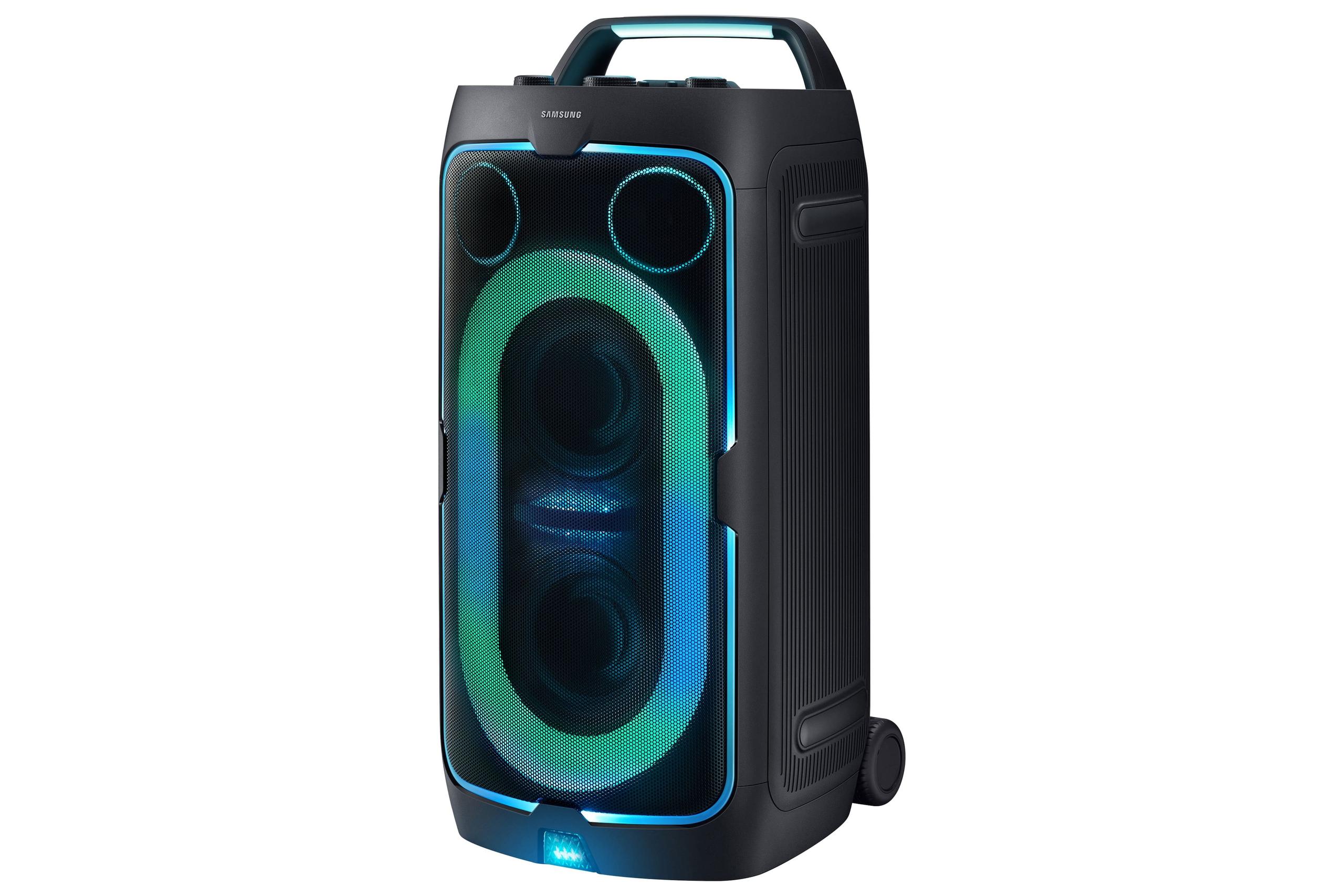
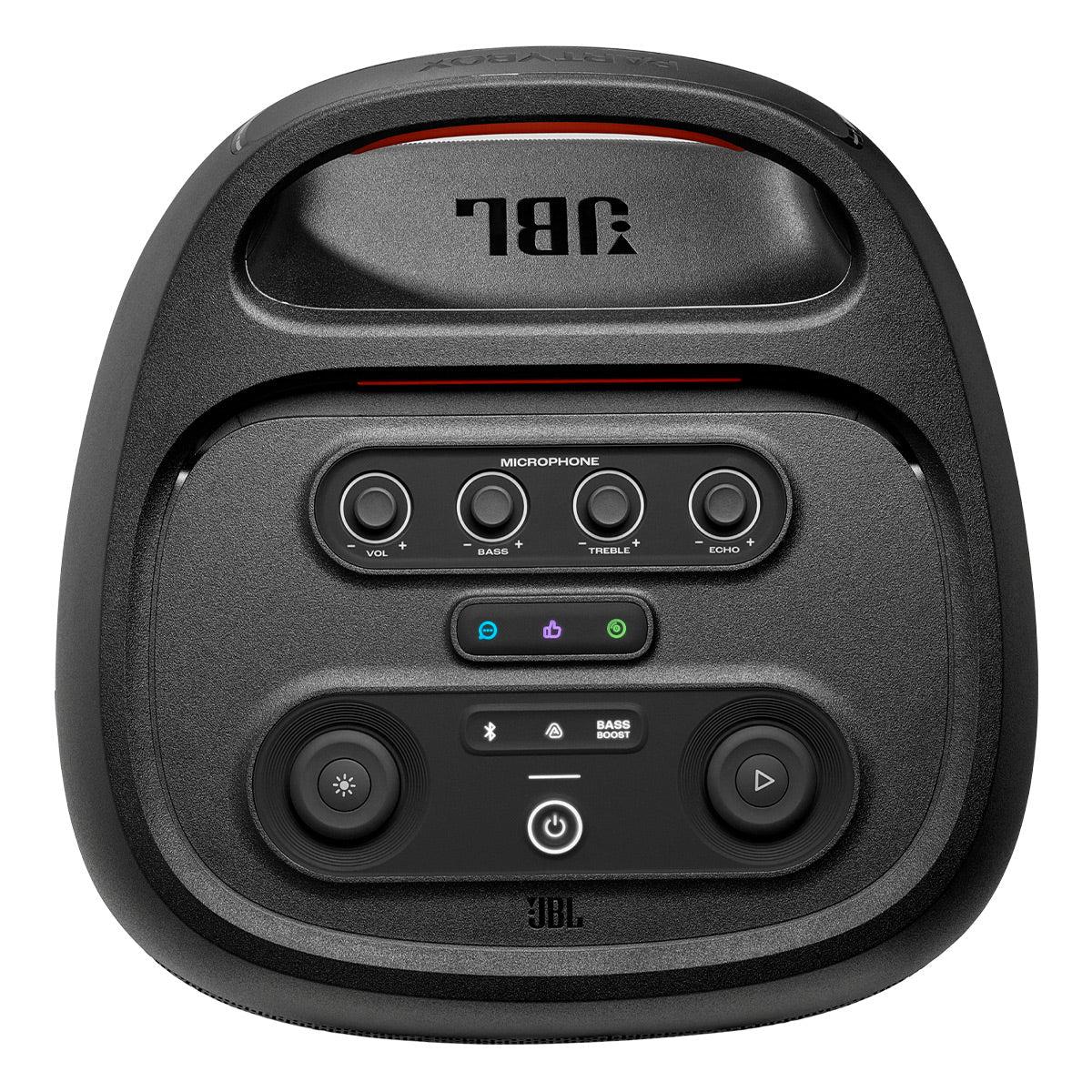
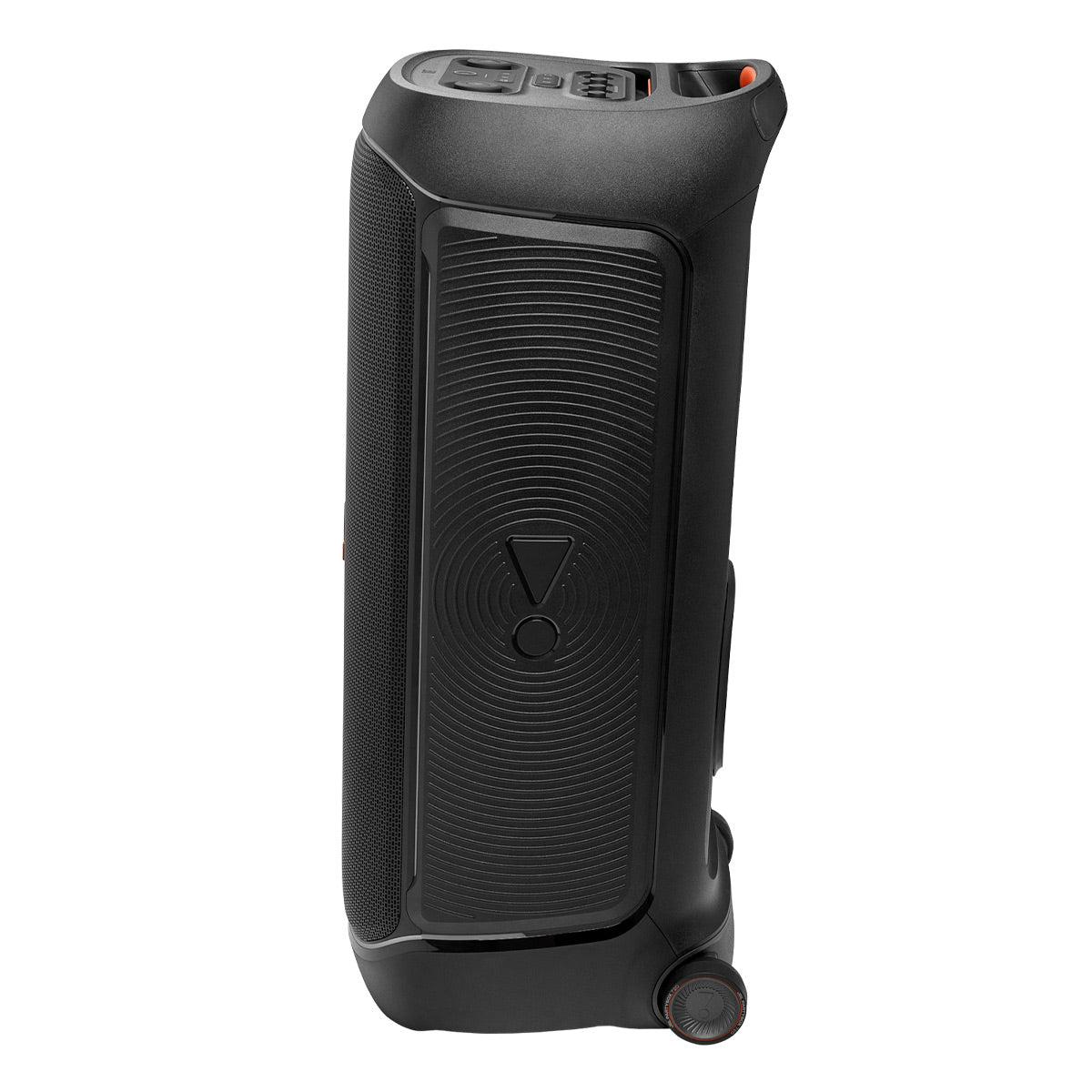
Party speakers have evolved dramatically over the past few years, transforming from simple loud boxes into sophisticated entertainment systems that can make or break your next gathering. These aren't your typical Bluetooth speakers—we're talking about powerful, feature-packed audio systems designed to fill large spaces with booming sound while providing visual spectacles that rival professional DJ setups.
When Samsung released the MX-ST50F in 2025, they aimed to create the ultimate portable party companion. Meanwhile, JBL's PartyBox 720, also released in 2025, represents their latest push for maximum audio power in the portable speaker category. Both speakers embody the current generation's focus on combining raw acoustic power with smart connectivity, customizable lighting, and genuine portability—features that were largely separate just a few years ago.
The party speaker category sits at the intersection of portability and performance, where manufacturers must balance weight, battery life, sound quality, and entertainment features. Understanding these trade-offs is crucial because what works perfectly for backyard barbecues might fall short for large outdoor events, and vice versa.
Party speakers operate on a fundamentally different principle than regular portable speakers. They're designed for high sound pressure levels (how loud they can get without distortion) and wide sound dispersion (spreading sound evenly across large areas). The key technical elements include powerful amplifiers, large driver configurations, and sophisticated digital signal processing that prevents distortion at high volumes.
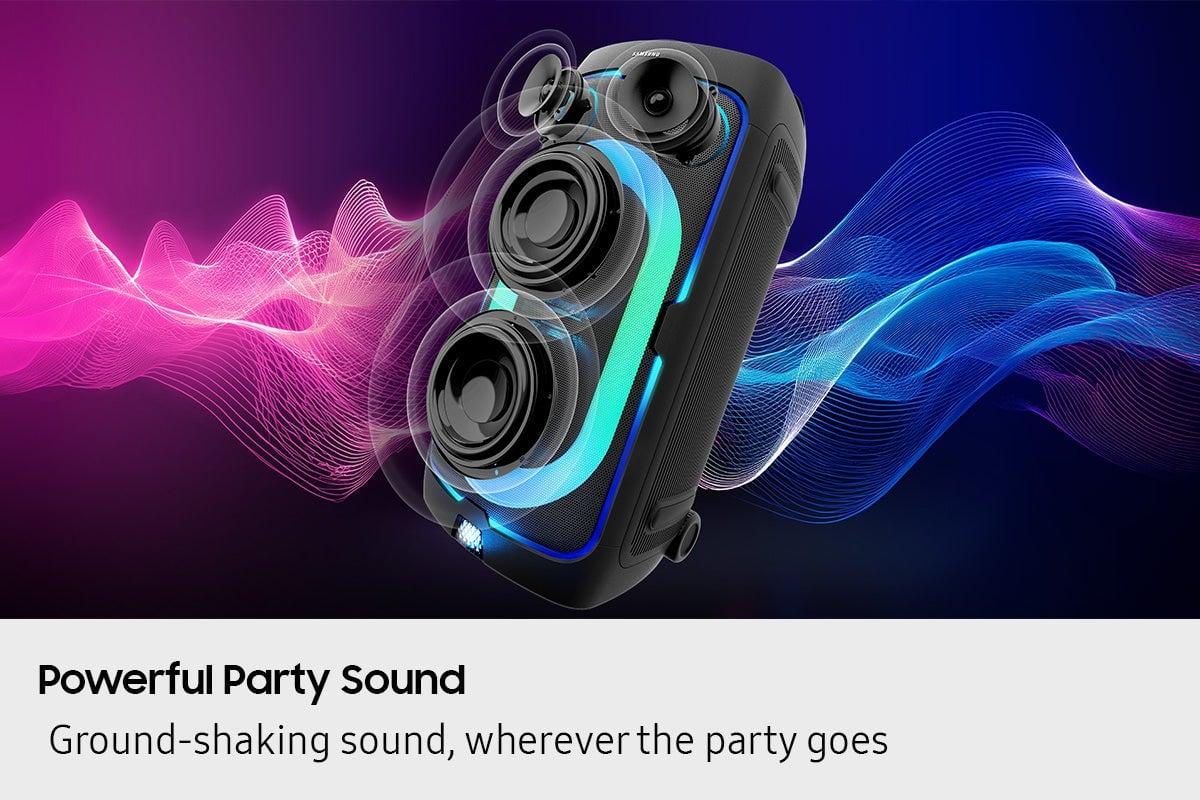
Driver configuration refers to the arrangement of speakers inside the cabinet. Woofers handle bass frequencies (the deep, thumping sounds), while tweeters reproduce high frequencies (crisp vocals and cymbals). The size and number of these drivers directly impact both volume capability and sound quality. Larger woofers generally produce deeper, more powerful bass, while properly designed tweeters ensure vocals cut through loud music without harshness.
Amplifier power is measured in watts, but the relationship between watts and loudness isn't linear—doubling the wattage doesn't double the volume. However, more powerful amplifiers do provide better headroom for dynamic music (songs with both quiet and loud passages) and maintain sound quality at higher volumes.
Modern party speakers also incorporate DSP (Digital Signal Processing), which acts like an intelligent sound engineer, automatically adjusting frequencies to prevent distortion and optimize performance based on volume levels and music content.
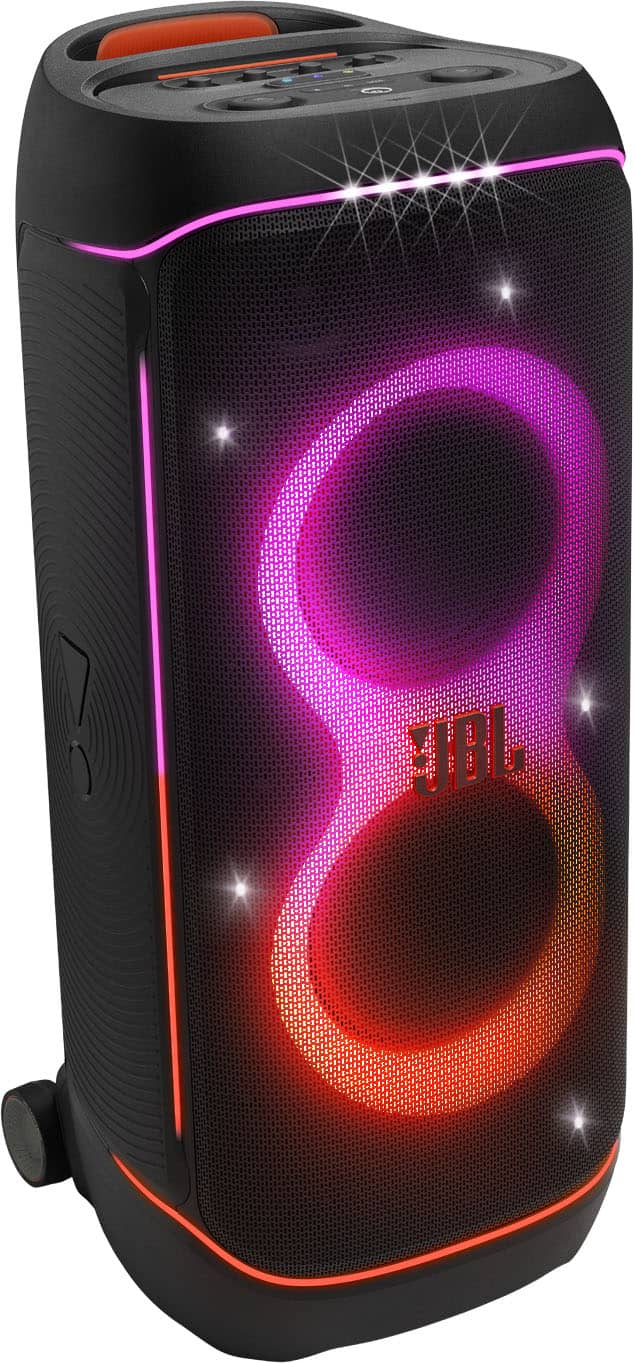
The fundamental difference between the Samsung MX-ST50F and JBL PartyBox 720 becomes apparent when examining their audio architectures. The Samsung delivers 240 watts total output through dual 6.5-inch woofers and dual 1-inch tweeters, while the JBL produces a massive 800 watts RMS through larger dual 9-inch woofers and dual 1.25-inch tweeters.
This power difference translates to real-world performance variations. The JBL PartyBox 720 can fill significantly larger spaces—think basketball courts or large outdoor gatherings—with authoritative sound that maintains clarity even at extreme volumes. Its larger 9-inch woofers move more air, creating deeper bass extension down to 32Hz, which you'll feel in your chest during bass-heavy music genres like hip-hop and electronic dance music.
However, raw power isn't everything. The Samsung MX-ST50F takes a more sophisticated approach with its Waveguide technology, which shapes how sound disperses from the tweeters. This creates wider, more even sound coverage throughout a room, meaning people standing at different angles from the speaker hear more consistent audio quality. Think of it like the difference between a flashlight (concentrated beam) and a lantern (even 360-degree light).
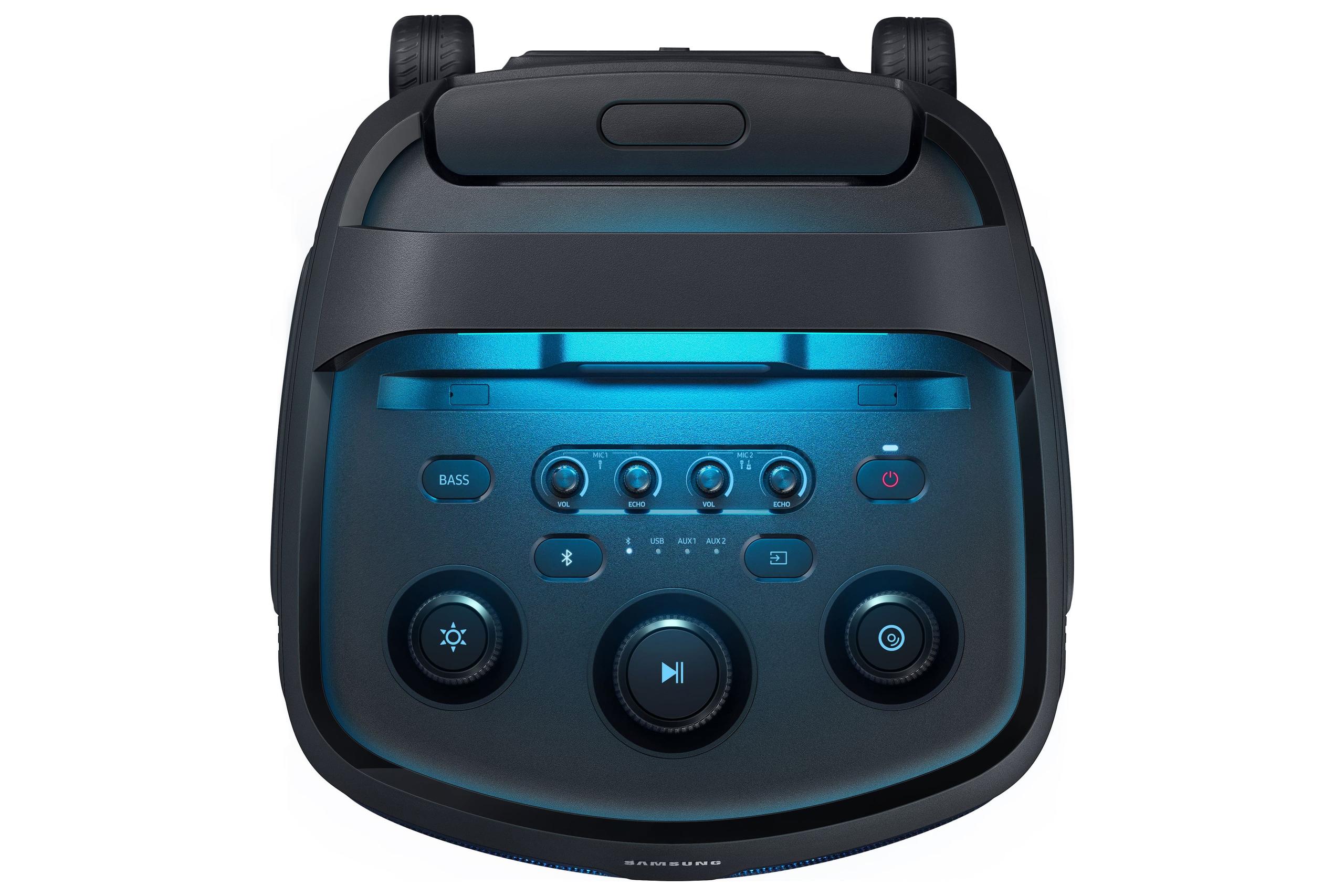
Samsung's three bass modes—Deep, Punchy, and Gentle—plus four environmental sound modes (Standard, Wide, Stadium, Outdoor) provide granular control over audio character. Deep mode emphasizes sub-bass frequencies for electronic music, Punchy mode tightens bass response for rock and pop, while Gentle mode reduces bass for late-night listening. The environmental modes adjust the entire frequency response: Stadium mode boosts mids and highs to cut through ambient noise, while Outdoor mode compensates for the lack of room boundaries that normally help reinforce bass.
The JBL PartyBox 720 counters with AI Sound Boost, which continuously analyzes the audio signal and adjusts processing in real-time to maintain optimal sound quality as volume increases. This prevents the harsh, compressed sound that often occurs when pushing speakers to their limits.
From our research into expert and user reviews, the consensus suggests the JBL excels in raw impact and maximum volume scenarios, while the Samsung provides more refined, customizable audio that remains listenable during extended listening sessions. For home theater applications, both speakers can enhance movie experiences, but the Samsung MX-ST50F's TWS (True Wireless Stereo) capability allows two units to create genuine left/right stereo separation, providing more immersive surround sound for movies.
Battery performance represents one of the most critical yet misunderstood aspects of party speakers. Both manufacturers rate their speakers optimistically, and real-world performance varies significantly based on volume levels and lighting usage.
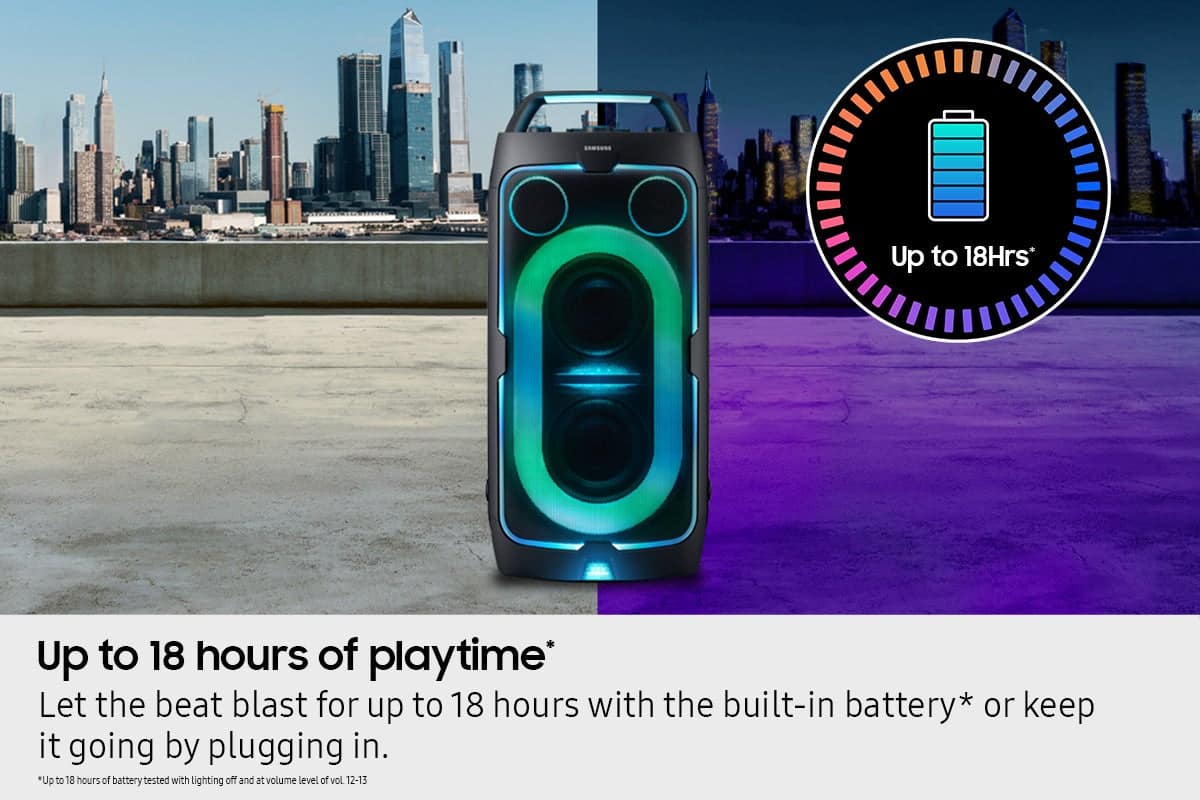
The Samsung MX-ST50F claims up to 18 hours of playback, but this figure applies to moderate volume levels (around 50-60%) with lighting effects disabled. At party-appropriate volume levels (80%+) with full lighting, expect closer to 8-10 hours. However, Samsung's user-replaceable battery system changes the game entirely. When the battery depletes, you simply swap in a fresh one and continue the party—no waiting for charging cycles.
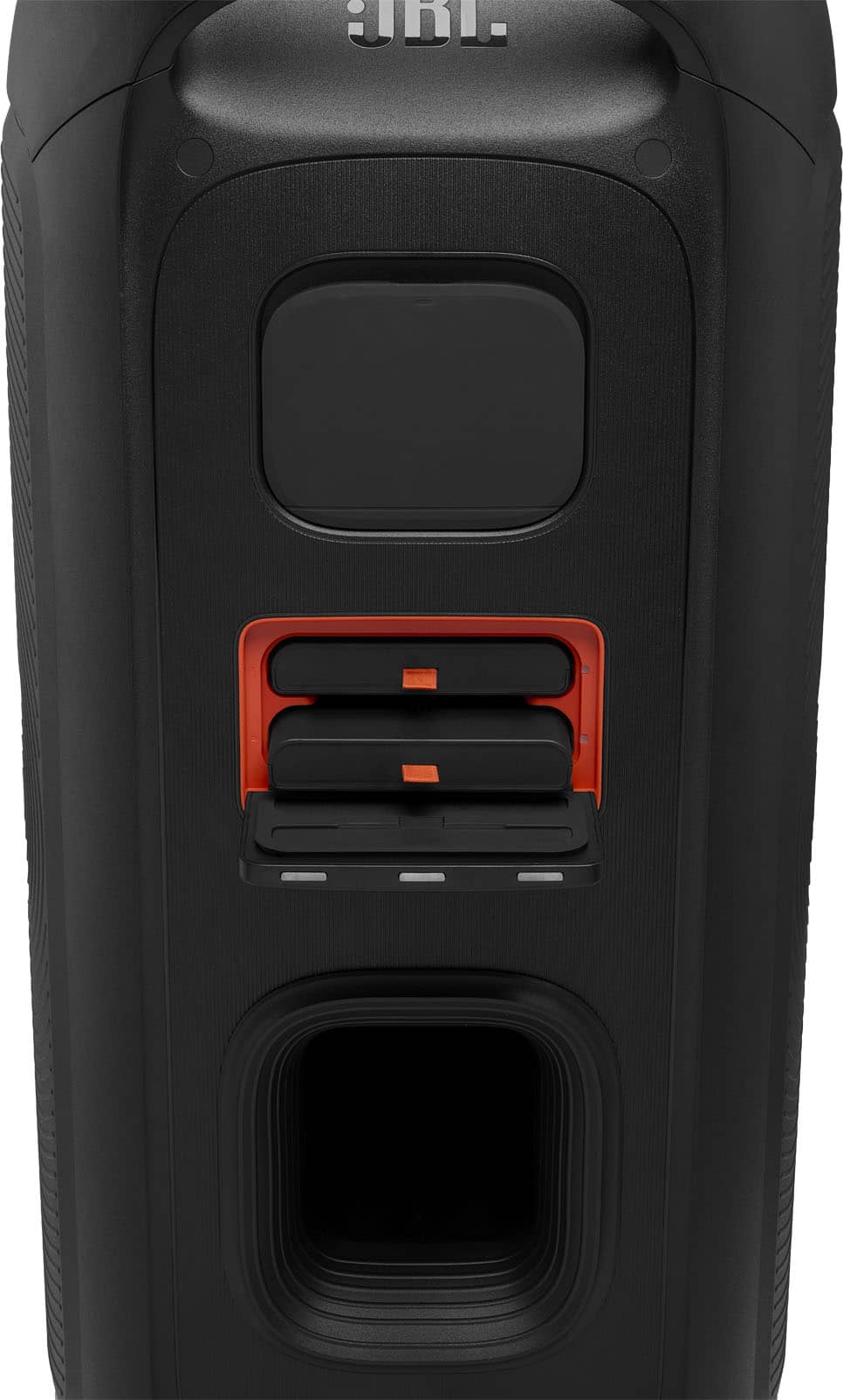
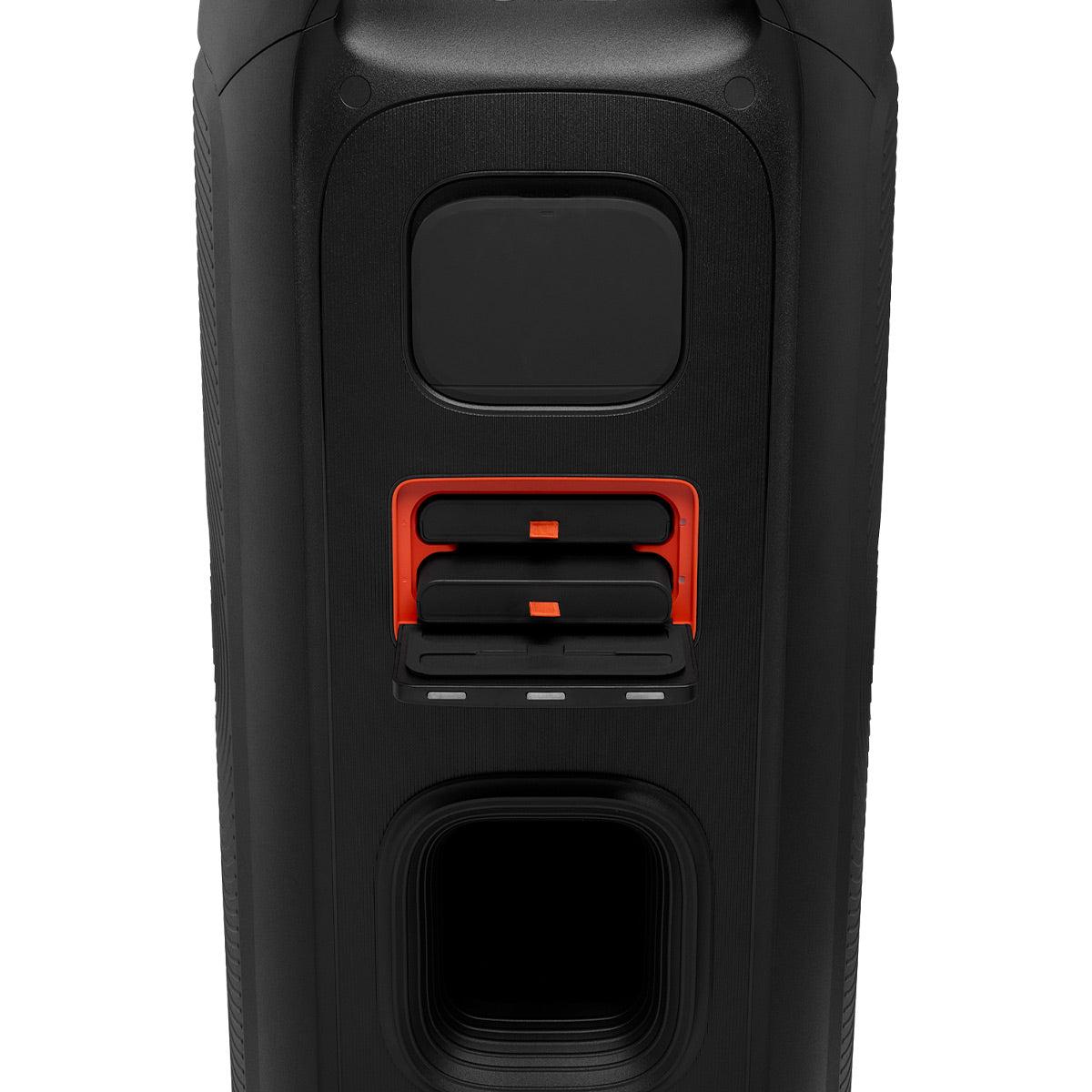
The JBL PartyBox 720 offers up to 15 hours with dual JBL Battery 600 packs, but these batteries must be purchased separately, adding significant cost. The advantage comes with fast charging technology: a 10-minute charge provides two additional hours of playtime, which can save events when you forgot to charge overnight.
There's also a crucial power difference when operating on battery versus AC power. The Samsung MX-ST50F drops from 240W to 90W on battery power—a substantial reduction that noticeably affects volume and bass impact. The JBL PartyBox 720 maintains more consistent performance across power sources, though exact specifications weren't available in our research.
For extended outdoor events without power access, the Samsung's longer battery life and replaceable system provide clear advantages. For events near power sources, the JBL's ability to maintain full performance while plugged in makes it the better choice for maximum impact.
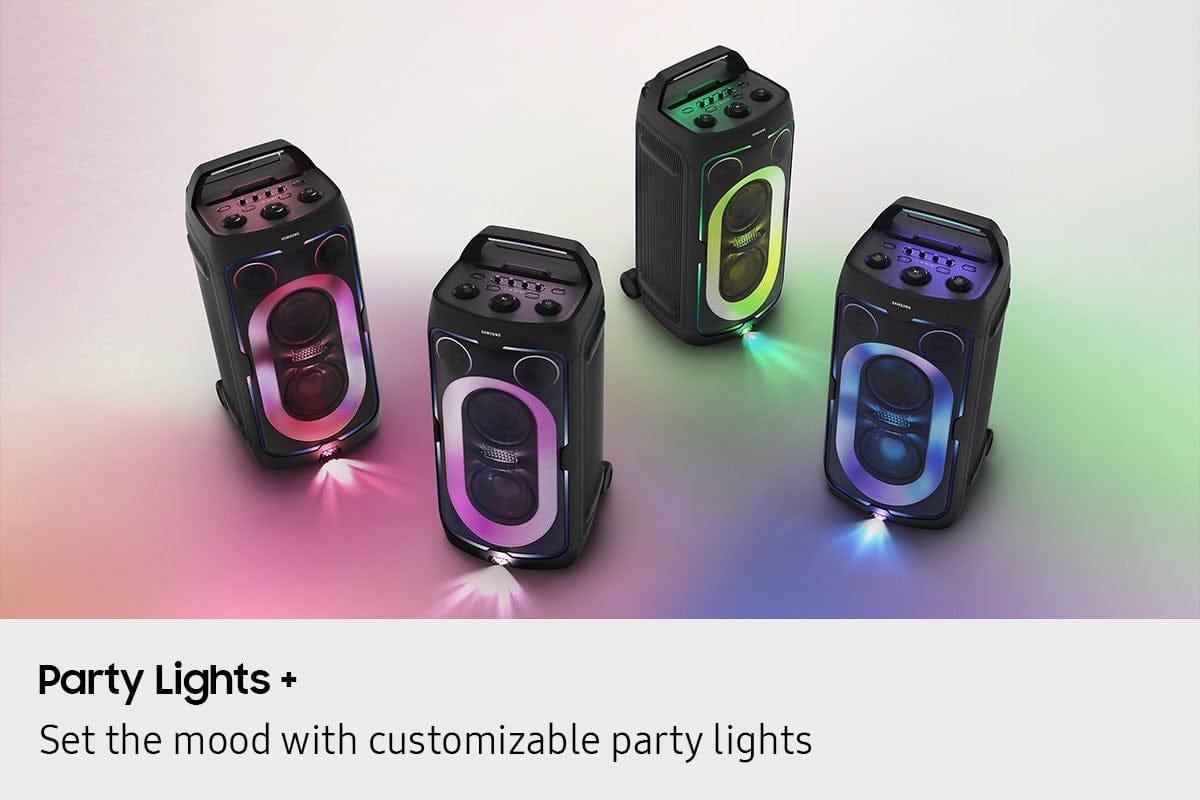
Modern party speakers have transformed into visual entertainment centers, and both speakers approach this differently. The Samsung MX-ST50F features Party Lights+ with six customizable patterns and five mood presets spread across five distinct lighting zones: track, ring, line, crystal, and handle areas. This creates a comprehensive light show that wraps around the entire speaker.
The lighting effects respond to music in real-time, with patterns like Wave creating flowing motions during slower songs and Spark producing rapid bursts during high-energy tracks. The Samsung Sound Tower app provides granular control over each zone, allowing users to create custom combinations—perhaps subtle ring lighting for dinner parties or full-spectrum effects for dance sessions.
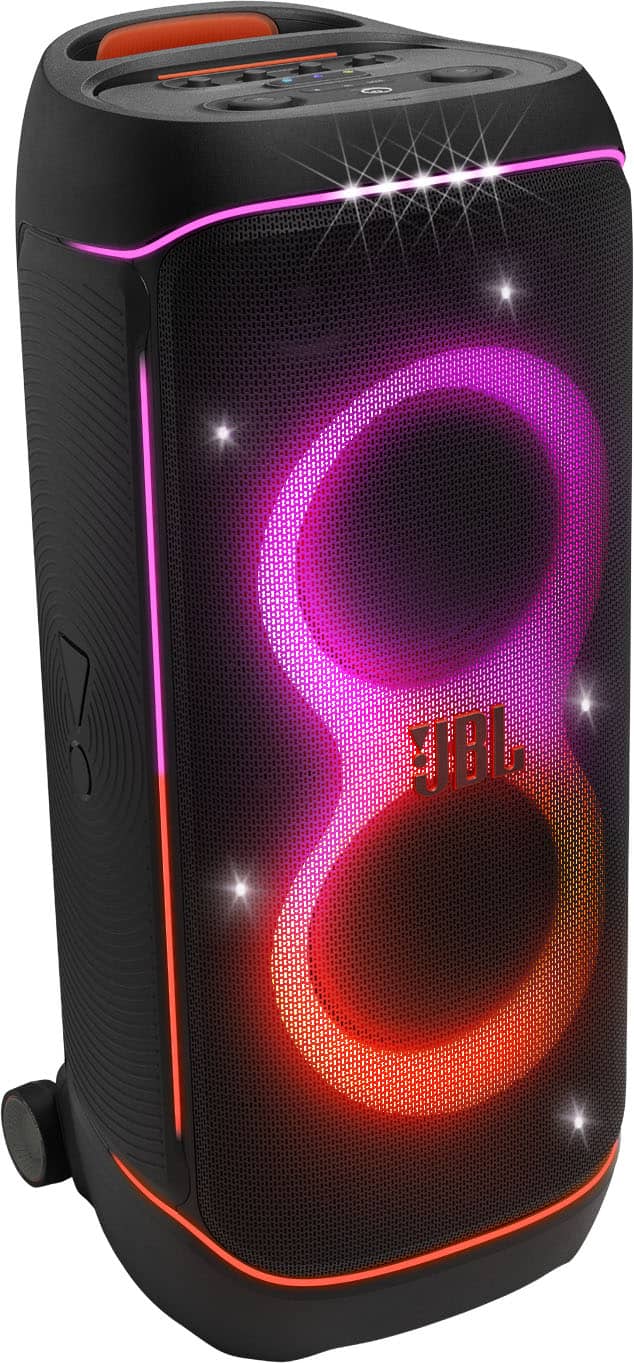
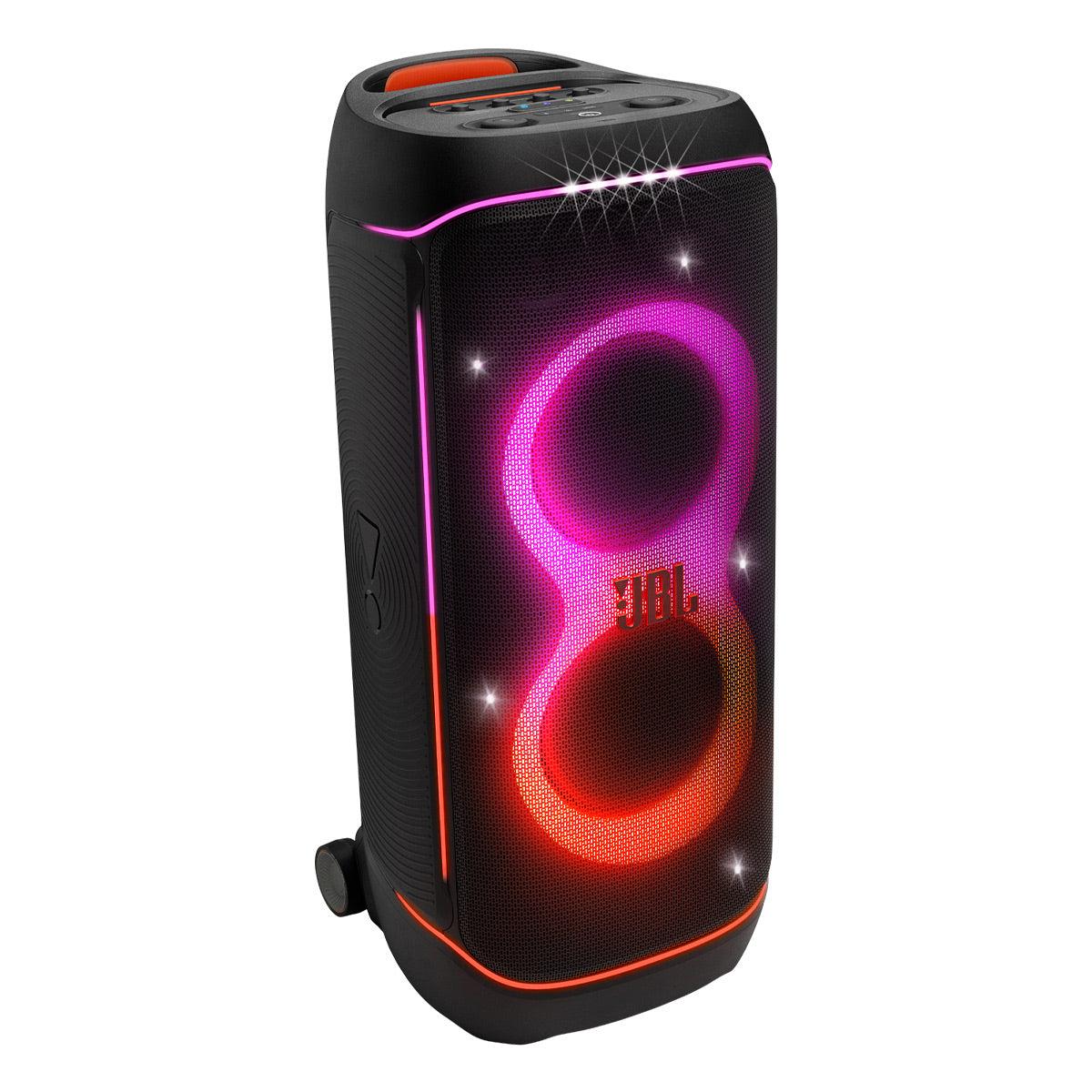
The JBL PartyBox 720 takes a different approach with its futuristic lighting system featuring starry lights, flowing trails, and pulsing strobes in a 360-degree display. JBL's effects tend toward more dramatic, rave-like visuals that complement electronic music and high-energy genres. The lighting synchronizes with bass beats and musical dynamics, creating an immersive experience that transforms any space into a dance floor.
Based on user feedback, Samsung's system offers more versatility for different event types, while JBL's provides more dramatic impact for pure party environments. Neither approach is inherently better—it depends on your preferred aesthetic and event types.
Both speakers embrace modern connectivity standards, but with different philosophies. The Samsung MX-ST50F supports Bluetooth multi-connection, allowing simultaneous pairing with two smartphones. This eliminates the awkward "disconnect and reconnect" dance when friends want to share their playlists, and both devices can control playbook seamlessly.
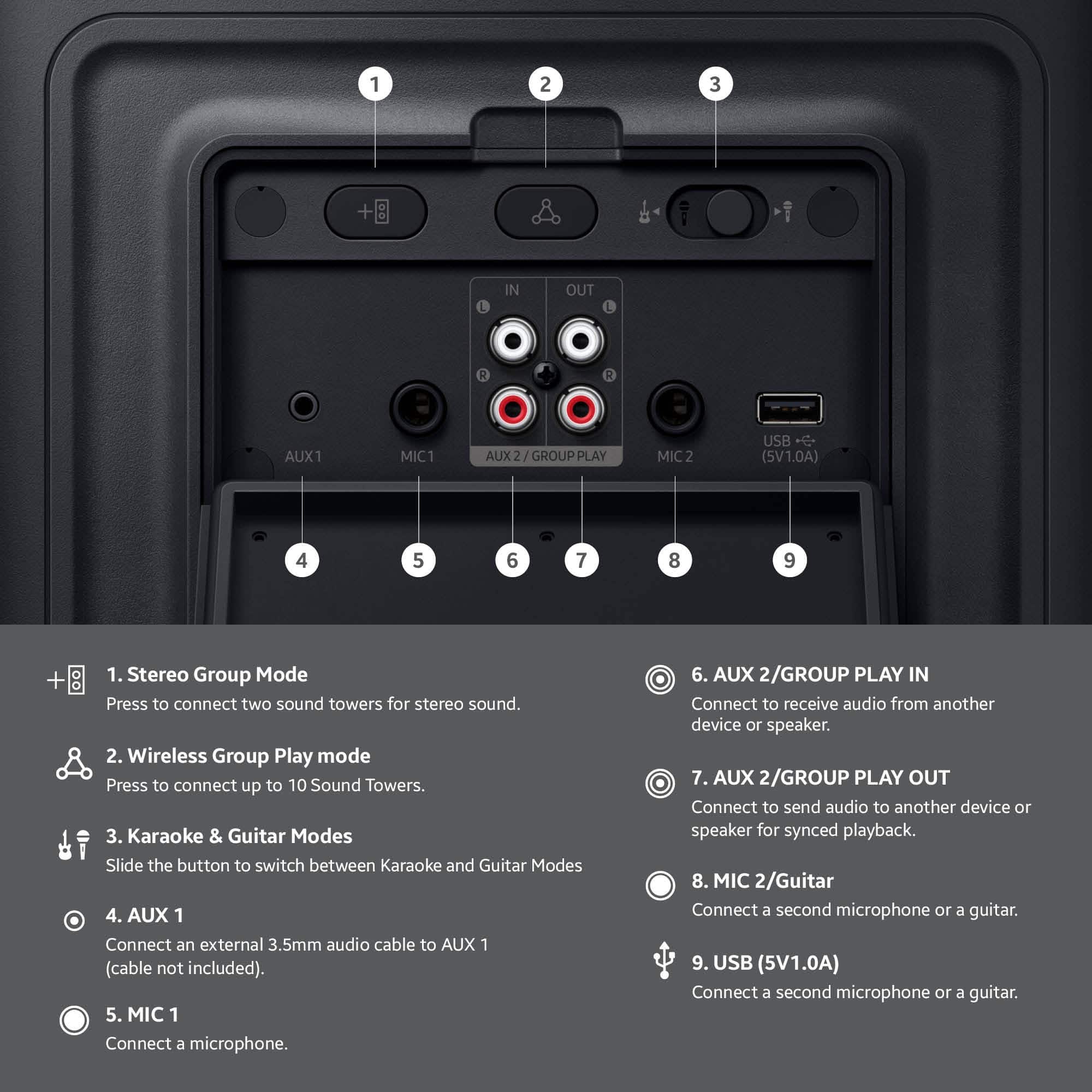
Samsung's Auracast Group Play technology enables wireless linking of up to 10 Sound Towers, creating massive sound systems for large events. The TWS (True Wireless Stereo) feature allows two speakers to function as left and right channels, providing genuine stereo separation that's particularly beneficial for movie audio or stereo-mixed music.
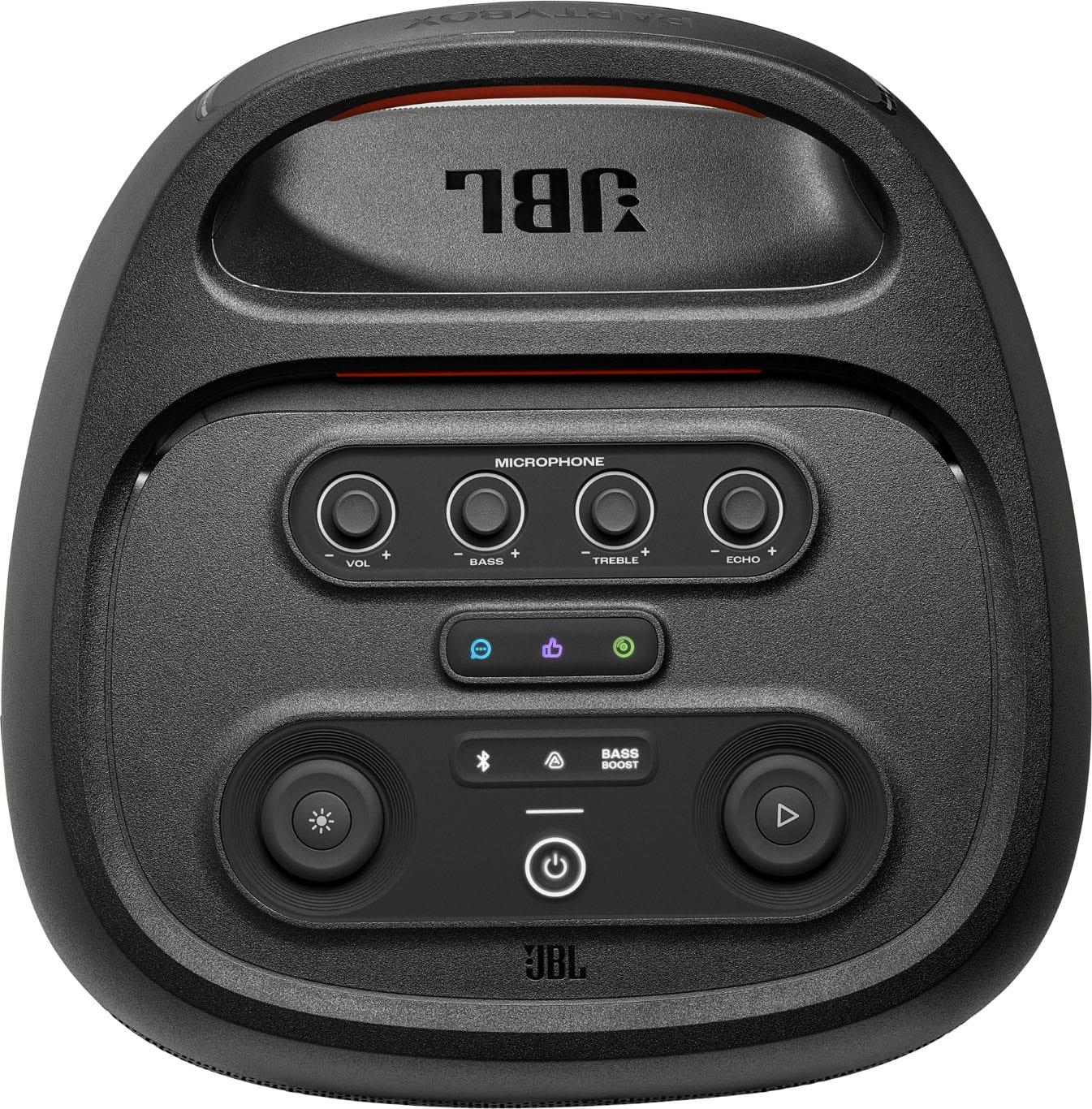
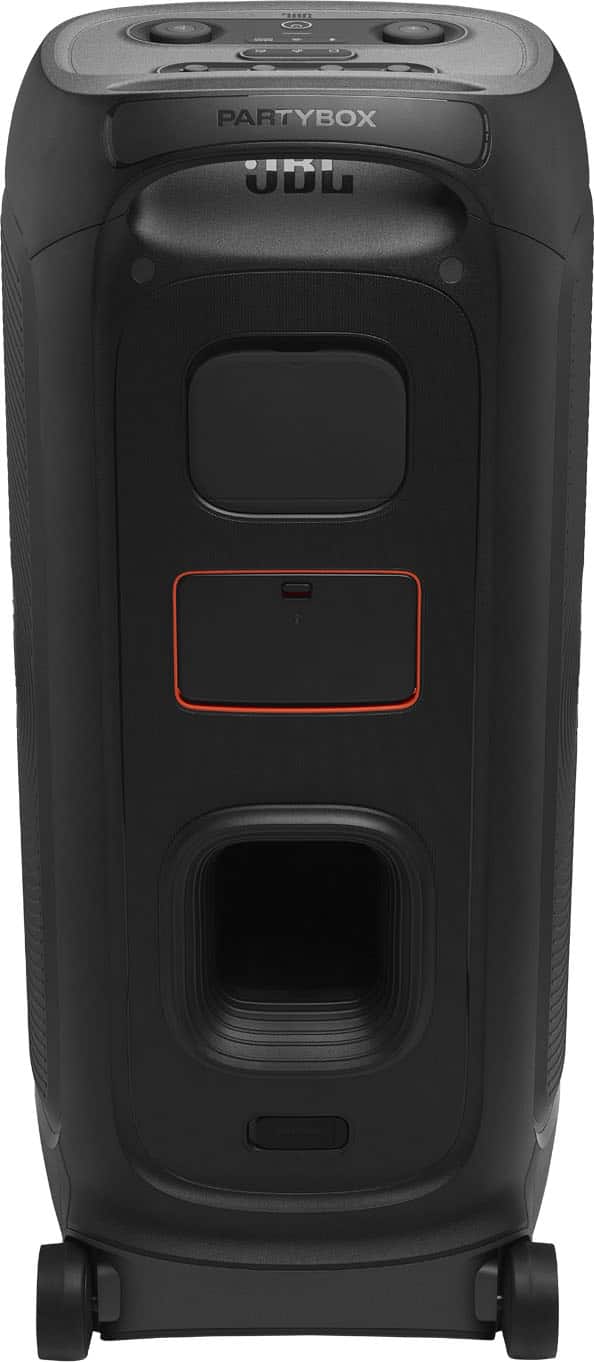
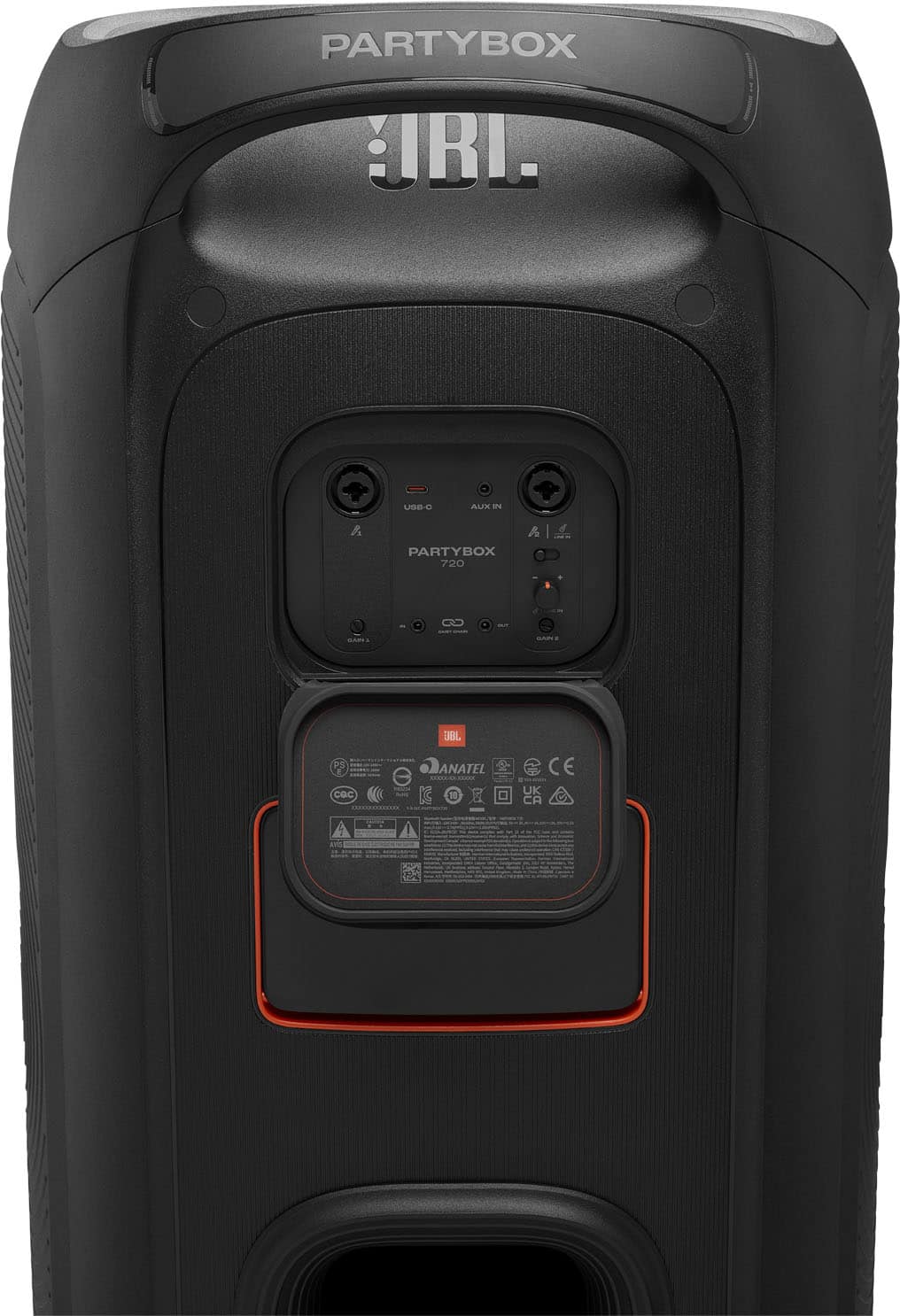
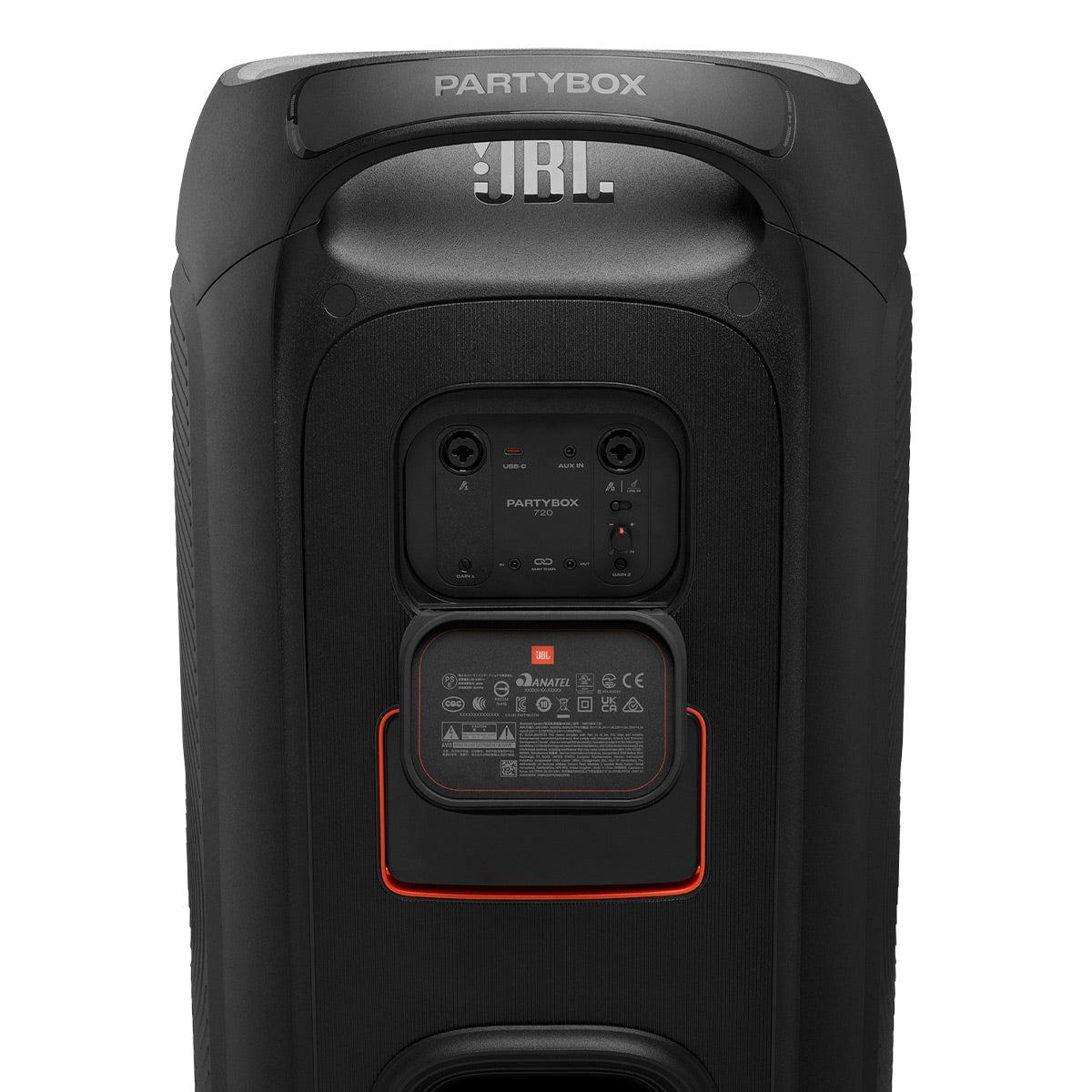
The JBL PartyBox 720 features Bluetooth 5.4 (versus Samsung's unspecified version) and dual XLR inputs, which is significant for users with professional audio equipment. XLR connections provide superior audio quality and reliability compared to standard 1/4-inch or 3.5mm jacks, making the JBL suitable for semi-professional applications like small venue performances or DJ setups.
JBL's Auracast broadcasting capability allows the speaker to transmit to multiple compatible devices simultaneously, though this requires compatible receivers. For home theater use, the JBL's USB-C port supports high-quality digital audio streaming and device charging, while the Samsung offers basic USB-A and analog inputs.
Both speakers carry IPX4 ratings, meaning they can withstand splashing water from any direction but aren't submersible. This makes them suitable for poolside parties, light rain, or humid environments, but they shouldn't be left outside during storms or used in beach environments where sand could damage internal components.
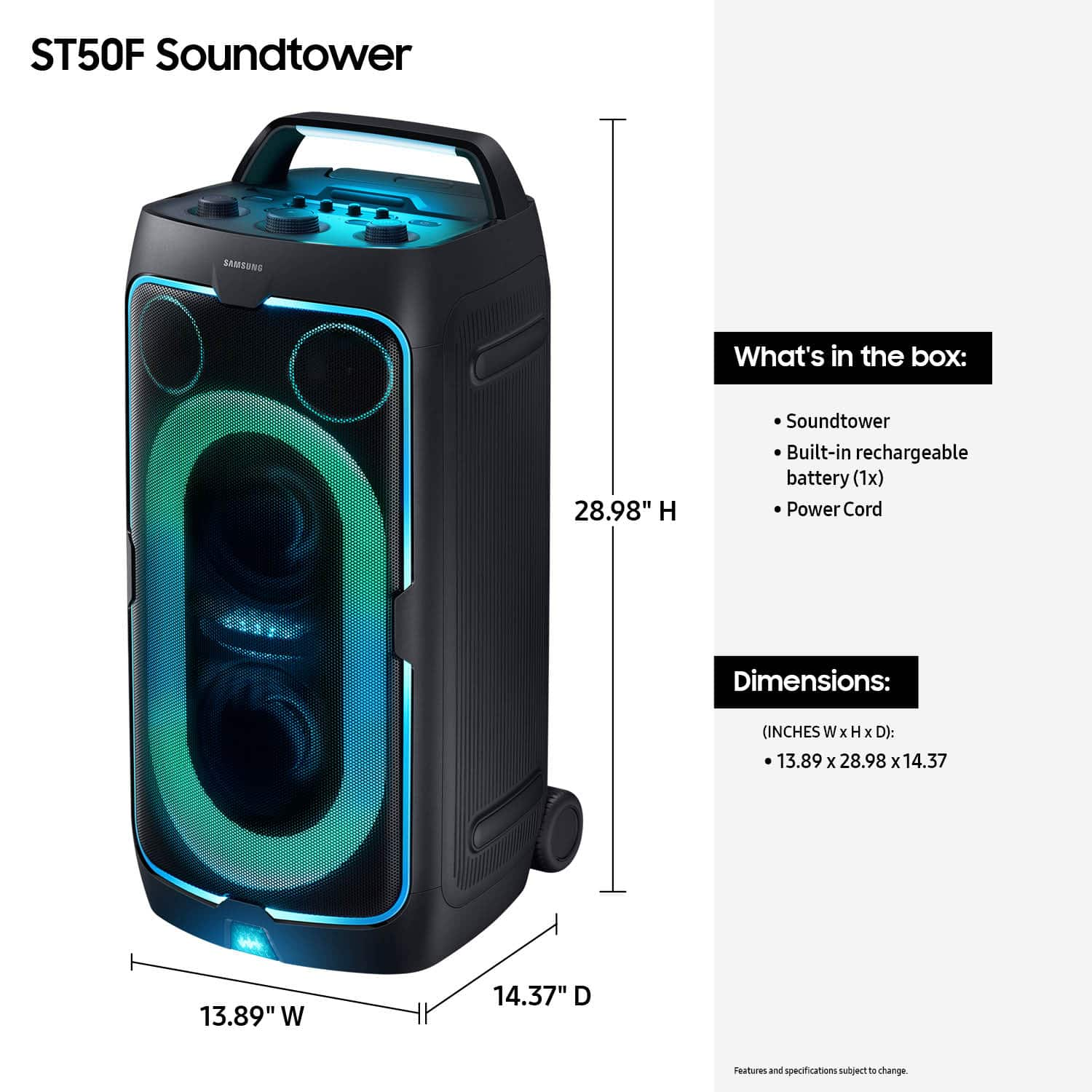
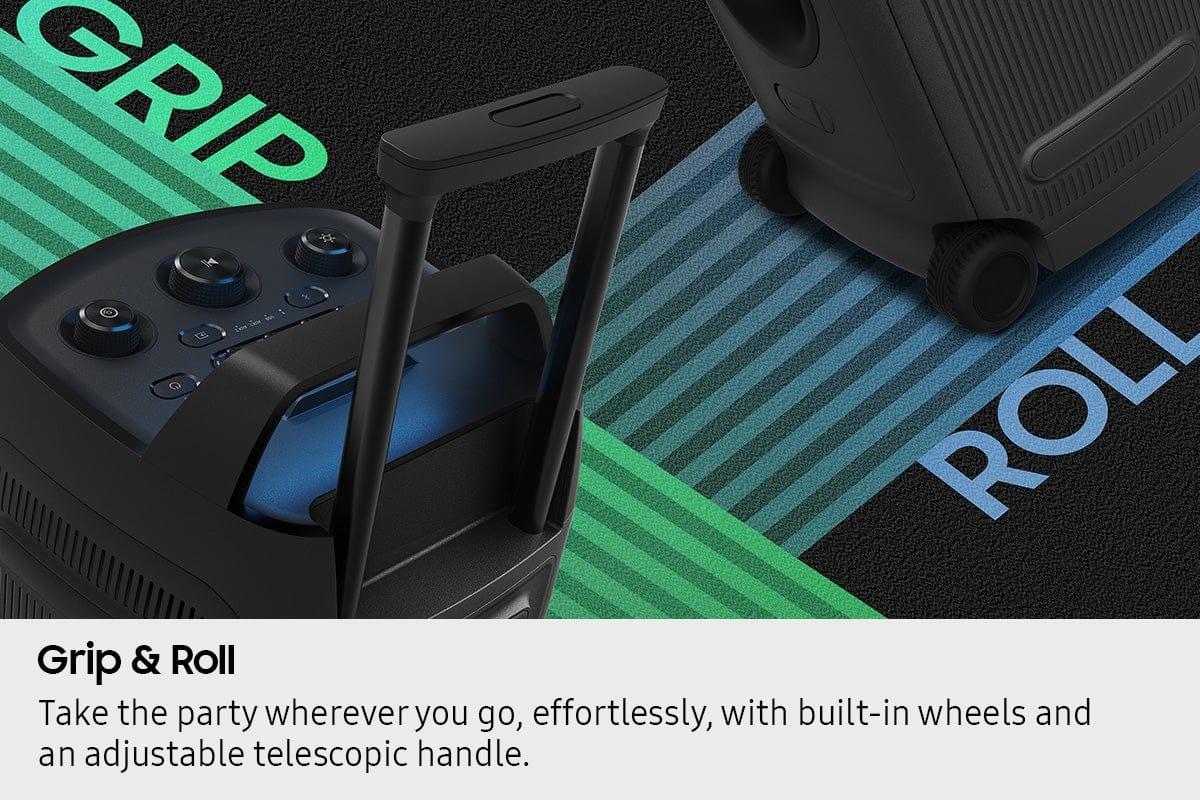
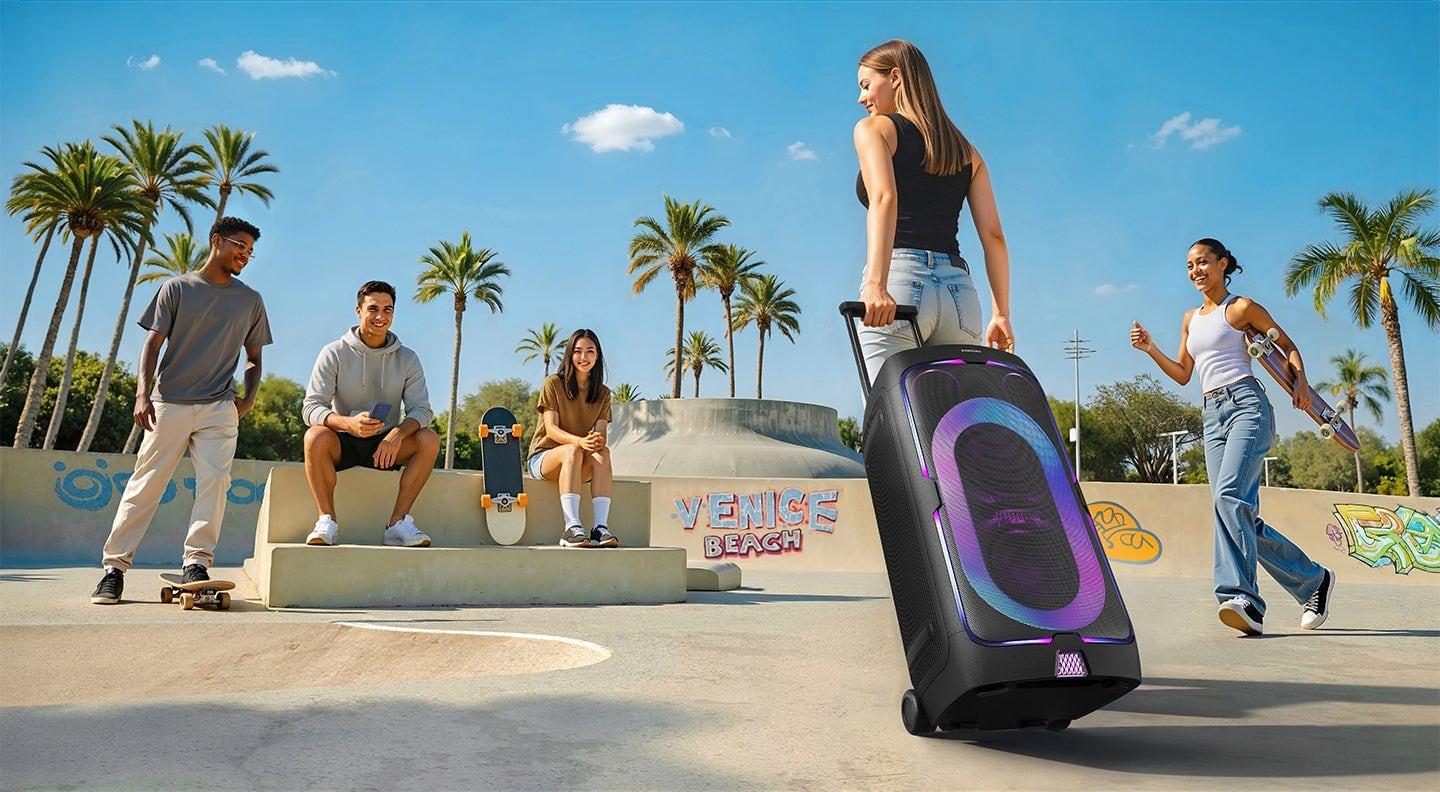
The build quality approaches differ significantly. The Samsung MX-ST50F weighs 18.4kg (40.6 lbs) with built-in wheels and a five-level telescoping handle that adjusts to user height. This design prioritizes frequent transport—the kind of speaker you'll regularly move between rooms, venues, or outdoor locations.
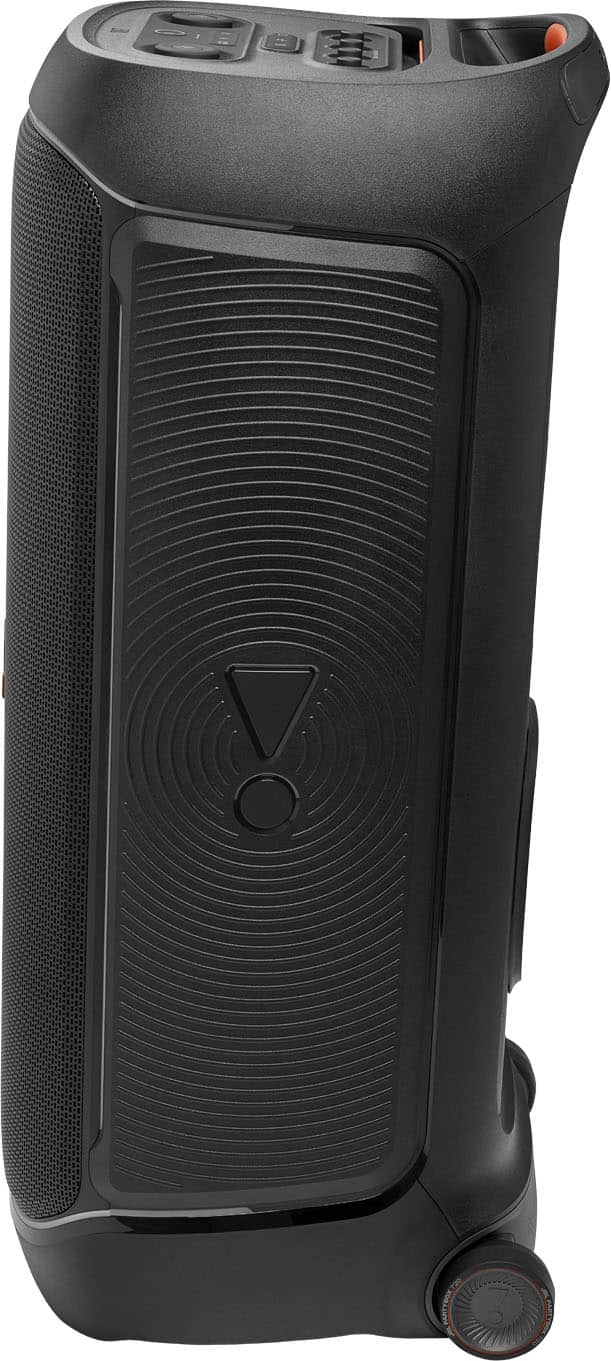
The JBL PartyBox 720 weighs substantially more at 31kg (68.3 lbs) but features wider, more stable wheels designed for outdoor terrain. The additional weight reflects the larger drivers and more robust internal components needed for higher power output. This speaker is better suited for less frequent transport or semi-permanent installations.
For regular transport, the Samsung's lighter weight and user-friendly handle system provide clear advantages. For maximum durability and stability once positioned, the JBL's heavier construction offers benefits.
At the time of writing, party speakers in this category typically range from the mid-hundreds to over a thousand dollars, with the Samsung MX-ST50F positioned as the more value-oriented option while the JBL PartyBox 720 commands a premium for its additional power and professional features.
The Samsung provides exceptional value for users who prioritize portability, battery life, and lighting customization. Its feature set addresses the majority of party speaker use cases without requiring additional accessories, and the replaceable battery system adds long-term value by eliminating battery degradation issues.
The JBL justifies its higher cost through raw performance capabilities and professional connectivity options. The 800W output and XLR inputs make it suitable for applications beyond casual entertainment—small venue performances, outdoor events requiring maximum coverage, or serious audiophiles who demand the highest volume levels.
However, the JBL's true cost includes necessary accessories: the dual battery packs for portable use add significant expense, and professional XLR cables cost more than standard audio cables.
The Samsung MX-ST50F represents the sweet spot for most users. Choose it if you host regular gatherings, need reliable portability, or want extensive customization options without complexity. It's ideal for backyard parties, indoor entertaining, camping trips, or any scenario where you'll frequently transport the speaker. The balanced audio signature works well across music genres, and the lighting system adapts to different event types.
The Samsung particularly excels for users who value convenience features: the replaceable battery eliminates range anxiety, the telescoping handle accommodates different user heights, and the comprehensive app control means you can adjust everything from your phone without approaching the speaker.
The JBL PartyBox 720 targets users who need maximum performance and don't mind the associated compromises. Choose it for large outdoor events, semi-professional applications, or situations where maximum volume is essential. If you host events for 75+ people, perform DJ sets, or frequently encounter large spaces that challenge lesser speakers, the JBL's power advantage becomes crucial.
The JBL also suits users who prefer a "set it and forget it" approach once positioned, as its weight discourages frequent movement but provides stable, powerful performance for extended periods.
For home theater applications, both speakers can enhance movie experiences, but the Samsung MX-ST50F's TWS stereo capability provides better movie audio when using two units, while the JBL PartyBox 720 offers more impactful single-speaker performance for action movies and gaming.
The party speaker landscape has matured significantly since these technologies first emerged, and both the Samsung MX-ST50F and JBL PartyBox 720 represent current state-of-the-art approaches to portable entertainment. Samsung prioritizes user experience, convenience, and versatility, while JBL focuses on maximum performance and professional capability.
For most users, the Samsung provides better overall value through its combination of adequate power, superior portability, longer battery life, and extensive customization options. The JBL serves users who need maximum power and don't mind the associated weight, cost, and complexity trade-offs.
Neither speaker will disappoint within their intended use cases, but understanding these fundamental philosophical differences ensures you'll choose the speaker that best matches your entertaining style and practical requirements.
| Samsung MX-ST50F Sound Tower Party Speaker | JBL PartyBox 720 Portable Speaker |
|---|---|
| Power Output - Determines maximum volume and bass impact | |
| 240W AC / 90W battery (significant drop on battery power) | 800W RMS (maintains performance across power sources) |
| Driver Configuration - Affects sound quality and frequency response | |
| Dual 6.5" woofers + dual 1" tweeters | Dual 9" woofers + dual 1.25" tweeters (larger drivers = deeper bass) |
| Weight & Portability - Critical for frequent transport | |
| 18.4kg with 5-level telescoping handle and wheels | 31kg with ergonomic handle and wide wheels (nearly twice as heavy) |
| Battery Life - Runtime for outdoor/off-grid events | |
| Up to 18 hours (user-replaceable battery system) | Up to 15 hours with dual Battery 600 packs (sold separately) |
| Water Resistance - Protection for outdoor use | |
| IPX4 splash-resistant | IPX4 splash-resistant |
| Lighting System - Visual entertainment value | |
| Party Lights+ with 6 patterns, 5 zones, full customization | 360° futuristic effects with starry lights and strobes |
| Connectivity - Professional vs consumer focus | |
| Bluetooth multi-connection (2 devices), USB-A, analog inputs | Bluetooth 5.4, dual XLR inputs, USB-C (more professional options) |
| Multi-Speaker Linking - Expandability for larger events | |
| Auracast Group Play (up to 10 speakers), TWS stereo pairing | Auracast broadcasting, multiple speaker linking |
| Sound Customization - Audio tuning options | |
| 3 bass modes + 4 environment modes + Waveguide technology | AI Sound Boost with real-time optimization |
| Karaoke Features - Entertainment beyond music | |
| Dual mic inputs with voice effects and recording | Dual XLR inputs suitable for professional microphones |
| Best Use Case - Who should choose each speaker | |
| Frequent transport, extended battery life, balanced performance | Maximum volume for large venues, semi-professional use |
The JBL PartyBox 720 is significantly louder with 800W RMS output compared to the Samsung MX-ST50F's 240W. The JBL can fill larger venues like basketball courts, while the Samsung is better suited for medium-sized gatherings. If maximum volume is your priority, the JBL PartyBox 720 delivers substantially more power.
The Samsung MX-ST50F offers longer battery life with up to 18 hours of playtime compared to the JBL PartyBox 720's 15 hours. More importantly, the Samsung features user-replaceable batteries, allowing you to swap in fresh batteries instantly. The JBL PartyBox 720 requires separate battery pack purchases and has fast charging capabilities.
The Samsung MX-ST50F is much easier to transport, weighing 18.4kg compared to the JBL PartyBox 720's hefty 31kg. The Samsung includes a 5-level telescoping handle and built-in wheels designed for frequent movement. If you plan to regularly transport your speaker, the Samsung MX-ST50F is the clear winner for portability.
Both the Samsung MX-ST50F and JBL PartyBox 720 feature IPX4 splash-resistant ratings, making them suitable for outdoor use in light rain. However, the JBL PartyBox 720 excels for large outdoor spaces due to its higher power output, while the Samsung MX-ST50F offers better portability for moving between outdoor locations.
The Samsung MX-ST50F offers more comprehensive lighting with Party Lights+ featuring 6 patterns across 5 zones (track, ring, line, crystal, handle), providing extensive customization. The JBL PartyBox 720 focuses on dramatic 360° effects with starry lights and strobes. The Samsung provides more versatility, while the JBL PartyBox 720 delivers more intense party atmosphere.
Yes, both speakers support multi-speaker connectivity. The Samsung MX-ST50F can link up to 10 speakers via Auracast Group Play and supports TWS stereo pairing for left/right channel separation. The JBL PartyBox 720 also features Auracast broadcasting for linking multiple units. Both options work well for larger events requiring expanded sound coverage.
The JBL PartyBox 720 has an advantage for serious karaoke with dual XLR inputs that accept professional microphones and provide superior audio quality. The Samsung MX-ST50F offers dual mic inputs with voice effects and recording capabilities, making it more fun for casual karaoke. Choose the JBL PartyBox 720 for professional-quality vocals.
The JBL PartyBox 720 produces deeper, more powerful bass with its larger 9" woofers and extends down to 32Hz. The Samsung MX-ST50F offers more balanced sound with Waveguide technology for better sound dispersion and three customizable bass modes. The JBL wins for raw bass impact, while the Samsung MX-ST50F provides more refined, customizable audio.
The Samsung MX-ST50F typically offers better value with its comprehensive feature set, longer battery life, superior portability, and user-replaceable batteries. The JBL PartyBox 720 costs more but justifies the premium with significantly higher power output and professional connectivity options. Choose based on whether you need maximum power or balanced features.
Both can enhance home theater experiences, but the Samsung MX-ST50F has advantages with TWS stereo pairing capability, allowing two units to create true left/right channel separation for movies. The JBL PartyBox 720 provides more impactful single-speaker performance for action movies and gaming with its powerful bass and higher output levels.
Both the Samsung MX-ST50F and JBL PartyBox 720 feature identical IPX4 splash-resistant ratings suitable for poolside parties and light rain. The JBL PartyBox 720's heavier construction suggests more robust internal components, while the Samsung's lighter build prioritizes portability. Both are equally weather-resistant for typical outdoor party use.
For large outdoor events with 75+ people, the JBL PartyBox 720 is the better choice due to its 800W power output and ability to fill massive spaces with clear, powerful sound. The Samsung MX-ST50F works better for smaller to medium gatherings where portability and battery life are more important than maximum volume output.
We've done our best to create useful and informative comparisons to help you decide what product to buy. Our research uses advanced automated methods to create this comparison and perfection is not possible - please contact us for corrections or questions. These are the sites we've researched in the creation of this article: bestbuy.com - news.samsung.com - youtube.com - youtube.com - videoandaudiocenter.com - youtube.com - youtube.com - samsung.com - crutchfield.com - youtube.com - arrowassociatedstores.com - brandsmartusa.com - bestbuy.com - crutchfield.com - samsung.com - icecat.in - thefrogpadappliances.com - news.samsung.com - stereoindex.com - youtube.com - youtube.com - youtube.com - youtube.com - comparisontabl.es - jbl.com - youtube.com - youtube.com - youtube.com - bestbuy.com - versus.com - youtube.com - youtube.com - versus.com - youtube.com - jbl.com - news.jbl.com - engadget.com - news.harman.com - youtube.com - creativeaudio.net - jbl.com - skybygramophone.com - crutchfield.com - manuals.plus - youtube.com

Privacy Policy
Terms and Conditions - Affiliate Policy
Home Security
© Copyright 2008-2026.
11816 Inwood Rd #1211, Dallas, TX 75244