

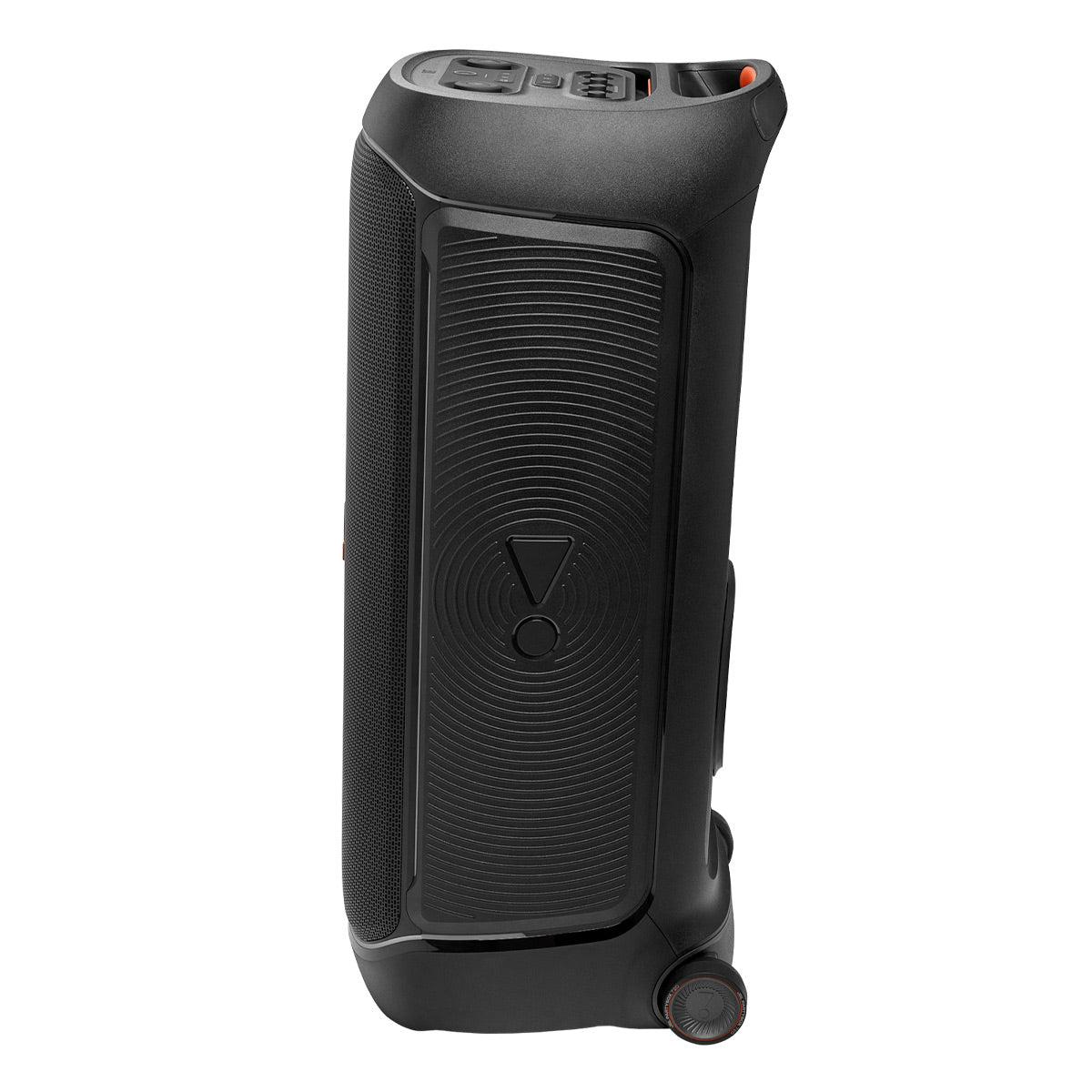
When you're planning the perfect party, whether it's a backyard barbecue or a celebration that'll have the neighbors talking, your speaker choice can make or break the entire event. Today we're diving deep into two very different approaches to party audio: the budget-friendly Philips TAX5206 and the powerhouse JBL PartyBox 720. These speakers couldn't be more different in their approach, yet they're both designed to get people moving and create memorable experiences.
Party speakers occupy a unique space in the audio world. Unlike home theater speakers that prioritize balanced, accurate sound reproduction, or portable Bluetooth speakers designed for personal listening, party speakers are built with one primary goal: creating an energetic atmosphere that gets people excited. They need to pump out serious volume, survive outdoor conditions, keep the party going for hours on battery power, and often provide interactive features like karaoke capabilities or DJ controls.
The party speaker market has evolved significantly since both of these models launched. The Philips TAX5206 represents the traditional approach to affordable party audio, while the JBL PartyBox 720, released in 2024, showcases how modern party speakers are becoming more sophisticated and powerful. JBL's latest model includes features like Auracast technology (which lets you wirelessly connect multiple compatible speakers for synchronized sound) and AI Sound Boost (which automatically optimizes audio performance based on volume levels and content).
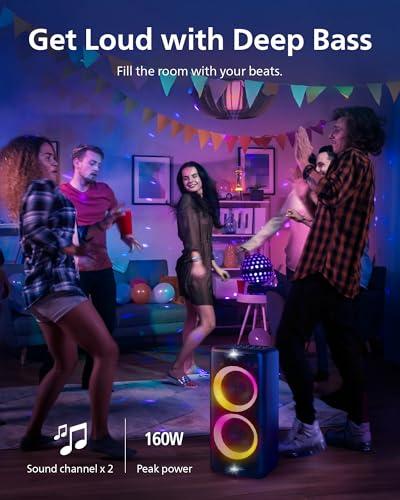
The most fundamental difference between these speakers is raw power output, and it's not even close. The JBL PartyBox 720 delivers a massive 800 watts of power, while the Philips TAX5206 produces 80 watts RMS (Root Mean Square - the sustained power output) with peaks up to 160 watts. This isn't just a numbers game; it translates to dramatically different real-world performance.
To put this in perspective, every time you double the wattage, you increase volume by roughly 3 decibels. The JBL PartyBox 720 has ten times the power of the Philips TAX5206, which means it can play significantly louder while maintaining audio clarity. In practical terms, expert reviews consistently note that the JBL can fill spaces like basketball courts or large outdoor areas, while the Philips works best for more intimate gatherings.
However, power isn't everything. The Philips TAX5206 makes smart use of its more modest power output. It includes separate bass and treble controls, allowing you to shape the sound to match your space and preferences. The speaker also performs noticeably better when plugged into AC power compared to battery operation - a common trait among budget party speakers that need to conserve battery life.
The drivers (the actual speakers inside the cabinet) tell an interesting story about each manufacturer's priorities. The JBL PartyBox 720 uses two massive 9-inch woofers for bass reproduction and two 1.25-inch dome tweeters for high frequencies. These larger woofers can move more air, creating deeper, more impactful bass that you'll feel as much as hear.
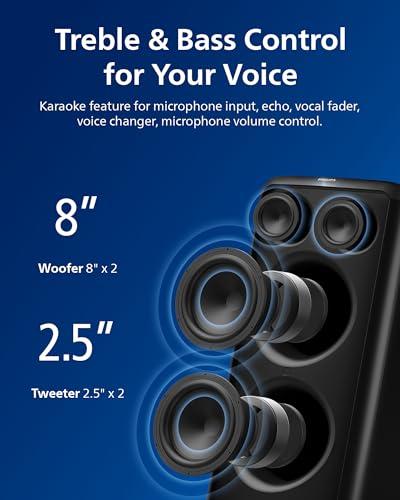
The Philips TAX5206 takes a more modest approach with two 8-inch woofers and two 2.5-inch tweeters. While smaller, this configuration is well-matched to the speaker's power output and intended use cases. Interestingly, the Philips uses larger tweeters than the JBL, which can provide better high-frequency dispersion and clarity at moderate volumes.
Here's where things get interesting from a technical standpoint: the JBL PartyBox 720 lacks dedicated mid-range drivers. This is a significant design choice that affects how music sounds. Most of what we hear in vocals and instruments falls in the mid-range frequencies, roughly between 250Hz and 4000Hz. Without dedicated mid-range drivers, the woofers handle lower mids while the tweeters handle upper mids, potentially creating a gap in frequency response. Expert reviews consistently mention this limitation, noting that while the JBL excels at pumping bass and crisp highs, instrument separation and vocal clarity don't match what you'd expect from such an expensive speaker.
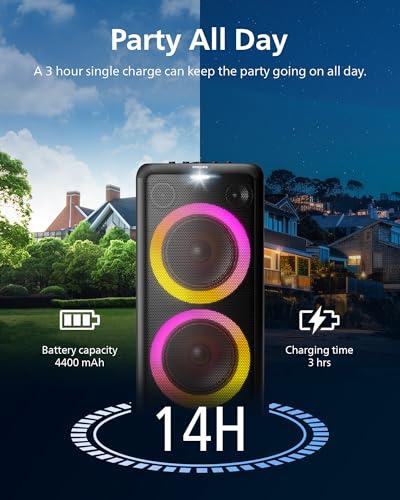
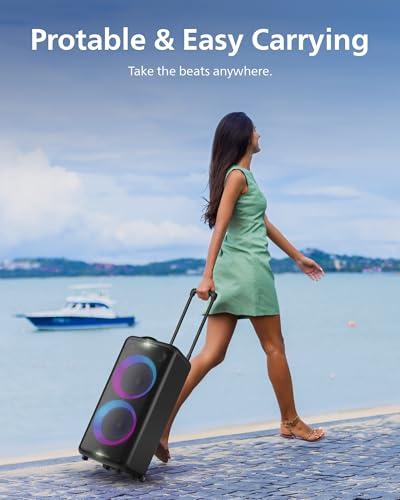
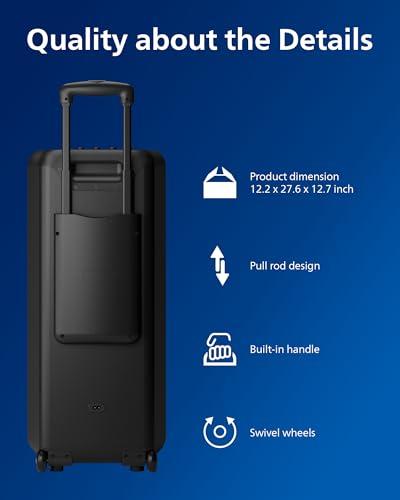
This is where the fundamental difference between these speakers becomes crystal clear. The Philips TAX5206 is designed as a truly portable party solution. At just over 23 pounds with built-in wheels and a telescoping handle (like a suitcase), it's genuinely easy for one person to transport. The integrated 4400mAh lithium-ion battery provides up to 14 hours of playback on a 3-hour charge - impressive performance that means you can party all day without worrying about power.
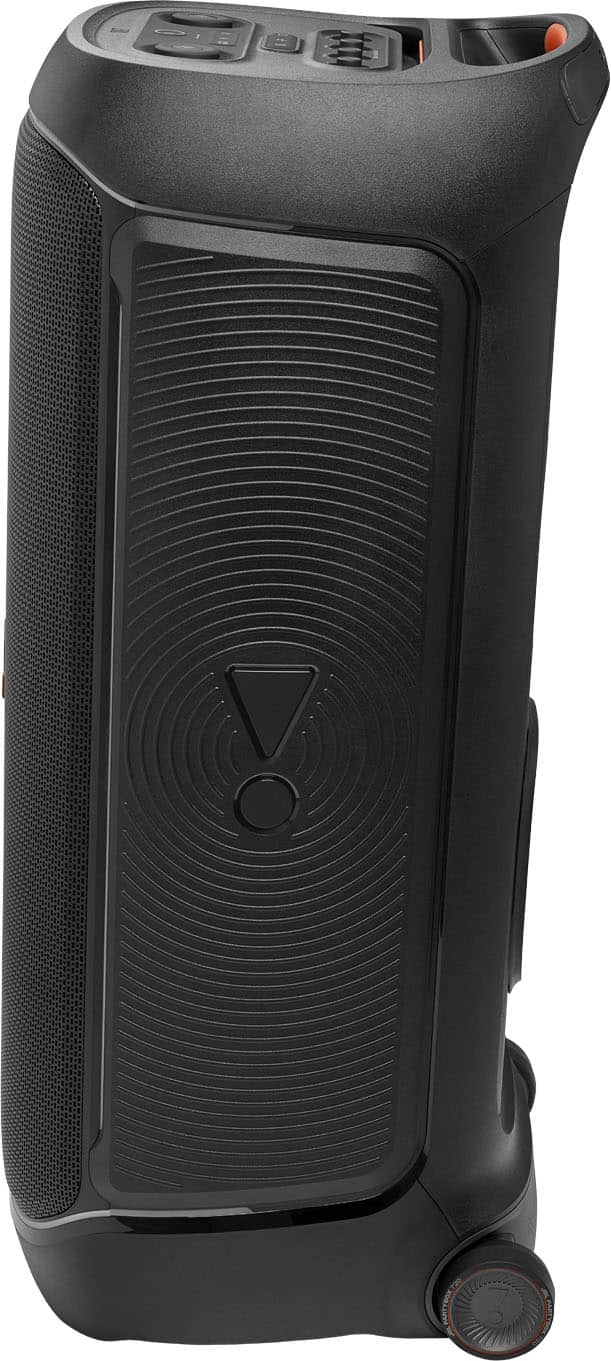
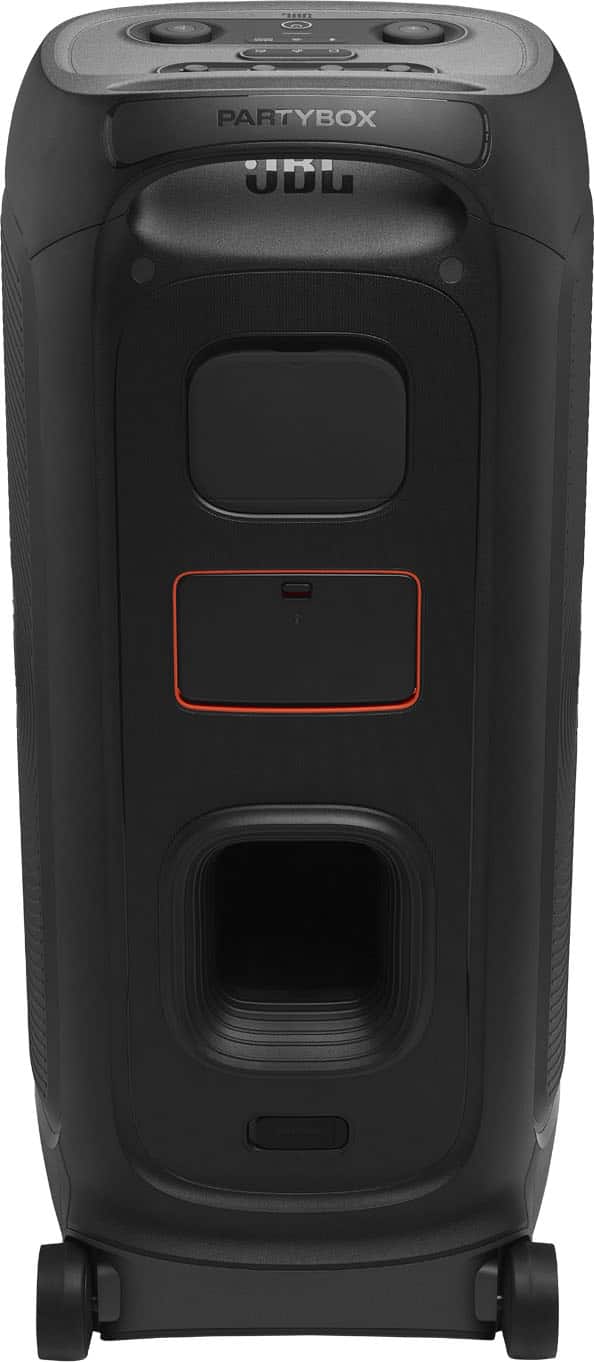
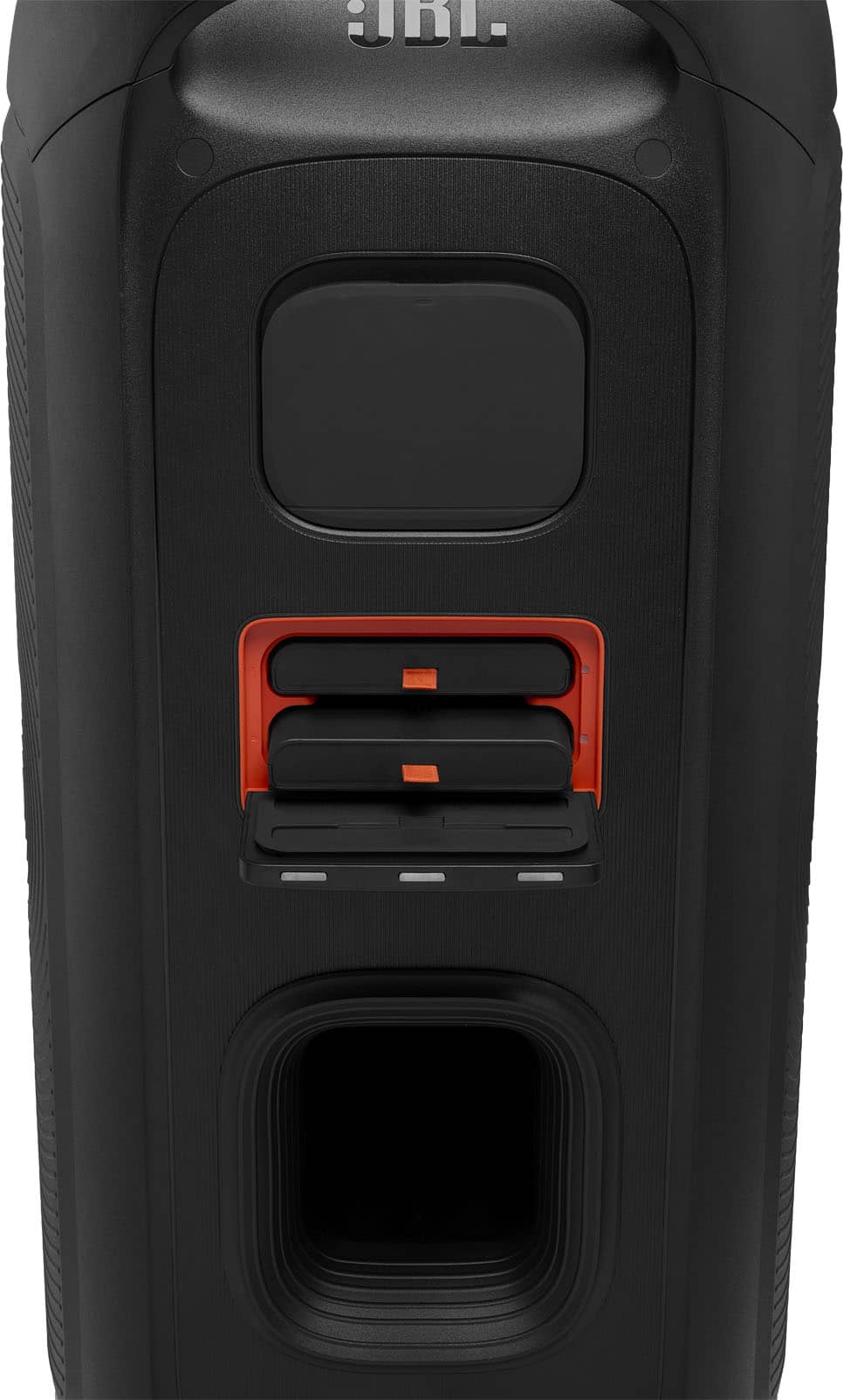
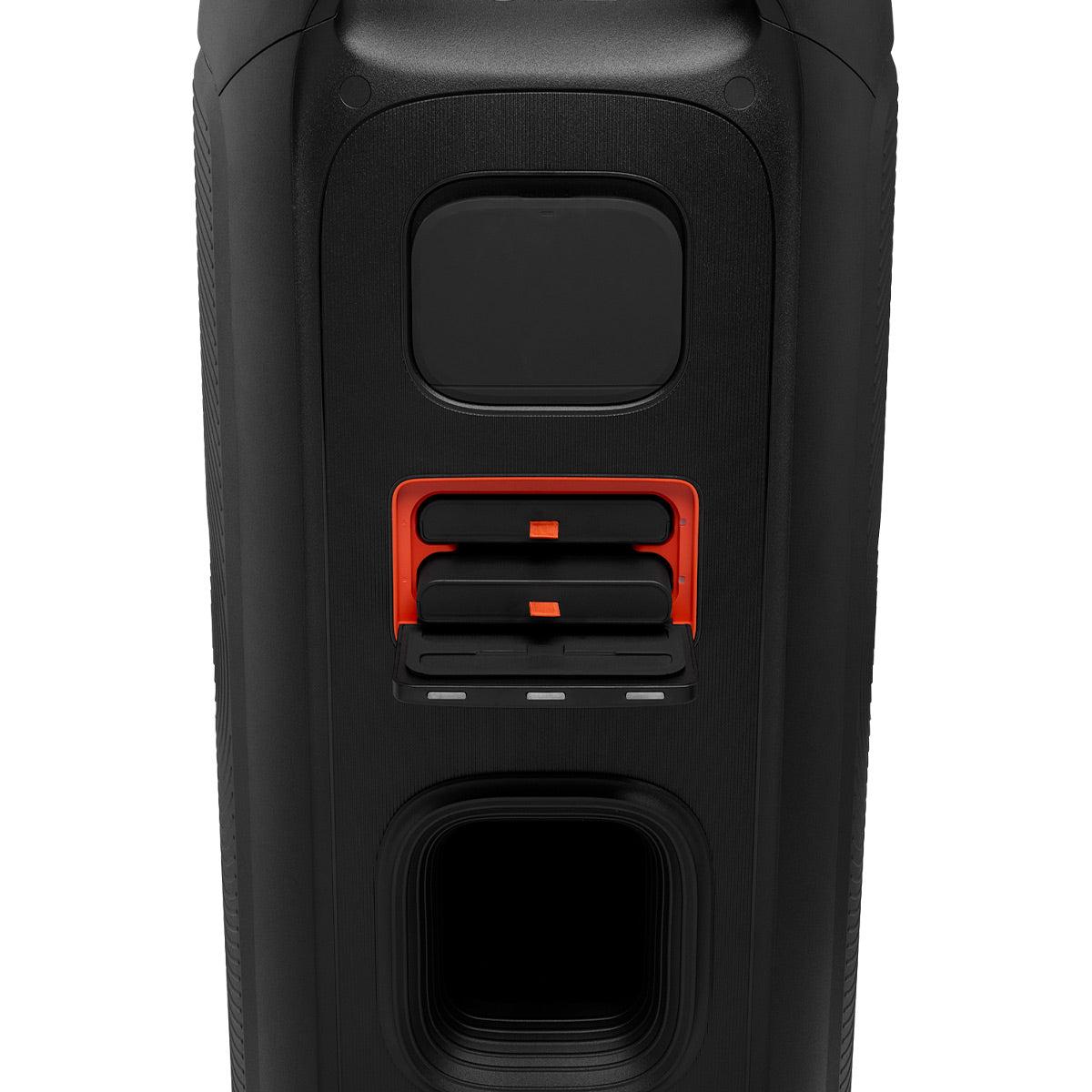
The JBL PartyBox 720 takes a different approach entirely. Yes, it has wheels and a handle, and yes, it can run on battery power, but at 68 pounds, it's more "moveable" than truly portable. You'll definitely want help loading it into a vehicle. However, JBL's approach to battery power is clever: instead of one large integrated battery, it uses two removable battery packs. This means you can carry spare batteries for virtually unlimited runtime, or replace batteries when they eventually wear out instead of replacing the entire speaker.
In real-world testing, the JBL's advertised 15-hour battery life doesn't hold up when you're actually using it for parties. With volume at 60% (which is loud enough to require hearing protection indoors), bass boost enabled, and lights running, actual battery life drops to around 8 hours. The Philips TAX5206 more consistently delivers on its battery promises, though it doesn't have the option for extended runtime through battery swapping.
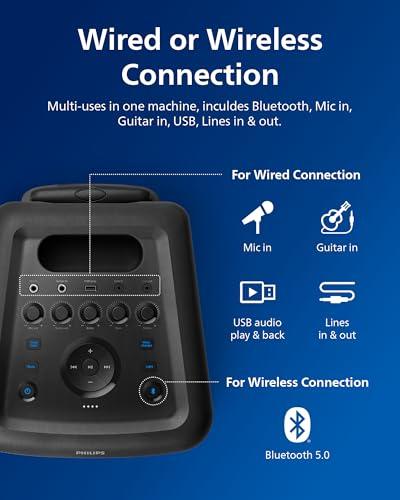
Both speakers include microphone inputs, but their approaches couldn't be more different. The Philips TAX5206 is clearly designed with karaoke enthusiasts in mind. It includes both microphone and guitar inputs (6.3mm jacks), each with individual volume controls. More importantly, it offers a full suite of vocal effects: echo control for that classic karaoke reverb, a vocal fader that can remove or reduce vocals from existing tracks, and even a voice changer for comedic effect.
The physical controls make a big difference here. The Philips includes rotary knobs for adjusting bass, treble, microphone volume, guitar volume, and echo levels in real-time. This means you can fine-tune the sound while someone's singing without navigating through menus or apps.
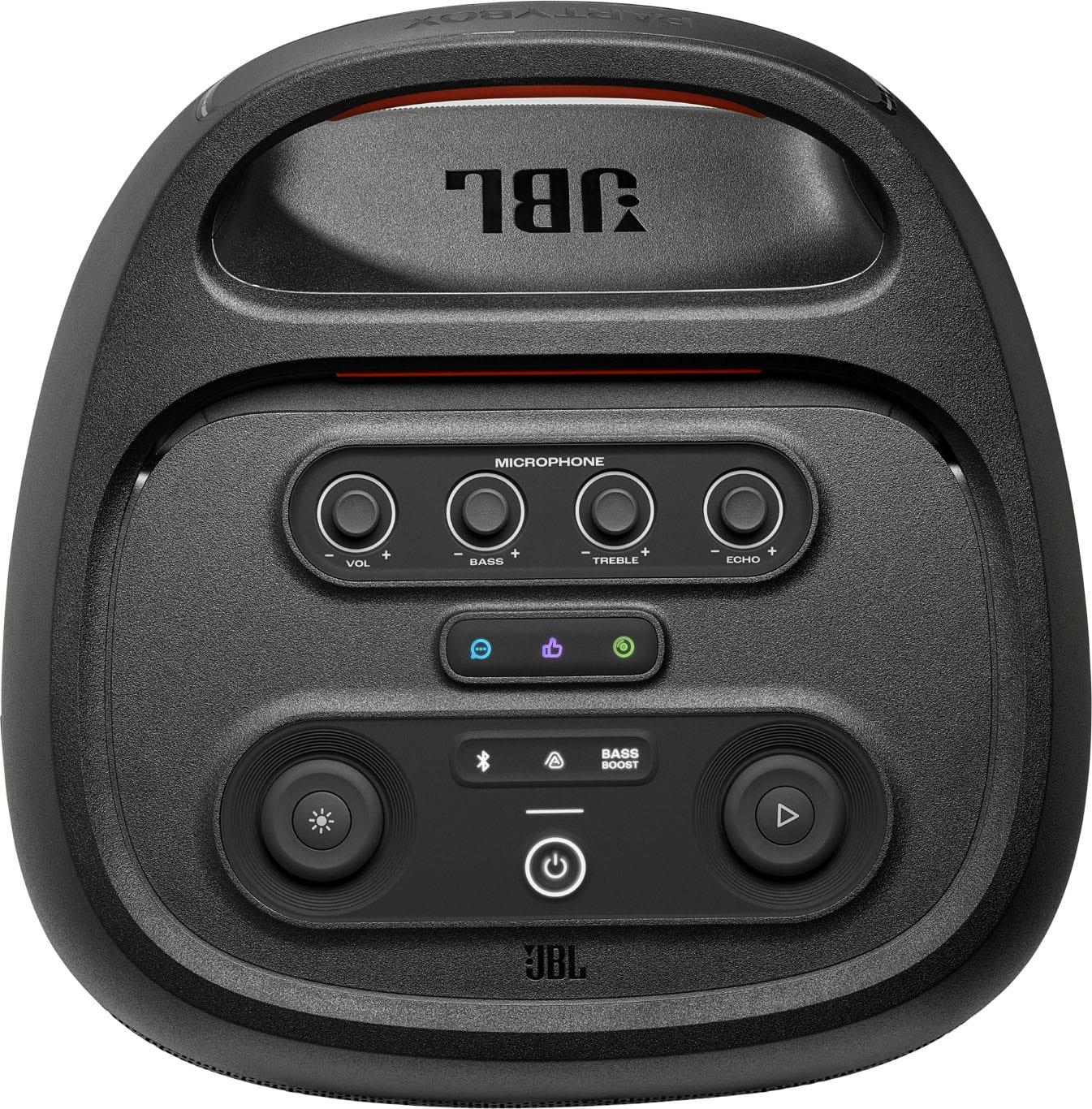
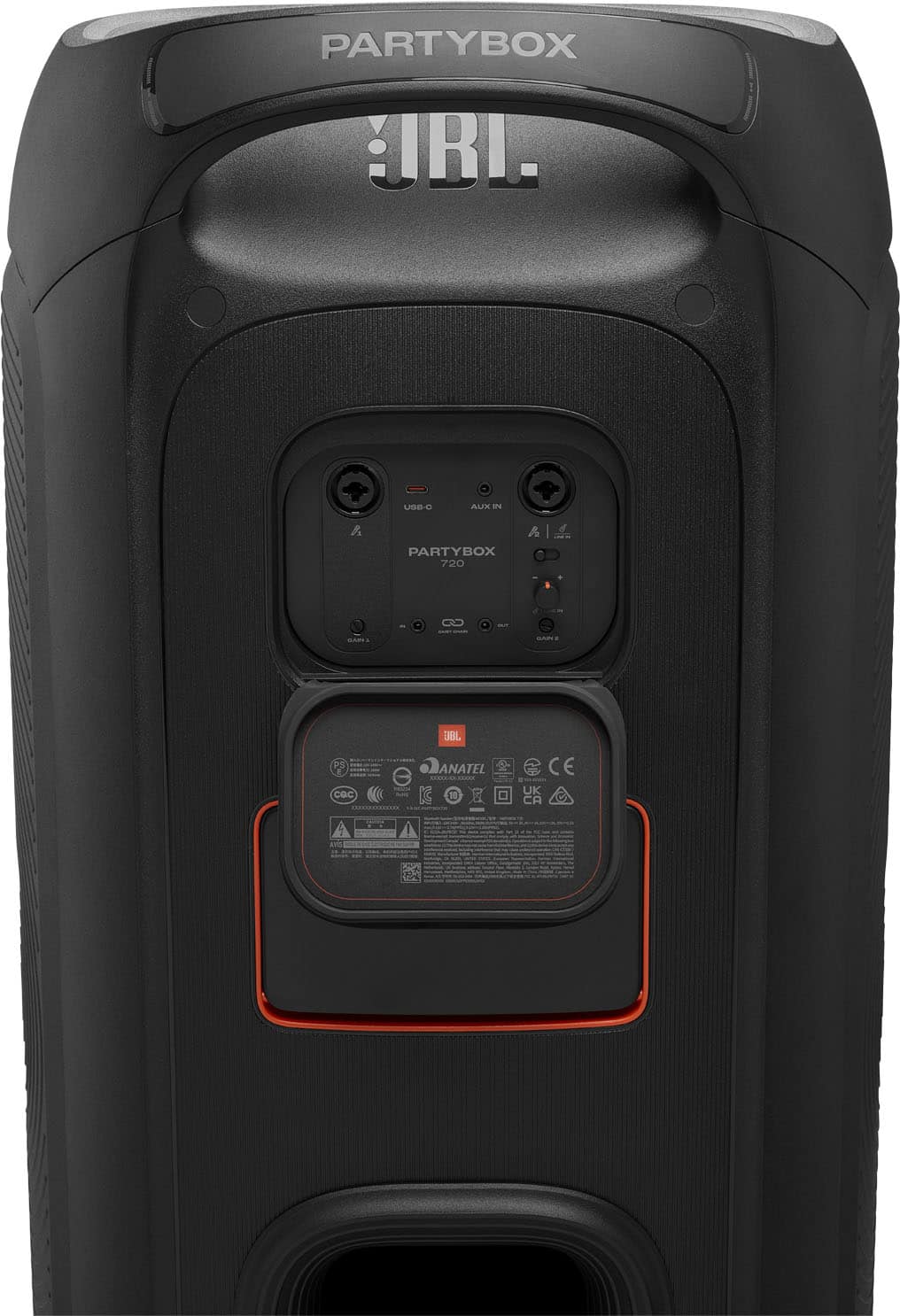
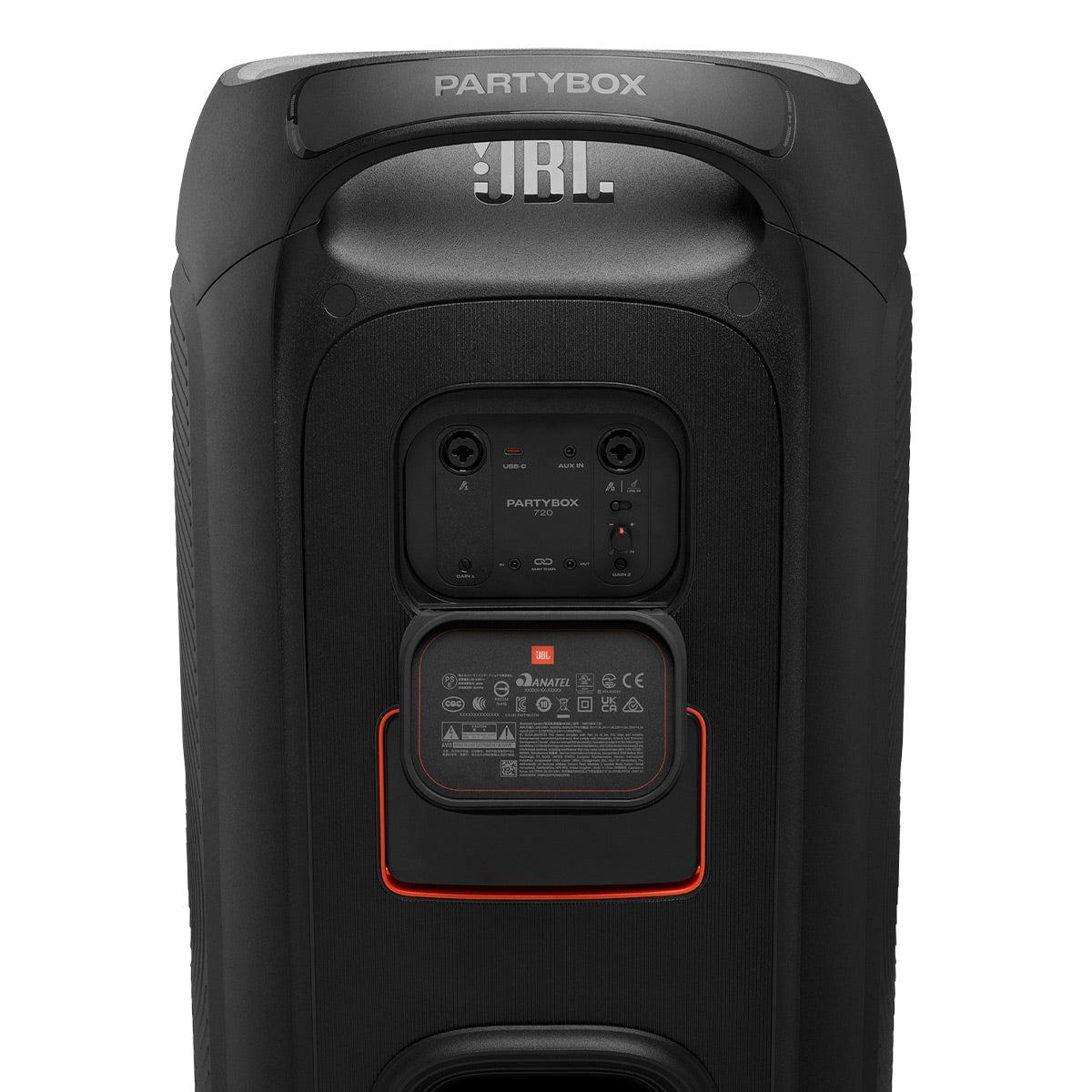
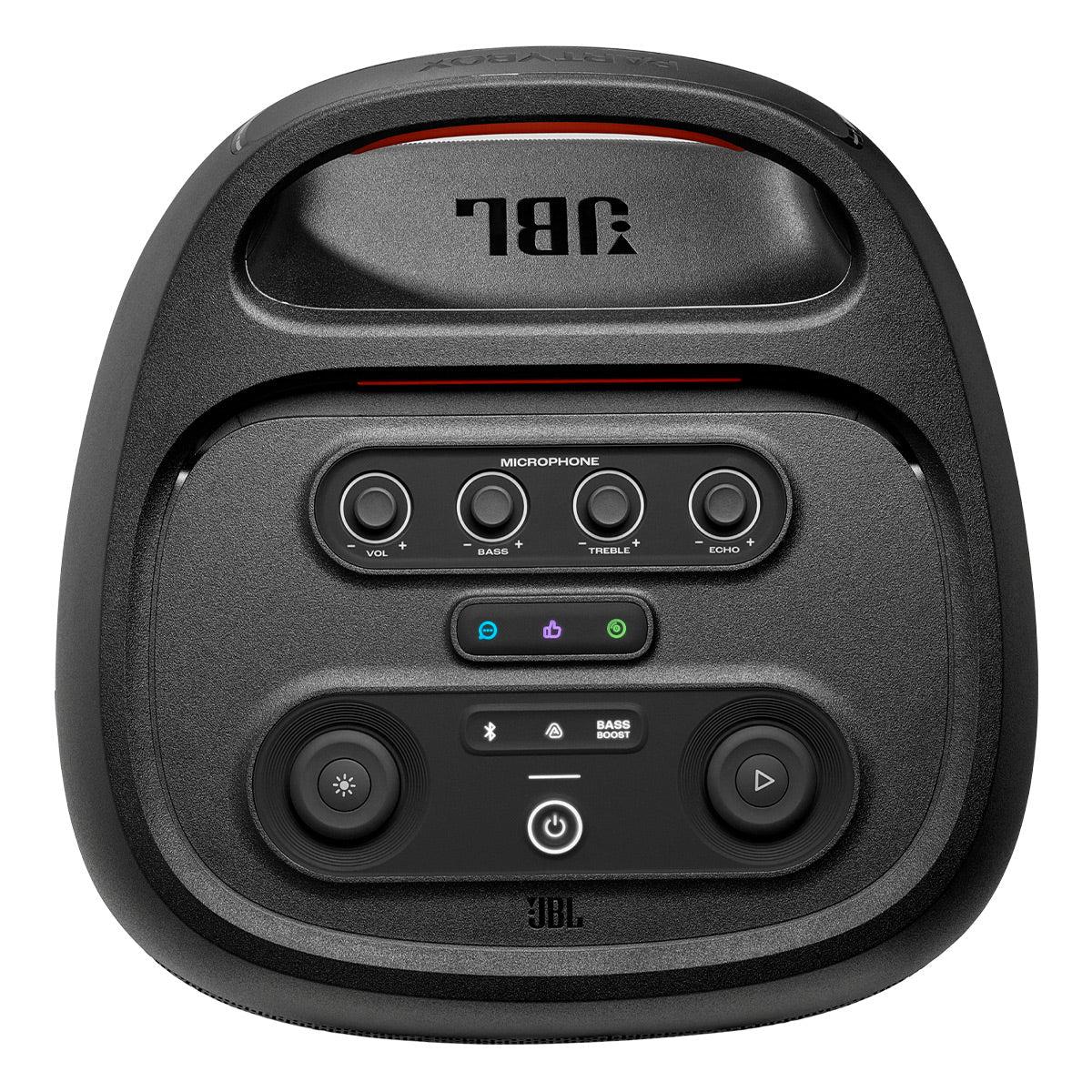
The JBL PartyBox 720 takes a more professional approach with dual XLR inputs (the professional standard for microphones and audio equipment) alongside the standard quarter-inch inputs. It's designed more for someone who might be doing live performances, DJ work, or connecting professional audio equipment. While it has microphone controls, it lacks the dedicated karaoke effects that make the Philips so engaging for casual use.
Where the JBL shines is in its DJ functionality. It includes what's essentially an integrated DJ mixer, with professional-level controls for managing multiple audio sources and creating smooth transitions between songs. This makes it genuinely suitable for semi-professional use in small venues or events where you need DJ-level control without separate equipment.
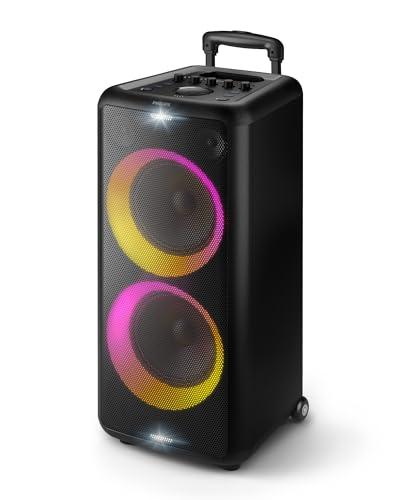
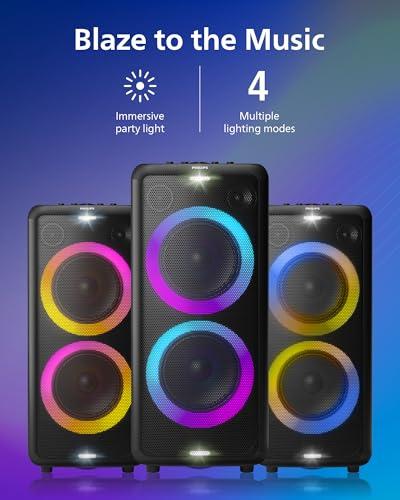
Both speakers include synchronized lighting effects, but the implementation differs significantly. The Philips TAX5206 features a ring of LED lights that pulse and change colors in sync with your music. It offers four different lighting modes and includes strobe functionality. While not groundbreaking, the lighting is well-integrated and adds genuine party atmosphere without being overwhelming.
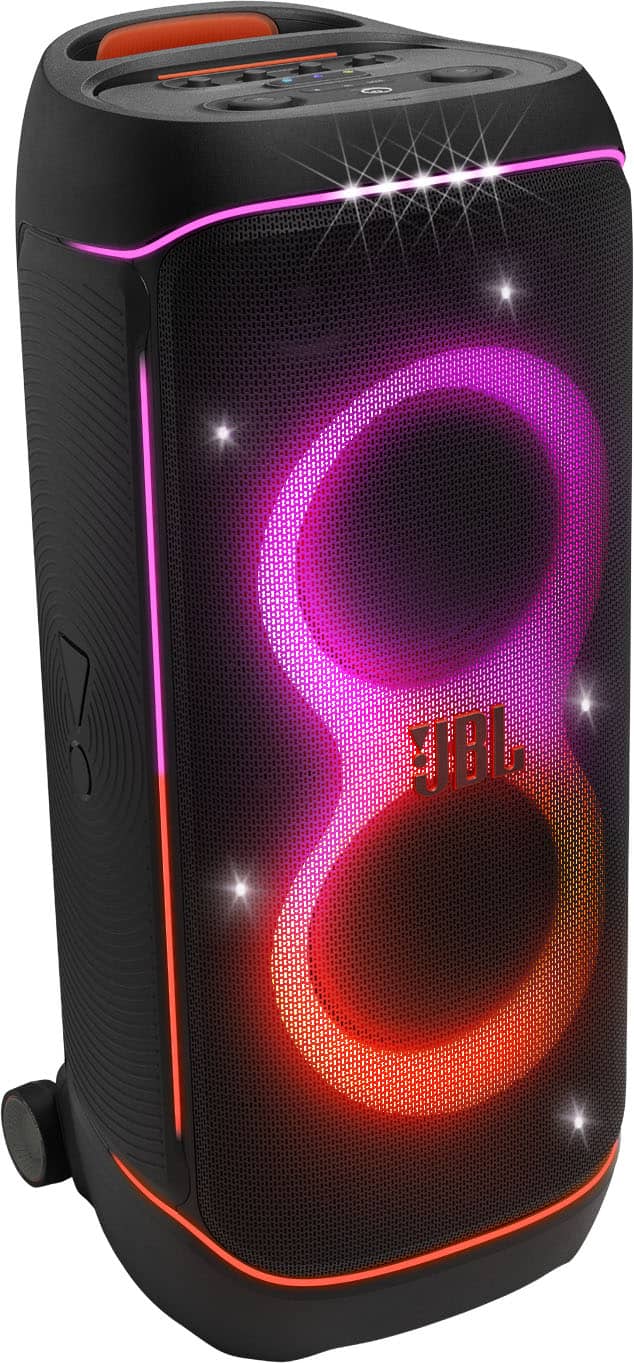
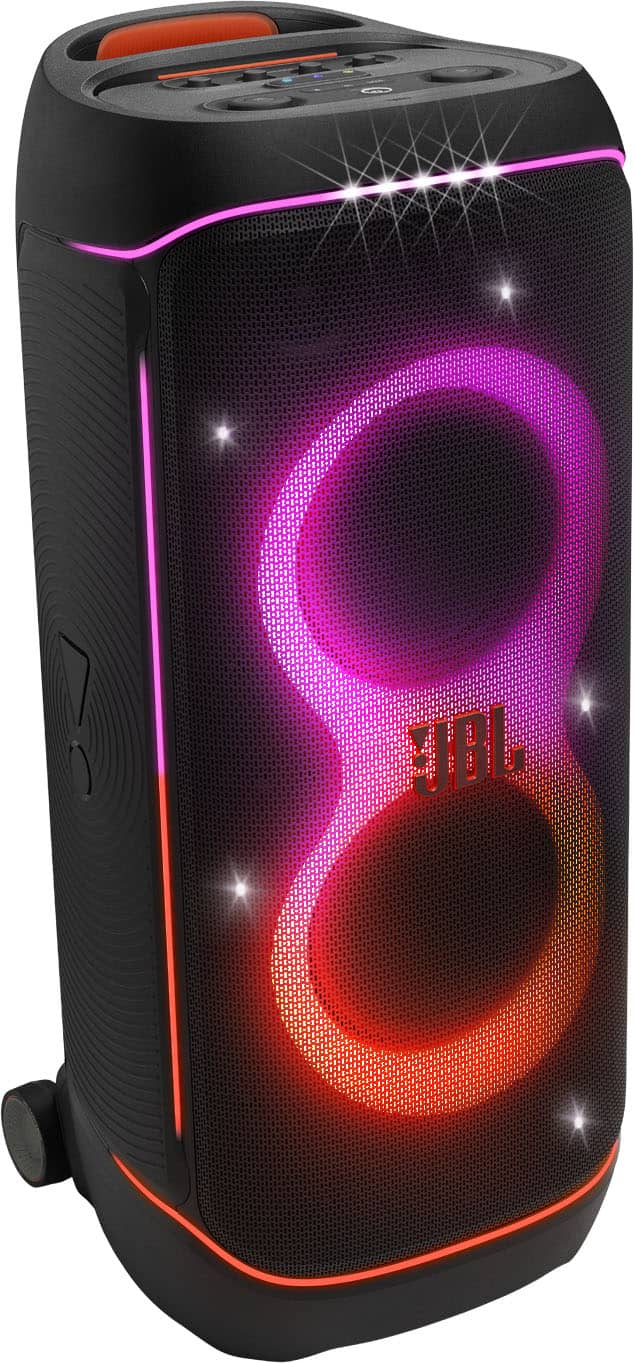
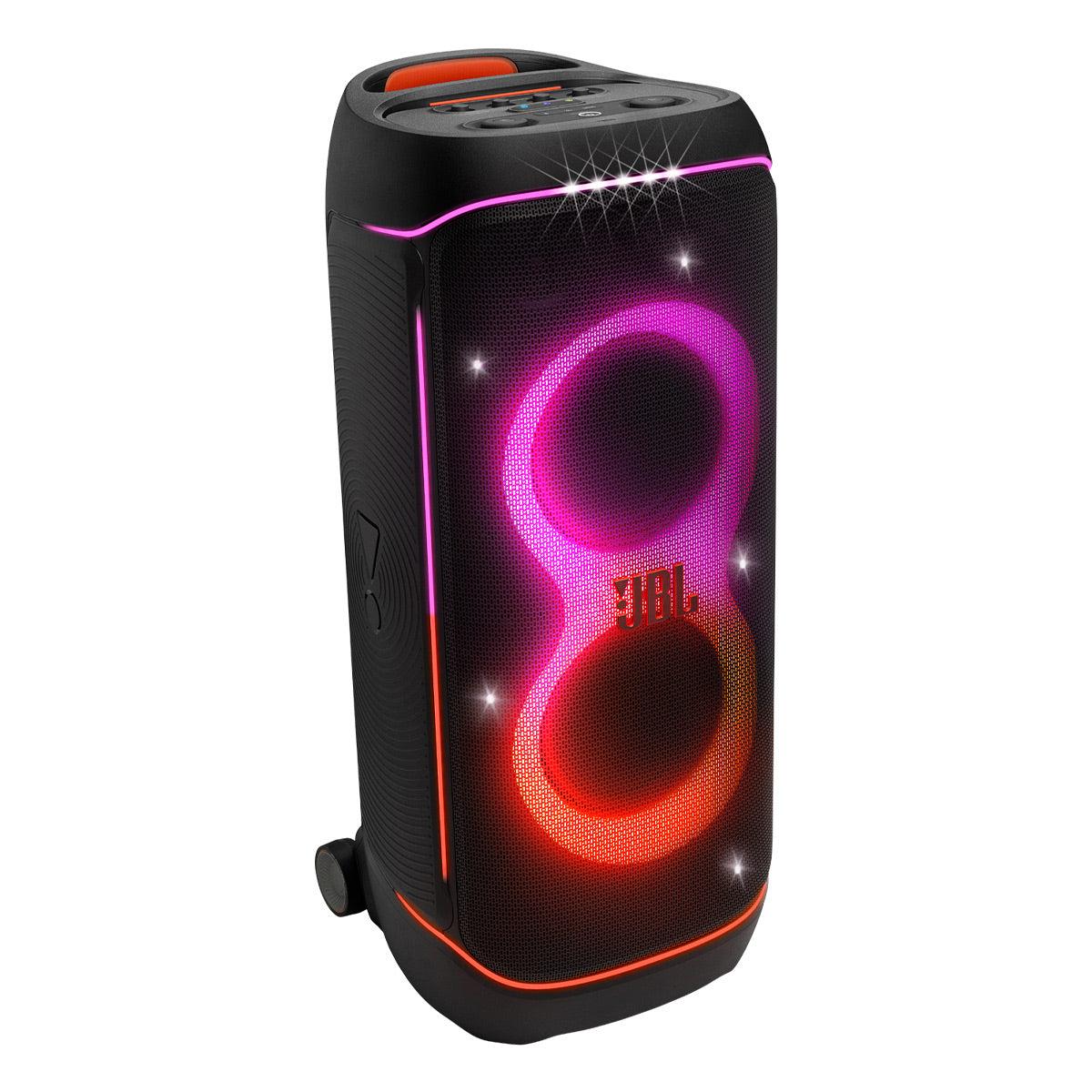
The JBL PartyBox 720 steps up the visual game considerably with what JBL calls a "futuristic light show." The lighting system creates 3D effects with starry patterns, flowing trails, and pulsing strobes that span the entire speaker panel. It's genuinely impressive and suitable for larger gatherings where the lighting needs to be visible from a distance. The JBL PartyBox app allows for detailed customization of lighting effects, something the Philips lacks.
However, compared to JBL's flagship PartyBox Ultimate, the 720 notably lacks floor-level lighting effects that create ambient lighting around the speaker base. This might seem like a minor detail, but it affects the overall visual impact, especially in darker environments.
Both speakers handle the basics well - Bluetooth connectivity with decent range and audio quality. The JBL PartyBox 720 uses the newer Bluetooth 5.4 standard with Auracast support, which allows you to wirelessly link multiple compatible JBL speakers for synchronized playback. This is genuinely useful for larger events where you need sound coverage across a wide area.
The Philips TAX5206 uses Bluetooth 5.0 with multipoint support (connecting to multiple devices simultaneously) but lacks the advanced multi-speaker functionality. It does include both audio input and output connections, so you can daisy-chain it with other speakers using cables.
One area where the JBL pulls ahead is app integration. The JBL PartyBox app provides comprehensive control over sound settings with a 7-band graphic equalizer, lighting customization, and multi-speaker management. The Philips TAX5206 relies entirely on physical controls, which some users actually prefer for its simplicity and tactile feedback.
Here's where things get interesting from an audiophile perspective. The JBL PartyBox 720 undoubtedly produces more sound - louder, deeper bass, and enough power to energize large crowds. However, that missing mid-range driver becomes apparent when you listen critically. Vocals can sound slightly hollow, and complex musical passages may lack the separation and clarity you'd expect from such an expensive speaker.
Expert reviews consistently praise the JBL's bass impact and overall energy while noting these mid-range limitations. It excels with genres like EDM, hip-hop, and dance music where powerful bass and crisp highs matter more than nuanced mid-range reproduction.
The Philips TAX5206, while much less powerful, actually provides more balanced sound within its capabilities. Reviews describe the bass as adequate rather than exceptional, but the overall frequency response is more even. For smaller gatherings where conversation might happen alongside music, this more balanced approach can actually be preferable.
Both speakers benefit significantly from their physical controls for sound shaping. The ability to adjust bass and treble in real-time means you can adapt to different musical styles and room acoustics on the fly.
The JBL PartyBox 720 includes IPX4 splash-proof rating, meaning it can handle water splashes from any direction. This makes it suitable for poolside parties or light rain, though you wouldn't want to leave it out in a downpour. The robust construction feels appropriate for semi-professional use and regular transport.
The Philips TAX5206 doesn't specify weather resistance, and its lighter construction suggests it's better suited for covered outdoor areas or indoor use. However, at its price point, you might be less stressed about potential damage from accidental exposure to moisture.
At the time of writing, these speakers occupy completely different price categories. The Philips TAX5206 typically sells for under $300, while the JBL PartyBox 720 commands over $1000 - nearly four times the price. This isn't just a premium for extra features; it's a fundamental difference in target markets.
The Philips TAX5206 offers exceptional value for casual users. You get genuine portability, comprehensive karaoke features, adequate sound quality for small to medium gatherings, and excellent battery life. For someone who hosts occasional backyard barbecues or wants a speaker for family karaoke nights, it's hard to argue with the value proposition.
The JBL PartyBox 720 justifies its premium pricing through raw power and professional features. If you regularly host large outdoor events, need maximum volume output, or want semi-professional DJ capabilities, the price difference becomes more reasonable. The ability to link multiple speakers also means it can grow with your needs.
Neither speaker is designed for home theater use in the traditional sense. Their emphasis on bass and volume over balanced, accurate sound reproduction makes them poor choices for movie dialogue or subtle sound effects. However, both could serve as party speakers in a home theater setup for special events or casual music listening.
The JBL PartyBox 720's professional audio inputs could theoretically integrate with a home theater system, but its massive size and party-focused sound signature make it impractical for most home environments.
The decision between these speakers ultimately comes down to your specific needs and budget tolerance. Choose the Philips TAX5206 if you're looking for an affordable, truly portable solution with excellent karaoke features and adequate power for smaller gatherings. It's perfect for families, casual entertainers, or anyone who values portability and battery life over maximum volume.
The JBL PartyBox 720 makes sense for serious party hosts, semi-professional users, or anyone who regularly needs to energize large crowds. If you host events with 50+ people, need professional audio inputs, or want the ability to scale up with multiple linked speakers, the premium pricing becomes justifiable.
Consider your typical party size, transport requirements, and feature priorities. The Philips TAX5206 excels at being a complete, portable party solution, while the JBL PartyBox 720 focuses on maximum impact and professional capabilities. Both succeed at their intended purposes, but they serve very different users and use cases.
The beauty of having these different approaches in the market is that there's genuinely a right choice for different types of users. Just make sure you're honest about your actual needs rather than buying more (or less) speaker than you'll realistically use.
| Philips TAX5206 | JBL PartyBox 720 |
|---|---|
| Power Output - Determines maximum volume and bass impact | |
| 80W RMS / 160W Max (suitable for small-medium gatherings) | 800W RMS (fills large venues, 10x more powerful) |
| Driver Configuration - Affects sound quality and frequency response | |
| 2x 8" woofers, 2x 2.5" tweeters | 2x 9" woofers, 2x 1.25" tweeters (lacks mid-range drivers) |
| Weight and Portability - Critical for transport between events | |
| 23 lbs with trolley design (genuinely portable) | 68 lbs with wheels (requires significant effort to move) |
| Battery Life - Determines party duration without power outlet | |
| 14 hours integrated battery, 3-hour charge time | 8 hours real-world usage (15 hours advertised), swappable batteries |
| Karaoke Features - Important for interactive entertainment | |
| Comprehensive: echo, voice changer, vocal fader, dedicated controls | Professional XLR inputs, basic mic controls, DJ mixer functionality |
| Lighting Effects - Creates party atmosphere and visual appeal | |
| LED ring lights with 4 modes plus strobe | 360° futuristic light show with starry effects and app control |
| Connectivity and Multi-Speaker - Expandability for larger events | |
| Bluetooth 5.0, multipoint, audio in/out ports | Bluetooth 5.4 with Auracast, wireless multi-speaker linking |
| Weather Resistance - Protection for outdoor use | |
| No specified rating (indoor/covered outdoor use) | IPX4 splash-proof (poolside and light rain safe) |
| Control Interface - Ease of real-time adjustments during events | |
| Rotary knobs for bass, treble, effects (tactile, immediate) | Physical controls plus comprehensive JBL PartyBox app |
| Target User and Value Proposition - Who should buy each speaker | |
| Budget-conscious users, small parties, karaoke enthusiasts | Large event hosts, semi-professional DJs, maximum volume needs |
The JBL PartyBox 720 is significantly louder, delivering 800W of power compared to the Philips TAX5206's 80W RMS. The JBL can fill large outdoor spaces and venues, while the Philips is better suited for smaller gatherings and indoor parties.
The Philips TAX5206 offers 14 hours of battery life with consistent performance, while the JBL PartyBox 720 advertises 15 hours but delivers around 8 hours in real-world party conditions. However, the JBL uses swappable battery packs for extended runtime with spare batteries.
The Philips TAX5206 is much more portable at 23 pounds with a trolley design that's easy for one person to transport. The JBL PartyBox 720 weighs 68 pounds and requires significant effort to move, despite having wheels and handles.
Yes, but with different approaches. The Philips TAX5206 is built for karaoke with echo control, voice changer, vocal fader, and dedicated rotary controls. The JBL PartyBox 720 has professional XLR microphone inputs and basic controls but focuses more on DJ functionality than karaoke effects.
The Philips TAX5206 offers exceptional value for casual users with comprehensive features at a budget-friendly price. The JBL PartyBox 720 costs significantly more but delivers professional-grade power and features that justify the premium for serious party hosts and semi-professional use.
The Philips TAX5206 supports Bluetooth multipoint for connecting multiple devices, while the JBL PartyBox 720 features advanced Auracast technology that allows wireless linking of multiple compatible JBL speakers for synchronized sound across large areas.
The JBL PartyBox 720 offers superior lighting with a 360-degree futuristic light show featuring starry effects, flowing trails, and app-controlled customization. The Philips TAX5206 has LED ring lights with four modes plus strobe effects, which are adequate but less elaborate.
Neither the Philips TAX5206 nor JBL PartyBox 720 is designed for home theater use. They emphasize bass and volume over balanced sound reproduction needed for movie dialogue and sound effects. They're better suited for music and party environments.
The JBL PartyBox 720 has IPX4 splash-proof rating, making it safe for poolside parties and light rain. The Philips TAX5206 doesn't specify weather resistance and is better suited for covered outdoor areas or indoor use.
The JBL PartyBox 720 delivers much deeper, more powerful bass with its larger 9-inch woofers, but lacks mid-range drivers affecting vocal clarity. The Philips TAX5206 offers more balanced sound within its power limitations, though with less impactful bass overall.
The JBL PartyBox 720 is essential for large outdoor events with 50+ people, offering the volume and bass needed to energize big crowds. The Philips TAX5206 works best for smaller gatherings of 10-30 people where its power output is adequate.
The JBL PartyBox 720 includes integrated DJ mixer functionality with professional XLR inputs, making it suitable for semi-professional use and small venue events. The Philips TAX5206 is designed for casual use with basic audio inputs and lacks professional DJ features.
We've done our best to create useful and informative comparisons to help you decide what product to buy. Our research uses advanced automated methods to create this comparison and perfection is not possible - please contact us for corrections or questions. These are the sites we've researched in the creation of this article: youtube.com - documents.philips.com - cutetechgadgets.com - odpbusiness.com - usa.philips.com - hitechers.com - youtube.com - documents.philips.com - youtube.com - walmart.com - walmart.com - device.report - flipkart.com - brightstarcomp.com - youtube.com - philips.co.in - documents.philips.com - fullspecs.net - documents.philips.com - stereoindex.com - youtube.com - youtube.com - youtube.com - youtube.com - comparisontabl.es - jbl.com - youtube.com - youtube.com - youtube.com - bestbuy.com - versus.com - youtube.com - youtube.com - versus.com - youtube.com - jbl.com - news.jbl.com - engadget.com - news.harman.com - youtube.com - creativeaudio.net - jbl.com - skybygramophone.com - crutchfield.com - manuals.plus - youtube.com

Privacy Policy
Terms and Conditions - Affiliate Policy
Home Security
© Copyright 2008-2026.
11816 Inwood Rd #1211, Dallas, TX 75244