


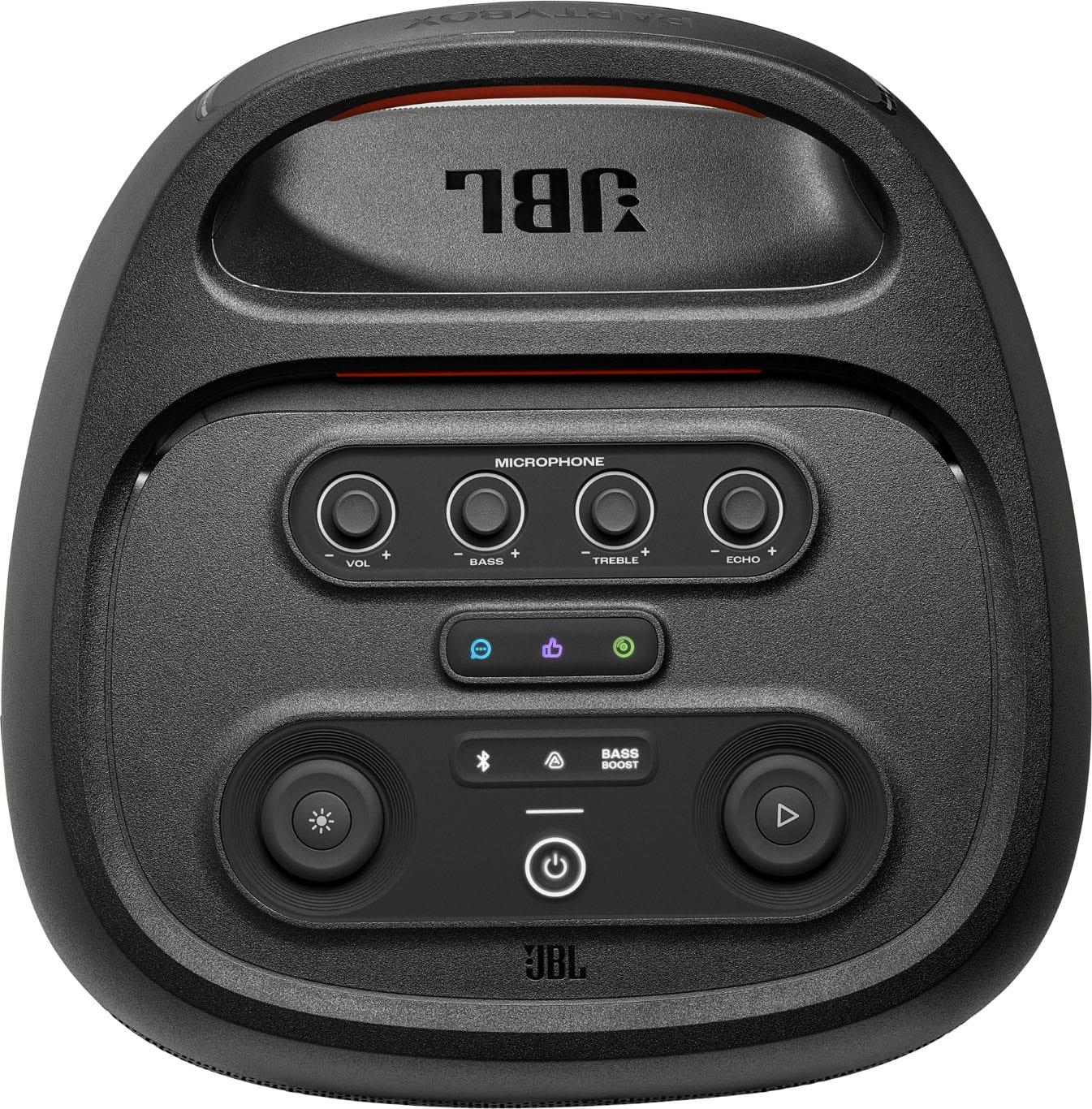
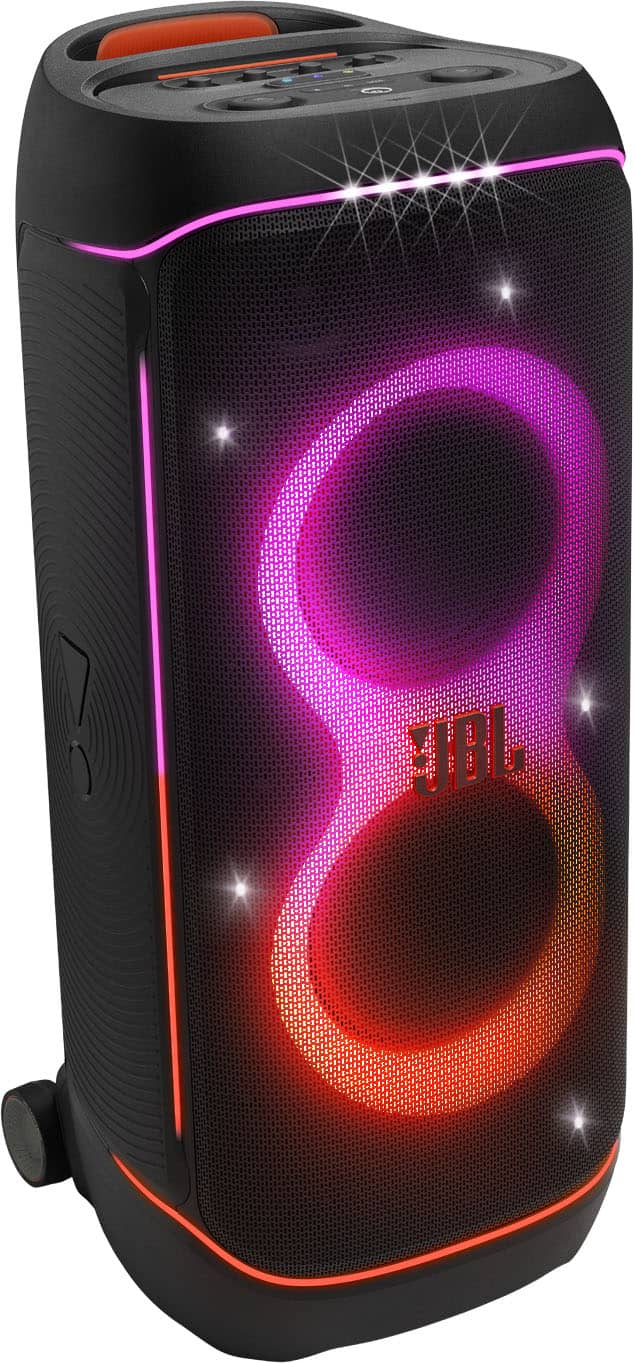
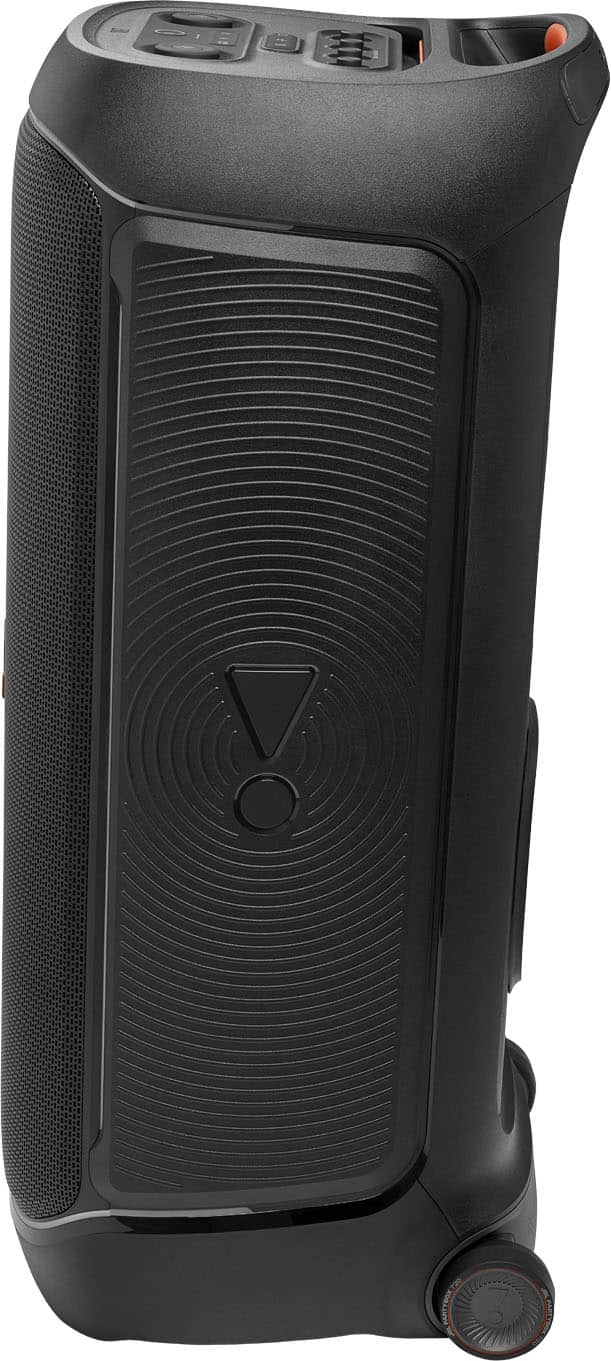
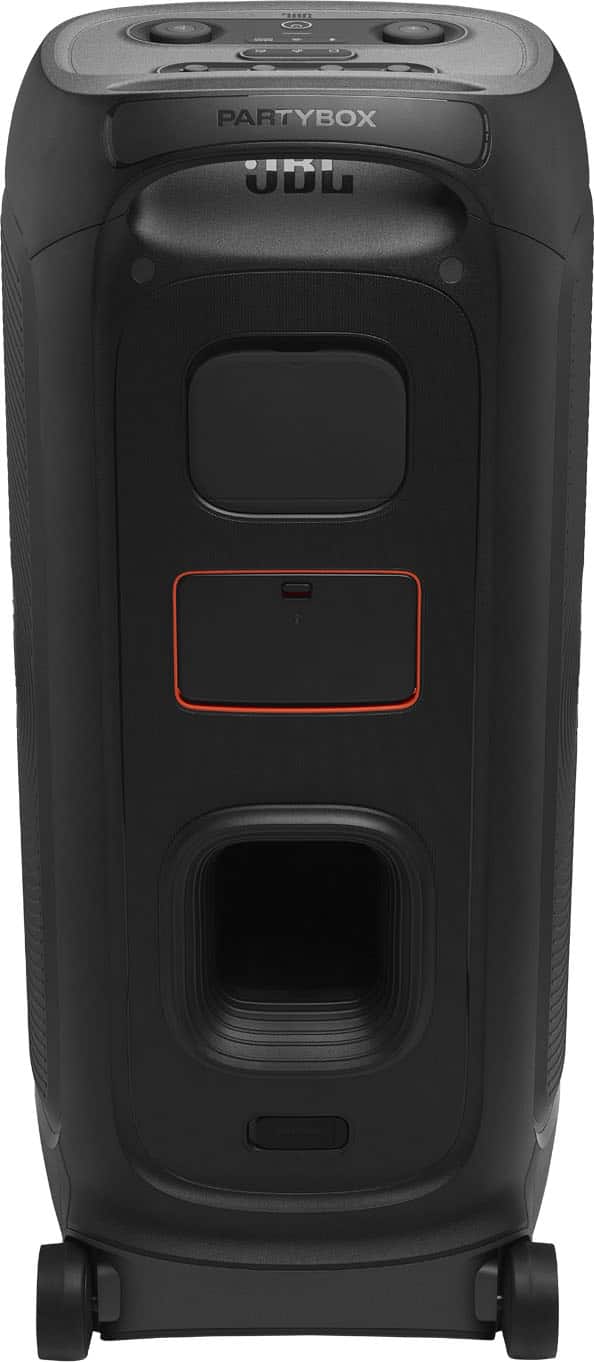
If you're shopping for a high-end party speaker that can fill a room (or backyard) with concert-quality sound, you've probably come across two standout options: the Sony ULT TOWER 9 and the JBL PartyBox 720. Both speakers entered the market in 2024, representing the latest evolution in premium party audio technology. But while they compete in the same category, they take surprisingly different approaches to delivering the ultimate party experience.
Premium party speakers occupy a unique space in the audio world. Unlike traditional home stereo speakers that prioritize neutral sound reproduction, or basic portable speakers designed for casual listening, party speakers are engineered to create an immersive entertainment experience. They're the audio equivalent of a nightclub sound system, packed into a (relatively) portable package.
These speakers typically feature powerful amplifiers pushing 200+ watts, multiple drivers for full-range sound, built-in LED lighting systems synchronized to the music, and comprehensive connectivity options including microphone inputs for karaoke. The best models also include DJ-style controls, wireless pairing capabilities, and robust construction to handle both indoor and outdoor use.
The key challenge for manufacturers is balancing raw power with sound quality, portability with performance, and features with usability. This is exactly where the Sony ULT TOWER 9 and JBL PartyBox 720 diverge in their design philosophies.
The most fundamental difference between these speakers lies in their core design approach. Sony engineered the ULT TOWER 9 around superior sound quality and entertainment features, while JBL designed the PartyBox 720 to maximize raw output power and true wireless portability.
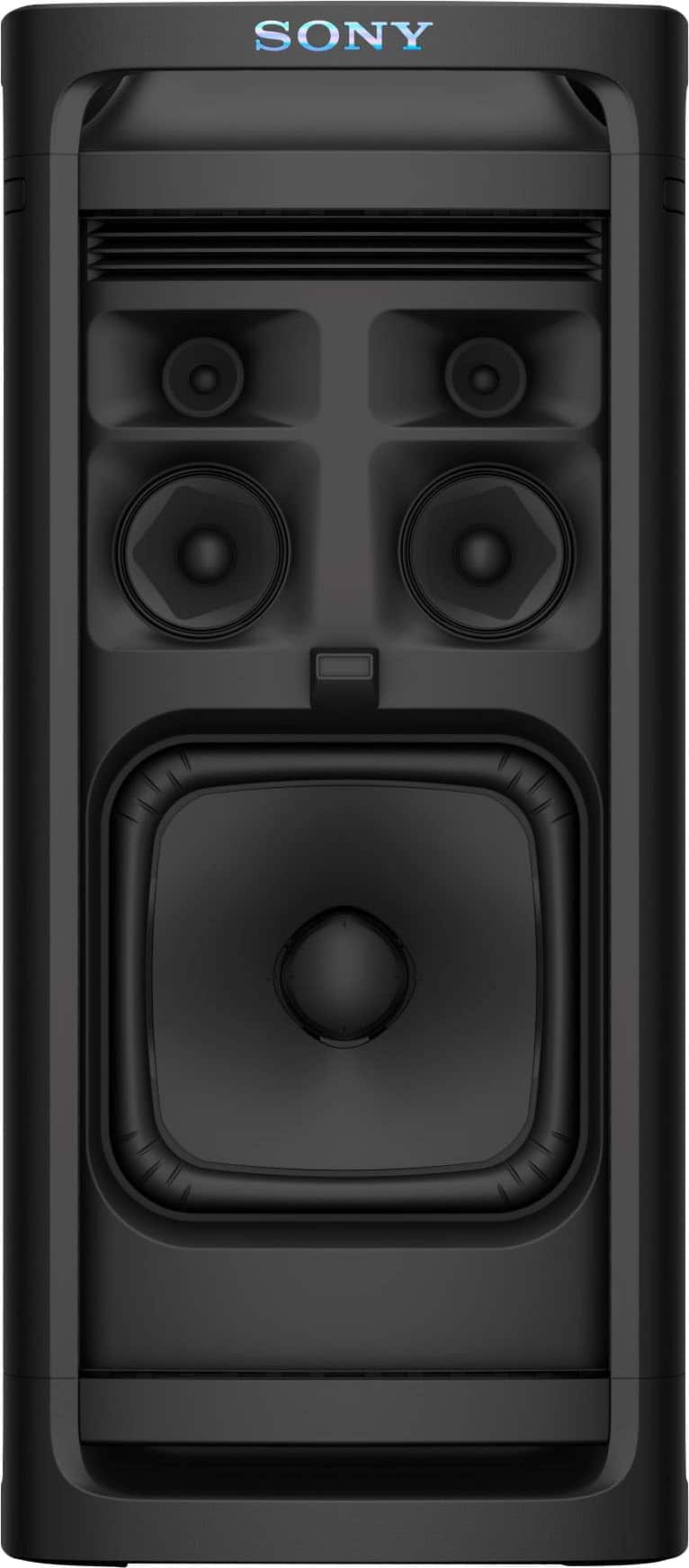
This philosophical split becomes apparent the moment you examine their specifications. The Sony ULT TOWER 9 features a sophisticated 3-way driver system—meaning it has separate speakers dedicated to bass (woofer), midrange frequencies (midrange driver), and high frequencies (tweeter). This configuration allows each driver to focus on what it does best, resulting in cleaner, more accurate sound reproduction.
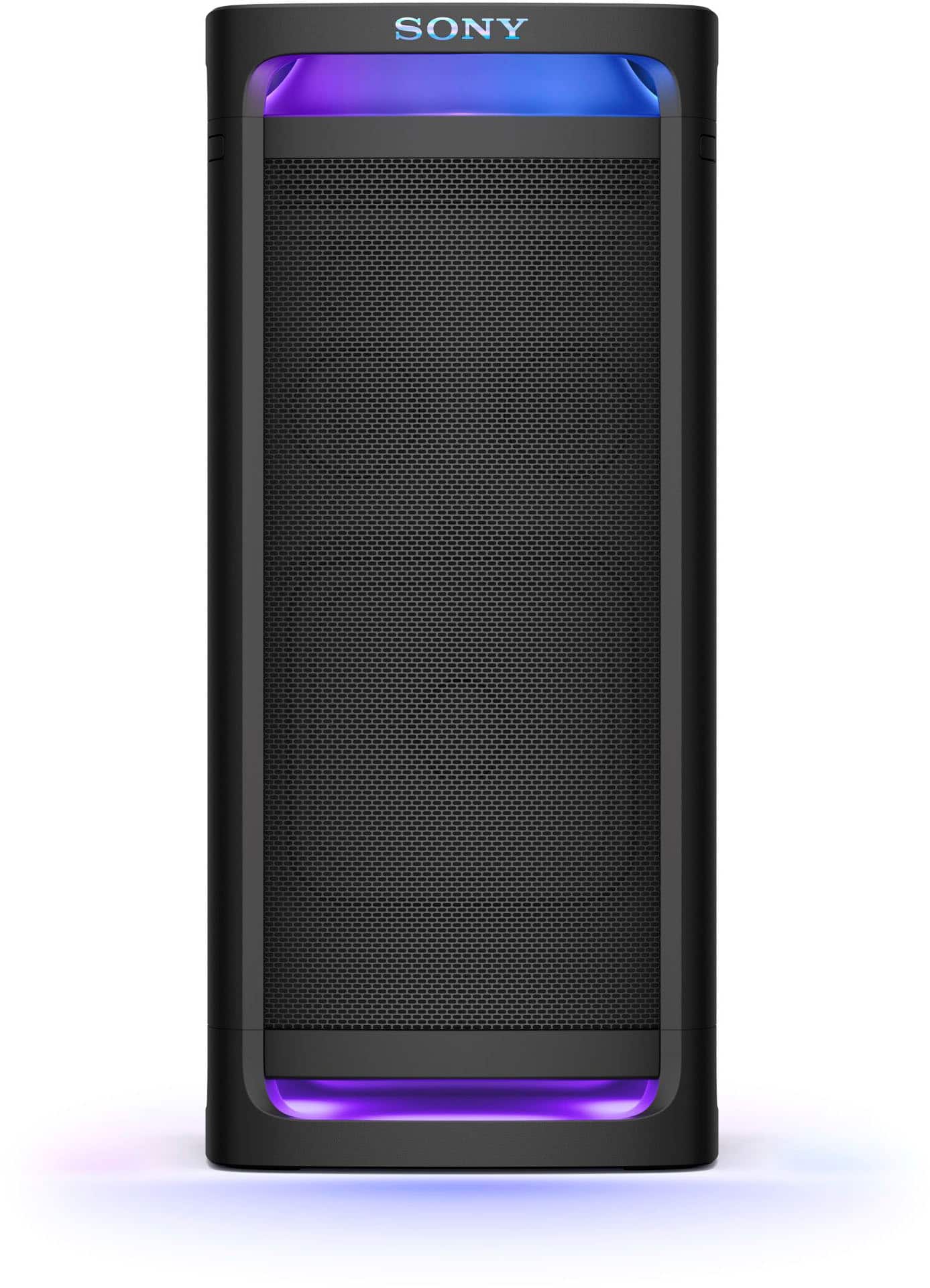
Specifically, Sony includes one massive 12.6-inch X-Balanced woofer for deep bass, two dedicated 4.8-inch midrange drivers for vocals and instruments, and four dome tweeters (two facing forward, two facing backward) for crisp highs and 360-degree sound dispersion. This driver complement is more sophisticated than you'll find in most party speakers.
The JBL PartyBox 720, meanwhile, uses a simpler 2-way design with two large 9-inch woofers and two 1.25-inch tweeters. There are no dedicated midrange drivers. Instead, the woofers handle both bass and midrange frequencies, while the tweeters cover the highs. This approach prioritizes maximum output and bass impact over midrange clarity.
Based on extensive user feedback and professional reviews, the sound quality differences between these speakers are significant and immediately noticeable. The Sony ULT TOWER 9 consistently receives praise for its balanced, open soundstage and exceptional instrument separation. This means you can distinctly hear individual instruments in a complex musical arrangement, rather than everything blending into a wall of sound.
The dedicated midrange drivers make a huge difference here. Vocals sound natural and present, guitars have bite and clarity, and the overall presentation feels more like listening to a high-end home stereo system than a party speaker. Sony's X-Balanced Speaker Unit technology also contributes—this rectangular driver design increases the surface area compared to traditional round drivers, allowing for more air movement and less distortion at high volumes.
The JBL PartyBox 720 takes a different approach that many users describe as more "aggressive" or "exciting." With 800 watts of power versus Sony's 153 watts, it can achieve significantly higher maximum volume levels. The bass is particularly impressive—reviewers consistently describe it as "wall-rattling" and "physically impactful." If you want bass that you can feel in your chest, the JBL delivers.
However, this power-first approach comes with trade-offs. Without dedicated midrange drivers, the PartyBox 720 can sound less refined, particularly in the vocal range. Some listeners describe the sound as slightly "nasally" or harsh, especially when pushed to high volumes. The emphasis on bass and treble, with a relative dip in the midrange, creates what audio engineers call a "V-shaped" sound signature that's exciting but not necessarily accurate.
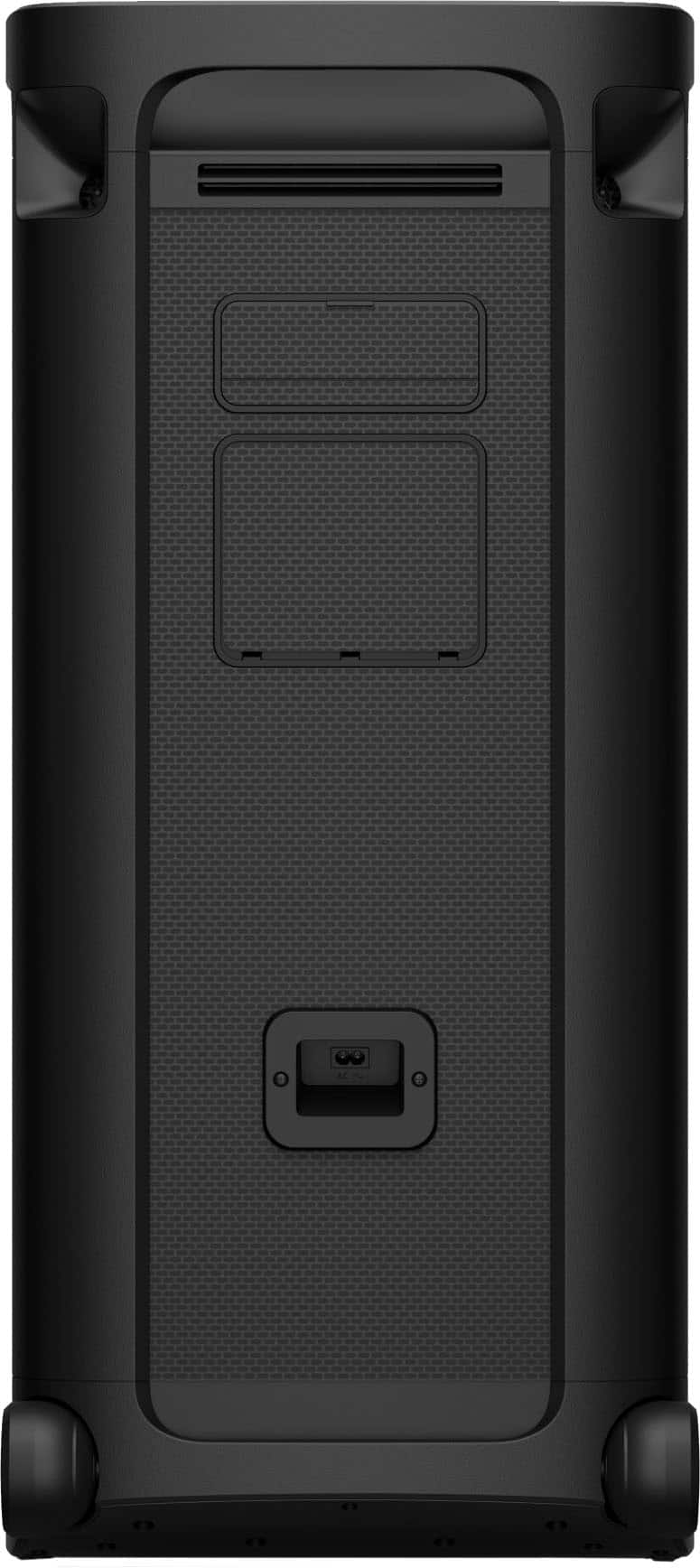
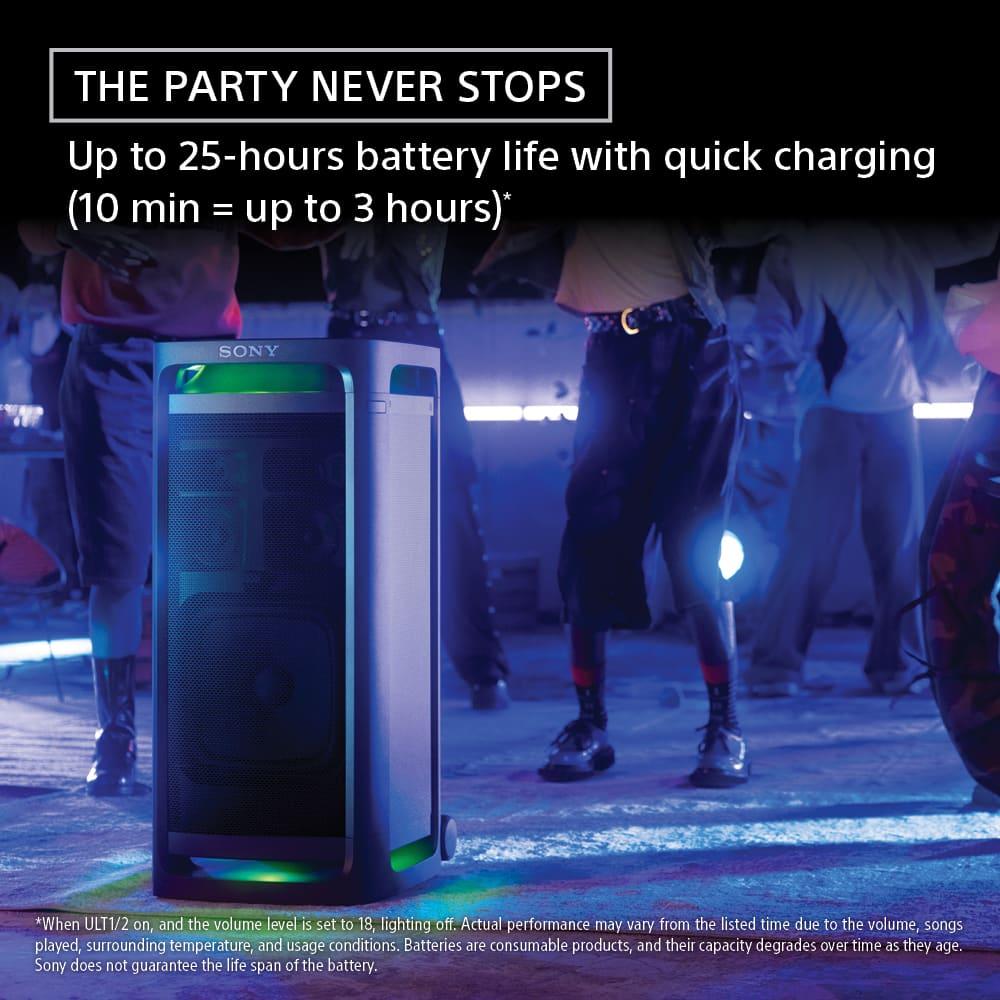
Perhaps the most decisive difference between these speakers is their approach to power. The Sony ULT TOWER 9 requires AC power—it must be plugged into a wall outlet to operate. This immediately limits where you can use it, but Sony made this trade-off intentionally to focus on sound quality rather than battery management.
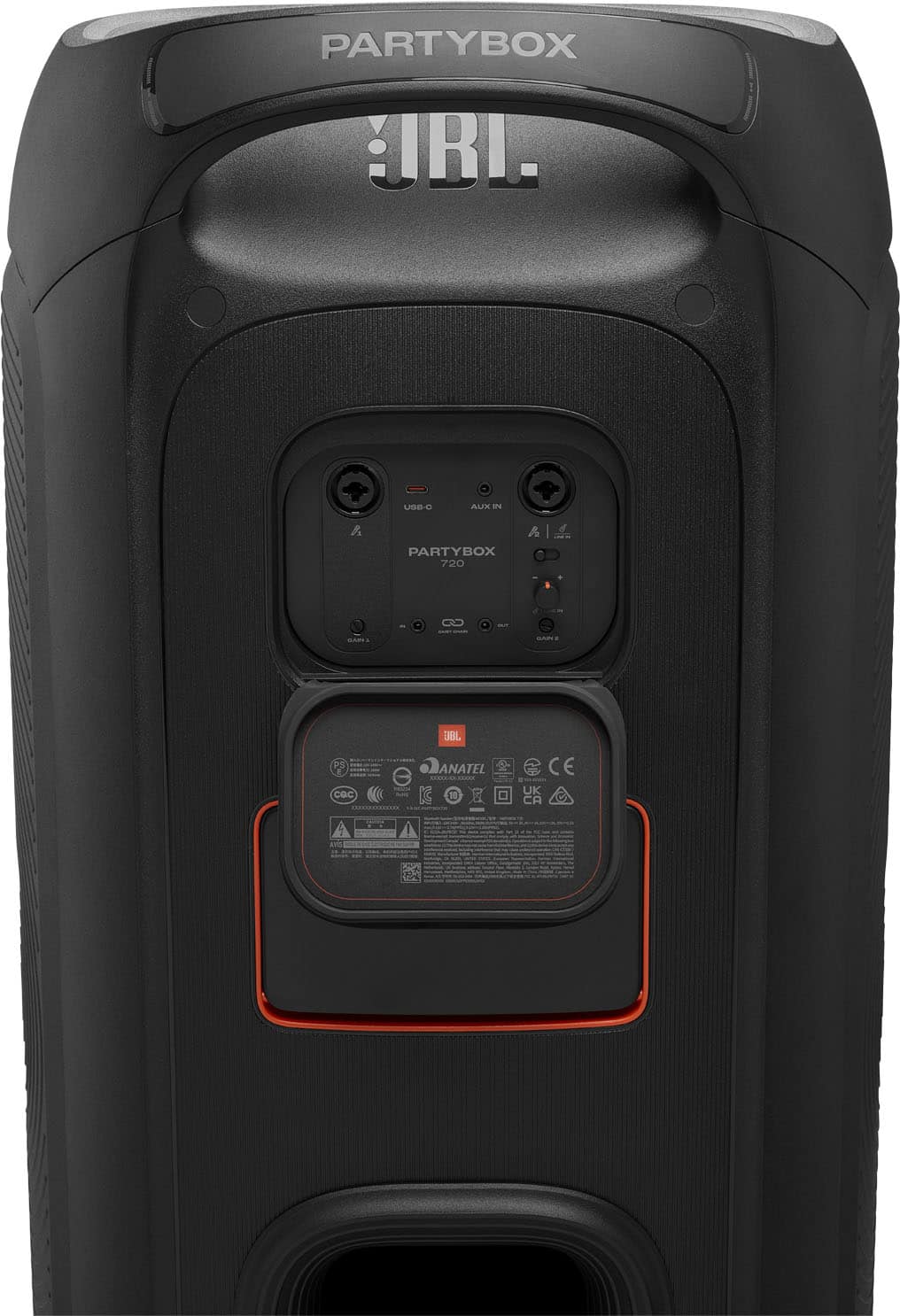
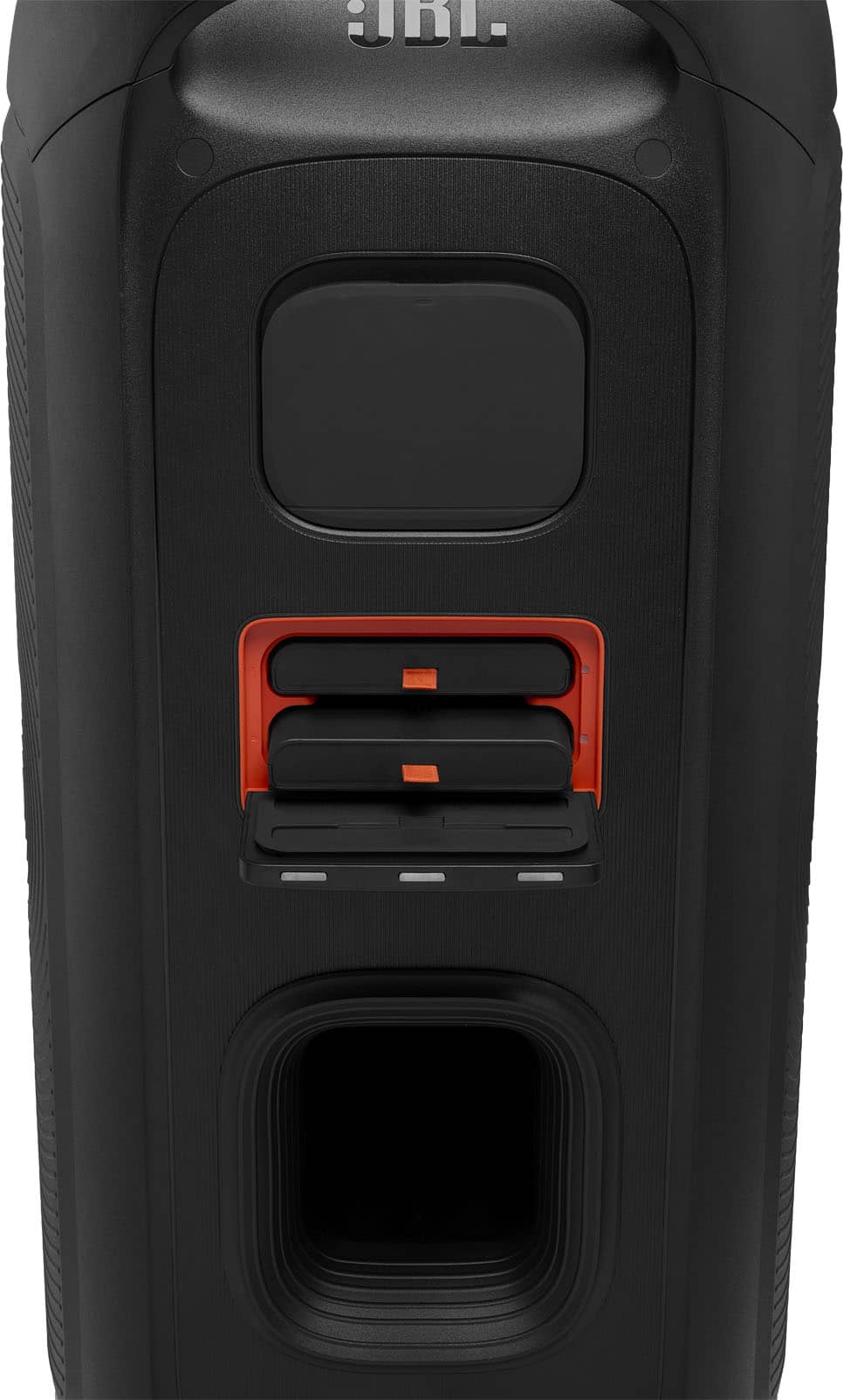
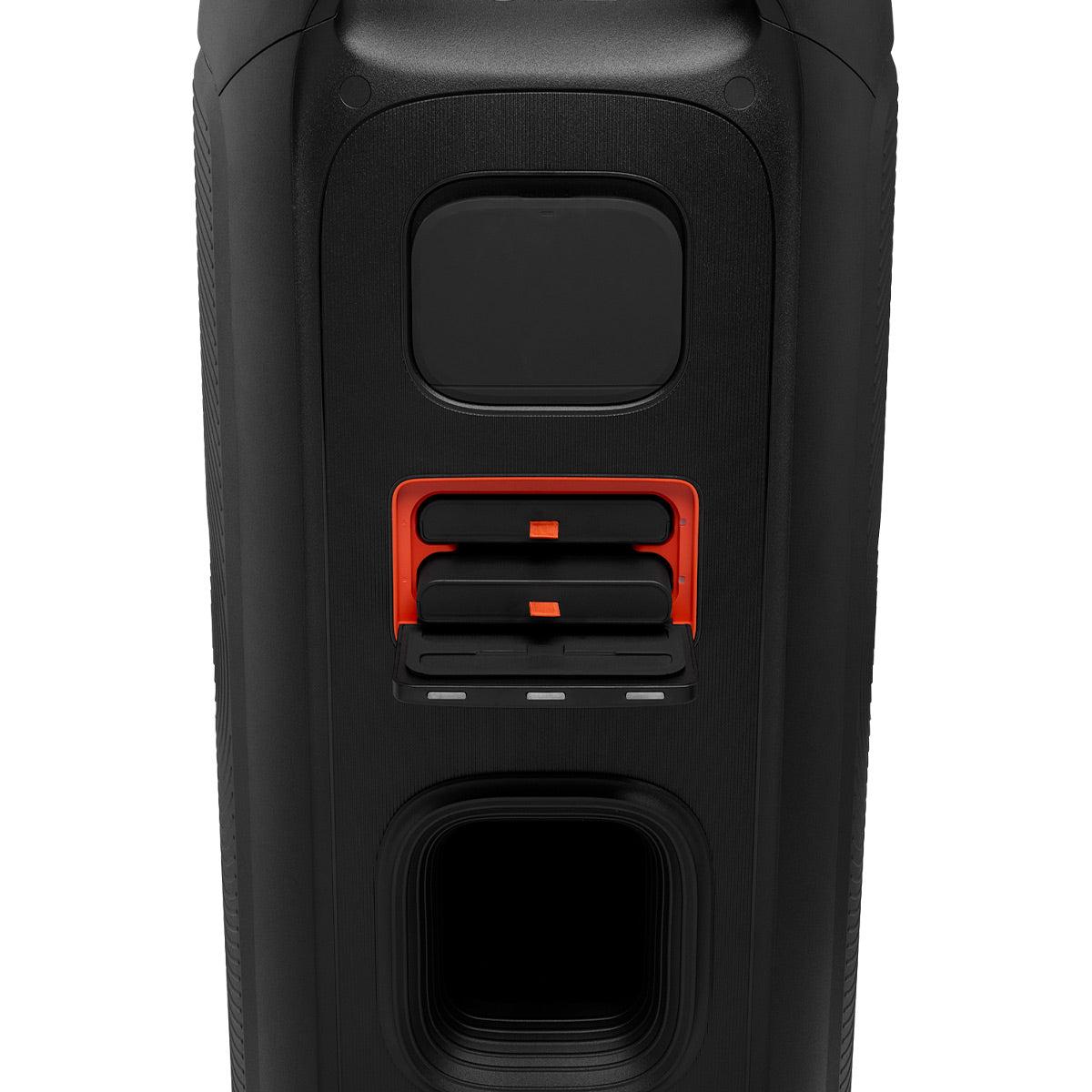
The JBL PartyBox 720 includes a sophisticated battery system with two removable JBL Battery 600 units, each providing 99.02 watt-hours of capacity. Together, they deliver up to 15 hours of playback time, and here's the clever part—the batteries are easily swappable. This means you could theoretically run events indefinitely by rotating fresh batteries, making it genuinely suitable for remote locations without power access.
JBL's battery technology has improved significantly since their earlier party speakers. The fast-charging feature provides two additional hours of playback from just 10 minutes of charging, which can be a lifesaver during events. The batteries charge in about 3 hours when the speaker is turned off.
This fundamental difference dramatically affects how you can use each speaker. The Sony is essentially a semi-portable speaker—you can move it between rooms or take it to a friend's house, but you need to be near an electrical outlet. The JBL offers true mobility for beach parties, camping trips, tailgating, or any outdoor event where power isn't readily available.
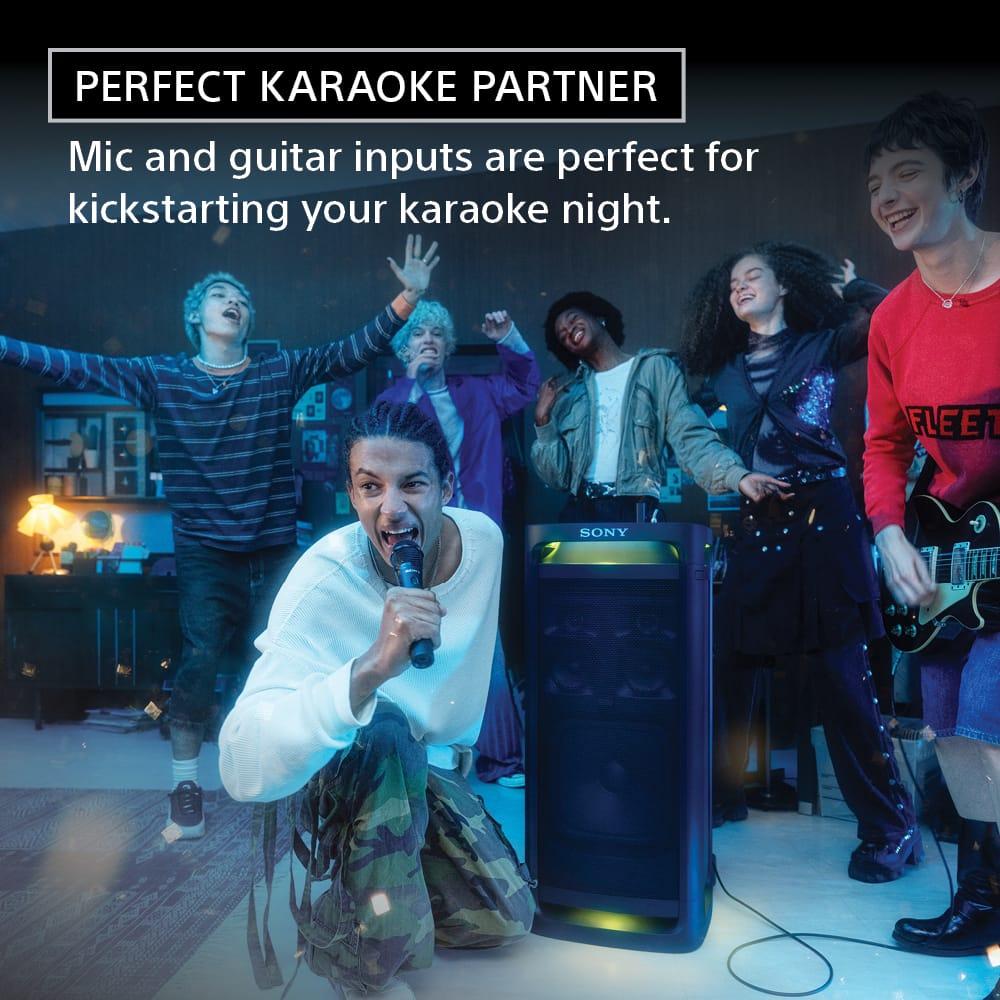
Both speakers include comprehensive entertainment features, but they excel in different areas. The Sony ULT TOWER 9 is genuinely impressive for karaoke and DJ applications, offering features you'd typically find in much more expensive professional equipment.
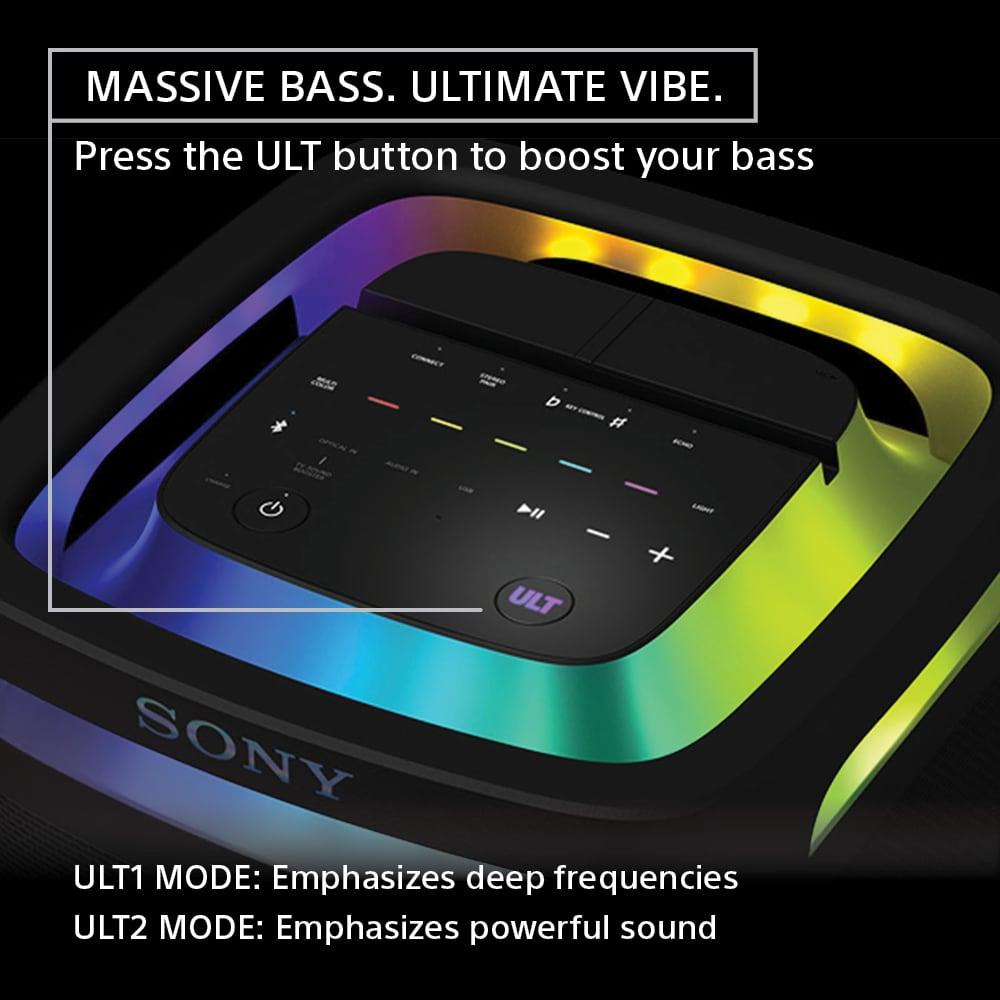
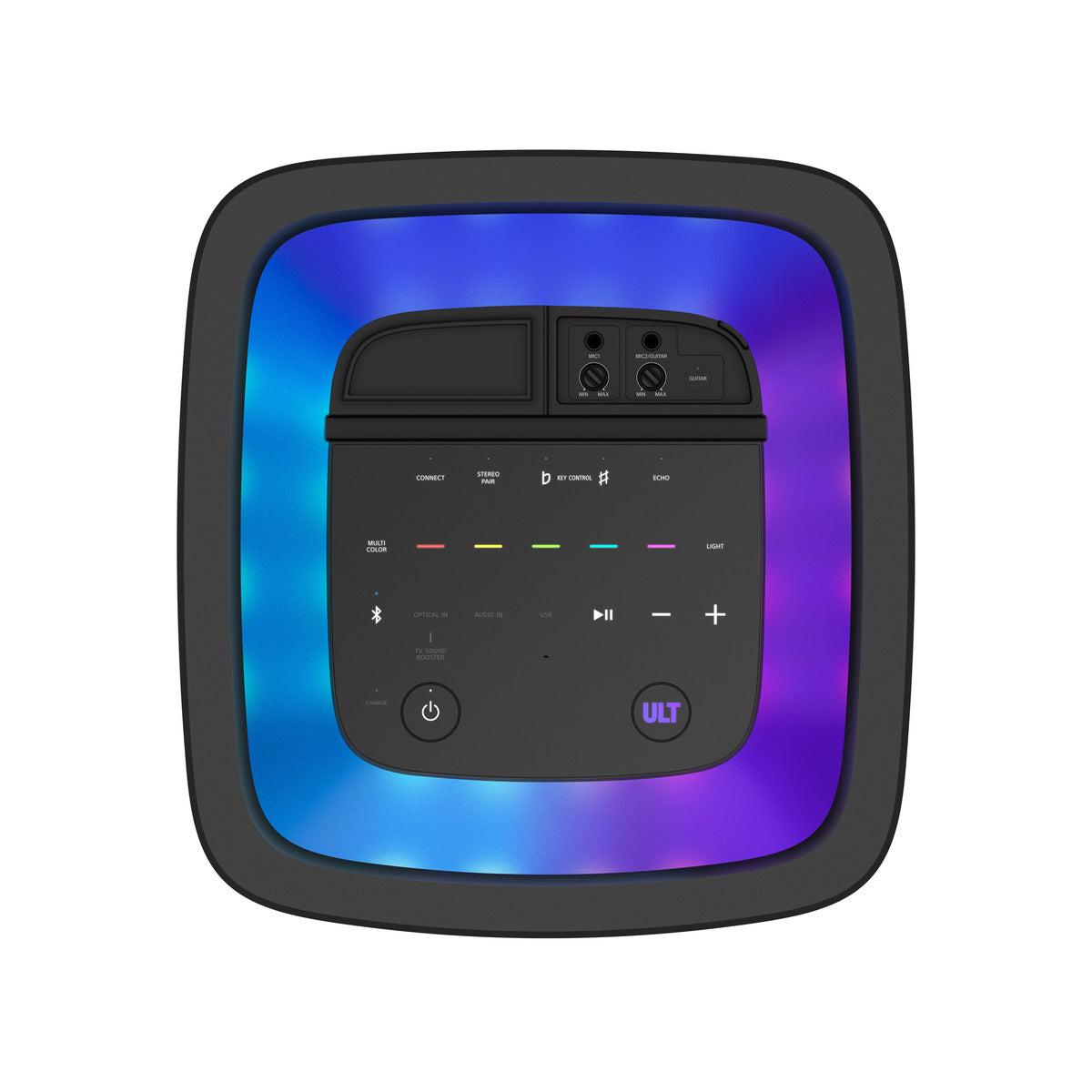
Sony's karaoke suite includes vocal removal technology that can strip the lead vocals from most songs, turning them into backing tracks. The voice changer effects let singers alter their voice with various presets, while key control allows pitch adjustment to match different vocal ranges. There's also a built-in beat pad that adds percussion sounds and DJ effects, plus comprehensive echo and reverb controls for that professional karaoke sound.
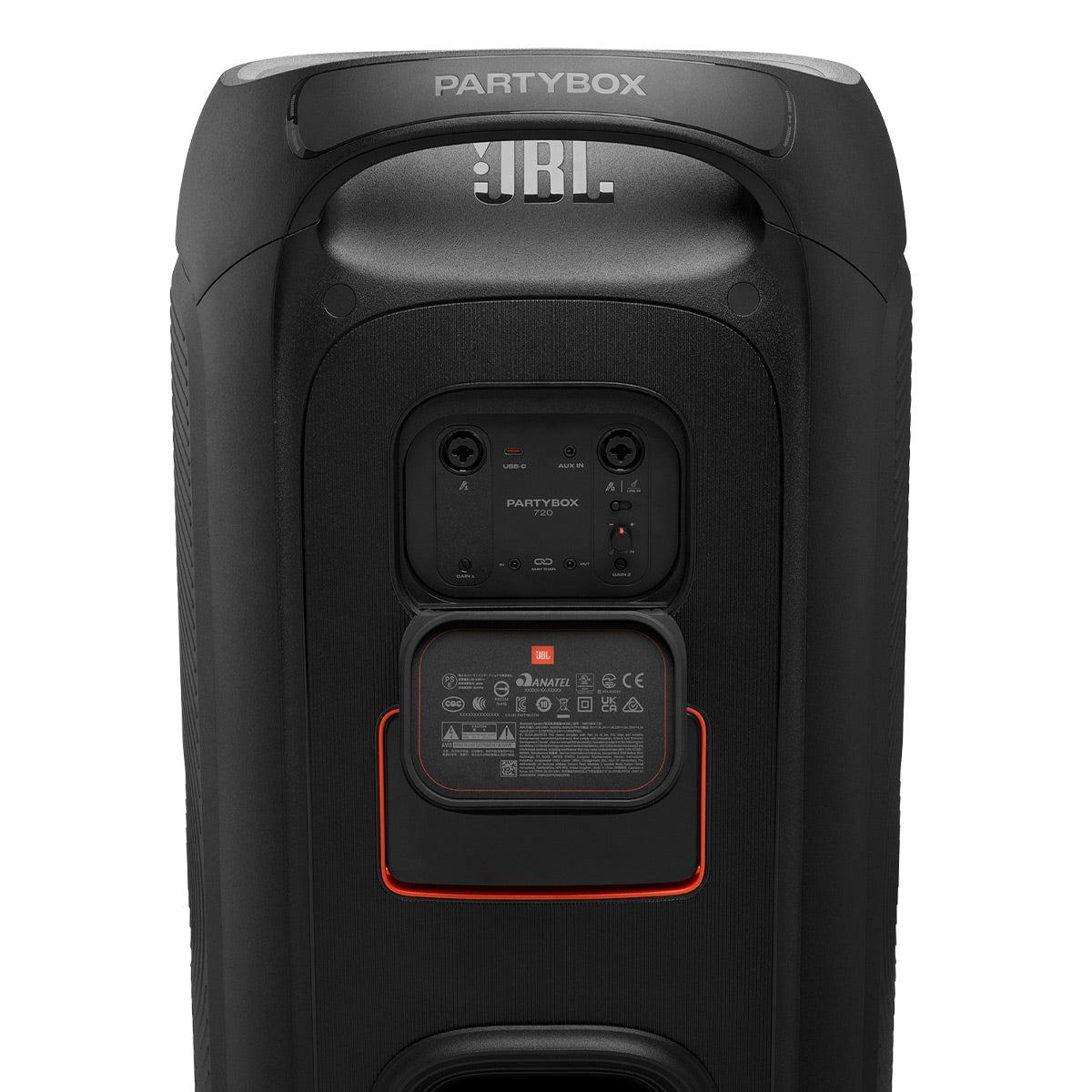
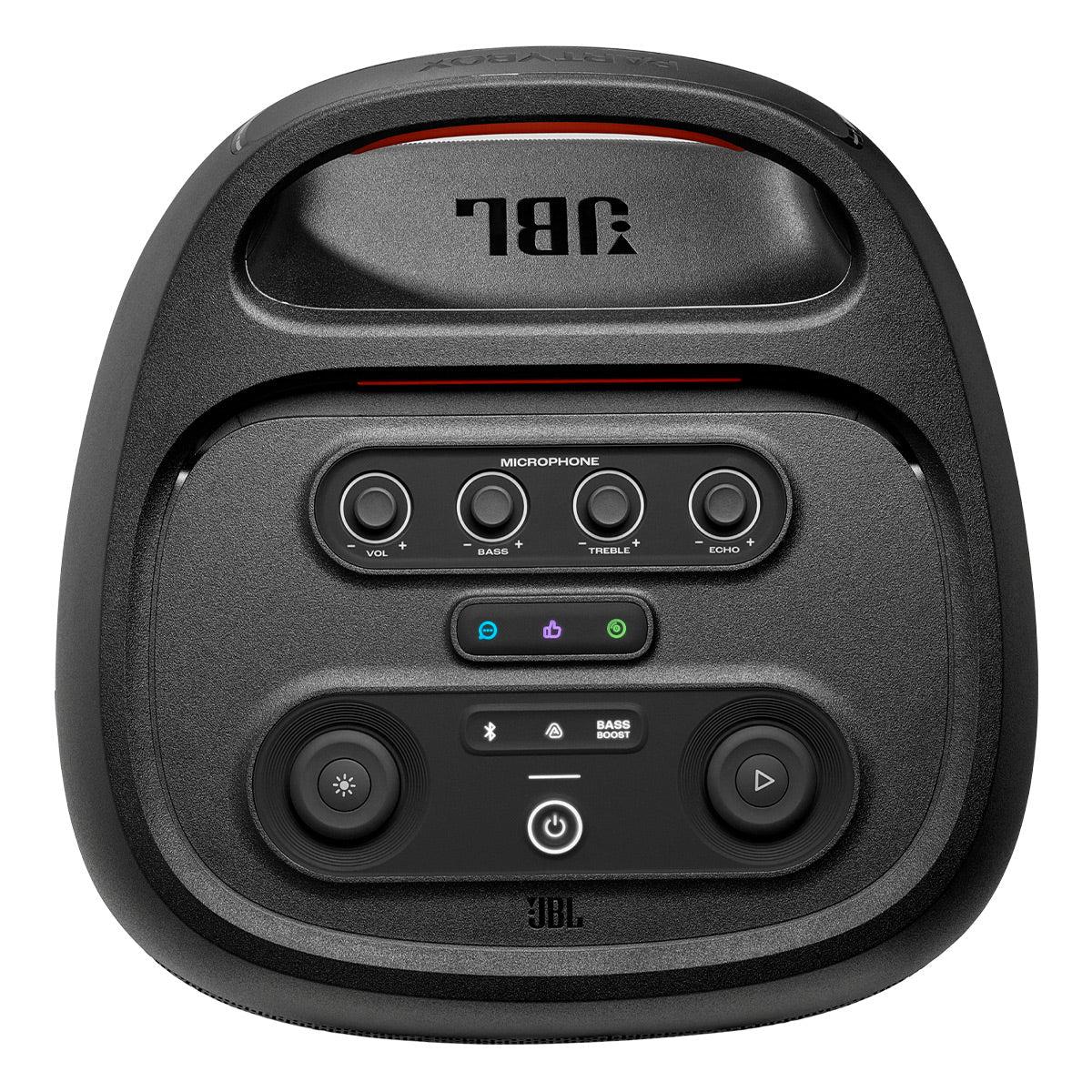
The JBL PartyBox 720 takes a more professional approach with dual XLR inputs—the same type of connections used in recording studios and live sound systems. This makes it easy to connect professional microphones or integrate with DJ mixers and audio interfaces. While it lacks Sony's consumer-friendly karaoke effects, it offers more flexibility for serious audio applications.
Both speakers support wireless pairing with additional units. Sony's Party Connect can link up to 100 compatible speakers for synchronized audio and lighting, while JBL's Auracast technology (part of the newer Bluetooth 5.4 standard) offers broader compatibility with different speaker brands.
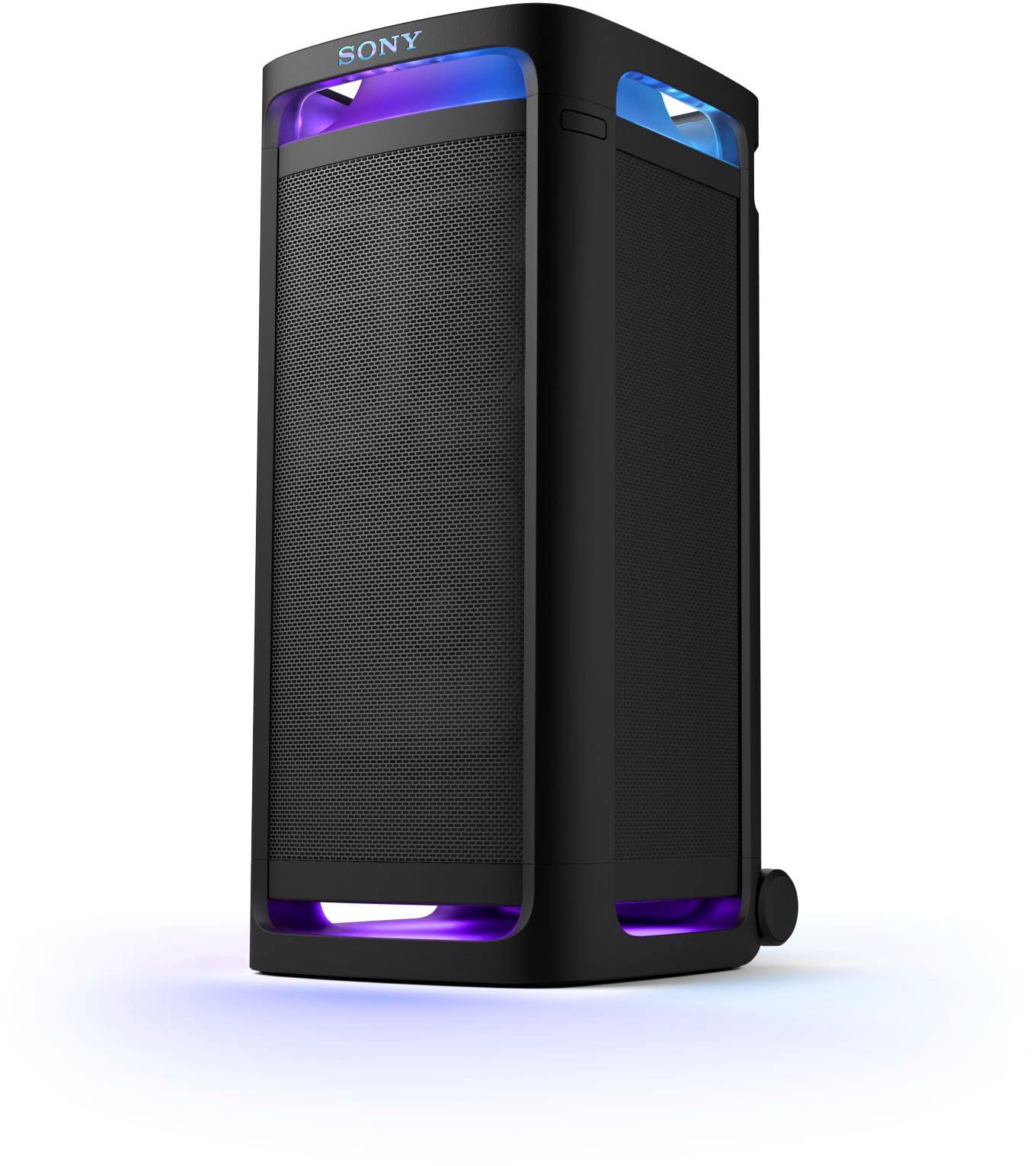
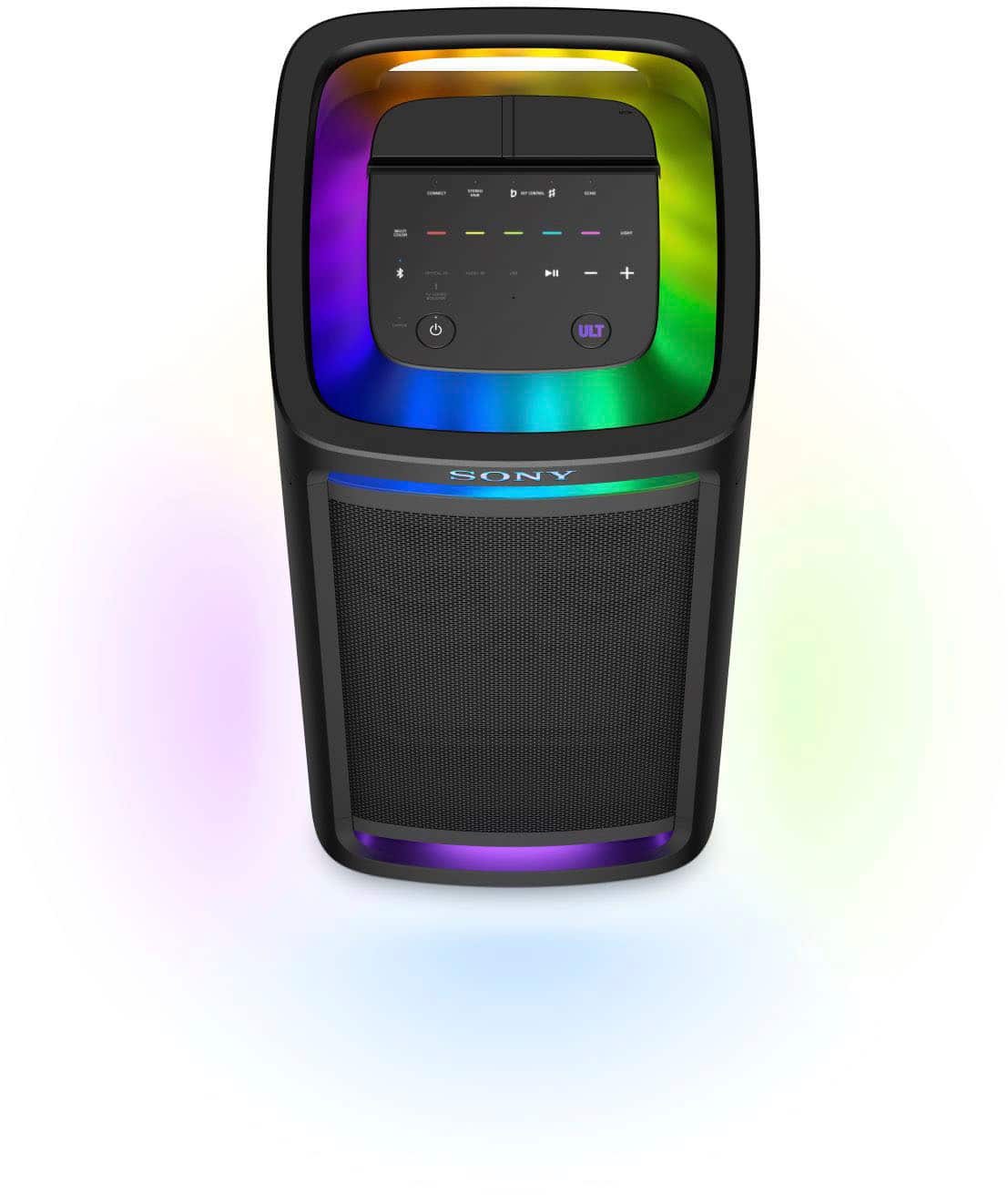
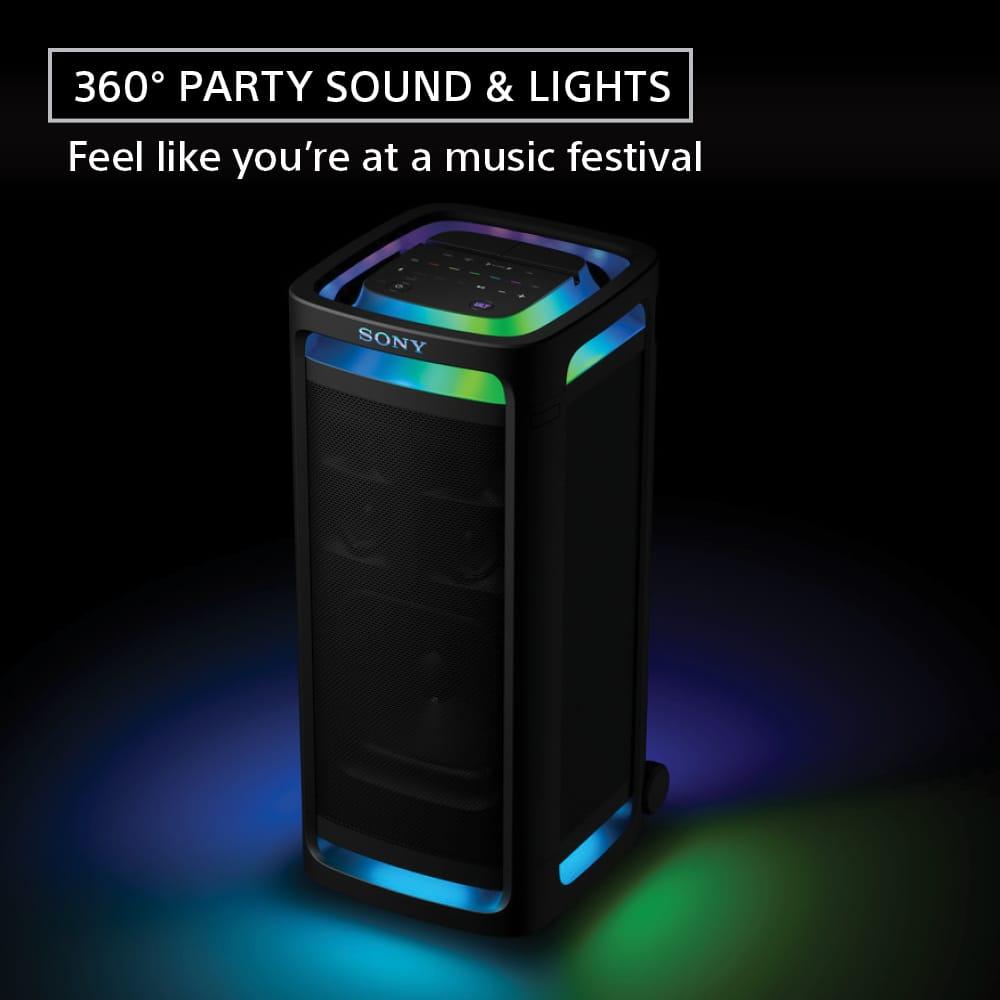
LED lighting has become a crucial feature for party speakers, and both models deliver impressive visual experiences. The Sony ULT TOWER 9 features 360-degree LED rings at the top and bottom of the speaker that can change colors and patterns in sync with the music. The lighting effects are customizable through Sony's Sound Connect app and can be coordinated when multiple speakers are connected.
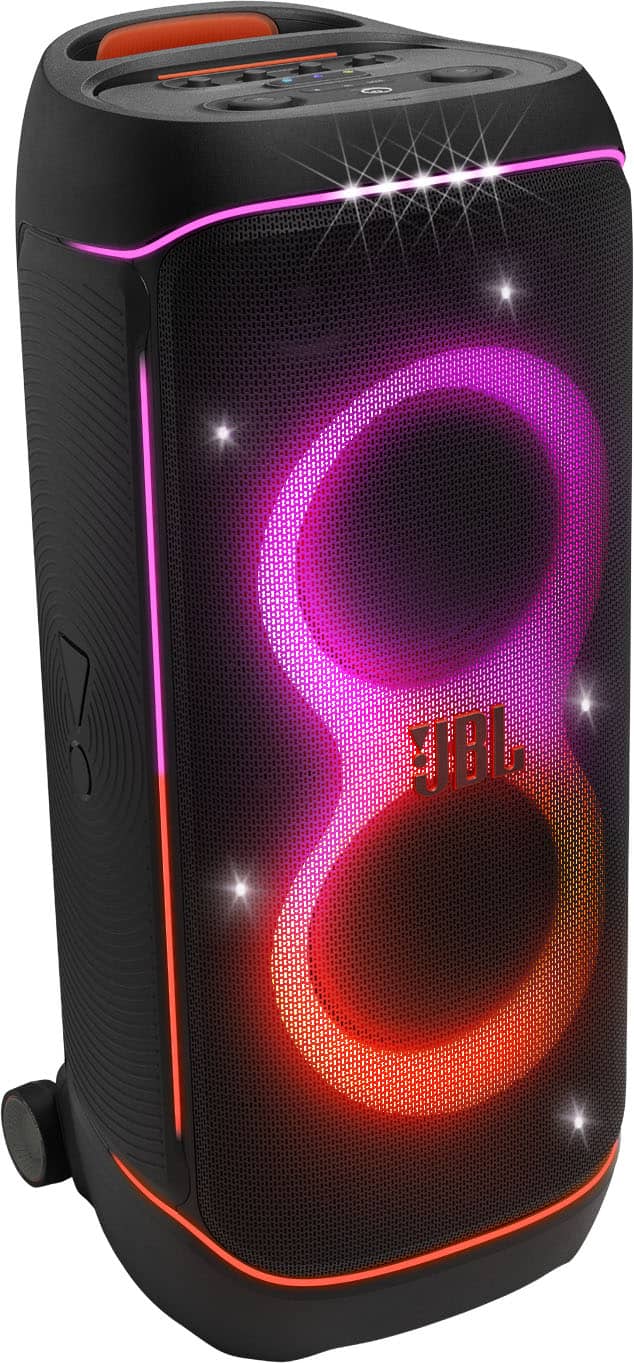
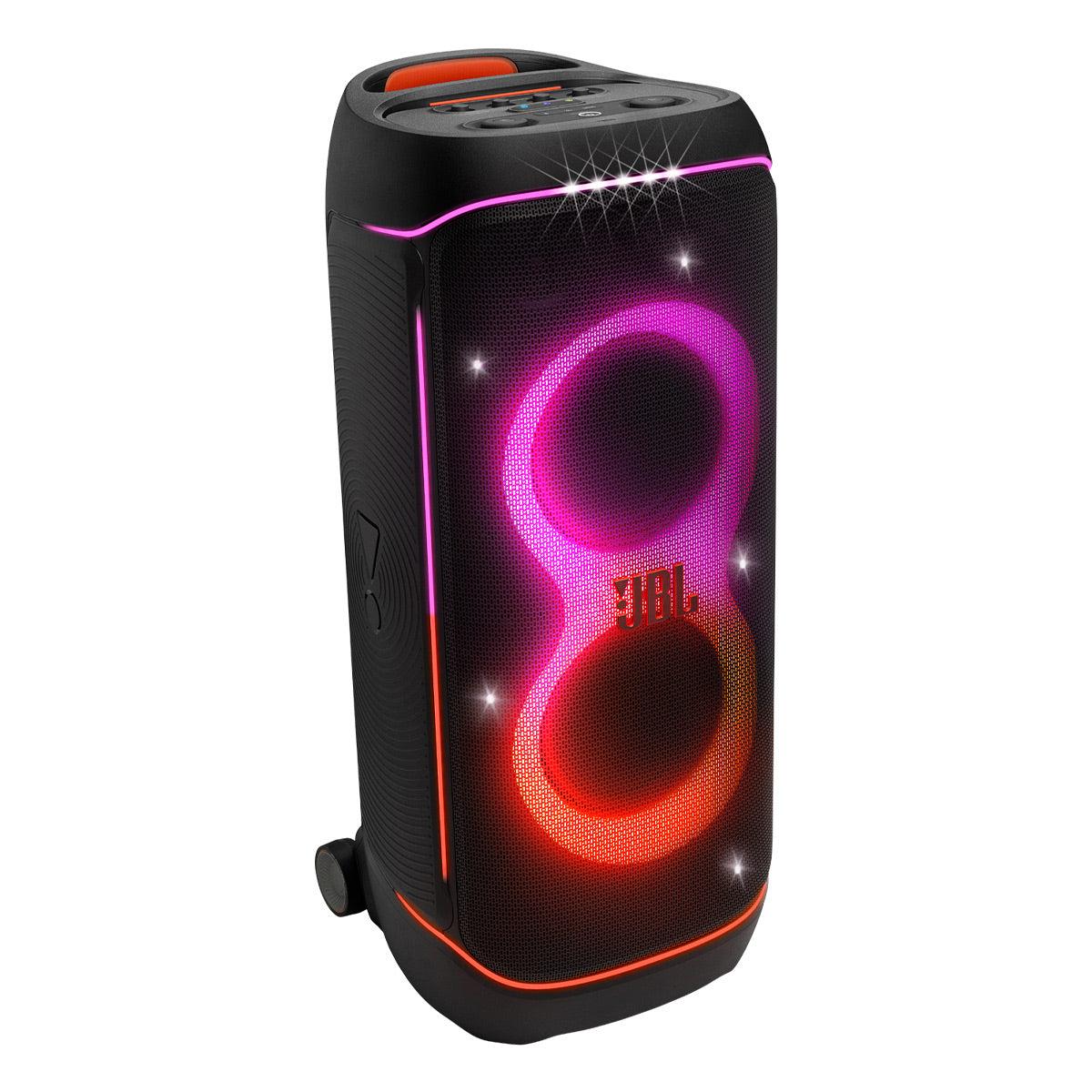
The JBL PartyBox 720 goes further with its lighting system, incorporating two LED rings, four LED strips, and 20 individual strobe LEDs. This creates a more complex and dynamic light show with flowing patterns, starry effects, and pulsing strobes that really do recreate the nightclub experience. The lighting can be customized through JBL's PartyBox app, with different modes ranging from subtle ambient lighting to full disco effects.
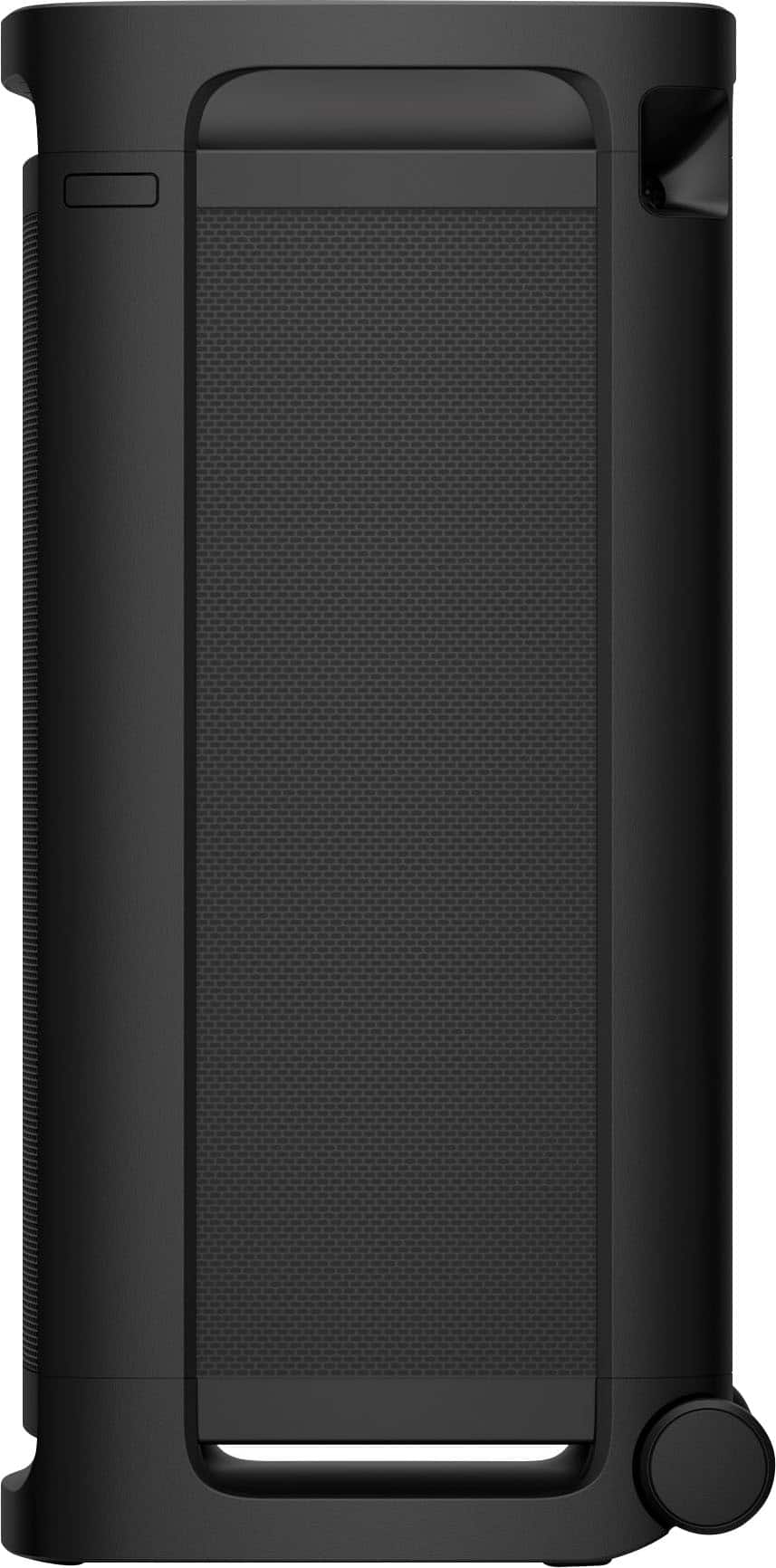
Construction quality differs notably between these speakers. The Sony ULT TOWER 9 uses recycled plastic in its construction and features a splash-resistant top panel, but it's not designed for serious outdoor exposure. At about 65 pounds, it's slightly lighter than the JBL, making it easier to position and move around indoor spaces.
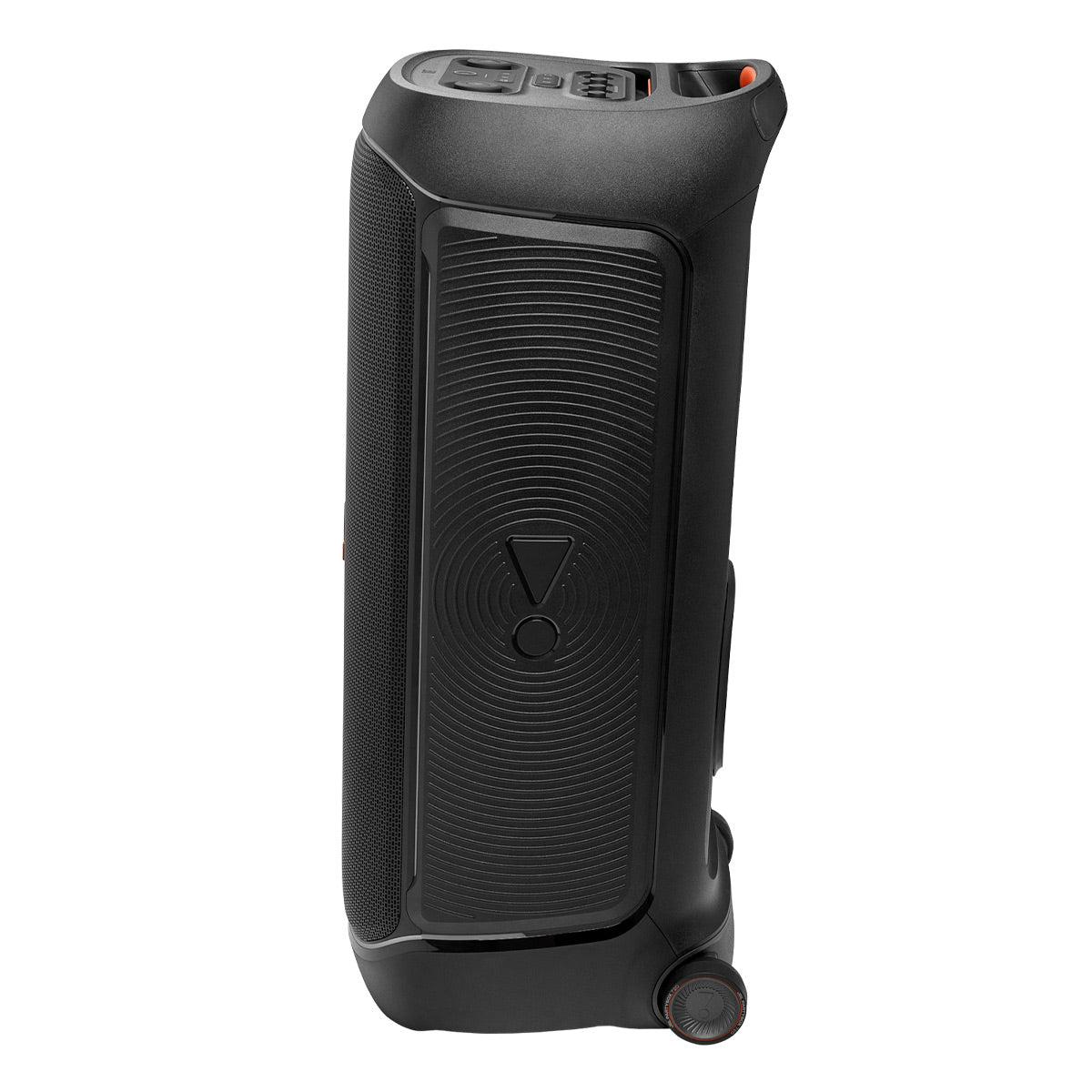
The JBL PartyBox 720 earns a full IPX4 rating, meaning it can handle splashes from any direction—perfect for poolside parties or light rain. The industrial-grade construction feels more robust overall, though at 68 pounds, it's a bit heavier. JBL includes wider wheels and an integrated handle designed for rolling over various terrains, from smooth floors to grass and gravel.
At the time of writing, both speakers occupy the premium segment of the party speaker market, but they offer different value propositions. The Sony ULT TOWER 9 typically retails for several hundred dollars less than the JBL PartyBox 720, making it the more affordable option for the sound quality it delivers.
The Sony's value becomes particularly apparent when you consider its audio engineering. Getting this level of sound quality with dedicated midrange drivers and sophisticated driver configuration usually requires spending significantly more on traditional hi-fi equipment. For users who prioritize sound quality over maximum volume, the Sony represents exceptional value.
The JBL PartyBox 720 commands a premium price that reflects its true wireless capability and professional-grade output. When you factor in the cost of the battery system, professional XLR connectivity, and weather resistance, the higher price becomes more justifiable. For users who need maximum portability and output, it's worth the additional investment.
An interesting capability of the Sony ULT TOWER 9 is its potential as a home theater enhancement. The optical digital input allows direct connection to TVs and streaming devices, while the rear-firing tweeters and powerful woofer can significantly improve dialogue clarity and bass impact for movies and shows. The TV Sound Booster feature optimizes the speaker's output specifically for video content.
While the JBL PartyBox 720 lacks optical input, its USB-C connection can handle high-quality digital audio from compatible devices. However, its aggressive sound signature makes it less ideal for movies and TV shows where dialogue clarity is crucial.
Your choice between these speakers should primarily depend on how and where you plan to use them. The Sony ULT TOWER 9 is ideal if you have reliable AC power access and prioritize sound quality, karaoke features, and overall value. It's perfect for home use, indoor parties, DJ setups, and situations where you want the best possible audio experience.
Choose the Sony if you're primarily using it at home, have access to electrical outlets at your typical venues, want the best sound quality for the money, or need comprehensive karaoke and DJ features.
The JBL PartyBox 720 justifies its higher price if you need true wireless portability, maximum volume output, or plan to use it in outdoor environments. It's the better choice for beach parties, camping, tailgating, large outdoor events, or professional DJ applications requiring XLR connectivity.
Choose the JBL if you frequently host outdoor events, need battery-powered operation, require maximum volume for large spaces, want professional audio connectivity, or need full weather resistance.
Both speakers represent the current state of the art in party speaker technology, just with different priorities. The Sony ULT TOWER 9 proves that you don't need to sacrifice sound quality for party features, while the JBL PartyBox 720 demonstrates that true portability and maximum output are achievable in a premium package. Your specific needs and usage scenarios should guide your decision more than any single factor.
| Sony ULT TOWER 9 Wireless Party Speaker | JBL PartyBox 720 Portable Speaker |
|---|---|
| Power Output - Determines maximum volume and bass impact | |
| 153W (prioritizes sound quality over raw power) | 800W RMS (delivers significantly louder maximum volume) |
| Battery Operation - Critical for outdoor and remote events | |
| AC power only (requires electrical outlet) | 15 hours battery life with swappable batteries |
| Speaker Configuration - Affects sound quality and clarity | |
| 3-way system: 1× 12.6" woofer, 2× 4.8" midrange, 4 tweeters | 2-way system: 2× 9" woofers, 2× 1.25" tweeters |
| Weight - Impacts portability and setup ease | |
| 65.25 lbs (easier single-person handling) | 68.3 lbs (heavier but includes better wheels) |
| Water Resistance - Important for outdoor and poolside use | |
| IPX4 splash-resistant top panel only | Full IPX4 splash-proof rating (entire speaker) |
| Karaoke Features - Entertainment value for parties | |
| Vocal removal, voice changers, key control, beat pad | Basic mixing controls only |
| Professional Audio Inputs - Connectivity for DJ equipment | |
| 1/4" TRS mic and guitar jacks | Dual XLR inputs for professional microphones/mixers |
| Bluetooth Version - Affects connection stability and features | |
| Bluetooth 5.3 with Party Connect (up to 100 speakers) | Bluetooth 5.4 with Auracast (broader compatibility) |
| Frequency Response - Range of sounds the speaker can reproduce | |
| 20 Hz - 20 kHz (full audible spectrum) | 32 Hz - 20 kHz (slightly less deep bass extension) |
| Lighting System - Visual impact for parties | |
| 360° LED rings (top and bottom) | 2 LED rings + 4 LED strips + 20 strobe LEDs |
| Charging Capability - Useful for keeping devices powered | |
| USB-A port (1.5A device charging) | USB-C port (30W power bank function) |
| TV Integration - Home theater enhancement potential | |
| Optical digital input with TV Sound Booster | No optical input (USB-C audio only) |
| Price Range - Value consideration at time of writing | |
| Lower price point (better value for sound quality) | Higher price point (premium for wireless capability) |
The JBL PartyBox 720 is significantly louder with 800W of power output compared to the Sony ULT TOWER 9's 153W. The JBL can fill larger spaces and outdoor areas more effectively, while the Sony prioritizes sound quality over maximum volume.
Only the JBL PartyBox 720 offers battery operation with up to 15 hours of playback time and swappable batteries. The Sony ULT TOWER 9 requires AC power and must be plugged into an electrical outlet, limiting its portability to areas with power access.
The Sony ULT TOWER 9 delivers superior sound quality with dedicated midrange drivers that provide better instrument separation and vocal clarity. The JBL PartyBox 720 emphasizes powerful bass and volume but lacks the refined midrange performance of the Sony.
The Sony ULT TOWER 9 excels at karaoke with advanced features like vocal removal, voice changers, key control, and echo effects. The JBL PartyBox 720 has basic karaoke capabilities but focuses more on professional audio connectivity with XLR inputs.
The JBL PartyBox 720 is better for outdoor use with full IPX4 water resistance, battery power, and maximum volume output. The Sony ULT TOWER 9 is limited by its AC power requirement and splash-resistant top panel only.
The Sony ULT TOWER 9 offers excellent TV integration with an optical digital input and TV Sound Booster feature. The JBL PartyBox 720 can connect via USB-C for audio but lacks the specialized TV enhancement features of the Sony.
The JBL PartyBox 720 has more extensive lighting with LED rings, strips, and strobe effects for a full disco experience. The Sony ULT TOWER 9 features 360° LED rings that are impressive but less complex than the JBL's lighting system.
The Sony ULT TOWER 9 weighs 65.25 pounds while the JBL PartyBox 720 weighs 68.3 pounds. Both are substantial speakers that include wheels for transport, though the Sony is slightly easier for single-person handling.
Both speakers support multi-speaker setups. The Sony ULT TOWER 9 uses Party Connect to link up to 100 compatible Sony speakers, while the JBL PartyBox 720 uses Auracast technology for broader compatibility with various speaker brands.
The Sony ULT TOWER 9 typically offers better value with superior sound quality at a lower price point. The JBL PartyBox 720 costs more but justifies the premium with battery operation, higher power output, and full weather resistance.
The Sony ULT TOWER 9 includes consumer-friendly DJ features like a beat pad and comprehensive app controls. The JBL PartyBox 720 focuses on professional DJ connectivity with dual XLR inputs for mixers and professional audio equipment.
For indoor use, choose the Sony ULT TOWER 9 for superior sound quality and TV integration. For outdoor use, the JBL PartyBox 720 is ideal with battery power, weather resistance, and maximum volume output for large open spaces.
We've done our best to create useful and informative comparisons to help you decide what product to buy. Our research uses advanced automated methods to create this comparison and perfection is not possible - please contact us for corrections or questions. These are the sites we've researched in the creation of this article: theshortcut.com - skybygramophone.com - bestbuy.com - crutchfield.com - soundguys.com - videoandaudiocenter.com - electronics.sony.com - helpguide.sony.net - youtube.com - youtube.com - youtube.com - sony.com - youtube.com - skybygramophone.com - sony.com - manuals.plus - stereoguide.com - helpguide.sony.net - stereoindex.com - youtube.com - youtube.com - youtube.com - youtube.com - comparisontabl.es - jbl.com - youtube.com - youtube.com - youtube.com - bestbuy.com - versus.com - youtube.com - youtube.com - versus.com - youtube.com - jbl.com - news.jbl.com - engadget.com - news.harman.com - youtube.com - creativeaudio.net - jbl.com - skybygramophone.com - crutchfield.com - manuals.plus - youtube.com

Privacy Policy
Terms and Conditions - Affiliate Policy
Home Security
© Copyright 2008-2026.
11816 Inwood Rd #1211, Dallas, TX 75244