

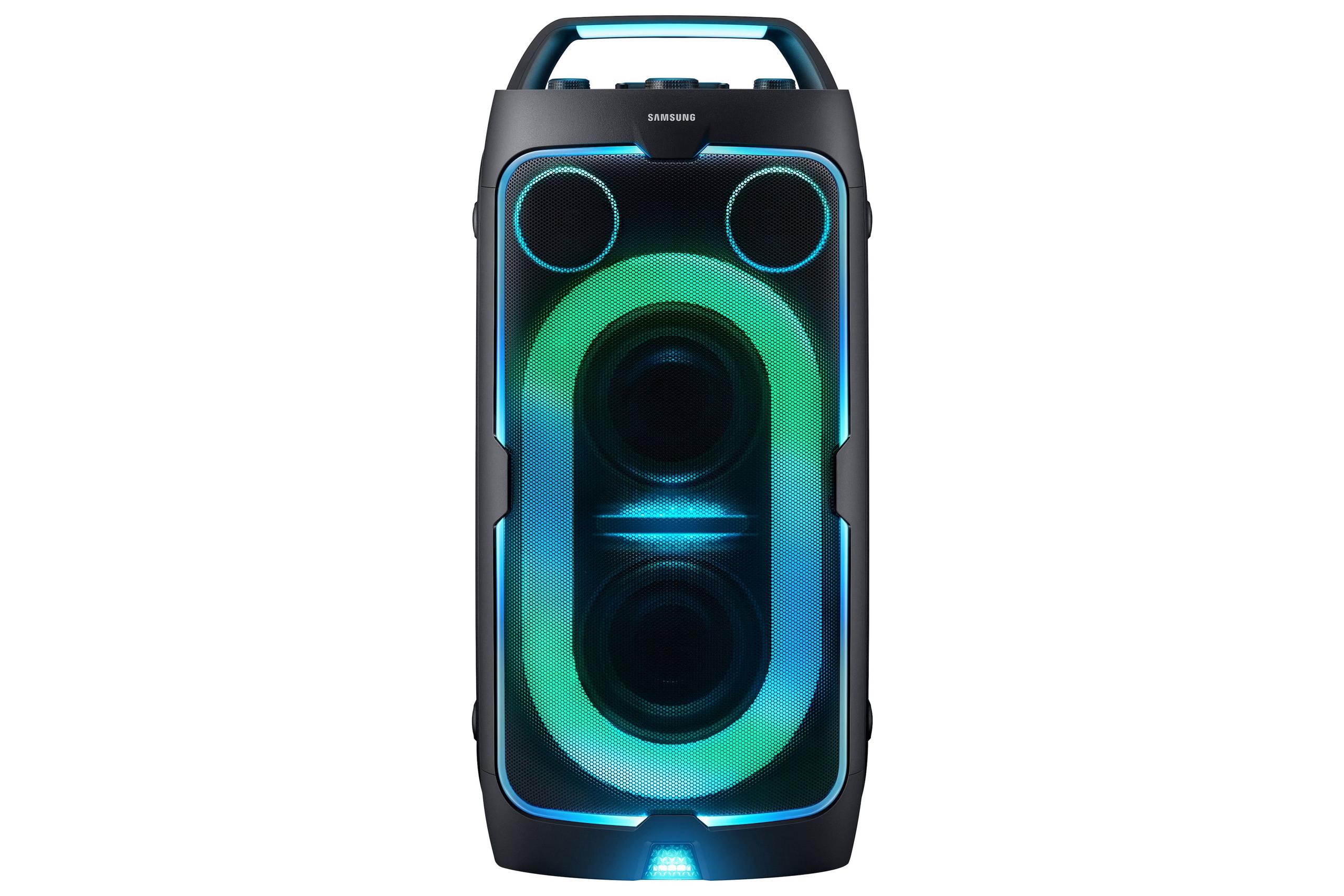
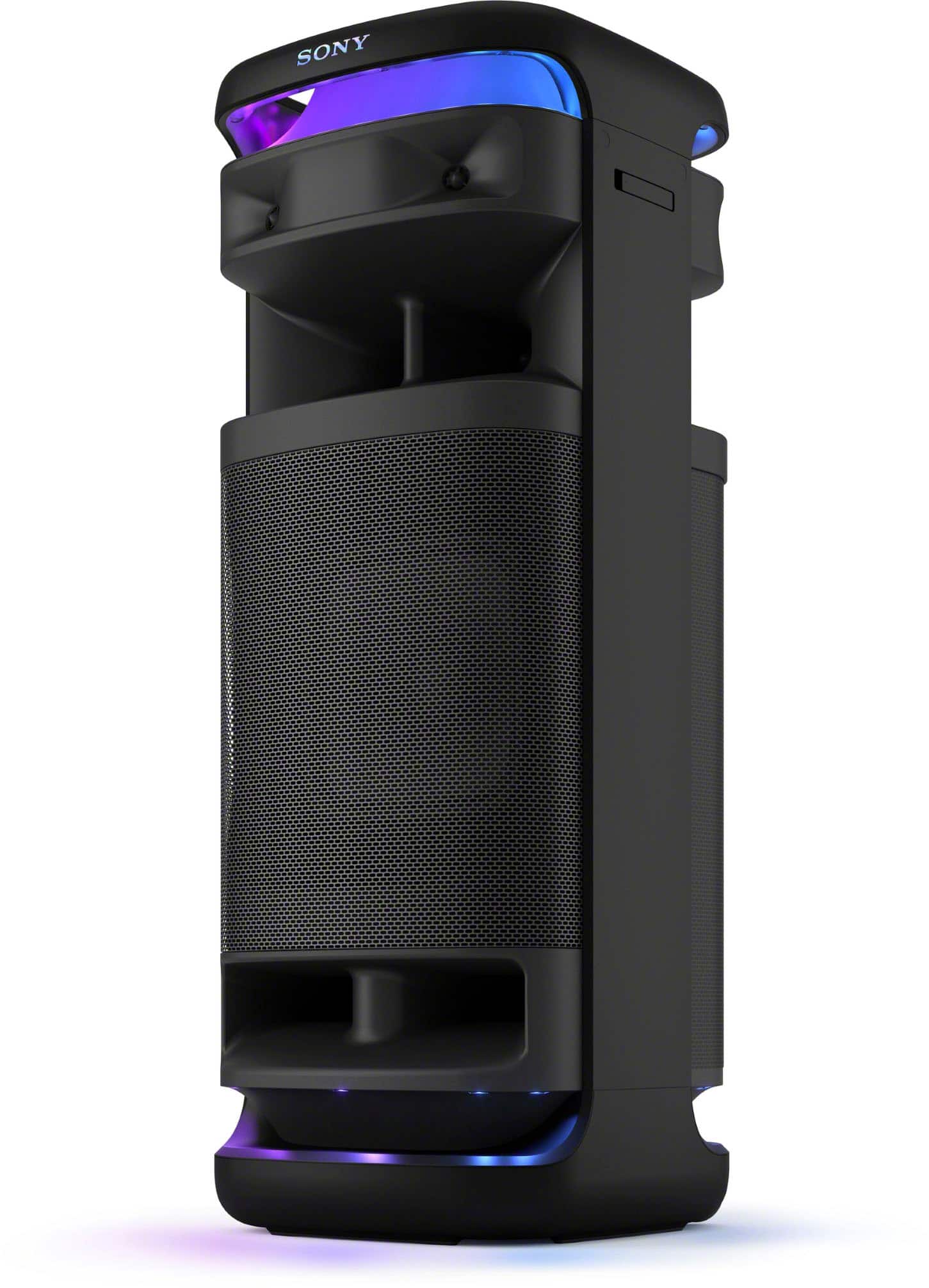
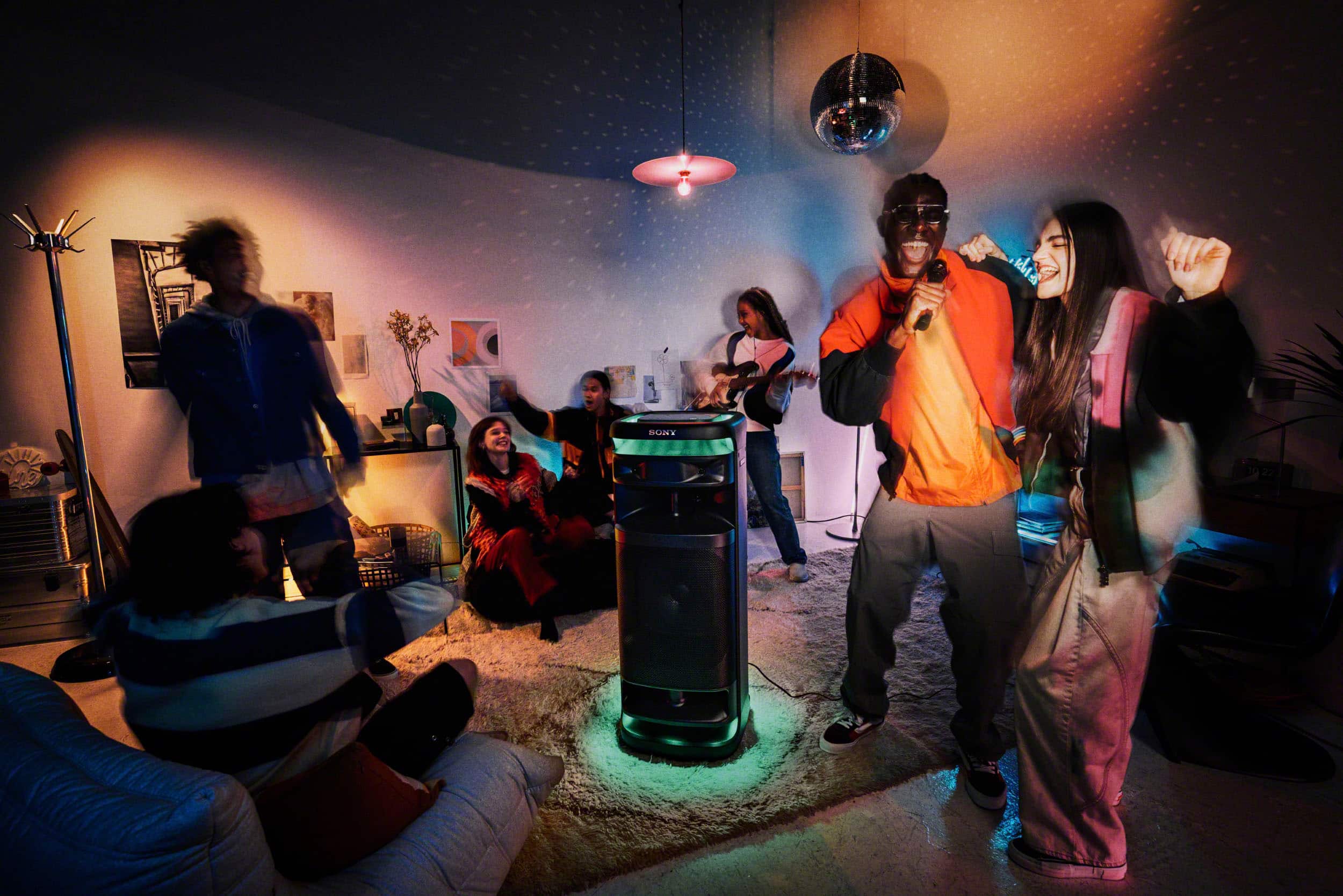
When you're looking to transform your living room into a dance floor or bring serious sound to your next backyard gathering, party speakers have become the go-to solution. These aren't your typical bookshelf speakers—they're designed to pump out massive amounts of bass, fill large spaces with sound, and create an atmosphere with customizable lighting effects. Today we're comparing two heavy hitters: the Samsung MX-ST50F Sound Tower and the Sony ULT Tower 10.
Both speakers represent fundamentally different approaches to party audio. The Samsung MX-ST50F, released in 2025, prioritizes portability without sacrificing power, while the Sony ULT Tower 10, launched in 2024, focuses on delivering maximum acoustic impact for stationary setups. Understanding these philosophical differences will help you choose the right speaker for your needs.
Party speakers occupy a unique space in the audio world. Unlike traditional stereo speakers that aim for accurate sound reproduction, these towers are engineered for impact. They need to deliver bone-rattling bass that you can feel in your chest, maintain clarity at ear-splitting volumes, and create an immersive experience that gets people moving.
The key performance metrics that matter most are maximum volume output (measured in decibels), bass response (how low and powerful the low-frequency sound goes), and sound dispersion (how evenly the audio fills a space). A good party speaker should hit at least 100 decibels without distortion—for context, that's about as loud as a motorcycle at close range. Bass response typically needs to reach down to at least 40Hz to deliver that chest-thumping impact, though deeper is better.
What separates modern party speakers from older PA systems is their integration of entertainment features. Today's models include customizable LED lighting systems, wireless connectivity, karaoke capabilities, and smartphone apps that let you control everything from your phone. These features have evolved significantly since 2020, with newer models offering more sophisticated lighting effects and better wireless connectivity standards.
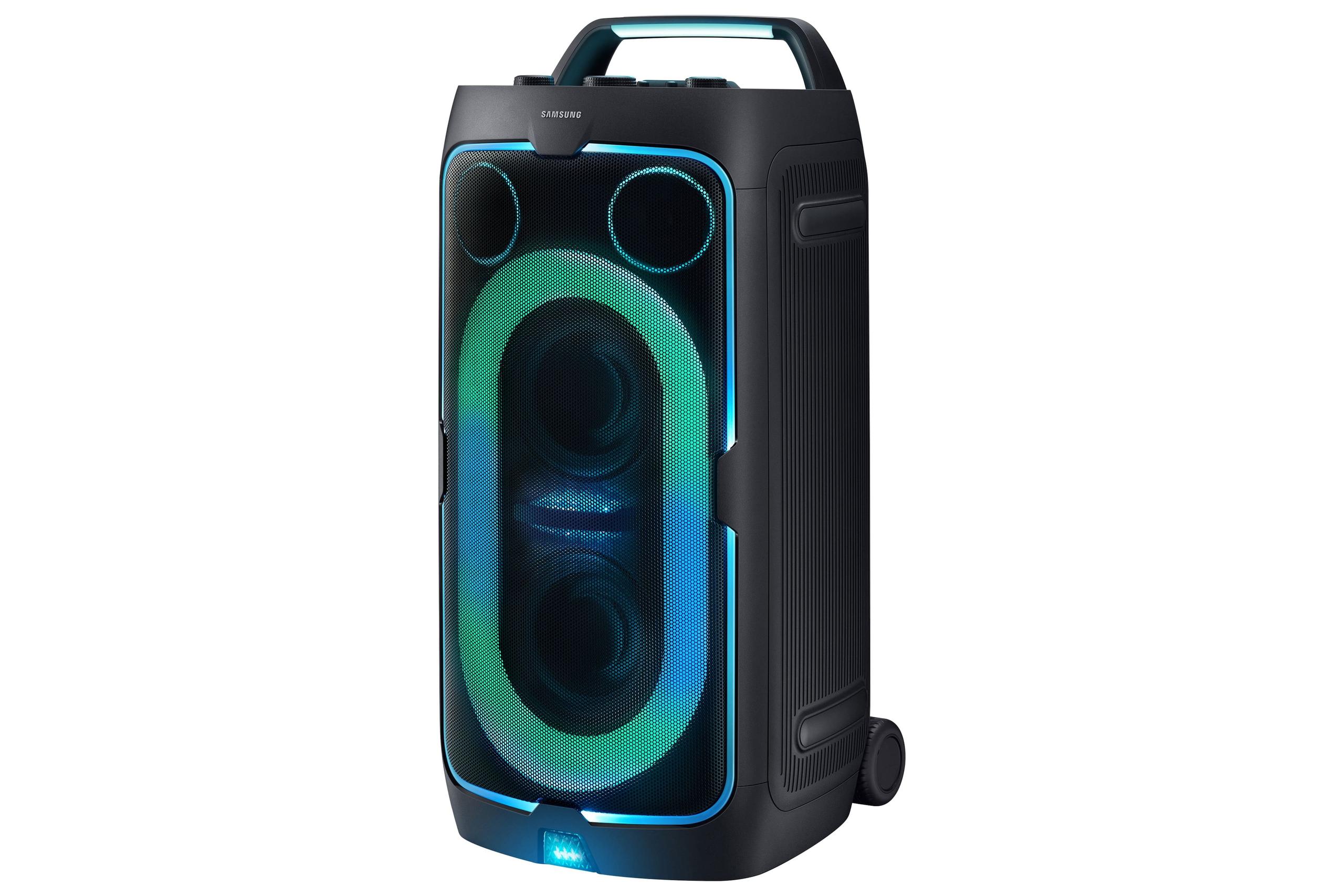
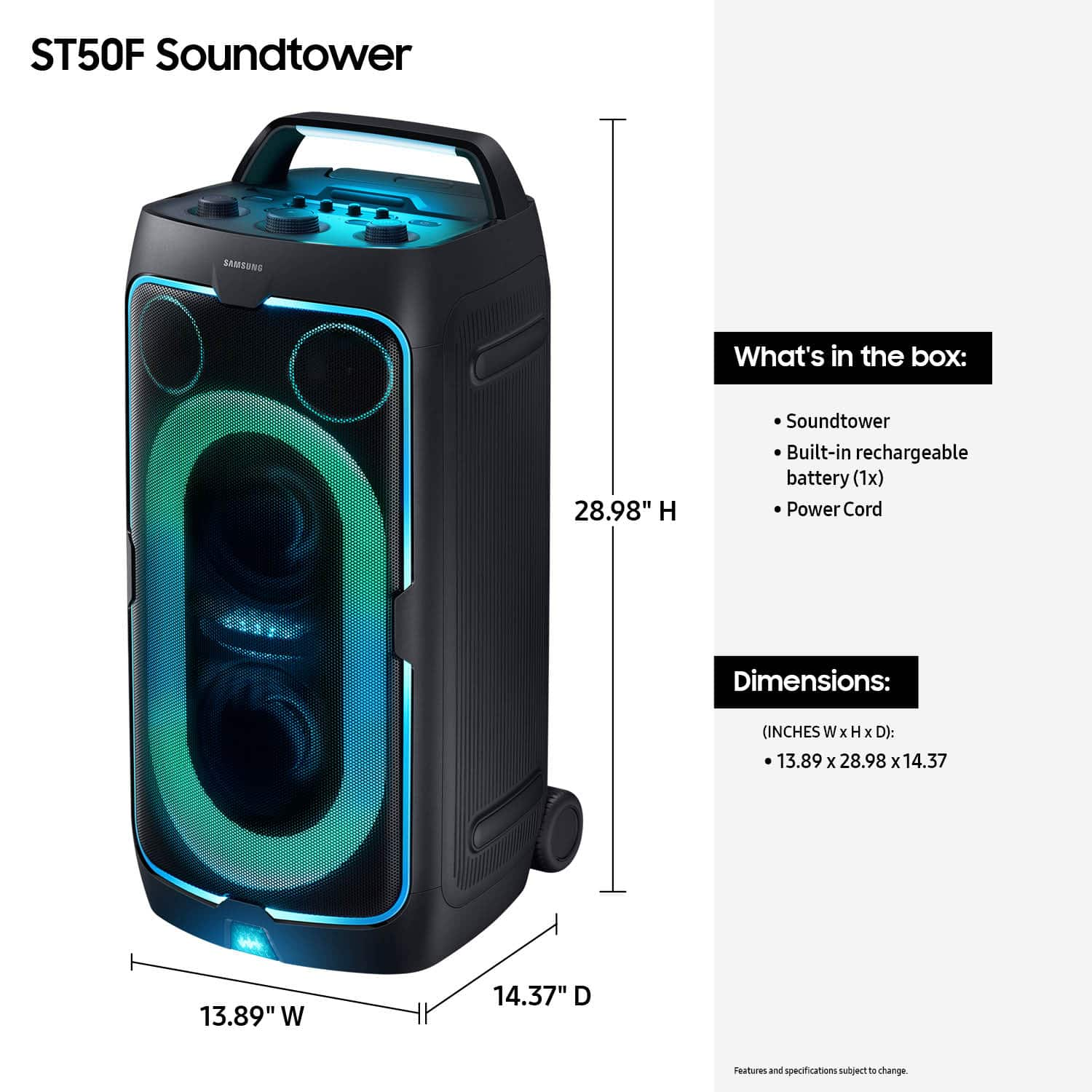
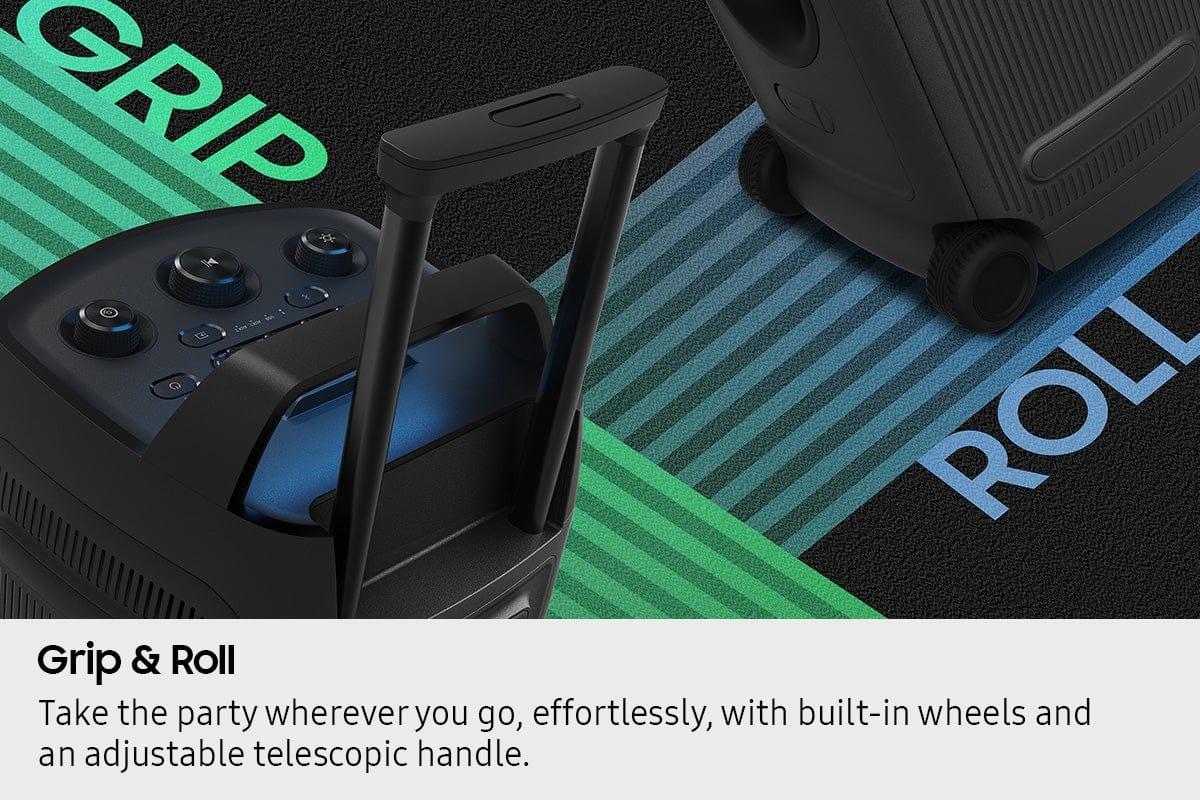
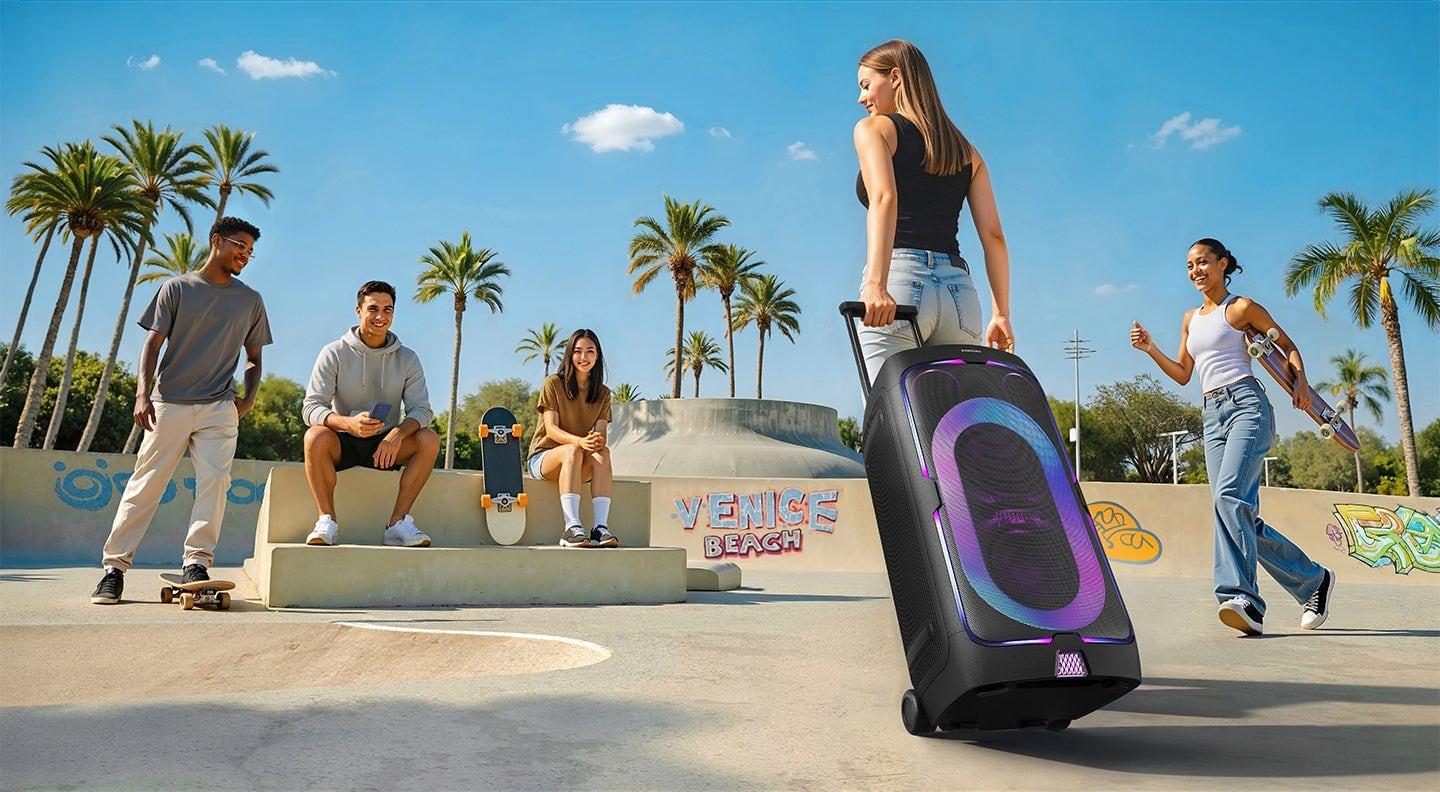
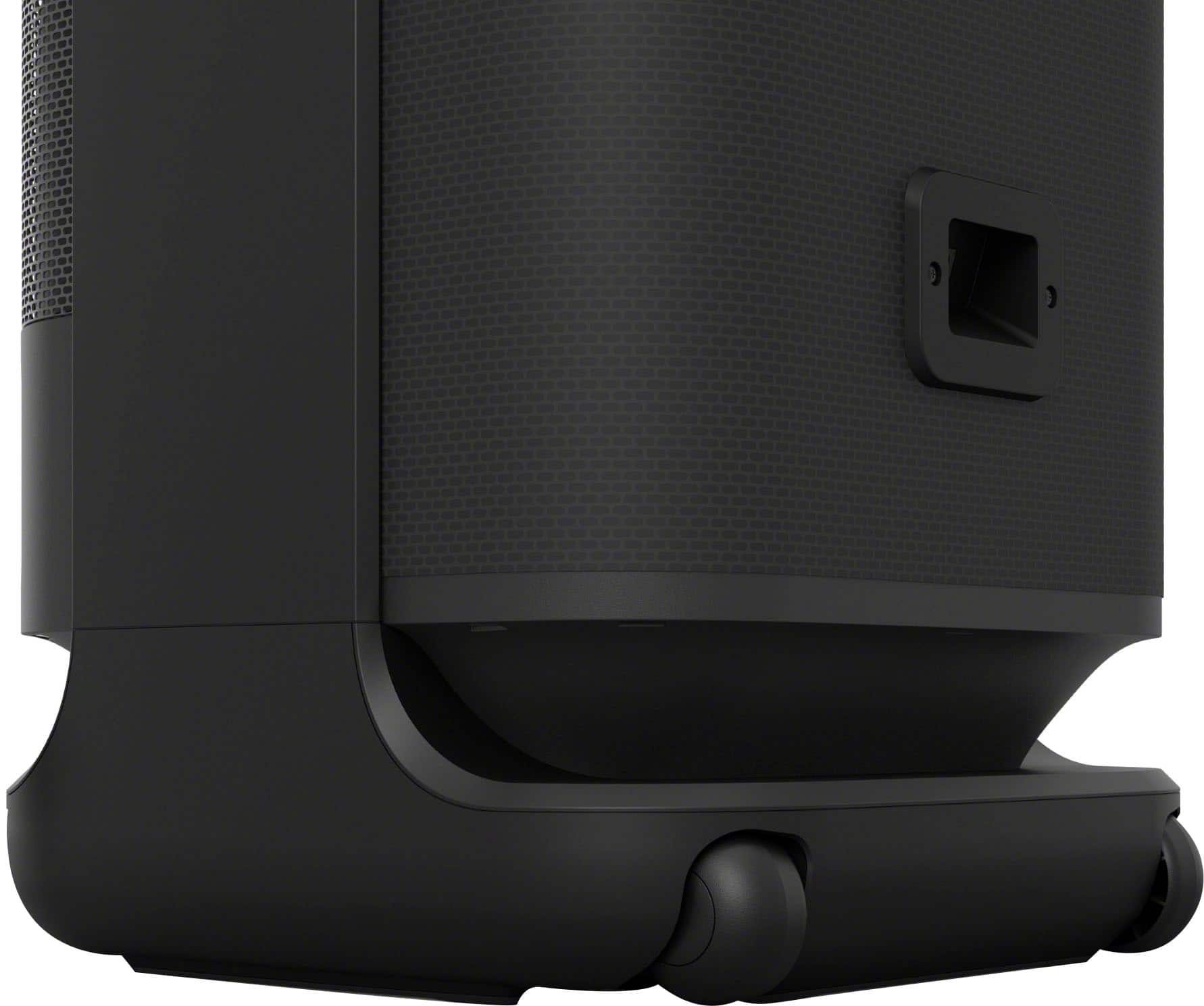
The most fundamental difference between the Samsung MX-ST50F and Sony ULT Tower 10 lies in their core design philosophy. Samsung has engineered their tower around genuine portability—it weighs in at a manageable 18.4 kilograms and features built-in wheels plus a telescoping handle that adjusts to five different heights. This isn't just marketing; the handle and wheels make a real difference when you're moving the speaker between rooms or loading it into a car.
The Sony ULT Tower 10, by contrast, weighs nearly 30 kilograms and stands over 1.1 meters tall. While it has wheels, it's clearly designed as a semi-permanent fixture rather than something you'll regularly transport. This weight difference isn't arbitrary—Sony has prioritized maximum acoustic output over mobility, packing in larger drivers and more robust internal components.
From a practical standpoint, the Samsung MX-ST50F makes sense if you're someone who hosts parties in different locations, takes speakers to friends' houses, or wants to move your sound system between indoor and outdoor spaces. The Sony ULT Tower 10 is better suited for dedicated entertainment spaces where maximum impact trumps convenience.
When it comes to raw power output, the differences become stark. The Samsung MX-ST50F delivers 240 watts when plugged into AC power, but here's the crucial detail—it can also operate on its built-in battery at 90 watts. That's still plenty of power for most gatherings, roughly equivalent to a decent home stereo system cranked up high.
The Sony ULT Tower 10 operates exclusively on AC power but delivers significantly higher peak output. In our research of professional reviews and user feedback, the Sony consistently measures around 110 decibels at one foot distance and maintains 91 decibels at 20 feet—that's genuinely room-shaking volume that can easily overwhelm smaller spaces.
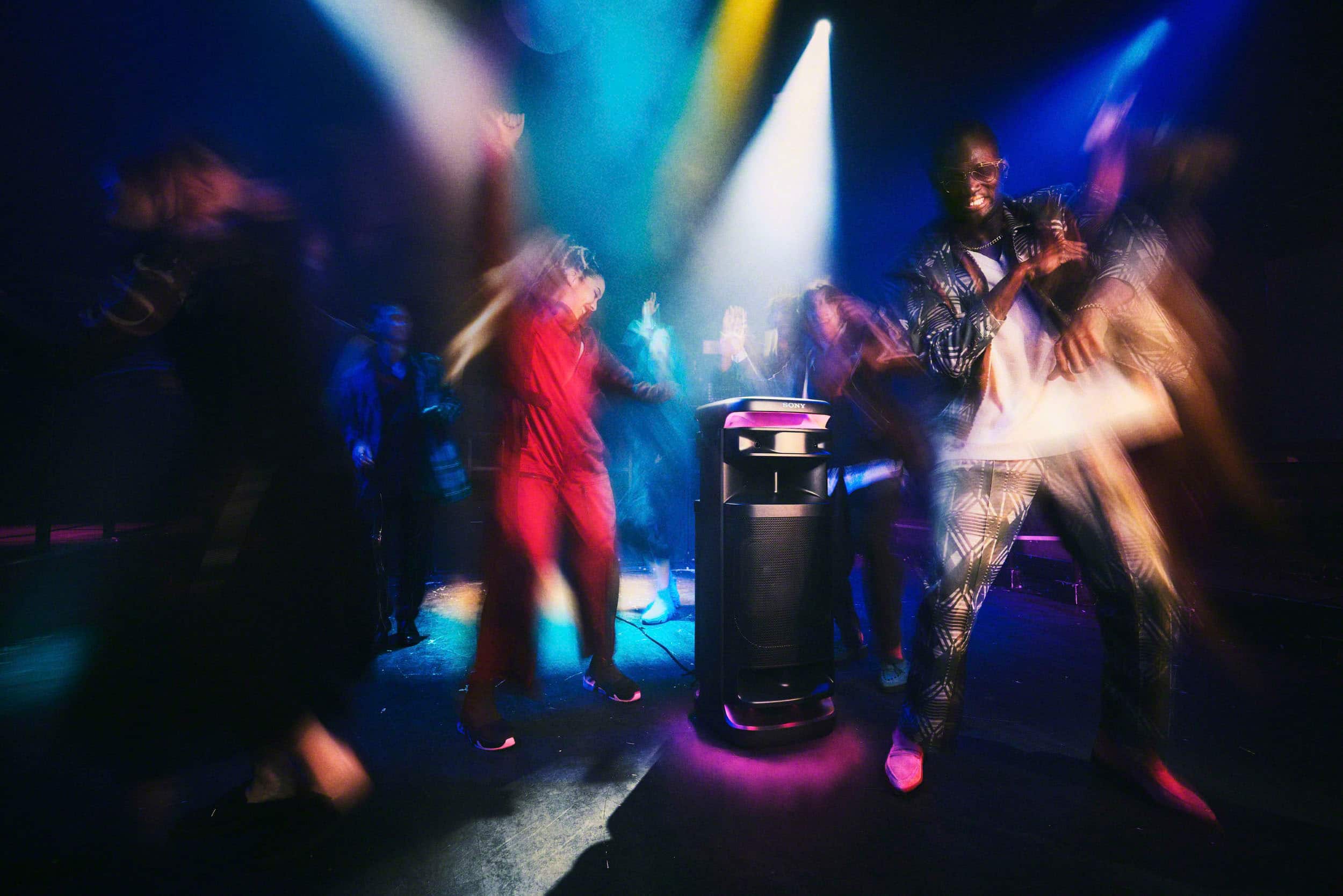
This power difference translates to real-world performance gaps. The Samsung MX-ST50F can effectively fill medium-sized rooms and outdoor patios, but the Sony ULT Tower 10 can energize large indoor spaces and compete with outdoor ambient noise much more effectively. If you're hosting parties for 50+ people or need to cover large areas, the Sony's extra power becomes essential.
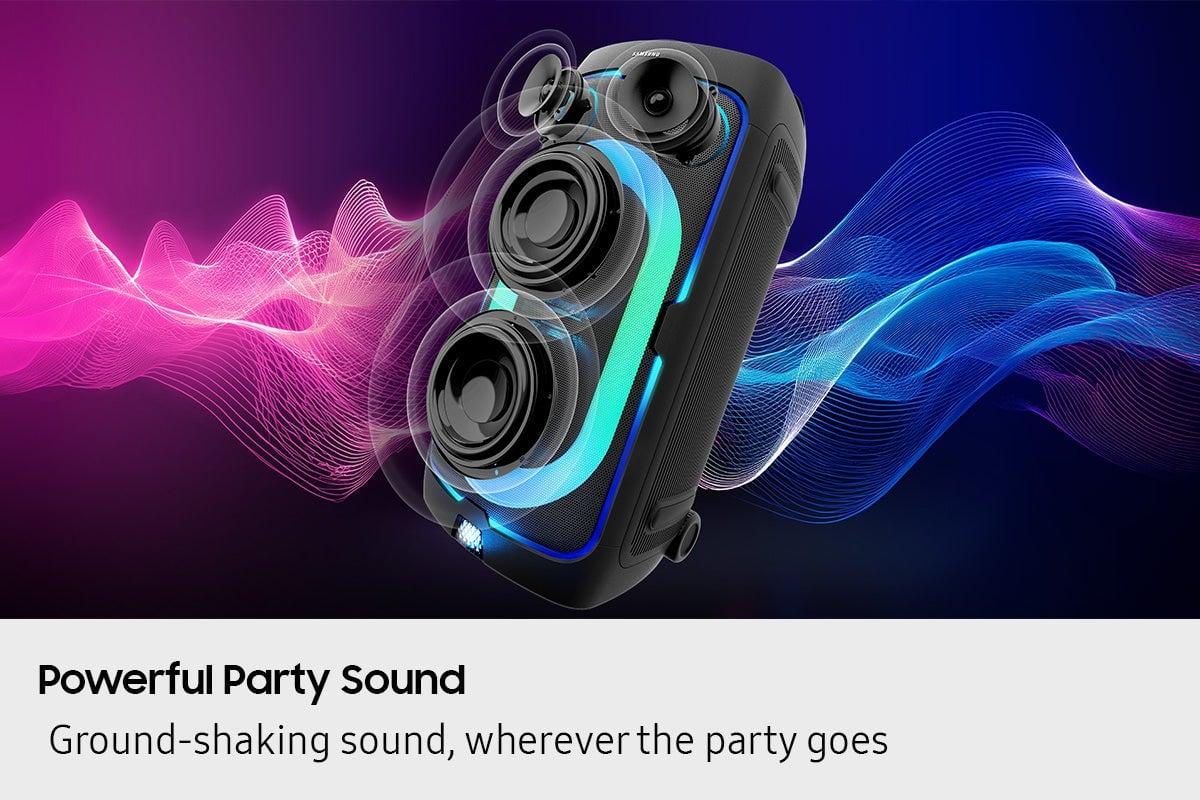
However, raw power isn't everything. The Samsung MX-ST50F uses waveguide technology—essentially shaped channels that help direct sound waves more efficiently—to create better sound dispersion from its dual 6.5-inch woofers and two dome tweeters. This results in more even coverage throughout a room, reducing the "sweet spot" effect where sound quality varies dramatically based on where you're standing.
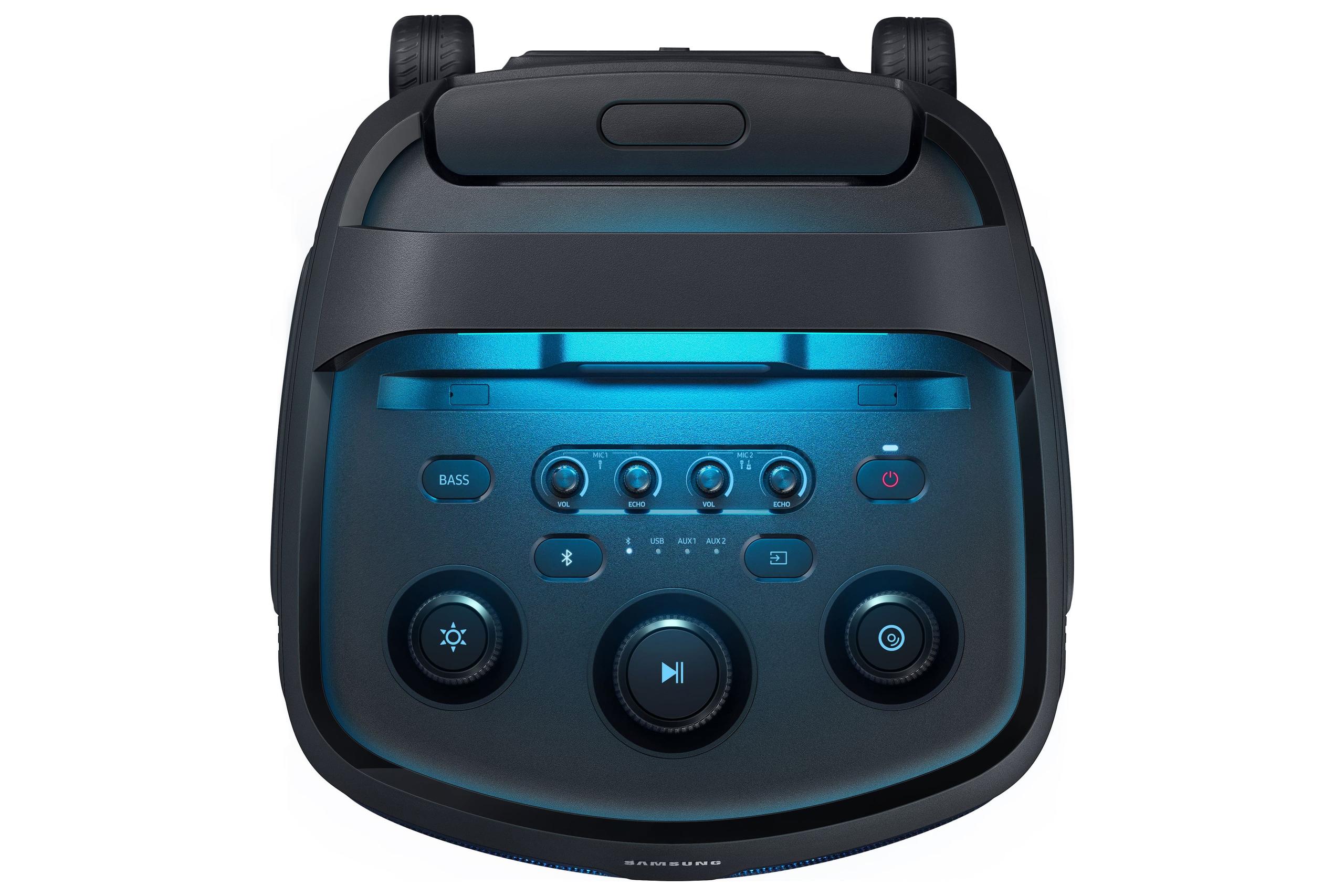
The driver configuration tells an interesting story about each manufacturer's priorities. The Samsung MX-ST50F uses dual 6.5-inch woofers paired with two 25mm dome tweeters in a configuration optimized for balanced sound across all frequencies. Samsung includes three bass modes (Deep, Punchy, Gentle) and four additional sound modes (Standard, Wide, Stadium, Outdoor) that can be adjusted via their smartphone app.
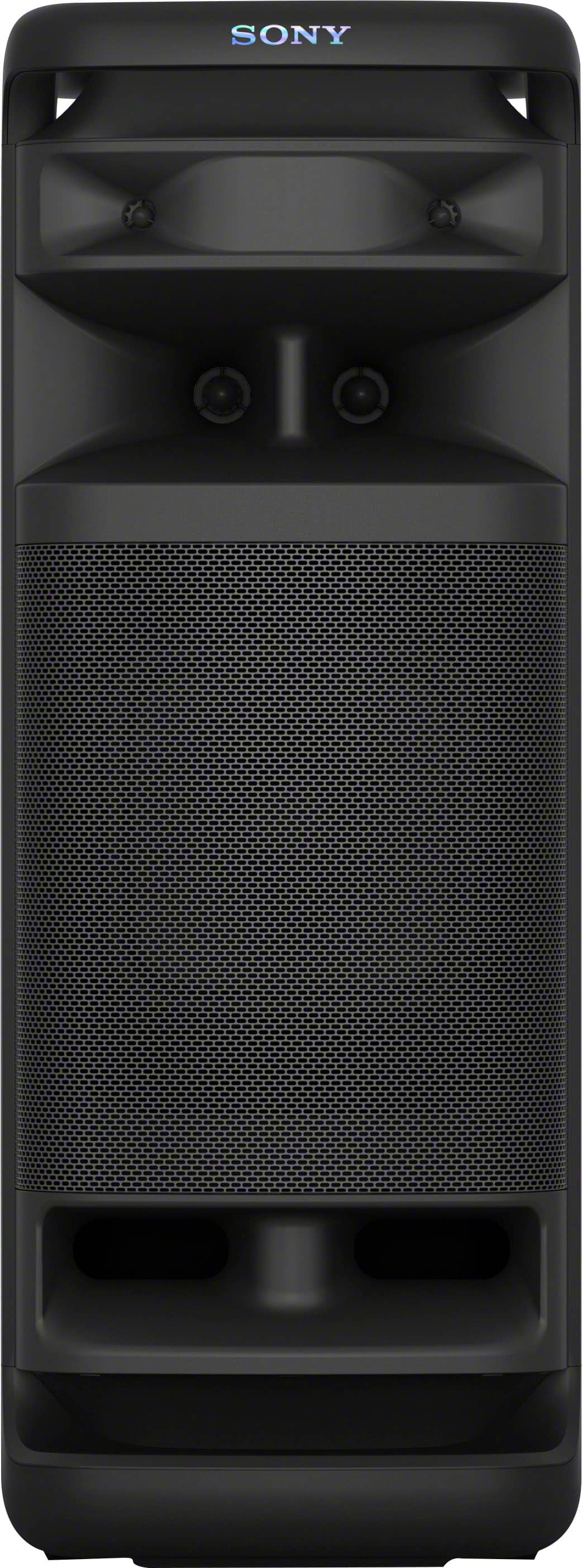
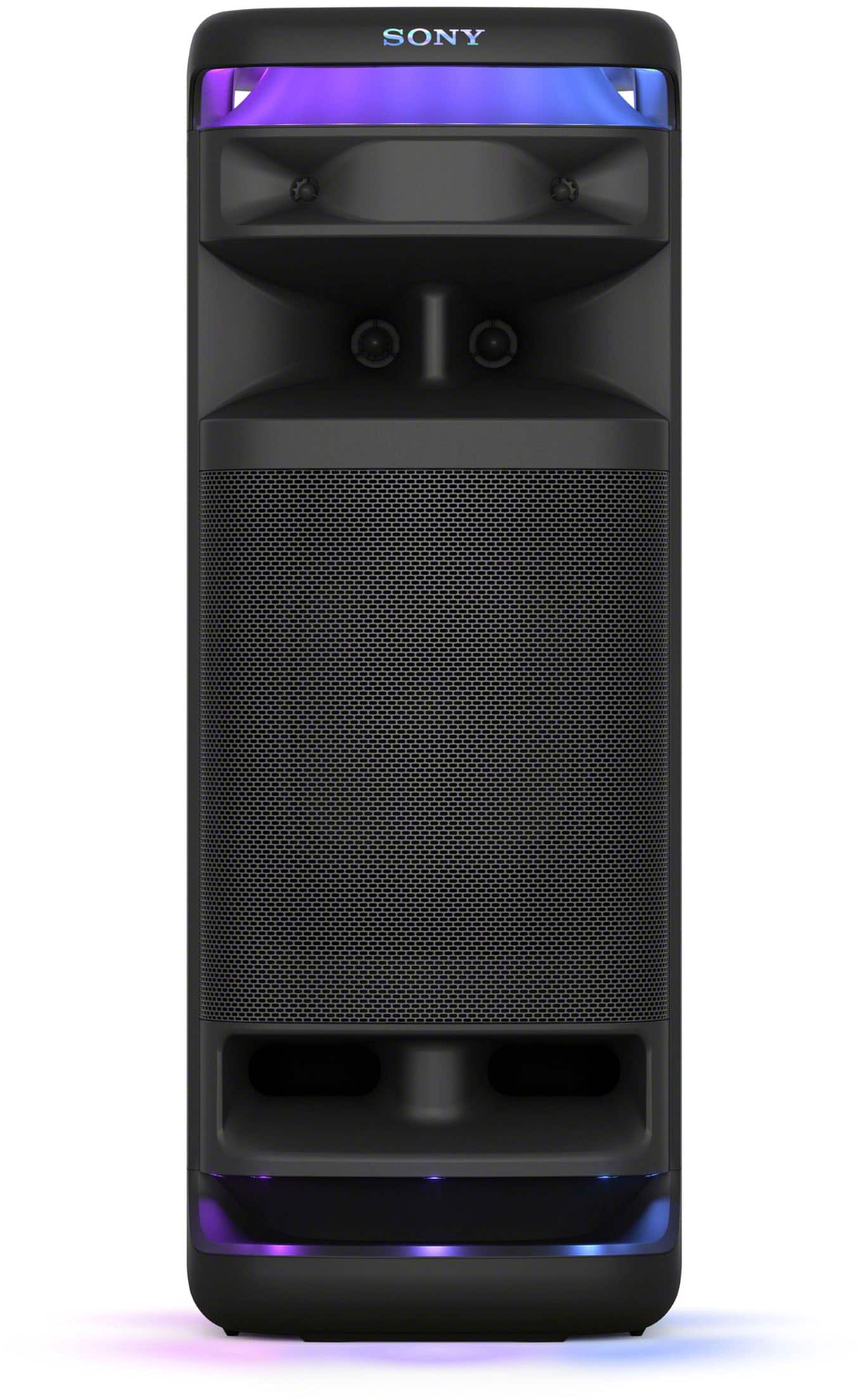
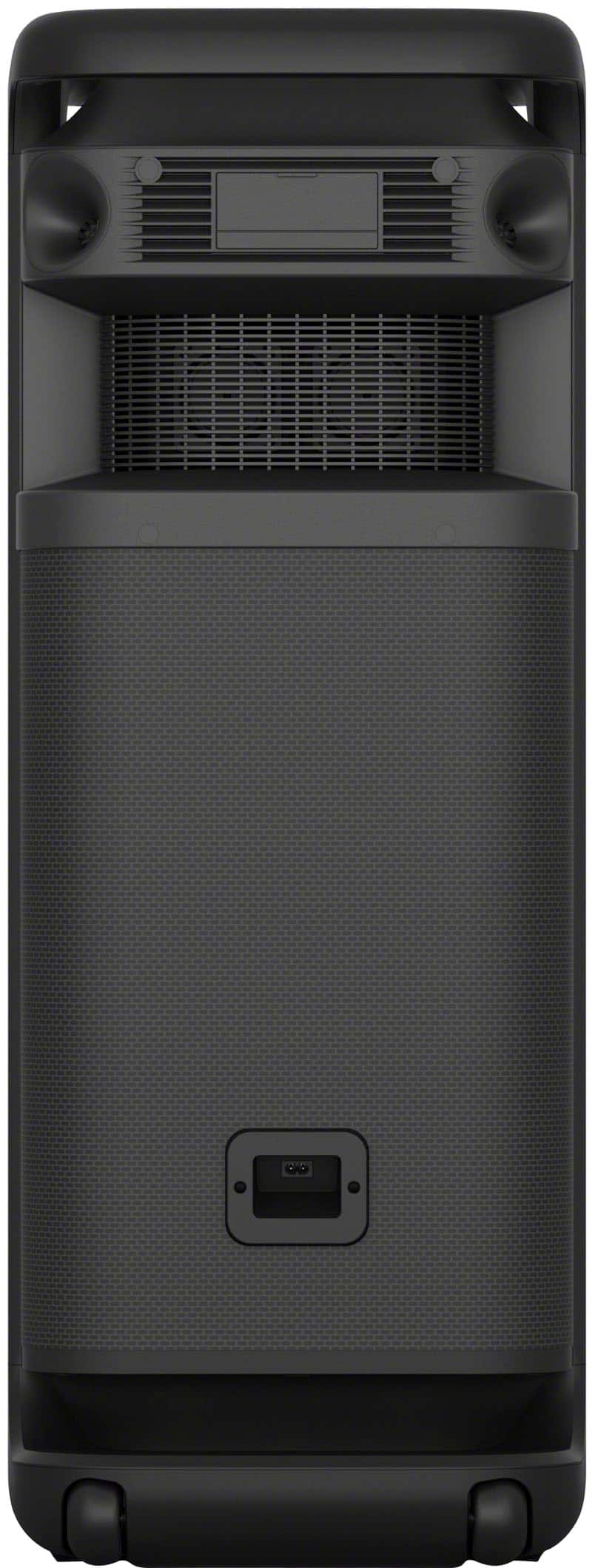
The Sony ULT Tower 10 takes a more aggressive approach with its massive 12.6 x 12.6-inch X-Balanced woofer—that's a square-shaped driver that Sony claims reduces distortion while maximizing cone area. This is supported by two midrange drivers and four tweeters (two front-facing, two rear-facing) that create true 360-degree sound dispersion.
Based on our analysis of user reviews and professional testing, the sound signatures differ notably. The Samsung MX-ST50F tends toward a more balanced, natural presentation that works well for various music genres. Users consistently report that it handles vocals clearly and maintains good separation between instruments even at higher volumes.
The Sony ULT Tower 10 is tuned for impact. Its ULT (Ultimate Low-frequency Technology) system offers two bass enhancement modes—ULT 1 for deeper, rumbling bass and ULT 2 for punchier, more aggressive low-end. Reviews consistently praise the Sony's ability to deliver bass you can feel throughout your body, though some note it can become overwhelming in smaller spaces.
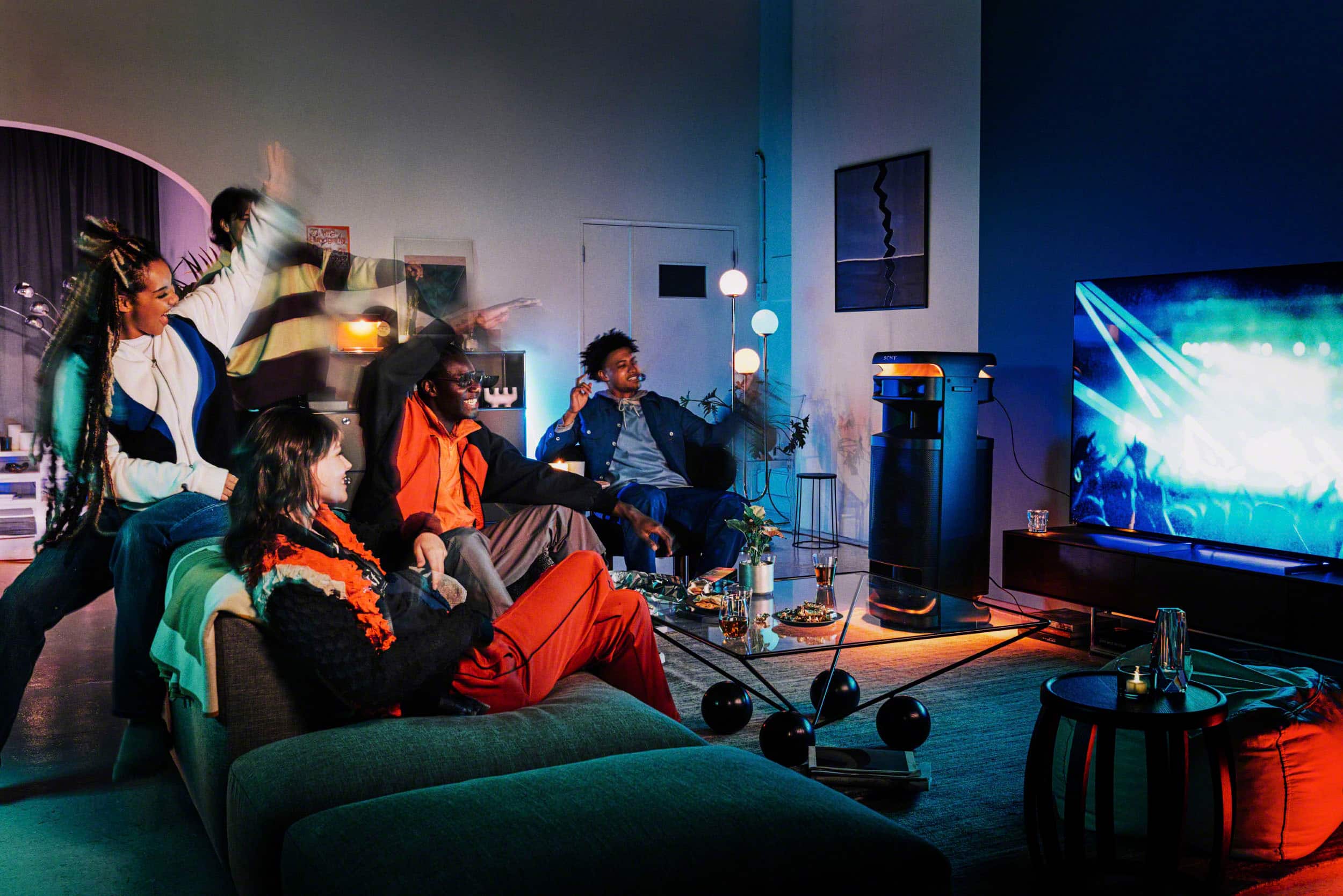
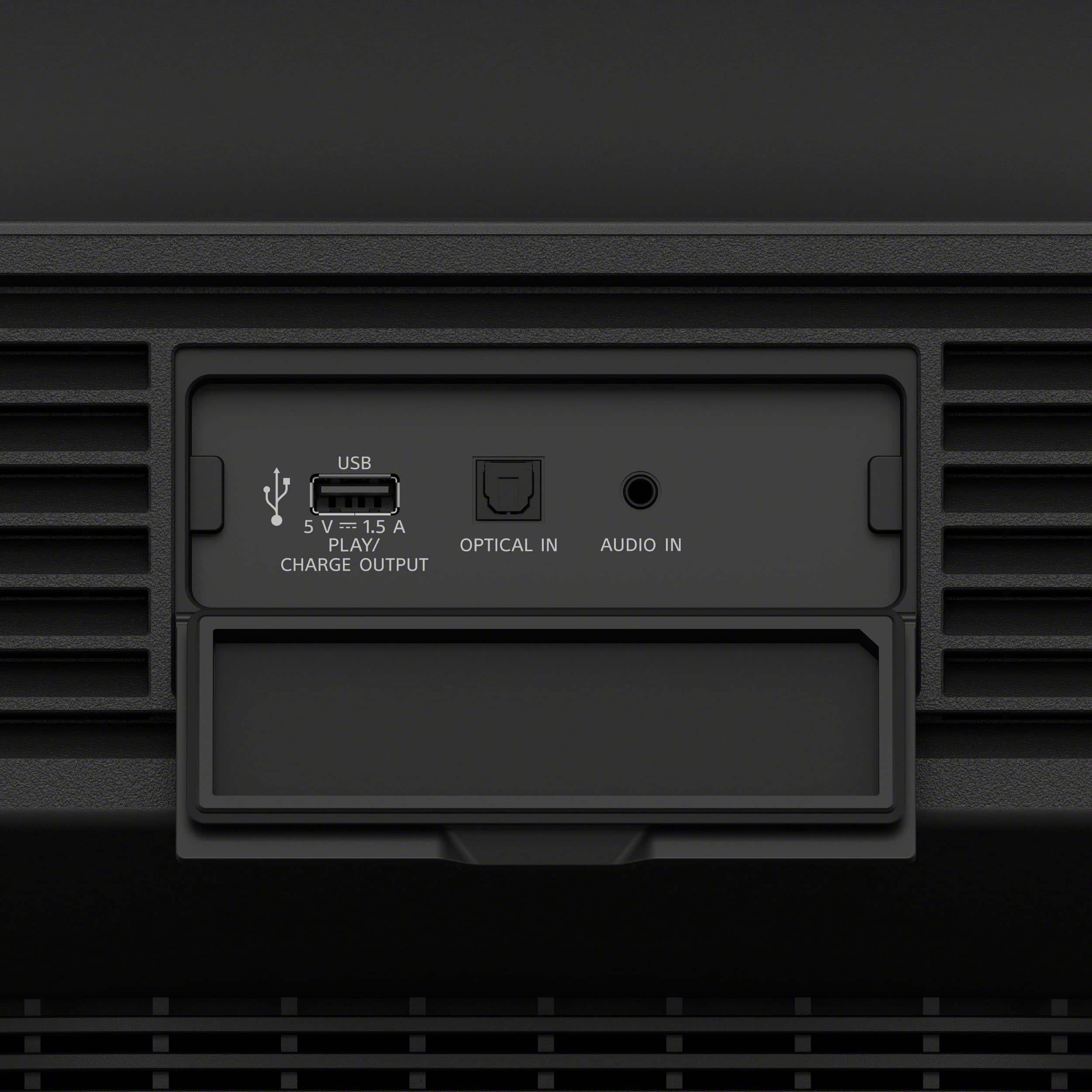
For home theater use, the Sony ULT Tower 10 has a significant advantage with its dedicated TV Sound Booster mode and optical input connection. This allows it to serve double duty as both a party speaker and a substantial upgrade to your TV's built-in audio. The deep bass response dramatically improves action movies and music performances, though the omnidirectional sound design means it won't replicate a true surround sound system's positional audio effects.
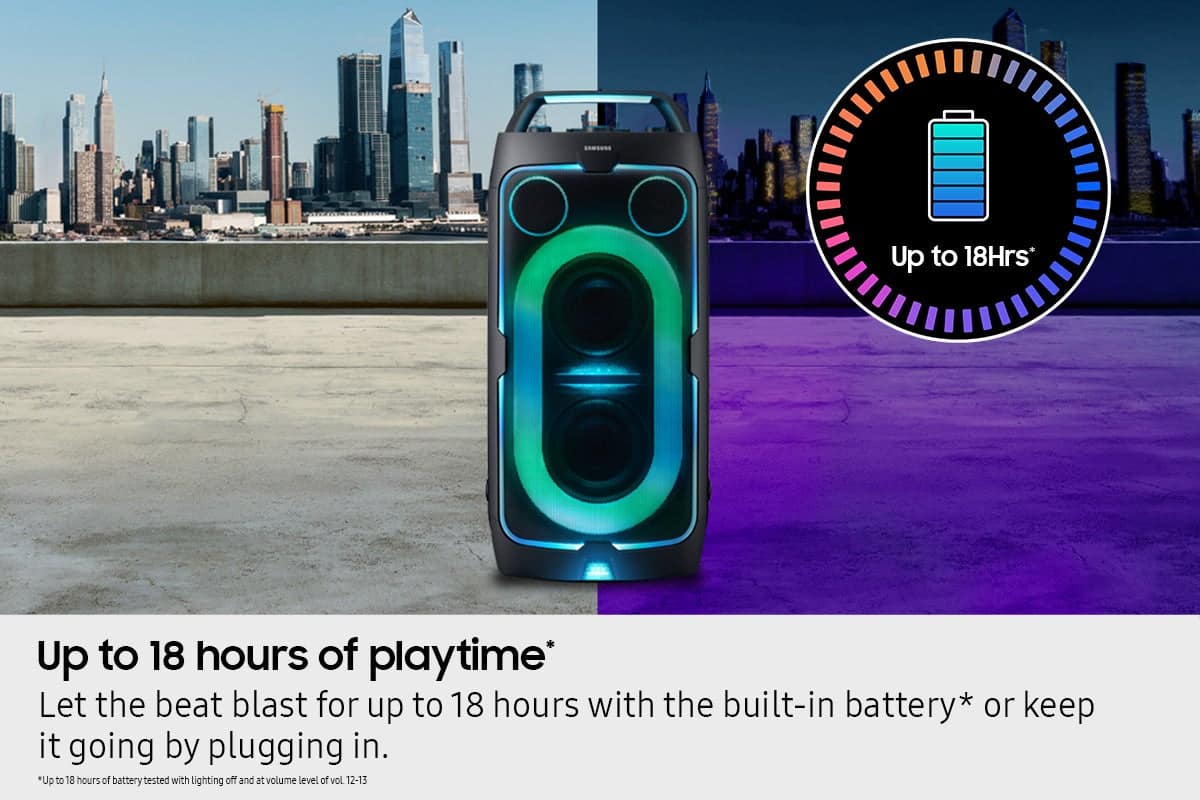
The battery performance gap represents one of the most significant practical differences between these speakers. The Samsung MX-ST50F promises up to 18 hours of playback, though real-world testing suggests closer to 12 hours with lighting effects enabled and moderate-to-high volume levels. Even at the lower end, that's enough runtime for most day-long events without requiring a power outlet.
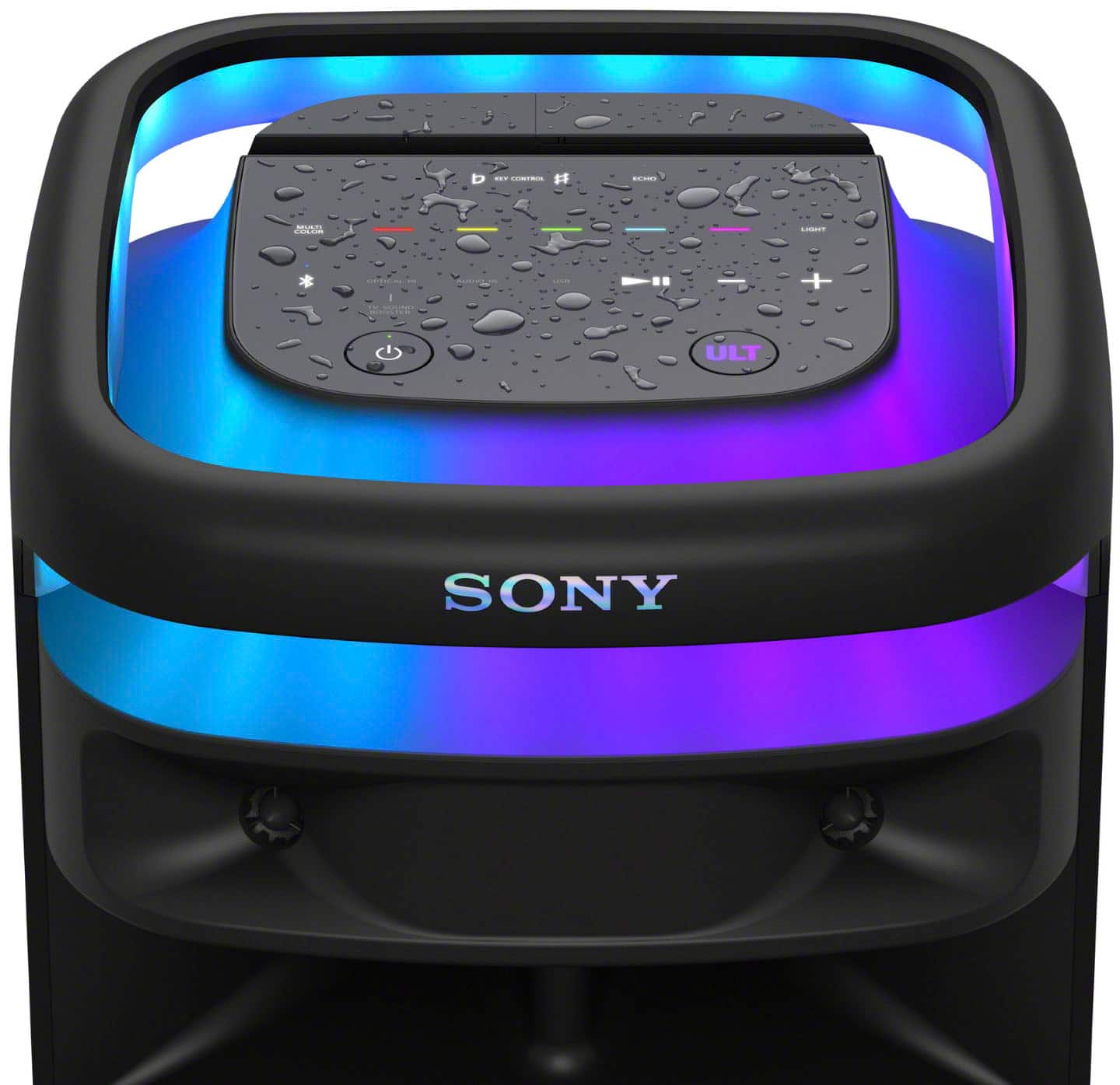
This battery independence opens up use cases that simply aren't possible with the Sony ULT Tower 10. Beach parties, camping trips, tailgating events, and outdoor gatherings become viable options with the Samsung. The IPX4 splash resistance rating adds another layer of outdoor utility—while it won't survive being dropped in water, it can handle rain and poolside splashes.
The Sony ULT Tower 10 requires constant AC power, which limits placement options and makes outdoor use dependent on extension cords or portable generators. However, this design choice enables its higher sustained power output. AC operation means no performance degradation as batteries drain, and no downtime waiting for recharging.
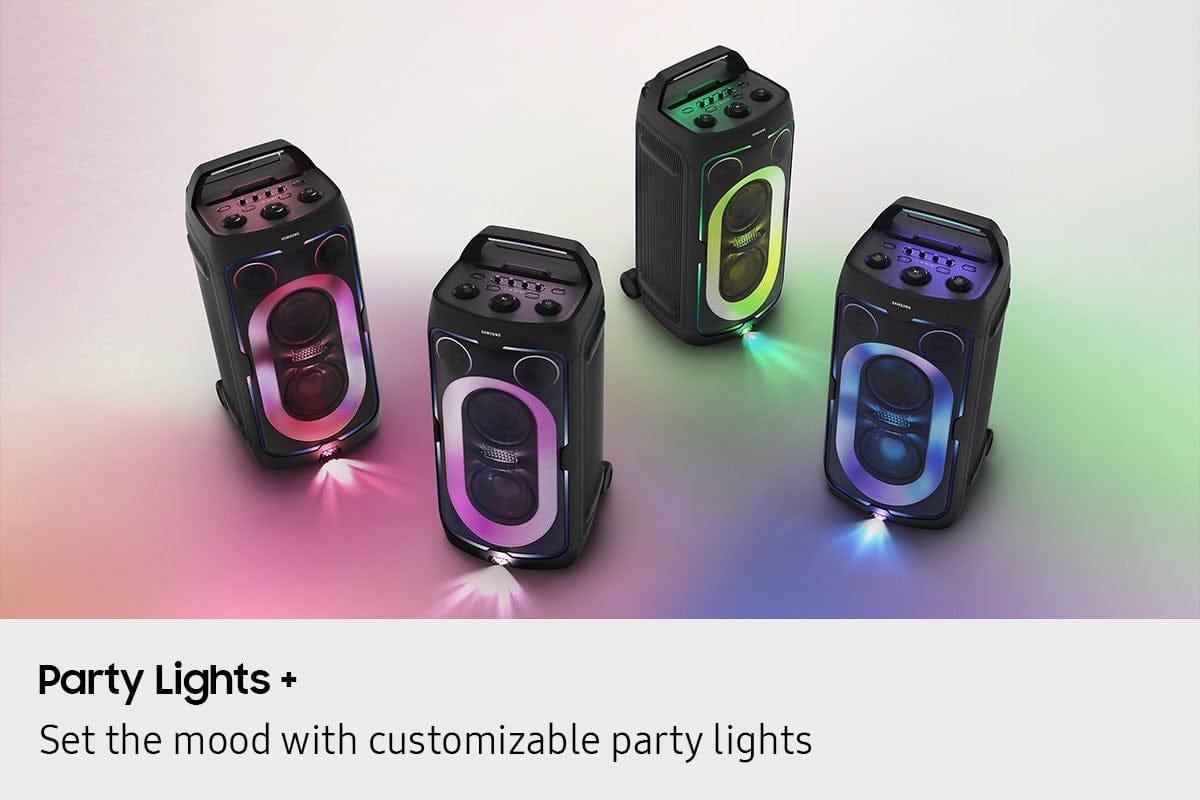
Modern party speakers need to do more than just play music loudly. Both models include sophisticated lighting systems, but they approach visual effects differently. The Samsung MX-ST50F features six customizable lighting patterns spread across five zones of the speaker, controllable through Samsung's smartphone app. The effects include track lighting, ring lighting, and crystal patterns that react to music in real-time.
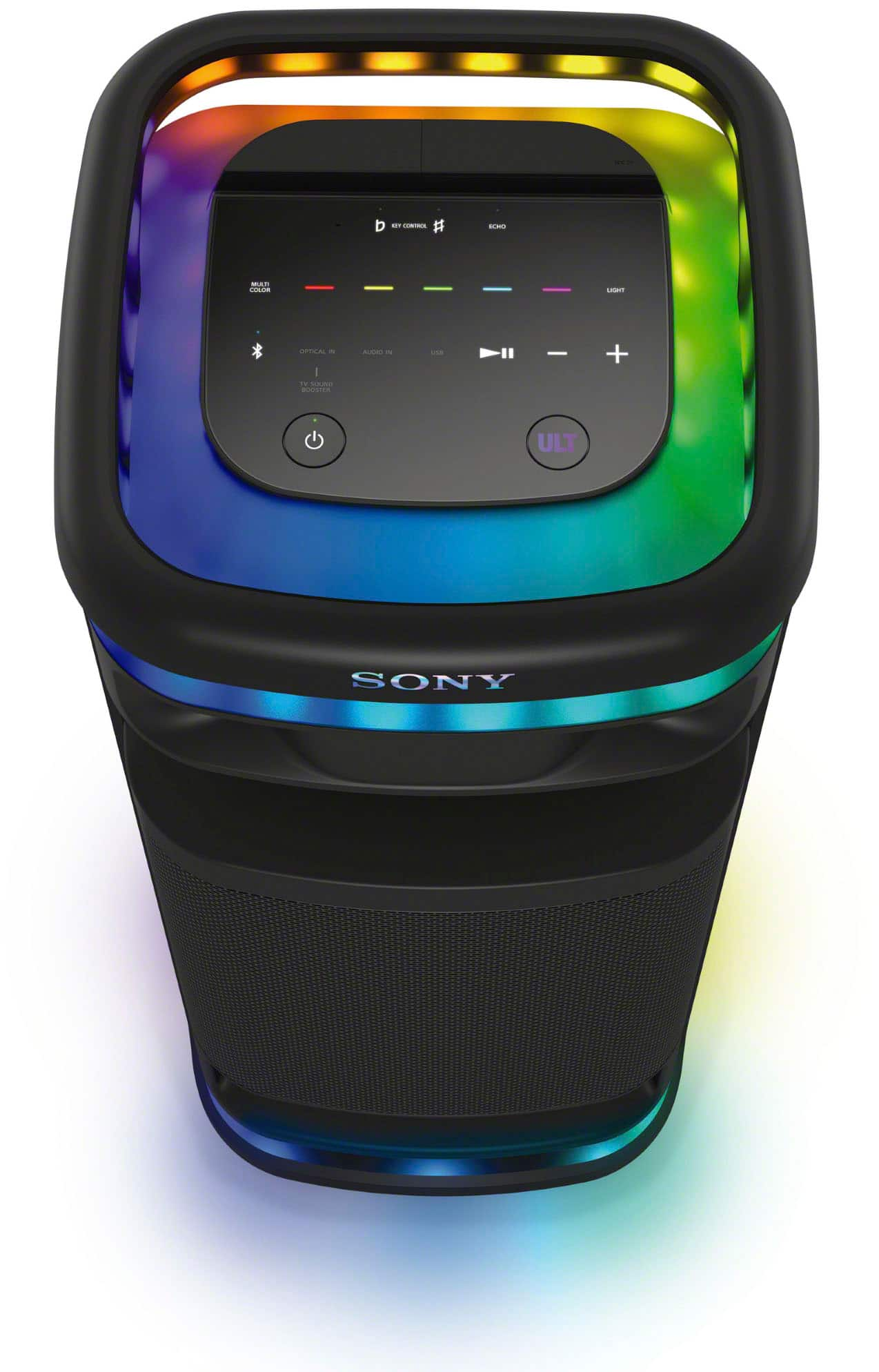
The Sony ULT Tower 10 offers 360-degree LED lighting with five preset modes and customizable effects through Sony's Music Center and Fiestable apps. The lighting is more integrated into the speaker's overall design, with illumination that extends both above and below the main driver section.
For karaoke enthusiasts, there's a meaningful difference in approach. The Sony ULT Tower 10 includes a wireless microphone in the box—a significant value addition that typically costs $50-100 separately. It also features echo effects and key control built into the speaker's touch panel, making it immediately ready for karaoke sessions.
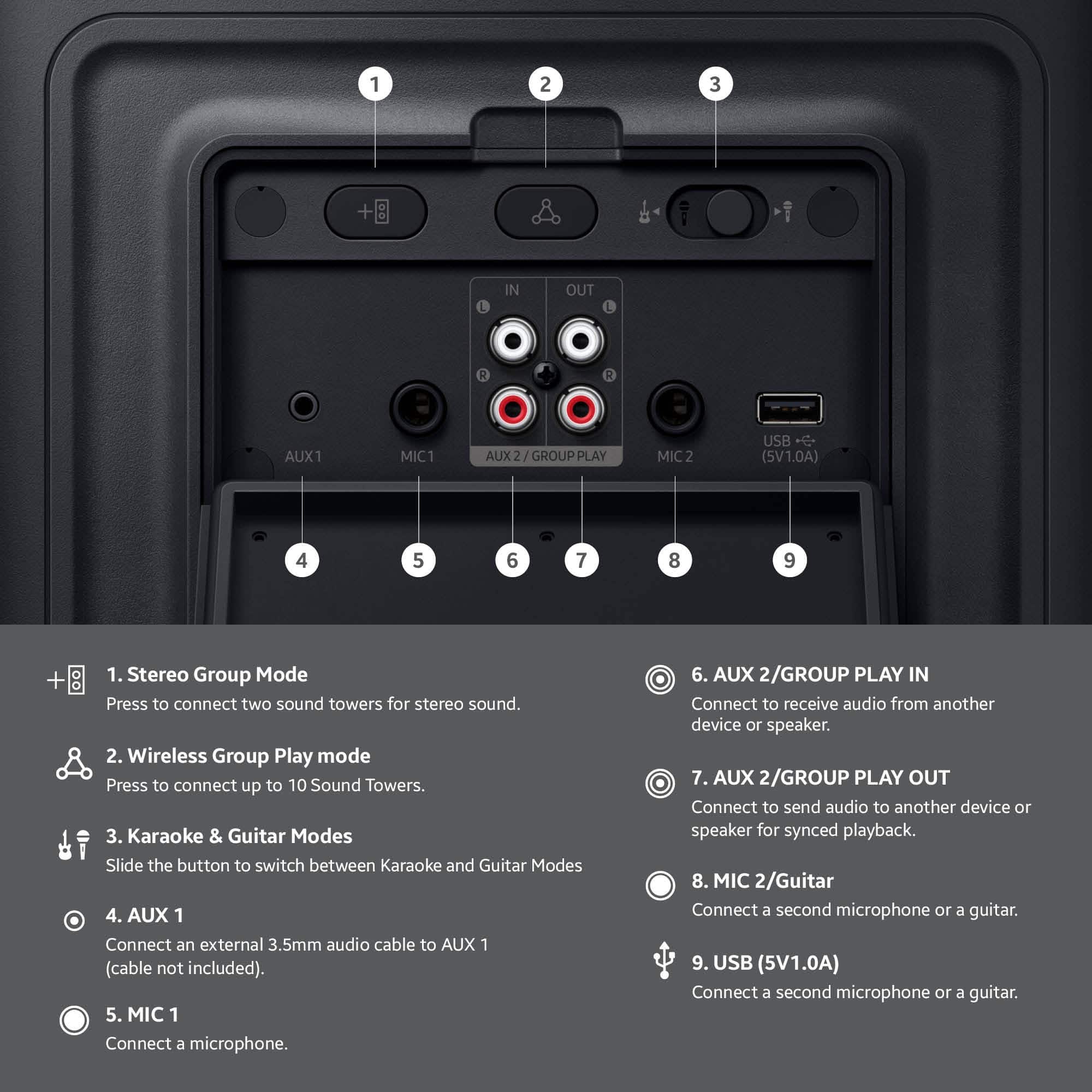
The Samsung MX-ST50F offers dual microphone inputs and guitar connectivity, plus DJ effects and sampling capabilities through its mobile app. However, you'll need to purchase microphones separately. This approach offers more flexibility for serious performers but requires additional investment for basic karaoke use.
Both speakers embrace modern wireless connectivity, but with different strengths. The Samsung MX-ST50F supports Bluetooth 5.4 with dual device connection, meaning two phones can stay paired simultaneously with automatic switching when someone starts playing music. It also supports AAC codec for better wireless audio quality from iPhones and newer Android devices.
The Sony ULT Tower 10 uses Bluetooth 5.2 but adds LDAC codec support—Sony's high-resolution wireless audio standard that can transmit nearly three times more data than standard Bluetooth. For users with compatible smartphones and high-quality music files, this represents a meaningful audio quality improvement.
For connecting multiple speakers, both brands offer linking capabilities, but at different scales. Samsung's Auracast Group Play can connect up to 10 Sound Tower speakers wirelessly, while Sony's Party Connect supports up to 100 compatible speakers. In practice, most users will never approach these limits, but the Sony system offers more flexibility for large events or permanent installations.
At the time of writing, the Samsung MX-ST50F carries a notably lower price than the Sony ULT Tower 10—roughly 25% less expensive. This price difference becomes more interesting when you consider the included features and required accessories.
The Samsung's lower price initially seems like straightforward savings, but you'll need to factor in the cost of wireless microphones if karaoke is important to you. The Sony includes a quality wireless microphone that would cost $75-100 separately, narrowing the actual price gap.
However, the Samsung's battery operation and portability features represent value that's difficult to quantify. If you regularly need portable sound or want the flexibility of battery operation, these capabilities could easily justify the Samsung's price premium over non-portable alternatives.
From a pure performance-per-dollar perspective, the Sony ULT Tower 10 delivers more acoustic output for your investment, particularly if maximum volume and bass impact are priorities. The Sony also serves double duty as a TV audio enhancement system, potentially replacing a separate soundbar and subwoofer combination.
Your decision between the Samsung MX-ST50F and Sony ULT Tower 10 should align with your primary use cases and physical constraints.
Choose the Samsung MX-ST50F if you value versatility and mobility. This speaker makes sense for people who host gatherings in multiple locations, want to take their sound system outdoors, or simply appreciate the flexibility of battery operation. It's also the better choice if you prefer more balanced, natural sound over maximum bass impact, or if you're working within a tighter budget but still want premium party features.
The Sony ULT Tower 10 is the right choice when maximum impact is the priority. If you're setting up a dedicated entertainment space, need the loudest possible output, or want a speaker that can double as a serious TV audio upgrade, the Sony delivers superior performance. It's also better if you want everything included in the box, including professional karaoke capabilities.
For home theater integration specifically, the Sony ULT Tower 10 has a clear advantage with its optical input and TV Sound Booster mode. While it won't replace a proper surround sound system for critical movie watching, it can dramatically improve your TV's audio while providing party capabilities when needed.
Both the Samsung MX-ST50F and Sony ULT Tower 10 represent excellent approaches to party audio, but they serve different masters. Samsung has optimized for versatility and user convenience, creating a speaker that adapts to your lifestyle rather than demanding accommodation. Sony has prioritized maximum acoustic performance and feature completeness, creating a more powerful but less flexible solution.
Neither speaker is objectively better—they're better for different people and situations. The Samsung rewards users who value mobility and balanced performance, while the Sony satisfies those who want maximum impact and don't mind the constraints that come with it. Consider your primary use cases, physical constraints, and budget to determine which philosophy better matches your needs.
In my experience evaluating party speakers, the decision often comes down to whether you'll regularly use the portability features. If battery operation and easy mobility matter to you, those capabilities become essential and justify their trade-offs. If you're setting up in one primary location and want maximum performance, the extra power and features of a larger, AC-powered system typically provide better long-term satisfaction.
| Samsung MX-ST50F Sound Tower | Sony ULT Tower 10 Party Speaker |
|---|---|
| Power Output - Determines maximum volume and room-filling capability | |
| 240W (AC) / 90W (battery) - Good for medium rooms | Higher peak output, 110dB capable - Excellent for large spaces |
| Portability - Critical for outdoor events and multiple venues | |
| 18.4kg with wheels + telescoping handle, 18hr battery - Genuinely portable | 29kg with wheels only, AC power required - Semi-permanent setup |
| Driver Configuration - Affects sound quality and bass response | |
| Dual 6.5" woofers + dual 1" tweeters with waveguide tech | 12.6" x 12.6" X-Balanced woofer + 2 midrange + 4 tweeters (360°) |
| Water Resistance - Important for outdoor and poolside use | |
| IPX4 splash-resistant - Safe for light rain and poolside | Not specified - Indoor use recommended |
| Karaoke Setup - Ready-to-use vs. additional purchases needed | |
| Dual mic inputs, requires separate microphone purchase | Wireless microphone included + echo effects built-in |
| Sound Customization - Tailoring audio for different environments | |
| 3 bass modes + 4 sound modes via app | ULT bass technology with 2 enhancement modes + 7-band EQ |
| Multi-Speaker Connectivity - Expanding for larger events | |
| Auracast Group Play (up to 10 Samsung units) | Party Connect (up to 100 Sony speakers) |
| Home Theater Integration - Doubling as TV audio upgrade | |
| Bluetooth and analog inputs only | Optical input + TV Sound Booster mode - Better for dual-purpose use |
| Lighting System - Party atmosphere enhancement | |
| 6 patterns across 5 zones, app-controlled | 360° programmable LEDs with ambient and strobe effects |
| Audio Codecs - Wireless sound quality from phones | |
| Bluetooth 5.4 with AAC support | Bluetooth 5.2 with LDAC + AAC - Superior wireless audio quality |
The Sony ULT Tower 10 is significantly louder, capable of reaching 110 decibels and maintaining high volume levels across larger spaces. The Samsung MX-ST50F delivers 240W of power when plugged in, which is plenty for medium-sized rooms, but the Sony's superior driver configuration produces more room-shaking volume overall.
Only the Samsung MX-ST50F works outdoors without power, thanks to its built-in rechargeable battery that lasts up to 18 hours. It's also IPX4 splash-resistant for poolside use. The Sony ULT Tower 10 requires constant AC power, limiting outdoor use to locations with electrical outlets or generators.
The Sony ULT Tower 10 delivers deeper, more impactful bass with its massive 12.6" x 12.6" X-Balanced woofer and ULT bass enhancement technology. While the Samsung MX-ST50F has solid bass with dual 6.5" woofers and three bass modes, the Sony's larger driver produces the chest-thumping low-end that really gets parties moving.
The Sony ULT Tower 10 includes a wireless microphone in the box, making it immediately ready for karaoke. The Samsung MX-ST50F has dual microphone inputs but requires you to purchase microphones separately, though this offers more flexibility for professional setups.
The Sony ULT Tower 10 is much better for TV use, featuring an optical input and dedicated TV Sound Booster mode that significantly enhances movie and show audio. The Samsung MX-ST50F can connect via Bluetooth or auxiliary cable but lacks the specialized TV integration features of the Sony.
The Samsung MX-ST50F is far more portable at 18.4kg with built-in wheels and a telescoping handle that adjusts to five heights. The Sony ULT Tower 10 weighs nearly 30kg and, while it has wheels, is clearly designed as a semi-permanent fixture rather than something you'll regularly transport.
Both speakers have dedicated apps. The Samsung MX-ST50F uses the Samsung Sound Tower app for controlling lights, sound modes, and DJ effects. The Sony ULT Tower 10 works with Sony's Music Center and Fiestable apps, offering lighting control, EQ adjustment, and party features.
Yes, both support multi-speaker setups but at different scales. The Samsung MX-ST50F uses Auracast Group Play to connect up to 10 Samsung speakers wirelessly. The Sony ULT Tower 10 supports Party Connect for linking up to 100 compatible Sony speakers, making it better for very large events.
This depends on your preferences. The Samsung MX-ST50F provides more balanced, natural sound that works well across music genres. The Sony ULT Tower 10 is tuned for maximum impact with aggressive bass and supports higher-quality LDAC wireless audio codec for compatible devices.
The Sony ULT Tower 10 is excellent for home theater use with its optical input, TV Sound Booster mode, and powerful bass that enhances action movies and music performances. The Samsung MX-ST50F can work as TV audio but lacks dedicated home theater features and optimization.
Both offer impressive lighting systems. The Samsung MX-ST50F features six customizable patterns across five zones that react to music. The Sony ULT Tower 10 provides 360-degree programmable LEDs with ambient and strobe effects. Both are controlled via smartphone apps with real-time music synchronization.
The Samsung MX-ST50F typically costs less while offering unique portability and battery operation that many competitors can't match. The Sony ULT Tower 10 costs more but includes a wireless microphone and delivers significantly more power, potentially replacing both a party speaker and TV soundbar setup.
We've done our best to create useful and informative comparisons to help you decide what product to buy. Our research uses advanced automated methods to create this comparison and perfection is not possible - please contact us for corrections or questions. These are the sites we've researched in the creation of this article: bestbuy.com - news.samsung.com - youtube.com - youtube.com - videoandaudiocenter.com - youtube.com - youtube.com - samsung.com - crutchfield.com - youtube.com - arrowassociatedstores.com - brandsmartusa.com - bestbuy.com - crutchfield.com - samsung.com - icecat.in - thefrogpadappliances.com - news.samsung.com - stereoguide.com - crutchfield.com - youtube.com - electronics.sony.com - youtube.com - helpguide.sony.net - bestbuy.com - sony.com - us.community.sony.com - youtube.com - sony.com - nfm.com - sony.com - videoandaudiocenter.com - youtube.com

Privacy Policy
Terms and Conditions - Affiliate Policy
Home Security
© Copyright 2008-2026.
11816 Inwood Rd #1211, Dallas, TX 75244