

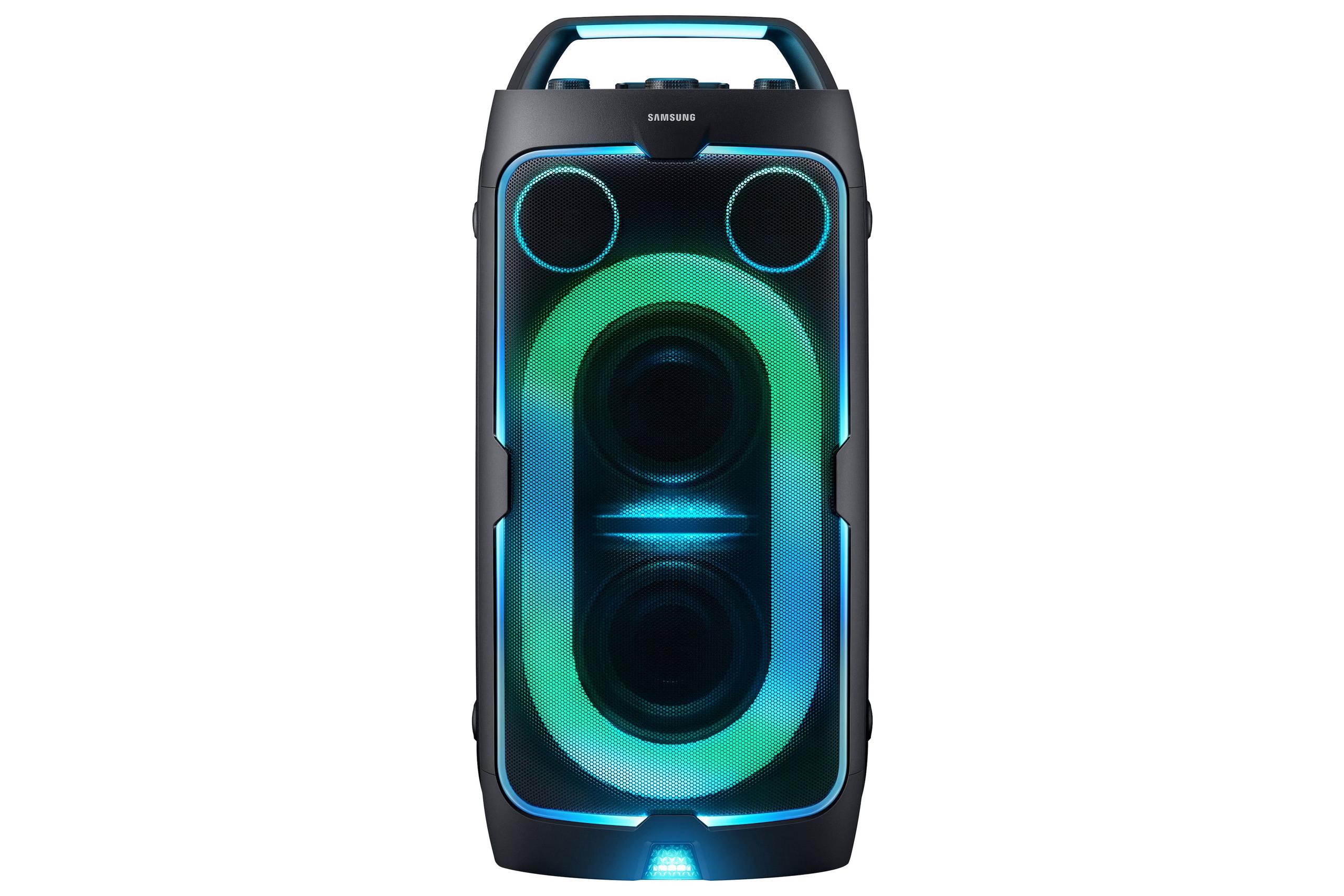
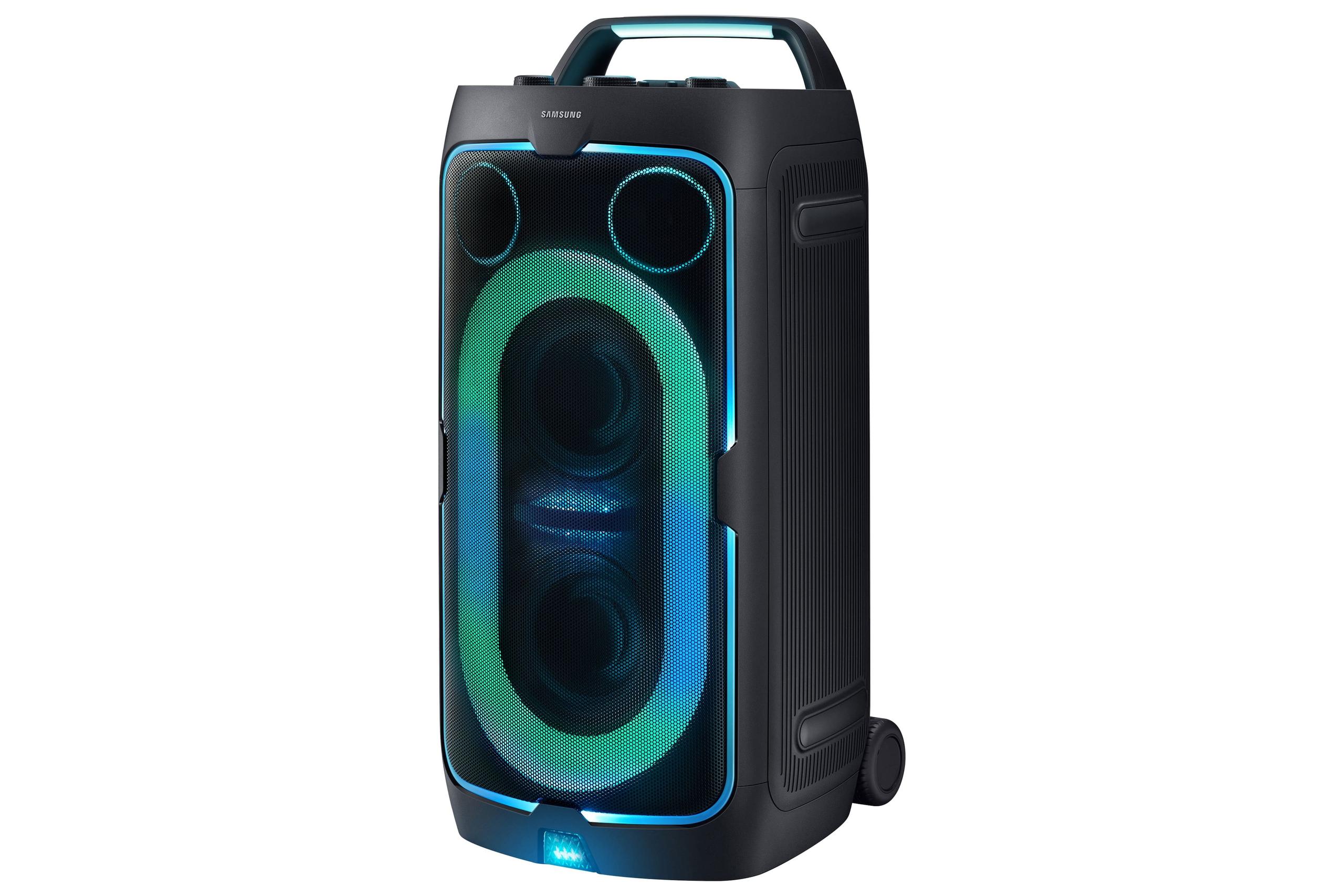

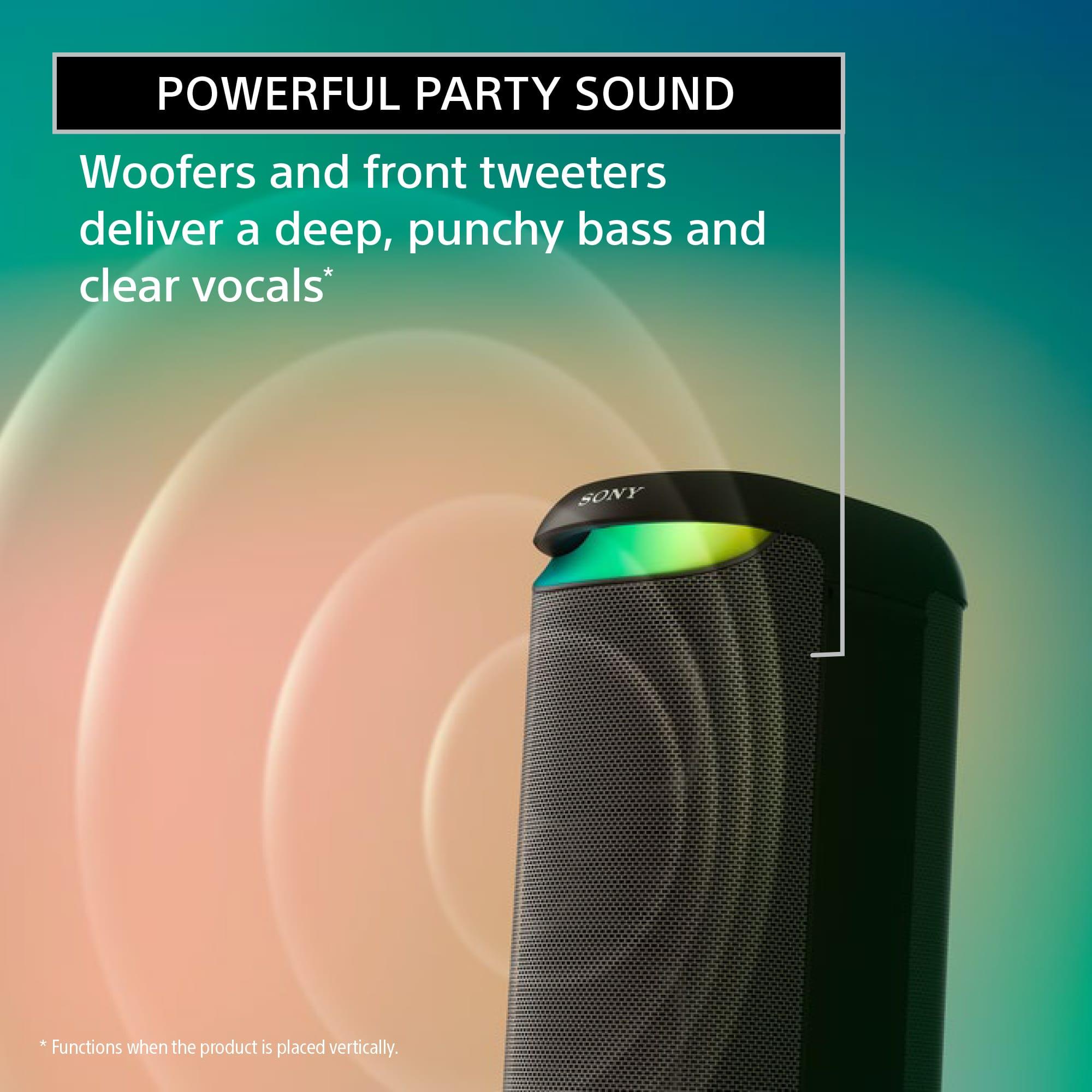
When you're planning a party, few things matter more than having speakers that can actually fill the space with great sound. The wireless party speaker category has exploded in recent years, giving us powerful portable options that would have seemed impossible just a decade ago. Today, we're diving deep into two standout models: the Samsung MX-ST50F Sound Tower and the Sony SRS-XV500 Wireless Party Speaker.
Both speakers target the same crowd—people who want to bring serious sound to their gatherings—but they take surprisingly different approaches. The Samsung MX-ST50F is the newer player, launching in 2025 with a focus on maximum power and premium portability features. The Sony SRS-XV500, released in 2024, prioritizes extended battery life and specialized karaoke capabilities while keeping costs more manageable.
Before we get into the nitty-gritty, let's talk about what actually matters in this category. Party speakers aren't just bigger versions of your desktop Bluetooth speaker—they're engineered for completely different priorities.
The most important factor is sound pressure level, which is essentially how loud the speaker can get without distorting. This is measured in watts, and while watts don't tell the whole story about sound quality, they're crucial for filling large spaces. You need enough power to overcome ambient noise from conversations, air conditioning, and outdoor environments.
Battery life becomes critical because these speakers are meant to be portable. There's nothing worse than your music cutting out halfway through a party. The best party speakers now offer 15-25 hours of playback, which seemed impossible just a few years ago.
Portability is where things get interesting. These speakers are heavy—we're talking 20-30 pounds—because they need large drivers (the actual speaker cones) and substantial batteries. How manufacturers solve the transport problem tells you a lot about who they're designing for.
Modern party speakers also include entertainment features that go beyond just playing music. We're talking about synchronized lighting that pulses with the beat, microphone inputs for karaoke or announcements, and even DJ effects controlled through smartphone apps.
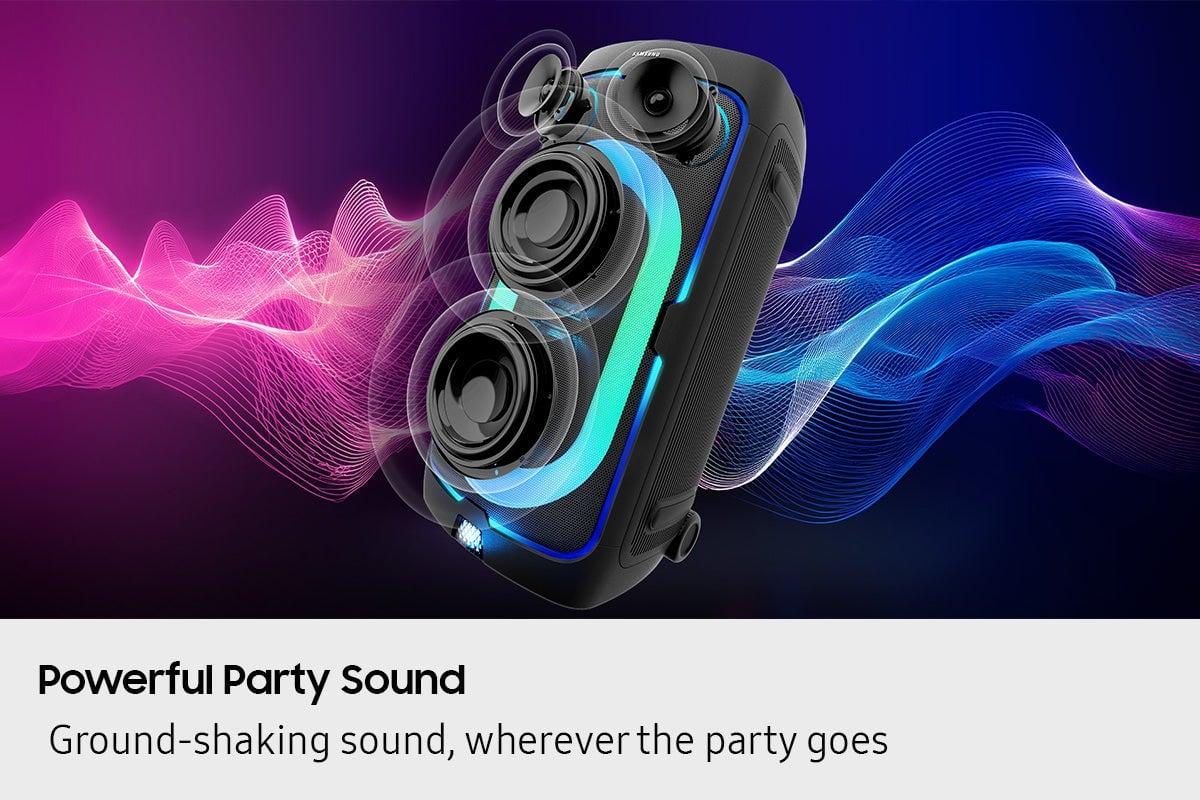
The Samsung MX-ST50F takes a no-compromise approach to power, delivering 240 watts of total output when plugged into AC power. That's genuinely impressive for a portable speaker and puts it in the territory of some home theater systems. The power comes from dual 6.5-inch woofers—those are the larger drivers that handle bass frequencies—paired with dual 25mm dome tweeters for the high frequencies.
What makes Samsung's approach special is their Waveguide technology. Think of this as acoustic engineering that helps direct sound waves more efficiently. Instead of just blasting sound in all directions, the waveguide helps create more even coverage throughout a room. This means people standing to the side of the speaker still hear crisp highs, not just muddy bass.
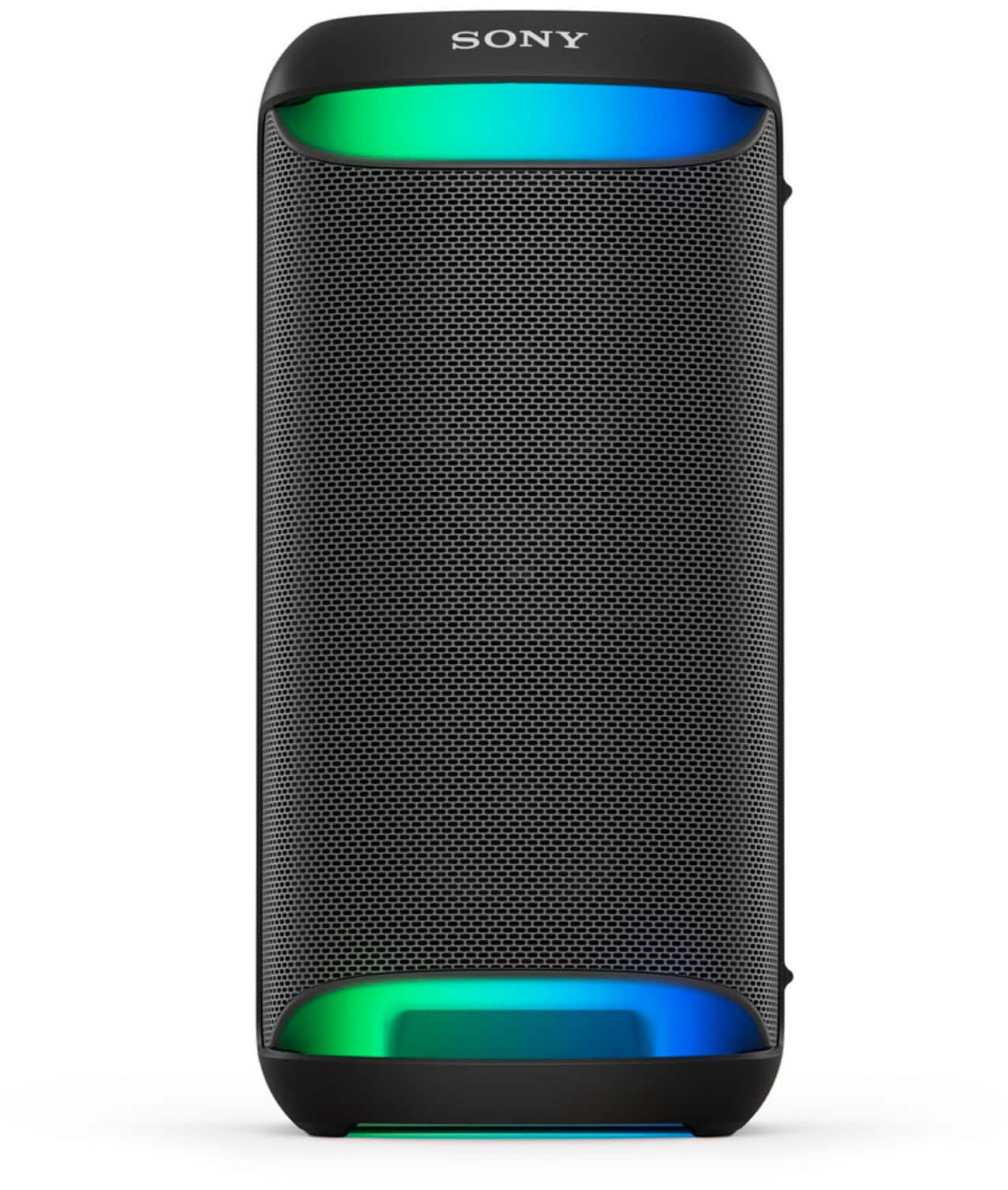
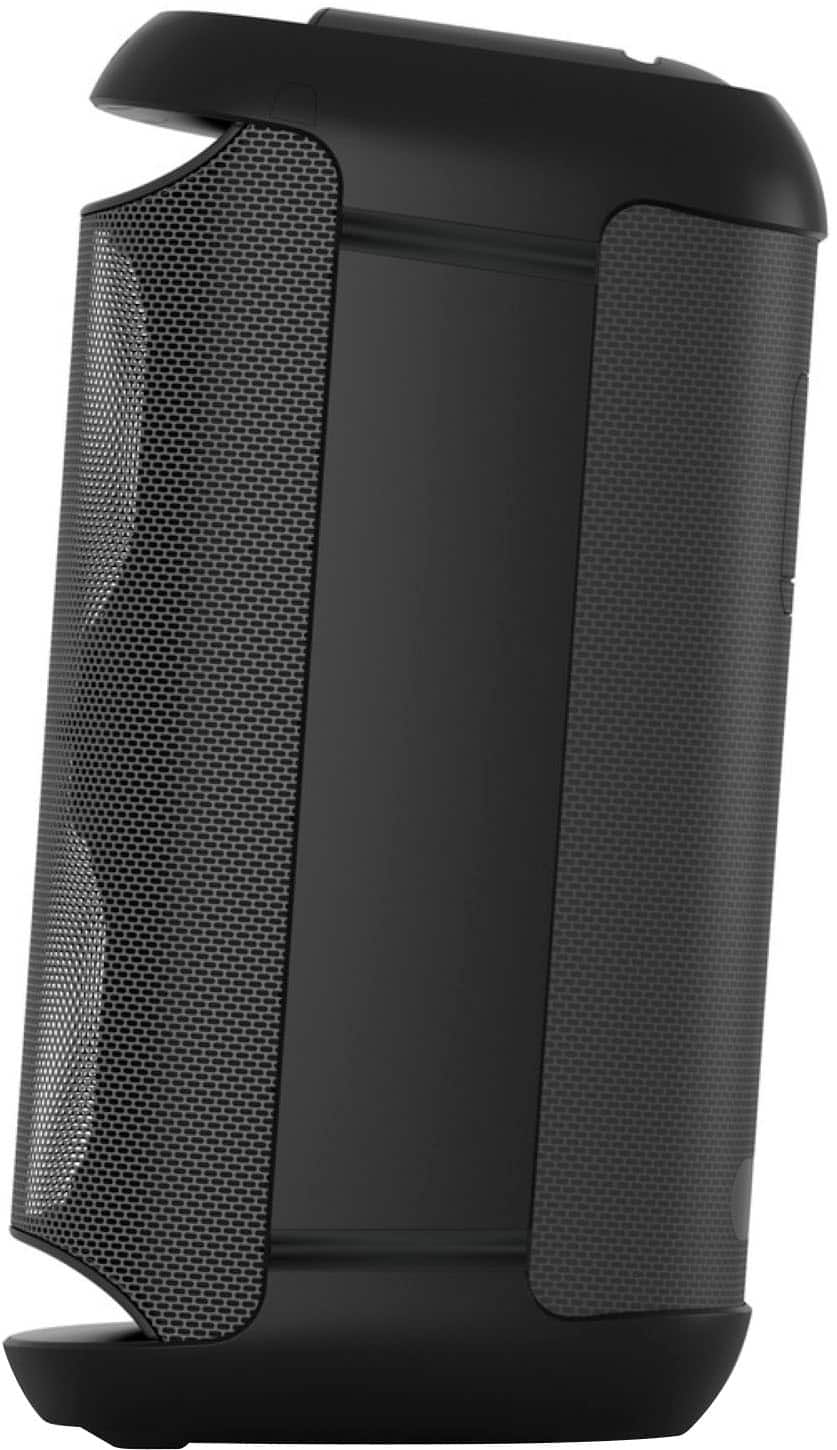
The Sony SRS-XV500 doesn't publish specific wattage figures, which often means the number isn't as impressive as the marketing team would like. However, Sony compensates with their X-Balanced Speaker Unit technology. Traditional round speakers waste some space inside the cabinet, but X-Balanced units use a more rectangular shape to maximize the driver surface area within the same footprint. This theoretically improves efficiency and reduces distortion.
Based on our research into user and expert reviews, the power difference is noticeable in practice. The Samsung MX-ST50F consistently gets praise for being able to fill larger outdoor spaces without straining, while the Sony SRS-XV500 performs better at moderate volumes and smaller gatherings.
Here's where things get complicated: the Samsung MX-ST50F drops to just 90 watts when running on battery power. That's a significant decrease—almost 63% less power. The Sony SRS-XV500 doesn't seem to have this same dramatic power reduction, which makes it more consistent across different usage scenarios.
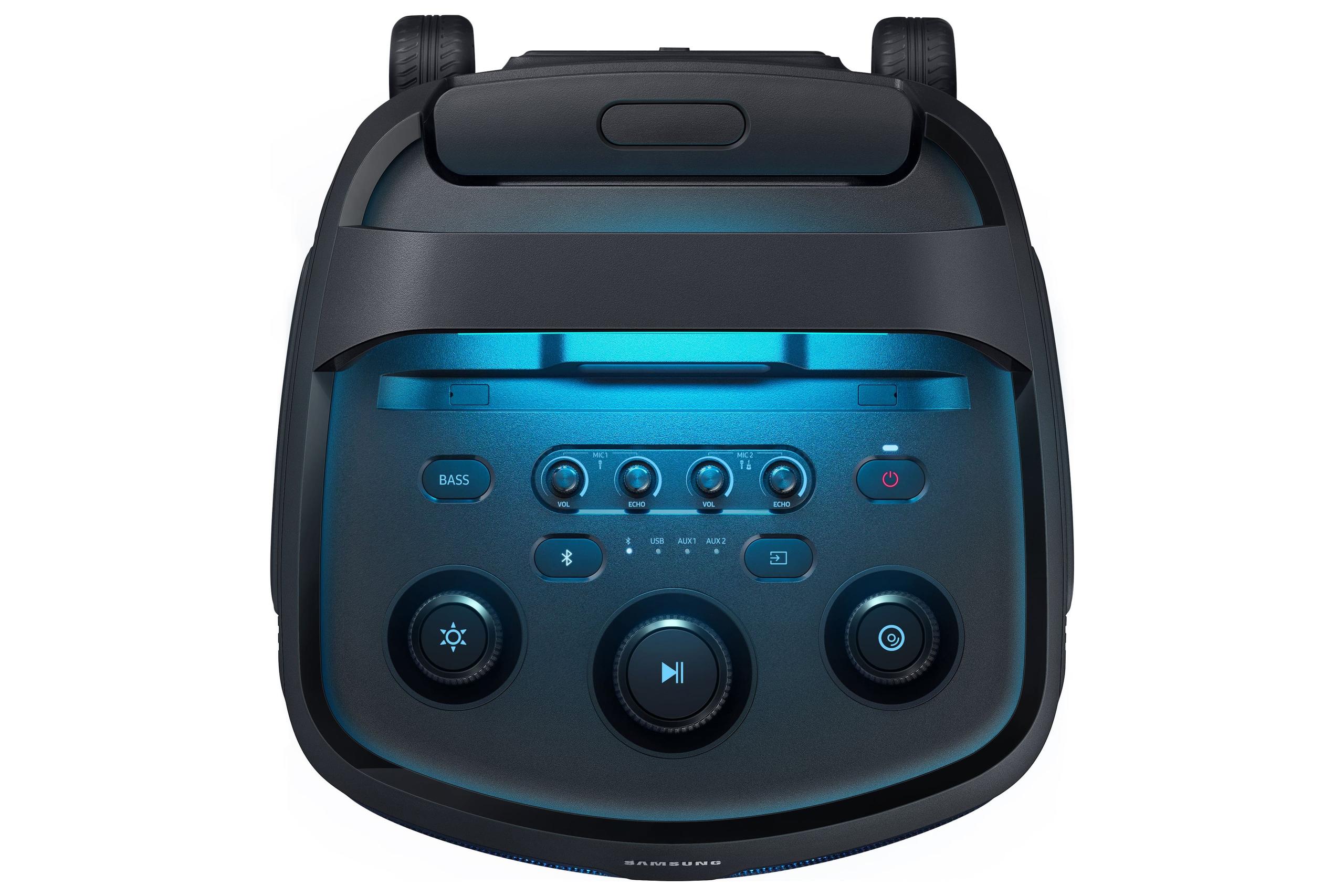
The two speakers have distinctly different sound signatures. The Samsung MX-ST50F offers extensive customization with three bass modes (Deep, Punchy, Gentle) and four environmental sound modes (Standard, Wide, Stadium, Outdoor). This level of tuning options is unusual and suggests Samsung expects users to adapt the speaker to different situations frequently.
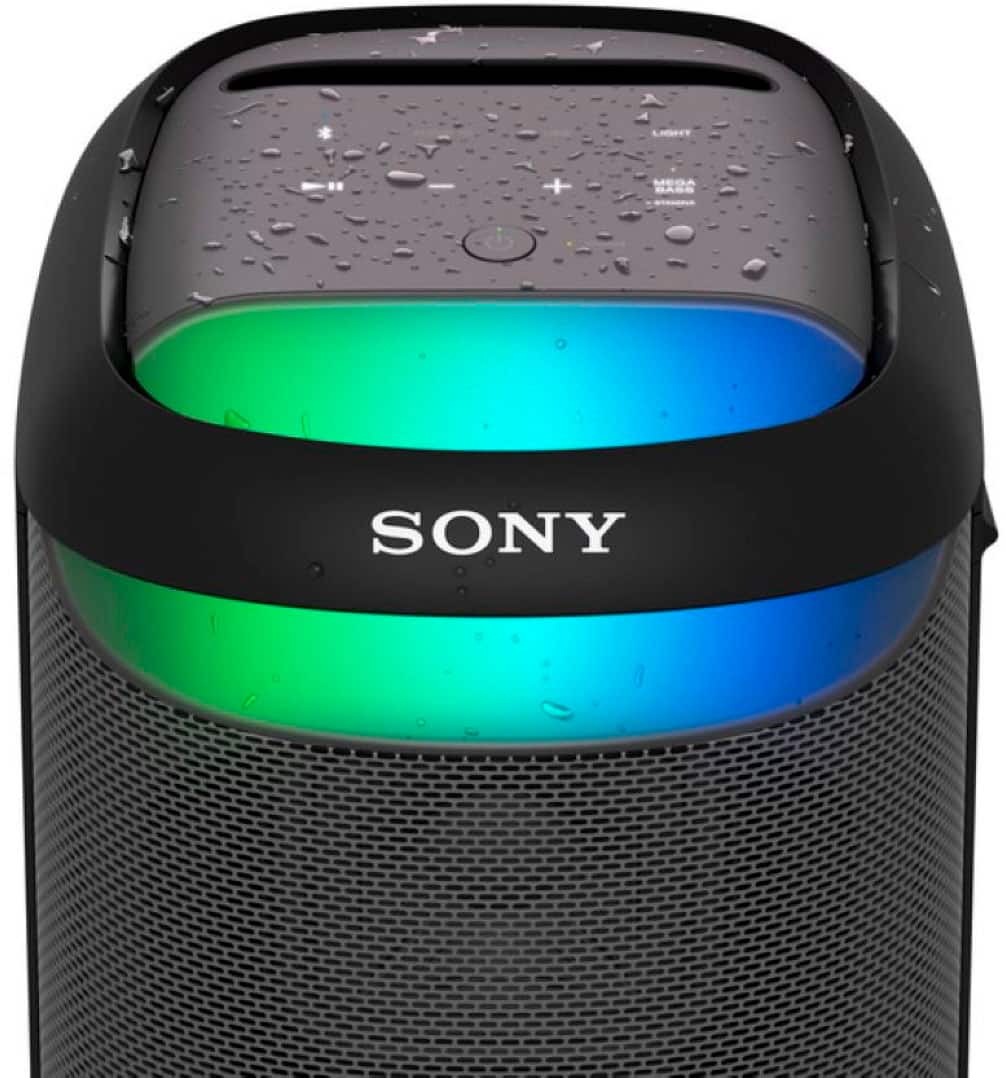
The Sony SRS-XV500 takes a more opinionated approach with its bass-heavy default sound profile. Sony includes a MEGA BASS button that provides immediate bass enhancement without needing to dive into app menus. This makes sense for party environments where people want thumping low-end for dance music.
However, our research revealed a significant limitation with the Sony SRS-XV500: poor directivity. This technical term refers to how consistently a speaker sounds when you move around it. Expert reviews consistently mention that the Sony sounds noticeably different (and worse) when you're not positioned directly in front of it. For a party speaker, this is a real problem since people will be scattered around the room.
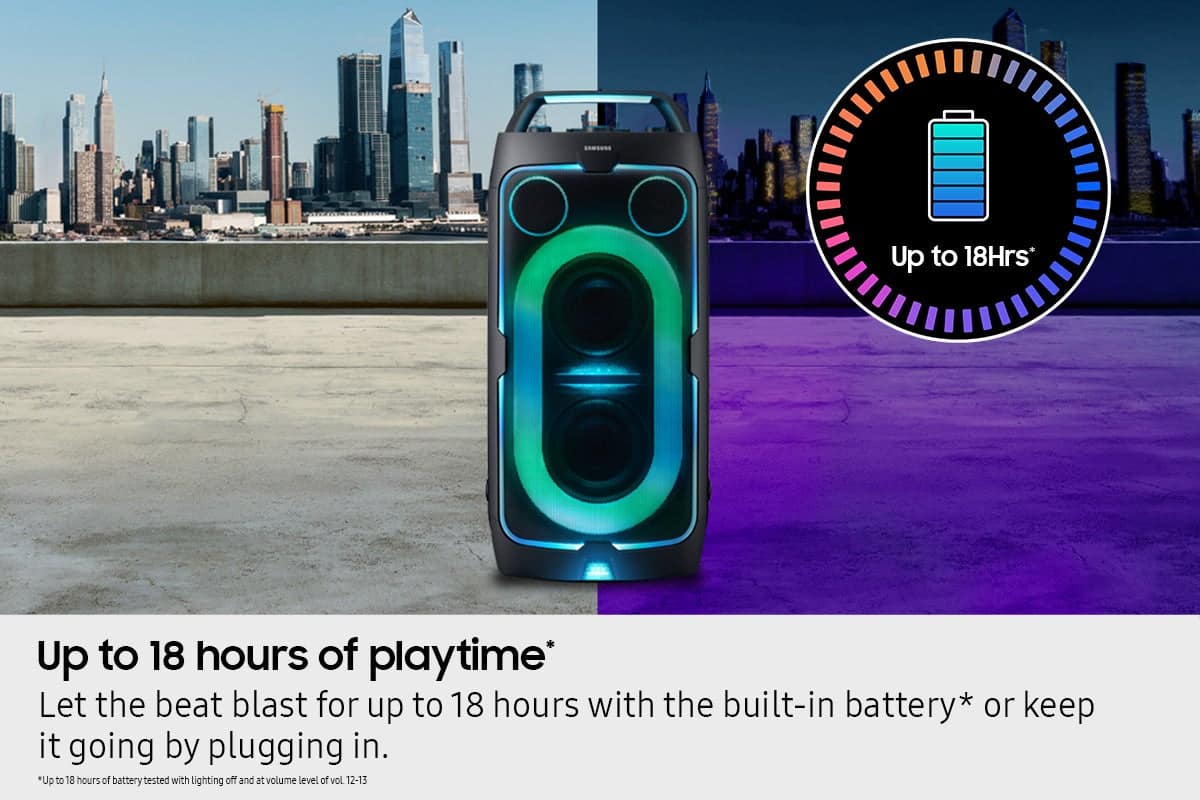
This is where the Sony SRS-XV500 truly shines. Its 25-hour battery life is exceptional, offering about 39% more runtime than the Samsung MX-ST50F's 18 hours. But these numbers need context.
Both manufacturers measure battery life under specific conditions—usually at moderate volume levels with lighting effects disabled. In real-world party conditions with lights flashing and volume cranked up, expect significantly less time. Still, the Sony's advantage likely translates to real-world usage.
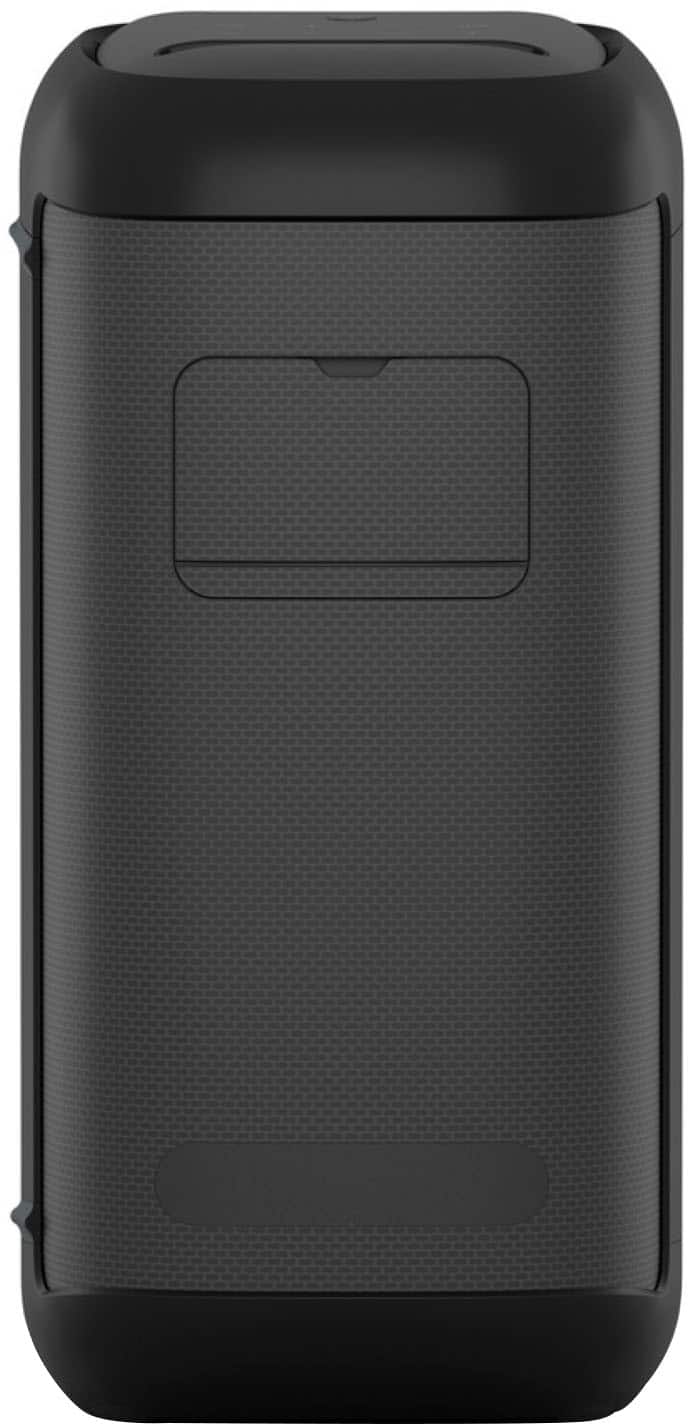
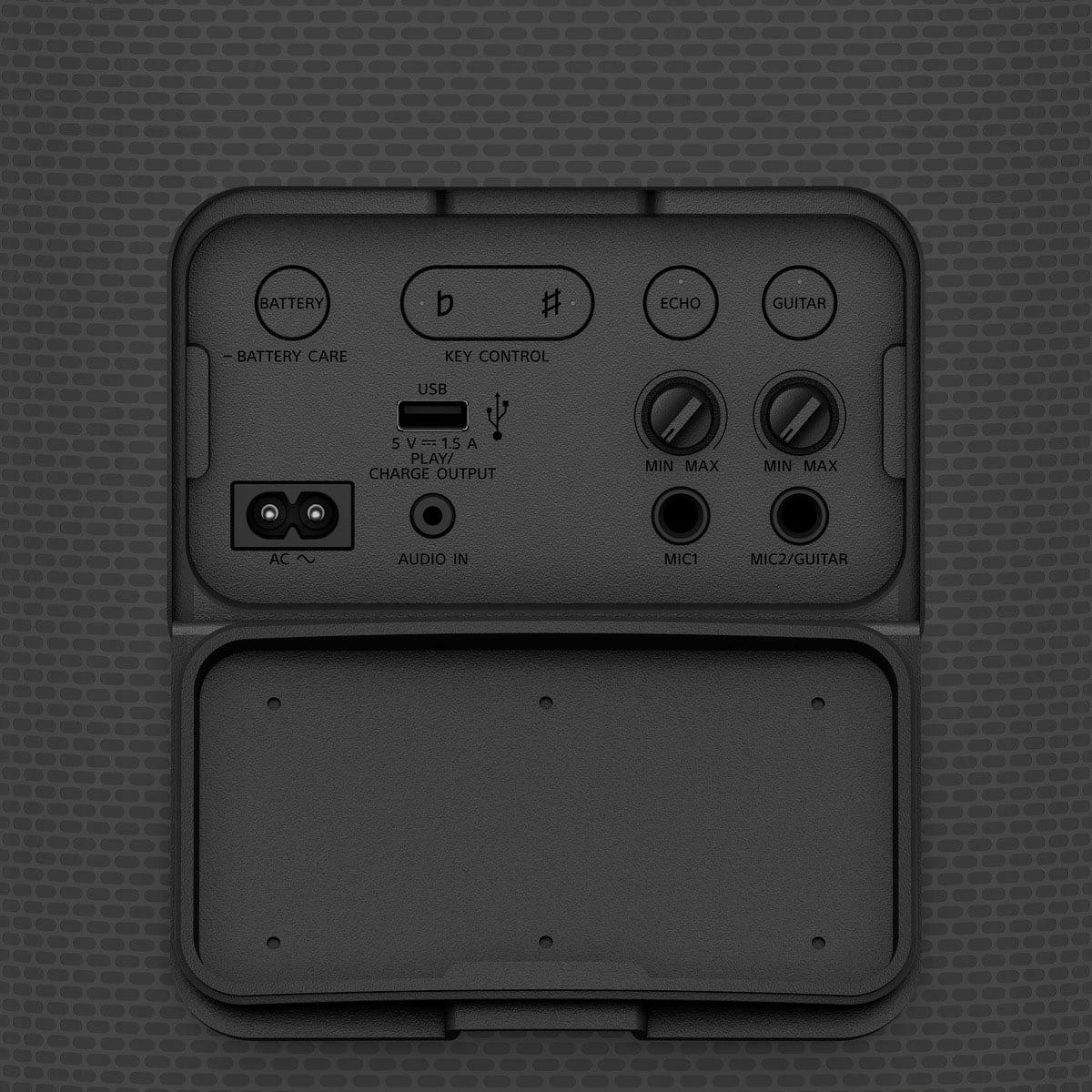
The Sony SRS-XV500 also includes quick charging technology. Ten minutes of charging provides roughly 2.5 hours of playback, which can save a party that's running longer than expected. It even functions as a power bank, letting you charge phones and other devices through its USB port.
The Samsung MX-ST50F takes a different approach with a replaceable battery system. While this might seem old-fashioned, it's actually brilliant for serious users. You can buy spare batteries and essentially have unlimited runtime by swapping them out. This feature is rare in modern Bluetooth speakers and shows Samsung is targeting people who really put their speakers through heavy use.
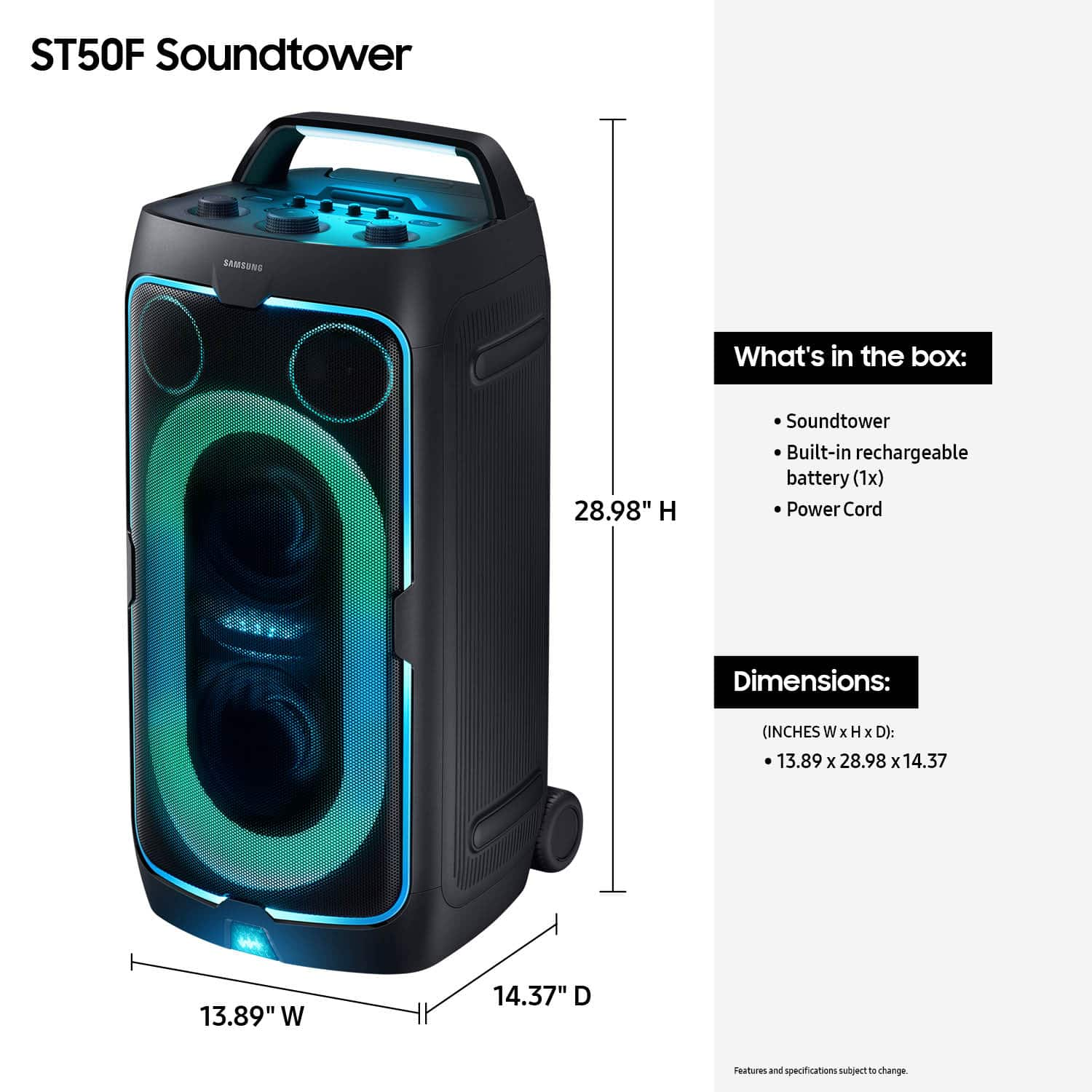
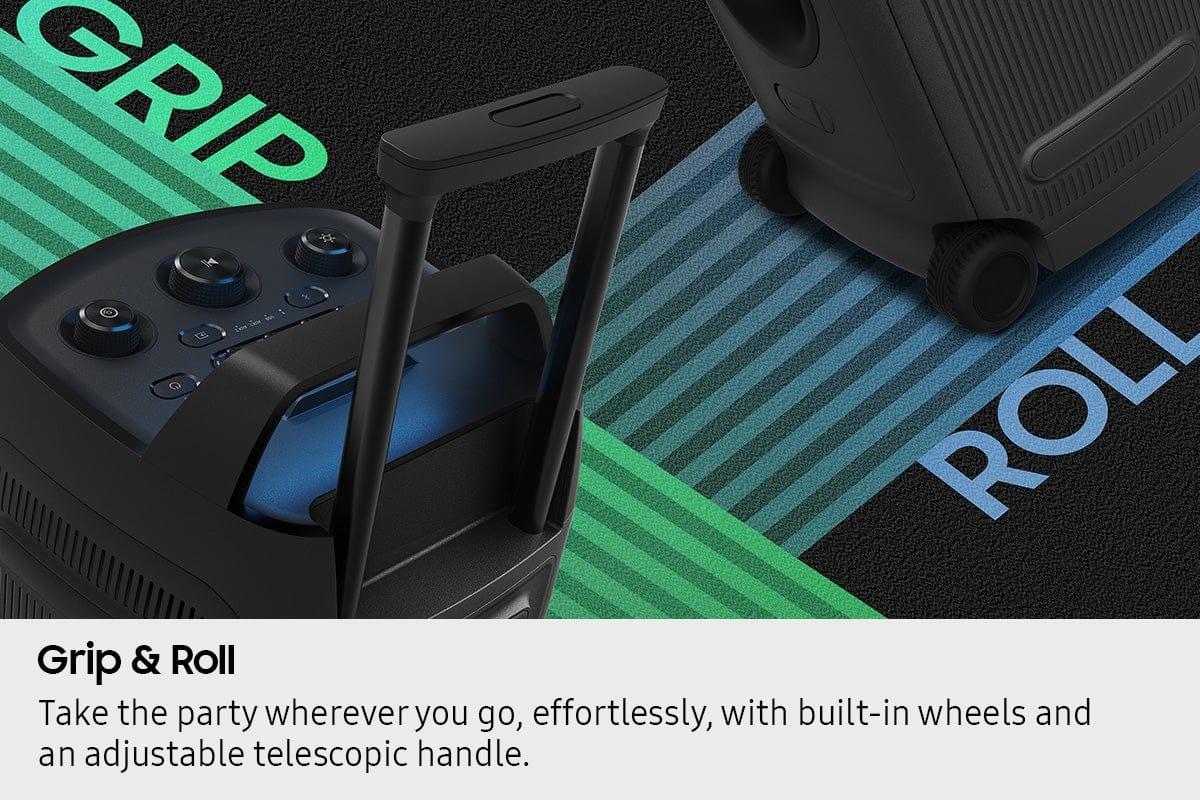
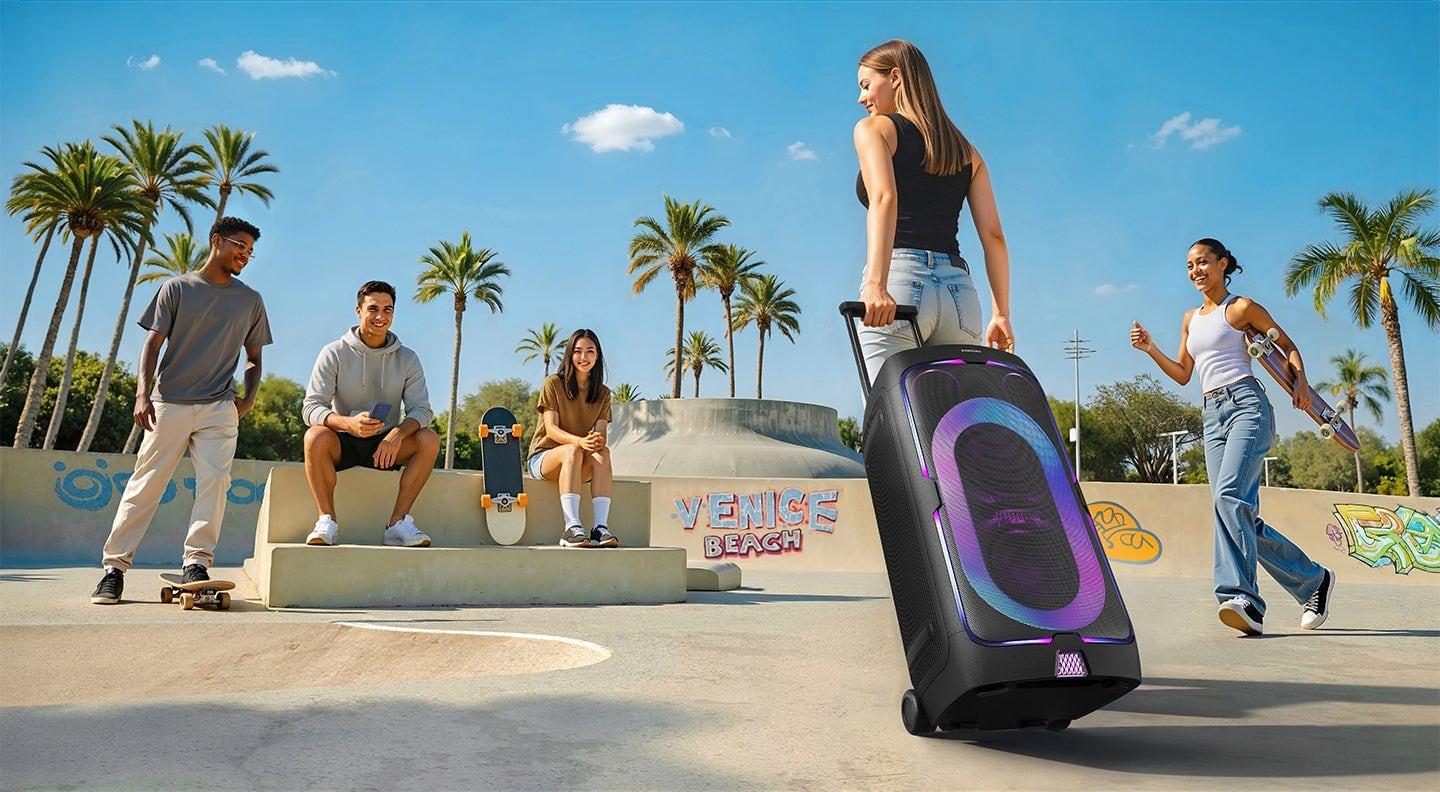
Here's where the fundamental design philosophies become crystal clear. The Samsung MX-ST50F includes built-in wheels and a telescopic handle that adjusts to five different height levels. At 18.4 kg (about 40 pounds), this speaker is heavy, but you can roll it like luggage. The engineering reminds me of professional PA equipment that roadies wheel between venues.
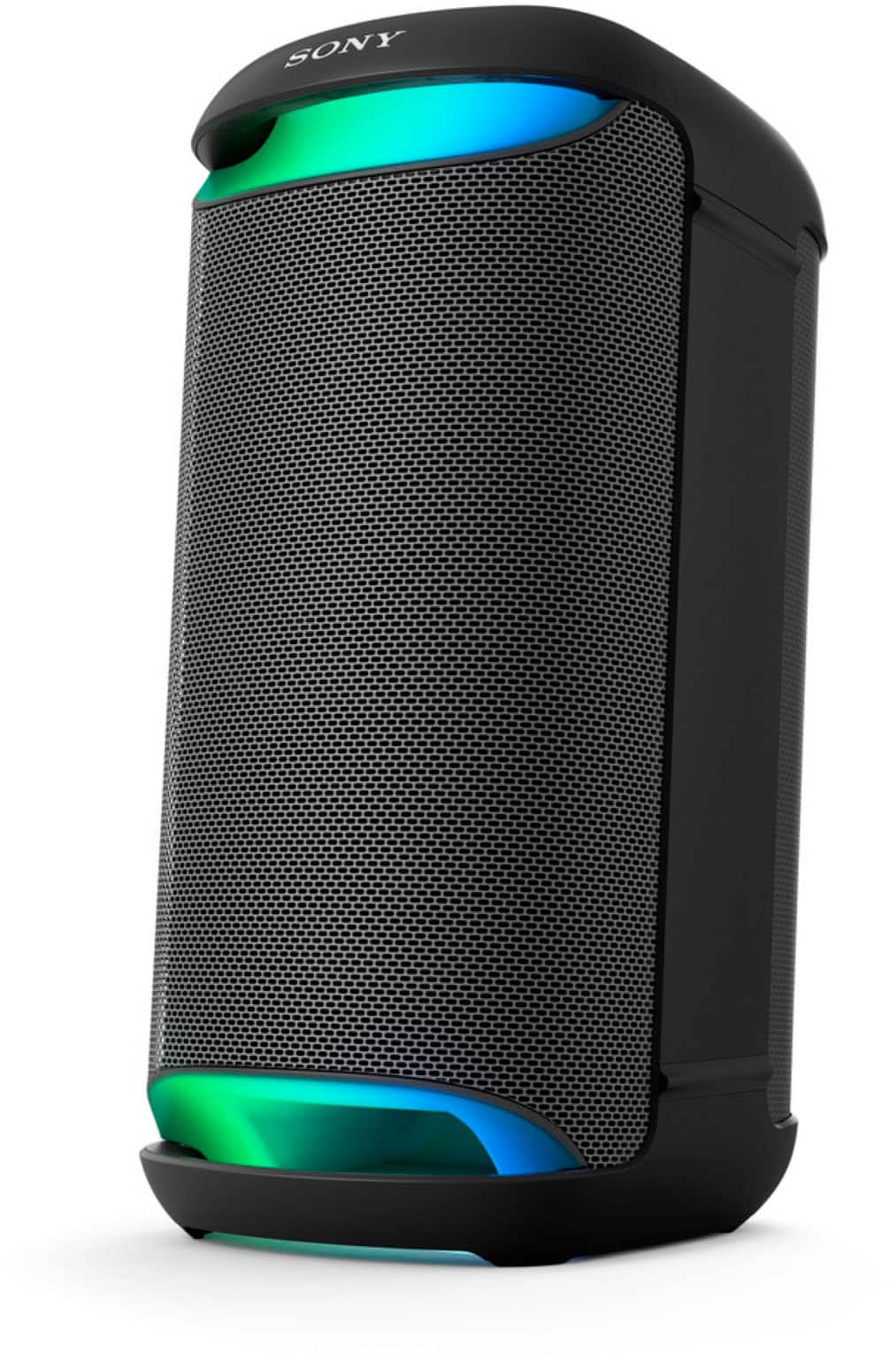
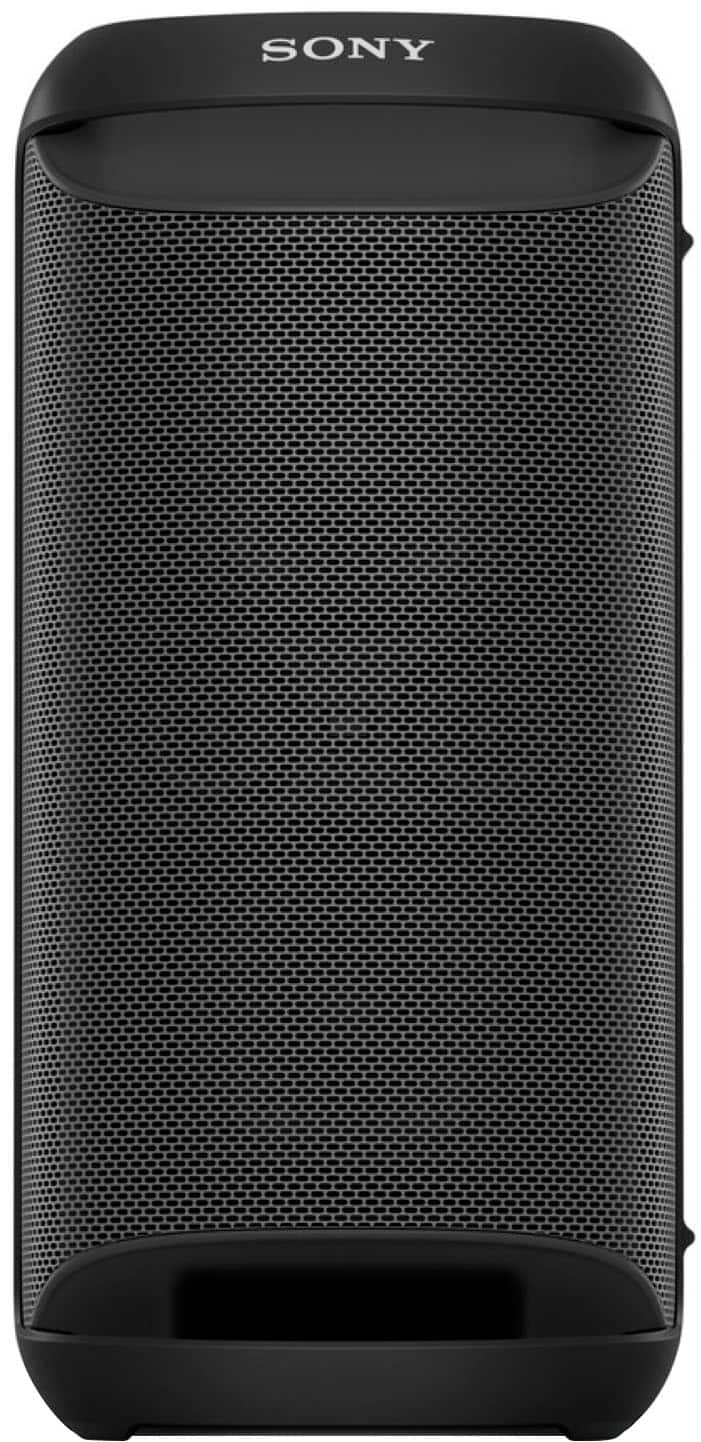
The Sony SRS-XV500 is lighter at 11.2 kg (about 25 pounds) and uses traditional carrying handles. This approach works if you're moving the speaker occasionally, but carrying 25 pounds any significant distance gets old fast.
The wheel-versus-handle debate reveals who each manufacturer thinks their customers are. Samsung envisions users who frequently move between different locations—backyard to garage to friend's house to beach. Sony's approach suggests more stationary use with occasional repositioning.
Both speakers earn IPX4 ratings, which means they can handle splashes but not submersion. This makes them suitable for poolside parties or light rain, but don't take them to the beach where sand and saltwater can cause problems.
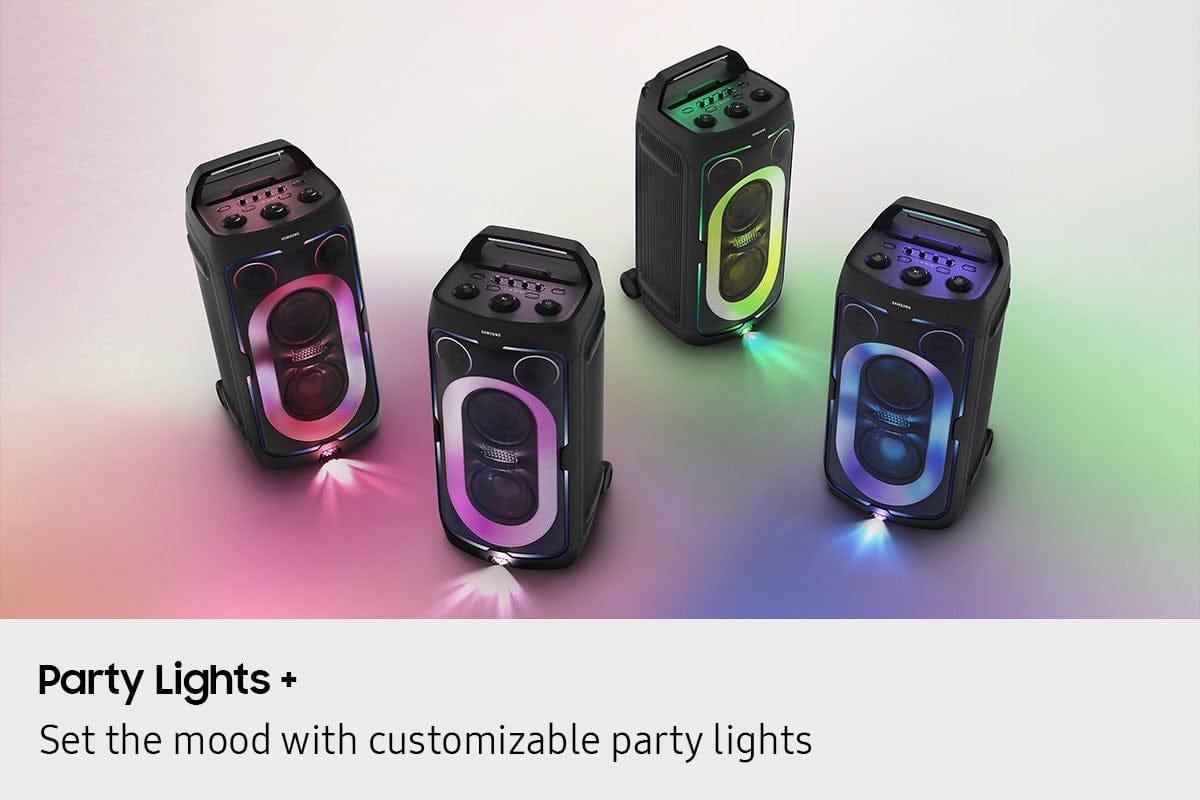
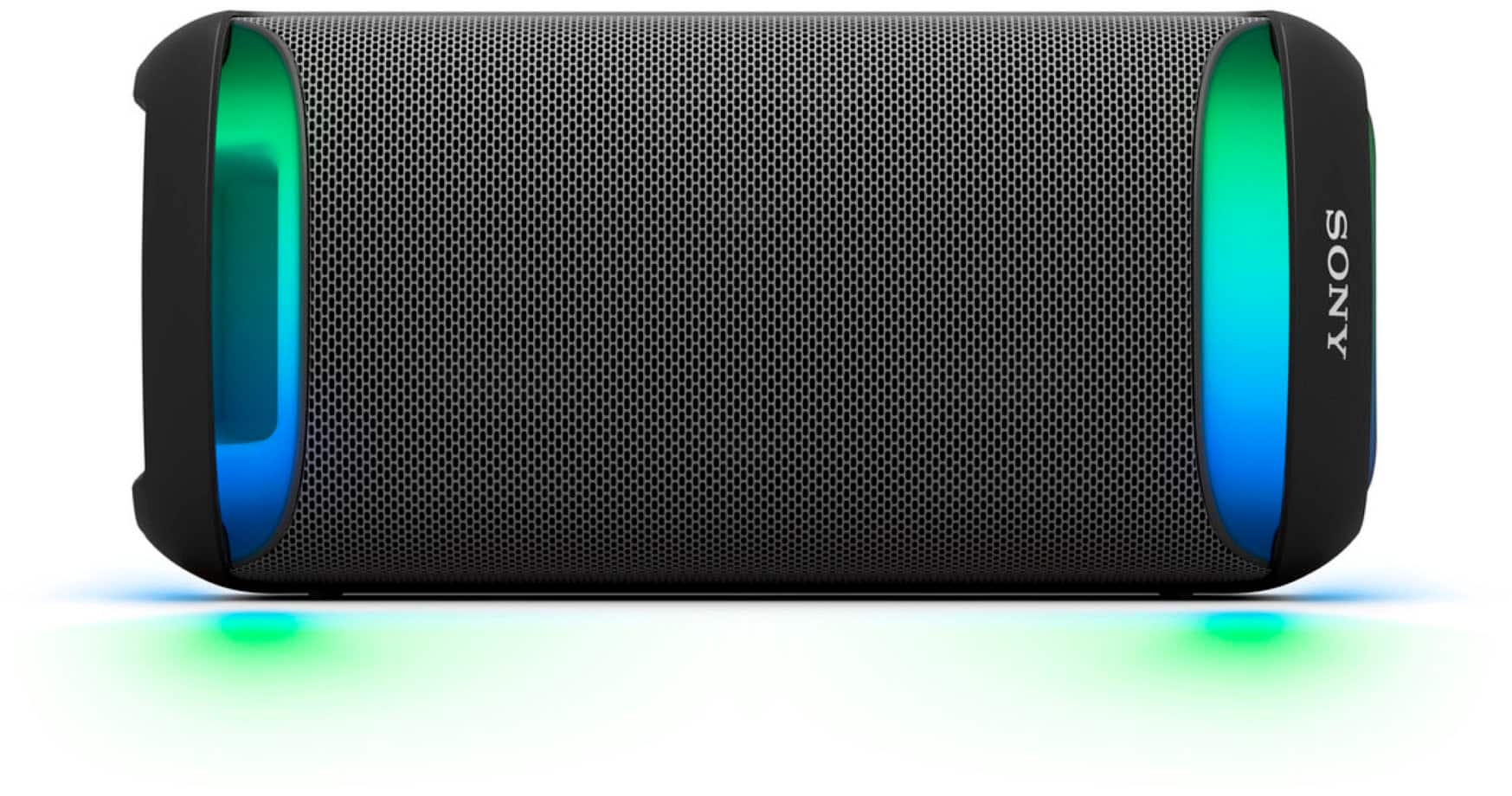
Modern party speakers are entertainment systems, not just audio devices. The Samsung MX-ST50F includes what they call Party Lights+ with six customizable lighting patterns across five different LED zones. The lights can sync with music rhythm or run in preset mood patterns. The Samsung Sound Tower app lets you control all this from your phone, creating what amounts to a portable light show.
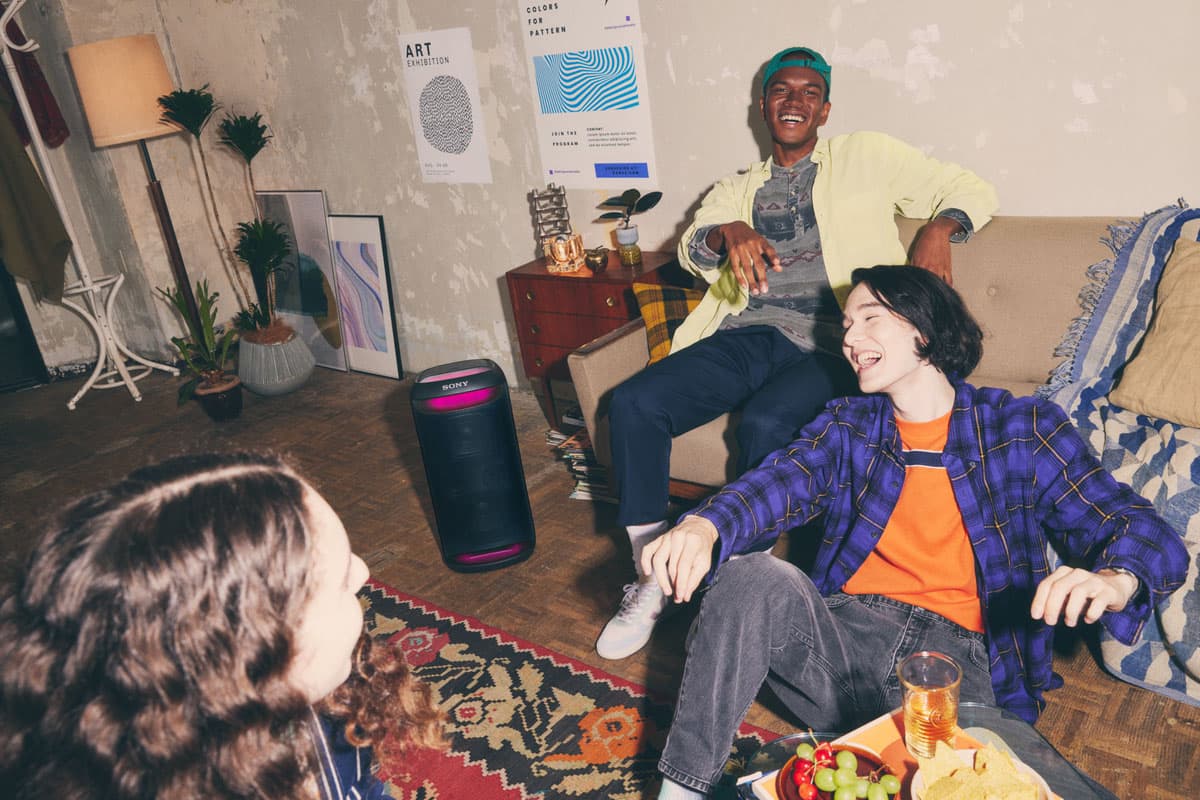
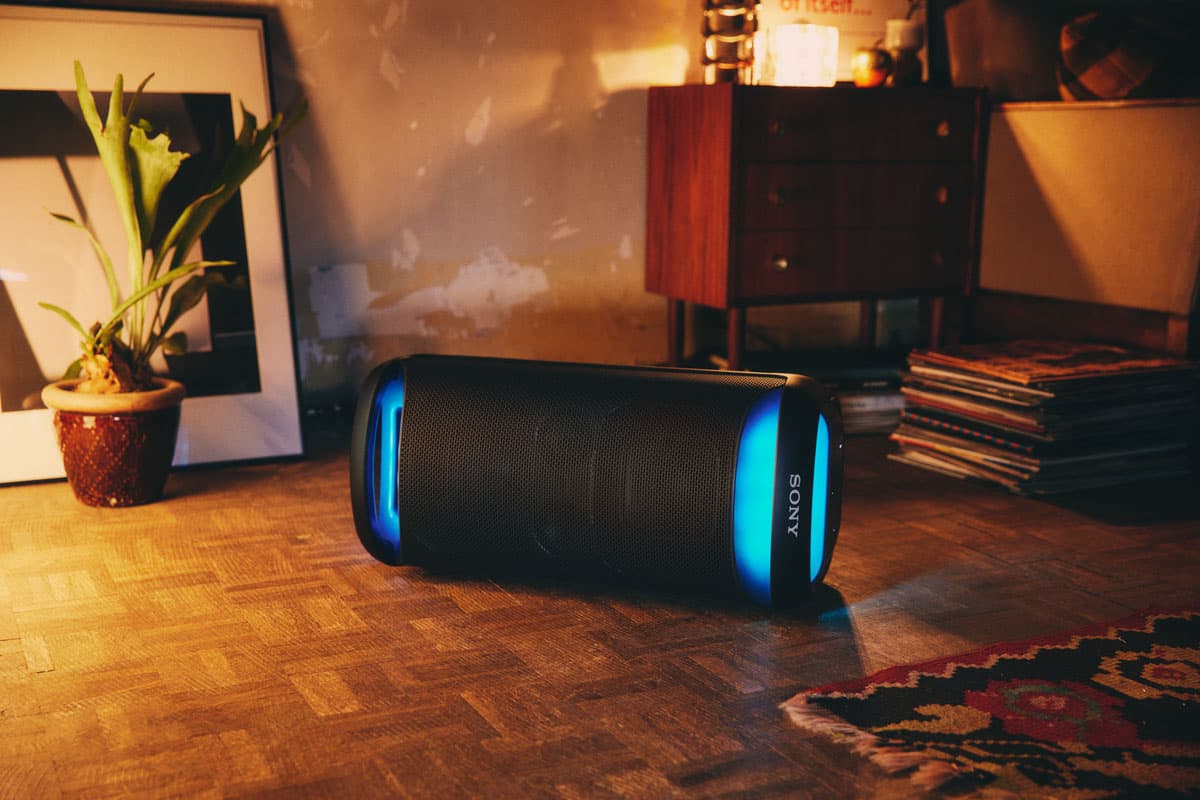
The Sony SRS-XV500 includes RGB lighting that pulses with the music, but it's less sophisticated than Samsung's multi-zone system. However, Sony makes up for this with superior karaoke features.
Sony includes dedicated controls for key transposition—that's the ability to change the pitch of music to match a singer's vocal range—and echo effects built right into the speaker. These features require no app interaction and work with any audio source. For serious karaoke enthusiasts, this is huge. The Samsung MX-ST50F has microphone inputs too, but lacks these specialized vocal processing features.
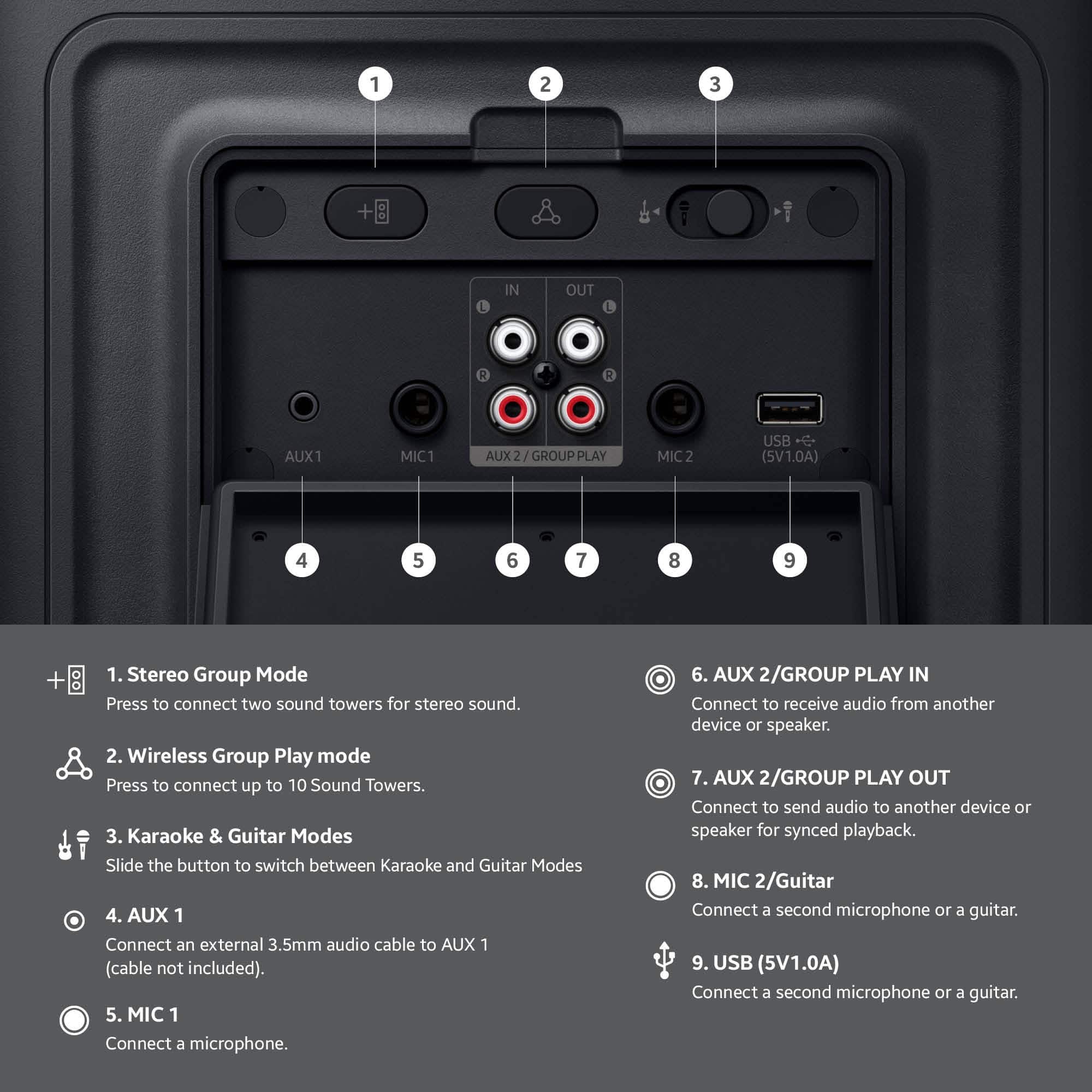
Both speakers offer multiple input options. The Samsung MX-ST50F includes separate microphone and guitar inputs, while the Sony SRS-XV500 has a more flexible system where one input can switch between microphone and guitar modes.
The Samsung MX-ST50F supports Auracast technology, which is part of the latest Bluetooth standards. This allows you to wirelessly connect up to 10 Samsung speakers for truly massive sound coverage. Imagine having speakers in the backyard, garage, and front porch all playing synchronized audio from one phone. This technology is still relatively new, but it represents the future of multi-room audio.
The Sony SRS-XV500 offers Party Connect for linking compatible Sony speakers, but it's more limited and doesn't support as many simultaneous connections. However, Sony's system has been around longer and tends to be more reliable in practice.
For home theater use, the Samsung MX-ST50F can pair two units in True Wireless Stereo mode, creating a left-right speaker setup. While this works for movies and TV, party speakers aren't really optimized for the precise imaging that home theater demands. You'd get louder sound, but dedicated bookshelf speakers would provide better dialogue clarity and stereo separation.
Both speakers rely heavily on smartphone apps for advanced features, but they take different approaches. The Samsung MX-ST50F uses the Samsung Sound Tower app for lighting control, sound mode selection, and speaker pairing. The interface is clean and responsive based on user reviews.
The Sony SRS-XV500 requires two different apps: Sony Music Center for basic controls and EQ adjustments, and Fiestable for party-oriented features. Having two apps feels clunky, but it gives you more granular control over different aspects of the speaker.
The Sony SRS-XV500 includes illuminated touch controls on the speaker itself, which is helpful in low-light party environments. The Samsung MX-ST50F relies more heavily on app control, which could be problematic if your phone battery dies.
At the time of writing, the Samsung MX-ST50F commands a significantly higher price than the Sony SRS-XV500—we're talking about a 70-80% premium. This price difference fundamentally changes how you should think about these speakers.
The Samsung justifies its premium through superior power output, sophisticated portability features, advanced lighting systems, and multi-speaker scalability. If you frequently host large gatherings and value convenience features, the price difference might make sense.
The Sony offers exceptional value by delivering core party speaker functionality—long battery life, decent sound, lighting effects, karaoke features—at a much more accessible price point. For casual entertainers or first-time party speaker buyers, the Sony represents a lower-risk investment.
Let's talk about the metrics that really matter for party speakers. Maximum SPL (Sound Pressure Level) determines how loud the speaker can get before distortion becomes unacceptable. While neither manufacturer publishes these numbers, real-world testing consistently shows the Samsung MX-ST50F can play louder, especially when plugged into AC power.
Frequency response is how evenly the speaker reproduces different pitches. The Samsung MX-ST50F's dual tweeters and waveguide technology seem to provide more balanced treble reproduction, while the Sony SRS-XV500's bass-heavy tuning prioritizes impact over accuracy.
Dynamic range is the difference between the softest and loudest sounds the speaker can reproduce cleanly. Compression at high volumes is a common problem with portable speakers, and reviews suggest the Sony SRS-XV500 struggles more with this issue than the Samsung MX-ST50F.
For large outdoor gatherings (30+ people), the Samsung MX-ST50F's superior power and even sound dispersion make it the clear choice. The ability to wheel it around different areas of your property is genuinely useful when you're setting up for a big party.
For extended events like all-day pool parties or camping trips, the Sony SRS-XV500's 25-hour battery life becomes the deciding factor. Not having to worry about finding power outlets or managing charging schedules is worth a lot.
For karaoke enthusiasts, the Sony SRS-XV500's dedicated vocal processing features make it the obvious choice. The key transposition and echo controls work with any audio source and don't require app interaction.
For multi-room audio or users who want to expand their system over time, the Samsung MX-ST50F's Auracast capability provides genuine scalability that the Sony can't match.
The Samsung MX-ST50F is the choice for serious entertainers who prioritize maximum performance and convenience features. If you regularly host large gatherings, frequently move your speaker between locations, or plan to build a multi-speaker system, the premium price makes sense. The wheels alone could justify the extra cost if you're constantly relocating a 40-pound speaker.
The Sony SRS-XV500 excels for users who want solid party speaker performance without the premium price tag. Its exceptional battery life, solid karaoke features, and respectable sound quality make it an excellent first party speaker or a great option for users with more modest space requirements.
Neither speaker is perfect. The Samsung MX-ST50F's significant power reduction on battery somewhat undermines its portable positioning, while the Sony SRS-XV500's directional limitations mean it won't sound great for everyone at larger gatherings.
My take? If budget allows and you host parties regularly, the Samsung MX-ST50F's combination of power, portability features, and expandability make it worth the premium. But the Sony SRS-XV500 delivers 80% of the experience at a much more accessible price point, making it the smarter choice for most people entering the party speaker category.
The beauty of this market is that both approaches work—it just depends on your specific needs, usage patterns, and budget constraints. Either way, you're getting a speaker that would have been impossible to build at any price just a few years ago.
| Samsung MX-ST50F Sound Tower | Sony SRS-XV500 Wireless Party Speaker |
|---|---|
| Power Output - Determines maximum volume and room-filling capability | |
| 240W AC / 90W battery (significant drop on battery power) | Not specified (typically lower than Samsung based on reviews) |
| Battery Life - Critical for extended parties and outdoor events | |
| Up to 18 hours (replaceable battery system) | Up to 25 hours (39% longer runtime) |
| Portability Design - How you'll actually move this 25-40 pound speaker | |
| Built-in wheels + telescopic handle (5 levels) | Carrying handles only |
| Weight - Affects how easy it is to transport | |
| 18.4 kg (40.5 lbs) - heavier but rolls easily | 11.2 kg (24.7 lbs) - lighter but must be carried |
| Speaker Configuration - Affects sound quality and dispersion | |
| Dual 6.5" woofers + dual 25mm tweeters with Waveguide | X-Balanced units (rectangular drivers for efficiency) |
| Sound Customization - Ability to tune audio for different environments | |
| 3 bass modes + 4 sound modes (extensive options) | MEGA BASS button + 3-band EQ (simpler but immediate) |
| Lighting System - Visual entertainment value for parties | |
| Party Lights+ with 6 patterns across 5 LED zones | RGB lighting synchronized to music (less sophisticated) |
| Karaoke Features - Important for vocal entertainment | |
| Dual mic/guitar inputs with basic controls | Key transposition + echo controls (superior for vocals) |
| Multi-Speaker Connectivity - Ability to expand your system | |
| Auracast Group Play (up to 10 Samsung MX-ST50F units) | Party Connect (limited speaker linking) |
| Water Resistance - Protection for outdoor use | |
| IPX4 splashproof (handles light rain and splashes) | IPX4 splashproof (same protection level) |
| Quick Charging - Recovery time when battery runs low | |
| Not specified | 10 minutes = 2.5 hours playback |
| Power Bank Function - Charges other devices | |
| Not available | USB-A port charges phones/tablets |
| Release Year - Indicates latest technology and features | |
| 2025 (newest with latest Bluetooth/connectivity standards) | 2024 (established model with proven reliability) |
| Value Positioning - Price-to-performance consideration | |
| Premium pricing for maximum features and power | Significantly more affordable for core functionality |
The Samsung MX-ST50F is significantly louder with 240W of power output, making it better for large gatherings and outdoor events. The Sony SRS-XV500 doesn't publish specific wattage but delivers lower overall volume based on user reviews. However, the Samsung MX-ST50F drops to only 90W on battery power, while the Sony SRS-XV500 maintains more consistent performance whether plugged in or running on battery.
The Sony SRS-XV500 wins with up to 25 hours of battery life compared to the Samsung MX-ST50F's 18 hours. This 7-hour difference can be crucial for extended outdoor events or camping trips. The Sony SRS-XV500 also includes quick charging (10 minutes = 2.5 hours playback) and can charge your phone, while the Samsung MX-ST50F offers a replaceable battery system for unlimited runtime.
The Samsung MX-ST50F is much easier to transport despite being heavier, thanks to built-in wheels and a 5-level telescopic handle that lets you roll it like luggage. The Sony SRS-XV500 is lighter at 25 pounds but requires carrying with handles, which becomes tiring over longer distances. For frequent venue changes, the Samsung MX-ST50F's wheel system is a major advantage.
The Samsung MX-ST50F generally offers better sound quality with more balanced audio, clearer highs through its dual tweeters, and Waveguide technology for even sound dispersion. The Sony SRS-XV500 has a bass-heavy sound profile that's great for dance music but suffers from poor directivity—it sounds noticeably worse when you're not directly in front of it. The Samsung MX-ST50F provides more consistent sound quality throughout the room.
The Sony SRS-XV500 is superior for karaoke with dedicated key transposition controls, built-in echo effects, and specialized vocal processing features. These work without any app interaction. While the Samsung MX-ST50F has microphone inputs, it lacks the advanced vocal features that make the Sony SRS-XV500 ideal for serious karaoke enthusiasts.
The Samsung MX-ST50F offers superior multi-speaker connectivity through Auracast technology, allowing you to wirelessly connect up to 10 speakers for massive sound coverage. The Sony SRS-XV500 has Party Connect for linking compatible Sony speakers, but it's more limited. For building a multi-room or large-scale audio system, the Samsung MX-ST50F provides much better scalability.
The Samsung MX-ST50F has more sophisticated lighting with its Party Lights+ system featuring 6 customizable patterns across 5 different LED zones, all controllable through the app. The Sony SRS-XV500 includes RGB lighting that syncs with music but offers less customization and fewer lighting zones. For visual entertainment value, the Samsung MX-ST50F provides a more impressive light show.
Both the Samsung MX-ST50F and Sony SRS-XV500 have IPX4 splashproof ratings, making them suitable for poolside parties and light rain but not submersion. The Samsung MX-ST50F's higher power output makes it better for large outdoor spaces, while the Sony SRS-XV500's longer battery life is advantageous for extended outdoor events without power access.
The Sony SRS-XV500 offers significantly better value, typically priced much lower while delivering core party speaker functionality like long battery life, decent sound quality, and lighting effects. The Samsung MX-ST50F commands a premium price but justifies it with superior power, advanced portability features, and expandability. For first-time buyers or budget-conscious users, the Sony SRS-XV500 provides better bang for your buck.
While both speakers can connect to TVs, they're not ideal for home theater use. The Samsung MX-ST50F can pair two units in True Wireless Stereo mode for better TV audio, but party speakers prioritize volume and bass over dialogue clarity and precise stereo imaging. For serious home theater use, dedicated soundbars or bookshelf speakers would provide much better performance than either the Samsung MX-ST50F or Sony SRS-XV500.
The Samsung MX-ST50F uses one Samsung Sound Tower app for lighting, sound modes, and speaker pairing with a clean interface. The Sony SRS-XV500 requires two apps—Sony Music Center and Fiestable—which feels clunky but offers more detailed control. The Sony SRS-XV500 has illuminated touch controls on the speaker itself, while the Samsung MX-ST50F relies more on app control.
For large gatherings (30+ people) and outdoor events, choose the Samsung MX-ST50F for its superior power output and even sound dispersion. For smaller parties (10-30 people) or extended indoor events, the Sony SRS-XV500's longer battery life and better value make more sense. If you frequently move between venues, the Samsung MX-ST50F's wheels are worth the extra cost, but for occasional use, the Sony SRS-XV500 provides excellent performance at a more accessible price point.
We've done our best to create useful and informative comparisons to help you decide what product to buy. Our research uses advanced automated methods to create this comparison and perfection is not possible - please contact us for corrections or questions. These are the sites we've researched in the creation of this article: bestbuy.com - news.samsung.com - youtube.com - youtube.com - videoandaudiocenter.com - youtube.com - youtube.com - samsung.com - crutchfield.com - youtube.com - arrowassociatedstores.com - brandsmartusa.com - bestbuy.com - crutchfield.com - samsung.com - icecat.in - thefrogpadappliances.com - news.samsung.com - bestbuy.com - rtings.com - bestbuy.com - youtube.com - rtings.com - versus.com - youtube.com - versus.com - youtube.com - youtube.com - guidingtech.com - crutchfield.com - sony.com - sony.com - bestbuy.com - helpguide.sony.net - smappliance.com - youtube.com - helpguide.sony.net - videoandaudiocenter.com - electronics.sony.com - linqcdn.avbportal.com

Privacy Policy
Terms and Conditions - Affiliate Policy
Home Security
© Copyright 2008-2026.
11816 Inwood Rd #1211, Dallas, TX 75244