

When you're planning the perfect party, the speaker you choose can make or break the entire event. Two standout options released in recent years have been capturing attention: the Sony ULT Tower 9AC and the Samsung MX-ST50F. Both promise to pump up your parties, but they take dramatically different approaches to getting there.
Party speakers aren't your typical home audio equipment. They're specifically engineered to handle the chaos of social gatherings – competing with conversations, filling large spaces, and keeping the energy high. The most important performance metrics include maximum volume output (measured in decibels), bass response (how deep and powerful the low frequencies sound), and sound dispersion (how evenly the audio spreads throughout a room).
Unlike bookshelf speakers that focus on precise imaging for critical listening, party speakers prioritize raw power and crowd-pleasing bass. They need to maintain clarity even when pushed to their limits, which is where many cheaper options fall apart. The sweet spot combines enough volume to energize a crowd without distorting the music into an unpleasant mess.
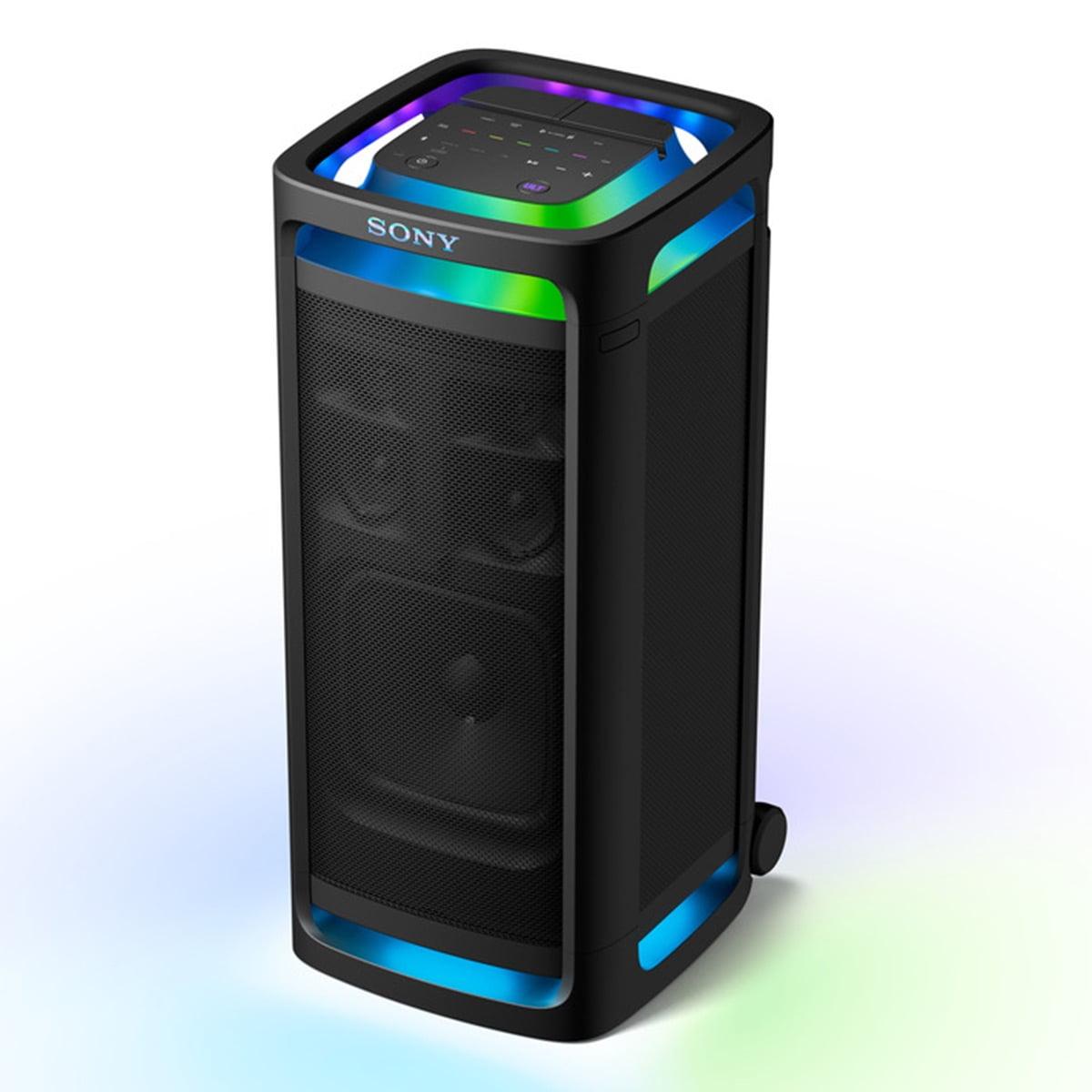
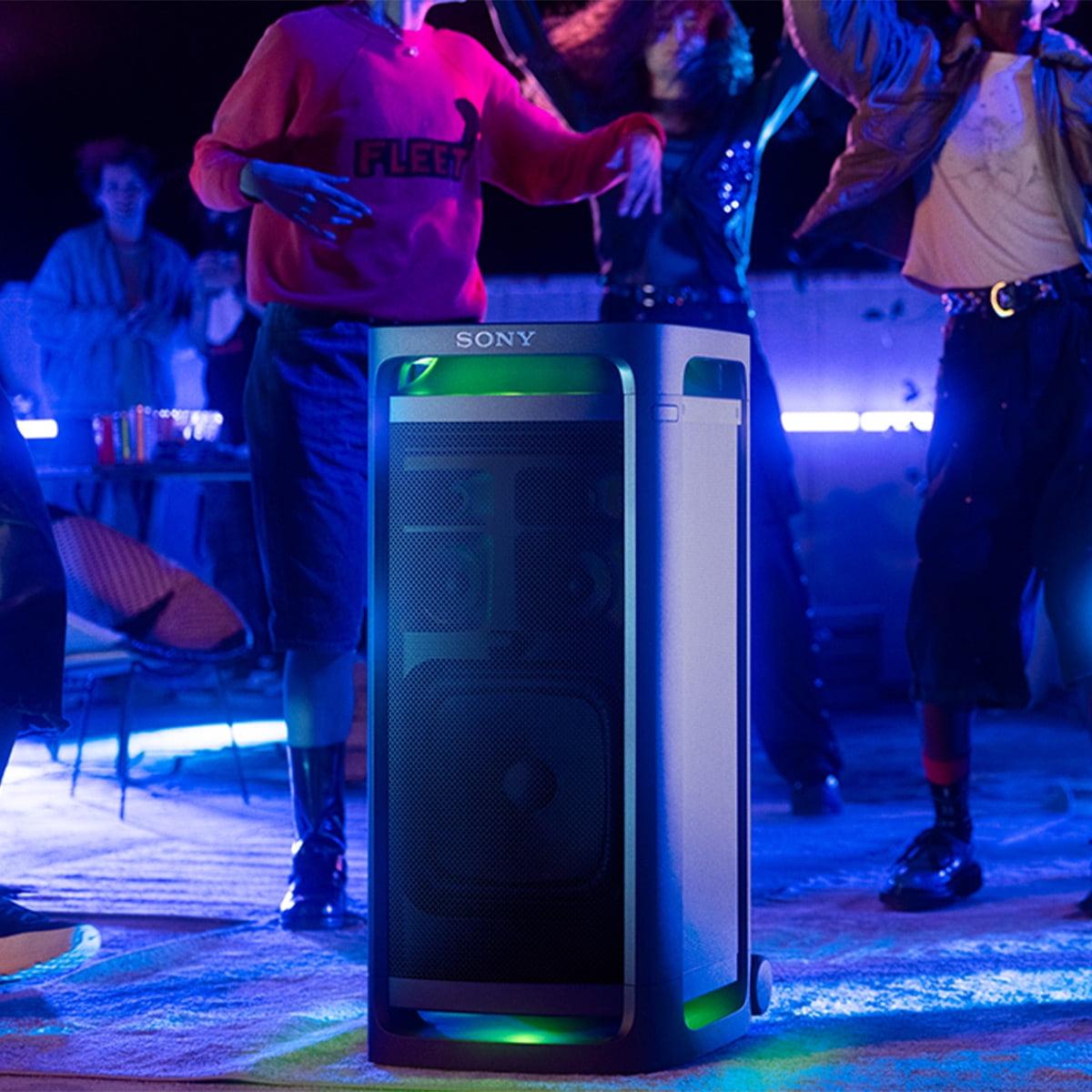
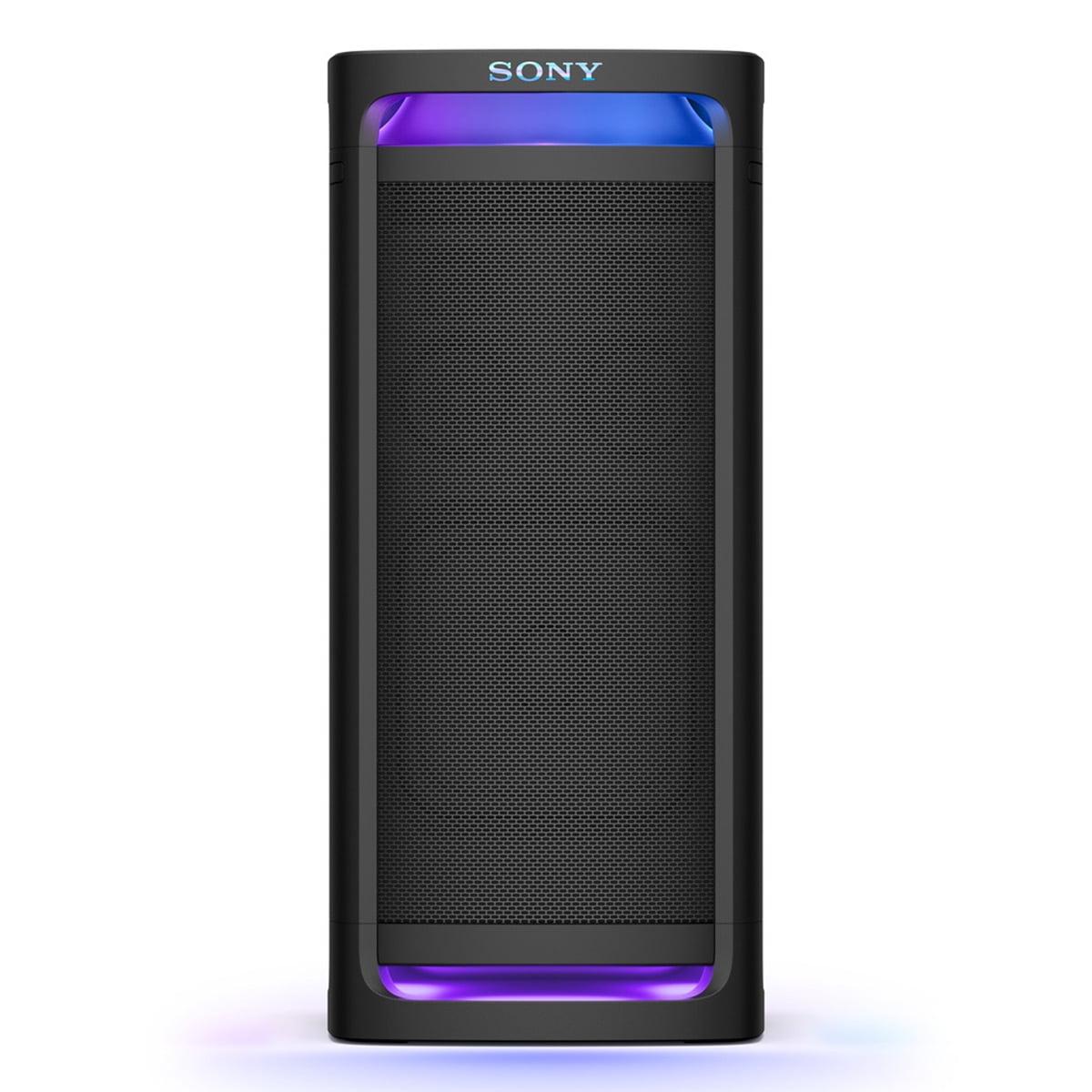
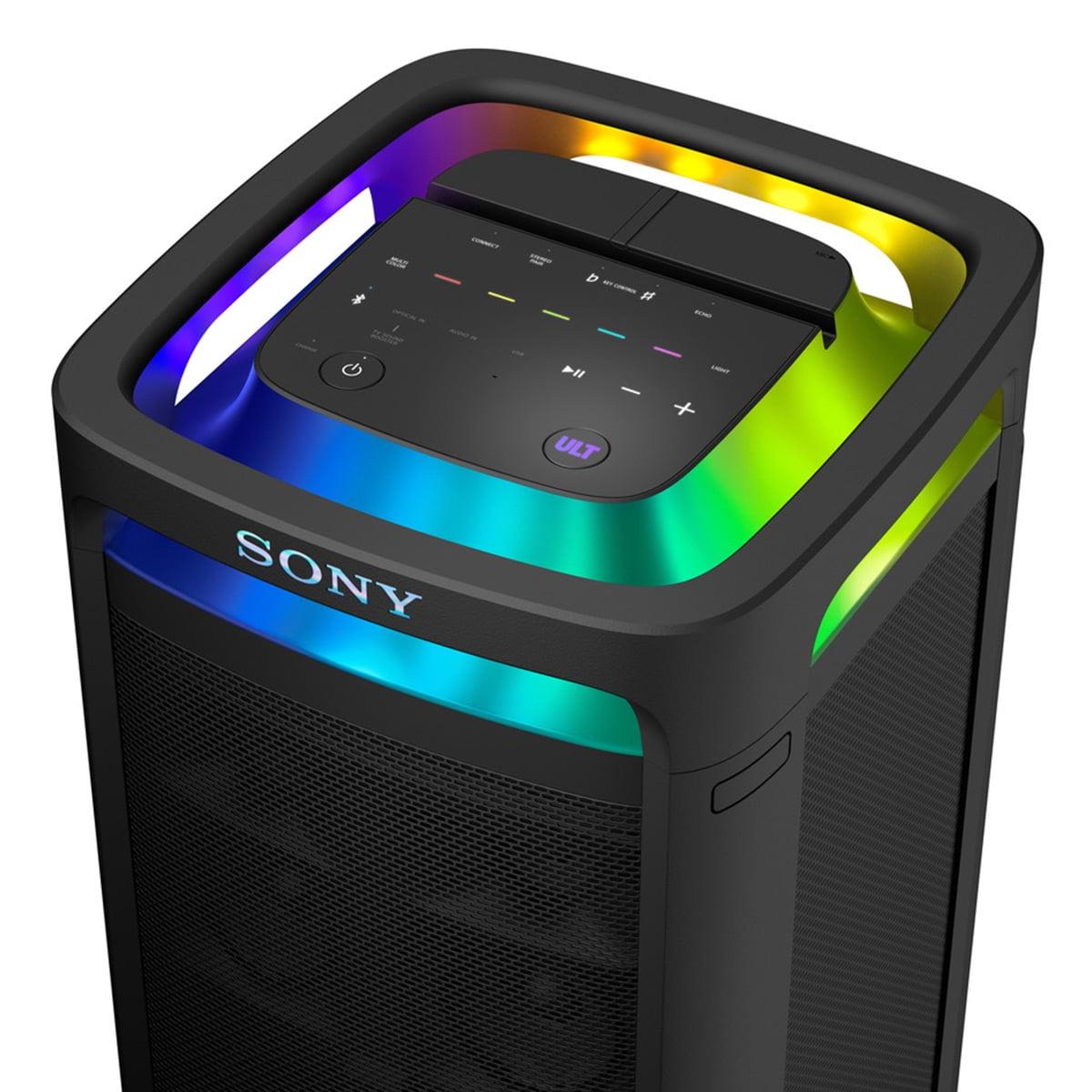
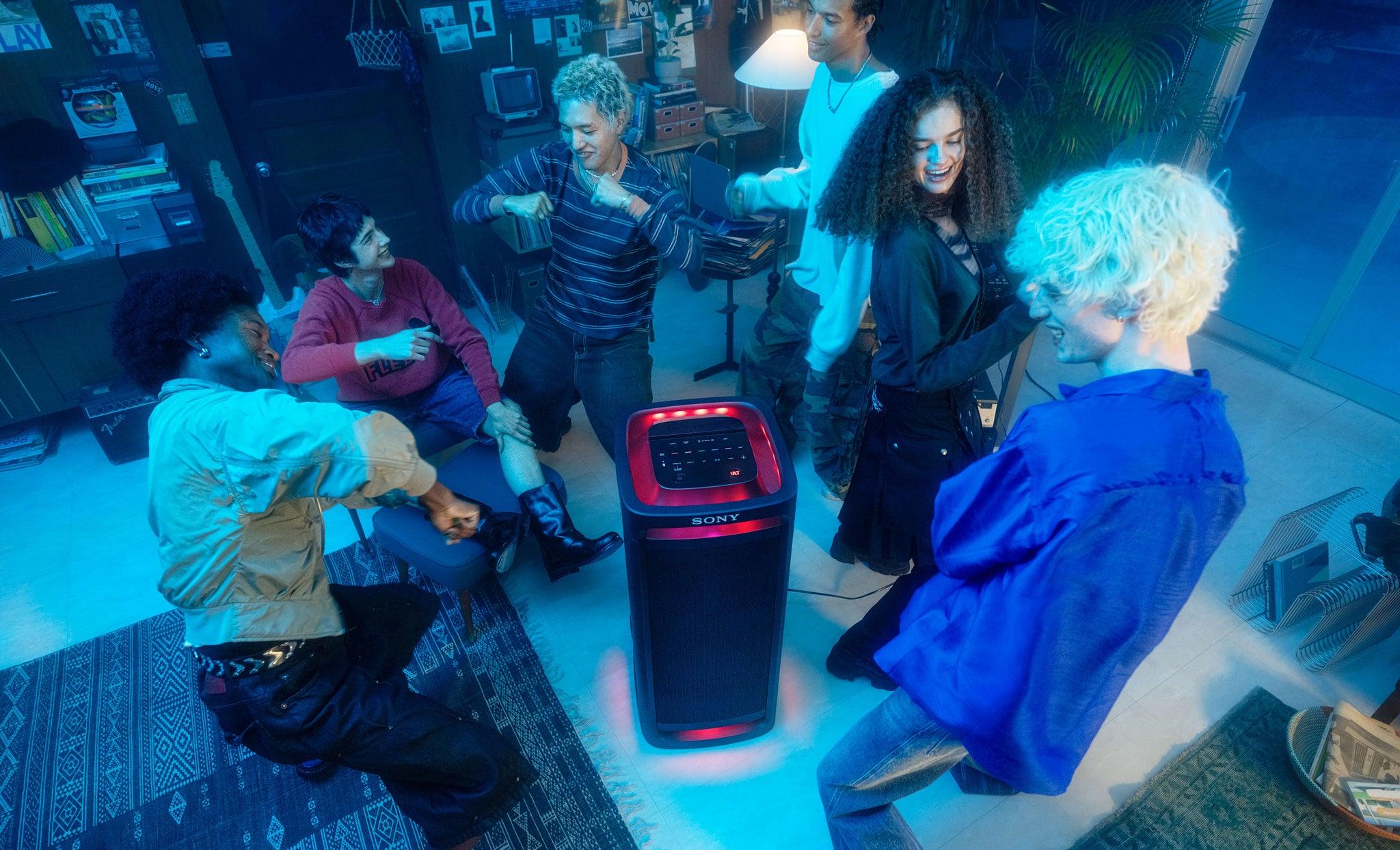
The Sony ULT Tower 9AC represents the "go big or go home" approach. Released in 2024, this speaker is essentially a stationary sound system disguised as a tower speaker. At nearly 30 kilograms and requiring a constant AC power connection, Sony clearly prioritized acoustic performance over convenience.
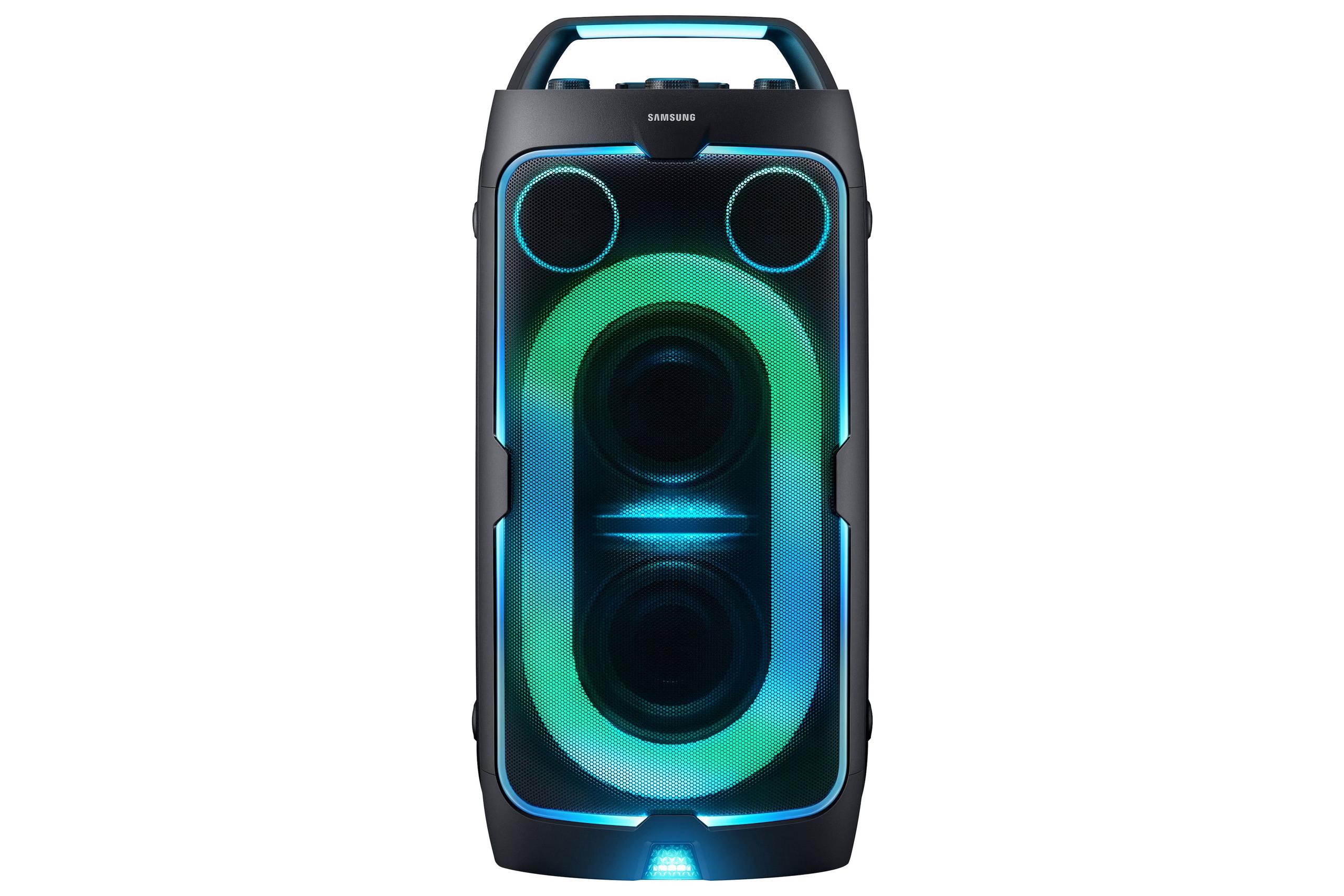
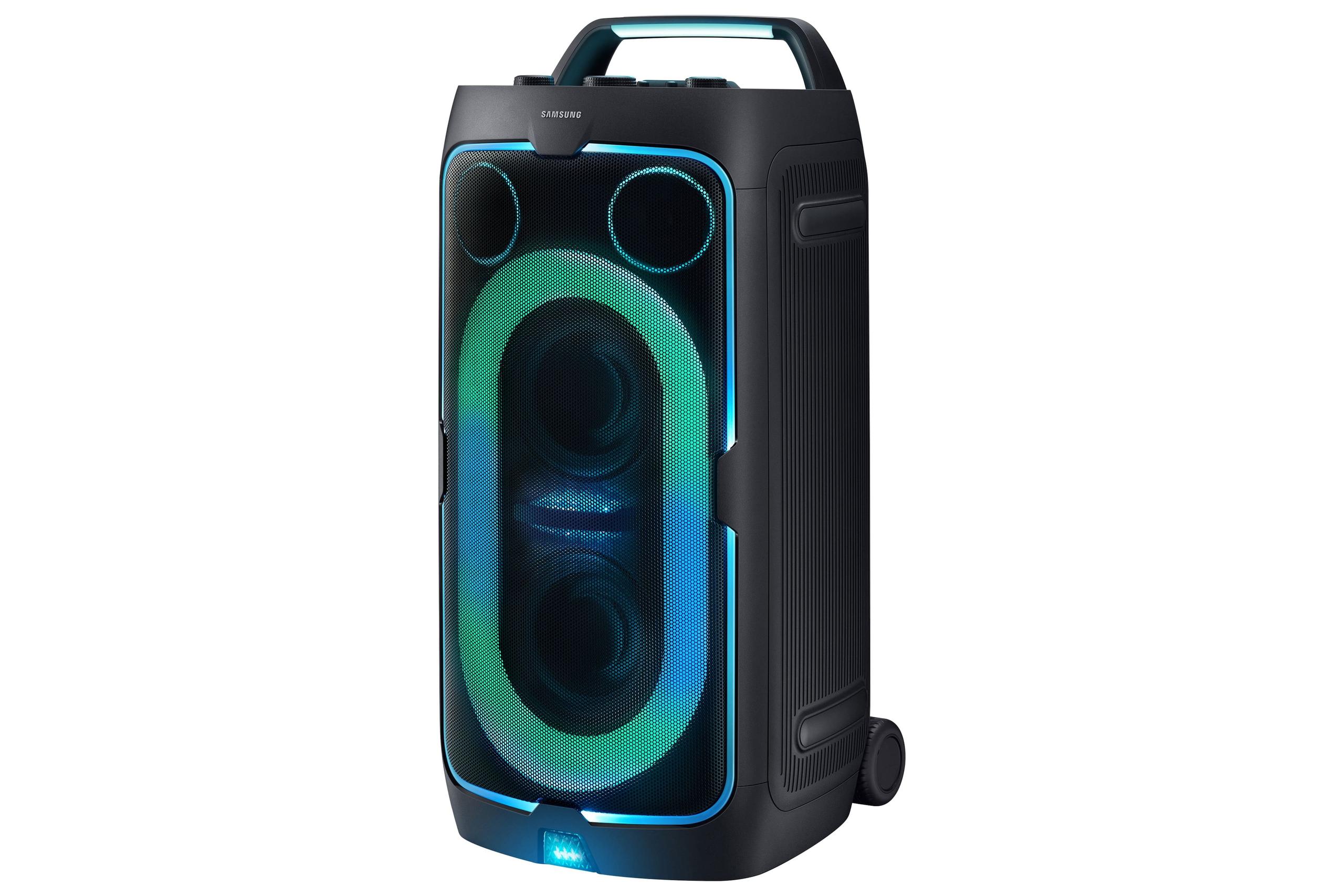
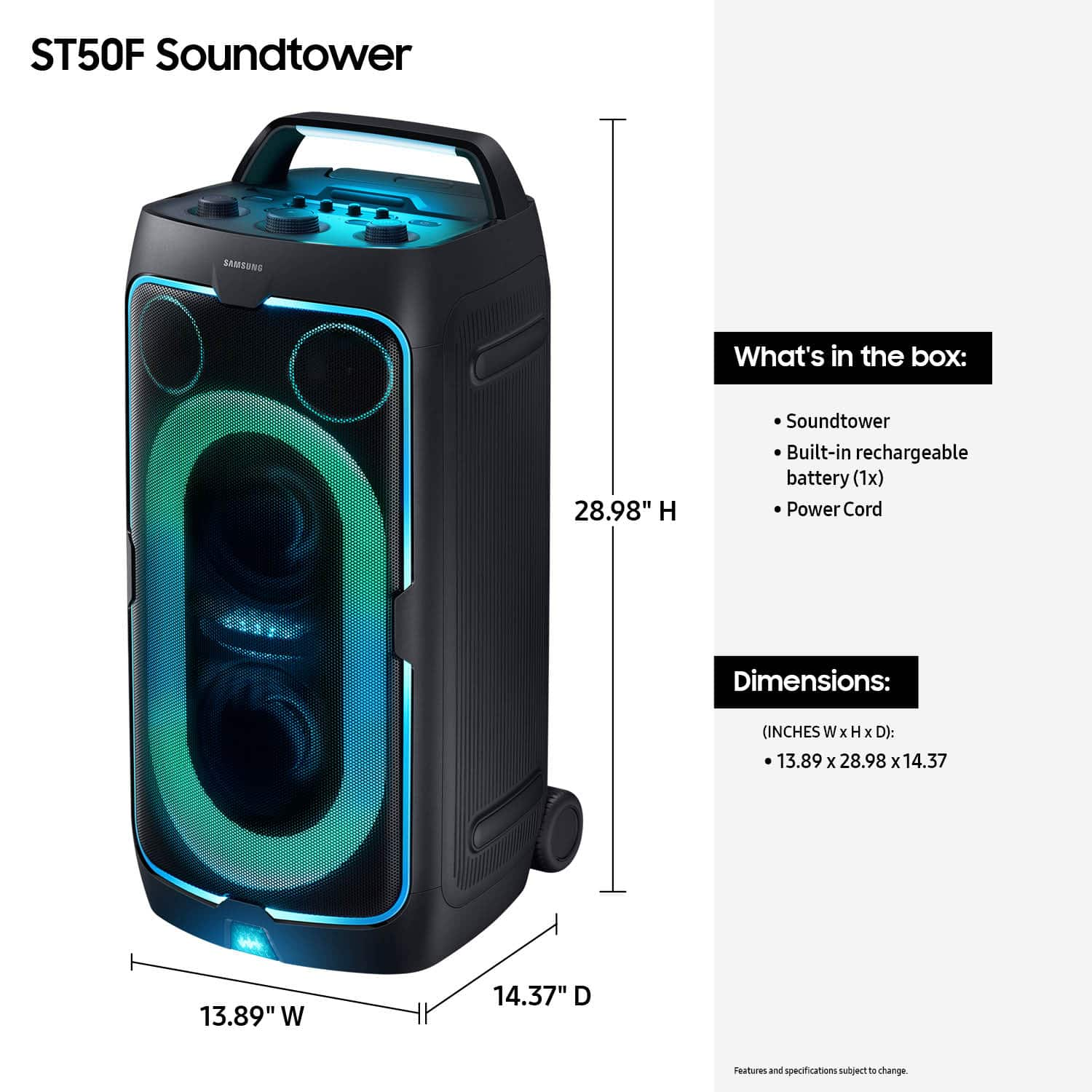
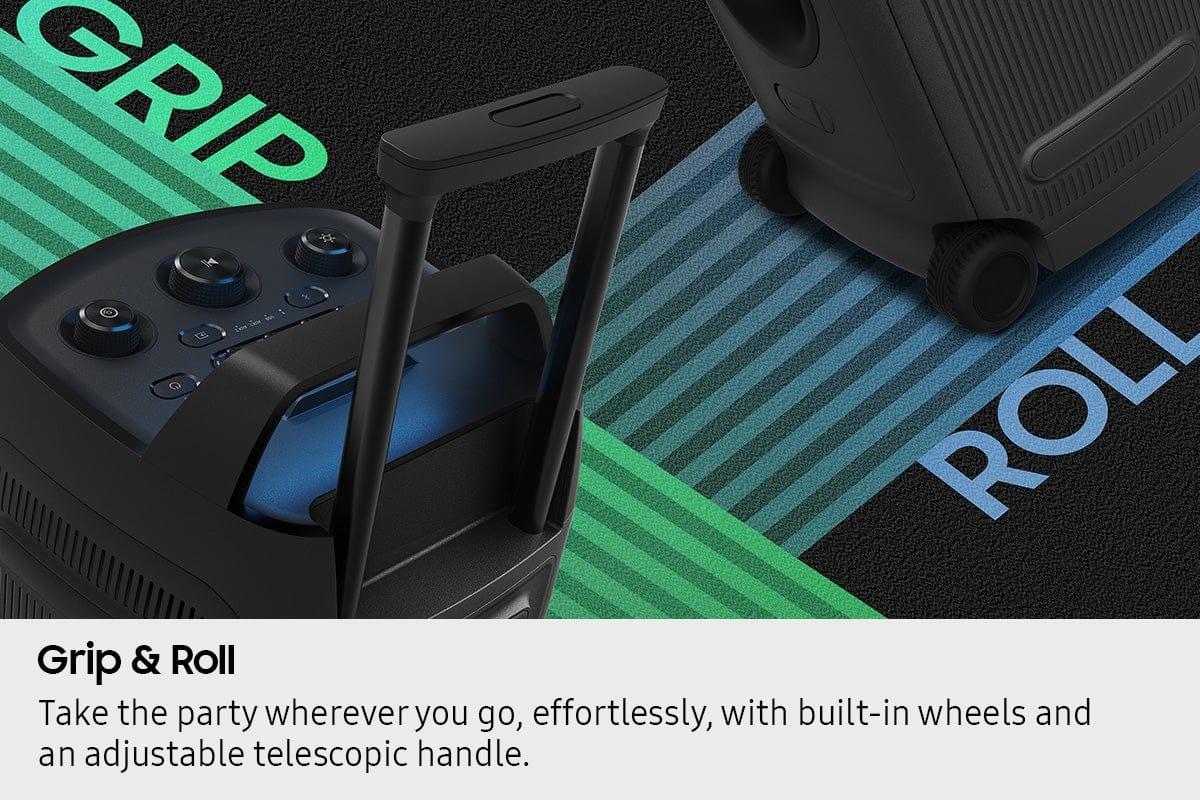
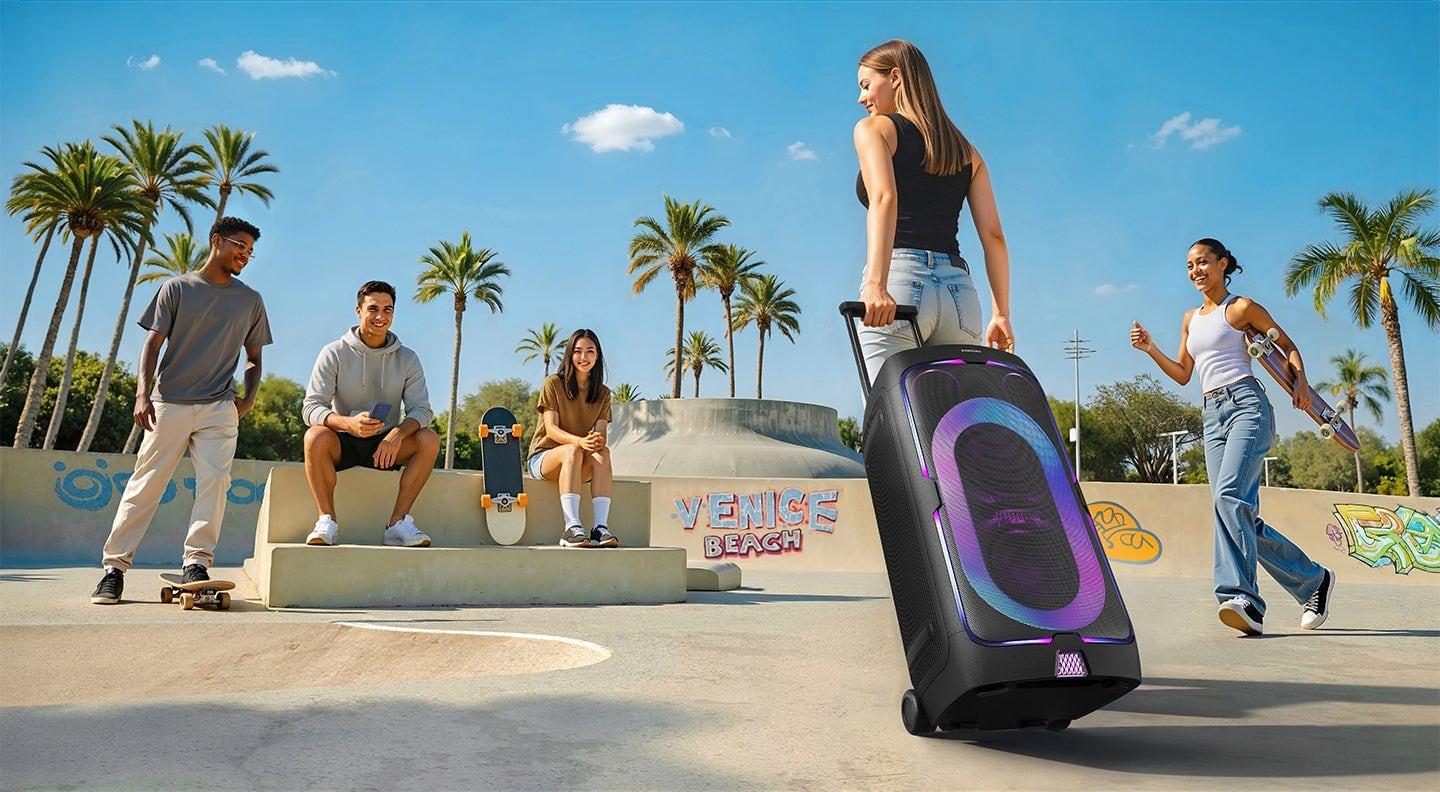
The Samsung MX-ST50F, also launched in 2024, takes the opposite route. Samsung recognized that many party hosts want to take their sound system to different locations – from backyard barbecues to beach parties. This speaker includes a built-in rechargeable battery, wheels, and a telescoping handle, making it truly portable despite its substantial size.
The most striking difference between these speakers becomes apparent the moment you crank up the volume. The Sony ULT Tower 9AC can reach approximately 115-116 decibels, which is genuinely loud enough to power a small outdoor festival. For context, normal conversation happens around 60 dB, while a rock concert typically hits 110-115 dB. This means Sony's speaker can literally compete with live music venues.
This impressive volume comes from Sony's seven-driver configuration, anchored by a massive 320mm x 320mm woofer. Most speakers use circular drivers, but Sony's "X-Balanced" technology uses an almost square design that maximizes the surface area. More surface area means more air movement, which translates directly to deeper bass and higher overall output.
The Samsung MX-ST50F delivers respectable volume, but there's a significant caveat. When plugged into AC power, it can output its full 240 watts and compete reasonably well with the Sony. However, when running on battery power – which is presumably why you bought a portable speaker – the output drops to just 90 watts. This isn't unusual for battery-powered speakers, but it's a substantial reduction that affects both volume and bass impact.
Bass performance often determines whether a speaker can truly energize a crowd. The Sony ULT Tower 9AC absolutely dominates in this area. That enormous 320mm woofer can move serious air, creating the kind of chest-thumping bass that makes people want to dance. Sony includes three bass modes: ULT off for balanced sound, ULT1 for deeper extension, and ULT2 for maximum impact.
However, our research into user feedback reveals that ULT2 mode can be overwhelming, making vocals sound muddy and affecting overall clarity. The default setting tends toward excessive bass that some users find fatiguing during longer listening sessions. This represents a common trade-off in party speakers – impressive bass impact versus balanced sound quality.
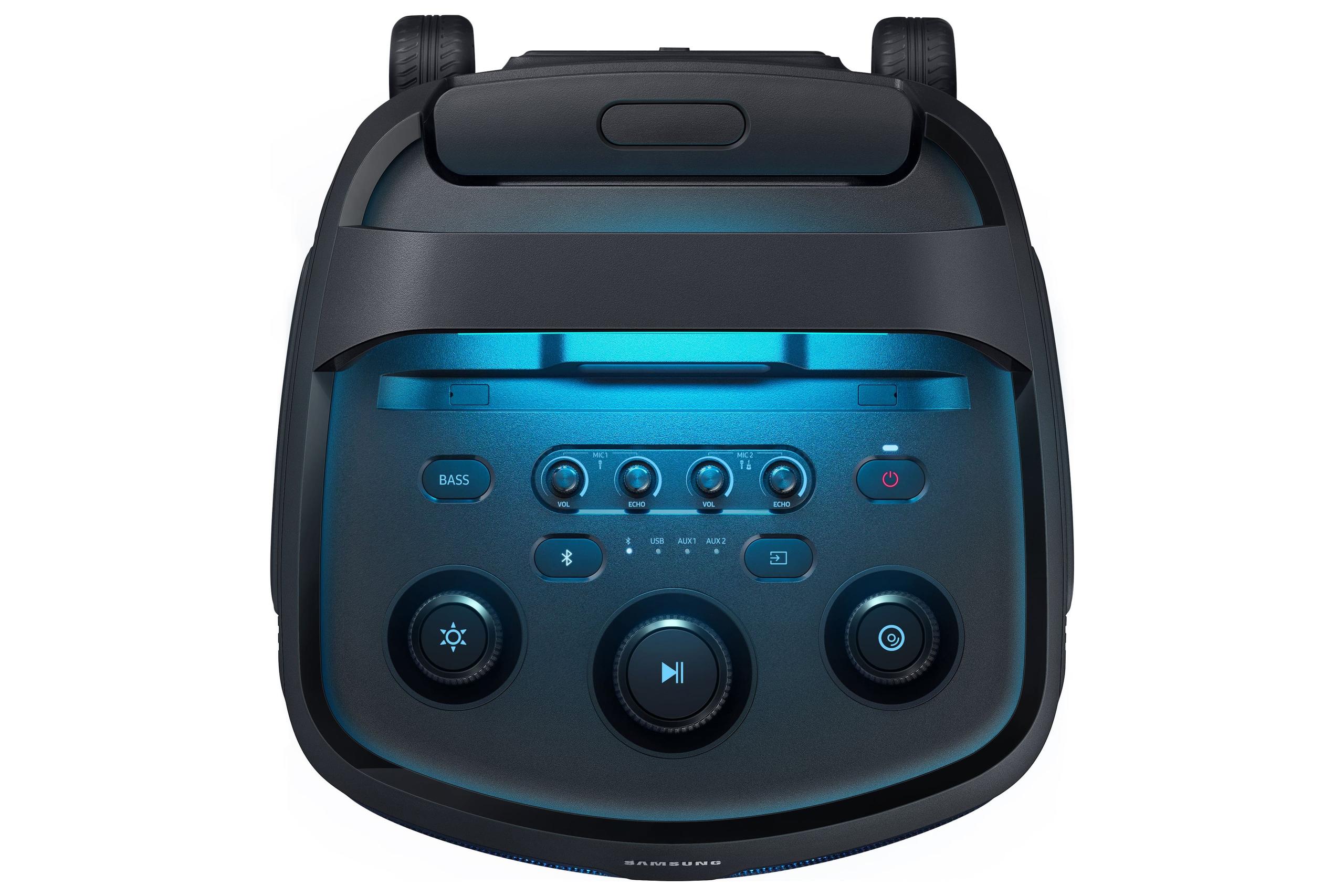
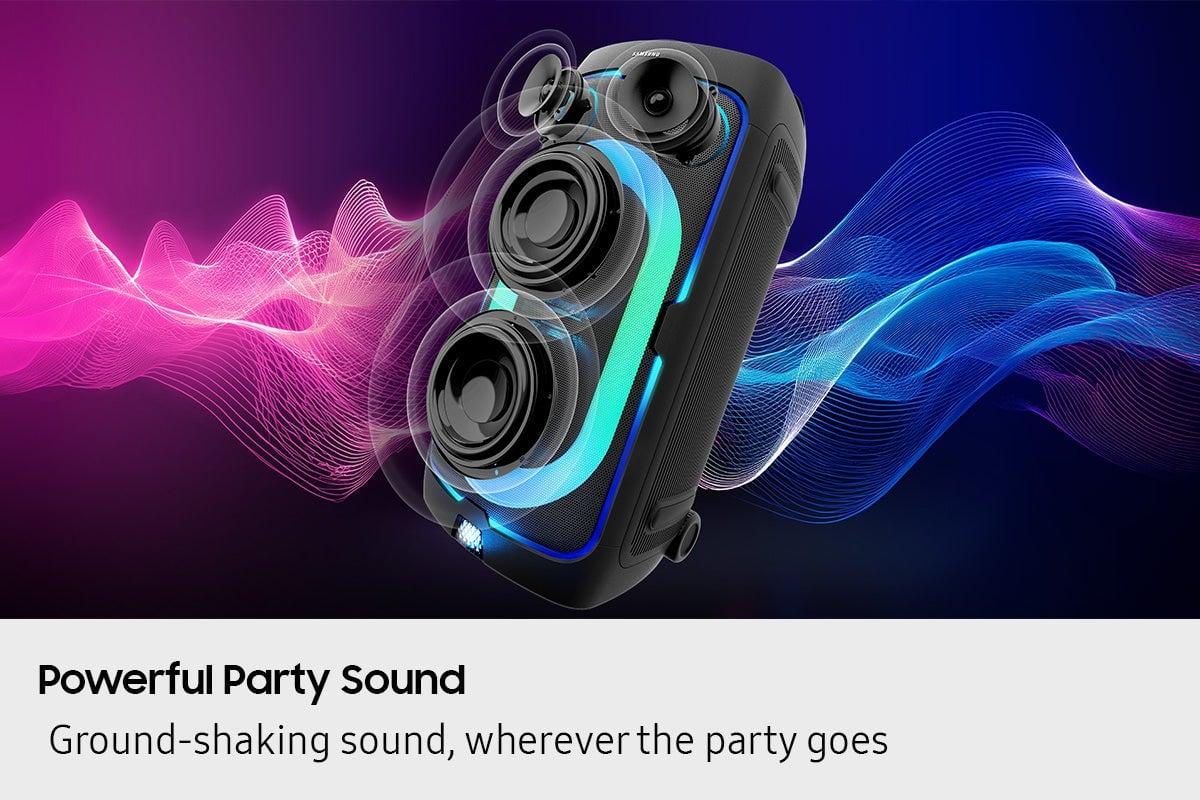
The Samsung MX-ST50F takes a more controlled approach with dual 6.5-inch woofers. While this setup can't match Sony's raw bass power, it offers three bass modes (Deep, Punchy, Gentle) that provide better flexibility for different music genres and listening preferences. Samsung's Waveguide technology – a carefully shaped acoustic chamber that directs sound waves more efficiently – helps optimize what bass the smaller drivers can produce.
Here's where things get interesting. While the Sony ULT Tower 9AC wins on pure power, the Samsung MX-ST50F often sounds more balanced and musical. Sony's aggressive bass tuning can overwhelm the midrange frequencies where vocals and most instruments live. Samsung's more restrained approach maintains better clarity across different types of music.
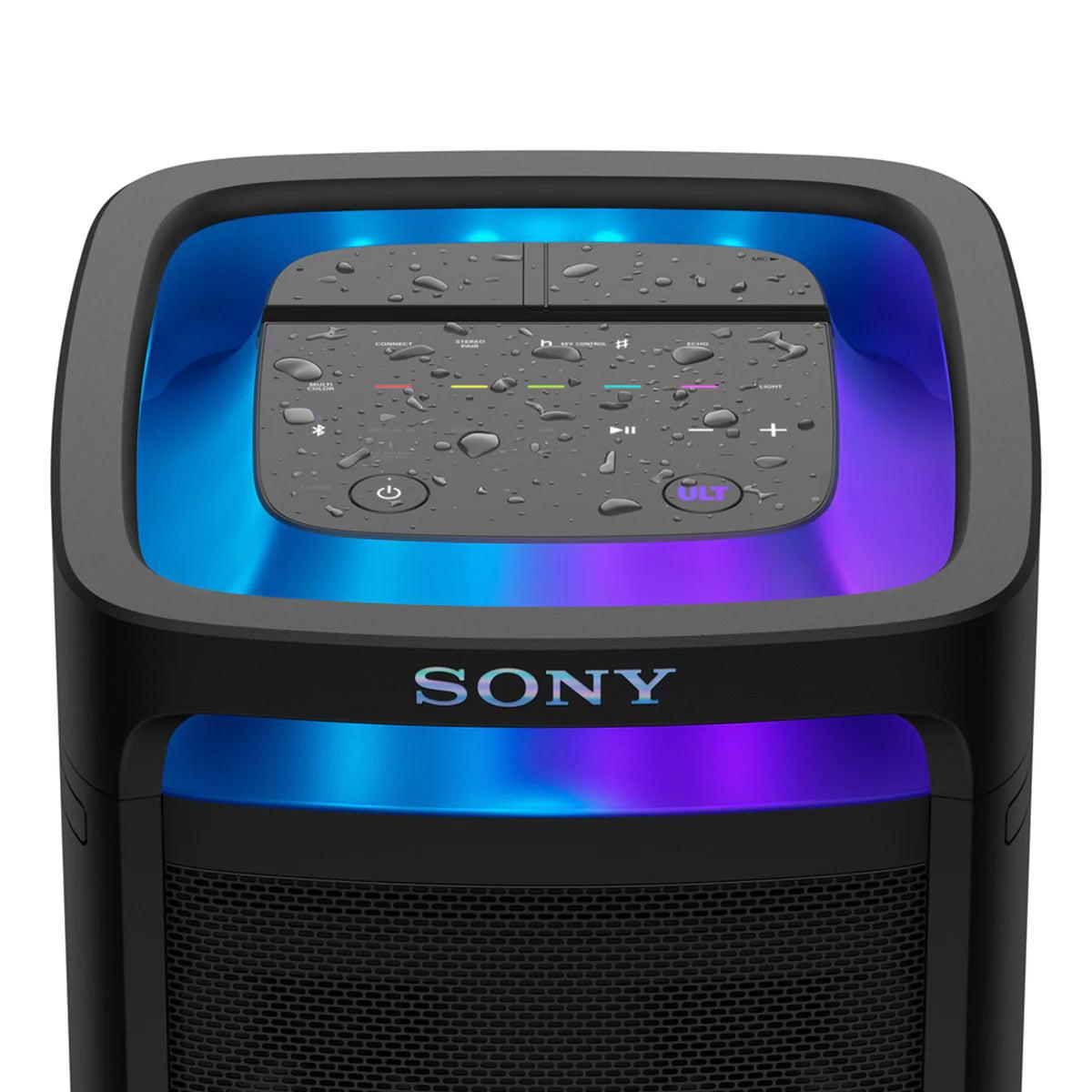
Sony does offer a 10-band equalizer through their Sound Connect app, allowing users to dial in their preferred sound signature. This level of customization appeals to audio enthusiasts who want precise control over their listening experience. Samsung's app provides fewer adjustment options but focuses more on party-specific features like lighting control and DJ effects.
Both speakers claim 360-degree sound dispersion, but they achieve it differently. Sony uses four tweeters (the small drivers that handle high frequencies) – two facing forward and two facing backward – to bounce sound off walls and create a wraparound effect. Samsung relies more on its cabinet design and driver positioning to spread sound evenly.
This is where these speakers couldn't be more different. The Samsung MX-ST50F was clearly designed with real-world portability in mind. At 18.4 kg, it's still heavy, but the built-in wheels and telescopic handle make it manageable for most people to transport. The IPX4 splash resistance means you can confidently use it by the pool or during light rain without worrying about damage.
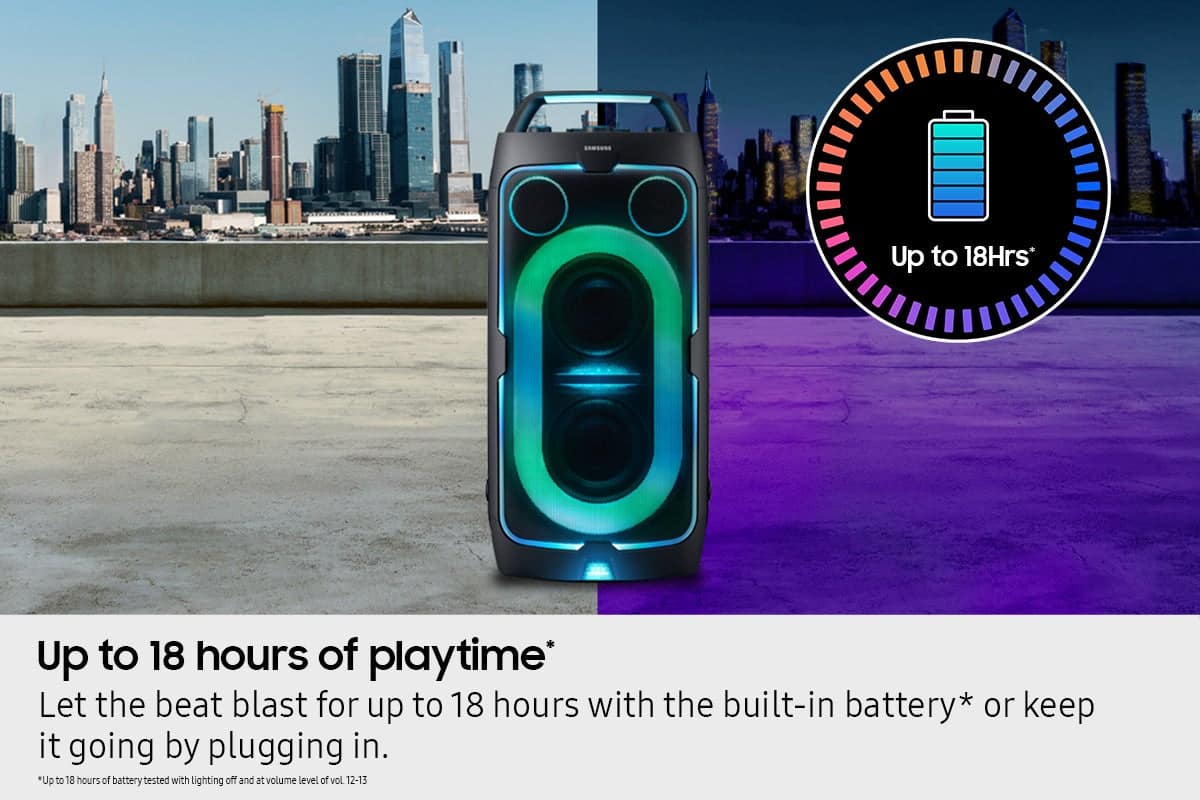
The battery life of up to 18 hours (with lighting turned off) genuinely supports all-day events. This is crucial for outdoor gatherings where AC power isn't available. However, remember that maximum performance requires AC power, so you're making a compromise between portability and peak acoustic performance.
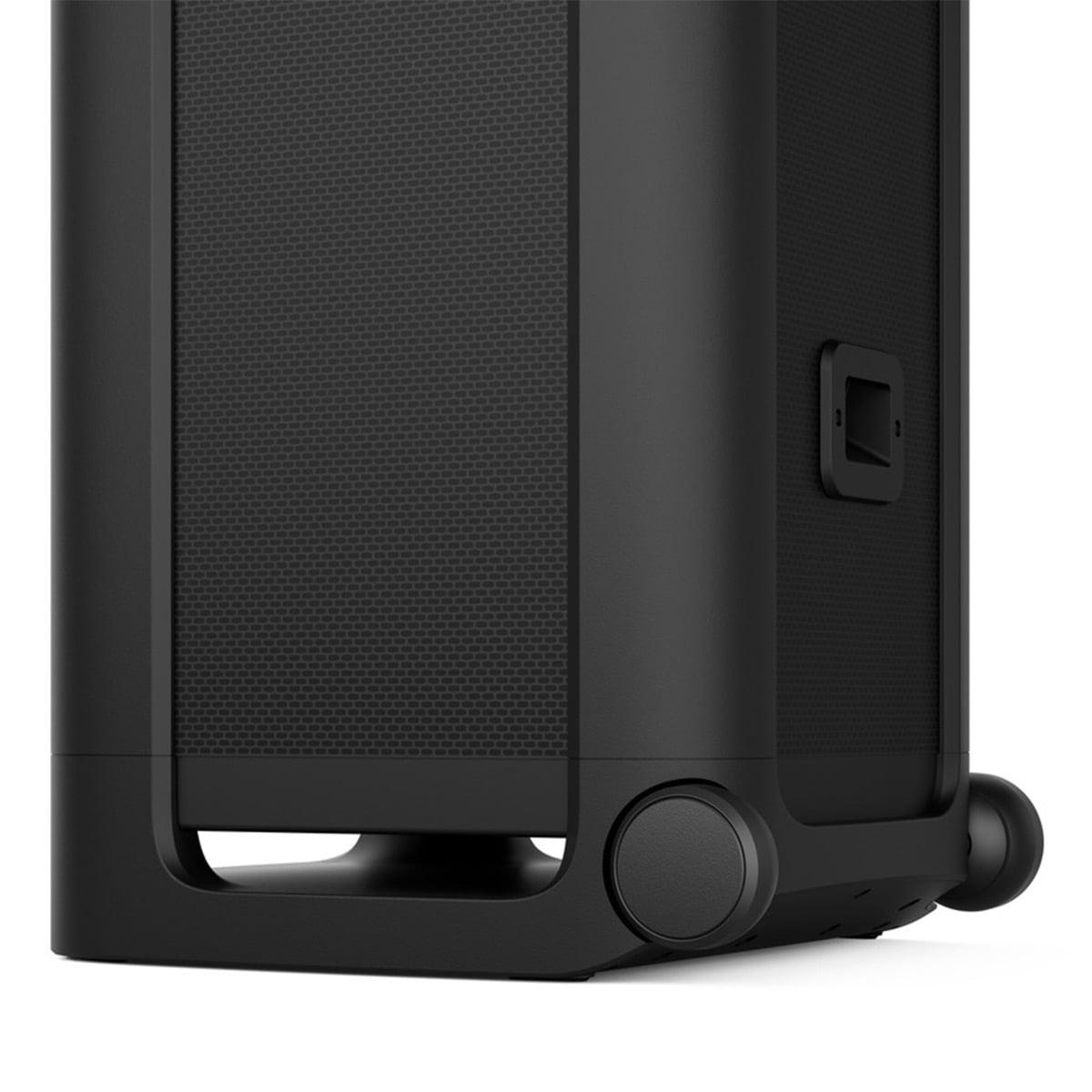
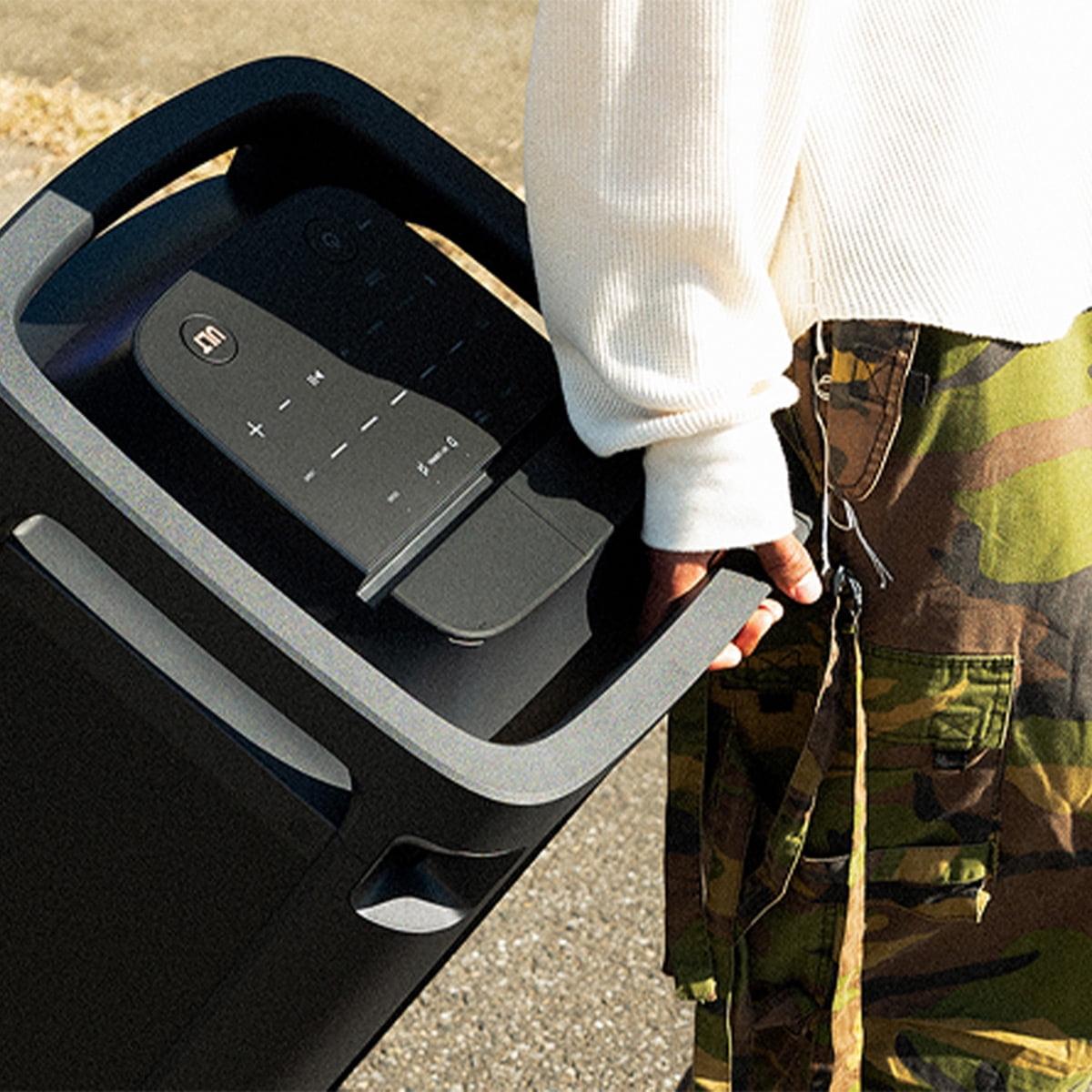
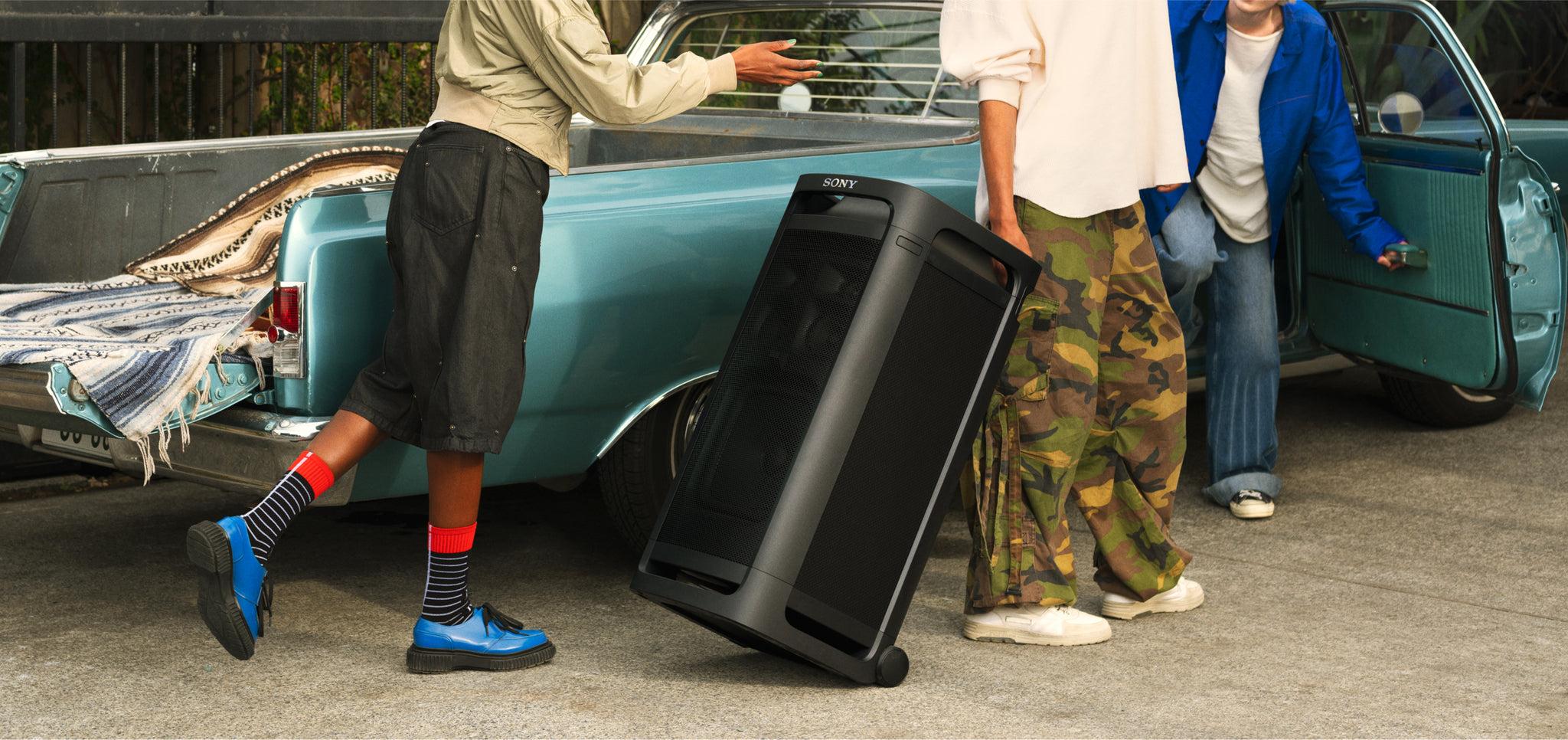
The Sony ULT Tower 9AC includes wheels and a handle, but at 28.5 kg, it's more suitable for occasional relocation within your home rather than frequent transport. The requirement for AC power makes it essentially useless for outdoor events unless you have a generator. Sony clearly designed this as a semi-permanent installation for dedicated party spaces.
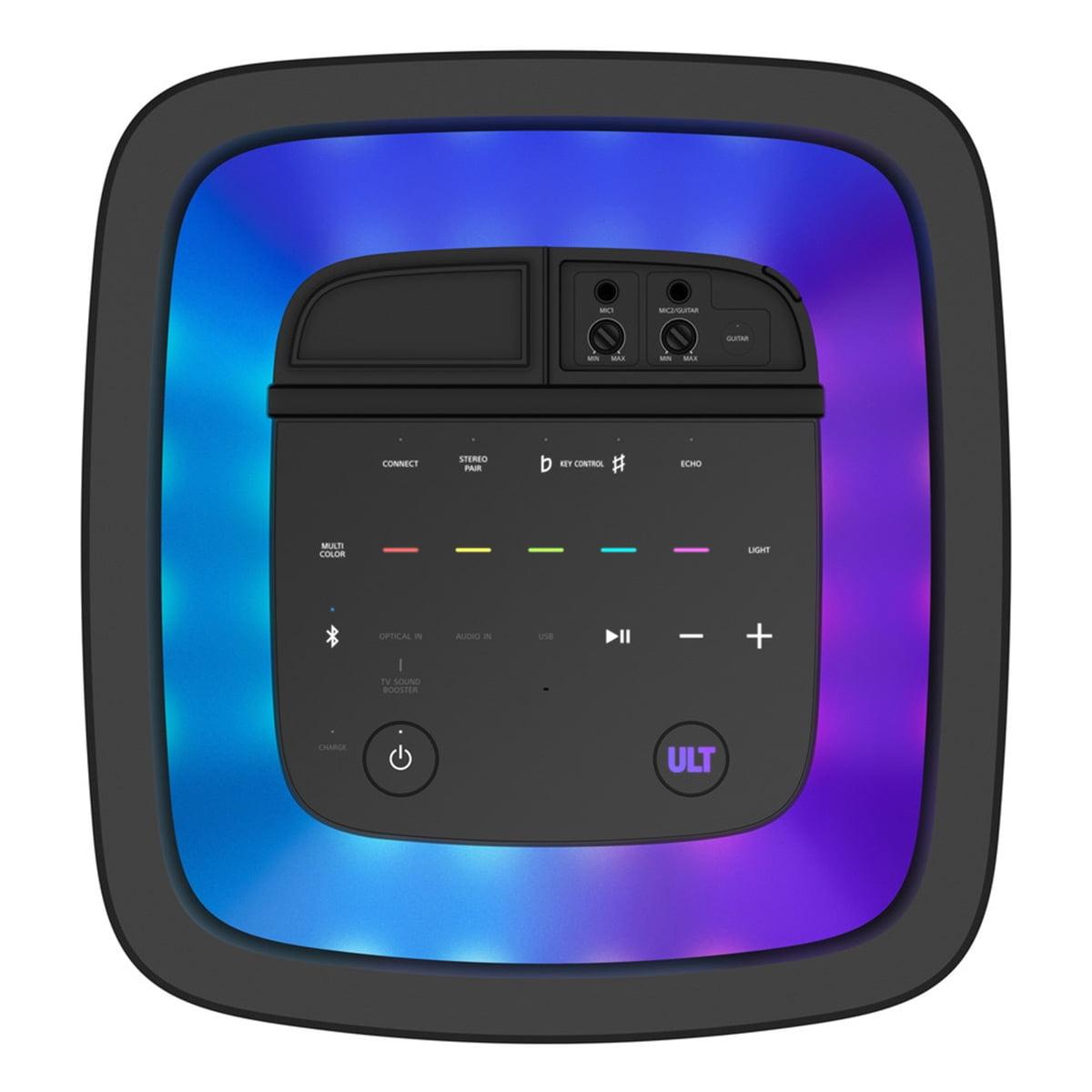
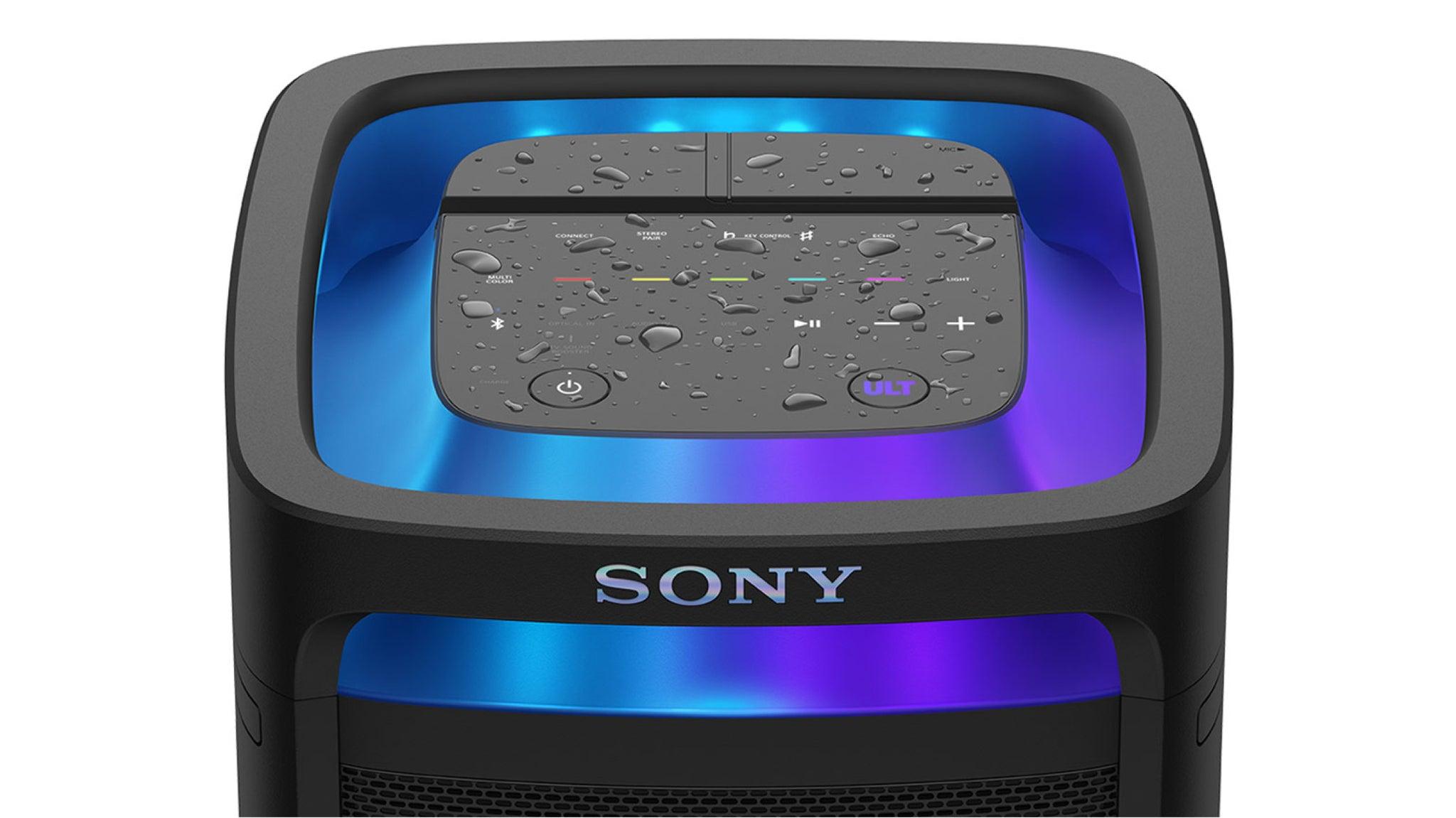
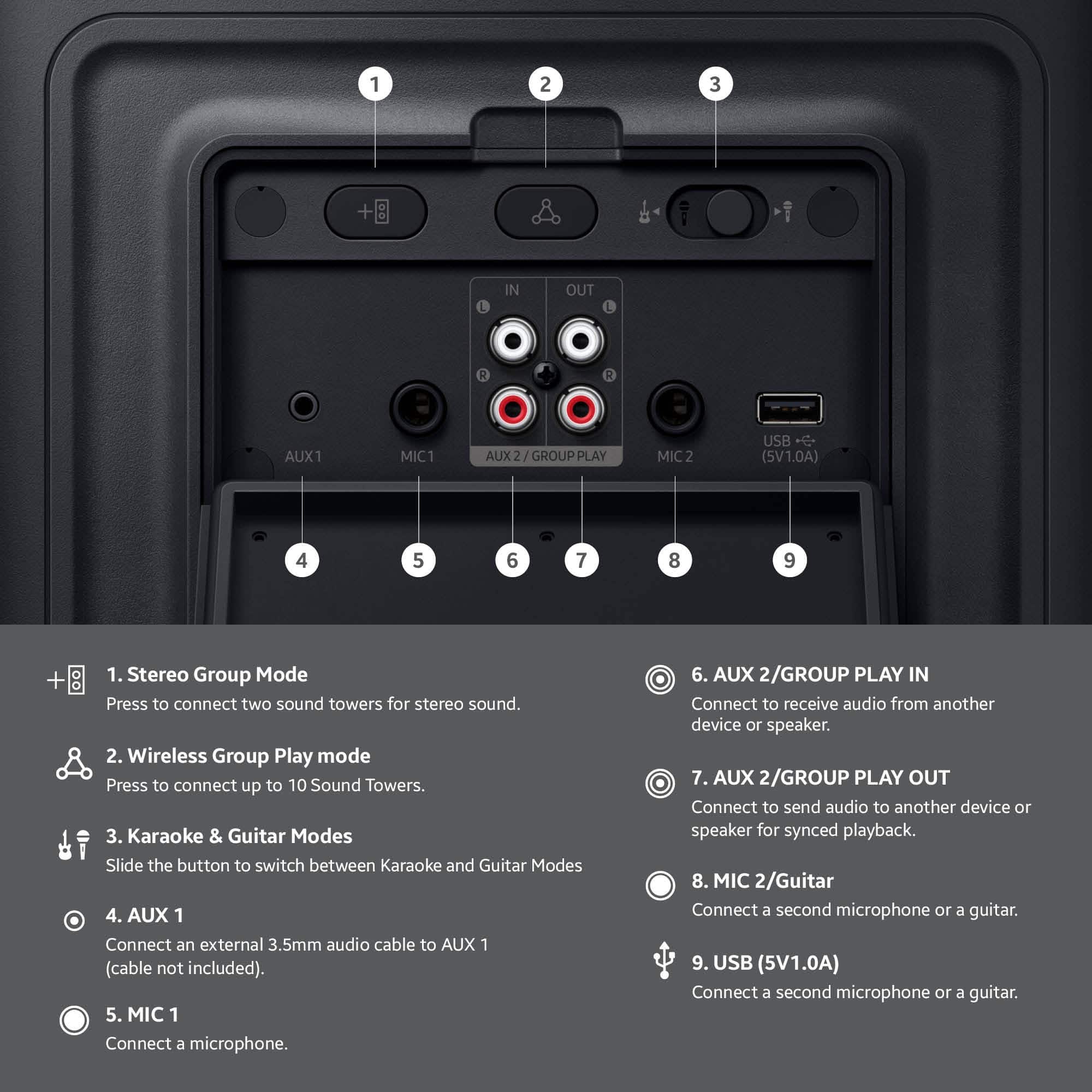
Both speakers recognize that modern party hosts want more than just audio reproduction. The Sony ULT Tower 9AC includes comprehensive karaoke features with two quarter-inch inputs that can handle microphones or guitars simultaneously. The key control function lets you change the pitch of songs to match different vocal ranges, while built-in echo effects add polish to performances.
Sony's Party Connect technology can link up to 100 compatible speakers wirelessly, creating truly massive sound systems for large events. The 360-degree party lighting syncs with your music, though the customization options are somewhat limited compared to Samsung's offering.
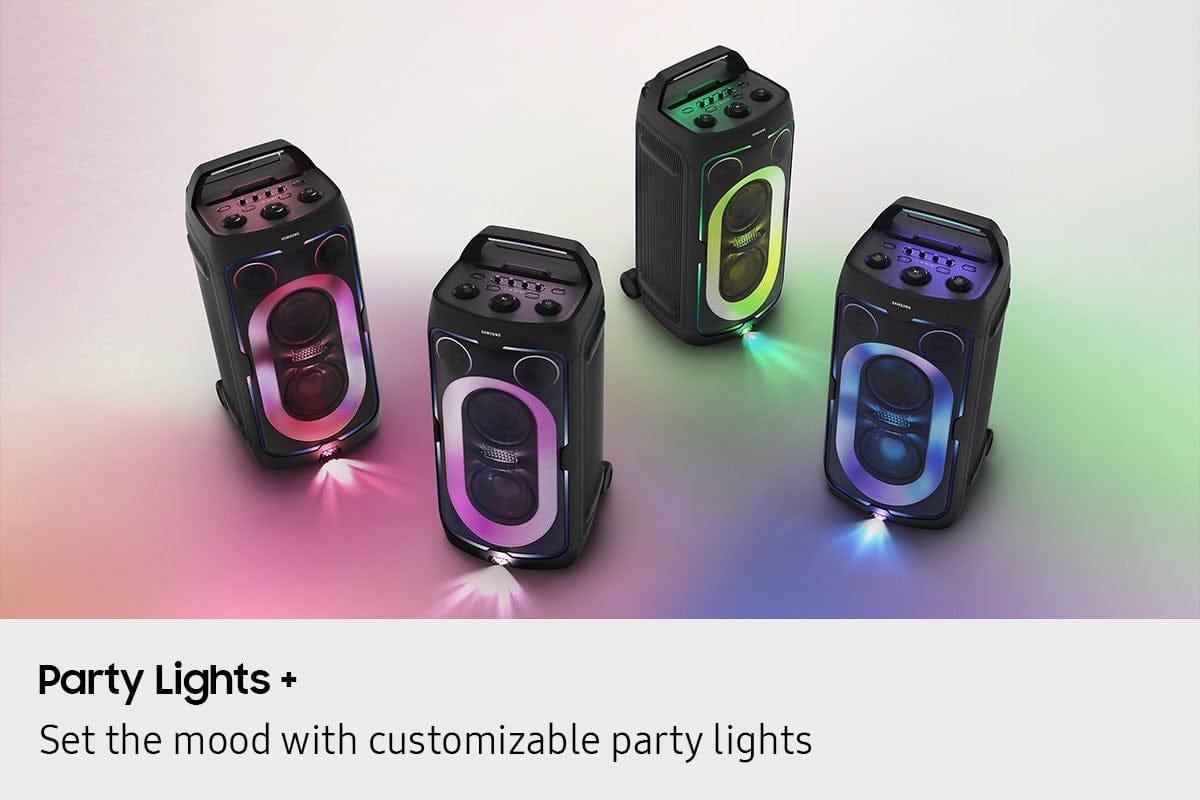
The Samsung MX-ST50F puts significant emphasis on its Party Lights+ system. With six lighting patterns, five mood presets, and control over five different lighting zones on the speaker, you can create genuinely impressive light shows. The Samsung app lets you customize everything from color patterns to synchronization with specific song elements.
Samsung's Auracast technology represents newer Bluetooth standards that allow more sophisticated multi-device connections. You can connect up to 10 Samsung speakers wirelessly, and the system handles synchronization more elegantly than older technologies.
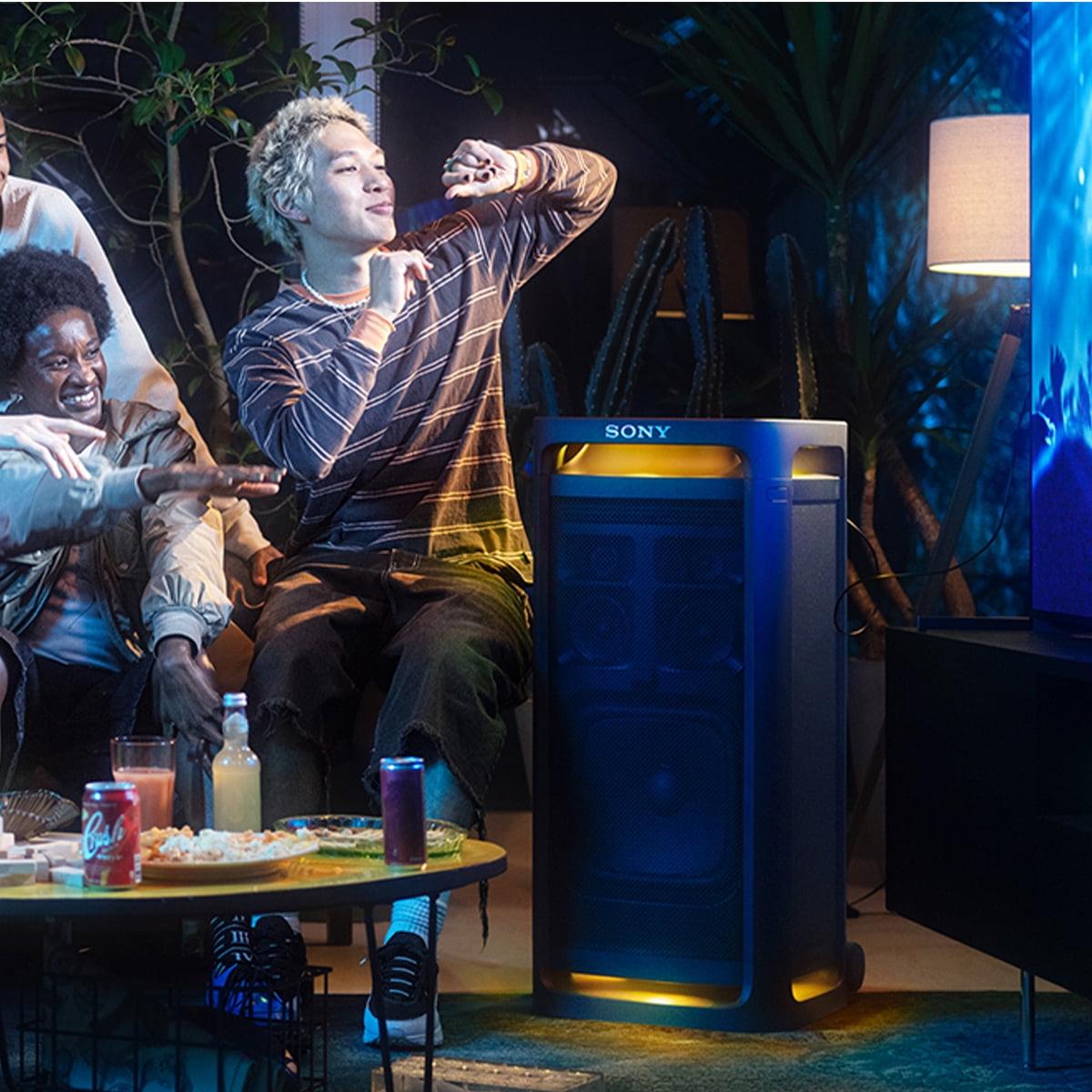
The Sony ULT Tower 9AC offers more comprehensive connectivity options. The optical input is particularly valuable for home theater use – you can connect it directly to your TV and use it as a soundbar alternative. The LDAC Bluetooth codec support means compatible Android phones can stream higher-quality audio than standard Bluetooth allows.
For home theater applications, Sony's approach makes more sense. The optical connection bypasses potential Bluetooth latency issues, and the powerful bass response can dramatically improve movie soundtracks. The rear-firing tweeters create a wider soundstage that works well for film audio.
The Samsung MX-ST50F focuses more on convenience features. Multi-device Bluetooth lets you connect two phones simultaneously, making it easier for multiple people to queue up songs at parties. The USB port can charge devices while playing music, which is genuinely useful during long events.
At the time of writing, these speakers occupy different price tiers, with the Samsung MX-ST50F positioned as the more affordable option despite being newer to market. This pricing reflects their different target audiences – Samsung appeals to users wanting good performance with maximum flexibility, while Sony targets those prioritizing peak audio performance.
The value equation depends heavily on your specific use case. If you're setting up a permanent party space in your home and have reliable AC power, Sony's superior audio performance justifies its premium pricing. The comprehensive karaoke features and TV connectivity add versatility that extends beyond just parties.
For users who need genuine portability or want to host events in multiple locations, Samsung's combination of battery power, weather resistance, and lighter weight provides value that Sony simply cannot match. The customizable lighting system also appeals to users who view the visual party atmosphere as equally important to audio quality.
Our research into user reviews and professional evaluations reveals some interesting patterns. Sony ULT Tower 9AC owners consistently praise the speaker's ability to fill large spaces without distortion, even at maximum volume. The build quality feels premium, and the touch controls respond reliably even in low-light party environments.
However, many users initially struggle with the aggressive default bass tuning. The speaker sounds most impressive with bass-heavy electronic music and hip-hop, but can overwhelm more subtle genres. Users who take time to adjust the equalizer settings report much better results across different music styles.
Samsung MX-ST50F users particularly appreciate the genuine all-day battery life and the peace of mind that comes with weather resistance. The lighting effects consistently receive positive feedback, with many users noting that guests often comment on the visual spectacle as much as the sound quality.
The main criticism of Samsung's approach centers on the performance compromise when running on battery. While 90 watts is adequate for moderate-sized gatherings, it can't compete with AC-powered alternatives when you really need to pump up the volume.
Both speakers incorporate technologies that have evolved significantly since earlier party speaker generations. Sony's X-Balanced driver technology represents genuine innovation in maximizing output from available space. Traditional circular drivers waste corner space in square speaker cabinets, while Sony's approach optimizes every millimeter.
Samsung's Waveguide technology addresses a different challenge – ensuring even sound dispersion from compact driver arrangements. This acoustic engineering approach has trickled down from professional audio applications into consumer products.
The wireless connectivity standards have also improved dramatically. Both speakers support modern Bluetooth protocols that provide better range, more stable connections, and improved audio quality compared to party speakers from just a few years ago.
Choose the Sony ULT Tower 9AC if you're establishing a dedicated party space in your home, prioritize maximum sound quality and volume, or want the most comprehensive karaoke features available. The optical input makes it particularly attractive for dual-duty as a TV soundbar replacement. If you're an audio enthusiast who wants professional-level customization options, Sony's 10-band equalizer and LDAC support justify the premium price.
The Samsung MX-ST50F makes more sense for users who host events in multiple locations, need all-day battery operation, or prioritize the visual party atmosphere through customizable lighting. The weather resistance and genuine portability open up use cases that Sony simply cannot address. If you prefer more balanced, less overwhelming sound out of the box, Samsung's tuning approach will likely appeal more than Sony's bass-heavy default.
For home theater use specifically, Sony's optical connectivity and more powerful output provide a better foundation for movie soundtracks and dialogue clarity. Samsung's omnidirectional design, while great for parties, doesn't create the focused soundstage that works best for seated viewing.
Both speakers represent solid value propositions within their respective niches. Your choice ultimately depends on whether maximum acoustic performance or maximum flexibility better matches your entertainment style and hosting needs.
| Sony ULT Tower 9AC | Samsung MX-ST50F |
|---|---|
| Power Source - Determines where you can use the speaker | |
| AC power only (requires wall outlet) | Built-in battery + AC power (18 hours battery life) |
| Maximum Volume Output - How loud it gets for large gatherings | |
| 115-116 dB (concert-level loudness) | Lower peak volume, especially on battery power |
| Weight & Portability - How easy it is to move around | |
| 28.5 kg with wheels (semi-portable within home) | 18.4 kg with telescopic handle and wheels (truly portable) |
| Driver Configuration - What creates the sound | |
| 7 drivers: 1×320mm woofer, 2×120mm mid, 4 tweeters | 4 drivers: 2×6.5" woofers, 2×1" tweeters |
| Bass Performance - The foundation of party sound | |
| Massive 320mm square woofer delivers deeper, more powerful bass | Dual 6.5" woofers provide controlled, balanced bass |
| Weather Resistance - Protection for outdoor use | |
| Splash-resistant control panel only | IPX4 splash-resistant throughout (safe for poolside) |
| Connectivity Options - How you connect devices | |
| Bluetooth 5.3 (LDAC), USB, optical, analog, 2×mic/guitar inputs | Bluetooth multi-connection, USB, analog, 2×mic inputs |
| Sound Customization - Tailoring audio to your preference | |
| 10-band EQ, 3 ULT bass modes, Sound Field Optimization | 4 sound modes, 3 bass modes, basic app controls |
| Party Lighting - Visual entertainment features | |
| 360° Party Light with basic music sync | Party Lights+ with 6 patterns, 5 mood presets, 5 lighting zones |
| Multi-Speaker Setup - Connecting multiple units | |
| Party Connect (up to 100 speakers) | Auracast Group Play (up to 10 speakers) |
| Home Theater Integration - Using as TV speaker | |
| Optical input for direct TV connection, TV Sound Booster mode | Bluetooth only for TV audio (potential latency issues) |
| Karaoke Features - Built-in entertainment options | |
| Key Control, echo effects, dual mic holders, guitar input | Voice recording, voice removal, dual mic inputs |
| Value Proposition - What you get for the money | |
| Premium price for maximum audio performance and features | More affordable with good performance plus true portability |
The Samsung MX-ST50F is significantly better for outdoor parties due to its built-in 18-hour battery, IPX4 splash resistance, and portable design with wheels and telescopic handle. The Sony ULT Tower 9AC requires AC power, making it unsuitable for most outdoor events unless you have a generator available.
The Sony ULT Tower 9AC delivers louder, more powerful sound with deeper bass thanks to its massive 320mm woofer and 7-driver system. However, the Samsung MX-ST50F offers more balanced, controlled sound that many users find less overwhelming for extended listening sessions.
The Sony ULT Tower 9AC is excellent for home theater use with its dedicated optical input, TV Sound Booster mode, and powerful output that enhances movie soundtracks. The Samsung MX-ST50F can connect via Bluetooth but may have latency issues and lacks the focused soundstage needed for optimal TV audio.
The Samsung MX-ST50F is much more portable at 18.4kg with a telescopic handle, wheels, and battery power. The Sony ULT Tower 9AC weighs 28.5kg and requires AC power, making it better suited as a semi-permanent installation rather than a truly portable speaker.
Both speakers offer karaoke capabilities, but the Sony ULT Tower 9AC provides more advanced features including Key Control for pitch adjustment, built-in echo effects, and dedicated mic holders. The Samsung MX-ST50F includes voice recording and voice removal features but with fewer professional karaoke options.
The Samsung MX-ST50F excels in party lighting with its Party Lights+ system featuring 6 customizable patterns, 5 mood presets, and control over 5 different lighting zones. The Sony ULT Tower 9AC offers 360° party lighting but with more limited customization options.
The Sony ULT Tower 9AC reaches approximately 115-116 dB, which is significantly louder than the Samsung MX-ST50F. Sony's speaker can fill larger spaces and compete with ambient noise more effectively, making it better for big gatherings.
Yes, both support multi-speaker setups. The Sony ULT Tower 9AC uses Party Connect to link up to 100 compatible speakers, while the Samsung MX-ST50F uses Auracast Group Play to connect up to 10 units wirelessly for synchronized sound and lighting.
The Samsung MX-ST50F typically offers better value with its combination of portability, weather resistance, battery power, and customizable lighting at a lower price point. The Sony ULT Tower 9AC justifies its premium pricing with superior audio performance and more comprehensive features.
The Samsung MX-ST50F provides up to 18 hours of battery life with lighting turned off at moderate volume levels. The Sony ULT Tower 9AC has no battery and requires constant AC power connection.
The Sony ULT Tower 9AC dominates in bass performance with its massive 320mm square woofer and ULT bass modes that can produce chest-thumping low frequencies. The Samsung MX-ST50F offers respectable bass but cannot match Sony's raw power and depth.
The Sony ULT Tower 9AC provides more comprehensive connectivity including Bluetooth 5.3 with LDAC, optical input, USB, analog input, and dual mic/guitar inputs. The Samsung MX-ST50F offers Bluetooth multi-connection, USB playback, analog input, and dual mic inputs but lacks optical connectivity for TV use.
We've done our best to create useful and informative comparisons to help you decide what product to buy. Our research uses advanced automated methods to create this comparison and perfection is not possible - please contact us for corrections or questions. These are the sites we've researched in the creation of this article: stereoguide.com - videoandaudiocenter.com - bestbuy.com - electronics.sony.com - rtings.com - youtube.com - hindustantimes.com - helpguide.sony.net - soundguys.com - sony.com - youtube.com - bestbuy.com - youtube.com - youtube.com - youtube.com - shopjetson.com - youtube.com - sony.com - sonyworld.co.za - sony.com - bestbuy.com - news.samsung.com - youtube.com - youtube.com - videoandaudiocenter.com - youtube.com - youtube.com - samsung.com - crutchfield.com - youtube.com - arrowassociatedstores.com - brandsmartusa.com - bestbuy.com - crutchfield.com - samsung.com - icecat.in - thefrogpadappliances.com - news.samsung.com

Privacy Policy
Terms and Conditions - Affiliate Policy
Home Security
© Copyright 2008-2026.
11816 Inwood Rd #1211, Dallas, TX 75244