




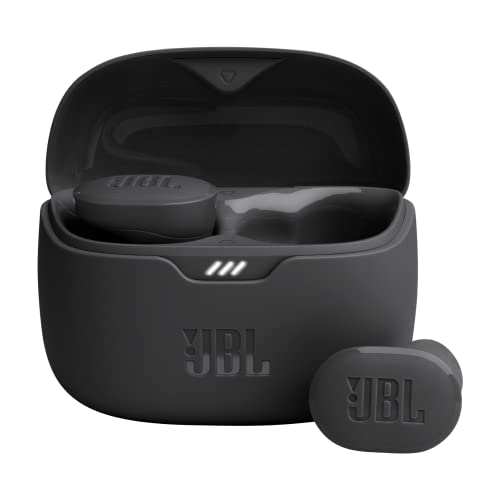




True wireless earbuds have completely transformed how we listen to music, take calls, and consume audio content. Since Apple removed the headphone jack and popularized the category around 2016, we've seen an explosion of options ranging from ultra-budget picks under $40 to premium flagships costing several hundred dollars. Today, we're diving deep into two earbuds that represent very different philosophies: the ultra-affordable JLab Go Pop+ and the feature-rich JBL Tune Buds.
Understanding where these products fit in the broader landscape helps explain why they exist and who they serve. The earbuds market has essentially split into distinct tiers, each targeting different user priorities and budgets. At the bottom, you have basic models focused on core functionality—decent sound, reliable connection, and solid battery life. Moving up, mid-range options add features like active noise cancellation (ANC), premium app support, and better build quality. At the top, flagship models compete on cutting-edge audio processing, advanced ANC algorithms, and premium materials.
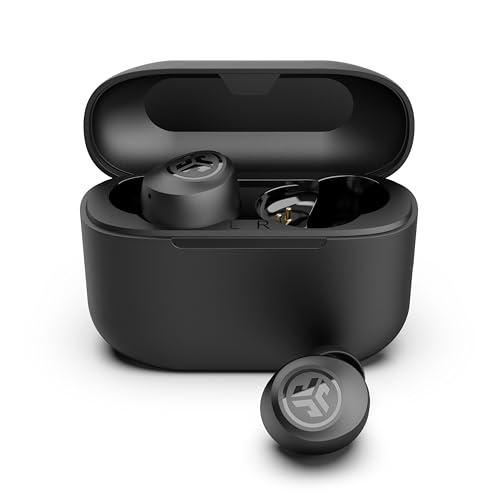
The JLab Go Pop+ emerged in 2023 as JLab's response to the growing demand for ultra-affordable earbuds that don't completely sacrifice features. JLab has built their reputation on delivering surprising value at low price points, and the Go Pop+ represents their latest refinement of this philosophy. By 2023, Bluetooth 5.3 had become standard even in budget models, and manufacturers like JLab could integrate features that were once premium—like comprehensive app support and environmental noise canceling—into sub-$40 products.
The JBL Tune Buds, also launching in 2023, targeted a different segment entirely. JBL leveraged their decades of audio engineering experience to create a mid-range option that brings professional-grade features to everyday users. The timing was perfect—by 2023, ANC technology had matured enough to be implemented effectively at this price point, and consumers were increasingly demanding it as a standard feature rather than a luxury.
Since their releases, both products have benefited from firmware updates that have improved stability and added features, but the core value propositions remain unchanged.
When evaluating earbuds, sound quality often becomes the make-or-break factor, and this is where the price difference between these models becomes most apparent. The JLab Go Pop+ uses 6mm dynamic drivers—smaller than average but not necessarily inferior. Driver size alone doesn't determine sound quality, but it does influence how much air the driver can move, which typically translates to bass response and overall volume capability.
In practice, the Go Pop+ delivers what audiophiles call a "hard-edged" sound signature. This means vocals come through clearly, but the overall presentation lacks the smoothness and warmth that makes music feel natural and engaging. Think of it like watching a TV with the sharpness cranked too high—details are visible, but the image feels artificial. For podcasts, audiobooks, and simpler music genres, this clarity actually works well. However, when you throw complex orchestral music or densely layered rock songs at the Go Pop+, the limitations become obvious. The soundstage—essentially how wide and spacious music feels—remains cramped, and instruments can blur together during busy passages.
The JBL Tune Buds take a completely different approach with their larger 10mm drivers and JBL's Pure Bass Sound tuning. JBL has deliberately crafted a V-shaped sound signature, which means both the bass and treble are emphasized while the midrange (where vocals live) remains balanced. This tuning philosophy works exceptionally well for modern music genres like EDM, hip-hop, and pop, where punchy bass and crisp highs create an exciting, engaging listening experience.
What makes the JBL's approach successful is the execution quality. While the bass is emphasized, it doesn't muddy the mids or create that "boomy" effect you sometimes get from cheap headphones trying too hard to sound impressive. The frequency response—how evenly the earbuds reproduce different pitches from low bass to high treble—shows much better balance across the entire audible spectrum (20 Hz to 20 kHz).
However, there's a trade-off here too. That V-shaped signature can make the treble occasionally harsh with sibilant sounds (like "s" and "sh" sounds in vocals). It's not a deal-breaker, but it's noticeable with certain recordings or if you're sensitive to bright treble.
For home theater use, both earbuds face the inherent limitations of the in-ear design—they simply can't create the expansive soundstage of over-ear headphones or speakers. However, if you need wireless earbuds for late-night movie watching, the JBL Tune Buds handle the task much better thanks to their superior dynamic range and bass response, which helps with movie soundtracks and dialogue clarity.
Battery performance represents one of the most practical day-to-day differences between these products. The JLab Go Pop+ achieves something remarkable in this category—35+ hours of total playback time with 9+ hours per earbud on a single charge. This puts it ahead of many earbuds costing several times more, including some flagship models that struggle to reach 30 hours total.
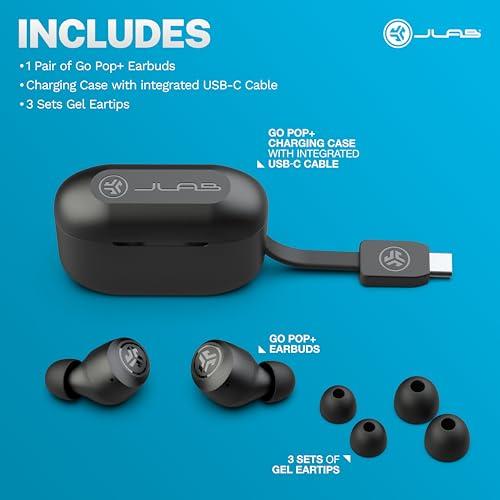
The secret lies in JLab's efficient power management and the relatively simple electronics inside. Without power-hungry features like active noise cancellation, the Go Pop+ can stretch its 45mAh battery per earbud significantly further. The charging case packs a substantial 380mAh battery, and here's where JLab made a clever design choice—they integrated the USB-C cable directly into the case. This means you'll never lose the charging cable, and it reduces the overall package size.
The quick charge feature deserves special mention: 10 minutes of charging provides an hour of playback. This kind of rapid top-up capability means even if you forget to charge overnight, a quick morning charge while getting ready can easily cover your commute.
The JBL Tune Buds offer even more impressive headline numbers—up to 48 hours total playback time with 12 hours per earbud. However, these numbers come with an important caveat: they're measured with ANC turned off. With active noise cancellation engaged, you're looking at 10 hours per earbud and 40 hours total, which still exceeds the Go Pop+ but narrows the gap.
The JBL's quick charge implementation is more aggressive—15 minutes provides 4 hours of playback, which is substantially better than JLab's offering. This reflects the larger battery capacity (70mAh per earbud vs 45mAh) and more sophisticated charging circuitry.
From a practical standpoint, both products offer more than enough battery life for typical daily use. The choice comes down to whether you prioritize absolute maximum runtime (Go Pop+) or faster quick charging with premium features (Tune Buds).
This category represents perhaps the starkest difference between these two approaches to earbud design. The JLab Go Pop+ relies entirely on passive noise isolation—essentially, how well the ear tips seal in your ear canal to block external sound. It's a simple approach that works reasonably well, and JLab includes three sizes of gel tips to help you find the best fit.
The Go Pop+ does include what JLab calls "Environmental Noise Canceling" for phone calls, but this is quite different from active noise cancellation. This feature uses digital signal processing (DSP) algorithms to identify and reduce background noise in your voice during calls, but it doesn't affect what you hear when listening to music.
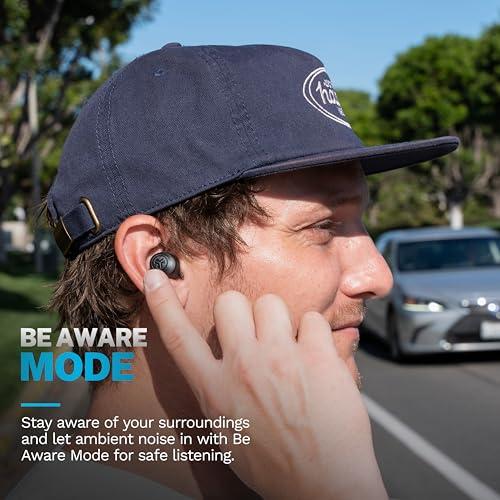
The "Be Aware" mode is a thoughtful addition that actually opens up the microphones to let ambient sound in, which is useful for situational awareness while walking or exercising outdoors. It's essentially the opposite of noise cancellation—designed to help you hear your surroundings rather than block them out.
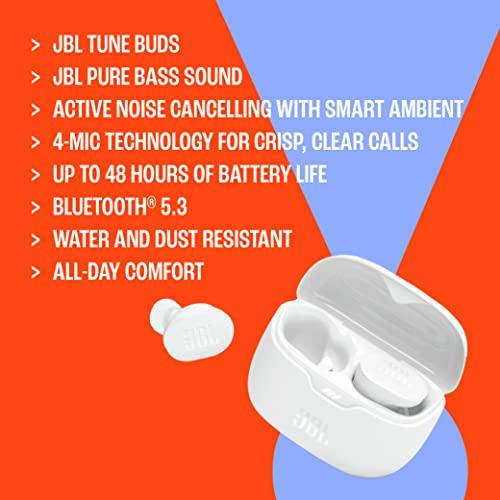
The JBL Tune Buds take a comprehensive approach to noise management with true active noise cancellation. ANC works by using external microphones to detect ambient noise, then generating "anti-noise" signals that cancel out unwanted sounds. The Tune Buds employ a 4-microphone array (2 per earbud) to accomplish this, along with JBL's Smart Ambient processing.
However, it's important to set realistic expectations. The ANC performance on the Tune Buds is competent but not industry-leading. It handles consistent, droning sounds like air conditioning or airplane engines reasonably well, but struggles with sudden, sharp noises or very low-frequency rumbles. Compared to flagship ANC earbuds from Sony or Apple, the noise reduction is noticeably less effective, particularly in the critical low-frequency range where engine noise and similar sounds live.
What JBL does well is the implementation of ambient modes. "Ambient Aware" lets in environmental sounds at a controlled level, while "TalkThru" specifically targets human speech frequencies, making it easier to have quick conversations without removing the earbuds. These features work smoothly and feel more polished than many competing implementations.
For voice calls, the difference between these products becomes immediately apparent. The JLab Go Pop+ uses a 2-microphone setup with basic environmental noise canceling algorithms. In quiet environments, call quality is acceptable—your voice comes through clearly enough for normal conversations. However, the system struggles significantly in noisy environments like busy streets, coffee shops, or windy outdoor conditions.
The fundamental limitation is that the Go Pop+ lacks the sophisticated beamforming technology and advanced DSP found in more expensive models. Beamforming uses multiple microphones to create a directional pickup pattern that focuses on your mouth while rejecting sound from other directions. Without this, the Go Pop+ microphones pick up everything around you with limited ability to separate your voice from background noise.
The JBL Tune Buds represent a significant step up with their 4-microphone array and VoiceAware technology. This setup enables proper beamforming, which dramatically improves the microphones' ability to isolate your voice from environmental noise. The result is noticeably clearer call quality, especially in challenging acoustic environments.
VoiceAware is a particularly useful feature that lets you control how much of your own voice is fed back into your ears during calls. This sidetone adjustment helps you speak at an appropriate volume and feel more natural during conversations—without it, you might find yourself talking too loudly or feeling disconnected from the call.
That said, even the JBL system isn't perfect. Sudden loud noises can still overwhelm the microphones, and in extremely noisy environments, some background sound will inevitably leak through. However, the improvement over the Go Pop+ is substantial and makes the Tune Buds much more suitable for professional use or frequent calling.
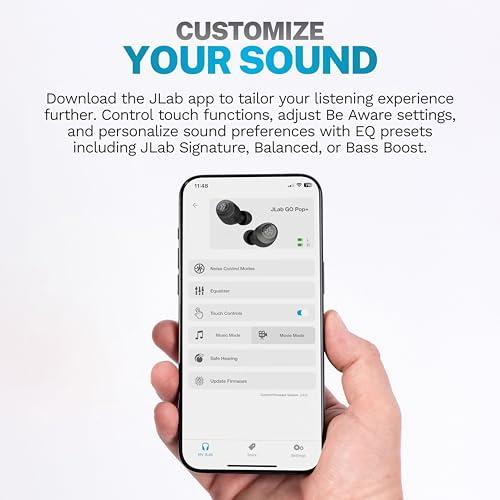
Both products include smartphone apps, but they serve different purposes and offer varying levels of functionality. The JLab Go Pop+ works with the JLab App, which is surprisingly comprehensive for earbuds in this price range. You get a 3-band EQ (bass, mid, treble adjustment), custom touch control mapping, and access to different sound profiles optimized for music versus movies.
The app also includes some thoughtful features like "Find My Buds" functionality and safe hearing monitoring that tracks your listening levels over time. For ultra-budget earbuds, this level of app support is remarkable and helps maximize the value proposition.
However, the app's interface feels somewhat basic compared to premium alternatives, and the EQ options, while helpful, can't completely overcome the fundamental limitations of the hardware.
The JBL Tune Buds include JBL's comprehensive Headphones app, which represents one of the better earbud apps in the market. The 10-band graphic EQ provides much more precise control over sound tuning than JLab's basic implementation, and JBL includes several well-designed presets for different music genres.
Beyond audio tuning, the app manages the ambient sound modes, provides detailed battery status for each earbud, and offers extensive touch control customization. One standout feature is the Smart Audio and Video modes, which automatically optimize the sound processing and latency characteristics based on your content type.
The app also handles firmware updates seamlessly and includes features like multipoint connection management, which lets you connect to two devices simultaneously and switch between them automatically based on which one is actively playing audio.
Physical durability often determines how long earbuds actually last in real-world use. The JLab Go Pop+ carries an IPX4 rating, which means they can handle sweat and light rain but shouldn't be submerged. The build quality feels appropriate for the price point—not premium, but solid enough for normal use. The lightweight design (7.8g total) makes them comfortable for extended wear, though some users find the hard plastic construction less comfortable than silicone alternatives.
The integrated USB-C cable in the charging case is both a strength and potential weakness. While it's incredibly convenient and eliminates the possibility of losing your charging cable, it also represents a potential failure point—if that cable breaks, the entire case becomes much less useful.
The JBL Tune Buds step up to IP54 rating, adding dust resistance to water protection. This makes them more suitable for outdoor activities, dusty environments, or beach use. The build quality feels more robust throughout, with better materials and tighter tolerances that suggest longer-term durability.
The ergonomic design deserves particular mention—JBL spent considerable effort optimizing the shape for extended comfort, and it shows. The oval tube design adapts well to different ear shapes, and the balanced weight distribution reduces fatigue during long listening sessions.
Both products use Bluetooth 5.3, the latest standard at the time of writing, which provides several advantages over older Bluetooth versions: lower power consumption, improved connection stability, and better audio quality. However, they implement different feature sets within that standard.
The JLab Go Pop+ focuses on the essentials: reliable pairing, decent range (30+ feet), and support for standard audio codecs like SBC and AAC. Google Fast Pair integration makes connecting to Android devices nearly instantaneous, and the "Dual Connect" feature lets you use either earbud independently—useful for extending battery life or sharing audio with someone else.
The JBL Tune Buds offer more advanced connectivity features, most notably multipoint connection. This lets you connect to two devices simultaneously—say, your laptop and phone—and automatically switch between them based on which one needs audio. It's incredibly convenient for people who regularly use multiple devices throughout their day.
The Tune Buds also support LE Audio, a newer Bluetooth standard that promises better audio quality at lower power consumption. While LE Audio isn't widely supported yet (as of 2024), having it means the earbuds are more future-proof as the ecosystem develops.
After extensive research into user experiences and expert reviews, clear usage patterns emerge for each product. The JLab Go Pop+ excels as an entry-level option for users who need reliable, long-lasting earbuds without premium features. They're particularly well-suited for students, casual listeners, or anyone who primarily uses earbuds for podcasts, audiobooks, and background music while working.
The exceptional battery life makes them ideal for people with unpredictable schedules who might forget to charge regularly. The integrated charging cable is genuinely useful for travel or situations where you might not have easy access to cables.
However, I wouldn't recommend them for music enthusiasts, frequent callers, or anyone who regularly uses earbuds in noisy environments. The sound quality limitations and lack of effective noise management become frustrating in these scenarios.
The JBL Tune Buds target users who want a more complete earbud experience without paying flagship prices. They're excellent for commuters who need ANC, music lovers who want punchy, engaging sound, or professionals who take frequent calls and need reliable microphone performance.
The multipoint connectivity makes them particularly valuable for people who work across multiple devices—you can stay connected to both your phone and laptop simultaneously, seamlessly switching between personal calls and work meetings.
For home theater use, if you must use earbuds instead of proper speakers or headphones, the Tune Buds handle the task much better thanks to their superior dynamic range and bass response.
At the time of writing, these products represent fundamentally different value propositions rather than direct competitors. The JLab Go Pop+ maximizes basic functionality per dollar spent, while the JBL Tune Buds provide a more premium experience at a proportionally higher cost.
Choose the Go Pop+ if your budget is constrained and you need reliable earbuds for basic use cases. They deliver exceptional value by focusing on the essentials without unnecessary complexity.
Choose the Tune Buds if you can invest more for meaningfully better performance across multiple categories. The improved sound quality, effective ANC, superior call performance, and advanced features justify the price premium for most users who can afford it.
Neither product will satisfy users seeking the absolute best sound quality or noise cancellation—for that, you'd need to move up to flagship models costing significantly more. But within their respective market segments, both the JLab Go Pop+ and JBL Tune Buds represent smart choices that deliver on their core promises while understanding their limitations.
| JLab Go Pop+ True Wireless Earbuds | JBL Tune Buds True Wireless Earbuds |
|---|---|
| Driver Size - Larger drivers typically produce better bass and overall sound quality | |
| 6mm dynamic drivers (compact but limited bass response) | 10mm dynamic drivers (fuller sound with better bass impact) |
| Active Noise Cancellation - Essential for commuting and noisy environments | |
| None (passive isolation only with Be Aware mode) | Yes, with Smart Ambient suite (Ambient Aware & TalkThru modes) |
| Battery Life Per Earbud - How long you can listen before needing the case | |
| 9+ hours (exceptional for ultra-budget earbuds) | 12 hours without ANC, 10 hours with ANC (industry-leading performance) |
| Total Battery Life - Critical for travel and heavy daily use | |
| 35+ hours total (outstanding endurance for the price) | 48 hours without ANC, 40 hours with ANC (best-in-class longevity) |
| Water Resistance - Protection level for workouts and weather | |
| IPX4 (sweat and splash resistant) | IP54 (water and dust resistant, better outdoor protection) |
| Microphone Setup - Impacts call quality in noisy environments | |
| 2 MEMS mics with basic noise canceling | 4-microphone array with VoiceAware technology (superior call clarity) |
| Bluetooth Version - Affects connection stability and battery efficiency | |
| Bluetooth 5.3 with Google Fast Pair | Bluetooth 5.3 with LE Audio support and multipoint connectivity |
| App Features - Customization options and additional functionality | |
| JLab App with 3-band EQ and custom controls | JBL Headphones App with 10-band EQ and comprehensive features |
| Sound Signature - Different tuning approaches for various music preferences | |
| Clear but hard-edged, best for vocals and simple music | V-shaped with JBL Pure Bass Sound, excellent for modern genres |
| Quick Charge - How fast you can get emergency power | |
| 10 minutes = 1 hour playback (adequate for emergencies) | 15 minutes = 4 hours playback (superior rapid charging) |
| Charging Case Design - Convenience and portability factors | |
| Integrated USB-C cable (never lose your charger) | Standard USB-C port (more conventional but requires separate cable) |
| Weight - Comfort factor for extended wear | |
| 7.8g total (ultra-lightweight design) | 10.8g earbuds + 38.8g case (heavier but more substantial build) |
| Frequency Response - Audio range reproduction capability | |
| 20Hz - 20kHz (standard range, limited dynamics) | 20Hz - 20kHz (same range but better implementation and tuning) |
The JBL Tune Buds deliver significantly better sound quality than the JLab Go Pop+. The JBL earbuds feature larger 10mm drivers compared to the 6mm drivers in the Go Pop+, resulting in fuller bass response and better overall dynamics. The JBL Tune Buds use JBL's Pure Bass Sound tuning, which creates an engaging V-shaped sound signature perfect for modern music genres like EDM, hip-hop, and pop. While the JLab Go Pop+ provides clear vocals and decent clarity for the price, the sound can be hard-edged and lacks the warmth and richness of the JBL option.
Only the JBL Tune Buds feature true active noise cancellation (ANC), while the JLab Go Pop+ relies solely on passive noise isolation. The JBL earbuds use a 4-microphone array to actively cancel unwanted background noise, making them much better for commuting, flying, or working in noisy environments. The JLab Go Pop+ does include a "Be Aware" mode that lets ambient sound in for safety, but it cannot block external noise like the JBL Tune Buds can with their Smart Ambient suite.
The JBL Tune Buds offer longer battery life per charge, providing up to 12 hours of playback per earbud (10 hours with ANC on) compared to 9+ hours from the JLab Go Pop+. However, both earbuds excel in total battery life when including the charging case. The JBL Tune Buds deliver up to 48 hours total (40 hours with ANC), while the JLab Go Pop+ provides 35+ hours total. Both options easily handle all-day use without needing frequent charging.
The JBL Tune Buds are significantly better for phone calls thanks to their 4-microphone array and VoiceAware technology. This setup provides superior noise canceling for your voice and better isolation from background sounds. The JLab Go Pop+ uses only 2 microphones with basic environmental noise canceling, making call quality acceptable in quiet environments but poor in noisy settings. If you take frequent calls, especially for work, the JBL Tune Buds are the clear choice.
The JBL Tune Buds generally offer better comfort for extended wear due to their ergonomic oval tube design that adapts well to different ear shapes. While the JLab Go Pop+ are extremely lightweight at just 7.8g total, some users find the hard plastic construction less comfortable over time. Both include multiple ear tip sizes, but the JBL Tune Buds have superior weight distribution and materials that reduce fatigue during long listening sessions.
Both earbuds work for exercise, but the JBL Tune Buds offer better protection with their IP54 rating (water and dust resistant) compared to the IPX4 rating (sweat and splash resistant) of the JLab Go Pop+. The JBL earbuds can handle more challenging outdoor conditions and dusty environments. However, the JLab Go Pop+ are lighter and may feel more secure during high-intensity workouts for some users.
Only the JBL Tune Buds support multipoint connectivity, allowing you to connect to two devices simultaneously and automatically switch between them. This is incredibly useful if you need to stay connected to both your phone and laptop. The JLab Go Pop+ can only connect to one device at a time, though they do support Google Fast Pair for quick Android device pairing and allow either earbud to be used independently.
The JBL Tune Buds are better suited for movie watching thanks to their superior bass response, better dynamic range, and Smart Video mode that reduces audio latency. While neither earbud can match the expansive soundstage of over-ear headphones for home theater use, the JBL Tune Buds handle movie soundtracks and dialogue much more effectively than the JLab Go Pop+, which can struggle with complex audio tracks.
The JBL Tune Buds offer superior quick charging with 15 minutes providing 4 hours of playback, compared to 10 minutes for 1 hour of playback with the JLab Go Pop+. However, the JLab Go Pop+ feature a unique integrated USB-C cable in the charging case, meaning you'll never lose your charging cable. The JBL Tune Buds use a standard USB-C port requiring a separate cable.
Both earbuds offer good app support, but the JBL Tune Buds provide more comprehensive features through the JBL Headphones app. This includes a 10-band graphic EQ, extensive touch control customization, and Smart Audio/Video modes. The JLab Go Pop+ work with the JLab App, which offers 3-band EQ and custom controls - impressive for the price point but less sophisticated than the JBL option.
The price difference between the JLab Go Pop+ and JBL Tune Buds reflects meaningful performance improvements. The JBL earbuds justify their higher cost with active noise cancellation, superior sound quality, better call performance, multipoint connectivity, and more durable construction. The JLab Go Pop+ excel as an ultra-budget option focused on essential features and exceptional battery life, making them perfect for casual users with limited budgets.
Choose the JLab Go Pop+ if you need reliable, long-lasting earbuds for basic use like podcasts, casual music, and occasional calls while staying within a tight budget. Choose the JBL Tune Buds if you want better sound quality, active noise cancellation, superior call performance, and advanced features like multipoint connectivity. The JBL Tune Buds are ideal for commuters, music enthusiasts, and professionals, while the JLab Go Pop+ serve students and casual users perfectly.
We've done our best to create useful and informative comparisons to help you decide what product to buy. Our research uses advanced automated methods to create this comparison and perfection is not possible - please contact us for corrections or questions. These are the sites we've researched in the creation of this article: whathifi.com - jlab.com - soundguys.com - avrilmarieaalund.com - jlab.com - bestbuy.com - jlab.com - shop.ncsu.edu - jlab.com - techgearlab.com - youtube.com - manuals.plus - jlab.com - jlab.com - versus.com - help.jlab.com - bestbuy.com - rtings.com - jbl.com - youtube.com - jbl.com - soundguys.com - ro.harmanaudio.com - audio46.com - bestbuy.com - majorhifi.com - jbl.com - crutchfield.com - jblstore.com.ph - kh.jbl.com - in.jbl.com - bestbuy.com - uclastore.com - jbl.com - jbl.com.tw

Privacy Policy
Terms and Conditions - Affiliate Policy
Home Security
© Copyright 2008-2026.
11816 Inwood Rd #1211, Dallas, TX 75244