




The world of home audio has transformed dramatically over the past few years. Gone are the days when you needed a stack of separate components—a CD player, amplifier, and maybe a separate streaming device—just to listen to music. Today's streaming amplifiers pack all that functionality into a single, compact box that can power your speakers while seamlessly connecting to virtually any music source you can imagine.
But with great convenience comes great complexity in choosing the right one. Two models that represent very different philosophies in this space are the WiiM Amp Ultra, released in 2025, and the Yamaha WXA-50, which has been a reliable workhorse since its introduction several years ago. At the time of writing, these amplifiers occupy similar price ranges but take distinctly different approaches to solving the same fundamental problem: how to get great-sounding music into your home with minimal fuss.
Before diving into specifics, it's worth understanding what separates an excellent streaming amplifier from a merely adequate one. The most critical factor is power output—measured in watts per channel—which determines how loud your music can get and how well the amplifier can control your speakers. But raw power numbers only tell part of the story.
Equally important is the quality of the digital-to-analog converter (DAC), the component responsible for turning the digital music files on your phone or streaming service into analog signals your speakers can reproduce. A high-quality DAC preserves the subtle details that make music emotionally engaging, while a poor one can make even the best recordings sound flat and lifeless.
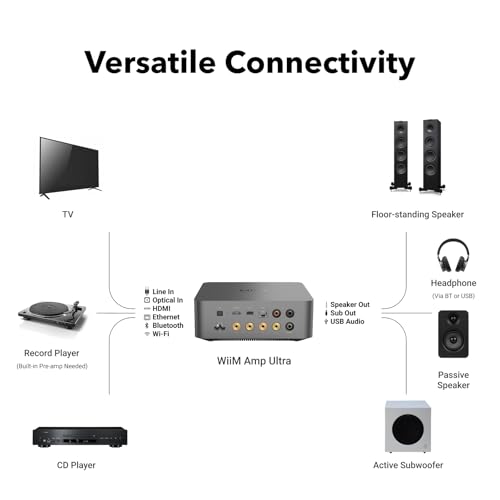
Then there's connectivity. Modern streaming amplifiers need to juggle Wi-Fi, Bluetooth, wired connections, and increasingly, integration with your TV and smart home devices. The best models make this complexity invisible to the user while offering the flexibility to grow with your needs.
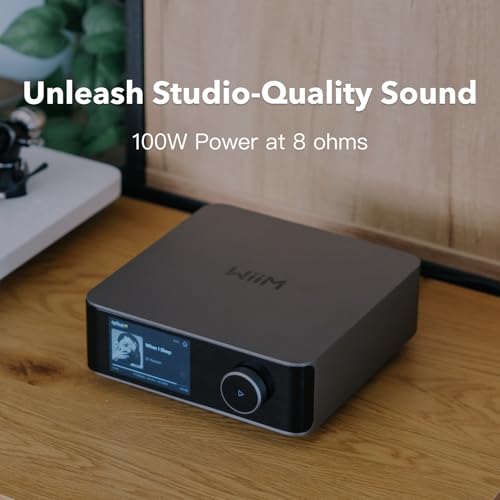
The most striking difference between the WiiM Amp Ultra and Yamaha WXA-50 lies in their amplifier sections. The WiiM delivers substantially more power: 100 watts per channel into 8-ohm speakers (the standard impedance for most home speakers) and an impressive 200 watts per channel into 4-ohm loads. The Yamaha, by contrast, provides 55 watts per channel into 8 ohms and 105 watts into 4 ohms.
This power difference isn't just about bragging rights—it translates to real-world performance advantages. More power means the WiiM Amp Ultra can drive larger, less efficient speakers to satisfying volume levels while maintaining tight control over bass response and dynamic peaks. If you're planning to use bookshelf speakers in a small room, 55 watts might be plenty. But for floor-standing speakers or a larger listening space, the WiiM's extra power becomes genuinely useful.
The WiiM achieves this output using dual Texas Instruments TPA3255 Class-D amplifier chips, a well-regarded design known for combining high efficiency with excellent sound quality. Class-D amplifiers work by rapidly switching the power on and off thousands of times per second, creating the desired output signal while generating minimal heat. This technology has matured dramatically in recent years, reaching the point where even discerning listeners struggle to distinguish well-implemented Class-D designs from traditional analog amplifiers.
What sets the WiiM Amp Ultra apart is its implementation of Post-Filter Feedback (PFFB) technology. This system continuously monitors the actual output signal and makes real-time corrections to compensate for variations in speaker impedance. Speaker impedance isn't constant—it varies with frequency and can cause amplifiers to behave unpredictably. PFFB technology keeps the amplifier's response consistent regardless of these variations, resulting in more natural, balanced sound across different types of speakers.
The Yamaha takes a more conventional approach without load compensation, which works fine but may not maintain the same consistency across different speaker types. Based on user reports and technical measurements, the WiiM's approach yields more precise bass control and better overall dynamics—the sense of musical "punch" that makes recordings come alive.
Both amplifiers feature ESS DAC chips, but here again, the implementation details matter enormously. The WiiM Amp Ultra uses the ES9039Q2M SABRE DAC, a premium component typically found in much more expensive equipment. This is paired with six TI OPA1612 operational amplifiers (op-amps)—specialized chips that handle the delicate analog signals after digital conversion.
Why does this matter? Digital audio conversion involves translating the ones and zeros of digital music into the continuous voltage variations that drive speakers. A high-quality DAC like the ES9039Q2M can resolve incredibly fine details while introducing virtually no distortion—achieving signal-to-noise ratios exceeding 120 decibels and total harmonic distortion below 0.005%. To put this in perspective, these specifications rival dedicated DACs costing thousands of dollars just a few years ago.
The Yamaha WXA-50 also uses an ESS DAC but doesn't specify the exact model or implementation details, suggesting a more basic approach. While still capable of excellent sound quality, it likely lacks the refinement of the WiiM's implementation.
Where the Yamaha does excel is in format support. It handles DSD (Direct Stream Digital) files natively up to 5.6 MHz sampling rates. DSD is a specialized high-resolution format originally developed for Super Audio CDs, prized by some audiophiles for its smooth, analog-like character. The WiiM Amp Ultra converts DSD to PCM (Pulse Code Modulation) for playback, which works perfectly well but may disappoint purists who prefer native DSD reproduction.
For most users, both amplifiers support the high-resolution formats that matter: FLAC, WAV, and AIFF files up to 192 kHz/24-bit sampling rates. This represents far higher resolution than CD quality (44.1 kHz/16-bit) and ensures compatibility with the highest-quality downloads and streaming services available today.
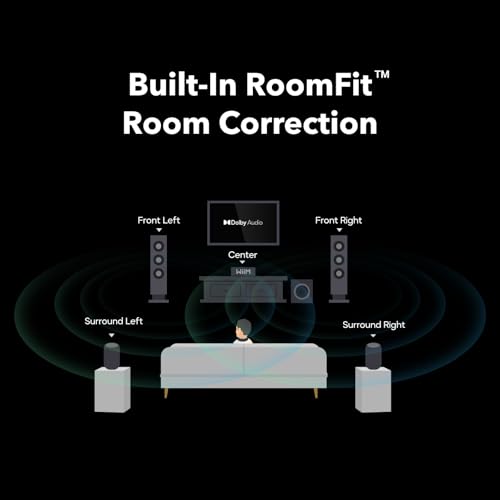
Perhaps the most significant technical advantage of the WiiM Amp Ultra is its built-in room correction system. Room acoustics profoundly affect sound quality—even the best speakers can sound mediocre in a problematic room, while modest speakers can shine in a well-treated space.
The WiiM's room correction works by using your smartphone's microphone to measure how your speakers actually sound in your room, then applying digital filters to compensate for acoustic issues. This might involve boosting frequencies that your room absorbs or reducing peaks caused by reflections and standing waves.
The system also includes sophisticated subwoofer integration, automatically setting crossover frequencies and delays to blend your main speakers seamlessly with a subwoofer. Getting this right manually typically requires expensive measurement equipment and considerable expertise, so having it automated is genuinely valuable.
Beyond room correction, the WiiM Amp Ultra offers 10-band parametric equalization with independent settings for each input. This means you can tailor the sound differently for different sources—perhaps adding warmth to compressed streaming music while leaving high-resolution files untouched.
The Yamaha WXA-50 includes basic sound processing like its Compressed Music Enhancer, which attempts to restore detail to MP3 and other compressed formats, and volume-adaptive EQ that adjusts tonal balance at different listening levels. These features work well but represent a more basic approach compared to the WiiM's comprehensive room correction.
Modern streaming amplifiers must excel as digital chameleons, adapting to whatever source you throw at them. Both amplifiers handle the basics well—Wi-Fi, Bluetooth, and wired connections—but their implementations differ significantly.
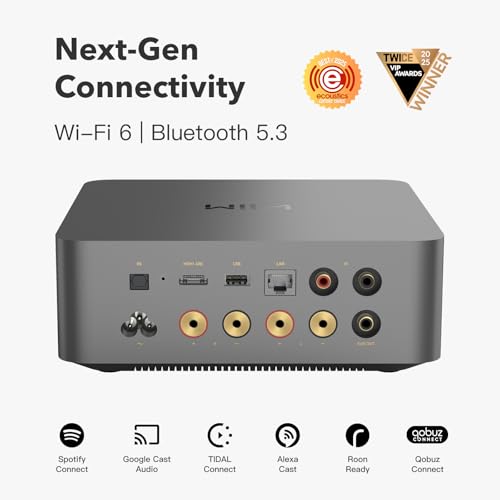
The WiiM Amp Ultra includes Wi-Fi 6E support, the latest wireless standard offering faster speeds, lower latency, and access to the less-congested 6 GHz frequency band. This might seem like overkill for audio streaming, but it provides headroom for high-resolution music and ensures reliable performance even in environments with heavy Wi-Fi traffic.
The WiiM's Bluetooth implementation supports version 5.3 with LE Audio, a new standard that promises better sound quality and multi-device connectivity. While LE Audio adoption is still in early stages, having support built-in provides future-proofing.
Where the WiiM Amp Ultra truly distinguishes itself is with HDMI ARC (Audio Return Channel) connectivity. This single connection allows the amplifier to receive audio directly from your TV, handling everything from stereo shows to Dolby Digital 5.1 soundtracks. Combined with the built-in subwoofer output, this makes the WiiM capable of serving as a complete home theater solution for smaller spaces.
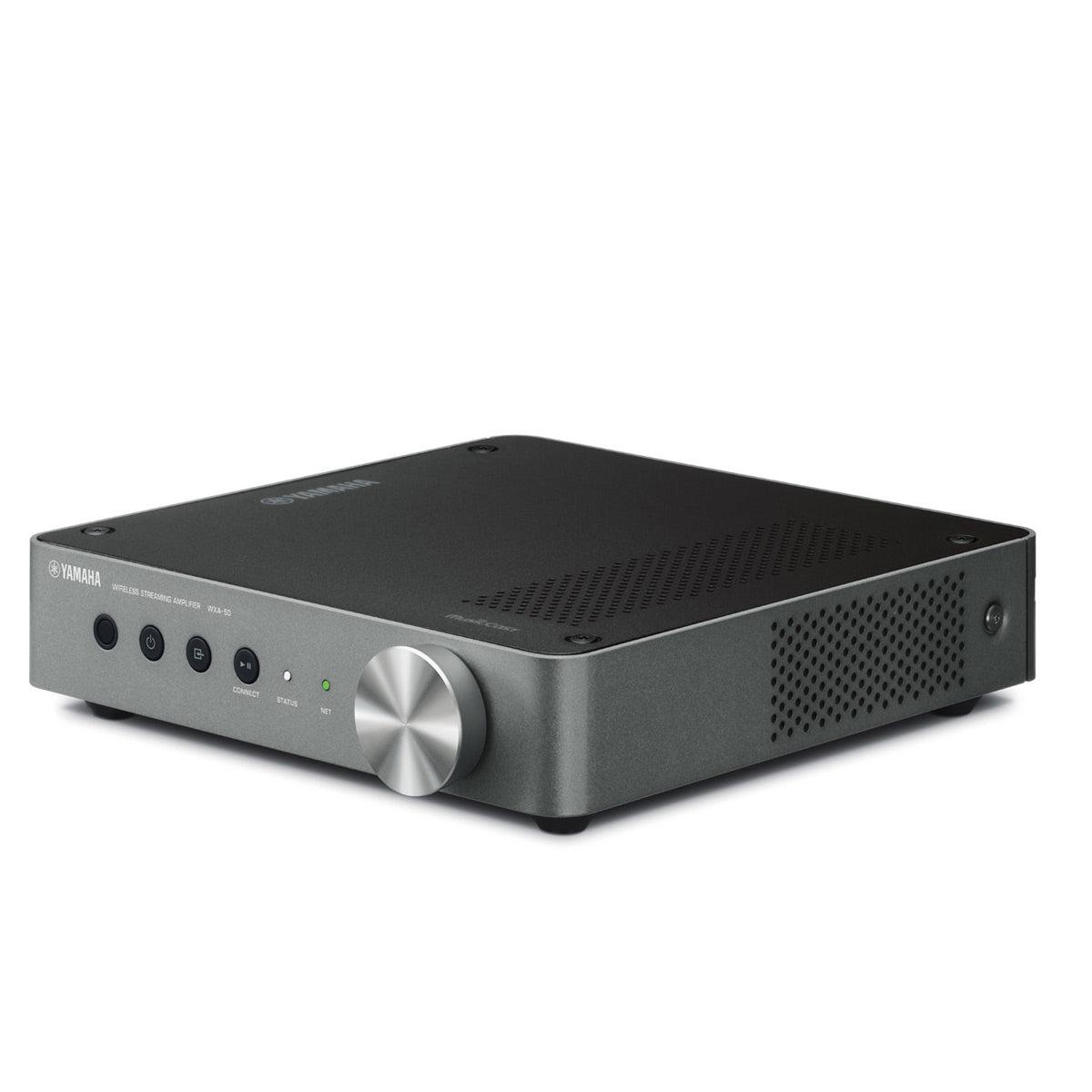
The Yamaha WXA-50 lacks HDMI ARC entirely, which limits its home theater integration capabilities. You'd need to run separate audio connections from your TV or use the optical input, which works but isn't as seamless.
Both amplifiers support major streaming services directly, but through different ecosystems. The WiiM Amp Ultra works with Google Cast, Alexa Cast, Spotify Connect, TIDAL Connect, and has Roon Ready certification for audiophile streaming. The Yamaha WXA-50 integrates with Yamaha's MusicCast system, which offers excellent multi-room capabilities if you're building a whole-home Yamaha-based system.
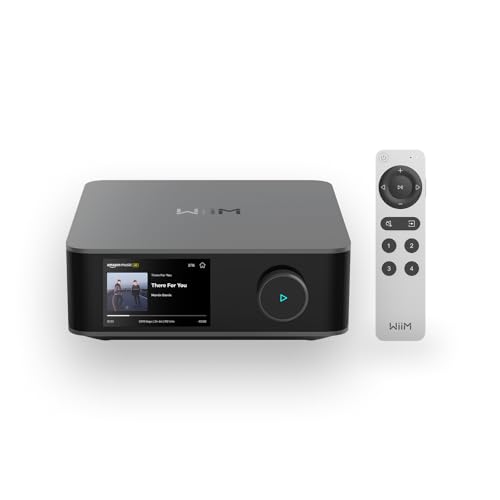
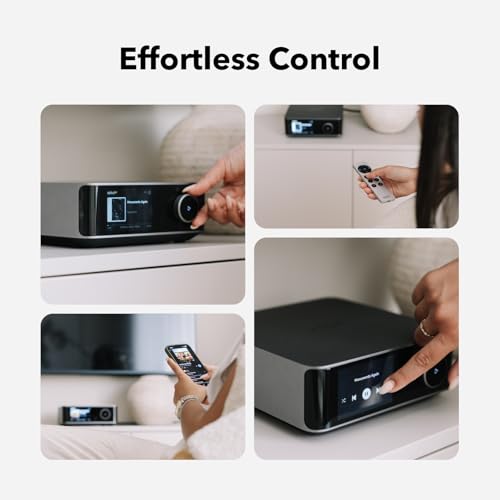
One of the most immediately noticeable differences is how you interact with these devices daily. The WiiM Amp Ultra features a 3.5-inch color touchscreen that displays album art, input selection, EQ settings, and even retro-style VU meters that dance with the music. There's something satisfying about having physical controls and visual feedback right on the device itself.
The screen isn't just for show—it provides genuine functionality. You can adjust settings, browse recently played music, and access preset configurations without reaching for your phone. The included WiiM Voice Remote 2 adds voice control capabilities with support for Alexa, Google Assistant, and Siri.
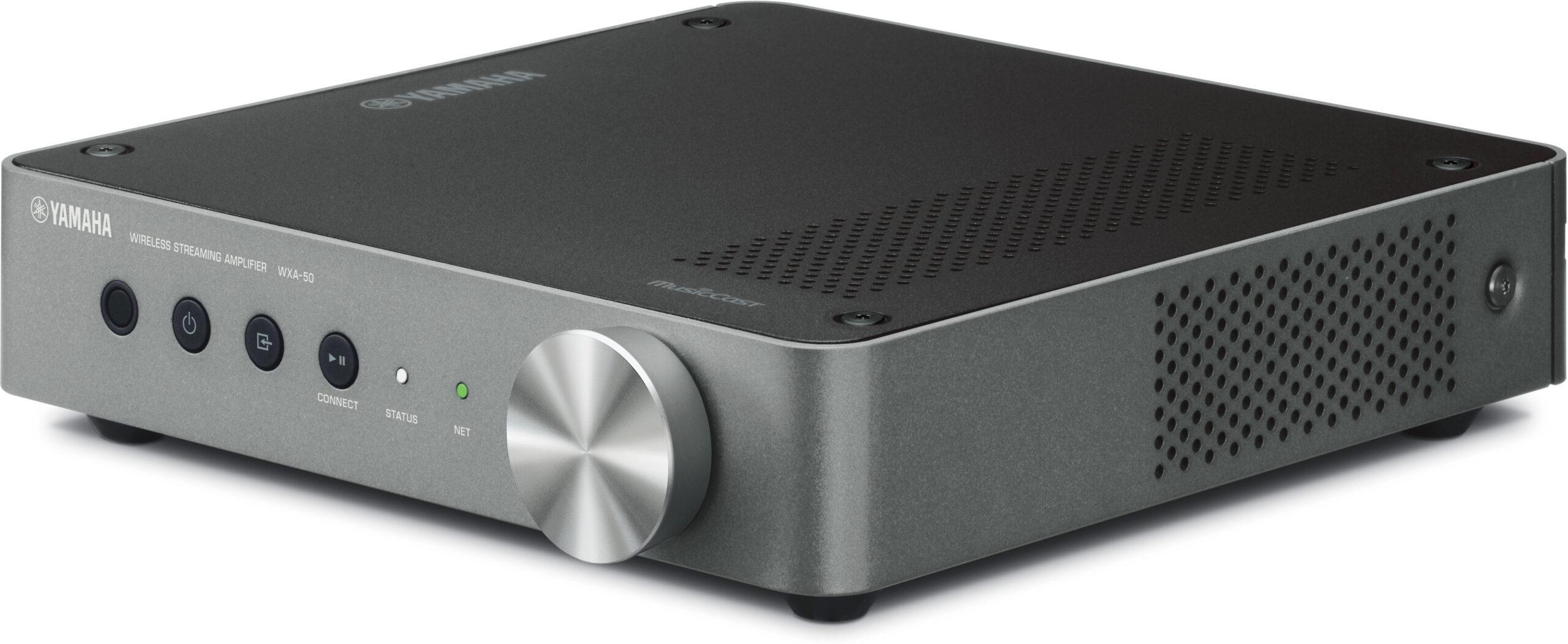
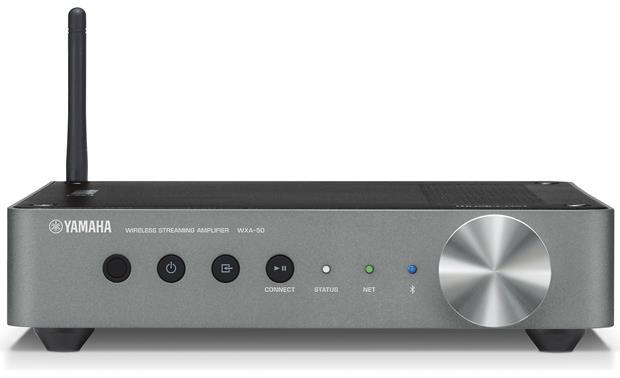
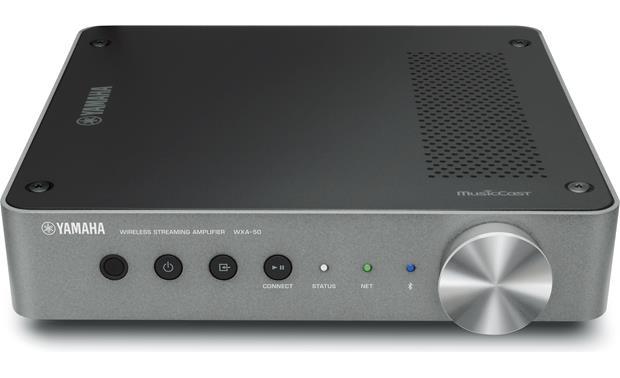
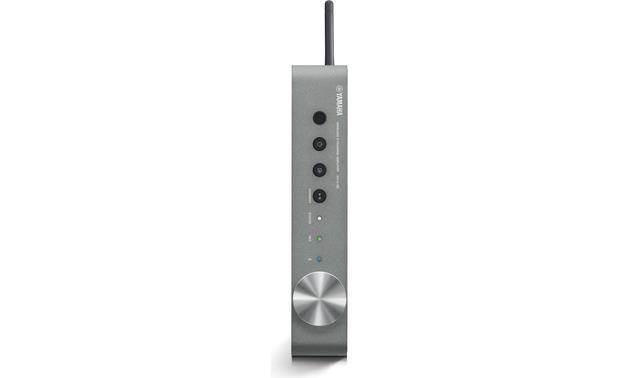
The Yamaha WXA-50 takes a minimalist approach with no display at all. Control happens entirely through the MusicCast app or the included basic remote. While this keeps the front panel clean and may appeal to those who prefer an invisible aesthetic, it means you're dependent on your phone or tablet for all but the most basic functions.
Both approaches have merit. The WiiM's screen adds convenience and visual appeal, while the Yamaha's approach eliminates potential points of failure and keeps costs down. Your preference likely depends on whether you value immediate visual feedback or prefer the simplicity of app-based control.
If you're building a whole-home audio system, ecosystem compatibility becomes crucial. The Yamaha WXA-50 shines here, integrating seamlessly with other MusicCast devices. Yamaha's multi-room system is mature and reliable, allowing synchronized playback across multiple zones or independent control of each room.
The WiiM ecosystem is newer but growing rapidly. The WiiM Amp Ultra can integrate with other WiiM devices for multi-room audio, though the ecosystem isn't as extensive as Yamaha's yet. However, the WiiM's broader compatibility with casting standards means it works well with devices from other manufacturers.
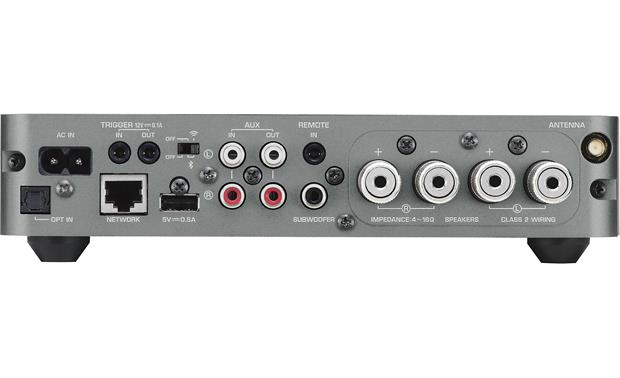
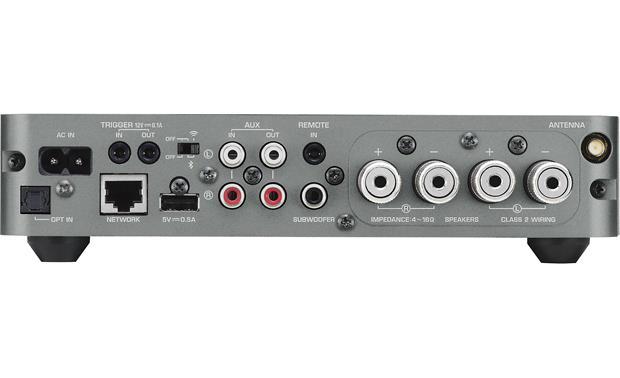
For custom installation scenarios, the Yamaha WXA-50 offers features that installers appreciate: rack-mounting capabilities, 12V trigger inputs and outputs for automated power control, and remote input connections for integration with whole-home control systems. The WiiM lacks these professional installation features, making it better suited for consumer-direct applications.
The WiiM Amp Ultra's HDMI ARC capability transforms it from a simple music amplifier into a legitimate home theater component. Connect it to your TV's ARC port, add a subwoofer to the dedicated output, and you have a complete 2.1 system that can handle everything from stereo music to surround sound movies.
The automatic room correction becomes particularly valuable in this context, optimizing both music playback and dialogue clarity. The system can apply different EQ settings for different sources, so your carefully tuned music settings won't interfere with TV audio processing.
Without HDMI ARC, the Yamaha WXA-50 requires more creative solutions for TV integration. You might use the optical input, but this limits you to stereo PCM audio and requires manual input switching. For dedicated music listening, this isn't a problem, but it reduces the amplifier's versatility as an all-in-one solution.
Based on extensive research into user experiences and technical measurements, both amplifiers deliver excellent sound quality that will satisfy most listeners. However, the WiiM Amp Ultra edges ahead in several key areas.
The superior DAC implementation and six-op-amp analog stage provide better detail resolution and lower noise floors. The higher power output maintains better control over demanding speakers, particularly in the bass region where amplifier authority matters most. The Post-Filter Feedback technology contributes to more consistent performance across different speaker loads.
User reports consistently describe the WiiM as more dynamic and engaging, with better separation of instruments in complex musical passages. The Yamaha receives praise for its smooth, refined character but may lack some of the WiiM's sense of musical excitement.
The room correction capabilities of the WiiM Amp Ultra can make a dramatic difference in real-world installations, potentially turning a problematic listening room into an enjoyable one. This alone might justify choosing the WiiM for many users.
The WiiM Amp Ultra emerges as the clear choice for most buyers at the time of writing. Its combination of higher power output, advanced features, and typically lower pricing represents exceptional value. Choose the WiiM if you want maximum versatility, plan to integrate with TV viewing, need room correction capabilities, or simply want the most advanced technology available in this price range.
The Yamaha WXA-50 serves specific niches effectively. It's the better choice if you're building a Yamaha-based multi-room system, need professional installation features like rack mounting and trigger controls, or strongly prefer native DSD playback. Its established ecosystem and proven reliability also appeal to users who prioritize long-term support over cutting-edge features.
For most people setting up a modern audio system, the WiiM Amp Ultra provides more capability at a better price point. Its home theater integration alone adds significant value, while the room correction and advanced EQ capabilities help it adapt to challenging acoustic environments.
The audio world continues evolving rapidly, with new features and capabilities appearing regularly. Both amplifiers represent solid choices, but the WiiM's newer technology and more comprehensive feature set position it better for future needs. As streaming becomes even more central to how we consume media, having the most flexible and capable hub becomes increasingly important.
Ultimately, both will deliver years of musical enjoyment, but the WiiM Amp Ultra does so while offering more features, better performance, and superior value—making it the easy recommendation for most buyers in this category.
| WiiM Amp Ultra Streaming Amplifier | Yamaha MusicCast Wireless Streaming Amplifier |
|---|---|
| Power Output - Critical for driving speakers effectively and achieving satisfying volume levels | |
| 100W @ 8Ω, 200W @ 4Ω (dual TI TPA3255 chips) | 55W @ 8Ω, 105W @ 4Ω (nearly half the power) |
| DAC Quality - Determines audio fidelity and detail resolution | |
| ESS ES9039Q2M SABRE with six TI OPA1612 op-amps | ESS DAC (model unspecified, basic implementation) |
| Room Correction - Can dramatically improve sound in challenging acoustic spaces | |
| Built-in automatic room correction with smartphone measurement | Basic sound processing only (no room correction) |
| User Interface - How you control the device daily | |
| 3.5" color touchscreen with album art and VU meters | No display, app-only control |
| Home Theater Integration - Essential for TV audio and movie watching | |
| HDMI ARC with Dolby Digital 5.1 decoding | No HDMI ARC (optical input only) |
| Wireless Technology - Affects connection reliability and future-proofing | |
| Wi-Fi 6E tri-band, Bluetooth 5.3 with LE Audio | Basic Wi-Fi, Bluetooth with SBC/AAC |
| Voice Control - Convenience for hands-free operation | |
| Alexa, Google Assistant, Siri support with Voice Remote 2 | No voice assistant compatibility |
| EQ and Audio Processing - Customization for different music and rooms | |
| 10-band parametric EQ, 24 presets, independent per input | Volume-adaptive EQ, Compressed Music Enhancer |
| High-Resolution Audio Support - For audiophile-quality playback | |
| Up to 192kHz/24-bit (DSD converted to PCM) | Up to 192kHz/24-bit plus native DSD up to 5.6MHz |
| Multi-Room Ecosystem - Important for whole-home audio systems | |
| WiiM ecosystem (newer, growing rapidly) | MusicCast ecosystem (mature, extensive compatibility) |
| Professional Installation Features - Required for custom integrations | |
| Consumer-focused design, no rack mounting | Rack-mountable with trigger I/O and remote input |
| Build Quality - Affects longevity and thermal performance | |
| Aluminum unibody with copper heat pipes | Aluminum construction, rack-mountable design |
The WiiM Amp Ultra delivers significantly more power with 100 watts per channel at 8 ohms and 200 watts at 4 ohms, compared to the Yamaha MusicCast Wireless Streaming Amplifier which provides 55 watts at 8 ohms and 105 watts at 4 ohms. This extra power from the WiiM Amp Ultra makes it better suited for larger speakers and rooms.
The WiiM Amp Ultra includes HDMI ARC connectivity with Dolby Digital 5.1 decoding, making it excellent for home theater setups when paired with a subwoofer. The Yamaha MusicCast lacks HDMI ARC and only offers optical input, limiting its home theater integration capabilities.
The WiiM Amp Ultra uses a premium ESS ES9039Q2M SABRE DAC with six dedicated op-amps, delivering superior audio specifications including 0.005% THD and 120dB SNR. While the Yamaha MusicCast also uses an ESS DAC, it's a more basic implementation with higher distortion levels.
The WiiM Amp Ultra features a 3.5-inch color touchscreen that displays album art, VU meters, and control options. The Yamaha MusicCast Wireless Streaming Amplifier has no display and relies entirely on smartphone app control.
Both amplifiers support major streaming platforms like Spotify and TIDAL. The WiiM Amp Ultra offers Google Cast, Alexa Cast, and Roon Ready support, while the Yamaha MusicCast integrates with Yamaha's MusicCast ecosystem for multi-room audio.
The WiiM Amp Ultra supports Alexa, Google Assistant, and Siri voice control through its included Voice Remote 2. The Yamaha MusicCast Wireless Streaming Amplifier does not support voice assistants.
The Yamaha MusicCast excels in multi-room setups with its mature MusicCast ecosystem that works seamlessly with other Yamaha devices. The WiiM Amp Ultra offers multi-room capabilities but has a newer, less extensive ecosystem.
The WiiM Amp Ultra includes automatic room correction that uses your smartphone to measure acoustics and optimize sound quality. The Yamaha MusicCast Wireless Streaming Amplifier only offers basic sound enhancement features without room correction.
Both support high-resolution audio up to 192kHz/24-bit. The Yamaha MusicCast has an advantage with native DSD support up to 5.6MHz, while the WiiM Amp Ultra converts DSD files to PCM for playback.
The Yamaha MusicCast Wireless Streaming Amplifier is better suited for custom installations with rack-mounting capability, trigger inputs/outputs, and professional integration features. The WiiM Amp Ultra is designed primarily for consumer use without these installation features.
The WiiM Amp Ultra provides superior wireless technology with Wi-Fi 6E tri-band and Bluetooth 5.3 with LE Audio support. The Yamaha MusicCast uses basic Wi-Fi and standard Bluetooth with SBC/AAC codecs.
The WiiM Amp Ultra typically offers better value with more power, advanced features like touchscreen control and room correction, plus home theater integration at a competitive price point. The Yamaha MusicCast Wireless Streaming Amplifier costs more while providing fewer modern features, though it excels in specific scenarios like multi-room Yamaha systems.
We've done our best to create useful and informative comparisons to help you decide what product to buy. Our research uses advanced automated methods to create this comparison and perfection is not possible - please contact us for corrections or questions. These are the sites we've researched in the creation of this article: ecoustics.com - audacityaustralia.com.au - forum.wiimhome.com - erinsaudiocorner.com - forum.wiimhome.com - stevehuffphoto.com - darko.audio - bryanruby.com - youtube.com - audiosciencereview.com - ecoustics.com - smarthomesounds.co.uk - socpub.com - audio-2g.com - hifihut.ie - crutchfield.ca - usa.yamaha.com - avluxurygroup.com - crutchfield.com - crutchfield.com - teamiu.com - audiosciencereview.com - snapav.com - avsforum.com - youtube.com - hifiheaven.net - usa.yamaha.com - usa.yamaha.com - audiokarma.org - usa.yamaha.com - bestbuy.com - usa.yamaha.com - ooberpad.com - dugoutnorthbrook.com - parts-express.com

Privacy Policy
Terms and Conditions - Affiliate Policy
Home Security
© Copyright 2008-2026.
11816 Inwood Rd #1211, Dallas, TX 75244