



The world of home audio has transformed dramatically over the past decade. Gone are the days when you needed a tower of separate components—CD players, preamps, power amps, and tuners—stacked high in your entertainment center. Today's wireless streaming amplifiers pack all that functionality into sleek, compact units that can disappear into your living space while delivering surprisingly powerful sound.
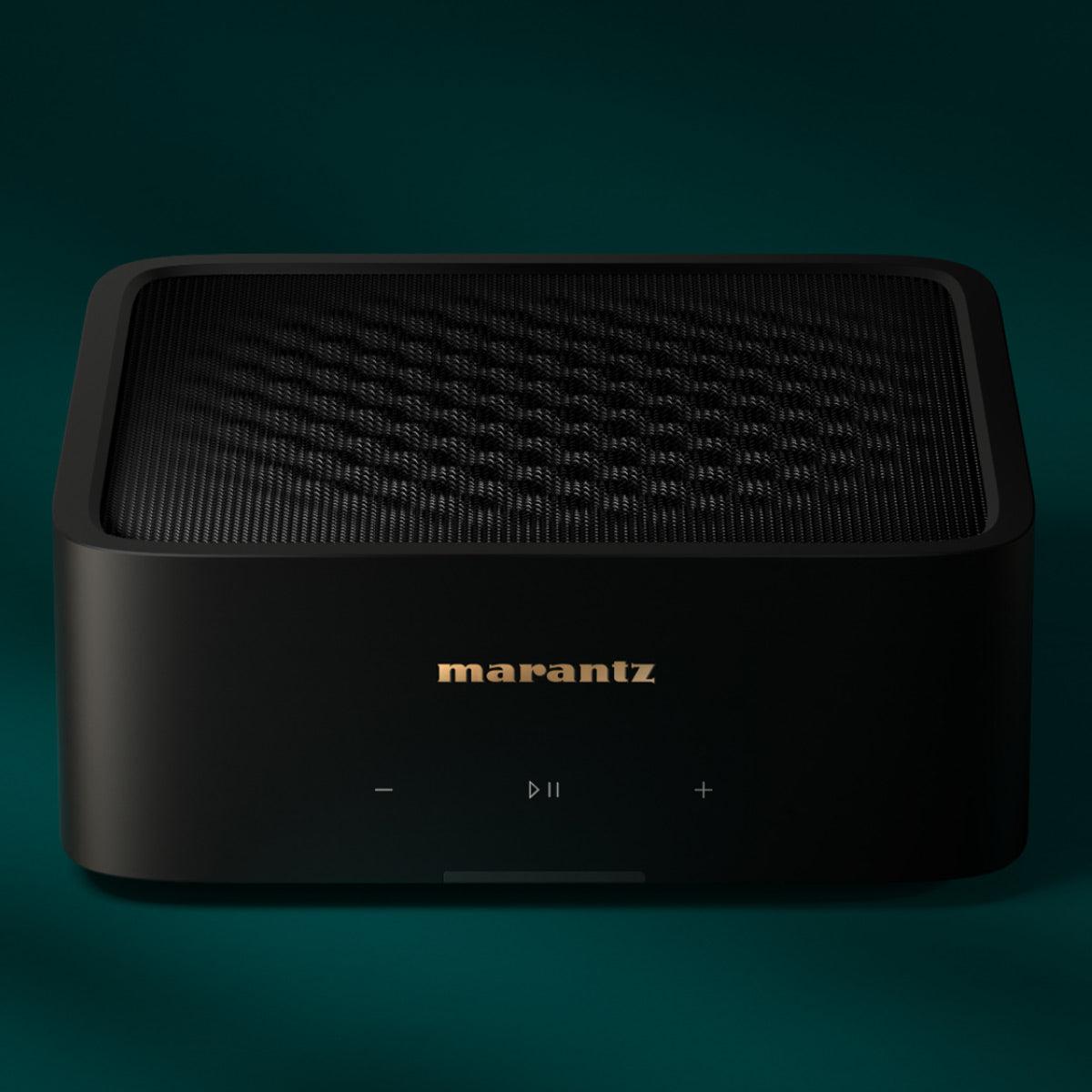
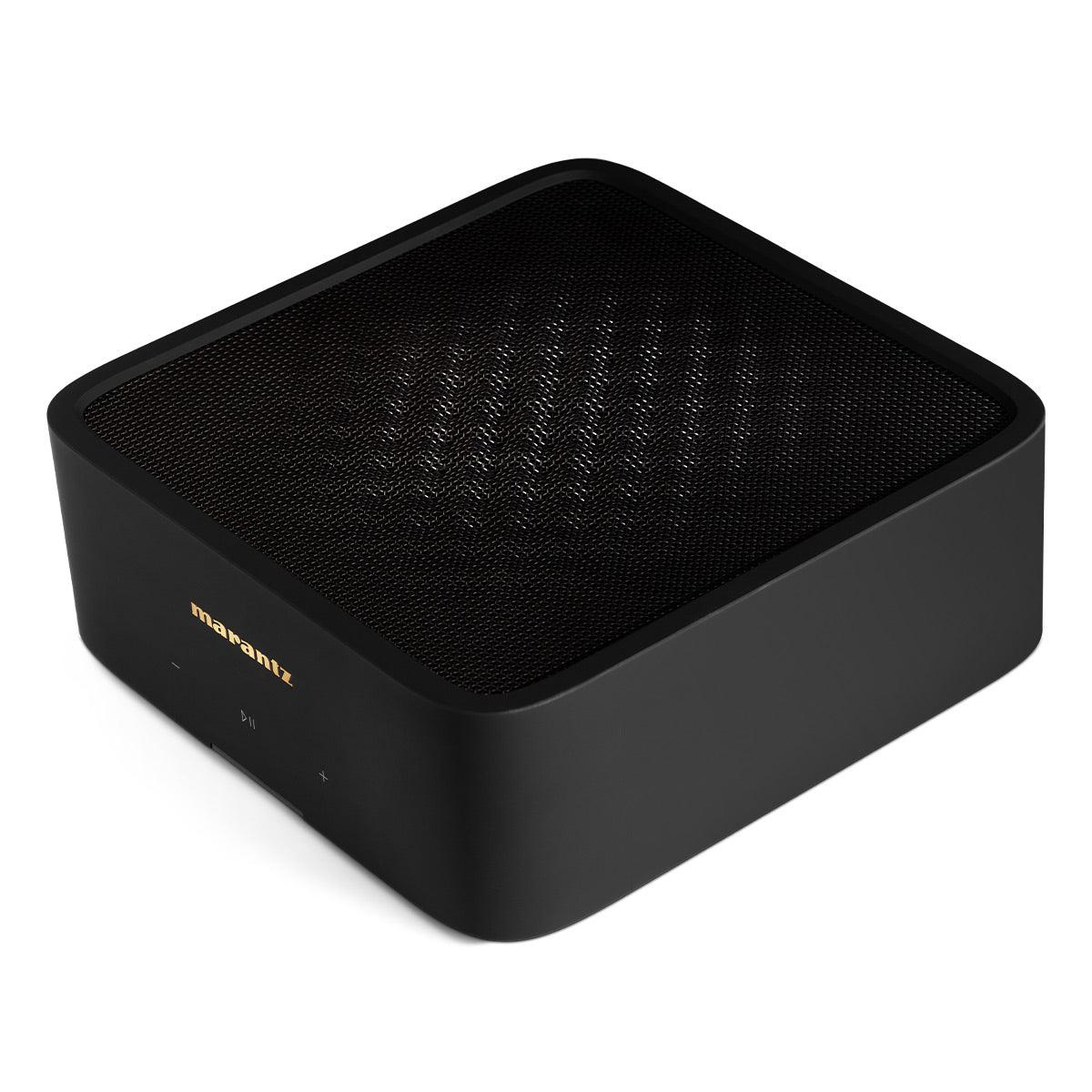
Both the Marantz Model M1 and Yamaha WXA-50 represent this evolution perfectly, but they take notably different approaches to the same goal: getting high-quality music from your phone, streaming services, or TV to your speakers without the complexity of traditional hi-fi systems.
Before diving into the specifics, it's worth understanding what these devices actually do. A streaming amplifier combines three essential functions: it acts as a digital-to-analog converter (DAC) that turns digital music files into analog signals your speakers can use, provides amplification to power passive speakers, and connects to your home network to stream music wirelessly.
The key considerations when choosing between streaming amplifiers center around power output (how loud and clean they can drive your speakers), streaming ecosystem quality (how well the apps work and which services they support), connectivity options (what devices you can plug in), and overall user experience.
Sound quality depends heavily on the internal DAC chip, amplifier design, and digital signal processing. Power output, measured in watts per channel, determines how loud your system can play and how well it can drive different types of speakers. Some speakers are "efficient," meaning they don't need much power to get loud, while others are "power-hungry" and demand more watts to perform their best.
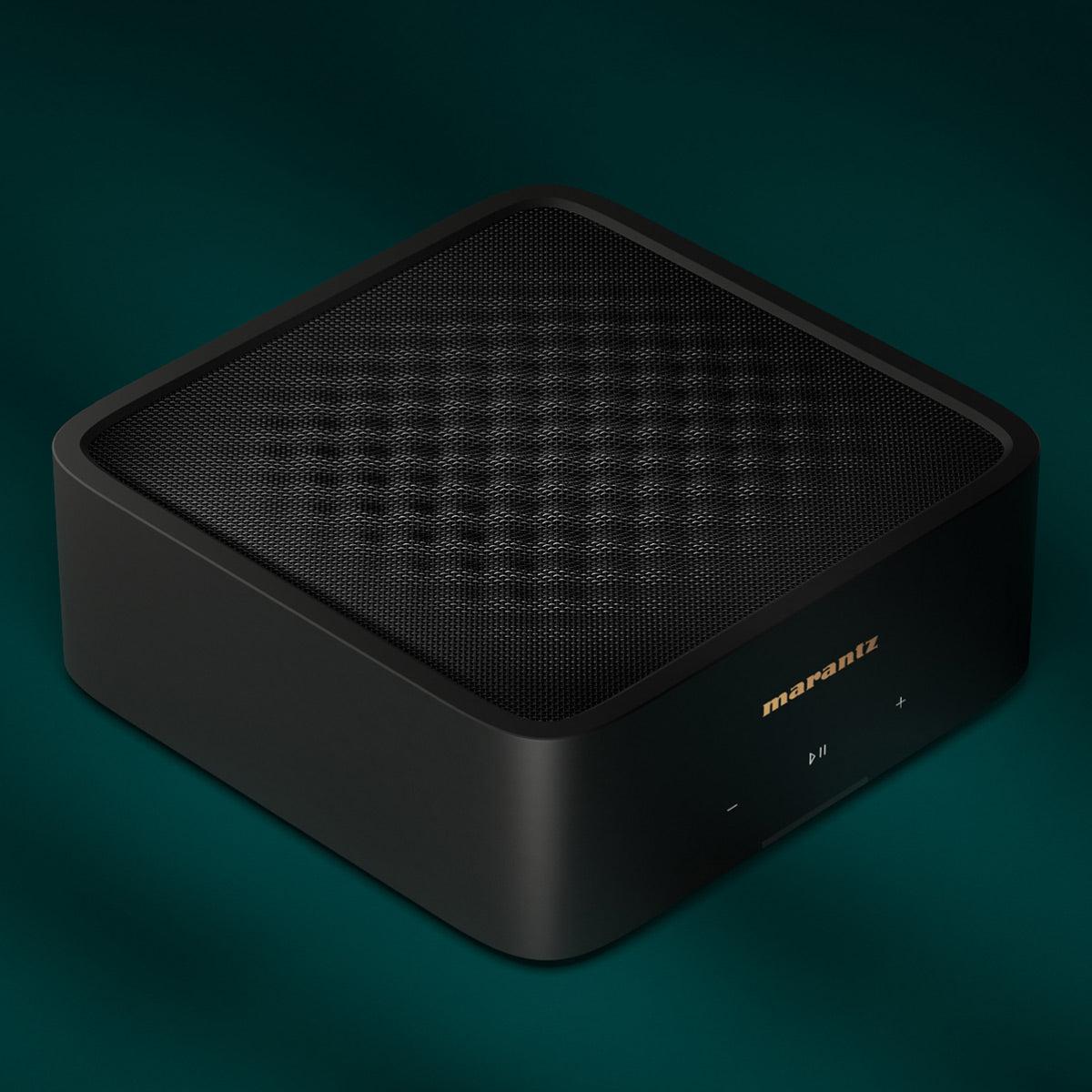
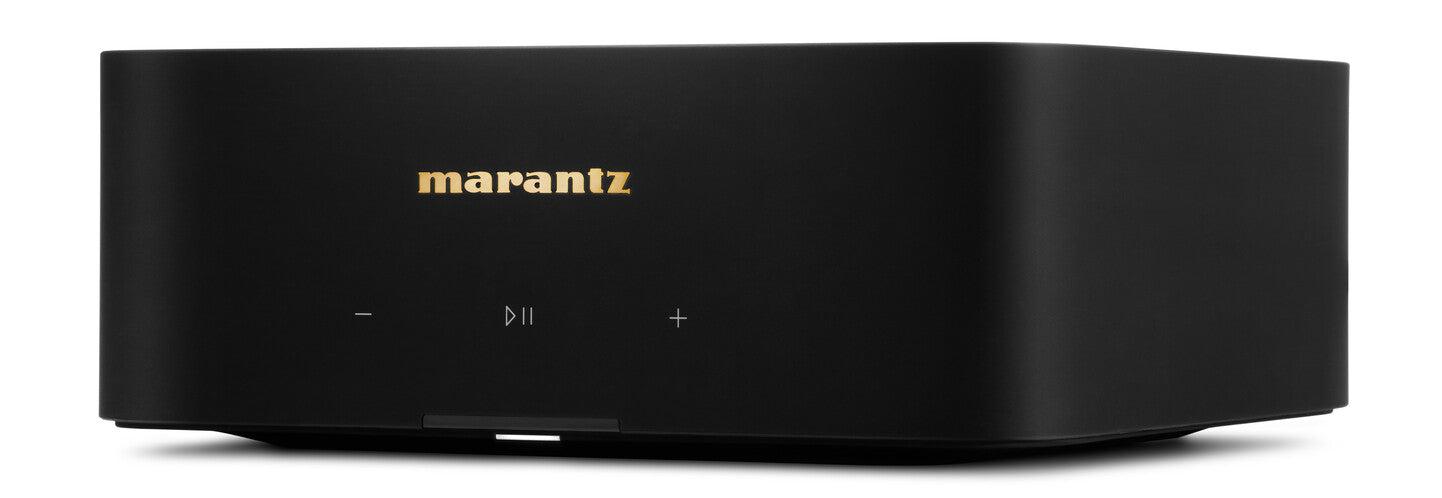
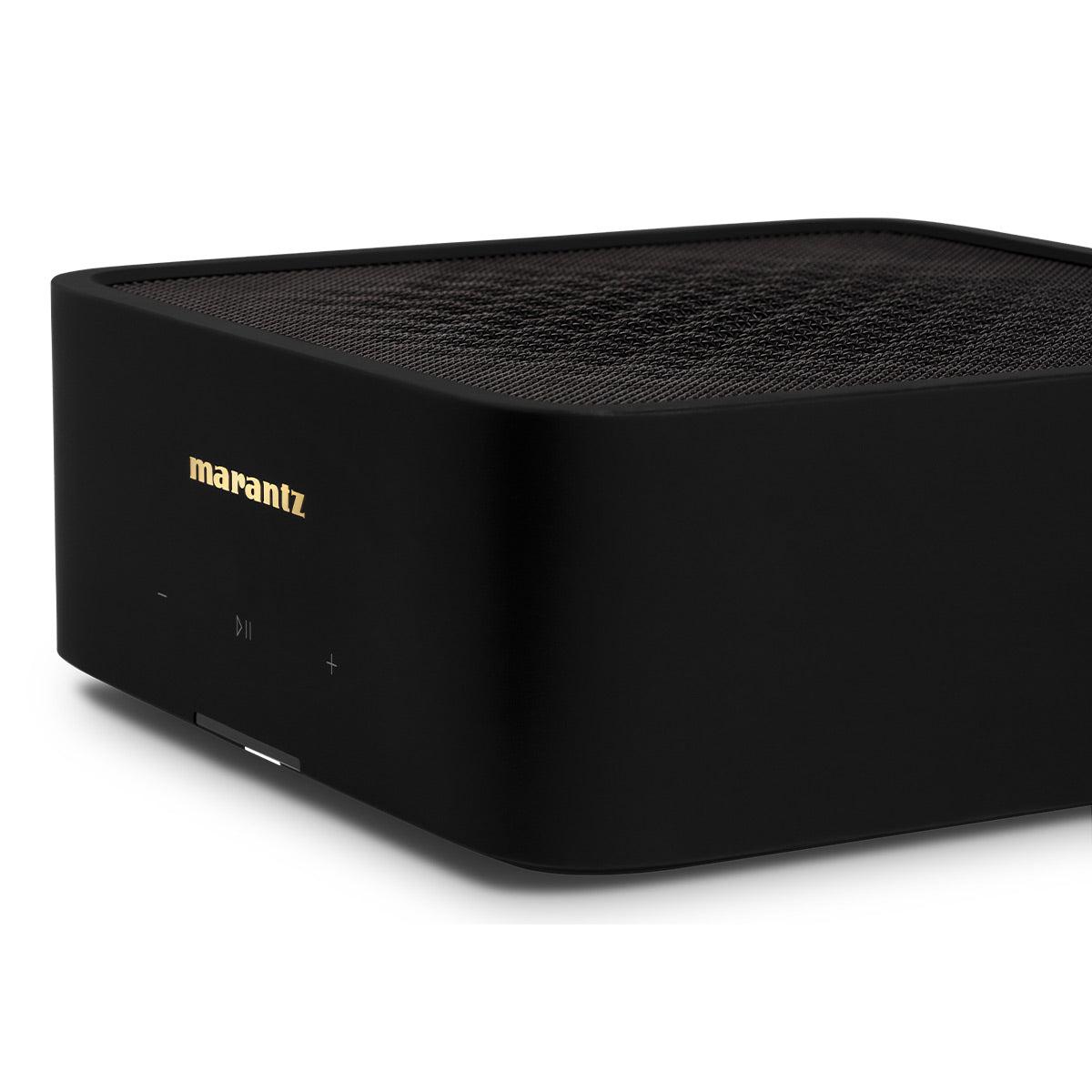
The Marantz Model M1, released in 2024, represents Marantz's first serious entry into the compact streaming amplifier market. At the time of writing, it commands a premium price that positions it firmly in the high-end category—roughly double what you'd pay for the Yamaha alternative.
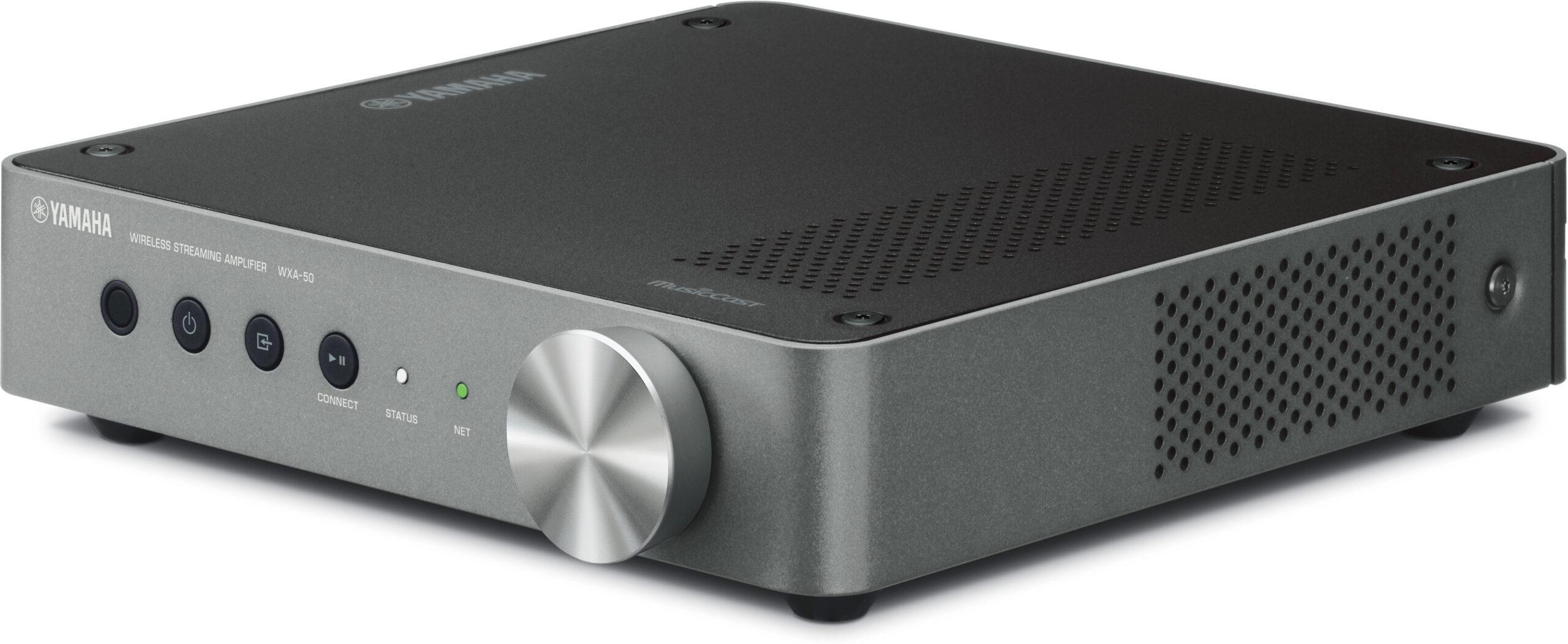
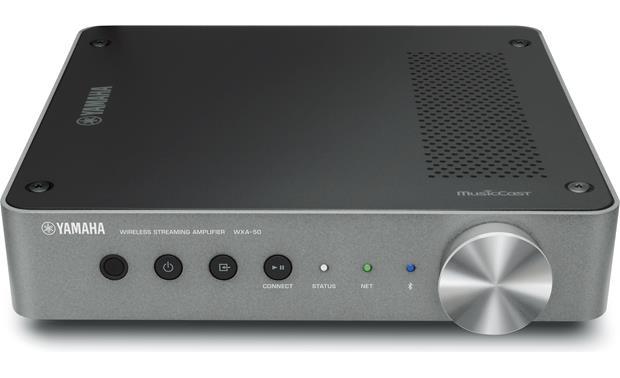
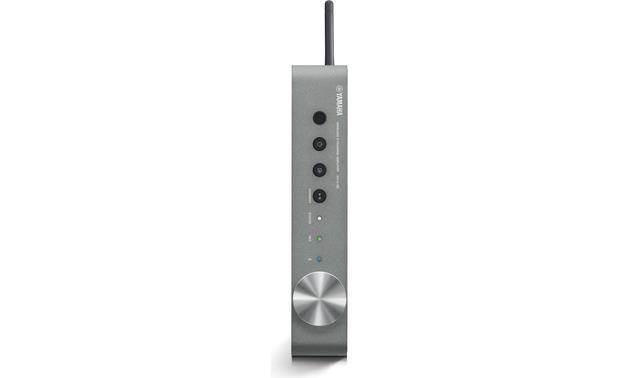
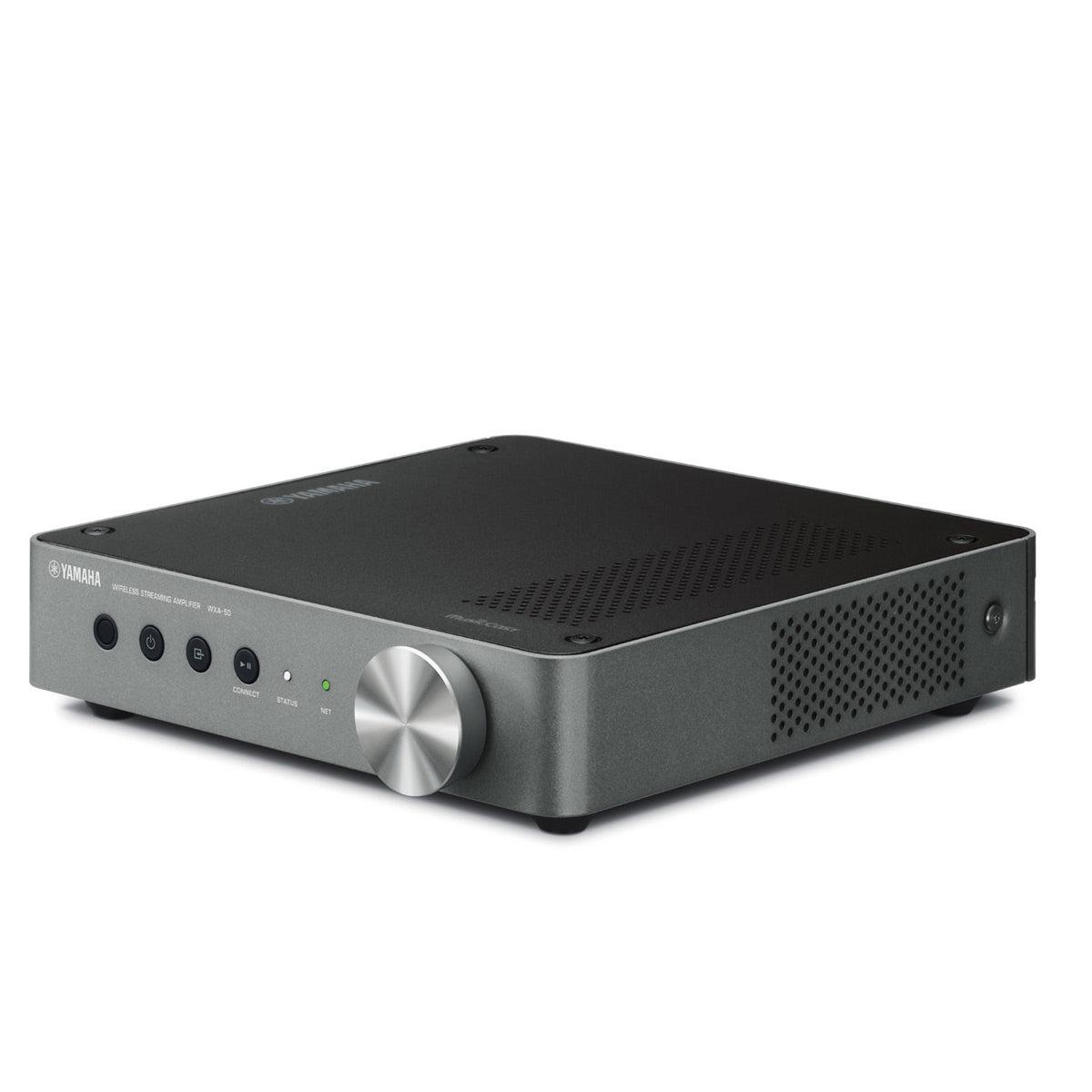
The Yamaha WXA-50, which has been available since around 2017, takes a more value-focused approach. Yamaha has refined this model over the years, and it's become something of a benchmark for affordable streaming amplifiers that don't compromise on features.
These different release timelines matter because the Marantz benefits from newer streaming technologies and more recent chip designs, while the Yamaha represents a mature, well-tested platform that's had years to work out any bugs.
The most significant difference between these amplifiers lies in their power output, and this isn't just about bragging rights—it directly affects what speakers you can use and how they'll sound.
The Marantz Model M1 delivers 100 watts per channel into 8-ohm speakers (the most common impedance) and 125 watts into 4-ohm loads. This is substantial power that can drive virtually any bookshelf or floor-standing speaker to satisfying levels, even in larger rooms. The amplifier uses a Class D design, which is essentially a highly efficient switching amplifier that generates minimal heat while delivering clean power.
In contrast, the Yamaha WXA-50 produces 55 watts per channel into 8 ohms, stepping up to 70 watts into 6 ohms and 105 watts into 4 ohms. While this might sound dramatically weaker on paper, the reality is more nuanced. For many speakers—particularly efficient bookshelf models—55 watts provides plenty of headroom for normal listening levels.
The power difference becomes crucial when you're driving inefficient speakers (those rated below 85dB sensitivity) or listening in large rooms. Our research into user experiences consistently shows that the Marantz M1 handles demanding speakers like large tower models or studio monitors with authority, while some WXA-50 owners report feeling limited by the power when pushing less efficient speakers hard.
However, power isn't everything. The Yamaha's ESS Sabre DAC chip has earned praise for its detailed, clean sound reproduction. This professional-grade component, commonly found in high-end audio equipment, excels at resolving fine details in recordings. The Marantz M1 counters with its proprietary Musical Digital Filtering (MMDF), which allows users to select between two different digital filter characteristics to tailor the sound to their preferences—think of it as having two slightly different sound signatures you can switch between.
Both amplifiers connect to your home's Wi-Fi network, but they use different streaming platforms that significantly impact the user experience.
The Marantz M1 runs on HEOS, Marantz's streaming platform that supports major services like Spotify, TIDAL, Amazon Music, and Pandora. HEOS excels in multi-room audio, allowing you to sync multiple compatible devices throughout your home. The platform also supports Roon Ready certification, which appeals to serious music enthusiasts who use Roon's advanced music management software.
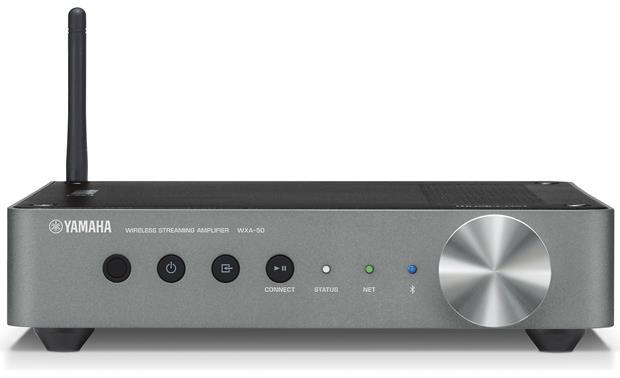
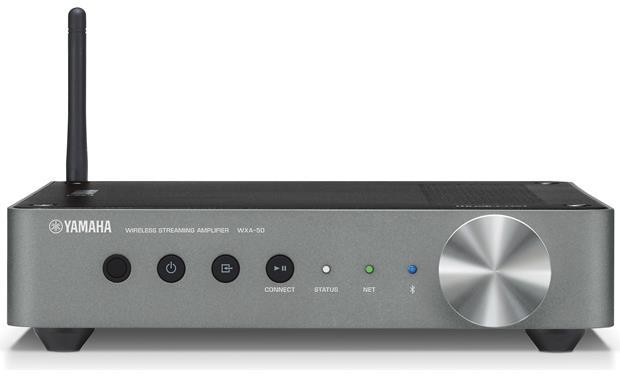
However, HEOS has a notable limitation: everything must be controlled through a smartphone app. There's no physical remote control included, and the front panel offers minimal controls. User feedback consistently points to the HEOS app as functional but sometimes clunky, particularly compared to more refined platforms.
The Yamaha WXA-50 uses MusicCast, Yamaha's mature streaming ecosystem. While it supports similar streaming services, MusicCast's strength lies in its user experience. The system includes a physical remote control with six preset buttons—a simple but valuable feature for quick access to favorite stations or sources. The MusicCast app generally receives better usability reviews, and the platform offers broader integration with smart home systems.
Both systems support high-resolution audio formats up to 192kHz/24-bit, which means they can play studio-quality recordings that contain more detail than standard CD audio. They also handle DSD files, the format used for high-end recordings that some audiophiles prefer for their analog-like sound characteristics.
Modern streaming amplifiers need to connect to more than just your Wi-Fi network, and this is where the products diverge significantly.
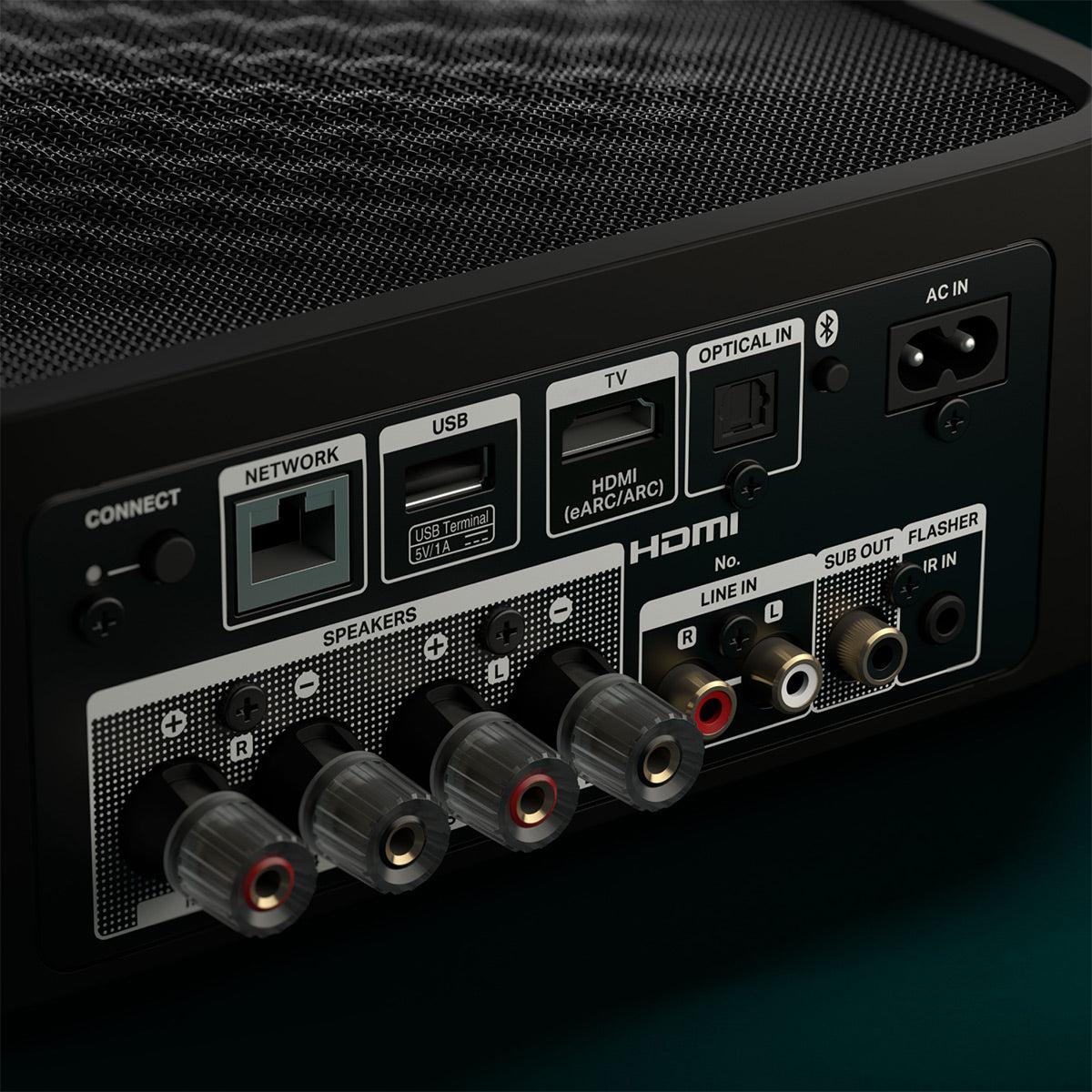
The Marantz M1 includes HDMI eARC (enhanced Audio Return Channel), a connection that allows direct audio communication between your TV and the amplifier. This means you can use the Marantz to power your TV's audio, automatically switching sources when you turn on the television. The amplifier can decode Dolby Digital+ soundtracks, making it genuinely useful for both music and movie audio.
This HDMI capability represents a significant advantage if you plan to use the amplifier for TV audio. Traditional hi-fi separates rarely include this feature, making the M1 particularly appealing for living room setups where the system pulls double duty for music and movies.
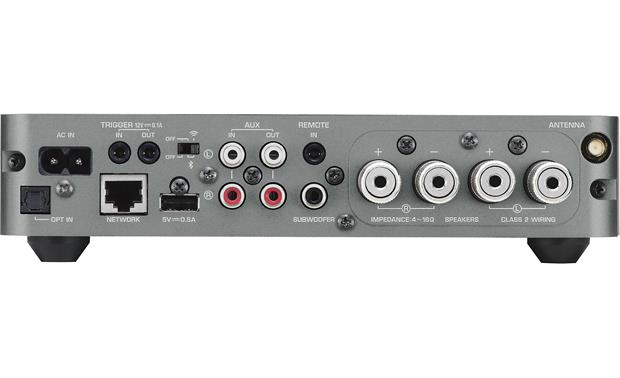
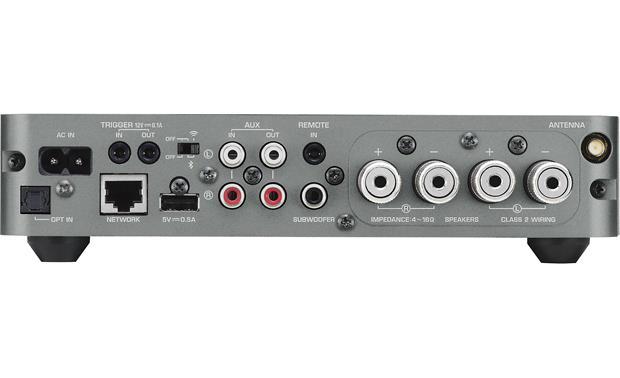
The Yamaha WXA-50 lacks HDMI connectivity entirely, relying on optical digital input for TV audio. While this works, it's less convenient and doesn't support the automatic switching that makes HDMI eARC so appealing.
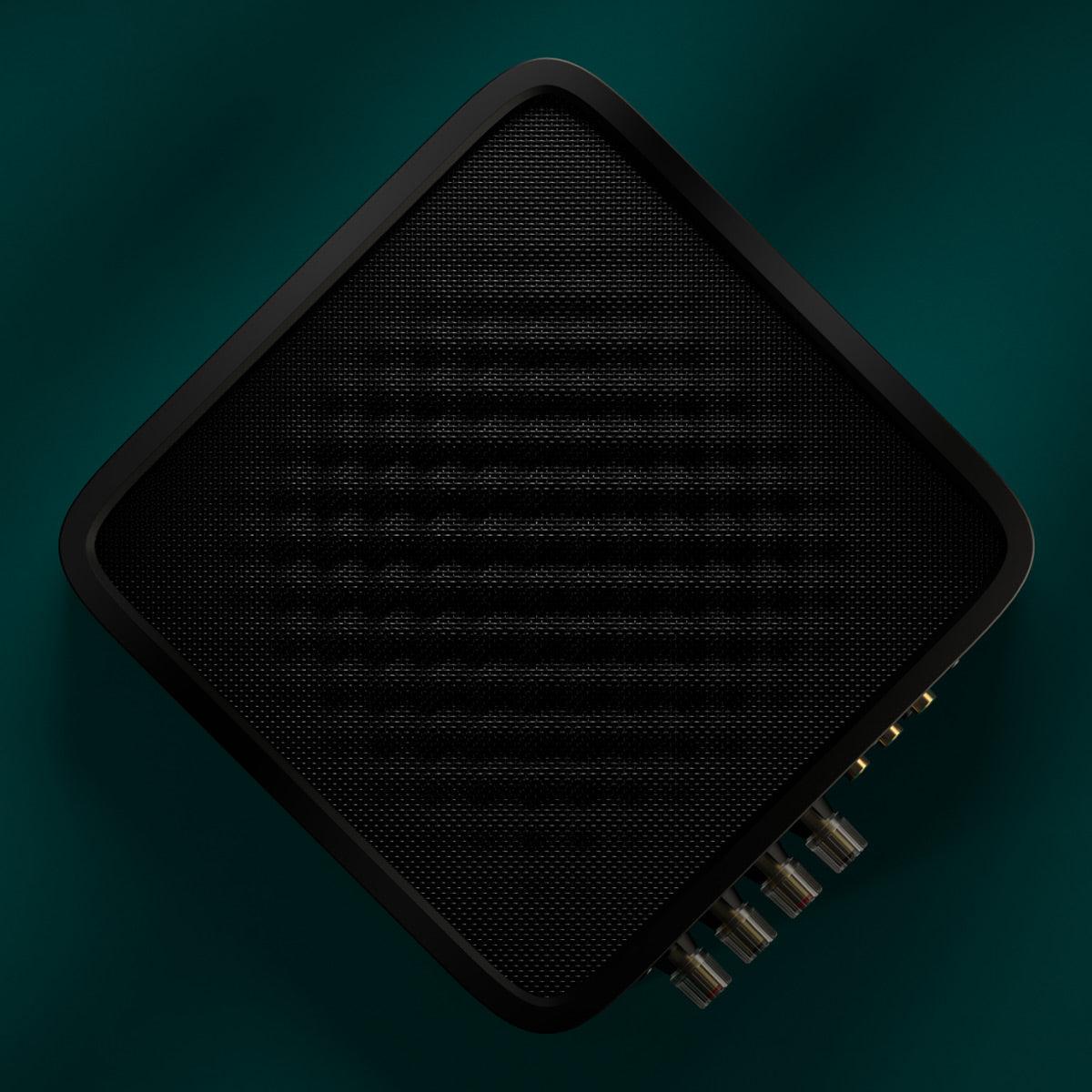
Both amplifiers include optical digital inputs, analog RCA inputs, and USB ports for direct file playback. The Marantz M1 adds gold-plated input terminals and includes adjustable crossover filters for subwoofer integration—technical features that matter if you plan to add a subwoofer to your system.
The Yamaha WXA-50 compensates with more professional installation features, including 12V trigger inputs and outputs (for automatically turning connected equipment on and off) and extensive third-party control system compatibility. These features matter more for custom installations than typical home use.
Both amplifiers include subwoofer outputs, but they handle bass management differently. The Marantz M1 offers a true 2.1 channel configuration with adjustable high-pass filters for the main speakers (cutting frequencies below 40-250Hz) and low-pass filters for the subwoofer (cutting frequencies above 40-120Hz). This precision allows you to seamlessly blend a subwoofer with your main speakers, potentially improving both dynamics and clarity.
The Yamaha WXA-50 provides subwoofer output but with more basic controls. It can redirect bass to a subwoofer, but the integration isn't as sophisticated as the Marantz system.
For home theater use, proper subwoofer integration becomes crucial. Movies contain substantial low-frequency content that small speakers simply can't reproduce. The M1's more advanced bass management, combined with its HDMI eARC capability, makes it notably more suitable for dual music and movie duty.
Both amplifiers offer different approaches to sound processing, reflecting their manufacturers' philosophies.
The Yamaha WXA-50 includes several digital processing features: Compressed Music Enhancer (which attempts to restore detail to MP3 and other lossy formats), Volume-Adaptive EQ (which adjusts bass and treble response based on volume level), and Advanced Bass Extension (which can help smaller speakers reproduce deeper bass). These features address real-world listening conditions where perfect audio quality isn't always possible.
The Marantz M1 takes a more purist approach with its MMDF filtering system. Rather than trying to enhance compressed audio, it focuses on optimizing the reproduction of high-quality sources. The system offers two filter options that subtly change the digital-to-analog conversion characteristics, allowing users to fine-tune the sound to their preferences.
Neither approach is inherently superior—it depends on your source material and listening preferences. If you primarily stream compressed music from Spotify or Apple Music, Yamaha's enhancement features may prove more beneficial. If you focus on high-resolution audio and vinyl rips, Marantz's approach might better preserve the intended sound.
At the time of writing, the pricing difference between these amplifiers is substantial—the Marantz M1 typically costs roughly twice as much as the Yamaha WXA-50. This price gap raises important questions about value and intended use.
The Yamaha WXA-50 represents exceptional value in the streaming amplifier category. For its price point, you get adequate power for most speakers, comprehensive streaming capabilities, physical controls, and professional installation features. It's a mature product that reliably performs its intended function without fuss.
The Marantz M1 justifies its premium pricing through higher power output, HDMI eARC integration, Japanese manufacturing quality, and audiophile-focused features like MMDF filtering. However, whether these benefits warrant the price increase depends heavily on your specific needs and budget.
The choice between these amplifiers ultimately depends on your specific requirements and priorities.
Choose the Yamaha WXA-50 if you want excellent value, prefer physical controls, have reasonably efficient speakers, or need professional installation features. It's particularly appealing for dedicated music listening rooms where TV integration isn't required. The savings over the Marantz could be invested in better speakers, which would likely provide more noticeable improvement than the amplifier upgrade.
The Marantz M1 makes sense for users who need higher power output, want seamless TV integration through HDMI eARC, or prioritize the refinements that come with premium manufacturing. It's especially appealing for living room systems that serve dual music and movie duties, where the HDMI capability and higher power output provide tangible benefits.
For home theater applications specifically, the M1's HDMI eARC capability represents a significant advantage. The ability to handle TV audio automatically, combined with superior subwoofer integration and higher power output, makes it notably more suitable for systems that regularly switch between music and movies.
Speaker compatibility also plays a crucial role in this decision. If you own or plan to buy inefficient speakers (those rated below 85dB sensitivity), the M1's extra power becomes essential. Conversely, if you're using efficient bookshelf speakers in a moderate-sized room, the WXA-50's 55 watts will prove entirely adequate.
The control interface preference shouldn't be underestimated. Some users strongly prefer having physical controls and a remote, making the Yamaha WXA-50 more appealing despite its other limitations. Others don't mind app-only control, especially if they primarily stream music where smartphone control feels natural.
Both amplifiers represent the modern evolution of hi-fi audio—compact, capable devices that eliminate much of the complexity traditionally associated with quality sound reproduction. Your choice between them should ultimately reflect your specific needs, budget constraints, and long-term audio goals rather than abstract notions of superiority. Either will deliver satisfying musical experiences; the question is which better matches your particular requirements and expectations.
| Marantz Model M1 | Yamaha WXA-50 |
|---|---|
| Power Output - Determines speaker compatibility and maximum volume | |
| 100W @ 8Ω / 125W @ 4Ω (drives demanding speakers) | 55W @ 8Ω / 70W @ 6Ω (adequate for efficient speakers) |
| Price Category - Major factor in value proposition | |
| Premium pricing (roughly 2x competitor cost) | Budget-friendly (excellent value proposition) |
| TV Integration - Critical for dual music/movie use | |
| HDMI eARC with Dolby Digital+ (seamless TV audio) | Optical input only (basic TV connection) |
| Physical Controls - Daily usability factor | |
| App-only control (no remote included) | Physical remote + front panel controls |
| Subwoofer Integration - Important for full-range sound | |
| True 2.1 with adjustable crossovers (40-250Hz) | Basic subwoofer output (limited bass management) |
| Streaming Platform - Affects app experience and reliability | |
| HEOS (multi-room capable, sometimes clunky app) | MusicCast (mature platform, better app reviews) |
| Audio Processing - How sound is enhanced or preserved | |
| MMDF filtering (audiophile-focused customization) | Multiple enhancers (compressed music improvement) |
| Build Quality - Longevity and premium feel | |
| Japan-manufactured (Shirakawa Audio Works) | Standard manufacturing (proven reliability) |
| High-Resolution Audio - Future-proofing for quality sources | |
| Up to 192kHz/24-bit, DSD 5.6MHz, Roon Ready | Up to 192kHz/24-bit, DSD 5.6MHz, ESS Sabre DAC |
| Installation Features - Custom integration capabilities | |
| 12V trigger, IR learning, limited integrator support | Extensive trigger/control options, broad compatibility |
The Marantz Model M1 delivers significantly more power with 100 watts per channel into 8-ohm speakers and 125 watts into 4-ohm speakers. The Yamaha WXA-50 provides 55 watts per channel into 8 ohms and 70 watts into 6 ohms. This power difference matters most if you have inefficient speakers or listen in large rooms where the Marantz M1 will perform better.
The Marantz Model M1 is superior for TV integration thanks to its HDMI eARC input with Dolby Digital+ decoding, allowing seamless automatic switching between TV and music sources. The Yamaha WXA-50 only offers optical digital input for TV connection, which works but lacks the convenience of HDMI eARC found in the Marantz M1.
Yes, both support major streaming services like Spotify, TIDAL, and Pandora, but through different platforms. The Marantz Model M1 uses the HEOS ecosystem, while the Yamaha WXA-50 runs on MusicCast. Both offer multi-room audio capabilities, though users generally report better app experience with the Yamaha WXA-50's MusicCast platform.
The Yamaha WXA-50 provides exceptional value, typically costing about half the price of the Marantz Model M1 while delivering adequate power for most speakers and comprehensive streaming features. The Marantz M1 justifies its premium pricing with higher power output, HDMI connectivity, and Japanese build quality, but the Yamaha WXA-50 offers more bang for your buck.
The Yamaha WXA-50 includes a physical remote control with preset buttons for quick access to favorite sources. The Marantz Model M1 relies entirely on smartphone app control through HEOS, with no physical remote included. This makes the Yamaha WXA-50 more convenient for users who prefer traditional remote control operation.
The Marantz Model M1 excels for home theater applications due to its HDMI eARC connectivity, higher power output, and superior subwoofer integration with adjustable crossover filters. While the Yamaha WXA-50 can handle TV audio through optical input, the Marantz M1 provides a more seamless and powerful home theater experience.
Yes, both the Marantz Model M1 and Yamaha WXA-50 support high-resolution audio formats up to 192kHz/24-bit and DSD files. The Marantz M1 features proprietary Musical Digital Filtering for sound customization, while the Yamaha WXA-50 uses an ESS Sabre DAC known for detailed sound reproduction.
The Marantz Model M1 offers superior subwoofer integration with true 2.1 channel configuration and adjustable high-pass (40-250Hz) and low-pass (40-120Hz) filters for precise speaker and subwoofer blending. The Yamaha WXA-50 provides basic subwoofer output but lacks the advanced bass management capabilities of the Marantz M1.
The Marantz Model M1 is better suited for large rooms due to its higher 100-watt power output, which can drive speakers to higher volumes with less distortion. The Yamaha WXA-50 works well in moderate-sized rooms but may struggle with demanding speakers or very large spaces where the Marantz M1 would perform better.
The Marantz Model M1 offers more modern connectivity with HDMI eARC, optical, analog RCA, and USB inputs, plus gold-plated terminals. The Yamaha WXA-50 includes optical, analog, USB, and Ethernet inputs, plus extensive professional installation features like 12V triggers. For home theater use, the Marantz M1 has the connectivity advantage.
Both support multi-room audio through their respective ecosystems. The Marantz Model M1 uses HEOS for multi-room synchronization with other HEOS-enabled devices. The Yamaha WXA-50 works with MusicCast for whole-home audio distribution. Both systems allow you to play synchronized or independent music throughout your home.
The Yamaha WXA-50 is generally easier to use daily thanks to its included remote control, front-panel controls, and more intuitive MusicCast app. The Marantz Model M1 requires smartphone app control for all functions, which some users find less convenient. However, both amplifiers are relatively straightforward to set up on your home network.
We've done our best to create useful and informative comparisons to help you decide what product to buy. Our research uses advanced automated methods to create this comparison and perfection is not possible - please contact us for corrections or questions. These are the sites we've researched in the creation of this article: bestbuy.com - crutchfield.com - audioadvisor.com - youtube.com - soundstagesimplifi.com - marantz.com - marantz.com - audioadvice.com - whathifi.com - manuals.marantz.com - audiosciencereview.com - youtube.com - marantz.com - sweetwater.com - audiosciencereview.com - accessories4less.com - crutchfield.ca - usa.yamaha.com - avluxurygroup.com - crutchfield.com - crutchfield.com - teamiu.com - audiosciencereview.com - snapav.com - avsforum.com - youtube.com - hifiheaven.net - usa.yamaha.com - usa.yamaha.com - audiokarma.org - usa.yamaha.com - bestbuy.com - usa.yamaha.com - ooberpad.com - dugoutnorthbrook.com - parts-express.com

Privacy Policy
Terms and Conditions - Affiliate Policy
Home Security
© Copyright 2008-2026.
11816 Inwood Rd #1211, Dallas, TX 75244