

When you're building a modern audio system, one of the smartest moves you can make is choosing a wireless streaming amplifier. These clever devices combine two essential components—a network music streamer and a power amplifier—into one compact unit. Instead of buying separate boxes and dealing with extra cables, you get everything you need to stream high-quality music directly to your speakers.
The streaming amplifier category has exploded in recent years as more people discover the convenience of wireless music. At the time of writing, you'll find options ranging from budget-friendly units around $300 to premium models approaching $1,000. Today we're comparing two popular choices that represent different approaches to this concept: the Yamaha MusicCast Wireless Streaming Amplifier and the Bluesound PowerNode Wireless Music Streaming Amplifier.
Before diving into the comparison, it's worth understanding what makes streaming amplifiers special. The "streaming" part means they connect to your Wi-Fi network to pull music from services like Spotify, internet radio stations, or files stored on your phone. The "amplifier" part means they have built-in power to drive passive speakers—those traditional speakers that don't plug into the wall.
This combination eliminates several common headaches. You don't need a separate stereo receiver, you can place speakers wherever you want without running audio cables back to a central location, and you can control everything from your smartphone. For many people, it's the perfect balance of simplicity and sound quality.
The key considerations when shopping include how much power you need to drive your speakers effectively, what audio quality you can expect, how well the streaming platform works, and what connections are available for other devices. Both the Yamaha and Bluesound tackle these challenges differently, making them suitable for different users and situations.
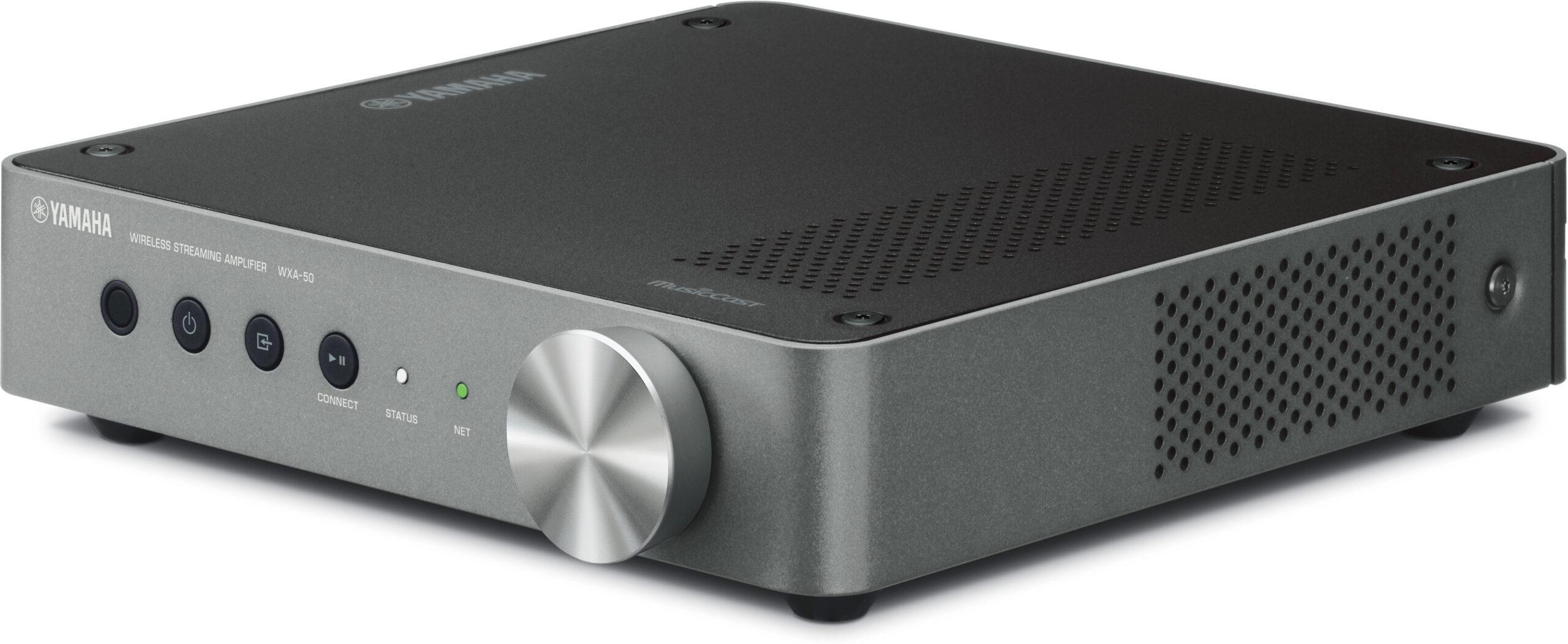
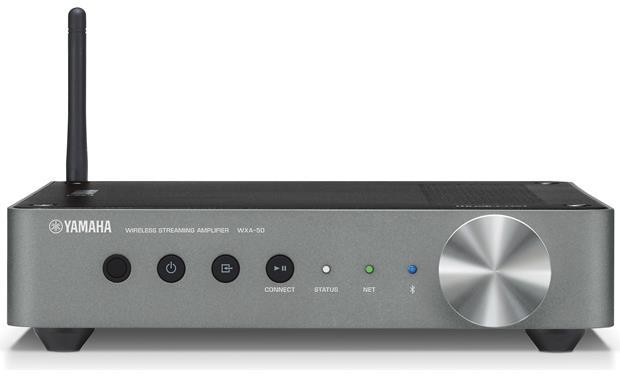
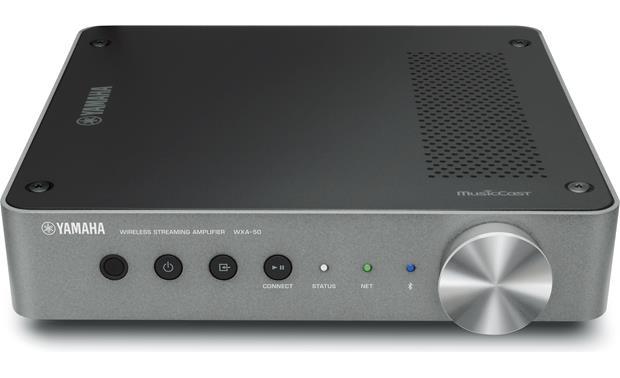
When it comes to amplifier power, the numbers tell an interesting story. The Yamaha WXA-50 delivers 55 watts per channel into 8-ohm speakers, which is the standard impedance (electrical resistance) rating. However, like most modern amplifiers, it can push more power into lower impedance speakers—70 watts into 6-ohm speakers and up to 105 watts into 4-ohm speakers.
The Bluesound PowerNode takes a more aggressive approach with 80 watts per channel into 8-ohm speakers, with instantaneous peak power reaching 120 watts when music demands it. This extra headroom matters more than you might think, especially during dynamic musical passages where drums hit hard or orchestras swell.
Here's why this difference matters in real-world use: speaker efficiency varies dramatically. If you have highly efficient speakers (typically 90 decibels or higher sensitivity rating), the Yamaha's 55 watts will drive them to satisfying volumes without strain. However, if you're using less efficient bookshelf speakers or larger floor-standing models, the PowerNode's extra power becomes valuable for maintaining clean sound at higher volumes.
Both amplifiers use different technologies to achieve their power output. The Yamaha employs traditional Class AB amplification, which runs warmer but typically sounds very natural. The Bluesound uses a more modern HybridDigital Class D design based on a Hypex UcD module—a switching amplifier that runs cooler and more efficiently while still delivering excellent sound quality.
From our research into user experiences and professional reviews, the power difference becomes noticeable with speakers that have sensitivity ratings below 88 decibels or when you want to fill larger rooms with sound. The PowerNode consistently receives praise for its ability to drive a wider variety of speakers convincingly.
Both devices excel at digital-to-analog conversion—the process of turning digital music files into the analog signals your speakers need. The Yamaha WXA-50 uses an ESS Sabre DAC (Digital-to-Analog Converter), the same high-quality component found in Yamaha's premium AV receivers. This DAC supports high-resolution audio files up to 192kHz/24-bit for formats like FLAC and WAV, and it can handle DSD (Direct Stream Digital) files up to 5.6MHz.
The Bluesound PowerNode counters with a 32-bit/384kHz differential DAC design that supports an even broader range of formats, including DSD256 and—crucially—MQA (Master Quality Authenticated). MQA is a technology that allows streaming services like Tidal to deliver studio-master quality sound while using less bandwidth than traditional high-res files.
Both amplifiers maintain impressively low distortion levels. The Yamaha achieves 0.02% total harmonic distortion (THD) across the audible frequency range, while the Bluesound manages an even lower 0.008% THD+N (Total Harmonic Distortion plus Noise). These numbers might seem like technical minutiae, but they translate to cleaner, more accurate sound reproduction.
What's particularly interesting is how each manufacturer approaches sound processing. The Yamaha includes several proprietary technologies: Compressed Music Enhancer improves the sound of MP3 and other compressed files by restoring some of the musical information lost during compression. Volume-Adaptive EQ automatically adjusts bass and treble balance as you change volume levels, maintaining tonal balance at low listening levels. Advanced Bass Extension helps smaller speakers sound fuller by optimizing low-frequency response.
The Bluesound takes a more purist approach, focusing on accurate reproduction rather than enhancement processing. However, it does include room correction capabilities through future Dirac Live integration, which can optimize sound for your specific listening environment.
From extensive review analysis, both devices receive praise for their sound quality, but with different characteristics. The Yamaha tends toward a slightly warmer, more forgiving presentation that works well with a wide variety of music genres. The Bluesound leans toward analytical precision and detail retrieval, making it particularly appealing to audiophiles who want to hear exactly what's in their recordings.
This is where the two products diverge most significantly. The Yamaha MusicCast platform, launched in 2015, has matured into a comprehensive multi-room system that can synchronize music across up to 32 different zones throughout your home. The MusicCast app provides control over music sources, volume, and playback, though user feedback suggests it's functional rather than exceptional.
The Bluesound PowerNode runs on the BluOS platform, which consistently receives higher marks for user experience. BluOS supports up to 64 zones and offers more responsive control with better metadata display—you'll see album artwork, track information, and streaming service integration more elegantly presented. The platform launched in 2013 and has received regular updates that have significantly improved performance and features.
Streaming service support varies between the platforms. The Yamaha includes the essential services: Spotify Connect, Tidal, Pandora, Deezer, and SiriusXM, plus thousands of internet radio stations. The Bluesound goes further with over 20 supported services, including Qobuz (popular among audiophiles for its high-resolution streaming), and it's "Roon Ready," meaning it integrates seamlessly with Roon's advanced music management software.
Both devices support local network playback from computers or network-attached storage devices, but the Bluesound handles larger music libraries more gracefully and provides better search and browsing capabilities.
One significant advantage for the PowerNode is its two-way Bluetooth implementation with aptX HD support. While both devices can receive Bluetooth audio from your phone, the Bluesound can also transmit audio to Bluetooth headphones—useful for late-night listening without disturbing others.
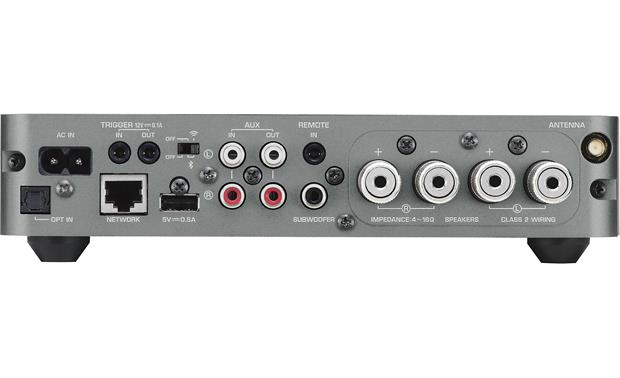
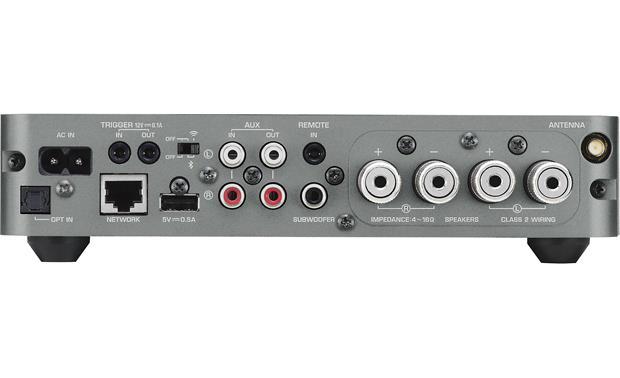
Modern streaming amplifiers need to integrate with various devices and systems, and this is where we see the most dramatic differences between these products. The Yamaha WXA-50 provides basic but adequate connectivity: one optical digital input for devices like CD players or TVs, one analog RCA input for turntables or other analog sources, a USB input for direct playback from storage devices, and a subwoofer output for adding bass extension.
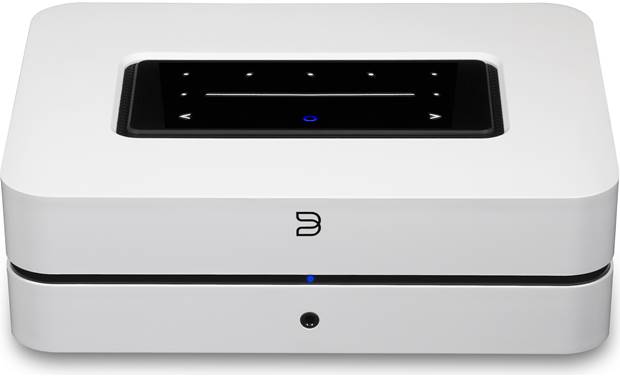
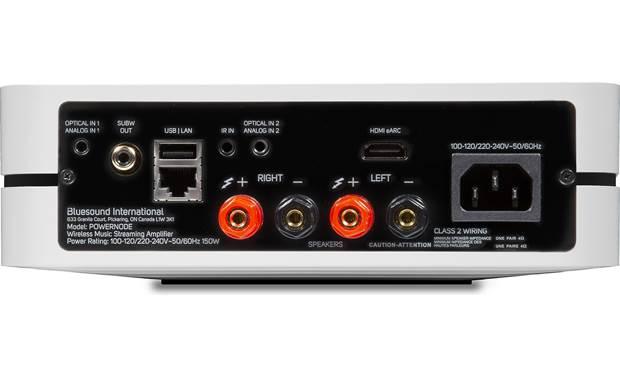
The Bluesound PowerNode significantly expands connectivity options with a feature that's become increasingly important: HDMI eARC (enhanced Audio Return Channel). This single connection allows the amplifier to receive audio directly from your TV, including high-quality formats like Dolby Digital and DTS. For many users, this eliminates the need for a separate AV receiver when building a simple TV-based audio system.
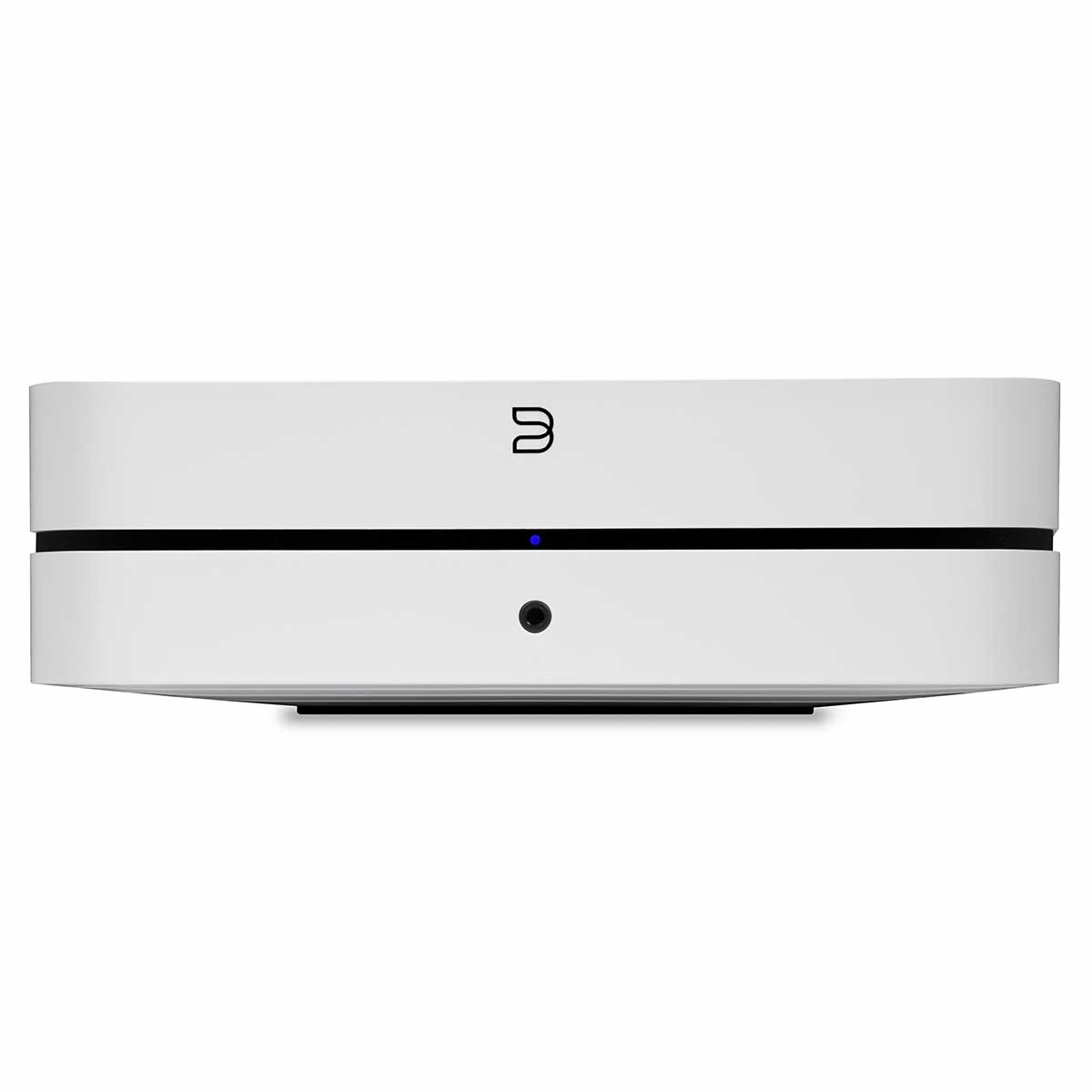
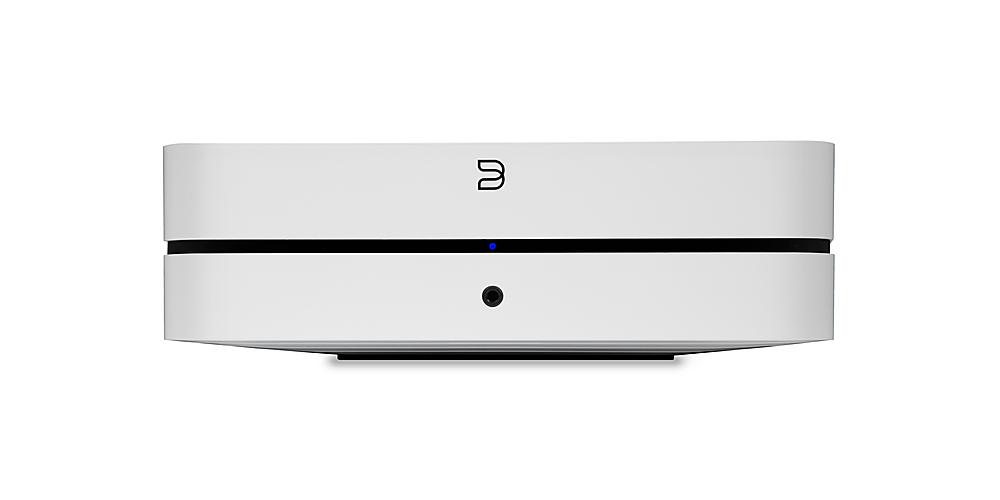
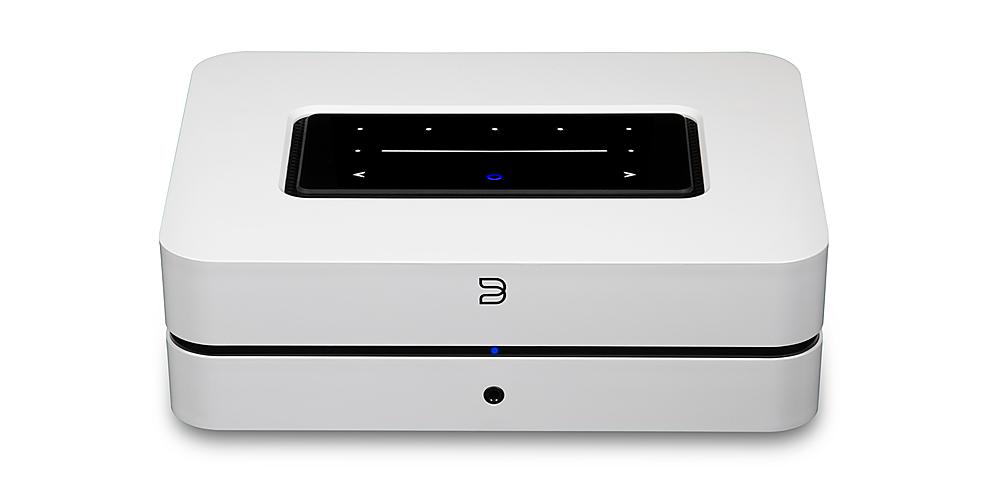
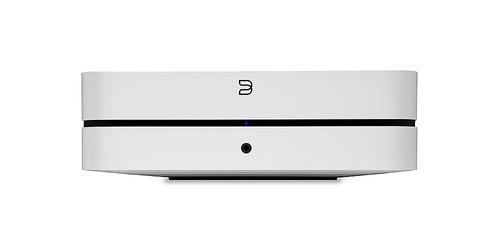
The PowerNode also includes more flexible input options with combo mini-Toslink/3.5mm jacks that accept both digital and analog signals, making it easier to connect various source devices. Its THX AAA headphone output provides audiophile-quality personal listening, while the Yamaha lacks a dedicated headphone connection.
Both devices include control integration features, but the Bluesound offers more comprehensive options for custom installation environments. This makes it more suitable if you're working with a professional installer or want to integrate the amplifier into a smart home system.
Multi-room audio has become increasingly popular, and both platforms handle it well with different strengths. The Yamaha MusicCast system excels at synchronizing music across different Yamaha devices, and the platform's maturity means wide compatibility with various Yamaha speakers, soundbars, and AV receivers you might already own.
The BluOS platform provides more sophisticated multi-room management with better app control and the ability to play different music in each zone or synchronize everything for whole-house audio. The system's higher zone limit (64 vs 32) matters less for most homes than the superior user experience.
For home theater applications, the Bluesound PowerNode has a clear advantage thanks to its HDMI eARC connection. You can connect it directly to your TV and get high-quality audio for movies and shows without needing a separate AV receiver. The device can even output to a center channel speaker and pair wirelessly with other Bluesound speakers for surround sound—a unique capability that's particularly valuable in rooms where running speaker wires isn't practical.
The Yamaha can certainly provide TV audio through its optical input, but this connection is limited to basic stereo or compressed surround formats. For casual TV watching, this works fine, but movie enthusiasts will appreciate the PowerNode's more comprehensive approach.
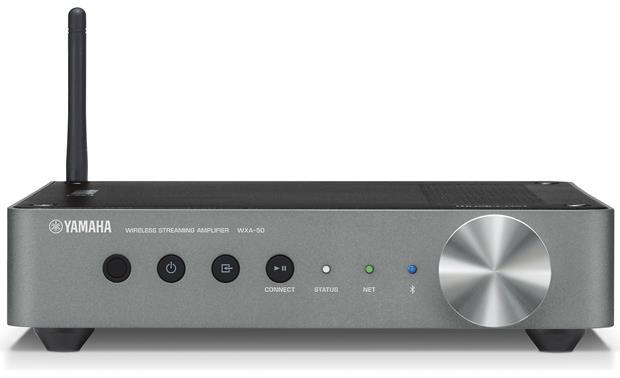
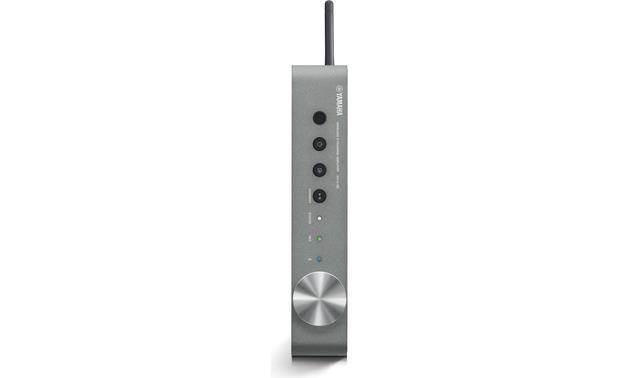
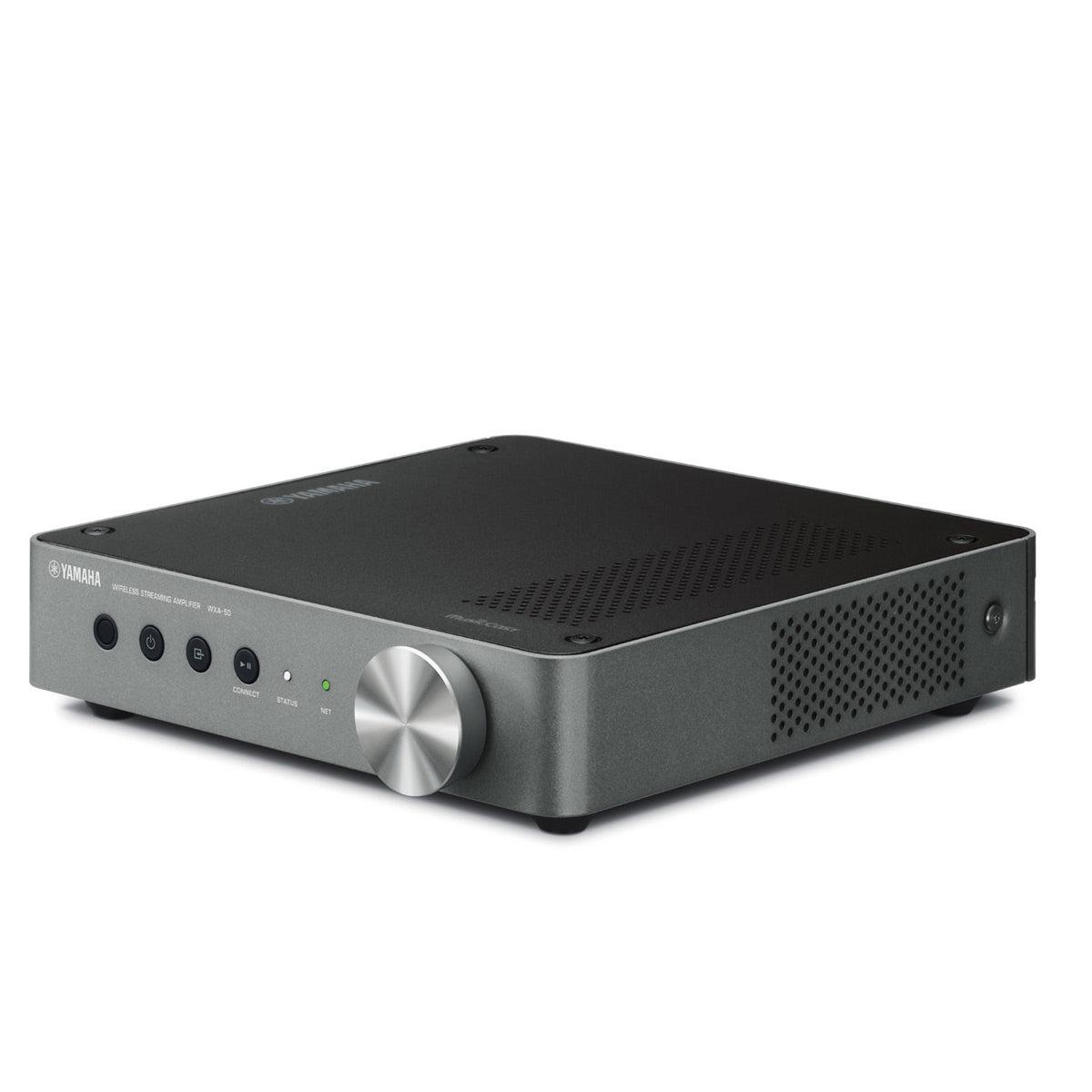
Both companies have taken different approaches to industrial design. The Yamaha WXA-50 emphasizes compact efficiency with dimensions of just 8-3/8" × 2" × 9-5/8" and weighing 4.28 pounds. Its aluminum construction feels solid, and the minimalist design fits easily into tight spaces. You can even mount it vertically, making it ideal for bookshelf installation or media cabinet integration.
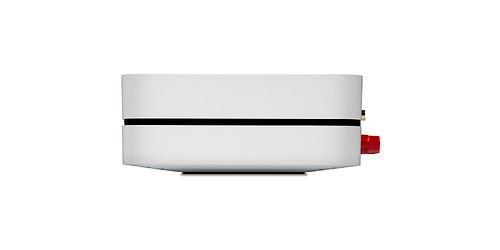
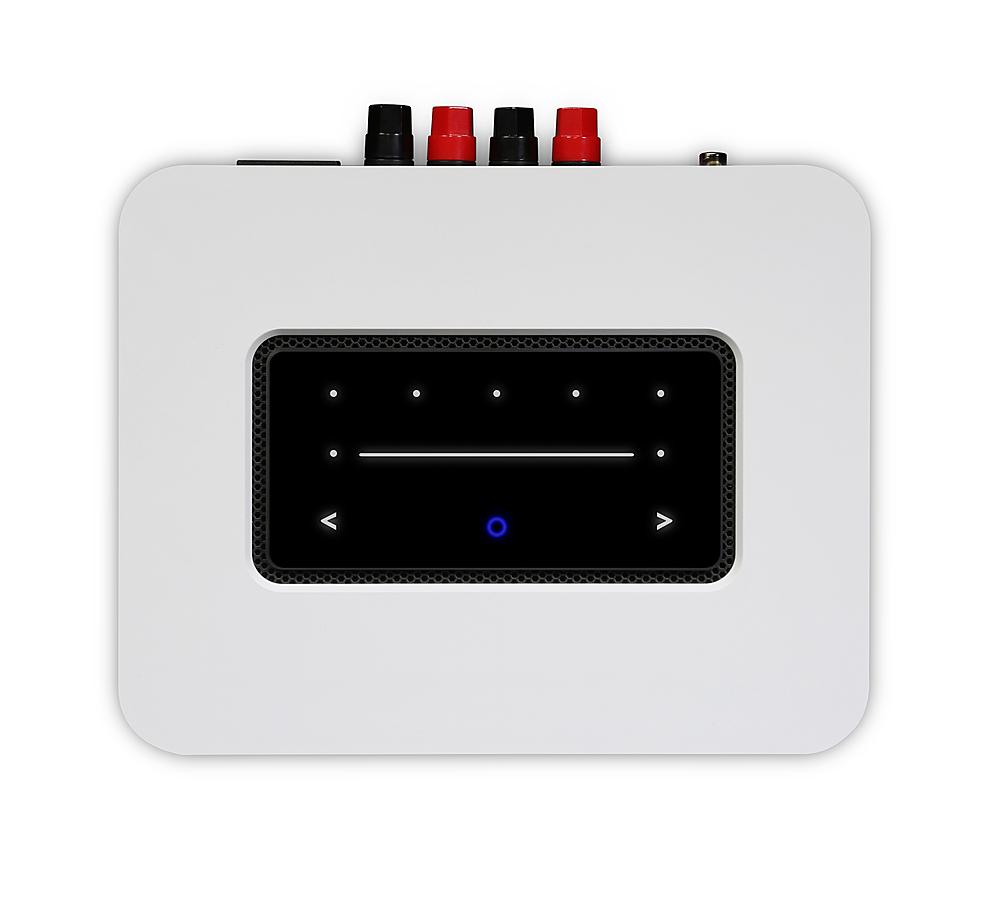
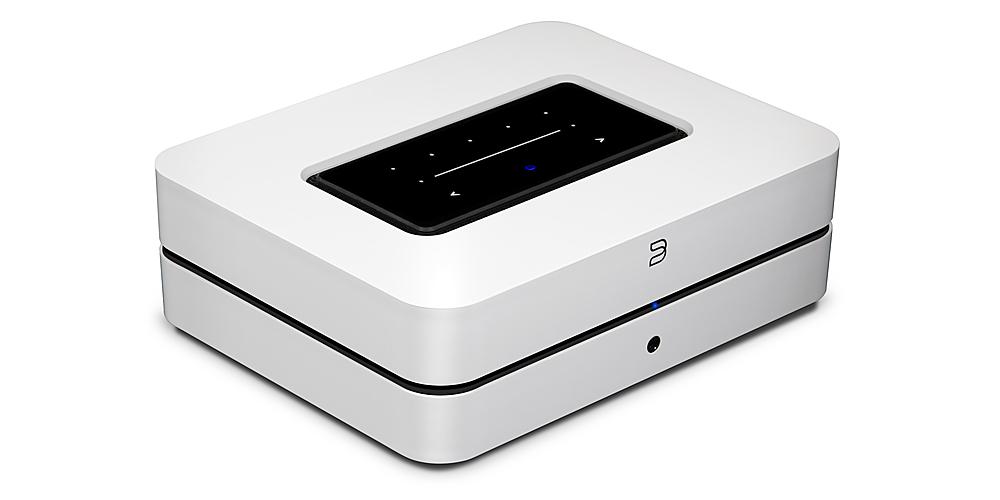
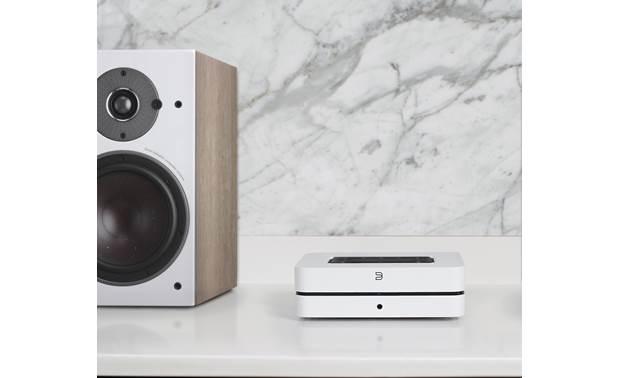
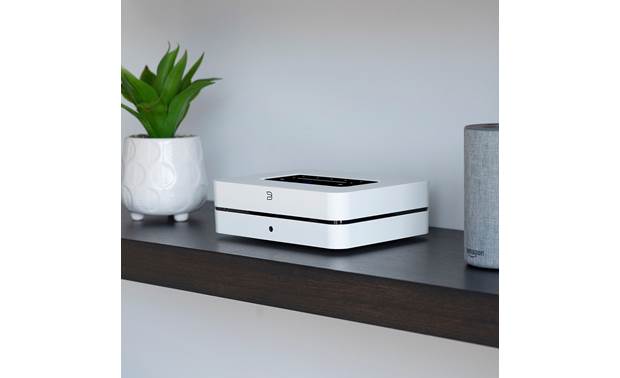
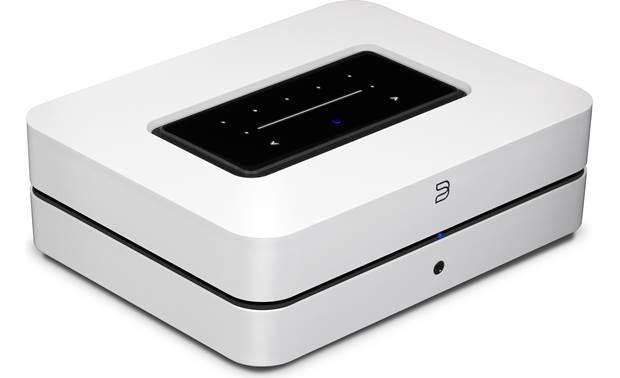
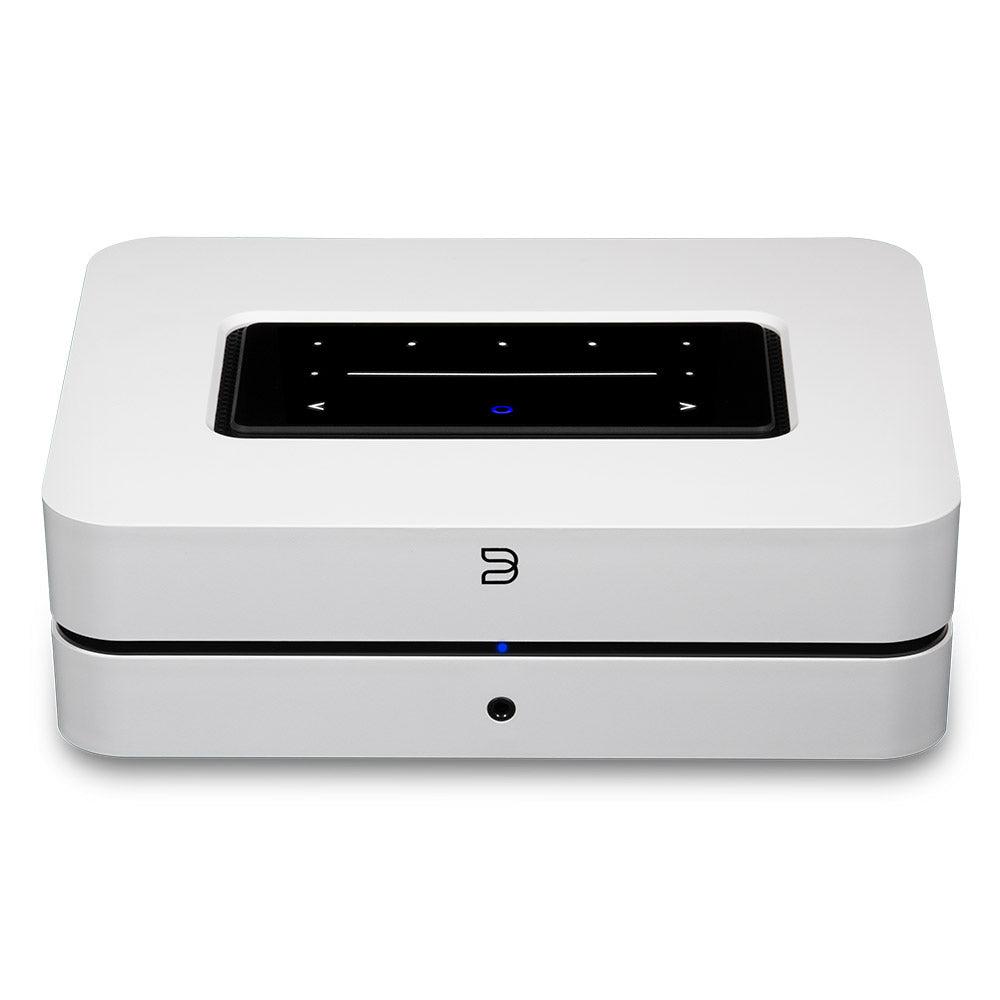
The Bluesound PowerNode is slightly larger at 9-3/4" × 7" × 8-1/2" but makes that space count with a premium glass touch panel on top. This interface includes proximity sensing—it lights up when you approach—and provides intuitive control for volume, playback, and five programmable presets. The industrial design feels more premium and substantial.
Both devices run cool and quiet during operation, but the Bluesound's Class D amplification runs more efficiently, generating less heat while providing more power. This makes it more suitable for enclosed cabinet installation.
At the time of writing, these products occupy different price segments, with the Yamaha WXA-50 typically priced several hundred dollars below the Bluesound PowerNode. This price difference reflects their different target markets and feature sets.
The Yamaha represents excellent value for users who want quality streaming amplification without premium features. It's ideal if you have efficient speakers, moderate power requirements, and want to join the MusicCast ecosystem at a reasonable entry point. The money saved can go toward better speakers, which often provides more audible improvement than amplifier upgrades.
The Bluesound PowerNode justifies its premium pricing with significantly more power, superior connectivity (especially HDMI eARC), a better streaming platform, and more comprehensive features. For users who value the best possible streaming experience, need TV integration, or have demanding speakers, the extra cost delivers meaningful benefits.
Choose the Yamaha MusicCast Wireless Streaming Amplifier if you're budget-conscious but still want quality performance. It's perfect for efficient speakers in smaller to medium-sized rooms, and it works especially well if you already have other Yamaha MusicCast devices or plan to build a system around that ecosystem. The compact size makes it ideal for tight installation spaces, and the sound processing features help optimize performance with various music sources.
Go with the Bluesound PowerNode Wireless Music Streaming Amplifier if you want the most comprehensive streaming amplifier experience available. The extra power handles a wider range of speakers effectively, HDMI eARC simplifies TV audio integration, and the superior BluOS platform provides a more enjoyable daily experience. It's particularly compelling for audiophiles who stream high-resolution music or use services like Qobuz and Roon.
The fundamental question comes down to this: are you looking for good streaming amplification at an accessible price, or do you want the best possible streaming amplifier experience regardless of the premium? Both products succeed at their intended missions, but they serve different users with different priorities and budgets.
For most people building their first streaming system with efficient speakers, the Yamaha provides everything needed for excellent musical enjoyment. However, if you're serious about audio quality, plan to integrate with your TV, or want room to grow with more demanding speakers, the Bluesound proves worth its higher asking price through daily use satisfaction and long-term flexibility.
| Yamaha MusicCast Wireless Streaming Amplifier | Bluesound PowerNode Wireless Music Streaming Amplifier |
|---|---|
| Power Output - Determines how loud and clean your speakers will sound | |
| 55W (8Ω), 70W (6Ω), 105W (4Ω) per channel | 80W (8Ω), up to 120W instantaneous per channel |
| Amplifier Technology - Affects efficiency and sound character | |
| Class AB with ESS Sabre DAC | HybridDigital Class D with Hypex UcD module |
| High-Resolution Audio Support - Critical for audiophile-quality streaming | |
| Up to 192kHz/24-bit, DSD 5.6MHz, no MQA | Up to 192kHz/24-bit, DSD256, native MQA decoding |
| Streaming Platform - Your daily interaction experience | |
| MusicCast (32 zones, functional app) | BluOS (64 zones, superior app experience) |
| HDMI eARC Support - Essential for modern TV integration | |
| No (optical input only) | Yes (simplifies home theater setup) |
| Wireless Connectivity - Flexibility for different devices | |
| Wi-Fi, Bluetooth SBC/AAC, AirPlay | Wi-Fi, two-way Bluetooth aptX HD, AirPlay 2 |
| Multi-Room Audio Zones - How many rooms you can sync | |
| Up to 32 zones with MusicCast devices | Up to 64 zones with BluOS devices |
| Streaming Services - Access to your favorite music platforms | |
| Spotify, TIDAL, Pandora, Deezer, SiriusXM | 20+ services including Qobuz, Roon Ready |
| Physical Inputs - Connecting other audio sources | |
| 1 optical, 1 analog RCA, 1 USB, subwoofer out | HDMI eARC, 2 combo inputs, USB, subwoofer out |
| Headphone Output - For private listening | |
| None | THX AAA 6.3mm output |
| Size and Weight - Installation flexibility | |
| 8-3/8" × 2" × 9-5/8", 4.28 lbs (very compact) | 9-3/4" × 7" × 8-1/2", 4.2 lbs (premium build) |
| Control Interface - How you interact with the device | |
| Basic front controls, slim remote | Touch glass panel with proximity sensor |
| Best For - Target user and use cases | |
| Budget-conscious users with efficient speakers | Audiophiles wanting premium features and TV integration |
The Bluesound PowerNode delivers more power with 80 watts per channel into 8-ohm speakers compared to the Yamaha MusicCast at 55 watts per channel. The PowerNode also provides up to 120 watts of instantaneous peak power, making it better suited for less efficient speakers or larger rooms that need higher volume levels.
Only the Bluesound PowerNode offers HDMI eARC connectivity for direct TV connection, which provides high-quality audio and simplified setup. The Yamaha MusicCast can connect to TVs through its optical input, but this limits you to basic stereo or compressed surround formats rather than the full-quality audio available through HDMI eARC.
The Bluesound PowerNode runs BluOS, which consistently receives higher user ratings for its intuitive interface, responsive control, and better metadata display. While the Yamaha MusicCast platform is functional and mature, most users find the BluOS app more enjoyable for daily music browsing and control across multiple rooms.
Both support high-resolution audio, but the Bluesound PowerNode has broader format compatibility including native MQA decoding for services like Tidal Masters, plus DSD256 support. The Yamaha MusicCast supports files up to 192kHz/24-bit and DSD 5.6MHz but lacks MQA, which may matter if you use Tidal or plan to stream studio-master quality files.
The Bluesound PowerNode supports up to 64 zones in a BluOS multi-room system, while the Yamaha MusicCast handles up to 32 zones. For most homes, both limits are more than sufficient, but the PowerNode also offers superior app control and more flexible zone management for complex installations.
The Bluesound PowerNode provides more versatile connectivity with HDMI eARC, two combo digital/analog inputs, and USB input. The Yamaha MusicCast offers one optical input, one analog RCA input, and USB input, which covers basic needs but limits flexibility for users with multiple source devices.
Only the Bluesound PowerNode includes a dedicated headphone output featuring THX AAA technology for high-quality personal listening. The Yamaha MusicCast doesn't have a headphone jack, so you'd need to connect headphones through another device or use Bluetooth headphones if your model supports wireless transmission.
The Bluesound PowerNode is significantly better for home theater use due to its HDMI eARC connection, which handles modern TV audio formats and simplifies setup. It can also pair wirelessly with other Bluesound speakers for surround sound. The Yamaha MusicCast works for basic TV audio through optical connection but lacks the advanced home theater integration features.
The Bluesound PowerNode supports over 20 streaming services including audiophile-focused Qobuz and integrates with Roon music management software. The Yamaha MusicCast covers essential services like Spotify, Tidal, and Pandora but has fewer options overall. Both support internet radio and local network music playback.
The Yamaha MusicCast is more compact at 8-3/8" × 2" × 9-5/8" and weighs just 4.28 pounds, making it ideal for bookshelf installation or tight media cabinets. It can even be mounted vertically. The Bluesound PowerNode is larger but uses its space for premium features like the glass touch control panel.
Both the Yamaha MusicCast and Bluesound PowerNode include wired subwoofer outputs for adding bass extension. The PowerNode offers adjustable crossover control and can also pair wirelessly with compatible Bluesound subwoofers, providing more flexible placement options than the wired-only approach of the Yamaha.
The Yamaha MusicCast provides excellent value for users with basic streaming needs and efficient speakers, typically priced several hundred dollars below the Bluesound PowerNode. The PowerNode justifies its premium pricing with significantly more power, HDMI eARC, superior app experience, and comprehensive connectivity, making it worthwhile for users who need these advanced features.
We've done our best to create useful and informative comparisons to help you decide what product to buy. Our research uses advanced automated methods to create this comparison and perfection is not possible - please contact us for corrections or questions. These are the sites we've researched in the creation of this article: crutchfield.ca - usa.yamaha.com - avluxurygroup.com - crutchfield.com - crutchfield.com - teamiu.com - audiosciencereview.com - snapav.com - avsforum.com - youtube.com - hifiheaven.net - usa.yamaha.com - usa.yamaha.com - audiokarma.org - usa.yamaha.com - bestbuy.com - usa.yamaha.com - ooberpad.com - dugoutnorthbrook.com - parts-express.com - crutchfield.com - upscaleaudio.com - bluesound.com - bluesound.com - stereophile.com - theaudiofactory.com - audioadvisor.com - musicdirect.com - twitteringmachines.com - futureaudiophile.com - bluesound.com - bluesound.com - moon-audio.com - audioadvisor.com - ecoustics.com

Privacy Policy
Terms and Conditions - Affiliate Policy
Home Security
© Copyright 2008-2026.
11816 Inwood Rd #1211, Dallas, TX 75244