

When you're building a stereo system, the integrated amplifier sits at the heart of everything. It's the device that takes audio signals from your sources – whether that's a turntable, streaming service, or CD player – amplifies them, and sends clean, powerful sound to your speakers. Think of it as the conductor of your audio orchestra, coordinating all the inputs and delivering the final performance.
The integrated amplifier market has transformed dramatically over the past decade. What used to be simple boxes with a few analog inputs have evolved into sophisticated streaming hubs that can access thousands of internet radio stations, connect wirelessly to your phone, and even coordinate multi-room audio throughout your home. This evolution has created an interesting divide: some manufacturers focus on comprehensive wireless connectivity and modern convenience features, while others prioritize pure audio performance and traditional analog inputs.
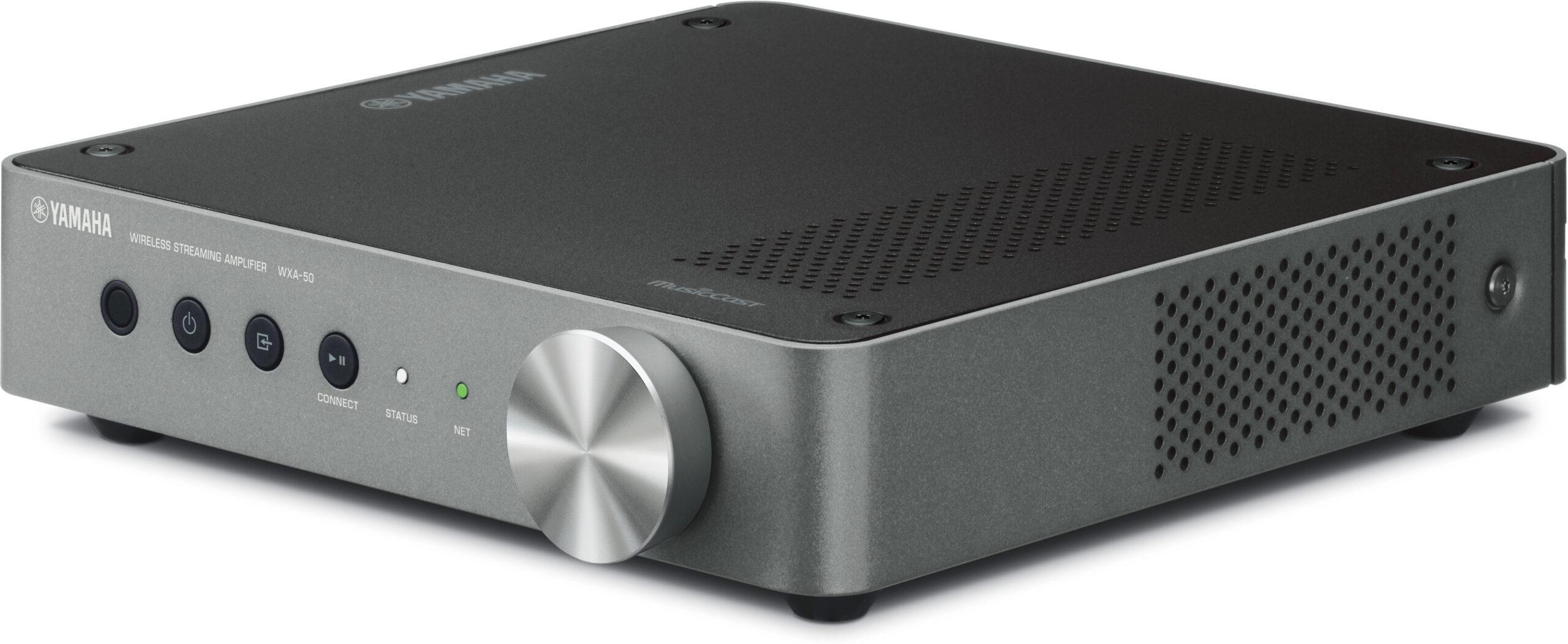
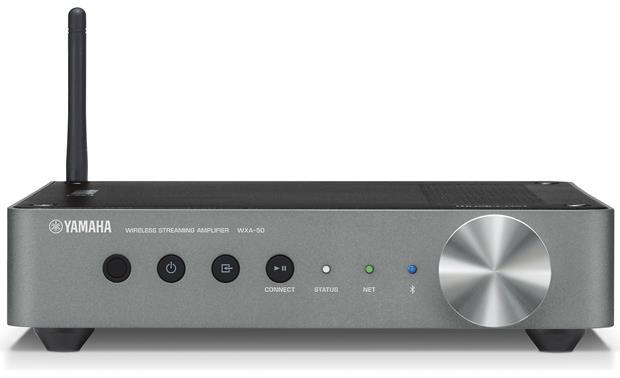
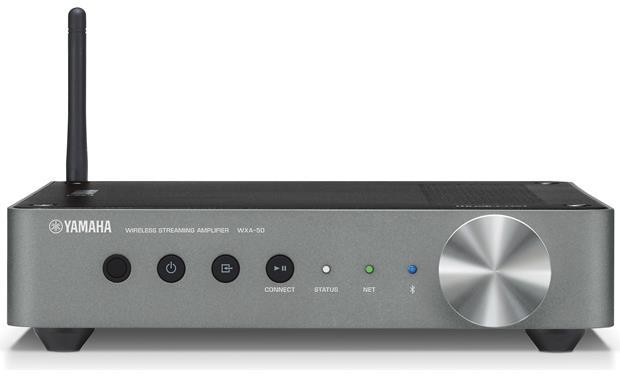
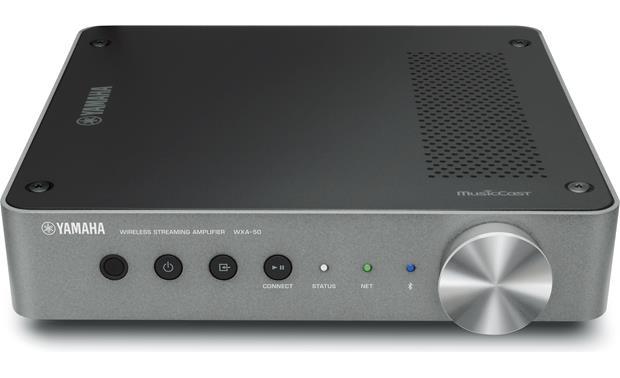
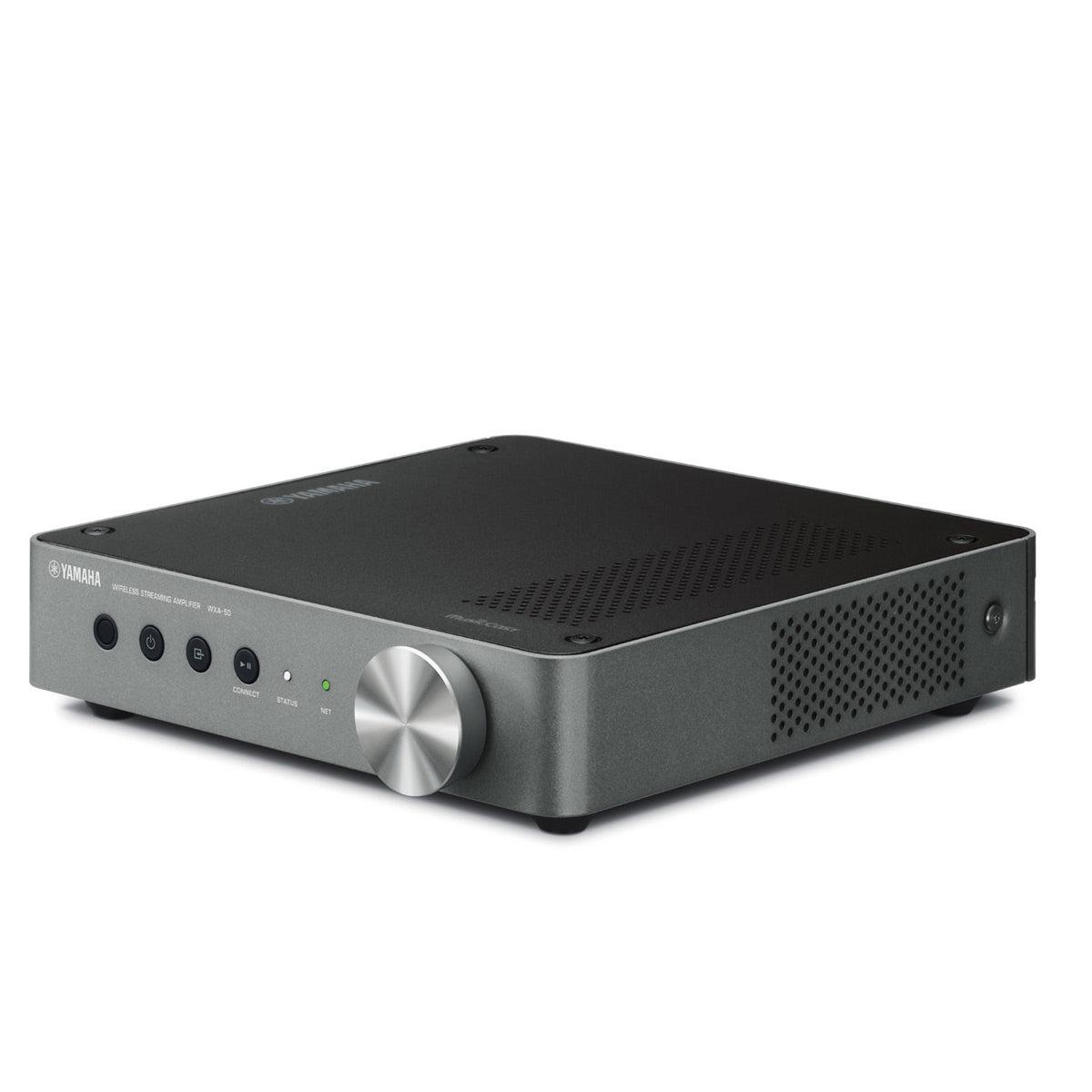
Today we're comparing two amplifiers that represent these different philosophies perfectly: the Yamaha WXA-50 MusicCast Wireless Streaming Amplifier and the NAD D 3020 V2 Integrated Amplifier. At the time of writing, these units are separated by about $200 in price, with the Yamaha positioned as the premium option and the NAD offering exceptional value in the more affordable category.
Before diving into specifics, let's establish what matters most when choosing an integrated amplifier. The primary considerations break down into several key areas:
Power output determines whether your amplifier can drive your speakers to satisfying volume levels without distortion. However, raw wattage numbers can be misleading – some amplifiers deliver their power more effectively than others, especially when dealing with challenging speaker loads.
Connectivity options have become increasingly important as our music consumption habits evolve. Modern amplifiers need to handle everything from vinyl records to high-resolution streaming files, which means balancing traditional analog inputs with cutting-edge digital connectivity.
Sound quality involves multiple factors including the digital-to-analog converter (DAC) – the component that transforms digital music files into analog signals your speakers can reproduce – as well as the amplifier's overall sonic character and noise performance.
Feature sets now encompass streaming services, multi-room capability, and smart home integration. These convenience features can significantly impact your daily listening experience, but they come at a cost both financially and in terms of complexity.
Value proposition ties everything together – you want the best performance and features for your budget, with room to grow as your needs evolve.
Released in 2016, the Yamaha WXA-50 emerged during the early days of the streaming revolution, when manufacturers were rushing to integrate wireless connectivity into traditional hi-fi components. Yamaha's approach was comprehensive: rather than simply adding Bluetooth as an afterthought, they built an entire ecosystem called MusicCast that could connect up to 32 devices across your home.
The technological foundation centers around an ESS Sabre DAC – the same high-quality digital converter found in Yamaha's premium AV receivers. This component handles the crucial task of converting digital music files into analog signals, and ESS Sabre chips are renowned for their detail retrieval and low noise performance. The WXA-50 supports high-resolution audio up to 24-bit/192kHz, meaning it can handle studio-quality recordings that contain more detail than standard CDs.
Power-wise, the unit delivers 55 watts per channel into 8-ohm speakers, scaling up impressively to 105 watts into 4-ohm loads. This scaling ability indicates robust current delivery – essential for driving demanding speakers that present challenging electrical loads to the amplifier.
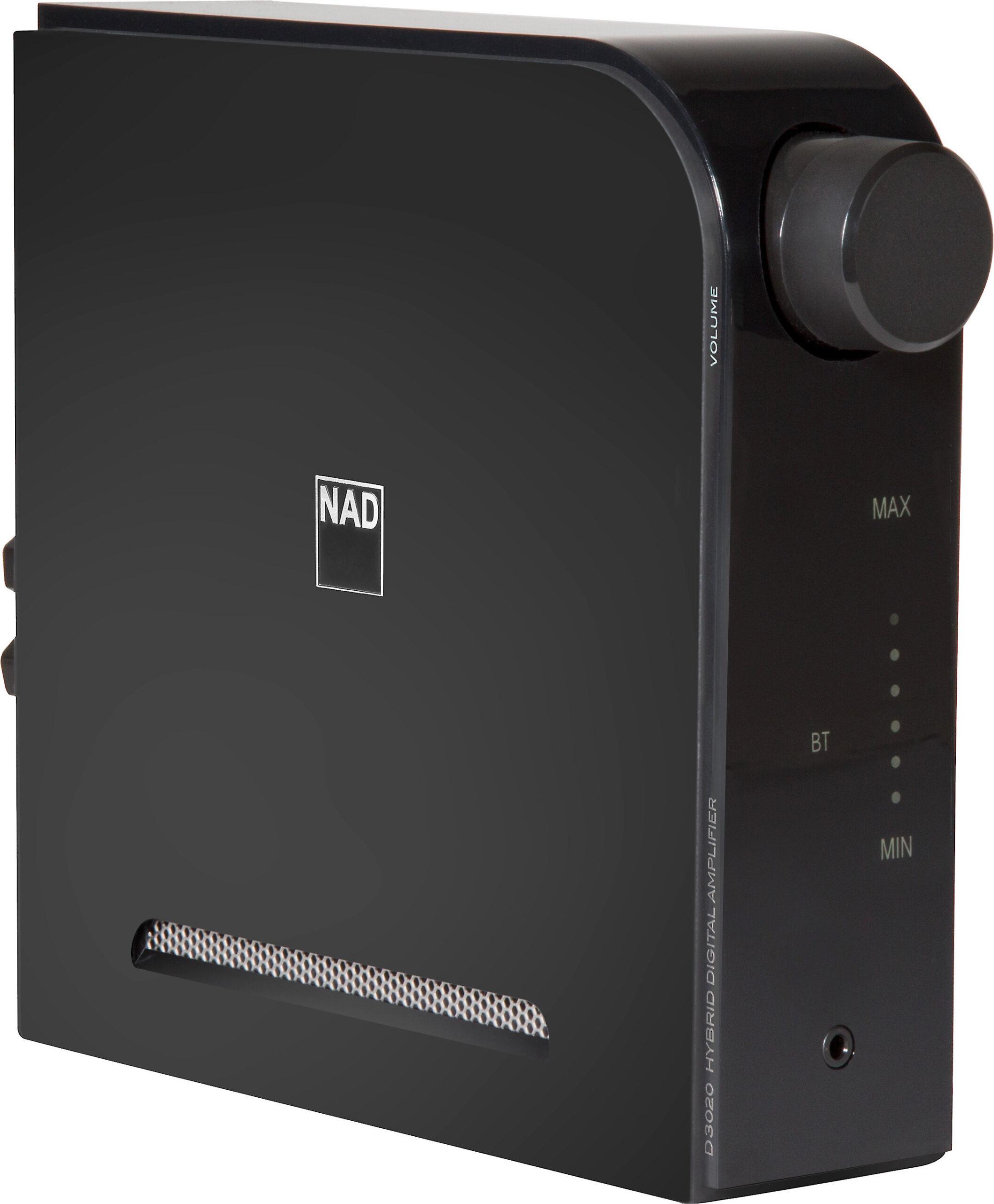
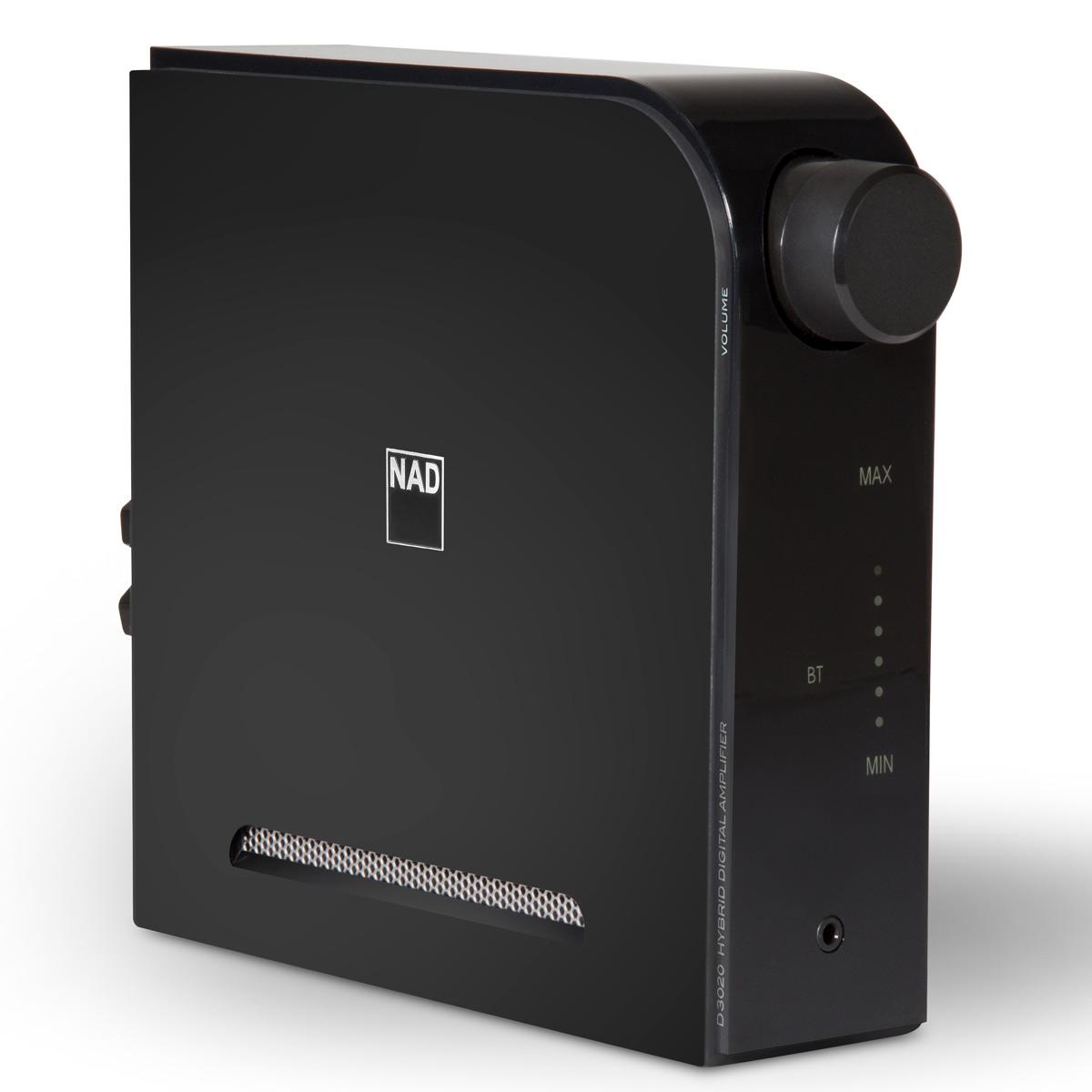
The NAD D 3020 V2, released in 2017, represents a revision of NAD's popular compact amplifier line. NAD took a different approach entirely, focusing on maximizing musical performance within strict size and cost constraints rather than loading up on wireless features.
At the heart of the D 3020 V2 lies NAD's PowerDrive technology, a sophisticated amplifier design that allows the modest 30-watt continuous rating to punch far above its weight class. PowerDrive enables the amplifier to deliver up to 150 watts into 2-ohm loads for brief periods, providing the dynamic headroom necessary for musical peaks and transients. This approach recognizes that most music doesn't require continuous high power – what matters is having reserves available for drum hits, orchestral crescendos, and other demanding passages.
The digital conversion duties fall to a Cirrus Logic CS42528 DAC configured in what NAD calls a "dual differential" setup. This involves using eight DAC channels mixed down to two, a technique typically reserved for high-end equipment that reduces noise and improves linearity.
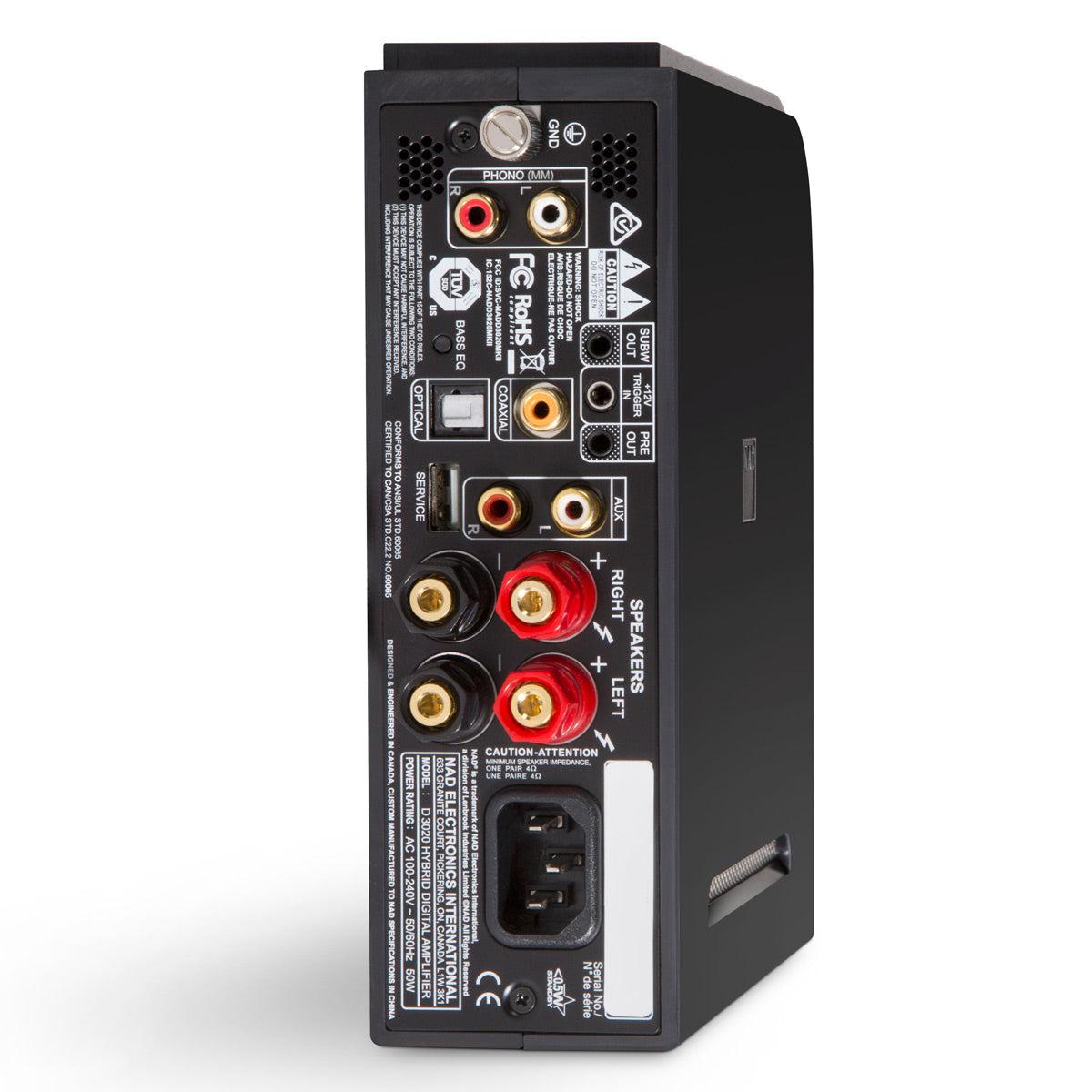
Perhaps most significantly for vinyl enthusiasts, the D 3020 V2 includes a high-quality moving-magnet (MM) phono stage. This built-in preamp applies the precise RIAA equalization curve needed to restore flat frequency response from vinyl records, eliminating the need for an external phono preamp that would cost hundreds of dollars separately.
The power specifications tell an interesting story about different engineering philosophies. The Yamaha WXA-50 provides straightforward, honest power ratings with excellent scaling across different speaker impedances. Its 55-watt rating into 8 ohms nearly doubles to 105 watts into 4 ohms, indicating a robust power supply and output stage design. This type of performance gives you confidence when driving demanding bookshelf speakers or floor-standing models in medium to large rooms.
The NAD D 3020 V2 appears less powerful on paper, but NAD's PowerDrive technology changes the equation significantly. Real-world music reproduction rarely requires sustained high power – instead, amplifiers need to handle sudden dynamic swings without strain. The PowerDrive design provides massive short-term current delivery, allowing the D 3020 V2 to drive speakers that would challenge amplifiers with much higher continuous ratings.
Based on extensive user feedback and professional reviews, both amplifiers perform well beyond their modest size and price points. The Yamaha excels with less efficient speakers that need more continuous power, while the NAD impresses with its ability to make demanding speakers sound effortless and controlled, even in the bass region where power requirements typically soar.
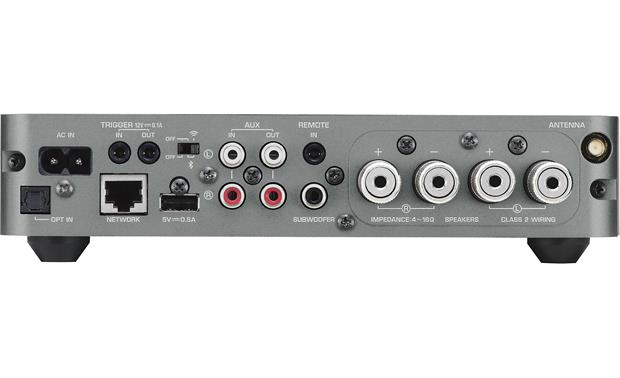
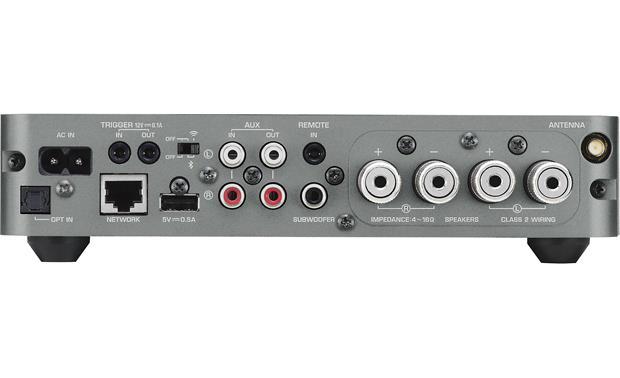
For home theater integration, the Yamaha WXA-50 offers clear advantages with its subwoofer output and digital inputs that can connect directly to TV optical outputs. The NAD can certainly serve stereo duties in a home theater setup, but lacks the dedicated subwoofer connection that many users prefer.
Both amplifiers feature sophisticated digital processing, but they take markedly different approaches. The Yamaha WXA-50 incorporates several proprietary processing technologies that enhance the listening experience with different source materials.
The ESS Sabre DAC implementation supports resolutions up to 24-bit/192kHz and includes Yamaha's Compressed Music Enhancer, which analyzes compressed audio files like MP3s and restores some of the frequency information lost during compression. While purists might prefer unprocessed audio, this feature genuinely improves the sound of streaming services that use lossy compression.
Volume-Adaptive EQ represents another thoughtful touch – as you lower the volume, the WXA-50 subtly boosts bass and treble frequencies to compensate for how our hearing sensitivity changes at different levels. Advanced Bass Extension Processing helps smaller bookshelf speakers sound fuller and more authoritative in the low frequencies without risking driver damage.
The NAD D 3020 V2 takes a more purist approach with its Cirrus Logic DAC. The dual differential configuration uses multiple DAC channels to improve resolution and reduce noise, but NAD avoids digital signal processing that might alter the original recording. The volume control operates digitally for precision, but the actual level adjustment happens in the analog domain to preserve signal integrity.
Sound character differences emerge clearly from these design choices. The Yamaha presents a detailed, analytical sound with excellent separation between instruments and voices. Its processing features can make compressed music sound more open and spacious. The NAD prioritizes musical engagement and natural tonal balance – it's the kind of amplifier that makes you forget about the equipment and focus on the music.
This is where the fundamental philosophical differences become most apparent. The Yamaha WXA-50 is essentially a comprehensive streaming hub that happens to include a high-quality amplifier, while the NAD D 3020 V2 is primarily an amplifier with selective digital connectivity.
The Yamaha's MusicCast ecosystem represents one of the most sophisticated multi-room audio platforms available. You can connect up to 32 MusicCast devices throughout your home, creating synchronized audio zones or independent listening areas. The system includes native support for major streaming services including Spotify, TIDAL, Pandora, and thousands of internet radio stations. Wi-Fi connectivity provides stable, high-quality streaming, while Bluetooth and Apple AirPlay add convenient wireless options for mobile devices.
The MusicCast app serves as the control center for everything, allowing you to browse streaming services, adjust volume in different rooms, and create custom presets. While some users find the interface less polished than Sonos or other dedicated streaming platforms, it's functional and regularly updated with new features.
Physical connectivity on the WXA-50 includes optical digital input for TVs or CD players, analog RCA input for traditional sources, USB input for direct computer connection, Ethernet for network streaming, and a subwoofer output for bass management. The combination covers virtually every conceivable source.
The NAD D 3020 V2 takes a more selective approach. Bluetooth connectivity includes aptX codec support, which provides better sound quality and lower latency than standard Bluetooth implementations – particularly important for watching videos where audio sync matters. Digital inputs include both optical and coaxial connections supporting up to 24-bit/192kHz resolution.
The standout feature for many users is the high-quality MM phono input. Vinyl has experienced a remarkable resurgence, but turntables output extremely weak signals that require precise amplification and equalization. The D 3020 V2's built-in phono stage rivals dedicated external units costing hundreds of dollars, with accurate RIAA equalization, low noise, and high overload margins that prevent distortion with loud passages.
For users interested in whole-home audio, the Yamaha WXA-50 provides capabilities that the NAD simply cannot match. MusicCast integration means you can start music in your living room and seamlessly extend it to bedrooms, kitchen, and outdoor areas using compatible speakers and components.
The system allows both synchronized playback – where every room plays the same music in perfect timing – and independent zones where different family members can listen to different sources simultaneously. Setup involves connecting all MusicCast devices to your home Wi-Fi network and using the app to create groups and zones.
This capability transforms how you experience music throughout your home. Rather than being tied to a single listening room, your entire music library and streaming services become accessible anywhere. The WXA-50 can serve as the central hub for this ecosystem while providing high-quality amplification for your main stereo system.
The NAD D 3020 V2 operates as a standalone component without multi-room capabilities. While this limits flexibility for whole-home audio, it also eliminates complexity for users who prefer focused, single-room performance. The Bluetooth implementation is robust and stable, making it easy to stream from phones and tablets for casual listening.
At the time of writing, the price difference between these amplifiers reflects their different target markets and feature sets. The NAD D 3020 V2 delivers exceptional value for users focused primarily on stereo music reproduction, offering audiophile-caliber performance at an accessible price point. The PowerDrive amplification, quality phono stage, and efficient Class D design provide performance that competing products typically require significantly higher prices to match.
For vinyl enthusiasts specifically, the NAD represents outstanding value. A comparable external phono preamp alone would cost several hundred dollars, making the amplifier's price extremely attractive for turntable users. The aptX Bluetooth implementation adds modern convenience without sacrificing audio quality.
The Yamaha WXA-50 justifies its premium pricing through comprehensive streaming capabilities and ecosystem integration. If you're building a multi-room audio system or prioritize wireless streaming convenience, the additional cost delivers substantial functionality that would be impossible to replicate with separate components.
Energy efficiency also factors into long-term value. Both amplifiers use Class D designs that consume significantly less power than traditional amplifiers, but the NAD particularly excels with standby consumption under 0.5 watts and efficient operation that keeps heat generation minimal.
The choice between these amplifiers ultimately depends on your priorities and use cases. Choose the Yamaha WXA-50 if you're building a multi-room audio system, rely heavily on streaming services, need higher continuous power output for demanding speakers, or value comprehensive wireless connectivity. The premium you pay buys significant functionality that extends far beyond basic amplification.
The NAD D 3020 V2 makes sense for vinyl enthusiasts who need a quality phono stage, budget-conscious listeners who prioritize musical performance over features, users with smaller listening rooms, or anyone who prefers focused functionality over comprehensive connectivity. The lower price delivers exceptional audio performance per dollar while including essential features for traditional stereo listening.
For home theater integration, the Yamaha offers more flexibility with its subwoofer output and multiple digital inputs, though both amplifiers can handle stereo duties in a larger surround sound system.
Consider your listening habits carefully. If you primarily stream music from services like Spotify or Apple Music and want the convenience of whole-home audio, the Yamaha provides capabilities that will enhance your daily experience significantly. If you own a substantial vinyl collection or prefer the focused approach of traditional hi-fi components, the NAD delivers superior value and performance in those specific areas.
Both amplifiers represent excellent engineering and sound quality that will satisfy demanding listeners. The fundamental decision comes down to whether you want a comprehensive wireless streaming ecosystem or focused audiophile performance with vinyl capability. Either choice will serve as an excellent foundation for years of musical enjoyment.
| Yamaha MusicCast Wireless Streaming Amplifier | NAD D 3020 V2 Integrated Amplifier |
|---|---|
| Power Output - Determines how loud and clean your speakers will sound | |
| 55W x 2 (8Ω), 105W x 2 (4Ω) - Higher continuous power for demanding speakers | 30W x 2 continuous, 150W x 2 (2Ω) dynamic - PowerDrive tech punches above its rating |
| Wireless Connectivity - Essential for modern streaming convenience | |
| Wi-Fi, Bluetooth (SBC/AAC), AirPlay - Comprehensive wireless streaming hub | Bluetooth with aptX only - Limited but higher quality wireless audio |
| Digital Audio Quality - How well it converts digital music to analog sound | |
| ESS Sabre DAC, 24-bit/192kHz - Premium converter found in high-end receivers | Cirrus Logic CS42528, dual differential - Audiophile-focused implementation |
| Analog Inputs - Critical for vinyl and traditional sources | |
| 1 x Line RCA input only - Limited analog connectivity | 1 x Line RCA + MM Phono stage - Built-in preamp saves hundreds on external phono |
| Multi-Room Capability - For whole-home audio systems | |
| MusicCast ecosystem supports 32 devices - Industry-leading multi-room platform | None - Standalone operation only |
| Streaming Services - Built-in access to music platforms | |
| Native Spotify, TIDAL, Pandora, internet radio - Direct app control | None - Must stream via Bluetooth from phone/tablet |
| Digital Inputs - For connecting TVs, CD players, streamers | |
| 1 x Optical, 1 x USB - Good variety for digital sources | 1 x Optical, 1 x Coaxial - Standard digital connectivity |
| Subwoofer Integration - Important for fuller bass response | |
| Dedicated subwoofer output - Easy bass management for small speakers | No subwoofer output - Requires speaker-level connections |
| Size and Efficiency - Desktop/shelf placement and power consumption | |
| 8.4" x 2" x 9.6", 4.28 lbs - Compact horizontal design | Vertical tower design, ultra-low 0.5W standby - More desktop-friendly |
The Yamaha MusicCast Wireless Streaming Amplifier delivers significantly more continuous power at 55 watts per channel into 8-ohm speakers, scaling up to 105 watts into 4-ohm loads. The NAD D 3020 V2 Integrated Amplifier provides 30 watts continuous but uses PowerDrive technology for dynamic peaks up to 150 watts into 2 ohms. For most speakers, the Yamaha offers more reliable power, while the NAD can surprise with its dynamic performance despite lower ratings.
Yes, but with important differences. The Yamaha MusicCast Wireless Streaming Amplifier offers comprehensive wireless options including Wi-Fi, Bluetooth, and Apple AirPlay for maximum compatibility. The NAD D 3020 V2 Integrated Amplifier provides Bluetooth with aptX codec support for better sound quality than standard Bluetooth. The Yamaha is more versatile for streaming, while the NAD focuses on higher wireless audio quality.
The NAD D 3020 V2 Integrated Amplifier is clearly superior for vinyl with its built-in moving-magnet phono stage that provides proper RIAA equalization and low noise performance. The Yamaha MusicCast Wireless Streaming Amplifier has no phono input and would require an external phono preamp costing hundreds of dollars. For turntable users, the NAD represents exceptional value by including this essential feature.
Both can serve as stereo amplifiers in home theater systems, but the Yamaha MusicCast Wireless Streaming Amplifier offers better integration with its subwoofer output and optical digital input for direct TV connection. The NAD D 3020 V2 Integrated Amplifier can handle stereo duties but lacks dedicated subwoofer connectivity. For home theater use, the Yamaha provides more practical connection options.
The Yamaha MusicCast Wireless Streaming Amplifier excels with native support for Spotify, TIDAL, Pandora, and internet radio through its MusicCast app. The NAD D 3020 V2 Integrated Amplifier requires streaming through Bluetooth from your phone or tablet. The Yamaha provides a more seamless streaming experience, while the NAD keeps things simple with device-based control.
Only the Yamaha MusicCast Wireless Streaming Amplifier supports multi-room audio through its MusicCast ecosystem, connecting up to 32 devices for synchronized or independent playback throughout your home. The NAD D 3020 V2 Integrated Amplifier operates as a standalone unit without multi-room capabilities. For whole-home audio, the Yamaha is the clear choice.
Both deliver excellent sound quality but with different characteristics. The Yamaha MusicCast Wireless Streaming Amplifier provides detailed, analytical sound with excellent instrument separation and digital processing to enhance compressed music. The NAD D 3020 V2 Integrated Amplifier focuses on musical engagement with warm, natural tonal balance. The NAD appeals more to traditional audiophiles, while the Yamaha excels with digital sources.
The Yamaha MusicCast Wireless Streaming Amplifier includes optical digital and USB inputs plus comprehensive network connectivity. The NAD D 3020 V2 Integrated Amplifier provides optical and coaxial digital inputs. Both support high-resolution audio up to 24-bit/192kHz. The Yamaha offers more digital connectivity options, while the NAD covers the essentials effectively.
Both use efficient Class D designs, but the NAD D 3020 V2 Integrated Amplifier excels with standby consumption under 0.5 watts and minimal heat generation. The Yamaha MusicCast Wireless Streaming Amplifier is reasonably efficient but consumes more power due to its wireless connectivity and processing features. The NAD is more environmentally friendly for energy-conscious users.
The Yamaha MusicCast Wireless Streaming Amplifier includes a dedicated subwoofer output with level control for easy integration. The NAD D 3020 V2 Integrated Amplifier lacks a subwoofer output, requiring speaker-level connections or an external crossover. For subwoofer integration, the Yamaha is much more convenient.
This depends on your needs. The NAD D 3020 V2 Integrated Amplifier delivers exceptional value for focused stereo listening, especially with its included phono stage saving hundreds on external components. The Yamaha MusicCast Wireless Streaming Amplifier justifies its higher cost with comprehensive streaming features and multi-room capability. The NAD wins for pure audio value, while the Yamaha offers better feature value.
The NAD D 3020 V2 Integrated Amplifier is simpler with basic controls and straightforward connectivity, appealing to users who prefer minimal complexity. The Yamaha MusicCast Wireless Streaming Amplifier requires network setup and app configuration but provides much greater functionality once configured. The NAD suits traditional hi-fi users, while the Yamaha appeals to those wanting modern convenience features.
We've done our best to create useful and informative comparisons to help you decide what product to buy. Our research uses advanced automated methods to create this comparison and perfection is not possible - please contact us for corrections or questions. These are the sites we've researched in the creation of this article: crutchfield.ca - usa.yamaha.com - avluxurygroup.com - crutchfield.com - crutchfield.com - teamiu.com - audiosciencereview.com - snapav.com - avsforum.com - youtube.com - hifiheaven.net - usa.yamaha.com - usa.yamaha.com - audiokarma.org - usa.yamaha.com - bestbuy.com - usa.yamaha.com - ooberpad.com - dugoutnorthbrook.com - parts-express.com - hifinews.com - youtube.com - forum.psaudio.com - crutchfield.com - forum.audiogon.com - crutchfield.com - iiwireviews.com - crutchfield.ca - audiosciencereview.com - soundstagesimplifi.com - nadelectronics.com - hifiheaven.net - crutchfield.com - projectorscreen.com - upscaleaudio.com - dedicatedaudio.com - twitteringmachines.com - nadelectronics.com

Privacy Policy
Terms and Conditions - Affiliate Policy
Home Security
© Copyright 2008-2026.
11816 Inwood Rd #1211, Dallas, TX 75244