

When shopping for a streaming amplifier in 2024, you're essentially choosing between two philosophies: traditional hi-fi values with modern connectivity, or compact streaming-first design. The Denon PMA-900HNE and Yamaha WXA-50 represent these approaches perfectly, and understanding their differences will help you make the right choice for your listening setup.
Streaming amplifiers combine the power amplification circuits that drive your speakers with network connectivity for accessing music services like Spotify, Tidal, and internet radio. Think of them as the modern evolution of traditional stereo receivers – they eliminate the need for separate components while maintaining high-quality audio performance.
The key considerations when choosing between products like the Denon PMA-900HNE and Yamaha WXA-50 come down to power delivery, streaming ecosystem, analog source flexibility, and physical footprint. At the time of writing, both amplifiers compete in similar price ranges, making the decision more about features and philosophy than budget constraints.
When manufacturers list power specifications, they're telling you how much electrical energy the amplifier can deliver to your speakers. The Denon PMA-900HNE produces 50 watts per channel into 8-ohm speakers and 85 watts into 4-ohm speakers, while the Yamaha WXA-50 delivers 55 watts into 8 ohms, 70 watts into 6 ohms, and an impressive 105 watts into 4 ohms.
These numbers might seem close, but they reveal important differences in design philosophy. The Yamaha WXA-50's ability to deliver more power as speaker impedance drops (impedance is essentially electrical resistance) indicates superior current delivery capability. This makes it better suited for demanding speakers that present difficult electrical loads to the amplifier.
In practice, the power difference becomes more noticeable with inefficient speakers or in larger rooms. Most bookshelf speakers with 85-87 dB sensitivity will play at comfortable listening levels with either amplifier, but floor-standing speakers with planar or ribbon tweeters – which often drop to 4-ohm impedances – will perform noticeably better with the Yamaha WXA-50.
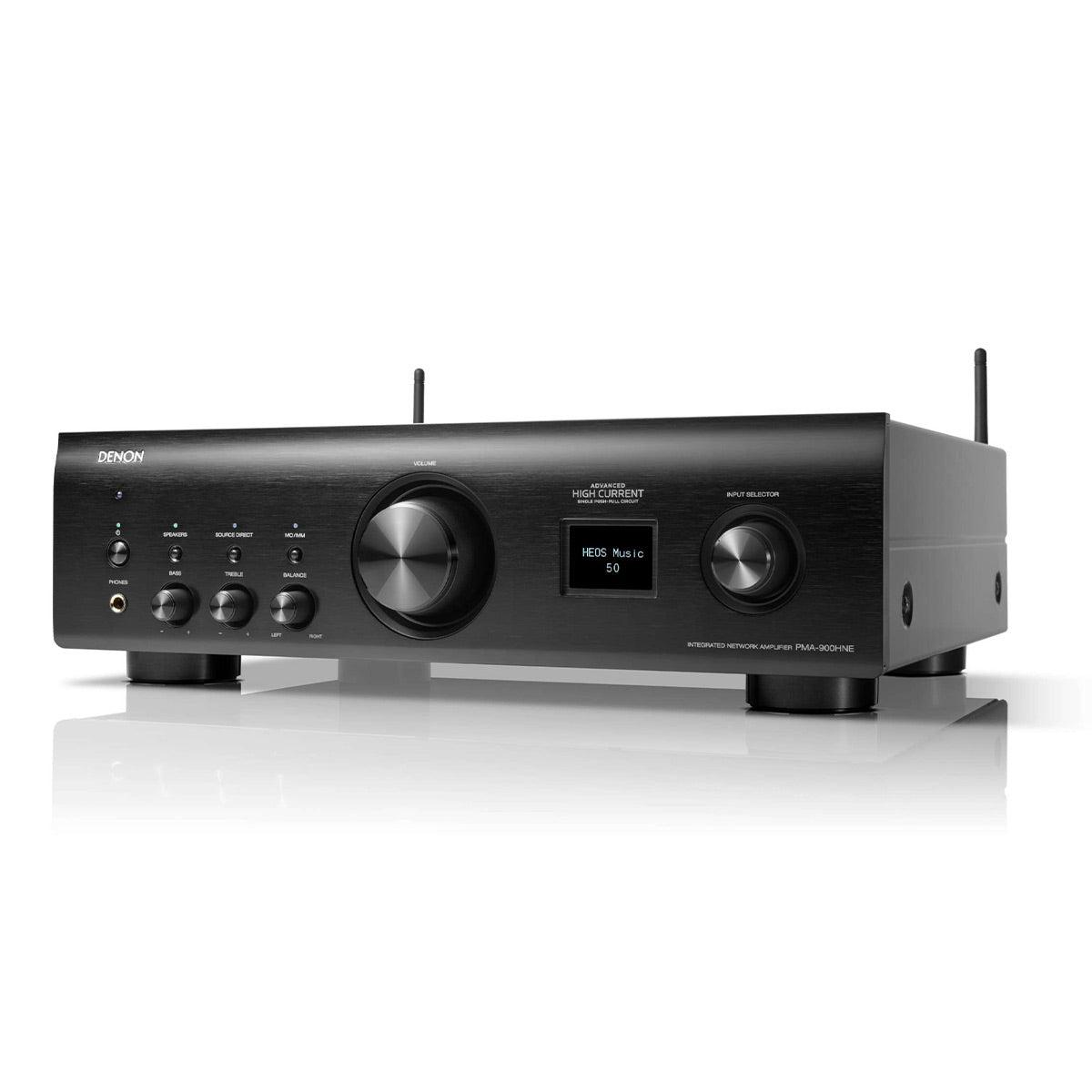
The Denon PMA-900HNE compensates with its Advanced High Current (AHC) single push-pull circuit design, which prioritizes control and stability over raw power output. This approach works exceptionally well with high-efficiency speakers (90+ dB sensitivity) where the Denon's refined power delivery creates a more composed, musical presentation.
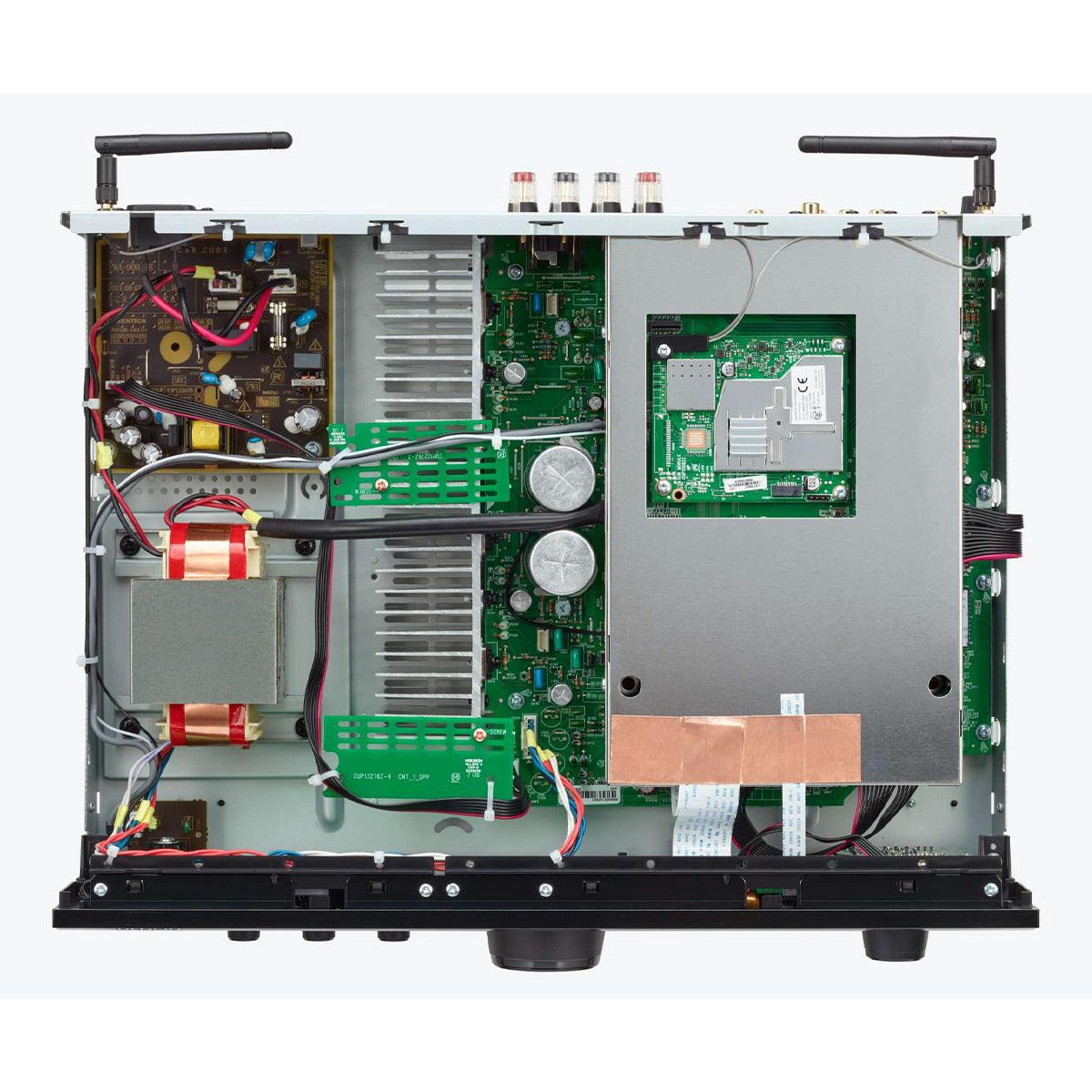
The Denon PMA-900HNE uses Signal Level Divided Construction (SLDC), which separates different signal processing stages physically within the chassis to reduce electrical interference between components. This design philosophy prioritizes signal purity over maximum power efficiency, resulting in a cleaner but potentially less dynamic sound signature.
Conversely, the Yamaha WXA-50 employs a more modern approach with its ESS Sabre DAC (digital-to-analog converter) and 48-bit digital volume control. This digital volume control maintains better channel matching and introduces less noise than traditional analog volume controls, especially at lower listening levels.
Both amplifiers support high-resolution audio files, but the Yamaha WXA-50 takes a more comprehensive approach. While the Denon PMA-900HNE handles PCM files up to 192 kHz/24-bit (the standard for most hi-res downloads), the Yamaha adds DSD support up to 5.6 MHz, which matters if you're interested in SACD rips or high-end digital downloads.
DSD (Direct Stream Digital) is a different way of encoding audio that uses single-bit samples at extremely high frequencies rather than multi-bit samples at lower frequencies like PCM. Some listeners prefer DSD's analog-like presentation, though the difference is subtle and highly dependent on the source material and playback system.
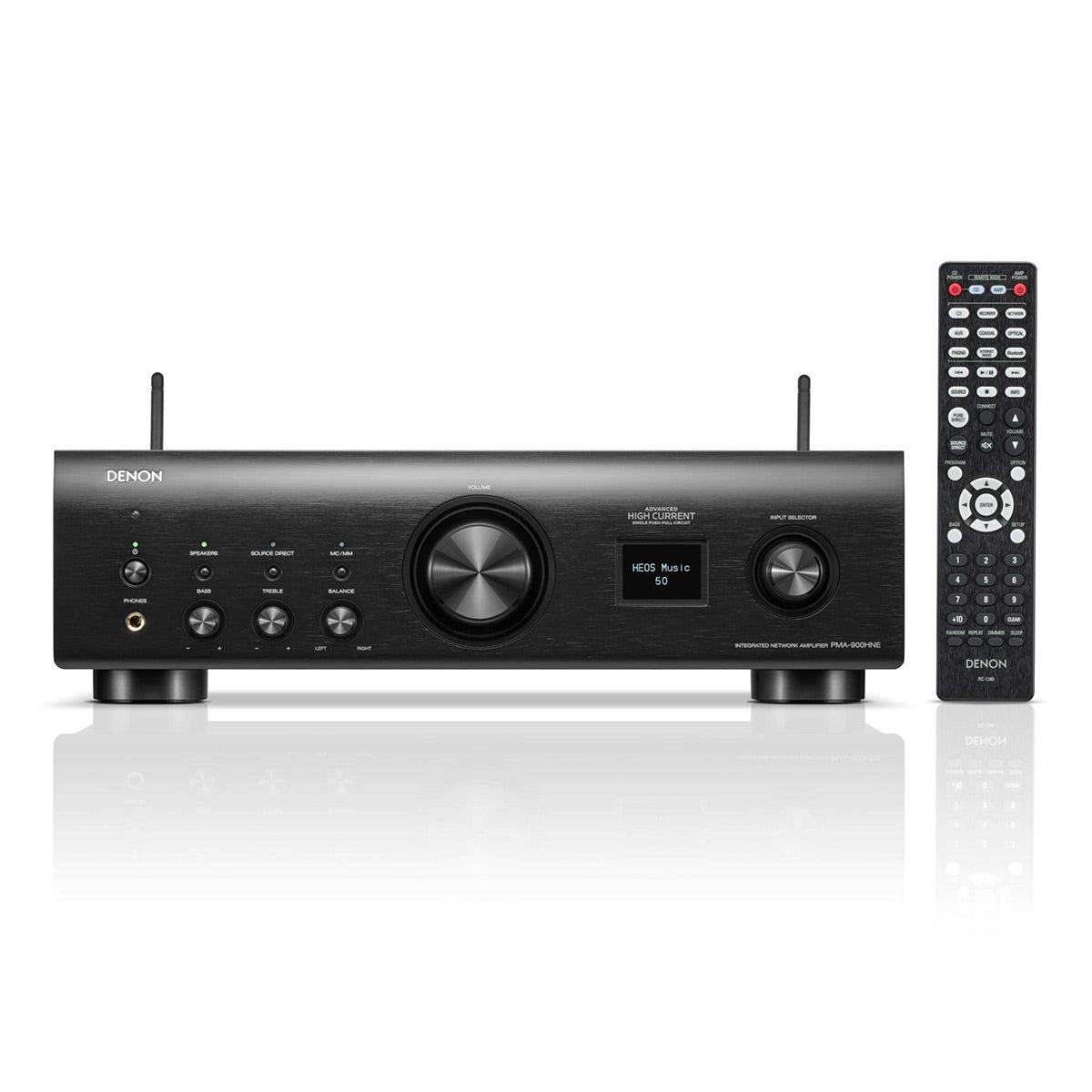
The Denon PMA-900HNE includes a Source Direct mode that bypasses all tone controls and signal processing, appealing to purists who want the most direct path from source to speakers. This approach assumes your source material is well-mastered and your room acoustics are reasonable.
The Yamaha WXA-50 takes the opposite approach, offering multiple processing options including Compressed Music Enhancer (which attempts to restore harmonics lost during MP3 compression), Volume-Adaptive EQ (which adjusts tonal balance based on listening level), and Advanced Bass Extension (which enhances low-frequency response for smaller speakers). These features acknowledge that most people's listening rooms and source material benefit from some electronic assistance.
Our research indicates that the Yamaha's processing features work well in practice, particularly the Volume-Adaptive EQ, which prevents music from sounding thin at low listening levels – a common problem with unprocessed playback.
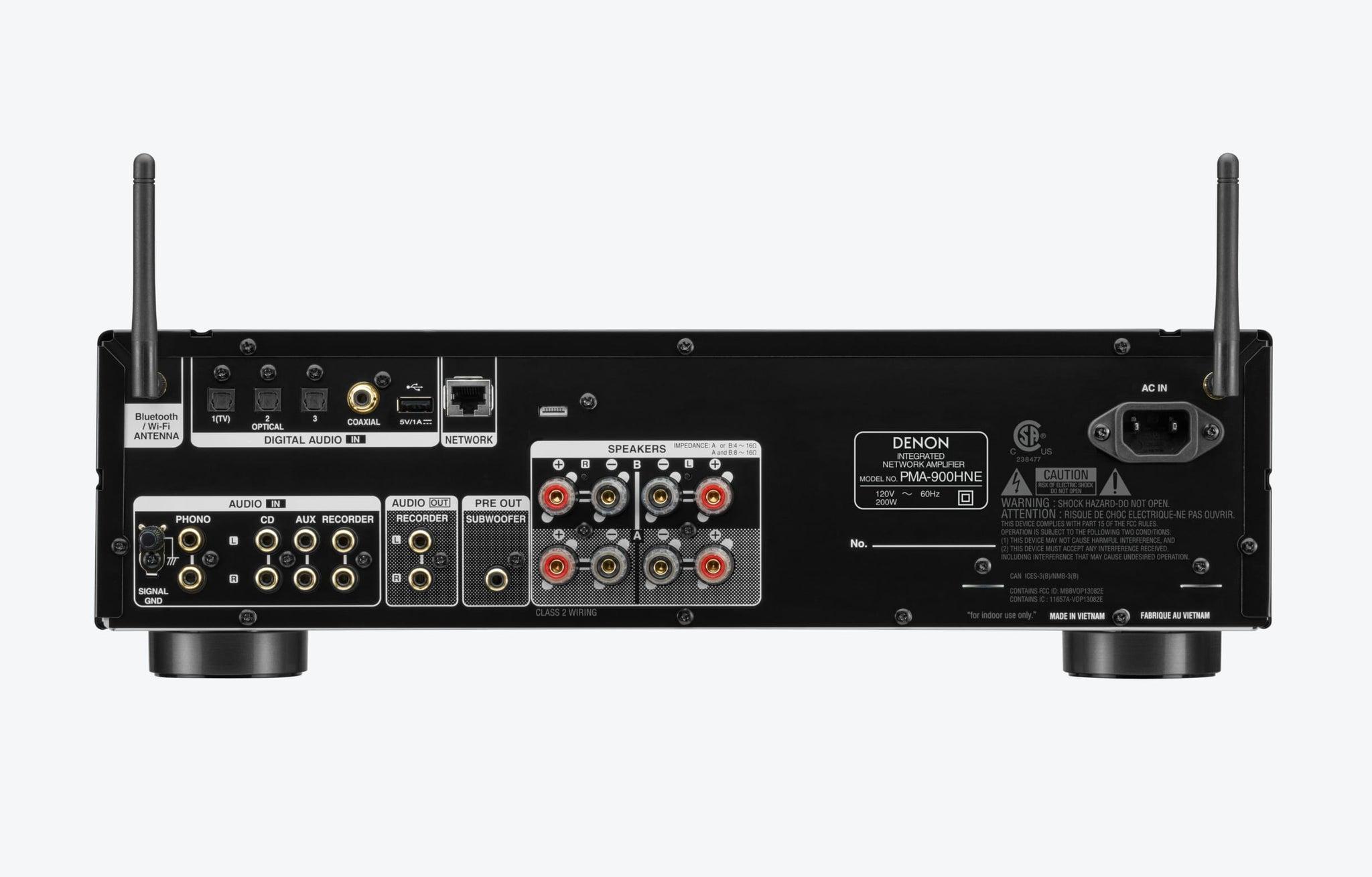
The Denon PMA-900HNE uses HEOS Built-in technology, which integrates with Denon's larger ecosystem of wireless speakers and AV receivers. HEOS supports popular services like Spotify Connect, Apple Music, Tidal, and Qobuz Connect, with the significant advantage of Roon Ready certification.
Roon is a premium music management platform (requiring a separate subscription) that creates a comprehensive digital music library from your local files, streaming services, and metadata from sources like AllMusic. For serious digital music enthusiasts, Roon Ready certification is valuable because it ensures bit-perfect audio transmission and seamless integration with Roon's sophisticated interface.
The Yamaha WXA-50 uses MusicCast, which offers similar streaming service integration but focuses more heavily on multi-room audio synchronization. MusicCast's strength lies in its ability to create perfectly synchronized whole-home audio systems, with precise timing correction that prevents the echo effects common with other multi-room solutions.
User reviews consistently indicate that MusicCast offers a more polished app experience, with faster connection times and more intuitive navigation. However, HEOS provides better integration with voice assistants like Amazon Alexa and supports Bluetooth re-broadcast, allowing you to send the amplifier's audio to Bluetooth headphones – useful for late-night listening without disturbing others.
Both systems support network standby, meaning the amplifiers can be awakened remotely when you start music playback from your phone. This feature works reliably with both units, though the Yamaha WXA-50 typically connects faster due to its lower power consumption in standby mode.
The most significant difference between these amplifiers lies in analog source handling. The Denon PMA-900HNE includes a dedicated phono stage that supports both moving magnet (MM) and moving coil (MC) cartridges, while the Yamaha WXA-50 provides only a single analog line input with no phono capability.
A phono stage is essential for connecting turntables because the electrical signal from a cartridge is much weaker and has different frequency characteristics than line-level sources. The RIAA equalization curve built into phono stages corrects for the frequency response modifications made during vinyl mastering, restoring flat frequency response during playback.
Having a quality built-in phono stage saves $200-500 compared to purchasing a separate unit, making the Denon PMA-900HNE particularly attractive for vinyl enthusiasts. The Denon's MM/MC switching capability is especially valuable because MC cartridges produce significantly lower output levels and require different input impedance characteristics.
Beyond the phono stage, the Denon PMA-900HNE provides three additional analog inputs plus a recording output, allowing connection of CD players, tuners, tape decks, and other line-level sources. The A/B speaker switching capability lets you connect two pairs of speakers and switch between them, useful for comparing speakers or having separate listening zones.
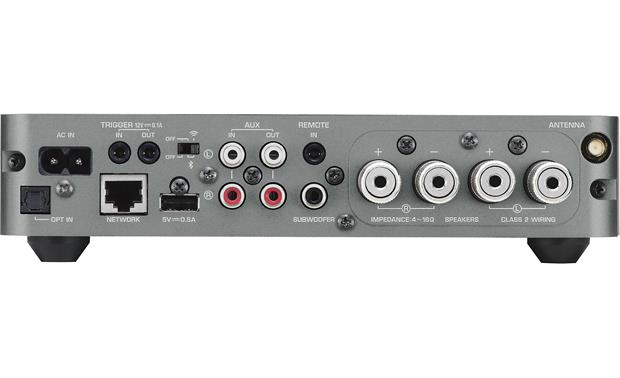
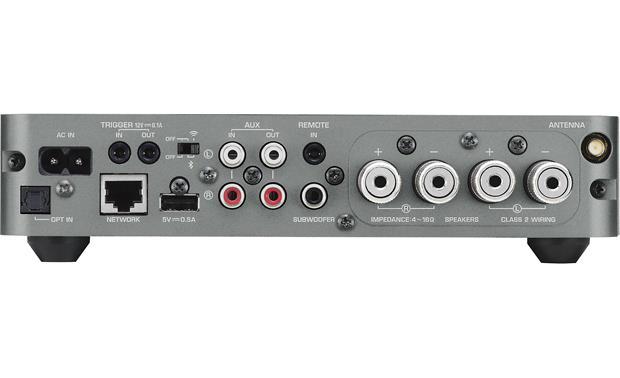
The Yamaha WXA-50's minimal analog connectivity reflects its streaming-first philosophy. With only one analog input, you'll need to choose between connecting a CD player or using an external phono stage for turntables. This limitation makes sense if you're primarily streaming digital music, but it reduces flexibility for users with multiple analog sources.
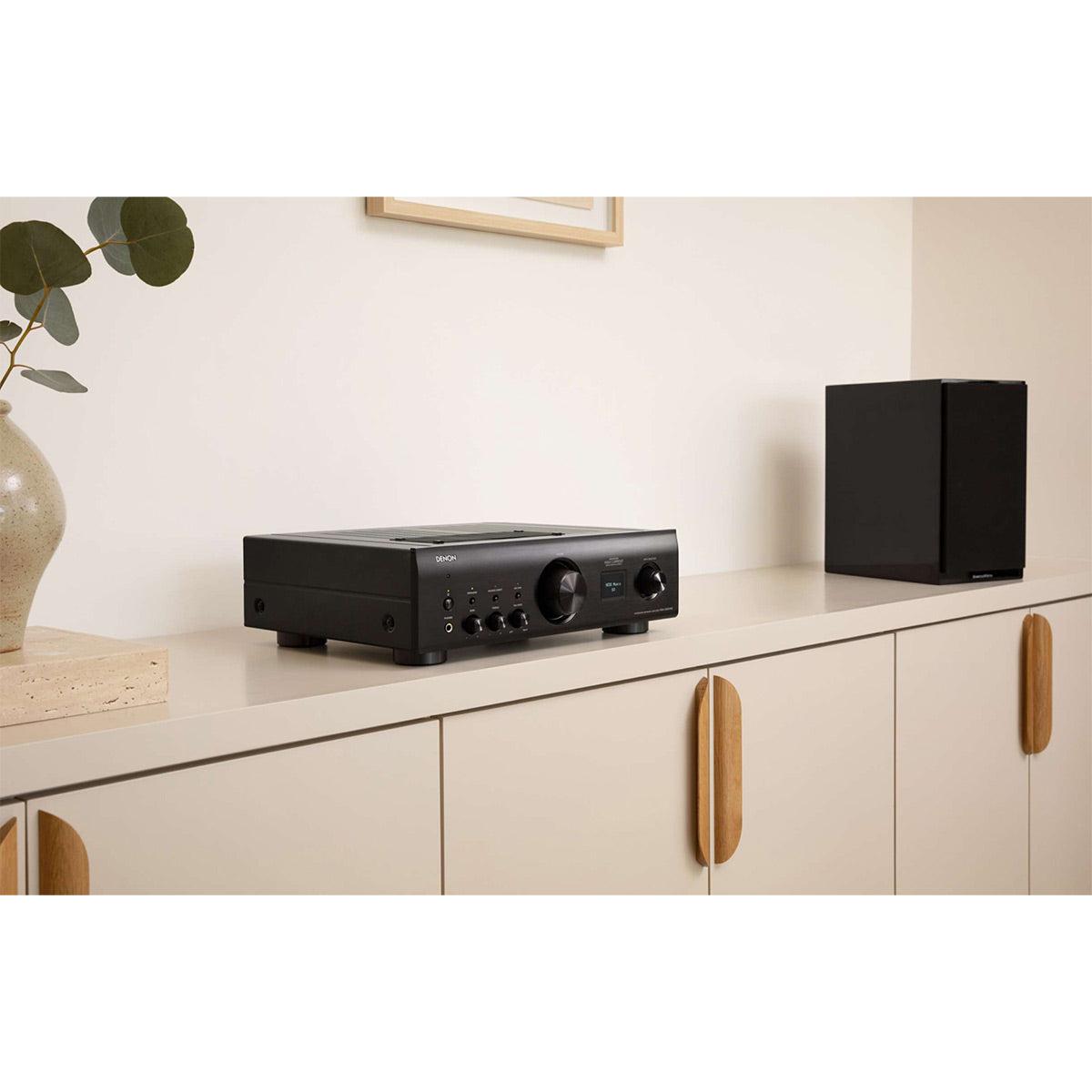
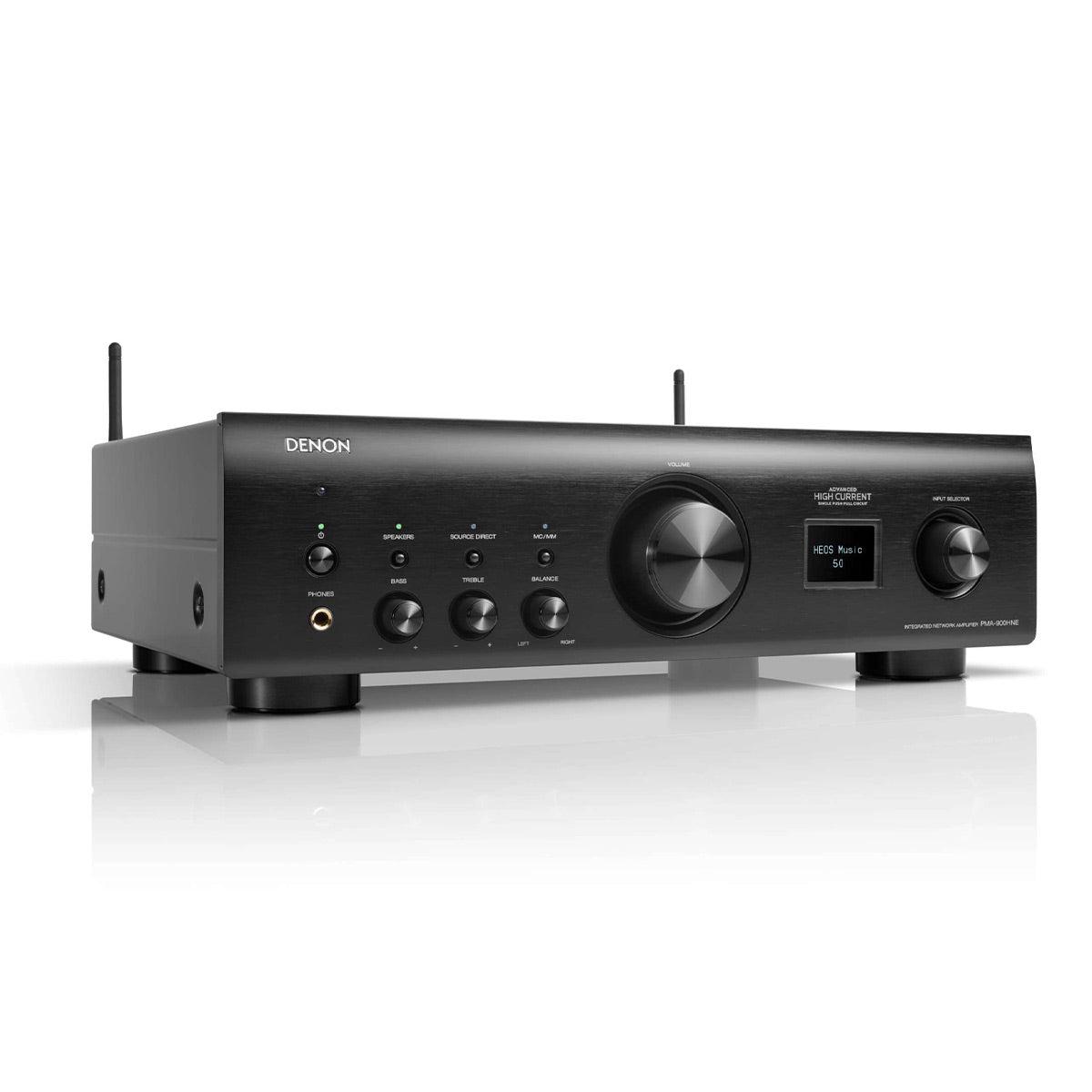
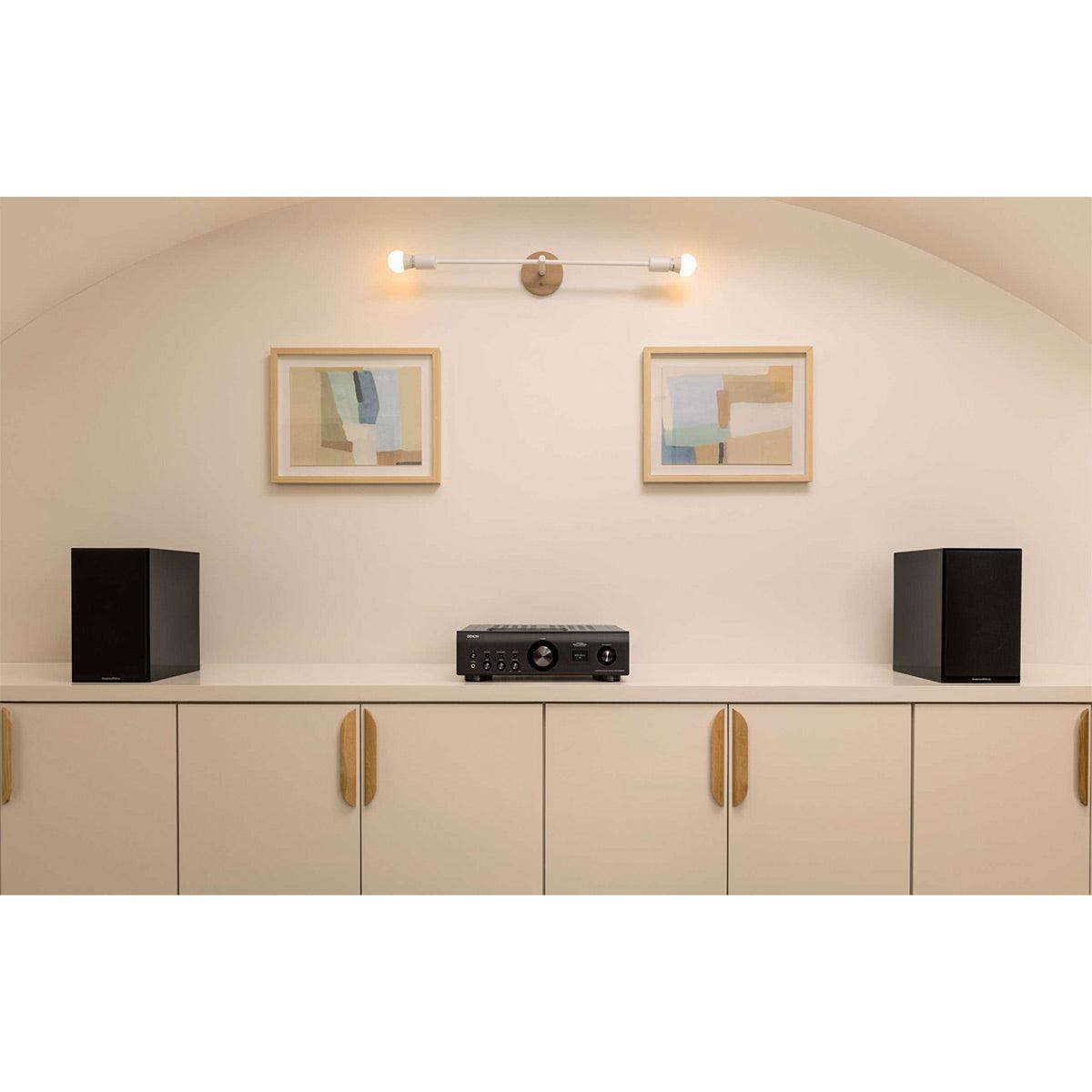
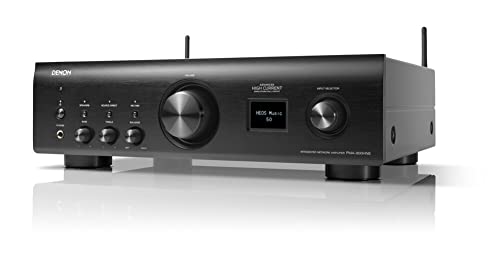
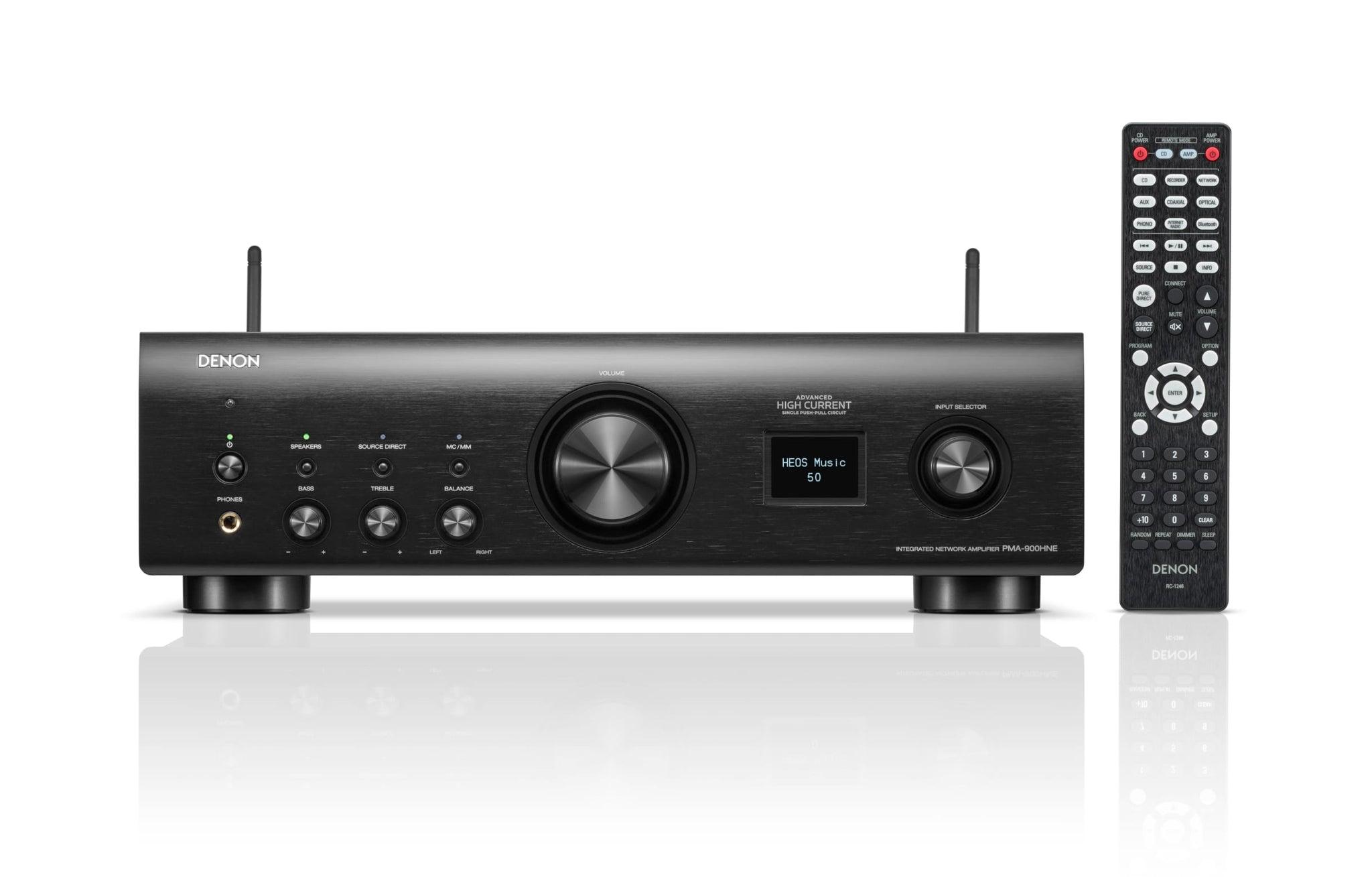
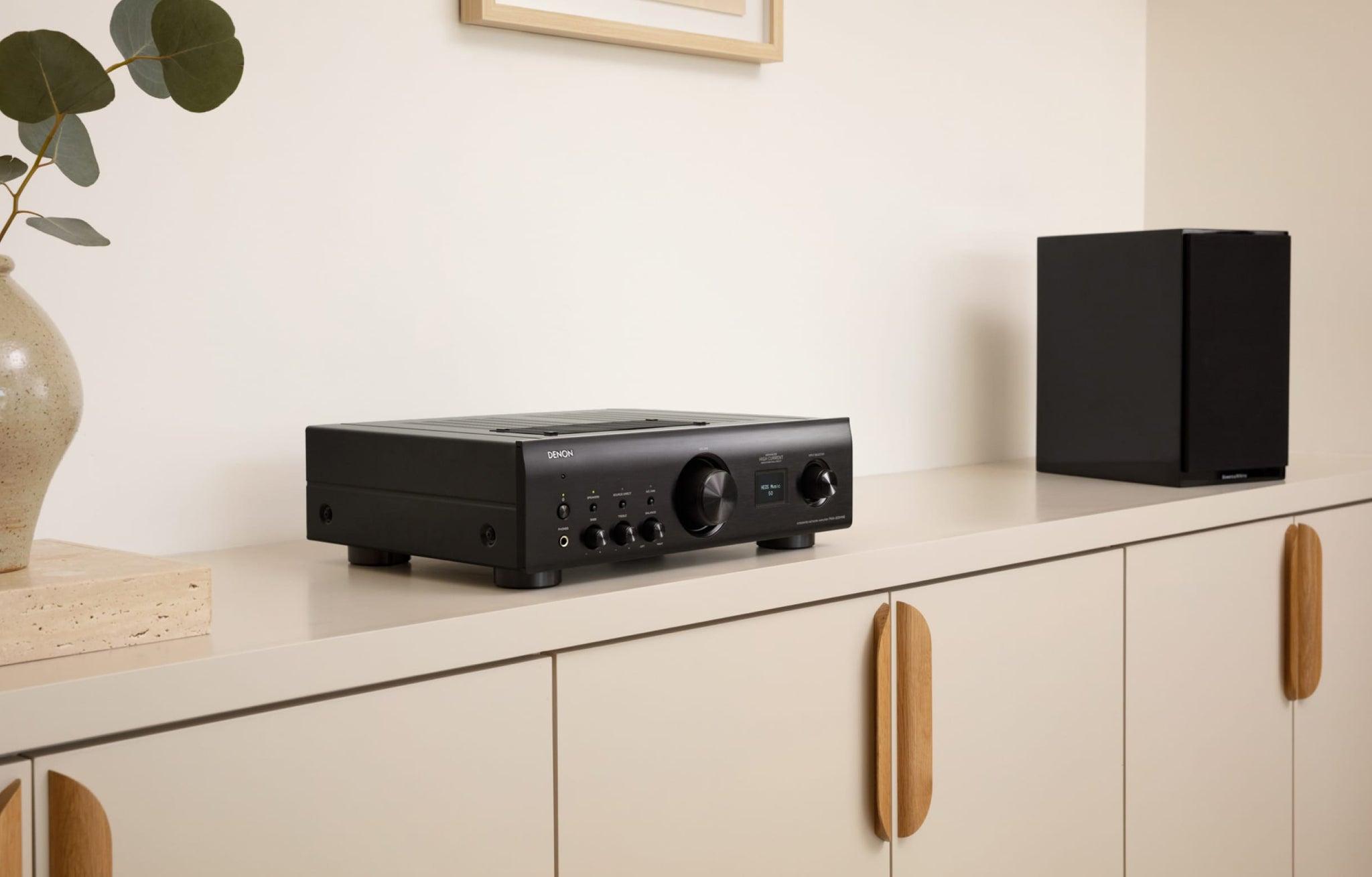
Released in 2022, the Denon PMA-900HNE maintains traditional integrated amplifier proportions and appearance, measuring 17 inches wide and weighing over 18 pounds. Its substantial construction includes vibration-resistant chassis design and an OLED front-panel display that provides clear information about inputs and settings.
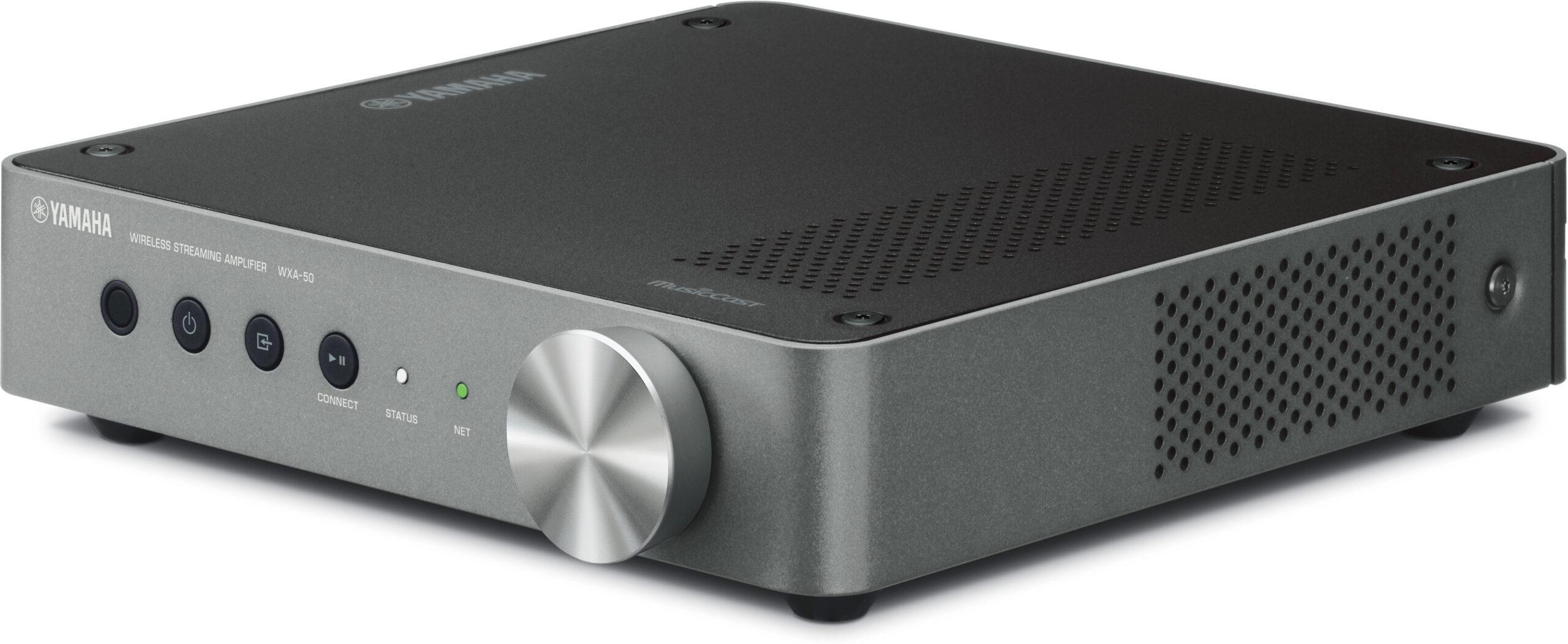
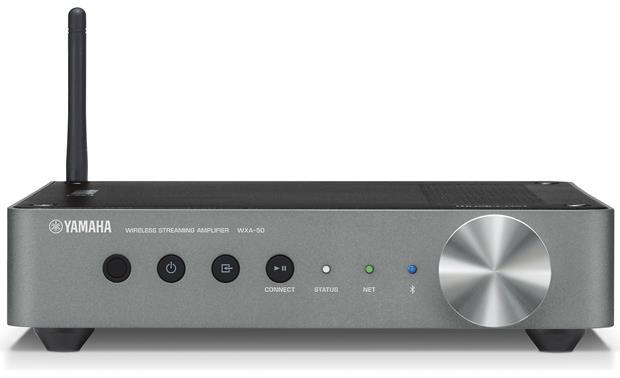
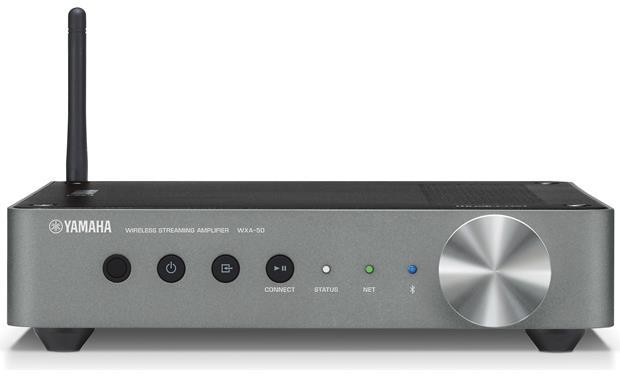
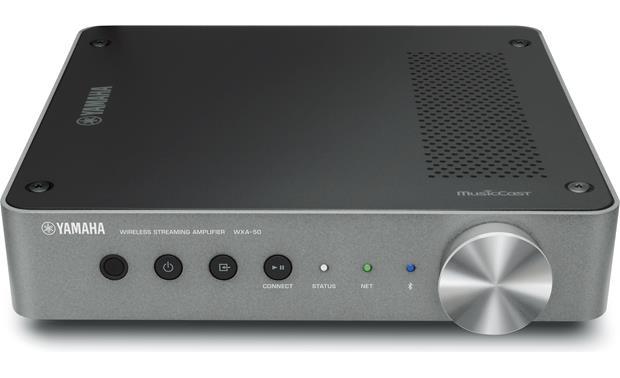
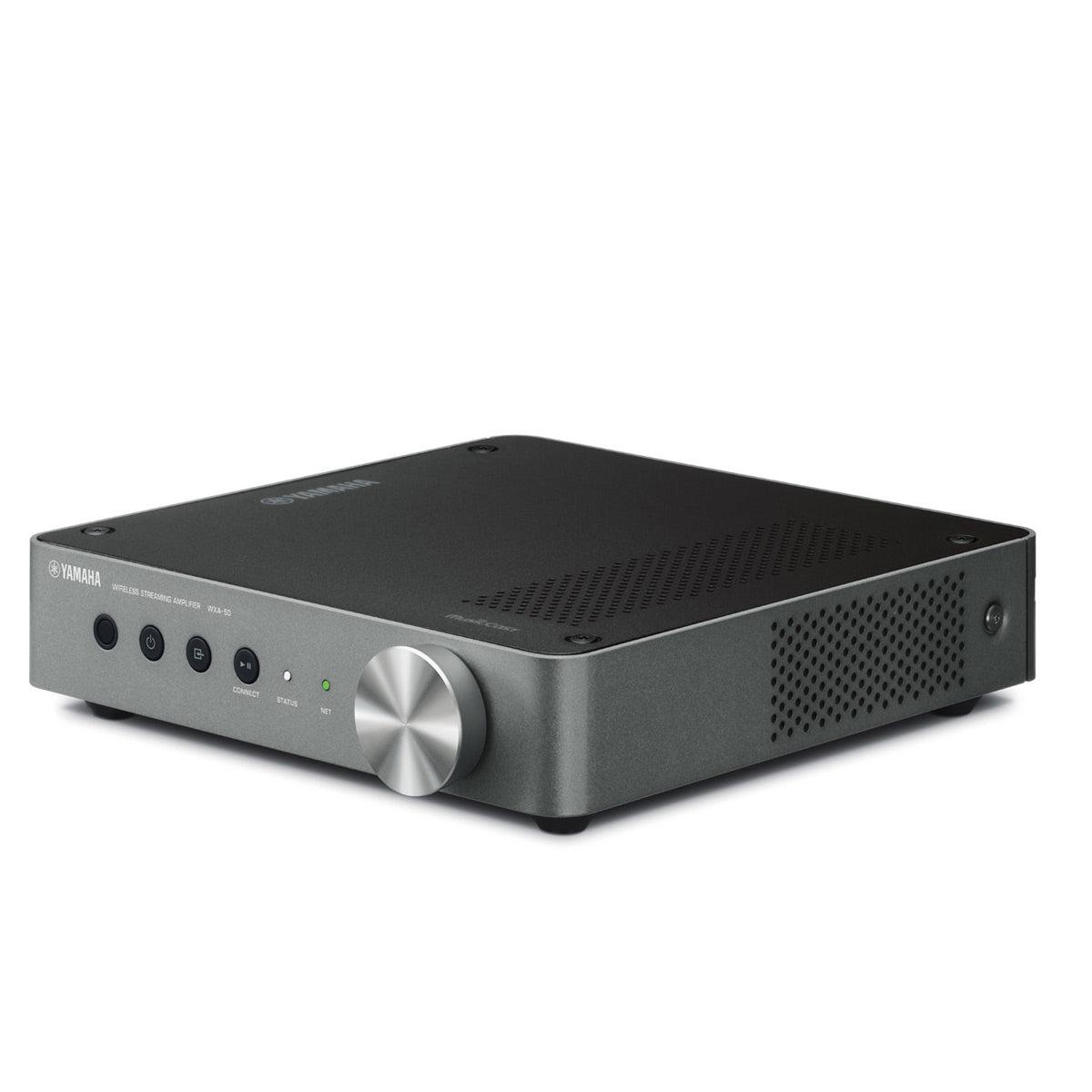
The Yamaha WXA-50, introduced around 2019, represents a completely different approach with its compact 8.3-inch width and 4.3-pound weight. This dramatic size reduction makes it suitable for applications where traditional amplifiers simply won't fit, including custom installations, desktop systems, and entertainment centers with limited shelf space.
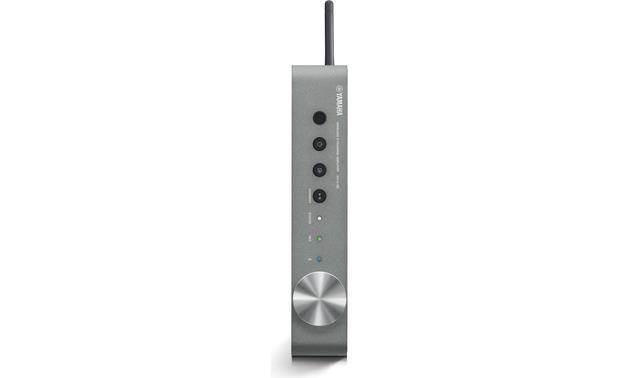
The Yamaha WXA-50 can be positioned horizontally or vertically and includes professional installation features like 12V trigger inputs and outputs (which allow automatic power-on when connected components are activated) and IR remote input for integration with custom control systems. These features make it particularly attractive for whole-home audio installations where multiple zones need coordinated control.
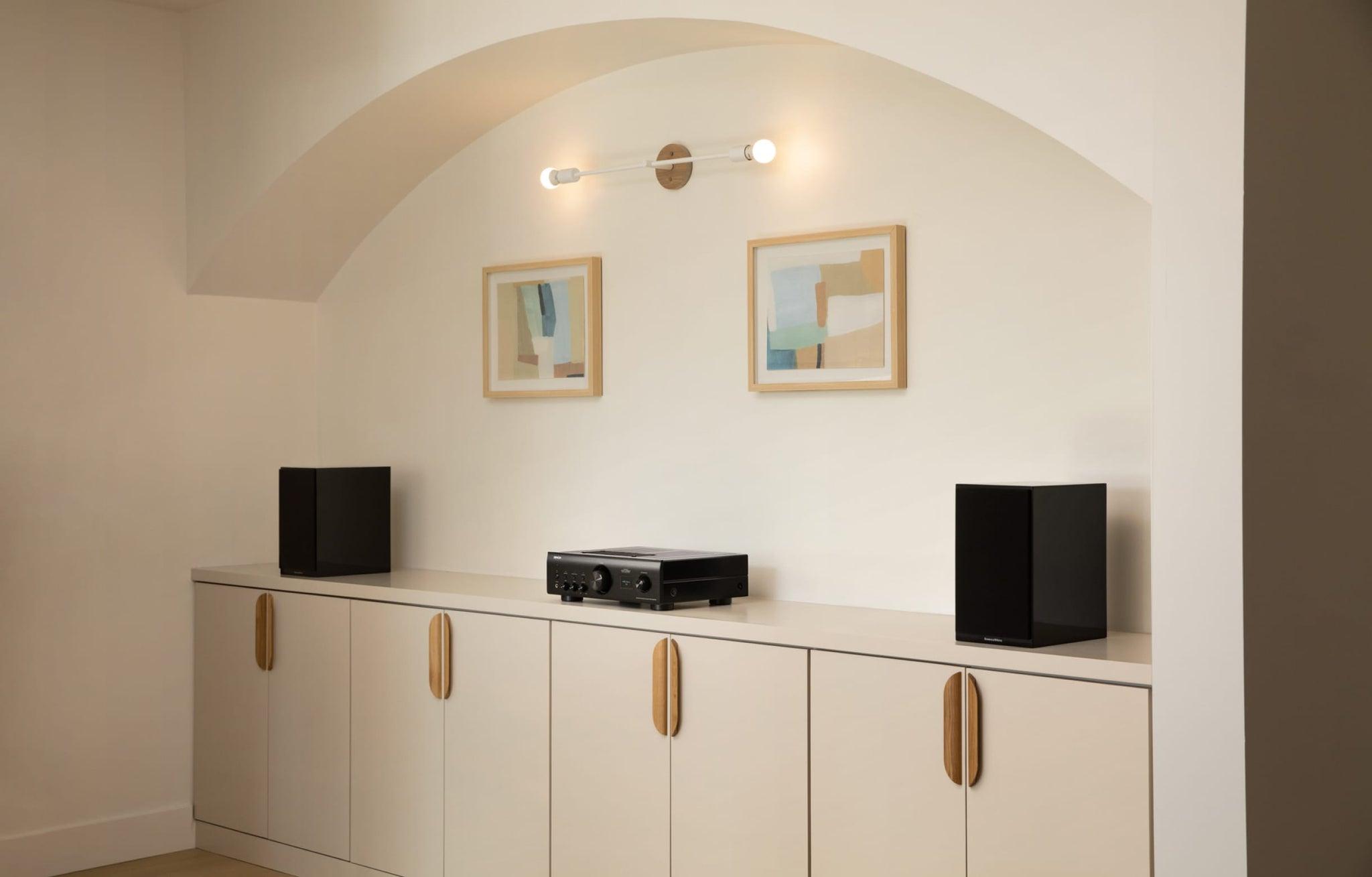
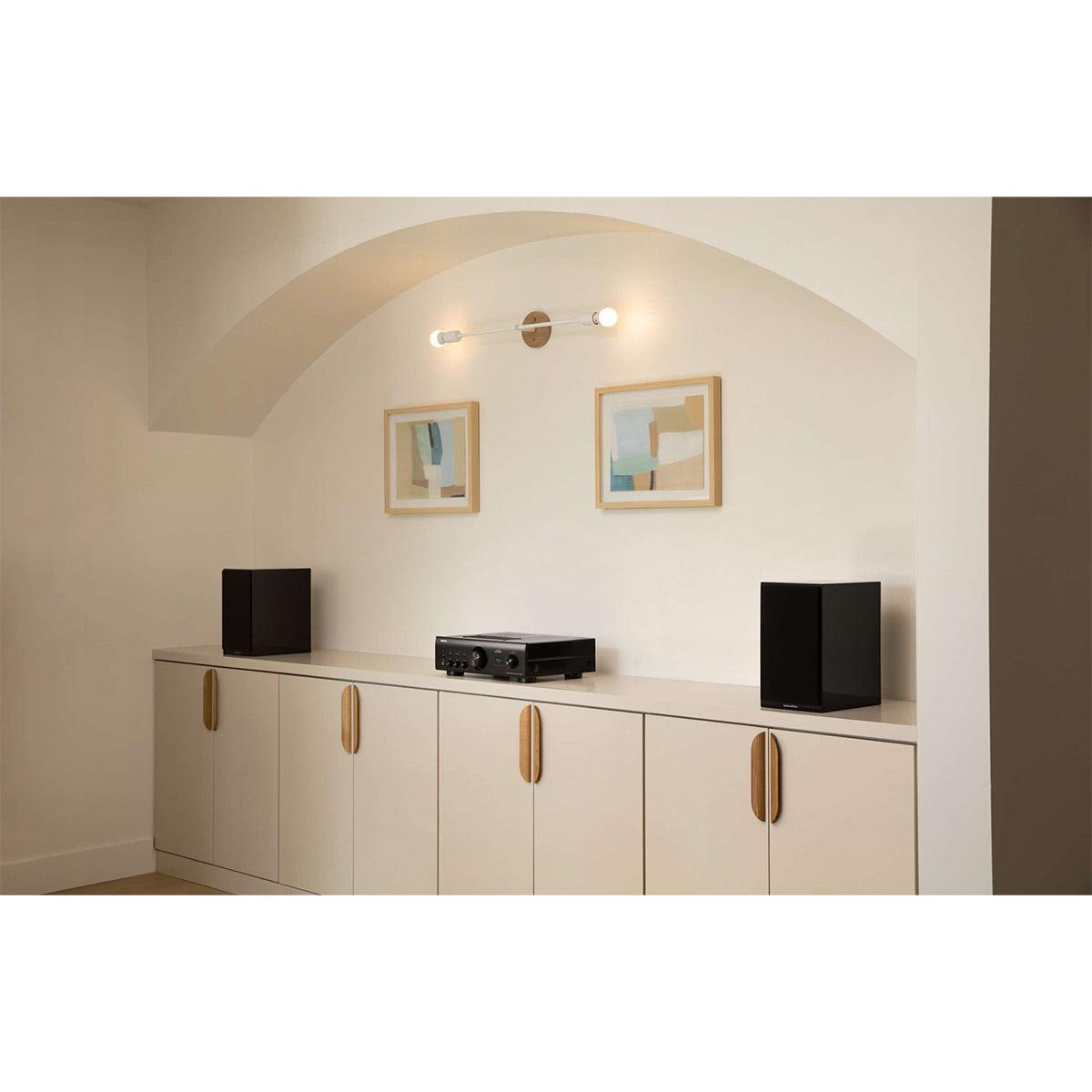
The Denon PMA-900HNE focuses more on traditional home use, with full-sized front-panel controls, multiple input selections, and the classic amplifier layout that many enthusiasts prefer for dedicated listening rooms.
Based on extensive user feedback and professional reviews, the Denon PMA-900HNE exhibits the classic "Denon sound" – slightly warm and rich with emphasized midrange presence that makes vocals particularly engaging. This sound signature works well with bright or analytical speakers, adding musicality without sacrificing detail resolution.
The Yamaha WXA-50 presents a more neutral tonal balance with extended high-frequency response and controlled bass. This approach works better with warmer speakers and allows the natural character of your sources and recordings to come through unchanged. The Yamaha's ESS Sabre DAC contributes to its precise, detailed presentation.
Dynamic range – the difference between the quietest and loudest sounds a system can reproduce – represents a crucial performance metric that affects musical realism. The Denon PMA-900HNE achieves a 105 dB signal-to-noise ratio, while the Yamaha WXA-50 reaches 110 dB, indicating slightly lower background noise levels that become noticeable during quiet passages.
However, the Denon's heavier construction and larger power supply provide better dynamic headroom for sudden loud passages, particularly important for classical music and jazz recordings with wide dynamic swings. The Yamaha's compact design necessarily involves some compromises in power supply capacity, though its efficiency advantages help offset this limitation.
While neither amplifier includes video switching or surround sound processing, both can serve valuable roles in home theater systems. The Denon PMA-900HNE's multiple inputs allow connection of both the TV audio output and dedicated stereo sources, while its recording output can feed subwoofers or additional amplified zones.
The Yamaha WXA-50's subwoofer output includes bass management, making it easier to integrate with powered subwoofers in combined stereo/home theater setups. Its compact size allows placement near the display without dominating the entertainment center aesthetically.
For dedicated two-channel listening rooms that occasionally serve home theater duty, the Denon PMA-900HNE provides better analog connectivity for multiple sources. For primary home theater systems that need high-quality stereo music capability, the Yamaha WXA-50's processing features and subwoofer integration offer more flexibility.
You're building a dedicated listening system around vinyl records and other analog sources. The built-in MM/MC phono stage alone justifies the price difference compared to buying the Yamaha WXA-50 plus a quality external phono stage. The Denon also makes sense if you prefer traditional hi-fi aesthetics and full-sized controls, or if you're planning to integrate with Roon for serious digital music management.
The Denon PMA-900HNE excels with high-efficiency speakers in dedicated listening rooms where its refined power delivery and slightly warm sound signature create an engaging, musical presentation. Its multiple analog inputs and A/B speaker switching provide flexibility that streaming-focused designs can't match.
Your music listening is primarily streaming-based and physical size constraints are important. The Yamaha WXA-50 delivers superior power into low-impedance loads, making it better suited for demanding speakers in challenging acoustic environments. Its multi-room capabilities and polished app experience also make it ideal for whole-home audio systems.
The Yamaha's processing features work particularly well in less-than-ideal listening rooms or with compressed source material, while its professional installation features support custom integration scenarios that the Denon cannot accommodate.
At the time of writing, both amplifiers represent solid value propositions in their respective categories, with the choice ultimately depending on your source material, speaker requirements, and installation constraints. The Denon PMA-900HNE serves traditional hi-fi enthusiasts who want modern streaming without compromising analog capabilities, while the Yamaha WXA-50 appeals to users prioritizing convenience, flexibility, and compact design in primarily digital systems.
| Denon PMA-900HNE | Yamaha WXA-50 |
|---|---|
| Power Output - Critical for driving your speakers effectively | |
| 50W/8Ω, 85W/4Ω (better for high-efficiency speakers) | 55W/8Ω, 70W/6Ω, 105W/4Ω (superior low-impedance handling) |
| Physical Size - Important for placement flexibility | |
| 17" × 5" × 15" (18.3 lbs) - traditional integrated amp size | 8" × 2" × 10" (4.3 lbs) - ultra-compact design |
| Analog Inputs - Essential for vinyl and legacy sources | |
| Dedicated MM/MC phono stage + 3 line inputs | Single line input only (no phono stage) |
| High-Resolution Audio Support - For audiophile-quality streaming | |
| PCM up to 192kHz/24-bit | PCM up to 192kHz/24-bit + DSD up to 5.6MHz |
| Streaming Platform - Your gateway to music services | |
| HEOS Built-in (Roon Ready certified) | MusicCast (better multi-room synchronization) |
| Signal Processing - Affects sound customization options | |
| Source Direct mode (purist bypass approach) | Multiple DSP modes including bass extension and EQ |
| Speaker Connectivity - Flexibility for multiple speaker setups | |
| A/B switching for two speaker pairs | Single speaker pair output |
| Digital Inputs - For connecting CD players and other sources | |
| 3 optical + 1 coaxial | 1 optical only |
| Subwoofer Integration - Important for full-range sound | |
| Fixed 100Hz crossover output | Variable bass management with processing |
| Professional Features - Matters for custom installations | |
| Basic remote control capability | 12V triggers, rack mounting, vertical placement |
| Release Year - Indicates current technology level | |
| 2022 (newer HEOS platform) | 2019 (mature MusicCast platform) |
The Denon PMA-900HNE is significantly better for vinyl enthusiasts because it includes a dedicated MM/MC phono stage that supports both moving magnet and moving coil cartridges. The Yamaha WXA-50 has no built-in phono stage, requiring you to purchase a separate external unit that can cost $200-500 or more. If you have a turntable or plan to get one, the Denon PMA-900HNE is the clear winner.
The Yamaha WXA-50 delivers more power into low-impedance loads, providing 105 watts into 4-ohm speakers compared to the Denon PMA-900HNE's 85 watts. This makes the Yamaha better suited for demanding speakers like planar magnetic or ribbon designs that drop to 4 ohms. However, the Denon's Advanced High Current design excels with high-efficiency speakers where power isn't the limiting factor.
The Yamaha WXA-50 is dramatically more compact at just 8 inches wide and 4.3 pounds, making it perfect for tight spaces, desktop systems, or entertainment centers. It can even be mounted vertically. The Denon PMA-900HNE is a traditional full-sized integrated amplifier at 17 inches wide and 18 pounds, requiring dedicated shelf space like conventional hi-fi components.
Both the Denon PMA-900HNE and Yamaha WXA-50 support major streaming services like Spotify, Tidal, and Apple Music. The Denon offers Roon Ready certification for advanced digital music management, while the Yamaha provides better multi-room synchronization through MusicCast. User reviews generally favor the Yamaha's app experience for ease of use and connection reliability.
Yes, both support high-resolution audio. The Denon PMA-900HNE handles PCM files up to 192kHz/24-bit, while the Yamaha WXA-50 adds DSD support up to 5.6MHz on top of the same PCM capability. If you have SACD rips or high-end DSD downloads, the Yamaha provides broader file format compatibility.
The Denon PMA-900HNE offers superior connectivity with three analog inputs plus the phono stage, three optical digital inputs, one coaxial input, and USB. The Yamaha WXA-50 provides minimal connectivity with just one analog input and one optical input, focusing primarily on streaming sources. Choose the Denon if you have multiple components to connect.
While neither is designed for surround sound, both can enhance home theater systems. The Yamaha WXA-50 includes subwoofer output with bass management, making it easier to integrate with powered subwoofers. The Denon PMA-900HNE offers more input flexibility for connecting both TV audio and dedicated stereo sources, plus it can feed other zones through its recording output.
Sound quality depends on your preferences and speakers. The Denon PMA-900HNE offers a slightly warmer, more musical presentation that works well with bright speakers. The Yamaha WXA-50 provides a more neutral, detailed sound signature. Both deliver excellent audio quality, but the Denon's larger chassis and power supply may provide better dynamic performance during loud passages.
The Yamaha WXA-50 excels at multi-room audio through MusicCast, offering precise synchronization across multiple zones and rooms. The Denon PMA-900HNE supports multi-room through HEOS but focuses more on single-room hi-fi performance. If whole-home audio is your priority, the Yamaha's MusicCast platform is generally considered superior for this application.
The Yamaha WXA-50 typically offers easier setup with its streamlined design and polished MusicCast app. The Denon PMA-900HNE requires more initial configuration due to its multiple inputs and traditional controls, though some users find the HEOS app less intuitive. Both support network standby and can be controlled via smartphone apps once configured.
Yes, both amplifiers include headphone outputs. The Denon PMA-900HNE features a dedicated headphone amplifier with a 1/4-inch jack on the front panel that automatically disconnects speakers when headphones are plugged in. The Yamaha WXA-50 also provides headphone connectivity, though with less emphasis on dedicated headphone amplification circuitry.
Value depends on your needs. The Denon PMA-900HNE provides exceptional value if you need analog inputs and a phono stage, as buying these separately would cost significantly more. The Yamaha WXA-50 offers better value for streaming-focused users who prioritize compact size, multi-room capability, and modern convenience features over traditional hi-fi connectivity.
We've done our best to create useful and informative comparisons to help you decide what product to buy. Our research uses advanced automated methods to create this comparison and perfection is not possible - please contact us for corrections or questions. These are the sites we've researched in the creation of this article: crutchfield.com - e-catalog.com - theaudiotailor.com.au - extremehifi.com - whathifi.com - speakerdecision.com - youtube.com - audiosciencereview.com - sound-advice.online - crutchfield.com - crutchfield.com - sweetwater.com - watthifi.com - youtube.com - accessories4less.com - soundstageaccess.com - icav.us - safeandsoundhq.com - listenup.com - accessories4less.com - audiosciencereview.com - crutchfield.ca - usa.yamaha.com - avluxurygroup.com - crutchfield.com - crutchfield.com - teamiu.com - audiosciencereview.com - snapav.com - avsforum.com - youtube.com - hifiheaven.net - usa.yamaha.com - usa.yamaha.com - audiokarma.org - usa.yamaha.com - bestbuy.com - usa.yamaha.com - ooberpad.com - dugoutnorthbrook.com - parts-express.com

Privacy Policy
Terms and Conditions - Affiliate Policy
Home Security
© Copyright 2008-2026.
11816 Inwood Rd #1211, Dallas, TX 75244