

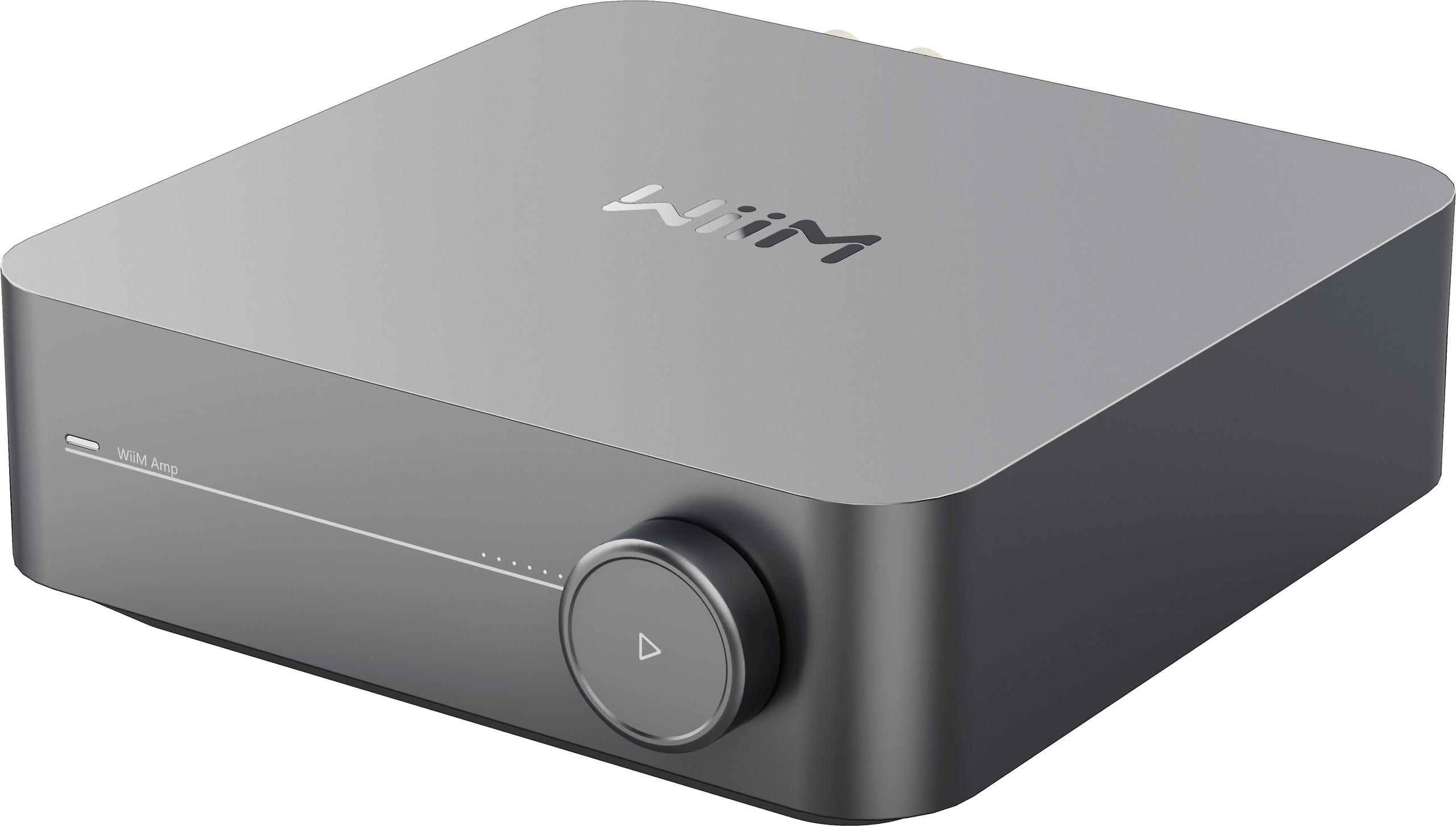
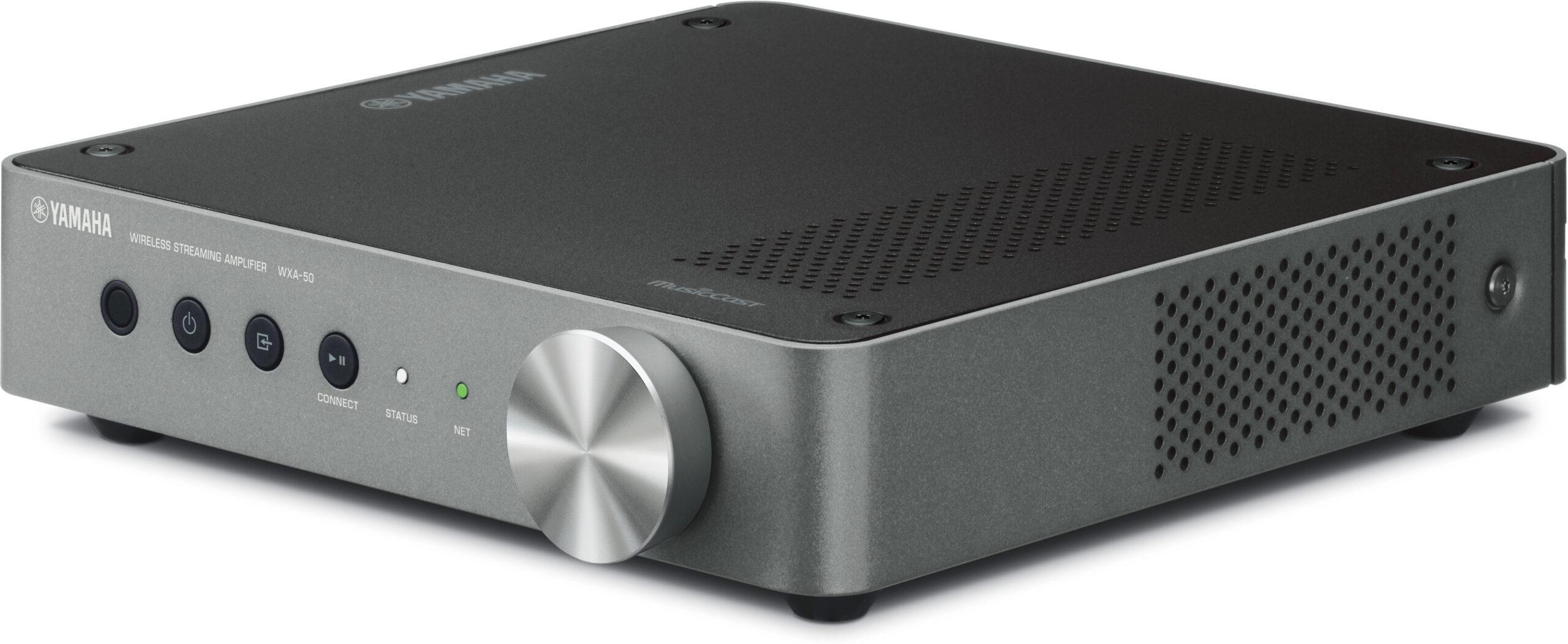
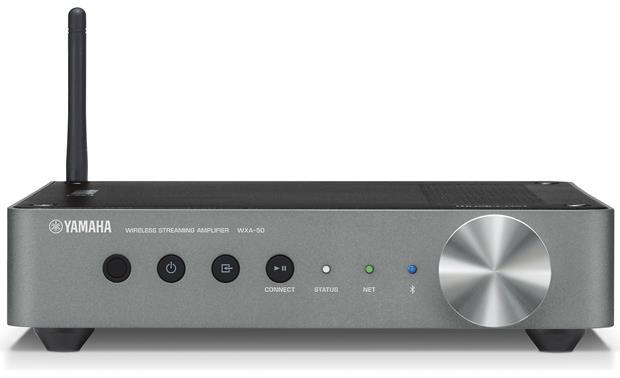
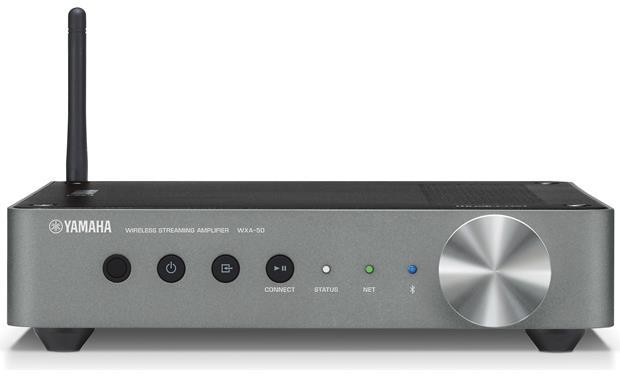
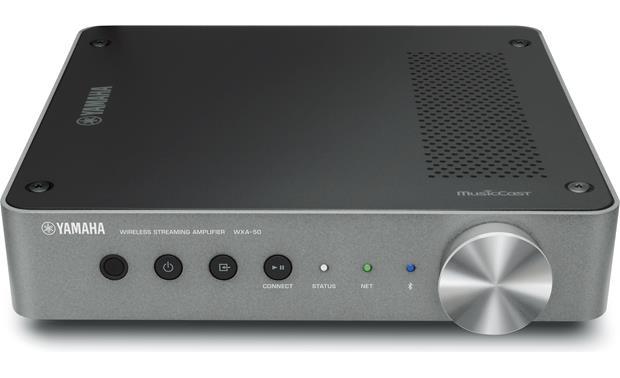
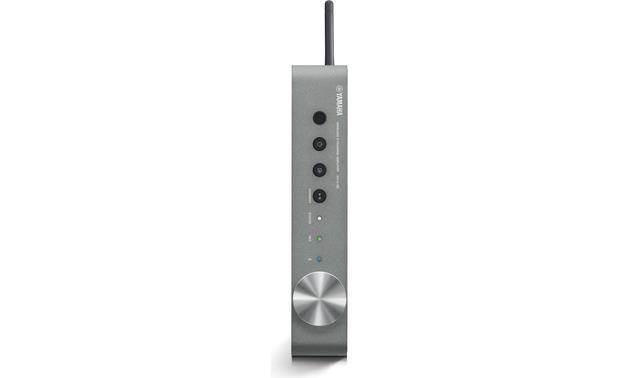
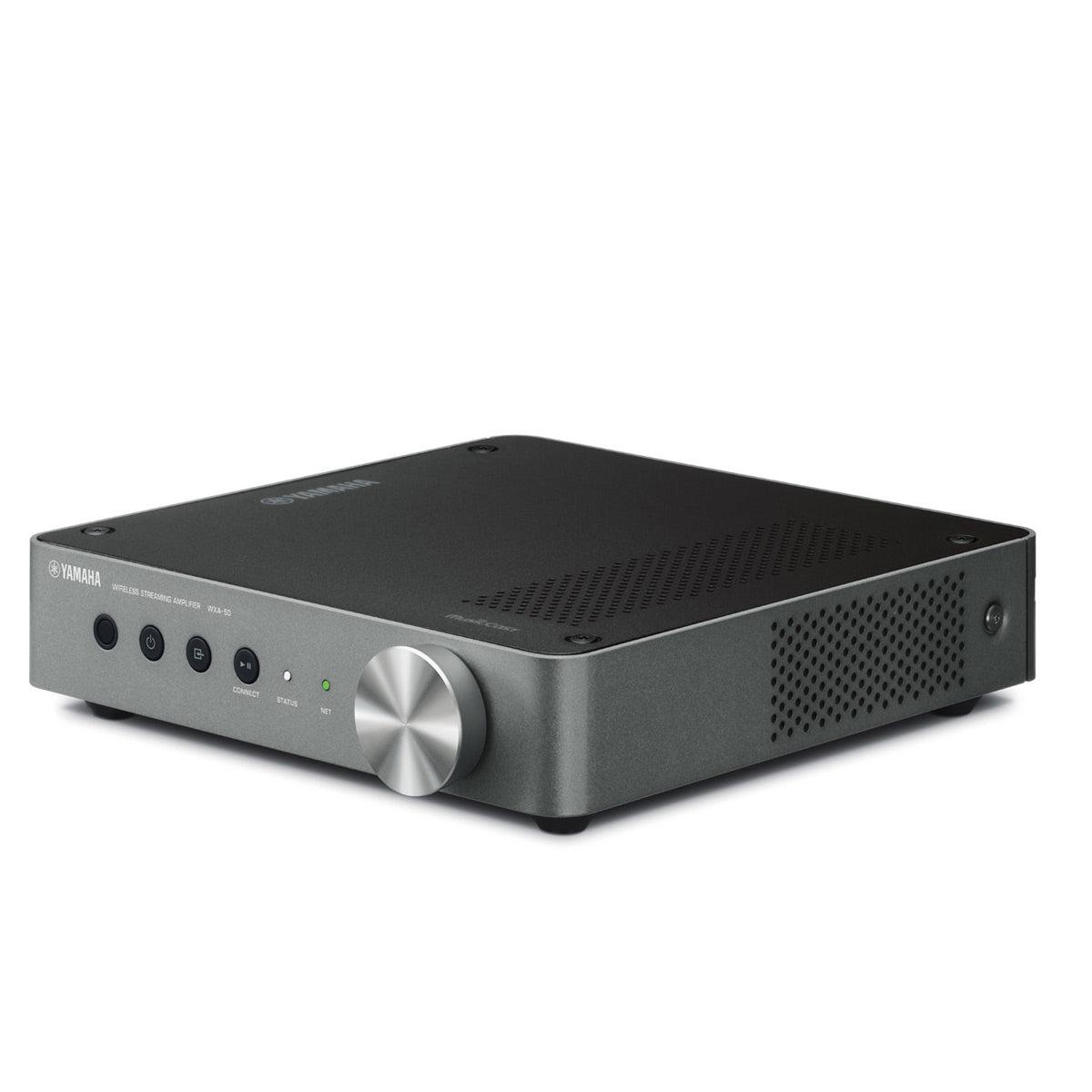
Streaming amplifiers have revolutionized how we think about home audio systems. Instead of juggling separate components like a traditional amplifier, streamer, and DAC (digital-to-analog converter—the device that converts digital music files into analog signals your speakers can play), these all-in-one units pack everything into a single, compact box. You simply connect your passive speakers, plug into power and your network, and you're streaming music from Spotify, your local files, or virtually any digital source.
The streaming amplifier market has exploded in recent years, with companies racing to offer the best combination of sound quality, features, and value. Today we're comparing two popular options that take distinctly different approaches: the WiiM Amp, which launched in 2024 as a budget-focused modern marvel, and the Yamaha MusicCast WXA-50, which debuted in 2019 as part of Yamaha's professional-grade ecosystem.
Before diving into specifics, it's worth understanding what separates excellent streaming amplifiers from mediocre ones. The core job is deceptively simple: take digital music from various sources, convert it to analog, amplify it, and send it to your speakers with minimal distortion and maximum fidelity.
Power output matters, but not always in the way people think. More watts doesn't automatically mean better sound—what matters is having enough clean power for your specific speakers in your specific room. A speaker's impedance (measured in ohms) determines how much current it draws from the amplifier. Lower impedance speakers (4 ohms) are harder to drive than higher impedance ones (8 ohms), requiring amplifiers that can double their power output as impedance halves.
Connectivity has become equally important as pure audio performance. Modern streaming amplifiers need to work seamlessly with smartphones, smart home systems, and various streaming services. The quality of the accompanying app can make or break the user experience, regardless of how good the hardware sounds.
The WiiM Amp represents the new guard—a company that launched with the explicit goal of delivering flagship features at accessible prices. WiiM emerged from the team behind Linkplay, which has been manufacturing streaming modules for other audio companies for years. Their direct-to-consumer approach allows them to pack serious technology into surprisingly affordable packages.
The Yamaha MusicCast WXA-50, on the other hand, comes from one of audio's most respected names. Yamaha has been building amplifiers since the 1960s, and their MusicCast platform launched in 2015 as a comprehensive whole-home audio solution. The WXA-50 arrived in 2019 as part of this mature ecosystem, emphasizing reliability and professional-grade features.
At the time of writing, the WiiM Amp costs significantly less than the Yamaha WXA-50—we're talking about roughly a $500 price difference. This substantial gap sets up an interesting value proposition that we'll explore throughout this comparison.
The most fundamental difference between these amplifiers lies in their power delivery characteristics. The WiiM Amp uses a Texas Instruments TPA3255 Class-D amplifier chip, which delivers 60 watts per channel into 8-ohm speakers and doubles to 120 watts per channel into 4-ohm loads. This doubling behavior is the hallmark of a well-designed power supply that can handle demanding speakers.
Class-D amplification, sometimes called "digital" amplification (though it's technically still analog), switches the output transistors on and off rapidly rather than keeping them partially conducting like traditional Class-AB designs. This approach dramatically improves efficiency—often exceeding 90%—while generating much less heat. The trade-off used to be increased distortion and a harsher sound character, but modern implementations like the TPA3255 have largely eliminated these concerns.
The Yamaha WXA-50 takes a more conservative approach, delivering 55 watts per channel into 8 ohms, 70 watts into 6 ohms, and 105 watts into 4 ohms. While it provides more power into 4-ohm loads than many competitors, it doesn't achieve the clean doubling of the WiiM Amp. This suggests a power supply that's adequately designed but not as robust in handling difficult speaker loads.
In practical terms, the WiiM Amp will better drive speakers that present challenging impedance curves—think ribbon tweeters, electrostatic panels, or multi-driver designs that dip to 3-4 ohms at certain frequencies. The Yamaha WXA-50 will handle most bookshelf and tower speakers admirably but might struggle with particularly demanding loads.
Both units claim impressively low distortion figures. The WiiM Amp specifies 0.0025% THD+N (total harmonic distortion plus noise) at 5 watts, while the Yamaha WXA-50 claims 0.06% THD at full power. These numbers, while not directly comparable due to different measurement conditions, both indicate clean amplification that shouldn't add audible coloration to your music.
Both amplifiers use ESS Sabre DACs, which have become the gold standard for high-performance digital-to-analog conversion. The WiiM Amp specifically employs the ES9018K2M, a well-regarded chip that supports up to 24-bit/192kHz resolution. This means it can handle high-resolution audio files that contain more musical information than standard CD-quality (16-bit/44.1kHz) recordings.
The Yamaha WXA-50 doesn't specify its exact DAC model but supports the same 24-bit/192kHz resolution plus DSD (Direct Stream Digital) files up to 5.6MHz. DSD is an alternative digital audio format that some audiophiles prefer for its theoretical advantages in representing analog waveforms, though the practical benefits remain debated.
Both units achieve signal-to-noise ratios exceeding 95dB, which translates to essentially silent backgrounds during quiet passages. In real-world listening, the DAC quality difference between these units will be minimal—both are far more transparent than most speakers or rooms.
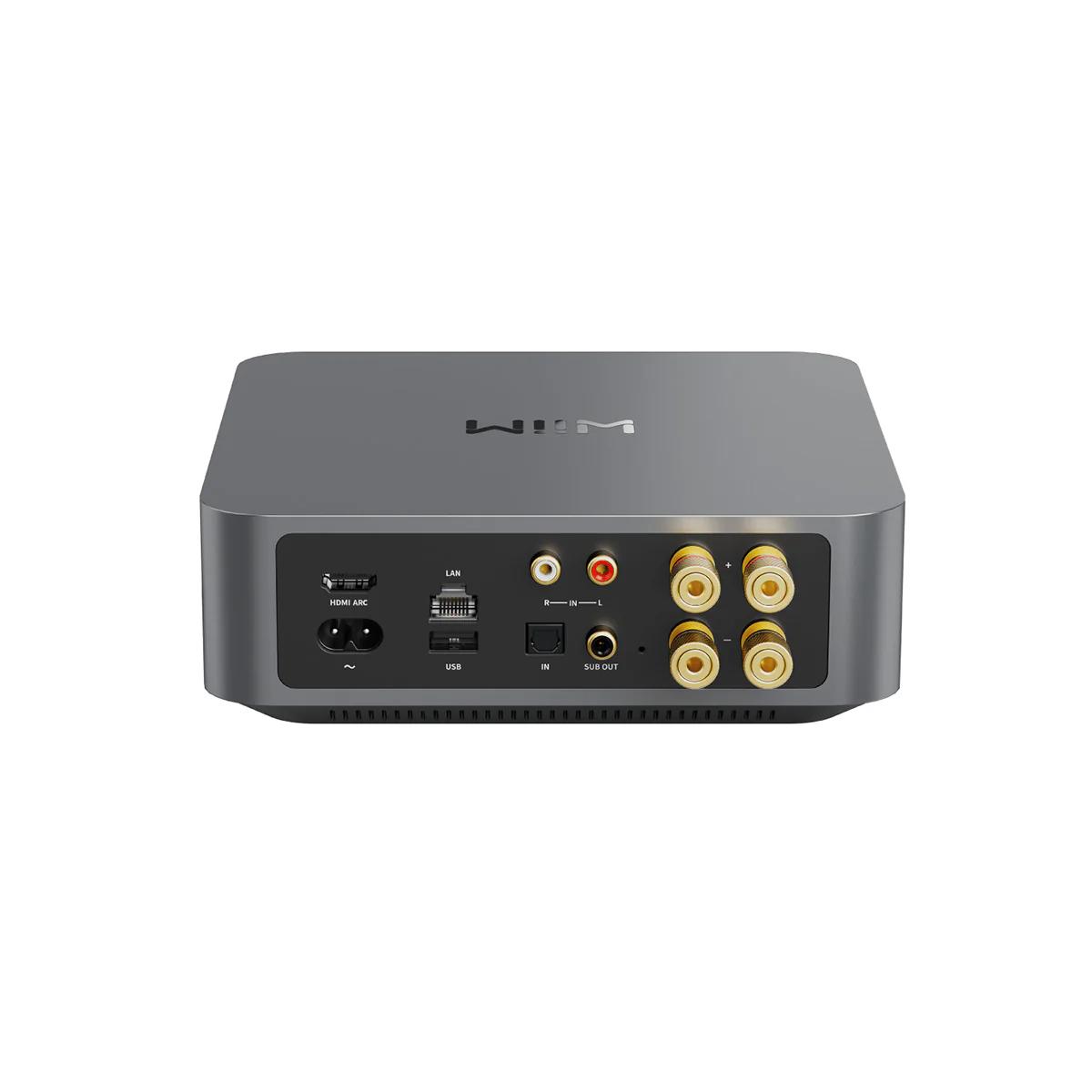
Here's where the generational difference becomes stark. The WiiM Amp includes HDMI ARC (Audio Return Channel), allowing direct connection to modern TVs. This single feature fundamentally changes how you can integrate the amplifier into a home entertainment system. Instead of running optical cables or dealing with analog TV outputs, HDMI ARC provides a bidirectional digital connection that can carry high-quality audio from your TV back to the amplifier while allowing the amplifier's remote to control TV volume.
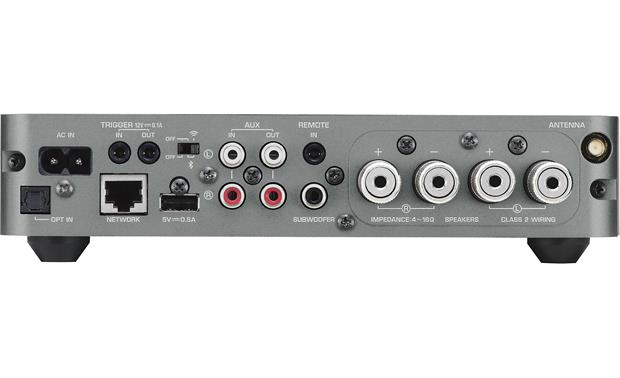
The Yamaha WXA-50 completely lacks HDMI connectivity—a significant omission for any amplifier released in 2019. This forces users into workarounds like optical connections (if their TV supports it) or analog outputs that may compromise audio quality.
For wireless connectivity, the WiiM Amp supports dual-band Wi-Fi 5 (802.11ac) and Bluetooth 5.0, while the Yamaha WXA-50 uses single-band Wi-Fi and older Bluetooth standards. The practical impact: the WiiM Amp will maintain more stable wireless connections in congested network environments and offer better Bluetooth audio quality with compatible devices.
Both units include optical digital inputs, analog RCA inputs, and USB connections, though the WiiM Amp adds USB audio output for connecting external DACs or headphone amplifiers.
The smart home integration story heavily favors the WiiM Amp. It natively supports Amazon Alexa, Google Assistant, and Siri, allowing voice control without additional hardware. You can literally say "Hey Google, play jazz in the living room" and it works seamlessly.
The Yamaha WXA-50 offers no voice assistant integration whatsoever. In 2024, this feels like a significant oversight, especially considering smart speakers have become ubiquitous in most homes.
For streaming protocols, the WiiM Amp supports AirPlay 2, Chromecast Audio, Spotify Connect, TIDAL Connect, Amazon Music Casting, and numerous others. Crucially, it works with multiple smart speaker ecosystems—you can group it with Amazon Echo devices, Google Nest speakers, or Apple HomePods for synchronized multiroom audio.
The Yamaha WXA-50 supports Yamaha's proprietary MusicCast platform plus standard protocols like AirPlay (version 1), DLNA, and Spotify Connect. While MusicCast works well within Yamaha's ecosystem, it can't integrate with other brands' smart speakers, limiting your multiroom options.
Based on extensive user feedback and professional reviews, the WiiM Home app significantly outperforms Yamaha's MusicCast app in daily use. Users consistently report that the WiiM app responds faster, searches more effectively across multiple music sources, and handles local network music libraries more reliably.
The MusicCast app, while functional, suffers from slower performance when browsing large music collections and occasionally fails to load content properly—frustrating issues when you just want to play music. These software differences matter enormously since you'll interact with the app every time you use the system.
The WiiM Amp includes sophisticated room correction technology, 10-band graphic and parametric equalizers, and 26 preset EQ curves. Room correction uses microphone measurements to analyze your room's acoustic signature and applies digital filters to compensate for problematic frequencies. This can dramatically improve sound quality, especially in challenging listening environments.
The Yamaha WXA-50 takes a different approach with proprietary audio processing algorithms. Its Compressed Music Enhancer attempts to restore detail lost during MP3 compression, while Volume-Adaptive EQ adjusts bass and treble response based on listening level to maintain tonal balance at low volumes. Advanced Bass Extension enhances low-frequency response, particularly beneficial with smaller speakers.
Both approaches have merit. The WiiM Amp's room correction addresses the single biggest variable in any audio system—your listening room—while the Yamaha WXA-50's processing focuses on optimizing source material and accommodating different listening conditions.
The Yamaha WXA-50 clearly targets custom installation markets with features like 12V trigger inputs and outputs (for automated system control), remote input connections, and rack-mounting capabilities. These features matter enormously in professional installations where the amplifier needs to integrate with whole-home automation systems.
The WiiM Amp lacks these professional integration features but makes up for it with simpler setup and operation. Its compact form factor fits easily into entertainment centers, and the straightforward app-based configuration appeals to DIY users.
If you're planning to use either amplifier in a home theater context, the WiiM Amp's HDMI ARC support becomes nearly essential. Modern streaming devices, game consoles, and TVs output audio digitally through HDMI. The WiiM Amp can accept this signal directly and even pass remote control commands back to your TV, creating a seamless single-remote experience.
The Yamaha WXA-50's lack of HDMI forces you to rely on your TV's analog outputs (if it has them) or optical digital output (if available and properly configured). This creates additional complexity and may limit audio quality, particularly with newer content formats.
For stereo music listening, both amplifiers perform admirably, but the home theater integration story strongly favors the WiiM Amp.
At the time of writing, the WiiM Amp costs roughly $500 less than the Yamaha WXA-50 while offering superior modern connectivity, smart home integration, and comparable audio performance. This represents exceptional value for most home users.
The Yamaha WXA-50's higher price reflects its professional-grade features, established brand reputation, and mature ecosystem. However, unless you specifically need custom installation features or are already invested in MusicCast devices, the premium becomes difficult to justify.
Choose the WiiM Amp if you want modern smart home features, HDMI connectivity for TV integration, excellent app experience, and flagship performance at a reasonable price. It's ideal for tech-savvy users who want their audio system to work seamlessly with voice assistants and existing smart speakers.
The Yamaha WXA-50 makes sense for users who need professional installation features, are already using MusicCast devices, or strongly prefer established audio brands with long track records. It's also worth considering if you frequently play DSD audio files or require the specific audio processing algorithms Yamaha provides.
For most people setting up a home audio system in 2024, the WiiM Amp provides better value and more useful features. Its HDMI ARC connectivity, comprehensive smart home integration, and superior app experience address real-world needs that the Yamaha WXA-50 simply doesn't match.
The Yamaha WXA-50 remains a solid choice for specific use cases, but its higher price and dated connectivity options make it harder to recommend unless you have particular requirements that only it can meet. The streaming amplifier market has evolved rapidly, and products like the WiiM Amp represent where the technology is heading—toward greater integration, smarter features, and better value.
| WiiM Amp Streaming Amplifier | Yamaha MusicCast Wireless Streaming Amplifier |
|---|---|
| Power Output - Critical for driving your speakers properly | |
| 60W @ 8Ω, 120W @ 4Ω (excellent for difficult speaker loads) | 55W @ 8Ω, 105W @ 4Ω (adequate for most speakers) |
| HDMI Connectivity - Essential for modern TV integration | |
| HDMI ARC input (seamless TV audio connection) | No HDMI (requires optical or analog workarounds) |
| Voice Control - Convenience for daily use | |
| Alexa, Google Assistant, Siri support built-in | No voice assistant support |
| Wireless Connectivity - Affects streaming reliability | |
| Wi-Fi 5 dual-band, Bluetooth 5.0 | Wi-Fi single-band, older Bluetooth |
| Smart Speaker Integration - For whole-home audio | |
| Works with Echo, Nest, HomePod devices | Yamaha MusicCast ecosystem only |
| App Experience - You'll use this daily | |
| WiiM Home app (fast, responsive, unified search) | MusicCast app (slower, occasional loading issues) |
| Digital Audio Formats - For audiophile content | |
| Up to 24-bit/192kHz | Up to 24-bit/192kHz plus DSD up to 5.6MHz |
| Audio Processing - Room optimization features | |
| Room correction, 10-band graphic/parametric EQ | Compressed Music Enhancer, Volume-Adaptive EQ |
| Professional Installation Features - For custom setups | |
| Basic connectivity only | Trigger I/O, remote input, rack-mountable |
| Physical Size - Important for placement flexibility | |
| 7.5" x 7.5" x 2.5" compact design | 8.4" x 8.4" x 2.0" with rack mount option |
| Value Proposition - Feature set relative to cost | |
| Exceptional modern features at budget price | Premium price for professional-grade ecosystem |
The WiiM Amp Streaming Amplifier provides exceptional value with modern features like HDMI ARC, voice control, and superior app experience at a significantly lower price point. The Yamaha MusicCast Wireless Streaming Amplifier costs considerably more but primarily benefits users who need professional installation features or are already invested in the MusicCast ecosystem.
The WiiM Amp delivers 60W at 8 ohms and 120W at 4 ohms, making it excellent for driving difficult speaker loads. The Yamaha MusicCast provides 55W at 8 ohms and 105W at 4 ohms, which is adequate for most speakers but less capable with challenging impedance curves.
The WiiM Amp Streaming Amplifier is clearly superior for home theater use thanks to its HDMI ARC input, allowing direct connection to TVs with high-quality digital audio and remote control integration. The Yamaha MusicCast Wireless Streaming Amplifier lacks HDMI entirely, forcing users to rely on optical or analog connections.
The WiiM Amp uses the WiiM Home app, which users consistently praise for fast performance, unified search across sources, and reliable music library browsing. The Yamaha MusicCast app is functional but slower, with reported issues loading content and browsing large music collections.
The WiiM Amp Streaming Amplifier offers comprehensive smart home support with built-in Alexa, Google Assistant, and Siri compatibility, plus integration with Echo, Nest, and HomePod speakers. The Yamaha MusicCast Wireless Streaming Amplifier has no voice assistant support and only works within Yamaha's own ecosystem.
The WiiM Amp features dual-band Wi-Fi 5 and Bluetooth 5.0 for more stable connections in busy network environments. The Yamaha MusicCast uses single-band Wi-Fi and older Bluetooth standards, which may result in less reliable wireless performance.
Both amplifiers support major services like Spotify Connect and TIDAL Connect. The WiiM Amp Streaming Amplifier adds AirPlay 2, Chromecast, Amazon Music Casting, and cross-platform multiroom capabilities. The Yamaha MusicCast Wireless Streaming Amplifier focuses on MusicCast integration with standard protocols like AirPlay 1 and DLNA.
Both support high-resolution audio up to 24-bit/192kHz. The Yamaha MusicCast adds DSD support up to 5.6MHz for audiophiles who prefer this format. The WiiM Amp focuses on more common high-res formats that most users will encounter.
The Yamaha MusicCast Wireless Streaming Amplifier excels in custom installations with 12V trigger inputs/outputs, remote input connections, and rack-mounting capability. The WiiM Amp Streaming Amplifier lacks these professional features but offers simpler setup for DIY users.
The WiiM Amp includes room correction technology and comprehensive 10-band graphic/parametric EQ options for optimizing sound to your space. The Yamaha MusicCast offers proprietary processing like Compressed Music Enhancer and Volume-Adaptive EQ for different listening scenarios.
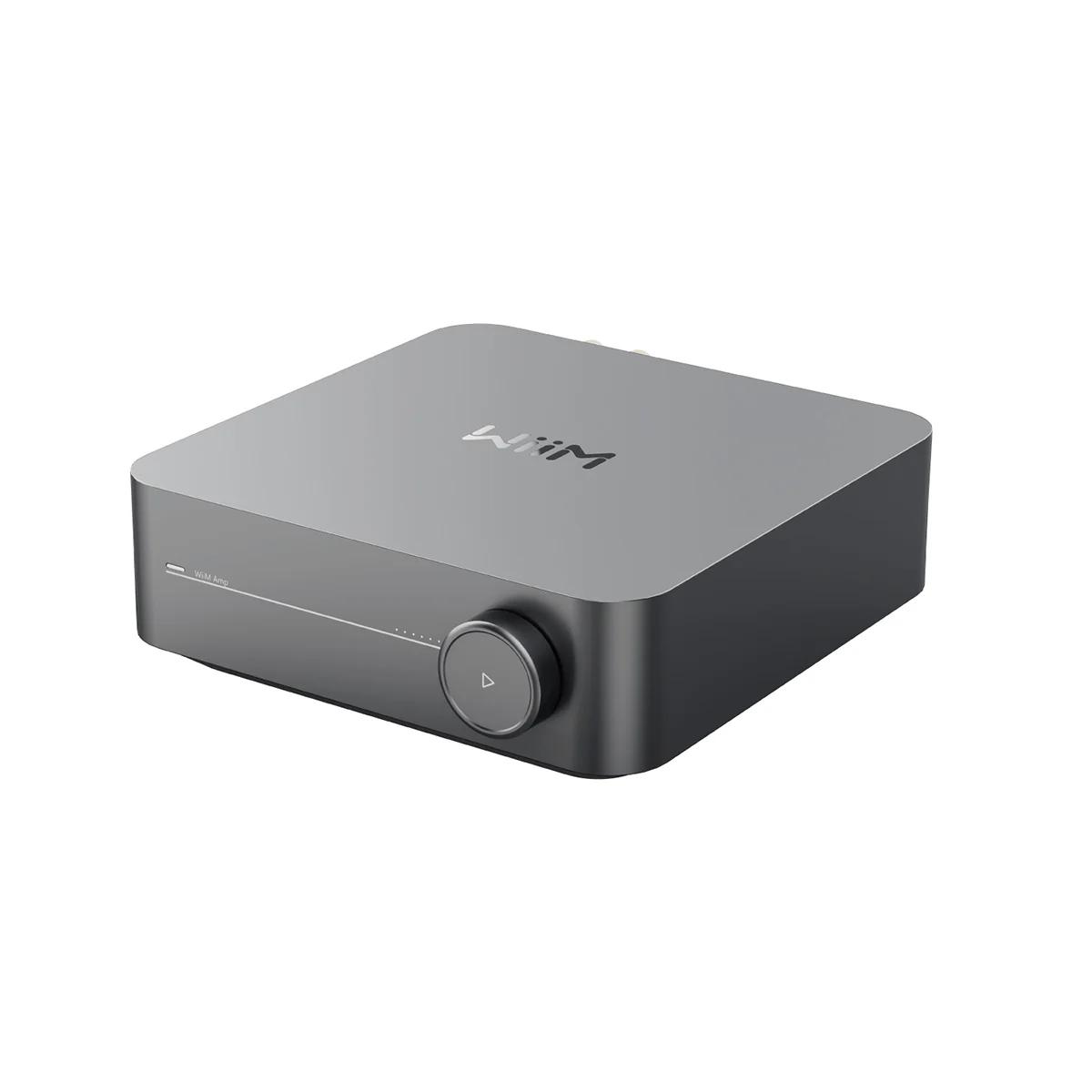
Both amplifiers feature compact designs suitable for shelves or entertainment centers. The WiiM Amp Streaming Amplifier measures 7.5" x 7.5" x 2.5" with a modern aluminum design. The Yamaha MusicCast Wireless Streaming Amplifier is slightly larger but offers rack-mounting options for professional installations.
Choose the WiiM Amp if you want modern smart home features, TV integration via HDMI ARC, excellent app experience, and great value. Select the Yamaha MusicCast if you need professional installation features, are already using MusicCast devices, or specifically require DSD audio support.
We've done our best to create useful and informative comparisons to help you decide what product to buy. Our research uses advanced automated methods to create this comparison and perfection is not possible - please contact us for corrections or questions. These are the sites we've researched in the creation of this article: audiosciencereview.com - faq.wiimhome.com - av-export.com - sound-advice.online - av.com - whathifi.com - youtube.com - forum.wiimhome.com - erinsaudiocorner.com - audacityaustralia.com.au - stereophile.com - audiosciencereview.com - audioadvice.com - smarthomesounds.co.uk - crutchfield.ca - usa.yamaha.com - avluxurygroup.com - crutchfield.com - crutchfield.com - teamiu.com - audiosciencereview.com - snapav.com - avsforum.com - youtube.com - hifiheaven.net - usa.yamaha.com - usa.yamaha.com - audiokarma.org - usa.yamaha.com - bestbuy.com - usa.yamaha.com - ooberpad.com - dugoutnorthbrook.com - parts-express.com

Privacy Policy
Terms and Conditions - Affiliate Policy
Home Security
© Copyright 2008-2026.
11816 Inwood Rd #1211, Dallas, TX 75244