

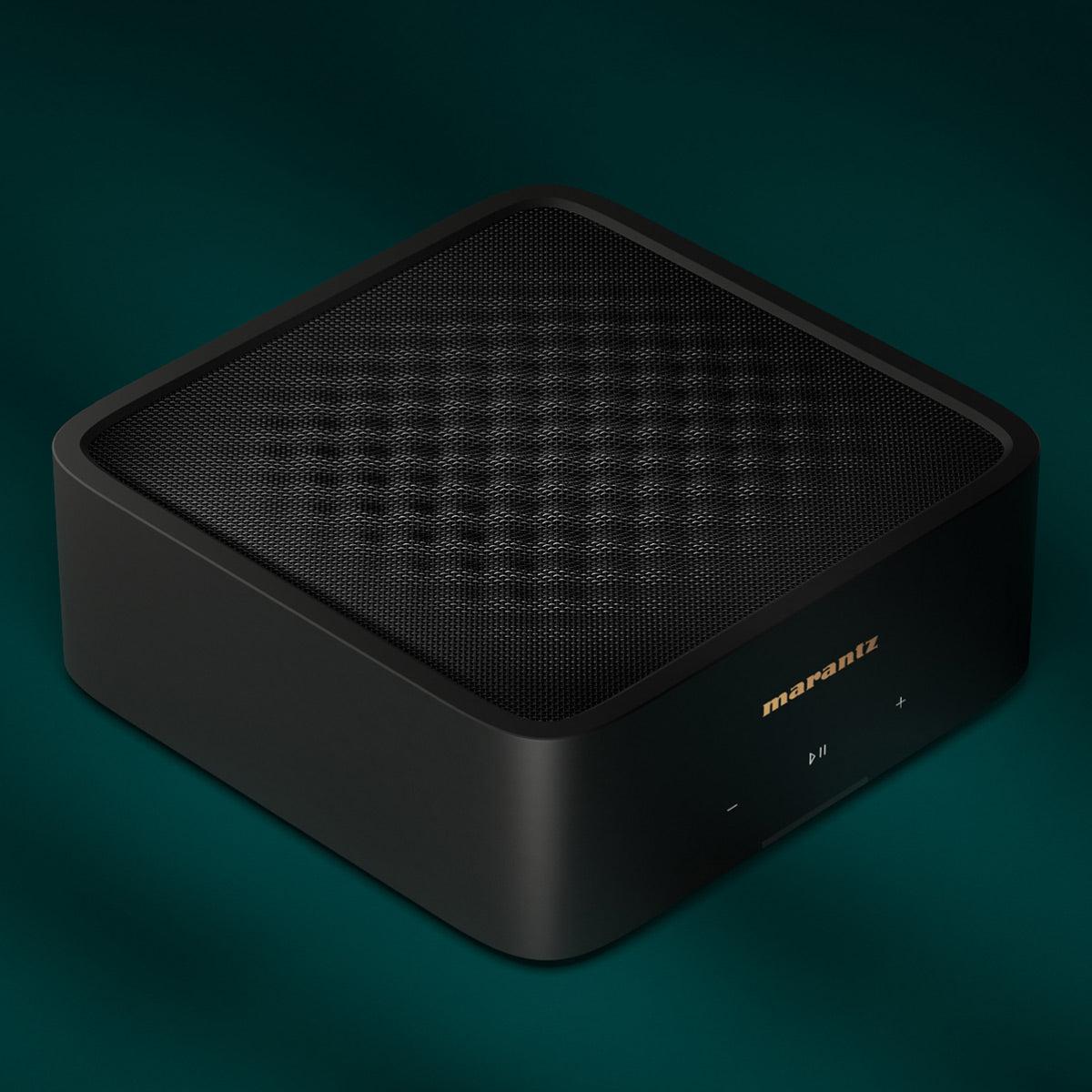
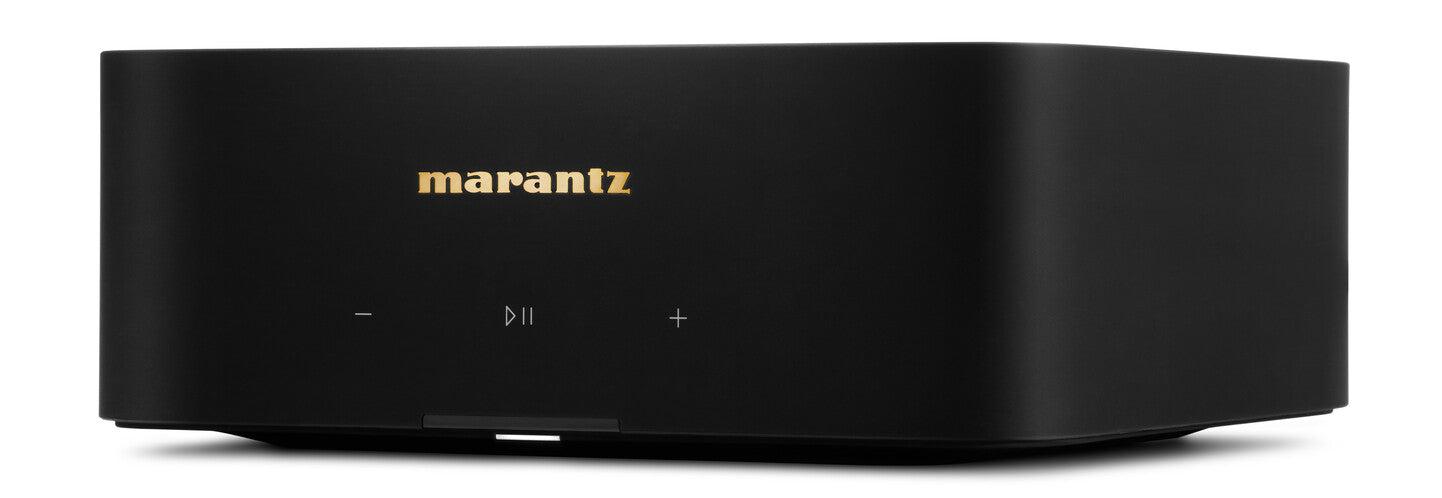
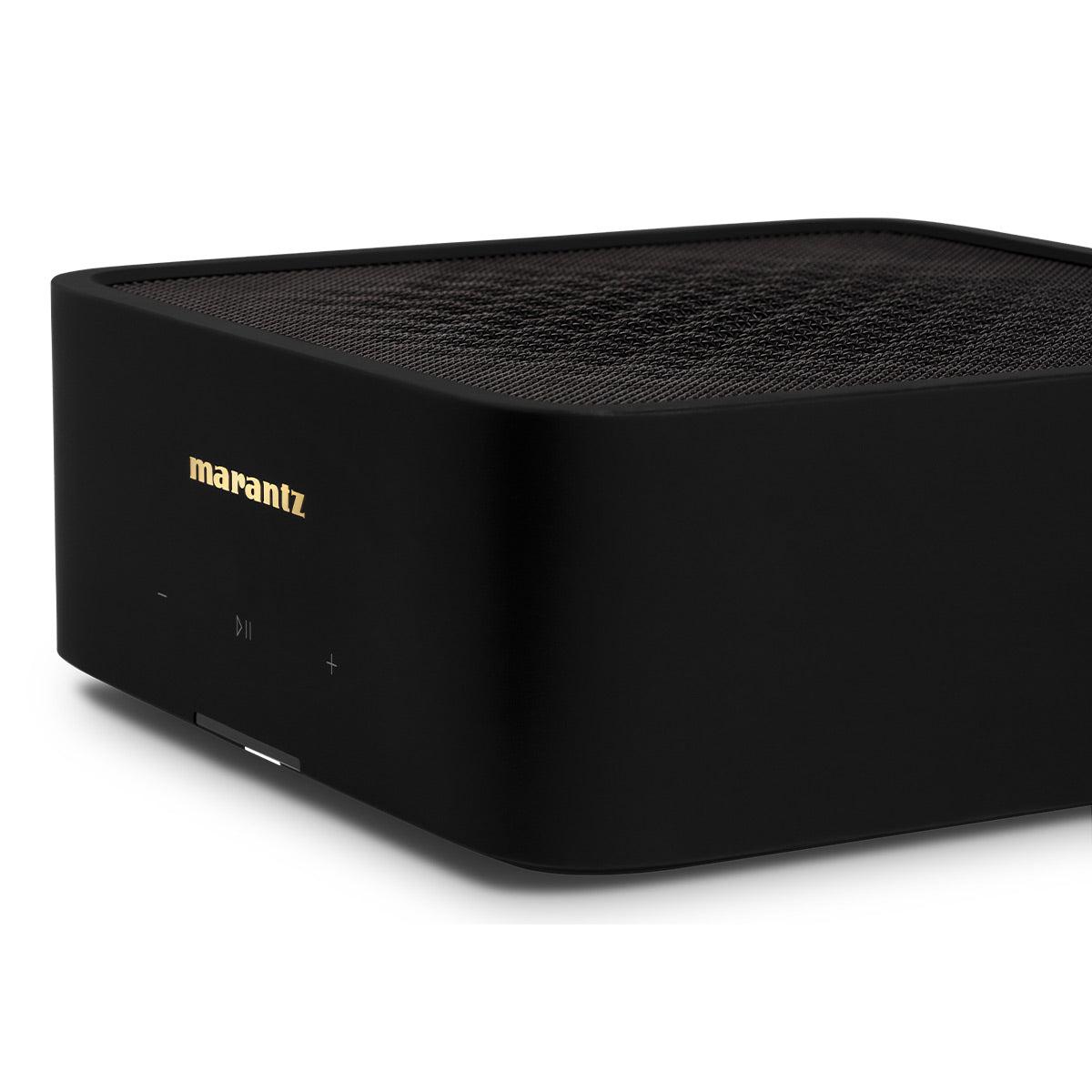
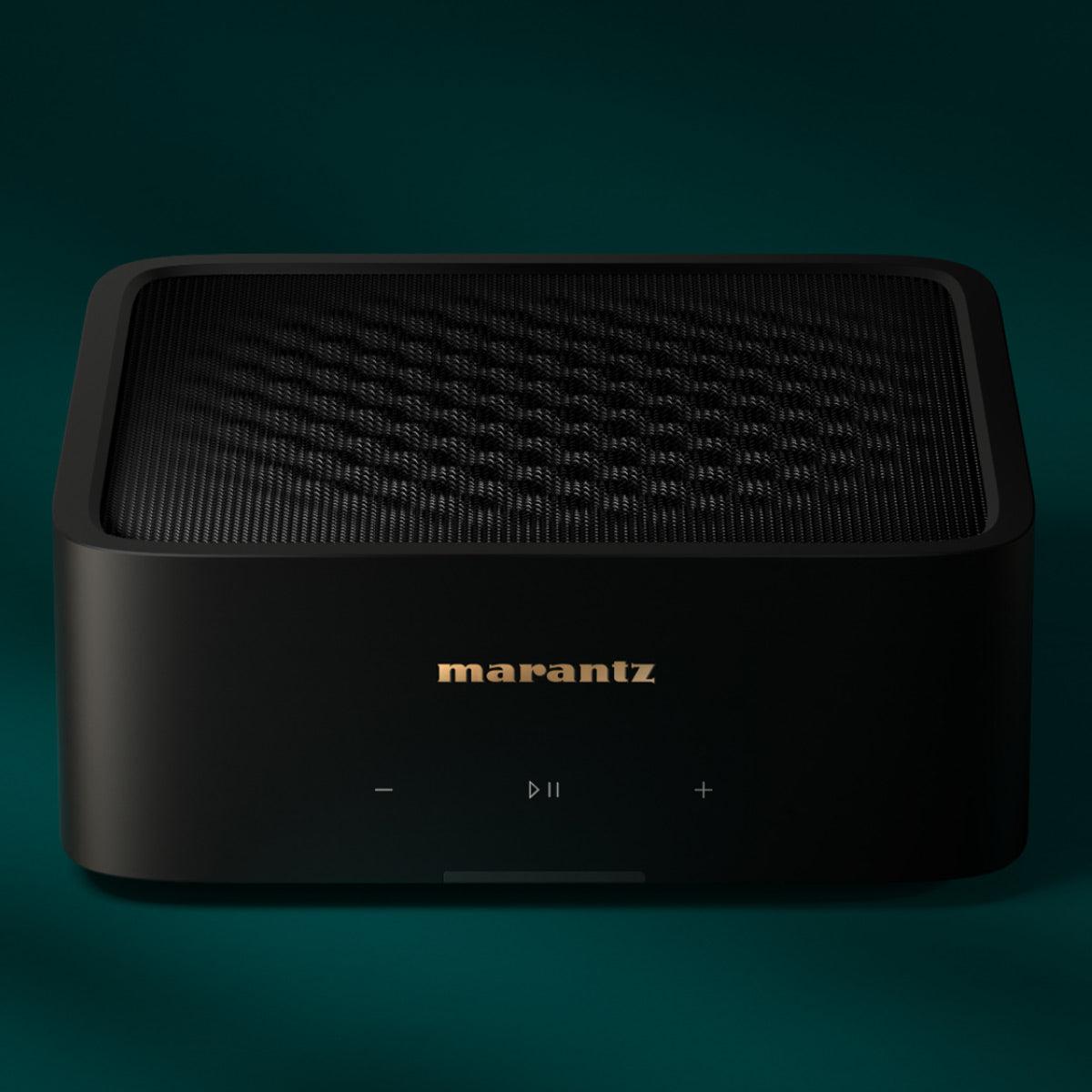
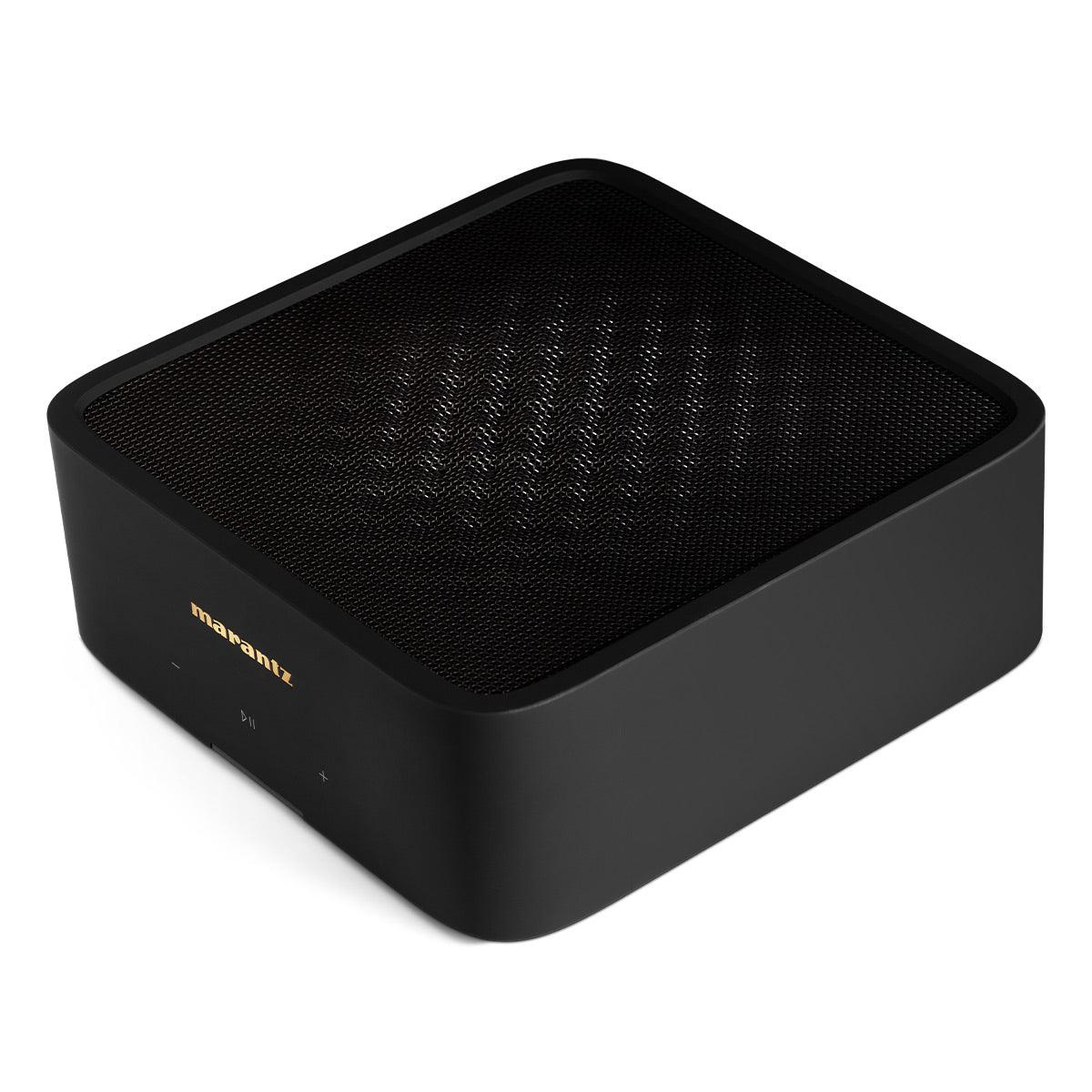
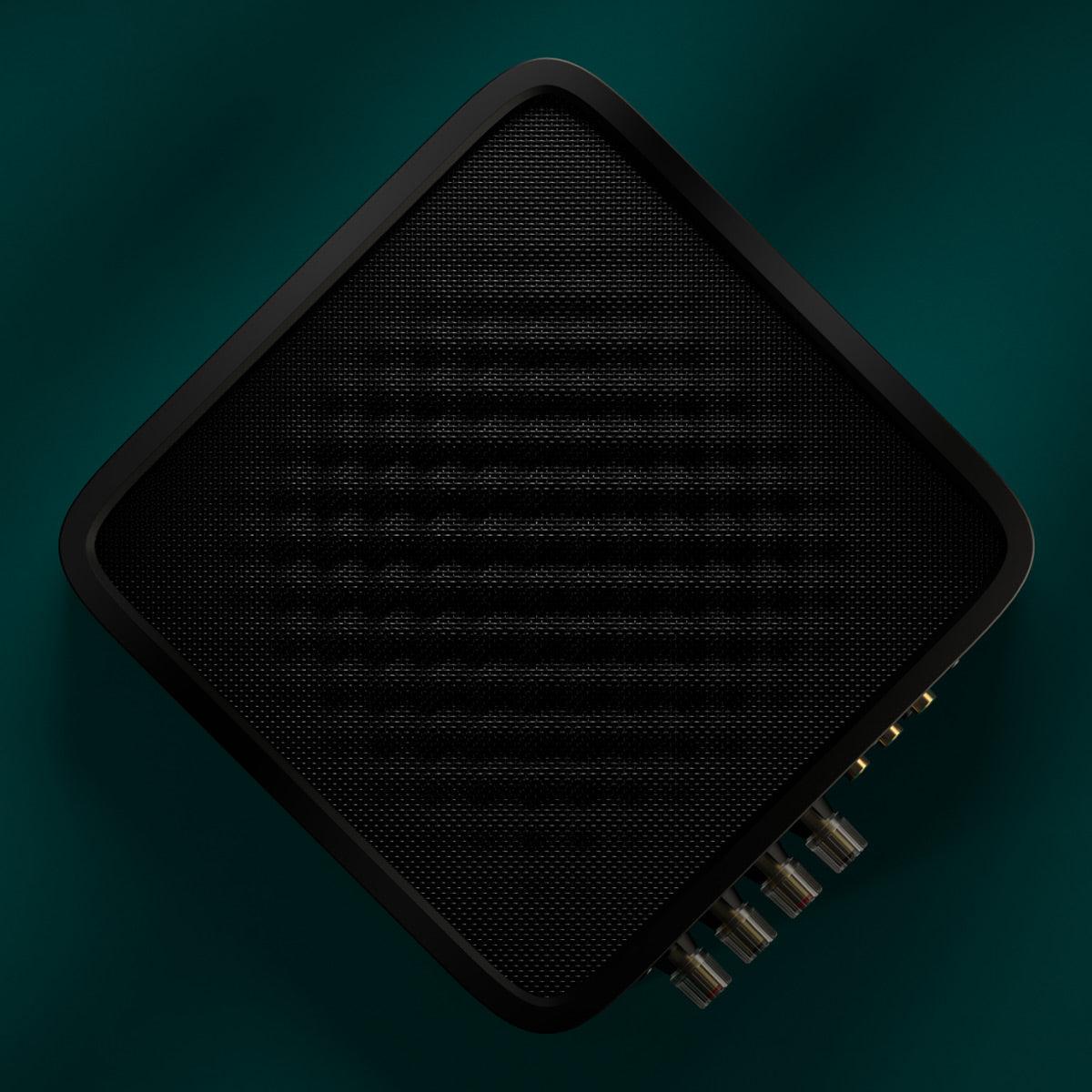


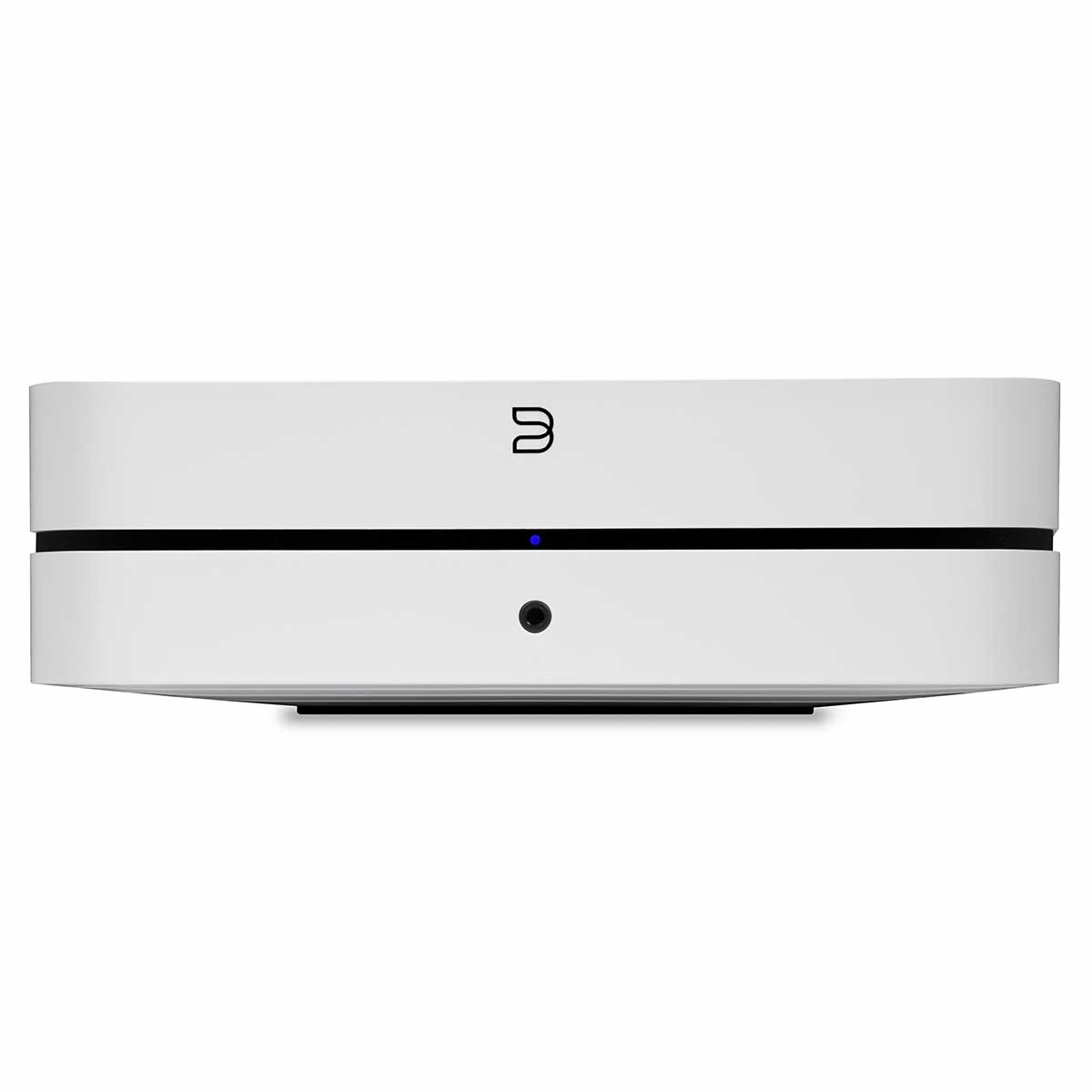


The wireless streaming amplifier has become the Swiss Army knife of modern audio systems. These compact powerhouses combine a digital-to-analog converter (DAC), amplification, and network connectivity into one sleek unit that can transform any pair of passive speakers into a sophisticated streaming system. At the time of writing, two standout options dominate the premium end of this market: the Marantz Model M1 and the Bluesound PowerNode.
Both amplifiers launched in 2024, representing the latest evolution in streaming amplifier technology. The Marantz Model M1 brings Japanese audiophile craftsmanship to the wireless streaming world, while the Bluesound PowerNode continues the Canadian company's tradition of technical precision and platform integration. Understanding which one suits your needs requires diving deep into what makes these devices tick.
Think of a streaming amplifier as the digital age equivalent of a traditional integrated amplifier. Instead of just combining a preamplifier and power amplifier in one box, these modern units add network connectivity, digital inputs, and often multi-room capabilities. The DAC (digital-to-analog converter) transforms digital music files into analog signals that speakers can reproduce, while the amplifier section provides the power needed to drive those speakers.
The key considerations when choosing a streaming amplifier center on power delivery, sound quality, connectivity options, and the streaming ecosystem. Power output determines which speakers you can effectively drive, while the quality of the DAC and amplifier circuitry affects how your music sounds. Connectivity defines how you'll integrate the unit into your system, and the streaming platform determines your long-term user experience.
The most fundamental difference between the Marantz Model M1 and Bluesound PowerNode lies in their approach to amplification. The Marantz delivers 100 watts per channel into 8-ohm speakers and 125 watts into 4-ohm loads, compared to the Bluesound's 80 watts into 8 ohms. This 25% power advantage might seem modest on paper, but it translates to significantly better control with demanding speakers.
Class D amplification, used in both units, switches the power transistors on and off thousands of times per second rather than keeping them partially on like traditional Class AB designs. This makes them incredibly efficient and cool-running, perfect for compact designs. However, the implementation matters enormously. The Marantz Model M1 uses what they call a "digital end-to-end topology," while the Bluesound PowerNode employs HybridDigital amplification based on the respected Hypex UcD module.
From our research into user experiences and professional reviews, the power difference becomes most apparent with challenging speakers like planar magnetic designs or low-sensitivity bookshelf speakers. The Marantz Model M1 consistently demonstrates what reviewers describe as a "vice-like grip" on speaker drivers, maintaining control and definition even at higher volumes where the Bluesound PowerNode can start to sound strained or "muddy."
The signal-to-noise ratio tells another part of the story. The Bluesound PowerNode achieves an impressive 100dB SNR compared to the Marantz's 105dB through its optical input. A higher SNR means less background noise and better dynamic range – the difference between the quietest and loudest sounds the system can reproduce. Total harmonic distortion (THD) measures how much the amplifier changes the original signal, with the Bluesound achieving 0.008% compared to the Marantz's 0.05%. Lower distortion theoretically means cleaner sound, though real-world listening often reveals more complex relationships between measurements and musical satisfaction.
Beyond raw specifications, these amplifiers have distinctly different sonic personalities. The Marantz Model M1 incorporates proprietary Marantz Musical Digital Filtering (MMDF), which allows users to choose between two different digital filter characteristics. Think of this as adjusting the amplifier's "lens" for viewing digital music – one filter might emphasize detail and precision, while another prioritizes naturalness and smoothness.
Professional reviews and user feedback consistently describe the Marantz Model M1 as delivering superior imaging and soundstaging. Imaging refers to how precisely you can locate instruments in the stereo field, while soundstaging describes the sense of width, depth, and height in the musical presentation. The Marantz reportedly creates a wider, more three-dimensional sound space with better instrument separation.
The Bluesound PowerNode, conversely, is often praised for its natural midrange presentation – the frequency range where most vocals and many instruments live. Users describe it as having a slightly denser, more organic character, though sometimes at the cost of the ultimate precision that the Marantz provides. This difference becomes most apparent with acoustic music, where the Bluesound might make a piano sound more wooden and resonant, while the Marantz emphasizes the percussive attack and decay of each note.
The DAC implementation also differs significantly. The Bluesound PowerNode uses a dedicated Texas Instruments PCM5242 chip with 32-bit/384kHz capability, while the Marantz Model M1 appears to integrate DAC functions into its amplifier topology. Neither approach is inherently superior, but they can produce different sonic signatures.
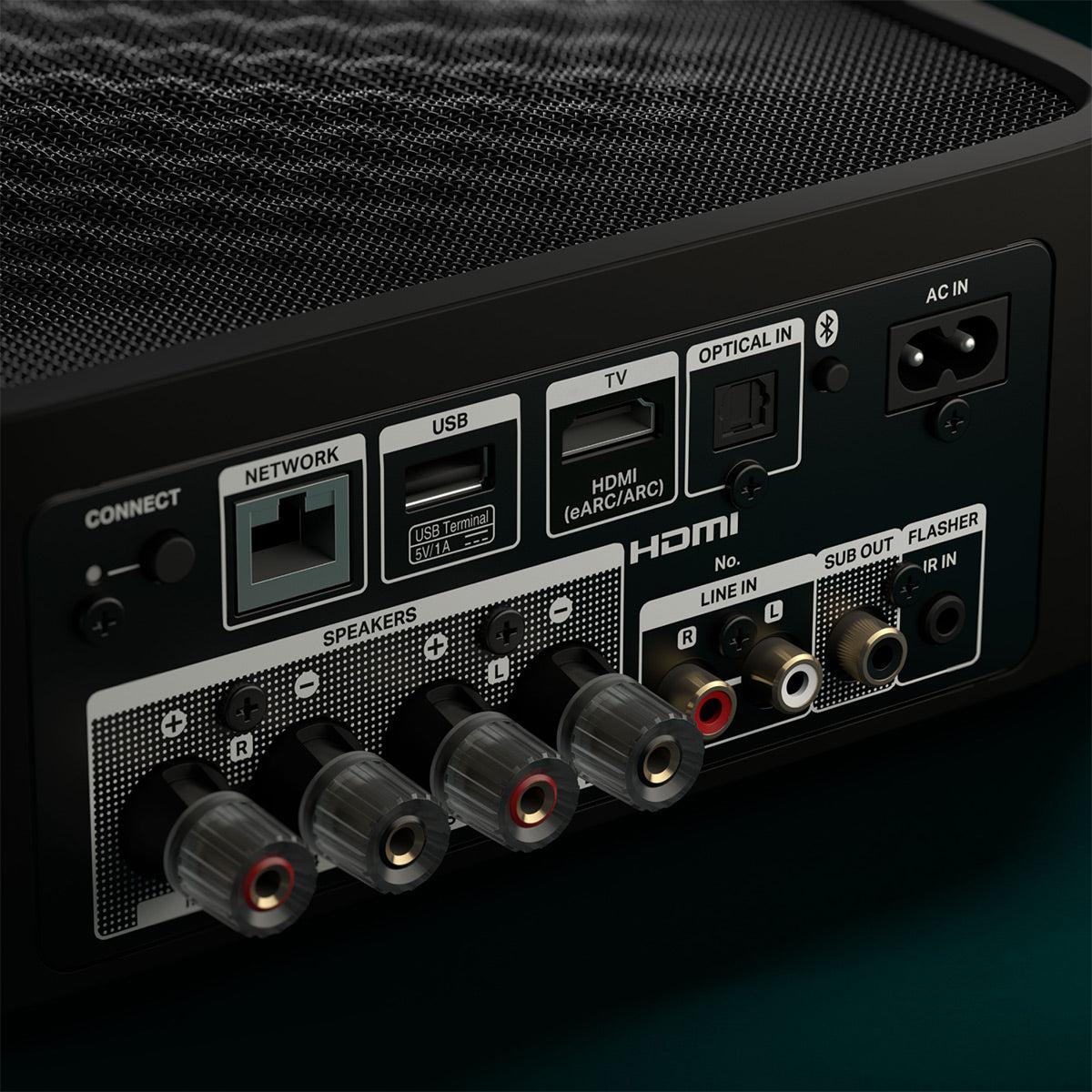
Modern streaming amplifiers need to interface with everything from turntables to televisions, and both units excel in different areas. The Marantz Model M1 stands out for its HDMI eARC (enhanced Audio Return Channel) input, which allows direct connection to modern TVs for simplified home theater setups. The unit can decode Dolby Digital+ soundtracks and includes features like dialog enhancement and night modes specifically designed for TV content.
This HDMI connection eliminates the complexity of traditional home theater receivers for stereo or 2.1 channel systems. You can connect your TV to the Marantz Model M1, add a subwoofer through its dedicated output, and enjoy high-quality TV audio without the bulk and complexity of a full AV receiver. The adjustable crossover filters let you fine-tune where your main speakers hand off to the subwoofer, typically somewhere between 40-120Hz depending on your speaker capabilities.
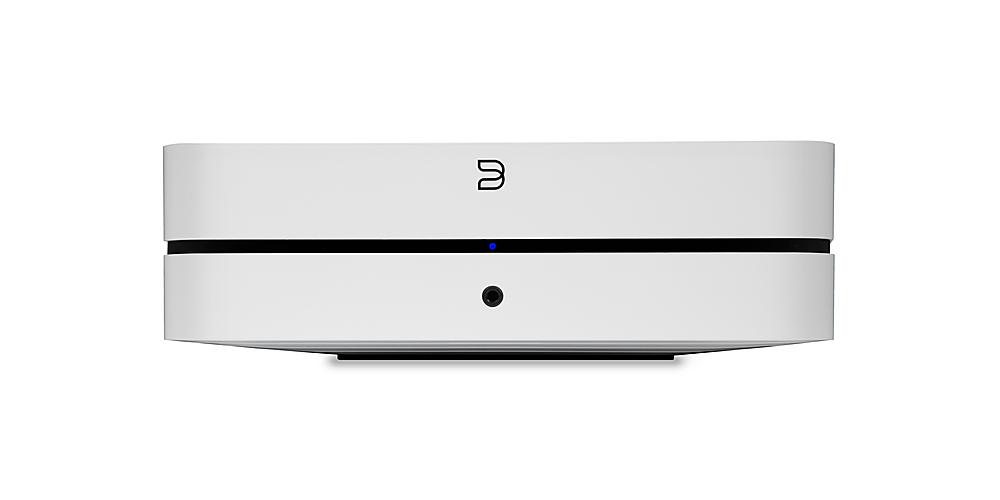
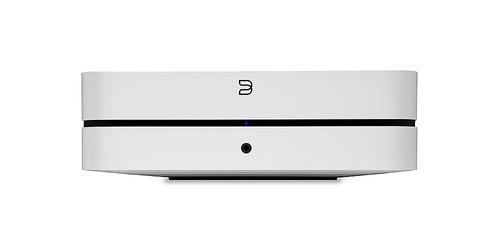
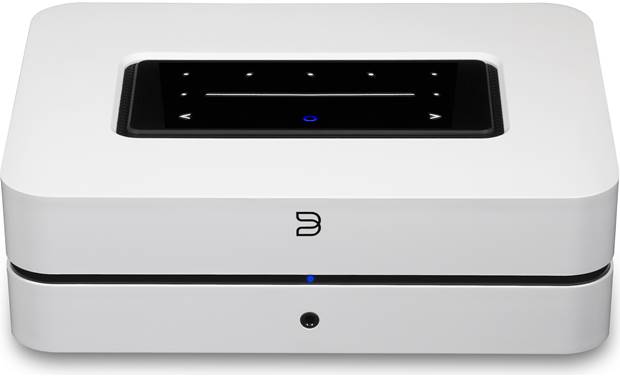
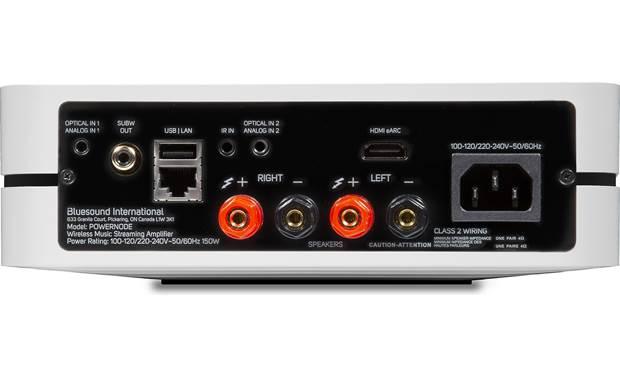
The Bluesound PowerNode takes a different approach, offering more diverse input types including USB-C, combination analog/digital inputs, and crucially, a high-quality headphone output powered by THX AAA technology. This headphone output fills a significant gap for many users – the ability to enjoy late-night listening without disturbing others. The Marantz Model M1 completely lacks headphone capability.
Both units support the essential wireless protocols: Wi-Fi, Bluetooth, and AirPlay 2. However, the Bluesound PowerNode includes two-way Bluetooth, meaning it can both receive music from your phone and transmit audio to Bluetooth headphones. This flexibility proves valuable in apartments or shared living situations.
The streaming platform represents your daily interaction with these devices, and each company has developed distinct approaches. The Marantz Model M1 uses HEOS Built-in, which supports major services like Spotify, TIDAL, Amazon Music HD, and Qobuz. HEOS also enables multi-room audio, allowing you to synchronize music across multiple compatible devices throughout your home.
The Bluesound PowerNode operates on the BluOS platform, which supports over 20 streaming services and can manage up to 64 zones in a multi-room setup. BluOS has earned praise for its stability and comprehensive format support, including MQA (Master Quality Authenticated) files that promise studio-master quality, and DSD (Direct Stream Digital) files favored by some audiophiles.
Both platforms support high-resolution audio well beyond CD quality. CD-quality audio is 16-bit/44.1kHz, while both amplifiers can handle 24-bit/192kHz files. The additional bit depth and sampling frequency can preserve more musical detail, though the audible benefits depend on your speakers, room acoustics, and source material quality.
The control apps deserve consideration since you'll interact with them daily. User reviews suggest the HEOS app provides straightforward operation but can feel basic compared to BluOS's more comprehensive feature set. BluOS includes more detailed playback information, better library management, and more customization options.
Manufacturing approach reveals much about long-term value. The Marantz Model M1 is designed and built at Shirakawa Audio Works in Japan, following Marantz's tradition of premium construction. This facility has produced high-end Marantz components for decades, bringing that expertise to the streaming amplifier format. The unit includes Sound Master tuning, where experienced engineers optimize the sound signature for musical enjoyment rather than just measurement performance.
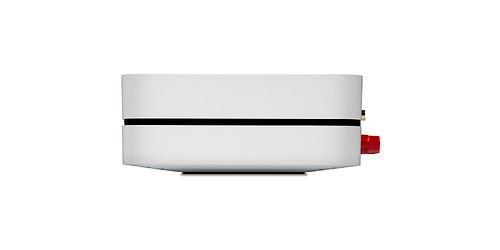
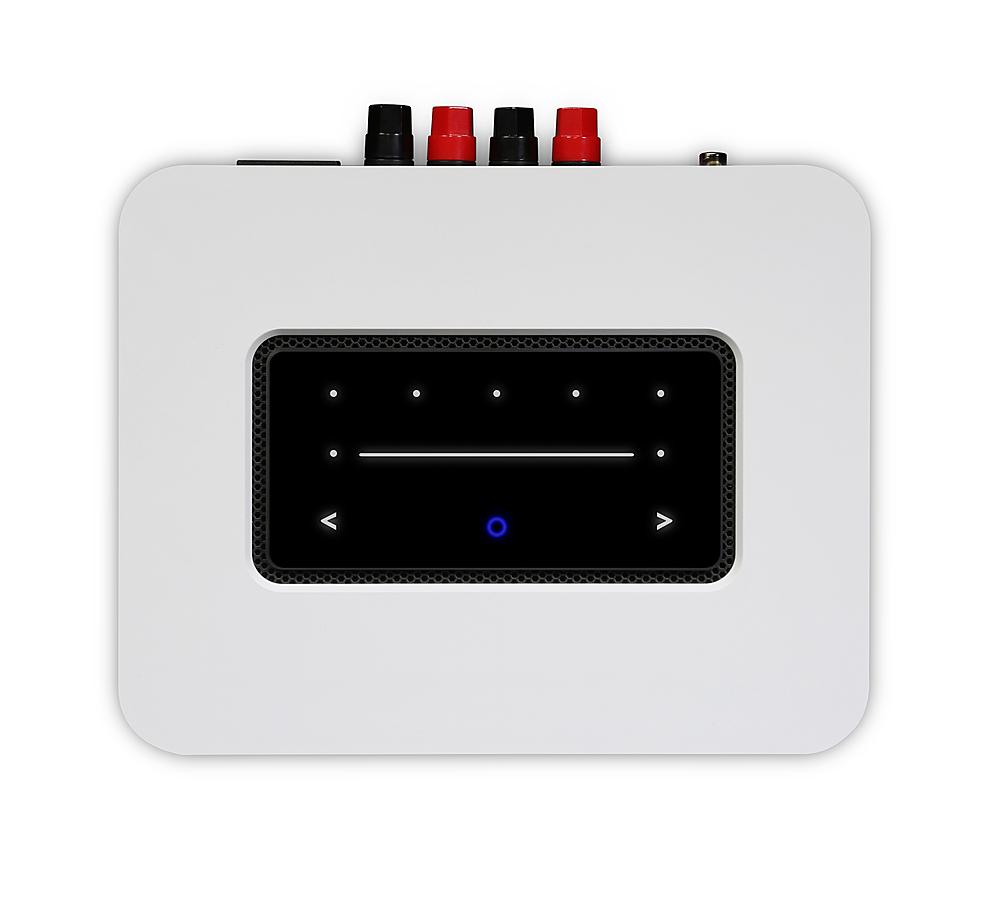
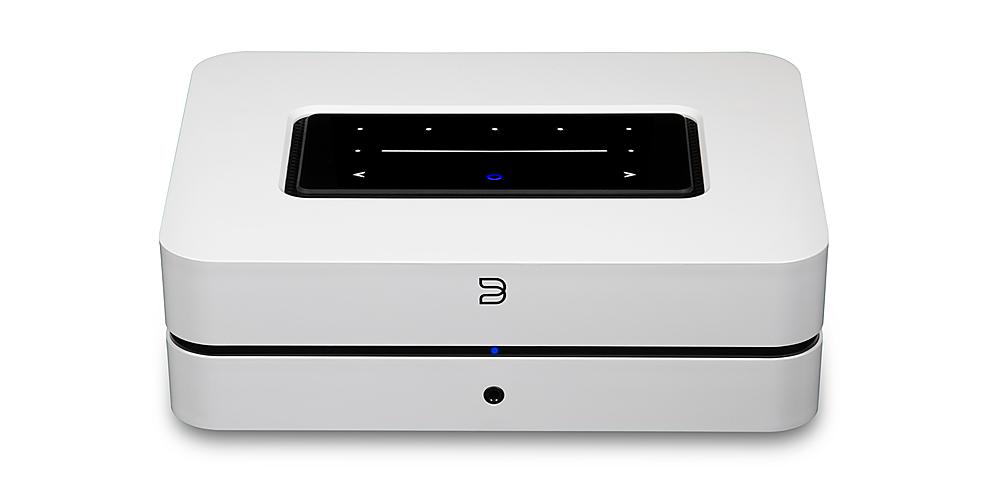
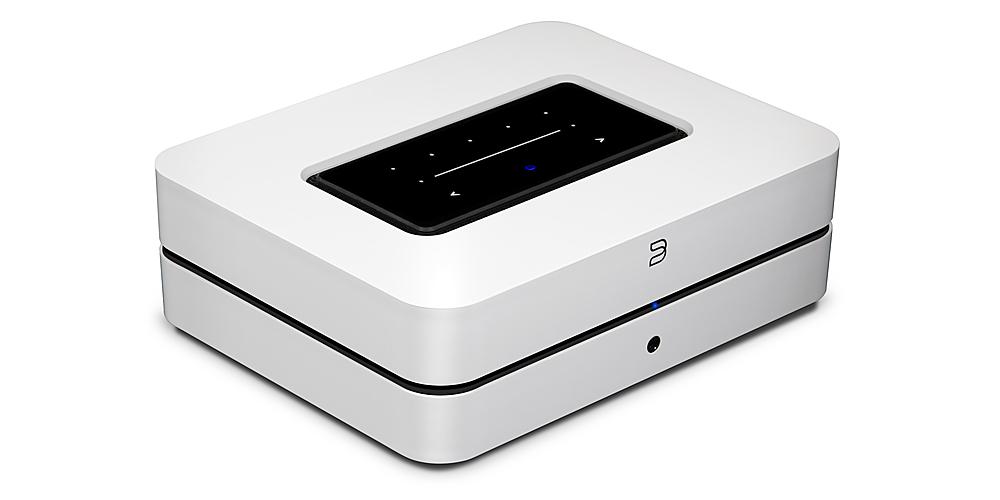
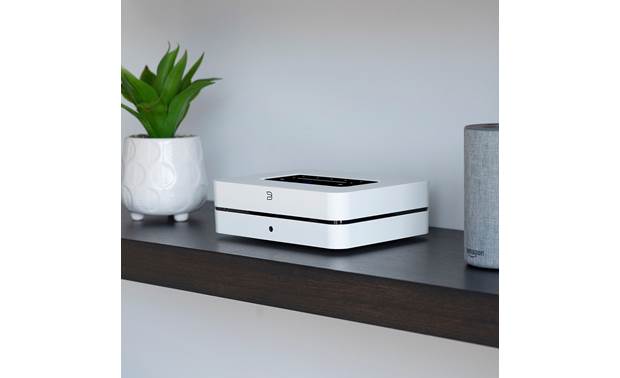
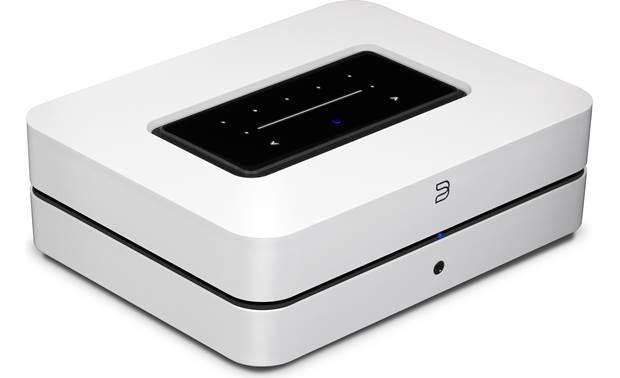
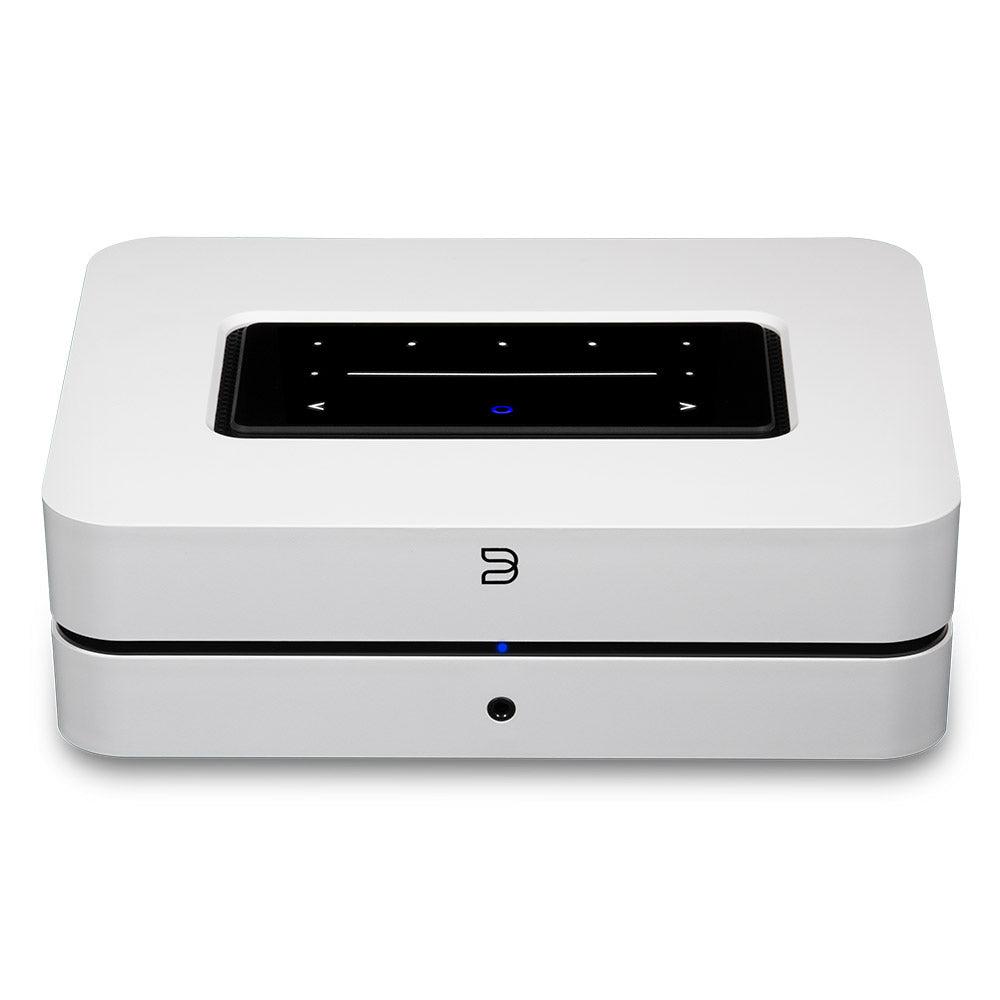
The Bluesound PowerNode represents more contemporary industrial design with its compact footprint and touch-sensitive glass control panel. The proximity sensing and capacitive touch controls provide a modern interface that some users prefer over traditional buttons and displays. However, this minimalist approach means most control happens through the smartphone app.
Thermal management differs between the designs. The Marantz Model M1's larger chassis provides more surface area for heat dissipation, while the Bluesound PowerNode achieves impressive cooling efficiency in its more compact form. Both run cool enough for bookshelf placement, but the Marantz offers more flexibility for enclosed cabinet installation.
For users considering these amplifiers as part of a TV setup, the Marantz Model M1 provides superior integration. The HDMI eARC connection handles audio return from your TV, while built-in Dolby Digital+ processing ensures compatibility with streaming services and broadcast content. Features like dialog enhancement boost speech clarity – particularly valuable for movie watching – while night mode compresses dynamic range for apartment living.
The Bluesound PowerNode can certainly work with TVs through optical or analog connections, but lacks the seamless integration and processing features that make the Marantz more suitable for dual music/TV duty. If your primary use case involves significant TV or movie watching, the Marantz provides a more complete solution.
Both units offer subwoofer integration, but again with different approaches. The Marantz Model M1 provides adjustable crossover filters that let you fine-tune the frequency handoff between your main speakers and subwoofer. This level of control helps optimize the system's performance in your specific room. The Bluesound PowerNode includes subwoofer output but with less comprehensive filtering options.
At the time of writing, these amplifiers compete in the premium compact streaming market with the Marantz commanding a modest price premium over the Bluesound. This price difference reflects their different target markets and capabilities rather than one being objectively better than the other.
The Marantz Model M1 represents better value for users with demanding speakers, home theater integration needs, or those prioritizing ultimate sound quality. The Japanese manufacturing, 5-year warranty, and superior power delivery justify the premium for serious listening applications. Custom installation features like 12V triggers and professional control system compatibility add value for whole-home systems.
The Bluesound PowerNode offers exceptional value for users prioritizing convenience, compact size, and comprehensive connectivity. The mature BluOS platform, headphone output, and touch interface provide features absent from the Marantz at a lower entry price. The 1-year warranty is more typical for consumer electronics, reflecting the different market positioning.
Both companies have continued developing their platforms since these 2024 launches. The Bluesound PowerNode includes future support for Dirac Live room correction, which analyzes your room's acoustics and applies corrective filtering for more accurate sound. Room correction can make dramatic improvements in challenging acoustic environments, though it requires measurement microphones and setup expertise.
The Marantz Model M1 focuses on HEOS platform evolution, with regular updates adding new streaming services and features. Both approaches recognize that modern audio devices are essentially computers that can improve over time through software updates.
Processing power influences long-term viability. The Bluesound PowerNode uses a quad-core ARM Cortex-A53 processor, providing substantial computational headroom for future features. The Marantz specifications don't detail processing architecture, but given its 2024 launch, likely includes sufficient power for anticipated developments.
Choose the Marantz Model M1 if you prioritize sound quality above convenience features. Its superior power delivery makes it ideal for inefficient speakers or larger rooms where you need clean performance at higher volumes. The HDMI eARC integration creates an excellent foundation for TV audio, while the Japanese manufacturing provides long-term confidence. Users with Martin Logan electrostatic speakers, low-sensitivity bookshelf monitors, or plans for future speaker upgrades will appreciate the power headroom.
The Bluesound PowerNode suits users wanting maximum versatility in a compact package. The headphone output alone makes it valuable for apartment dwellers or late-night listeners, while the comprehensive BluOS platform provides excellent streaming service integration. Its smaller footprint works better in space-constrained installations, and the mature platform offers extensive multi-room capabilities.
For home theater applications, the Marantz Model M1 provides superior integration and processing. For multi-room audio throughout the house, the Bluesound PowerNode's BluOS platform offers more mature whole-home solutions.
Neither choice is wrong – they represent different philosophies within the streaming amplifier category. The Marantz emphasizes audiophile sound quality and home theater integration, while the Bluesound prioritizes platform maturity and user convenience. Your specific needs, existing equipment, and listening preferences should guide the decision more than abstract notions of which is "better."
Both amplifiers represent the current state of the art in wireless streaming amplification, bringing high-quality audio and modern convenience to any pair of passive speakers. The question isn't whether these devices can transform your listening experience – they absolutely can. The question is which approach better matches your specific situation and priorities.
| Marantz Model M1 Wireless Streaming Amplifier | Bluesound PowerNode Wireless Music Streaming Amplifier |
|---|---|
| Power Output (8Ω) - Critical for driving demanding speakers and higher volumes | |
| 100W per channel (125W into 4Ω) | 80W per channel |
| Amplifier Technology - Affects sound quality and efficiency | |
| Class D digital end-to-end topology | HybridDigital Class D (Hypex UcD-based) |
| Signal-to-Noise Ratio - Higher numbers mean less background noise | |
| 105dB (optical input) | 100dB |
| Total Harmonic Distortion - Lower is theoretically better for clean sound | |
| 0.05% | 0.008% |
| Digital Audio Processing - Unique sound-shaping capabilities | |
| Marantz Musical Digital Filtering (MMDF) with selectable filters | 32-bit/384kHz premium DAC with differential output |
| HDMI Integration - Essential for TV and home theater use | |
| HDMI eARC with Dolby Digital+ decoding | Not available |
| Headphone Output - Important for private listening | |
| Not available | 6.3mm with THX AAA technology |
| Streaming Platform - Your daily interface for music control | |
| HEOS Built-in (multi-room capable) | BluOS (supports 20+ services, 64-zone capability) |
| High-Resolution Audio Support - For audiophile-quality files | |
| Up to 24-bit/192kHz PCM, DSD 2.8/5.6MHz | Up to 24-bit/192kHz, MQA, DSD256 |
| Bluetooth Capability - For wireless device connection | |
| Bluetooth 4.2 (receive only) | Two-way aptX HD Bluetooth (transmit and receive) |
| Physical Connectivity - Determines integration flexibility | |
| HDMI eARC, optical, RCA analog, USB-A, subwoofer out | USB-C, combo analog/digital inputs, optical, RCA, subwoofer out |
| Build Quality and Origin - Affects longevity and sound character | |
| Designed and built in Shirakawa, Japan with Sound Master tuning | Canadian design with quad-core ARM processor |
| Dimensions and Weight - Important for placement flexibility | |
| 239×84×217mm, 2.2kg | 220×70×190mm, 1.78kg |
| Warranty Coverage - Indicates manufacturer confidence | |
| 5 years parts and labor | 1 year parts and labor |
| Room Correction - Future-proofs acoustic optimization | |
| Not available | Dirac Live ready (via future update) |
| Custom Installation Features - For whole-home audio systems | |
| 12V trigger, IR learning, Control4/Crestron compatibility | Touch interface, voice assistant integration |
The Marantz Model M1 delivers 100 watts per channel into 8-ohm speakers and 125 watts into 4-ohm speakers, compared to the Bluesound PowerNode's 80 watts per channel. This 25% power advantage makes the Marantz Model M1 better suited for demanding speakers and larger rooms where higher volumes are needed.
Yes, but only the Marantz Model M1 offers seamless TV integration with its HDMI eARC input and built-in Dolby Digital+ decoding. This allows direct connection to modern TVs for high-quality audio playback. The Bluesound PowerNode can connect to TVs through optical or analog inputs but lacks the advanced processing features.
Both excel but with different strengths. The Marantz Model M1 is praised for superior imaging, wider soundstage, and better control with demanding speakers. The Bluesound PowerNode offers a more natural, organic midrange presentation with excellent technical specifications. Your preference depends on whether you prioritize precision or naturalness in sound reproduction.
Yes, both the Marantz Model M1 and Bluesound PowerNode support high-resolution audio well beyond CD quality. The Marantz handles up to 24-bit/192kHz PCM and DSD files, while the PowerNode supports similar formats plus MQA decoding for studio-master quality streaming from services like TIDAL.
The Bluesound PowerNode is more compact at 220×70×190mm and weighs less at 1.78kg compared to the Marantz Model M1's larger 239×84×217mm footprint. The PowerNode also features an elegant touch-control interface that works well in minimalist setups where space is at a premium.
Only the Bluesound PowerNode includes a dedicated headphone output powered by THX AAA technology for high-quality personal listening. The Marantz Model M1 does not offer headphone capability, which may be a deciding factor for apartment dwellers or late-night listeners.
The Marantz Model M1 uses HEOS Built-in, which supports major streaming services and multi-room audio with a straightforward interface. The Bluesound PowerNode runs BluOS, supporting over 20 streaming services with more comprehensive features and up to 64-zone multi-room capability. BluOS is generally considered more mature and feature-rich.
The Marantz Model M1 is specifically designed for home theater integration with HDMI eARC, Dolby Digital+ decoding, dialog enhancement, and night mode features. While the Bluesound PowerNode can work with TVs, it lacks the specialized processing and seamless connectivity that makes the Marantz ideal for dual music and movie duties.
The Marantz Model M1 is designed and manufactured in Shirakawa, Japan, with premium construction and a comprehensive 5-year warranty. The Bluesound PowerNode offers solid build quality with modern design elements but comes with a standard 1-year warranty, reflecting different market positioning and manufacturing approaches.
The Marantz Model M1's higher power output and superior current delivery make it better suited for low-efficiency speakers, planar magnetics, or demanding bookshelf monitors. The Bluesound PowerNode works well with most speakers but may struggle with very demanding loads at higher volumes due to its lower power rating.
The Bluesound PowerNode offers more comprehensive wireless connectivity with two-way aptX HD Bluetooth (can transmit and receive), while the Marantz Model M1 provides standard Bluetooth 4.2 receiving only. Both support Wi-Fi and AirPlay 2, but the PowerNode's bidirectional Bluetooth adds flexibility for wireless headphone use.
Both offer excellent value in their respective categories. The Marantz Model M1 justifies its premium with superior power, home theater features, and Japanese craftsmanship backed by a 5-year warranty. The Bluesound PowerNode provides exceptional features-per-dollar with its compact design, headphone output, and mature BluOS platform, making it ideal for users prioritizing convenience and versatility.
We've done our best to create useful and informative comparisons to help you decide what product to buy. Our research uses advanced automated methods to create this comparison and perfection is not possible - please contact us for corrections or questions. These are the sites we've researched in the creation of this article: bestbuy.com - crutchfield.com - audioadvisor.com - youtube.com - soundstagesimplifi.com - marantz.com - marantz.com - audioadvice.com - whathifi.com - manuals.marantz.com - audiosciencereview.com - youtube.com - marantz.com - sweetwater.com - audiosciencereview.com - accessories4less.com - crutchfield.com - upscaleaudio.com - bluesound.com - bluesound.com - stereophile.com - theaudiofactory.com - audioadvisor.com - musicdirect.com - twitteringmachines.com - futureaudiophile.com - bluesound.com - bluesound.com - moon-audio.com - audioadvisor.com - ecoustics.com

Privacy Policy
Terms and Conditions - Affiliate Policy
Home Security
© Copyright 2008-2026.
11816 Inwood Rd #1211, Dallas, TX 75244