


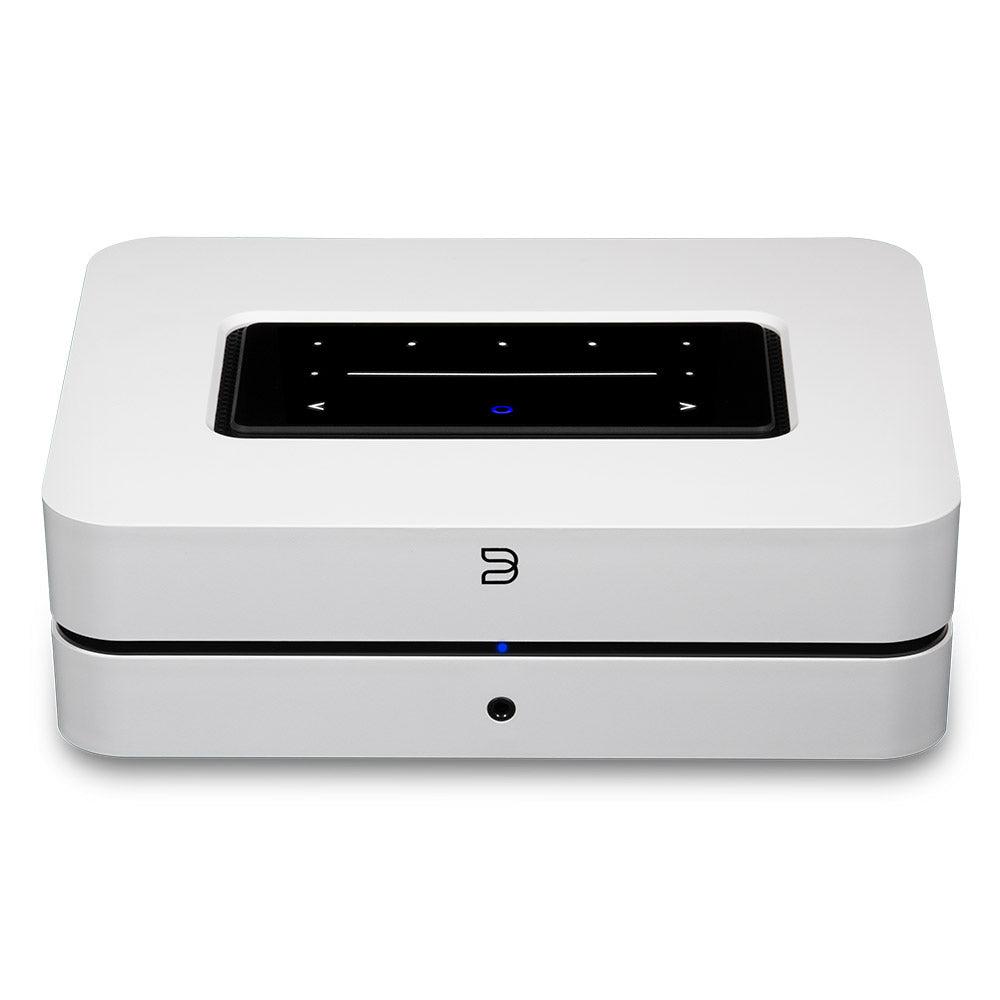
Wireless streaming amplifiers have fundamentally changed how we listen to music at home. Instead of needing separate components—a streamer, a DAC (digital-to-analog converter that converts digital files into analog signals your speakers can play), and an amplifier—these all-in-one devices let you connect passive speakers directly to your home network and start streaming immediately. But with so many options available, choosing the right one can feel overwhelming.
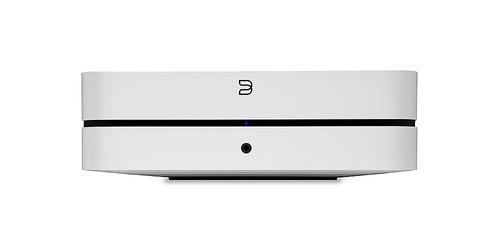
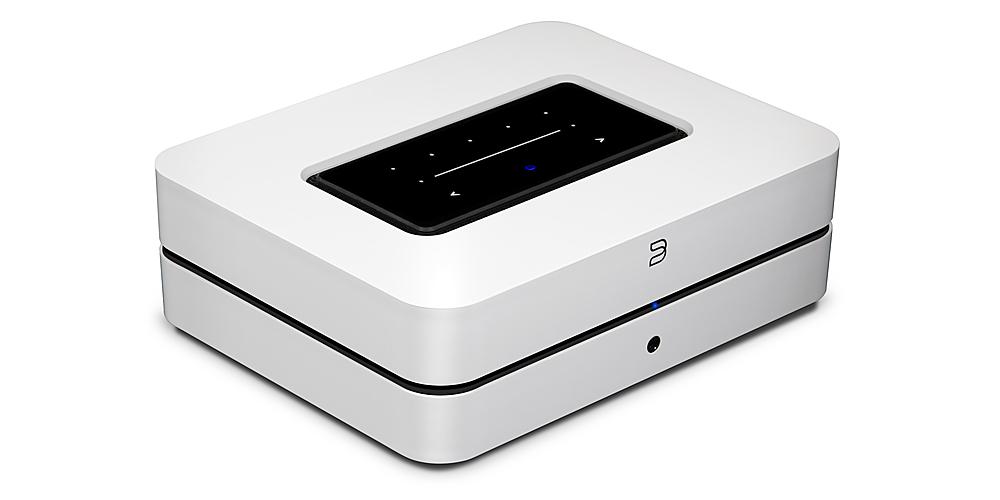
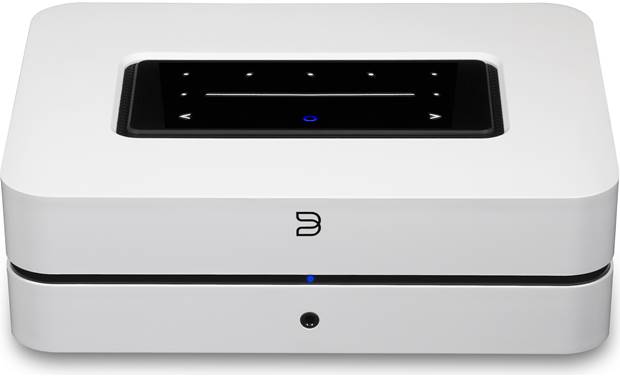
Today, we're comparing two popular but very different approaches: the Denon HEOS Amp HS2 and the Bluesound PowerNode. While both accomplish the same basic goal of turning regular speakers into connected audio systems, they take distinctly different paths to get there. One prioritizes raw power and value, while the other focuses on audiophile-grade sound quality and advanced features.
Before diving into our comparison, let's establish what these devices actually do. A wireless streaming amplifier combines three essential components: a network streamer (which connects to your Wi-Fi and accesses music services), a DAC (which converts digital music files into analog signals), and a power amplifier (which boosts those signals to drive your speakers). This integration eliminates the complexity and cost of buying separate components while providing a clean, modern solution for whole-home audio.
The key considerations when shopping for a streaming amplifier are straightforward: power output (how loud and dynamic your music can sound), audio quality (how accurately it reproduces your music), connectivity options (what sources you can connect), and the software experience (how easy it is to control and manage your music). The relative importance of these factors depends entirely on your specific needs and listening preferences.
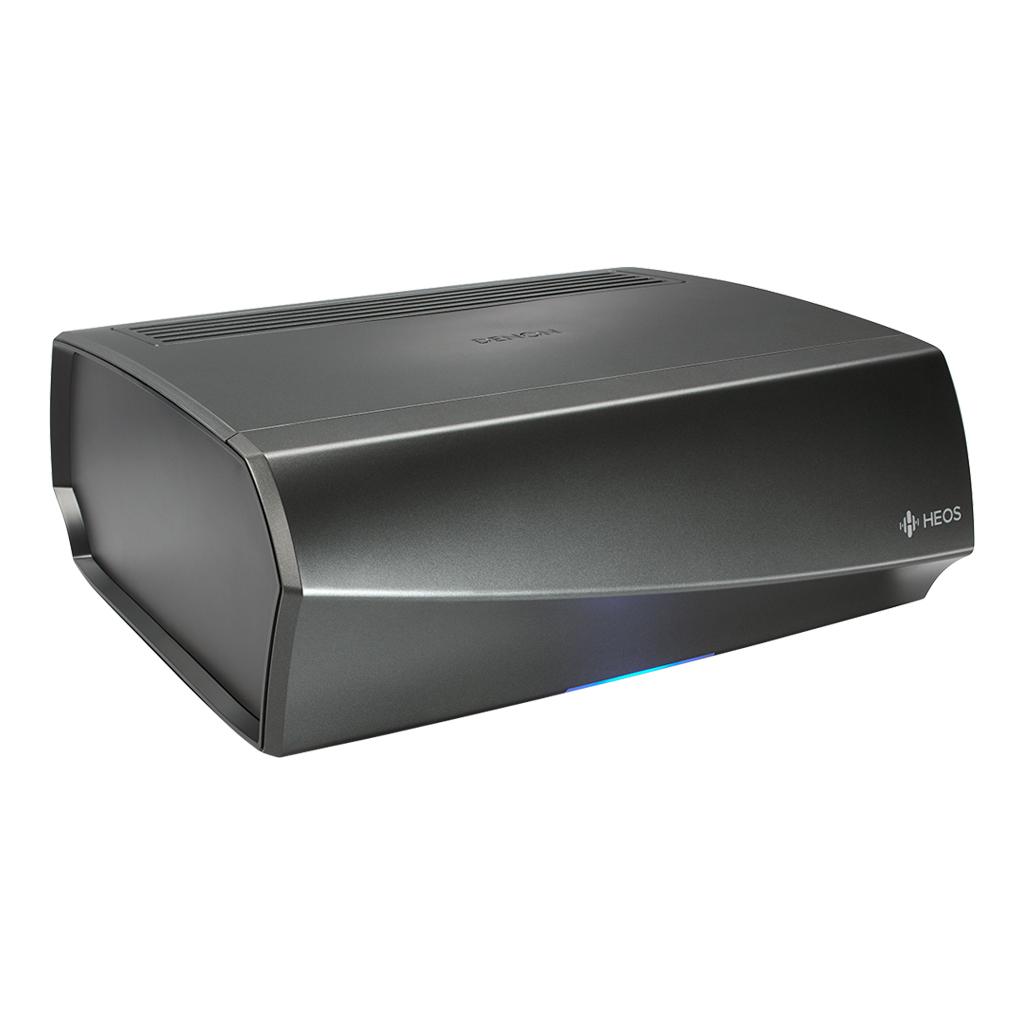
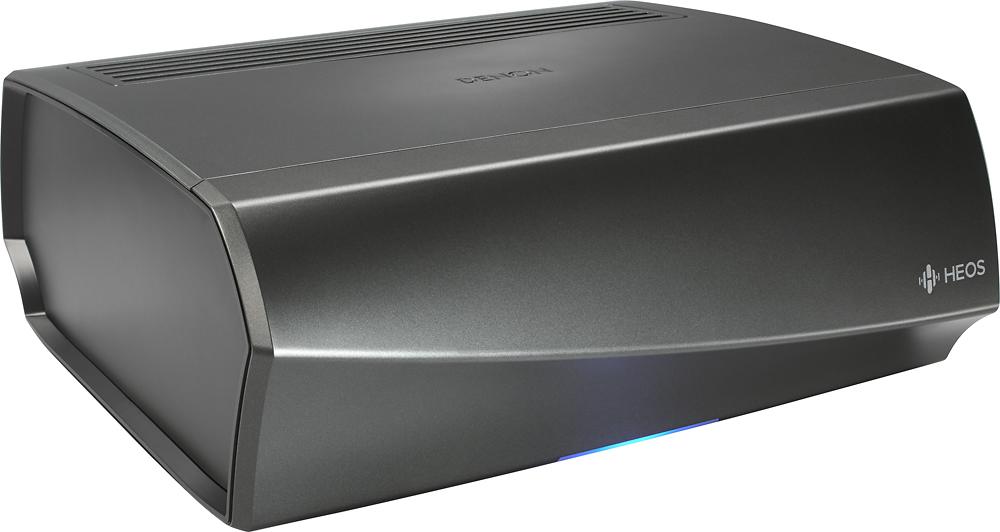
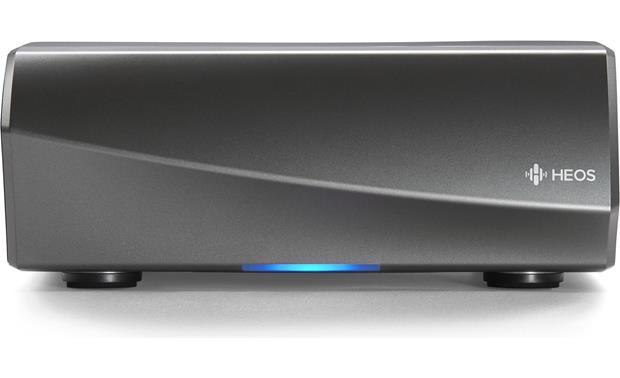
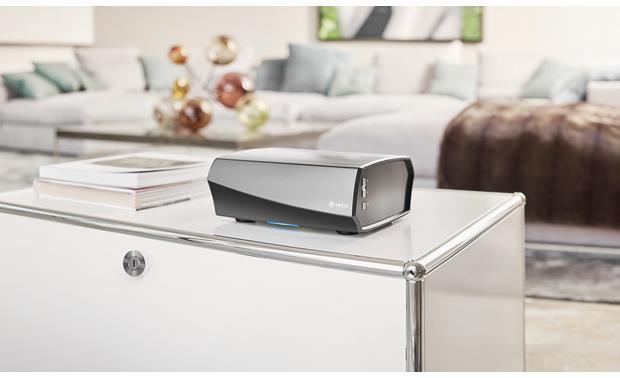
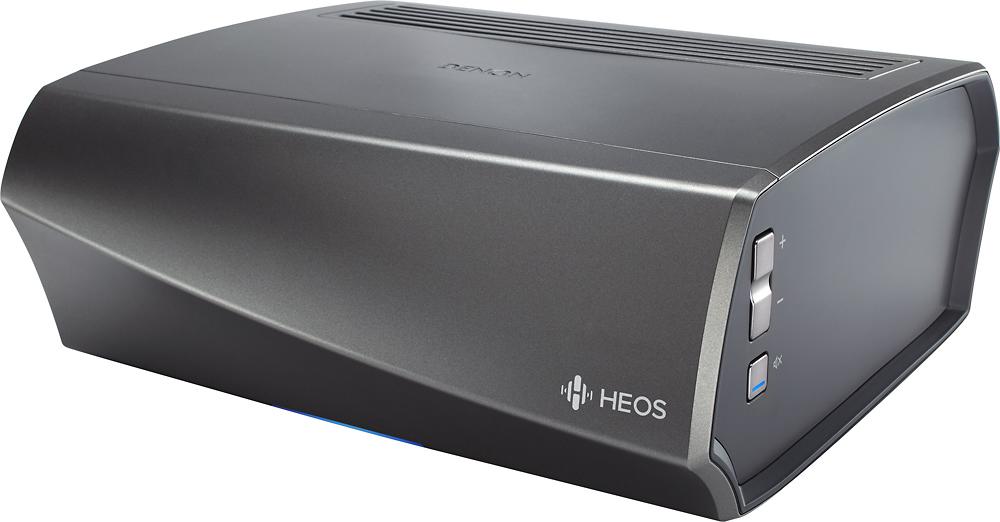
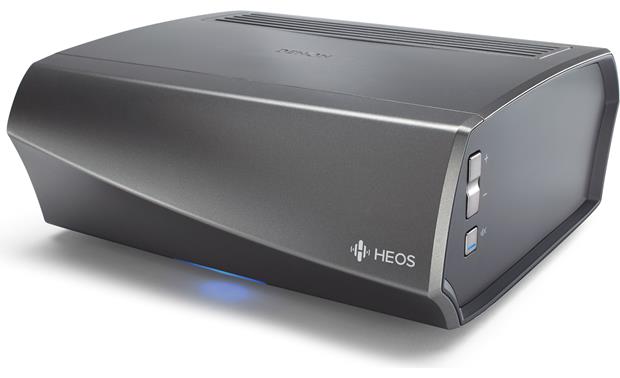
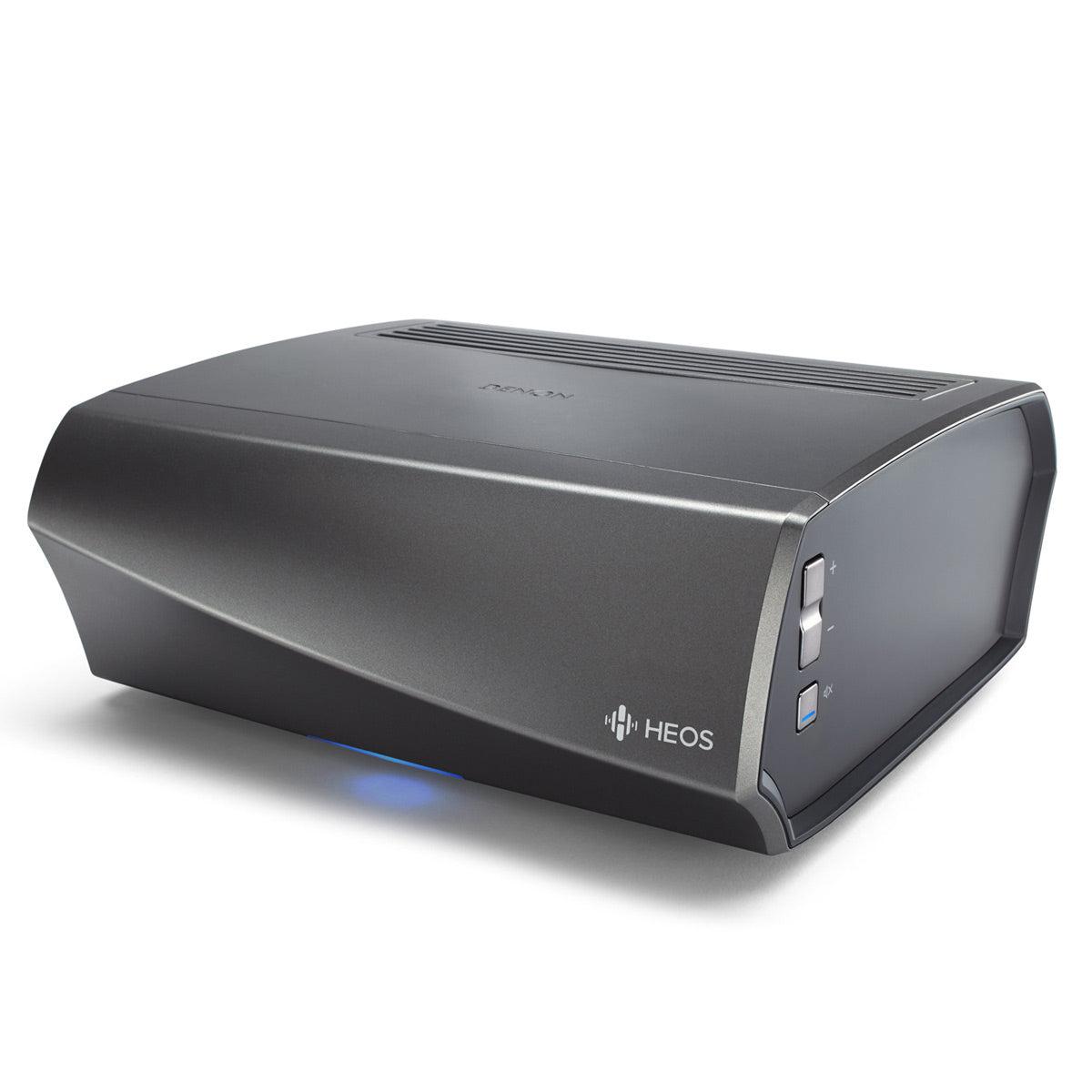
The Denon HEOS Amp HS2, first released in 2016, represents Denon's approach to accessible multi-room audio. Part of their HEOS ecosystem, it's designed to integrate seamlessly with other Denon and Marantz products while delivering substantial power at a competitive price point. Despite being several years old, it remains relevant thanks to regular firmware updates and its focus on core functionality over flashy features.
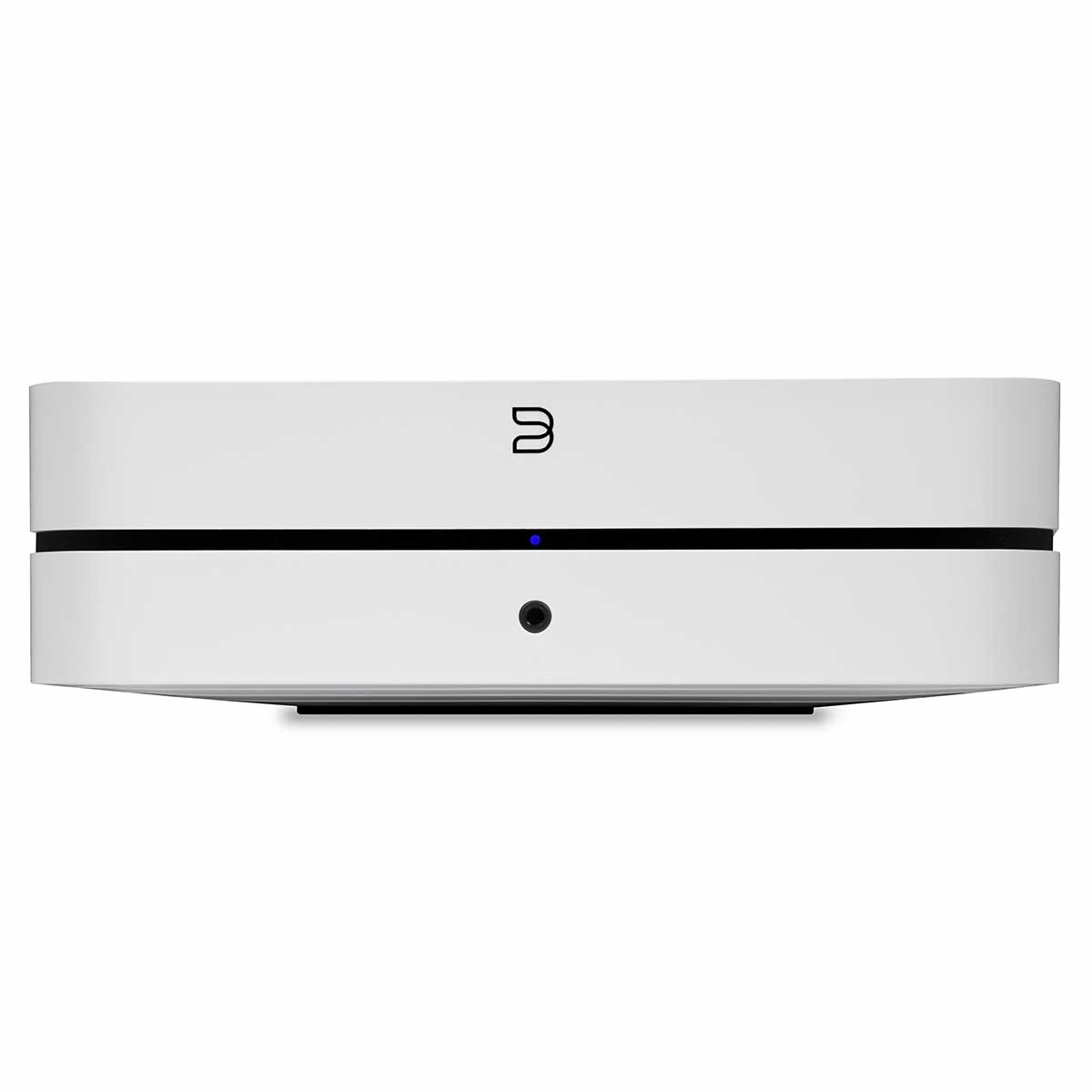
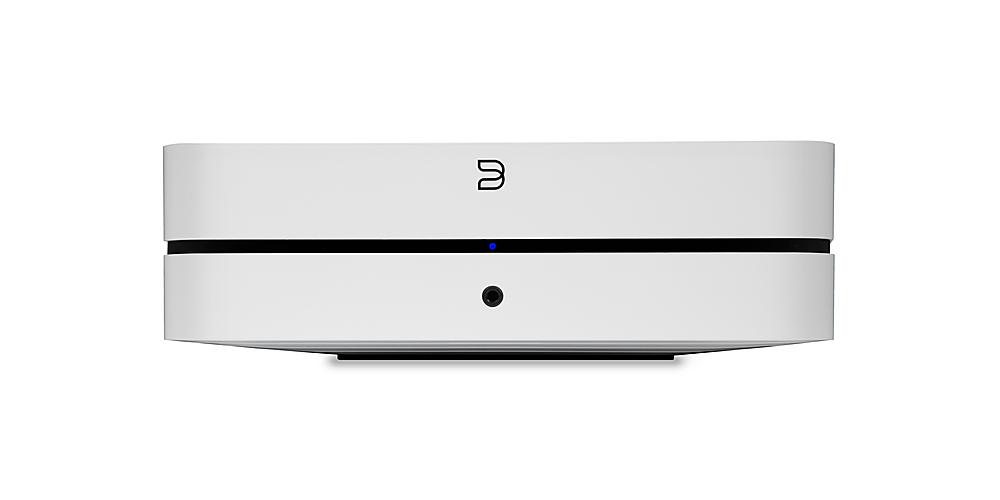
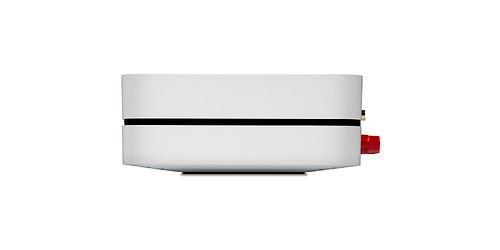
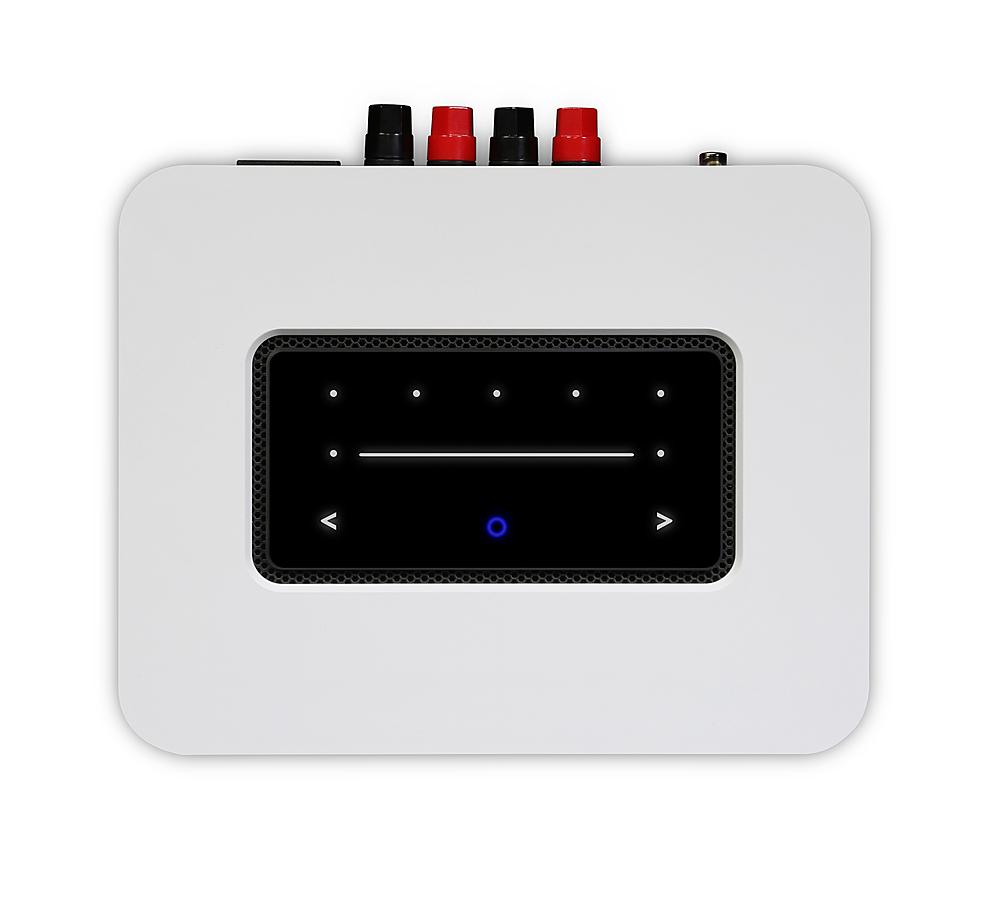
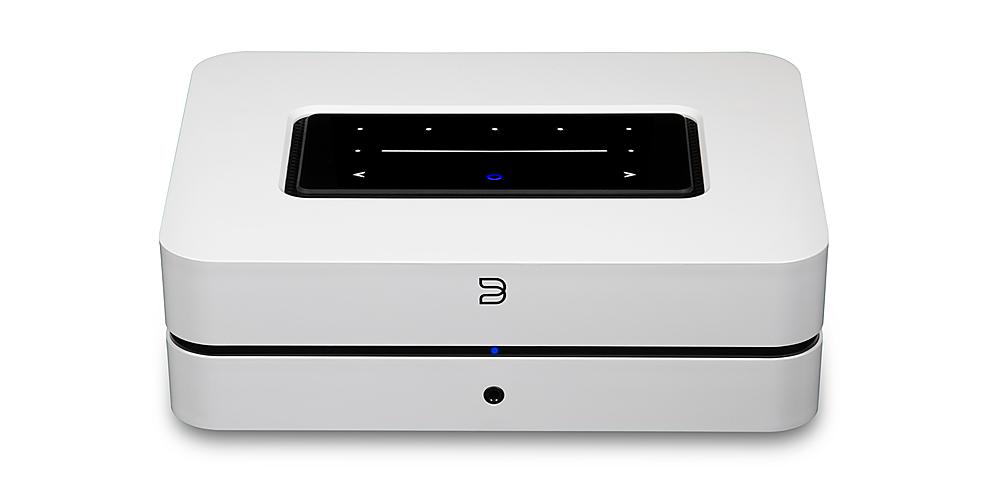
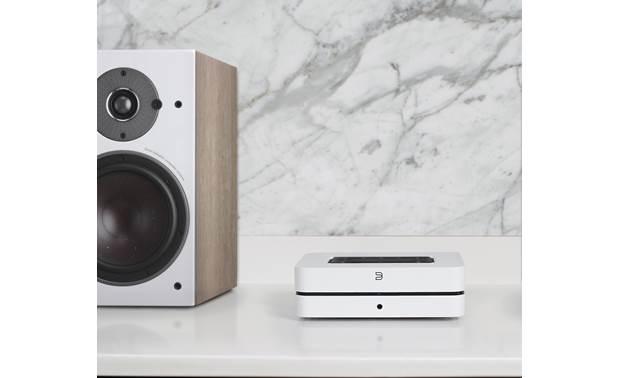
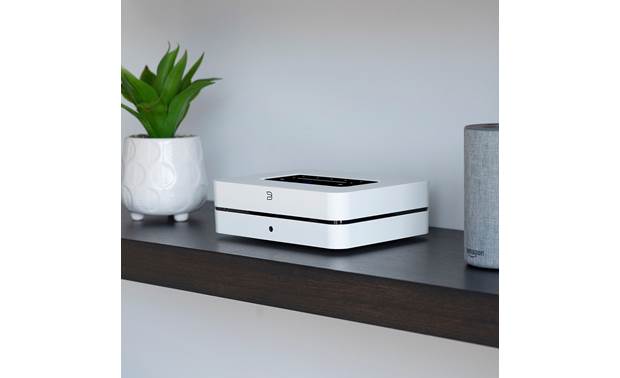
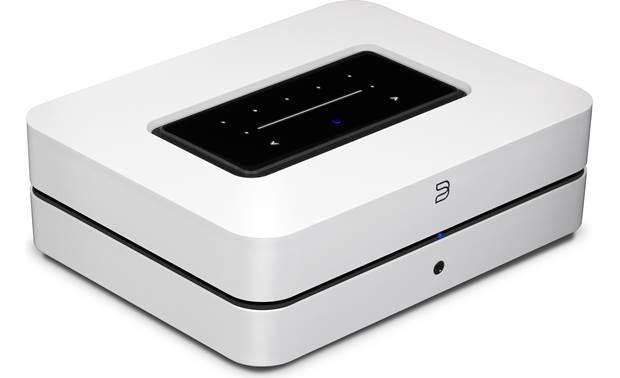
The Bluesound PowerNode, launched in 2021, takes a more premium approach. Developed by the same team behind NAD Electronics, it emphasizes audiophile-grade components and sophisticated software. The PowerNode represents Bluesound's latest thinking on streaming amplification, incorporating advanced DAC technology and processing power that wasn't available when the Denon HEOS Amp HS2 first launched.
Power output might seem like a simple numbers game, but it's actually one of the most crucial factors determining whether a streaming amplifier will work well in your specific situation. The Denon HEOS Amp HS2 delivers an impressive 100 watts per channel into 4-ohm speakers and 70 watts into 8-ohm speakers. These numbers matter because they determine how loud your system can play without distortion and how well it can drive demanding speakers.
Speaker impedance (measured in ohms) represents how much electrical resistance your speakers present to the amplifier. Lower impedance speakers (4 ohms) draw more current and require more robust amplifiers to perform properly. The Denon HEOS Amp HS2's ability to deliver its full 100 watts into 4-ohm loads makes it suitable for a wider range of speakers, including outdoor models and larger bookshelf speakers that typically present challenging electrical loads.
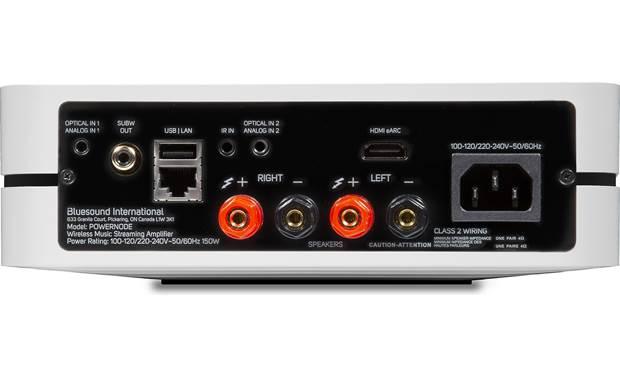
In contrast, the Bluesound PowerNode outputs 80 watts per channel into 8-ohm speakers. While this might seem less impressive on paper, the PowerNode's amplifier design deserves closer examination. It uses what Bluesound calls HybridDigital technology, based on high-quality Hypex UcD amplifier modules enhanced with gallium nitride (GaN) transistors. These advanced semiconductors switch faster and more efficiently than traditional silicon transistors, resulting in lower distortion and better sound quality.
The practical difference becomes clear when you consider room size and speaker selection. If you're planning to fill a large living room with sound, drive outdoor speakers, or use less efficient speakers (those that convert less electrical power into acoustic output), the Denon HEOS Amp HS2's extra power provides valuable headroom. However, if you're using efficient bookshelf speakers in a medium-sized room, the Bluesound PowerNode's 80 watts will likely be more than sufficient while potentially sounding cleaner and more refined.
Raw power tells only part of the story. Audio quality depends heavily on the digital-to-analog converter (DAC) and the overall circuit design. This is where the Bluesound PowerNode shows its premium positioning most clearly.
The PowerNode features a sophisticated 32-bit/384kHz DAC with differential output design, powered by a quad-core 1.8GHz ARM processor. In practical terms, this means it can handle extremely high-resolution audio files with exceptional precision. The differential output design reduces noise and distortion by processing the positive and negative phases of the audio signal separately, then combining them at the final stage. This technical approach, common in high-end audio equipment, results in a cleaner, more detailed sound.
The Denon HEOS Amp HS2 uses a more conventional DAC design that supports high-resolution audio up to 24-bit/192kHz, along with DSD (Direct Stream Digital) files. While perfectly capable of excellent sound quality, our research suggests it doesn't quite match the PowerNode's level of refinement in areas like midrange clarity and overall transparency.
Measurements tell part of the story here. The Bluesound PowerNode achieves a signal-to-noise ratio of 100dB and total harmonic distortion of just 0.008%. The Denon HEOS Amp HS2 manages 83dB signal-to-noise ratio and 0.1% distortion. These numbers translate to audible differences: the PowerNode should sound quieter during silent passages and maintain better composure at higher volumes.
From our evaluation of user reviews and professional assessments, the consensus suggests the PowerNode delivers noticeably better sound quality, particularly in complex musical passages where its superior processing power and advanced DAC design become apparent. However, the Denon HEOS Amp HS2 still provides genuinely good sound that most listeners will find satisfying, especially considering its more accessible price point.
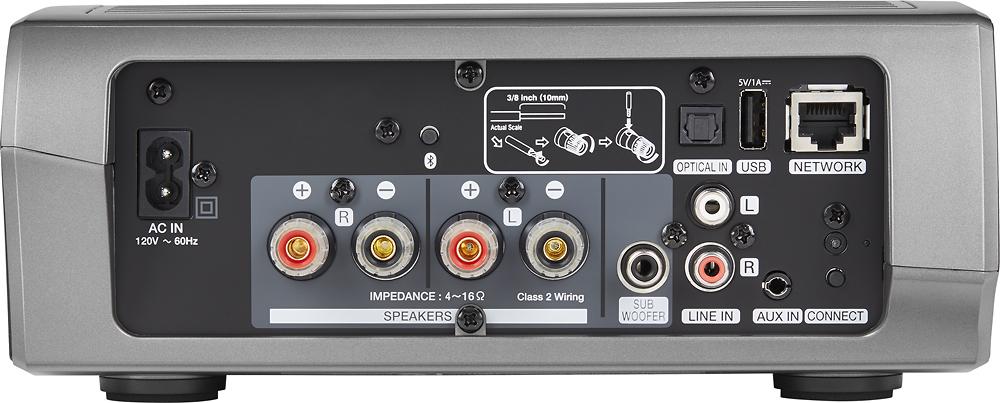
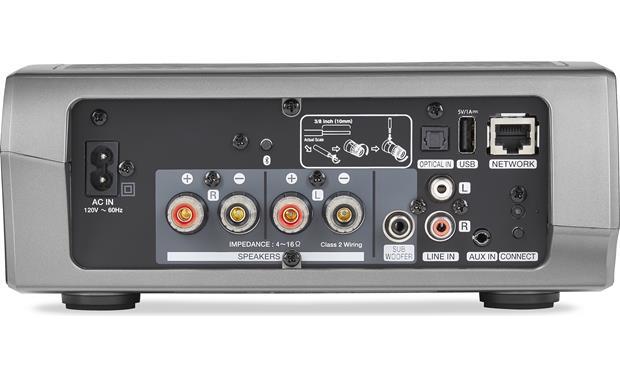
Modern streaming amplifiers need to connect to various sources, and this is where the two products show interesting differences in philosophy. The Denon HEOS Amp HS2 offers solid, straightforward connectivity: USB input for direct file playback, optical digital input for connecting devices like CD players or TVs, RCA analog inputs, and a 3.5mm auxiliary input for portable devices. It also includes both Wi-Fi and Ethernet connections for network streaming, plus Bluetooth for direct connection to smartphones and tablets.
The Bluesound PowerNode takes connectivity much further, particularly for home theater applications. Its standout feature is HDMI eARC (enhanced Audio Return Channel), which allows direct connection to modern TVs. This single cable can handle high-quality audio from all your TV's sources—streaming apps, game consoles, cable boxes—without requiring a separate AV receiver. For many people looking to simplify their home theater setup while maintaining excellent sound quality, this feature alone justifies the PowerNode's premium positioning.
The PowerNode also includes two-way Bluetooth with aptX HD support. Standard Bluetooth on most devices compresses audio significantly, but aptX HD maintains near-CD quality wireless transmission. The "two-way" aspect means you can both receive audio from your phone and transmit audio to Bluetooth headphones—a surprisingly useful feature when you want to listen privately without disconnecting your speakers.
Both devices include subwoofer outputs, but the PowerNode's implementation is more sophisticated, with adjustable crossover frequency (the point where it divides bass frequencies between your main speakers and subwoofer). This gives you better control over bass integration, particularly important in smaller rooms where speaker placement might be compromised.
Multi-room audio represents one of the most compelling reasons to choose a streaming amplifier over traditional separate components. Both devices offer multi-room capabilities, but through different platforms that work quite differently in practice.
The Denon HEOS Amp HS2 operates within the HEOS ecosystem, which can connect up to 32 zones throughout your home. HEOS integrates particularly well if you already own Denon or Marantz AV receivers, creating a cohesive system where your main home theater and additional music zones work together seamlessly. This integration extends to shared playlists, synchronized volume control, and unified control through a single app.
However, our research into user experiences reveals consistent concerns about the HEOS app's stability. Multiple users report freezing issues that require power-cycling the amplifier to resolve, which obviously disrupts the seamless experience that multi-room audio should provide. While these issues don't affect everyone, they're reported frequently enough to be concerning.
The Bluesound PowerNode uses the BluOS platform, which supports up to 64 zones and is widely regarded as having superior software stability and user experience. BluOS also offers broader streaming service integration, supporting over 20 services directly within the app. The platform is Roon Ready, meaning it works seamlessly with Roon's advanced music management software—a significant advantage for serious music enthusiasts with large digital libraries.
BluOS also supports more sophisticated grouping and ungrouping of zones, better handling of different audio formats across zones, and more reliable synchronization when playing the same music in multiple rooms simultaneously.
Modern streaming amplifiers need to integrate with smart home systems and adapt to evolving technology standards. The Bluesound PowerNode shows clearer forward-thinking in this regard.
The PowerNode includes support for Apple AirPlay 2, which provides better multi-room synchronization and integration with iOS devices compared to standard AirPlay. It also works with various voice assistants through Amazon Alexa and can integrate with sophisticated home automation systems like Control4 and Crestron.
Perhaps more importantly, the PowerNode is designed to receive significant feature updates through firmware. It's "Dirac Live Ready," meaning it will eventually support advanced room correction that can automatically adjust the sound to compensate for your room's acoustic characteristics. This kind of feature, typically found only in much more expensive equipment, could dramatically improve sound quality in challenging rooms.
The Denon HEOS Amp HS2, being older, has more limited smart home integration and fewer planned future features, though it does receive regular firmware updates for security and compatibility.
While both devices excel at music playback, their home theater capabilities differ significantly. The Bluesound PowerNode's HDMI eARC input transforms it into a serious TV audio upgrade. You can connect it directly to your TV, instantly improving dialogue clarity and overall sound quality for everything you watch.
More impressively, the PowerNode can create wireless surround sound systems by pairing with other Bluesound speakers. Using BluOS Bonded Speaker Link, you can add rear speakers and a subwoofer wirelessly, creating a 3.1 or even 5.1 surround system without running cables throughout your room. This capability makes it possible to have genuine surround sound in rooms where traditional wired installations would be impractical.
The Denon HEOS Amp HS2 can certainly improve TV audio when connected through its optical input, but it lacks the seamless integration and wireless surround capabilities of the PowerNode. However, if you already have a Denon or Marantz AV receiver as your main home theater system, the HEOS Amp can extend that system's capabilities to additional rooms very effectively.
At the time of writing, these two products occupy very different price segments, with the Denon HEOS Amp HS2 typically costing roughly half what you'd pay for the Bluesound PowerNode. This price difference fundamentally shapes how we evaluate their respective value propositions.
The Denon HEOS Amp HS2 delivers exceptional power per dollar. If you need to drive demanding speakers or fill large spaces with sound, you'd typically need to spend significantly more to match its 100-watt output in competing products. For someone building a whole-home audio system on a budget, or anyone who already has good passive speakers that just need amplification and streaming capability, the HEOS Amp represents compelling value despite its software limitations.
The Bluesound PowerNode justifies its premium pricing through superior audio quality, more sophisticated features, and better software reliability. For audio enthusiasts who prioritize sound quality over raw power, or anyone who wants the convenience of HDMI eARC TV integration, the additional cost delivers genuine value. The question becomes whether these advantages matter enough in your specific situation to justify the price difference.
In our evaluation of expert reviews and user feedback, several performance characteristics emerge as most critical for long-term satisfaction. Sound quality ranks highest—specifically, the ability to reveal detail in complex music without harshness or fatigue. The Bluesound PowerNode consistently receives praise for its transparent, detailed presentation that remains engaging during long listening sessions.
Software reliability proves equally important in daily use. Multi-room audio systems are only as good as their weakest link, and app crashes or connectivity issues quickly undermine the convenience these systems should provide. The consensus clearly favors BluOS over HEOS in this regard, though individual experiences vary.
Power delivery matters most when you need it—if your speakers and room require substantial amplification, no amount of superior DAC design can compensate for inadequate power. The Denon HEOS Amp HS2's significant power advantage makes it the better choice for challenging installations, even if its overall sound quality doesn't quite match the PowerNode's refinement.
Choose the Denon HEOS Amp HS2 if you need substantial power for large rooms, outdoor installations, or inefficient speakers. It's also the clear choice if you already own Denon or Marantz equipment and want seamless ecosystem integration. The app stability issues, while frustrating, may be tolerable if you primarily use simple playback functions rather than complex multi-room scenarios.
The Bluesound PowerNode makes sense for audio enthusiasts who prioritize sound quality and want the most sophisticated streaming platform available. Its HDMI eARC connectivity makes it particularly compelling for anyone looking to upgrade their TV audio while maintaining a clean, simple setup. The premium pricing becomes justified if you value software reliability, advanced features, and future-proof capability over maximum power output.
For home theater applications, the PowerNode's TV integration and wireless surround capabilities give it a significant advantage. If you're building a modern entertainment system where streaming services provide most of your content, its superior app experience and broader format support will enhance your daily experience significantly.
Ultimately, both products succeed in their intended roles. The Denon HEOS Amp HS2 delivers impressive amplification and streaming capability at an accessible price, while the Bluesound PowerNode provides a more refined, feature-rich experience that justifies its premium positioning. Your choice should align with your priorities: power and value, or quality and sophistication.
| Denon HEOS Amp HS2 | Bluesound PowerNode |
|---|---|
| Power Output - Determines how loud your system can play and what speakers you can drive | |
| 100W per channel (4Ω), 70W (8Ω) - excellent for demanding speakers and large rooms | 80W per channel (8Ω) - sufficient for most bookshelf speakers and medium rooms |
| Audio Quality Specs - Affects how clean and detailed your music sounds | |
| 83dB SNR, 0.1% THD - good performance for the price point | 100dB SNR, 0.008% THD - audiophile-grade specs with noticeably cleaner sound |
| DAC and Processing - Higher specs mean better handling of high-resolution music files | |
| Standard DAC supporting 24-bit/192kHz, DSD support | Premium 32-bit/384kHz DAC with quad-core 1.8GHz processor - significantly more advanced |
| TV Integration - HDMI eARC simplifies home theater setup dramatically | |
| Optical input only - requires separate cable from TV | HDMI eARC - single cable handles all TV audio sources with full quality |
| Connectivity Options - More inputs mean easier integration with various sources | |
| USB, optical, RCA, 3.5mm, Ethernet, Wi-Fi, Bluetooth | HDMI eARC, USB-A, mini TosLink combos, two-way aptX HD Bluetooth, AirPlay 2 - more comprehensive |
| Multi-Room Platform - Software stability affects daily usability | |
| HEOS (up to 32 zones) - good integration with Denon gear but app reliability issues reported | BluOS (up to 64 zones) - widely regarded as more stable and feature-rich platform |
| Streaming Services - More native support means less reliance on phone apps | |
| Major services supported through HEOS app | 20+ services natively supported, Roon Ready, broader compatibility |
| Subwoofer Integration - Better bass management improves overall sound | |
| Basic mono RCA subwoofer output | RCA output with adjustable crossover (40-200Hz) plus wireless Bluesound sub pairing |
| Smart Home Integration - Voice control and automation capabilities | |
| Basic Alexa support | Alexa, Siri, Control4/Crestron integration, more comprehensive smart home support |
| Future Features - Planned updates add value over time | |
| Limited planned feature additions | Dirac Live room correction coming, regular significant updates |
| Best Use Cases - Who should choose each product | |
| Large rooms, outdoor speakers, budget-conscious buyers, existing Denon ecosystem owners | Audiophiles, TV integration needs, multi-room reliability priority, future-proofing desired |
The Denon HEOS Amp HS2 delivers significantly more power at 100 watts per channel into 4-ohm speakers and 70 watts into 8-ohm speakers. The Bluesound PowerNode outputs 80 watts per channel into 8-ohm speakers. If you need to drive demanding speakers or fill large rooms with sound, the Denon HEOS Amp HS2 provides a clear advantage in raw power output.
The Bluesound PowerNode offers superior sound quality with its advanced 32-bit/384kHz DAC, 100dB signal-to-noise ratio, and 0.008% distortion. The Denon HEOS Amp HS2 has good sound quality but with lower specs (83dB SNR, 0.1% distortion). Audio enthusiasts consistently report that the PowerNode sounds cleaner and more detailed, especially in complex musical passages.
Yes, but with important differences. The Bluesound PowerNode features HDMI eARC, allowing a single cable connection to your TV that handles all audio sources with full quality. The Denon HEOS Amp HS2 only has optical input, requiring a separate cable and potentially limiting audio format support. For TV integration, the PowerNode is significantly more convenient.
Both support multi-room audio but through different platforms. The Bluesound PowerNode uses BluOS (up to 64 zones) which is widely regarded as more stable and feature-rich. The Denon HEOS Amp HS2 uses HEOS (up to 32 zones) which integrates well with other Denon equipment but has reported app reliability issues. Most users prefer the BluOS experience.
Yes, both devices support major streaming services, but the Bluesound PowerNode offers broader native support for over 20 services including Spotify, Tidal, and Qobuz. The Denon HEOS Amp HS2 supports major services through the HEOS app. The PowerNode also supports Roon and has better integration with high-resolution streaming services.
The Denon HEOS Amp HS2 provides exceptional value if you prioritize power output, delivering nearly double the wattage of many competitors at its price point. The Bluesound PowerNode costs significantly more but justifies this with superior sound quality, advanced features like HDMI eARC, and more stable software. Choose the Denon for power and budget, the PowerNode for premium features.
The Bluesound PowerNode excels at home theater integration with HDMI eARC connectivity and the ability to create wireless surround sound by pairing with other Bluesound speakers. The Denon HEOS Amp HS2 can improve TV audio through its optical input but lacks wireless surround capabilities. For serious home theater use, the PowerNode is the clear winner.
The Bluesound PowerNode uses the BluOS app, which receives consistently positive reviews for stability and user experience. The Denon HEOS Amp HS2 uses the HEOS app, which has documented reliability issues including freezing that requires power cycling the unit. While individual experiences vary, the consensus strongly favors the BluOS platform for daily usability.
Yes, both support high-resolution audio, but the Bluesound PowerNode goes further with support up to 32-bit/384kHz and includes MQA decoding for services like Tidal. The Denon HEOS Amp HS2 supports up to 24-bit/192kHz plus DSD formats. Both handle common hi-res formats well, but the PowerNode supports more advanced formats and has superior processing power.
Both devices offer relatively straightforward setup through their respective apps. The Bluesound PowerNode benefits from more stable software and clearer setup instructions, while the Denon HEOS Amp HS2 integrates seamlessly if you already have Denon equipment. The PowerNode's HDMI eARC connection also simplifies TV integration significantly compared to the HEOS Amp's optical-only approach.
Yes, both amplifiers include subwoofer outputs. The Denon HEOS Amp HS2 has a basic mono RCA subwoofer output. The Bluesound PowerNode offers more advanced bass management with adjustable crossover settings (40-200Hz) and can also pair wirelessly with Bluesound subwoofers. The PowerNode provides more flexible and sophisticated bass integration options.
For large rooms or demanding speakers, the Denon HEOS Amp HS2 is typically the better choice due to its higher power output (100W vs 80W per channel). The extra power provides better dynamics and can drive less efficient speakers more effectively. However, if your speakers are reasonably efficient and you prioritize sound quality over maximum volume, the Bluesound PowerNode may still be sufficient while offering superior audio refinement.
We've done our best to create useful and informative comparisons to help you decide what product to buy. Our research uses advanced automated methods to create this comparison and perfection is not possible - please contact us for corrections or questions. These are the sites we've researched in the creation of this article: bestbuy.com - consumerreports.org - audiosciencereview.com - youtube.com - crutchfield.com - avsforum.com - whathifi.com - audiosciencereview.com - youtube.com - versus.com - easylounge.com - snapav.com - crutchfield.com - accessories4less.com - richersounds.com - wave-electronics.com - bestbuy.com - safeandsoundhq.com - theaudiotailor.com.au - retailspecs.com - crutchfield.com - upscaleaudio.com - bluesound.com - bluesound.com - stereophile.com - theaudiofactory.com - audioadvisor.com - musicdirect.com - twitteringmachines.com - futureaudiophile.com - bluesound.com - bluesound.com - moon-audio.com - audioadvisor.com - ecoustics.com

Privacy Policy
Terms and Conditions - Affiliate Policy
Home Security
© Copyright 2008-2026.
11816 Inwood Rd #1211, Dallas, TX 75244