

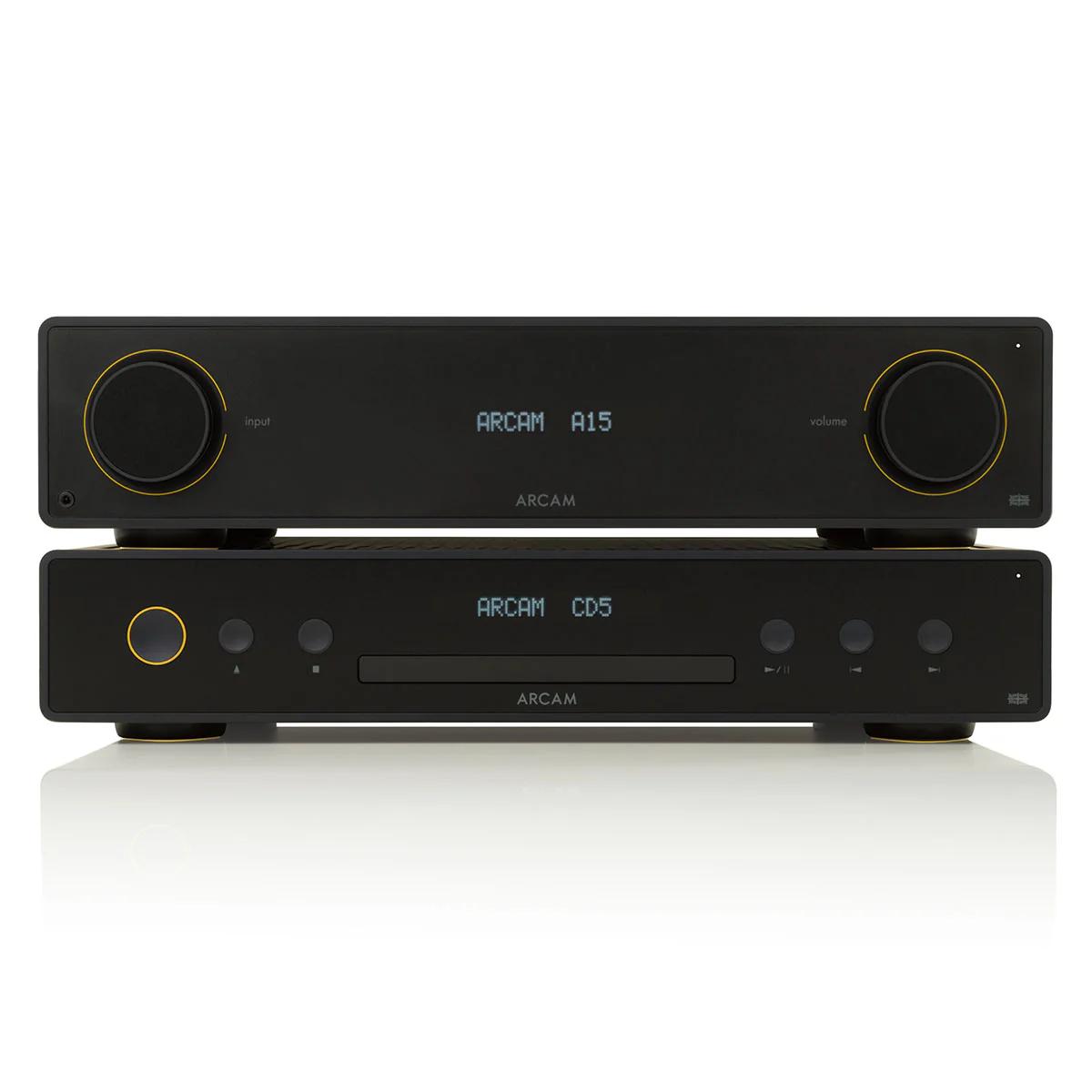
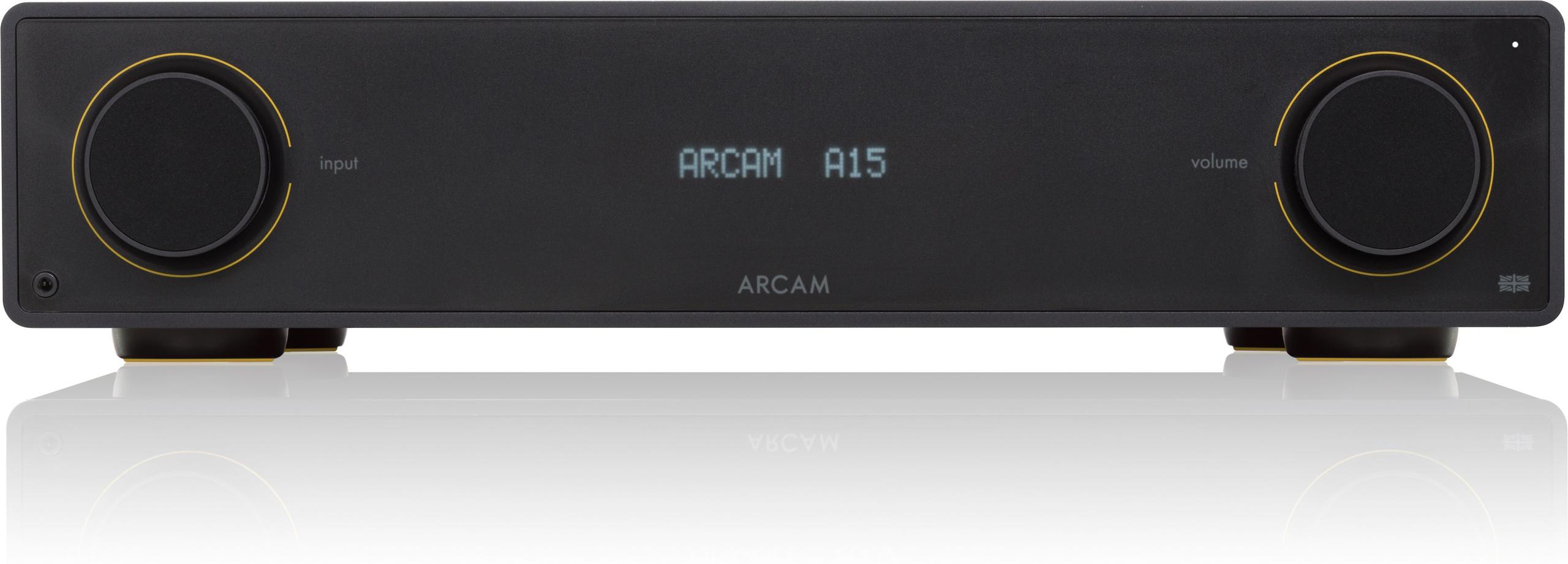


When you're ready to upgrade your audio system, the choice between traditional hi-fi components and modern streaming solutions can feel overwhelming. Two standout options that perfectly illustrate this divide are the Arcam A15 Integrated Amplifier and the Bluesound PowerNode Wireless Music Streaming Amplifier. While both will drive your speakers beautifully, they represent fundamentally different philosophies about how we should listen to music in 2024.
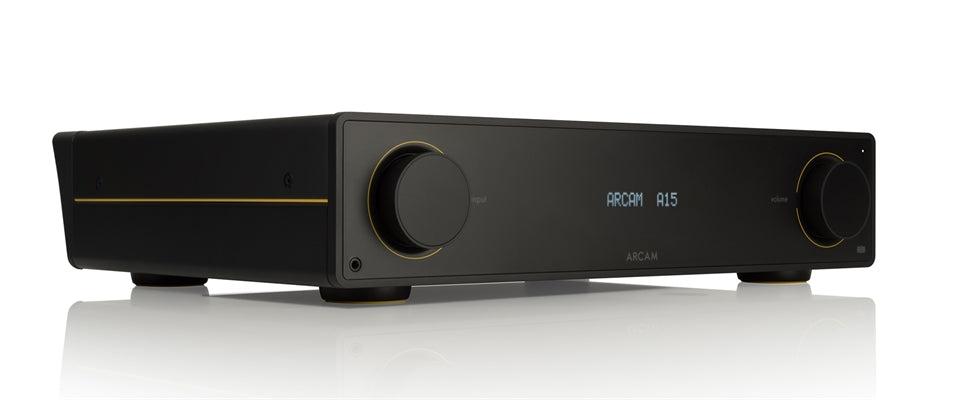
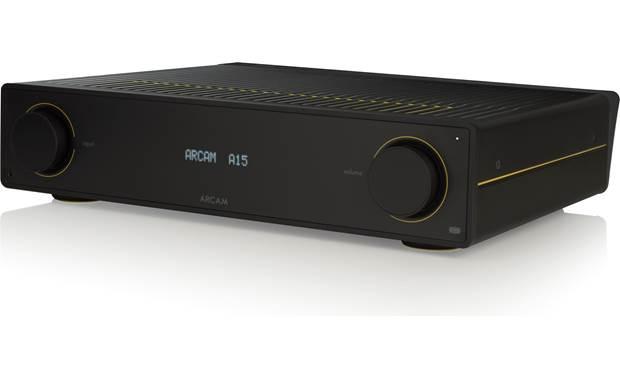
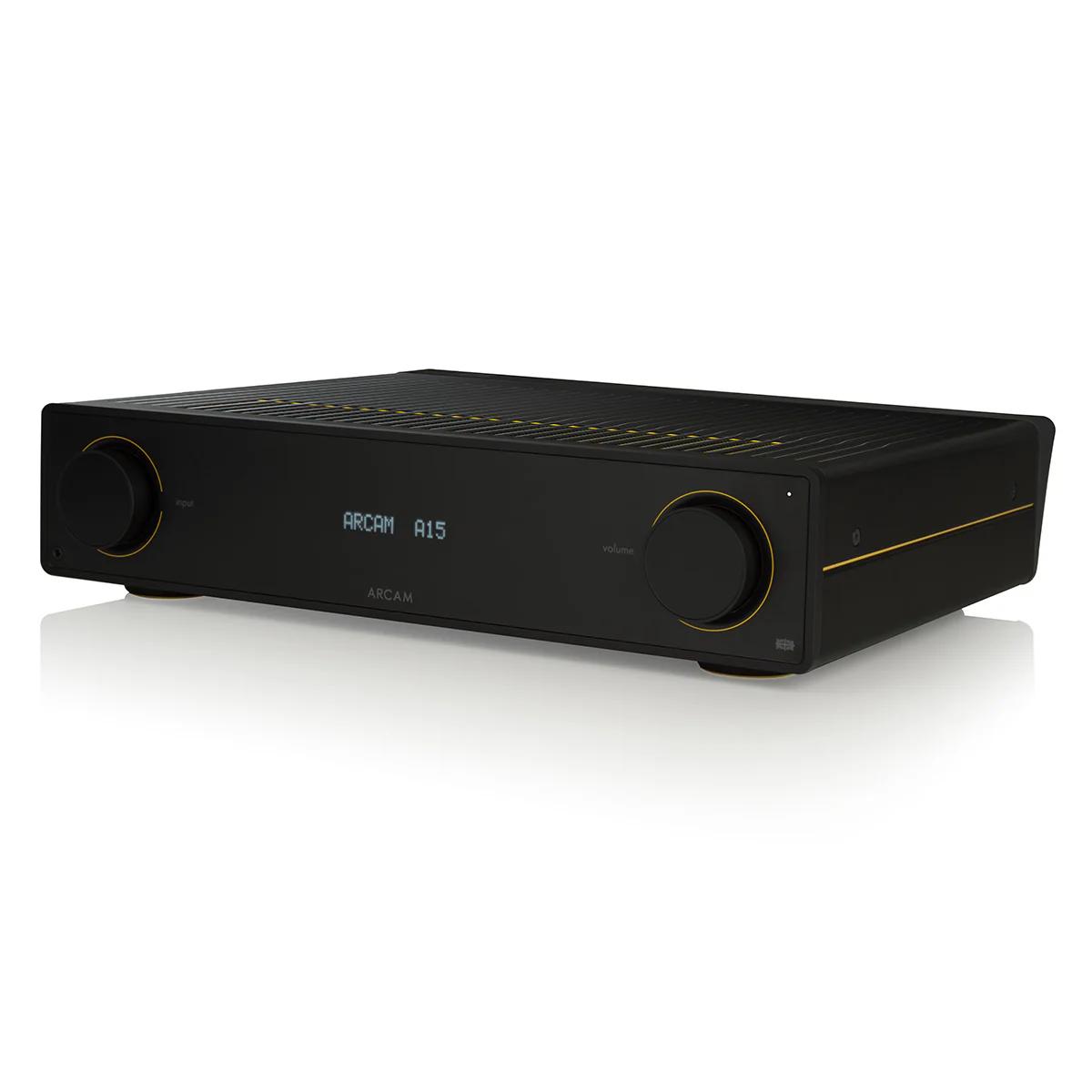
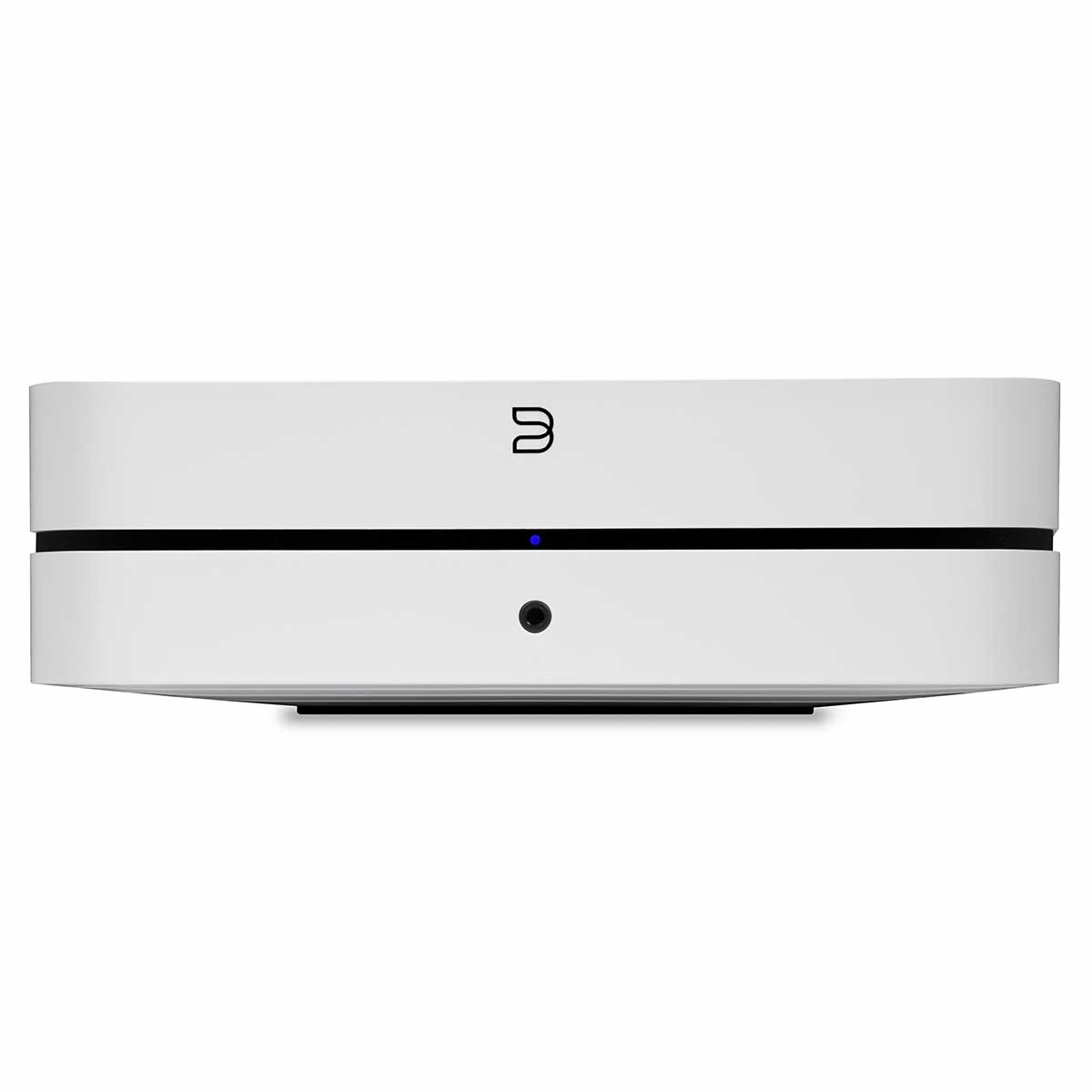
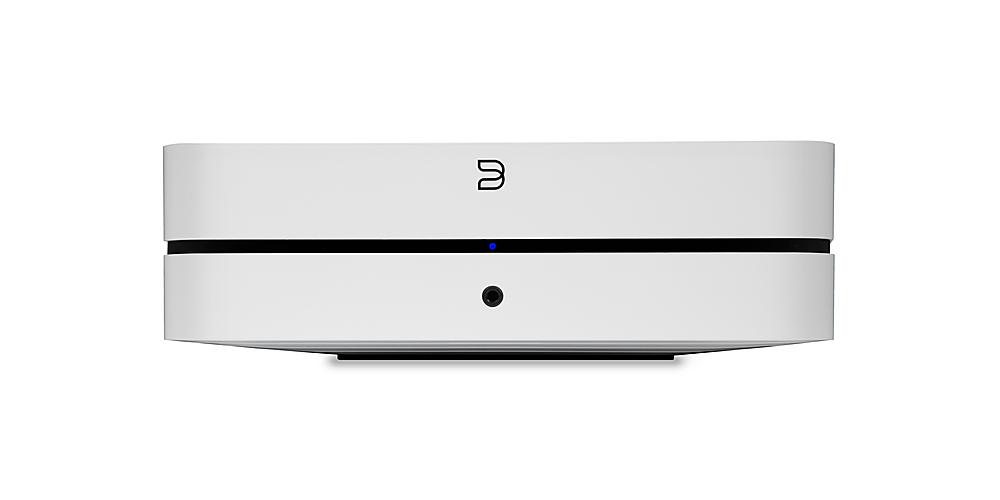
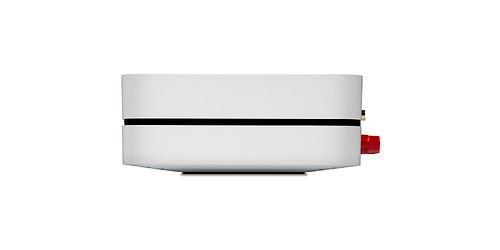
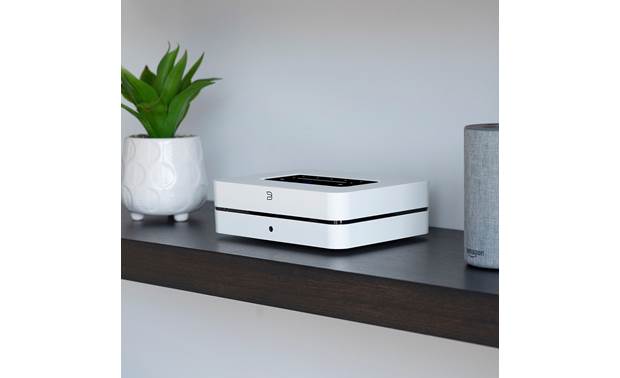
The Arcam A15, released in 2021, embodies the classic audiophile approach: exceptional amplification quality, premium components, and the flexibility to pair with whatever sources you prefer. The Bluesound PowerNode, also launched in 2021 with significant updates through 2024, takes the opposite approach by cramming a complete streaming system, amplifier, and digital-to-analog converter (DAC) into one sleek box.
Understanding which approach suits your needs requires diving into what each excels at – and where they make compromises.
Before comparing specifications, it's crucial to understand that these products solve audio challenges in completely different ways. Traditional integrated amplifiers like the Arcam A15 focus purely on taking whatever audio signal you feed them and amplifying it with minimal coloration or distortion. They're the Swiss Army knives of hi-fi – versatile, reliable, and designed to work with whatever sources you throw at them.
Streaming amplifiers like the Bluesound PowerNode bundle everything together. Instead of requiring separate components for streaming music, converting digital signals to analog, and amplifying the result, they handle all these tasks internally. This approach trades some flexibility for convenience, but when done well, it can actually improve performance by eliminating multiple conversion stages and connection points where signal quality can degrade.
The key considerations boil down to whether you value maximum sound quality and component flexibility, or prefer the convenience and integration of a complete streaming solution.
At their core, both devices need to take relatively weak audio signals and boost them enough to drive loudspeakers. However, they use different amplification technologies that affect both sound quality and practical considerations.
The Arcam A15 uses Class AB amplification, a time-tested approach that's been the gold standard for serious audio equipment for decades. Class AB amplifiers work by having two sets of transistors that handle positive and negative portions of the audio waveform, with slight overlap to eliminate distortion. This design delivers 80 watts per channel into 8-ohm speakers (the standard impedance) and 120 watts into 4-ohm speakers (which are harder to drive and need more power).
What makes the Arcam A15's amplification special is its incredibly low distortion figure of just 0.002% total harmonic distortion (THD) at 80% power output. To put this in perspective, anything below 0.1% is considered excellent, so 0.002% is genuinely exceptional. This means the amplifier adds virtually no unwanted harmonics or coloration to your music – what goes in comes out, just louder.
The Bluesound PowerNode takes a different approach with what Bluesound calls "DirectDigital" amplification using gallium nitride (GaN) transistors. This is essentially a sophisticated Class D design, which works by rapidly switching the output transistors on and off thousands of times per second, using pulse-width modulation to recreate the audio waveform. The newer GaN transistors switch much faster than traditional silicon, reducing switching distortion and improving efficiency.
The PowerNode delivers 100 watts per channel in stereo mode, though this drops to 80 watts per channel when configured for surround sound with a center channel. While Class D amplifiers historically had a reputation for sounding "digital" or harsh, modern implementations like this one have largely eliminated those issues.
From a practical standpoint, both amplifiers provide plenty of power for most home listening scenarios. The Arcam A15's slightly higher 4-ohm power rating makes it potentially better suited for demanding speakers, while the PowerNode's efficiency means it runs cooler and uses less electricity – a consideration if you leave your system on constantly.
Since most music today is streamed or stored digitally, how well each device handles digital-to-analog conversion is crucial. This is where some of the biggest philosophical differences emerge.
The Arcam A15 takes the traditional approach with a dedicated ESS Sabre ES9018 DAC chip – the same high-end converter found in devices costing thousands more. This DAC supports high-resolution audio up to 24-bit/192kHz, which covers virtually all available digital music formats. The signal-to-noise ratio of 109dB for digital inputs is exceptional, meaning the noise floor (unwanted background hiss) is vanishingly low.
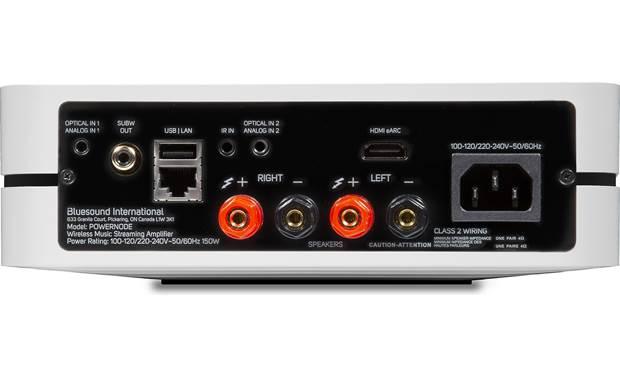
What's particularly impressive about the Arcam A15's digital implementation is its multiple input options: two coaxial and one optical digital input, plus Bluetooth 5.2 with aptX Adaptive technology. The aptX Adaptive codec is significant because it automatically adjusts quality based on your wireless connection, delivering up to CD-quality audio over Bluetooth when conditions allow.
The Bluesound PowerNode integrates its DAC functionality within its streaming platform, using a 32-bit/384kHz differential output design. While the specific DAC chip isn't highlighted in marketing materials, the performance speaks for itself through format support that's truly comprehensive: FLAC, MQA, DSD256, WAV, AIFF, and essentially every digital audio format you might encounter.
The PowerNode's advantage lies not just in the DAC quality, but in how it handles the entire digital chain. When streaming directly over Wi-Fi, there's no Bluetooth compression or multiple conversion stages – just a direct path from the streaming service to your speakers. This matters because every conversion step introduces potential for jitter (timing errors) and other digital artifacts.
For MQA (Master Quality Authenticated) support, the PowerNode has a clear advantage. MQA is a format used by Tidal and other services that promises to deliver studio master quality in smaller file sizes. While the Arcam A15 can play MQA files through its digital inputs, it can't perform the final "unfold" that reveals the full MQA experience.
This is where the fundamental differences between these approaches become most apparent. The Arcam A15 is designed around the assumption that you'll connect various external sources, while the Bluesound PowerNode aims to be your only source component.
The Arcam A15 offers three analog line-level inputs plus a dedicated moving magnet phono stage for turntables. That phono stage is crucial for vinyl enthusiasts – it's not just an input, but specialized circuitry that applies the RIAA equalization curve (a standardized frequency response correction) that all vinyl records require. The phono stage has a 47kΩ input impedance with 100pF capacitance, which is optimized for most moving magnet cartridges.
For digital sources, the A15 provides two coaxial and one optical input, all supporting up to 24-bit/192kHz. There's also that impressive Bluetooth 5.2 implementation with two-way capability – meaning you can both receive audio from your phone and transmit audio to Bluetooth headphones. This flexibility is rare and genuinely useful.
The Bluesound PowerNode takes the opposite approach. Instead of many inputs for external sources, it focuses on being the source itself. The built-in Wi-Fi streaming provides access to over 20 streaming services including Spotify, Tidal, Qobuz, and Amazon Music. The BluOS platform (Bluesound's operating system) handles everything from internet radio to local network playback of your own music files.
Where the PowerNode really shines is integration with modern AV setups. The HDMI eARC (enhanced Audio Return Channel) input allows direct connection to your TV, automatically handling audio from all your TV's sources. This eliminates the need for a separate AV receiver in many setups – you can run your Apple TV, gaming console, and streaming apps through your TV, then send high-quality audio to the PowerNode for amplification.
The PowerNode can even function as a basic AV receiver, providing center channel output for dialogue enhancement and wireless connectivity to compatible Bluesound speakers for surround sound. This is genuinely innovative – creating a full home theater system without running speaker wires throughout your room.
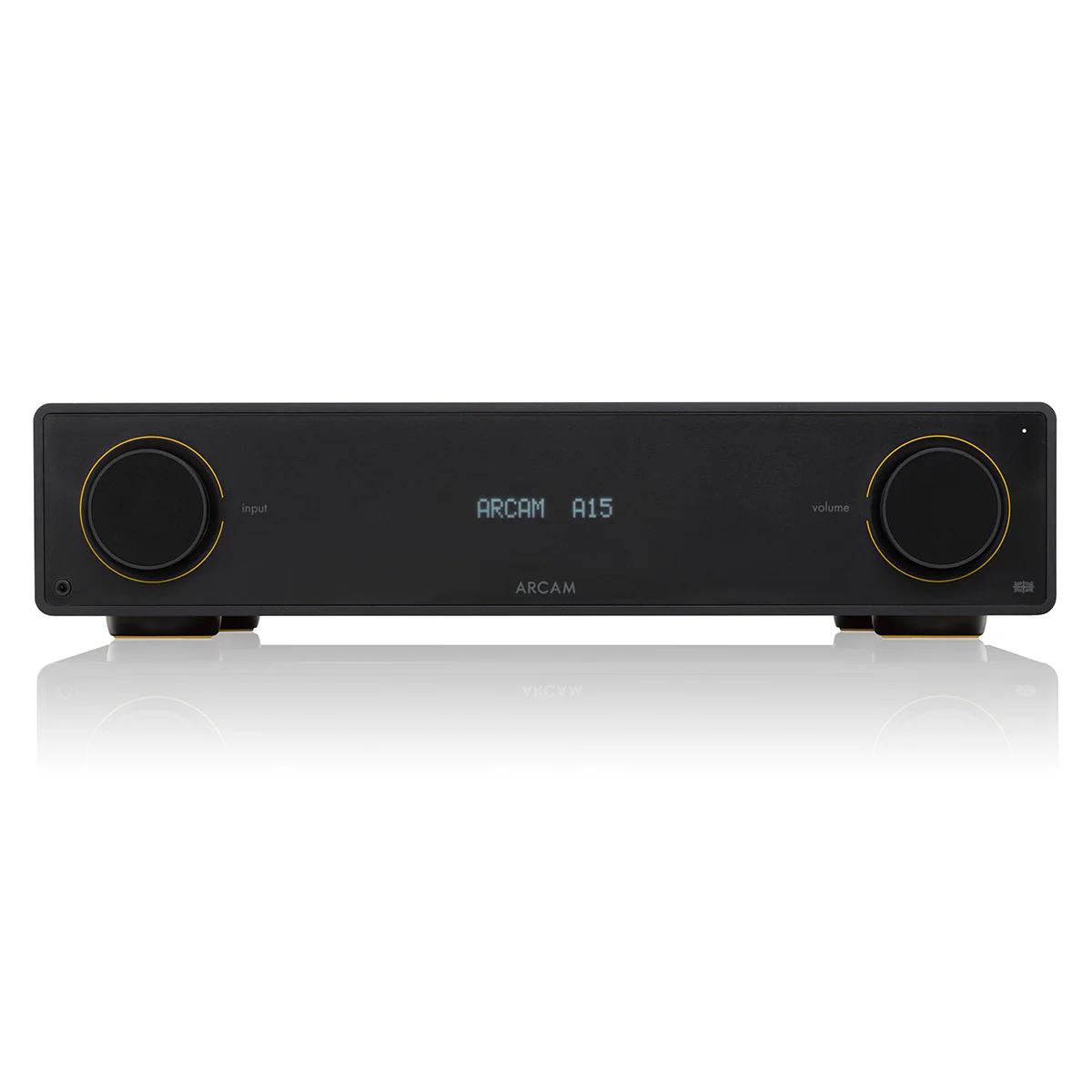
Daily interaction with your amplifier might seem trivial, but it significantly affects how much you enjoy your system. The Arcam A15 uses traditional controls: physical knobs for volume and source selection, plus a remote control for convenience. The front panel display shows current settings clearly, and the aluminum construction feels substantial and premium.
This traditional approach has advantages. There's no learning curve – anyone can walk up and adjust volume or change inputs instantly. The system works even if your Wi-Fi is down or your phone battery is dead. However, advanced features like Bluetooth pairing or digital input selection require menu navigation that can be less intuitive.
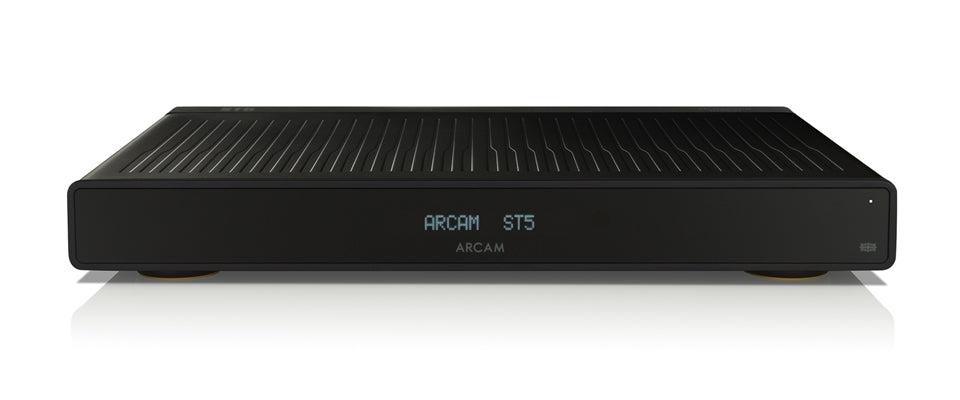
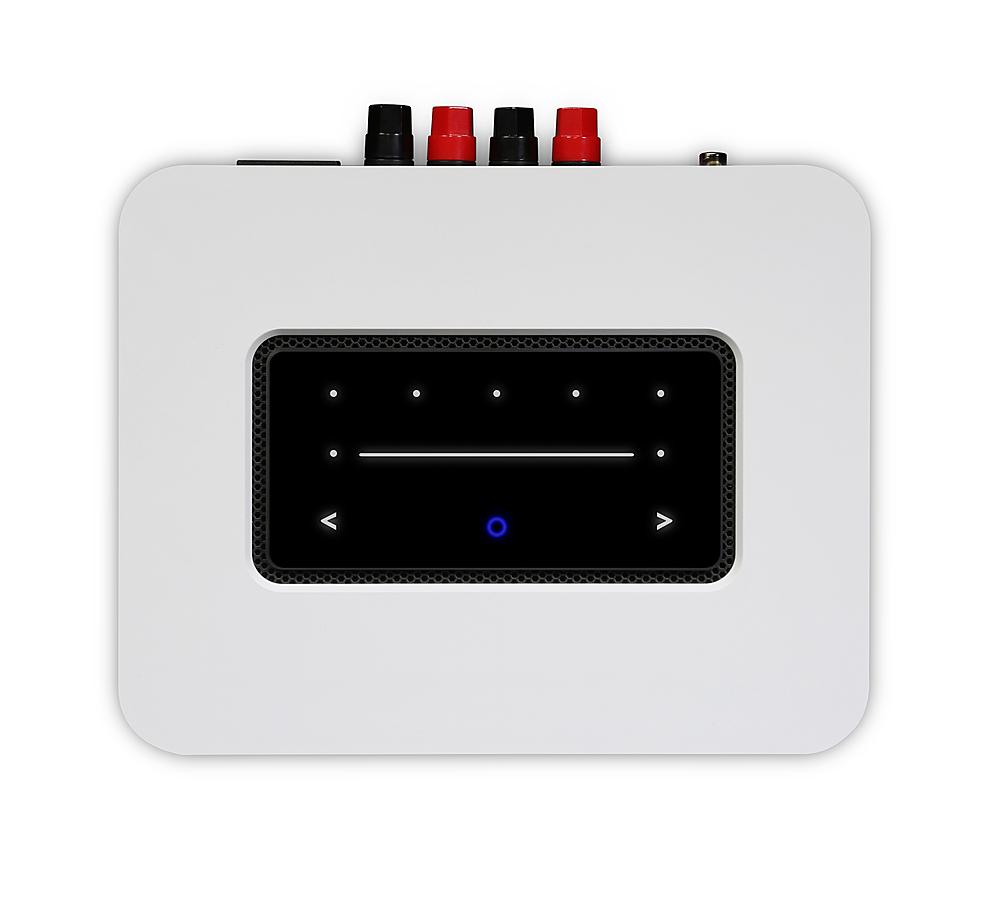
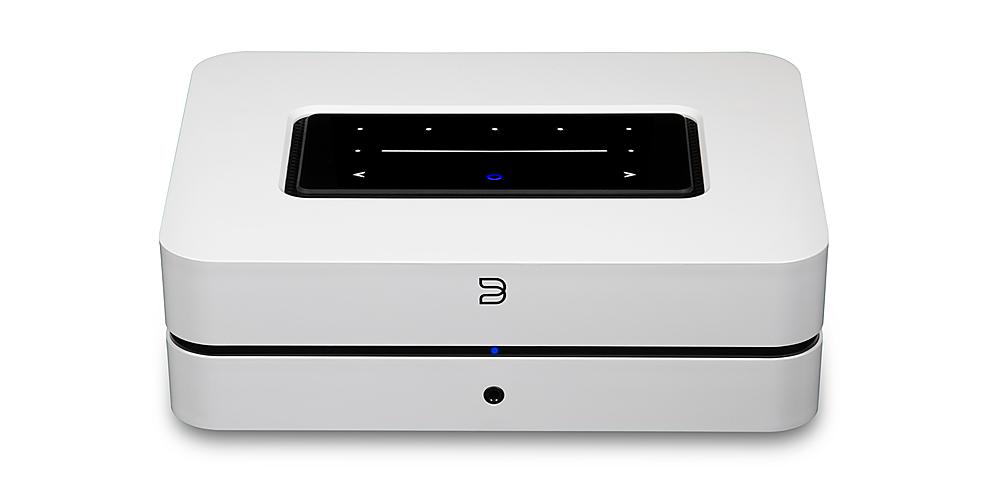
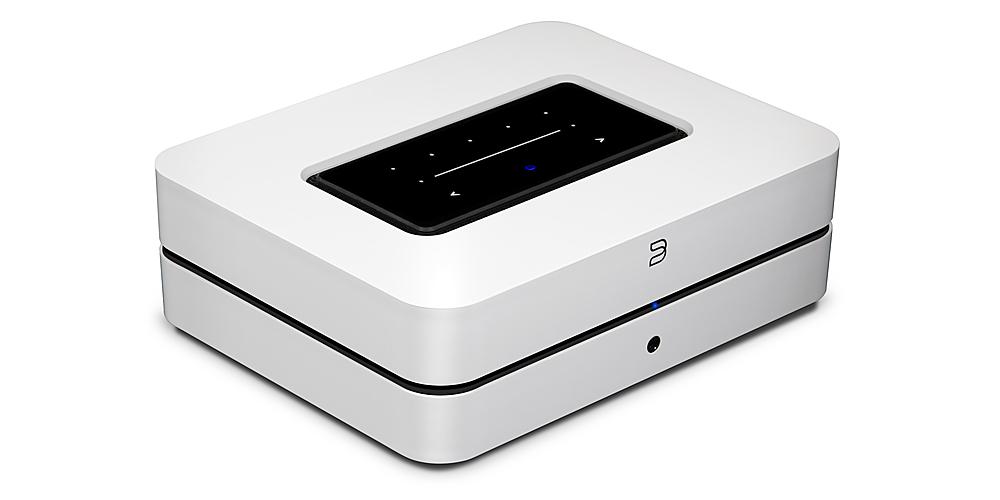
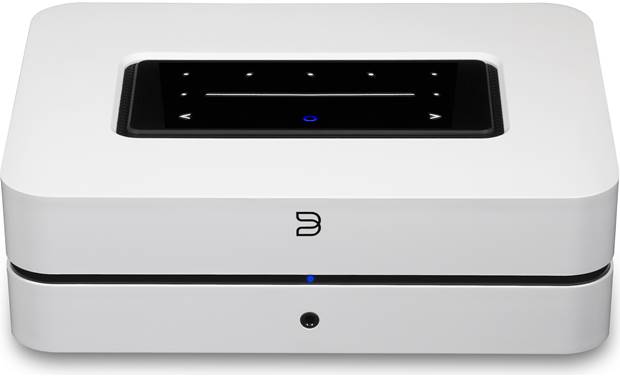
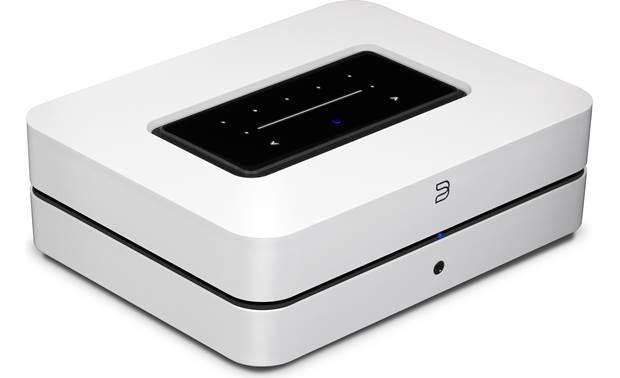
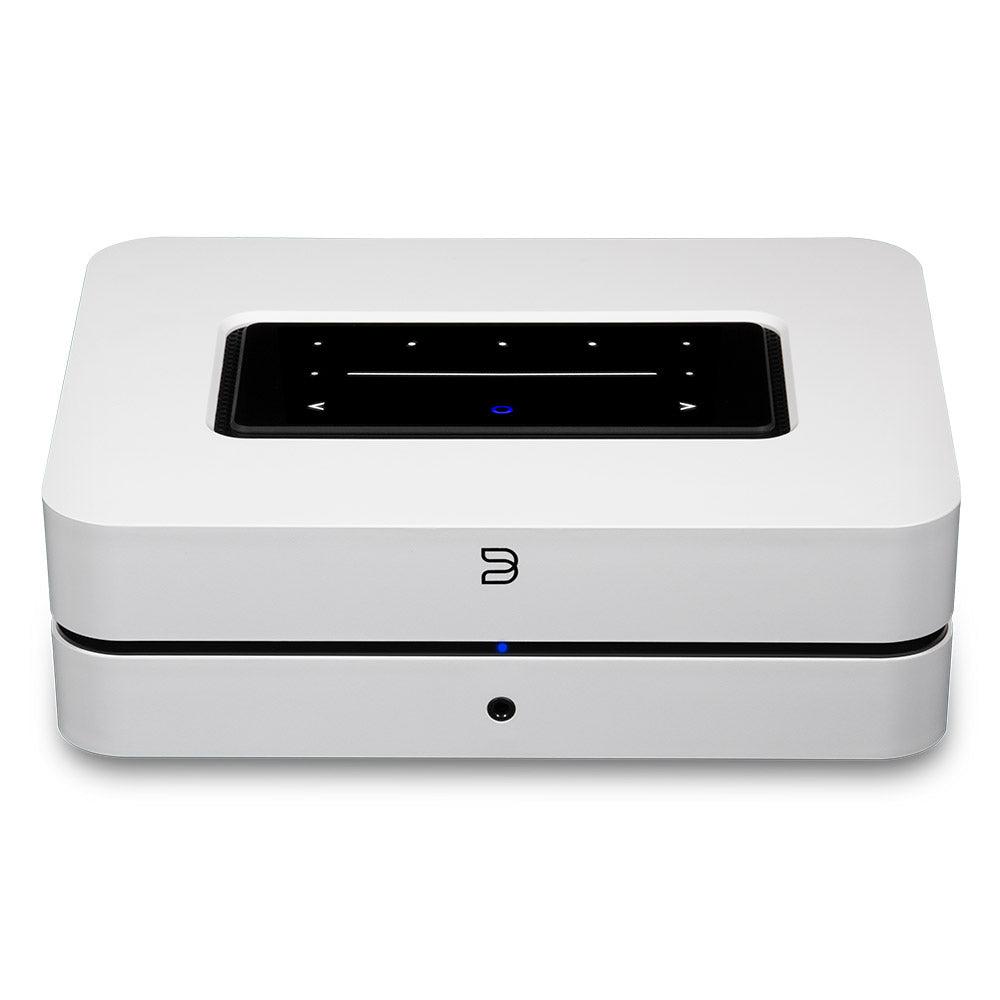
The Bluesound PowerNode embraces the smartphone era with a touch-sensitive glass control panel and comprehensive app control. The top panel includes proximity sensing (it lights up when you approach), touch volume control, and five programmable presets for instant access to favorite stations or playlists.
The real magic happens through the BluOS app, available for iOS, Android, and desktop computers. This isn't just a remote control – it's a complete music management system. You can browse streaming services, manage multi-room playback across multiple Bluesound devices, adjust EQ settings, and even set up custom presets that remember specific volume levels for different times of day.
Multi-room capability deserves special mention. If you have Bluesound speakers in other rooms, you can synchronize playback throughout your home, adjust individual room volumes, or play different music in each space. The system supports up to 64 zones, making it suitable for even large homes or commercial installations.
While specifications tell part of the story, how these amplifiers actually sound is what matters most. Based on extensive research of professional reviews and user feedback, some clear patterns emerge.
The Arcam A15 consistently receives praise for its balanced, refined presentation. The Class AB amplification provides excellent dynamics – the ability to handle sudden loud passages without compression or strain – and maintains composure even at high volume levels. The sound signature is described as neutral but slightly warm, meaning it doesn't add unwanted coloration but also doesn't sound clinical or sterile.
The dedicated power supply design in the A15 pays dividends in bass response and overall authority. When driving demanding tower speakers or playing complex orchestral music, the amplifier maintains tight control over woofer movement, resulting in well-defined bass that doesn't blur or overwhelm the midrange.
However, some users note that the A15 can sound slightly bright or forward with certain speaker combinations, particularly at higher volumes. This isn't necessarily a flaw – it often reveals details in recordings that more polite amplifiers might obscure – but it means careful speaker matching is important.
The Bluesound PowerNode has evolved significantly since its initial release. Early versions were criticized for occasionally sounding harsh during dynamic peaks, but the latest models with GaN technology have largely addressed these concerns. Current reviews consistently praise the PowerNode for its punchy, energetic presentation that maintains good detail across the frequency range.
The PowerNode's integrated approach offers some sonic advantages. By eliminating external connections between streamer, DAC, and amplifier, it reduces potential for interference and signal degradation. The result is often described as more immediate and direct, particularly with streaming content.
For home theater use, the PowerNode's HDMI eARC implementation is genuinely impressive. TV dialogue comes through clearly, and the ability to add wireless surrounds creates an immersive experience that rivals traditional AV receivers costing significantly more.
At the time of writing, these products occupy similar price ranges in the premium integrated amplifier category, but they deliver value in completely different ways.
The Arcam A15 represents traditional audiophile values: premium components, exceptional build quality, and a five-year warranty that reflects the manufacturer's confidence. You're paying for the ESS Sabre DAC, Class AB amplification with oversized power supplies, and the flexibility to use virtually any source component you might want to add later.
However, to create a complete streaming system around the A15, you'd need to add a dedicated network streamer costing several hundred dollars or more. By the time you factor in additional interconnect cables and the complexity of multiple components, the total system cost and setup complexity increases significantly.
The Bluesound PowerNode delivers remarkable value by consolidating multiple components into one box. You get amplification, streaming, DAC, and even basic AV receiver functionality for the price of a good integrated amplifier alone. The money you save on separate components can go toward better speakers, room treatment, or simply stay in your pocket.
The PowerNode's value extends beyond initial cost. Software updates arrive automatically, adding new streaming services and features over time. The multi-room capability means your investment can grow with your needs – start with one PowerNode and add compatible speakers as your budget allows.
Both products have benefited from ongoing development since their 2021 launches. The Arcam A15 has received firmware updates that improved Bluetooth stability and added support for additional codecs. The basic hardware design remains unchanged, reflecting Arcam's confidence in the original engineering.
The Bluesound PowerNode has seen more dramatic evolution. The move to GaN transistor technology in recent production runs represents a genuine technical advancement, offering lower distortion and better efficiency than previous silicon-based designs. The BluOS platform receives regular updates that add new streaming services and features – recent additions include enhanced Spotify integration and improved room correction capabilities.
Looking forward, Bluesound has announced upcoming support for Dirac Live room correction, which analyzes your room acoustics and automatically adjusts the frequency response for optimal sound. This is the kind of feature that's only possible with a fully digital, software-controlled platform.
If your system will handle TV and movie audio, the differences become even more pronounced. The Arcam A15 can certainly drive speakers for home theater use, but you'd need a separate AV processor or receiver to handle surround sound decoding and switching between multiple HDMI sources.
The Bluesound PowerNode transforms this equation entirely. HDMI eARC connection to your TV handles audio from all connected sources automatically. The PowerNode can output a center channel for dialogue enhancement, and wireless pairing with compatible Bluesound speakers creates genuine surround sound without running wires through your walls.
For many users, this home theater integration alone justifies choosing the PowerNode. The ability to have excellent stereo music playback and competent surround sound from one reasonably-priced component is genuinely compelling.
After researching both options extensively, clear use case patterns emerge that should guide your decision.
Choose the Arcam A15 if you're building a traditional hi-fi system where sound quality is the absolute priority. This makes sense if you own or plan to buy a turntable (that phono stage is excellent), have existing source components you want to keep using, or simply prefer the flexibility of separate components. The A15 excels in single-room setups where you want maximum fidelity and don't need streaming convenience.
The A15 also makes sense if you're an upgrader who enjoys swapping components. Maybe you want to try different DACs or streamers over time – the A15 provides a stable foundation that can accommodate virtually any source you might want to experiment with.
Choose the Bluesound PowerNode if convenience and integration matter more than absolute sonic purity. This is the better choice if you stream most of your music, want multi-room audio, or need TV integration through HDMI eARC. The PowerNode eliminates complexity while delivering genuinely good sound quality that will satisfy all but the most critical listeners.
The PowerNode particularly makes sense for modern lifestyles where simplicity matters. One box, one app, access to virtually all available music – it's hard to argue with that value proposition.
Both amplifiers succeed at their intended purposes, but they're designed for different users and different priorities. The Arcam A15 delivers traditional audiophile values with exceptional build quality and sound that will satisfy critical listeners for years to come. The Bluesound PowerNode offers remarkable convenience and integration, making high-quality audio accessible without the complexity traditional systems require.
Your choice ultimately depends on whether you value maximum flexibility and sound quality, or prefer the convenience and features of an integrated streaming solution. Either way, you'll end up with significantly better sound than typical consumer audio equipment provides.
| Arcam A15 Integrated Amplifier | Bluesound PowerNode Wireless Music Streaming Amplifier |
|---|---|
| Amplifier Type - Affects sound quality and efficiency | |
| Class AB (traditional audiophile design) | DirectDigital with GaN transistors (modern efficient design) |
| Power Output - Determines how loud and what speakers you can drive | |
| 80W @ 8Ω, 120W @ 4Ω (excellent for demanding speakers) | 100W @ 8Ω stereo, 80W @ 8Ω with center channel (very good power) |
| Total Harmonic Distortion - Lower is cleaner sound | |
| 0.002% (exceptionally low, audiophile grade) | 0.008% (very good for Class D) |
| Digital Audio Converter - Quality of digital music playback | |
| ESS Sabre ES9018 premium DAC, 24-bit/192kHz | 32-bit/384kHz differential design with extensive format support |
| Streaming Capability - Built-in music streaming convenience | |
| None (requires external streamer) | Built-in Wi-Fi streaming with BluOS platform, 20+ services |
| Analog Inputs - Connecting turntables and other analog sources | |
| 3 line inputs + dedicated MM phono stage (excellent for vinyl) | Limited analog inputs (primarily digital/wireless focused) |
| Digital Inputs - Connecting external digital sources | |
| 2 coaxial + 1 optical (flexible for multiple sources) | Minimal (focuses on built-in streaming) |
| Bluetooth Quality - Wireless music from phones/tablets | |
| Bluetooth 5.2 with aptX Adaptive, two-way capability | Bluetooth aptX HD, two-way capability |
| Home Theater Integration - TV and movie audio handling | |
| Standard analog/digital inputs only | HDMI eARC + center channel output (replaces AV receiver) |
| Multi-Room Audio - Playing music throughout the house | |
| None (single room only) | Native BluOS multi-room, up to 64 zones |
| Physical Controls - Daily operation without apps | |
| Traditional knobs and remote (always works) | Touch panel + app control (modern but app-dependent) |
| Format Support - Types of audio files you can play | |
| Standard PCM formats via digital inputs | Comprehensive: FLAC, MQA, DSD256, all major formats |
| Build Quality and Warranty - Long-term reliability | |
| Aluminum construction, 5-year warranty | Compact modern design, standard warranty |
| Setup Complexity - How difficult to get running | |
| Moderate (need separate streaming sources) | Simple (just add speakers) |
The Arcam A15 Integrated Amplifier is a traditional hi-fi amplifier that requires separate source components like streamers or CD players, while the Bluesound PowerNode is an all-in-one streaming amplifier with built-in Wi-Fi and access to music services. The A15 focuses on pure amplification quality, while the PowerNode prioritizes convenience and modern connectivity.
The Arcam A15 generally delivers superior sound quality for critical music listening, featuring Class AB amplification with exceptionally low 0.002% distortion and a premium ESS Sabre DAC. The Bluesound PowerNode offers very good sound quality that satisfies most listeners, but the A15's audiophile-grade components provide an edge for discerning ears.
The Bluesound PowerNode excels for home theater use with HDMI eARC connectivity that connects directly to your TV and can provide center channel output for dialogue enhancement. The Arcam A15 can drive speakers for TV audio but requires a separate AV receiver or processor for surround sound and HDMI switching.
The Bluesound PowerNode is much easier to set up - just connect speakers and Wi-Fi for instant access to streaming services. The A15 requires connecting separate source components and has a steeper learning curve, but offers more flexibility once configured. For daily use, the PowerNode's app control is more convenient than traditional knobs.
The Arcam A15 requires external sources like a network streamer, CD player, or turntable to play music. The Bluesound PowerNode is a complete solution - just add speakers and you're ready to stream music from services like Spotify and Tidal without any additional components.
Both provide adequate power for most speakers, but differ in delivery. The Arcam A15 delivers 80W into 8 ohms and 120W into 4 ohms, making it slightly better for demanding speakers. The PowerNode provides 100W per channel in stereo mode, though this drops to 80W when using center channel mode for home theater.
The Arcam A15 includes a dedicated moving magnet phono stage, making it excellent for turntable connection without additional equipment. The Bluesound PowerNode lacks a phono input, so you'd need a separate phono preamp to connect a turntable, making the A15 the clear choice for vinyl enthusiasts.
The Bluesound PowerNode offers native multi-room audio through the BluOS platform, allowing synchronized playback across up to 64 zones with compatible speakers. The Arcam A15 doesn't support multi-room audio - it's designed for single-room use, though you could add separate multi-room solutions.
The Bluesound PowerNode provides built-in access to over 20 streaming services including Spotify, Tidal, Qobuz, and Amazon Music through Wi-Fi connectivity. The A15 requires external streaming devices but can access any service through connected sources like smartphones via Bluetooth or dedicated streamers.
The Bluesound PowerNode offers better overall value as a complete system since you only need to add speakers. The Arcam A15 requires additional components like streamers that increase total system cost, but provides superior component quality and flexibility for those who value traditional hi-fi approaches.
The Bluesound PowerNode connects directly to TVs via HDMI eARC for seamless integration and can enhance dialogue with center channel capability. The A15 can connect to TVs through analog or digital audio outputs but lacks HDMI connectivity, making the PowerNode much more convenient for TV audio improvement.
The Arcam A15 likely offers better longevity with its premium build quality, 5-year warranty, and timeless design that won't become obsolete. The Bluesound PowerNode depends more on software updates and streaming service compatibility, but receives regular feature updates. Both represent solid investments, but the A15's traditional approach may age more gracefully.
We've done our best to create useful and informative comparisons to help you decide what product to buy. Our research uses advanced automated methods to create this comparison and perfection is not possible - please contact us for corrections or questions. These are the sites we've researched in the creation of this article: theaudiotailor.com.au - skybygramophone.com - crutchfield.com - arcam.co.uk - youtube.com - listenup.com - upscaleaudio.com - arcam.co.uk - whathifi.com - sweetwater.com - musicdirect.com - device.report - hifidaydreaming.com - listenup.com - crutchfield.com - upscaleaudio.com - bluesound.com - bluesound.com - stereophile.com - theaudiofactory.com - audioadvisor.com - musicdirect.com - twitteringmachines.com - futureaudiophile.com - bluesound.com - bluesound.com - moon-audio.com - audioadvisor.com - ecoustics.com

Privacy Policy
Terms and Conditions - Affiliate Policy
Home Security
© Copyright 2008-2026.
11816 Inwood Rd #1211, Dallas, TX 75244