

When shopping for an integrated amplifier today, you're essentially choosing between two different philosophies of how music should live in your home. The Bluesound PowerNode represents the streaming-first future, while the Cambridge Audio CXA61 champions the traditional hi-fi approach with modern conveniences. Both launched around 2021, but they couldn't be more different in their approach to delivering great sound.
Understanding these differences matters because your choice will shape how you interact with music for years to come. Get it wrong, and you'll find yourself fighting against your system instead of enjoying it.
An integrated amplifier combines a preamp (which handles source selection and volume control) with a power amplifier (which drives your speakers) in a single box. Think of it as the conductor of your audio orchestra—it takes signals from various sources and amplifies them to drive your speakers with enough power to fill your room.
The modern market has split into two distinct camps. Traditional integrated amplifiers focus on pure amplification quality with some digital inputs added for convenience. Streaming amplifiers, on the other hand, treat network connectivity and digital sources as primary features, with amplification designed around these priorities.
This philosophical divide affects everything from internal component layout to user interface design. Traditional amps typically feature large transformers, separate analog and digital sections, and physical controls. Streaming amps prioritize efficient switching power supplies, advanced processors, and app-based control systems.
The key considerations when choosing include how you listen to music today, how you might listen five years from now, what speakers you're driving, and whether you value component flexibility or integrated convenience.
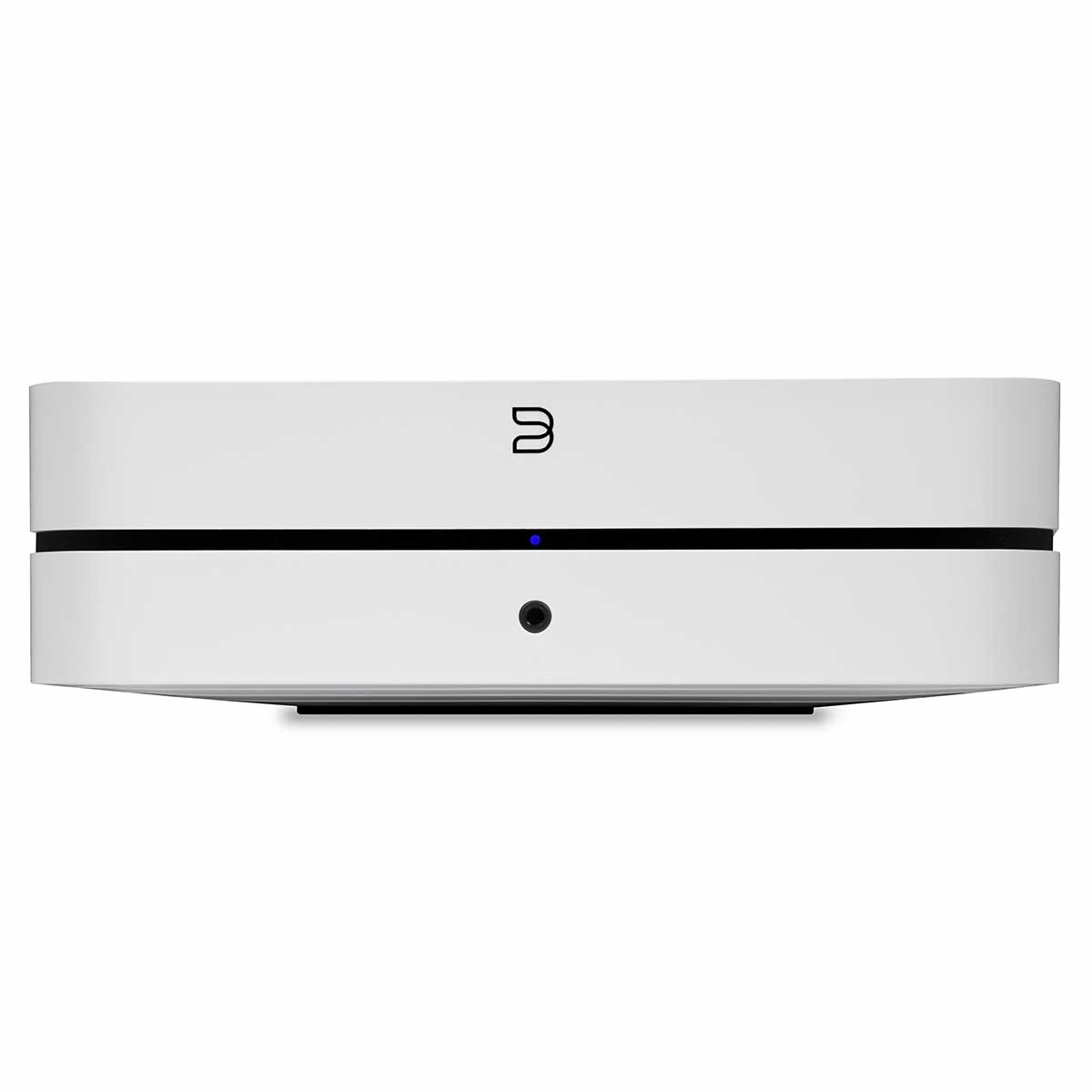
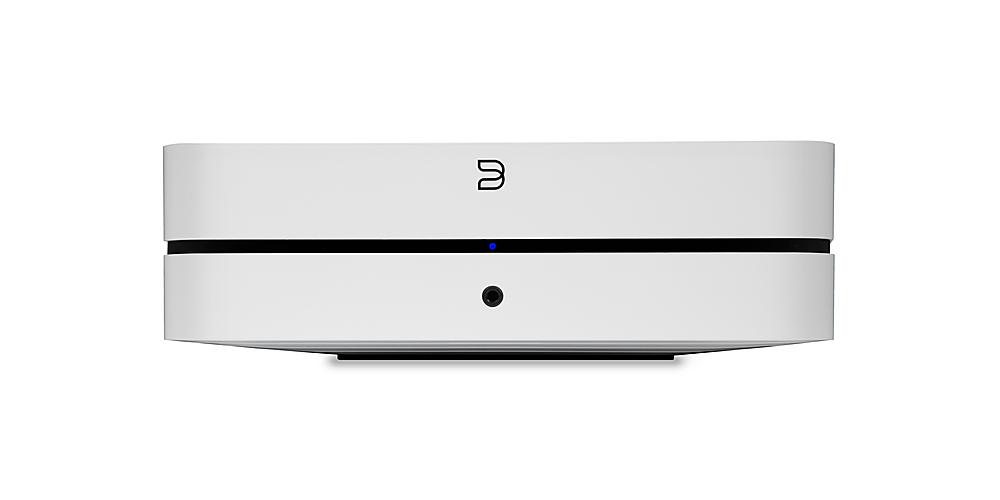
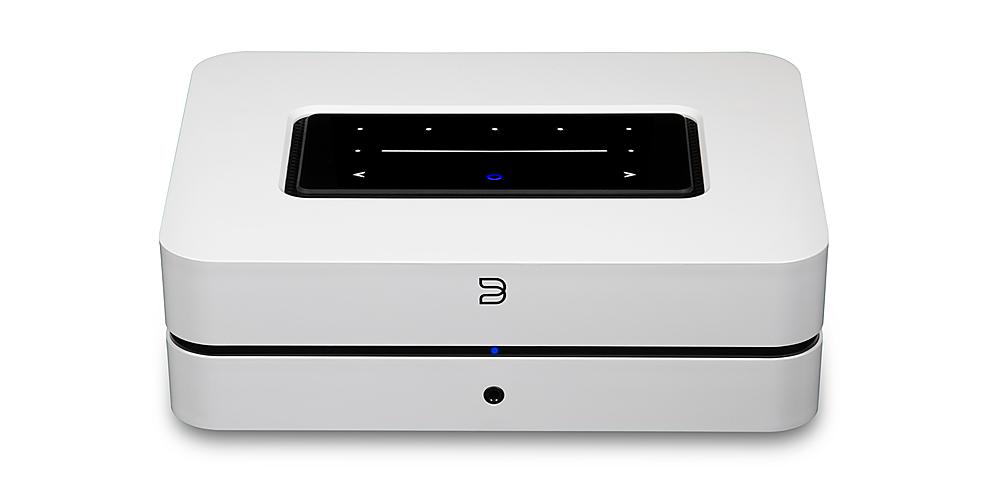
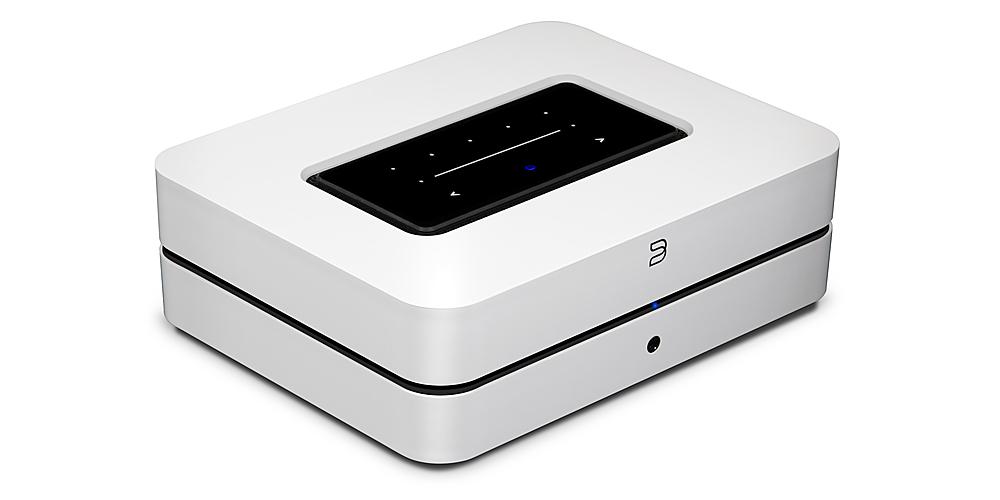
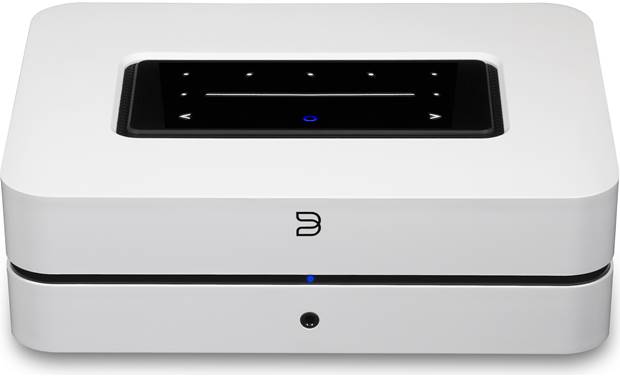
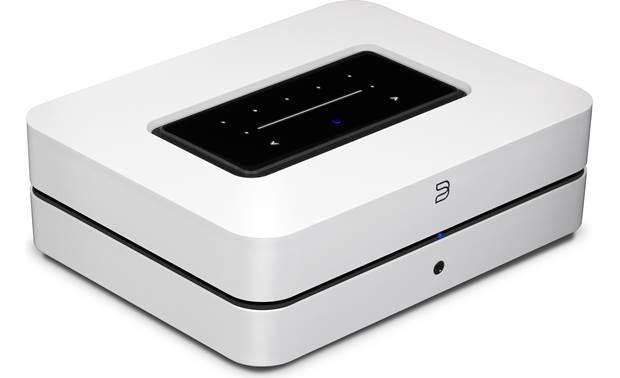
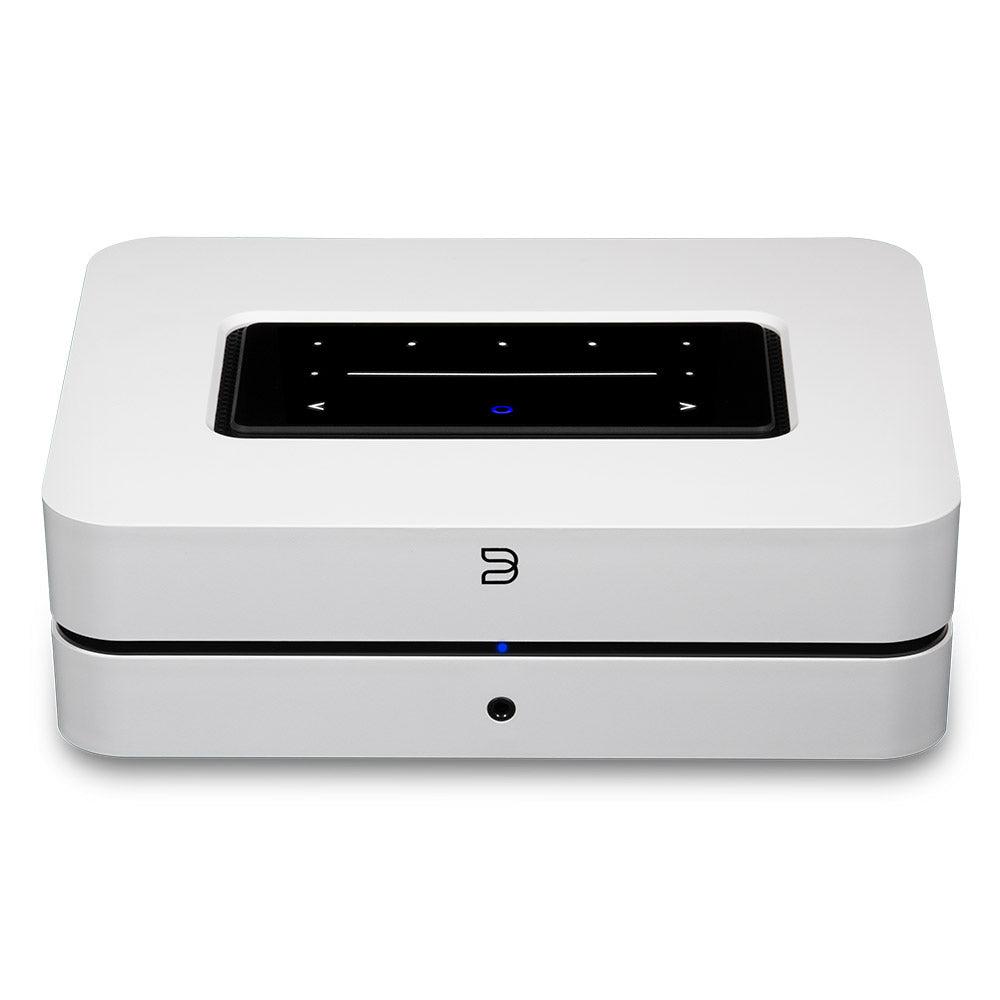
The Bluesound PowerNode arrived in 2021 as Bluesound's answer to the all-in-one streaming amplifier question. Built around the company's BluOS platform, it delivers 80 watts per channel through a HybridDigital Class D amplifier while providing access to virtually every streaming service and multi-room capability.
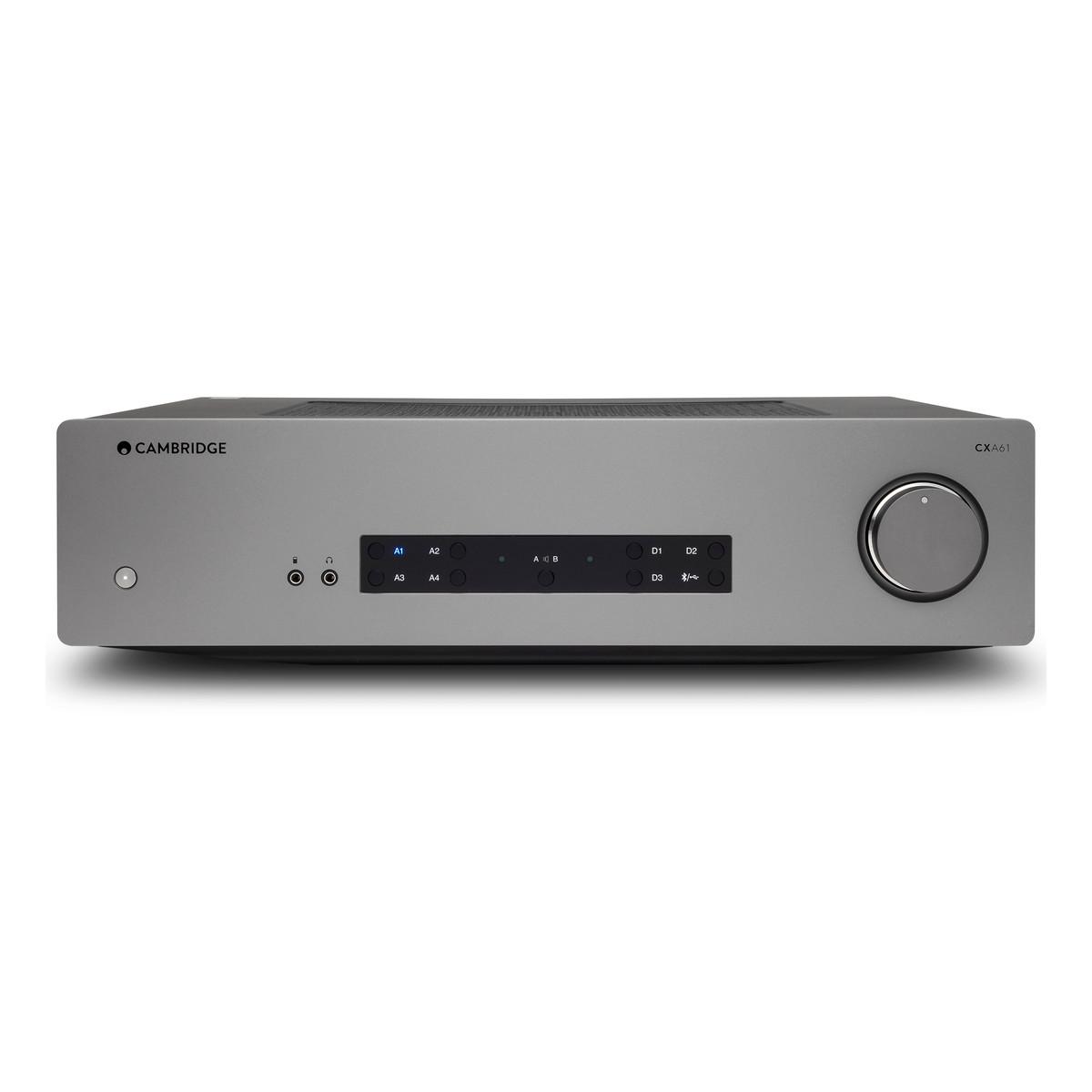
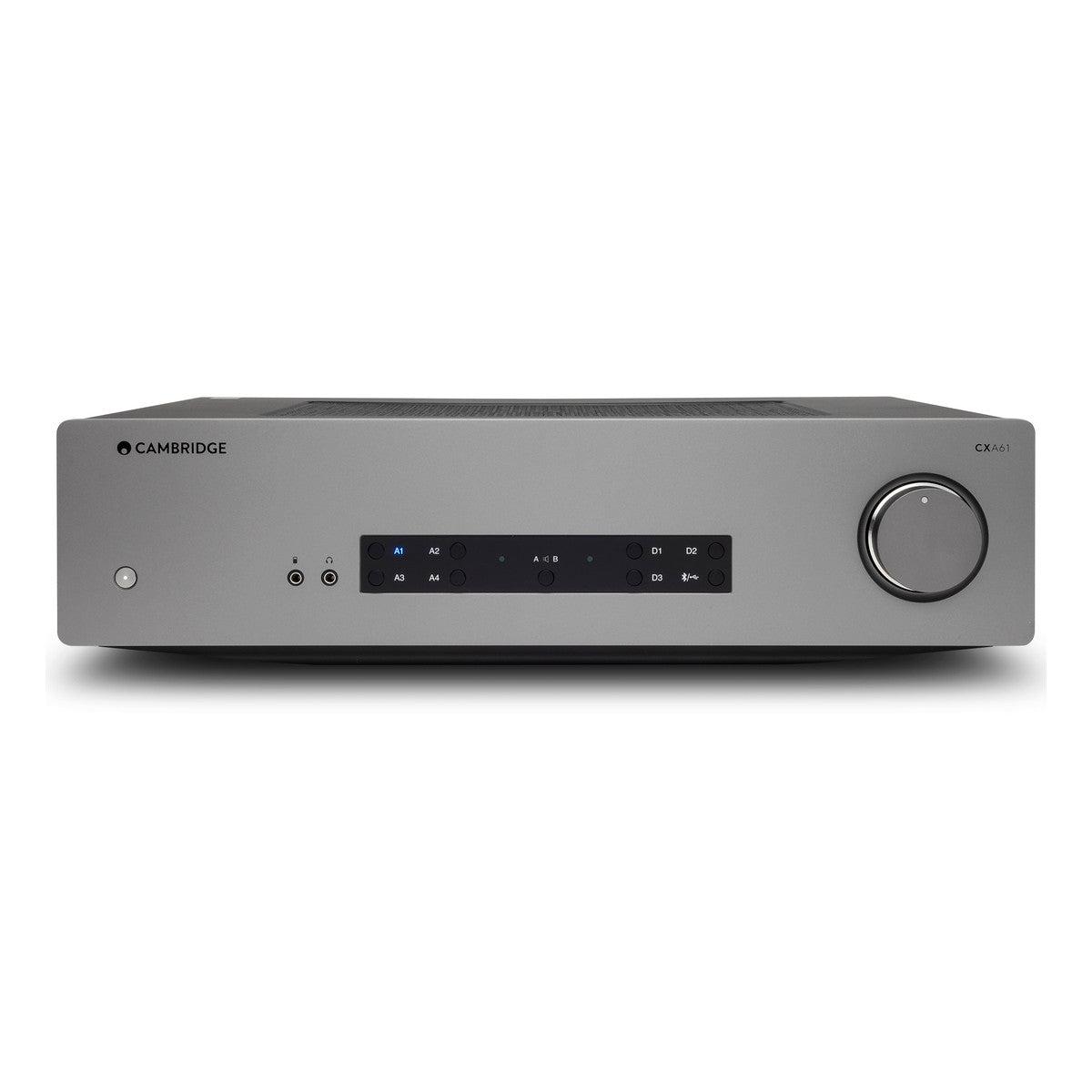
The Cambridge Audio CXA61 also launched around 2021 as an evolution of Cambridge's integrated amplifier line. It provides 60 watts per channel through traditional Class AB amplification, includes a high-quality ESS Sabre DAC, and maintains the classic integrated amp approach with extensive analog connectivity.
At the time of writing, these amplifiers sit in similar price ranges, with the PowerNode commanding a modest premium for its streaming capabilities. However, value calculations become complex when considering the additional components needed to match each system's full functionality.
The power specifications tell only part of the story. The PowerNode provides 80 watts per channel into 8 ohms and up to 120 watts into 4 ohms using Class D amplification. Class D amps use rapid switching to recreate audio signals, making them incredibly efficient and allowing for compact designs. The trade-off traditionally involved some loss of the "warmth" that audiophiles associate with analog amplification.
However, Bluesound's HybridDigital implementation, based on the respected Hypex UcD module, largely eliminates these concerns. The amp runs cool, provides excellent current delivery for difficult speaker loads, and maintains low distortion even at high volumes. The instantaneous power capability of 120 watts means it can handle musical peaks without strain—crucial for dynamic recordings.
The CXA61 takes the traditional route with Class AB amplification, delivering 60 watts per channel into 8 ohms and 90 watts into 4 ohms. Class AB amps run hotter and are less efficient, but they provide the linear amplification that many consider the gold standard for audio reproduction. Cambridge's oversized toroidal transformer ensures stable power delivery, and the symmetrical circuit design minimizes crosstalk between channels.
In practical terms, both amplifiers drive most bookshelf speakers effortlessly. The PowerNode's extra power becomes advantageous with larger floor-standing speakers or when you want to fill larger rooms. The CXA61's Class AB design might appeal more to listeners who prefer the traditional "tube-like" warmth, though modern Class D designs have largely closed this gap.
The damping factor—how well an amplifier controls speaker cone movement—differs significantly. The CXA61 achieves over 110 at 1kHz, providing tight bass control. While Bluesound doesn't publish specific damping figures, Class D amps typically excel in this area due to their low output impedance.
This is where the philosophical differences become most apparent. The PowerNode treats digital audio as the primary source, building everything around a 32-bit/384kHz DAC optimized for streaming. It supports MQA (Master Quality Authenticated) unfolding, which allows streaming services to deliver studio-master quality in smaller file sizes, and handles DSD (Direct Stream Digital) up to DSD256.
The streaming focus shows in the implementation. Rather than chasing ultimate DAC measurements, Bluesound optimized for consistent performance across various streaming services, network conditions, and file formats. The result handles everything from Spotify's lossy compression to Tidal's MQA masters with equal competence.
The CXA61 approaches digital differently. Its ESS Sabre ES9010K2M DAC represents a step up in pure technical performance, supporting up to 32-bit/384kHz PCM and DSD256 with typically superior signal-to-noise ratios and lower distortion. The ESS Sabre line is renowned for detail retrieval and dynamic range, making it excellent for critical listening sessions.
However, the CXA61 treats digital inputs as conveniences rather than primary sources. You get USB, optical, and coaxial inputs, but no native streaming capability. This approach works well if you prefer controlling digital sources through dedicated streamers or computer-based systems.
For context, these DAC capabilities far exceed what most streaming services provide. Spotify streams at 320kbps lossy compression, while Tidal and Qobuz offer CD-quality (16-bit/44.1kHz) or high-resolution options. Both amplifiers handle these formats with ease, so the DAC differences matter more for local file playback or future streaming improvements.
The PowerNode essentially includes a high-end network streamer, multi-room controller, and Bluetooth receiver alongside its amplification. BluOS supports over 20 streaming services natively, including Tidal, Qobuz, Spotify, Amazon Music, and Deezer. The system is Roon Ready, meaning it integrates seamlessly with Roon's advanced music management software.
Multi-room capability allows synchronization across up to 64 zones—imagine playing the same music throughout your house or different music in each room, all controlled from a single app. The BluOS Controller app receives regular updates, adding new services and features without requiring hardware changes.
The two-way Bluetooth implementation supports aptX HD for high-quality wireless input, but also allows the PowerNode to transmit audio to Bluetooth headphones—useful for late-night listening. AirPlay 2 integration provides seamless iPhone and iPad connectivity.
The CXA61 includes aptX HD Bluetooth input and is Roon Tested for compatibility, but requires external components for streaming. This modular approach has advantages—you can choose exactly the streamer you want, upgrade it independently, and aren't locked into any particular ecosystem. However, it requires additional shelf space, more cables, and typically costs more for equivalent functionality.
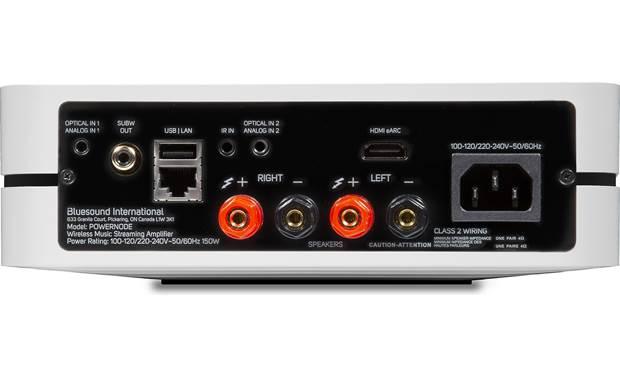
For home theater integration, the PowerNode includes HDMI eARC, allowing direct connection to modern TVs. This eliminates the need for a separate AVR for stereo TV audio and enables simplified setups where the TV becomes your switching hub. The CXA61 requires external solutions for TV integration, though its preamp outputs make this straightforward.
If you own vinyl records, CDs, or other analog sources, the CXA61 clearly leads. Four analog line inputs accommodate turntables (with external phono preamps), CD players, tape decks, or other analog sources. The refined analog circuitry, with optimized op-amps and careful component selection, preserves signal purity through the analog chain.
The PowerNode provides only two analog inputs via mini-jack/RCA combinations. While adequate for basic needs, this limits system flexibility. More concerning for analog enthusiasts, the signal path likely includes analog-to-digital conversion for processing, potentially degrading pure analog sources.
The CXA61's dual speaker outputs enable A/B switching between speaker pairs or bi-wiring single pairs for potentially improved performance. The preamp output allows easy integration with external power amplifiers for future upgrades. These features matter if you're building a system you plan to expand over time.
Both amplifiers reflect their different approaches in physical design. The CXA61 follows traditional integrated amp proportions with a substantial feel, visible heat sinks, and a large toroidal transformer. The front panel includes physical input selection and volume controls alongside digital display. This design suggests longevity and repairability.
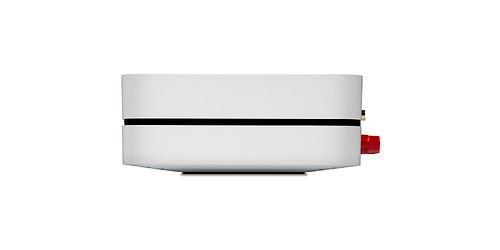
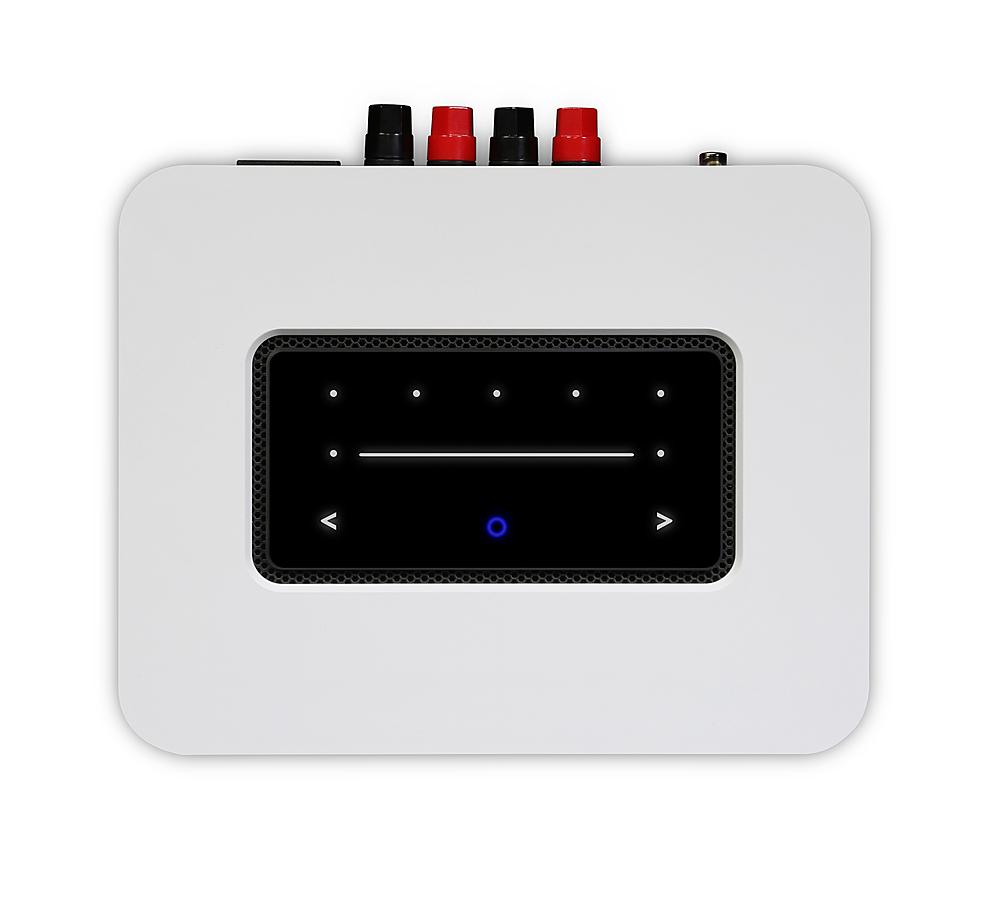
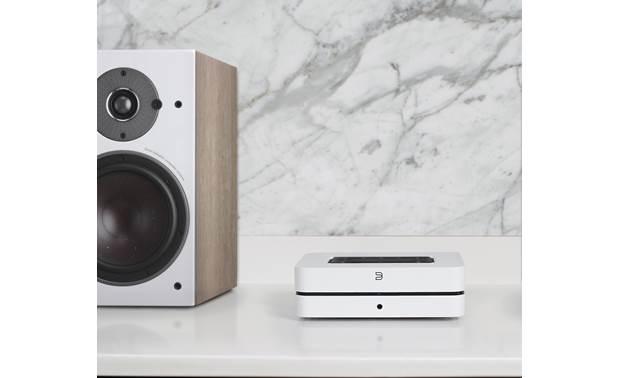
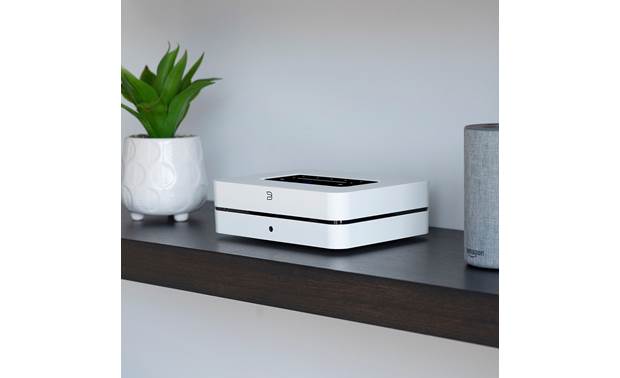
The PowerNode prioritizes compact efficiency. The Class D amplification runs cool, allowing for smaller heat sinks and overall footprint. The touch-sensitive glass top panel with LED indicators provides a modern aesthetic but means all serious control happens through the app. This design optimizes for contemporary living spaces where equipment should blend invisibly into decor.
Neither approach is inherently superior, but they serve different users. The CXA61 appeals to those who enjoy physical interaction with their equipment and prefer visible controls. The PowerNode suits users who want their music system to disappear into the background, controlled entirely through smartphones or tablets.
Based on extensive research into professional reviews and user feedback, these amplifiers exhibit different sonic personalities. The CXA61 delivers Cambridge Audio's house sound—detailed, precise, and slightly analytical. It excels at stereo imaging and detail retrieval, making it excellent for critical listening sessions where you want to hear every element in a recording.
The PowerNode prioritizes neutrality and compatibility across diverse source material. Reviews consistently describe it as dynamic and controlled, but less overtly detailed than traditional audiophile amplifiers. This approach works well for varied musical tastes and streaming content of different quality levels.
The difference becomes apparent with challenging recordings. The CXA61 might reveal flaws in poorly mastered albums while excelling with high-quality recordings. The PowerNode tends to make everything listenable while maintaining enough resolution for quality source material to shine through.
Neither amplifier imposes strong sonic colorations, but their different optimization priorities create distinct characters that may appeal to different listeners.
At the time of writing, the PowerNode commands a modest premium over the CXA61, but value calculations become complex when considering complete system costs. Adding equivalent streaming capability to the CXA61 requires a quality network streamer, potentially costing several hundred dollars more.
However, the modular approach offers flexibility. Cambridge makes the CXN V2 streamer that pairs perfectly with the CXA61, and you could choose alternatives from Bluesound, iFi, or other manufacturers. This flexibility extends to future upgrades—you might replace just the streamer or just the amplifier as needs change.
The PowerNode represents an all-in-one investment. Upgrades typically mean replacing the entire unit, though regular software updates extend functionality over time. BluOS has shown strong support for older products, suggesting good long-term value.
For users focused primarily on streaming, the PowerNode offers exceptional value by combining multiple components. For those building more complex systems or preferring component flexibility, the CXA61 provides a better foundation despite higher initial system costs.
The PowerNode's HDMI eARC input makes TV integration remarkably simple. Connect your TV via HDMI, and the amplifier handles all audio automatically, switching inputs as needed. This works especially well for streaming TV content or gaming, where the same device benefits from both video streaming and audio optimization.
The CXA61 requires external solutions for TV integration, typically meaning additional components and complexity. However, its preamp outputs make integration with home theater processors straightforward if you plan to expand to surround sound later.
For dedicated two-channel music listening with occasional TV use, both work well. For systems where TV integration is primary, the PowerNode provides significant convenience advantages.
Choose the Bluesound PowerNode if streaming music represents your primary listening method, you value system simplicity and app control, want multi-room capability, or need TV integration. It's ideal for modern listeners who've embraced streaming services and want everything to "just work" without managing multiple components.
The PowerNode also suits apartment dwellers or those with limited space, as it eliminates the need for separate streaming components while providing excellent performance in compact form.
Choose the Cambridge Audio CXA61 if you have multiple analog sources, prefer component flexibility for future upgrades, prioritize pure stereo performance for critical listening, or want the satisfaction of building a traditional hi-fi system. It's perfect for vinyl enthusiasts, classical music lovers, or anyone who enjoys the ritual of component-based systems.
The CXA61 also makes sense if you already own or plan to purchase separate streaming components, as it provides excellent amplification without redundant features.
Both amplifiers represent excellent value in their respective approaches. Your choice ultimately depends on whether you're building around streaming convenience or component flexibility—and both paths lead to great sound when matched with appropriate speakers and listening environments.
| Bluesound PowerNode | Cambridge Audio CXA61 |
|---|---|
| Power Output - Determines how loud and cleanly your speakers will play | |
| 80W per channel (8Ω), 120W peak | 60W per channel (8Ω), 90W (4Ω) |
| Amplifier Type - Affects sound character, efficiency, and heat generation | |
| HybridDigital Class D (cool running, efficient) | Class AB (traditional audiophile preference, warmer) |
| Built-in Streaming - Whether you need separate streaming components | |
| Full BluOS platform with 20+ services, multi-room | Bluetooth only - requires external streamer |
| Digital Audio Support - Maximum quality for high-res files and streaming | |
| 32-bit/384kHz, MQA, DSD256 (streaming optimized) | 32-bit/384kHz PCM, DSD256 via ESS Sabre DAC |
| Analog Inputs - Important for vinyl, CD players, and other sources | |
| 2 inputs (mini-jack/RCA combo) | 4 dedicated RCA line inputs |
| Multi-room Capability - Playing music throughout your home | |
| Up to 64 zones with BluOS ecosystem | None (single room only) |
| TV Integration - Connecting to your television for audio | |
| HDMI eARC (direct TV connection) | Requires external solution |
| Bluetooth Quality - Wireless music from phones and tablets | |
| Two-way aptX HD (can receive and transmit) | aptX HD input only |
| Physical Controls - Operating without smartphone apps | |
| Touch panel with presets, volume slider | Traditional knobs and buttons with display |
| Speaker Outputs - Flexibility for multiple speaker pairs | |
| Single pair binding posts | A+B speaker outputs plus bi-wire capability |
| Upgrade Path - How system can grow over time | |
| Software updates, ecosystem expansion | Modular component upgrades (separate DAC/streamer) |
| Headphone Output - Quality for private listening | |
| 3.5mm standard output | 3.5mm with automatic speaker muting |
| Voice Control - Smart home integration | |
| Alexa, AirPlay 2, BluVoice | AirPlay 2 compatible (via external streamer) |
| Subwoofer Integration - Adding bass extension | |
| RCA output with adjustable crossover | Fixed RCA subwoofer output |
The Bluesound PowerNode delivers 80 watts per channel into 8 ohms, while the Cambridge Audio CXA61 provides 60 watts per channel into 8 ohms. The PowerNode offers 25% more power, making it better suited for larger speakers or rooms that need higher volume levels.
The Bluesound PowerNode includes built-in streaming with access to over 20 services like Spotify, Tidal, and Qobuz through the BluOS platform. The Cambridge Audio CXA61 only has Bluetooth input, so you'll need to add a separate network streamer if you want full streaming capabilities beyond wireless connection from your phone.
The Cambridge Audio CXA61 is significantly better for vinyl with four analog line inputs that can accommodate multiple sources including turntables with external phono preamps. The PowerNode only has two analog inputs and is clearly designed with digital sources as the priority.
Yes, the Bluesound PowerNode includes HDMI eARC for direct TV connection, making it excellent for home theater use. The Cambridge Audio CXA61 doesn't have HDMI inputs, so you'd need additional components or use analog/digital audio outputs from your TV.
Only the Bluesound PowerNode offers true multi-room capability, supporting up to 64 zones through the BluOS ecosystem. You can synchronize music throughout your home and control different rooms independently. The Cambridge Audio CXA61 is strictly a single-room solution.
The Cambridge Audio CXA61 typically offers more detailed, analytical sound with excellent stereo imaging, thanks to its Class AB amplification and ESS Sabre DAC. The PowerNode provides a more neutral, controlled sound that works well across diverse streaming content but may be less revealing with high-quality recordings.
Yes, both support high-resolution audio up to 32-bit/384kHz. The PowerNode also supports MQA and DSD formats, optimized for streaming services. The Cambridge Audio CXA61 handles these formats through its premium ESS Sabre DAC, which typically provides superior technical measurements for local file playback.
The Bluesound PowerNode is controlled primarily through smartphone apps, with a touch panel on top for basic functions. The Cambridge Audio CXA61 features traditional physical knobs and buttons with a front-panel display, plus a remote control. Choose based on whether you prefer app-based or traditional physical controls.
The Bluesound PowerNode supports two-way Bluetooth, meaning it can transmit audio to wireless headphones in addition to receiving from devices. The Cambridge Audio CXA61 only receives Bluetooth audio and has a standard wired headphone output that automatically mutes the speakers when connected.
The PowerNode provides exceptional value for streaming-focused listeners, as it includes functionality that would cost hundreds more in separate components. The Cambridge Audio CXA61 offers better value if you prefer component flexibility and plan to choose your own streaming solution.
Both amplifiers drive most bookshelf speakers well, but the PowerNode's higher power output gives it an advantage with larger floor-standing speakers or inefficient designs. The Cambridge Audio CXA61 includes dual speaker outputs for A/B switching and bi-wiring options, providing more connection flexibility.
The Bluesound PowerNode is significantly better for home theater use with its HDMI eARC connection, allowing direct TV integration without additional components. It can also expand to wireless surround sound with other BluOS speakers. The Cambridge Audio CXA61 works for stereo TV audio but requires external solutions for HDMI integration and doesn't support surround expansion.
We've done our best to create useful and informative comparisons to help you decide what product to buy. Our research uses advanced automated methods to create this comparison and perfection is not possible - please contact us for corrections or questions. These are the sites we've researched in the creation of this article: crutchfield.com - upscaleaudio.com - bluesound.com - bluesound.com - stereophile.com - theaudiofactory.com - audioadvisor.com - musicdirect.com - twitteringmachines.com - futureaudiophile.com - bluesound.com - bluesound.com - moon-audio.com - audioadvisor.com - ecoustics.com - themasterswitch.com - theaudiophileman.com - youtube.com - forums.whathifi.com - crutchfield.com - youtube.com - youtube.com - hifihaven.org - crutchfield.com - audioguru.com - listenup.com - forums.whathifi.com - manuals.cambridgeaudio.com - alpha-audio.net - hifichoice.com - cambridgeaudio.com - the-ear.net - speakerdecision.com

Privacy Policy
Terms and Conditions - Affiliate Policy
Home Security
© Copyright 2008-2026.
11816 Inwood Rd #1211, Dallas, TX 75244