

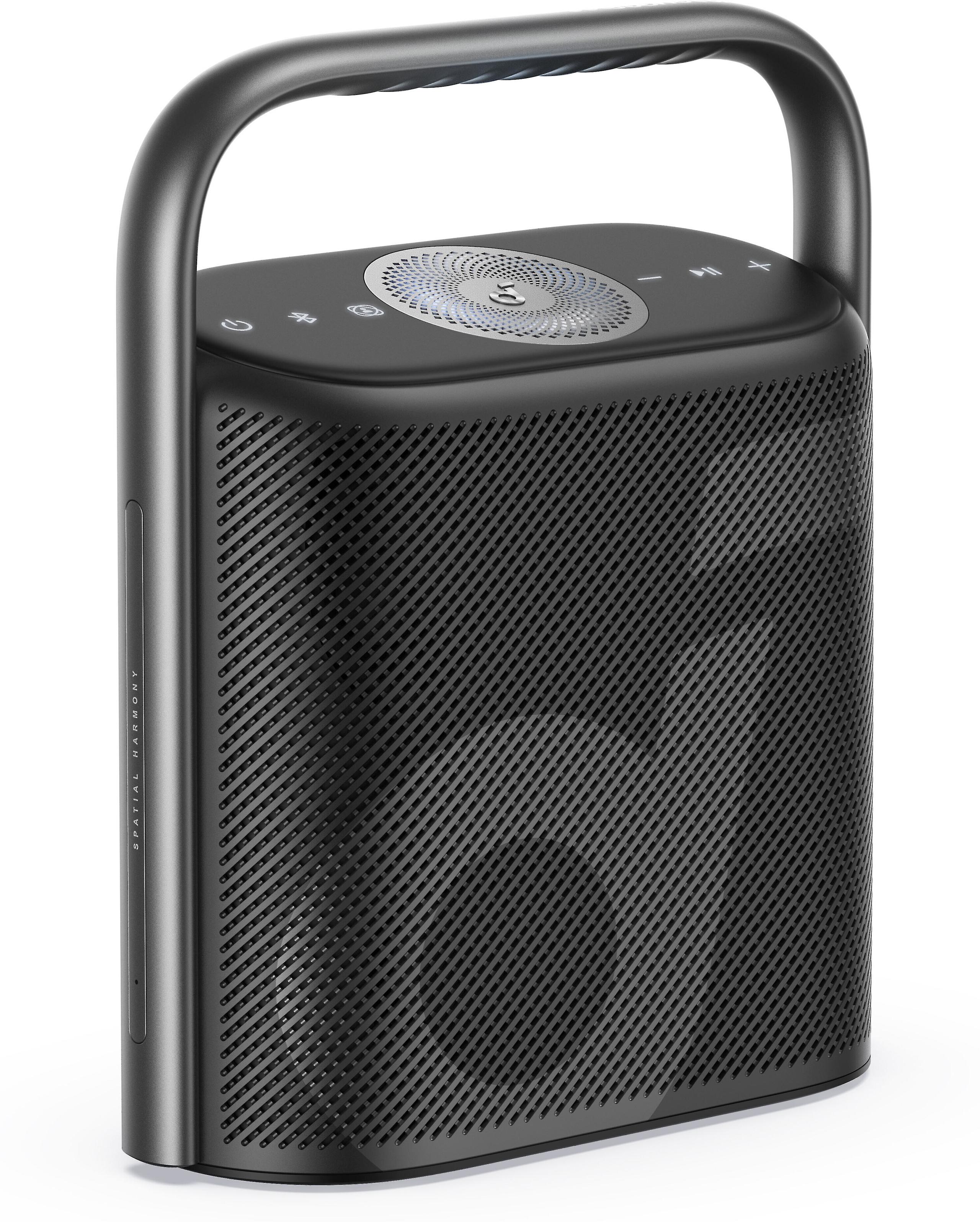
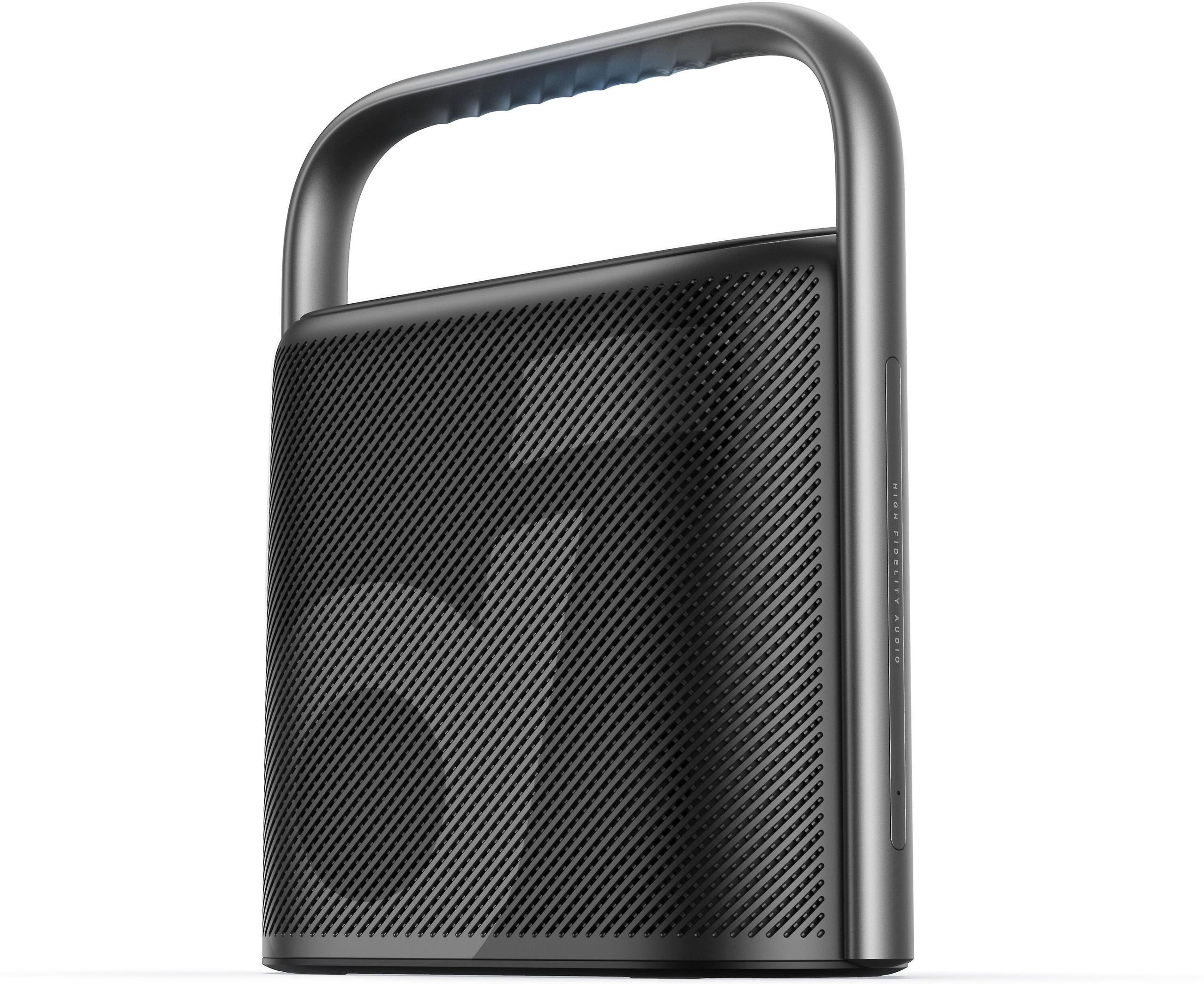
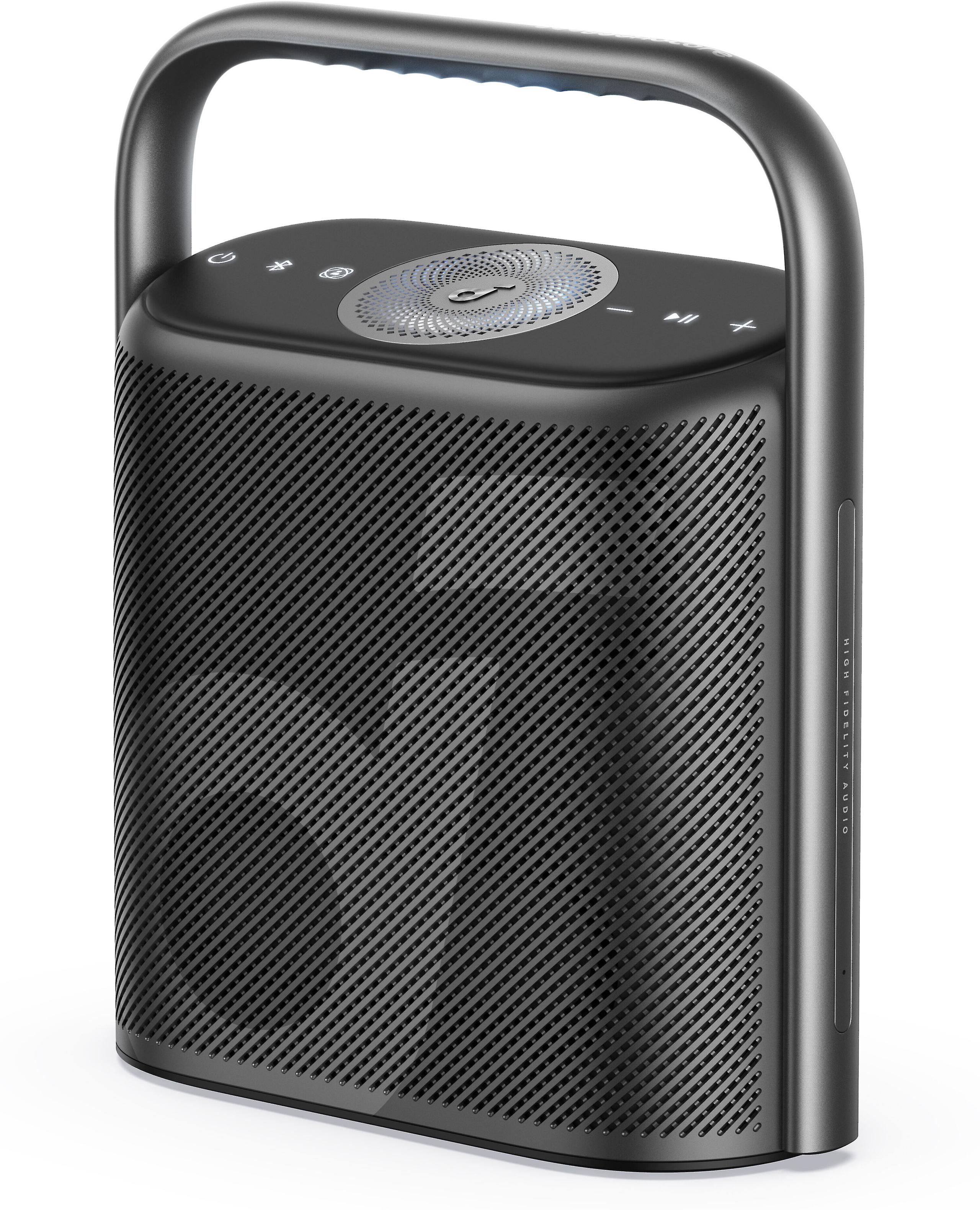
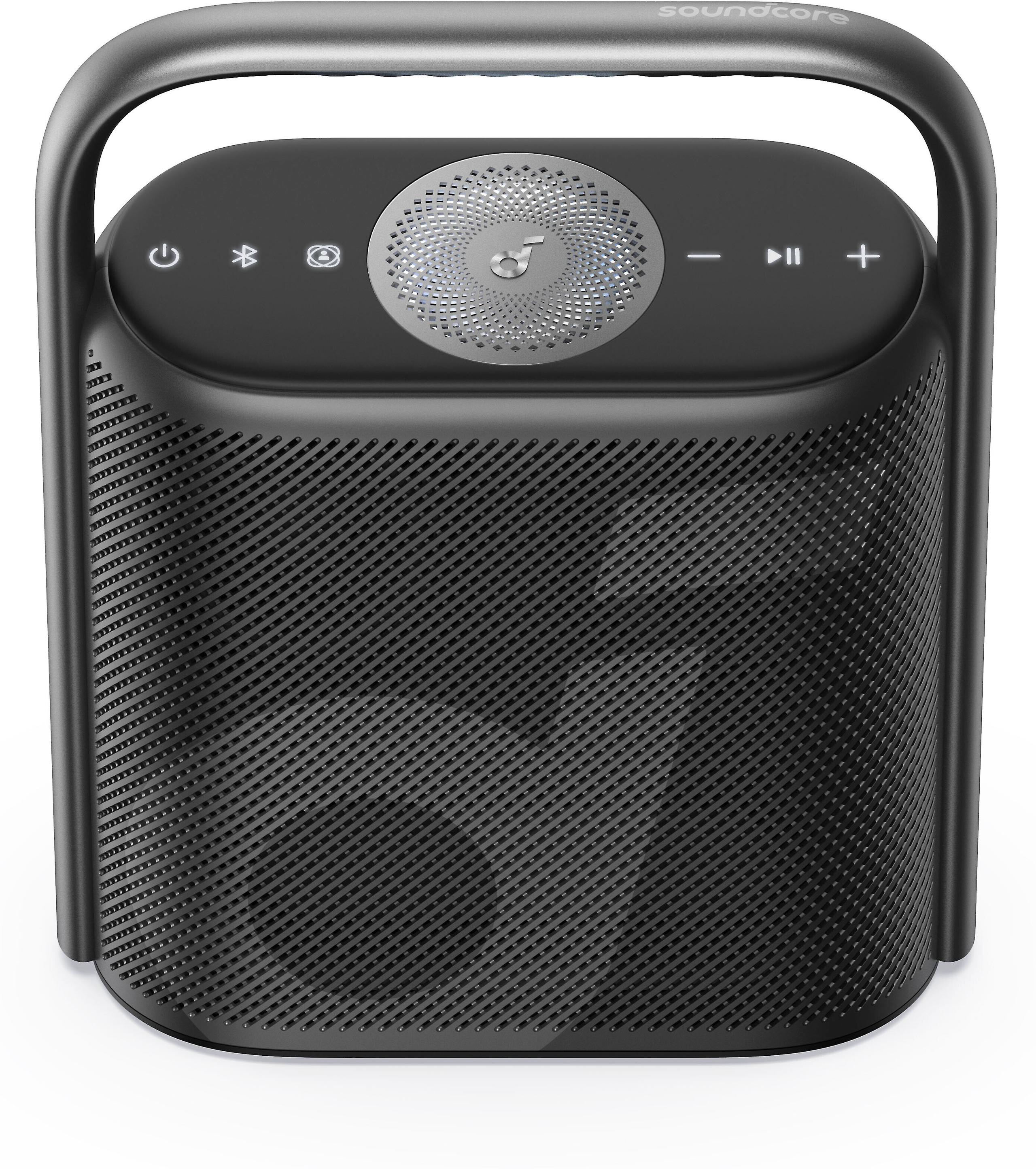

The portable Bluetooth speaker market in 2024 has evolved significantly, offering everything from tiny personal speakers to powerful portable sound systems. When comparing the $99.99 Motion X500 and $44.00 Go 4, we're looking at two very different approaches to portable audio, each reflecting modern advances in their respective categories.
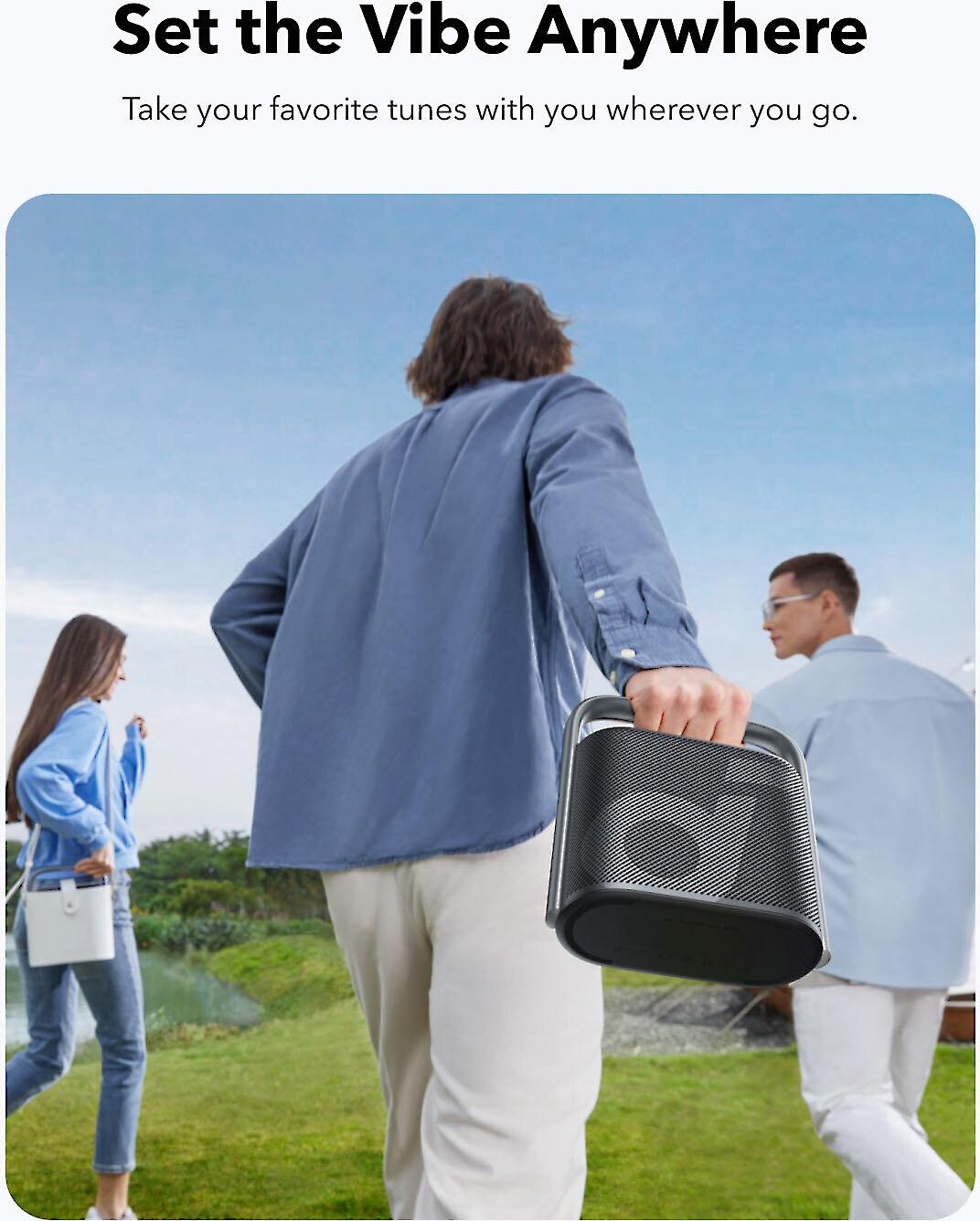
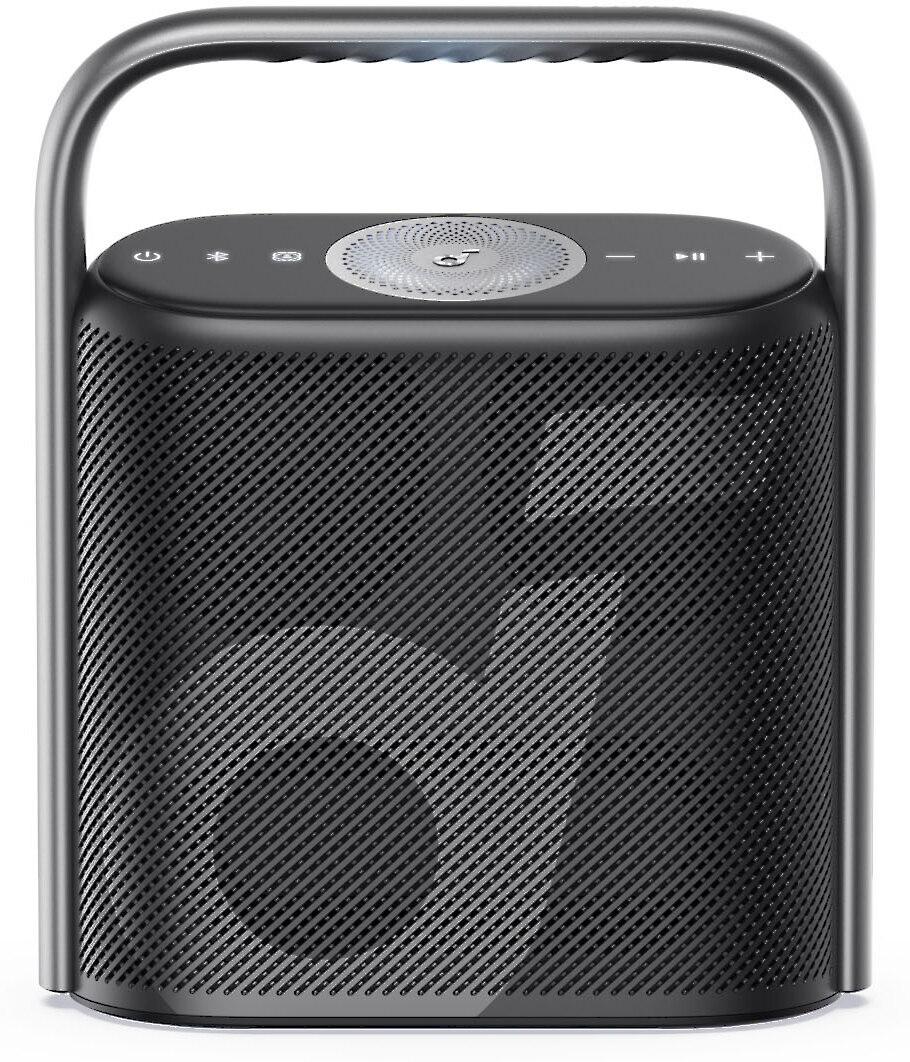
The physical difference between these speakers tells us a lot about their intended use. The Motion X500, released in late 2023, takes a "medium-portable" approach at 8.66 inches tall and weighing just over 4 pounds. It's designed to be moved around your home or taken to gatherings, but it's not something you'd carry daily. The built-in handle makes transport easier, but this is clearly a speaker meant to deliver room-filling sound rather than slip into a pocket.
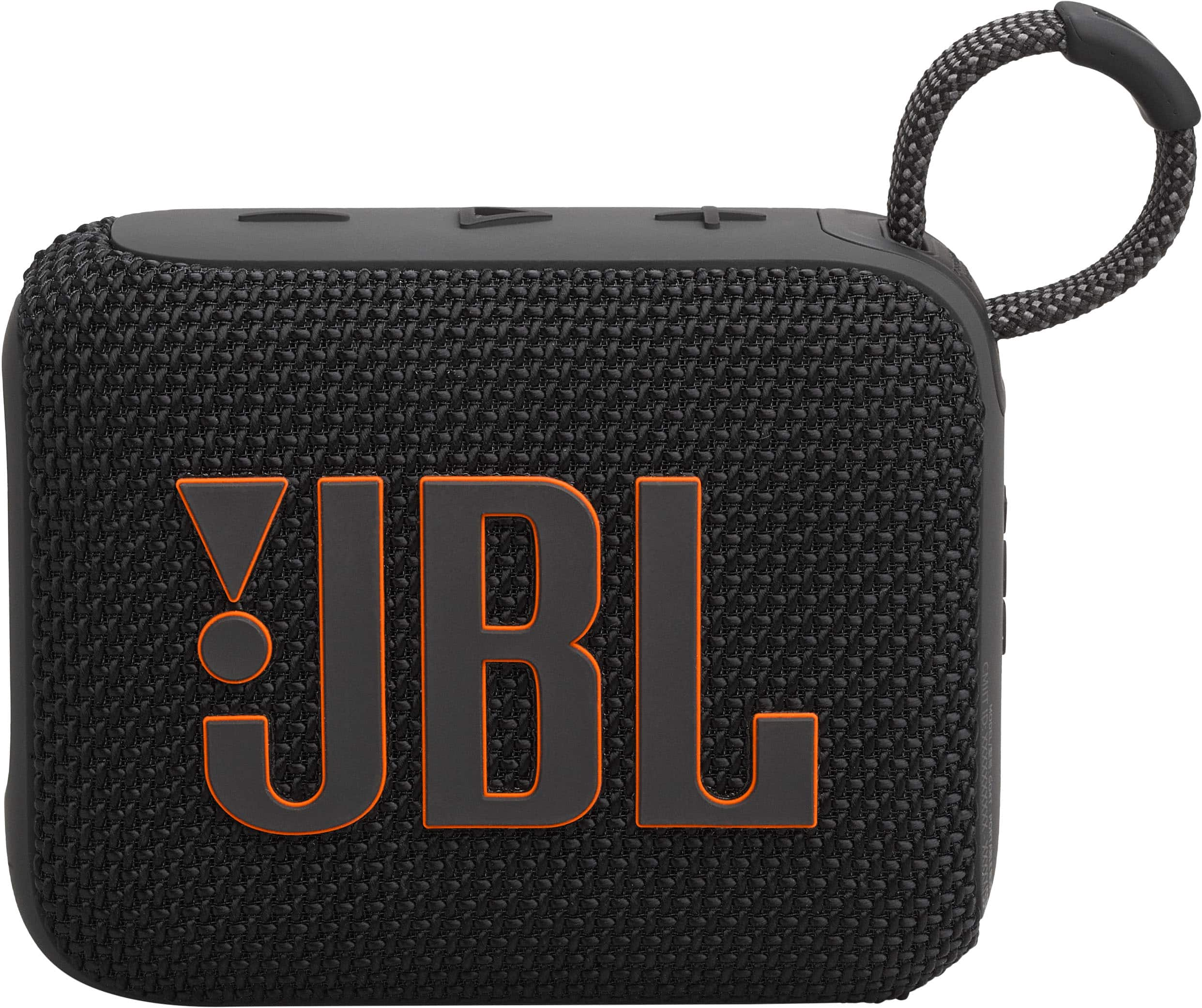
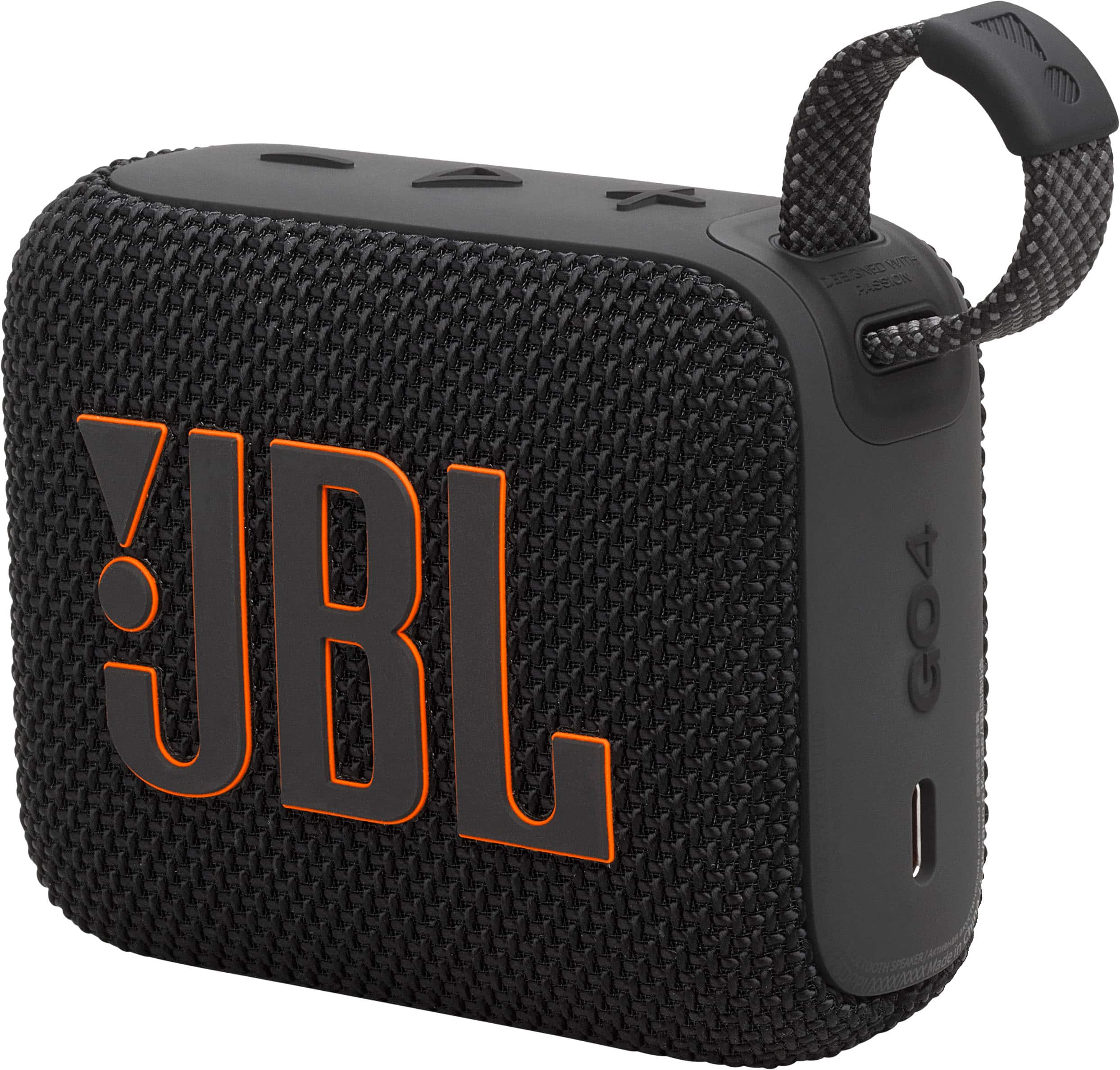
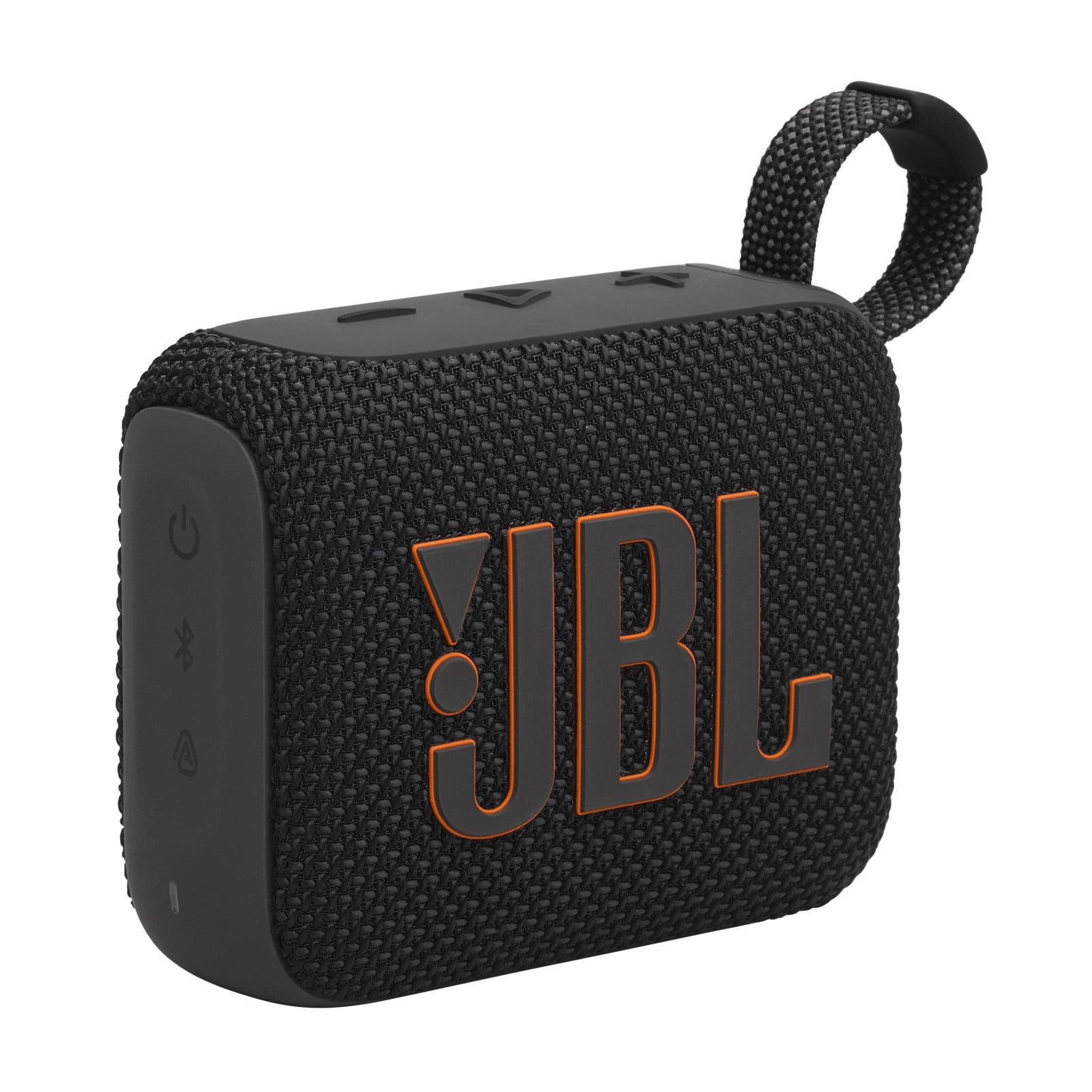
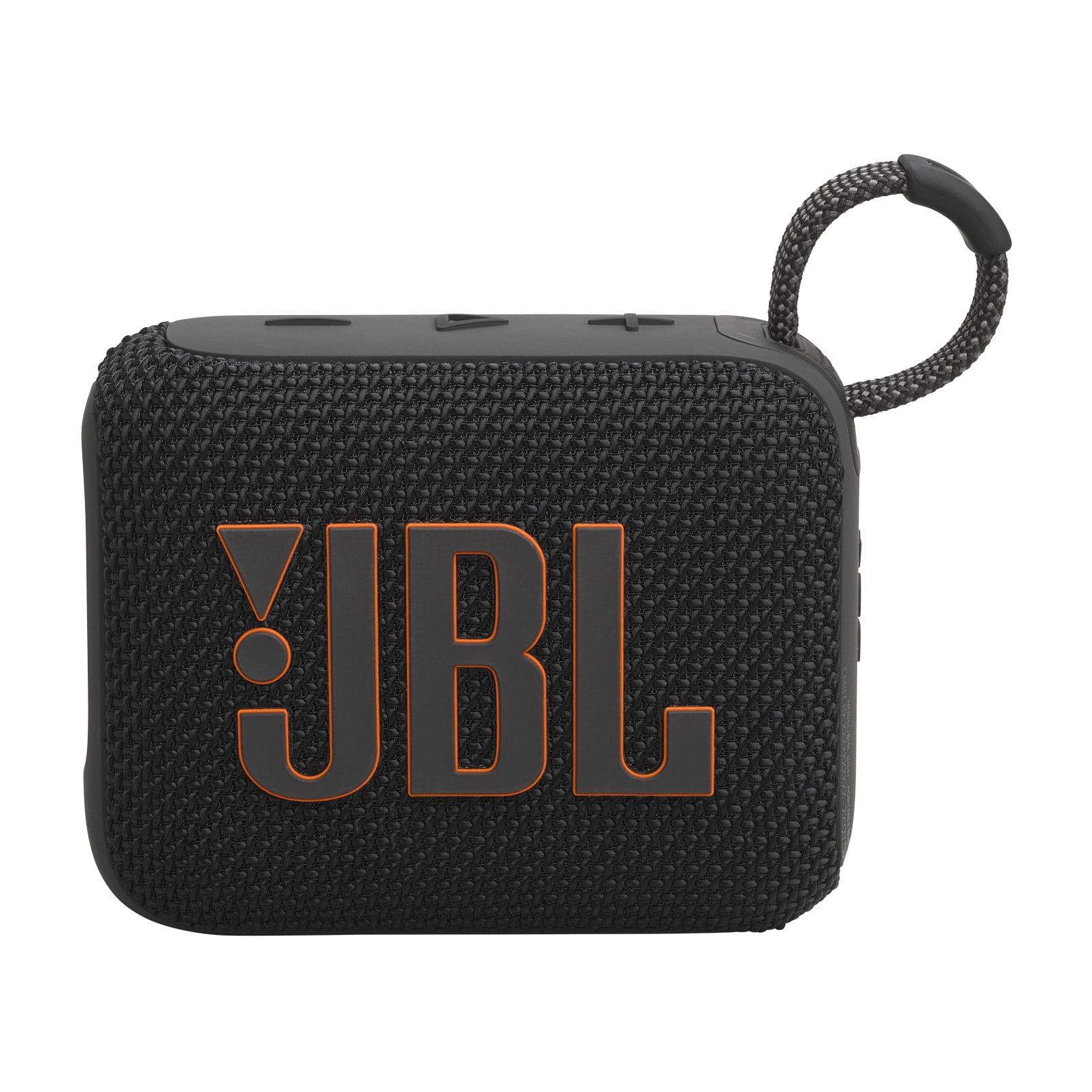
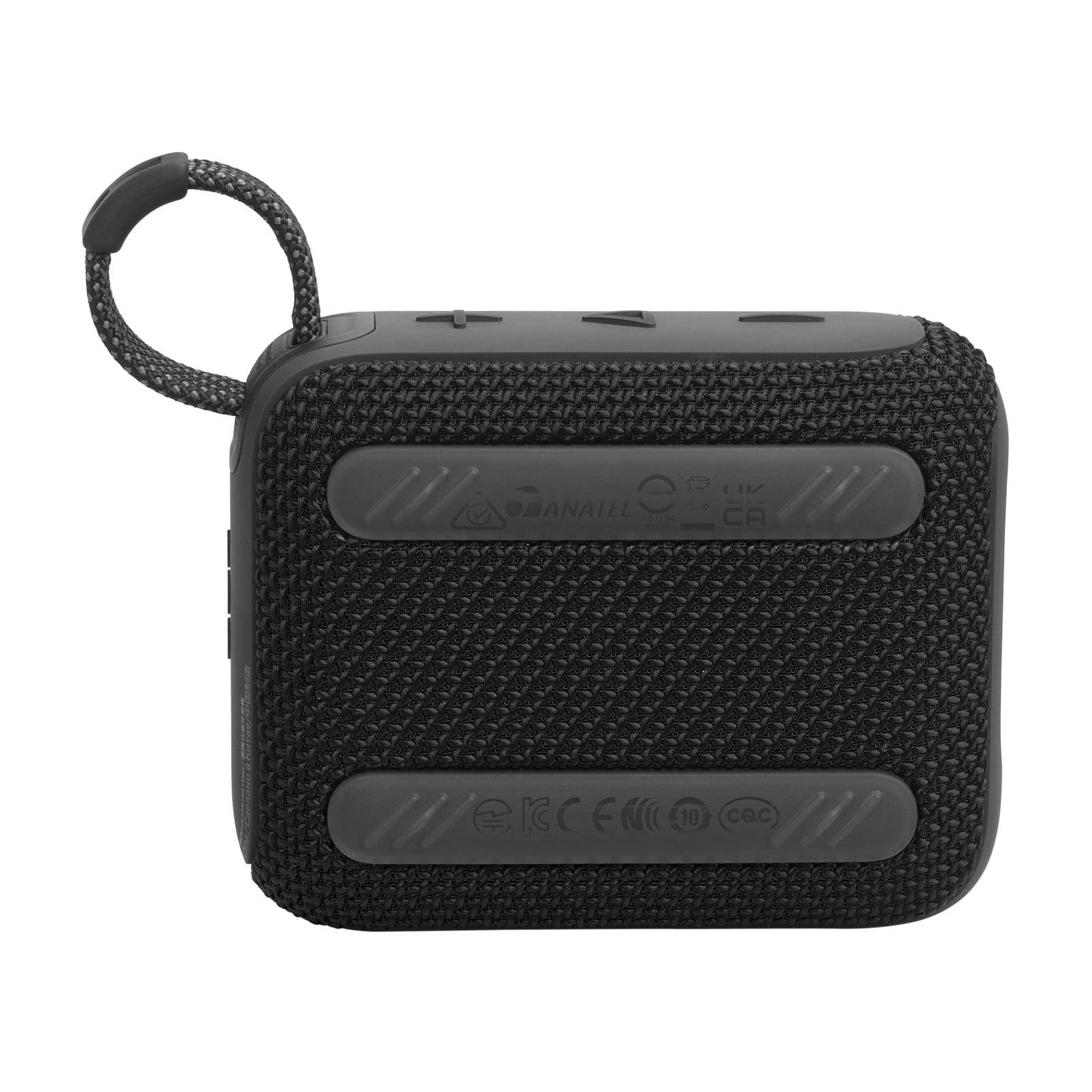
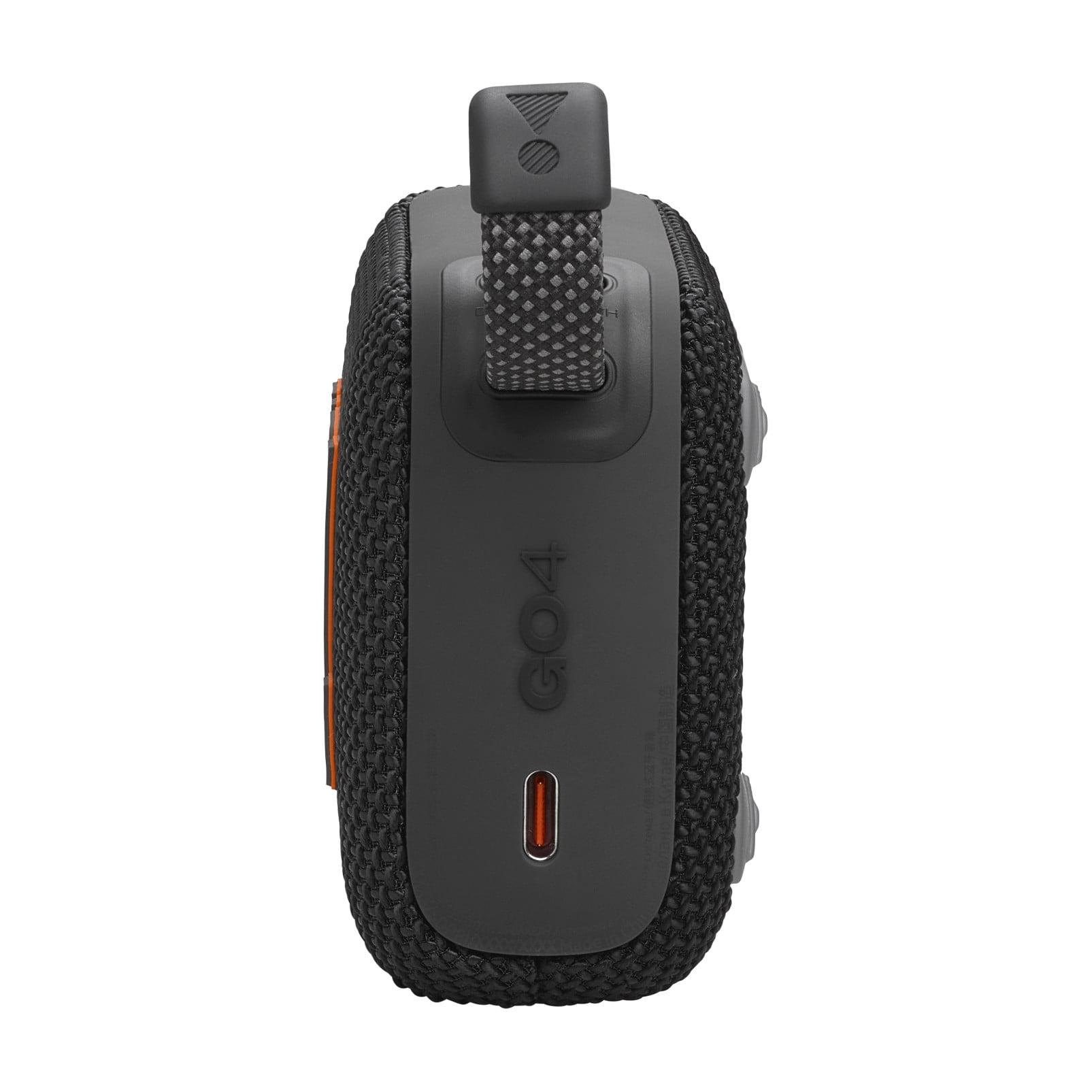
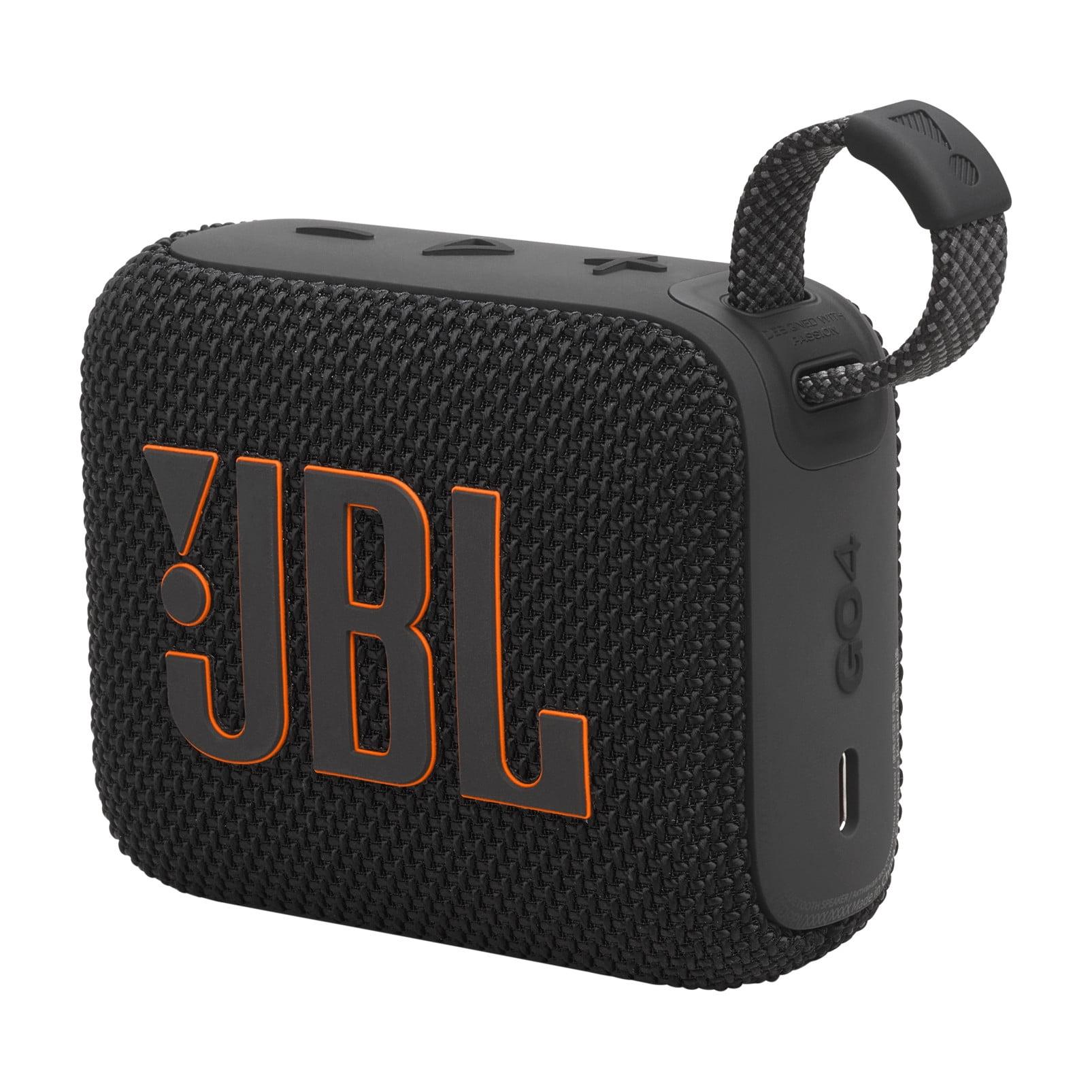
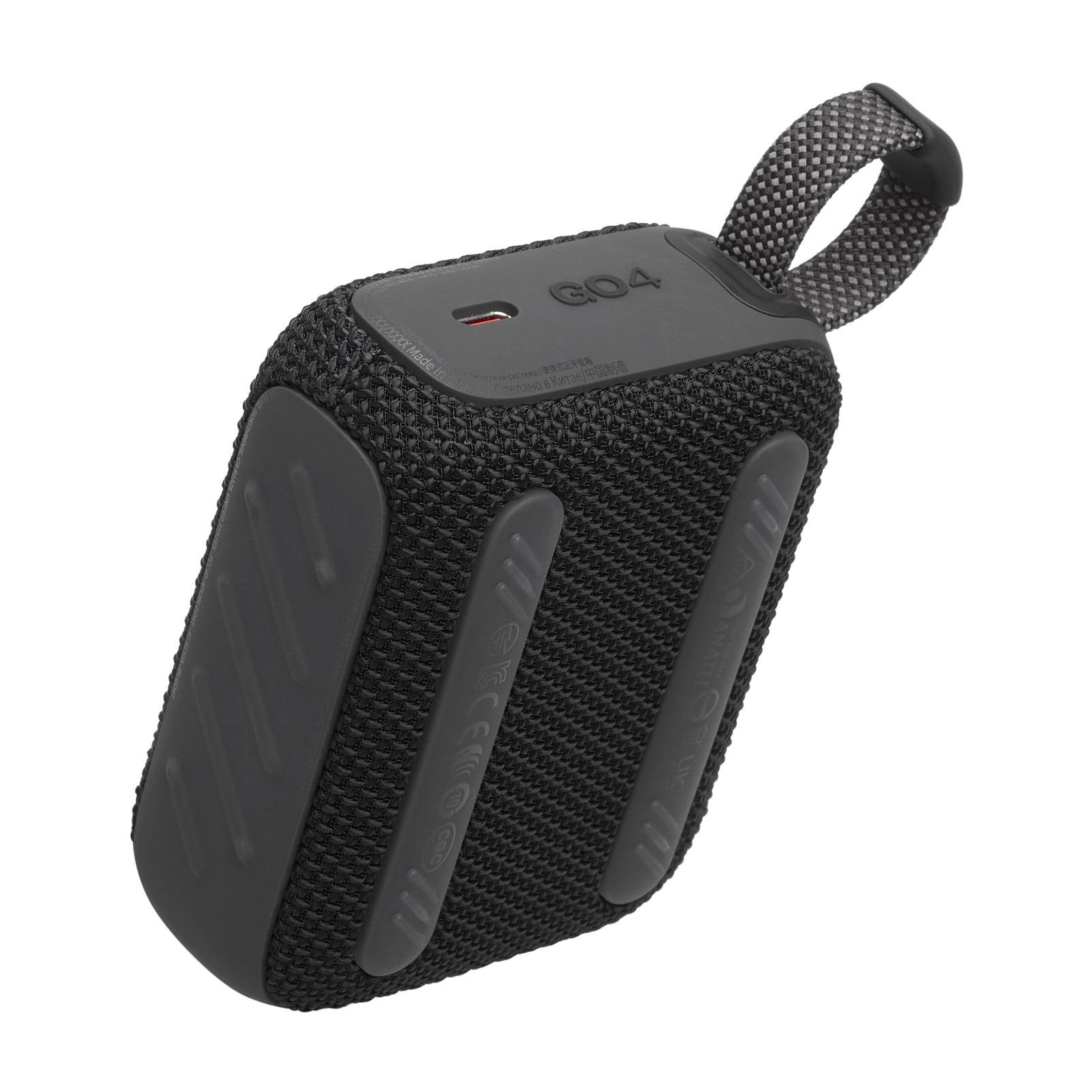
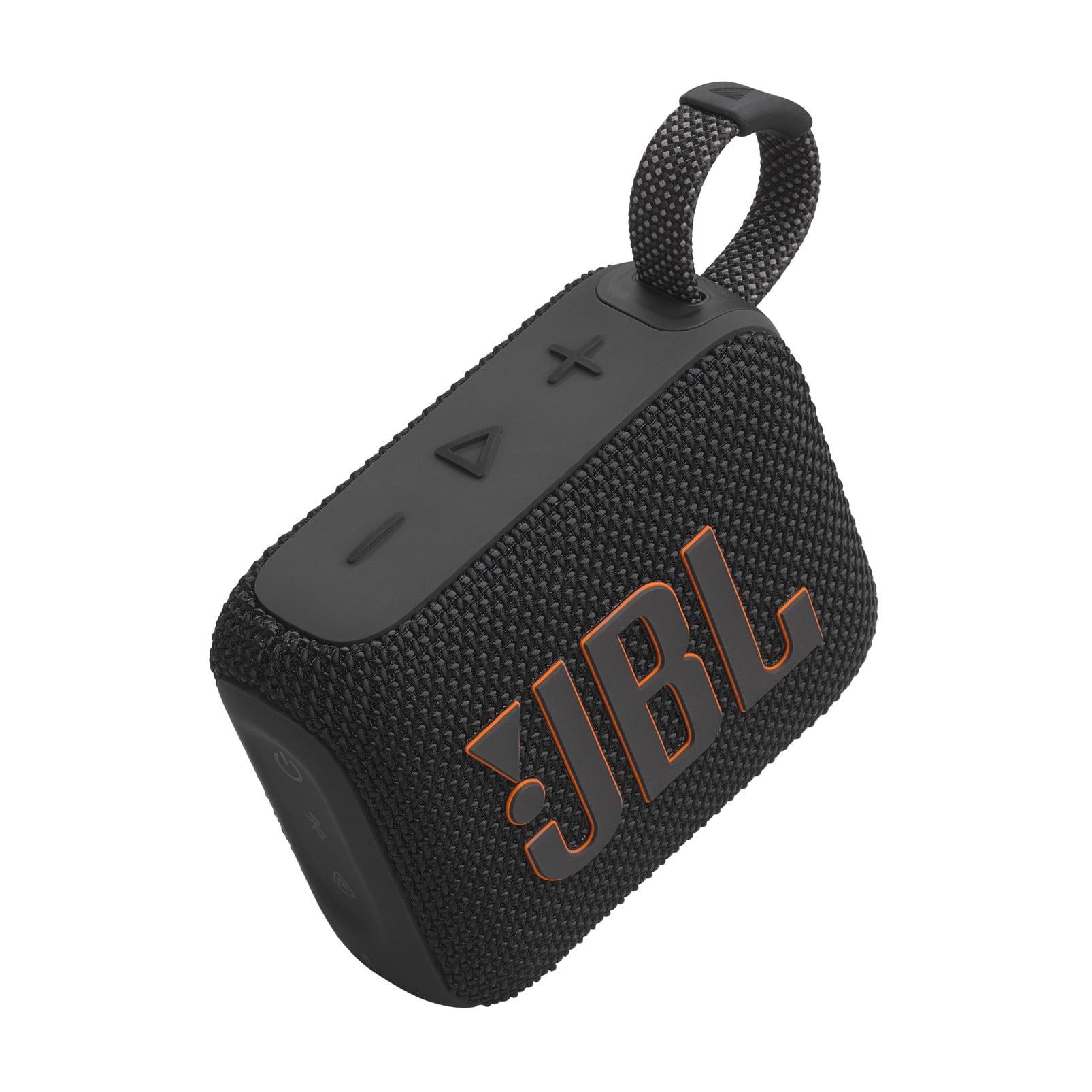
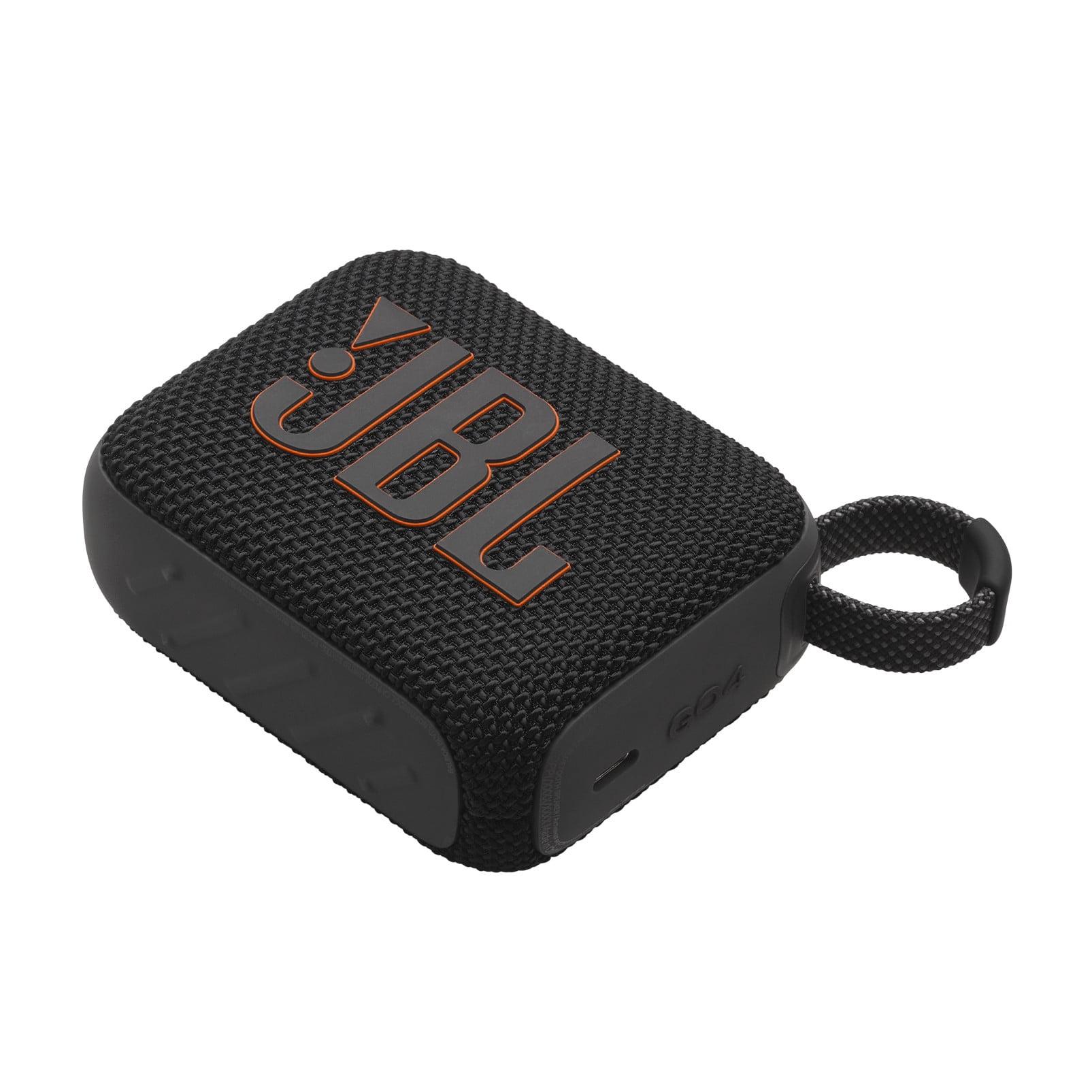
In contrast, the Go 4, released in early 2024, continues JBL's ultra-portable philosophy. At just 3.7 inches tall and weighing less than half a pound, it's genuinely pocket-sized. This represents JBL's latest refinement of their smallest speaker line, with improved durability and sound over previous generations.
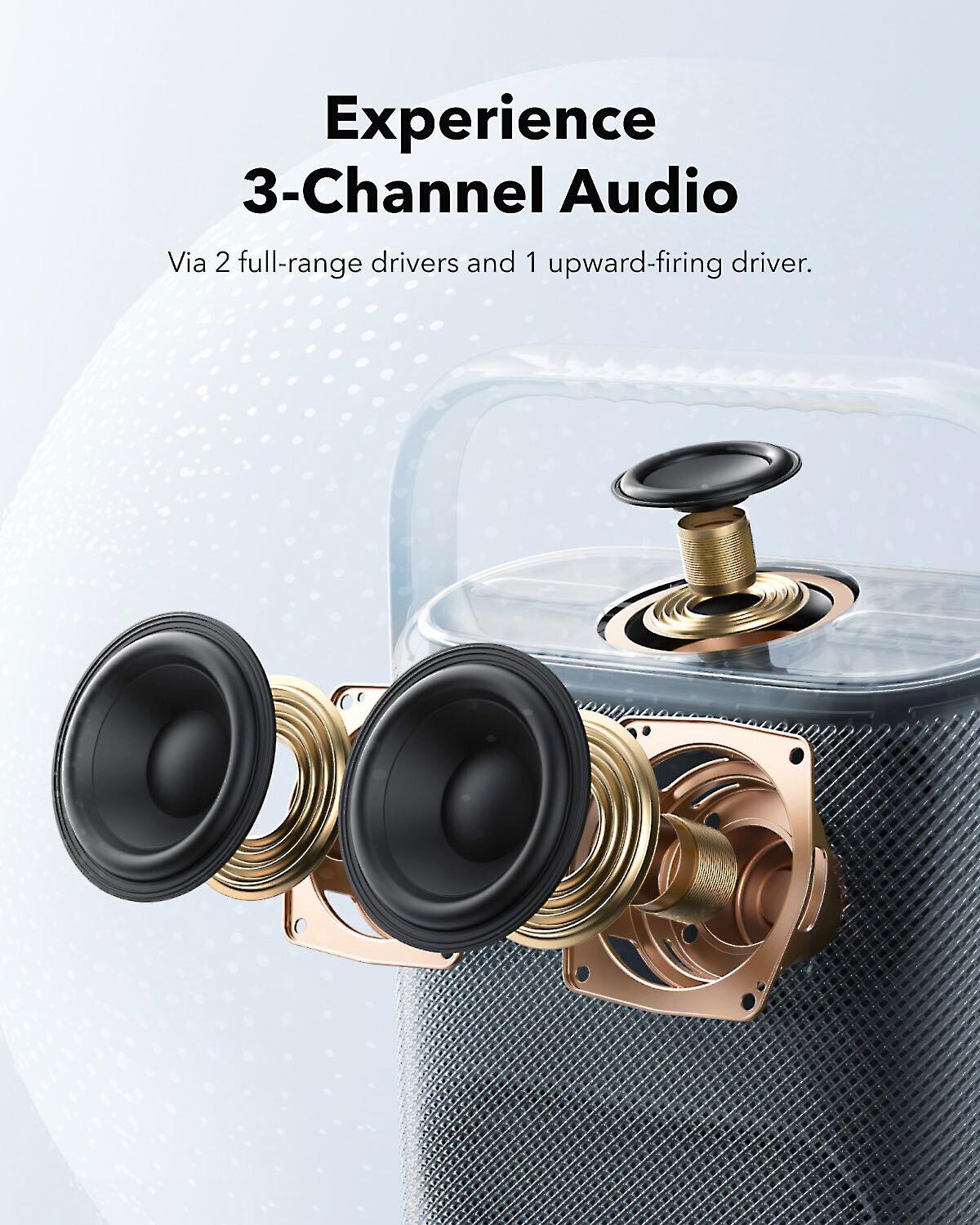
The Motion X500 delivers 40 watts through three drivers: two main drivers and an upward-firing speaker that creates a more immersive soundstage. This configuration, combined with spatial audio processing (which makes music sound like it's coming from all around you rather than just one point), creates a listening experience that's impressive for a portable speaker.
The Go 4 uses a single 45mm driver pushing 4.2 watts. While this might seem modest, JBL has optimized this setup for clarity and balanced sound at personal listening distances. The speaker includes JBL's latest audio processing, which helps prevent distortion at higher volumes.
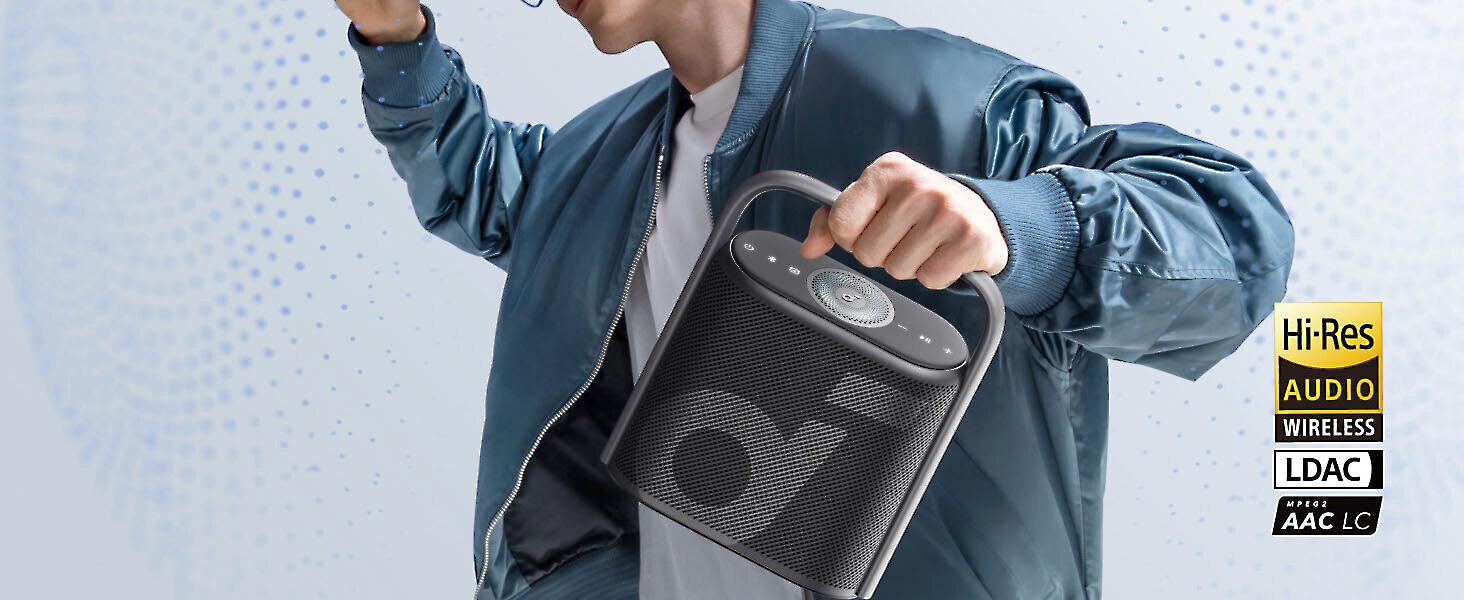
The Motion X500 supports LDAC, a high-resolution Bluetooth codec that can transfer about three times more audio data than standard Bluetooth. This means you can hear more detail in your music, provided your source device (phone, tablet, etc.) supports LDAC. The spatial audio feature, while not true surround sound, creates an expanded soundstage that makes music feel more open and immersive.
The Go 4 focuses on delivering clear, balanced sound for personal listening. While it can't match the X500's technical capabilities, it includes JBL's latest audio processing and app-based EQ controls. The speaker performs surprisingly well in the mid-range frequencies, which is where most vocals and primary musical elements sit.
In actual use, these speakers serve distinctly different purposes. The Motion X500 can easily fill a medium-sized room with rich, detailed sound. Its upward-firing driver helps create a more three-dimensional sound field, which is particularly noticeable when the speaker is placed at the center of a gathering. Bass response is solid, though not overwhelming, and the spatial audio feature adds an engaging dimension to music.
The Go 4 excels in personal listening scenarios. At a desk, in a hotel room, or clipped to a backpack, it delivers clear, enjoyable sound that's leagues better than your phone's speakers. While it can't produce deep bass due to its size, the sound is well-balanced and surprisingly full for such a small speaker.
Battery technology has improved in recent years, but there's still a direct relationship between speaker size and battery life. The Motion X500 offers up to 12 hours of playback, though this drops to around 8-9 hours when using spatial audio or playing at higher volumes. The Go 4 provides 7 hours of playback, which is impressive given its tiny size.
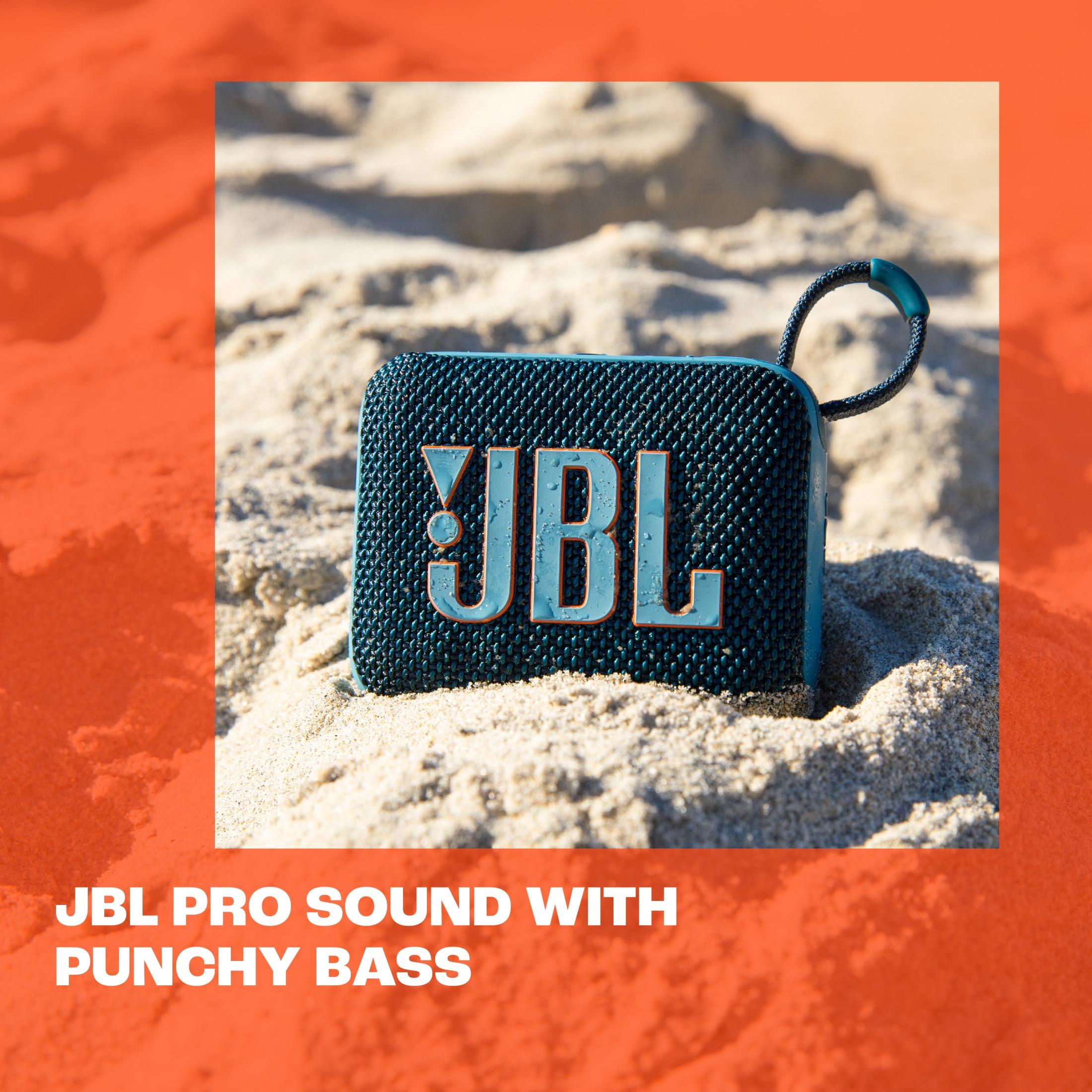
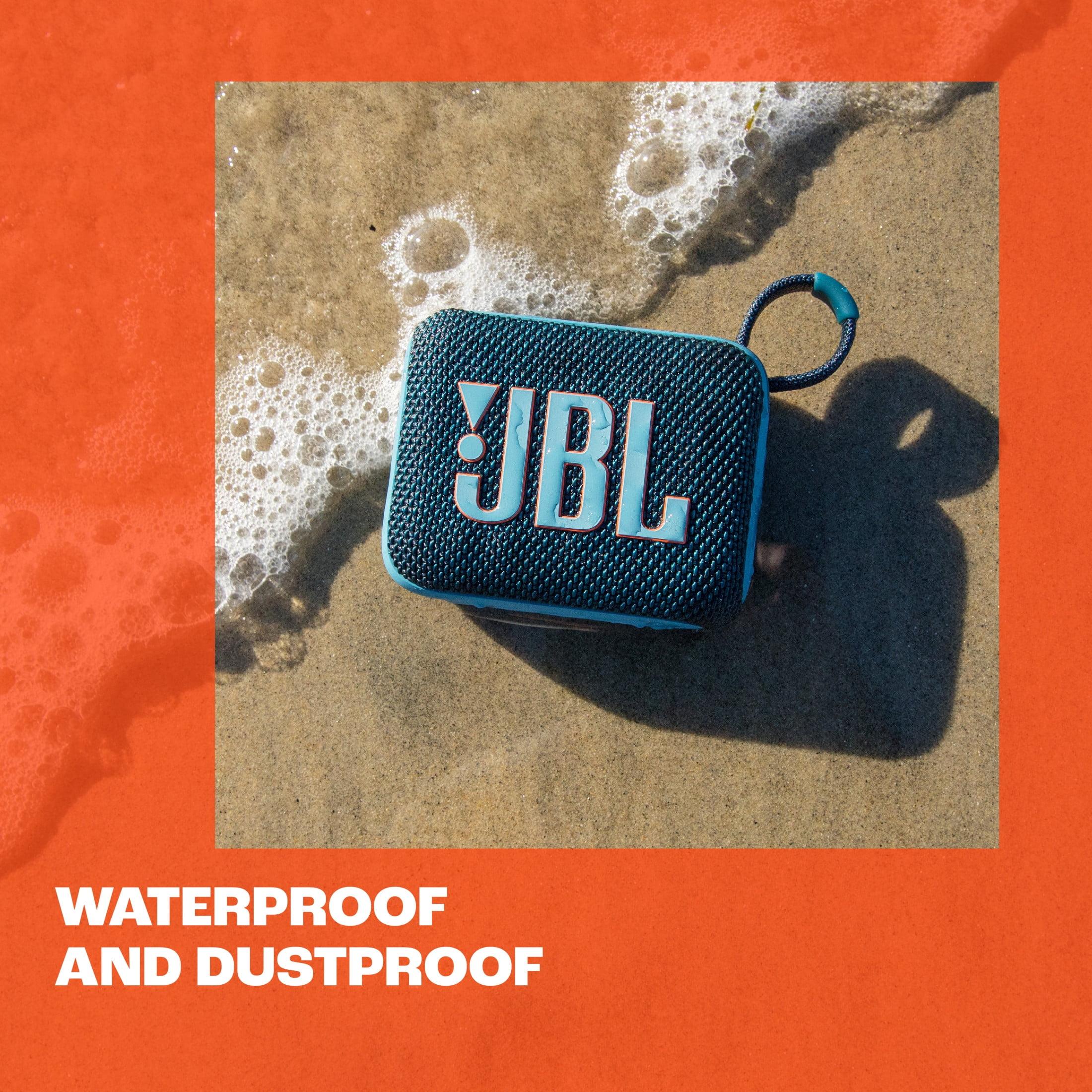
Both speakers feature robust water resistance (IPX7 for the X500, IP67 for the Go 4), meaning they can handle rain or brief submersion. The Go 4's higher IP rating also indicates dust resistance, making it more suitable for beach use.
The Motion X500 at $99.99 represents solid value in the premium portable speaker segment, especially considering its spatial audio capabilities and high-resolution audio support. It's an excellent choice for:
The Go 4 at $44.00 offers impressive value for its capabilities. It's perfect for:
Consider these key factors when choosing:
The final decision often comes down to how you'll use the speaker most often. If you're primarily looking for something to enhance your home audio experience and occasionally move around, the Motion X500 offers superior sound quality and features that justify its higher price. However, if you need something that can go everywhere with you while providing good sound for personal listening, the Go 4's ultra-portable design and affordable price make it an excellent choice.
Remember, the best speaker is the one that fits your specific needs and usage patterns, not necessarily the one with the most features or highest price tag.
| Anker Soundcore Motion X500 | JBL Go 4 |
|---|---|
| Price - Core consideration for value assessment | |
| $99.99 | $44.00 |
| Audio Output Power - Determines maximum volume and sound quality | |
| 40W total (2x15W + 10W upward) - Room-filling sound | 4.2W - Personal listening range |
| Size - Impacts portability and use cases | |
| 8.66 x 7.95 x 3.19 inches - Medium portable | 3.7 x 3.0 x 1.7 inches - Ultra compact |
| Weight - Critical for daily carrying | |
| 4.07 lbs - Occasional transport | 0.42 lbs - Everyday portable |
| Battery Life - Affects usage flexibility | |
| 12 hours (8-9 with spatial audio) | 7 hours |
| Charging Time - Important for quick turnaround | |
| 5-6 hours | 3 hours |
| Water Resistance - Determines outdoor usability | |
| IPX7 (waterproof) | IP67 (waterproof and dustproof) |
| Audio Features - Impact on sound quality | |
| Spatial audio, LDAC codec, custom EQ | Standard codecs, app EQ control |
| Driver Configuration - Affects sound quality and dispersion | |
| 3 drivers with upward-firing speaker | Single 45mm driver |
| Bluetooth Version - Affects connection quality | |
| 5.3 with 100m range | 5.3 with 240m theoretical range |
| Special Features - Adds functionality | |
| Spatial audio, ambient light, TWS pairing | Auracast multi-speaker support, Multipoint connection |
| Use Case Sweet Spot - Primary intended purpose | |
| Home audio, parties, outdoor gatherings | Personal audio, travel, desktop companion |
The Anker Soundcore Motion X500 delivers significantly better sound quality with its 40W output and three-driver system. The JBL Go 4 is designed for personal listening and can't match the X500's room-filling sound or bass response.
The JBL Go 4 is worth buying if portability is your priority and you mainly need personal listening. At $44.00, it's an excellent value. However, if you need better sound quality and don't mind the larger size, the Motion X500 at $99.99 offers superior audio performance.
The Motion X500 offers up to 12 hours of playback (8-9 hours with spatial audio), while the JBL Go 4 provides 7 hours. Both are sufficient for daily use, but the X500 lasts longer between charges.
Yes, both speakers are water-resistant. The JBL Go 4 has an IP67 rating (waterproof and dustproof), while the Motion X500 has an IPX7 rating (waterproof). Both are suitable for outdoor use, though the Go 4 has better dust protection.
The JBL Go 4 is significantly more portable at 0.42 lbs and pocket-sized dimensions. The Motion X500 at 4.07 lbs is portable but meant more for moving between rooms or occasional transport.
Yes, both the Motion X500 and JBL Go 4 work with any Bluetooth-enabled device, including iPhones and Android phones. Both use Bluetooth 5.3 for reliable connectivity.
The Motion X500 is much better for parties with its 40W output and spatial audio features. The JBL Go 4 is designed for personal listening and isn't suitable for group settings.
Both speakers offer multi-speaker connection features. The Motion X500 has True Wireless Stereo (TWS) for connecting two units, while the JBL Go 4 supports Auracast for connecting multiple speakers.
The Motion X500 delivers significantly better bass response due to its larger size and more powerful drivers. The JBL Go 4 has limited bass capability due to its compact size.
Yes, both speakers have companion apps. The Motion X500 uses the Soundcore app for EQ and features, while the JBL Go 4 uses the JBL Portable app for customization.
Both are durable, but the JBL Go 4 has a slight edge with its IP67 rating providing both water and dust protection. The Motion X500 is water-resistant (IPX7) but doesn't specify dust protection.
The price difference is worth it if you need better sound quality and volume. The Motion X500 at $99.99 offers significantly better audio performance, while the JBL Go 4 at $44.00 provides excellent value for personal listening needs.
We've done our best to create useful and informative comparisons to help you decide what product to buy. Our research uses advanced automated methods to create this comparison and perfection is not possible - please contact us for corrections or questions. These are the sites we've researched in the creation of this article: tomsguide.com - outeraudio.com - gadgetoid.com - soundguys.com - pcgamesn.com - hktvmall.com - elomymelo.com - youtube.com - jopanda.com - shop.menshealth.com - soundphilereview.com - tomsguide.com - outeraudio.com - youtube.com - techradar.com - corporategift.com - jbl.com - target.com - dell.com - projectorscreen.com - mm.jbl.com

Privacy Policy
Terms and Conditions - Affiliate Policy
Home Security
© Copyright 2008-2026.
11816 Inwood Rd #1211, Dallas, TX 75244