


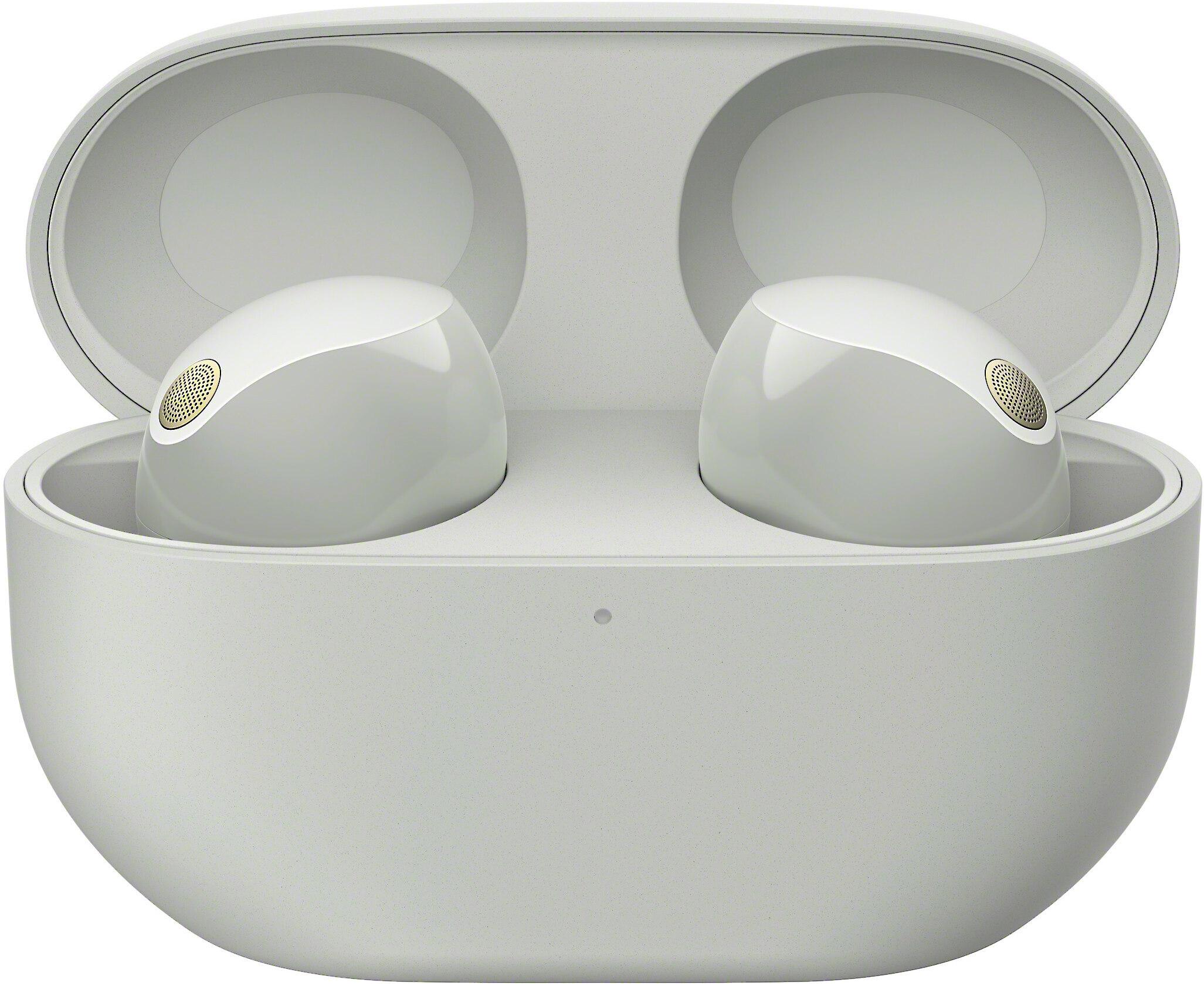

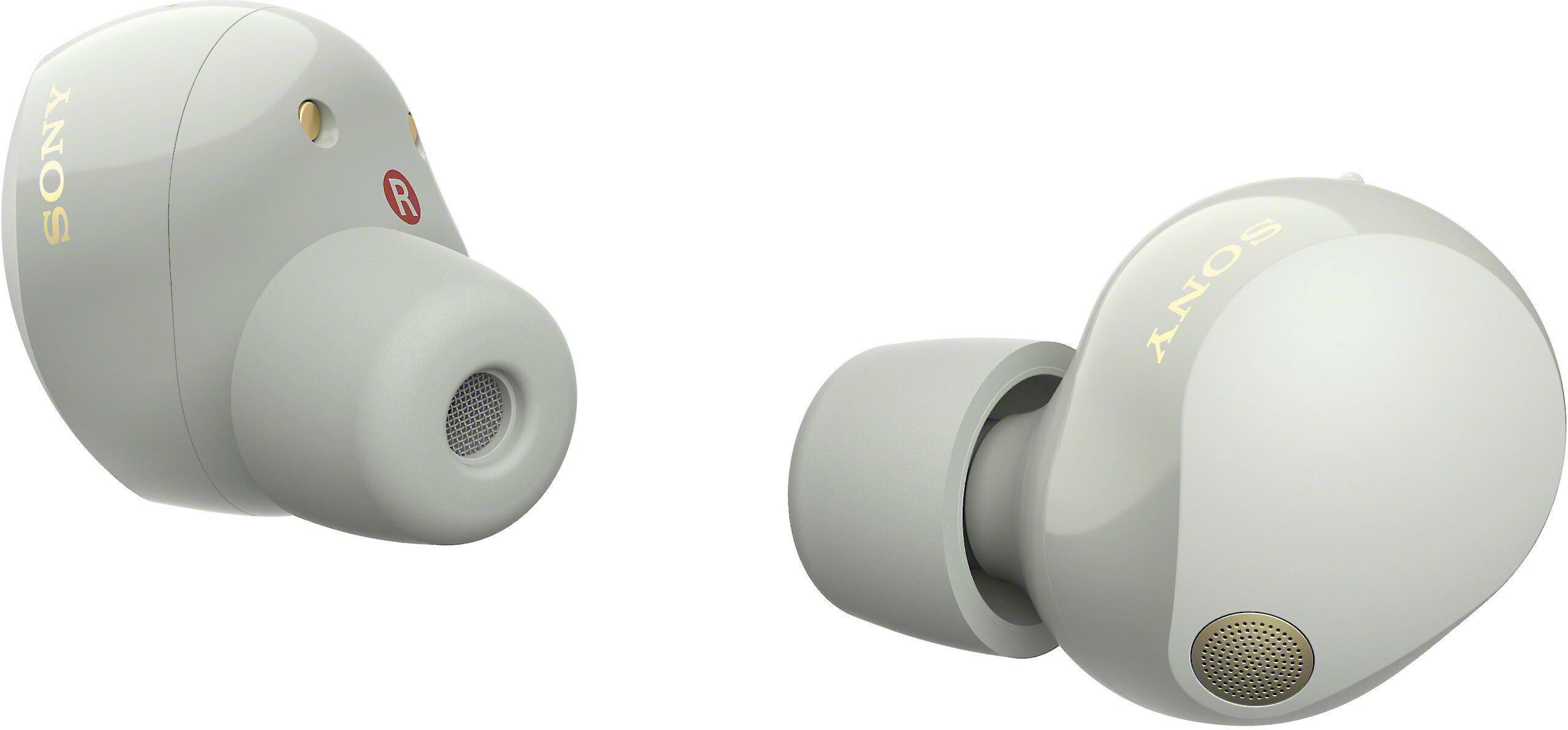


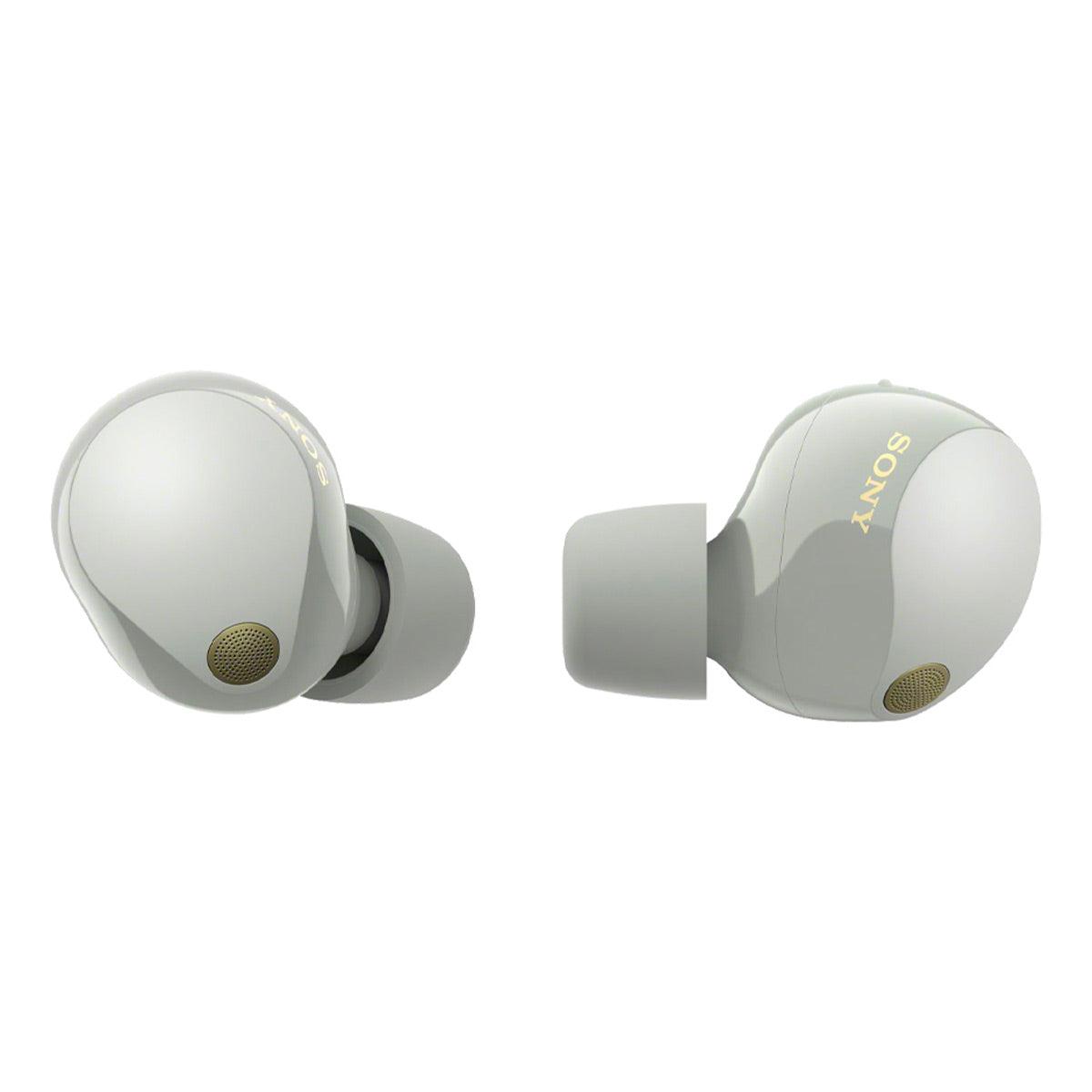

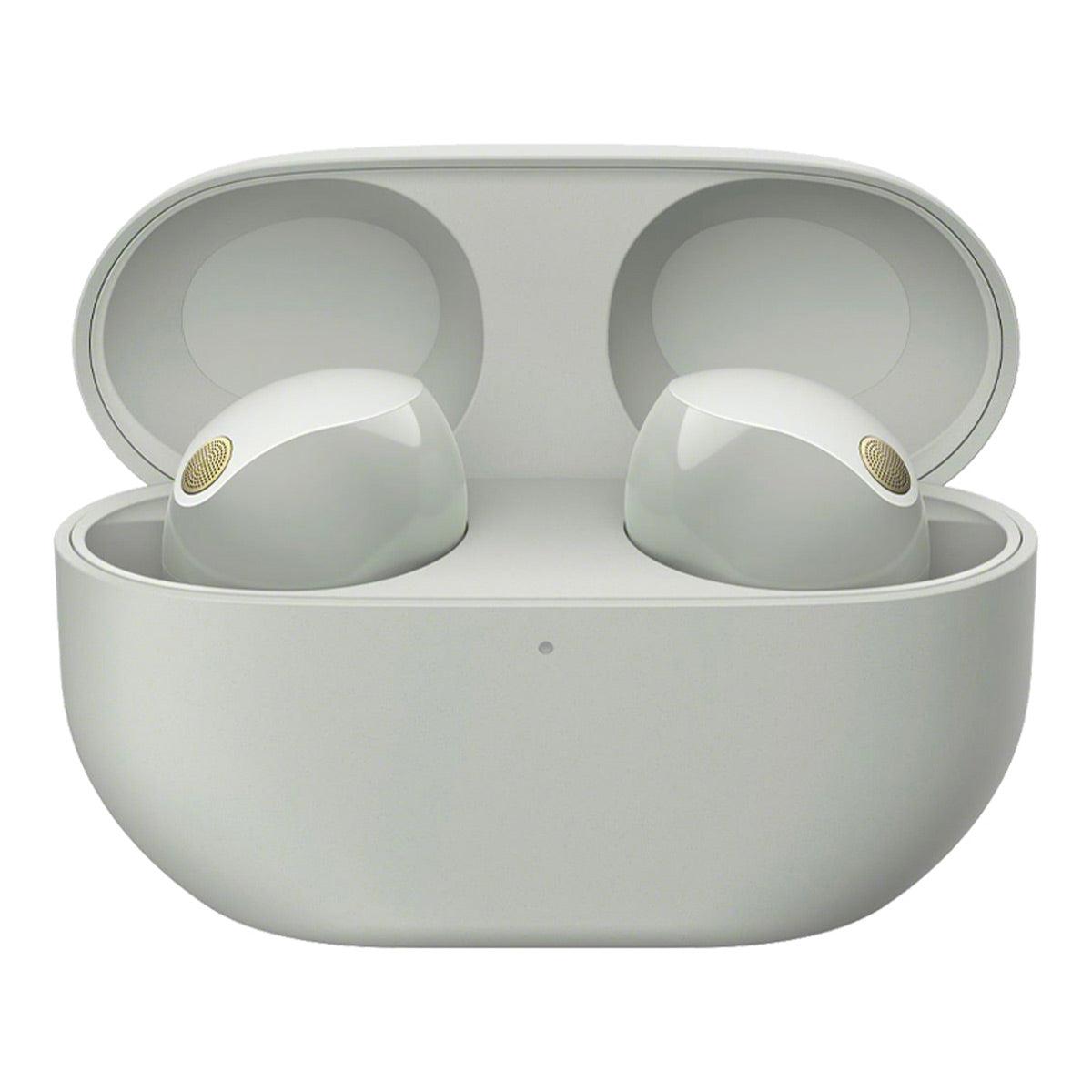
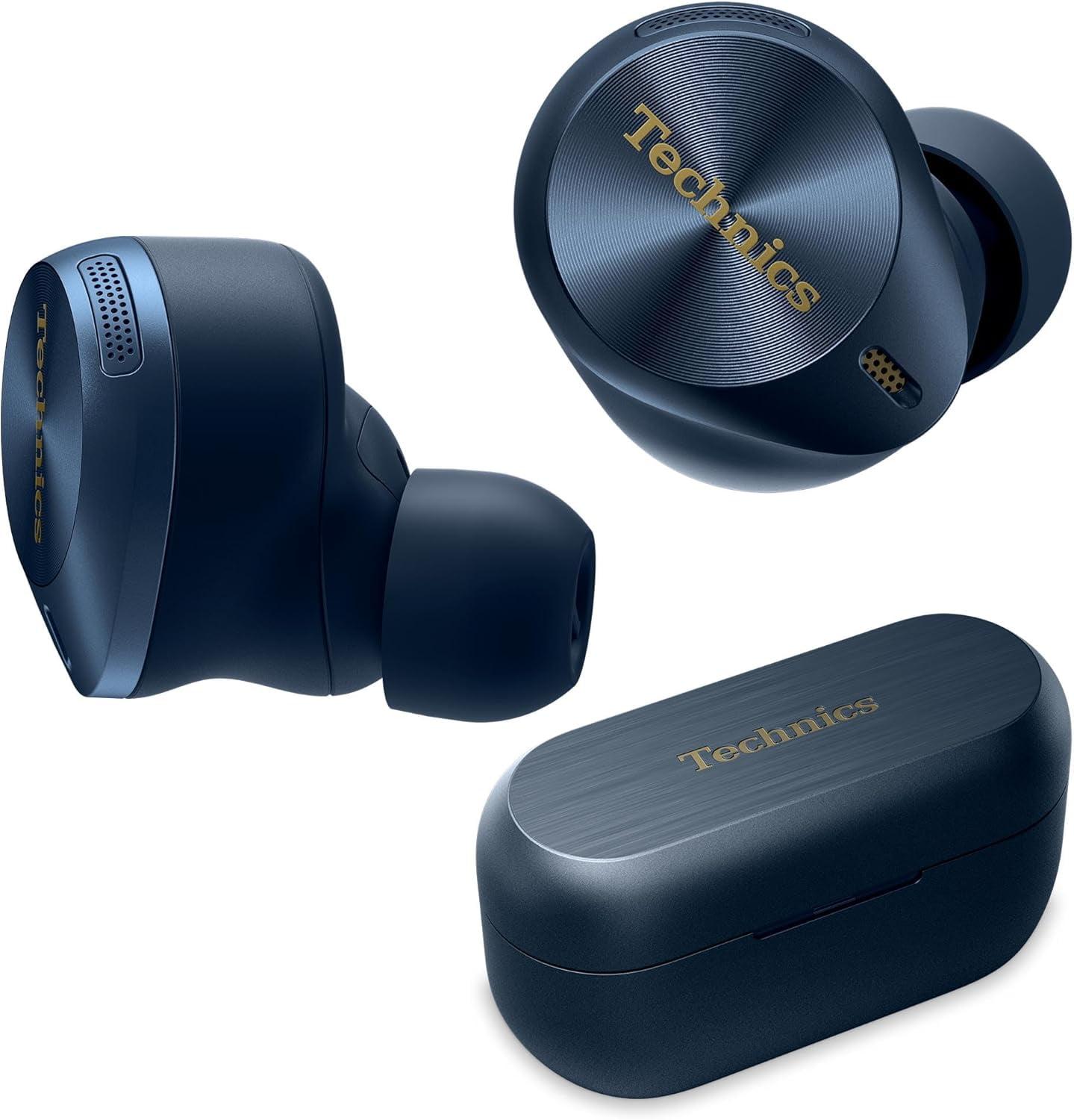
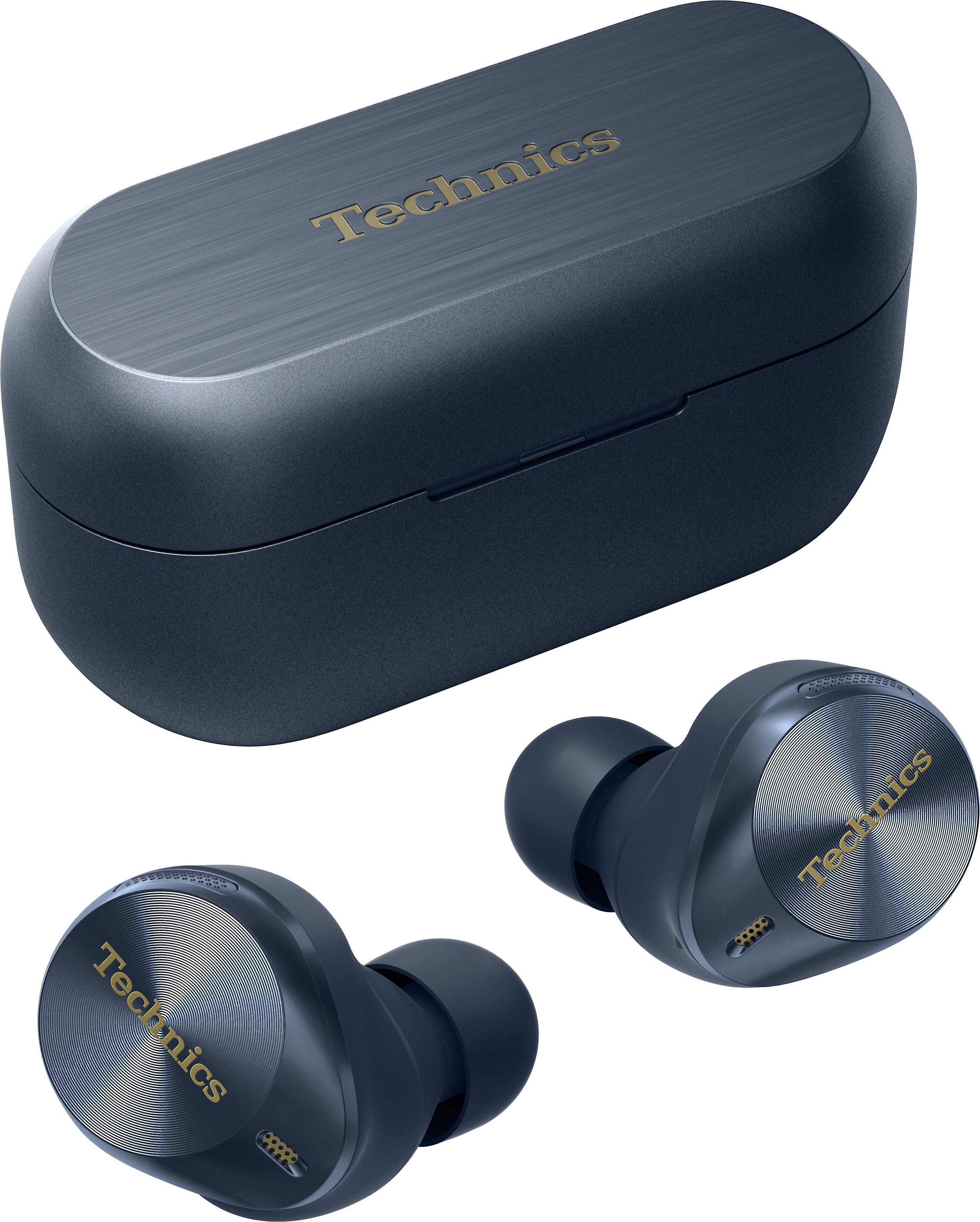


If you've been shopping for top-tier wireless earbuds, you've probably encountered the Sony WF-1000XM5 and Technics EAH-AZ80. Both launched in 2023 as flagship models, representing the latest in premium earbud technology. At the time of writing, both command similar premium pricing that puts them among the most expensive options in their category.
But here's the thing: despite both being "premium noise-cancelling earbuds," they take surprisingly different approaches to what that means. After spending time with both models, I've found that your choice between them really comes down to what you prioritize most in your listening experience.
Before diving into the specifics, let's talk about what makes an earbud "premium" in 2024. We're looking at several key technologies working together: active noise cancellation (ANC) that uses microphones to detect and cancel outside noise, high-resolution audio codecs that preserve more detail in your music, and advanced connectivity features that keep you seamlessly connected to multiple devices.
The most important performance characteristics in this category are audio quality, noise cancellation effectiveness, comfort for extended wear, battery life, and call quality. These aren't just checkboxes – they directly impact how much you'll enjoy using these earbuds day after day.
What's particularly interesting about the Sony WF-1000XM5 and Technics EAH-AZ80 is how they've prioritized these characteristics differently, leading to two distinct philosophies in premium earbud design.
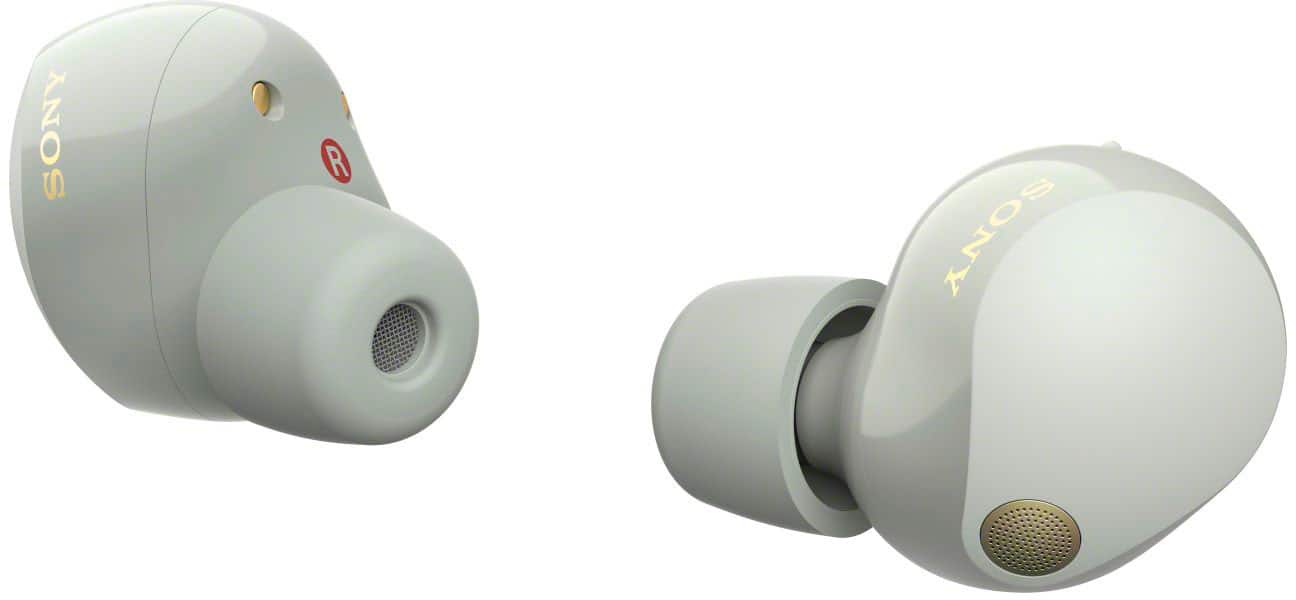
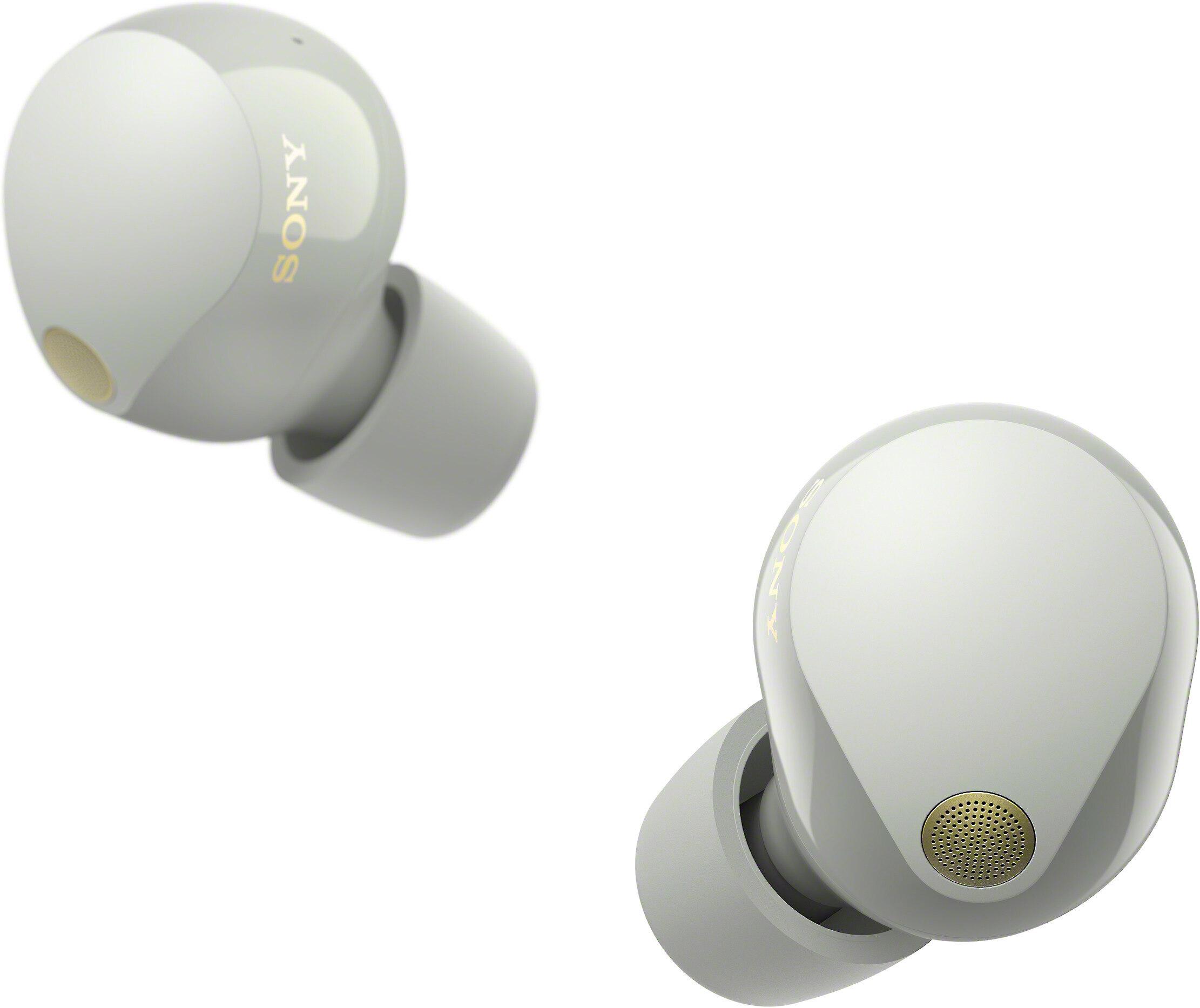
Sony made a bold move with the WF-1000XM5, completely redesigning them to be 25% smaller and 20% lighter than their predecessors. At just 5.9 grams per earbud, they're notably lighter than the Technics AZ80 at 7 grams each. That might not sound like much, but when you're wearing earbuds for hours at a time, every gram counts.
I've found that the Sony's lighter weight makes a real difference during long listening sessions. The ergonomic shape, which Sony developed using decades of ear-shape data, creates a secure fit without the pressure fatigue you might experience with heavier earbuds. This is particularly important if you're someone who wears earbuds during workouts or long commutes.
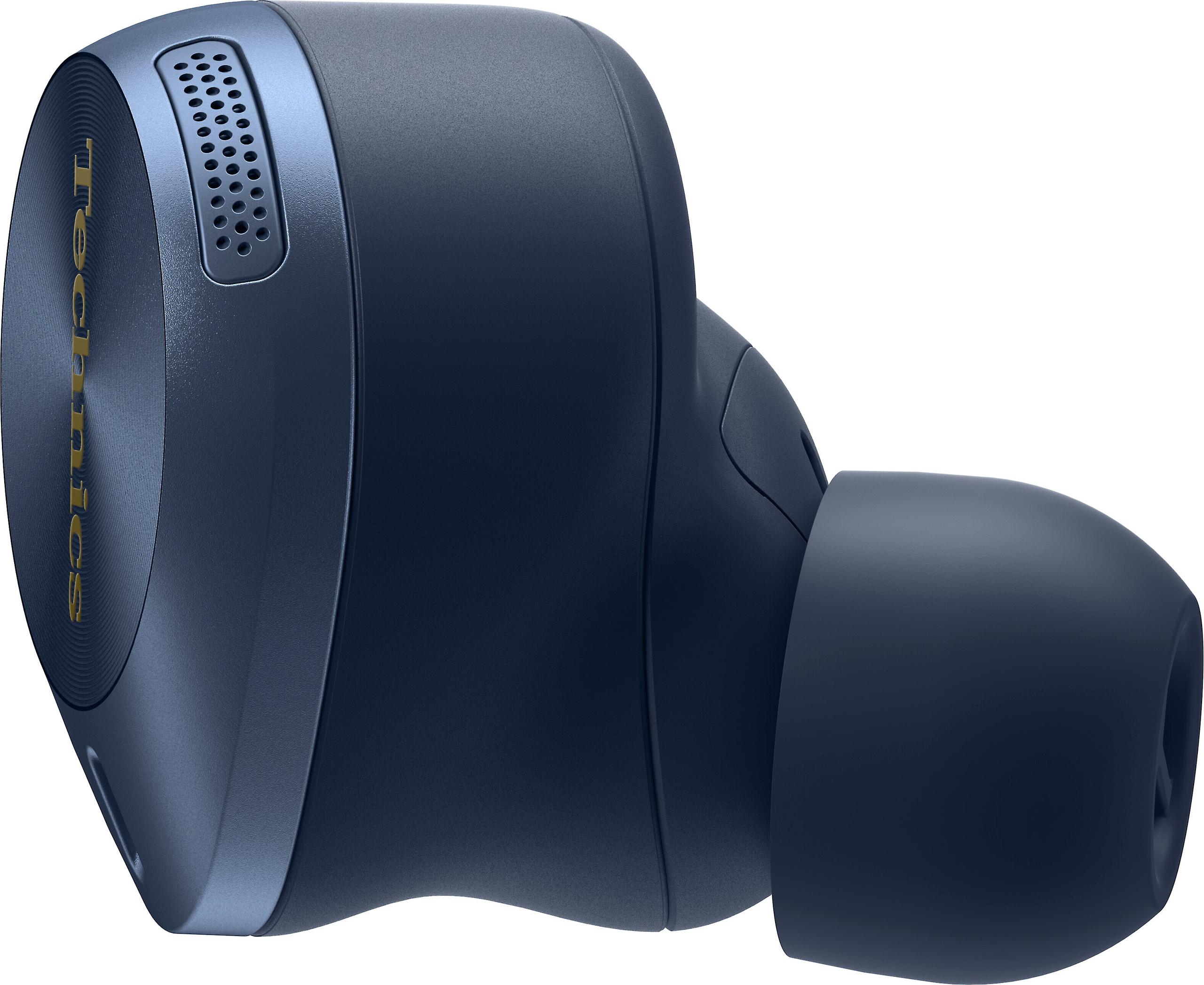
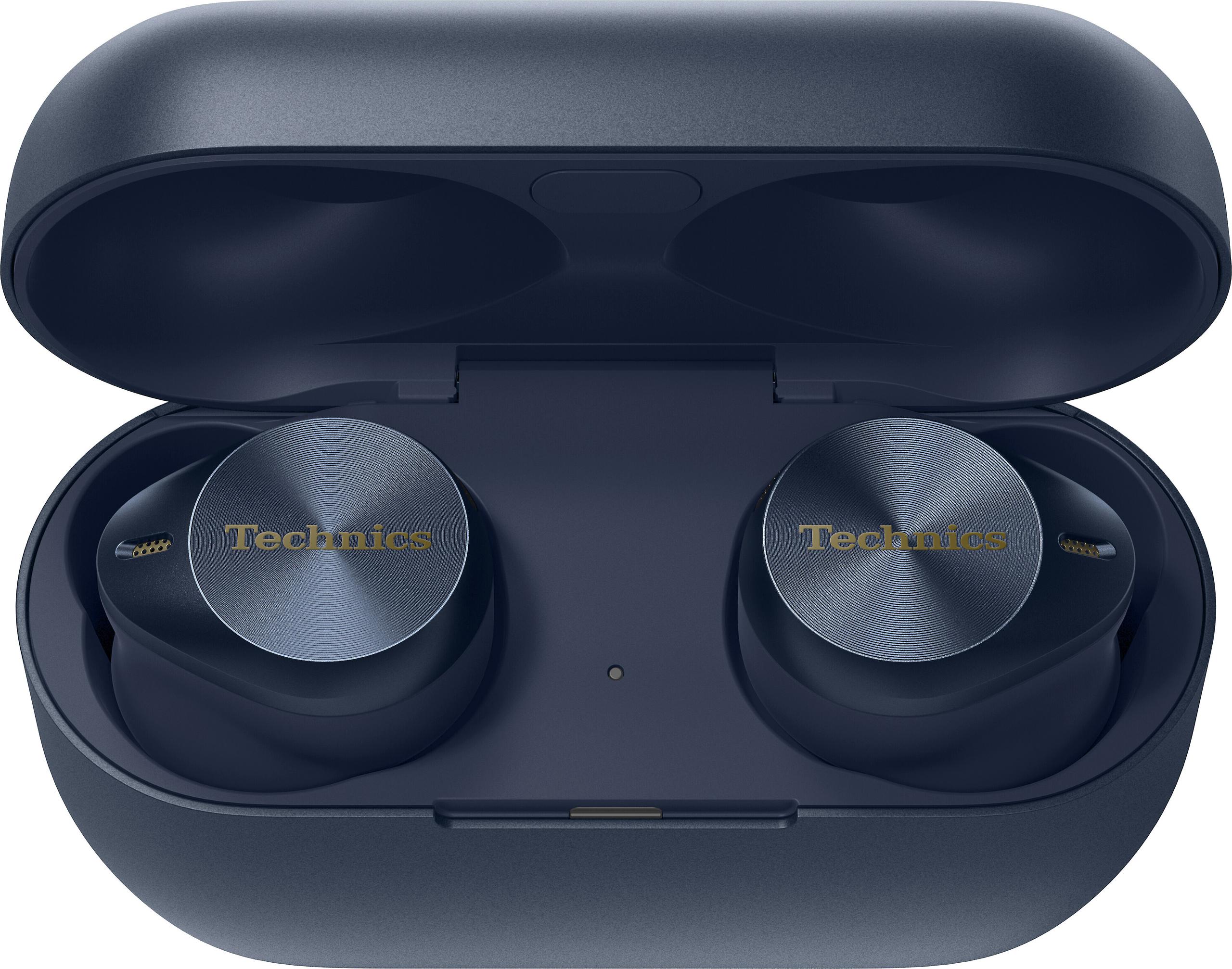
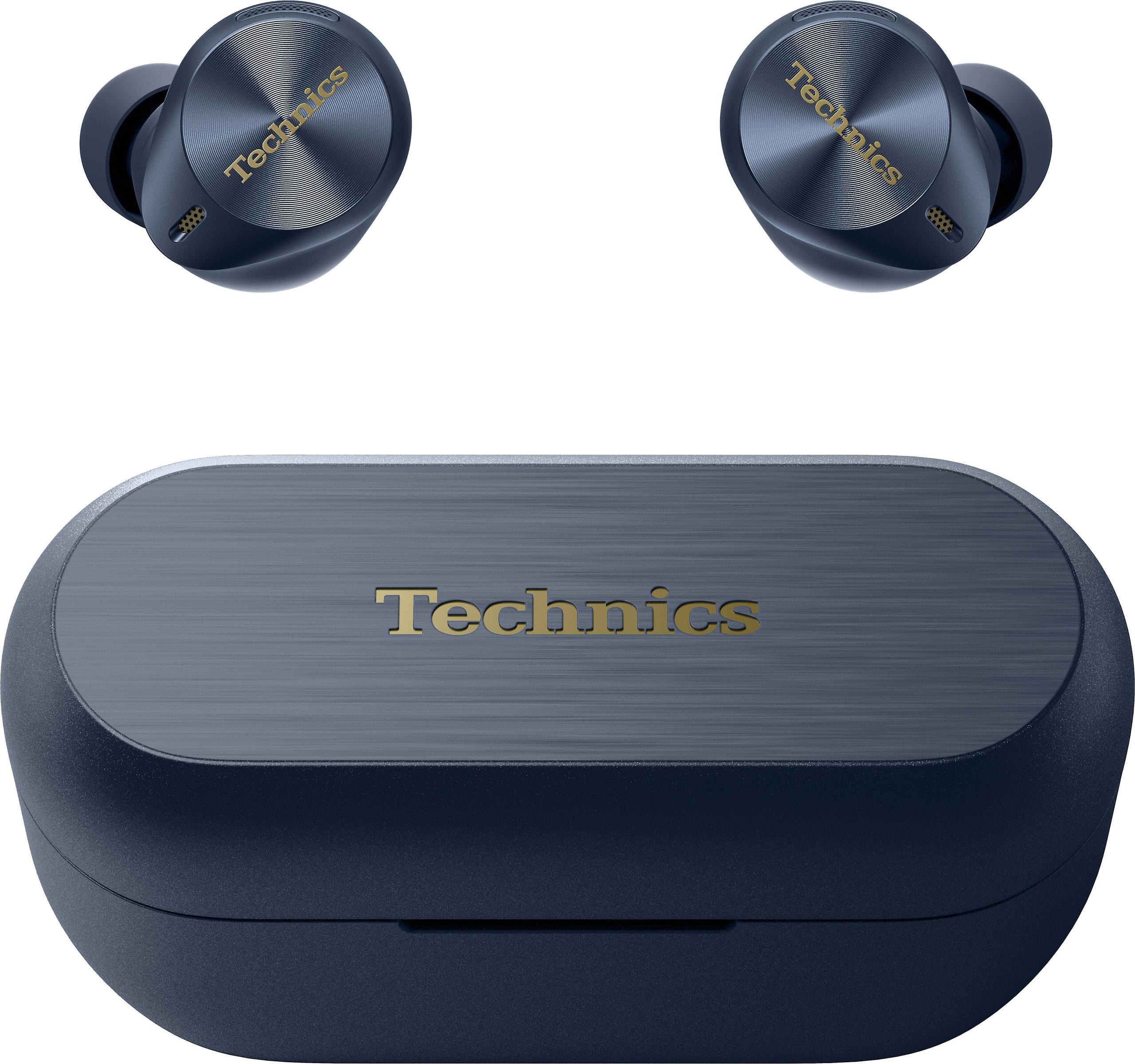
The Technics AZ80, while heavier, compensates with premium materials and build quality that feels distinctly upscale. The aluminum alloy construction and engraved logo details give these earbuds a jewelry-like quality that the more plastic-heavy Sony design can't match. Technics even won design awards for the AZ80's aesthetics, and it shows.
Both models carry IPX4 water resistance ratings, meaning they'll handle sweat and light rain without issues. For most users, this level of protection is perfectly adequate for gym sessions and daily use.
Here's where these earbuds really diverge, and it comes down to driver technology – the tiny speakers inside each earbud that actually create the sound you hear.
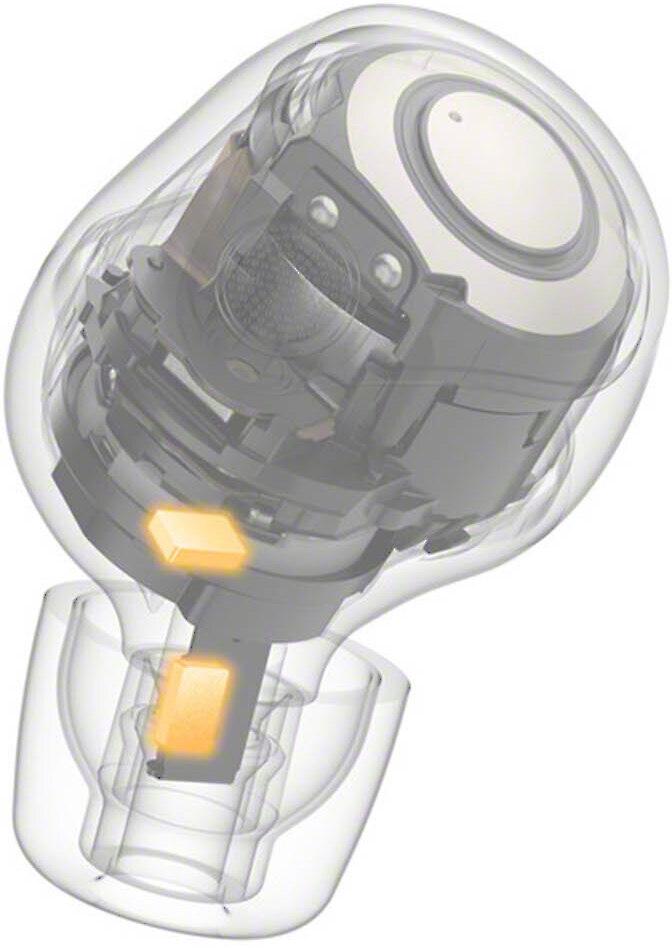
The Technics AZ80 uses larger 10mm aluminum alloy diaphragms, while the Sony WF-1000XM5 employs smaller 8.4mm Dynamic Driver X units. In audio engineering, larger drivers typically move more air and can reproduce bass frequencies more naturally, while the material composition affects clarity and resonance characteristics.
In my experience, the Technics delivers what I'd call a more "reference" sound – meaning it aims to reproduce music exactly as the artist intended, without artificial enhancement. The soundstage (the sense of space and instrument placement you hear) is notably wider and more three-dimensional. When listening to complex orchestral pieces or jazz recordings with multiple instruments, the Technics excels at keeping each element distinct and properly positioned.
The Sony WF-1000XM5 takes a different approach with its DSEE Extreme technology, which uses artificial intelligence to analyze and enhance compressed music files in real-time. This AI system recognizes different instruments and musical genres, then restores high-frequency details that compression typically removes. It's genuinely impressive technology that makes streaming music sound closer to high-resolution audio files.
Sony's approach feels more "consumer-friendly" – the sound is warmer and more engaging for casual listening, with a slight bass emphasis that makes most genres sound exciting without becoming overwhelming. The Adaptive Sound Control feature even adjusts the sound signature based on your environment and activity, which works surprisingly well in practice.
Both earbuds support LDAC codec, which allows for high-resolution audio transmission over Bluetooth at up to 990 kbps – nearly three times the data rate of standard Bluetooth audio. This technical capability means both can reproduce audio quality that approaches wired headphone performance, assuming you have high-quality source material.
For home theater use, the Sony WF-1000XM5 offers a unique advantage with its 360-degree head tracking for spatial audio. When watching movies with compatible content on supported devices, this creates a more immersive surround sound experience that follows your head movements. The Technics AZ80 doesn't offer this feature, sticking to traditional stereo presentation.
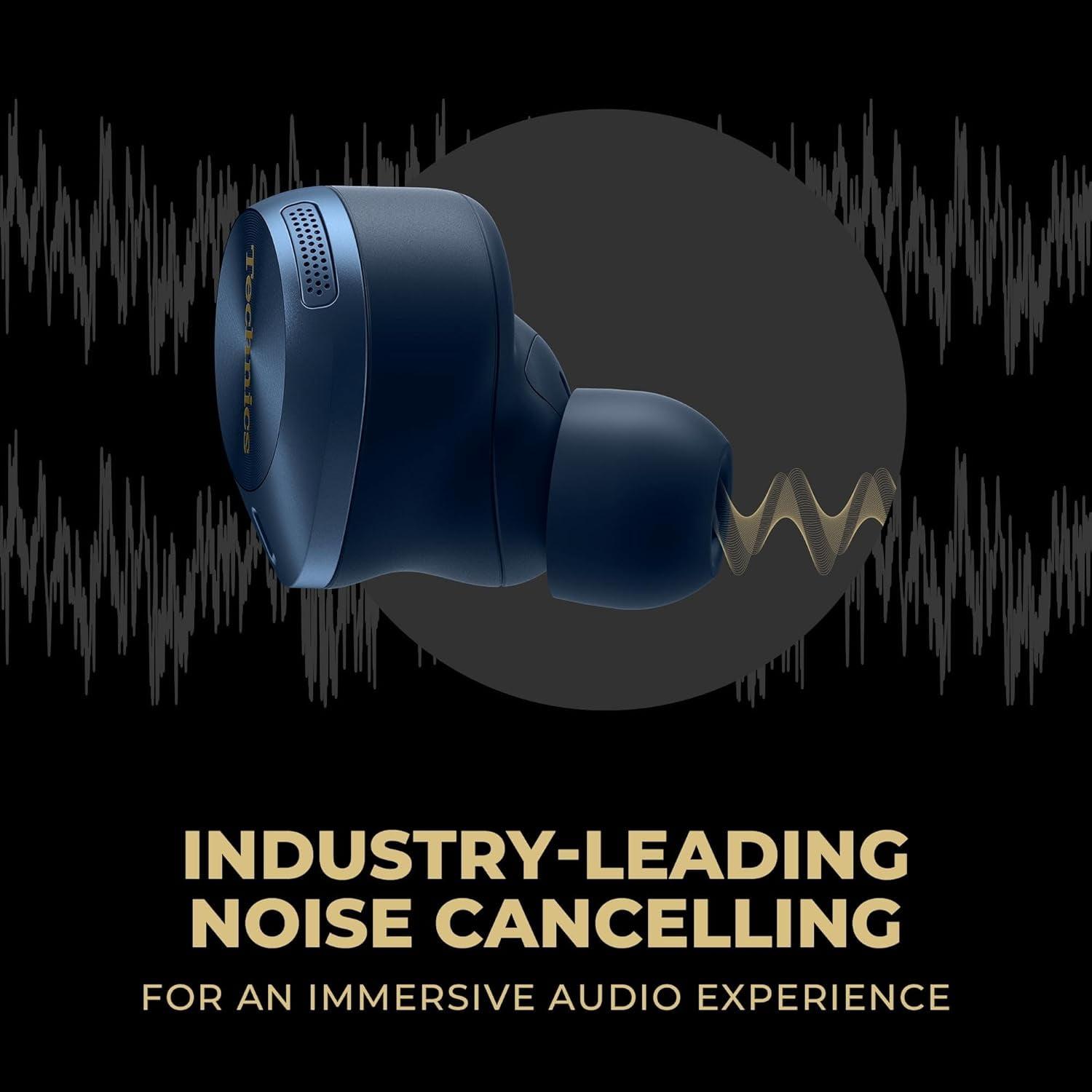
Both earbuds use active noise cancellation, but their implementations reveal different engineering priorities. ANC works by using external microphones to detect ambient noise, then generating inverse sound waves to cancel it out – it's like creating destructive interference with unwanted sounds.
The Sony WF-1000XM5 employs three microphones per earbud, including dual feedback mics that monitor the sound inside your ear canal. Sony's new Integrated Processor V2 and HD Noise Cancelling Processor QN2e work together to process this information and generate cancellation signals. The system even adapts to your ear shape and the seal created by your ear tips.
The Technics AZ80 uses what they call "Dual Hybrid" ANC with both feedforward and feedback microphones. While it has eight total microphones across both earbuds (compared to Sony's six), the noise cancellation performance doesn't quite match the sophistication of Sony's processing.
In real-world testing, neither earbud achieves the class-leading ANC performance of models like the Bose QuietComfort Earbuds, but both provide solid noise reduction for commuting and office environments. The Sony's ANC feels slightly more refined and less prone to pressure sensations, while the Technics system is adequate but not exceptional.
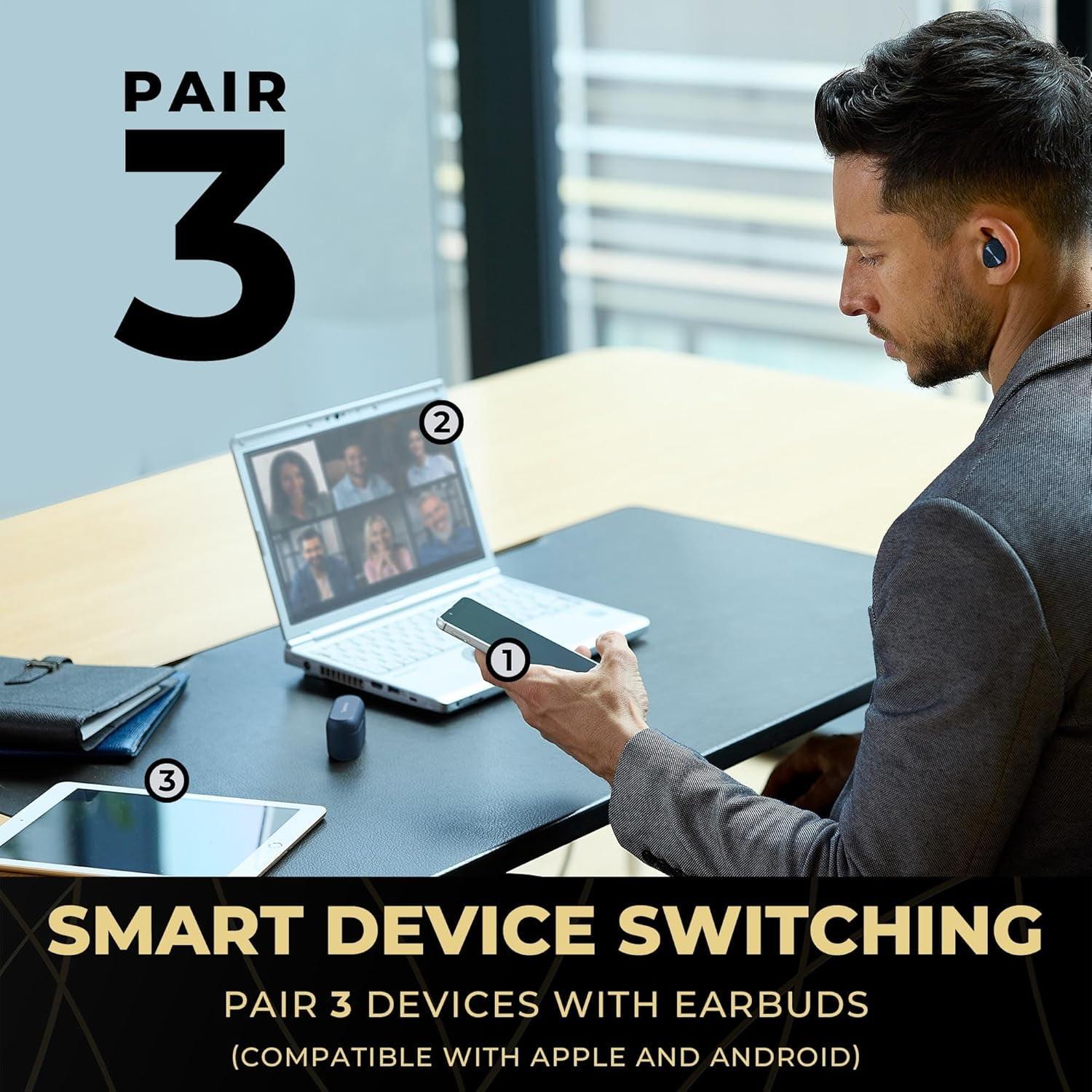
Here's where the Technics AZ80 shines with a genuinely unique feature: three-device multipoint connectivity. Most premium earbuds, including the Sony WF-1000XM5, can connect to two devices simultaneously. The Technics can maintain active connections to three devices – say your phone, laptop, and tablet – and seamlessly switch between them as needed.
This might sound like a minor feature, but for professionals who regularly work across multiple devices, it's genuinely transformative. You can take a call on your phone, switch to a video conference on your laptop, then immediately play music from your tablet without any manual reconnection.
The Sony WF-1000XM5 compensates with more sophisticated smart features. The Speak-to-Chat function automatically pauses music and activates ambient sound mode when it detects your voice, allowing for quick conversations without removing the earbuds. Google Fast Pair support makes initial setup nearly effortless with Android devices.
Both models use Bluetooth 5.3, which provides improved range and connection stability compared to earlier Bluetooth versions. In practice, both maintain solid connections up to about 30 feet from your source device.
For voice calls, the Technics AZ80 takes a more aggressive approach with eight MEMS (Micro-Electro-Mechanical Systems) microphones and JustMyVoice technology. MEMS microphones are tiny silicon-based microphones that offer excellent sensitivity and noise rejection. The system uses advanced algorithms to isolate your voice from background noise.
The Sony WF-1000XM5 uses six microphones total with Precise Voice Pickup Technology, which combines traditional audio processing with bone conduction sensors. These sensors detect vibrations from your vocal cords through your skull, helping to distinguish your voice from ambient sound. It's clever technology that works well in practice.
During testing, both earbuds provide clear call quality in quiet environments. The Technics has a slight edge in noisy environments thanks to its superior microphone array, making it potentially better for business calls or frequent phone use.
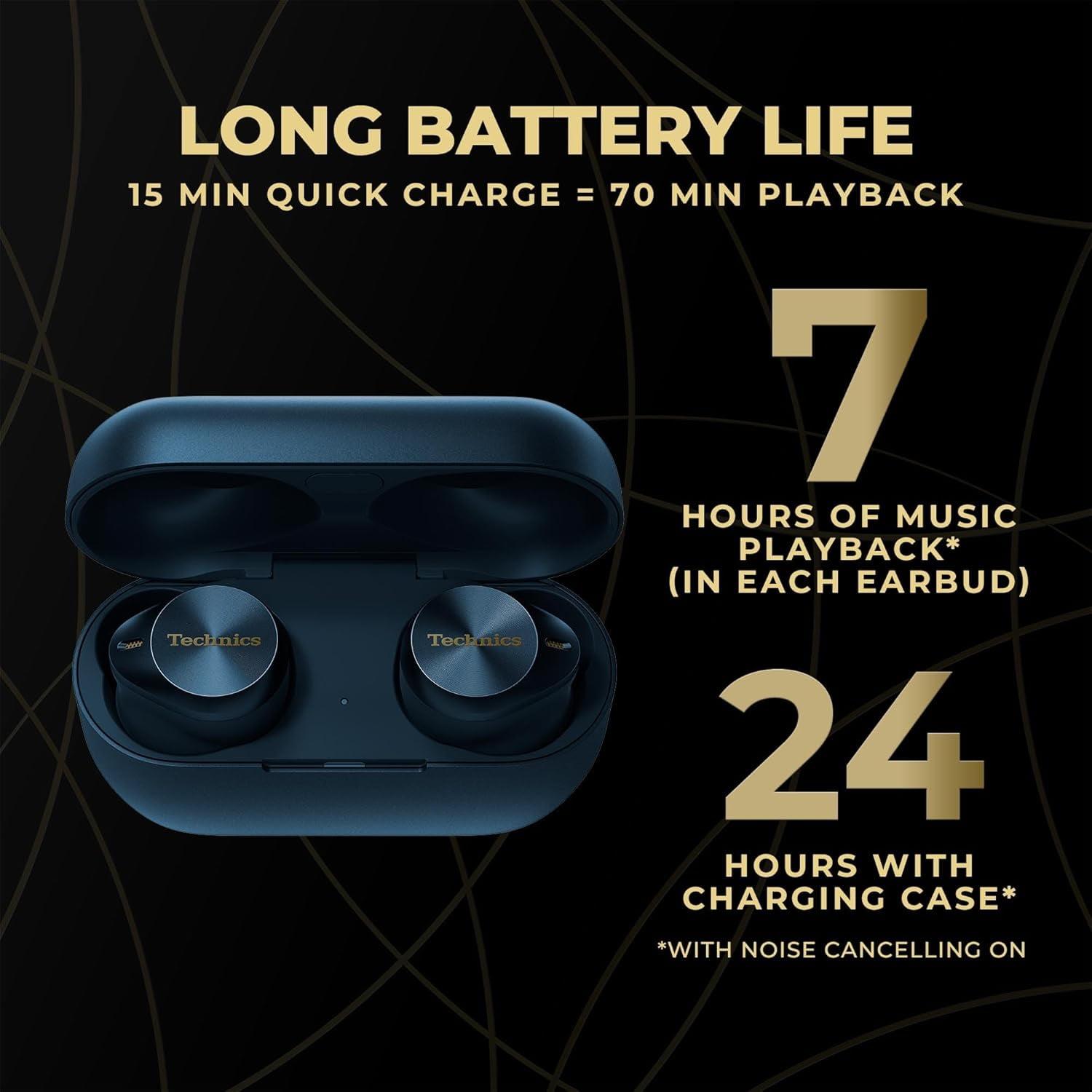
Battery performance shows some interesting trade-offs. The Sony WF-1000XM5 delivers 8 hours of playback with ANC enabled, plus an additional 24 hours from the charging case. The Technics AZ80 provides 7 hours with ANC on, plus 24 hours from its case.
Where Sony really excels is fast charging capability. Just three minutes in the case provides a full hour of playback – perfect for those "oh no, my earbuds are dead" moments before a flight or important call. The Technics requires 15 minutes of charging for 70 minutes of playback, which is still reasonable but not quite as convenient.
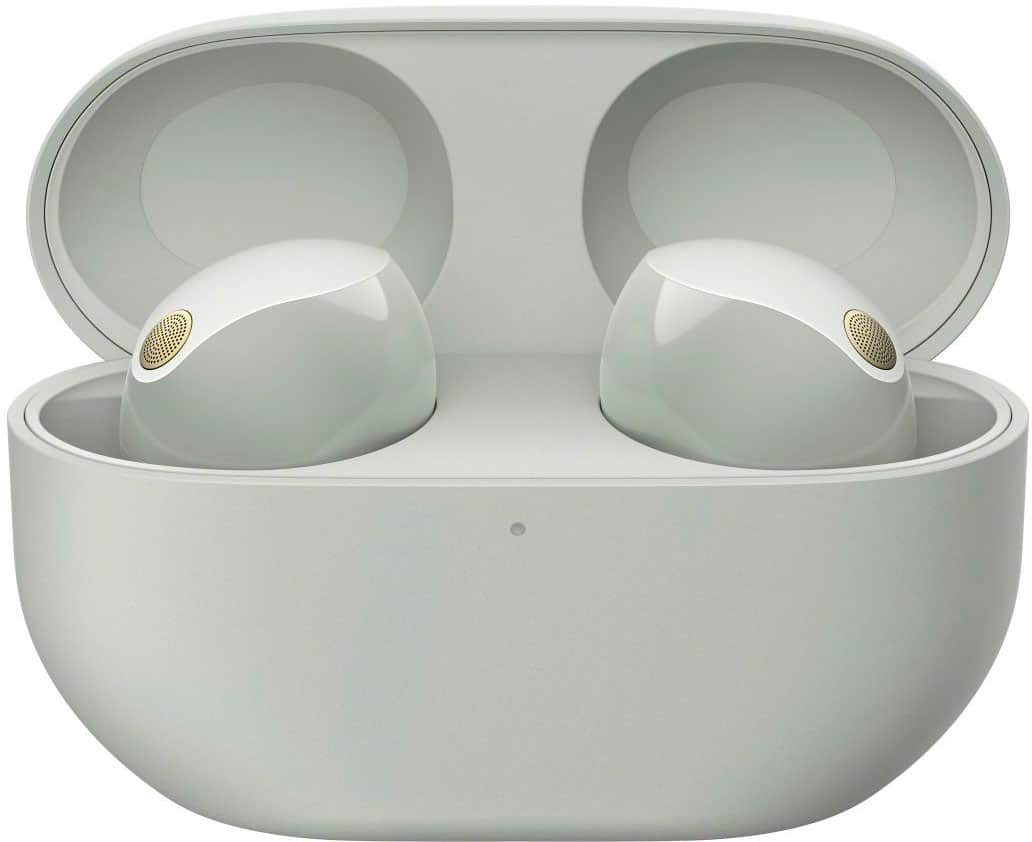
Both models support wireless charging, allowing you to simply place the case on a Qi-compatible charging pad. This feature might seem minor, but it's surprisingly convenient for desk workers who can keep their earbuds topped off throughout the day.
After extensive use with both models, here's how I'd break down the decision:
Choose the Technics EAH-AZ80 if you're primarily focused on audio quality and professional use. These earbuds excel for critical listening sessions, whether you're analyzing music, enjoying high-resolution audio files, or need the absolute best call quality for business use. The three-device connectivity is genuinely useful for professionals, and the premium build quality feels appropriately luxurious for the price point.
The Technics are particularly well-suited for home listening sessions where you're sitting down to actively enjoy music. The superior soundstage and clarity make them excellent for discovering new details in familiar recordings.
Choose the Sony WF-1000XM5 if you prioritize all-day comfort and smart features. The lighter weight makes them ideal for commuters, gym-goers, or anyone who wears earbuds for extended periods. The spatial audio feature adds genuine value for movie watching, and the various AI-enhanced features create a more seamless daily experience.
For home theater use, the Sony's spatial audio capability gives it a clear advantage when watching movies or playing games on compatible devices. The head tracking creates a more immersive experience that the Technics simply can't match.
Both the Sony WF-1000XM5 and Technics EAH-AZ80 succeed as premium earbuds, but they're designed for different types of users. At similar premium price points (at the time of writing), neither is a "budget" choice – you're paying for flagship performance and features.
The Technics represents the audiophile approach: uncompromising sound quality, premium materials, and professional-grade features. If you're someone who notices the difference between good and great audio quality, these earbuds justify their premium pricing with reference-level performance.
The Sony embodies the smart consumer electronics approach: excellent performance enhanced with AI processing, optimized for comfort and convenience, with features that adapt to your lifestyle. They're the choice for users who want flagship performance without sacrificing everyday usability.
My personal preference leans toward the Sony WF-1000XM5 for most users, simply because the comfort advantage makes them more enjoyable to use daily. However, for dedicated listening sessions or professional audio work, the Technics AZ80 offers a level of audio quality that's hard to ignore.
Ultimately, both earbuds represent the current state of the art in wireless audio technology, just with different priorities. Your choice should align with how you actually use earbuds day-to-day – and both options will deliver an excellent experience within their design philosophies.
| Sony WF-1000XM5 | Technics EAH-AZ80 |
|---|---|
| Driver Size - Larger drivers typically produce better bass and soundstage | |
| 8.4mm Dynamic Driver X | 10mm aluminum alloy diaphragm |
| Weight Per Earbud - Critical for comfort during extended wear | |
| 5.9g (25% lighter than predecessor) | 7g (premium materials add weight) |
| Active Noise Cancellation - Essential for commuting and focus | |
| 3 mics per earbud with V2 processor | Dual Hybrid ANC with 8 total mics |
| Multipoint Connectivity - Connect to multiple devices simultaneously | |
| 2 devices (standard premium feature) | 3 devices (industry-first capability) |
| Battery Life with ANC - Real-world usage time | |
| 8 hours + 24 hours case | 7 hours + 24 hours case |
| Fast Charging - Emergency power when running late | |
| 3 minutes = 1 hour playback | 15 minutes = 70 minutes playbook |
| Audio Codecs - Higher quality wireless transmission | |
| SBC, AAC, LDAC, LC3 | SBC, AAC, LDAC |
| Smart Features - AI and convenience technologies | |
| DSEE Extreme AI upscaling, Spatial Audio, Speak-to-Chat | JustMyVoice call technology |
| Build Materials - Affects durability and premium feel | |
| Plastic construction, ergonomic design | Aluminum alloy with premium finish |
| Water Resistance - Protection from sweat and rain | |
| IPX4 (splash resistant) | IPX4 (splash resistant) |
| Ear Tip Sizes - Important for proper fit and seal | |
| Multiple sizes included | 7 different sizes included |
| Release Year - Indicates latest technology generation | |
| 2023 (latest Sony flagship) | 2023 (latest Technics flagship) |
The Technics AZ80 generally delivers superior audio quality with its larger 10mm aluminum alloy drivers that create a wider soundstage and more detailed instrument separation. The Sony WF-1000XM5 offers excellent sound with AI-enhanced processing through DSEE Extreme technology, but audiophiles typically prefer the Technics for critical listening.
The Sony WF-1000XM5 are significantly more comfortable for extended wear, being 25% smaller and 20% lighter (5.9g vs 7g per earbud) than the Technics AZ80. Sony's ergonomic redesign reduces ear fatigue during all-day use, making them better for commuters and office workers.
The Sony WF-1000XM5 provides slightly better active noise cancellation with its three microphones per earbud and advanced V2 processor. While the Technics AZ80 has more total microphones (8 vs 6), Sony's noise cancellation processing is more sophisticated and effective at blocking ambient noise.
The Technics AZ80 offers superior connectivity with industry-first 3-device multipoint connection, allowing simultaneous connection to your phone, laptop, and tablet. The Sony WF-1000XM5 supports standard 2-device multipoint connectivity, which is still convenient but less flexible for multi-device users.
The Sony WF-1000XM5 offers slightly better battery performance with 8 hours of playback (ANC on) versus 7 hours for the Technics AZ80. Both provide 24 hours total with their charging cases. Sony also has superior fast charging at 3 minutes for 1 hour of playback compared to Technics' 15 minutes for 70 minutes.
The Technics AZ80 generally provides better call quality with its 8 MEMS microphones and JustMyVoice technology that excels at voice isolation. The Sony WF-1000XM5 offers good call quality with bone conduction sensors, but the Technics is superior for business calls and noisy environments.
The Sony WF-1000XM5 are better for workouts due to their lighter weight, more secure ergonomic fit, and superior comfort during movement. Both have IPX4 water resistance for sweat protection, but Sony's design stays in place better during physical activity compared to the heavier Technics AZ80.
The Sony WF-1000XM5 are superior for home theater use with their 360-degree spatial audio and head tracking technology that creates an immersive surround sound experience when watching compatible content. The Technics AZ80 provides excellent stereo sound but lacks spatial audio features for movie watching.
The Technics AZ80 features premium aluminum alloy construction with award-winning design that feels more luxurious and durable. The Sony WF-1000XM5 uses high-quality plastic construction focused on ergonomics and weight reduction rather than premium materials, though both are well-built for daily use.
The Technics AZ80 are generally preferred by audiophiles for their reference-quality sound signature, larger drivers, and superior instrument separation. While the Sony WF-1000XM5 offer excellent audio with AI enhancement, serious music listeners typically choose Technics for the most accurate sound reproduction.
The Sony WF-1000XM5 charge much faster with just 3 minutes providing 1 hour of playback, perfect for quick top-ups before leaving. The Technics AZ80 require 15 minutes of charging for 70 minutes of playback. Both support wireless charging, but Sony's fast charging is more convenient for busy lifestyles.
For most daily users, the Sony WF-1000XM5 are the better choice due to superior comfort, better ANC, faster charging, and smart features like spatial audio. Choose the Technics AZ80 if you prioritize audio quality above all else, need 3-device connectivity, or frequently make important business calls where call quality matters most.
We've done our best to create useful and informative comparisons to help you decide what product to buy. Our research uses advanced automated methods to create this comparison and perfection is not possible - please contact us for corrections or questions. These are the sites we've researched in the creation of this article: rtings.com - moon-audio.com - whathifi.com - sony.ca - soundguys.com - techgearlab.com - loudnwireless.com - youtube.com - techradar.com - youtube.com - costco.com - youtube.com - us.community.sony.com - youtube.com - whathifi.com - youtube.com - cnet.com - loudnwireless.com - youtube.com - bestbuy.com - electronics.sony.com - helpguide.sony.net - gsmarena.com - soundguys.com - bestbuy.com - sony.com - loudnwireless.com - sony.com - sony.com - youtube.com - sony-asia.com - helpguide.sony.net - sony.com - sony.com.sg - sony-asia.com - youtube.com - headphones.com - moon-audio.com - electronics.sony.com - shop.oprahdaily.com - youtube.com - stereonet.com - us.technics.com - us.technics.com - rtings.com - head-fi.org - bestbuy.com - soundguys.com - head-fi.org - youtube.com - loudnwireless.com - youtube.com - cnet.com - technics.com - technics.com - bestbuy.com - target.com - us.technics.com - technics.com - youtube.com - head-fi.org - nnty.fun - us.technics.com - bhphotovideo.com - bestbuy.com - us.technics.com - audiosciencereview.com - youtube.com - head-fi.org - head-fi.org - jbhifi.com.au

Privacy Policy
Terms and Conditions - Affiliate Policy
Home Security
© Copyright 2008-2026.
11816 Inwood Rd #1211, Dallas, TX 75244