

If you're shopping for premium true wireless earbuds in 2024, you've probably noticed there are dozens of options claiming to be the "best." Two models that consistently rise to the top are the JBL Tour Pro 2 and the Technics EAH-AZ80. Both launched in the past couple of years during a period of rapid innovation in the earbud space, but they take completely different approaches to achieving premium status.
The wireless earbud market has exploded since Apple removed the headphone jack in 2016, pushing manufacturers to create increasingly sophisticated alternatives. What started as simple Bluetooth audio has evolved into a complex ecosystem of features including active noise cancellation (ANC), spatial audio, multi-device connectivity, and even touchscreen controls. Understanding what separates truly premium earbuds from the rest requires looking beyond marketing claims to examine the underlying technology.
Before diving into these specific models, it's worth understanding what you're paying for in premium earbuds. The most important factors are audio quality (how good they sound), active noise cancellation (how well they block outside noise), battery life, build quality, and smart features that enhance daily use.
Audio quality comes down to several technical elements. The driver – essentially a tiny speaker inside each earbud – determines much of the sound character. Most premium earbuds use dynamic drivers between 8-12mm in diameter, with larger drivers generally capable of producing better bass response. But size isn't everything; the materials used, the engineering behind the driver housing, and the digital signal processing all play crucial roles.
Frequency response describes which audio frequencies (bass, mids, treble) an earbud can reproduce and how loud each frequency range sounds relative to others. Human hearing typically spans 20Hz to 20kHz, with lower numbers representing bass frequencies and higher numbers representing treble. A "flat" frequency response reproduces all frequencies at equal volume, while many consumer earbuds boost certain frequencies to create a more exciting sound.
Active noise cancellation uses microphones to detect outside noise and creates inverse sound waves to cancel it out. This works best on consistent, low-frequency sounds like airplane engines or air conditioning. The number and placement of microphones, plus the processing algorithms, determine ANC effectiveness.
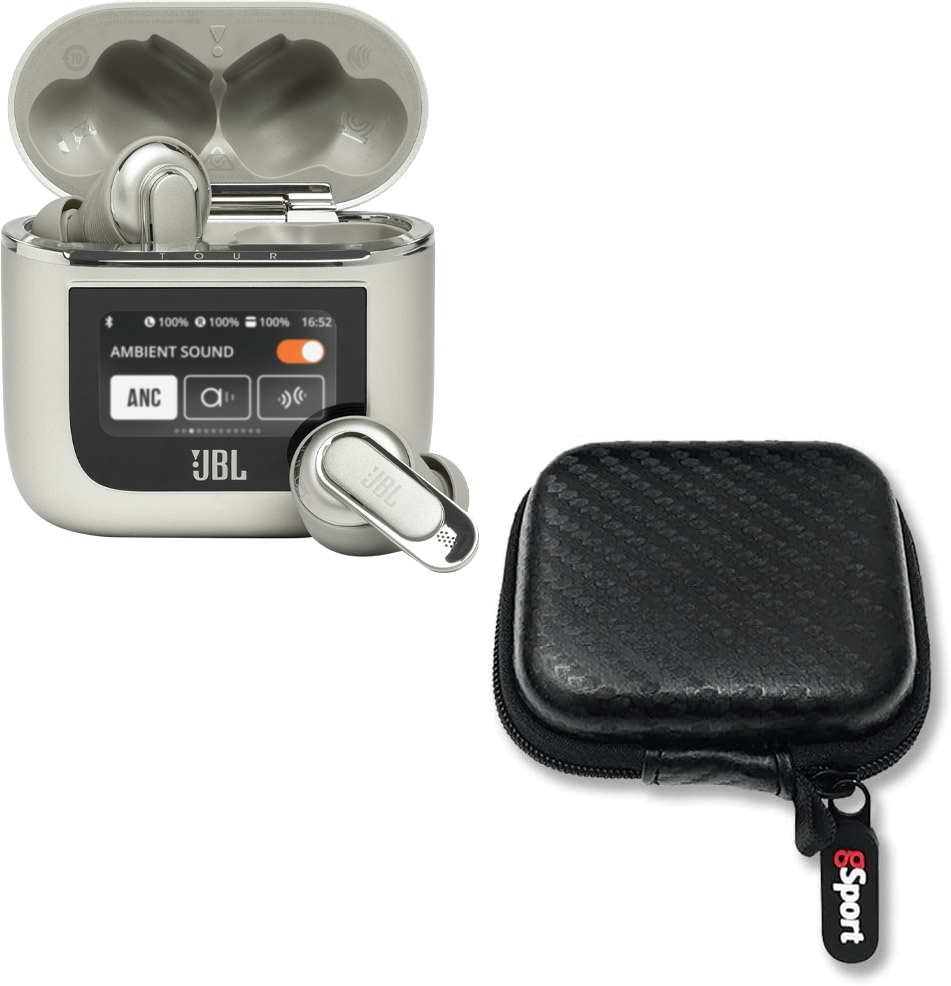
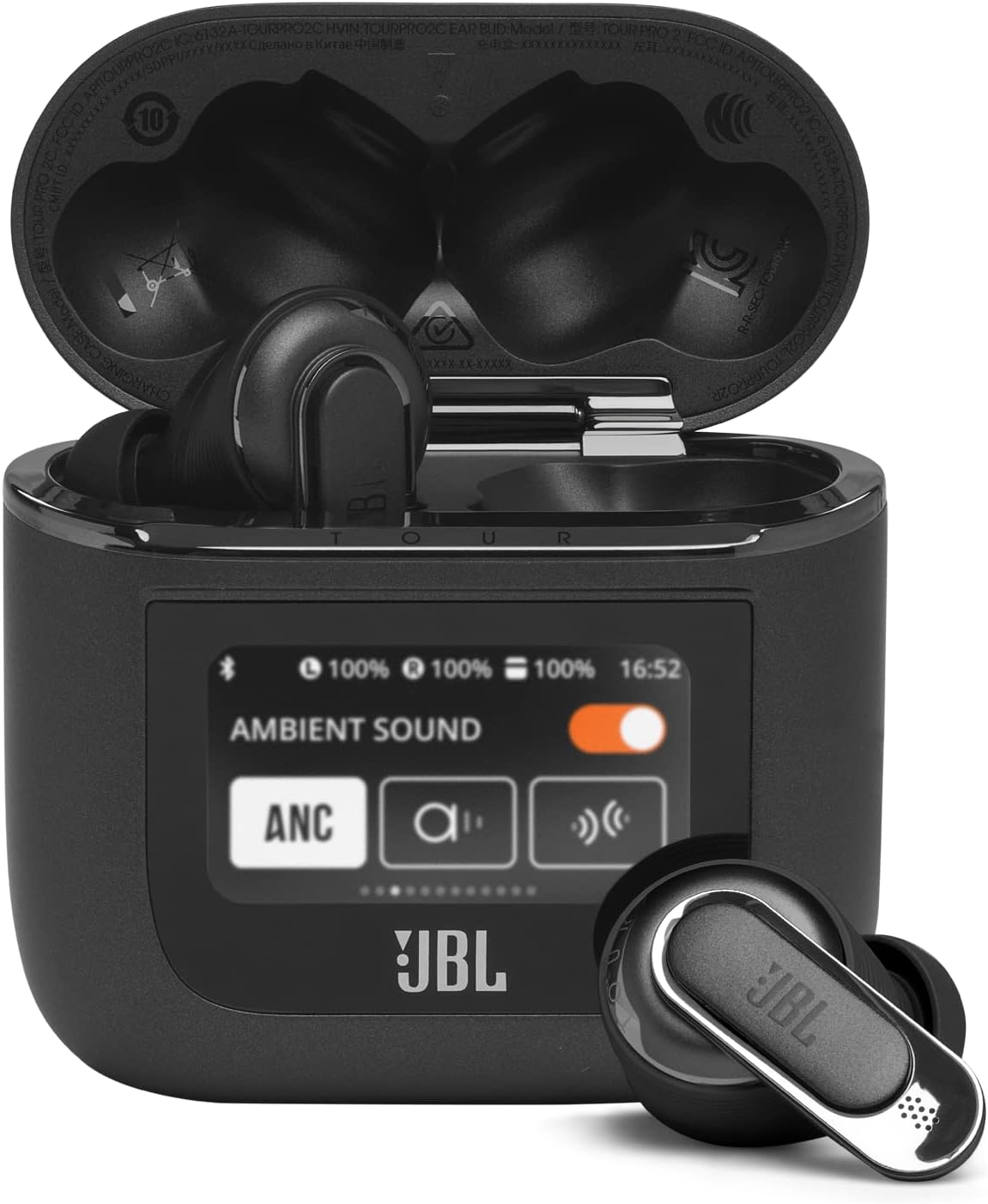
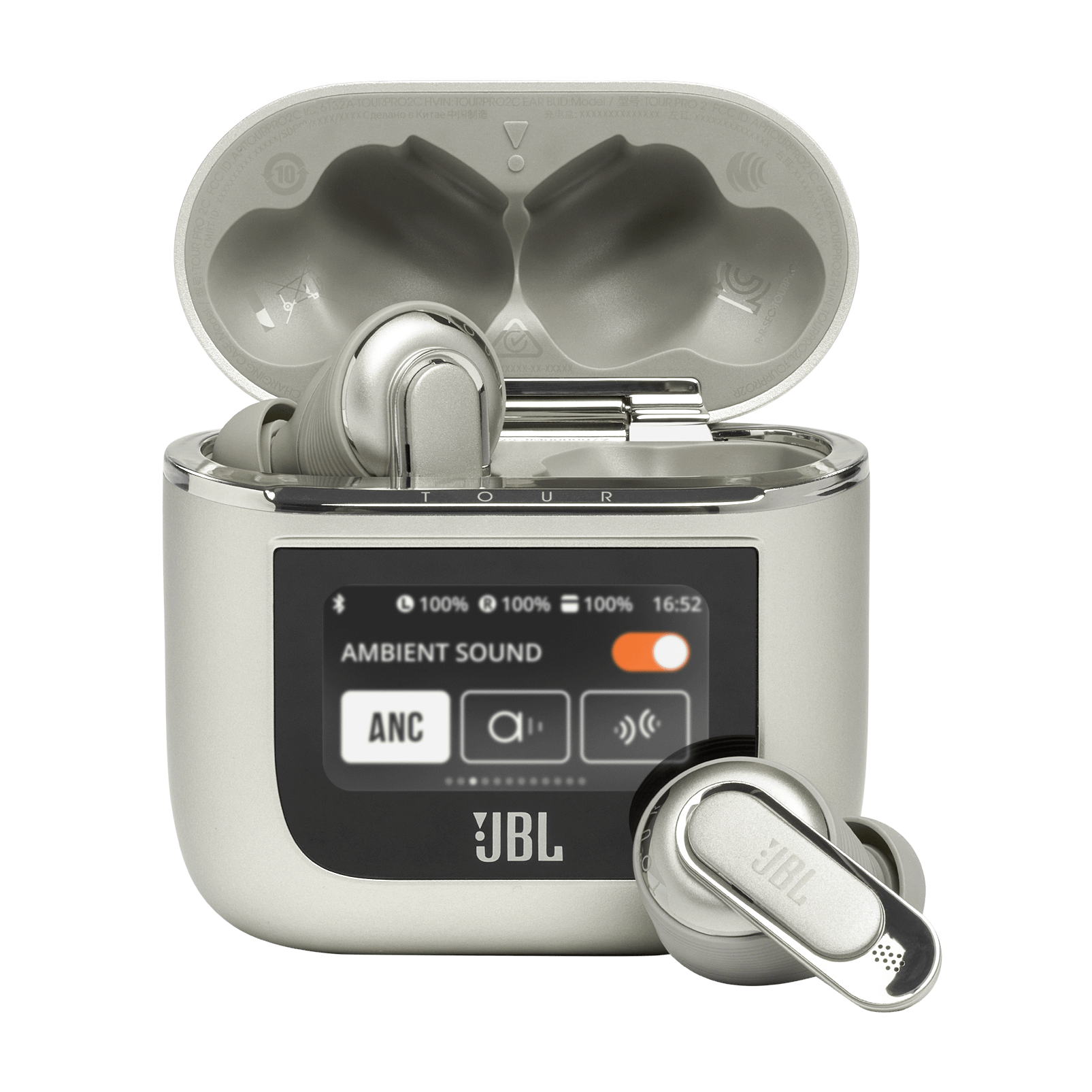
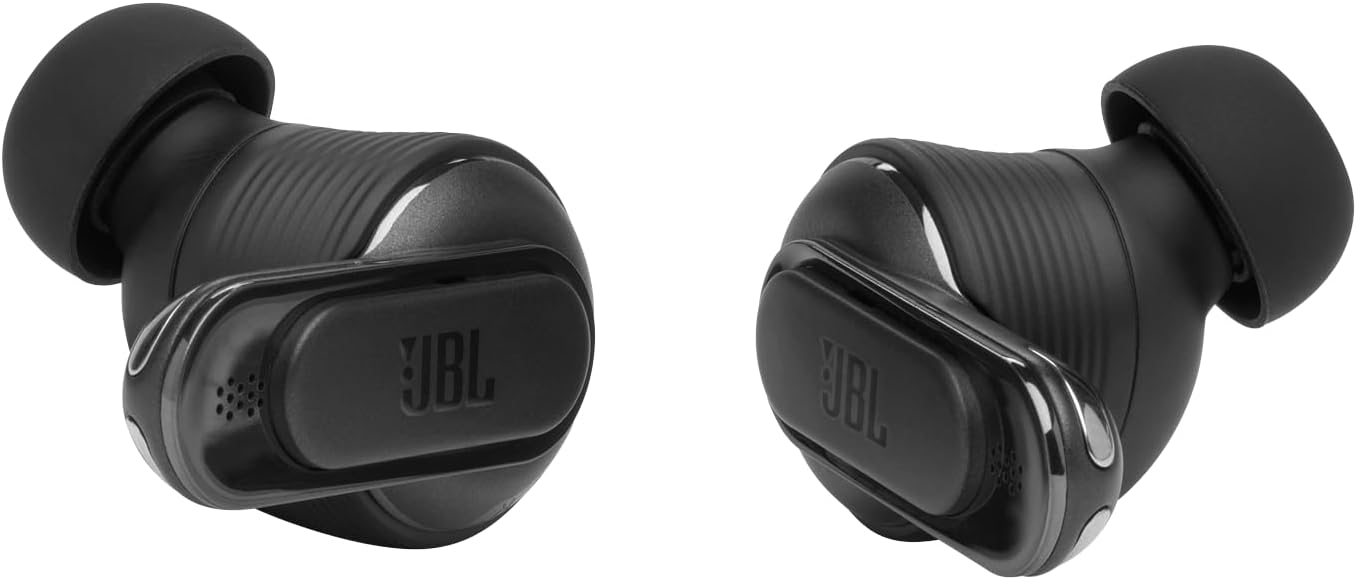
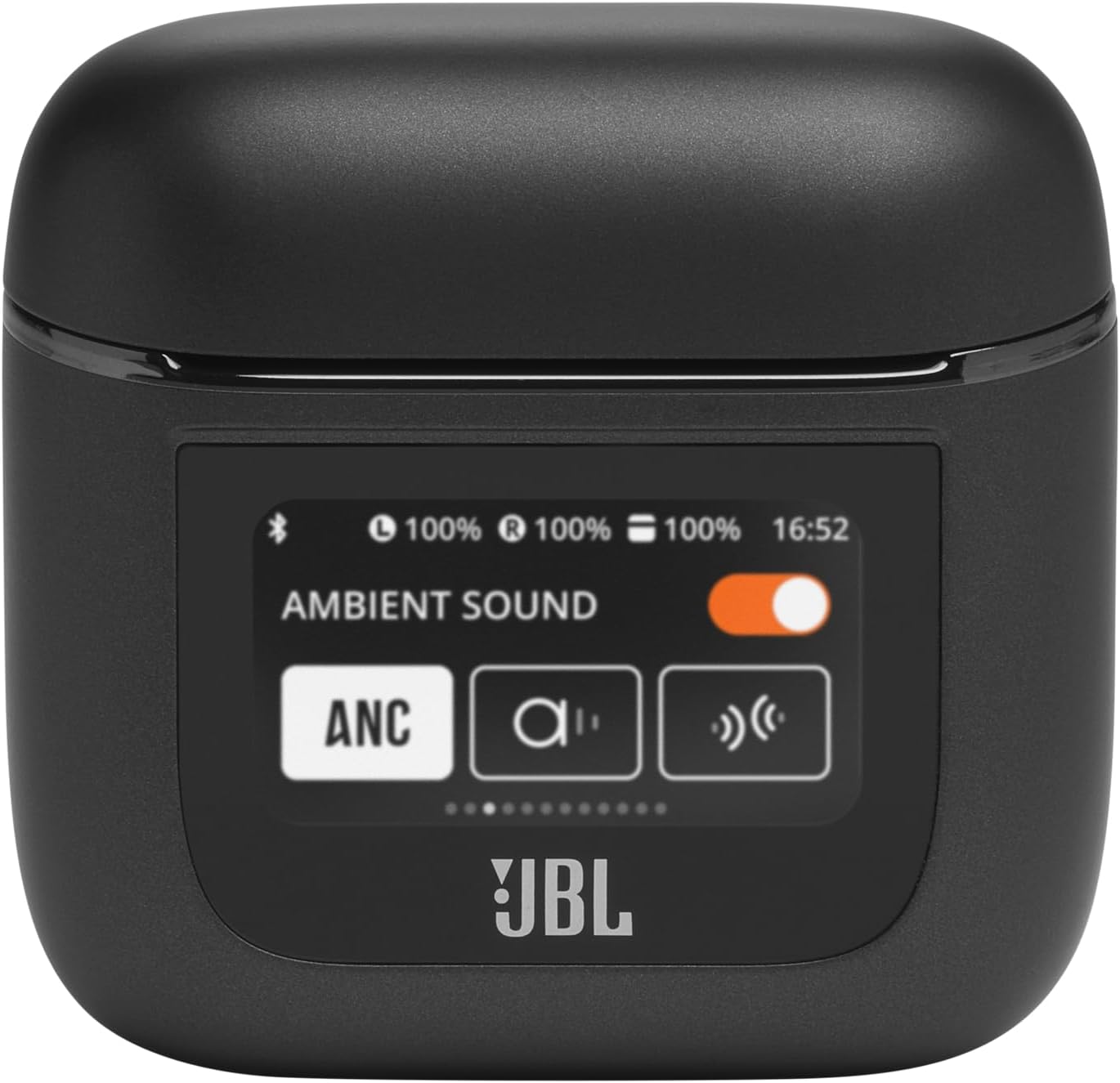
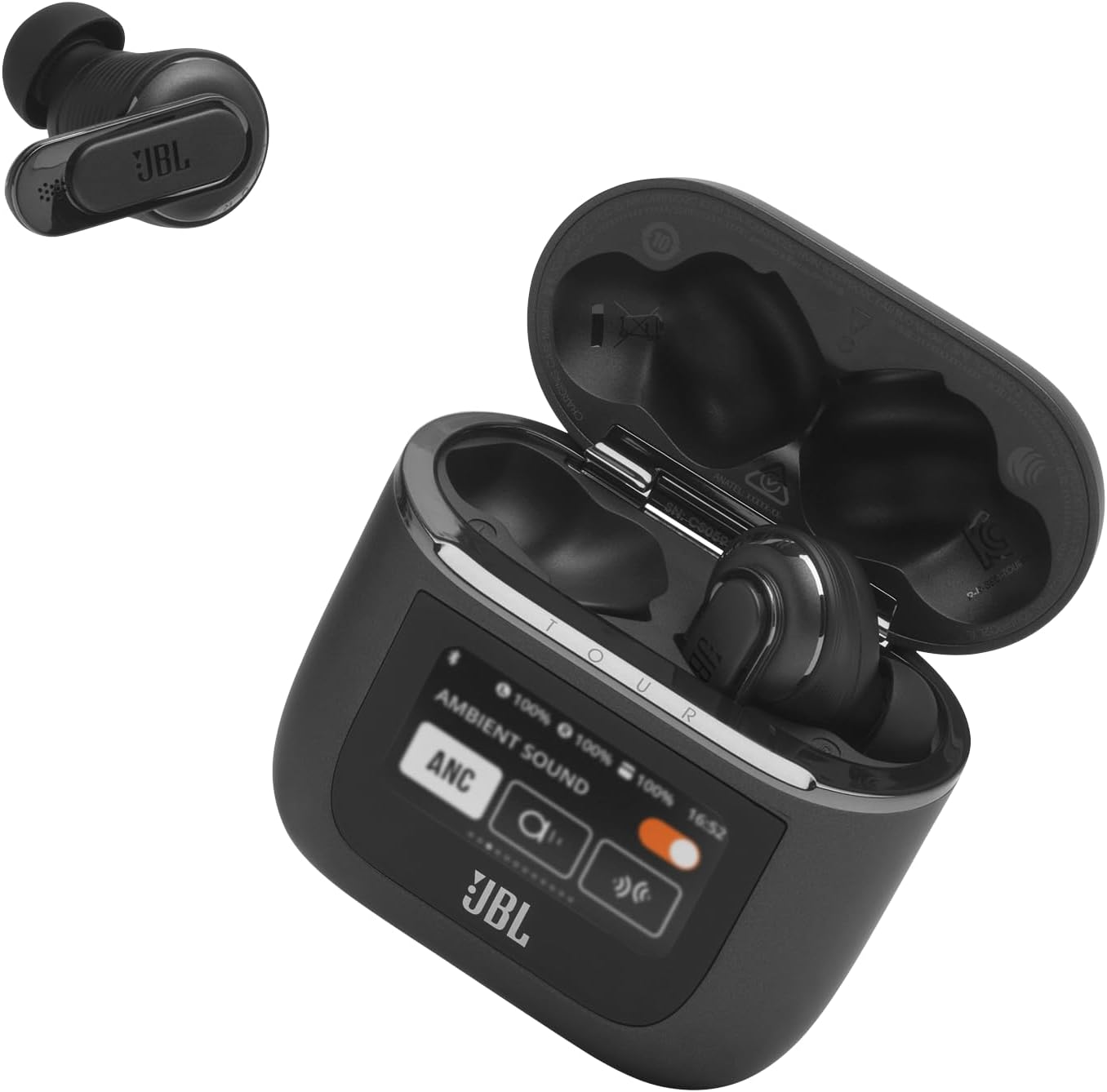
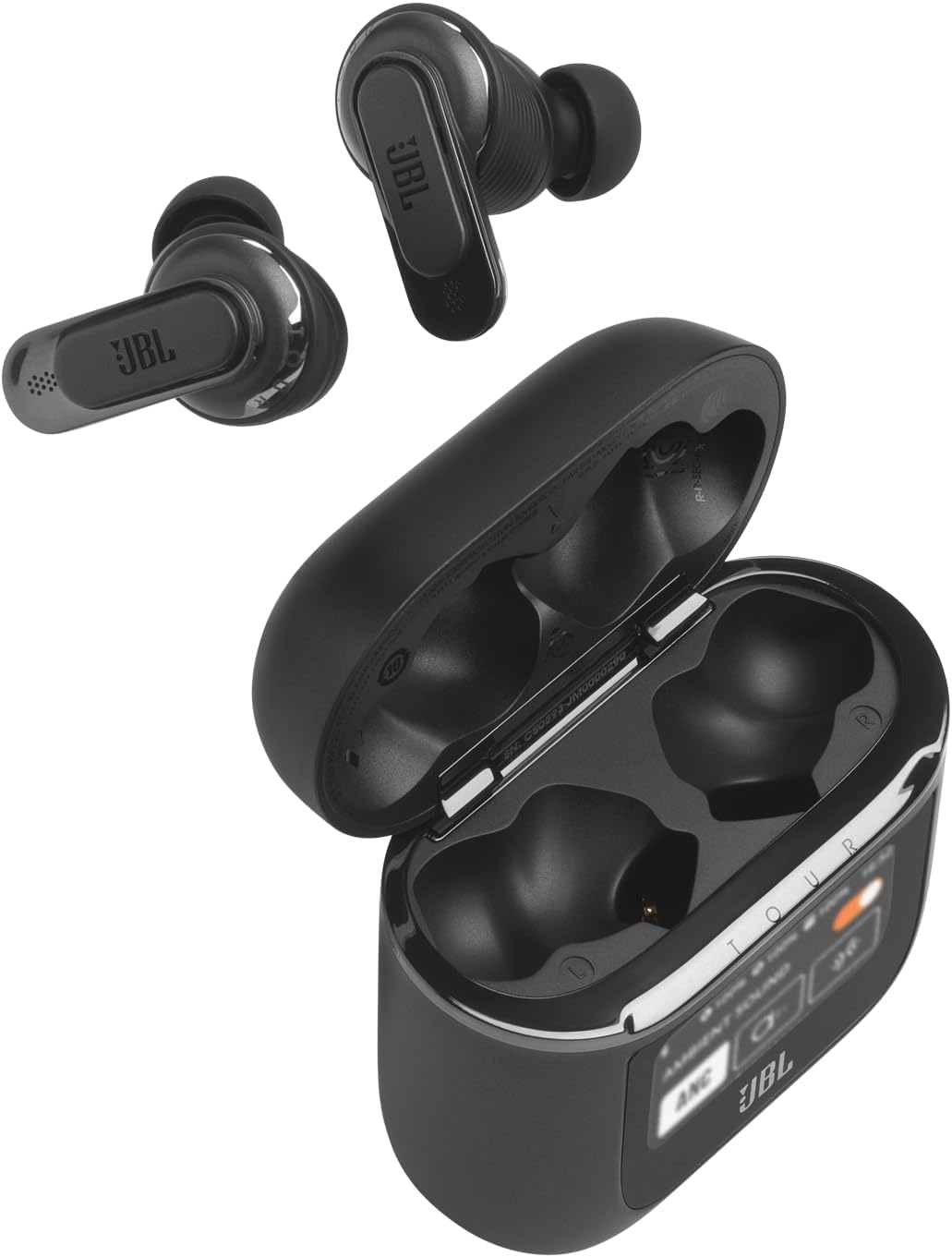
Released in 2022, the JBL Tour Pro 2 made headlines for one specific reason: its charging case features a 1.45-inch touchscreen display. This might sound gimmicky, but it represents genuine innovation in a category where most improvements are incremental.
The smart case allows you to control virtually every earbud function without pulling out your phone. You can adjust noise cancellation levels, change EQ settings, check battery status, manage Bluetooth connections, and even answer calls directly from the case display. During my testing, this proved surprisingly useful when my phone was buried in a bag or when I wanted to make quick adjustments without unlocking my device.
From an audio perspective, the JBL Tour Pro 2 uses 10mm dynamic drivers with a frequency response covering the full human hearing range (20Hz-20kHz). JBL tuned these earbuds with their signature sound profile – punchy bass, clear mids for vocals, though the treble can sometimes feel slightly restrained compared to reference-quality headphones. This tuning works well for most popular music genres but might leave classical or jazz listeners wanting more sparkle in the upper frequencies.
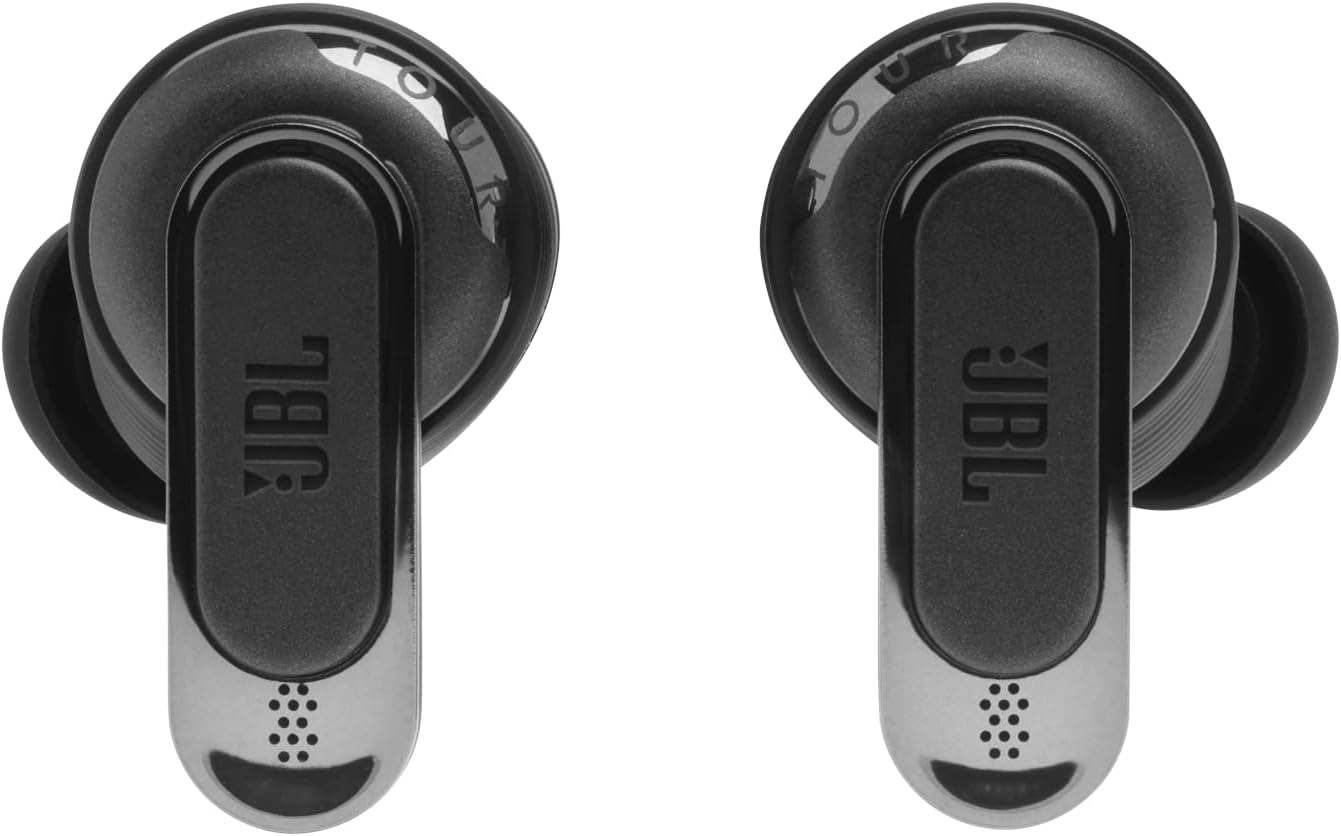
The True Adaptive Noise Cancelling system uses four microphones per earbud to continuously monitor your environment and adjust noise cancellation in real-time. This means the ANC automatically adapts when you move from a quiet office to a busy street. The system also includes an Ambient Aware mode that lets important sounds through while maintaining some noise reduction – useful for staying aware of traffic or announcements.
Battery life is where the JBL Tour Pro 2 really shines. You get 10 hours of continuous listening (8 hours with ANC enabled) from the earbuds themselves, plus an additional 30 hours from the charging case. That's genuinely impressive and puts these earbuds among the longest-lasting premium options available.
The earbuds carry an IPX5 water resistance rating, meaning they can handle sweat, light rain, and even direct water jets. This makes them suitable for workouts and outdoor activities where moisture might be a concern.
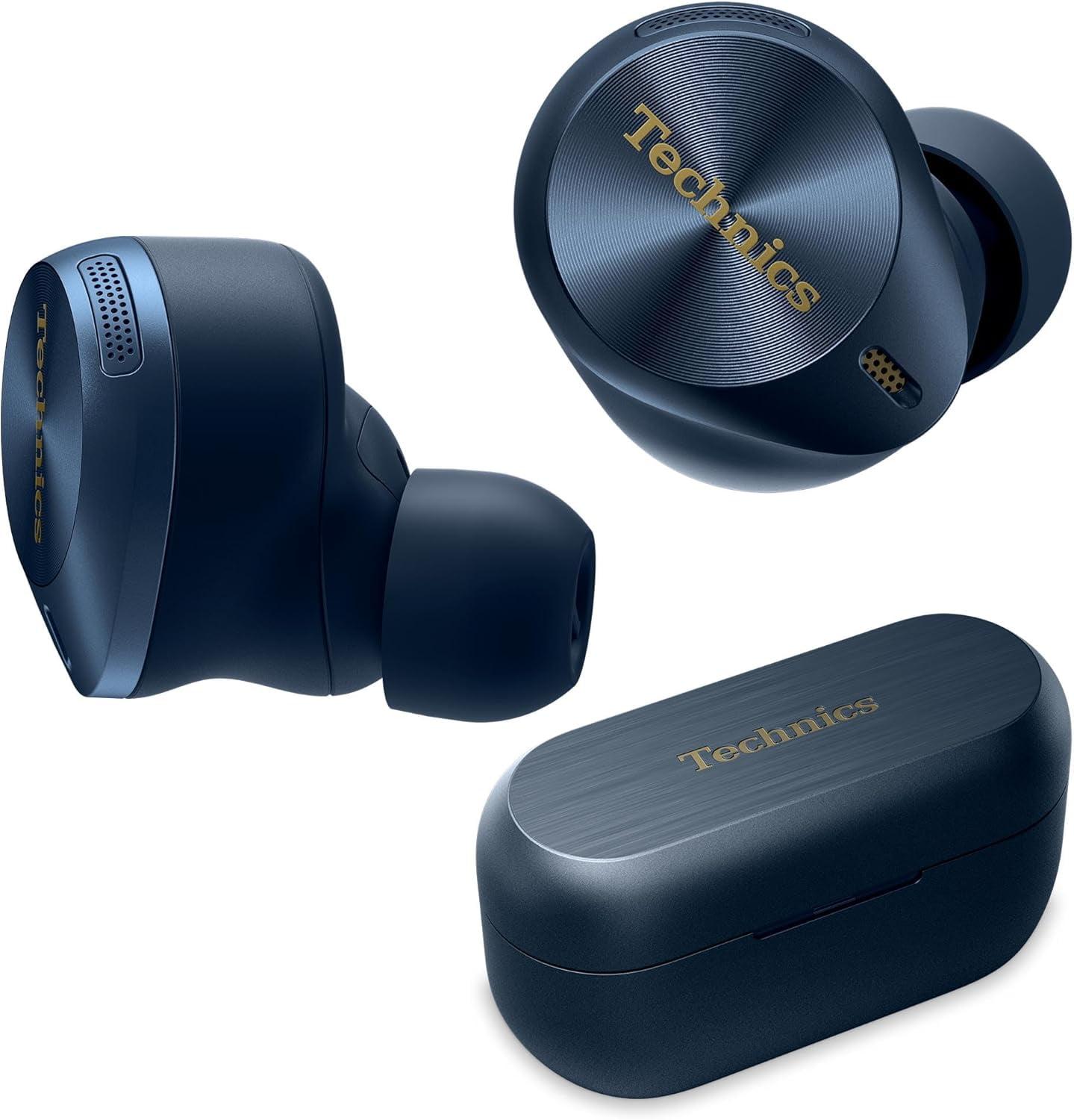
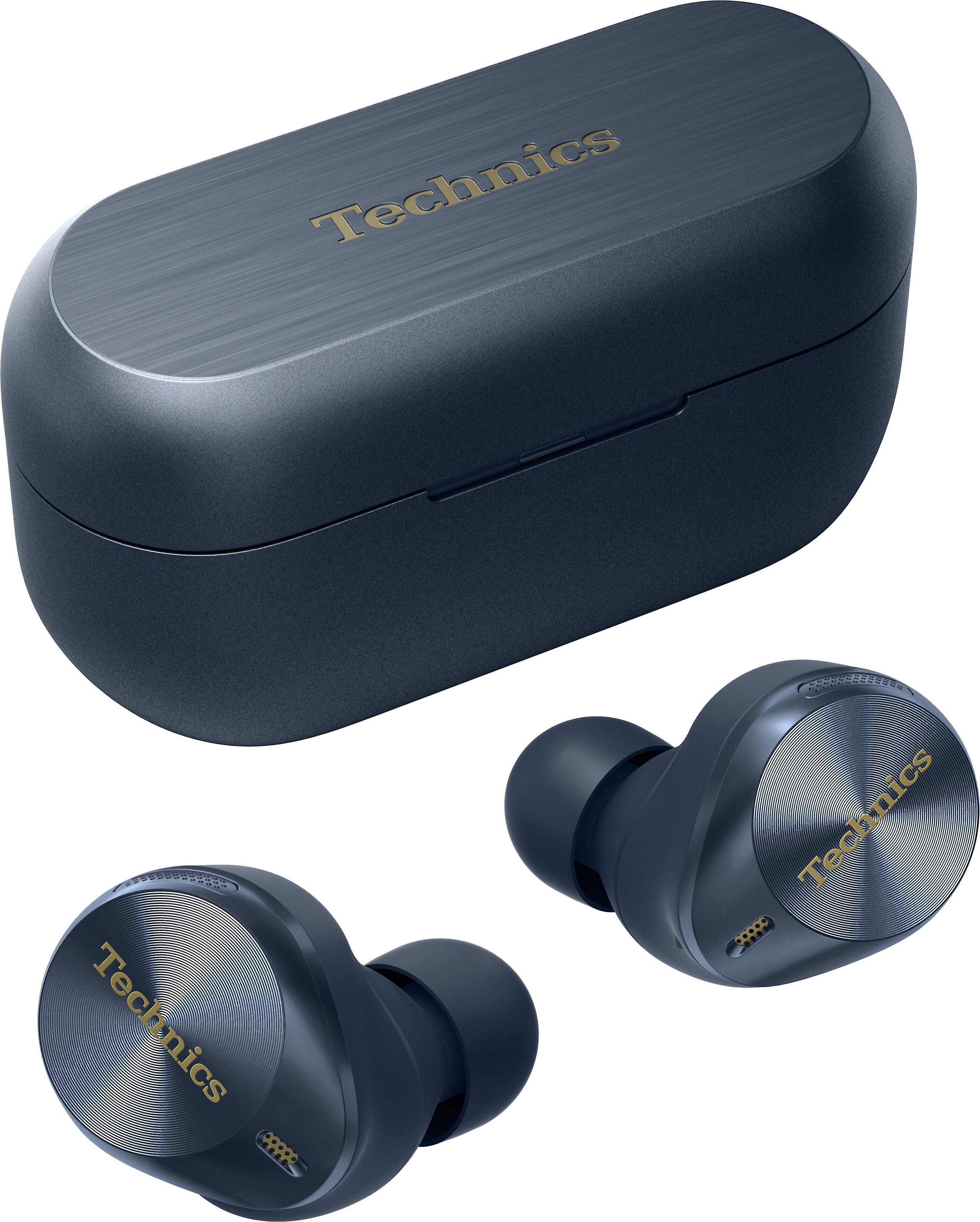
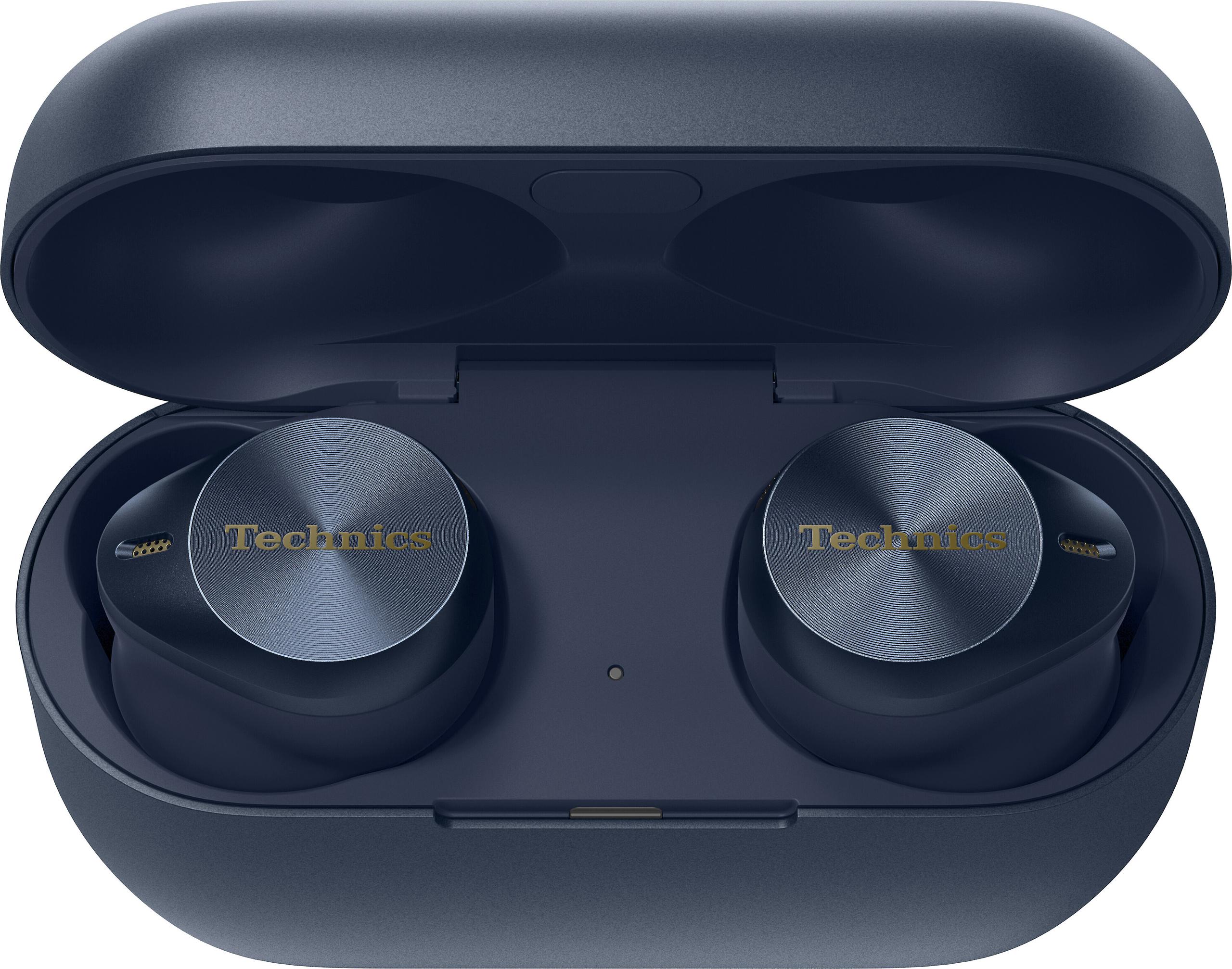
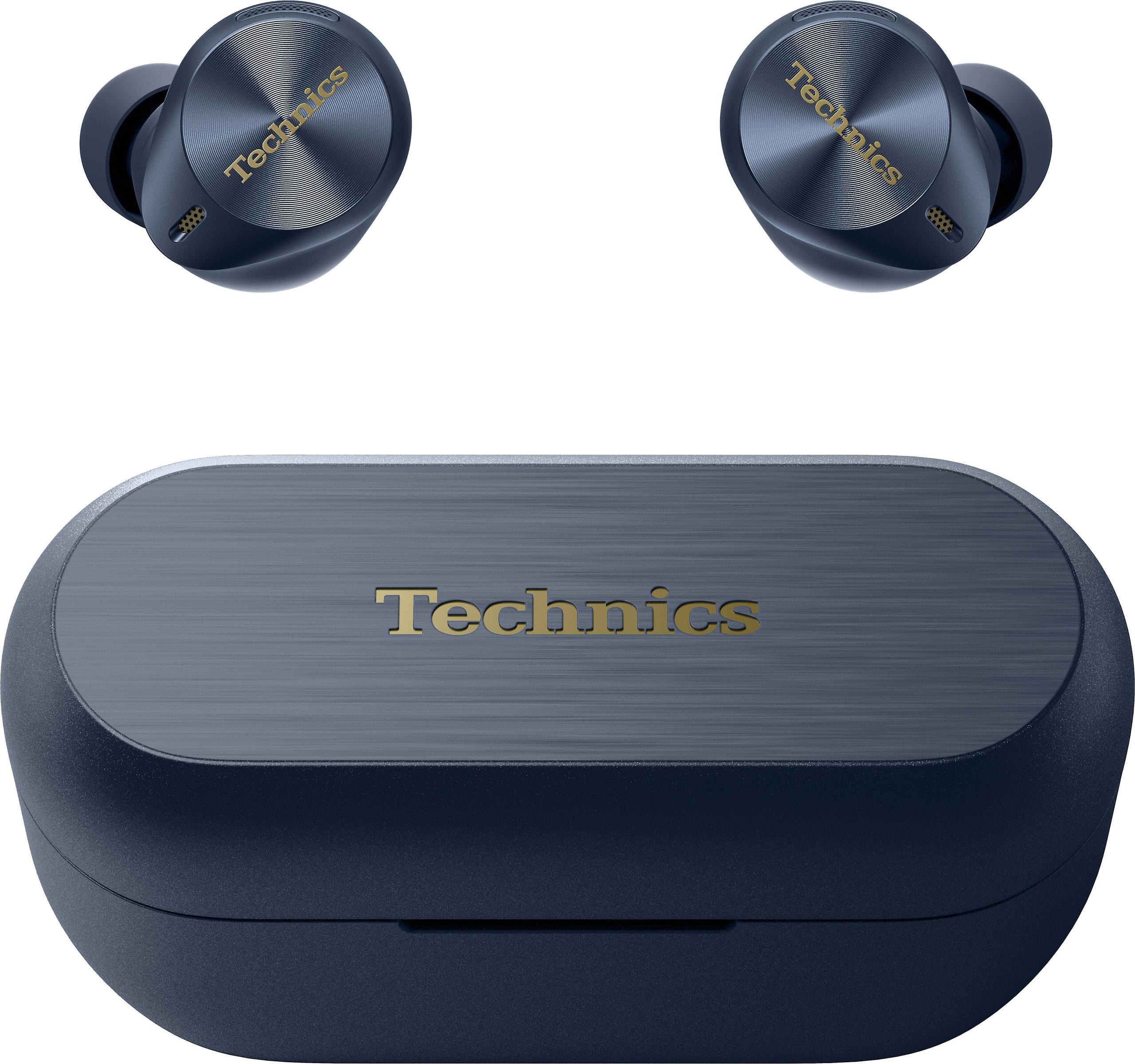
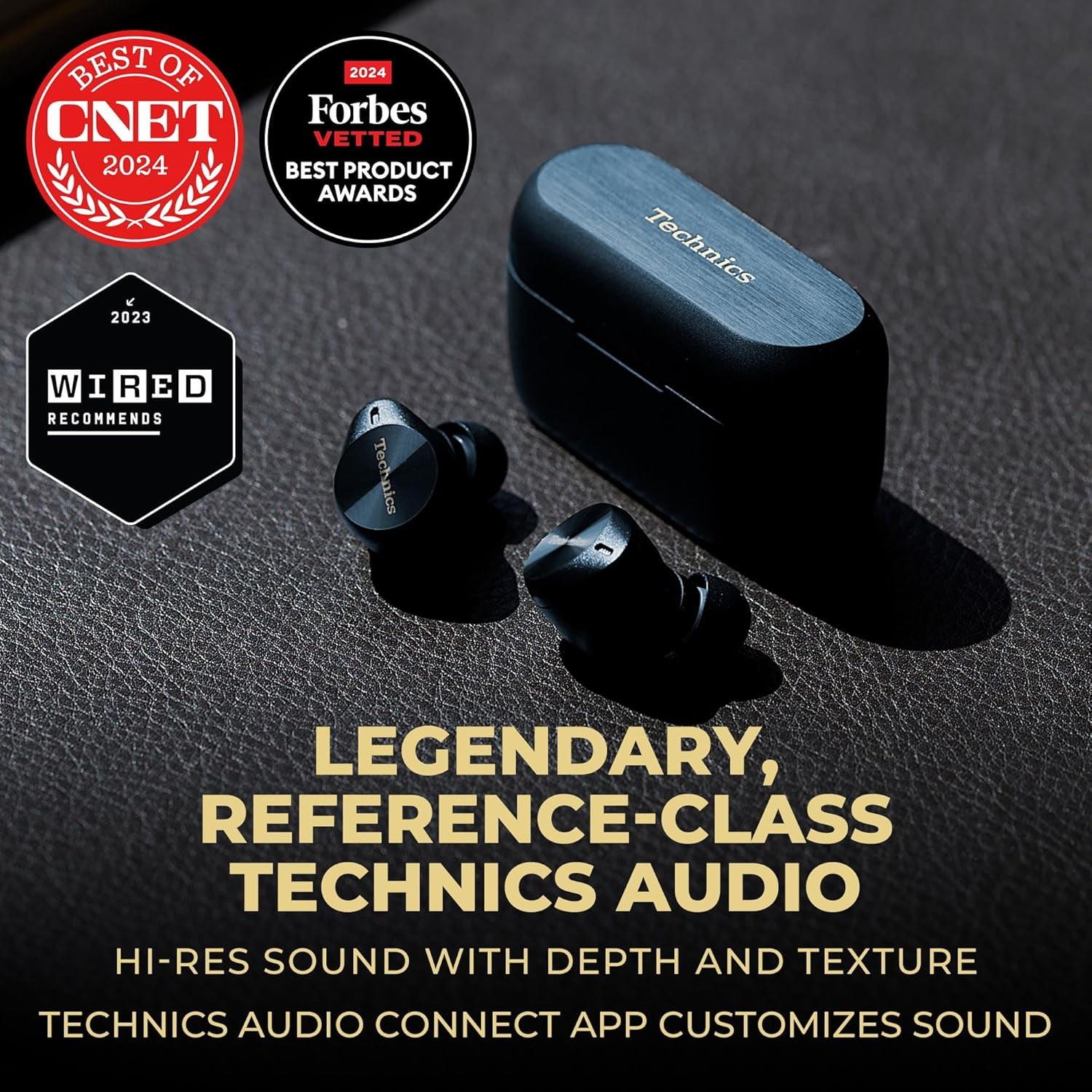
The Technics EAH-AZ80, released in 2023, takes a completely different approach. Instead of flashy smart features, Technics focused on audio quality and advanced connectivity. The company has deep roots in professional audio – they've been making turntables and audio equipment for decades – and that expertise shows in these earbuds.
Like the JBL, the Technics EAH-AZ80 uses 10mm drivers, but with some key differences. The frequency response extends much higher (20Hz-40kHz), well beyond human hearing limits. While we can't hear frequencies above 20kHz, this extended response often correlates with better reproduction of harmonics and overtones that we can perceive, resulting in more natural-sounding audio.
More importantly, the Technics EAH-AZ80 supports LDAC, Sony's high-resolution Bluetooth codec that can transmit much more audio data than standard Bluetooth. While most earbuds are limited to basic SBC or AAC codecs, LDAC can deliver nearly CD-quality wireless audio when paired with compatible devices. This makes a noticeable difference when listening to high-quality recordings or streaming services that offer lossless audio.
The sound signature leans toward what audiophiles call "warm" – slightly enhanced bass warmth without overwhelming the mids, clear vocal reproduction, and detailed treble that reveals subtle elements in recordings. During extended listening sessions, I found these earbuds less fatiguing than many competitors, making them excellent for long flights or work sessions.
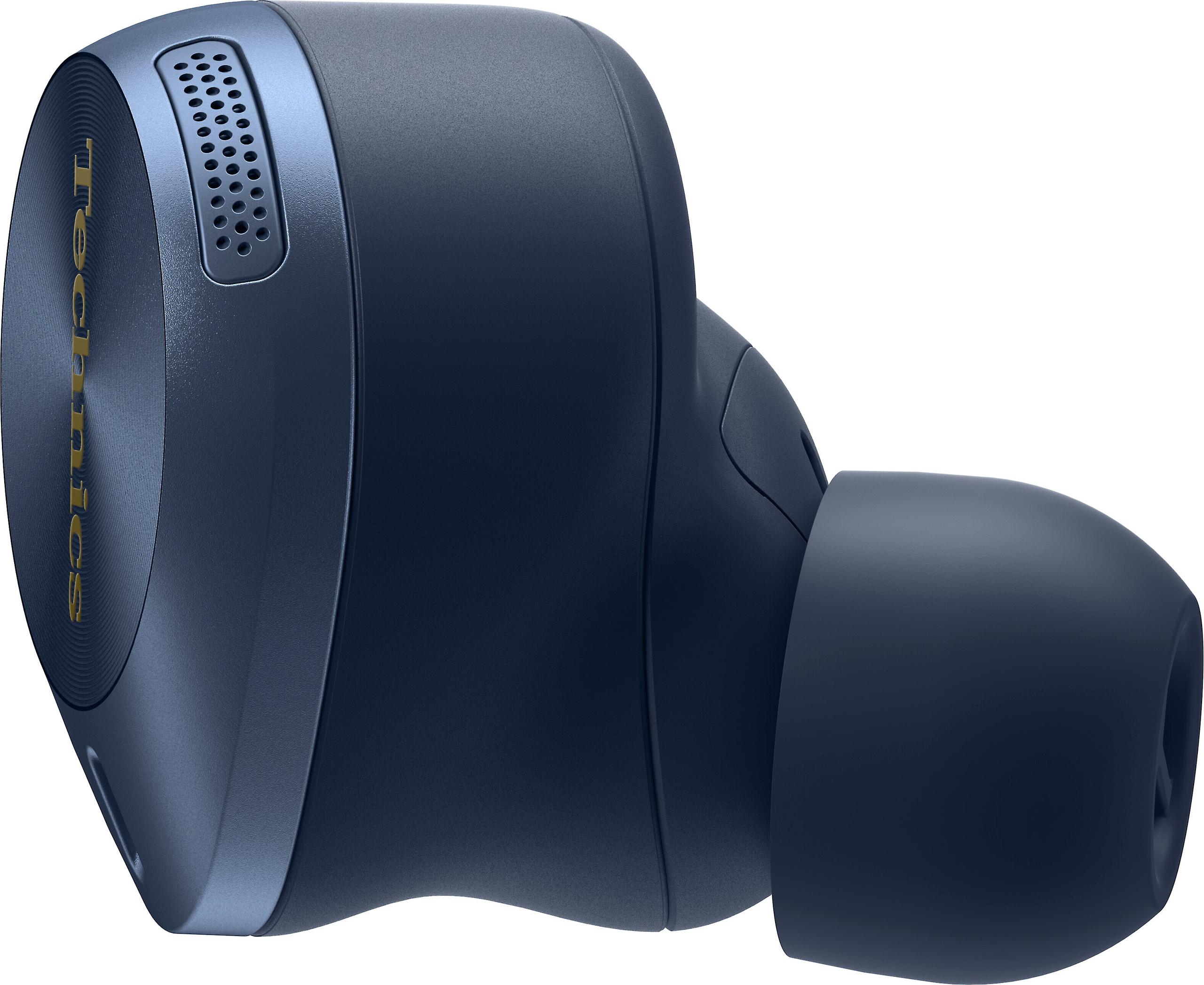
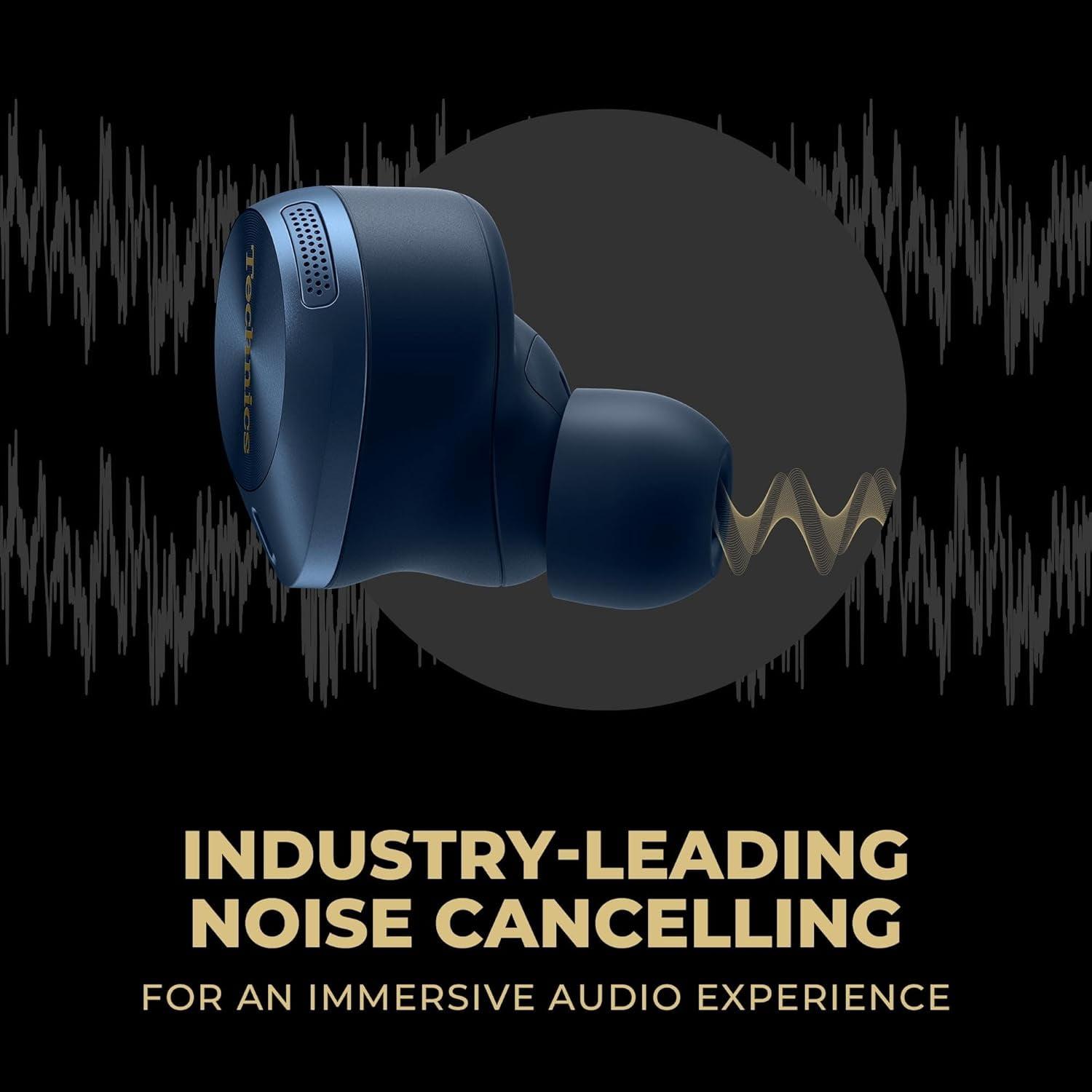
Technics implemented dual hybrid active noise cancellation, combining two different ANC approaches for broader frequency coverage. The system uses both feedforward microphones (facing outward to detect external noise) and feedback microphones (facing inward to monitor what you're actually hearing) to create more effective cancellation across different types of noise.
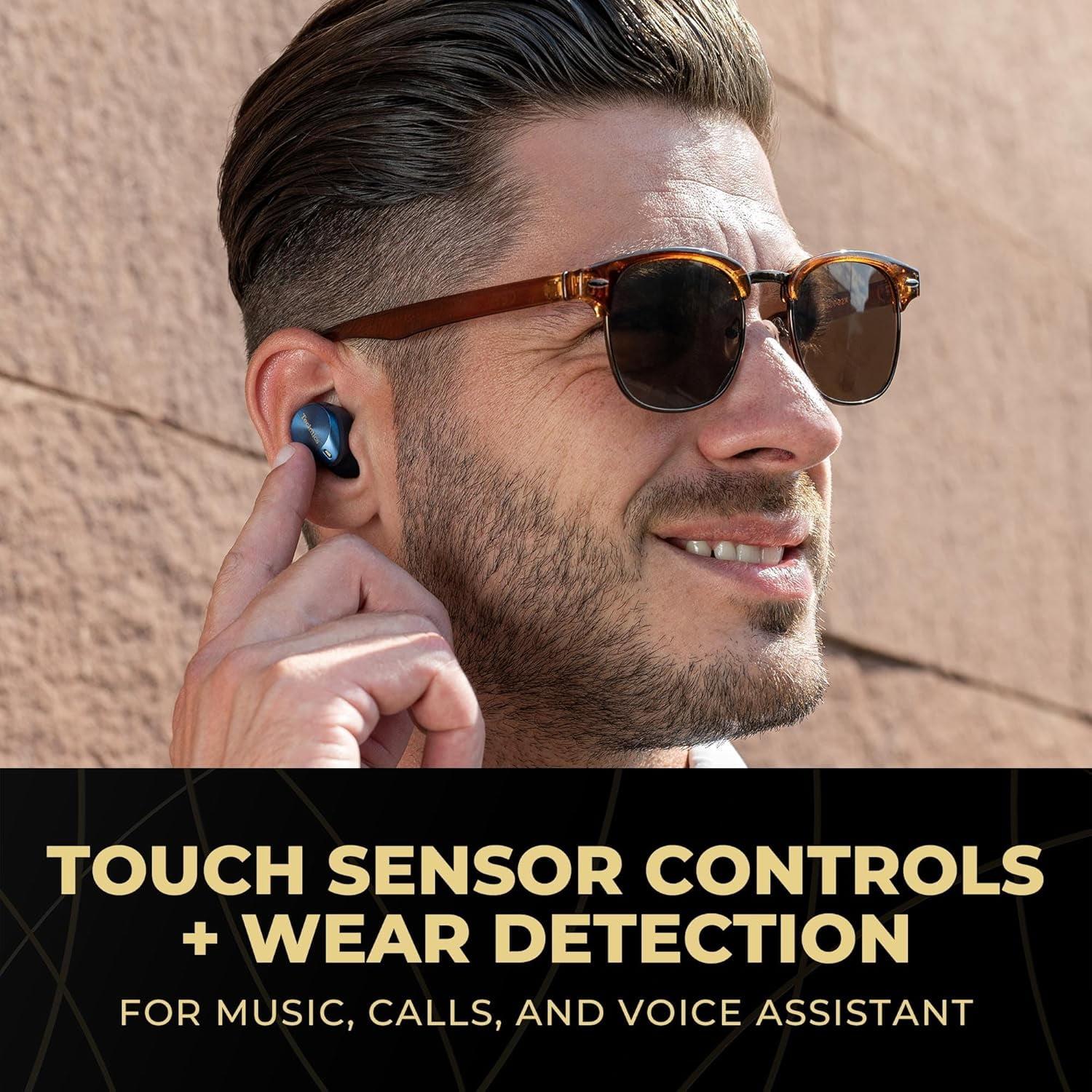
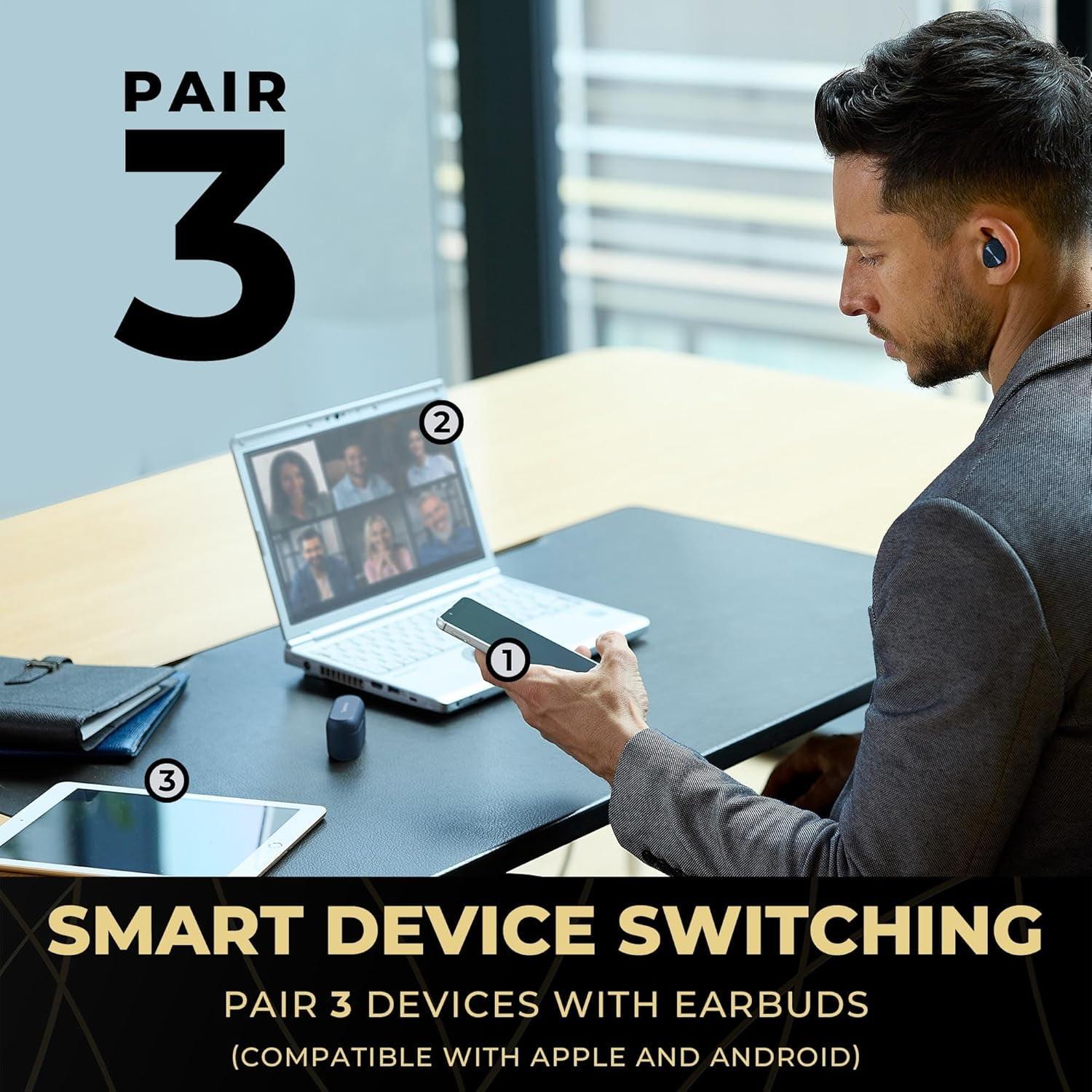
One standout feature is three-device multipoint Bluetooth connectivity. Most premium earbuds can connect to two devices simultaneously – typically your phone and laptop. The Technics EAH-AZ80 can maintain active connections to three devices, automatically switching between them as needed. This is incredibly useful if you regularly use a phone, laptop, and tablet throughout your day.
Audio Quality Winner: Technics EAH-AZ80
In direct A/B testing with identical music tracks, the Technics EAH-AZ80 consistently delivered more detailed, nuanced audio reproduction. The extended frequency response isn't just a spec sheet number – it translates to better reproduction of cymbal crashes, string harmonics, and vocal subtleties. The LDAC codec support provides a genuine advantage when streaming from compatible devices, though you'll need high-quality source material to hear the difference.
The JBL Tour Pro 2 sounds good but follows a more mainstream tuning approach. Bass response is punchy and satisfying for most listeners, mids are clear enough for podcasts and calls, but the treble lacks the refinement of the Technics. For casual listening and popular music, many users might actually prefer JBL's more exciting sound signature.
Noise Cancellation: Close Competition
Both earbuds offer strong ANC performance, effectively handling airplane noise, air conditioning hum, and traffic sounds. The JBL Tour Pro 2's adaptive system provides convenience by automatically adjusting to different environments. The Technics EAH-AZ80's dual hybrid approach offers slightly better performance across different frequency ranges, particularly for mid-frequency noise like conversations.
Neither matches the absolute best ANC performers like Sony's WF-1000XM4 or Bose QuietComfort earbuds, but both provide substantial noise reduction for most real-world situations.
Battery Life Winner: JBL Tour Pro 2
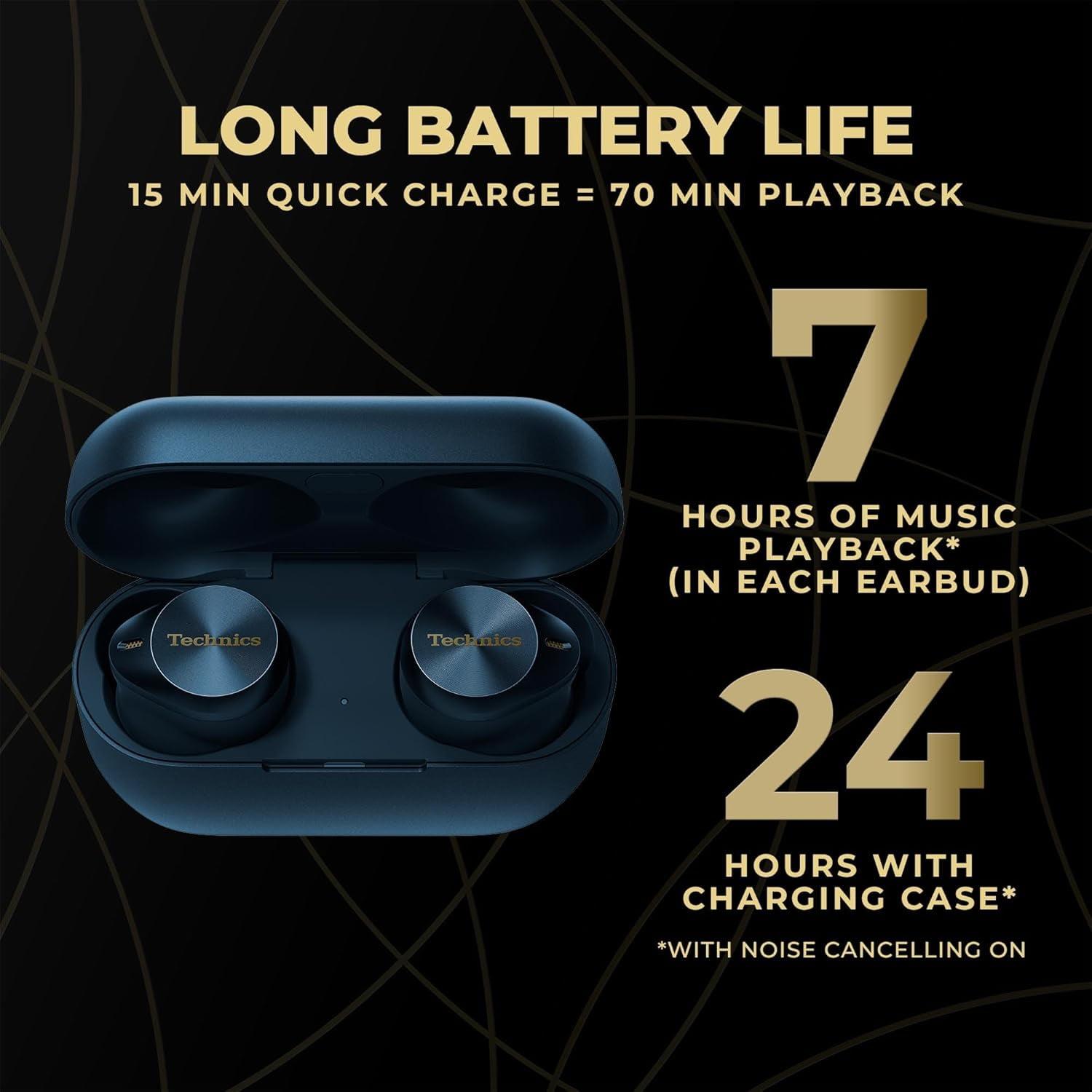
This isn't close. The JBL Tour Pro 2's 40-hour total battery life (10 hours earbuds + 30 hours case) significantly outperforms the Technics EAH-AZ80's 25 hours total (7.5 hours earbuds + 17.5 hours case). For frequent travelers or heavy users, this difference matters significantly.
Connectivity and Features: Different Strengths
The JBL Tour Pro 2 wins on innovation with its smart case, while the Technics EAH-AZ80 excels in practical connectivity with three-device multipoint support. Your preference depends on whether you value convenient control access or seamless device switching.
For Home Theater Use
Neither earbud is specifically designed for home theater, but both can enhance your TV watching experience. The Technics EAH-AZ80 offers better audio quality for movies and shows, particularly for dialogue clarity and soundtrack nuance. However, both earbuds introduce some audio latency (delay between video and sound) that might be noticeable during action scenes or when lip-sync precision matters.
Most modern TVs and streaming devices can compensate for Bluetooth latency, but if you're serious about home theater audio, dedicated wireless headphones designed for TV use would be better options.
For Work and Productivity
The Technics EAH-AZ80 edges ahead here thanks to three-device connectivity. Being able to seamlessly switch between phone calls, laptop meetings, and tablet media without manually reconnecting devices streamlines workflows significantly.
The JBL Tour Pro 2's smart case provides quick access to settings during busy workdays, though the novelty factor might wear off after the initial honeymoon period.
For Travel
This depends on your priorities. The JBL Tour Pro 2's superior battery life makes it ideal for long international flights where charging opportunities might be limited. The smart case also provides entertainment and control options during lengthy travel delays.
The Technics EAH-AZ80 offers better sound quality for in-flight entertainment and music listening, plus the ability to stay connected to multiple devices while traveling.
For Fitness and Active Use
The JBL Tour Pro 2's IPX5 water resistance rating makes it more suitable for intense workouts and outdoor activities. The Technics EAH-AZ80's IPX4 rating handles light sweat and moisture but isn't as robust for serious athletic use.
At the time of writing, both earbuds occupy the premium price tier, with the JBL Tour Pro 2 typically commanding a slight price premium due to its innovative smart case. The Technics EAH-AZ80 often presents better value for pure audio performance per dollar spent.
However, premium earbud pricing fluctuates significantly with sales, promotions, and market competition. What matters more is understanding what you're getting for your investment.
The JBL Tour Pro 2 justifies its premium pricing through genuine innovation (the smart case), excellent battery life, and solid all-around performance. You're paying for convenience features and longest-in-class battery life.
The Technics EAH-AZ80 offers premium audio quality, advanced codec support, and superior connectivity at what's typically a more accessible price point. You're getting audiophile-focused engineering and practical productivity features.
Choose the JBL Tour Pro 2 if you:
Choose the Technics EAH-AZ80 if you:
Skip both if:
Both the JBL Tour Pro 2 and Technics EAH-AZ80 represent excellent examples of premium wireless earbuds, but they excel in different areas. The JBL pushes boundaries with smart features and practical conveniences, while the Technics focuses on audio fundamentals and connectivity sophistication.
Neither is objectively "better" – your choice should depend on which strengths align with your specific needs and preferences. The JBL Tour Pro 2 suits users who want innovation and maximum battery life, while the Technics EAH-AZ80 appeals to those prioritizing audio quality and practical connectivity features.
In the rapidly evolving wireless earbud market, both companies have carved out distinct positions that serve different user priorities well. Your decision ultimately comes down to whether you value innovative convenience or audiophile-focused engineering excellence.
| JBL Tour Pro 2 | Technics EAH-AZ80 |
|---|---|
| Smart Case Innovation - Unique convenience feature that sets products apart | |
| 1.45" touchscreen LCD case for phone-free control | Standard charging case with wireless charging support |
| Driver Size and Audio Range - Determines sound quality and detail reproduction | |
| 10mm drivers, 20Hz-20kHz (standard human hearing range) | 10mm drivers, 20Hz-40kHz (extended range for better harmonics) |
| High-Resolution Audio Support - Critical for audiophiles with quality music sources | |
| Standard Bluetooth codecs (SBC/AAC likely) | LDAC codec support for near CD-quality wireless audio |
| Battery Life - Essential for daily use and travel | |
| 10 hours earbuds + 30 hours case = 40 hours total | 7.5 hours earbuds + 17.5 hours case = 25 hours total |
| Multipoint Connectivity - Important for users juggling multiple devices | |
| 2-device Bluetooth multipoint (standard) | 3-device Bluetooth multipoint (industry-leading) |
| Water Resistance - Matters for workouts and outdoor use | |
| IPX5 (can handle sweat and direct water spray) | IPX4 (basic splash protection only) |
| Active Noise Cancellation - Key feature for commuting and focus | |
| True Adaptive ANC with 4 mics per earbud | Dual Hybrid ANC with feedforward/feedback design |
| Microphone Array - Affects call quality in noisy environments | |
| 6-mic Crystal Call Algorithm with VoiceAware | 8-mic JustMyVoice technology |
| Sound Signature - Determines which music genres sound best | |
| Consumer-friendly: punchy bass, clear mids, restrained treble | Audiophile-focused: warm, detailed, natural reproduction |
| Target User - Who each product serves best | |
| Innovation seekers wanting convenience and battery life | Audio enthusiasts prioritizing sound quality and connectivity |
The Technics EAH-AZ80 delivers superior sound quality with its extended 20Hz-40kHz frequency response and LDAC codec support for high-resolution audio. While the JBL Tour Pro 2 offers solid audio performance, the Technics provides more detailed sound reproduction and better harmonic accuracy that audiophiles will appreciate.
The JBL Tour Pro 2 significantly outperforms with 40 hours total battery life (10 hours earbuds + 30 hours case) compared to the Technics EAH-AZ80's 25 hours total (7.5 hours earbuds + 17.5 hours case). For heavy users and frequent travelers, the JBL's superior battery performance is a major advantage.
Both offer excellent call quality, but the Technics EAH-AZ80 has a slight edge with its 8-microphone JustMyVoice technology compared to the JBL Tour Pro 2's 6-microphone Crystal Call system. However, both provide clear voice quality for professional calls and video conferences.
Yes, both support multipoint connectivity, but the Technics EAH-AZ80 offers industry-leading 3-device connectivity compared to the JBL Tour Pro 2's standard 2-device limit. This makes the Technics more versatile for users juggling phone, laptop, and tablet simultaneously.
Both provide strong noise cancellation, with the JBL Tour Pro 2 featuring True Adaptive ANC that automatically adjusts to your environment, while the Technics EAH-AZ80 uses Dual Hybrid ANC for broader frequency coverage. The performance difference is minimal, with both effectively blocking airplane noise and background chatter.
The JBL Tour Pro 2 is better suited for workouts with its IPX5 water resistance rating that handles sweat and direct water spray. The Technics EAH-AZ80 only offers IPX4 protection, which provides basic splash resistance but isn't as robust for intense exercise sessions.
The JBL Tour Pro 2 features the industry's first smart charging case with a 1.45-inch touchscreen display. This allows you to control all earbud functions, check battery levels, manage calls, and adjust settings directly from the case without needing your phone - a genuinely innovative feature not found on the Technics EAH-AZ80.
The Technics EAH-AZ80 supports LDAC codec for high-resolution wireless audio streaming, delivering near CD-quality sound when paired with compatible devices. The JBL Tour Pro 2 uses standard Bluetooth codecs, making the Technics the clear choice for audiophiles with high-quality music sources.
Both earbuds work well for media consumption, though the Technics EAH-AZ80 offers better audio quality for movies with superior dialogue clarity and soundtrack detail. However, neither is specifically optimized for home theater use, and both may introduce slight audio latency that could affect lip-sync in some scenarios.
Value depends on your priorities: the Technics EAH-AZ80 typically offers better audio performance per dollar with high-resolution codec support and 3-device connectivity. The JBL Tour Pro 2 justifies its premium through innovative smart case features and exceptional battery life.
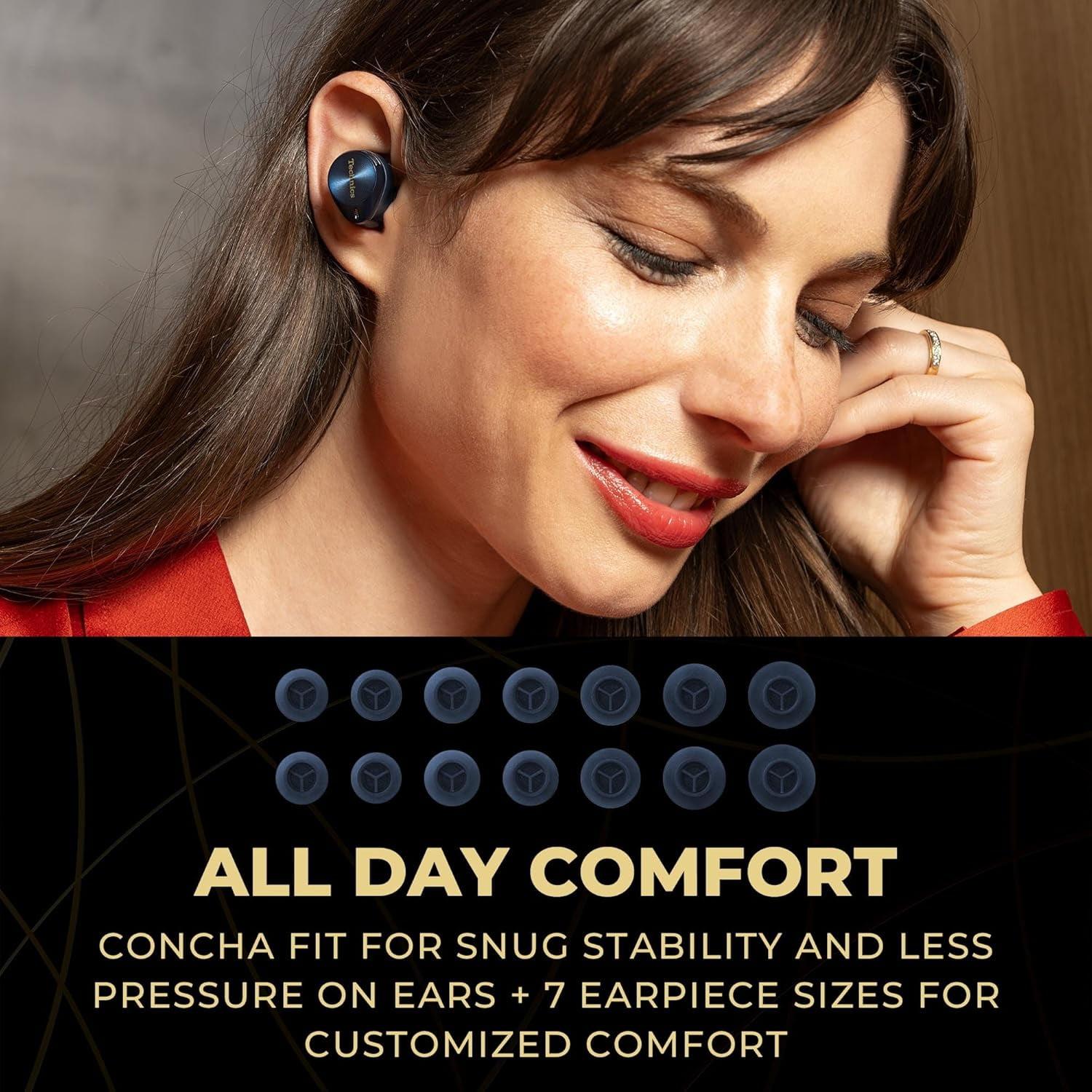
Both earbuds are designed for extended wear comfort, with the Technics EAH-AZ80 including seven different ear tip sizes for optimal fit customization. The JBL Tour Pro 2 also provides comfortable fit for most users, though individual ear shape will ultimately determine which feels better during long listening sessions.
Choose the JBL Tour Pro 2 if you want innovative smart features, maximum battery life, and robust water resistance. Choose the Technics EAH-AZ80 if you prioritize superior sound quality, high-resolution audio support, and need 3-device connectivity for productivity workflows.
We've done our best to create useful and informative comparisons to help you decide what product to buy. Our research uses advanced automated methods to create this comparison and perfection is not possible - please contact us for corrections or questions. These are the sites we've researched in the creation of this article: whathifi.com - eftm.com - jbl.com - gamingtrend.com - seriousinsights.net - harmanaudio.com - youtube.com - soundstagesolo.com - jbl.com - soundguys.com - youtube.com - harmanaudio.com - tomsguide.com - ign.com - jbl.com - retailspecs.com - youtube.com - youtube.com - harmanaudio.com - bhphotovideo.com - jbl.com - bhphotovideo.com - youtube.com - headphones.com - jbl.com - mm.jbl.com - youtube.com - versus.com - uk.jbl.com - youtube.com - goodhousekeeping.com - harmanaudio.com - shop.oprahdaily.com - youtube.com - geekzone.co.nz - stereonet.com - us.technics.com - us.technics.com - rtings.com - head-fi.org - bestbuy.com - soundguys.com - head-fi.org - youtube.com - loudnwireless.com - youtube.com - cnet.com - technics.com - technics.com - bestbuy.com - target.com - us.technics.com - technics.com - youtube.com - head-fi.org - nnty.fun - us.technics.com - bhphotovideo.com - bestbuy.com - us.technics.com - audiosciencereview.com - youtube.com - head-fi.org - head-fi.org - jbhifi.com.au

Privacy Policy
Terms and Conditions - Affiliate Policy
Home Security
© Copyright 2008-2026.
11816 Inwood Rd #1211, Dallas, TX 75244