








The world of premium true wireless earbuds has exploded in recent years, with manufacturers pushing the boundaries of what's possible in these tiny audio devices. Two standout options that represent different philosophies are the Samsung Galaxy Buds 3 Pro and the Technics AZ80. Both launched in 2024 and cost in the premium range—typically $200-300 at the time of writing—but they take distinctly different approaches to delivering exceptional audio experiences.
Premium true wireless earbuds aren't just regular earbuds without wires. They pack sophisticated technology into incredibly small packages, including multiple drivers (the tiny speakers that create sound), advanced microphone arrays, powerful processors for noise cancellation, and enough battery to last all day. The best models also include features like spatial audio (which makes music sound like it's coming from around you rather than inside your head), adaptive noise cancellation that adjusts to your environment, and high-resolution audio codecs that preserve more musical detail than standard Bluetooth.
When evaluating premium earbuds, the most important factors are audio quality, active noise cancellation effectiveness, battery life, comfort during extended wear, call quality, and how well they integrate with your existing devices. The Samsung Galaxy Buds 3 Pro and Technics AZ80 excel in different areas, making the choice largely dependent on your priorities and device ecosystem.
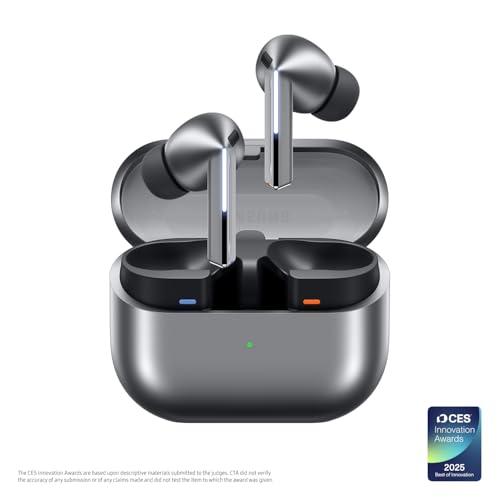
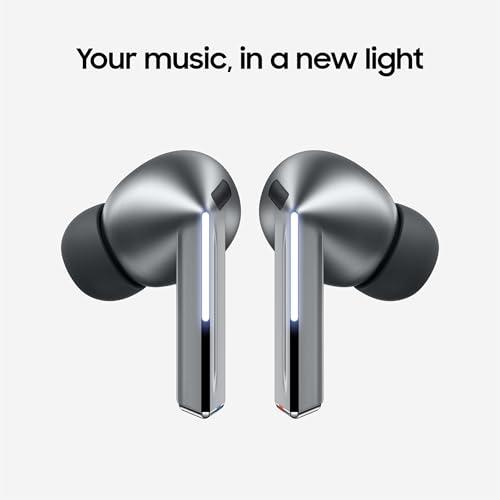
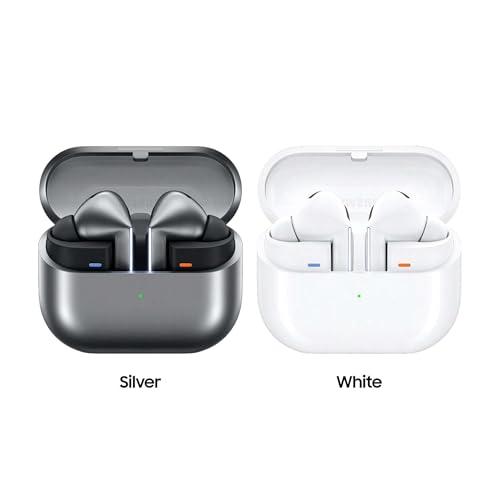
The Samsung Galaxy Buds 3 Pro represent Samsung's first major design departure from their traditional bean-shaped earbuds, adopting a stem-based design similar to Apple's AirPods Pro. This wasn't just an aesthetic choice—the stem houses additional microphones and provides a larger surface area for touch controls. Samsung has optimized these earbuds specifically for their ecosystem, meaning Galaxy phone and tablet owners get access to features like Samsung Seamless Codec (which streams 24-bit audio at 96kHz sampling rates) and Auto Switch functionality that seamlessly moves audio between Samsung devices.
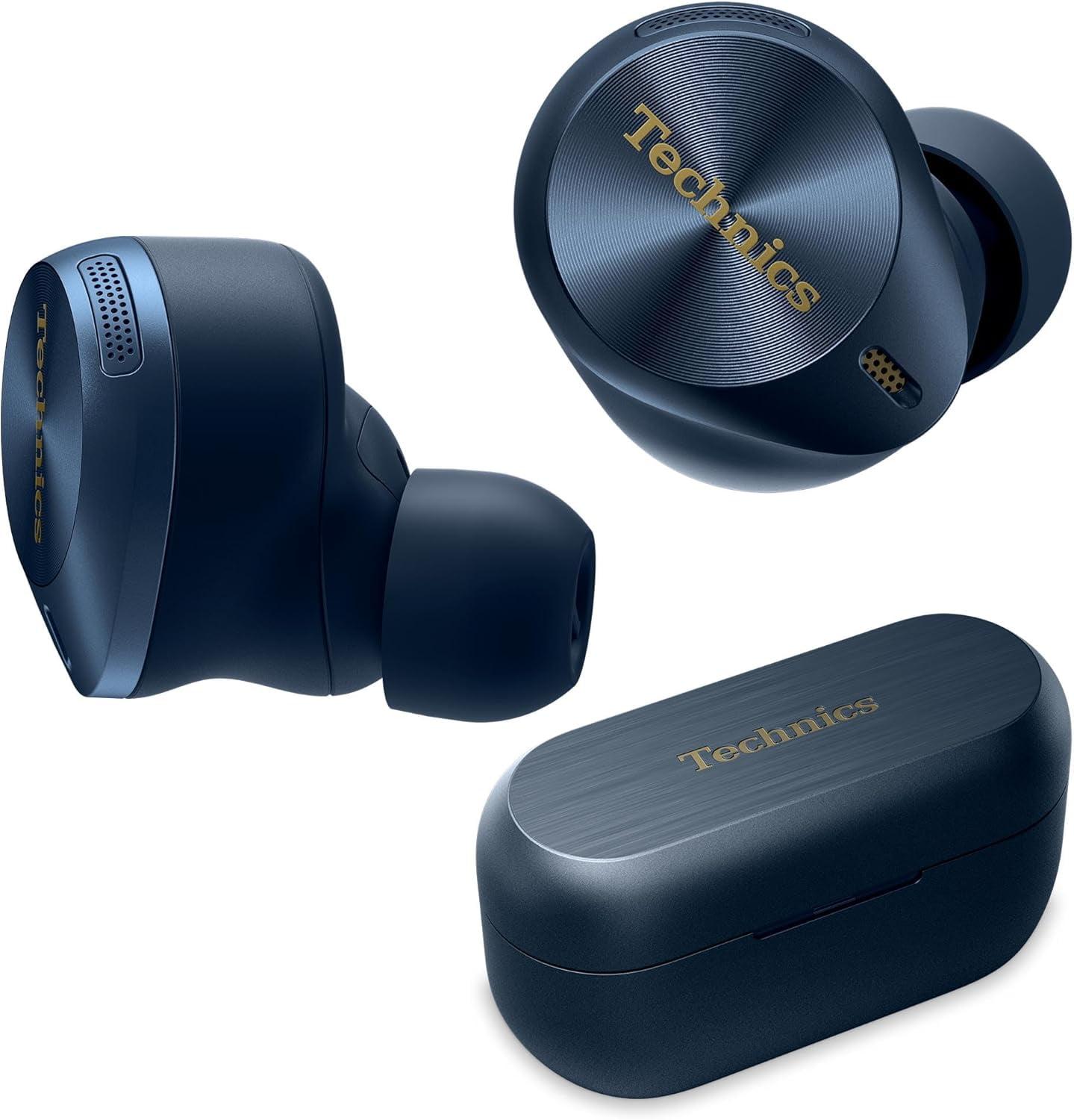
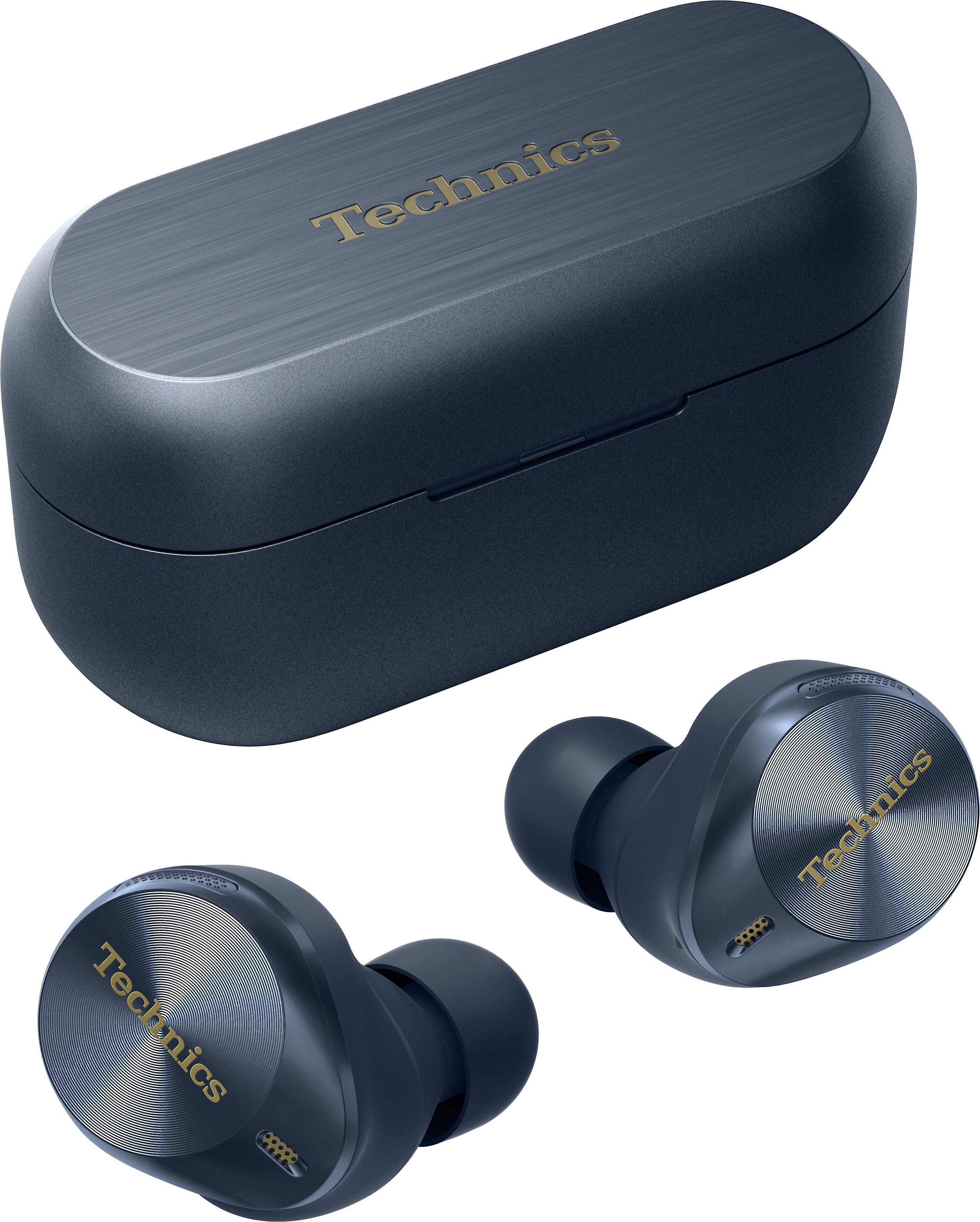
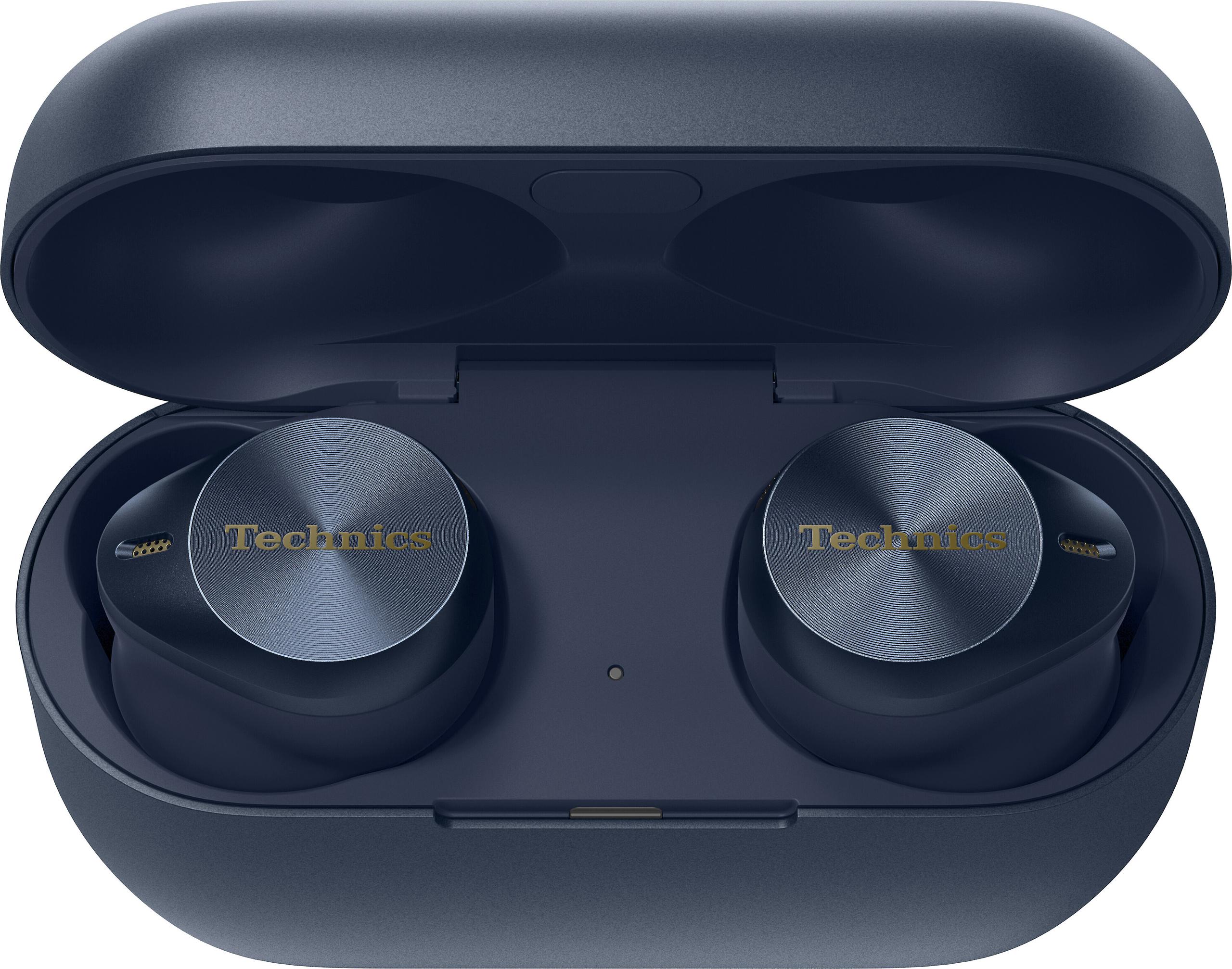
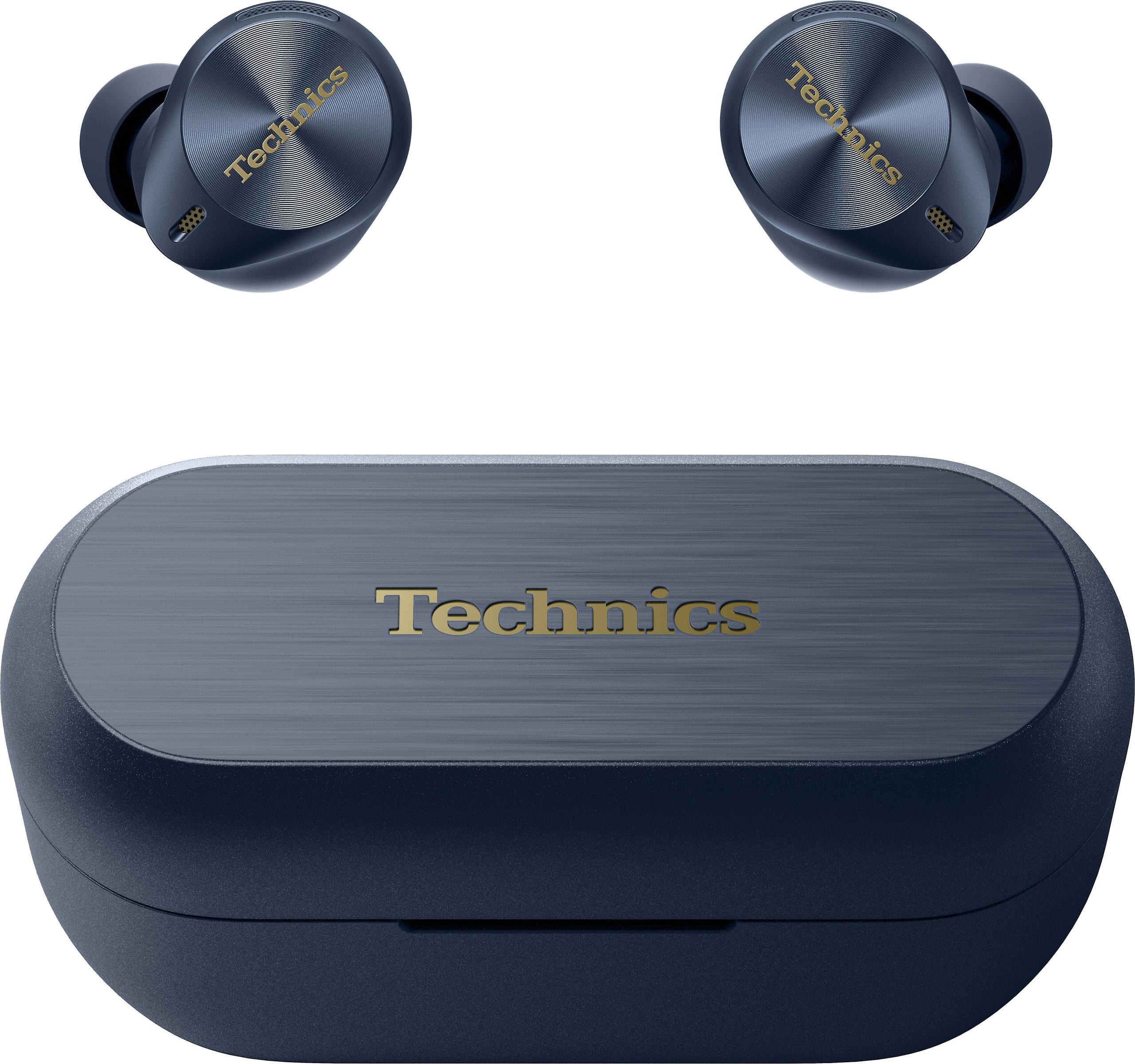
The Technics AZ80, on the other hand, takes a more universal approach. Technics, Panasonic's premium audio brand, focused on creating earbuds that deliver exceptional sound quality regardless of what device you're using. They support LDAC, Sony's high-resolution audio codec that's available on most Android devices and some music players, ensuring you get high-quality audio whether you're using a Samsung phone, Google Pixel, or even connecting to a dedicated music player.
This fundamental difference in approach affects everything from feature availability to long-term value. The Samsung Galaxy Buds 3 Pro will always work better with Samsung devices, while the Technics AZ80 treats all compatible devices equally.
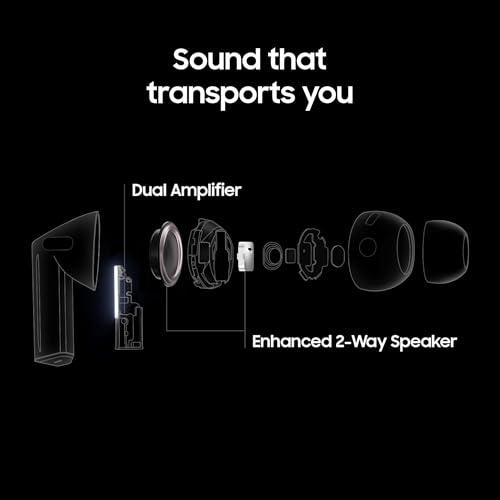
Audio quality represents the most crucial difference between these earbuds, and it's where their different philosophies become most apparent. The Samsung Galaxy Buds 3 Pro feature what Samsung calls a "dual amplifier system" with separate amplifiers for their woofer and tweeter drivers. The woofer handles bass and midrange frequencies, while the planar magnetic tweeter (a premium driver technology typically found in high-end headphones) handles the high frequencies. This separation reduces interference between the drivers and allows for more precise control over different frequency ranges.
The sound signature of the Samsung Galaxy Buds 3 Pro follows what's called a "V-shaped" response curve. This means both bass and treble frequencies are emphasized while midrange frequencies (where most vocals sit) are slightly recessed. This tuning makes music sound exciting and dynamic, with punchy bass and sparkling highs that bring out details in recordings. It's particularly effective for electronic music, pop, and rock, where that extra energy enhances the listening experience.
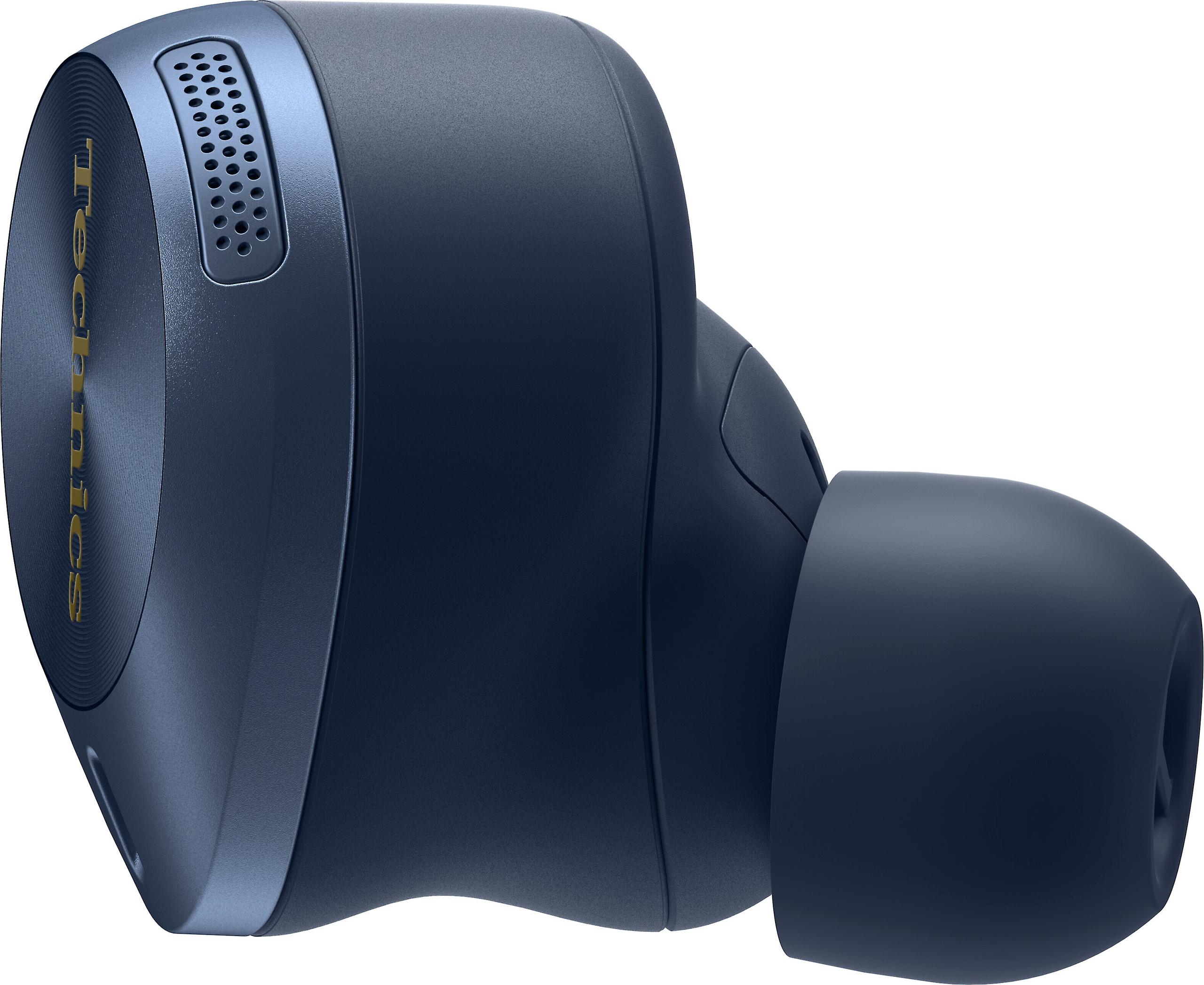
In contrast, the Technics AZ80 uses 10mm dynamic drivers with aluminum diaphragms—the part of the speaker that vibrates to create sound waves. These larger drivers can move more air than smaller ones, potentially delivering more impactful bass and better overall dynamics. Technics has tuned these earbuds for what audiophiles call a more "neutral" sound signature, meaning they aim to reproduce music as close to the original recording as possible without adding coloration.
The frequency response—how well earbuds reproduce different pitches from deep bass to high treble—extends to 40,000Hz on both models, well beyond human hearing's upper limit of around 20,000Hz. While you can't hear these ultra-high frequencies directly, they can affect the harmonics and overtones that contribute to a more natural, lifelike sound.
Based on extensive research into user and expert reviews, the Samsung Galaxy Buds 3 Pro deliver what most listeners describe as an engaging, energetic sound that makes music feel alive and dynamic. The dual amplifier system effectively prevents the woofer and tweeter from interfering with each other, resulting in cleaner separation between instruments and better stereo imaging (the ability to hear where different sounds are positioned in the mix).
The Technics AZ80, meanwhile, consistently receives praise from reviewers for their accuracy and resolution. These earbuds excel at revealing subtle details in recordings—the breath of a vocalist, the decay of a piano note, or the texture of a guitar string. They're particularly impressive with acoustic music, jazz, and classical genres where accuracy and natural timbre are more important than excitement.
For home theater use, both earbuds support spatial audio technologies that can create a more immersive experience when watching movies. The Samsung Galaxy Buds 3 Pro include 360 Audio support, which works particularly well with Samsung TVs and devices. The Technics AZ80 don't have proprietary spatial audio features but their superior driver technology and neutral tuning make them excellent for dialogue clarity and soundtrack reproduction.
Active Noise Cancellation (ANC) works by using external microphones to detect ambient noise, then generating opposite sound waves to cancel it out. Both earbuds use this technology, but their implementations differ significantly.
The Samsung Galaxy Buds 3 Pro feature what Samsung calls "Adaptive ANC" powered by their Galaxy AI. This system continuously monitors your environment and adjusts the level of noise cancellation accordingly. In a quiet office, it might reduce ANC to preserve battery life and maintain natural sound. On a busy street, it ramps up to maximum cancellation. The system also includes Voice Detect, which automatically reduces music volume and enables transparency mode when it hears you speaking, and Siren Detect, which allows emergency vehicle sounds to pass through even with ANC enabled.
Research from multiple professional reviews indicates the Samsung Galaxy Buds 3 Pro achieve approximately 76% average noise reduction across different frequency ranges, with particularly strong performance in the midrange frequencies where most environmental noise occurs. The transparency mode—which lets outside sound in when you need situational awareness—receives exceptional praise for sounding natural and unprocessed.
The Technics AZ80 use what's called "Dual Hybrid ANC," combining feedforward microphones (outside the ear) with feedback microphones (inside the ear canal) to create a more comprehensive cancellation system. This approach typically provides more consistent performance across different frequency ranges but lacks the adaptive intelligence of Samsung's system.
User reports suggest the Technics AZ80 provide effective noise cancellation that's particularly good at handling consistent background noise like airplane engines or air conditioning. However, they don't match the sophisticated environmental awareness of the Samsung Galaxy Buds 3 Pro.
For daily use, the Samsung Galaxy Buds 3 Pro offer a more seamless experience that adapts to your environment without manual intervention. The Technics AZ80 provide solid, traditional ANC that requires more manual adjustment but delivers consistent performance.
Battery performance in true wireless earbuds involves two components: the earbuds themselves and the charging case that provides additional charges throughout the day. Both products deliver respectable performance, but the Samsung Galaxy Buds 3 Pro have a clear advantage.
The Samsung Galaxy Buds 3 Pro provide up to 7 hours of continuous playback with ANC enabled, extending to 8.5 hours with ANC disabled. The charging case provides additional charges for a total of 26-30 hours depending on ANC usage. More importantly, the case charges significantly faster, reaching full capacity in about 1.2 hours compared to 2 hours for the Technics AZ80.
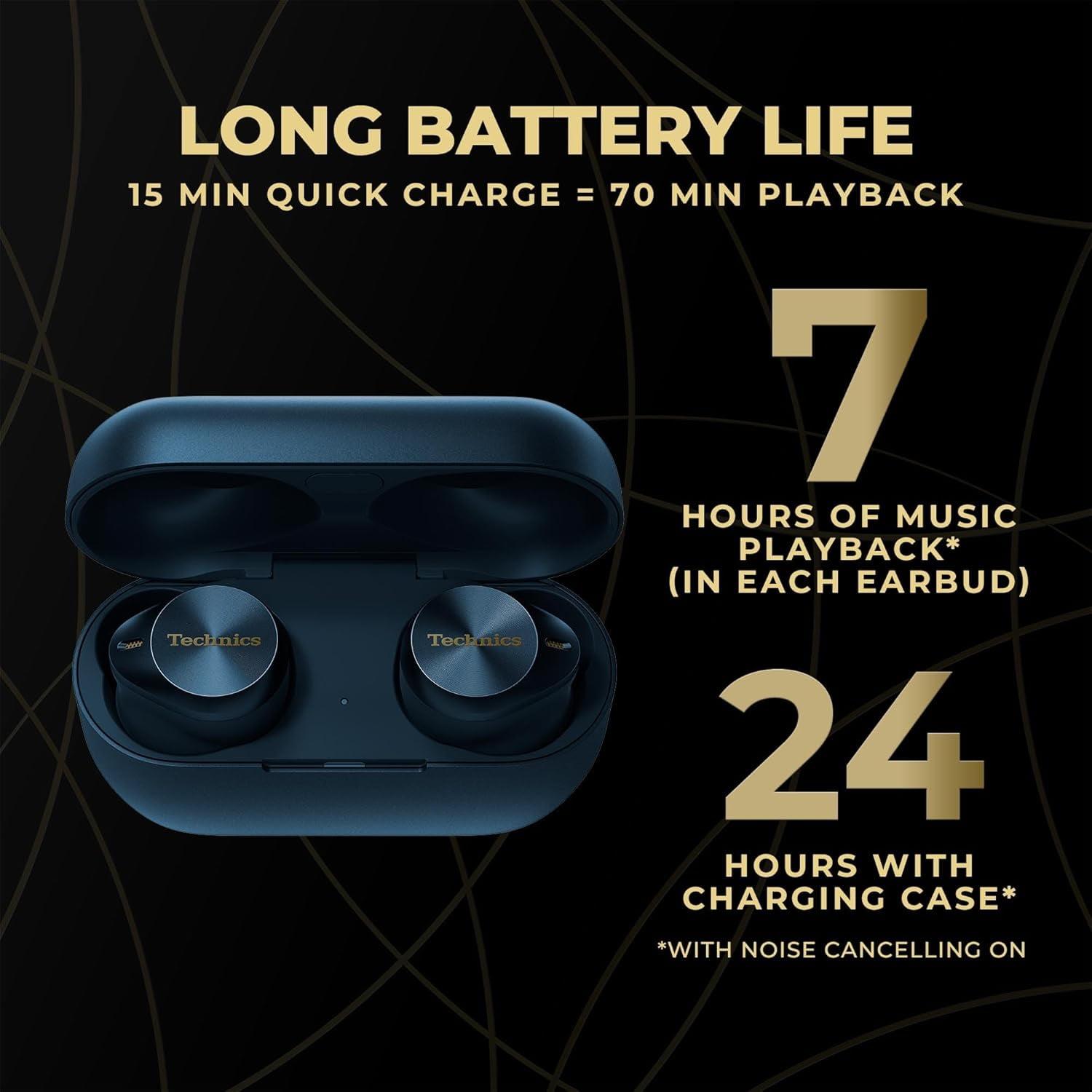
The Technics AZ80 offer 7 hours of playback with ANC enabled, similar to Samsung, but the case provides only 24 total hours. This difference might seem minor, but those extra 2-6 hours can mean the difference between making it through a long travel day or needing to find a charging outlet.
Both earbuds support wireless charging, which is convenient for bedside tables or office desks, but the Samsung Galaxy Buds 3 Pro's faster charging means less time tethered to cables when you do need to recharge.
Modern earbuds serve double duty as communication devices, and both models pack sophisticated microphone arrays to ensure clear voice calls. The Samsung Galaxy Buds 3 Pro include six microphones plus a Voice Pickup Unit (VPU), while the Technics AZ80 feature eight MEMS microphones with JustMyVoice technology.
Based on extensive review research, the Samsung Galaxy Buds 3 Pro consistently outperform most competitors in challenging acoustic environments. Their noise gating—the process of filtering out background noise from your voice—is particularly aggressive and effective. In windy conditions or noisy environments, they maintain voice clarity better than most alternatives.
However, the Samsung Galaxy Buds 3 Pro have a notable characteristic: they apply significant voice processing that can make voices sound somewhat synthetic or artificial. This processing effectively removes background noise but at the cost of natural voice reproduction. Some users describe a slight "robotic" quality, though voices remain highly intelligible.
The Technics AZ80 aim for more natural voice reproduction with their eight-microphone array and JustMyVoice technology. While they don't filter background noise as aggressively as Samsung's system, voices sound more natural and less processed. They perform well in quiet to moderately noisy environments but struggle more than Samsung's earbuds in challenging acoustic situations.
For professional use where call clarity is paramount, the Samsung Galaxy Buds 3 Pro have the advantage despite their artificial processing. For users who prioritize natural-sounding voices and primarily take calls in quieter environments, the Technics AZ80 may be preferable.
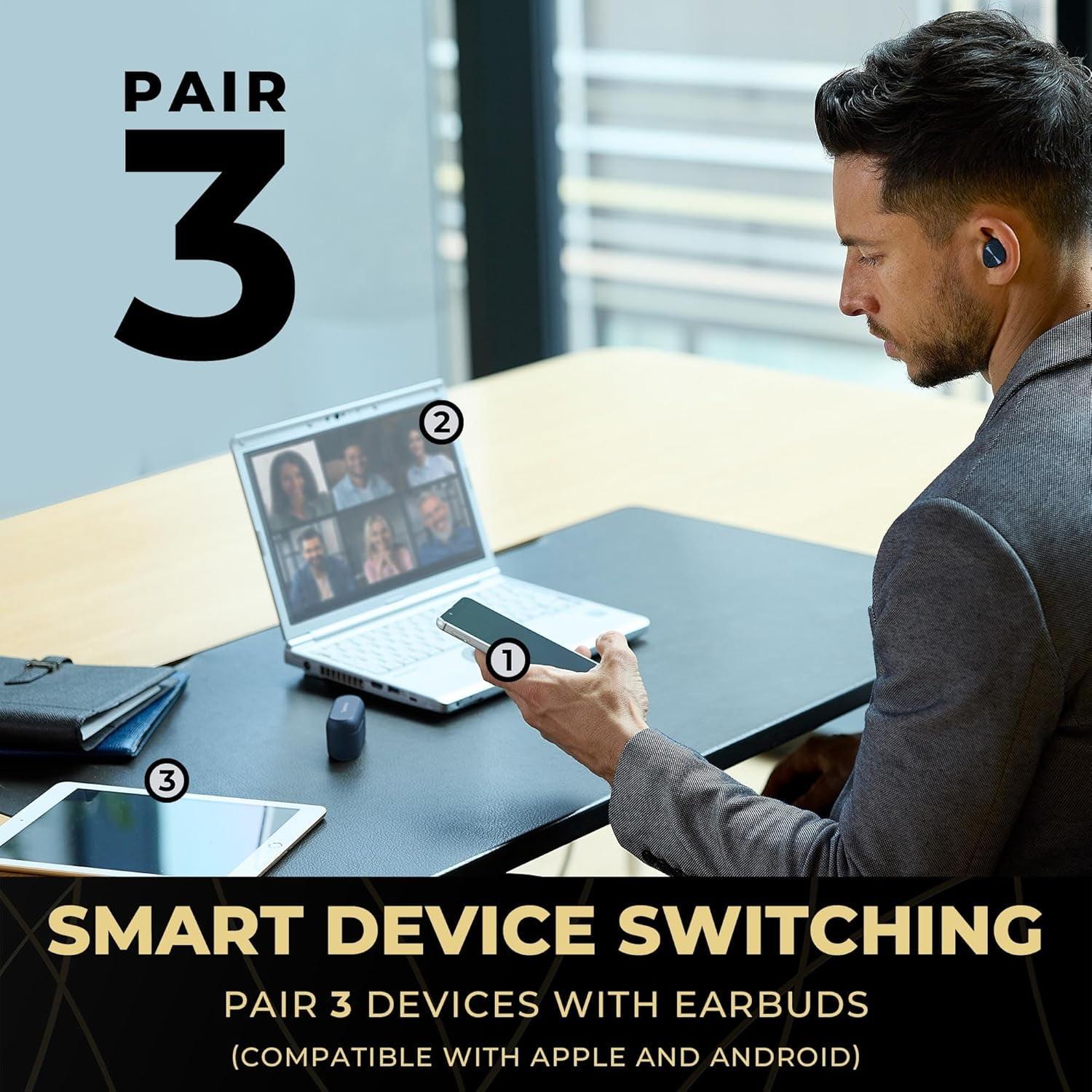
Modern premium earbuds need to seamlessly connect to multiple devices and maintain stable connections throughout the day. Both models support multipoint connectivity—the ability to connect to multiple devices simultaneously—but they implement it differently.
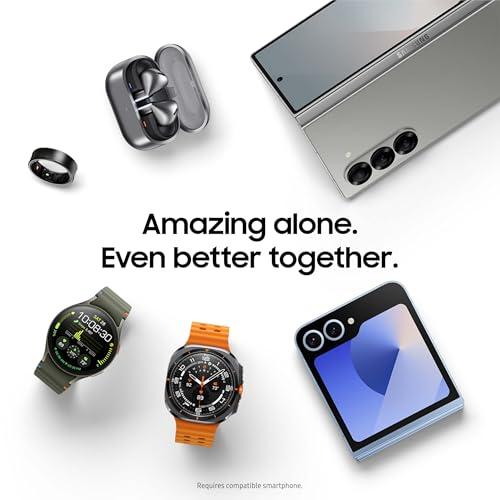
The Samsung Galaxy Buds 3 Pro can connect to up to three devices at once, but their most advanced features require recent Samsung devices. The Samsung Seamless Codec, which provides 24-bit/96kHz audio streaming, only works with Galaxy S23 series or newer, Galaxy Z Fold 5/Z Flip 5 or newer, and Tab S9 series tablets. Similarly, features like Adaptive EQ and Auto Switch are limited to Samsung's ecosystem.
This ecosystem dependency is both a strength and limitation. Samsung device owners get a remarkably integrated experience where audio seamlessly moves between their phone, tablet, and laptop as needed. The earbuds can automatically pause music when you remove them, resume when you put them back in, and switch between devices based on usage patterns.
The Technics AZ80 take a more egalitarian approach, delivering identical performance regardless of your device brand. They support LDAC high-resolution audio with any compatible Android device or dedicated music player, ensuring you're not locked into a specific ecosystem for premium features.
For users committed to Samsung's ecosystem, the Samsung Galaxy Buds 3 Pro provide unmatched integration. For users who switch between different brands or use multiple operating systems, the Technics AZ80 offer more flexibility.
Premium earbuds need to be comfortable enough for all-day wear while robust enough to handle daily use. The Samsung Galaxy Buds 3 Pro weigh just 5.4 grams per earbud compared to 7 grams for the Technics AZ80. This 1.6-gram difference might seem trivial, but it becomes noticeable during extended listening sessions.
The Samsung Galaxy Buds 3 Pro also carry an impressive IP57 rating, meaning they're completely dust-tight and can survive immersion in up to one meter of water for 30 minutes. This makes them suitable for intense workouts, running in the rain, or accidental drops in water.
The Technics AZ80 have a lower IPX4 rating, which protects against water splashes but not immersion. While adequate for light workouts or caught in light rain, they're not suitable for swimming or intense physical activity where heavy sweating occurs.
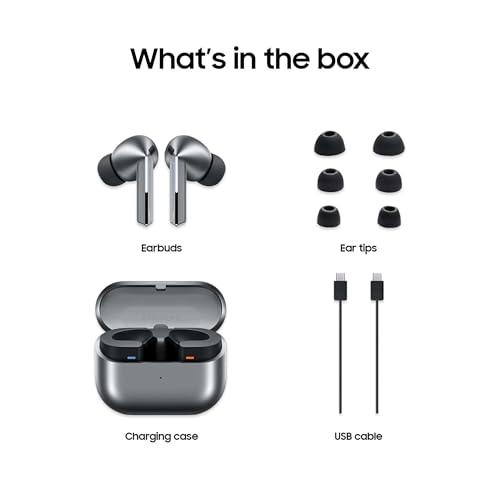
However, the Technics AZ80 include seven different ear tip sizes compared to just three with the Samsung Galaxy Buds 3 Pro. This extensive selection makes it more likely you'll find a perfect fit, which is crucial for both comfort and sound quality. A proper seal is essential for bass response and noise cancellation effectiveness.
The stem design of the Samsung Galaxy Buds 3 Pro won't suit everyone's ears, and some users find stem-style earbuds less secure during physical activity. The more traditional in-ear design of the Technics AZ80 typically provides a more secure fit, though the additional weight might cause fatigue during very long listening sessions.
After researching extensive user feedback and professional reviews, clear usage patterns emerge for each model. The Samsung Galaxy Buds 3 Pro excel as lifestyle earbuds that adapt to your daily routine while providing excellent performance across multiple scenarios. Their smart features, superior water resistance, and ecosystem integration make them ideal for Samsung users who want earbuds that enhance their connected device experience.
Choose the Samsung Galaxy Buds 3 Pro if you:
The Technics AZ80 serve audiophiles and music enthusiasts who prioritize pure sound quality above smart features. Their neutral tuning, high-resolution codec support, and superior driver technology make them excellent for critical listening across any device ecosystem.
Choose the Technics AZ80 if you:
Neither option represents exceptional value at their typical retail prices, but both occasionally see significant discounts that improve their value proposition. At the time of writing, the Samsung Galaxy Buds 3 Pro generally cost slightly less than the Technics AZ80, making them more accessible for users who want premium features.
For most users, the decision ultimately comes down to ecosystem preference and listening priorities. Samsung device owners will find the Samsung Galaxy Buds 3 Pro provide a more integrated, feature-rich experience that justifies any compromises in pure audio fidelity. Users who prioritize sound quality above all else, or who use multiple device ecosystems, will appreciate the Technics AZ80's uncompromising approach to audio reproduction.
Both represent the current state of the art in true wireless earbuds, just with different priorities and target audiences. Your choice should align with how you actually use earbuds rather than which specifications look better on paper.
| Samsung Galaxy Buds 3 Pro | Technics AZ80 |
|---|---|
| Driver Technology - Determines sound quality and frequency response | |
| Dual amplifier system with 10.5mm woofer + 6.1mm planar magnetic tweeter | 10mm aluminum alloy dynamic drivers |
| Sound Signature - Affects music genres that sound best | |
| V-shaped (enhanced bass/treble, exciting for pop/electronic) | Neutral/audiophile-tuned (accurate for all genres) |
| High-Resolution Audio Codec - Enables better than CD quality streaming | |
| Samsung Seamless Codec 24-bit/96kHz (Samsung devices only) | LDAC 24-bit/96kHz (universal Android support) |
| Active Noise Cancellation - Critical for focus and travel | |
| Adaptive ANC with AI environmental detection (76% reduction) | Dual Hybrid ANC with manual adjustment (good but not adaptive) |
| Battery Life - Determines daily usability | |
| 7 hours + 26-30 total with case | 7 hours + 24 total with case |
| Charging Speed - Affects convenience during busy days | |
| 1.18 hours for full case charge | 2 hours for full case charge |
| Water Resistance - Important for workouts and weather | |
| IP57 (dust-tight, 1m water immersion protection) | IPX4 (splash-resistant only) |
| Weight - Affects comfort during extended wear | |
| 5.4g per earbud (very lightweight) | 7g per earbud (noticeably heavier) |
| Multipoint Connectivity - Ability to connect multiple devices | |
| 3 devices simultaneously | 3 devices simultaneously |
| Ecosystem Integration - Determines available premium features | |
| Advanced features require Samsung devices | Universal compatibility across all brands |
| Microphone Array - Affects call quality in noisy environments | |
| 6 mics + VPU (excellent noise filtering, synthetic sound) | 8 MEMS mics (natural sound, less noise filtering) |
| Ear Tip Options - Critical for proper fit and seal | |
| 3 sizes included | 7 sizes included (much better fit options) |
| Transparency Mode - For situational awareness | |
| Exceptional natural sound passthrough | Good but less refined than Samsung |
| Release Year - Indicates current technology generation | |
| 2024 (latest Samsung audio tech) | 2024 (latest Technics driver technology) |
The Technics AZ80 deliver more accurate, audiophile-focused sound quality with their 10mm aluminum drivers and neutral tuning that reproduces music as intended by the artist. The Samsung Galaxy Buds 3 Pro offer a more exciting V-shaped sound signature with enhanced bass and treble that makes music feel dynamic and energetic. For critical listening and acoustic genres, choose the Technics AZ80. For an engaging, fun listening experience across pop and electronic music, the Samsung Galaxy Buds 3 Pro excel.
The Samsung Galaxy Buds 3 Pro feature superior active noise cancellation with AI-powered adaptive technology that automatically adjusts to your environment, achieving approximately 76% noise reduction. The Technics AZ80 offer solid dual hybrid ANC but lack the intelligent environmental detection. Samsung's system also includes voice detect and siren detect features for added safety and convenience.
Both the Samsung Galaxy Buds 3 Pro and Technics AZ80 provide 7 hours of playback with ANC enabled. However, the Samsung Galaxy Buds 3 Pro offer 26-30 total hours with the charging case compared to 24 hours for the Technics AZ80. Samsung also charges significantly faster, taking only 1.18 hours for a full case charge versus 2 hours for Technics.
The Samsung Galaxy Buds 3 Pro excel at filtering background noise during calls with their 6-microphone array and Voice Pickup Unit, making them ideal for noisy environments. However, they apply heavy voice processing that can sound artificial. The Technics AZ80 offer more natural-sounding voices with their 8-microphone JustMyVoice technology but struggle more in challenging noise conditions.
The Samsung Galaxy Buds 3 Pro are more comfortable for extended wear due to their lighter 5.4g weight compared to the Technics AZ80's 7g per earbud. However, the Technics AZ80 include 7 different ear tip sizes versus only 3 with Samsung, making it more likely you'll find a perfect fit. Weight matters more for all-day comfort, while proper fit affects both comfort and sound quality.
The Samsung Galaxy Buds 3 Pro are significantly better for workouts with their IP57 water resistance rating that protects against dust and water immersion up to 1 meter. The Technics AZ80 only offer IPX4 splash resistance, making them unsuitable for intense workouts or wet conditions. Samsung's lighter weight also reduces fatigue during exercise.
Both earbuds offer comprehensive apps with EQ customization, but they serve different needs. The Samsung Galaxy Buds 3 Pro provide extensive features through the Galaxy Wearable app, including adaptive EQ and seamless device switching, but many premium features require Samsung devices. The Technics AZ80 offer universal compatibility through their Audio Connect app with equal functionality across all device brands.
Yes, both the Samsung Galaxy Buds 3 Pro and Technics AZ80 support multipoint connectivity for up to 3 devices simultaneously. The Samsung Galaxy Buds 3 Pro offer more intelligent automatic switching between Samsung devices, while the Technics AZ80 provide consistent multipoint performance regardless of device brand or operating system.
The Samsung Galaxy Buds 3 Pro are specifically optimized for Samsung device owners, offering exclusive features like Samsung Seamless Codec for 24-bit audio, adaptive EQ, and seamless device switching between Galaxy phones, tablets, and watches. These premium features are unavailable on the Technics AZ80 but only work with recent Samsung devices (Galaxy S23 series or newer).
The Technics AZ80 are better for serious music enthusiasts who prioritize accuracy and detail, offering neutral tuning that works with all genres and universal LDAC high-resolution audio support. The Samsung Galaxy Buds 3 Pro are better for casual listeners who want engaging, exciting sound that makes music feel more dynamic, especially for pop and electronic genres.
Value depends on your device ecosystem and priorities. The Samsung Galaxy Buds 3 Pro offer better value for Samsung device owners who can access all premium features, superior water resistance, and longer battery life. The Technics AZ80 provide better value for audiophiles and multi-device users who want the highest sound quality without ecosystem restrictions.
Both earbuds work well for movies, but serve different needs. The Samsung Galaxy Buds 3 Pro offer 360 Audio spatial sound that creates immersive movie experiences, especially with Samsung TVs, plus superior dialogue clarity through their advanced noise cancellation. The Technics AZ80 excel at soundtrack reproduction and dialogue accuracy with their neutral tuning but lack proprietary spatial audio features.
We've done our best to create useful and informative comparisons to help you decide what product to buy. Our research uses advanced automated methods to create this comparison and perfection is not possible - please contact us for corrections or questions. These are the sites we've researched in the creation of this article: techradar.com - soundguys.com - whathifi.com - loudnwireless.com - rtings.com - whathifi.com - youtube.com - youtube.com - soundguys.com - youtube.com - youtube.com - soundguys.com - eu.community.samsung.com - phonearena.com - loudnwireless.com - samsung.com - whatgear.net - samsung.com - devicesupport.three.co.uk - youtube.com - samsung.com - techradar.com - samsung.com - en.wikipedia.org - samsung.com - moneycontrol.com - youtube.com - bestbuy.com - eu.community.samsung.com - stereonet.com - us.technics.com - us.technics.com - rtings.com - head-fi.org - bestbuy.com - soundguys.com - head-fi.org - youtube.com - loudnwireless.com - youtube.com - cnet.com - technics.com - technics.com - bestbuy.com - target.com - us.technics.com - technics.com - youtube.com - head-fi.org - nnty.fun - us.technics.com - bhphotovideo.com - bestbuy.com - us.technics.com - audiosciencereview.com - youtube.com - head-fi.org - head-fi.org - jbhifi.com.au

Privacy Policy
Terms and Conditions - Affiliate Policy
Home Security
© Copyright 2008-2026.
11816 Inwood Rd #1211, Dallas, TX 75244