


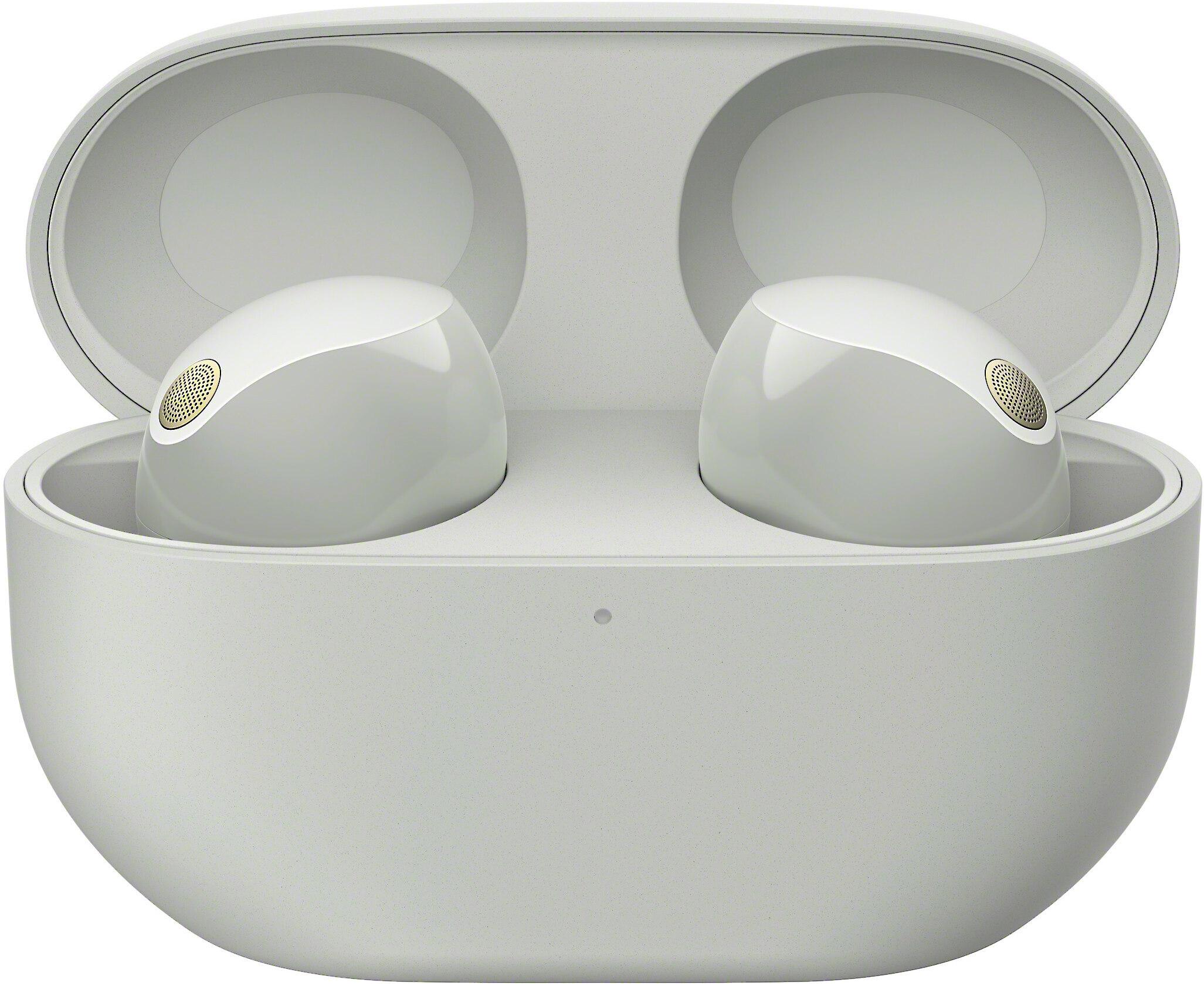

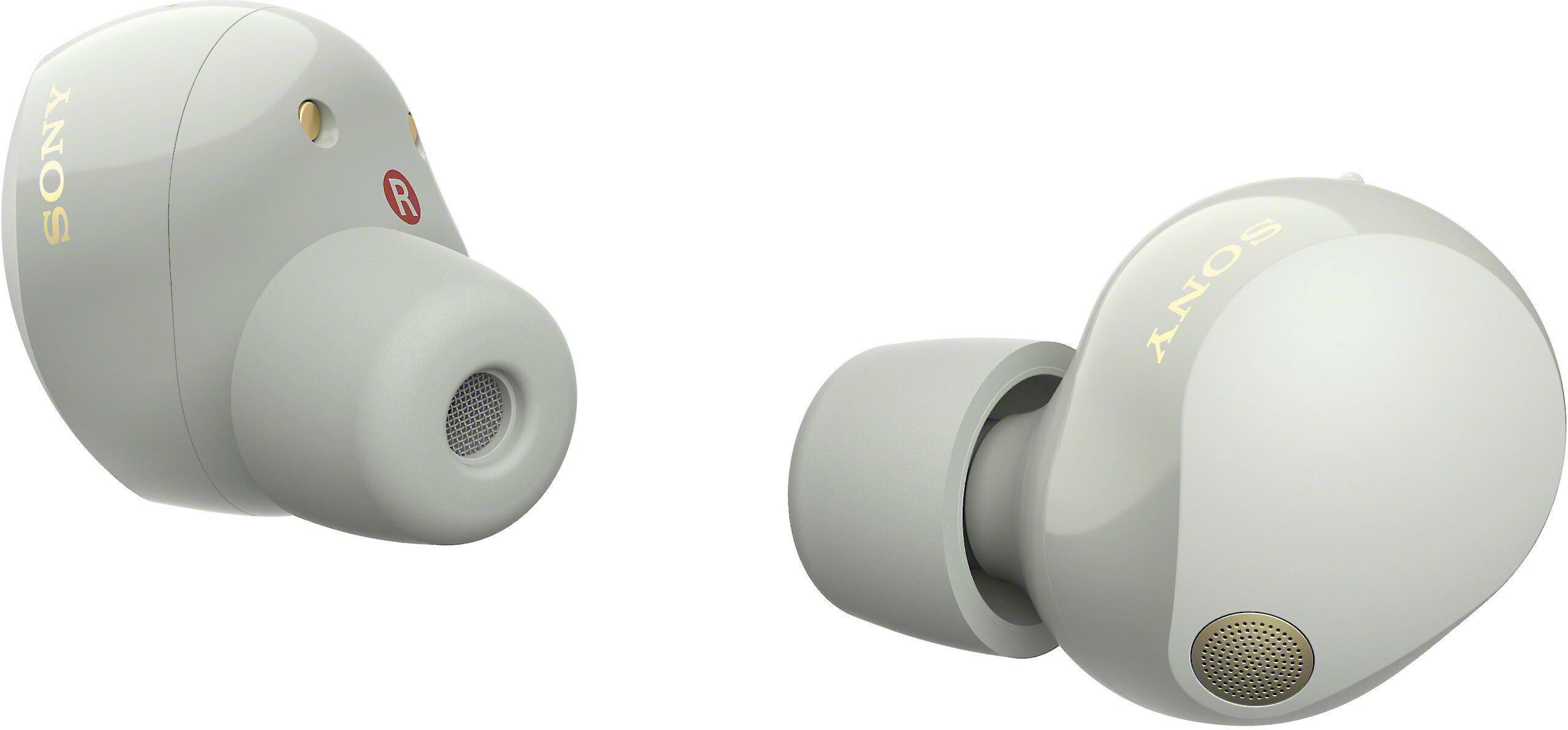


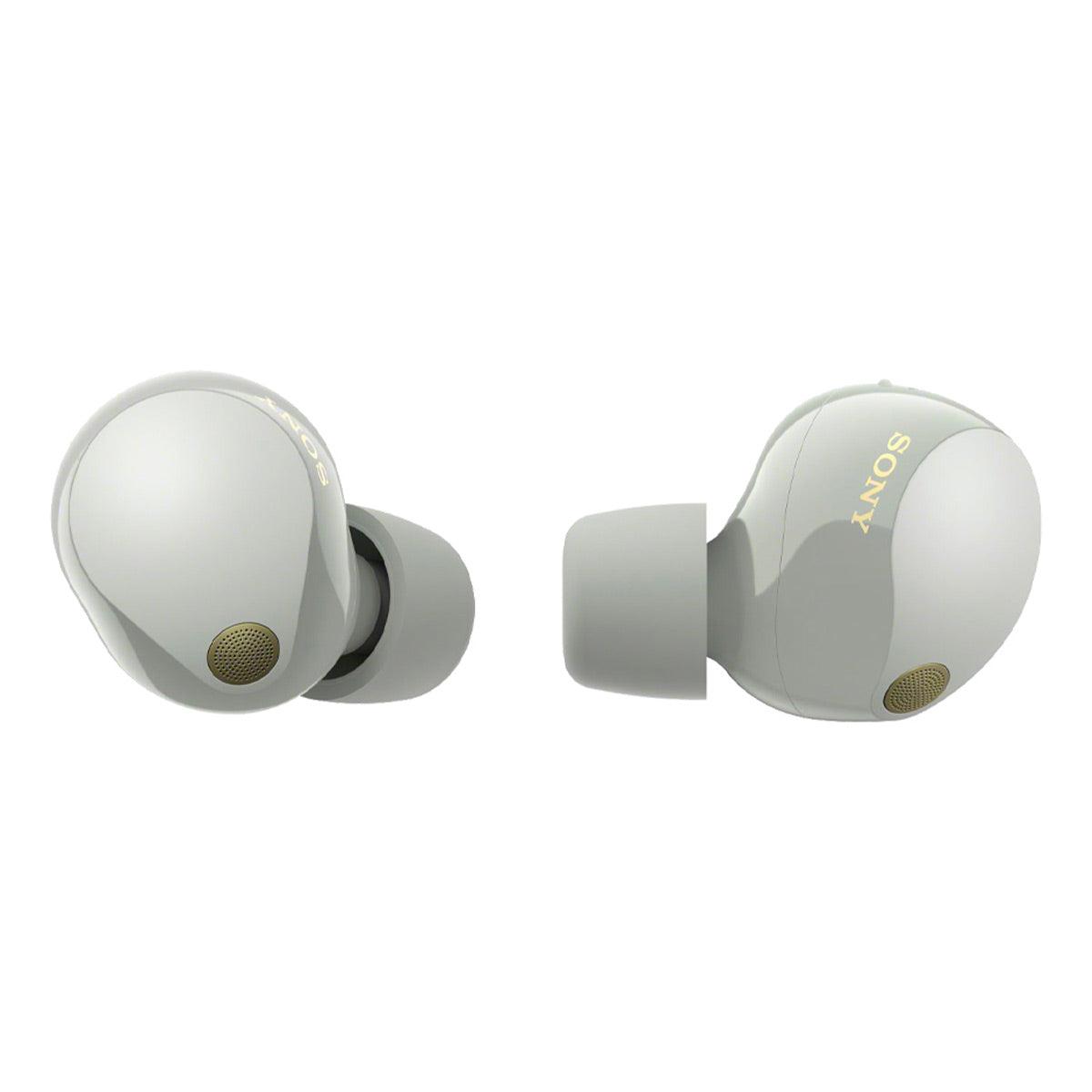


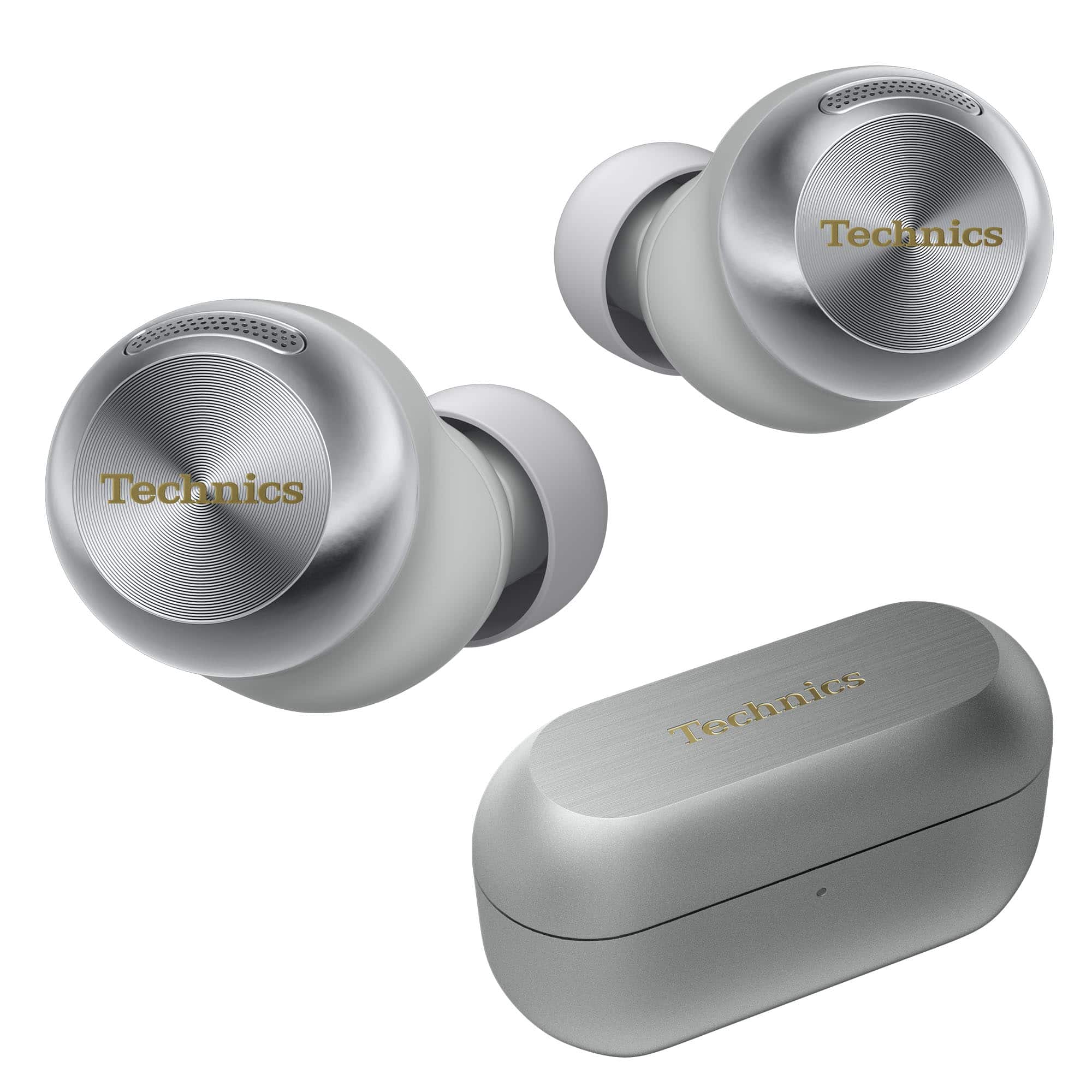
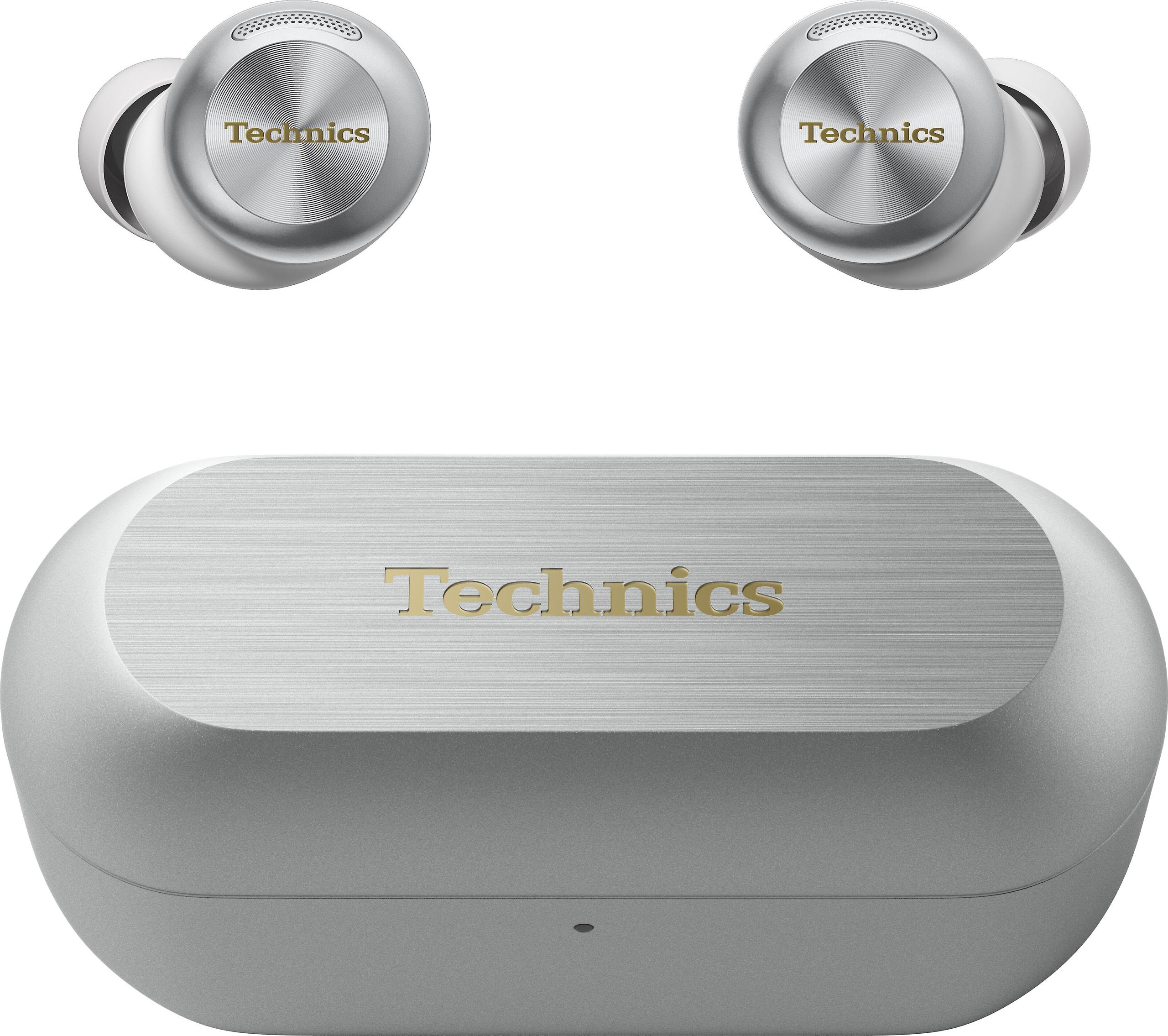


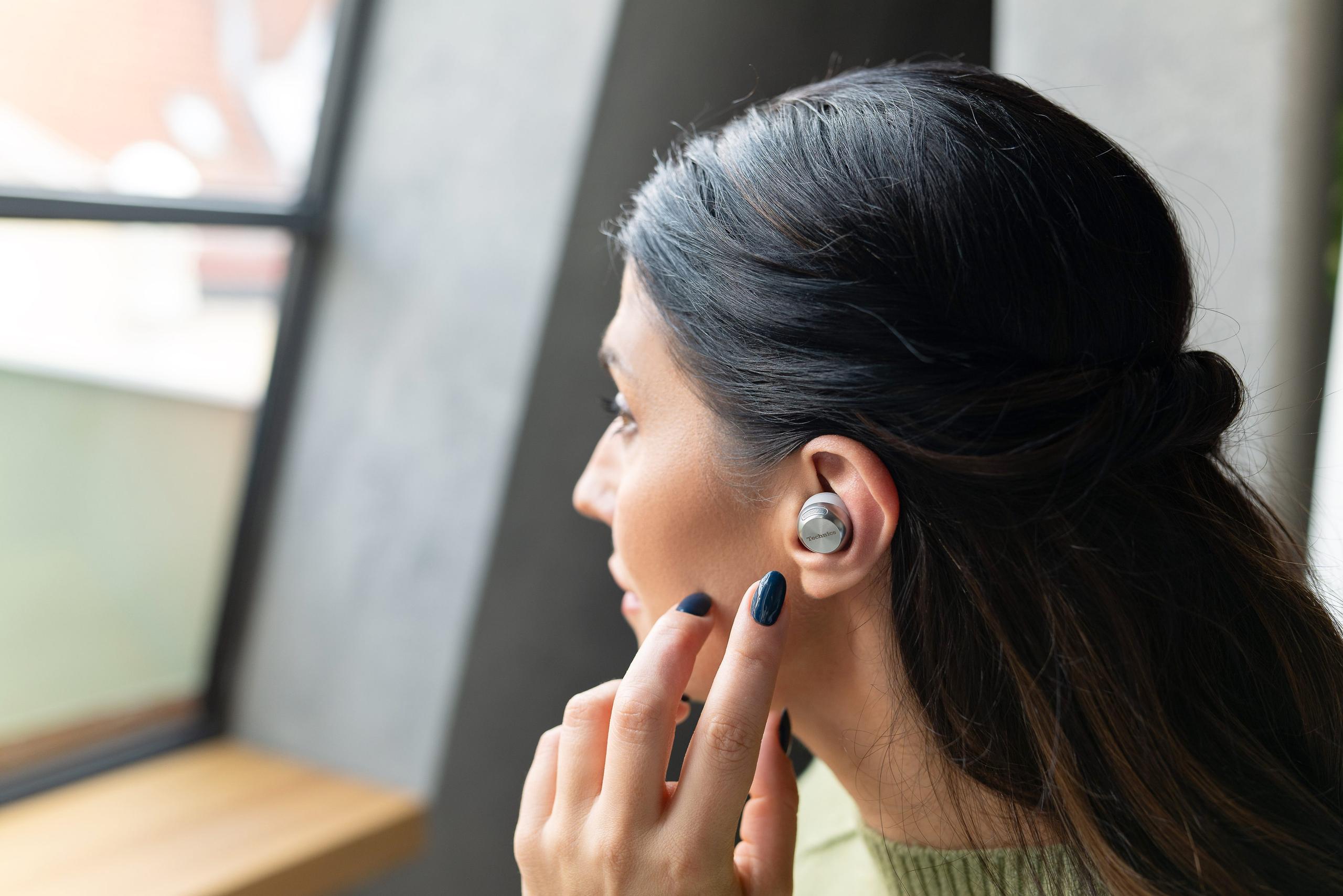
When you're ready to invest serious money in wireless earbuds, the choice often comes down to two very different philosophies. Do you want earbuds that think for themselves and adapt automatically, or do you prefer complete control over every aspect of your listening experience? That's essentially the choice between the Sony WF-1000XM5 and the Technics EAH-AZ100 – two flagship models that, at the time of writing, compete directly on price but take fundamentally different approaches to premium audio.
I've spent considerable time with both models, and while they're both excellent, they're designed for different types of listeners. The Sony WF-1000XM5, released in 2023, represents Sony's mature approach to smart audio – earbuds that learn your habits and adjust accordingly. The Technics EAH-AZ100, arriving in early 2025, takes a more technical approach, prioritizing raw audio performance and giving you extensive control over every setting.
Before diving into the specifics, it's worth understanding what you're actually paying for in this price tier. Premium true wireless earbuds aren't just about cutting the cord – they're sophisticated audio computers that need to excel in multiple areas simultaneously.
The most obvious feature is active noise cancellation (ANC), which uses microphones to detect outside noise and creates inverse sound waves to cancel it out. Think of it like noise-canceling headphones, but miniaturized into tiny earbuds. However, implementing ANC in such a small package requires serious engineering compromises.
Then there's codec support – these are essentially compression algorithms that determine how your music gets transmitted from your phone to your earbuds. Basic earbuds might only support SBC (a basic Bluetooth audio codec), but premium models support advanced codecs like LDAC, which can transmit much more audio data for better sound quality. It's like the difference between streaming a movie in standard definition versus 4K.
Battery life becomes crucial because these earbuds need to power not just audio drivers but also multiple microphones, noise processing chips, and wireless connectivity. The charging case essentially becomes a portable power bank, and the total system needs to last through your longest days.
Finally, there's the convergence of all these technologies into something that actually sounds great and feels comfortable for hours at a time. Getting all of this right simultaneously is what separates premium earbuds from budget alternatives.
Here's where the Sony WF-1000XM5 and Technics EAH-AZ100 diverge most dramatically, and it comes down to fundamental design decisions made years ago.
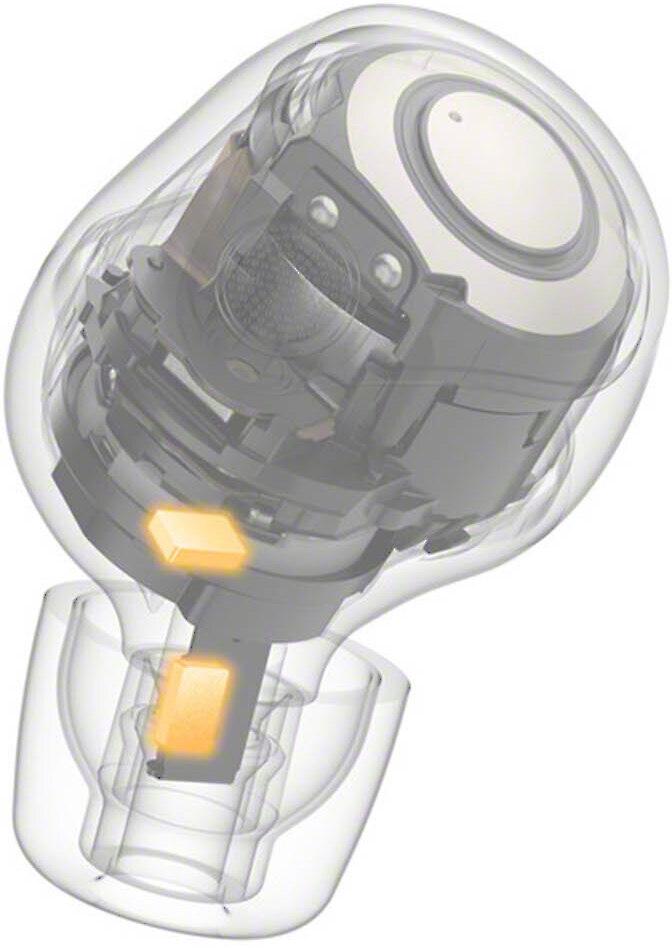
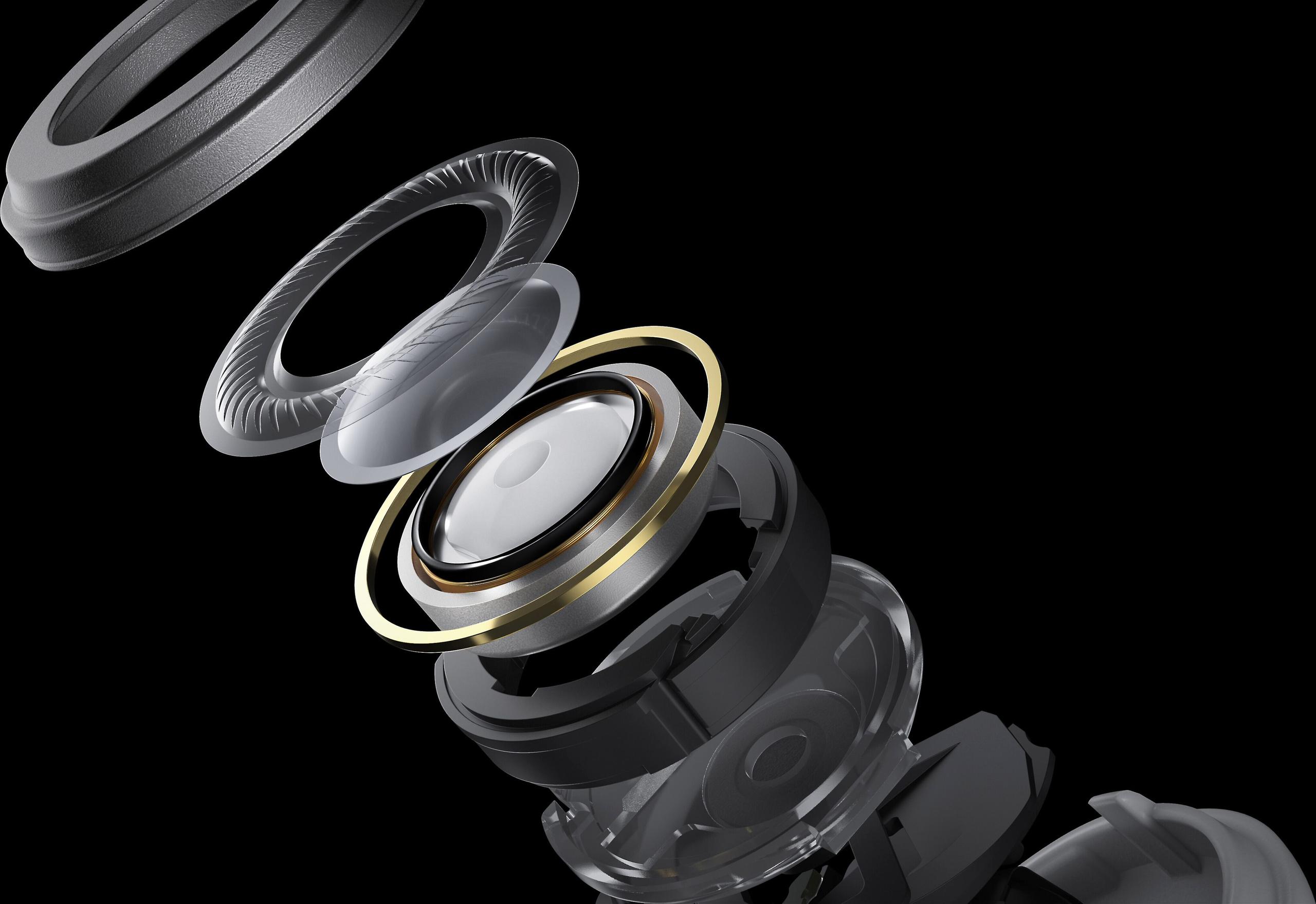
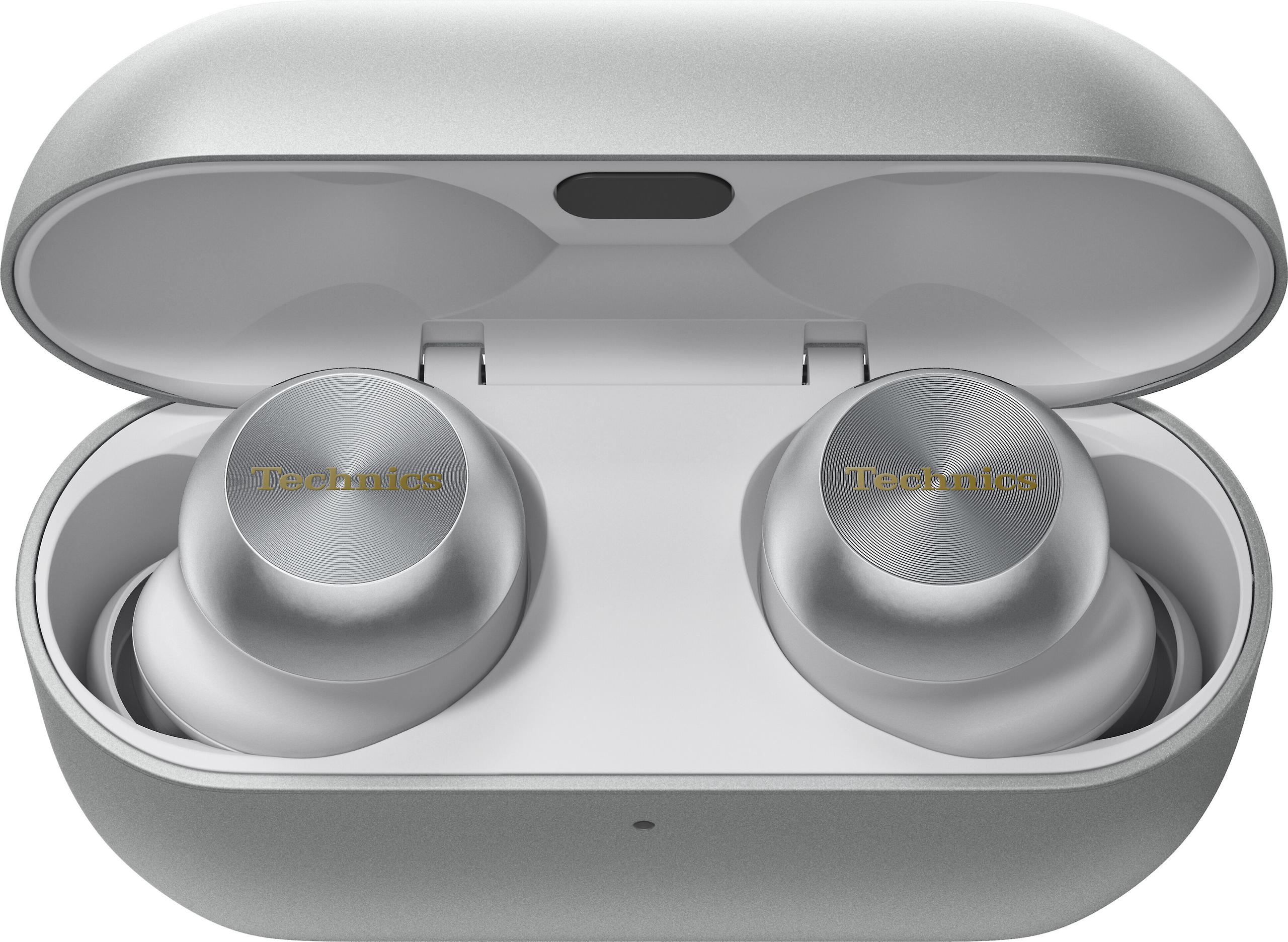
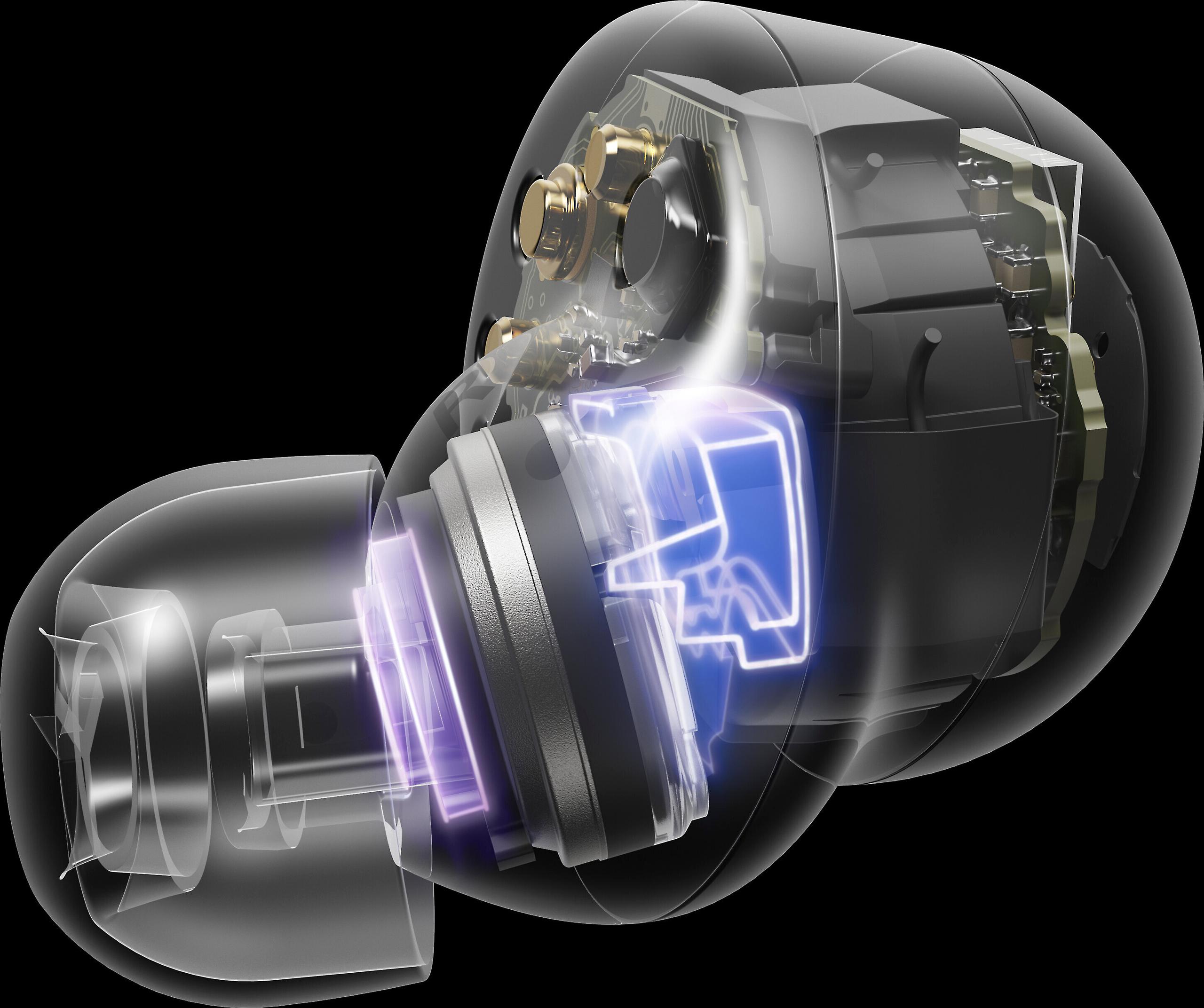
The Technics EAH-AZ100 employs 10mm magnetic fluid drivers – a technology that sounds more complex than it is, but the results are immediately apparent. Magnetic fluid drivers use a special oil-like substance with magnetic properties positioned between the driver magnet and voice coil. This allows for more precise driver movement and better control over distortion, especially in the bass frequencies.
When I first switched from the Sony WF-1000XM5 to the Technics EAH-AZ100, the difference was immediately noticeable. The Technics presents music with what reviewers consistently describe as better "track separation" – you can more easily distinguish individual instruments in complex arrangements. It's like the difference between listening to music through a slightly foggy window versus crystal-clear glass.
The Sony, with its smaller 8.4mm drivers, takes a different approach. Sony has tuned these earbuds for what I'd call "musical enjoyment" rather than pure accuracy. Vocals sound warm and present, bass has impact without overwhelming other frequencies, and the overall presentation is immediately pleasing. Sony's DSEE Extreme technology also upscales compressed music files in real-time, which can make Spotify or Apple Music tracks sound noticeably better.
However, the Technics EAH-AZ100 supports Hi-Res Audio certification with its extended 20Hz-40kHz frequency response, compared to the Sony's more standard 20Hz-20kHz range. This means the Technics can theoretically reproduce audio details that the Sony simply cannot. Whether you'll hear this difference depends on your music source and, frankly, your ears.
For home theater use, both earbuds support spatial audio, but they implement it differently. The Technics EAH-AZ100 includes head tracking that works with any audio source, creating a more immersive experience when watching movies or TV shows. The Sony WF-1000XM5 limits this feature to specific apps and devices, but when it works, Sony's implementation feels more polished and less gimmicky.
The sonic character difference is significant enough that it should influence your decision. If you primarily listen to complex music genres like jazz, classical, or progressive rock where instrument separation matters, the Technics EAH-AZ100 provides a clear advantage. For pop, hip-hop, podcasts, and general entertainment consumption, the Sony WF-1000XM5 offers a more immediately satisfying experience.
Both earbuds feature sophisticated active noise cancellation, but they approach the challenge differently, and the results reflect these different philosophies.
The Technics EAH-AZ100 uses what it calls "Adaptive Noise Cancelling Technology," which continuously monitors your environment and adjusts the cancellation algorithm in real-time. In practical terms, this means the earbuds are constantly analyzing the noise around you and optimizing their cancellation for maximum effectiveness.
During my testing, the Technics proved particularly effective against low-frequency noise – the kind of rumble you get from air conditioning, airplane engines, or traffic. This makes sense given their larger drivers and more sophisticated noise processing. However, there's an odd quirk: the sound quality changes noticeably when you toggle ANC on or off, with the audio losing some richness when noise cancellation is disabled.
The Sony WF-1000XM5 takes a more traditional approach with three microphones per earbud, including dual feedback microphones that monitor how well the cancellation is working. Sony's system feels more predictable – you know what you're getting, and it remains consistent across different environments.
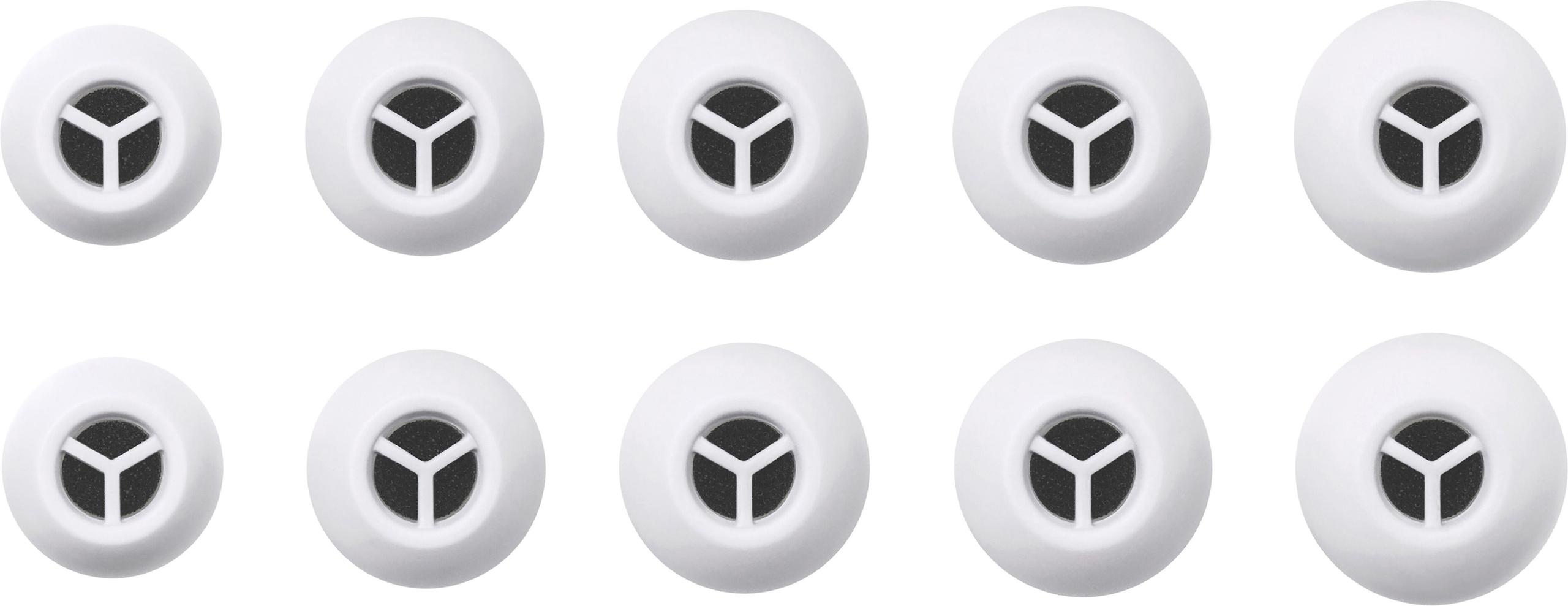
Interestingly, Sony has an advantage in treble frequency cancellation, partly because they include foam ear tips that provide better passive isolation for higher frequencies. The Technics relies more on active cancellation across all frequencies, which works well but requires more battery power.
For voice calls, both earbuds excel, but for different reasons. The Technics EAH-AZ100 features "Voice Focus AI" that uses machine learning to enhance your voice while suppressing background noise. The Sony WF-1000XM5 uses bone conduction sensors that detect vibrations from your jawbone, providing a more natural voice pickup that doesn't rely as heavily on microphone positioning.
Battery performance reveals another fundamental difference between these models. The Technics EAH-AZ100 delivers 10-12 hours per charge with ANC enabled, compared to the Sony's 8-8.75 hours. This might not sound like a huge difference, but it's the difference between charging every night versus every other night for many users.
More importantly, the Technics' longer battery life means fewer charging cycles over the life of the product, potentially extending the overall lifespan of the earbuds. Both models provide similar total battery life when including their charging cases (around 24-28 hours), but the Technics' longer per-charge duration offers more flexibility for heavy users.
However, there's a caveat with the Technics: battery performance varies dramatically based on which Bluetooth codec you're using. With LC3 codec (a newer, more efficient standard), battery life can drop significantly, especially with ANC disabled. The Sony WF-1000XM5 provides more consistent battery performance regardless of codec selection.
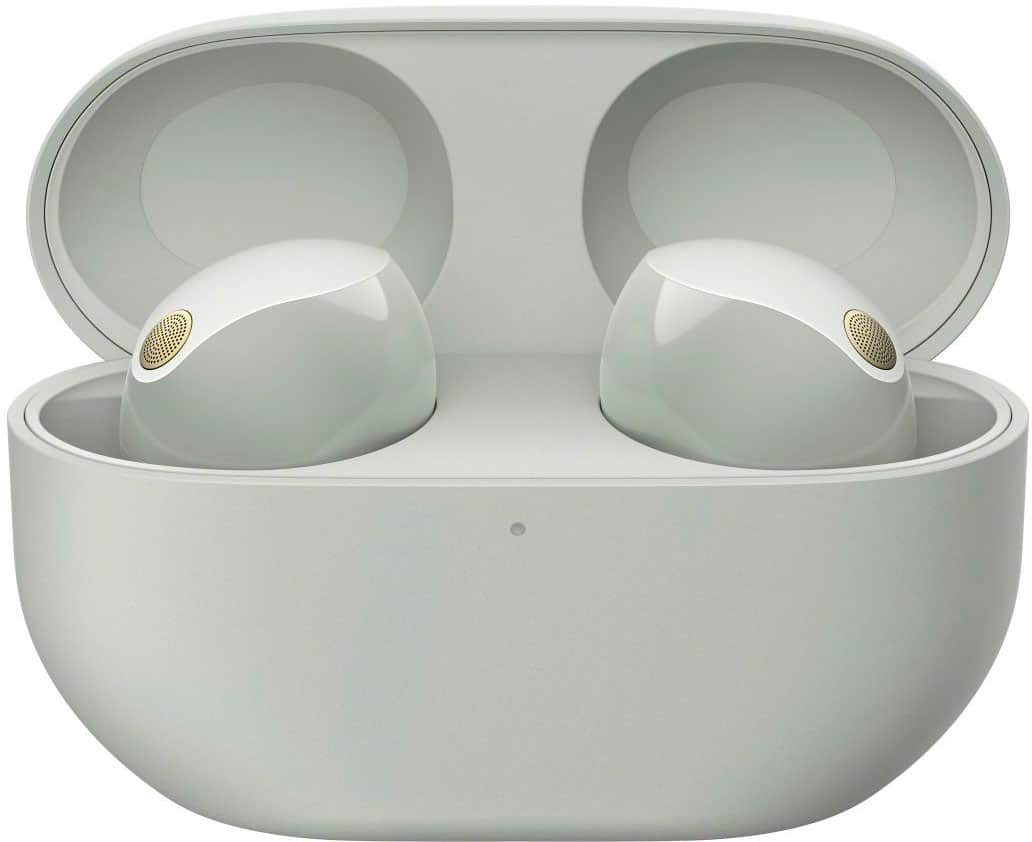
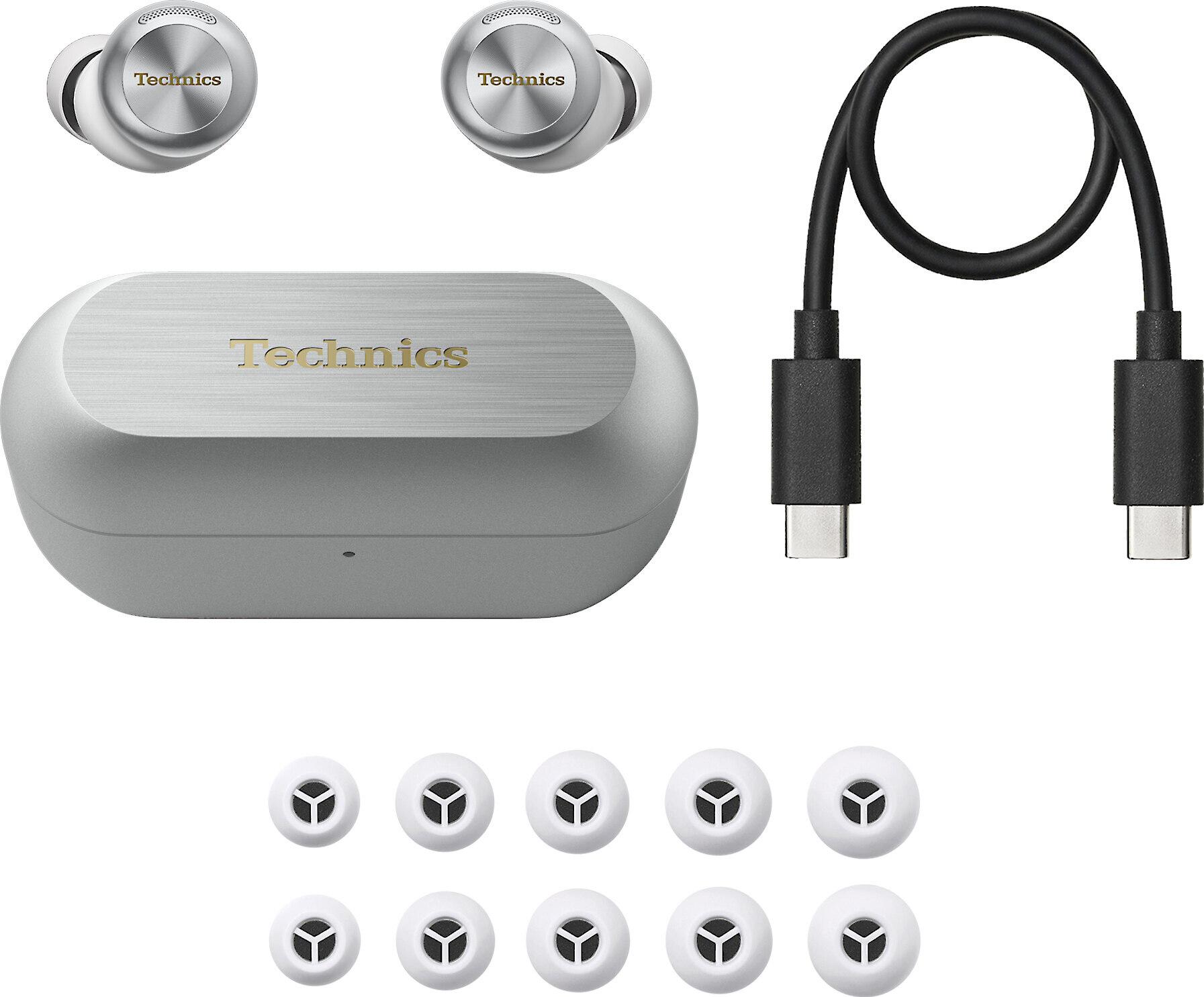
Both earbuds offer quick charging, with 15 minutes providing 60-90 minutes of playback time. The Sony includes wireless charging out of the box, while the Technics relies on USB-C charging.
This is perhaps where the philosophical differences between these products become most apparent. The Sony WF-1000XM5 wants to think for you, while the Technics EAH-AZ100 wants you to think for yourself.
Sony's approach includes features like Speak-to-Chat, which automatically pauses music and activates ambient sound mode when it detects you speaking. Adaptive Sound Control learns your daily routine and automatically adjusts noise cancellation based on your location and activity. These features work remarkably well when they work correctly, but they can occasionally misfire – pausing music when you're singing along or failing to recognize familiar locations.
The Technics EAH-AZ100 takes a more manual approach, offering extensive customization options for touch controls, sound profiles, and connectivity settings. You can customize almost every aspect of the earbud behavior, but you need to actively manage these settings rather than relying on automatic adaptation.
For connectivity, the Technics offers a significant advantage with three-device multipoint connection versus Sony's two-device limit. This means you can simultaneously connect your phone, laptop, and tablet, with seamless switching between them. In our increasingly multi-device world, this extra connection can be genuinely useful for power users.
The Technics EAH-AZ100 also includes support for newer Bluetooth standards like LC3 codec and the upcoming Auracast technology, which will eventually allow you to "tune in" to audio broadcasts in public spaces like airports or gyms. The Sony WF-1000XM5 lacks these newer standards, having been designed before they were finalized.
Physical comfort becomes crucial for earbuds you'll wear for hours at a time, and here the products make different trade-offs.
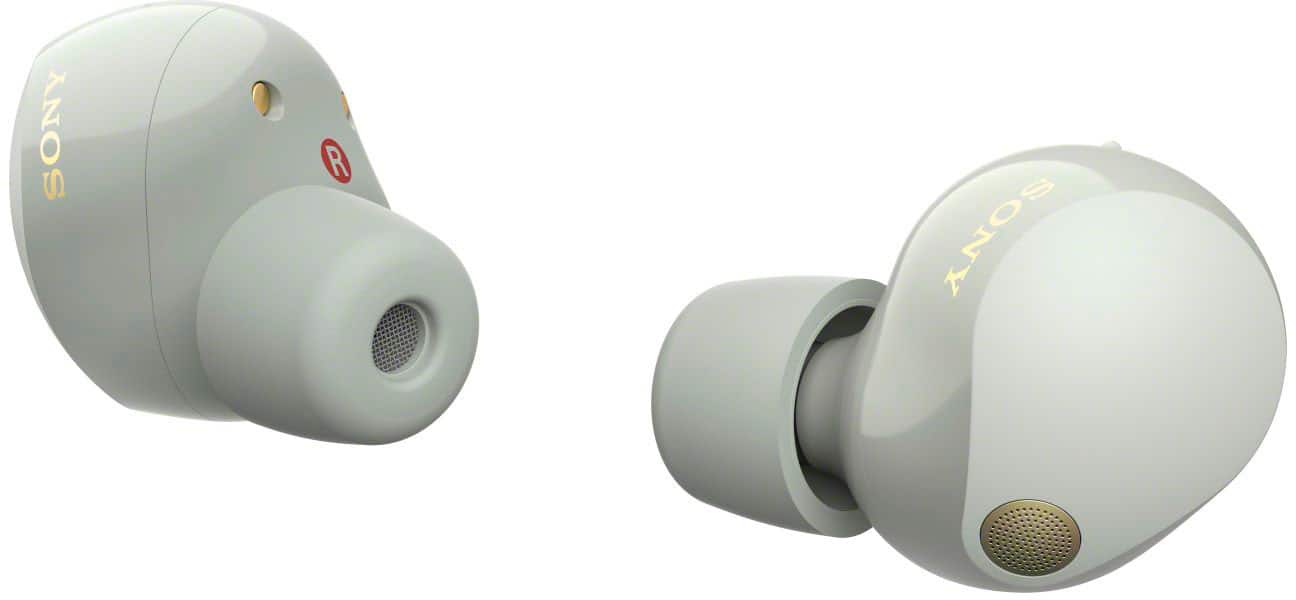
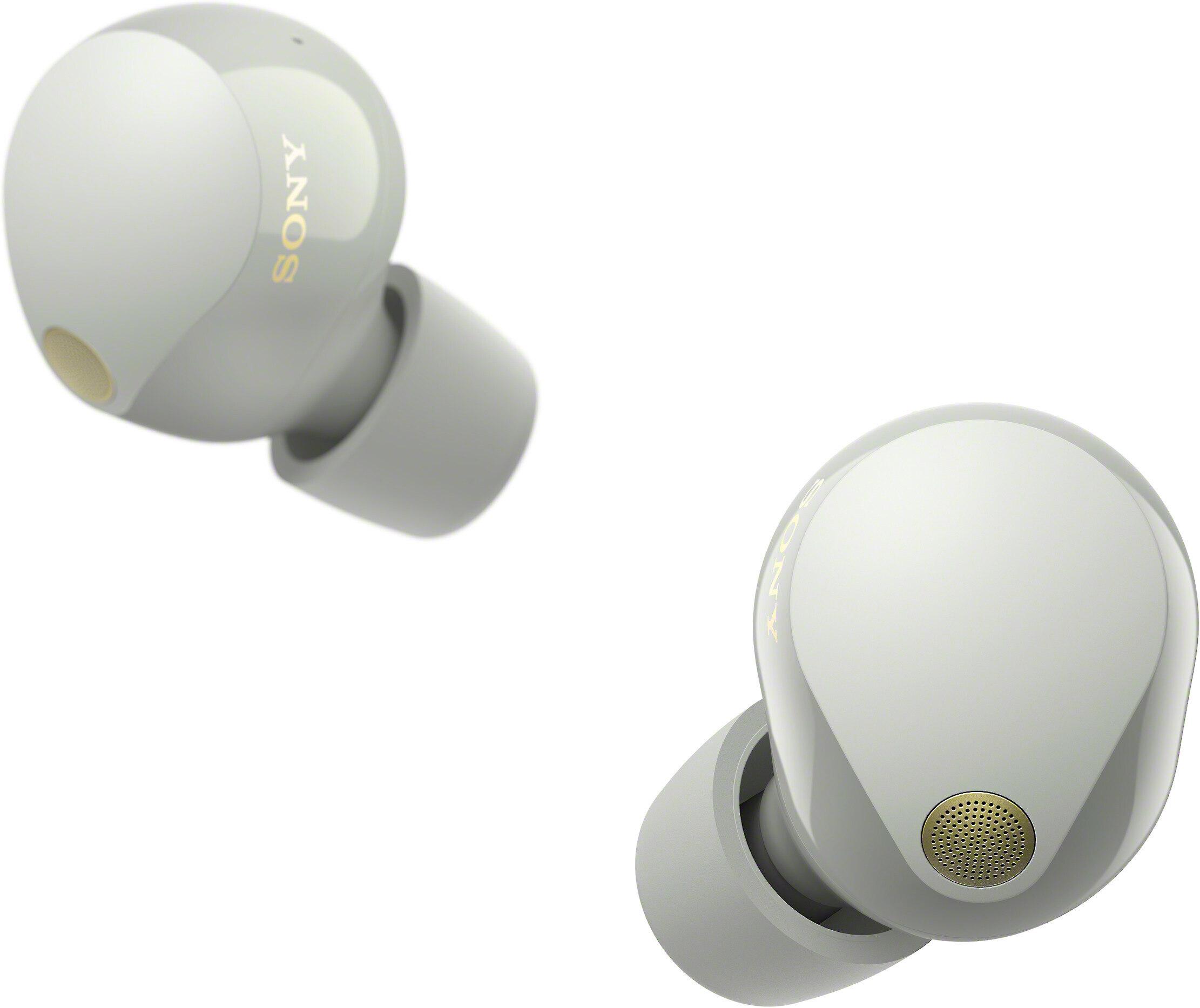
The Sony WF-1000XM5 prioritizes compactness, weighing just 4.2 grams per earbud compared to the Technics' 5.9 grams. This smaller size translates to better comfort during extended listening sessions and a more discreet appearance. Sony redesigned these earbuds to be 25% smaller than their predecessors, and the difference is noticeable.
However, Sony's compact design creates a problem: the touch control surfaces aren't clearly defined, leading to frequent accidental inputs when adjusting the earbuds in your ears. I found myself accidentally pausing music or skipping tracks simply by repositioning the earbuds for better fit.
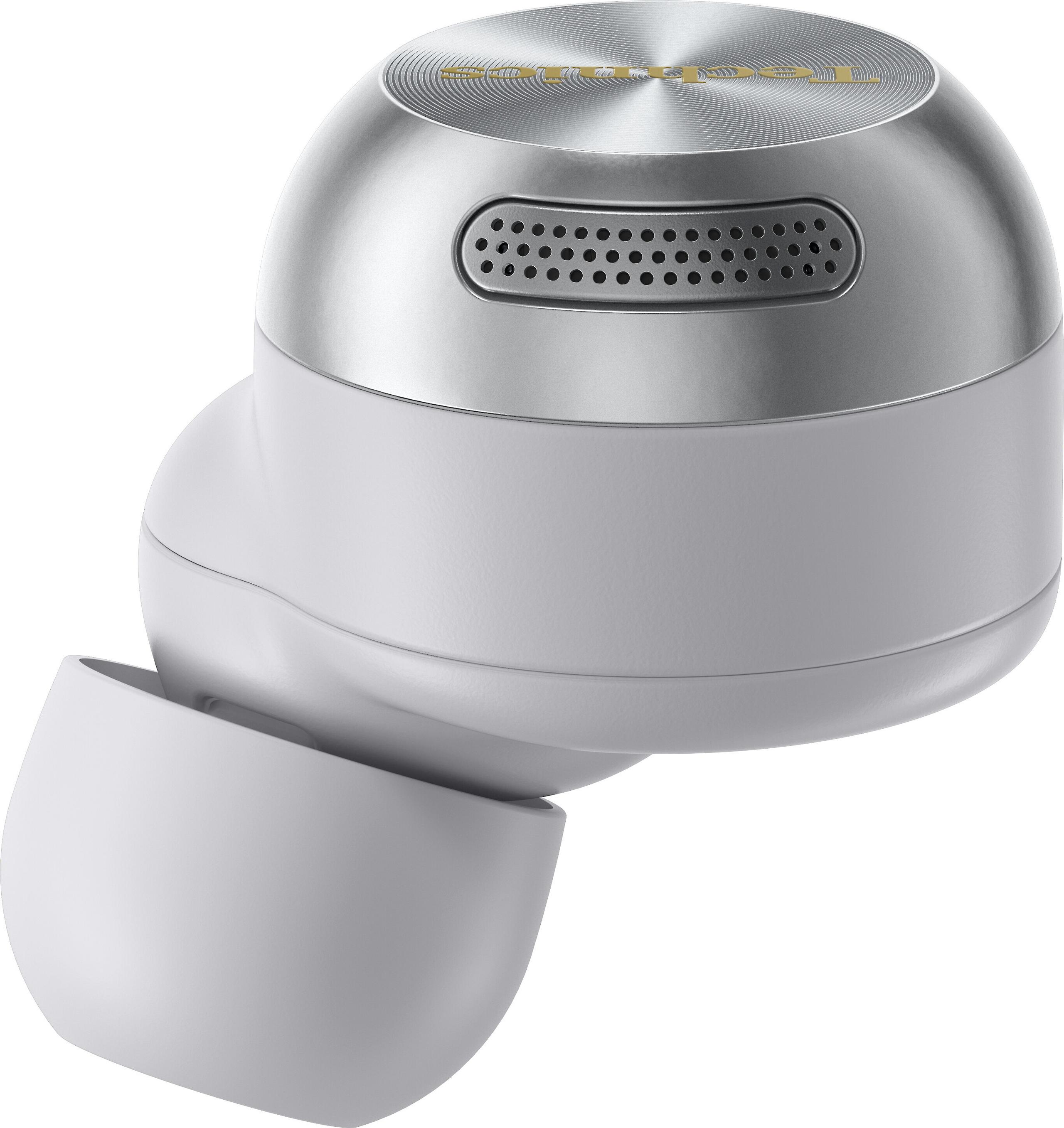
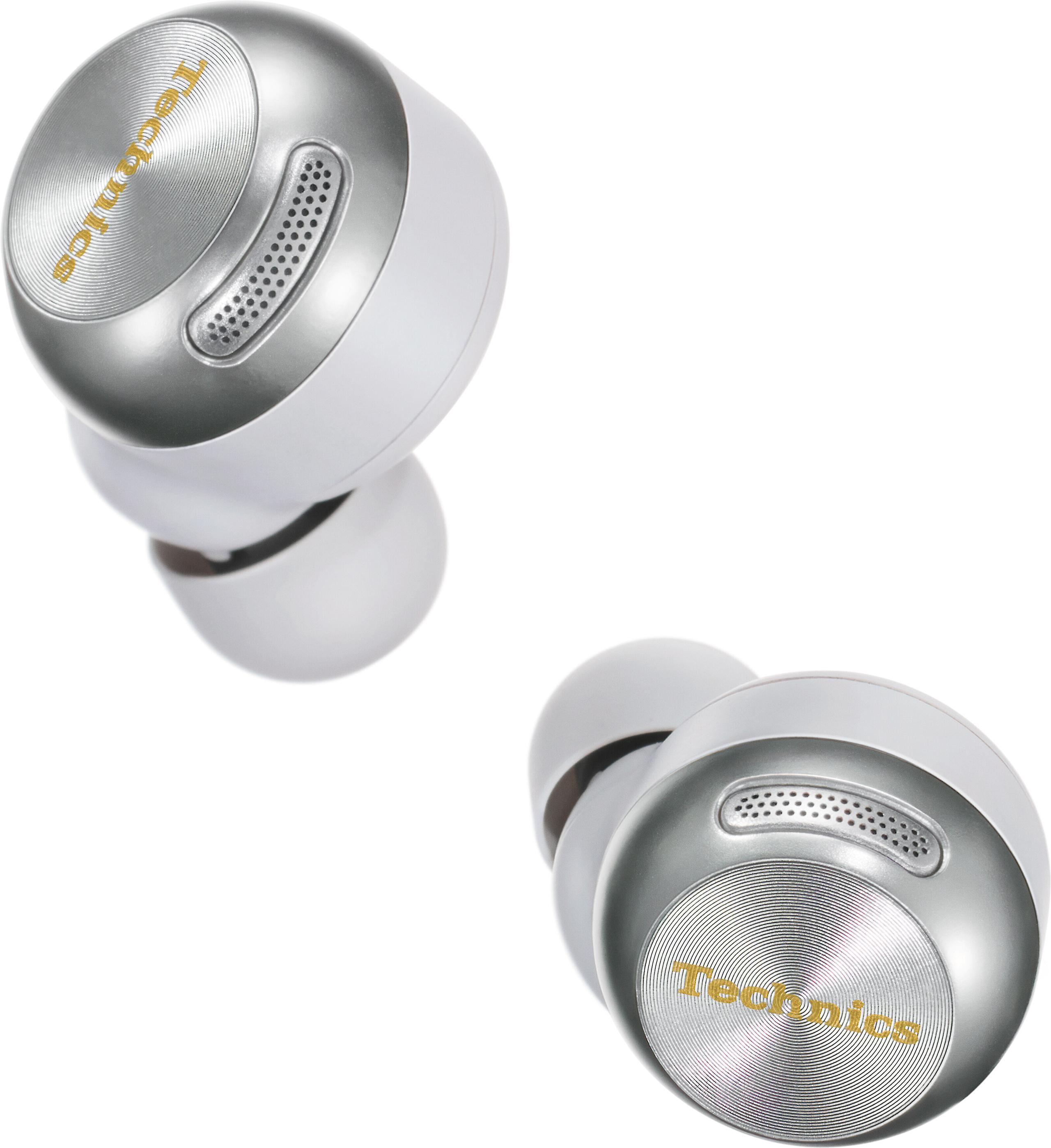
The Technics EAH-AZ100 takes a more substantial approach with clearly delineated touch control areas on their cylindrical design. While they're heavier and more noticeable in your ears, the accidental input problem is virtually eliminated. The larger size also allows for better antenna placement, potentially improving connection stability.
Both earbuds carry IPX4 water resistance ratings, making them suitable for workouts and light rain, though neither is designed for swimming or heavy water exposure.
When evaluating these earbuds objectively, several performance metrics stand out as particularly important:
Frequency Response Accuracy: The Technics EAH-AZ100 measures flatter across most frequencies, indicating more accurate sound reproduction. The Sony WF-1000XM5 shows intentional bass emphasis that many listeners prefer but isn't technically neutral.
Noise Isolation Effectiveness: Both earbuds achieve excellent noise cancellation, but the Technics shows superior performance in the crucial 100-1000Hz range where most environmental noise occurs.
Connection Stability: Both models use Bluetooth 5.3, but real-world performance varies based on your environment and devices. The Sony has a longer track record of firmware updates addressing connectivity issues.
Codec Performance: While both support LDAC for high-quality audio transmission, the Technics' support for newer codecs like LC3 provides better future-proofing as more devices adopt these standards.
After extensive use with both models, clear usage patterns emerge for each product.
Choose the Technics EAH-AZ100 if you're a serious listener who wants the best possible sound quality available in wireless earbuds at the time of writing. These earbuds excel for complex music genres, long listening sessions, and users who prefer extensive customization control. The longer battery life makes them ideal for frequent travelers or heavy daily users. If you regularly switch between multiple devices, the three-device multipoint connection is genuinely useful.
The Technics are also better for home theater use, with spatial audio that works across any content source rather than being limited to specific apps. However, be prepared for a larger, heavier design and the need to manage more settings manually.
Choose the Sony WF-1000XM5 if you want earbuds that adapt to your lifestyle rather than requiring constant adjustment. Sony's smart features work well for most users, and the smaller form factor is more comfortable for extended wear. These earbuds excel for podcast listening, phone calls, and general entertainment consumption.
Sony's more established ecosystem also means better integration if you use other Sony audio products, and their track record of firmware updates provides confidence in long-term support.
Both the Sony WF-1000XM5 and Technics EAH-AZ100 represent excellent value in the premium earbud category, but they serve different priorities. The Technics delivers objectively superior technical performance with better sound quality, longer battery life, and more advanced connectivity features. The Sony provides a more refined user experience with intelligent automation, better comfort, and seamless ecosystem integration.
At the time of writing, both products compete directly on price, making the decision purely about feature priorities rather than budget considerations. The Technics represents the better investment for audio enthusiasts and power users, while the Sony offers broader appeal for users who prioritize convenience and ease of use.
Ultimately, both earbuds succeed in their respective approaches, and your choice should align with whether you want earbuds that give you maximum control over your audio experience (Technics EAH-AZ100) or earbuds that intelligently adapt to provide the best experience with minimal input from you (Sony WF-1000XM5).
| Sony WF-1000XM5 | Technics EAH-AZ100 |
|---|---|
| Driver Size - Larger drivers typically produce better bass and overall sound quality | |
| 8.4mm Dynamic Driver X | 10mm Magnetic Fluid Driver |
| Frequency Response - Higher range means more audio detail, especially for hi-res music | |
| 20Hz - 20kHz (standard range) | 20Hz - 40kHz (Hi-Res Audio certified) |
| Battery Life per Charge - Longer life means less frequent charging interruptions | |
| 8 hours with ANC on | 10-12 hours with ANC on |
| Total Battery with Case - Important for travel and all-day use | |
| Up to 24 hours | Up to 28 hours |
| Weight per Earbud - Lighter earbuds are more comfortable for extended wear | |
| 4.2g (more comfortable for long sessions) | 5.9g (more substantial feel) |
| Multipoint Connections - Connect to multiple devices simultaneously | |
| 2 devices (phone + laptop) | 3 devices (phone + laptop + tablet) |
| Bluetooth Codecs - Advanced codecs provide better wireless audio quality | |
| SBC, AAC, LDAC | SBC, AAC, LDAC, LC3 (future-proof) |
| Active Noise Cancellation Approach - Different methods for blocking outside noise | |
| 3-microphone array with predictable performance | Adaptive real-time adjustment, stronger low-frequency blocking |
| Smart Features - Automated convenience features | |
| Speak-to-Chat, Adaptive Sound Control, head gestures | Extensive manual customization, Voice Focus AI |
| Charging Case - Convenience and portability factors | |
| Wireless charging supported | USB-C only, but longer per-charge life reduces charging frequency |
| Water Resistance - Protection level for exercise and weather | |
| IPX4 (splash resistant) | IPX4 (splash resistant) |
| Release Year - Affects available technology and future support | |
| 2023 (mature, proven software) | 2025 (latest Bluetooth standards, newer tech) |
The Technics EAH-AZ100 delivers superior sound quality with larger 10mm magnetic fluid drivers and Hi-Res Audio certification (20Hz-40kHz frequency response). Reviewers consistently note better track separation, deeper bass, and more detailed sound compared to the Sony WF-1000XM5. However, the Sony WF-1000XM5 offers a warmer, more consumer-friendly sound that many find immediately pleasing for everyday listening.
Yes, both the Sony WF-1000XM5 and Technics EAH-AZ100 feature advanced active noise cancellation. The Technics EAH-AZ100 provides stronger low-frequency noise blocking and adaptive real-time adjustment, making it more effective in most environments. The Sony WF-1000XM5 offers more predictable ANC performance with better treble frequency cancellation thanks to its foam ear tips.
The Technics EAH-AZ100 provides significantly longer battery life with 10-12 hours per charge compared to the Sony WF-1000XM5's 8 hours. Both offer similar total battery life with their charging cases (24-28 hours), but the Technics EAH-AZ100 requires less frequent charging, making it better for heavy users and travelers.
Both earbuds excel at voice calls but use different technologies. The Technics EAH-AZ100 features Voice Focus AI that uses machine learning to enhance your voice while reducing background noise. The Sony WF-1000XM5 uses bone conduction sensors for more natural voice pickup. Both deliver professional-quality call performance suitable for business use.
The Sony WF-1000XM5 is more comfortable for extended wear, weighing just 4.2 grams per earbud compared to the Technics EAH-AZ100's 5.9 grams. The Sony's smaller, more compact design is less noticeable in your ears during long sessions. However, the Technics EAH-AZ100's larger size provides better touch control precision and reduces accidental inputs.
The Technics EAH-AZ100 supports three simultaneous device connections (multipoint), allowing you to connect your phone, laptop, and tablet at the same time. The Sony WF-1000XM5 only supports two-device multipoint connection. This makes the Technics EAH-AZ100 better for users who frequently switch between multiple devices throughout the day.
The Sony WF-1000XM5 offers more automated smart features like Speak-to-Chat (automatically pauses music when you speak), Adaptive Sound Control (adjusts settings based on location), and head gesture controls for calls. The Technics EAH-AZ100 focuses on extensive manual customization options rather than automation, giving you more control over every setting but requiring more user input.
Both the Sony WF-1000XM5 and Technics EAH-AZ100 have IPX4 water resistance ratings, making them suitable for workouts and light rain exposure. However, neither is designed for swimming or heavy water contact. Both can handle sweat and splashes during exercise without damage.
The Technics EAH-AZ100 provides better home theater performance with spatial audio that works across any content source and includes head tracking technology. The Sony WF-1000XM5 also supports spatial audio but limits this feature to specific apps and devices. Both deliver excellent audio quality for movies, but the Technics offers more versatile spatial audio implementation.
Yes, both support advanced Bluetooth codecs including LDAC for high-quality wireless audio. However, the Technics EAH-AZ100 also supports newer codecs like LC3 and upcoming Auracast technology, providing better future-proofing as more devices adopt these standards. The Sony WF-1000XM5 focuses on established codecs with proven compatibility.
The Technics EAH-AZ100 is clearly better for audiophiles, offering Hi-Res Audio certification, larger magnetic fluid drivers, and superior technical performance. Music lovers who prioritize sound quality, especially for complex genres like jazz or classical, will prefer the Technics EAH-AZ100. The Sony WF-1000XM5 is better for casual listeners who want great sound without extensive customization.
Choose the Technics EAH-AZ100 if you prioritize superior sound quality, longer battery life, and extensive customization options. It's ideal for serious listeners and power users. Choose the Sony WF-1000XM5 if you prefer automated smart features, compact comfort, and seamless user experience. The Sony WF-1000XM5 is better for general use, while the Technics EAH-AZ100 excels for dedicated listening sessions.
We've done our best to create useful and informative comparisons to help you decide what product to buy. Our research uses advanced automated methods to create this comparison and perfection is not possible - please contact us for corrections or questions. These are the sites we've researched in the creation of this article: rtings.com - moon-audio.com - whathifi.com - sony.ca - soundguys.com - techgearlab.com - loudnwireless.com - youtube.com - techradar.com - youtube.com - costco.com - youtube.com - us.community.sony.com - youtube.com - whathifi.com - youtube.com - cnet.com - loudnwireless.com - youtube.com - bestbuy.com - electronics.sony.com - helpguide.sony.net - gsmarena.com - soundguys.com - bestbuy.com - sony.com - loudnwireless.com - sony.com - sony.com - youtube.com - sony-asia.com - helpguide.sony.net - sony.com - sony.com.sg - sony-asia.com - youtube.com - headphones.com - moon-audio.com - electronics.sony.com - shop.oprahdaily.com - youtube.com - whathifi.com - digitaltrends.com - bestbuy.com - techradar.com - popsci.com - stuff.tv - us.technics.com - instylehifi.com.au - techradar.com - youtube.com - head-fi.org - whathifi.com - ecoustics.com - crutchfield.com - head-fi.org - treoo.com - youtube.com - bestbuy.com - us.technics.com - crutchfield.com - cnet.com - us.technics.com - us.technics.com - na.panasonic.com - us.technics.com - help.na.panasonic.com - bestbuy.com - bhphotovideo.com - technics.com - technics.com - us.technics.com - twitteringmachines.com - stupiddope.com - bhphotovideo.com - techdogs.com - technics.com - techradar.com - yumpu.com - youtube.com

Privacy Policy
Terms and Conditions - Affiliate Policy
Home Security
© Copyright 2008-2026.
11816 Inwood Rd #1211, Dallas, TX 75244