


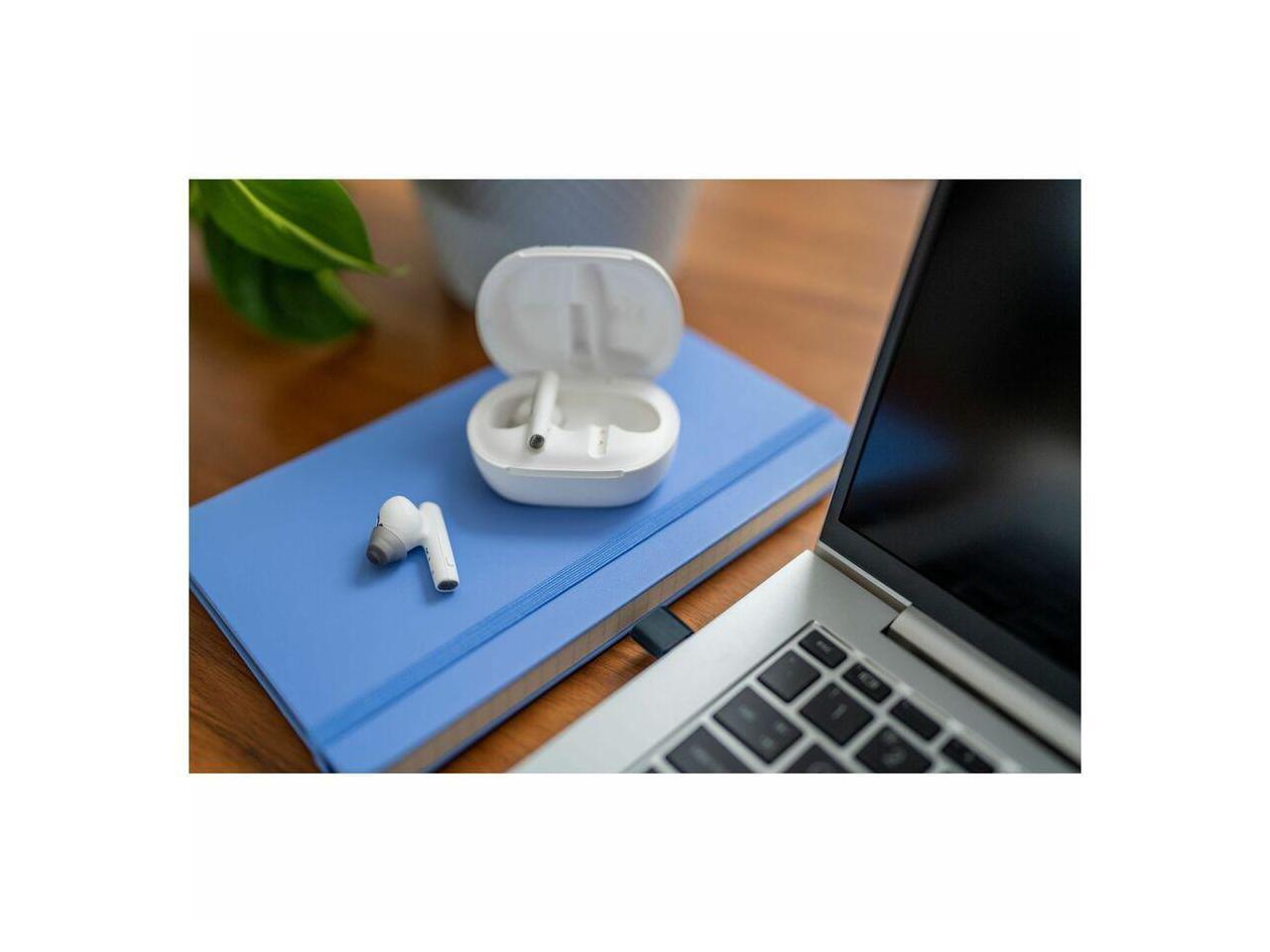

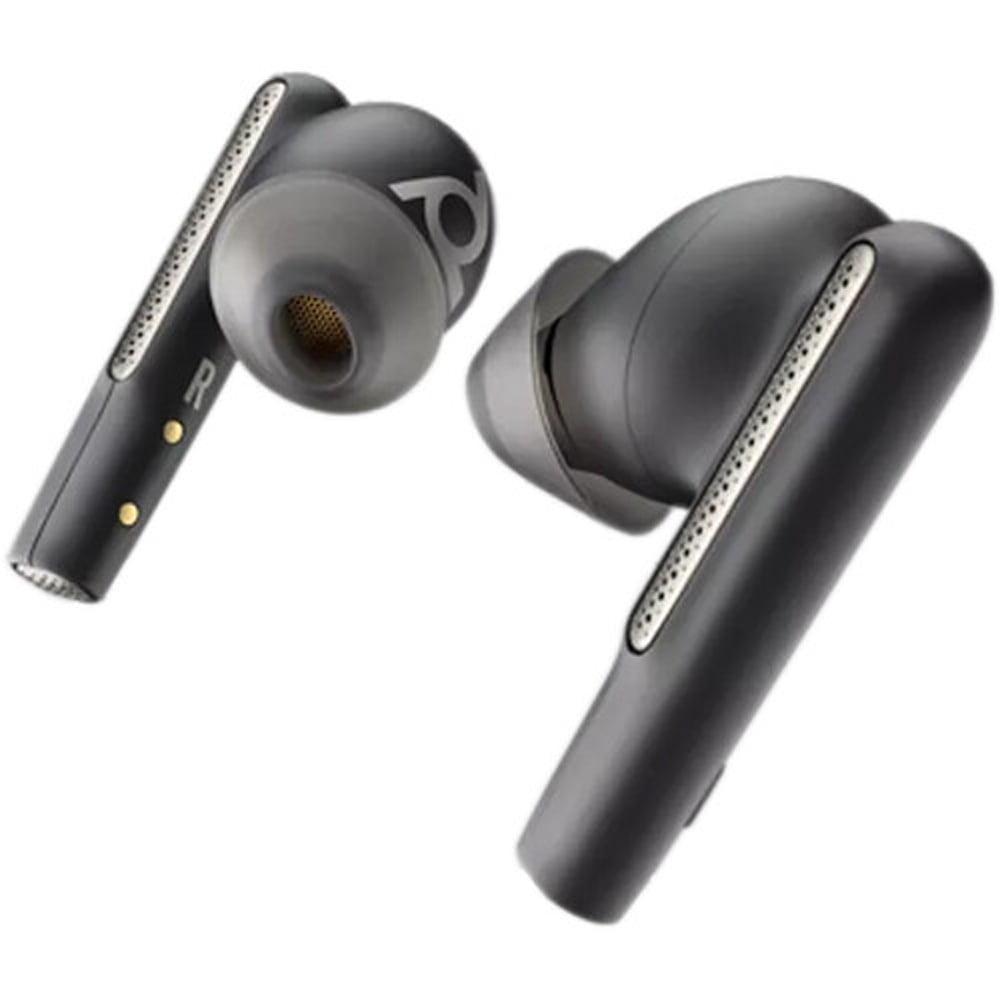

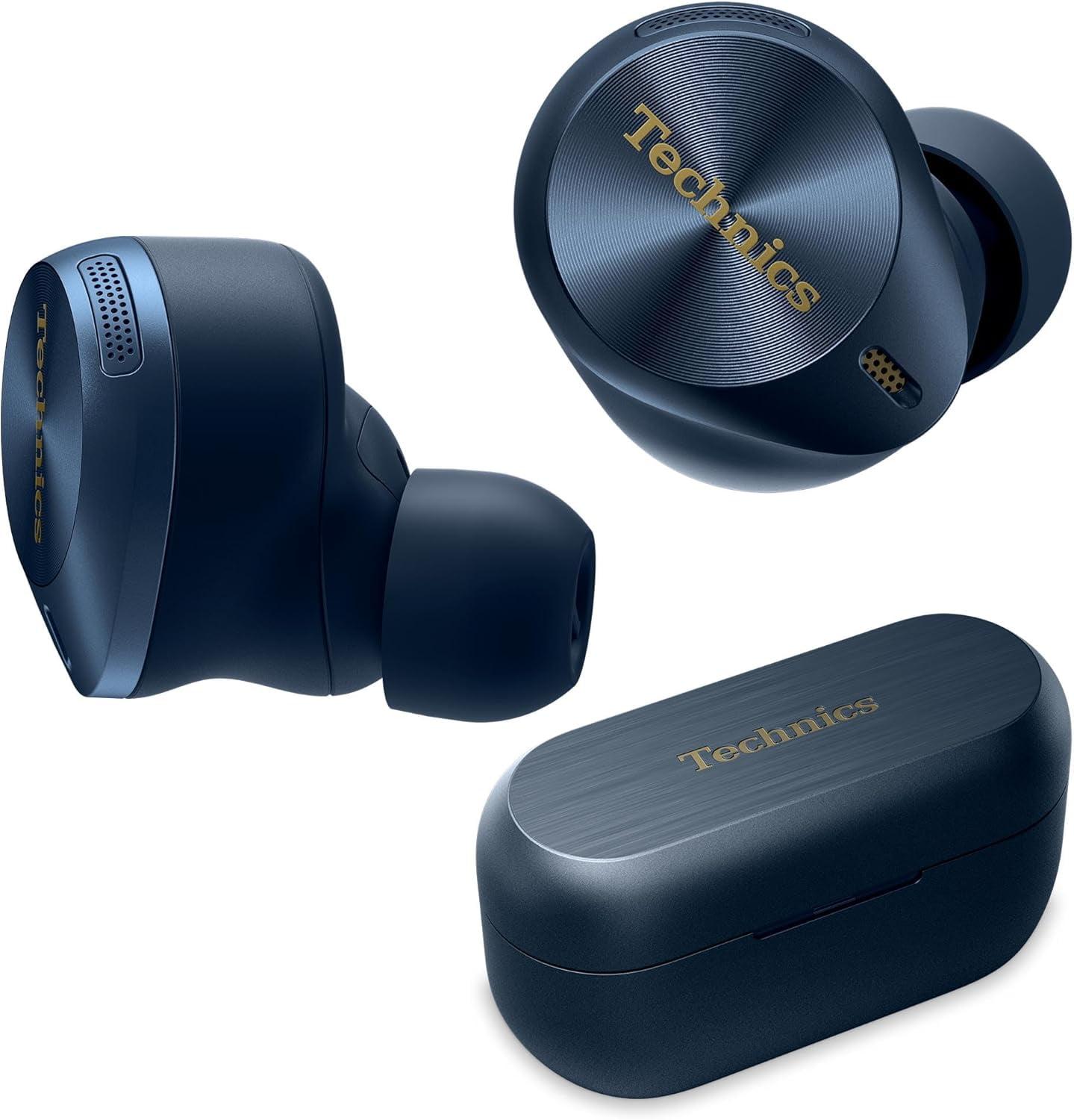
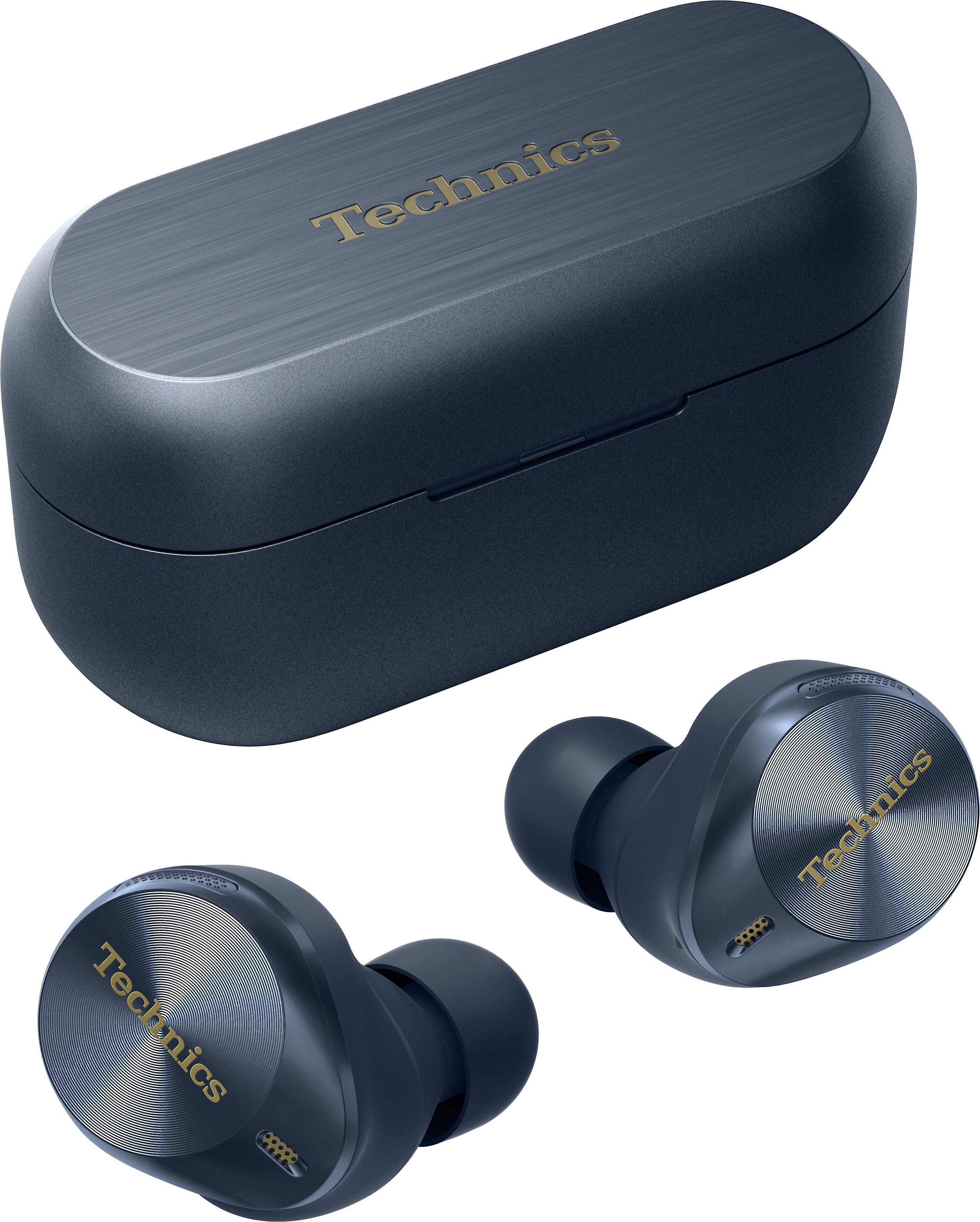


When shopping for premium wireless earbuds in 2024, you'll quickly discover that not all high-end models are created equal. The Poly Voyager Free 60+ UC and Technics AZ80 perfectly illustrate this point – both are excellent earbuds, but they're designed for completely different users and priorities.
At the time of writing, the Poly Voyager Free 60+ UC commands a significantly higher price than the Technics AZ80, with a difference of roughly $150-200. This price gap isn't arbitrary – it reflects two fundamentally different approaches to what makes earbuds "premium."
The wireless earbud market has matured dramatically since Apple's original AirPods launched in 2016. What started as a simple replacement for wired headphones has evolved into specialized categories targeting specific user needs. Today's premium earbuds split primarily into two camps: business-focused models that prioritize communication and enterprise features, and consumer audiophile products that emphasize music quality and broad appeal.
This specialization matters because it affects every design decision, from the type of drivers used to the software features included. The Poly Voyager Free 60+ UC, released in 2023, represents the business communication category, while the Technics AZ80, also from 2023, targets music enthusiasts and general consumers.
Both products incorporate the latest Bluetooth technology and active noise cancellation (ANC) – a feature that uses microphones to detect outside noise and produces inverse sound waves to cancel it out. However, they implement these technologies very differently based on their target users.
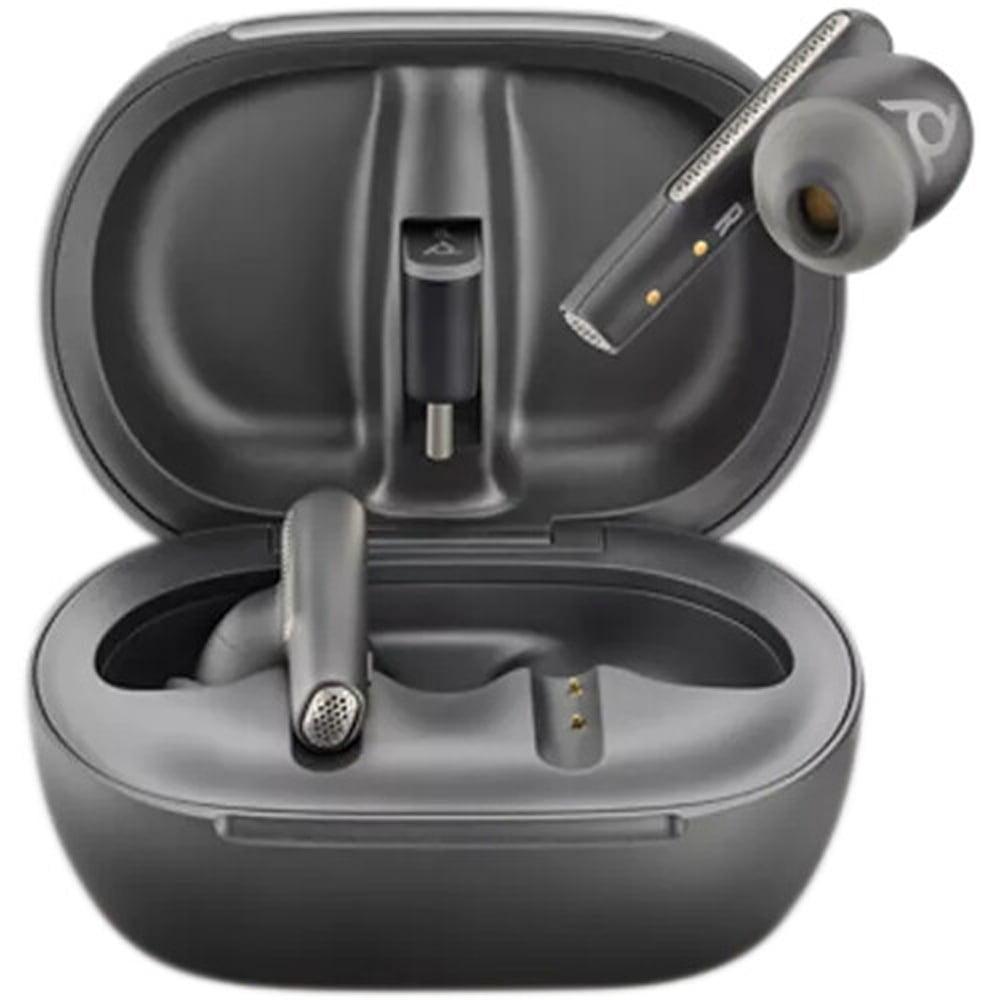
The Poly Voyager Free 60+ UC takes a distinctly professional approach to wireless earbuds. Poly, formerly known as Plantronics, has decades of experience in business communication equipment, and this expertise shows in every aspect of these earbuds' design.
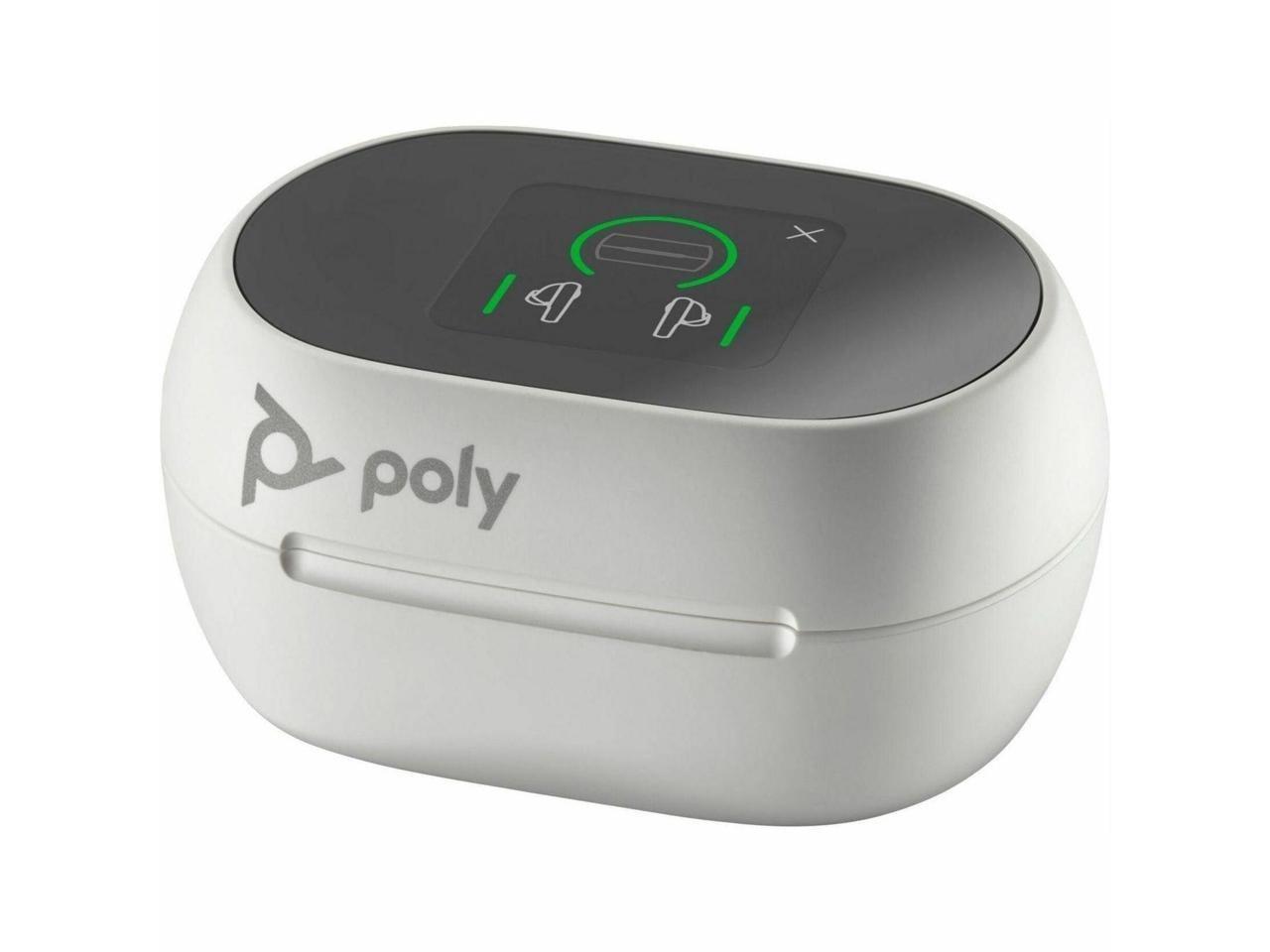
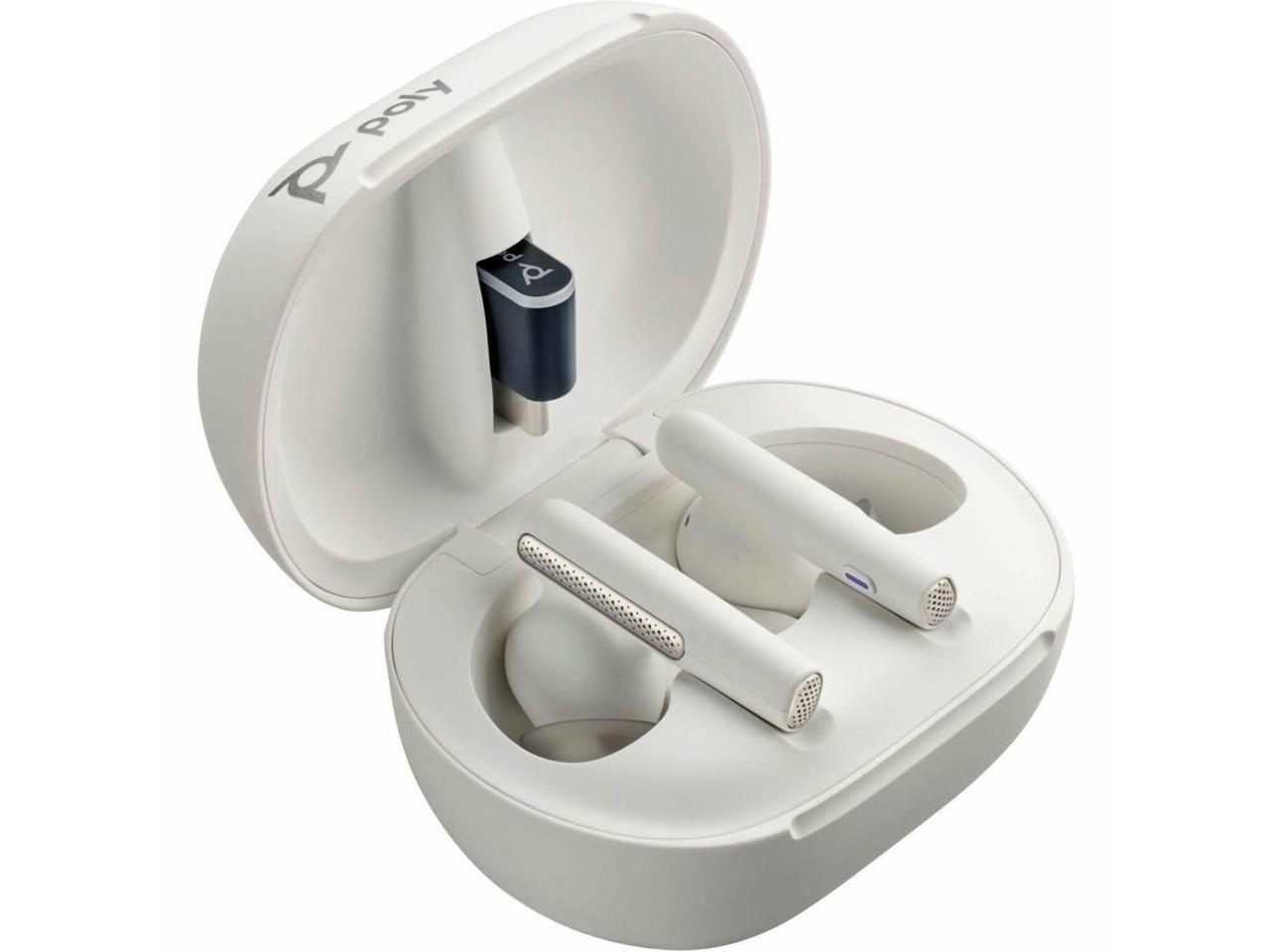
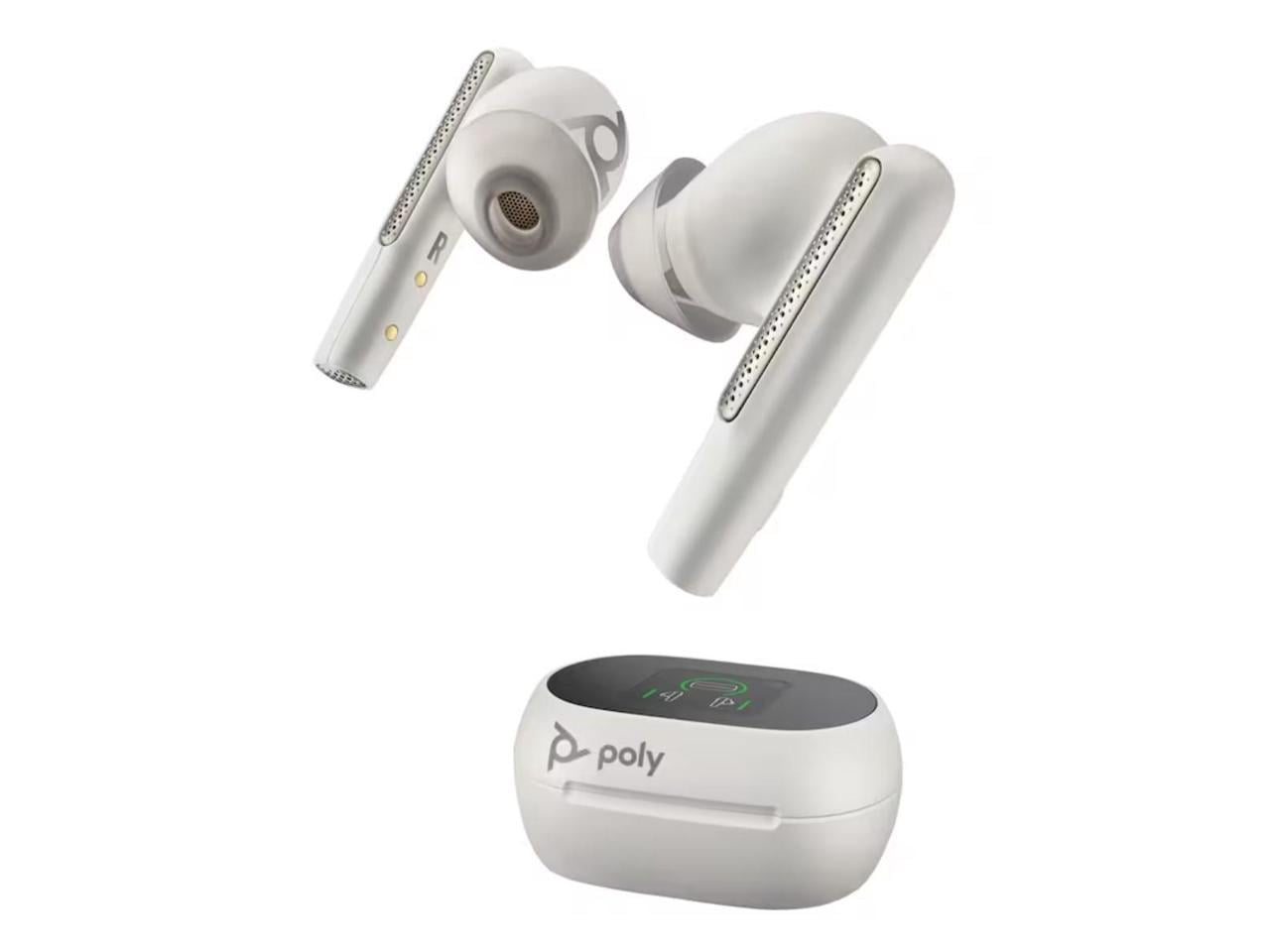
The most striking feature is the touchscreen charging case – something you won't find on typical consumer earbuds. This isn't just a gimmick; it's a practical tool that lets you control calls, adjust volume, and switch between paired devices without pulling out your phone or touching the earbuds themselves. During long conference calls, this functionality becomes genuinely useful, especially when you're juggling multiple devices.
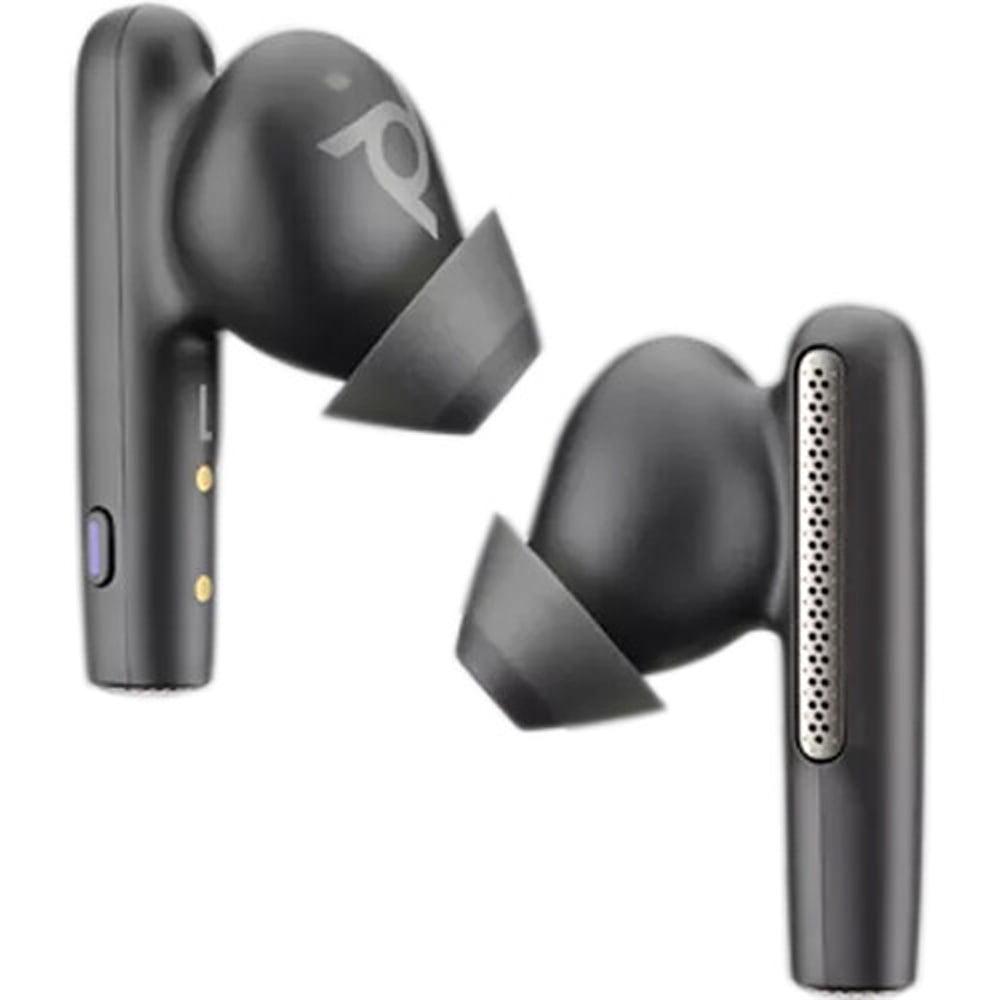
The Poly Voyager Free 60+ UC uses a three-microphone array in each earbud that works together to focus on your voice while minimizing background noise. This "steerable array" technology means the microphones can electronically point toward your mouth, even as you move your head. Combined with Poly's WindSmart technology – which specifically targets wind noise that can ruin outdoor calls – these earbuds excel in challenging communication environments.
For business users, the Microsoft Teams certification is significant. This means the earbuds are officially tested and optimized for Teams calls, with dedicated buttons for Teams functions and guaranteed compatibility with the platform's features. The smart sensors automatically pause audio when you remove an earbud and resume when you put it back, which is particularly handy during meetings when you need to quickly engage with someone nearby.
The IP54 rating provides protection against both dust and water splashes, making these earbuds more durable than typical consumer models in office and outdoor work environments. The "54" designation means they're completely dust-protected (the "5") and can handle water splashes from any direction (the "4").
However, this business focus comes with trade-offs. The Poly Voyager Free 60+ UC is optimized for voice frequencies (200Hz to 6.8kHz in speech mode) rather than full-spectrum music reproduction. While they can certainly play music, they're not designed to compete with dedicated audiophile earbuds in that realm.
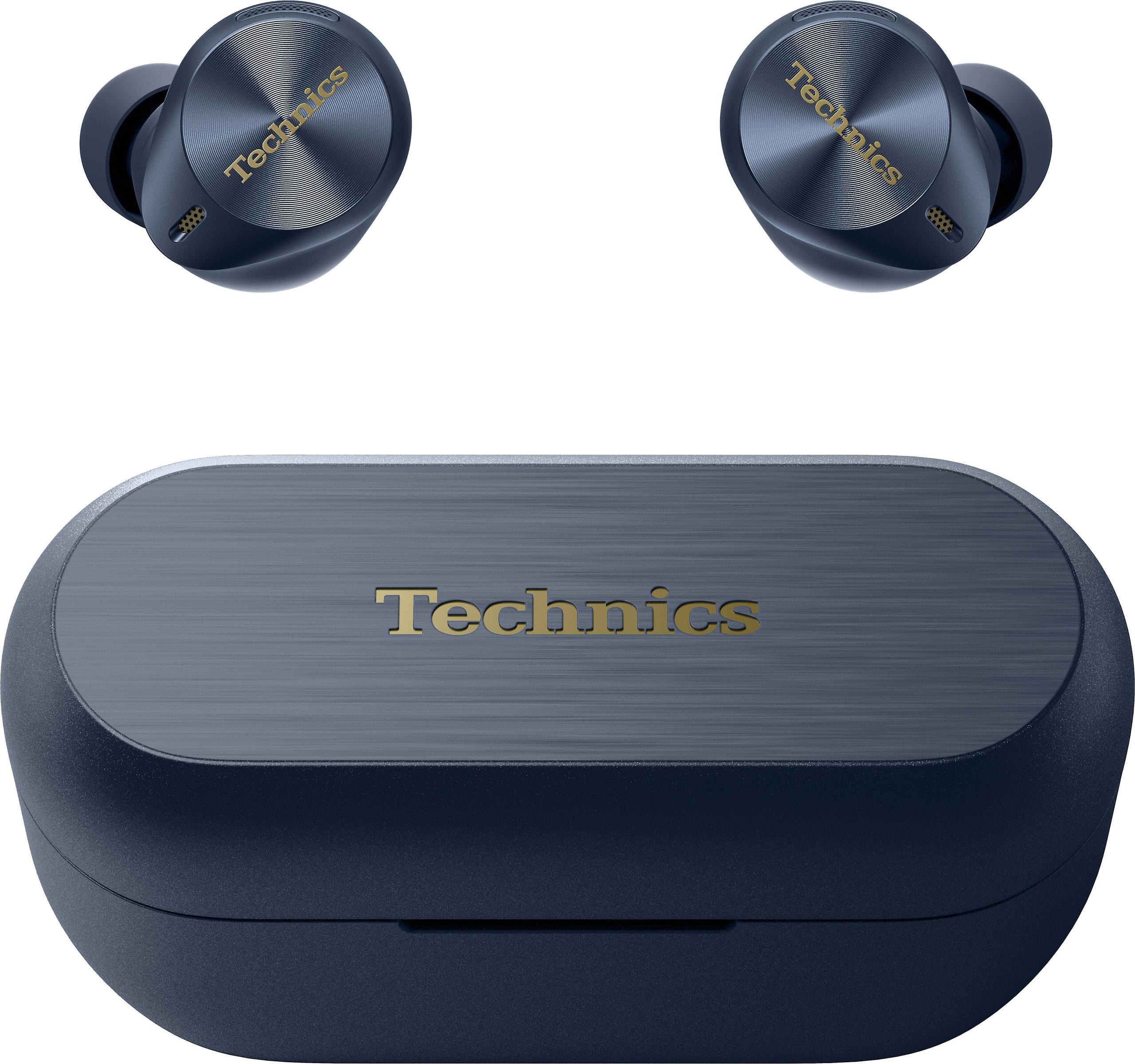
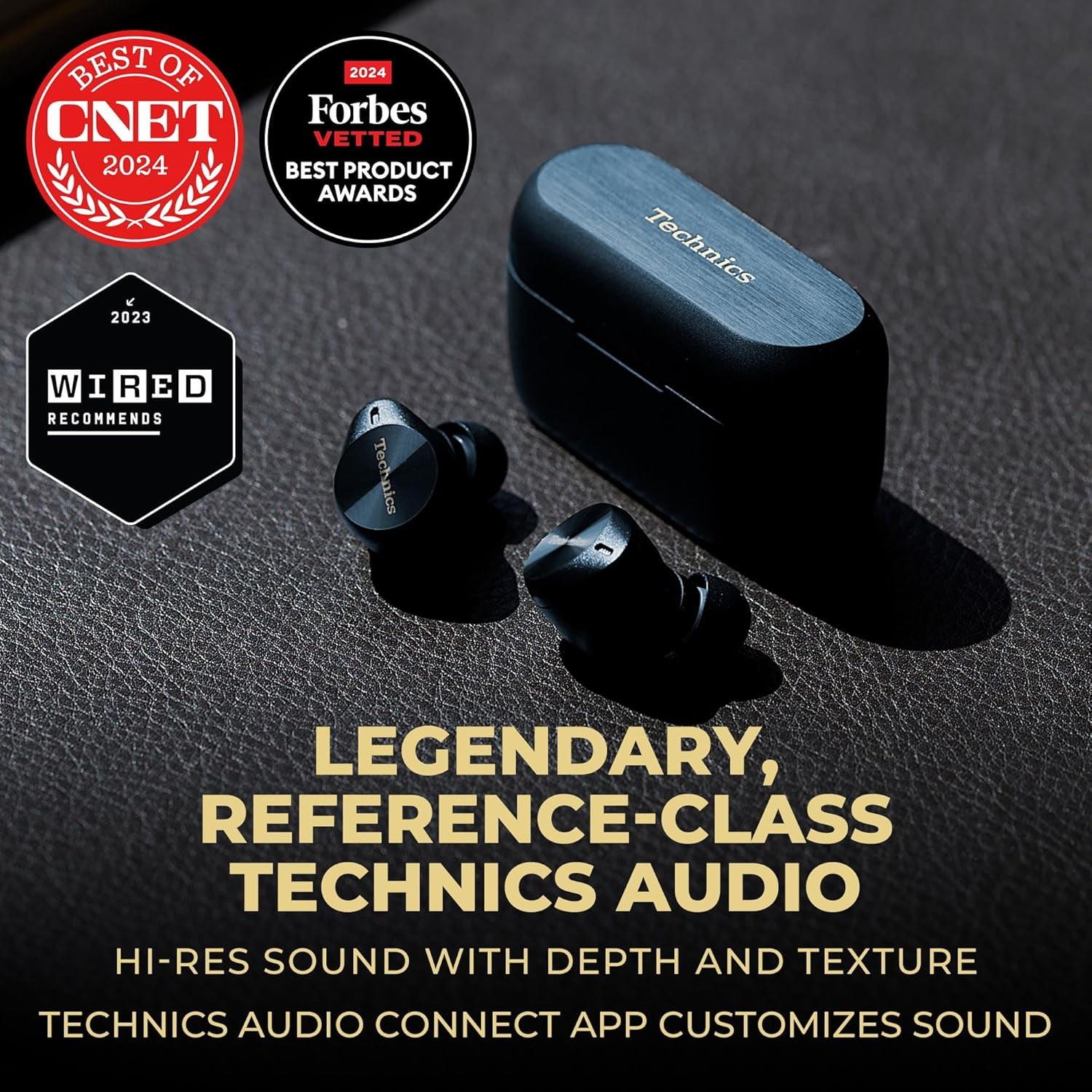
The Technics AZ80 takes the opposite approach, prioritizing music reproduction above all else. Technics, a brand with deep roots in high-end audio equipment, has engineered these earbuds specifically for critical listening.
The key differentiator is support for LDAC, Sony's high-resolution audio codec that can transmit roughly three times more data than standard Bluetooth codecs like SBC or AAC. This means when you're streaming from compatible devices (most Android phones and many music apps), you're getting significantly more audio detail than with conventional Bluetooth transmission. Think of it as the difference between a compressed MP3 file and a high-quality recording – the LDAC codec preserves more of the original audio information.
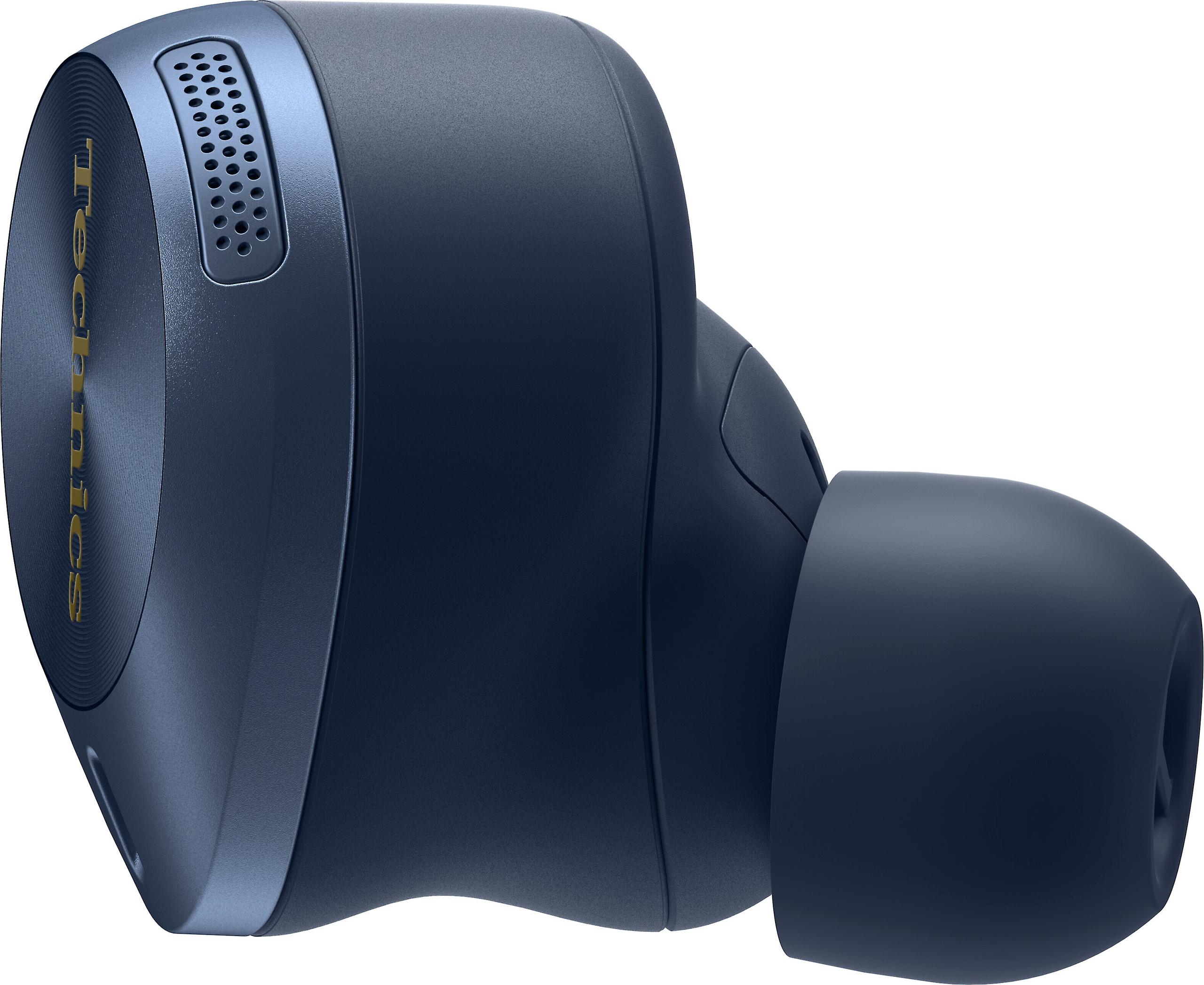
The Technics AZ80 also boasts an extended frequency response up to 40,000Hz, well beyond human hearing range (which typically tops out around 20,000Hz). While you can't consciously hear these ultra-high frequencies, audio engineers argue they contribute to the overall sense of "air" and spaciousness in music reproduction. Whether this makes a practical difference is debated, but it demonstrates Technics' commitment to technical audio excellence.
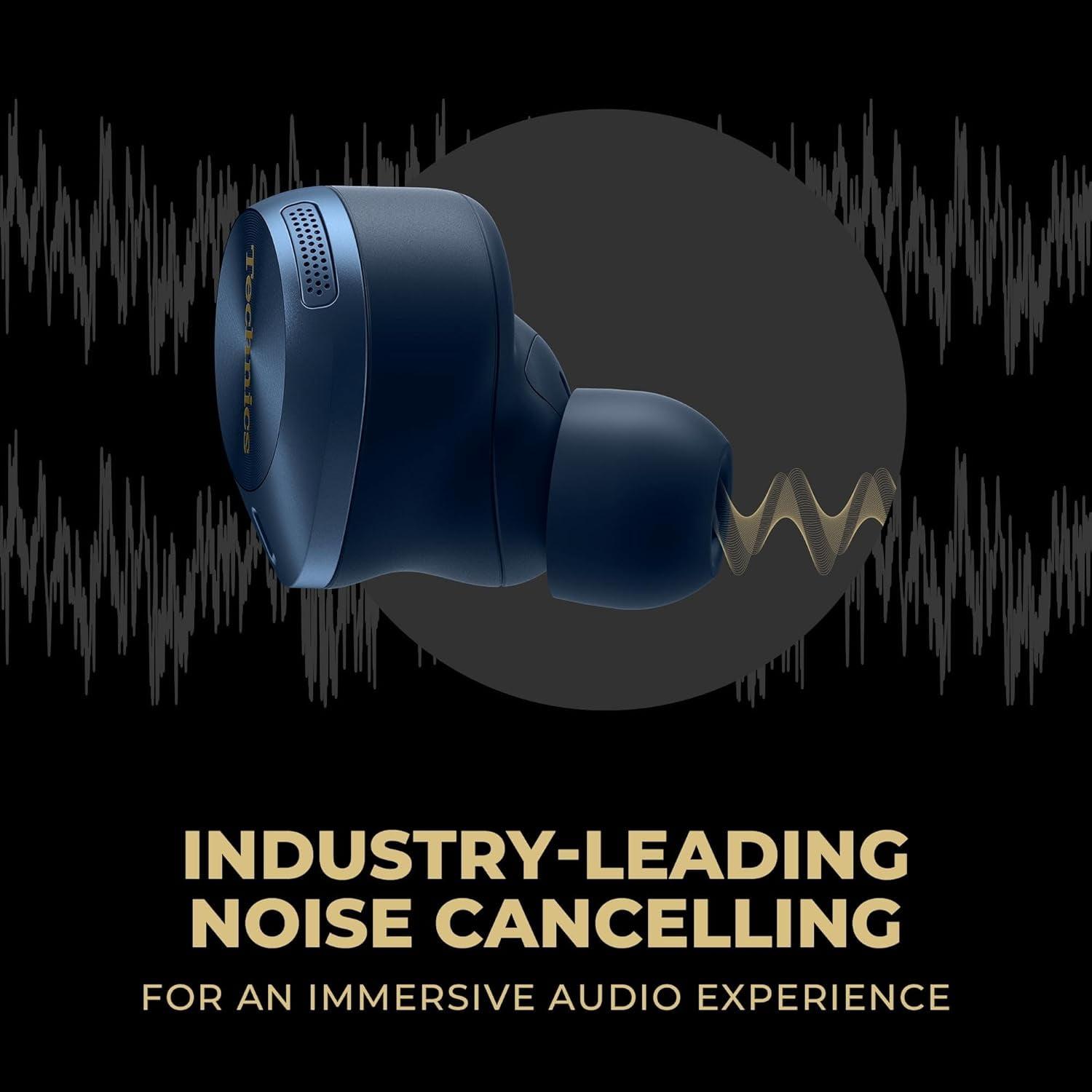
The dual hybrid active noise cancellation uses both feedforward microphones (facing outward to detect ambient noise) and feedback microphones (facing inward to monitor what you actually hear) for more precise noise control. This approach typically provides better ANC performance than single-microphone systems, though both models in our comparison use sophisticated multi-microphone setups.
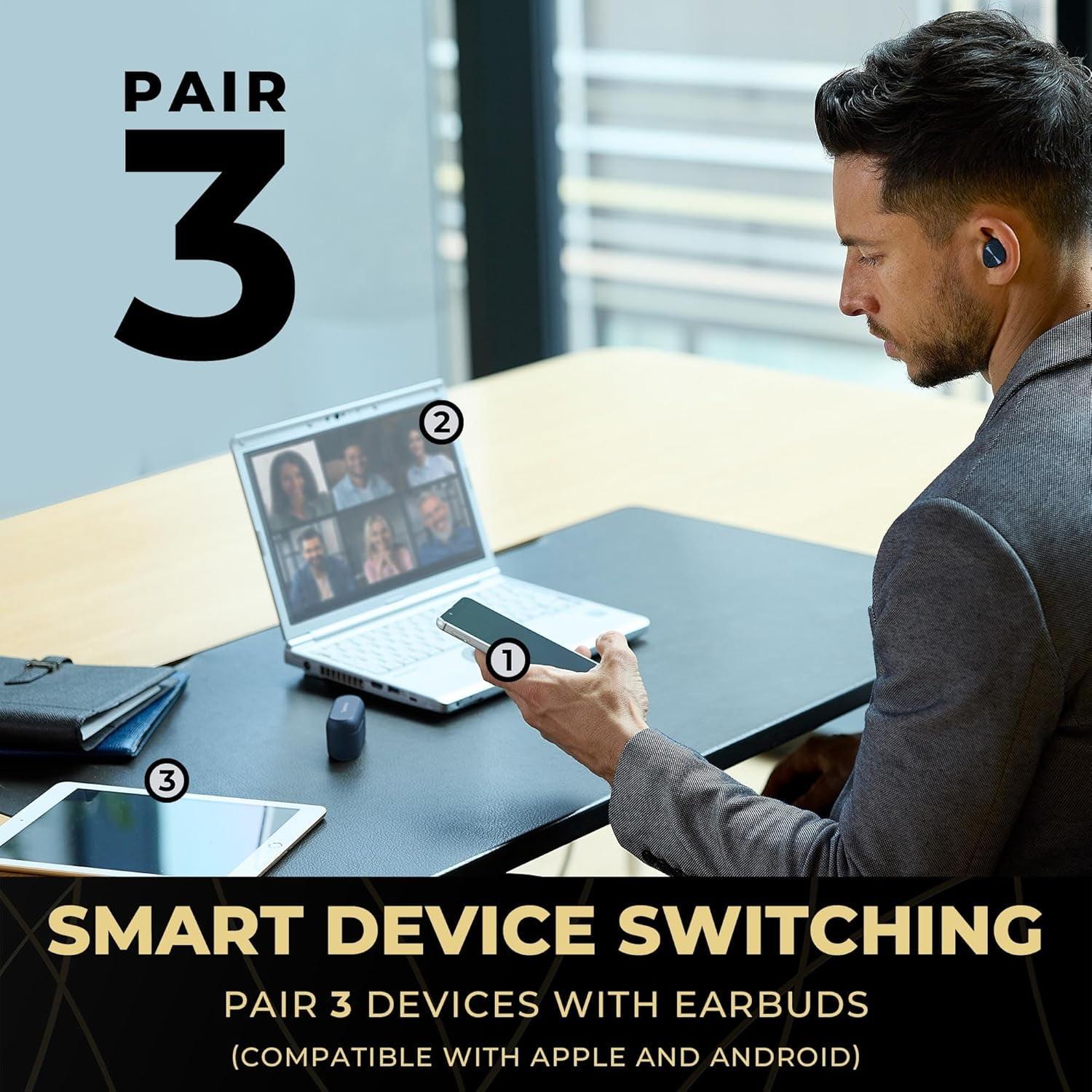
One genuinely useful feature is three-device multipoint connectivity. Unlike most earbuds that can only maintain active connections to two devices, the Technics AZ80 can simultaneously connect to three devices – perhaps your laptop, tablet, and phone. This flexibility is particularly valuable for people who regularly switch between multiple devices throughout the day.
When it comes to music reproduction, the Technics AZ80 clearly takes the lead. The extended frequency response and LDAC codec support provide noticeably better detail retrieval and overall fidelity when listening to high-quality audio sources. In our evaluation of user reviews and expert opinions, the consensus is that the Technics AZ80 delivers a more refined, balanced sound signature that audiophiles appreciate.
The Poly Voyager Free 60+ UC, while capable of playing music, shows its business communication roots in the tuning. The emphasis on vocal clarity comes at the expense of deep bass extension and sparkling highs. For casual music listening during work, they're perfectly adequate, but they're not designed to compete with dedicated music-focused earbuds.
For home theater use, this difference becomes more pronounced. The Technics AZ80 handles movie soundtracks and dialogue with better overall balance, while the Poly Voyager Free 60+ UC tends to emphasize dialogue at the expense of ambient effects and music. However, both models introduce some latency (delay) when used with TVs, which is common with Bluetooth audio.
Here's where the tables turn dramatically. The Poly Voyager Free 60+ UC demonstrates why specialized engineering matters. The three-microphone steerable array consistently delivers clearer voice transmission, even in challenging environments. User reviews consistently praise these earbuds for maintaining call quality in windy conditions, busy offices, and other acoustically difficult situations.
The WindSmart technology deserves particular mention – it's not just marketing speak. When you're taking calls outdoors, wind noise can make communication nearly impossible with standard earbuds. The Poly Voyager Free 60+ UC uses sophisticated algorithms to identify and suppress wind noise while preserving your voice, making outdoor calling genuinely practical.
The Technics AZ80 certainly handles calls competently with its eight-microphone array (four per earbud), but the microphones aren't specifically tuned for voice communication in the same way. In quiet environments, call quality is comparable, but the Poly Voyager Free 60+ UC maintains an edge in challenging acoustic situations.
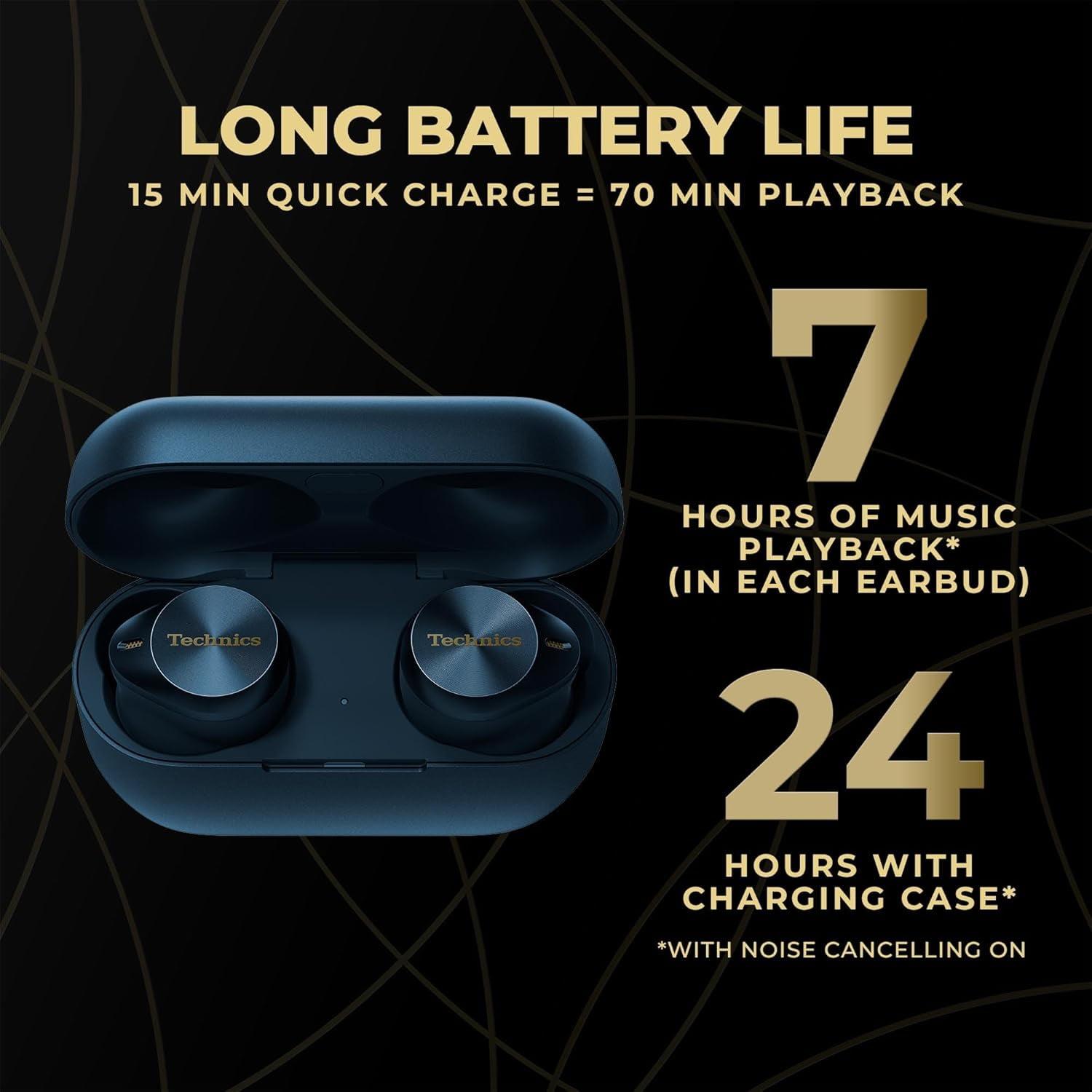
Both models offer similar battery performance for their intended use cases. The Poly Voyager Free 60+ UC provides up to 16.5 hours of total talk time with the charging case, while the Technics AZ80 offers around 24 hours of total music playback time. These figures reflect different testing methodologies – talk time versus music playback – but suggest comparable real-world performance.
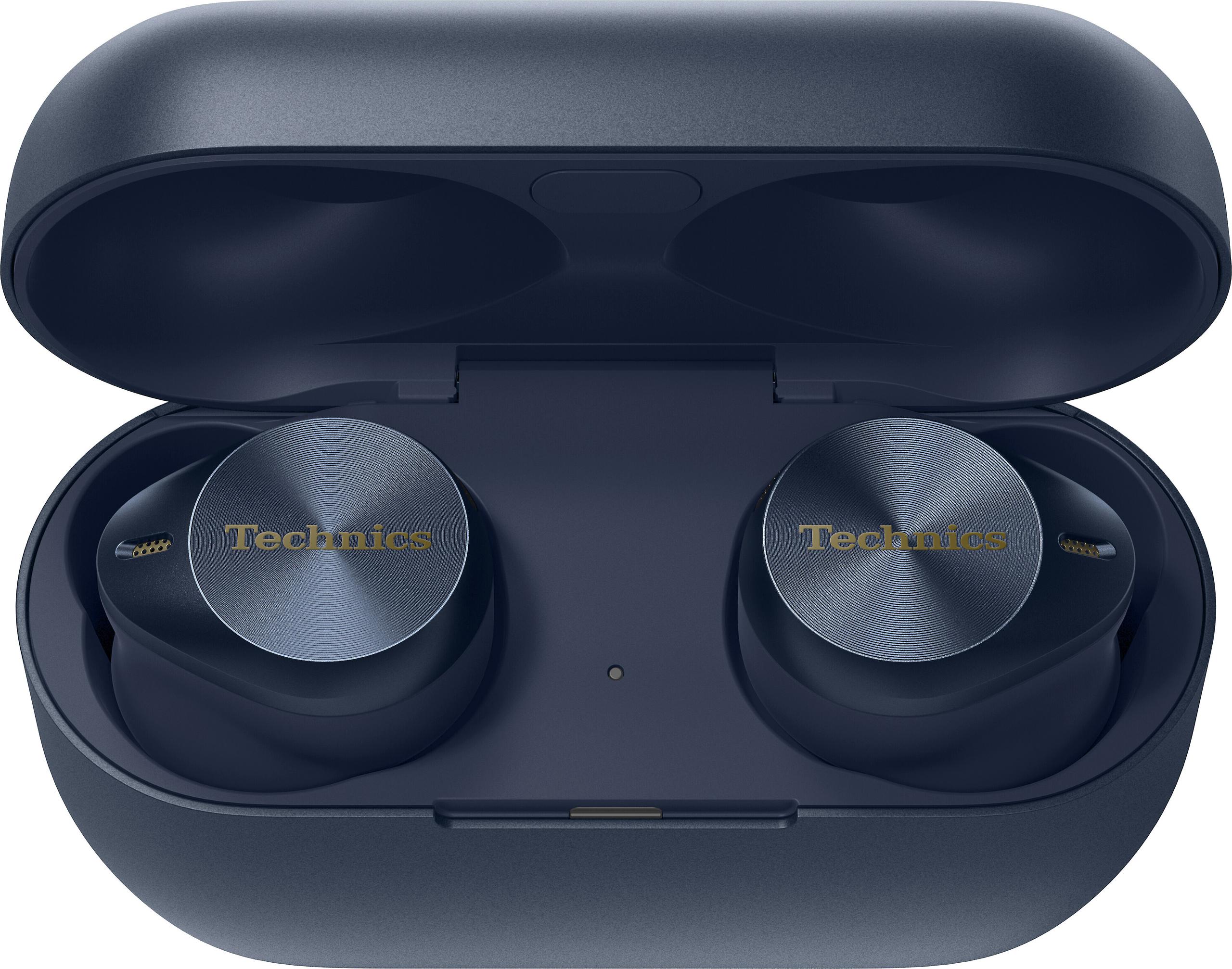
The Poly Voyager Free 60+ UC includes quick-charge functionality optimized for business use: 15 minutes of charging provides over an hour of talk time, which is invaluable when you have back-to-back meetings. Both models support Qi wireless charging, though the Poly Voyager Free 60+ UC's touchscreen case is considerably bulkier.
Both models implement sophisticated ANC systems, but with different priorities. The Technics AZ80 focuses on creating an optimal environment for music listening, with ANC tuned to eliminate consistent background noise like airplane engines or air conditioning systems.
The Poly Voyager Free 60+ UC takes a more targeted approach, using its ANC system to enhance call quality by reducing ambient noise that could interfere with communication. The result is effective noise reduction that prioritizes voice clarity over complete acoustic isolation.
In practice, both models provide solid ANC performance that's competitive with other premium earbuds, though neither quite matches the absolute best performers from Sony or Bose in terms of pure noise reduction capability.
The connectivity story reveals another key difference between these models. The Technics AZ80 offers superior flexibility for individual users with its three-device multipoint connectivity and broad codec support. You can seamlessly switch between your laptop, tablet, and phone without manually reconnecting.
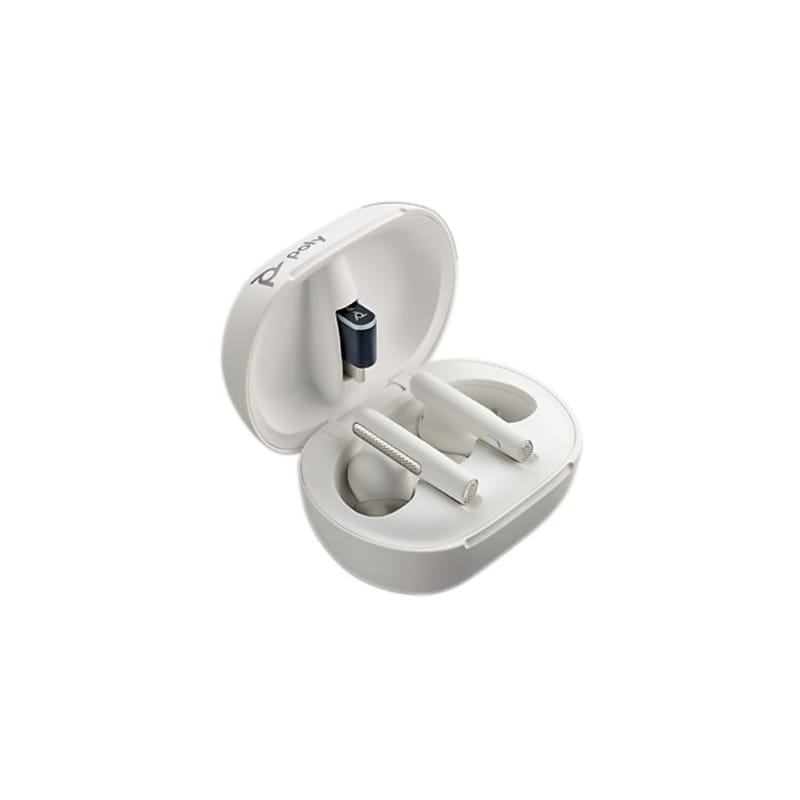
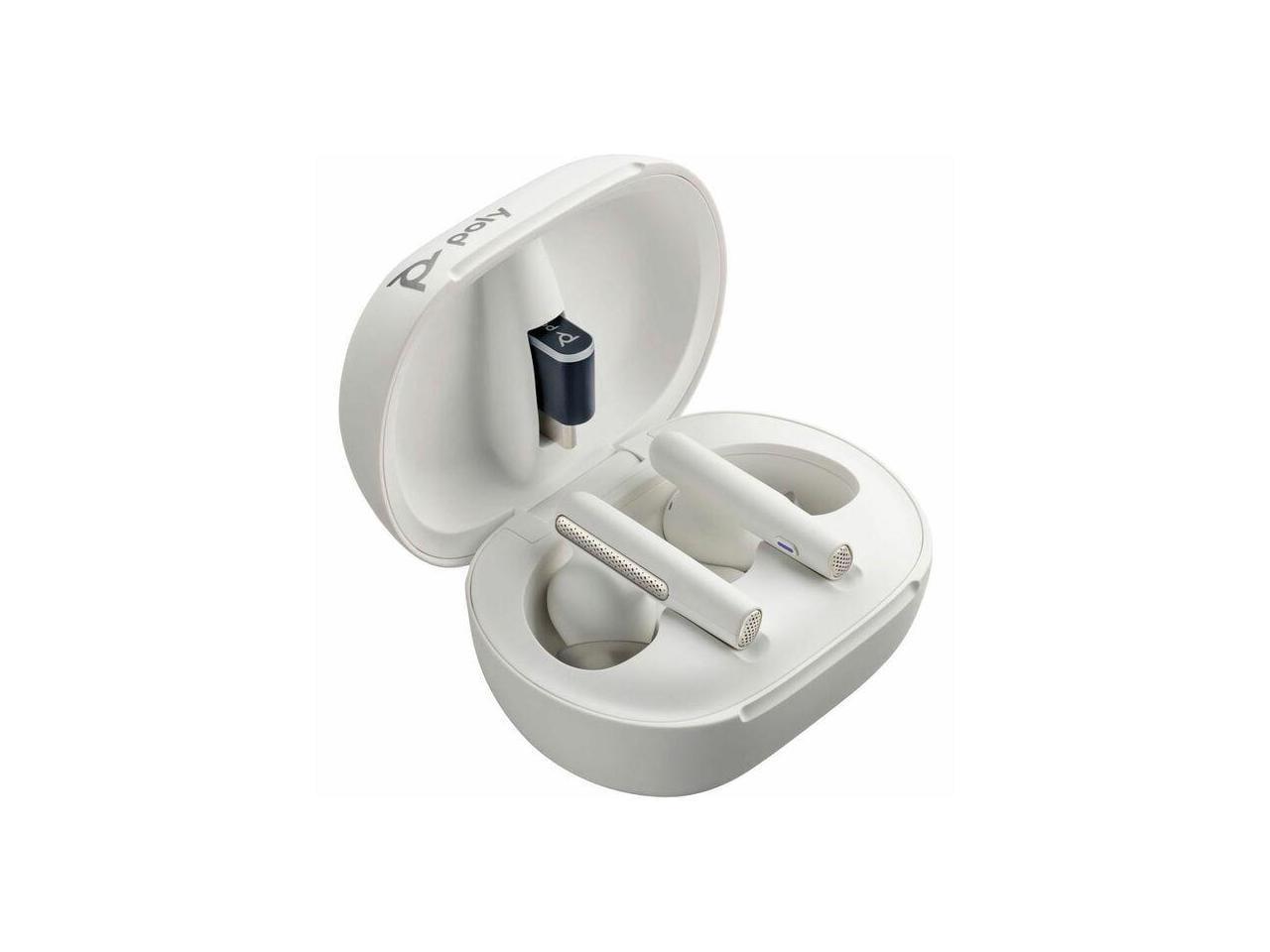
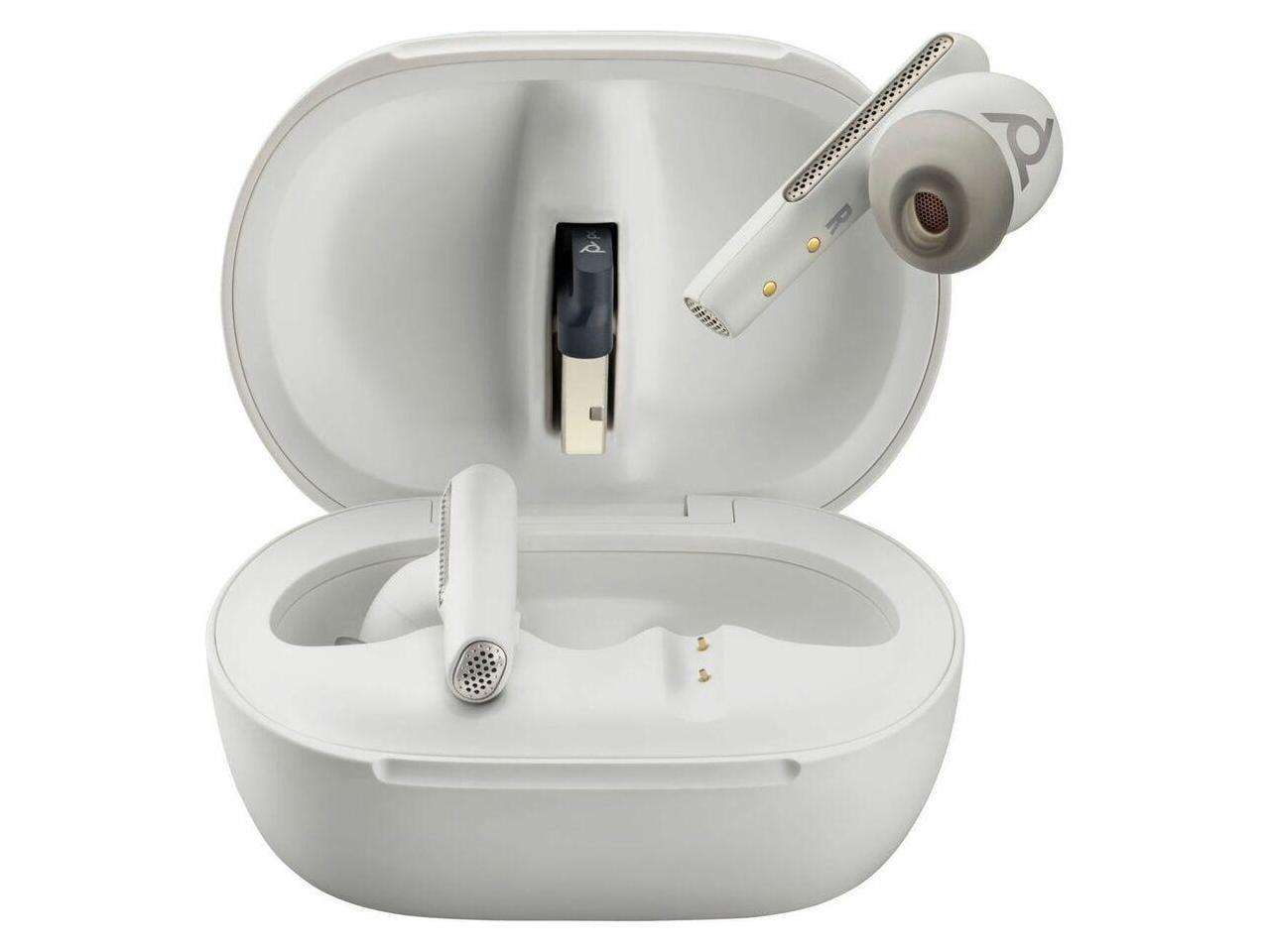
The Poly Voyager Free 60+ UC includes a BT700 Bluetooth adapter that extends connectivity range up to 98 feet and provides enhanced compatibility with PC and Mac systems. This might seem like a minor feature, but for people working in large offices or moving around while on calls, the extended range is genuinely useful.
More importantly for business users, the Poly Voyager Free 60+ UC integrates with Poly Lens, a cloud-based device management system that allows IT departments to monitor, update, and troubleshoot earbuds remotely. This enterprise management capability is completely absent from consumer-focused earbuds like the Technics AZ80, but it's crucial for organizations deploying earbuds to multiple employees.
The Poly Voyager Free 60+ UC demonstrates superior environmental protection with its IP54 rating compared to the Technics AZ80's IPX4 rating. The difference is significant: IP54 provides complete protection against dust ingress and splash protection from multiple directions, while IPX4 only protects against splashing water.
For everyday use, this difference might not matter, but for professionals working in varied environments – think construction sites, outdoor events, or dusty offices – the enhanced protection of the Poly Voyager Free 60+ UC provides valuable peace of mind.
Both models feel well-constructed, but they serve different durability needs. The Technics AZ80 is built for regular consumer use with good materials and solid construction. The Poly Voyager Free 60+ UC is engineered for professional environments where reliability and longevity are critical business concerns.
At the time of writing, the significant price difference between these models reflects their specialized nature rather than a simple quality hierarchy. The Poly Voyager Free 60+ UC commands a premium for enterprise features, specialized communication technology, and business-grade durability that most consumers don't need.
For individual consumers who prioritize music quality and general versatility, the Technics AZ80 offers exceptional value. You're getting genuine audiophile-grade features like LDAC support and extended frequency response at a price point that's competitive with other premium consumer earbuds.
Business users and organizations face a different value calculation. The Poly Voyager Free 60+ UC provides specialized features that directly impact productivity and professional effectiveness. The enterprise management capabilities alone can justify the higher cost for companies deploying earbuds to multiple employees.
Choose the Poly Voyager Free 60+ UC if you're a business professional who spends significant time on calls, especially in challenging acoustic environments. These earbuds excel for remote workers, sales professionals, consultants, or anyone who needs reliable communication tools. The enterprise features and superior call quality make them worthwhile investments for professional use.
The Technics AZ80 is ideal for music enthusiasts and general consumers who want premium audio quality without paying for specialized business features they won't use. These earbuds shine for commuting, working out, casual calls, and especially for critical music listening where audio quality matters most.
Consider your primary use case honestly. If you spend more time in meetings than listening to music, the Poly Voyager Free 60+ UC will serve you better despite the higher cost. If music quality and general versatility are your priorities, the Technics AZ80 delivers exceptional performance and value.
Both models represent excellent engineering focused on different goals. Your choice should align with how you'll actually use your earbuds day to day, not just which specs look more impressive on paper. The "best" earbuds are the ones that excel at what you do most.
| Poly Voyager Free 60+ UC | Technics AZ80 |
|---|---|
| Primary Use Case - Determines which features matter most | |
| Business communication and enterprise deployment | Music listening and consumer versatility |
| Audio Codec Support - Affects sound quality potential | |
| AAC, AptX, SBC, mSBC, LC3 (optimized for voice) | SBC, AAC, LDAC (high-resolution audio streaming) |
| Frequency Response - Range of sound reproduction | |
| 20Hz-20,000Hz (dual-mode: speech optimized 200Hz-6.8kHz) | 20Hz-40,000Hz (extended highs for audiophile listening) |
| Microphone Array - Critical for call quality | |
| 3 mics per earbud with steerable array and WindSmart tech | 4 mics per earbud (8 total) with JustMyVoice technology |
| Active Noise Cancellation - Blocks outside noise | |
| Adaptive hybrid ANC optimized for call clarity | Dual hybrid ANC tuned for music listening environment |
| Simultaneous Device Connections - Multitasking capability | |
| 2 devices (plus BT700 adapter for extended PC range) | 3 devices (industry-leading multipoint connectivity) |
| Water/Dust Resistance - Durability in various environments | |
| IP54 (complete dust protection + splash resistance) | IPX4 (splash resistance only, no dust protection) |
| Enterprise Features - Business deployment capabilities | |
| Microsoft Teams certified, Poly Lens management, touchscreen case | Consumer-focused with customizable app controls |
| Battery Life - Usage time per charge | |
| Up to 16.5 hours talk time total with case | Up to 24 hours music playback total with case |
| Charging Case Design - Convenience and functionality | |
| Touchscreen display with device controls (bulkier) | Standard wireless charging case (more portable) |
| Target Price Range - Value positioning when released | |
| Premium enterprise pricing (significantly higher cost) | Premium consumer pricing (better value for individuals) |
The Poly Voyager Free 60+ UC is specifically designed for business communication with a three-microphone steerable array, WindSmart technology for outdoor calls, and Microsoft Teams certification. The Technics AZ80 has good call quality but prioritizes music listening over professional communication features.
The Technics AZ80 delivers superior music quality with LDAC codec support, extended 20Hz-40,000Hz frequency response, and audiophile-tuned drivers. The Poly Voyager Free 60+ UC optimizes for voice clarity with dual-mode audio tuning that emphasizes speech frequencies over full-spectrum music reproduction.
The Technics AZ80 supports three simultaneous Bluetooth connections, while the Poly Voyager Free 60+ UC connects to two devices but includes a BT700 USB adapter for enhanced PC connectivity with extended 98-foot range.
The Poly Voyager Free 60+ UC offers better protection with IP54 rating (dust and splash resistant) compared to the Technics AZ80's IPX4 rating (splash resistant only). Both handle light exercise, but the Poly Voyager Free 60+ UC is more durable for varied environments.
Both models provide similar battery performance - the Poly Voyager Free 60+ UC offers up to 16.5 hours total talk time with the charging case, while the Technics AZ80 provides up to 24 hours total music playback time. The difference reflects their optimized use cases.
Both the Technics AZ80 and Poly Voyager Free 60+ UC feature advanced hybrid active noise cancellation. The Technics AZ80 optimizes ANC for music listening environments, while the Poly Voyager Free 60+ UC tunes ANC to enhance call clarity by reducing ambient noise.
Both models work for TV audio, but the Technics AZ80 provides better overall balance for movie soundtracks and dialogue. The Poly Voyager Free 60+ UC emphasizes dialogue clarity but may lack the full dynamic range preferred for entertainment. Both introduce some Bluetooth latency typical of wireless earbuds.
The Technics AZ80 provides better value for individual consumers seeking premium audio features, while the Poly Voyager Free 60+ UC justifies its higher cost through specialized business features, enterprise management capabilities, and professional-grade durability that most consumers don't need.
Yes, both the Poly Voyager Free 60+ UC and Technics AZ80 work with iOS and Android devices. However, the Technics AZ80 offers additional benefits with Android phones through LDAC high-resolution audio codec support, while the Poly Voyager Free 60+ UC includes enhanced compatibility features for business platforms.
The Poly Voyager Free 60+ UC features pressure-relief engineering specifically designed for extended professional use and weighs slightly less per earbud. The Technics AZ80 includes seven different ear tip sizes for optimal fit. Both prioritize comfort, but the Poly Voyager Free 60+ UC targets all-day business wear.
The Poly Voyager Free 60+ UC includes a touchscreen charging case, smart sensors for automatic play/pause, and enterprise device management through Poly Lens software. The Technics AZ80 offers three-device multipoint connectivity, LDAC high-resolution audio support, and customizable EQ settings through the mobile app.
Choose the Poly Voyager Free 60+ UC if you prioritize business calls, need enterprise features, work in challenging environments, or require Microsoft Teams integration. Select the Technics AZ80 if you want premium music quality, multi-device connectivity, high-resolution audio codecs, and better value for personal use.
We've done our best to create useful and informative comparisons to help you decide what product to buy. Our research uses advanced automated methods to create this comparison and perfection is not possible - please contact us for corrections or questions. These are the sites we've researched in the creation of this article: soundguys.com - headsetsdirect.com - youtube.com - vivo.tech - headsetadvisor.com - hp.com - headsetadvisor.com - hp.com - gadgetoid.com - hp.com - hp.com - youtube.com - headsetsdirect.com - lexair.com - content.shi.com - docs.poly.com - hp.com - bestbuy.com - h20195.www2.hp.com - vivo.tech - hp.com - insight.com - cdw.com - hp.com - trustedreviews.com - hp.com - youtube.com - stereonet.com - us.technics.com - us.technics.com - rtings.com - head-fi.org - bestbuy.com - soundguys.com - head-fi.org - youtube.com - loudnwireless.com - youtube.com - cnet.com - technics.com - technics.com - bestbuy.com - target.com - us.technics.com - technics.com - youtube.com - head-fi.org - nnty.fun - us.technics.com - bhphotovideo.com - bestbuy.com - us.technics.com - audiosciencereview.com - youtube.com - head-fi.org - head-fi.org - jbhifi.com.au

Privacy Policy
Terms and Conditions - Affiliate Policy
Home Security
© Copyright 2008-2026.
11816 Inwood Rd #1211, Dallas, TX 75244