

If you're shopping for a party speaker in 2024, you've probably noticed that the market has exploded with options. But two speakers have been making serious waves: the Marshall Bromley 750 and the Sony ULT Tower 10. Both launched in 2024, representing the latest thinking in party audio technology—but they take dramatically different approaches to getting your crowd moving.
The party speaker category has evolved tremendously over the past few years. What started as simple Bluetooth speakers with flashy lights has grown into sophisticated audio systems that can handle everything from backyard barbecues to semi-professional DJ gigs. Today's best party speakers need to balance several competing demands: they need to get loud without distorting, deliver bass that you can feel, connect to multiple devices seamlessly, and offer features that keep the party going all night long.
Before diving into specifics, it's worth understanding what separates party speakers from regular Bluetooth speakers or home audio systems. Party speakers prioritize maximum volume output and bass impact over audiophile-grade accuracy. They're designed to fill large spaces and cut through crowd noise, which requires different engineering trade-offs than speakers meant for quiet listening.
The most important performance metric is maximum sound pressure level (SPL), measured in decibels. A typical Bluetooth speaker might max out around 85-90 dB, which is fine for a bedroom but won't cut it at a party. Real party speakers need to hit 100+ dB without falling apart. Bass response is equally critical—party music relies heavily on sub-bass frequencies (those deep, rumbling notes you feel in your chest), so effective woofer design becomes paramount.
Connectivity has become increasingly sophisticated too. Modern party speakers often include professional audio inputs like XLR jacks (the three-pin connectors used by microphones and mixing boards) alongside standard consumer connections. This versatility lets you plug in everything from smartphones to karaoke mics to electric guitars.
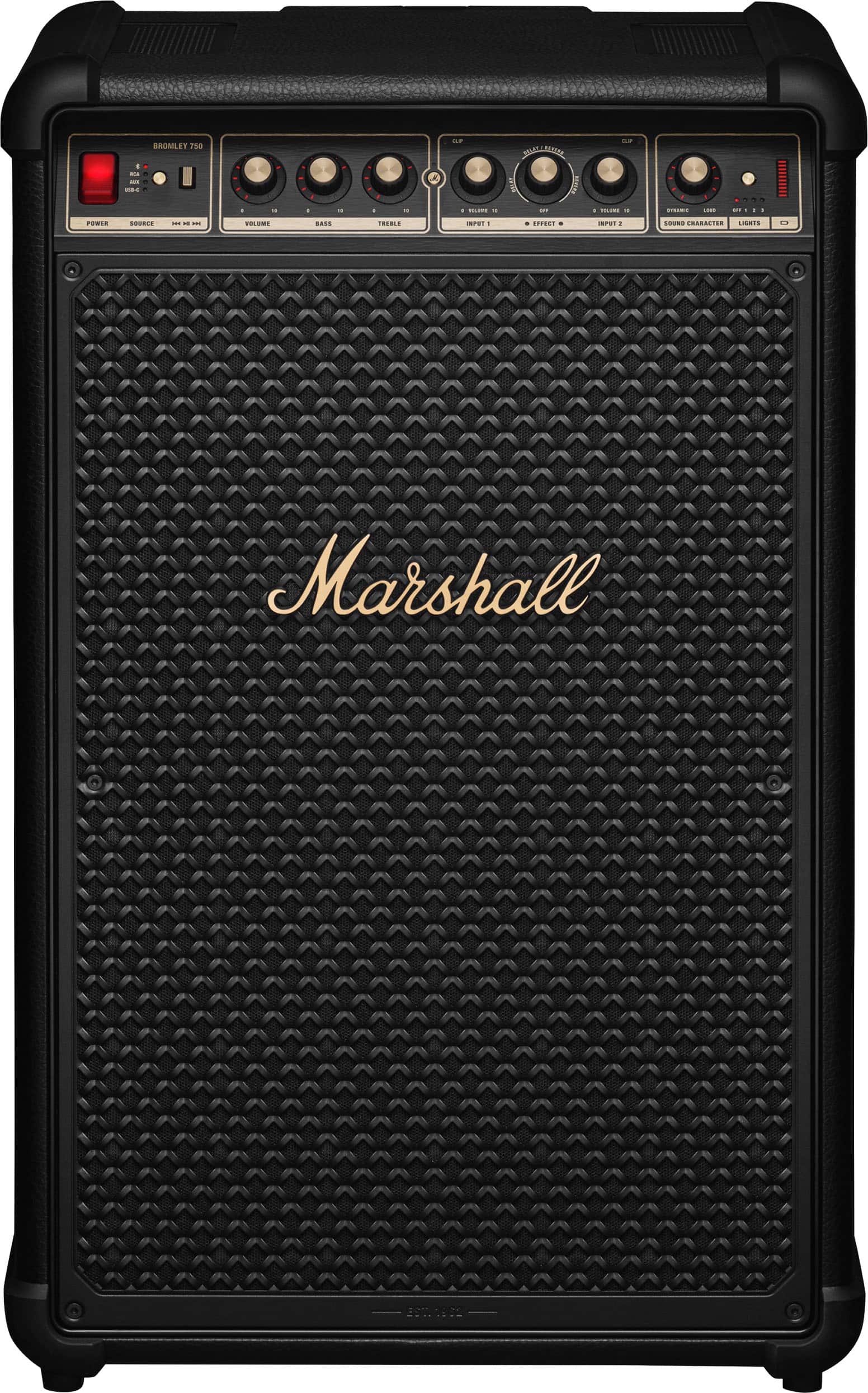
The Marshall Bromley 750 represents Marshall's first serious entry into the party speaker market, bringing decades of amplifier expertise to bear on the challenge. Released in late 2024, it draws heavily from Marshall's legendary guitar amp heritage—both aesthetically and technically. At the time of writing, it commands a premium price that reflects its positioning as a high-end party solution.
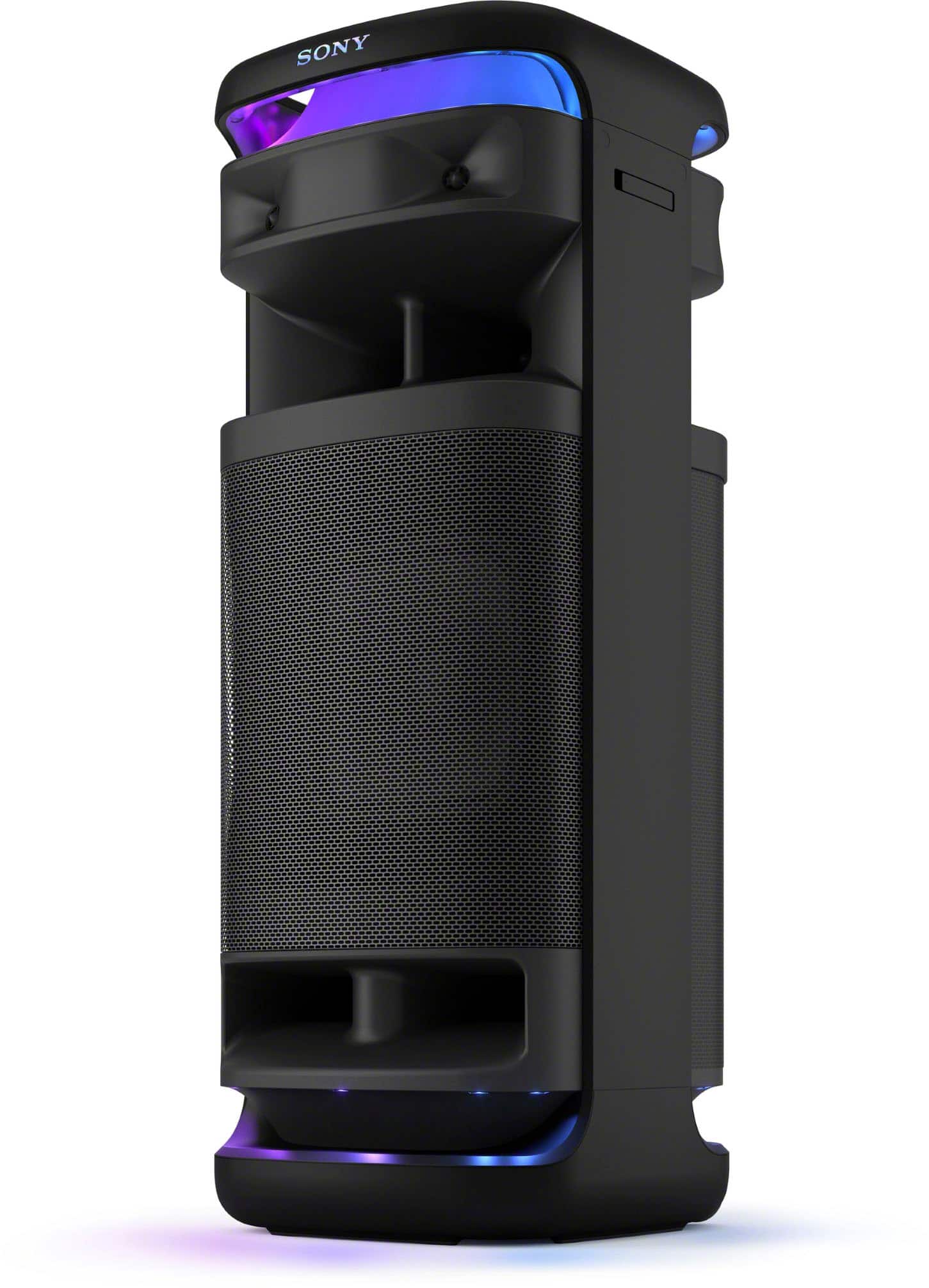
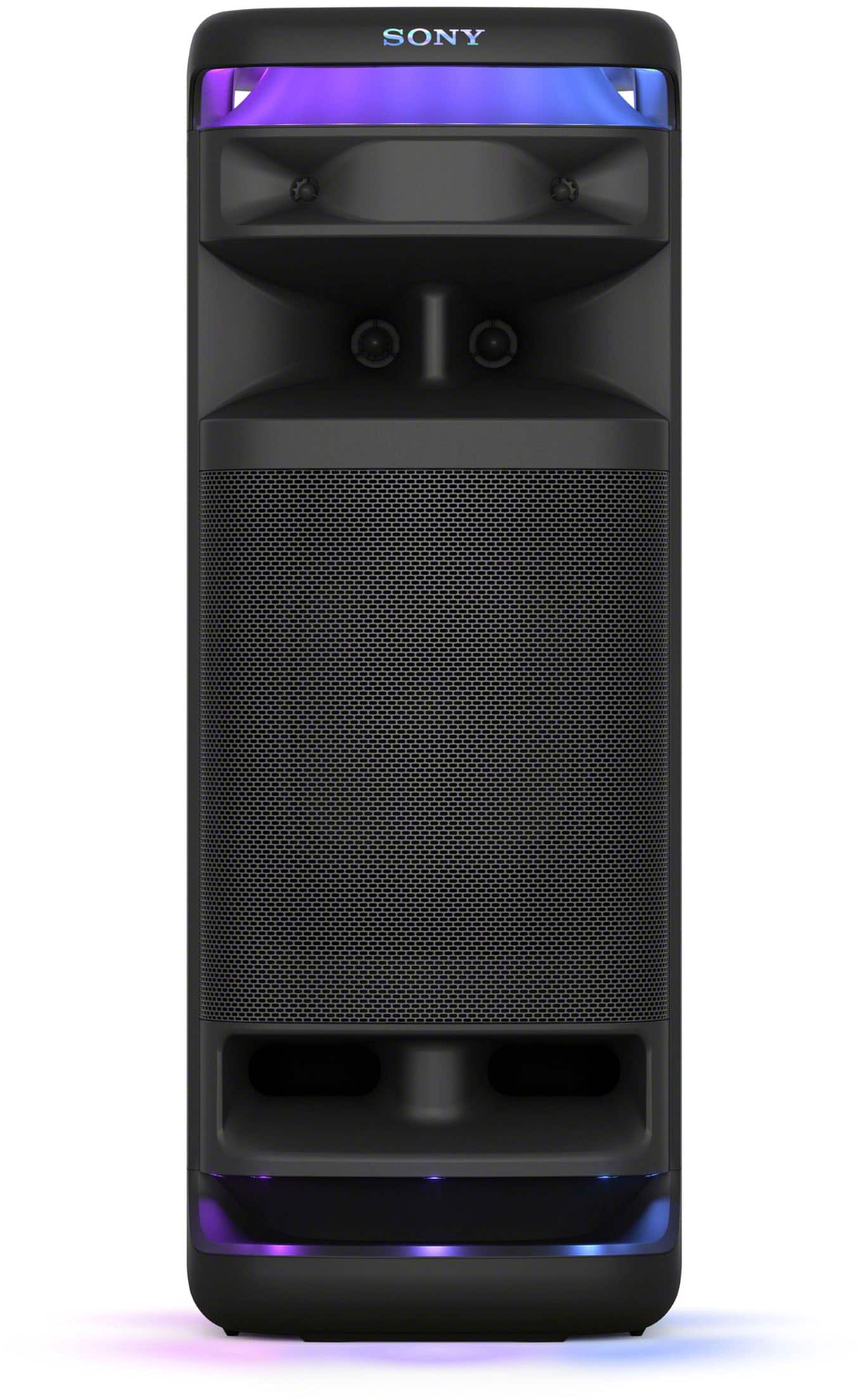
Meanwhile, the Sony ULT Tower 10 comes from Sony's established party speaker lineup, representing years of iteration and refinement in this specific category. Sony has been building party speakers longer than Marshall, and the ULT Tower 10 shows that experience. It typically retails for slightly less than the Marshall, making it the more budget-conscious option of these two premium speakers.
But price alone doesn't tell the story. These speakers represent fundamentally different approaches to party audio, and understanding those differences is key to making the right choice.
When it comes to pure output, the Marshall Bromley 750 has a significant advantage. Its eight-driver configuration powered by dedicated Class D amplifiers can push out up to 127 dB of sound pressure level. To put that in perspective, that's approaching the threshold of pain and loud enough to be heard clearly from several hundred feet away.
The Sony ULT Tower 10 maxes out at 110 dB, which is still impressively loud but noticeably quieter in side-by-side comparisons. This 17 dB difference might not sound like much, but decibels work on a logarithmic scale—127 dB is actually about five times louder than 110 dB in terms of perceived volume.
However, maximum volume isn't everything. Both speakers maintain good clarity and detail at moderate volumes, which matters more for everyday use than peak output capabilities.
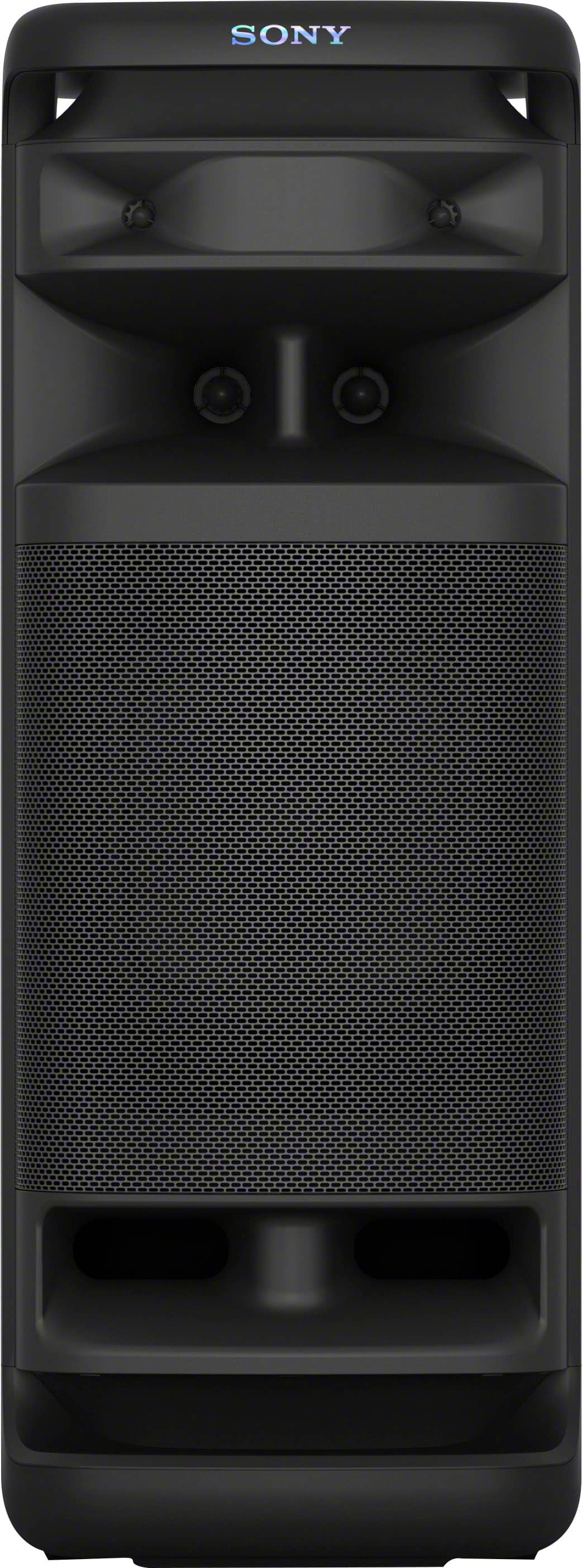
This is where things get really interesting. The Sony ULT Tower 10 takes a more aggressive approach to bass with its massive 12.6" × 12.6" X-Balanced woofer. This square-shaped driver design (instead of the traditional round shape) allows for more surface area in the same amount of space, theoretically moving more air for deeper bass response.
Sony's ULT technology offers three distinct bass modes that dramatically change the speaker's character. ULT 1 emphasizes those deep, room-shaking frequencies that make your chest vibrate, while ULT 2 focuses on punchy upper bass that makes kick drums snap. The ability to switch between these modes on the fly is genuinely useful—you might want deeper bass for hip-hop and punchier bass for rock music.
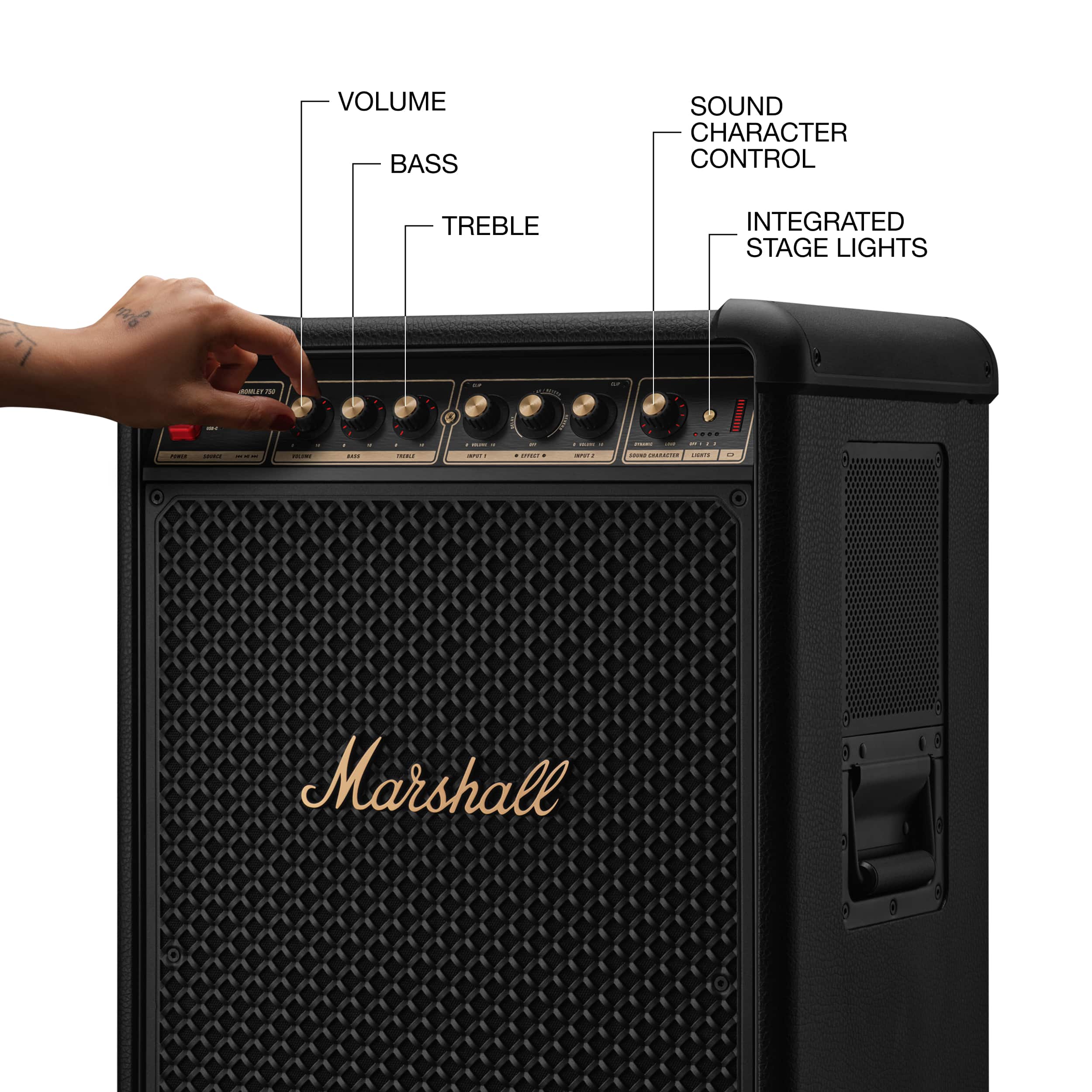
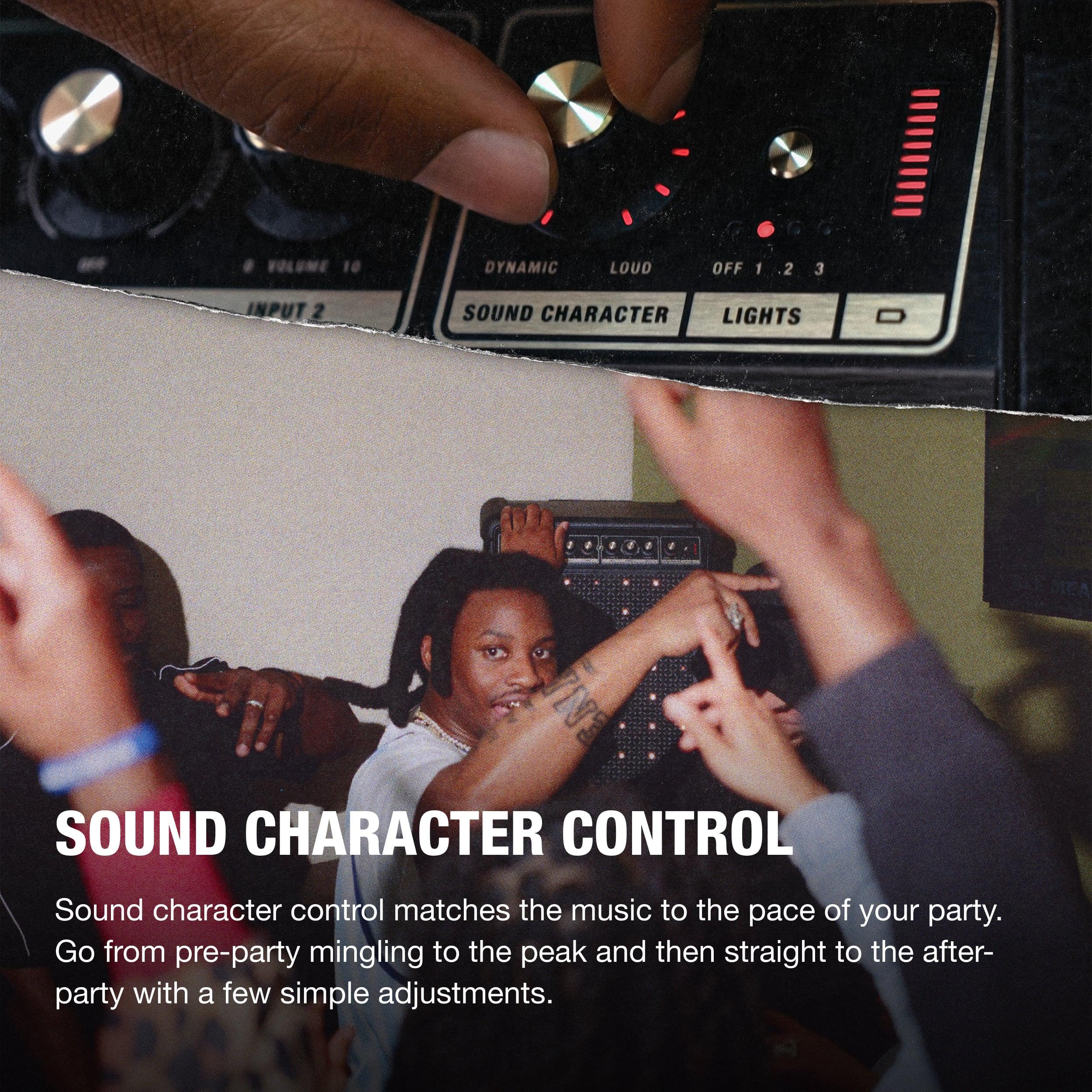
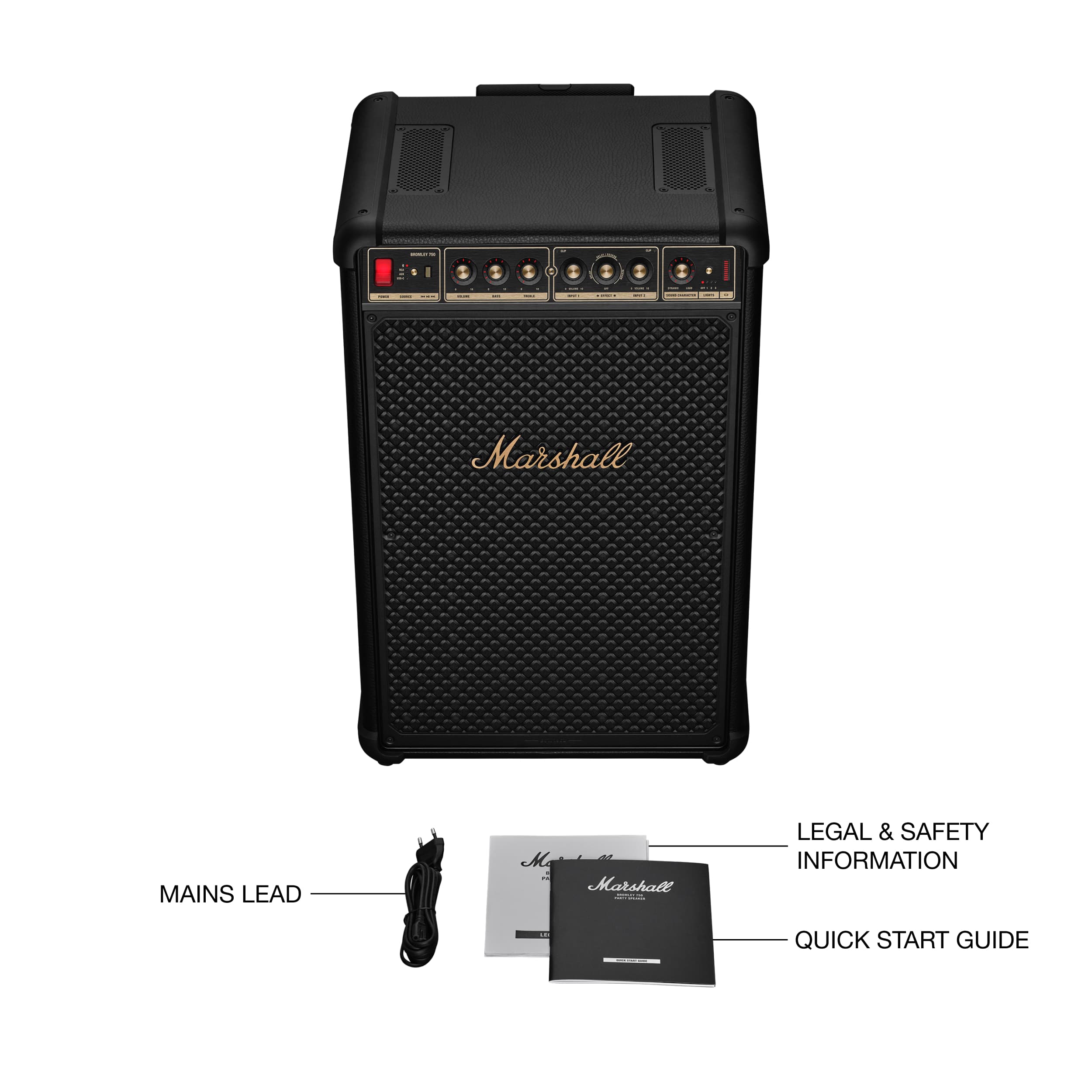
The Marshall Bromley 750 takes a more nuanced approach with its Sound Character Control. The "Dynamic" mode prioritizes clarity and detail for smaller spaces or background listening, while "Loud" mode opens up for maximum impact in large venues. This feels less gimmicky than Sony's approach—it's about optimizing the entire frequency response for different situations rather than just cranking the bass.
From a technical standpoint, Marshall's closed-box design (a sealed enclosure) typically provides tighter, more controlled bass compared to Sony's bass reflex system (which uses ports to enhance low-frequency output). The Marshall approach sacrifices some raw bass extension for better accuracy and control, while Sony prioritizes maximum impact.
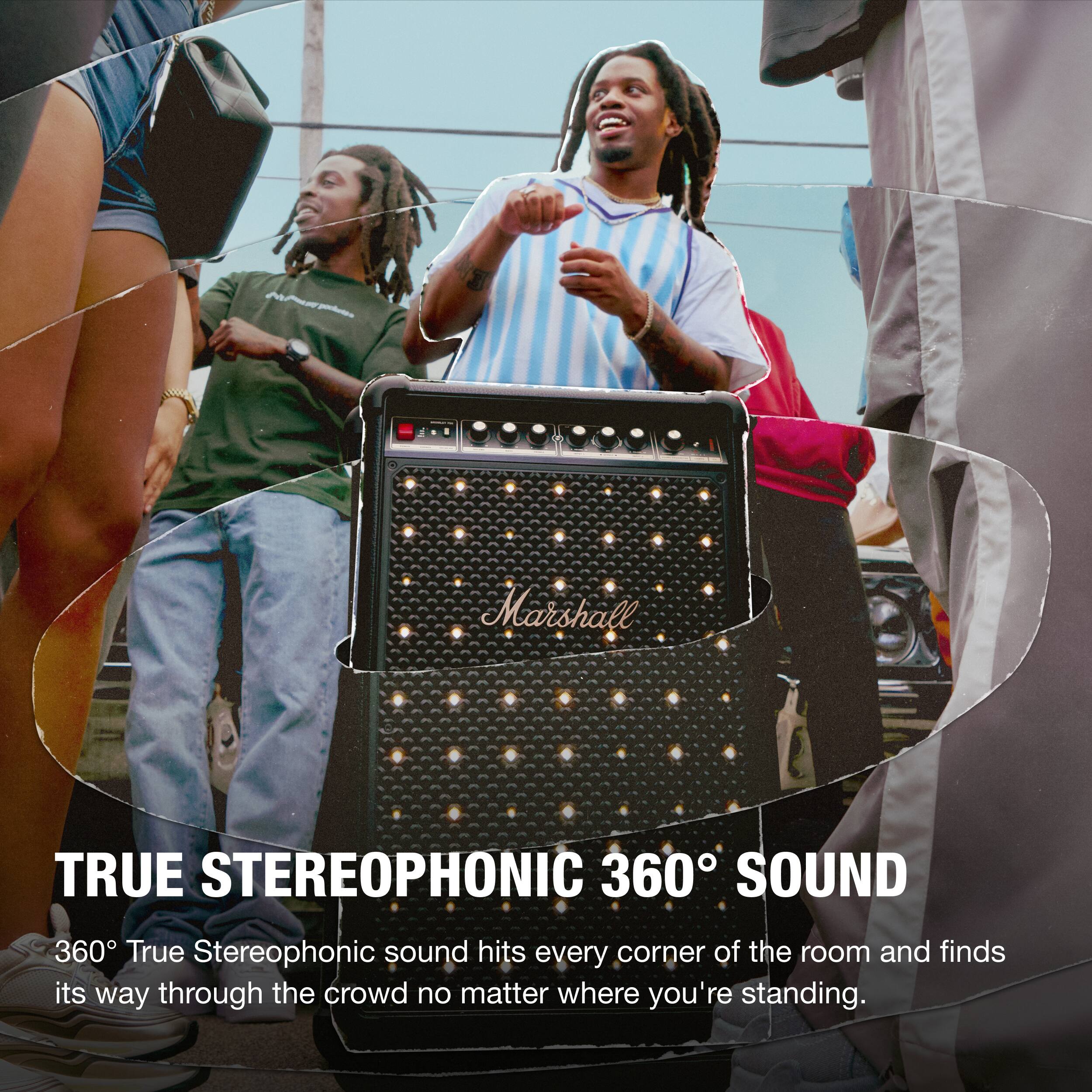
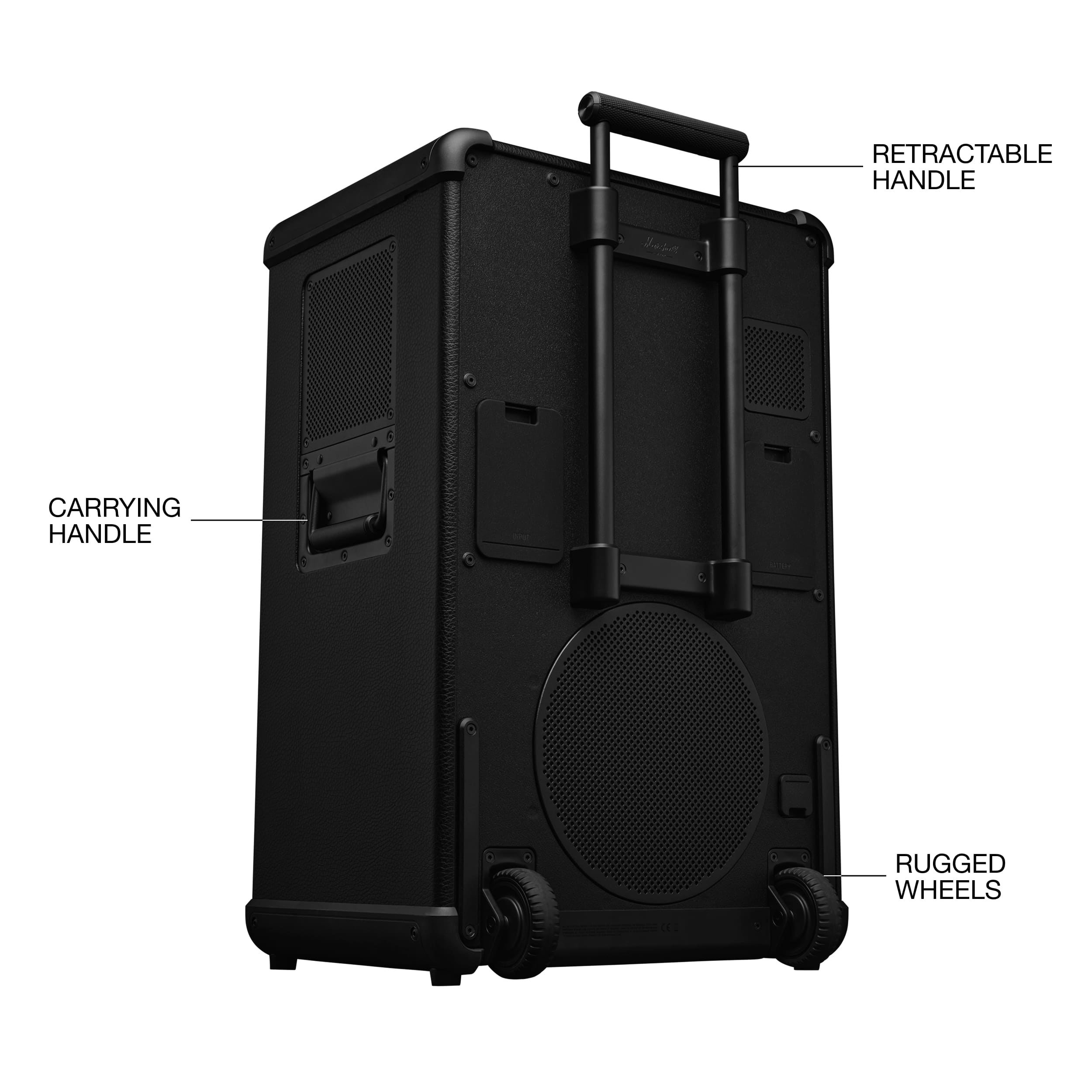
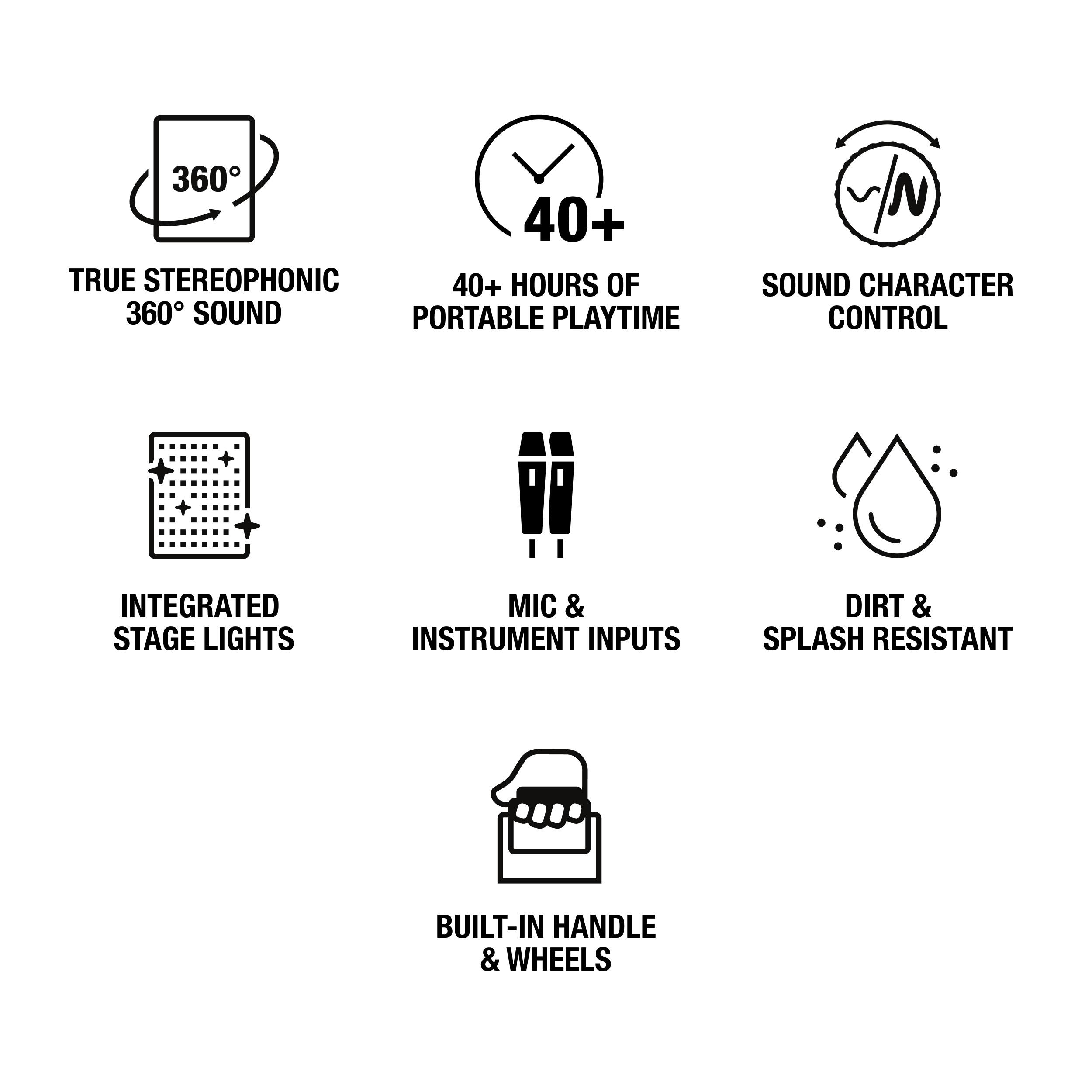
Both speakers claim to deliver 360-degree sound, but they achieve it differently. The Marshall Bromley 750 uses what they call True Stereophonic technology, with drivers positioned on multiple faces of the speaker cabinet. You get front-firing, rear-firing, side-firing, and even top-firing drivers, creating genuinely omnidirectional sound dispersion.
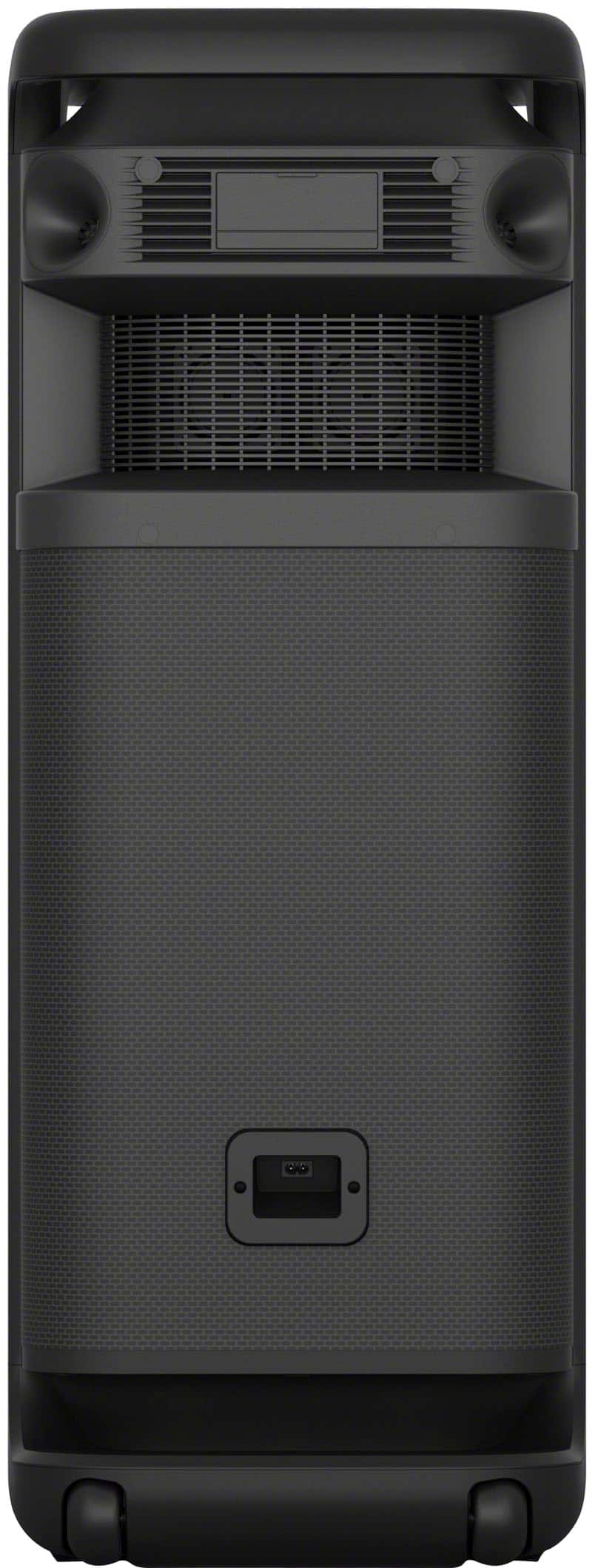
The Sony ULT Tower 10 relies primarily on front and rear-firing tweeters (the small drivers that handle high frequencies) to spread sound around the room. While this works well indoors, outdoor performance tends to be more directional.
In practical terms, Marshall's approach creates a more even listening experience regardless of where you're standing relative to the speaker. Sony's implementation works well but doesn't fully eliminate the "sweet spot" effect you get with traditional forward-firing speakers.
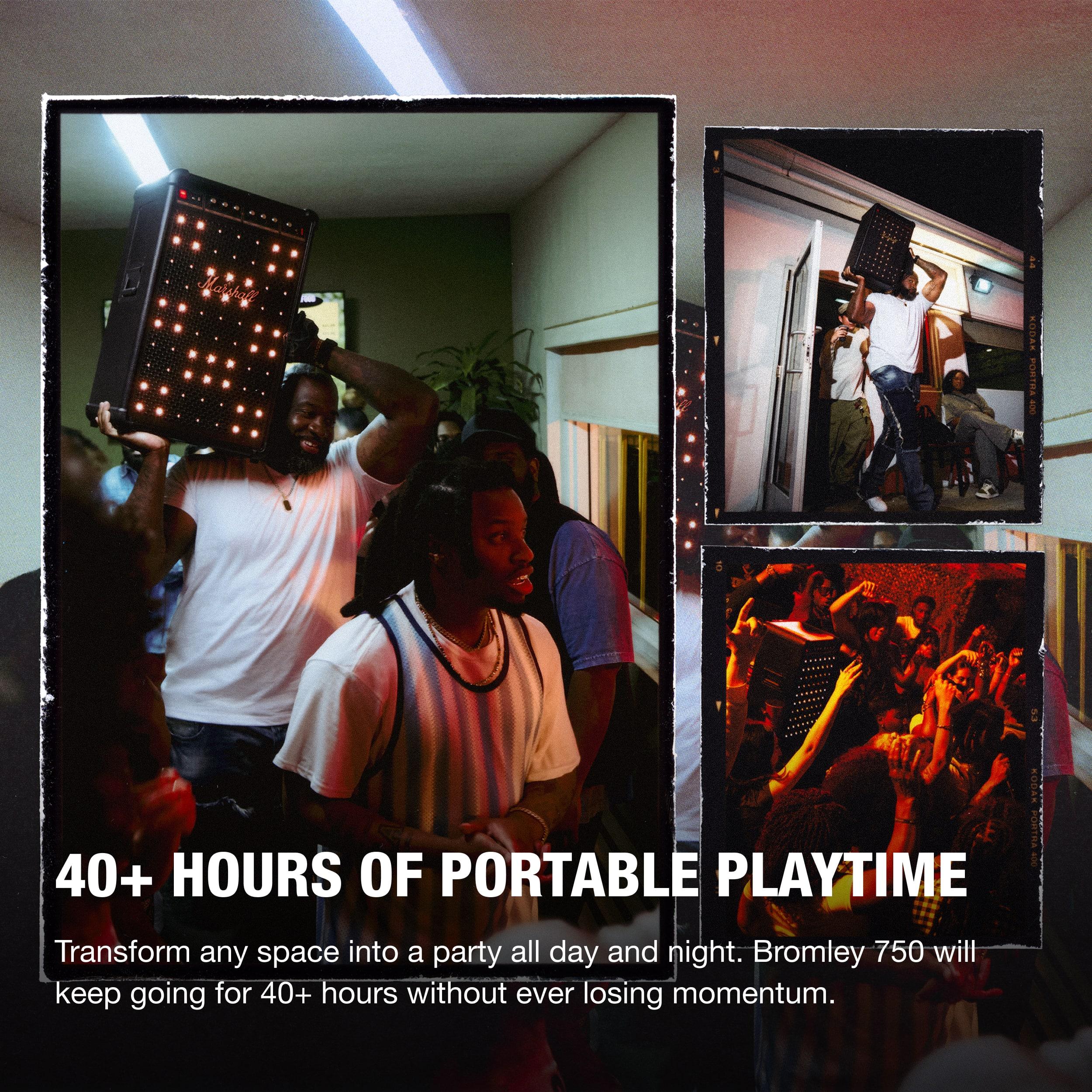
Here's where we see the biggest philosophical difference between these speakers. The Marshall Bromley 750 commits fully to portability with its exceptional 40+ hour battery life and user-replaceable battery system. This isn't just good—it's revolutionary for the party speaker category. Most competitors manage 10-20 hours at best.
The replaceable battery concept is particularly clever. Instead of the entire speaker becoming useless when the battery eventually degrades (as happens with all lithium-ion batteries after 2-3 years), you can simply swap in a fresh one. Marshall even designed the battery to work as a power bank for charging phones and other devices.
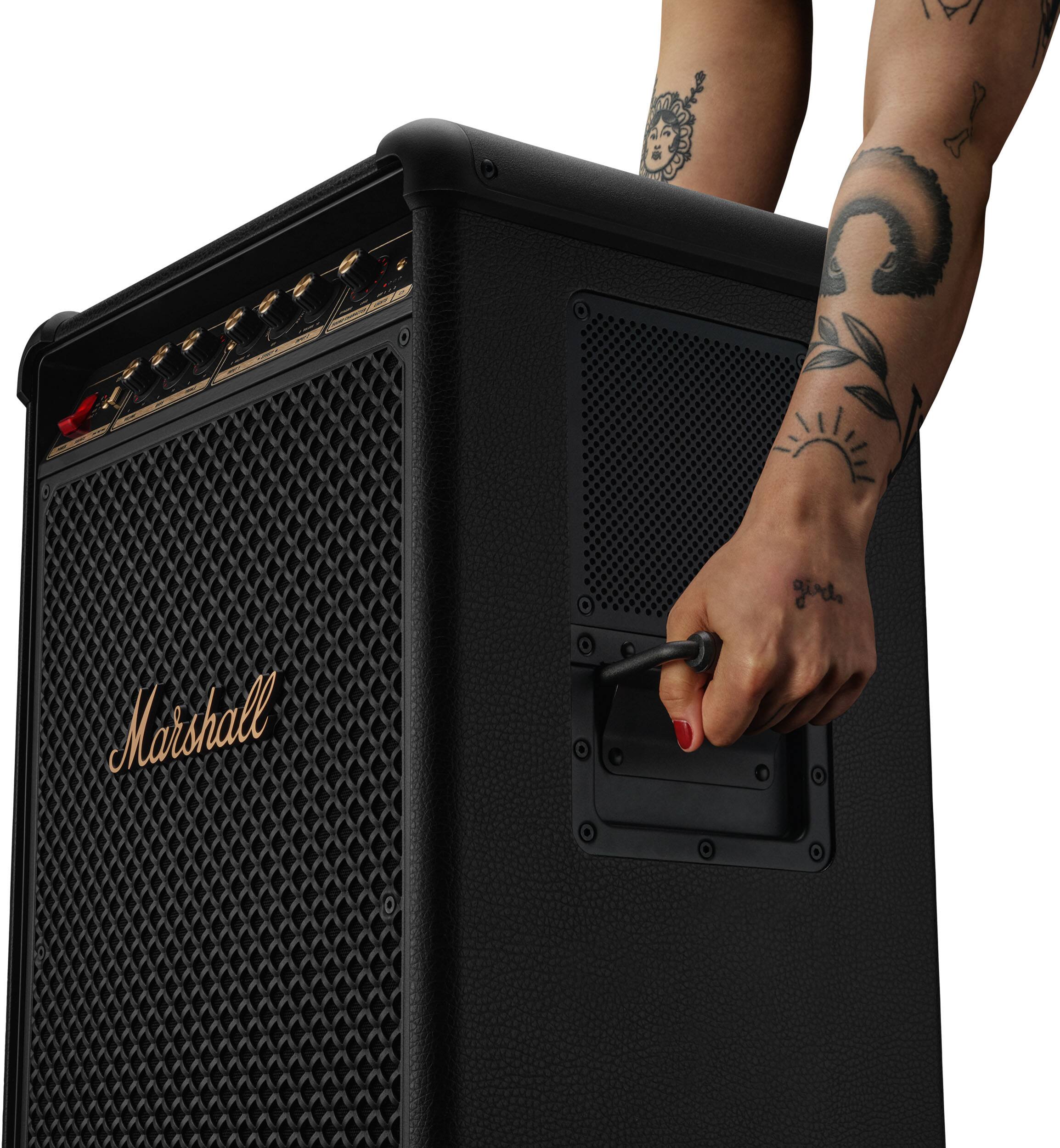
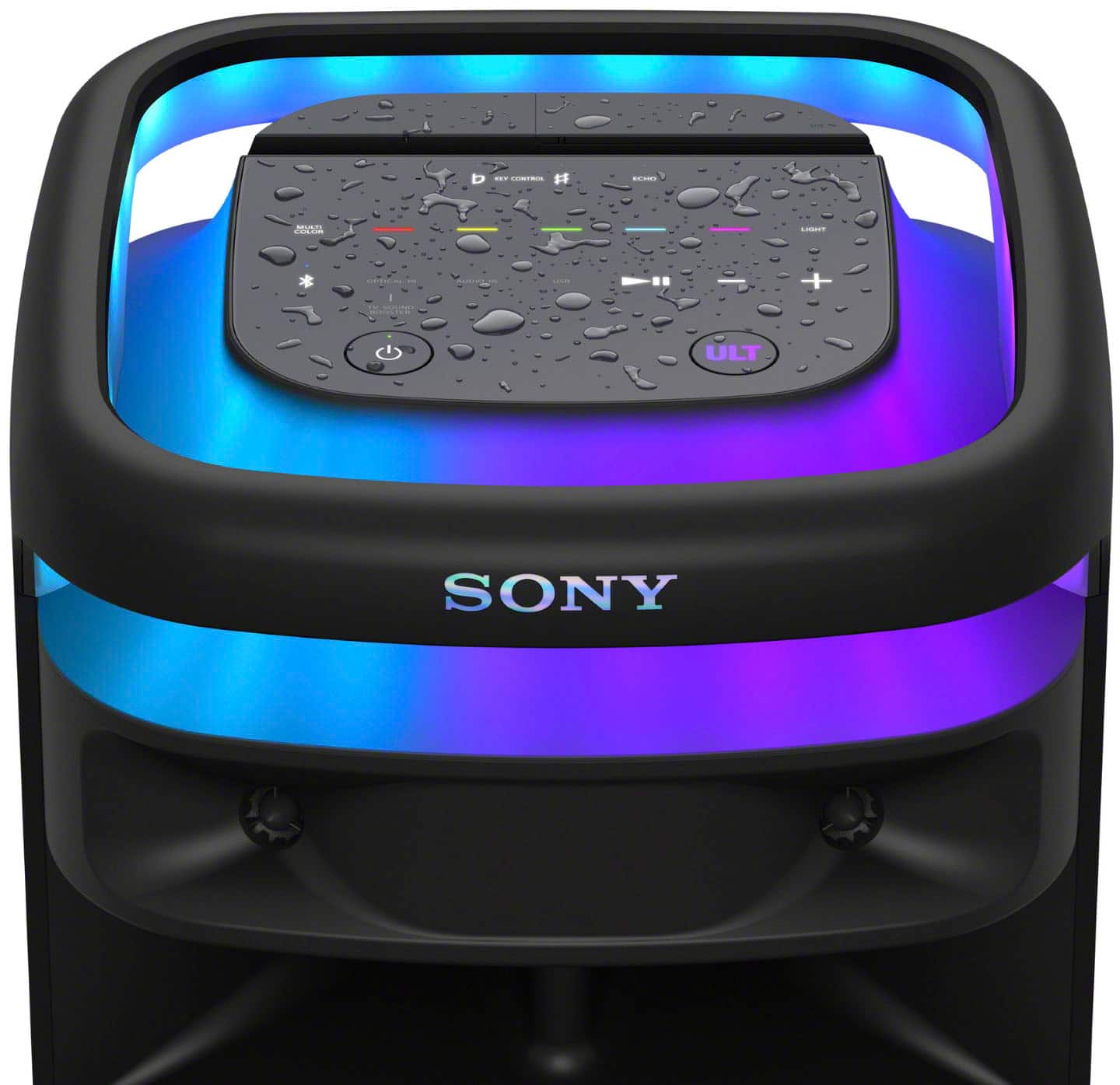
At 52.7 pounds, the Marshall isn't exactly light, but it includes thoughtful transport features like a telescoping handle and wheels, essentially turning it into rolling luggage. The IP54 weather resistance rating means it can handle splashes and light rain—crucial for outdoor parties.
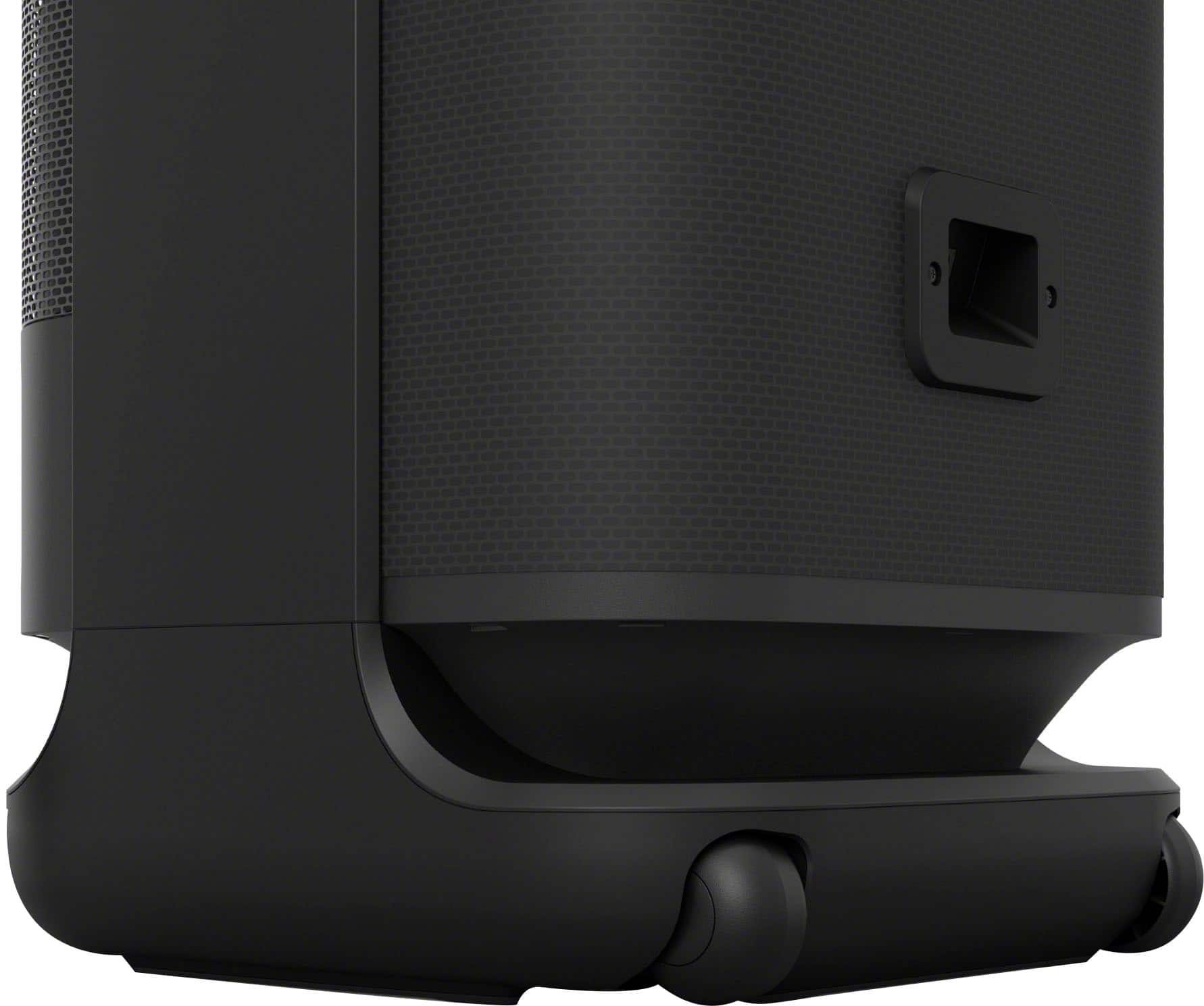
The Sony ULT Tower 10, by contrast, has no battery at all. It's strictly AC-powered, which immediately limits where you can use it. At nearly 64 pounds, it's also significantly heavier than the Marshall. Sony does include handles and casters for moving it around, but you're always tethered to an electrical outlet.
This design choice isn't necessarily wrong—it allows Sony to deliver consistent maximum performance without worrying about battery limitations. AC power also enables features like the optical input for TV connection, which wouldn't be practical in a battery-powered speaker.
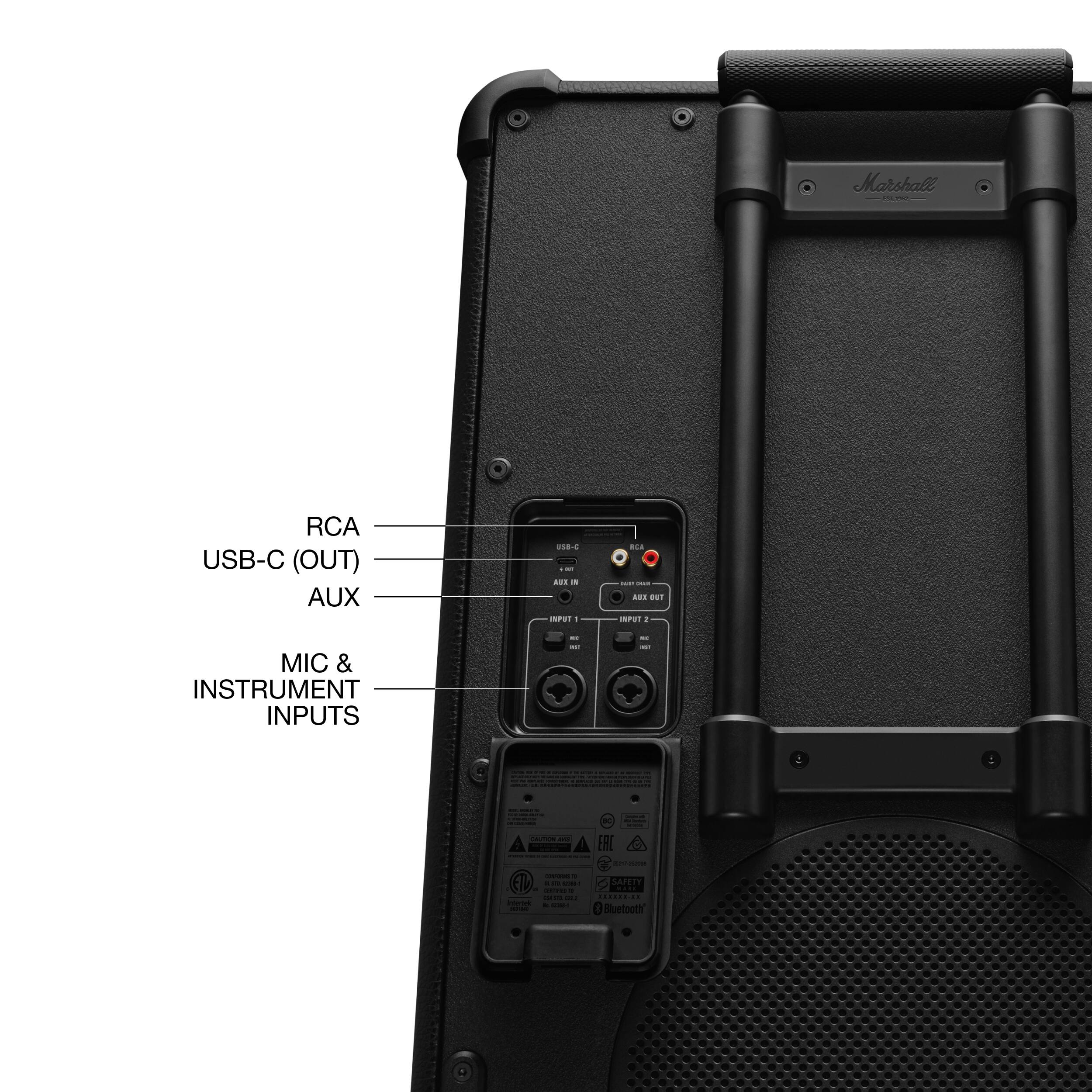
If you're serious about audio—whether for karaoke, live instruments, or DJ mixing—the connectivity options become crucial. The Marshall Bromley 750 clearly targets semi-professional users with its dual XLR/6.35mm combo jacks, RCA inputs, and comprehensive connection panel. XLR connections are the professional standard for microphones and mixing equipment, offering better signal quality and locking connectors that won't accidentally pull out mid-song.
The RCA inputs are perfect for connecting turntables, keyboards, or other line-level sources. Combined with Bluetooth 5.3 (which includes multipoint pairing for connecting multiple devices simultaneously), the Marshall can handle virtually any audio source you throw at it.
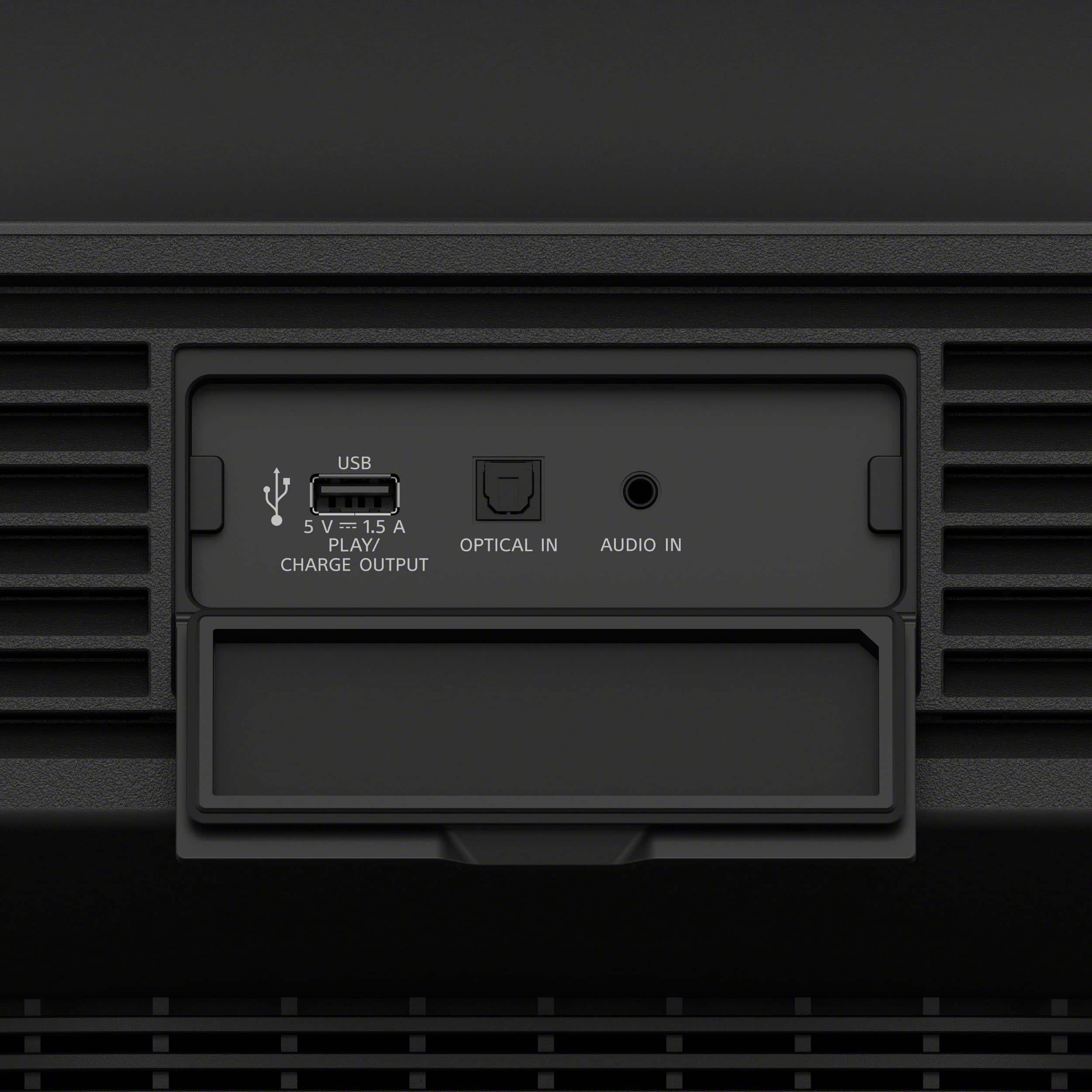
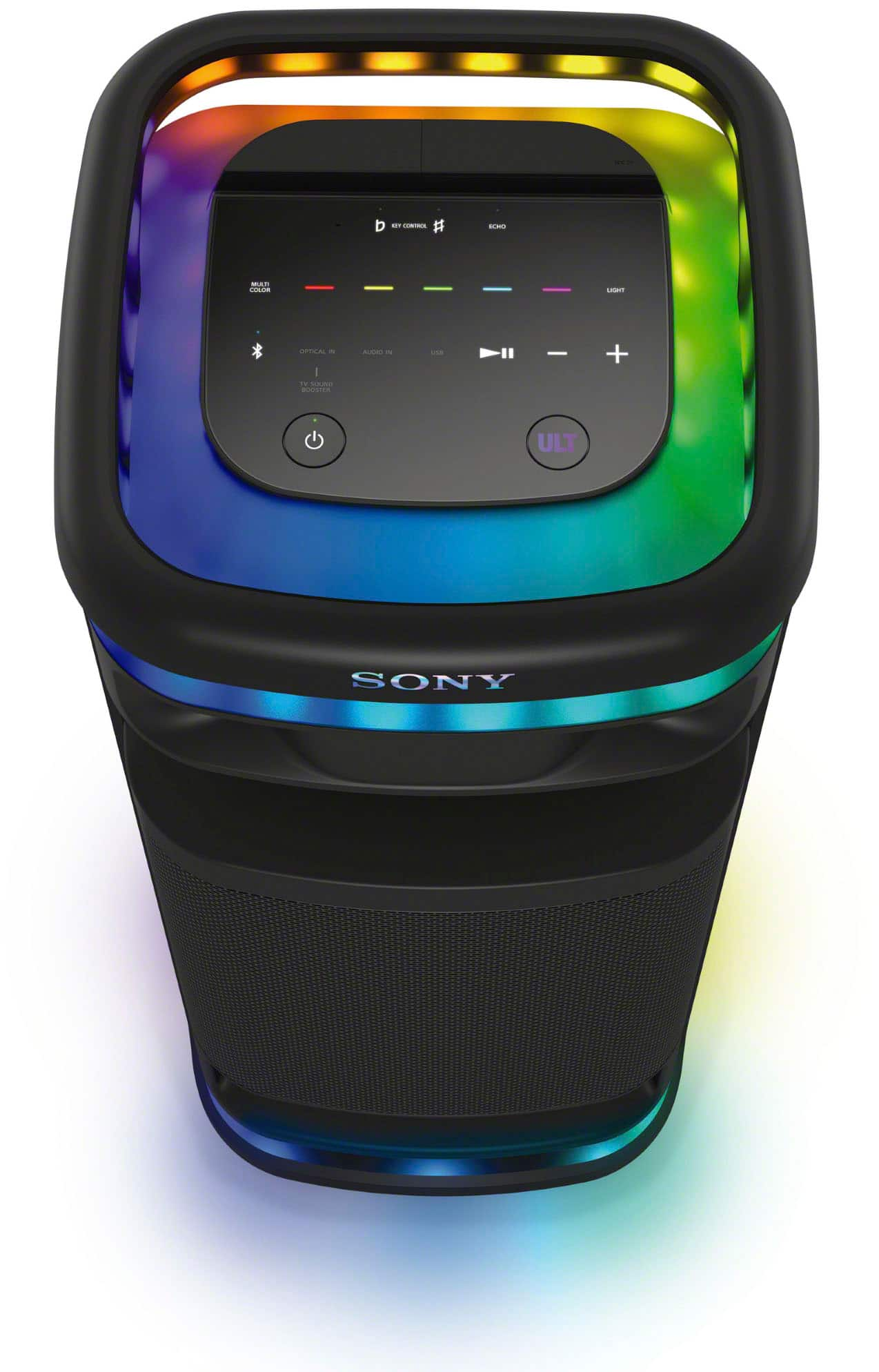
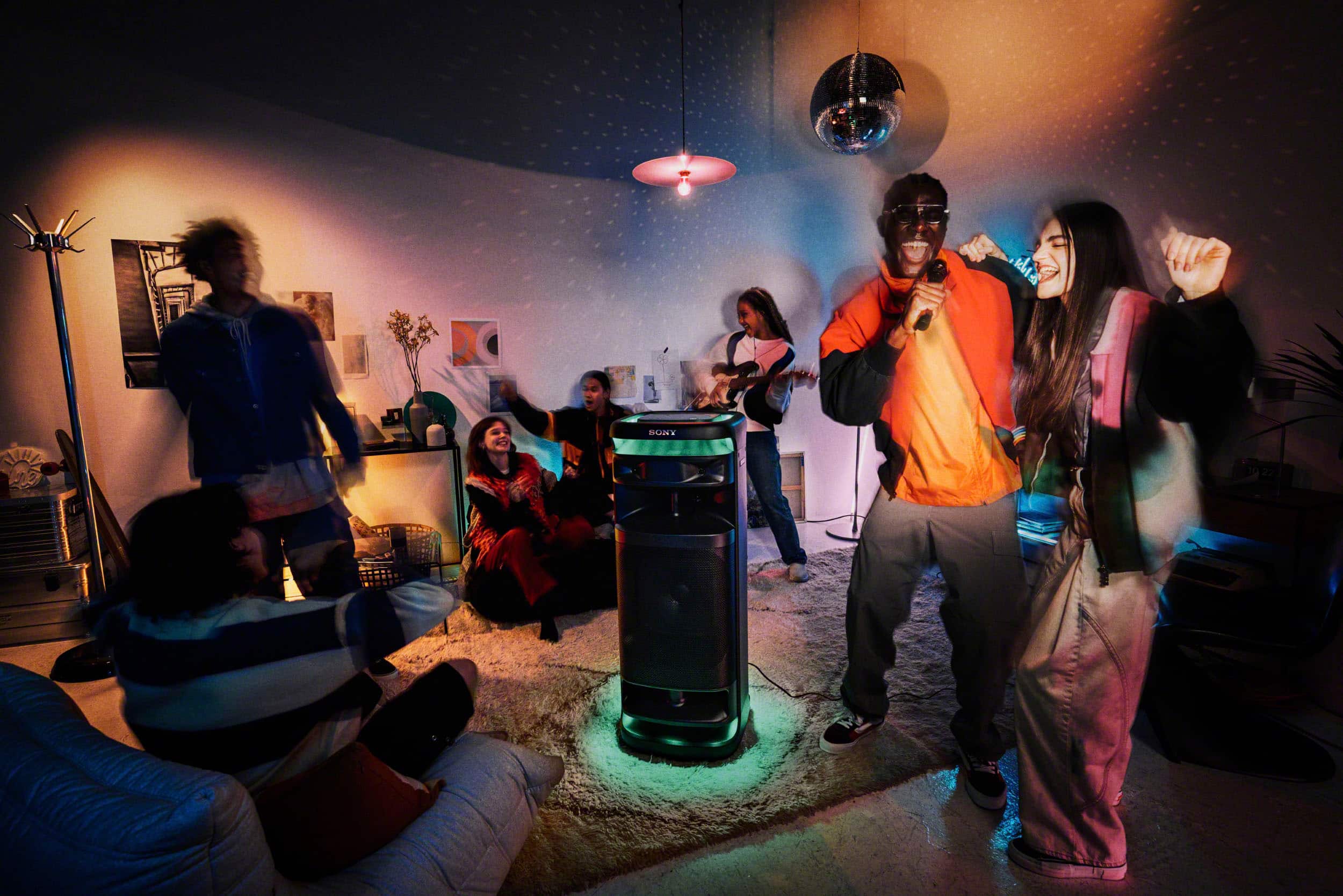
The Sony ULT Tower 10 includes a wireless microphone in the box and offers karaoke-specific features like echo control and key adjustment. Its single 1/4-inch combo jack handles microphones or instruments, while the optical input makes TV connection simple. Sony's approach feels more consumer-focused—it handles the most common use cases well but lacks the flexibility for more complex audio setups.
This is one area where Sony clearly leads. The Sony ULT Tower 10 offers a sophisticated dual-app ecosystem that transforms your phone into a comprehensive control center. The Music Center app handles basics like EQ adjustment and speaker pairing, while the Fiestable app adds DJ-style effects, motion control, and even party games with scoring displayed on participants' phones.
Sony's Party Connect feature can link up to 100 compatible speakers with synchronized audio and lighting—perfect for large events or multi-room parties. The 7-band equalizer gives you precise control over the frequency response, and the automatic room calibration uses built-in microphones to optimize sound for your specific space.
The Marshall Bromley 750 appears to rely more on physical controls, which some users prefer for its immediacy and reliability. There's something to be said for being able to adjust bass, treble, and effects without fumbling with your phone, especially in party situations where your hands might not be perfectly clean.
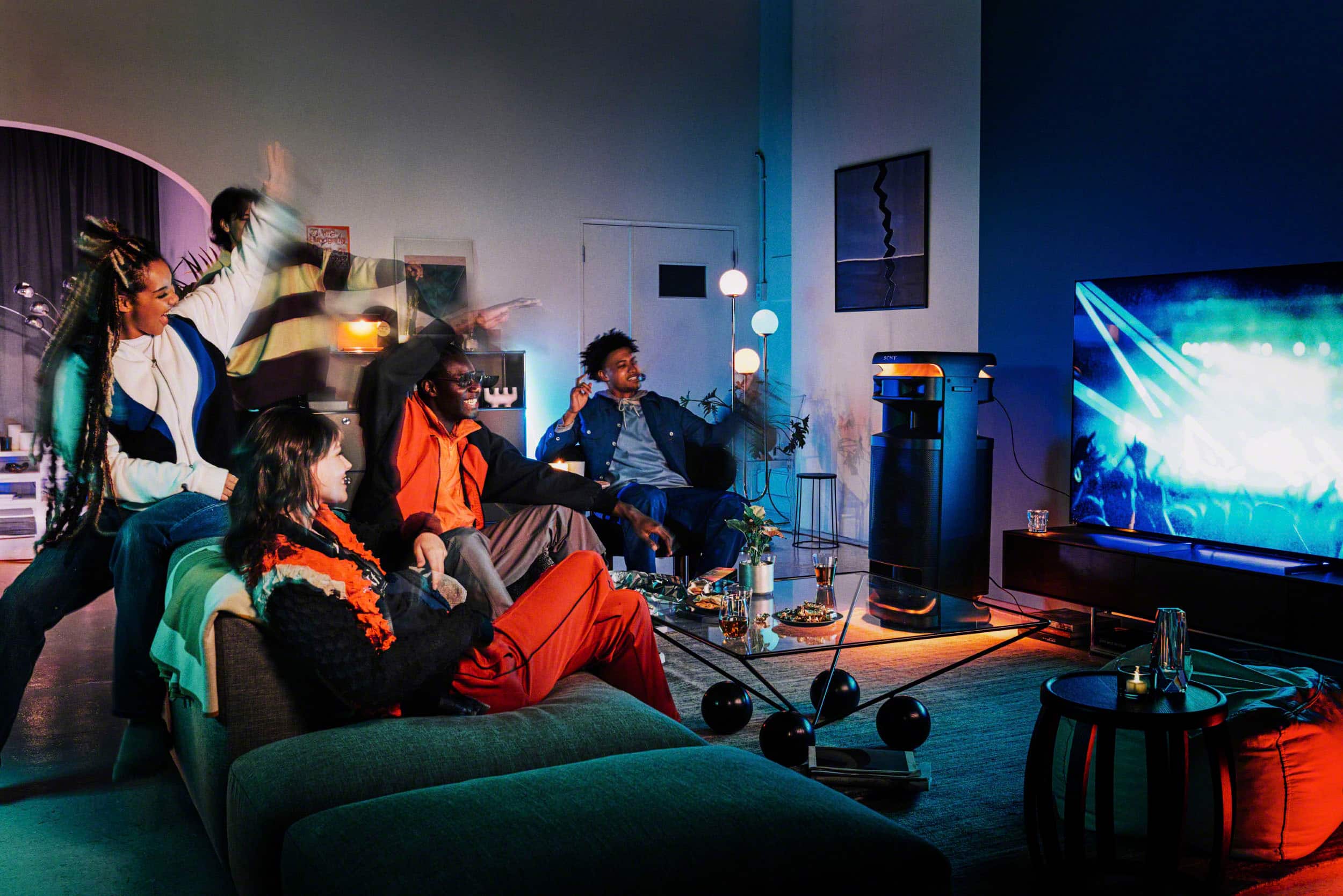
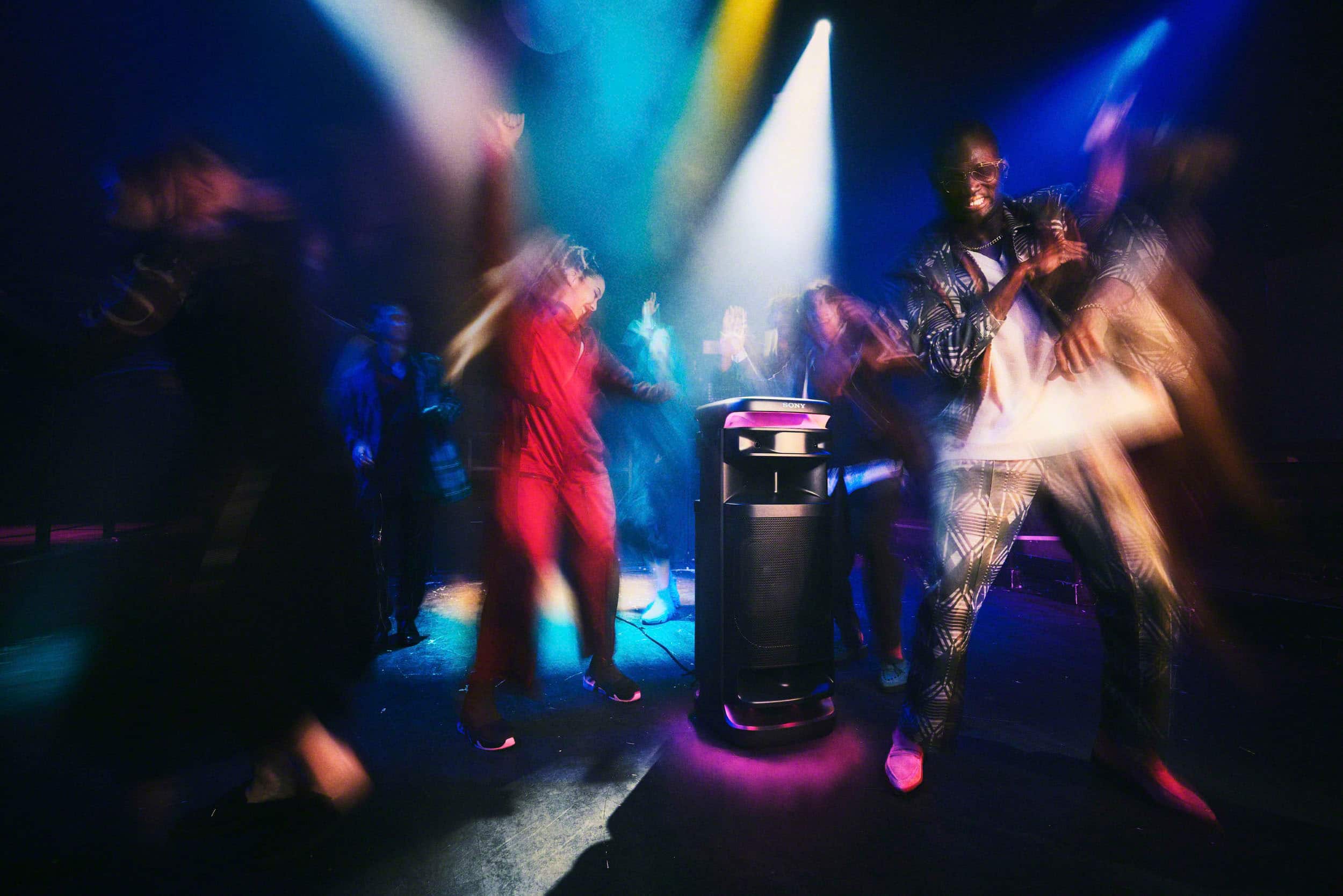
Party speakers aren't just about sound—they're entertainment centerpieces, and visual impact matters. The Sony ULT Tower 10 goes all-in with programmable 360-degree LED arrays that can display custom colors, patterns, and effects synchronized to the music. The lighting system is genuinely impressive, creating dynamic floor lighting and illuminating the speaker itself for maximum visual impact.
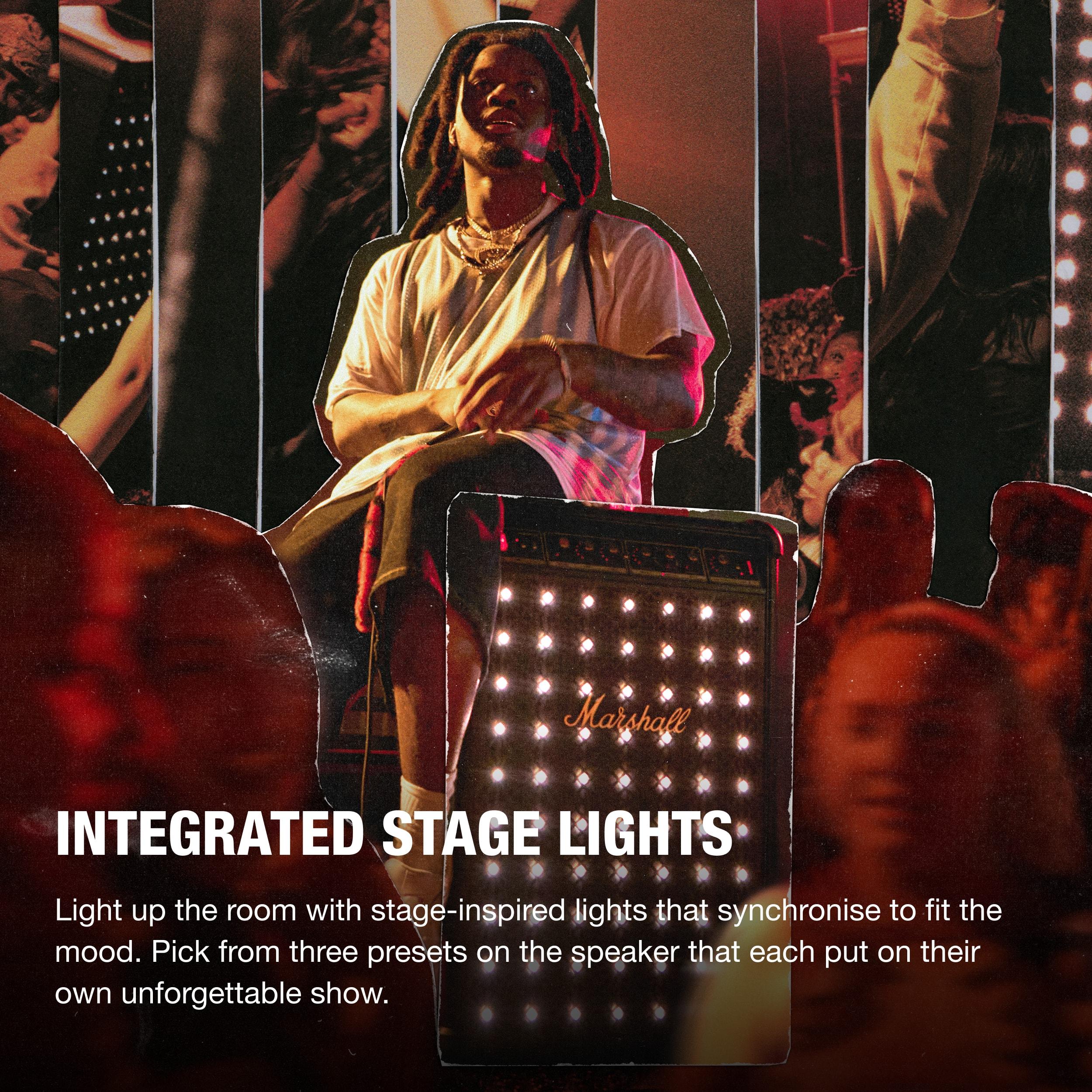
The Marshall Bromley 750 takes a more understated approach with concealed LEDs hidden behind the classic Marshall grille. The lighting draws inspiration from vintage stage equipment rather than modern rave aesthetics, producing warm, almost white illumination that evokes professional concert lighting. When turned off, the lights disappear completely, maintaining Marshall's timeless amplifier look.
Sony's approach will appeal to users who want maximum visual spectacle, while Marshall's design works better for users who prefer elegance over flash.
An increasingly important consideration is how these speakers work with your TV and home theater setup. The Sony ULT Tower 10 excels here with its optical digital input and dedicated TV sound modes. Connecting it to your television transforms movie nights with powerful, room-filling sound that makes action sequences genuinely thrilling.
The Marshall Bromley 750 can certainly handle TV audio through its various inputs, but it lacks the specific optimization and convenient connection options that Sony provides. If home theater use is a priority, Sony's approach is more plug-and-play.
At the time of writing, both speakers command premium prices, with the Marshall typically costing about $100 more than the Sony. That price difference becomes less significant when you consider the Marshall's replaceable battery system and superior weather resistance—features that could extend its useful life significantly.
The Sony ULT Tower 10 offers more immediate value with its included wireless microphone, comprehensive app ecosystem, and TV integration features. If you're planning to use these features regularly, Sony provides more functionality out of the box.
For long-term ownership, the Marshall Bromley 750 has advantages in durability and serviceability. The replaceable battery eliminates the most common failure point in portable speakers, while the IP54 rating suggests better tolerance for outdoor use over time.
After extensive research and analysis of expert and user reviews, clear use cases emerge for each speaker.
Choose the Marshall Bromley 750 if you value true portability and plan to use your speaker in various locations. The 40-hour battery life is genuinely game-changing—you can take it camping, to beach parties, or anywhere without worrying about power. The professional connectivity makes it ideal for users who might plug in instruments or microphones regularly. If you prioritize build quality, weather resistance, and the ability to get genuinely loud without distortion, Marshall delivers.
The Sony ULT Tower 10 makes more sense for users who primarily use their speaker in fixed locations with AC power available. If you want maximum bass customization, love smart features and app control, or plan to integrate the speaker with your TV setup, Sony provides more functionality. The ability to link multiple speakers for larger events is also compelling for users who might expand their setup over time.
For most users, the decision comes down to portability versus features. The Marshall excels as a take-anywhere party solution, while the Sony works better as a high-powered home entertainment hub that occasionally gets moved around.
Both represent the current state of the art in party speakers, incorporating years of technological advancement in driver design, amplification, and wireless connectivity. Either choice will deliver impressive performance—it's really about matching the speaker's strengths to your specific needs and preferences.
| Marshall Bromley 750 | Sony ULT Tower 10 |
|---|---|
| Maximum Sound Output - Critical for large parties and outdoor use | |
| 127 dB SPL (extremely loud, suitable for large outdoor events) | 110 dB SPL (very loud but 5x quieter than Marshall in perceived volume) |
| Power Source - Determines where you can use the speaker | |
| 40+ hour rechargeable battery with replaceable design | AC power only (requires electrical outlet) |
| Weight - Affects how easily you can move the speaker | |
| 52.7 lbs with wheels and telescoping handle | 63.9 lbs with handles and casters |
| Weather Resistance - Important for outdoor parties | |
| IP54 rated with drainage system (splash and dust resistant) | Splash-resistant top panel only |
| Bass Customization - Key for different music genres | |
| Sound Character Control (Dynamic/Loud modes) | ULT technology with 3 bass modes plus 7-band EQ |
| Professional Audio Inputs - Essential for karaoke and instruments | |
| Dual XLR/6.35mm combo jacks, RCA inputs | Single 1/4" combo jack, includes wireless microphone |
| 360-Degree Sound - Affects how evenly sound fills the room | |
| True Stereophonic with drivers on all sides | Front and rear tweeters (less omnidirectional) |
| Smart Features and App Control - Convenience and customization | |
| Limited app functionality, emphasis on physical controls | Dual-app ecosystem with DJ effects, party games, room calibration |
| Multi-Speaker Connectivity - For expanding your setup | |
| Daisy-chain capability only | Party Connect links up to 100 speakers with synchronized lighting |
| Lighting Effects - Visual entertainment factor | |
| Concealed LEDs with vintage stage-inspired warm lighting | Programmable 360-degree LEDs with custom colors and patterns |
| TV Integration - Home theater usability | |
| Standard audio inputs work with TV | Optical input with dedicated TV sound modes |
| Long-Term Value - Serviceability and durability | |
| User-replaceable battery extends lifespan significantly | Fixed internal components, includes wireless mic in box |
The Marshall Bromley 750 is significantly louder, reaching up to 127 dB compared to the Sony ULT Tower 10's 110 dB maximum output. This 17 dB difference means the Marshall is approximately five times louder in perceived volume, making it better suited for large outdoor events and venues where you need to cut through crowd noise.
The Sony ULT Tower 10 offers more customizable bass with its ULT technology featuring three distinct bass modes and a 7-band equalizer. However, the Marshall Bromley 750 provides more controlled and accurate bass through its closed-box design. Sony wins for maximum bass impact, while Marshall offers better bass quality and precision.
The Marshall Bromley 750 is much more portable with its 40+ hour battery life, lighter weight (52.7 lbs vs 63.9 lbs), and IP54 weather resistance. The Sony ULT Tower 10 requires AC power and has no battery, making it suitable only for locations with electrical outlets.
Both speakers support karaoke, but differently. The Sony ULT Tower 10 includes a wireless microphone and dedicated karaoke features like echo control and key adjustment. The Marshall Bromley 750 has dual XLR/combo jacks for professional microphones and instruments, offering more flexibility for serious performers.
The Sony ULT Tower 10 is superior for home theater use with its optical digital input and dedicated TV sound modes that optimize audio for movies and shows. While the Marshall Bromley 750 can connect to TVs through its various inputs, it lacks the specific TV integration features Sony provides.
Both speakers feature lighting, but with different approaches. The Sony ULT Tower 10 offers programmable 360-degree LED arrays with custom colors and patterns that sync to music. The Marshall Bromley 750 has more subtle, stage-inspired warm white LEDs hidden behind the grille for a classic, elegant look.
The Sony ULT Tower 10 clearly leads in smart features with its dual-app ecosystem offering DJ effects, party games, room calibration, and precise EQ control. The Marshall Bromley 750 focuses more on physical controls and hardware functionality rather than smartphone app integration.
The Sony ULT Tower 10 excels at multi-speaker setups with Party Connect technology that can link up to 100 compatible speakers with synchronized audio and lighting. The Marshall Bromley 750 offers basic daisy-chaining capability but lacks the advanced multi-speaker features Sony provides.
The Marshall Bromley 750 is more durable outdoors with its IP54 rating, built-in drainage system, and weather-resistant design. The Sony ULT Tower 10 only has a splash-resistant top panel and requires AC power, limiting its outdoor versatility significantly.
The Marshall Bromley 750 offers exceptional 40+ hour battery life with a user-replaceable battery system. The Sony ULT Tower 10 has no battery at all and must be plugged into AC power, making it unsuitable for locations without electrical outlets.
The Marshall Bromley 750 is better for professional use with dual XLR/6.35mm combo jacks, RCA inputs, and onboard effects processing. This makes it suitable for live instruments, mixing equipment, and professional microphones. The Sony ULT Tower 10 has more limited professional connectivity with just one combo jack.
Choose the Marshall Bromley 750 if you need true portability, maximum volume, and plan to use it in various locations including outdoors. Select the Sony ULT Tower 10 if you want maximum bass customization, advanced smart features, TV integration, and primarily use it in AC-powered locations with the ability to expand to multiple speakers.
We've done our best to create useful and informative comparisons to help you decide what product to buy. Our research uses advanced automated methods to create this comparison and perfection is not possible - please contact us for corrections or questions. These are the sites we've researched in the creation of this article: theluxereview.com - techradar.com - whathifi.com - routenote.com - techradar.com - marshall.com - newatlas.com - marshall.com - youtube.com - wallpaper.com - sweetwater.com - soundguys.com - t3.com - bestbuy.com - hiconsumption.com - architeg-prints.com - stereoguide.com - crutchfield.com - youtube.com - electronics.sony.com - youtube.com - helpguide.sony.net - bestbuy.com - sony.com - us.community.sony.com - youtube.com - sony.com - nfm.com - sony.com - videoandaudiocenter.com - youtube.com

Privacy Policy
Terms and Conditions - Affiliate Policy
Home Security
© Copyright 2008-2026.
11816 Inwood Rd #1211, Dallas, TX 75244