


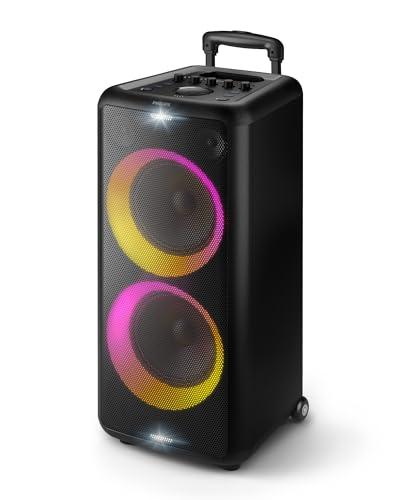

When you're shopping for a party speaker, you're not just buying audio equipment—you're investing in the soundtrack to your social life. Whether it's backyard barbecues, beach trips, or impromptu karaoke sessions, the right speaker can transform any gathering into an unforgettable event. Today, we're diving deep into two popular options that take very different approaches to portable party audio: the Rockville Rock Party 9 and the Philips TAX5206.
Both speakers launched in the early 2020s, during a period when Bluetooth technology had matured significantly and manufacturers began focusing on specialized features rather than just connectivity improvements. The Bluetooth 5.0 standard these speakers use offers much better range and stability than earlier versions, which is crucial when you're trying to stream music from across a crowded patio.
Party speakers occupy a unique space in the audio world. Unlike studio monitors that prioritize accurate sound reproduction, or bookshelf speakers designed for critical listening, party speakers are engineered for one primary goal: filling large spaces with loud, energetic sound that gets people moving. This means manufacturers often boost bass frequencies and prioritize maximum volume over perfect tonal balance.
The key considerations for any party speaker include peak volume output (how loud it can get), bass response (that chest-thumping low-end that drives dance music), battery life for outdoor use, and entertainment features like lighting and karaoke capabilities. Weather resistance is also important, though many manufacturers still struggle with this aspect while keeping costs reasonable.
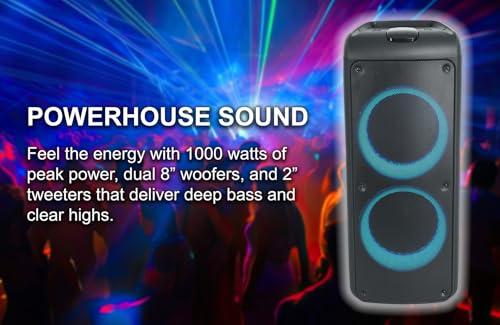
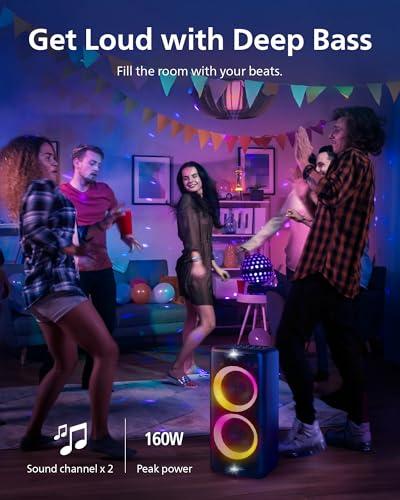
The most striking difference between the Rockville Rock Party 9 and Philips TAX5206 lies in their power output specifications. The Rockville claims 1000W peak power with 250W RMS (Root Mean Square), while the Philips delivers 160W peak with 80W RMS. But here's where things get interesting—and why understanding these numbers matters.
Peak power represents the maximum power a speaker can handle for very brief moments, often just milliseconds. It's a marketing number that sounds impressive but doesn't tell you much about real-world performance. RMS power, on the other hand, measures sustained power output over time—this is what actually determines how loud your speaker will be during normal use.
The Rockville's 250W RMS versus the Philips' 80W RMS suggests the Rockville should be significantly louder in practice. Our research into user experiences confirms this, with Rockville owners consistently reporting the ability to fill large outdoor spaces that would challenge the Philips. However, this raw power advantage comes with trade-offs in audio refinement and battery consumption.
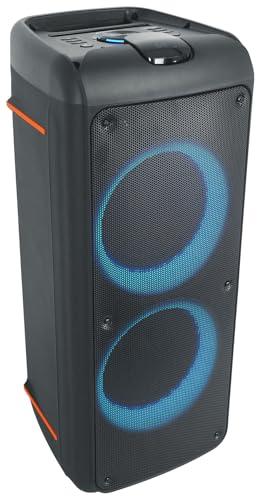
Both speakers use dual 8-inch woofers—the large drivers responsible for bass reproduction—but their implementation differs. The Rockville houses its drivers in a ported enclosure, which uses a carefully designed opening to enhance bass output by allowing air to move more freely. This design typically produces more dramatic low-end impact, perfect for dance music and hip-hop where that "thump" is essential.
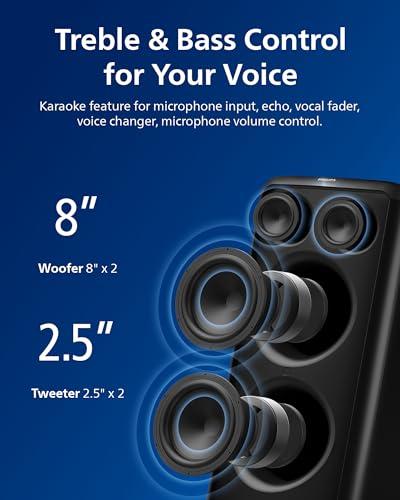
The Philips TAX5206 takes a more balanced approach with its 2-way driver configuration, pairing those 8-inch woofers with 2.5-inch tweeters (high-frequency drivers). The slightly larger tweeters compared to the Rockville's 2-inch units should theoretically provide better high-frequency detail and clarity. User feedback suggests this translates to cleaner vocals and more defined instrumental separation, though at the expense of raw bass impact.
When it comes to actual listening experience, these speakers represent two different philosophies. The Rockville Rock Party 9 prioritizes impact and excitement. Users consistently praise its ability to produce "earth-shaking bass" that works well for outdoor environments where sound naturally dissipates. The Class D amplifier—a modern, efficient amplification technology—helps maximize power while minimizing heat and battery drain.
However, multiple reviews note that the Rockville can become "shrill" at higher volumes, particularly in the treble frequencies. This is common with speakers designed for maximum output—engineers often have to make compromises between loudness and refinement. For outdoor parties where ambient noise competes with your music, this aggressive tuning actually works in the speaker's favor.
The Philips TAX5206, by contrast, maintains better tonal balance across its volume range. Its total harmonic distortion specification of ≤10% indicates cleaner reproduction, though "clean" doesn't always mean "exciting" in party contexts. The trade-off is that when you really need to compete with crowd noise or fill a large space, the Philips may leave you wanting more output.
One area where both speakers shine is frequency response—the range of audio frequencies they can reproduce. The Rockville covers 50Hz to 20kHz, while the Philips extends slightly lower to 40Hz. That extra low-end extension might seem minimal, but those bottom frequencies are what you feel in your chest during bass-heavy music. In practice, both speakers deliver satisfying bass for their size category.
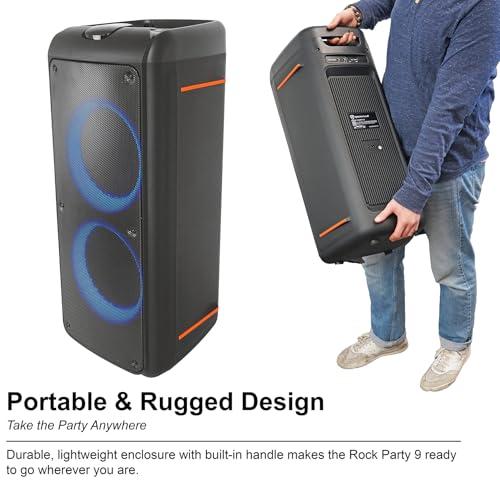
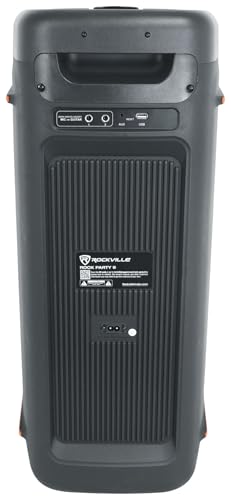
Here's where the design philosophies really diverge. The Rockville Rock Party 9 weighs 19.64 pounds and features a traditional carry handle design. While nearly 20 pounds isn't exactly lightweight, it's manageable for one person to carry reasonable distances. The polypropylene construction strikes a balance between durability and weight, though it lacks any weather resistance—a significant limitation for beach or poolside use.
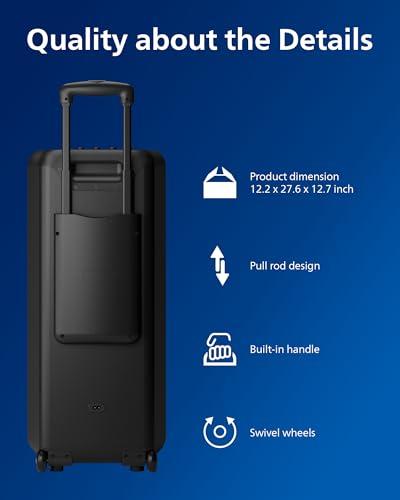
The Philips TAX5206 takes a different approach with its trolley design, incorporating wheels and an extendable handle like wheeled luggage. At 23.2 pounds, it's heavier than the Rockville, but the wheels make it much easier to transport across smooth surfaces. This design screams "semi-portable"—perfect for moving between rooms or from car to patio, but less ideal for beach trips or camping where you might encounter sand, grass, or uneven terrain.
The height difference is also worth noting. The Philips stands about 27.6 inches tall, making it a substantial presence that works well as a party centerpiece but may be awkward in smaller spaces. The Rockville has similar height but a more compact overall footprint.
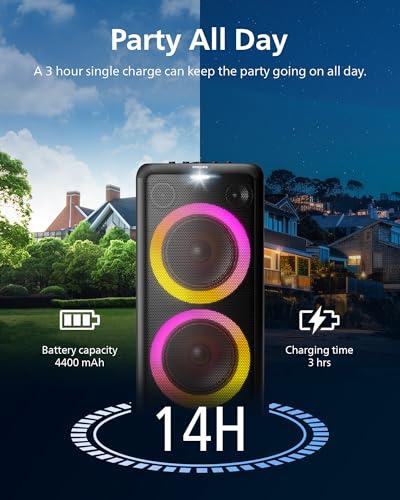
Battery performance reveals another fundamental difference in design priorities. The Philips TAX5206 delivers an impressive 14 hours of playback from its 4400mAh lithium-ion battery, with a reasonable 3-hour charging time. This marathon performance makes it ideal for all-day events, wedding receptions, or any situation where you can't guarantee access to power outlets.
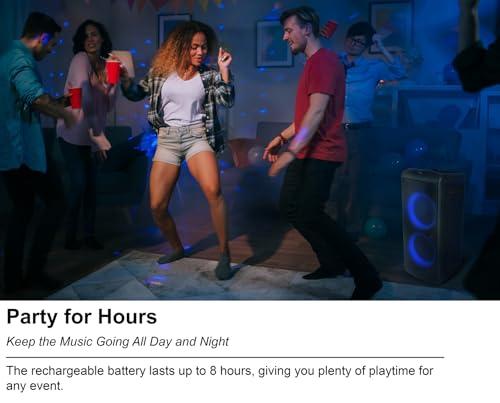
The Rockville Rock Party 9 offers more variable performance: 6-8 hours at moderate volume (25%), dropping to just 2-3 hours at maximum output. This reflects the reality of its higher power consumption—all that extra volume capability comes at an energy cost. For many users, this shorter runtime is acceptable given the speaker's superior portability and the likelihood that most parties don't run at maximum volume continuously.
Interestingly, the Philips includes power bank functionality, allowing you to charge smartphones and tablets from its internal battery. With a 5V/1A output, it won't charge devices quickly by modern standards, but it's a thoughtful addition for extended outdoor use where device battery anxiety is real.
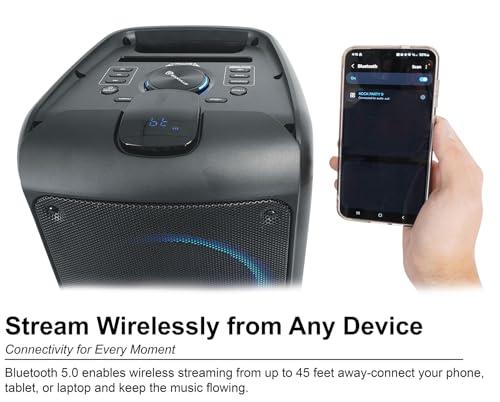
Both speakers leverage Bluetooth 5.0, but their implementation differs significantly. The Rockville achieves an impressive 45-foot wireless range, substantially better than the Philips' 33-foot range. In practice, this means you can leave your phone inside while the Rockville plays music on the deck, or position the speaker farther from the crowd without losing connection stability.
The Rockville also supports wireless linking, allowing you to connect multiple units for larger spaces or stereo separation. This feature transforms a single speaker into the foundation of a scalable sound system—particularly valuable for users who might want to upgrade their setup over time.
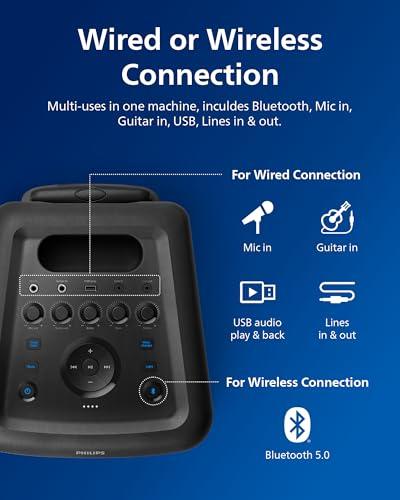
For wired connectivity, both offer comprehensive options. The Philips TAX5206 includes line-out capability, letting you daisy-chain additional speakers or connect to a larger sound system. This makes it more suitable for semi-permanent installations or events where you need to integrate with existing audio equipment.
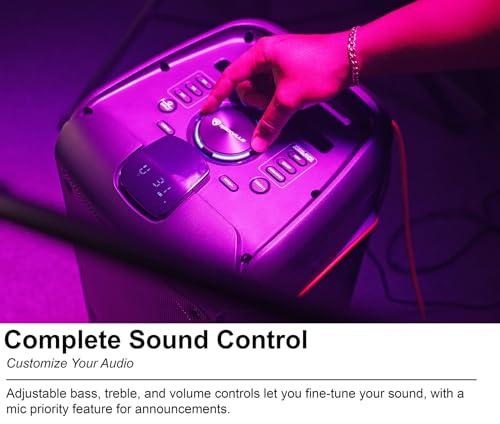
Both speakers embrace their party credentials with extensive karaoke functionality, but their approaches differ in sophistication. The Rockville Rock Party 9 focuses on fun and accessibility, offering auto-tune effects, voice changing, and a mic priority function that automatically lowers music volume when someone speaks into the microphone. This last feature is incredibly practical for making announcements or transitioning between songs and vocals.
The Philips TAX5206 provides more comprehensive karaoke processing with dedicated echo control, vocal fader, and multiple voice effects. The rotary control interface gives you tactile adjustment of these parameters without menu diving—important when you're trying to make quick adjustments during a performance.
Both speakers include dual microphone inputs and guitar connectivity, but the Philips provides more detailed control over each input with individual volume and effect settings. For serious karaoke enthusiasts or musicians who want to perform live, this level of control matters.
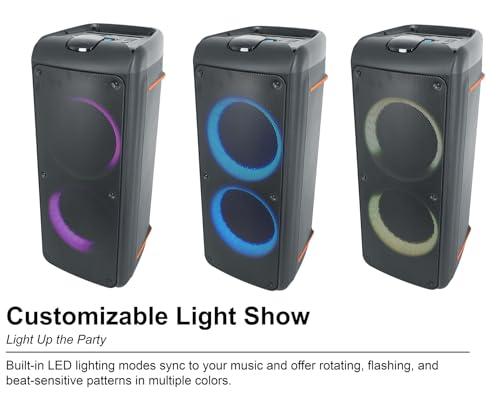
Modern party speakers aren't just about audio—they're entertainment systems that engage multiple senses. The Rockville Rock Party 9 features LED lights around its woofers with multiple customizable modes including rotating, flashing, and beat-syncing effects. Users consistently praise these lights as particularly impressive, with the spectrum analyzer functionality creating dynamic displays that pulse with the music's rhythm.
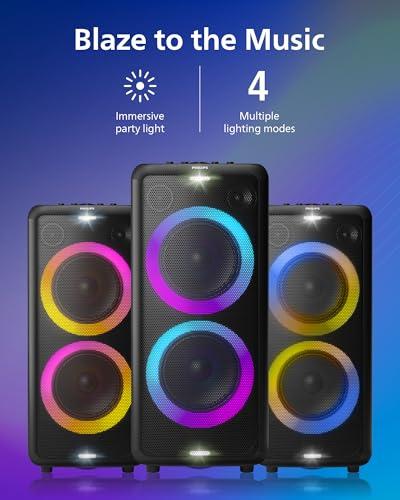
The Philips TAX5206 incorporates a ring of colored lights with four distinct modes plus strobe functionality. While effective, the lighting system receives less enthusiastic feedback compared to the Rockville's more dynamic display. For users who prioritize visual impact alongside audio performance, this difference might influence the decision.
While neither speaker is designed specifically for home theater use, they both offer potential applications in casual entertainment setups. The Philips TAX5206 makes a stronger case here thanks to its line-out connectivity and more balanced audio signature. You could theoretically use it as a powered subwoofer supplement to existing TV speakers, though dedicated home theater equipment would be more appropriate for serious applications.
The Rockville Rock Party 9 works better for gaming or casual movie watching where you want maximum impact over refined accuracy. Its powerful bass response enhances action sequences and video game audio, though dialog clarity isn't its strength.
At the time of writing, both speakers occupy the mid-range party speaker market, typically retailing between $200-300 depending on sales and availability. The Rockville generally commands a lower price point while offering higher power output, making it exceptional value for users prioritizing maximum bang for their buck—literally.
The Philips positions itself as a premium option within this category, with the higher price justified by extended battery life, comprehensive karaoke features, and more refined audio balance. Whether this premium is worthwhile depends entirely on your specific needs and usage patterns.
Since their early 2020s launch, both speakers remain competitive despite rapid advancement in portable audio technology. The Bluetooth 5.0 implementation holds up well against newer standards, and their power outputs remain impressive compared to current alternatives. However, both lack newer features like voice assistant integration or smartphone app control, which some users now expect.
The battery technologies used in both speakers—lithium-ion with reasonable charging times—remain current and effective. Neither has adopted newer battery chemistries or fast-charging standards, but their performance remains adequate for their intended use cases.
The Rockville Rock Party 9 excels for users who prioritize maximum portability and output. If you frequently transport your speaker to different locations—beaches, campsites, friends' houses—the lighter weight and superior Bluetooth range make life easier. The impressive LED light show and powerful bass response create an exciting atmosphere that works particularly well for younger crowds and high-energy music genres.
Choose the Rockville if you need a speaker that can fill large outdoor spaces, want the most impressive light show, or prioritize true portability over extended runtime. It's also the better choice for users on tighter budgets who don't want to sacrifice power output.
The Philips TAX5206 suits users who need extended operation time and more sophisticated audio control. The 14-hour battery life makes it ideal for wedding receptions, corporate events, or any situation where reliability trumps maximum impact. The trolley design works well for users who move their speaker occasionally but don't need true grab-and-go portability.
Choose the Philips if you host long events, need comprehensive karaoke functionality, or prefer more balanced audio reproduction. It's also better for users who want power bank capability or need line-out connectivity for system expansion.
Neither speaker offers weather resistance, which limits their appeal for pool parties or beach use where splashing is likely. For those scenarios, you'd need to look at ruggedized alternatives, though you'll typically sacrifice some audio performance for that protection.
The decision ultimately comes down to your primary use case: maximum portable impact (Rockville) or extended operation with comprehensive features (Philips). Both deliver on their respective promises, but they're designed for different types of party-goers and different kinds of events.
| Rockville Rock Party 9 | Philips TAX5206 |
|---|---|
| Peak Power Output - Higher numbers mean louder maximum volume for large spaces | |
| 1000W peak / 250W RMS (extremely loud for outdoor events) | 160W peak / 80W RMS (adequate for most indoor/covered outdoor use) |
| Driver Configuration - Larger drivers generally produce better bass response | |
| Dual 8" woofers + dual 2" tweeters (bass-focused setup) | Dual 8" woofers + dual 2.5" tweeters (more balanced audio) |
| Battery Life - Critical for all-day events without power access | |
| 6-8 hours at moderate volume, 2-3 hours at max volume | 14 hours continuous playback (best-in-class endurance) |
| Weight and Portability - Affects how easily you can transport the speaker | |
| 19.64 lbs with carry handle (true grab-and-go portability) | 23.2 lbs with wheels and trolley handle (semi-portable design) |
| Bluetooth Range - Determines how far your device can be from the speaker | |
| 45 feet (excellent for outdoor use and speaker placement flexibility) | 33 feet (10 meters, adequate for most scenarios) |
| Frequency Response - Shows the range of bass and treble the speaker can produce | |
| 50Hz - 20kHz (strong low-end for dance music) | 40Hz - 20kHz (slightly deeper bass extension) |
| Karaoke Features - Important for vocal performance and entertainment | |
| Auto-tune, voice changing, mic priority, dual mic inputs | Echo control, vocal fader, voice changer, comprehensive karaoke processing |
| LED Lighting Effects - Adds visual excitement to parties | |
| Customizable modes around woofers (rotating, flashing, beat-syncing) | Ring of colored lights with 4 modes plus strobe (simpler but effective) |
| Additional Connectivity - Extra features beyond basic Bluetooth | |
| USB, TF card, AUX input, wireless speaker linking | USB, 3.5mm line-in/out, power bank functionality (5V/1A) |
| Charging Time - How long it takes to fully recharge the battery | |
| Not specified (Li-Ion battery with global voltage compatibility) | 3 hours charging time (4400 mAh battery capacity) |
| Audio Balance - How the speaker prioritizes different frequency ranges | |
| Bass-heavy tuning optimized for impact and outdoor use | More balanced frequency response with lower distortion (≤10% THD) |
The Rockville Rock Party 9 is significantly louder with 1000W peak power and 250W RMS output compared to the Philips TAX5206 which delivers 160W peak and 80W RMS. For large outdoor gatherings or spaces where you need maximum volume, the Rockville provides substantially more sound pressure and can fill larger areas more effectively.
The Philips TAX5206 offers superior battery life with 14 hours of continuous playback, while the Rockville Rock Party 9 provides 6-8 hours at moderate volume or 2-3 hours at maximum volume. If you need all-day performance for events like weddings or festivals, the Philips is the clear winner for extended operation.
The Rockville Rock Party 9 is more truly portable at 19.64 pounds with a carry handle design, making it easier for one person to transport to beaches or camping trips. The Philips TAX5206 weighs 23.2 pounds but features a trolley design with wheels, making it better for smooth surfaces but less suitable for rough terrain or outdoor adventures.
Both speakers feature dual 8-inch woofers, but the Rockville Rock Party 9 delivers more impactful bass with its ported enclosure design that's specifically tuned for maximum low-end impact. The Philips TAX5206 offers more balanced bass that extends slightly lower (40Hz vs 50Hz) but with less aggressive tuning, making the Rockville better for bass-heavy music genres.
Both speakers offer comprehensive karaoke functionality, but they excel in different areas. The Rockville Rock Party 9 includes auto-tune, voice changing effects, and mic priority that automatically lowers music volume when speaking. The Philips TAX5206 provides more professional karaoke processing with dedicated echo control, vocal fader, and rotary controls for real-time adjustments during performances.
The Rockville Rock Party 9 offers superior Bluetooth range at 45 feet compared to the Philips TAX5206 at 33 feet (10 meters). This extended range is particularly beneficial for outdoor use where you might want to position the speaker away from the crowd or control music from inside while the Rockville plays outside on a deck or patio.
The Rockville Rock Party 9 features more dynamic and customizable LED lighting with modes including rotating, flashing, and beat-syncing effects around the woofers that users consistently praise. The Philips TAX5206 includes a ring of colored lights with four modes plus strobe functionality, but reviews suggest the Rockville's lighting system is more impressive and engaging for party atmospheres.
While neither speaker is designed specifically for home theater use, the Philips TAX5206 makes a better case with its line-out connectivity and more balanced audio signature. The Rockville Rock Party 9 works better for gaming or casual movie watching where maximum bass impact is desired over refined dialog clarity, though dedicated home theater equipment would be more appropriate for serious applications.
The Rockville Rock Party 9 typically offers better value for users prioritizing maximum power output and portability, delivering significantly higher volume capabilities at a generally lower price point. The Philips TAX5206 justifies its premium positioning with extended battery life, comprehensive karaoke features, and more balanced audio, making it better value for users needing all-day operation and professional features.
Both speakers work for outdoor events, but with different strengths. The Rockville Rock Party 9 excels for true outdoor portability with its lighter weight, superior Bluetooth range, and higher output power that can compete with ambient noise. The Philips TAX5206 works better for covered outdoor areas or patios where its longer battery life and trolley design are advantageous, though neither speaker offers weather resistance.
The Philips TAX5206 has a specified 3-hour charging time and includes power bank functionality to charge other devices. It also features a larger 4400mAh battery capacity. The Rockville Rock Party 9 offers global voltage compatibility (100/240V) for international use but doesn't specify charging times. The Philips provides more comprehensive power management features overall.
The Rockville Rock Party 9 supports wireless speaker linking, allowing you to connect multiple units for stereo separation or increased coverage in larger spaces. The Philips TAX5206 offers line-out connectivity for daisy-chaining to additional speakers or integrating with existing sound systems. The Rockville's wireless linking is more convenient for portable setups, while the Philips works better for semi-permanent installations.
We've done our best to create useful and informative comparisons to help you decide what product to buy. Our research uses advanced automated methods to create this comparison and perfection is not possible - please contact us for corrections or questions. These are the sites we've researched in the creation of this article: youtube.com - wiki.ezvid.com - youtube.com - youtube.com - walmart.com - soundcore.com - youtube.com - rtings.com - rockvilleaudio.com - youtube.com - youtube.com - youtube.com - review-rating.com - manuals.plus - support.rockvilleaudio.com - reverb.com - rockvilleaudio.com - privacy.we-conect.com - audiosavings.com - youtube.com - youtube.com - youtube.com - documents.philips.com - cutetechgadgets.com - odpbusiness.com - usa.philips.com - hitechers.com - youtube.com - documents.philips.com - youtube.com - walmart.com - walmart.com - device.report - flipkart.com - brightstarcomp.com - youtube.com - philips.co.in - documents.philips.com - fullspecs.net - documents.philips.com

Privacy Policy
Terms and Conditions - Affiliate Policy
Home Security
© Copyright 2008-2026.
11816 Inwood Rd #1211, Dallas, TX 75244