



The true wireless earbud market has exploded since Apple removed the headphone jack in 2016, transforming from a luxury novelty into an essential accessory. Today's earbuds pack sophisticated technology into tiny packages, offering everything from noise cancellation to high-resolution audio. But with options ranging from under $20 to over $300, choosing the right pair can feel overwhelming.
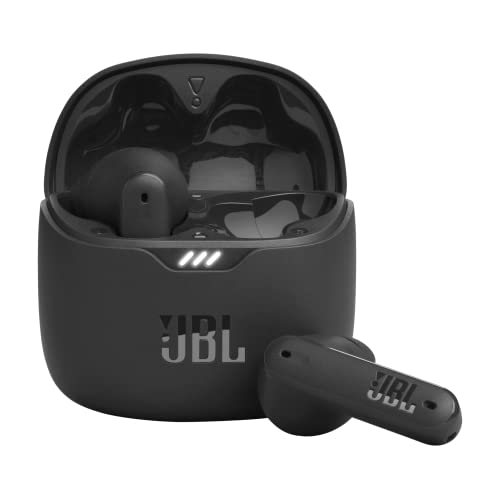
We're comparing two very different approaches to wireless audio: the JBL Tune Flex, a mid-range option that launched around 2022 with premium features, and the JLab Go Pop+, an ultra-budget model that proves you don't need to spend a fortune for wireless freedom. At the time of writing, these earbuds represent roughly a five-fold price difference, making this comparison particularly interesting for understanding what your money actually buys you.
Before diving into specifics, let's establish what separates good earbuds from mediocre ones. Driver size is fundamental – these are the tiny speakers inside each earbud. Larger drivers generally move more air, producing fuller bass and clearer sound. Active Noise Cancellation (ANC) uses microphones and processing to counteract external noise, while passive isolation relies on physical blocking through ear tips.
Frequency response describes how well earbuds reproduce different sound frequencies, measured in Hertz (Hz). Human hearing spans roughly 20 Hz to 20,000 Hz, from deep bass to crisp treble. Impedance, measured in ohms, indicates how much power earbuds need – lower impedance generally means they're easier for phones to drive loudly.
The most critical factors in our experience are sound quality, noise handling capabilities, battery life, and comfort during extended use. Everything else, while nice to have, becomes secondary if these fundamentals aren't solid.
The JBL Tune Flex immediately establishes its audio superiority through 12mm dynamic drivers – double the size of the JLab Go Pop+'s 6mm units. This isn't just marketing; larger drivers physically move more air, creating the foundation for better bass response and overall fuller sound.
JBL has tuned the Tune Flex for what they call "Pure Bass Sound," which our research suggests translates to excellent bass accuracy with intentional overemphasis for extra punch. This approach works particularly well for hip-hop, EDM, and pop music where strong bass drives the experience. The mids demonstrate excellent accuracy, meaning vocals and instruments sound clear and detailed, though some users report slight harshness in the upper-mid frequencies during tracks like Adele's "Someone Like You."
The JLab Go Pop+, working with much smaller drivers, delivers surprisingly clear sound for its ultra-budget positioning. However, the sound signature tends toward what reviewers describe as "hard-edged" – lacking the warmth and natural dynamics that make music engaging. With complex musical arrangements, the sound becomes thin and compressed, losing the subtle details that separate live instruments from digital approximations.
In practical terms, this means the JBL Tune Flex will make your music sound more like the artists intended, with proper instrument separation and impactful bass. The JLab Go Pop+ works fine for podcasts, audiobooks, and simple pop tracks, but struggles with jazz, classical, or any music with layered complexity.
For home theater use, the JBL Tune Flex proves more capable thanks to its fuller frequency response and better dynamic range. Movie dialogue comes through clearly, and action sequences benefit from the stronger bass response. The JLab Go Pop+ handles dialogue adequately but lacks the audio depth that makes movies truly immersive.
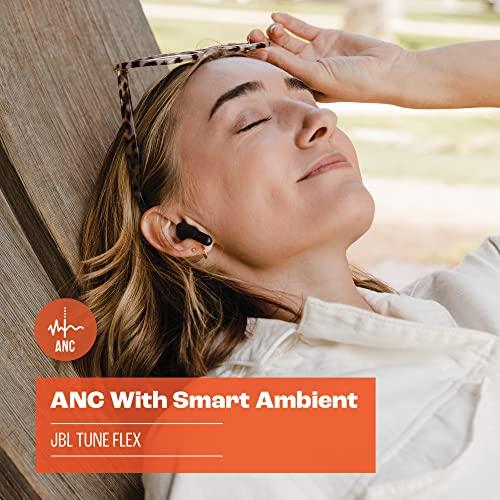
This category represents the starkest difference between our contenders. The JBL Tune Flex includes genuine active noise cancellation using two dedicated microphones per earbud. This system continuously monitors external noise and generates inverse sound waves to cancel it out – think of it as audio interference that eliminates unwanted sounds.
However, the JBL Tune Flex's ANC performs best with constant, low-frequency noise like air conditioning, airplane engines, or train rumble. It struggles more with intermittent sounds like office chatter or street noise, which is typical for earbuds in this price range. The technology has improved significantly since 2020, when ANC was largely reserved for premium headphones, but it still can't match the isolation of flagship models from Bose or Sony.
The system includes Smart Ambient modes: Ambient Aware lets you hear your surroundings for safety during runs or commutes, while TalkThru lowers your music volume and enhances speech frequencies for quick conversations. These modes work through the same microphone system, essentially reversing the noise cancellation process.
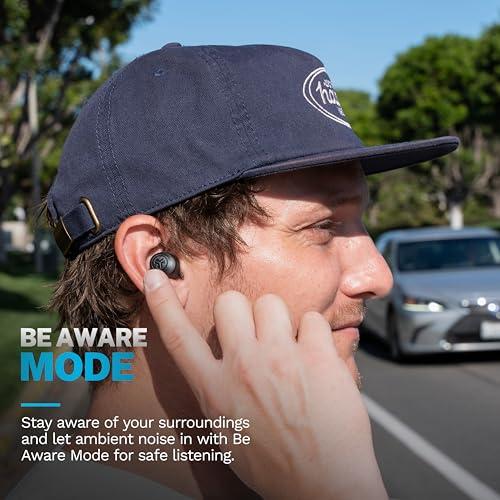
The JLab Go Pop+ offers no active noise cancellation whatsoever. Instead, it relies purely on passive isolation – how well the ear tips physically block sound. It does include a "Be Aware" mode that deliberately lets outside sounds in, but this is transparency rather than cancellation technology.
For commuters, gym users, or anyone in consistently noisy environments, this difference is massive. The JBL Tune Flex can transform a noisy subway ride into a peaceful listening session, while the JLab Go Pop+ leaves you competing with environmental noise.
Here's where things get interesting. Despite its additional power-hungry features, the JBL Tune Flex delivers competitive battery life: 8 hours per charge with ANC disabled, or 6 hours with it engaged. The charging case adds another 24 hours (ANC off) or 18 hours (ANC on), reaching 32 and 24 hours total respectively.
The JLab Go Pop+ edges ahead with 9 hours per charge and 35+ total hours with its case. This advantage comes from simpler electronics – no ANC processing means lower power consumption. Both support quick charging, though the JBL is more generous: 10 minutes provides 2 hours of playback versus 1 hour for the JLab.
In practical use, both easily last a full day. The JLab's slight edge means less frequent charging, but the JBL's superior quick-charge capability means shorter interruptions when you do need power.
Battery technology has improved dramatically since 2019, when most wireless earbuds struggled to reach 5 hours per charge. Modern lithium polymer cells and more efficient Bluetooth chips have pushed endurance well beyond all-day use for most users.
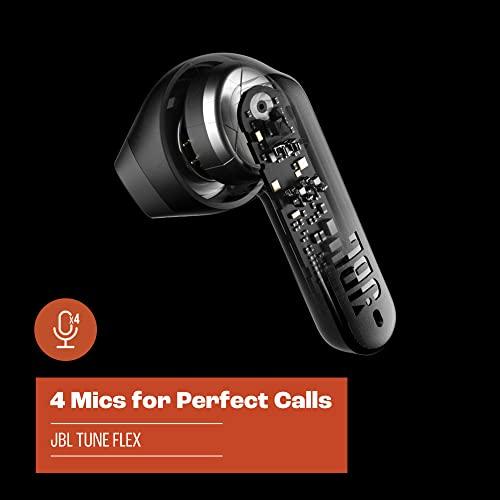
The JBL Tune Flex employs either 4 or 6 total microphones (sources vary) strategically positioned for optimal voice pickup. This array enables beamforming – a technique that focuses on your voice while suppressing background noise. The VoiceAware feature lets you control how much of your own voice you hear during calls, preventing the disconnected feeling common with noise cancellation.
Environmental noise cancellation works alongside the microphone array to separate your voice from moderate office or street noise. While not perfect – very loud environments like subway platforms can still cause issues – it handles typical calling scenarios well.
The JLab Go Pop+ uses just 2 MEMS (Micro-Electro-Mechanical Systems) microphones with basic environmental noise cancellation. Reviews consistently describe call quality as poor, with voices sounding robotic or unnatural. The noise handling improves slightly after adjustment periods, but remains limited compared to more sophisticated systems.
For remote work, business calls, or frequent phone use, this difference matters enormously. The JBL Tune Flex approaches the clarity of dedicated headsets, while the JLab Go Pop+ sounds like what it is – a budget compromise.
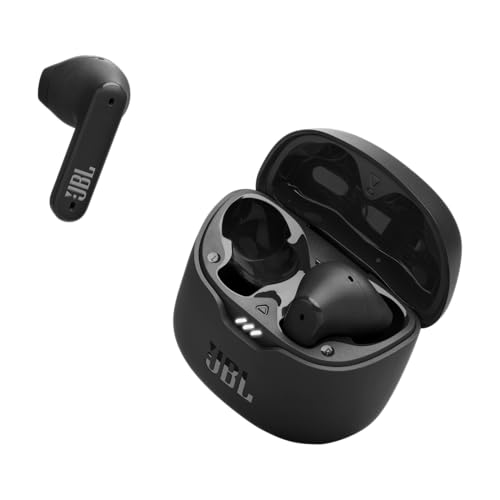
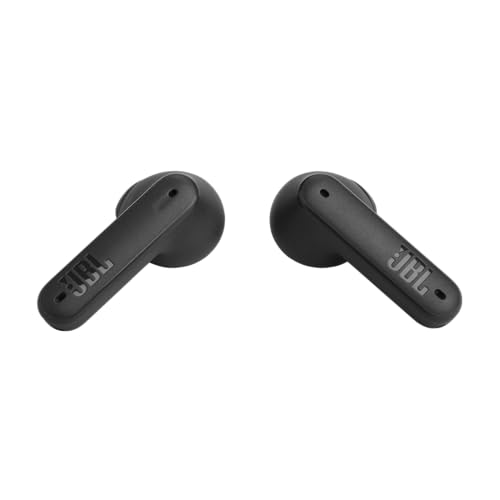
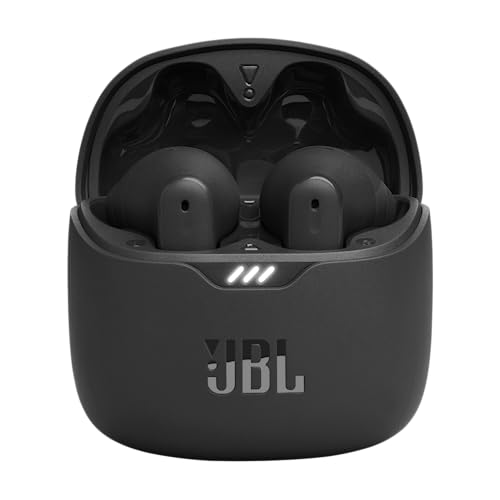
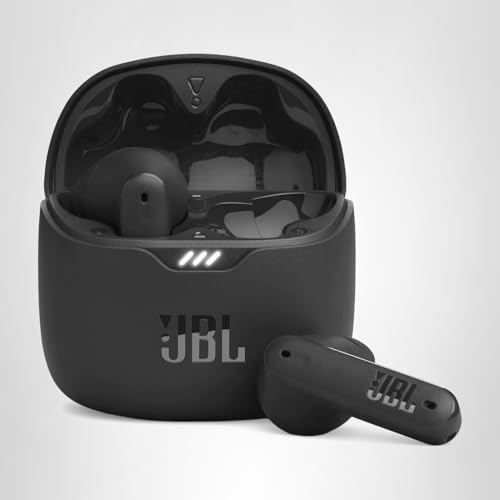
The JBL Tune Flex lives up to its name with genuinely flexible design options. The "open" ear tips rest outside your ear canal without sealing, allowing ambient sound while delivering audio directly. This works well for office environments or outdoor activities where awareness matters. Three sizes of sealing silicone tips provide traditional isolation when needed.
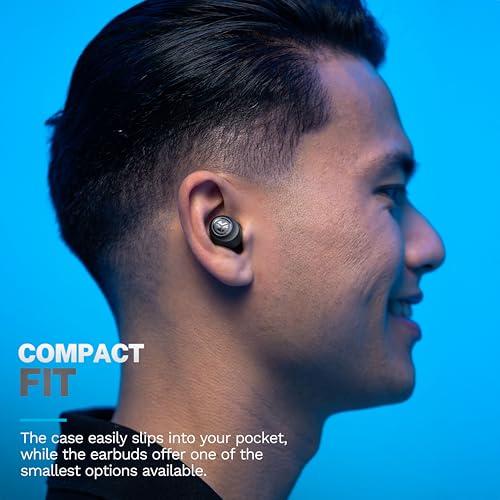
At 9.6 grams total (4.8g per earbud), the JBL feels substantial but not heavy. The ergonomic design accommodates longer listening sessions, though individual ear shape varies significantly in comfort preferences.
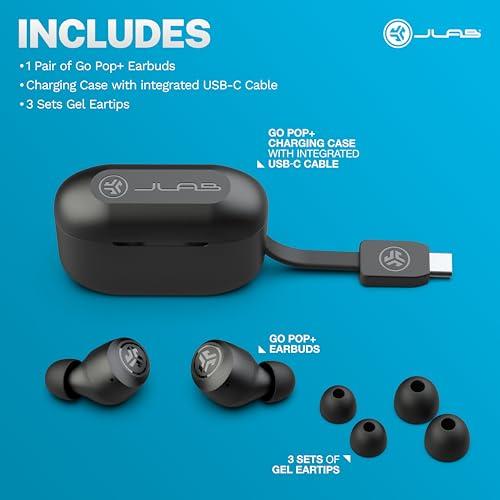
The JLab Go Pop+ takes a simpler approach at just 7.8 grams total. Its compact design prioritizes portability and comes in 14 different color finishes – unusual variety for any price point. Three gel tip sizes help optimize fit, though the options are more limited than the JBL's dual approach.
Both carry IPX4 ratings, meaning they resist sweat and light rain but shouldn't be submerged. This standard has become baseline for active use since around 2021, when manufacturers realized fitness applications drive significant sales.
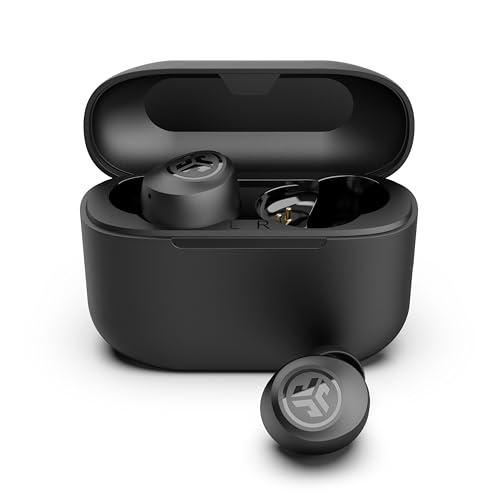
The JLab Go Pop+ includes an integrated USB-C cable built into the charging case – a clever design touch that eliminates the need to carry separate cables. This kind of thoughtful engineering shows what's possible even at ultra-budget price points.
Modern earbuds increasingly depend on companion apps for full functionality, and both models deliver here, though at different levels of sophistication.
The JBL Headphones App provides comprehensive control over your listening experience. The 10-band equalizer lets you precisely tune frequency response – boost bass for electronic music, enhance mids for podcasts, or create custom profiles for different content types. Preset options (Jazz, Vocal, Bass) offer quick starting points for common preferences.
The ANC controls deserve special mention, offering 7 different intensity levels rather than simple on/off switching. This granular control helps optimize noise cancellation for different environments – light filtering for offices, maximum suppression for flights, or custom levels for specific situations.
Additional features include "Find My Buds" location tracking, battery level indicators for each earbud, and complete touch control customization. The app has evolved significantly since JBL's earlier wireless models, incorporating user feedback and competitive features.
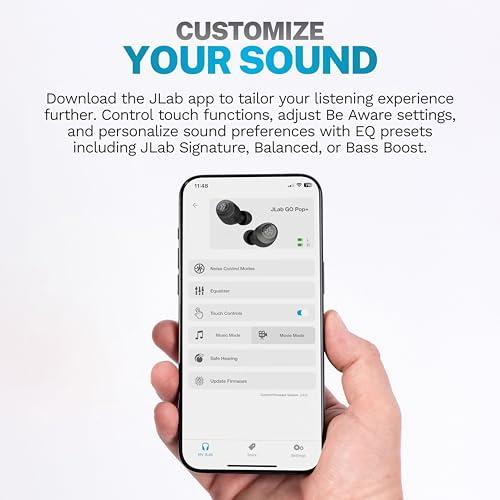
The JLab App delivers surprising functionality for the price point. The 10-band equalizer matches the JBL's precision, while custom touch controls let you reassign gestures to preferred functions. Music/Movie mode switching optimizes latency – under 200ms for video content to prevent audio-visual sync issues, versus standard >200ms for music priority.
Google Fast Pair integration (Android) and Safe Hearing monitoring add modern conveniences typically reserved for higher-end products. The app represents excellent value engineering – including sophisticated software features while controlling hardware costs.
The JBL Tune Flex shines in scenarios demanding audio quality and noise control. Commuters benefit enormously from ANC during transit, while the flexible fit options adapt to different daily situations. Remote workers appreciate the superior call quality, and music enthusiasts notice the fuller, more accurate sound reproduction.
For home theater applications, the JBL's dynamic range and frequency response create more engaging movie experiences. The ANC also helps isolate you from household noise during critical dialogue scenes.
The JLab Go Pop+ excels as an entry-level solution or secondary pair. Students on tight budgets get essential wireless functionality without compromise on battery life. The compact design and color options appeal to younger users, while the integrated charging cable reduces travel complexity.
As workout earbuds, the JLab's lighter weight and lower cost reduce concern about damage or loss. The basic sound quality handles motivational playlists adequately, and the longer battery life means fewer charging interruptions.
Choose the JBL Tune Flex if you value audio quality, need noise cancellation, make frequent calls, or want flexibility in wearing styles. The premium features justify the higher cost for users who prioritize listening experience and understand the technology differences.
The JLab Go Pop+ makes sense for budget-conscious buyers, casual listeners, or anyone needing basic wireless functionality without premium features. It's particularly appealing as a first pair of wireless earbuds or backup option for more expensive primaries.
The five-fold price difference reflects genuine technology gaps rather than marketing inflation. Active noise cancellation, larger drivers, and sophisticated microphone arrays cost money to implement properly. However, the JLab proves that acceptable wireless audio doesn't require premium pricing.
Both products succeed within their intended markets. The question isn't which is "better" in absolute terms, but which better serves your specific needs, budget, and priorities. In our evaluation, the JBL Tune Flex delivers substantially better performance that justifies its higher cost for serious listeners, while the JLab Go Pop+ offers remarkable value for basic wireless audio needs.
| JBL Tune Flex | JLab Go Pop+ |
|---|---|
| Driver Size - Larger drivers typically produce fuller bass and better overall sound quality | |
| 12mm dynamic drivers | 6mm dynamic drivers |
| Active Noise Cancellation - Essential for blocking consistent background noise like planes or trains | |
| Yes, with 2 dedicated microphones and Smart Ambient modes | No ANC, passive isolation only |
| Battery Life (Single Charge) - How long you can listen before needing the case | |
| 8 hours (ANC off) / 6 hours (ANC on) | 9 hours |
| Total Battery Life - Critical for travel and all-day use without wall charging | |
| 32 hours (ANC off) / 24 hours (ANC on) | 35+ hours |
| Call Quality Microphones - More mics generally mean clearer voice calls | |
| 4-6 total microphones with beamforming and VoiceAware | 2 MEMS microphones with basic noise cancellation |
| Water Resistance - Protection level for workouts and weather | |
| IPX4 (sweat and splash resistant) | IPX4 (sweat and splash resistant) |
| Fit Options - Flexibility for different ear shapes and use cases | |
| Open-fit tips + 3 sizes sealing tips for dual wearing styles | 3 sizes gel tips for traditional sealed fit |
| Weight - Lighter earbuds are more comfortable for extended wear | |
| 9.6g total (4.8g per earbud) | 7.8g total |
| App Features - Modern earbuds rely heavily on apps for customization | |
| JBL Headphones App: 10-band EQ, ANC intensity control, presets, Find My Buds | JLab App: 10-band EQ, custom controls, Music/Movie modes, Google Fast Pair |
| Bluetooth & Connectivity - Newer versions offer better stability and features | |
| Bluetooth 5.2-5.3 with multi-point connection | Bluetooth 5.3 with Google Fast Pair |
| Quick Charging - How much playback time you get from a short charge | |
| 10 minutes = 2 hours playback | 10 minutes = 1 hour playback |
| Unique Design Features - Special capabilities that set each model apart | |
| Flexible open/sealed fit modes, comprehensive ANC controls | 14 color options, integrated USB-C cable in case |
The JBL Tune Flex delivers significantly better sound quality thanks to its 12mm dynamic drivers compared to the JLab Go Pop+'s 6mm drivers. The larger drivers in the JBL Tune Flex produce fuller bass, clearer mids, and better overall audio reproduction. The JLab Go Pop+ provides decent sound for basic listening but struggles with complex music and lacks the warmth and dynamics of the JBL.
No, only the JBL Tune Flex features active noise cancellation with dedicated microphones and Smart Ambient modes. The JLab Go Pop+ relies solely on passive noise isolation through ear tip fit. This makes the JBL Tune Flex much better for noisy environments like commuting or offices, while the JLab Go Pop+ offers a "Be Aware" transparency mode instead.
The JLab Go Pop+ edges out the JBL Tune Flex with 9 hours per charge versus 8 hours (ANC off) or 6 hours (ANC on). However, both provide excellent all-day battery life. The JLab Go Pop+ also offers 35+ total hours with its case, compared to 32 hours (ANC off) for the JBL Tune Flex.
The JBL Tune Flex excels at call quality with 4-6 microphones, beamforming technology, and VoiceAware features that ensure clear voice transmission. The JLab Go Pop+ uses only 2 basic microphones and reviews consistently report poor call quality with robotic-sounding voices. For frequent phone use, the JBL Tune Flex is the clear winner.
Both earbuds offer comfortable fits, but the JBL Tune Flex provides more flexibility with both open-fit and sealing ear tip options in multiple sizes. The JLab Go Pop+ is slightly lighter at 7.8g total versus 9.6g for the JBL, but offers only traditional sealing tips in three sizes. Both feature IPX4 water resistance for workout use.
The JBL Tune Flex performs better for home theater use thanks to its larger drivers, fuller frequency response, and better dynamic range. Movie dialogue comes through clearly and action sequences benefit from stronger bass. The JLab Go Pop+ handles basic movie watching adequately but lacks the audio depth for truly immersive experiences.
This depends on your budget and needs. The JLab Go Pop+ offers exceptional value for ultra-budget buyers, providing basic wireless functionality with surprisingly long battery life. The JBL Tune Flex justifies its higher cost with active noise cancellation, superior audio quality, and professional-grade call features that the JLab Go Pop+ simply cannot match.
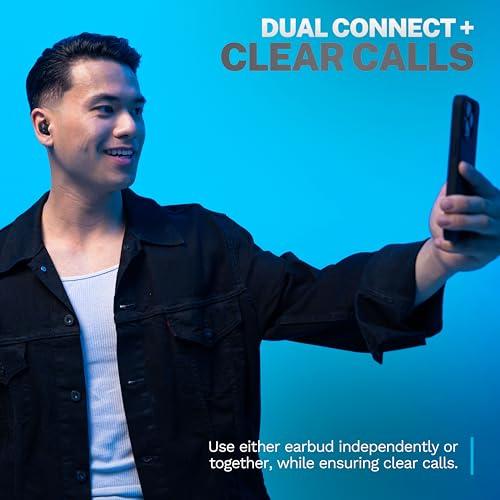
Yes, both the JBL Tune Flex and JLab Go Pop+ support single earbud use through dual connect technology. You can use either the left or right earbud independently for calls or music, providing flexibility for situations where you need to hear your surroundings or want to preserve battery life.
Both earbuds offer surprisingly robust app support. The JBL Headphones App provides 10-band EQ, ANC intensity controls, presets, and Find My Buds features. The JLab App matches with 10-band EQ, custom touch controls, and Music/Movie mode switching. The JBL app is more sophisticated due to ANC controls, while the JLab app impresses for its price point.
Both earbuds work well for fitness with IPX4 water resistance protecting against sweat and splashes. The JLab Go Pop+ is lighter and less expensive, reducing concern about damage. The JBL Tune Flex offers better sound quality and ANC for noisy gyms, plus the open-fit option for outdoor running where environmental awareness matters.
The JBL Tune Flex offers superior quick charging with 10 minutes providing 2 hours of playback, compared to 1 hour for the JLab Go Pop+. However, the JLab features a clever integrated USB-C cable in the charging case, eliminating the need to carry separate cables. Both fully charge in under 2 hours.
Choose the JLab Go Pop+ if you want basic wireless functionality at an ultra-low price point, prioritize maximum battery life, or need a secondary pair. Choose the JBL Tune Flex if you value audio quality, need active noise cancellation, make frequent calls, or want flexible wearing options. The technology gap between these earbuds justifies the price difference for serious listeners.
We've done our best to create useful and informative comparisons to help you decide what product to buy. Our research uses advanced automated methods to create this comparison and perfection is not possible - please contact us for corrections or questions. These are the sites we've researched in the creation of this article: rtings.com - hometechnologyreview.com - youtube.com - bestbuy.com - soundguys.com - bestbuy.com - crutchfield.com - bgr.com - robbsutton.com - majorhifi.com - versus.com - crutchfield.com - youtube.com - versus.com - jbl.com - global.jbl.com - pcrichard.com - musicarts.com - scribd.com - global.jbl.com - robot-advance.com - gzhls.at - bestbuy.com - att.com - ro.harmanaudio.com - whathifi.com - jlab.com - soundguys.com - avrilmarieaalund.com - jlab.com - bestbuy.com - jlab.com - shop.ncsu.edu - jlab.com - techgearlab.com - youtube.com - manuals.plus - jlab.com - jlab.com - versus.com - help.jlab.com - bestbuy.com

Privacy Policy
Terms and Conditions - Affiliate Policy
Home Security
© Copyright 2008-2026.
11816 Inwood Rd #1211, Dallas, TX 75244