


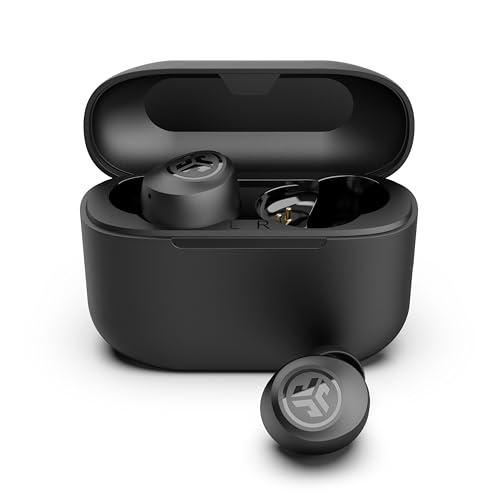




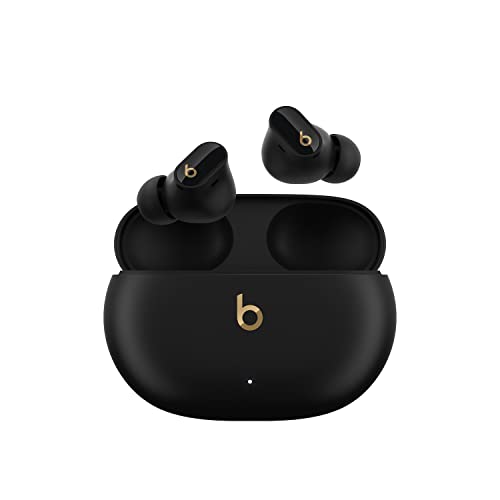

True wireless earbuds have completely transformed how we listen to music, take calls, and consume media. Gone are the days of untangling wires or dealing with cables that snag on everything. But with hundreds of options flooding the market, choosing the right pair can feel overwhelming. Today we're diving deep into two earbuds that represent opposite ends of the spectrum: the ultra-affordable JLab Go Pop+ and the feature-packed Beats Studio Buds Plus.
These aren't just different products—they represent fundamentally different philosophies about what wireless earbuds should be. One prioritizes getting essential features into as many hands as possible, while the other focuses on delivering premium performance regardless of cost. Understanding which approach suits your needs will save you from buyer's remorse and ensure you get the best value for your situation.
Before we compare these specific models, let's establish what makes earbuds truly great. At the most basic level, you need reliable Bluetooth connectivity, decent battery life, and sound that doesn't make your ears hurt. But beyond those basics, the features that matter most depend entirely on how you'll use them.
Audio quality remains the foundation—after all, these are primarily listening devices. This includes the overall sound signature (whether bass-heavy, balanced, or bright), clarity across different frequency ranges, and how well they handle complex musical passages without distortion.
Active Noise Cancellation (ANC) has become increasingly important as people use earbuds in noisier environments. ANC uses microphones to detect ambient sound and generates opposing sound waves to cancel it out—think of it as creating a bubble of quiet around your ears. This technology requires dedicated processing power and additional battery, which explains why budget options often skip it entirely.
Battery life involves two components: how long the earbuds themselves last on a charge, and how many additional charges the carrying case provides. Modern earbuds typically offer 6-9 hours per charge with cases providing 20-40 hours total. Quick charging—where 5-15 minutes of charging provides an hour or more of listening—has become essential for people with busy schedules.
Comfort and fit can make or break your experience. Poorly fitting earbuds fall out during exercise, create ear fatigue during long listening sessions, and compromise both sound quality and noise isolation. The best earbuds include multiple ear tip sizes and secure, lightweight designs.
Call quality has gained importance as remote work normalizes. This depends on microphone placement, noise reduction algorithms, and how well the earbuds isolate your voice from background noise.
Understanding these fundamentals helps explain why the JLab Go Pop+ and Beats Studio Buds Plus make such different design choices and why they succeed in completely different scenarios.
The JLab Go Pop+ launched in 2023 as JLab's answer to the "good enough" wireless earbud market. JLab built their reputation on delivering features typically found in expensive earbuds at prices that won't break anyone's budget. The Go Pop+ represents their latest thinking on how to maximize value while keeping costs extremely low.
The Beats Studio Buds Plus also arrived in 2023, but as an evolution of Beats' premium true wireless lineup. Following Apple's 2014 acquisition of Beats, the brand has maintained its bass-forward identity while integrating Apple's advanced audio processing and ecosystem features. The Studio Buds Plus specifically addressed criticisms of the original Studio Buds, improving noise cancellation and call quality while maintaining cross-platform compatibility with Android devices.
Both products benefit from 2023's mature Bluetooth 5.3 standard, which provides more reliable connections and better power efficiency compared to earlier versions. However, they implement this foundation very differently based on their target markets and price constraints.
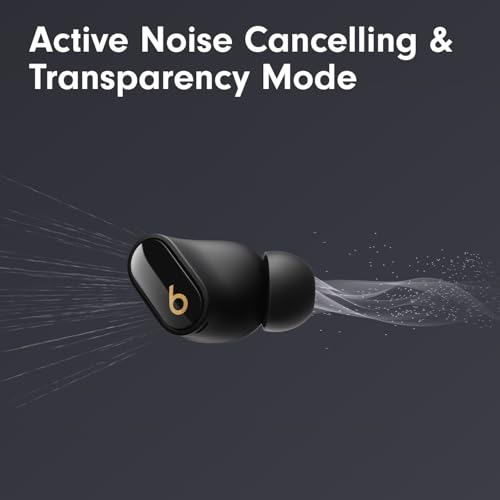
The most striking difference between these earbuds becomes apparent the moment you consider active noise cancellation. The Beats Studio Buds Plus builds its entire identity around this feature, using three microphones per earbud and dedicated processing to create what Beats claims is 1.6 times more effective noise cancellation than their previous generation.
ANC works by detecting ambient sound through external microphones, then generating opposing sound waves through the same drivers that play your music. Done well, this creates a remarkably quiet listening environment even on busy streets or in airplane cabins. The Beats Studio Buds Plus reportedly reduces ambient noise by about 80%, making them genuinely effective for commuters and anyone working in noisy environments.
The JLab Go Pop+, by contrast, relies entirely on passive noise isolation—the physical seal created by the ear tips blocking sound mechanically. While properly fitted ear tips can block significant noise, they cannot match the performance of active cancellation systems. JLab includes a "Be Aware" mode that intentionally lets ambient sound in for safety, but this represents the opposite approach from sophisticated transparency modes found in premium earbuds.
This fundamental difference cascades through every other aspect of the design. Premium ANC requires more powerful processors, additional microphones, and larger batteries, all of which increase cost and complexity. Budget earbuds like the JLab Go Pop+ avoid these components entirely, focusing resources on areas that provide more universal benefit.
Sound quality represents the most complex area of comparison because it involves both objective measurements and subjective preferences. The Beats Studio Buds Plus employs what Beats calls a "custom acoustic platform" with dual-layer transducers in each earbud. These specialized drivers aim to deliver cleaner bass response and lower distortion across the frequency spectrum.
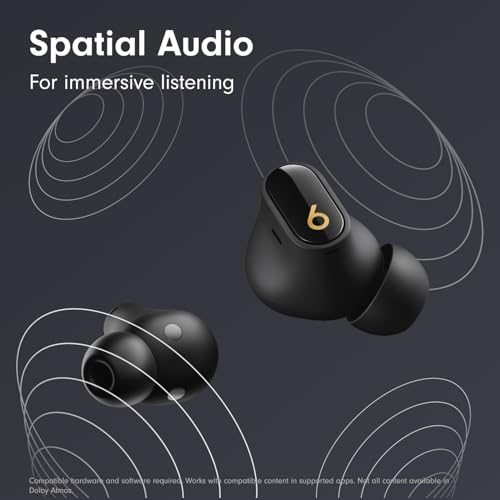
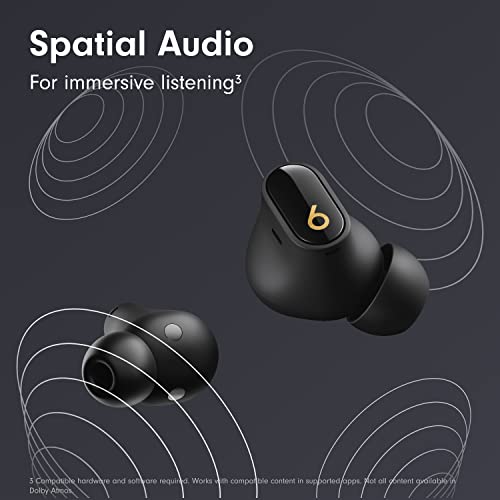
Based on professional measurements and user feedback, the Beats Studio Buds Plus achieves a relatively balanced frequency response with the characteristic Beats emphasis on bass and vocal ranges. This tuning works well for contemporary music genres while maintaining enough neutrality for podcasts and calls. The inclusion of Spatial Audio support—which creates a surround-sound-like experience with compatible content—adds another dimension for users invested in Apple's ecosystem or streaming services that support the format.
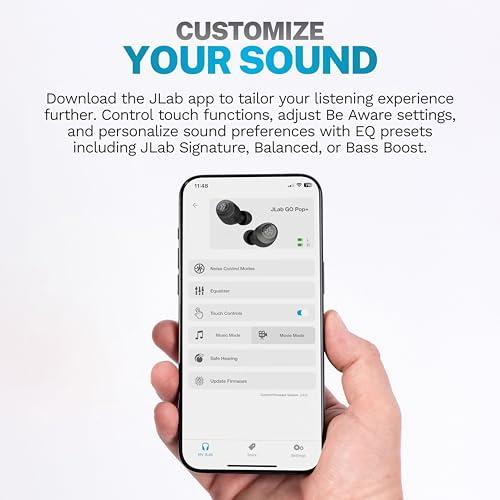
The JLab Go Pop+ takes a more pragmatic approach with 6mm dynamic drivers and three preset sound modes accessible through their companion app: JLab Signature, Balanced, and Bass Boost. However, measurements suggest the Go Pop+ exhibits significant emphasis in upper-mid frequencies with a steep roll-off in the highest frequencies. This tuning makes vocals prominent but can sacrifice detail in complex musical passages.
What this means practically: the Beats Studio Buds Plus will reproduce your favorite songs with more accuracy and detail, especially in bass-heavy tracks or orchestral music with lots of instruments playing simultaneously. The JLab Go Pop+ will make vocals sound clear and present, but you might notice cymbals sound dull or guitar solos lack sparkle.
For home theater use, this difference becomes more pronounced. The Beats Studio Buds Plus can better reproduce movie soundtracks' dynamic range and directionality, while the JLab Go Pop+ might make dialogue crisp but leave action sequences feeling flat.
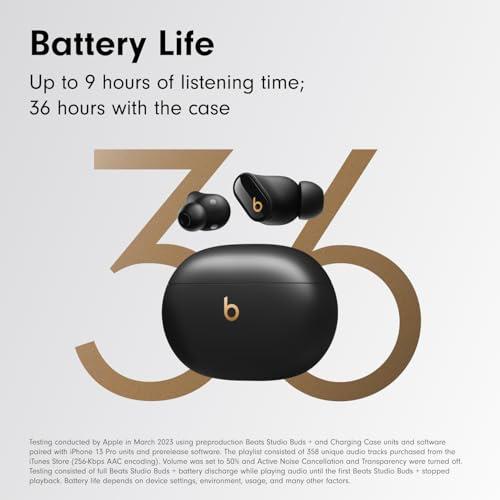
Surprisingly, battery performance represents one area where these vastly different earbuds achieve near-identical results. Both the JLab Go Pop+ and Beats Studio Buds Plus deliver approximately 9 hours of listening time per charge, with their cases providing enough additional power for 30-35 hours total playback.
This similarity isn't coincidental—it reflects the current state of battery technology and power management in small devices. Achieving longer battery life requires either larger batteries (making earbuds bulkier) or more efficient components (increasing cost). Both products hit the sweet spot where most users can go several days between case charges while maintaining reasonable size and weight.
The charging experience differs more significantly. The JLab Go Pop+ includes an integrated USB-C cable built into the charging case—a genuinely convenient feature that eliminates the need to carry a separate charging cable. The Beats Studio Buds Plus uses a standard USB-C port requiring a separate cable, but compensates with faster quick-charging that provides an hour of listening from just five minutes of charging.
Neither model supports wireless charging, which feels like a more significant omission on the Beats Studio Buds Plus given its premium positioning. At the time of writing, wireless charging has become common enough on premium earbuds that its absence stands out.
Modern earbuds need to excel at phone calls, video meetings, and voice assistant interactions. This requires sophisticated microphone arrays and noise reduction algorithms that can isolate your voice from background noise while maintaining natural sound quality.
The Beats Studio Buds Plus employs six total microphones across both earbuds—three per side—with advanced processing to focus on voice frequencies while suppressing ambient noise. In quiet environments, call quality reportedly rivals Apple's AirPods Pro. However, in very noisy conditions like busy streets or coffee shops, some background noise still comes through, though your voice remains clearly audible to the other party.
The JLab Go Pop+ uses two MEMS microphones (one per earbud) with Environmental Noise Canceling and DNS (Digital Noise Suppression) algorithms. MEMS microphones are tiny, reliable, and power-efficient, making them popular in budget devices. However, the simpler processing means call quality suffers more dramatically in noisy environments, where the noise reduction can actually make voices harder to understand.
For remote work or frequent phone calls, this difference matters significantly. The Beats Studio Buds Plus will handle video meetings and calls from various environments more reliably, while the JLab Go Pop+ works fine for calls from quiet spaces but struggles when ambient noise increases.
Both earbuds carry IPX4 water resistance ratings, meaning they can handle sweat and light rain but shouldn't be submerged. This protection level suits most users for exercise and daily wear.
The Beats Studio Buds Plus emphasizes premium materials and build quality, with options including a distinctive transparent version that showcases the internal components. The case feels solid and well-constructed, though it requires a separate charging cable.
The JLab Go Pop+ prioritizes portability with one of the most compact charging cases available—smaller than a credit card according to JLab's specifications. This makes them incredibly pocketable, and the integrated charging cable means you never need to remember a separate cable. The earbuds themselves come in an impressive 13+ color options, letting users express personal style.
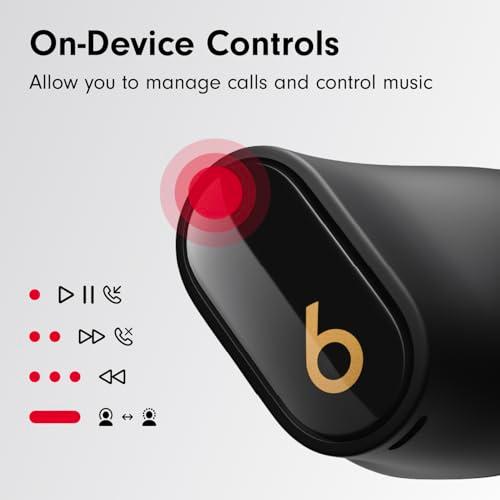
Both products share a significant design flaw: they use physical buttons for controls rather than touch sensors. This means every adjustment requires pushing the earbuds deeper into your ear canal, which can compromise the fit and become uncomfortable over time. Many users report preferring to reach for their phone rather than use the on-device controls, which defeats the purpose of convenient earbud controls.
The JLab Go Pop+ includes three sizes of gel ear tips, while the Beats Studio Buds Plus provides four sizes including an extra-small option. Finding the right fit remains crucial for both comfort and sound quality, as poorly fitting earbuds will sound thin and fall out easily.
Modern earbuds need to integrate seamlessly with smartphones, tablets, and other devices. The Beats Studio Buds Plus offers what Beats calls "one-touch pairing" with both iOS and Android devices, automatic device switching between paired devices, and integration with Find My services on both platforms.
The Beats Studio Buds Plus also supports hands-free voice assistant activation and provides deeper integration with Apple's ecosystem while maintaining Android compatibility—a balance that required significant engineering effort after Apple's acquisition of Beats.
The JLab Go Pop+ includes Google Fast Pair for quick Android pairing and offers multi-device connectivity that lets you connect to multiple devices simultaneously. The JLab companion app provides extensive customization options including custom EQ settings, personalized touch controls, and various listening modes—impressive features for earbuds at this price point.
Both earbuds use Bluetooth 5.3 with support for SBC and AAC codecs. Neither supports advanced codecs like aptX or LDAC, which can provide higher-quality wireless audio with compatible devices. This represents a reasonable compromise for their target markets, as most users won't notice the difference with typical smartphone sources.
At the time of writing, these earbuds occupy completely different price tiers. The JLab Go Pop+ represents extreme value in the ultra-budget category, delivering features like app customization, multi-device connectivity, and impressive battery life at prices that make wireless audio accessible to nearly everyone.
The Beats Studio Buds Plus commands a significant premium but justifies this through active noise cancellation, superior audio quality, and premium build materials. However, this product frequently goes on sale, and finding it at 30-40% off its original price significantly improves the value proposition.
The key question becomes whether the advanced features of the Beats Studio Buds Plus justify the 3-5x price difference. For users who primarily listen in quiet environments and prioritize affordability, the JLab Go Pop+ provides surprisingly complete functionality. For anyone who needs noise cancellation, takes frequent calls, or prioritizes audio quality, the Beats Studio Buds Plus delivers meaningfully better performance.
Choose the JLab Go Pop+ if you:
The JLab Go Pop+ excels as a first pair of wireless earbuds, a backup option, or for users who simply want reliable wireless audio without complexity or premium pricing.
Choose the Beats Studio Buds Plus if you:
The Beats Studio Buds Plus makes sense for users who rely heavily on their earbuds and need them to perform well in challenging conditions.
For home theater use, the Beats Studio Buds Plus provides better dynamic range and detail for movie soundtracks, though both products work fine for casual viewing. Neither supports advanced surround sound formats, so dedicated home theater headphones might serve serious movie watchers better.
For exercise, both earbuds offer adequate water resistance, though the physical button controls on both models can become annoying during workouts when you want to adjust volume or skip tracks.
The decision ultimately comes down to how much you value active noise cancellation and premium audio quality versus affordability and essential functionality. The JLab Go Pop+ proves that wireless earbuds have matured enough that even budget options can provide genuinely useful features. The Beats Studio Buds Plus demonstrates why some users willingly pay more for advanced capabilities that meaningfully improve their daily experience.
Both products succeed in their respective categories, making this less about one being better than the other and more about understanding which philosophy aligns with your needs, budget, and listening habits.
| JLab Go Pop+ True Wireless Earbuds | Beats Studio Buds Plus True Wireless Earbuds |
|---|---|
| Active Noise Cancellation - Essential for noisy commutes and focused listening | |
| None (passive isolation only through ear tips) | Yes, adaptive ANC with 3 mics per earbud, ~80% noise reduction |
| Audio Quality - Core listening experience and sound fidelity | |
| 6mm drivers, emphasis on upper-mids with high-frequency roll-off | Custom dual-layer transducers, balanced response with Beats bass signature |
| Battery Life - How long between charges | |
| 9+ hours per earbud, 35+ hours total with case | 9 hours per earbud, 36 hours total with case |
| Quick Charging - Emergency power when you're rushing | |
| 10 minutes = 1 hour playback | 5 minutes = 1 hour playback |
| Call Quality - Critical for work calls and video meetings | |
| 2 MEMS mics with basic noise reduction (struggles in noisy environments) | 6 total mics with advanced processing (clear in most conditions) |
| Water Resistance - Protection during workouts and weather | |
| IPX4 (sweat and splash resistant) | IPX4 (sweat and splash resistant) |
| Charging Method - Convenience factor | |
| Integrated USB-C cable in case (no separate cable needed) | Standard USB-C port (requires separate cable) |
| App Features - Customization and control options | |
| JLab app with custom EQ, touch controls, multiple sound modes | Basic Beats app with limited customization, no EQ |
| Connectivity - Device pairing and reliability | |
| Bluetooth 5.3, Google Fast Pair, multi-device connection | Bluetooth 5.3, one-touch pairing iOS/Android, Find My support |
| Physical Controls - How you interact with the earbuds | |
| Physical buttons (requires pushing earbuds deeper into ears) | Physical buttons (requires pushing earbuds deeper into ears) |
| Case Size - Portability consideration | |
| Ultra-compact, smaller than credit card | Standard premium earbud case size |
| Color Options - Personal style expression | |
| 13+ color options including unique shades | 4 color options including distinctive transparent model |
| Spatial Audio - Immersive listening for compatible content | |
| Not supported | Yes, with Dolby Atmos support |
| Price Category - Value proposition at time of writing | |
| Ultra-budget tier with impressive feature set | Premium tier with frequent sales improving value |
The biggest difference is active noise cancellation. The Beats Studio Buds Plus includes advanced ANC technology that blocks about 80% of ambient noise, while the JLab Go Pop+ relies only on passive noise isolation through ear tip fit. The Beats Studio Buds Plus also delivers superior audio quality with custom dual-layer drivers, whereas the JLab Go Pop+ focuses on basic wireless functionality at an ultra-affordable price point.
The Beats Studio Buds Plus offers significantly better sound quality with a balanced frequency response, cleaner bass, and support for Spatial Audio. The JLab Go Pop+ provides decent audio for its price range but has noticeable limitations in high-frequency detail and overall dynamics. For serious music listening, the Beats Studio Buds Plus is the clear winner.
The Beats Studio Buds Plus excels at call quality with six total microphones and advanced noise reduction, making it suitable for work calls even in moderately noisy environments. The JLab Go Pop+ handles calls adequately in quiet spaces but struggles significantly when background noise increases, making voices harder to understand.
Both the JLab Go Pop+ and Beats Studio Buds Plus offer nearly identical battery life at approximately 9 hours per charge with 35+ hours total including the charging case. However, the Beats Studio Buds Plus charges faster, providing one hour of playback from just five minutes of charging compared to ten minutes for the JLab Go Pop+.
Yes, the JLab Go Pop+ provides solid everyday functionality including reliable Bluetooth connectivity, decent battery life, and basic audio quality suitable for casual listening, podcasts, and calls in quiet environments. They include useful features like multi-device connectivity and app customization that exceed expectations for budget earbuds.
Yes, the Beats Studio Buds Plus offers excellent cross-platform compatibility with both iOS and Android devices. Features include one-touch pairing, automatic device switching, Find My support, and voice assistant integration. While some Apple-exclusive features aren't available, Android users get nearly the full feature set.
Both the JLab Go Pop+ and Beats Studio Buds Plus use physical button controls that require pushing the earbuds deeper into your ears, which can become uncomfortable over time. However, the Beats Studio Buds Plus generally offers better long-term comfort with premium materials and four ear tip sizes, while the JLab Go Pop+ provides three tip sizes and an ultra-lightweight design.
Both earbuds feature IPX4 water resistance suitable for workouts and sweat protection. The JLab Go Pop+ offers a more secure, lightweight fit for exercise, while the Beats Studio Buds Plus provides better audio quality during workouts but may feel slightly bulkier due to the additional ANC hardware.
The JLab Go Pop+ delivers exceptional value in the ultra-budget category with features like app customization, long battery life, and multi-device connectivity at an accessible price. The Beats Studio Buds Plus justifies its premium pricing through active noise cancellation and superior audio quality, especially when found on sale.
Neither the JLab Go Pop+ nor Beats Studio Buds Plus supports wireless charging. However, the JLab Go Pop+ includes a convenient integrated USB-C cable in the charging case, while the Beats Studio Buds Plus uses a standard USB-C port requiring a separate cable.
The Beats Studio Buds Plus is significantly better for noisy environments thanks to its active noise cancellation technology that reduces ambient noise by approximately 80%. The JLab Go Pop+ only offers passive noise isolation, making it less effective on public transportation, in offices, or other loud spaces where the Beats Studio Buds Plus truly shines.
Choose the JLab Go Pop+ if you want reliable wireless earbuds at an ultra-affordable price and primarily listen in quiet environments. Choose the Beats Studio Buds Plus if you need active noise cancellation, superior audio quality, excellent call performance, or frequently use earbuds in noisy environments. The decision ultimately depends on whether the advanced features of the Beats Studio Buds Plus justify the significantly higher price for your specific needs.
We've done our best to create useful and informative comparisons to help you decide what product to buy. Our research uses advanced automated methods to create this comparison and perfection is not possible - please contact us for corrections or questions. These are the sites we've researched in the creation of this article: whathifi.com - jlab.com - soundguys.com - avrilmarieaalund.com - jlab.com - bestbuy.com - jlab.com - shop.ncsu.edu - jlab.com - techgearlab.com - youtube.com - manuals.plus - jlab.com - jlab.com - versus.com - help.jlab.com - bestbuy.com - soundguys.com - loudnwireless.com - beatsbydre.com - rtings.com - soundguys.com - youtube.com - cnet.com - soundguys.com - recordingnow.com - youtube.com - cornellstore.com - youtube.com - beatsbydre.com.cn - soundguys.com - techradar.com - youtube.com - techgearlab.com - beatsbydre.com - youtube.com - apple.com - electronics.woot.com

Privacy Policy
Terms and Conditions - Affiliate Policy
Home Security
© Copyright 2008-2026.
11816 Inwood Rd #1211, Dallas, TX 75244