

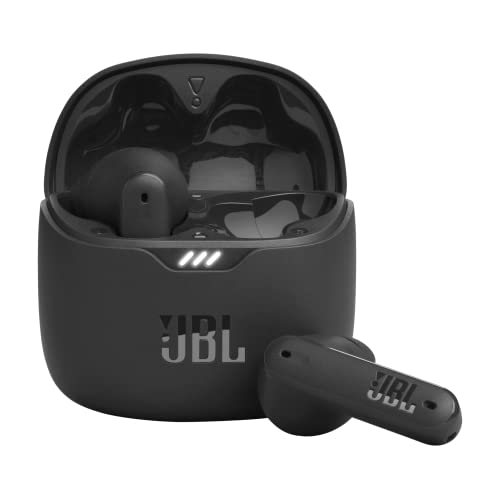

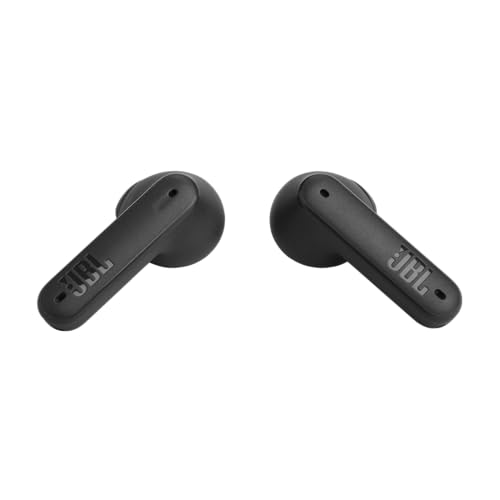
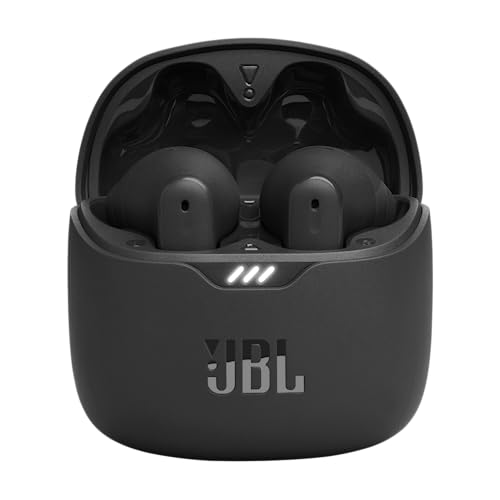
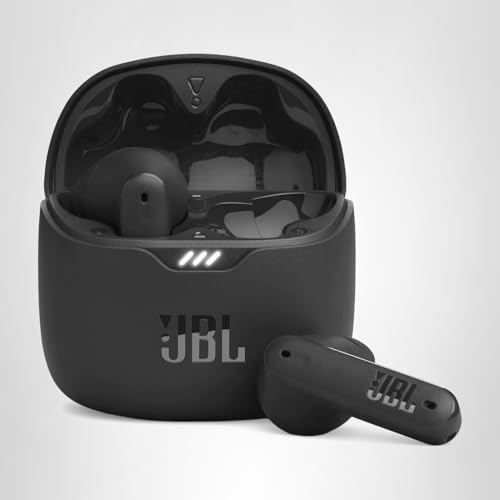
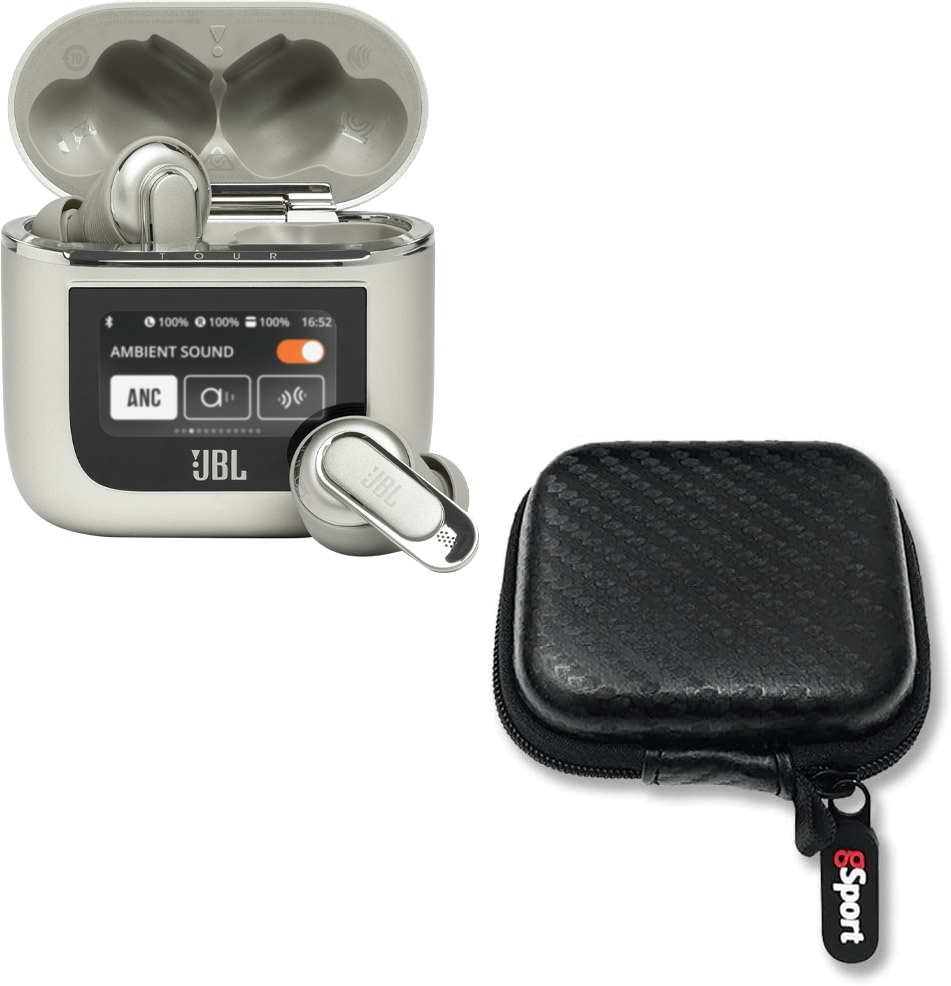
JBL has built quite a reputation in the audio world, and their true wireless earbuds showcase exactly why. The JBL Tune Flex and JBL Tour Pro 2 represent two very different approaches to wireless listening - one focused on delivering premium features at a budget-friendly price, the other pushing the boundaries of what earbuds can do with cutting-edge technology.
At the time of writing, these models sit at opposite ends of JBL's lineup with a significant price gap between them. The Tune Flex positions itself as an accessible entry point into quality wireless audio, while the Tour Pro 2 targets users willing to invest in premium features and performance. But which one actually delivers better value for your specific needs?
True wireless earbuds have completely transformed how we think about portable audio. Unlike traditional wired earphones or even wireless models with neck cables, these tiny devices pack everything - drivers, amplifiers, batteries, and smart features - into each individual earbud. This engineering marvel comes with trade-offs that directly impact your daily experience.
Audio quality remains the foundation of any good earbud, but it's not just about "sounding good." Driver size (the tiny speakers inside each earbud) typically ranges from 5mm to 12mm, with larger drivers generally capable of producing more powerful bass and overall volume. Frequency response - how well the earbuds reproduce different pitches from deep bass to crisp highs - determines whether your music sounds balanced or heavily colored toward certain tones.
Battery performance becomes critical when you can't just plug into a wall outlet. Most people don't realize that active noise cancellation (ANC) - a feature that uses microphones and processing to cancel out background noise - can drain batteries 20-30% faster than normal listening. The charging case acts as a portable power bank, but its size and charging method affect daily convenience.
Comfort and fit directly impact how long you can wear earbuds without fatigue. Poor-fitting earbuds don't just feel uncomfortable - they leak sound and reduce bass response, completely changing the audio experience. Different ear tip materials and sizes can make or break the entire product for individual users.
Modern earbuds also serve as tiny computers, handling phone calls, voice assistants, touch controls, and app integration. These "smart features" increasingly separate budget models from premium ones, though they also add complexity and potential failure points.
The JBL Tune Flex launched in 2022 as JBL's answer to the growing demand for affordable earbuds with premium features. Rather than cutting corners on essentials, JBL focused on delivering a streamlined experience with the features most people actually use daily. The timing was strategic - by 2022, the wireless earbud market had matured enough that manufacturers could offer active noise cancellation and quality drivers at previously unthinkable price points.
The JBL Tour Pro 2 arrived in late 2022 with a bold proposition: what if the charging case itself became a smart device? This wasn't just incremental improvement but a fundamental rethinking of how users interact with their earbuds. JBL packed the Tour Pro 2 with every premium feature they could engineer, positioning it directly against Sony's WF-1000XM4 and Bose's QuietComfort earbuds.
These different launch philosophies explain much about how each product performs in real-world use.
The audio performance differences between these models reveal fascinating engineering trade-offs. The Tune Flex employs larger 12mm dynamic drivers - relatively huge for earbuds - paired with JBL's Pure Bass Sound tuning. This creates what audio engineers call a "V-shaped" frequency response, where bass and treble are emphasized while midrange frequencies (like vocals) remain clear but not forward.
In practical terms, this means hip-hop, electronic music, and pop sound punchy and exciting through the Tune Flex. The larger drivers move more air, creating that physical sensation of bass you feel in your chest during powerful songs. However, this tuning can make acoustic music, jazz, or classical sound less detailed since subtle instrumental textures get overshadowed by the pronounced bass response.
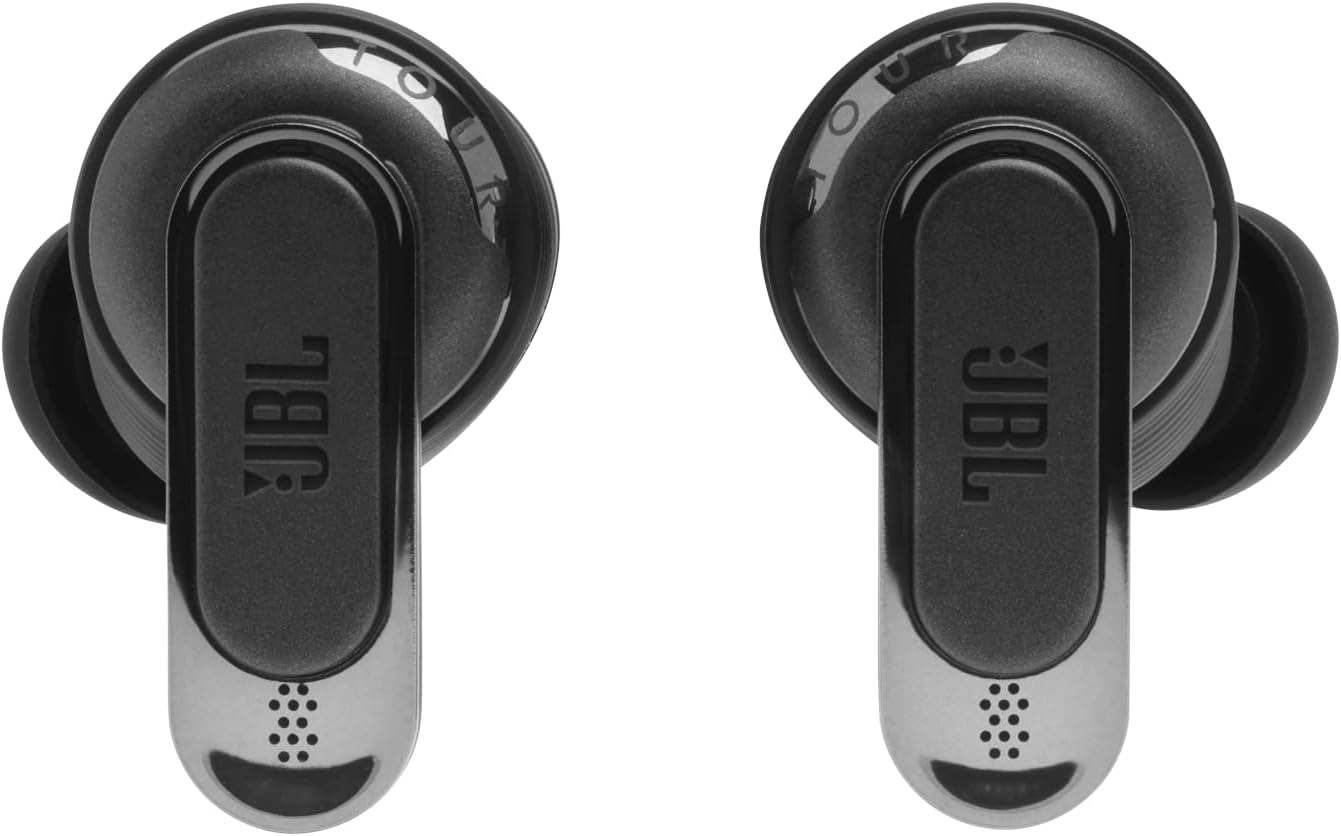
The Tour Pro 2 takes a different approach with smaller but more sophisticated 10mm drivers. These create what audiophiles call a "neutral" frequency response - bass, mids, and treble are more evenly balanced. This neutrality means the earbuds don't impose their own character on your music, instead revealing more of what the original recording actually sounds like.
Based on our research into professional reviews and user feedback, this difference becomes most apparent with complex music. The Tour Pro 2 reveals subtle details in orchestral pieces or jazz recordings that the Tune Flex simply glosses over. However, many listeners actually prefer the Tune Flex's more energetic presentation for casual listening and workout music.
Both models include companion apps with graphic equalizers, allowing some customization of the sound signature. The Tour Pro 2's app offers more sophisticated tuning options, but the Tune Flex's simpler interface often proves more user-friendly for people who just want to adjust bass or treble levels.
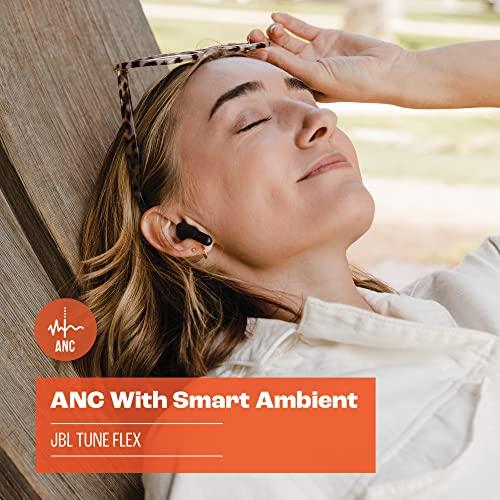
Active noise cancellation technology has become table stakes for modern earbuds, but implementation quality varies dramatically. The Tune Flex offers what JBL calls "Smart Ambient" ANC - a basic but functional system that primarily targets low-frequency, constant sounds like air conditioning, airplane engines, or train rumble.
This type of noise cancellation works by using external microphones to detect ambient sound, then generating inverse sound waves to cancel it out. The Tune Flex's system is effective enough for daily commuting and basic office noise, but struggles with irregular sounds like conversations, construction noise, or busy restaurants.
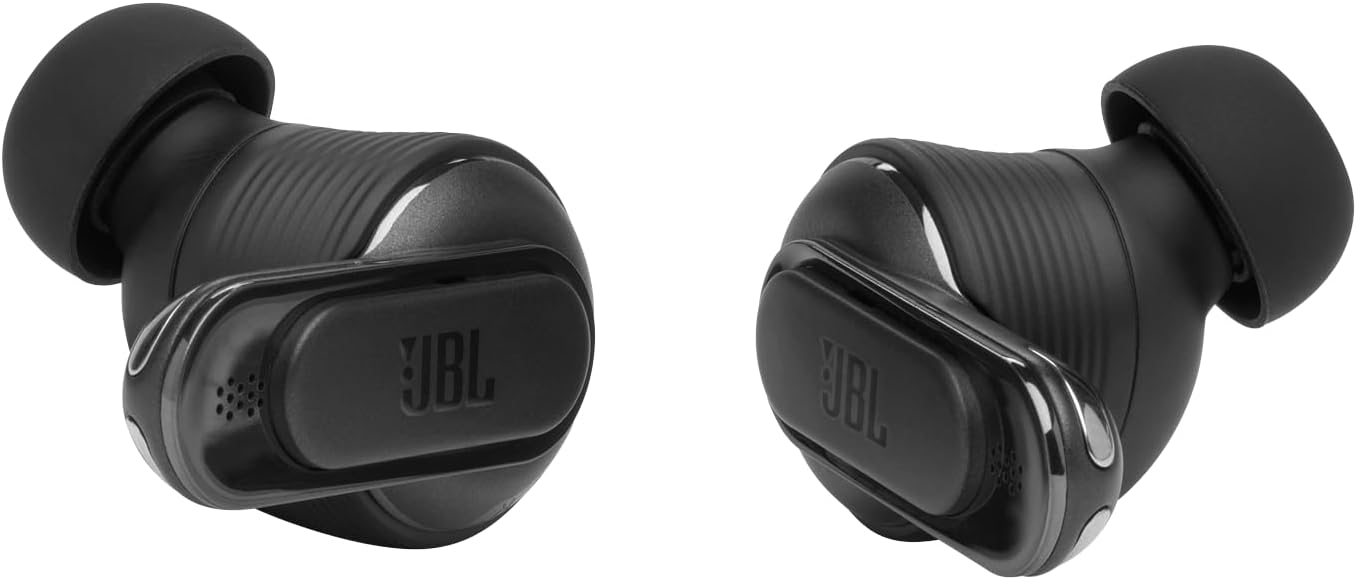
The Tour Pro 2 employs "True Adaptive Noise Cancelling" with four dedicated microphones that continuously monitor and adjust to your environment in real-time. This represents a significant technological leap - instead of applying the same noise cancellation profile regardless of conditions, the system adapts its approach based on what it detects around you.
From user reports and professional testing, this adaptive approach makes a substantial difference in real-world performance. The Tour Pro 2 handles variable noise environments much better, automatically optimizing for everything from quiet libraries to busy subway stations. The difference becomes most apparent during air travel, where the Tour Pro 2's more sophisticated processing can significantly reduce cabin noise and passenger chatter.
Both models include transparency modes that allow outside sound through when needed. The Tune Flex offers "Ambient Aware" and "TalkThru" modes for environmental awareness and conversations, while the Tour Pro 2 provides more granular control over how much outside sound gets mixed in.
Phone call performance often gets overlooked in earbud reviews, but it's crucial for anyone taking work calls or staying connected with family. The microphone systems in these models reveal another significant performance gap.
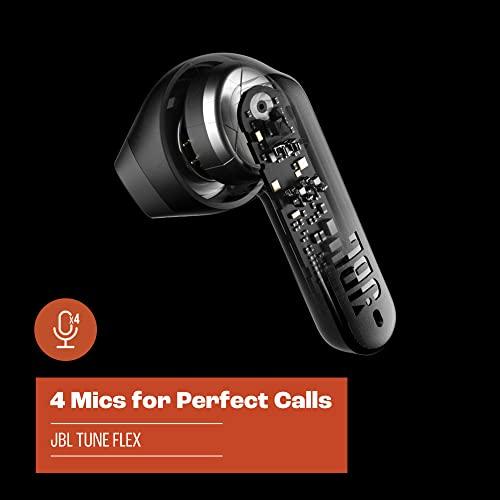
The Tune Flex uses a four-microphone array with basic beamforming technology. Beamforming directs the microphones' sensitivity toward your voice while reducing pickup from other directions. This works adequately in moderate noise environments like quiet offices or cars, but the voice reproduction can sound somewhat processed or artificial.
The Tour Pro 2 steps up to a six-microphone system (three per earbud) with what JBL calls a "crystal call algorithm." This more sophisticated processing can isolate your voice even in challenging acoustic environments like windy outdoor spaces or busy streets. The additional microphones provide better spatial information, allowing the processing system to more accurately separate your voice from background noise.
Based on user feedback, this difference becomes most noticeable during important calls. The Tour Pro 2 maintains call clarity in situations where the Tune Flex starts to struggle, making it more suitable for professionals who regularly take calls from various environments.
Both models include VoiceAware technology, which lets you hear your own voice during calls. This prevents the disconnected feeling many people experience with noise-cancelling earbuds during phone conversations.
Battery performance directly impacts how you use earbuds daily, and here the Tour Pro 2 demonstrates clear superiority. The earbuds themselves provide 8-10 hours of continuous listening (depending on ANC usage), while the charging case extends total usage to around 40 hours.
The Tune Flex offers respectable but more limited endurance: 6-8 hours per charge with 24-32 hours total including the case. This difference might seem minor, but it significantly impacts usage patterns. The Tour Pro 2's longer single-charge endurance means less frequent case access during long workdays or travel.
Both models support fast charging - about 10 minutes in the case provides 1-2 hours of listening time. However, the Tour Pro 2 adds wireless charging capability, allowing you to simply place the case on any Qi-compatible charging pad. This convenience factor shouldn't be underestimated for desk workers or people with wireless charging setups in cars.
The battery chemistry in both models uses lithium-ion polymer cells, which maintain capacity well over hundreds of charge cycles. However, the Tour Pro 2's larger case battery should theoretically maintain useful capacity longer as it experiences fewer deep discharge cycles.
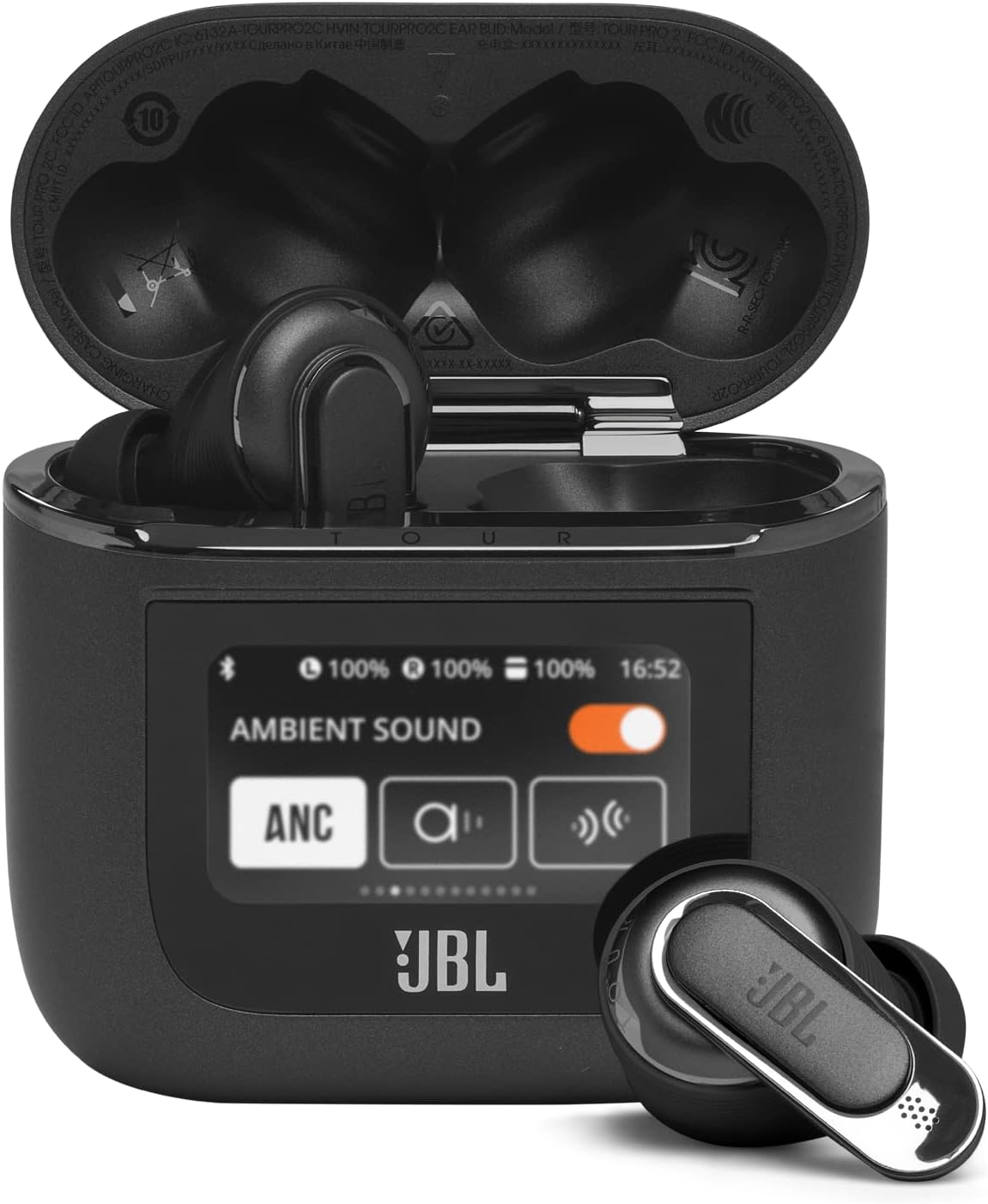
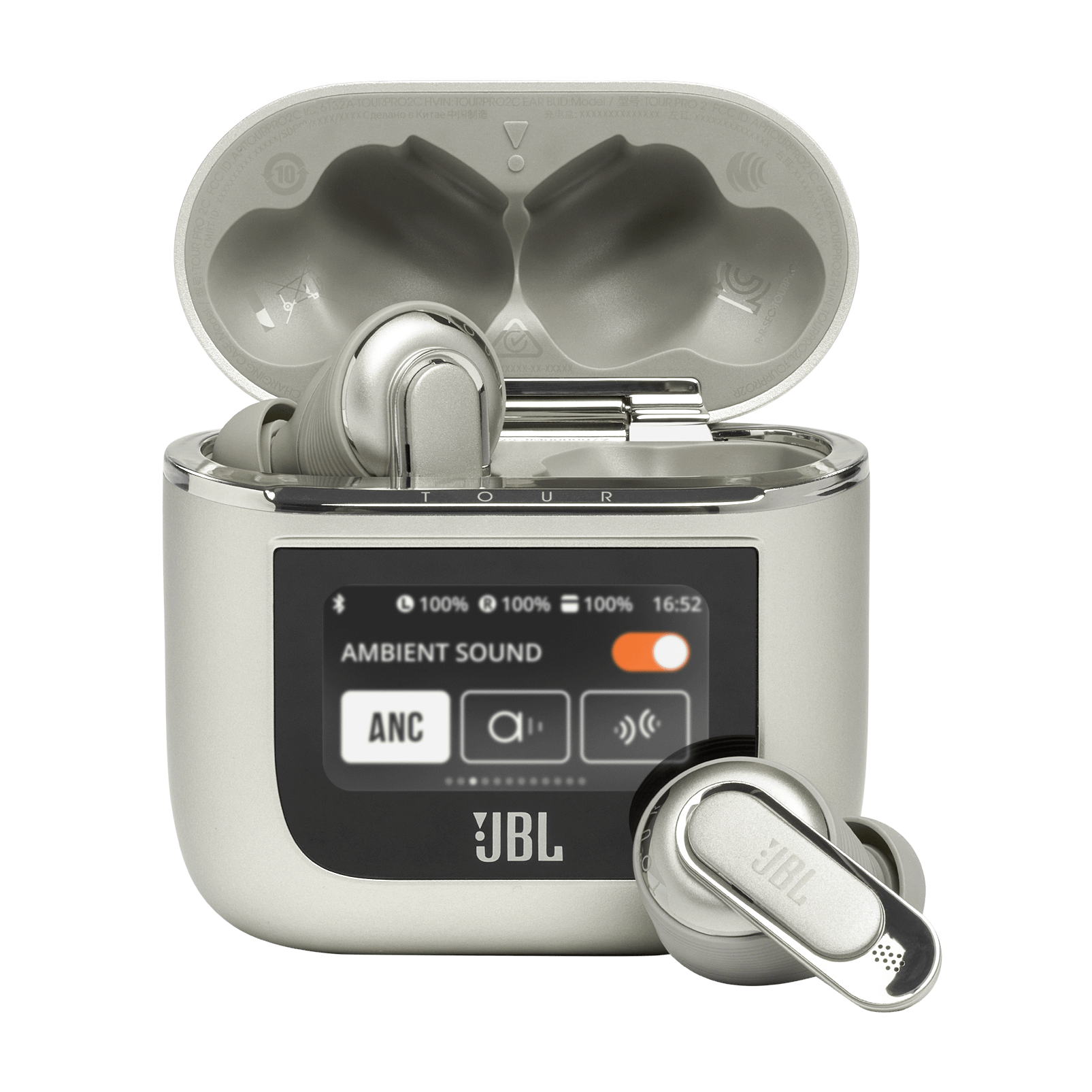
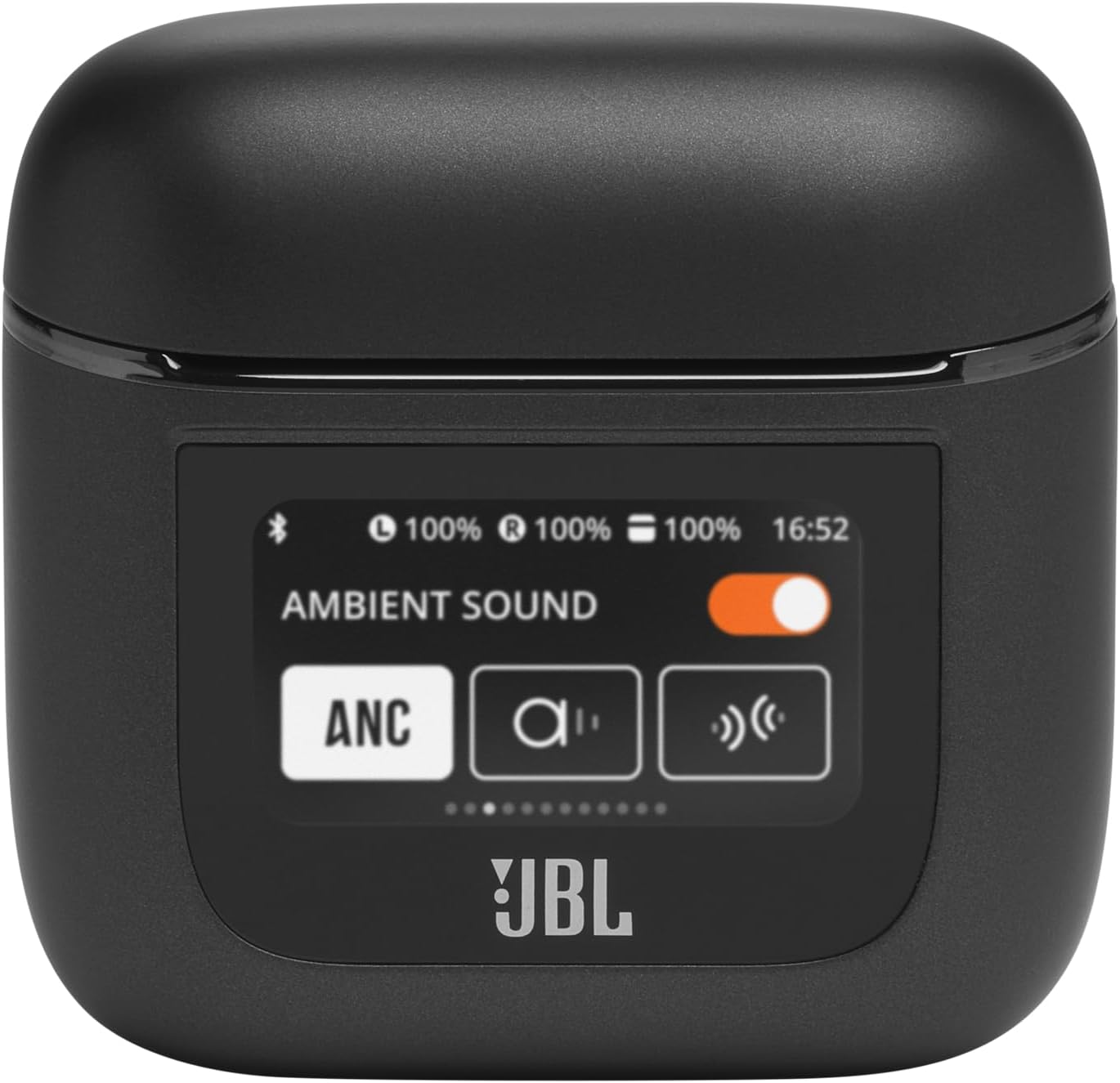
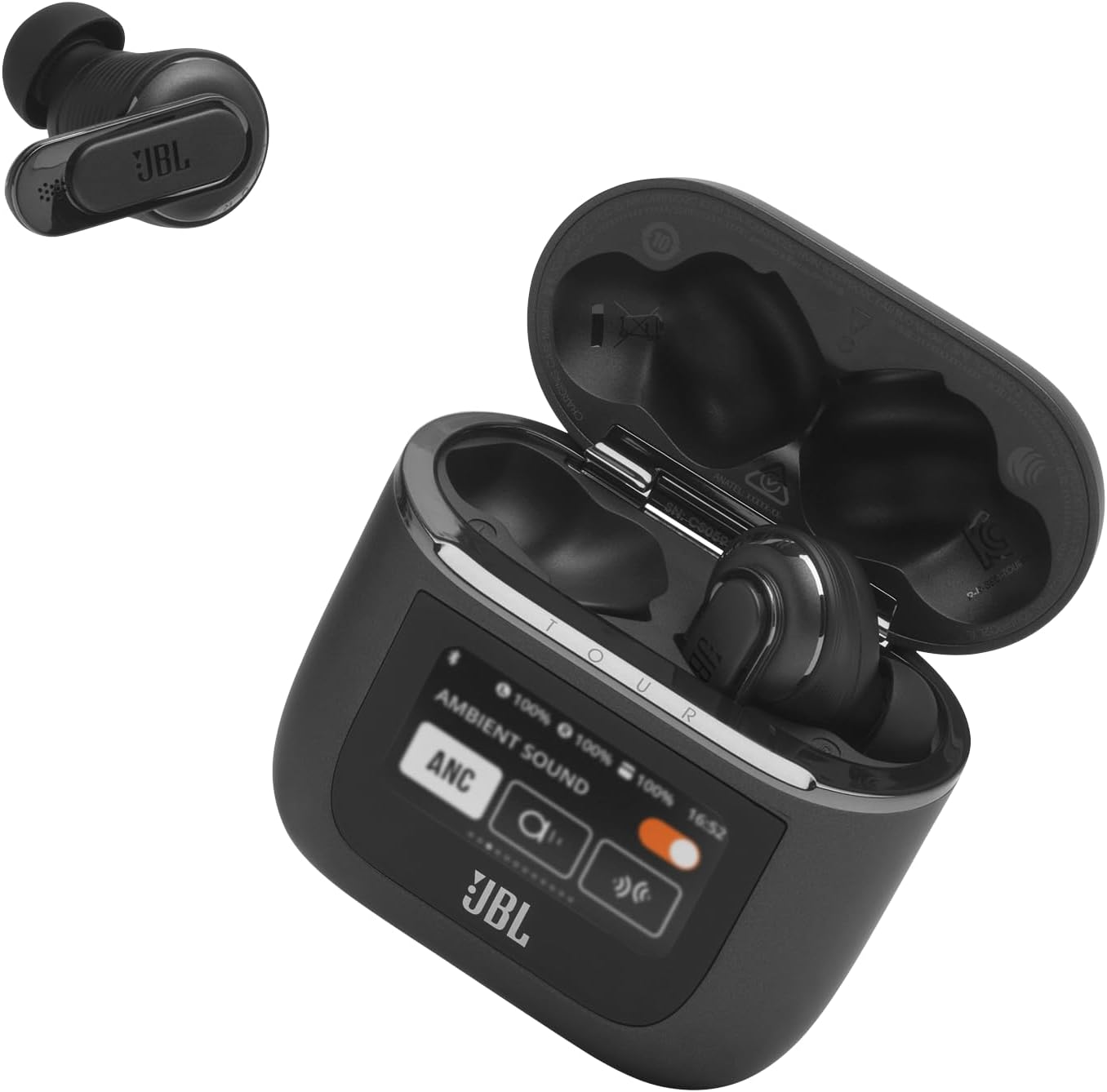
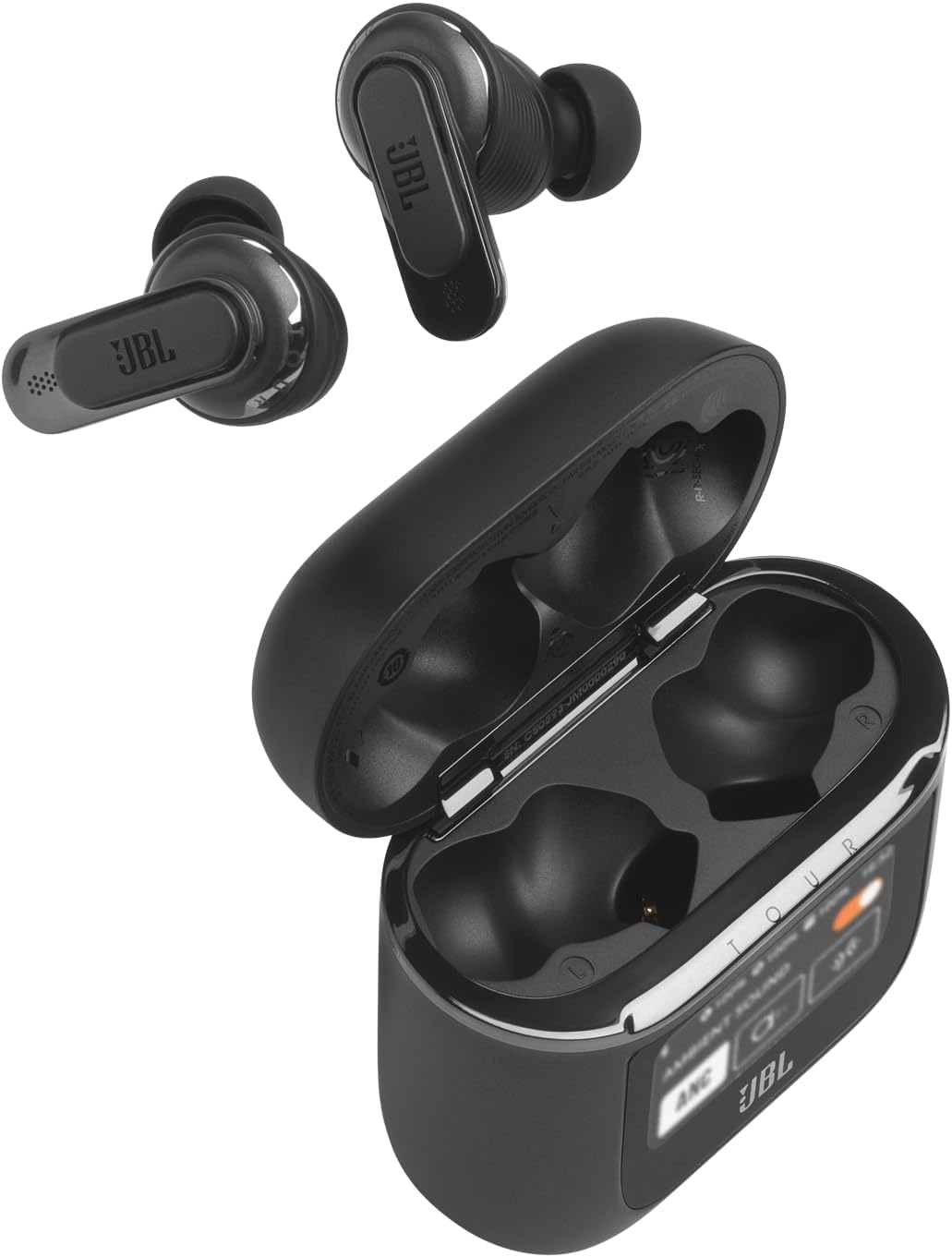
The Tour Pro 2's most distinctive feature is its Smart Charging Case with a 1.45-inch LED touchscreen. This isn't just a battery indicator - it's a fully functional interface that controls playbook, adjusts noise cancellation, manages calls, displays notifications, and even sets alarms.
From a technical standpoint, this represents genuine innovation. The case essentially functions as a tiny smartphone dedicated to earbud control, reducing dependency on your main device for basic functions. You can adjust volume, skip tracks, toggle ANC modes, and check battery levels without pulling out your phone.
However, our research into user experiences reveals mixed opinions about practical value. Some users love the independence from phone apps and the quick access to controls. Others find it an unnecessary complexity that adds bulk and potential failure points to what should be a simple charging case.
The implementation does seem well-executed - the touchscreen is responsive and the interface intuitive. But whether this innovation enhances or complicates the user experience depends heavily on individual preferences and usage patterns.
Water and dust resistance ratings tell only part of the durability story. The Tune Flex carries an IPX4 rating, meaning it can handle splashes and sweat but shouldn't be submerged or exposed to heavy rain. The Tour Pro 2 improves to IPX5, providing protection against water jets from any direction - essentially rain-proof and suitable for intense workouts.
Build quality differences become apparent in daily handling. The Tour Pro 2 uses more premium materials with tighter tolerances and a more substantial feel. The charging case, despite its added complexity, feels solidly constructed. The Tune Flex doesn't feel cheap, but the materials and assembly clearly target a different price point.
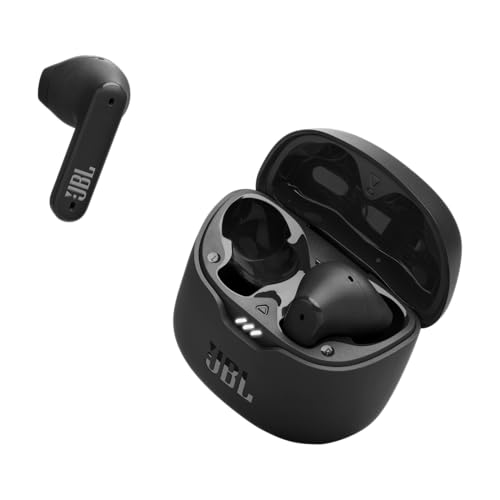
Both models include multiple ear tip sizes, though the Tune Flex offers an interesting twist with both "sealing" and "open" ear tip options. The open tips allow more environmental awareness while maintaining reasonable audio quality - useful for runners or people who need to stay alert to surroundings.
At the time of writing, the price difference between these models is substantial - the Tour Pro 2 typically costs about 2.5 times more than the Tune Flex. This raises the crucial question: does the performance gap justify the price premium?
For most casual listeners, the Tune Flex delivers remarkable value. You get functional ANC, solid audio quality with impressive bass response, decent call performance, and reasonable battery life at a price point that was unthinkable for these features just a few years ago. The compromises in ANC effectiveness and call quality are noticeable but not dealbreaking for typical use cases.
The Tour Pro 2 justifies its premium pricing through measurably superior performance in almost every category, plus unique features like the smart case and wireless charging. However, it competes against established premium models from Sony and Bose, where some reviewers find it slightly lacking in pure audio refinement despite its innovative features.
Neither model was specifically designed for home theater use, but both can enhance TV and movie watching through smartphone or tablet connections. The Tour Pro 2's superior noise cancellation and more balanced audio signature make it better for immersive movie experiences, especially in noisy environments.
The Tune Flex's bass-heavy tuning can actually be enjoyable for action movies and gaming, where the emphasized low-end adds impact to explosions and music scores. However, dialogue clarity suffers slightly compared to the more neutral Tour Pro 2.
Both models support standard Bluetooth audio codecs, though neither offers specialized low-latency modes for serious gaming or video editing where audio sync becomes critical.
The JBL Tune Flex makes sense for budget-conscious users who want modern earbud features without premium pricing. They're excellent for gym-goers, students, commuters on a budget, and anyone whose primary use involves bass-heavy music genres. The multiple ear tip options and comfortable fit make them suitable for extended wear, while the basic but functional ANC helps in moderate noise environments.
The JBL Tour Pro 2 targets users willing to invest in premium performance and cutting-edge features. They're ideal for frequent travelers who need superior noise cancellation, business professionals requiring excellent call quality, and tech enthusiasts attracted to innovations like the smart case. The longer battery life and wireless charging also appeal to power users who demand maximum convenience.
Choosing between these models ultimately depends on your priorities and budget constraints. The Tune Flex represents exceptional value engineering - JBL identified the features most people actually use and delivered them at an accessible price point. The trade-offs in performance are real but reasonable given the cost savings.
The Tour Pro 2 showcases what's possible when engineering constraints are relaxed and innovation takes priority. The smart case alone represents genuinely new thinking about earbud interaction, while the performance improvements across audio, ANC, and calls are measurable and meaningful.
Neither model is perfect - the Tune Flex could use better noise cancellation and call quality, while the Tour Pro 2 faces stiff competition from more established premium models. But both succeed at their intended missions: democratizing premium features and pushing technological boundaries, respectively.
For most readers, the decision comes down to whether the Tour Pro 2's performance and feature advantages justify spending significantly more than the Tune Flex. If your budget allows and you'll actively use the premium features, the Tour Pro 2 delivers clear improvements. If you want solid performance without the premium price tag, the Tune Flex provides remarkable capability for the money.
| JBL Tune Flex True Wireless Earbuds | JBL Tour Pro 2 True Wireless Earbuds |
|---|---|
| Driver Size - Larger drivers typically produce more powerful bass and volume | |
| 12mm dynamic drivers (excellent bass response) | 10mm dynamic drivers (more refined, balanced sound) |
| Active Noise Cancellation - Critical for blocking distractions in noisy environments | |
| Basic ANC with 2 mics (good for constant noise like AC/trains) | True Adaptive ANC with 4 mics (superior performance, auto-adjusts to environment) |
| Battery Life Per Charge - How long you can listen before needing the case | |
| 6-8 hours (ANC on/off) | 8-10 hours (ANC on/off) - 25% longer listening sessions |
| Total Battery Life - Critical for travel and all-day use without wall charging | |
| 24-32 hours with case | 40 hours with case (significantly better for extended trips) |
| Water Resistance - Protection against sweat and weather | |
| IPX4 (splash and sweat resistant) | IPX5 (rain-proof, better workout protection) |
| Microphone System - Determines call clarity in noisy environments | |
| 4 mics with basic beamforming | 6 mics with crystal call algorithm (much better call quality) |
| Charging Options - Convenience for daily use | |
| USB-C wired charging only | USB-C wired + Qi wireless charging (more convenient) |
| Sound Signature - How your music will sound | |
| V-shaped (emphasized bass, great for hip-hop/EDM) | Neutral/balanced (better for all music genres) |
| Smart Features - Advanced functionality beyond basic playback | |
| Multi-point connection, basic app controls | Smart touchscreen case, voice assistants, advanced app integration |
| Bluetooth Version - Affects connection stability and features | |
| Bluetooth 5.2 (reliable connectivity) | Bluetooth 5.3 with LE Audio (latest standard, better stability) |
| Weight Per Earbud - Comfort during extended wear | |
| 4.8g each (lightweight for all-day comfort) | 6.1g each (slightly heavier but still comfortable) |
| Price Category - Value proposition at time of writing | |
| Budget-friendly (exceptional value for features included) | Premium pricing (competes with Sony/Bose flagships) |
The JBL Tour Pro 2 offers more refined, balanced sound quality with its 10mm drivers, making it better for all music genres. The JBL Tune Flex delivers more powerful bass with its larger 12mm drivers, which is excellent for hip-hop, EDM, and bass-heavy music. If you listen to diverse music genres, the Tour Pro 2 provides superior overall audio quality.
The JBL Tour Pro 2 provides significantly longer battery life with 8-10 hours per charge and 40 hours total with the case. The JBL Tune Flex offers 6-8 hours per charge with 24-32 hours total. For all-day use and travel, the Tour Pro 2 is clearly superior.
The JBL Tour Pro 2 has much better call quality thanks to its 6-microphone system with crystal call algorithm, making it excellent for business calls even in noisy environments. The JBL Tune Flex has a basic 4-microphone setup that works fine for casual calls but struggles in challenging acoustic conditions.
Yes, both models feature active noise cancellation, but the JBL Tour Pro 2 has superior True Adaptive ANC that automatically adjusts to your environment with 4 dedicated microphones. The JBL Tune Flex offers basic ANC that works well for constant sounds like airplane engines but isn't as effective against variable noise like conversations.
The JBL Tune Flex is lighter at 4.8g per earbud and offers both sealing and open ear tip options for different comfort preferences. The JBL Tour Pro 2 weighs 6.1g per earbud but still provides good comfort for extended wear. Both models include multiple ear tip sizes for proper fit.
Both models are suitable for workouts, but the JBL Tour Pro 2 has better protection with an IPX5 rating (rain-proof) versus the JBL Tune Flex's IPX4 rating (splash-resistant). The Tune Flex offers open ear tips that provide better environmental awareness during outdoor activities.
The JBL Tune Flex provides exceptional value by offering premium features like ANC, good sound quality, and decent battery life at a budget-friendly price. The JBL Tour Pro 2 justifies its premium pricing with superior performance across all categories and unique features like the smart touchscreen case.
The JBL Tour Pro 2 features a unique smart charging case with a 1.45-inch touchscreen that lets you control playback, adjust noise cancellation, check battery levels, and manage calls without using your phone. The JBL Tune Flex has a standard charging case with LED battery indicators.
The JBL Tour Pro 2 is better for streaming content thanks to its balanced sound signature that provides clearer dialogue and its superior noise cancellation for immersive viewing. The JBL Tune Flex can be enjoyable for action content due to its emphasized bass, but dialogue clarity isn't as good.
Only the JBL Tour Pro 2 supports wireless charging with its Qi-compatible case, offering convenient charging on wireless pads. The JBL Tune Flex uses USB-C wired charging only, though both models support fast charging for quick power-ups.
The JBL Tour Pro 2 offers more advanced connectivity with Bluetooth 5.3, LE Audio support, Google Fast Pair, and voice assistant integration. The JBL Tune Flex provides solid Bluetooth 5.2 connectivity with multi-point connection for switching between devices, covering most users' basic needs effectively.
Choose the JBL Tune Flex if you want excellent value with good performance for casual listening, workouts, and basic noise cancellation needs. Choose the JBL Tour Pro 2 if you're willing to invest in premium features like superior ANC, longer battery life, better call quality, and innovative smart case functionality for the best overall experience.
We've done our best to create useful and informative comparisons to help you decide what product to buy. Our research uses advanced automated methods to create this comparison and perfection is not possible - please contact us for corrections or questions. These are the sites we've researched in the creation of this article: rtings.com - hometechnologyreview.com - youtube.com - bestbuy.com - soundguys.com - bestbuy.com - crutchfield.com - bgr.com - robbsutton.com - majorhifi.com - versus.com - crutchfield.com - youtube.com - versus.com - jbl.com - global.jbl.com - pcrichard.com - musicarts.com - scribd.com - global.jbl.com - robot-advance.com - gzhls.at - bestbuy.com - att.com - ro.harmanaudio.com - whathifi.com - eftm.com - jbl.com - gamingtrend.com - seriousinsights.net - harmanaudio.com - youtube.com - soundstagesolo.com - jbl.com - soundguys.com - youtube.com - harmanaudio.com - tomsguide.com - ign.com - jbl.com - retailspecs.com - youtube.com - youtube.com - harmanaudio.com - bhphotovideo.com - jbl.com - bhphotovideo.com - youtube.com - headphones.com - jbl.com - mm.jbl.com - youtube.com - versus.com - uk.jbl.com - youtube.com - goodhousekeeping.com - harmanaudio.com - shop.oprahdaily.com - youtube.com - geekzone.co.nz

Privacy Policy
Terms and Conditions - Affiliate Policy
Home Security
© Copyright 2008-2026.
11816 Inwood Rd #1211, Dallas, TX 75244