



When you're shopping for a portable speaker that can handle more than just streaming music from your phone, you quickly discover there are really two different worlds: professional PA (Public Address) systems and consumer party speakers. While both can pump out sound and connect microphones, they're built for completely different purposes—and understanding this distinction is crucial before spending your money.
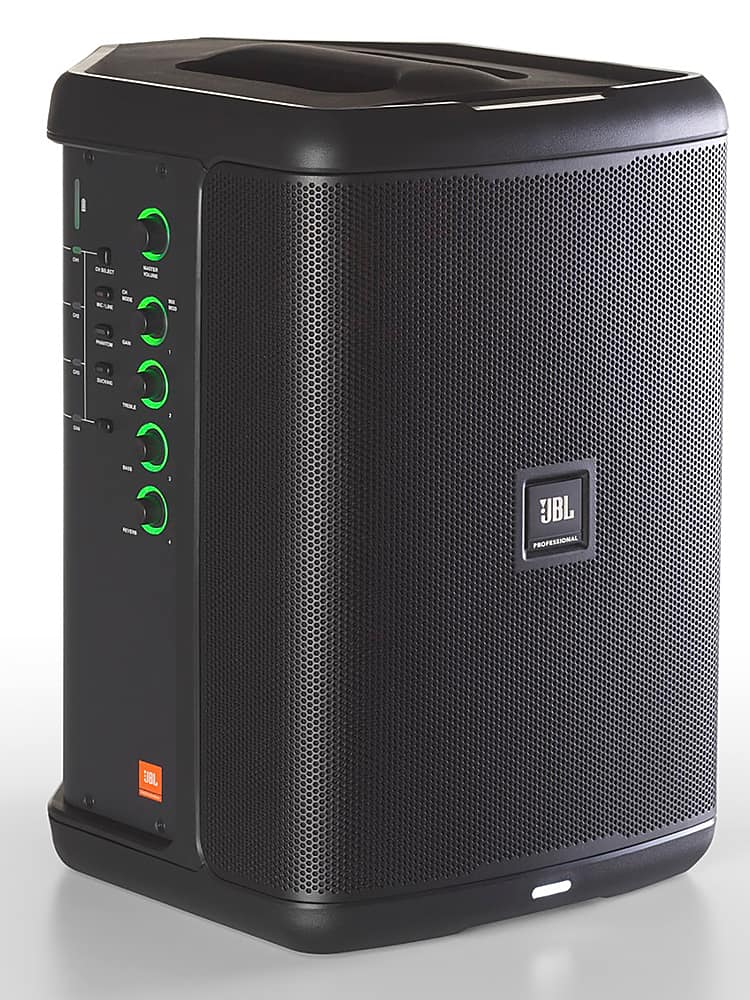
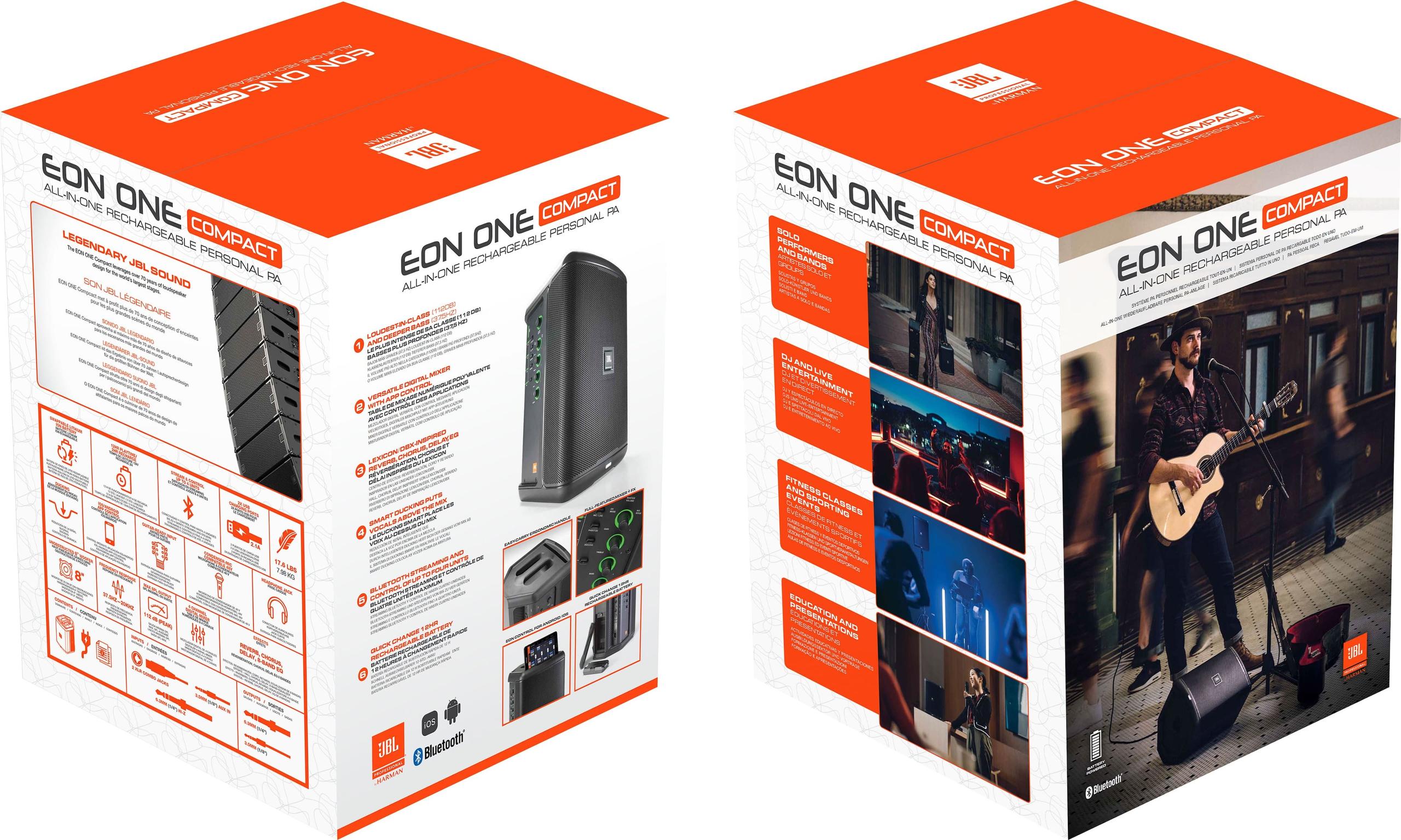
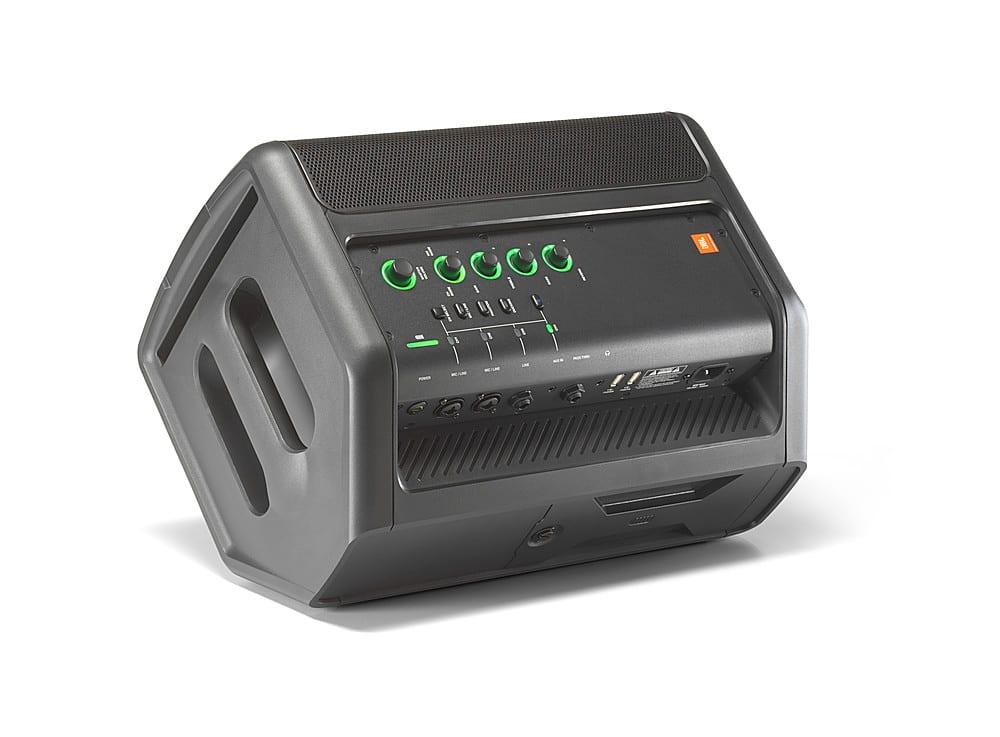
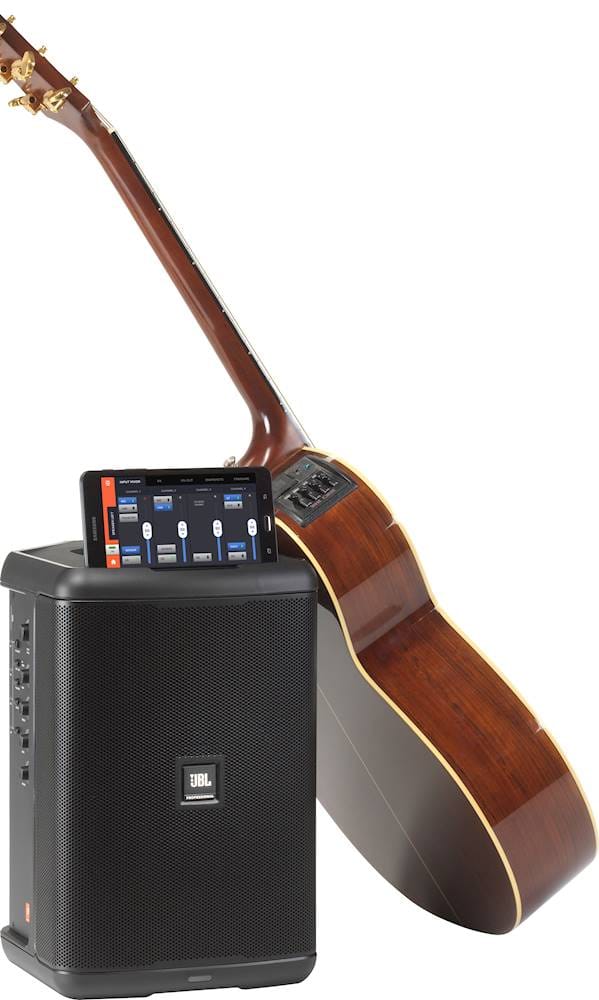
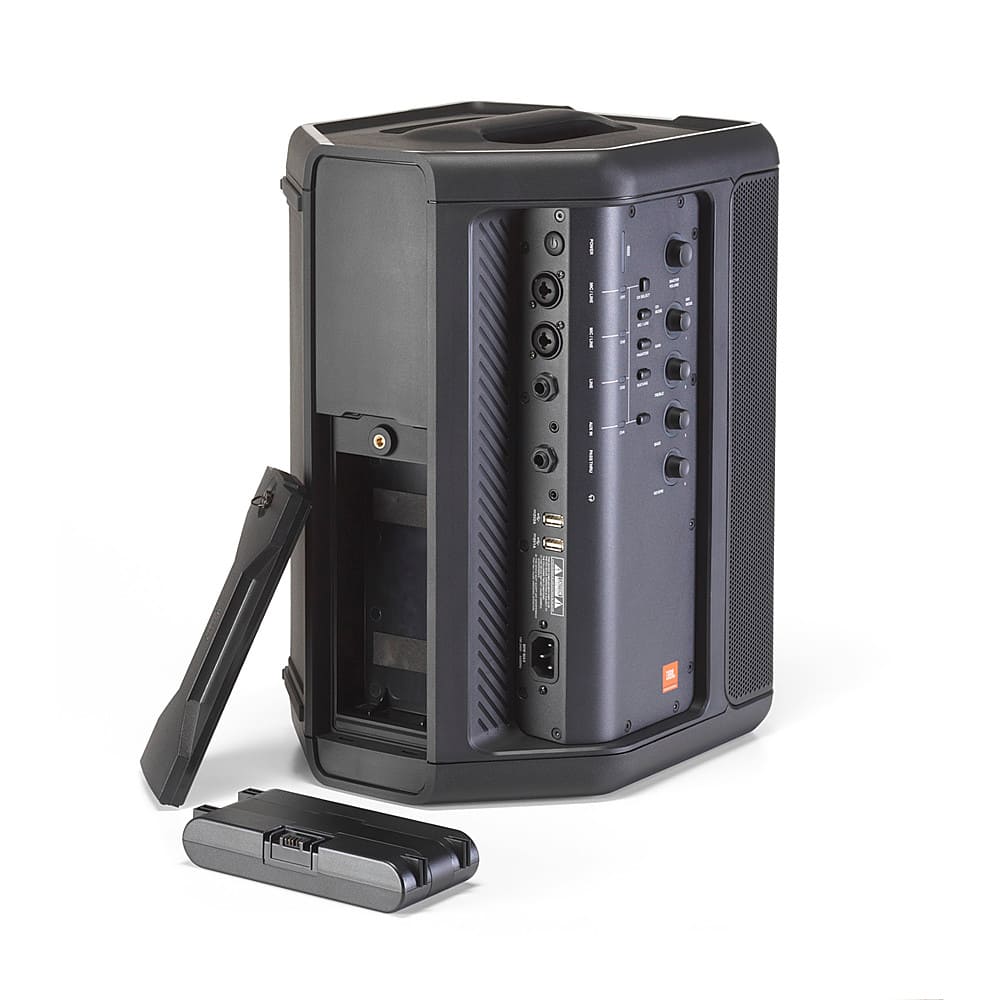
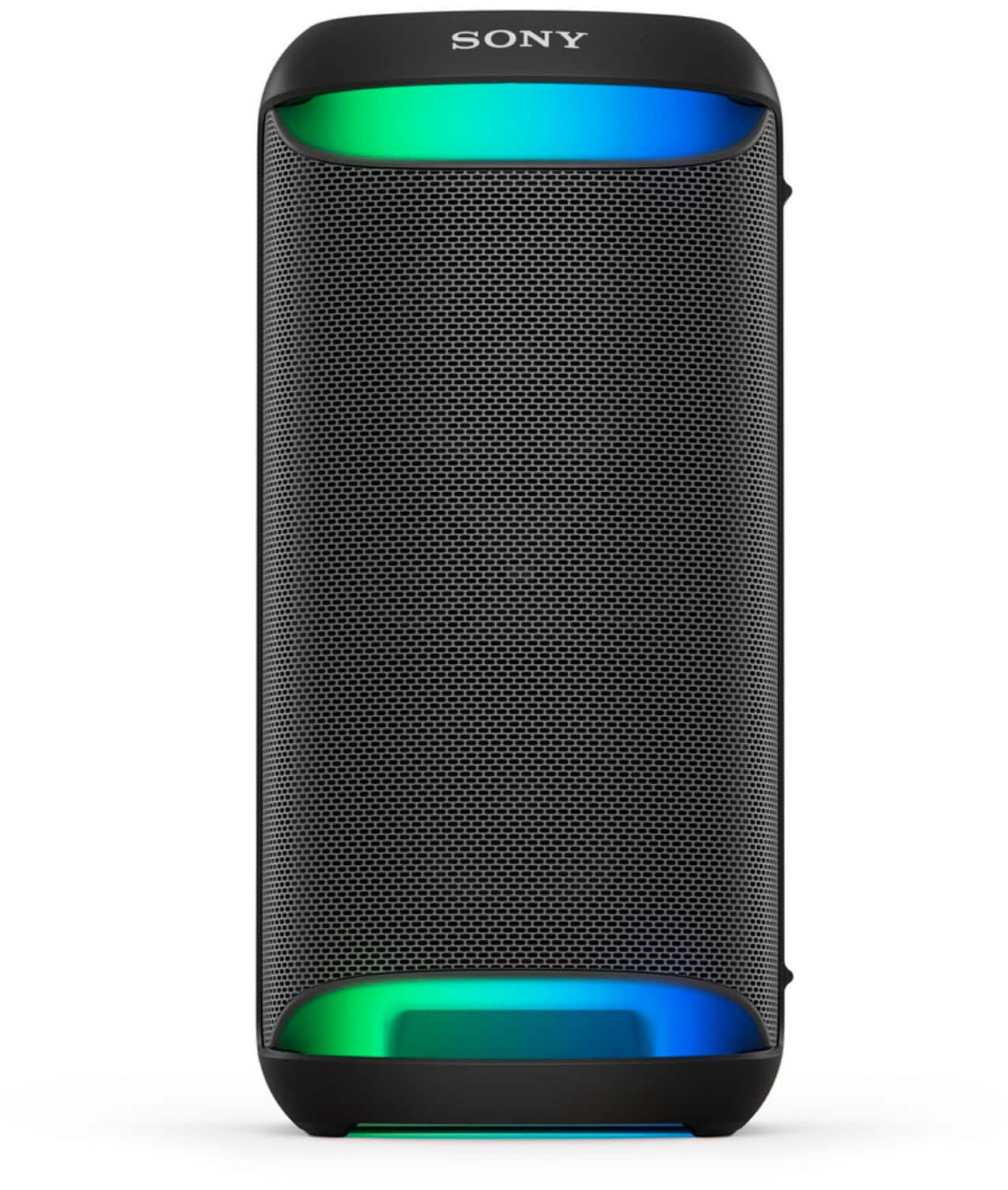
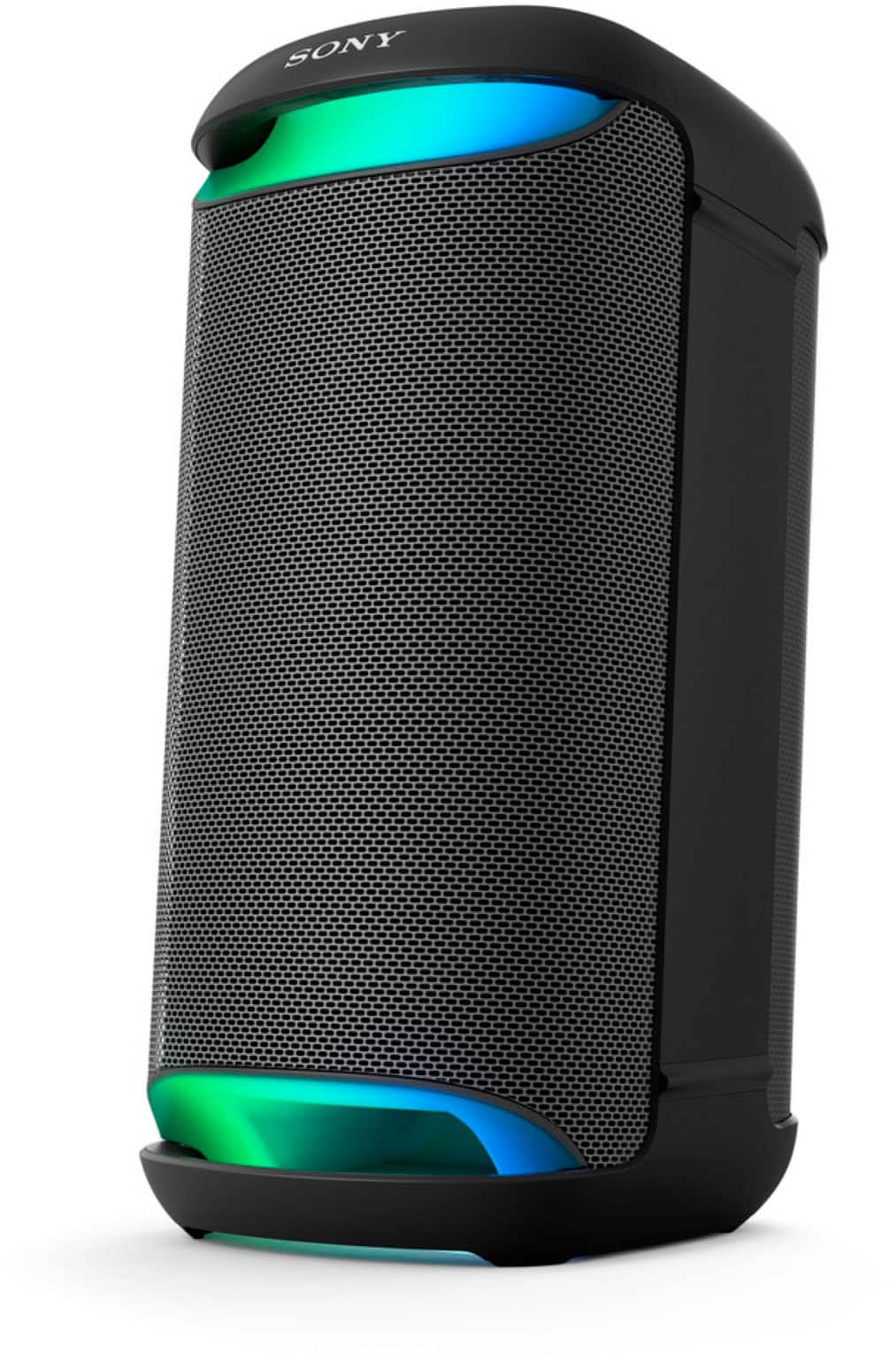
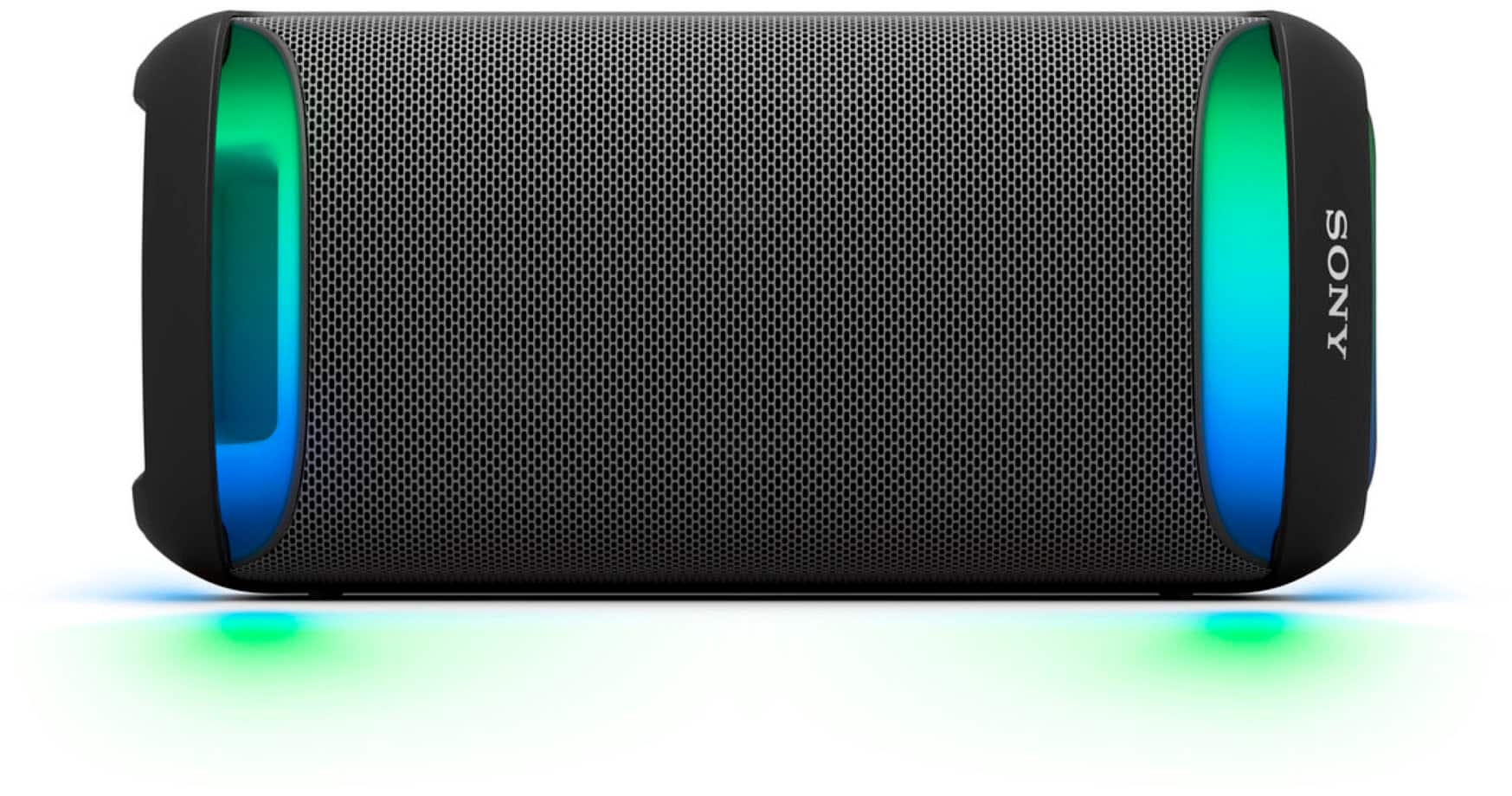
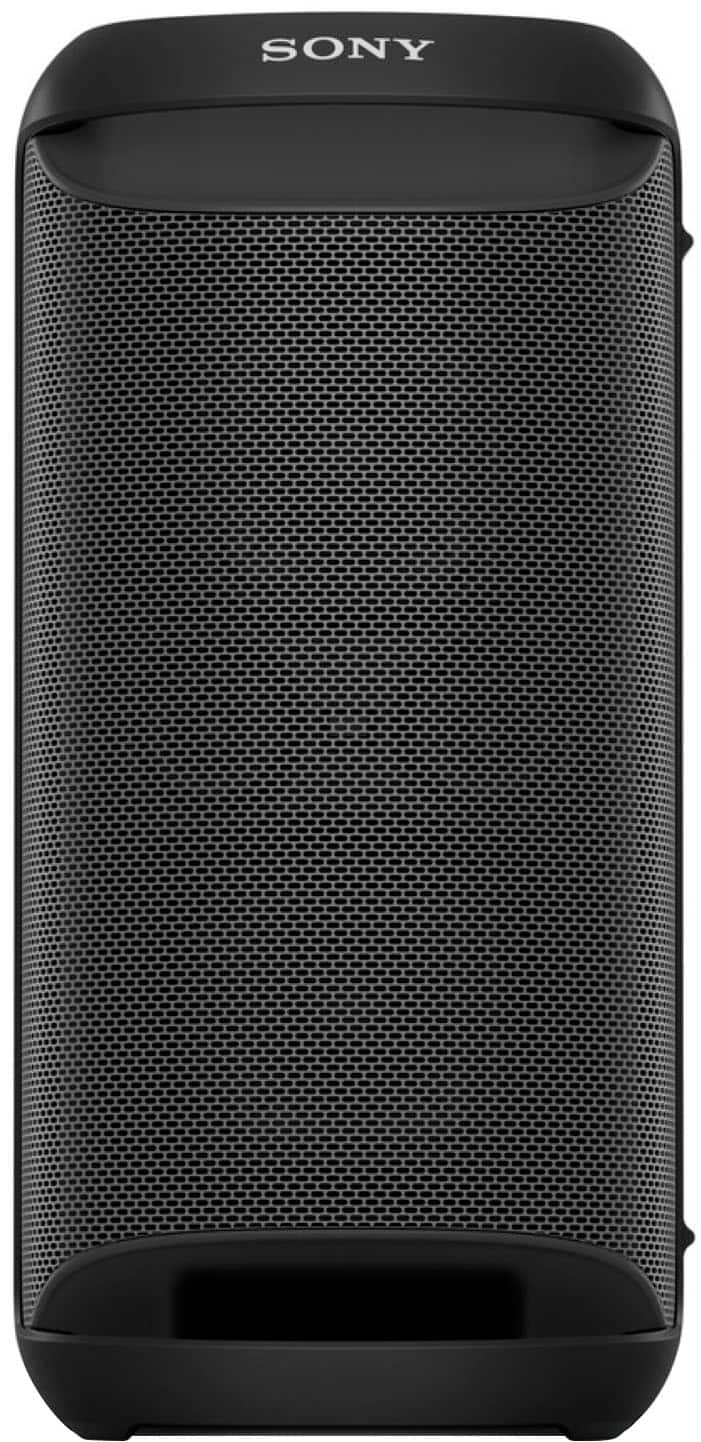
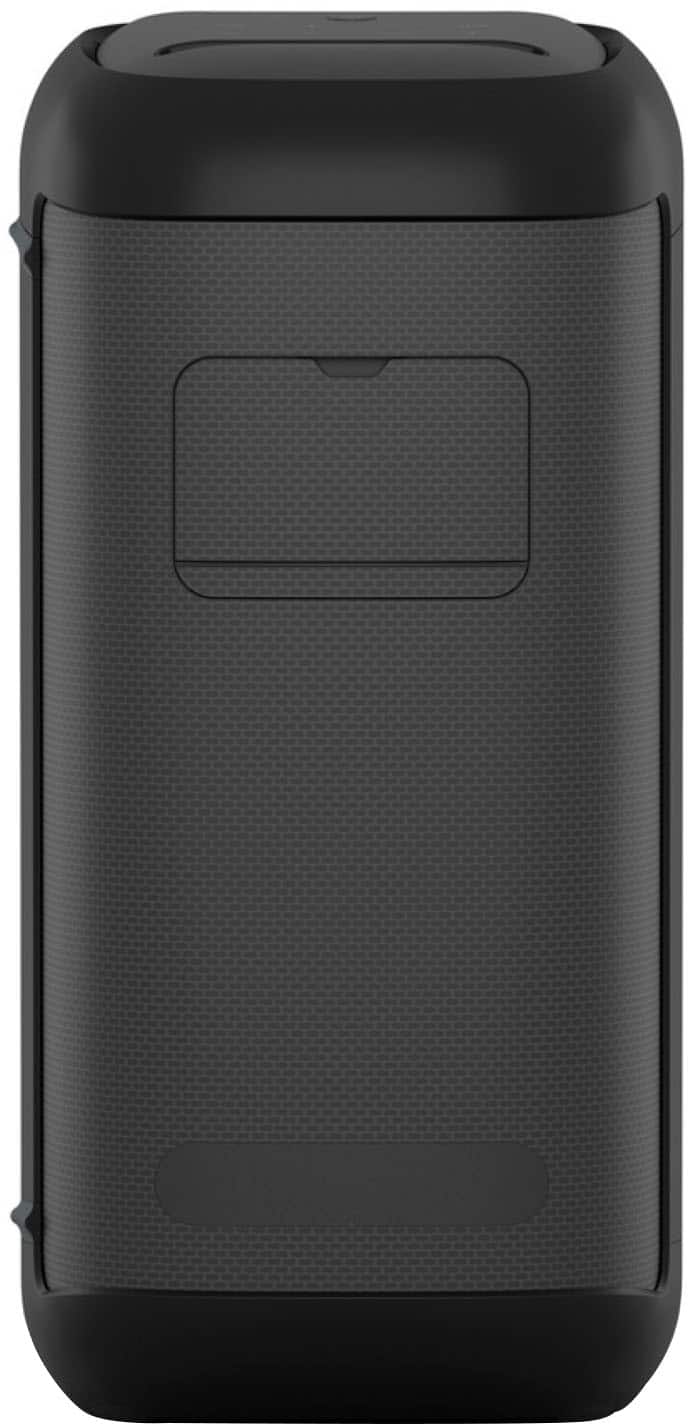
The JBL EON ONE Compact, released in 2020, represents the professional approach: a compact PA system designed for musicians, presenters, and anyone who needs reliable, high-quality amplified sound. The Sony SRS-XV500, which hit the market in 2024, takes the consumer party route with RGB lighting, extended battery life, and features aimed squarely at casual entertainment.
At the time of writing, these speakers sit in vastly different price brackets—the JBL costs roughly double what you'll pay for the Sony. But before you assume the pricier option is automatically better, let's dig into what each actually delivers and whether that price difference makes sense for your specific needs.
Think of it this way: the JBL EON ONE Compact is a professional tool that happens to be portable, while the Sony SRS-XV500 is an entertainment device that happens to accept microphones. This distinction shapes everything from sound quality to battery life to the complexity of setup.
Professional PA systems prioritize audio clarity, mixing capabilities, and reliability above all else. They need to handle everything from acoustic guitar performances to corporate presentations without breaking a sweat. Party speakers, on the other hand, focus on creating atmosphere—think thumping bass, colorful lights, and features that keep the energy high during social gatherings.
The key considerations when choosing between these approaches include sound quality and power output, input flexibility for different audio sources, the balance between portability and performance, how well the speaker aligns with your intended use, and overall value for your specific needs.
When it comes to audio performance, the differences between these speakers are immediately apparent. The JBL EON ONE Compact delivers 112 dB SPL (Sound Pressure Level)—a technical measurement that tells you how loud something can get before distortion kicks in. To put that in perspective, 112 dB is roughly equivalent to a rock concert or chainsaw at close range.
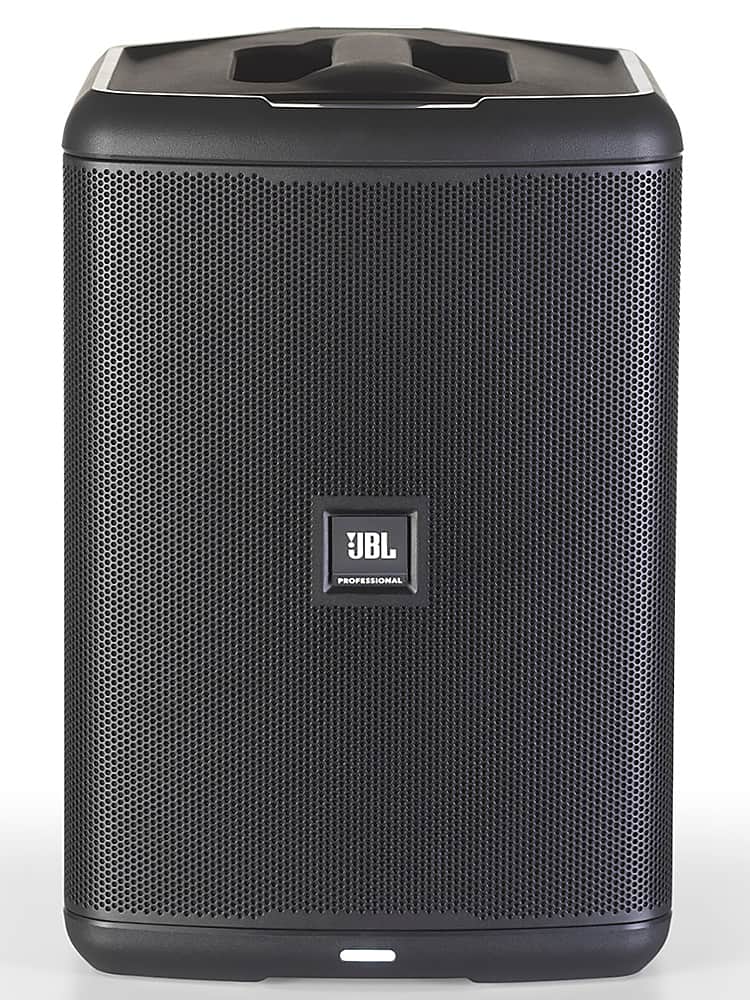
But raw volume numbers only tell part of the story. The JBL uses an 8-inch woofer (the driver that handles bass) paired with a 1-inch tweeter (for high frequencies). This configuration, combined with professional-grade amplification pushing 150 watts at peak power, means the speaker can reproduce frequencies down to 37.5 Hz—nearly an octave lower than most competitors in this size class.
Why does this matter? When you hit a low E on a bass guitar (about 41 Hz), the JBL can actually reproduce that fundamental frequency, not just the harmonics. Most smaller speakers fake bass response by emphasizing mid-bass frequencies around 80-120 Hz, which sounds punchy but lacks the depth of real low-end extension.
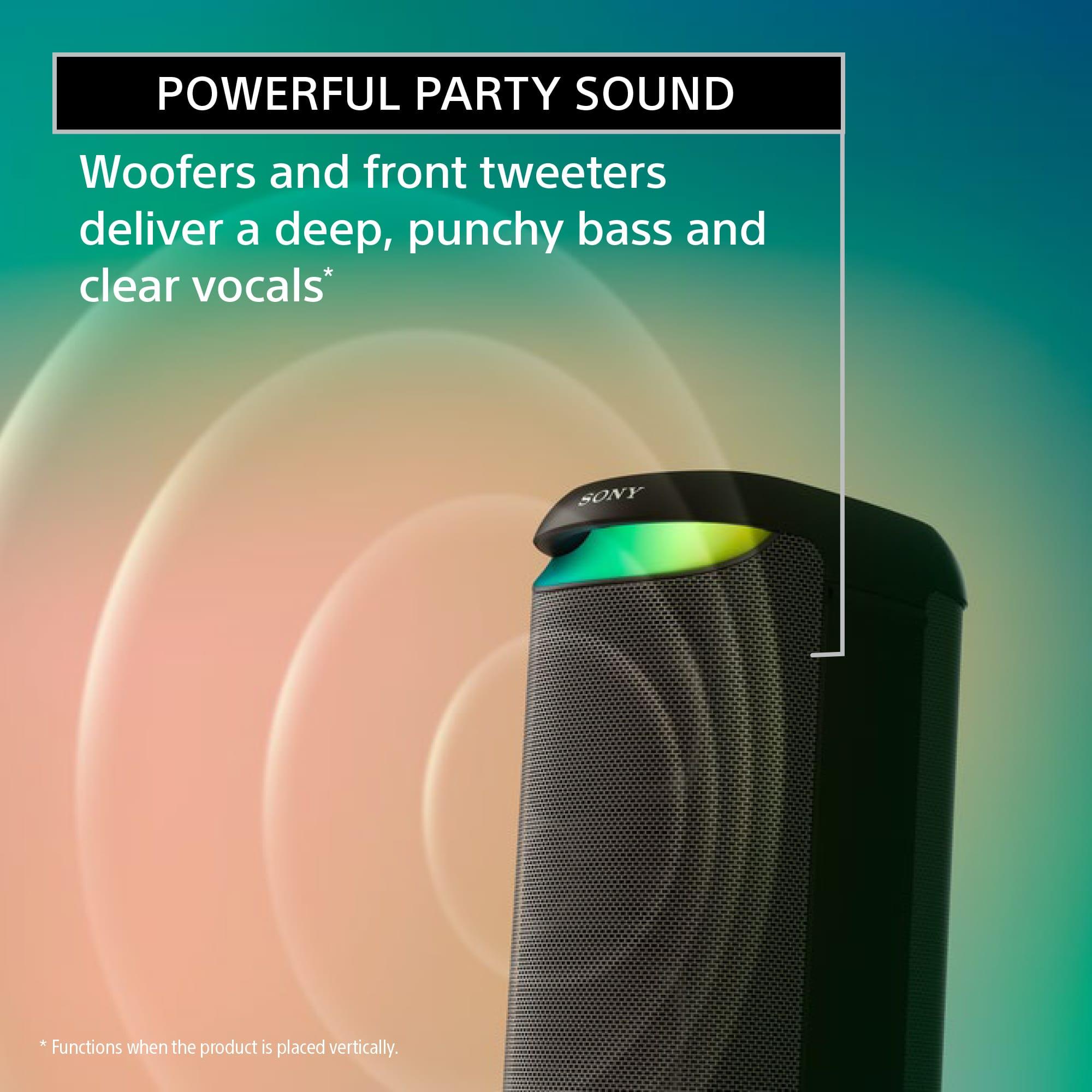
The Sony SRS-XV500, by contrast, uses dual tweeters and dual woofers in a configuration that emphasizes stereo separation and visual appeal over pure acoustic performance. While Sony claims frequency response down to 20 Hz (which would be exceptional), our research into user and expert reviews suggests this specification doesn't translate to meaningful bass output at moderate volumes. The speaker's MEGA BASS feature can enhance low frequencies, but it's essentially digital processing rather than true acoustic extension.
In head-to-head comparisons documented in various reviews, the JBL consistently measured 3-4 dB louder than the Sony at equivalent settings, with some measurements showing differences of 7-8 dB at higher volumes. Since every 3 dB represents a doubling of acoustic power, these aren't subtle differences—they're immediately noticeable to listeners.
For vocal reproduction—critical for presentations, live music, and even karaoke—the JBL maintains clarity and intelligibility even at high volumes. The Sony, while perfectly adequate for party atmosphere, tends to emphasize bass and treble in a "smile curve" EQ that can make vocals sound less natural.
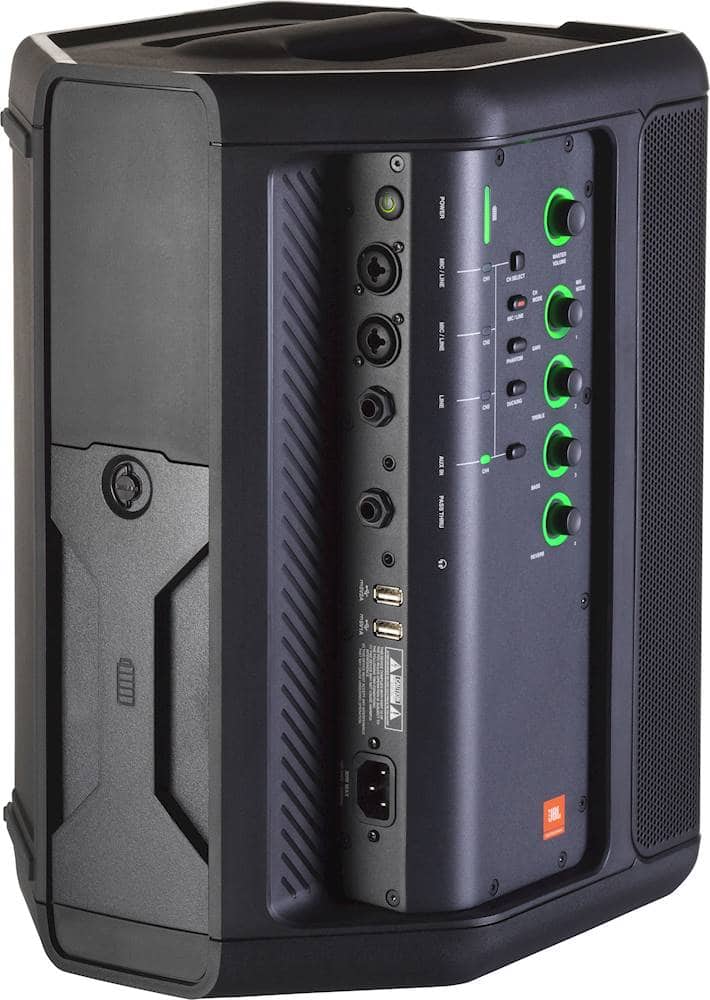
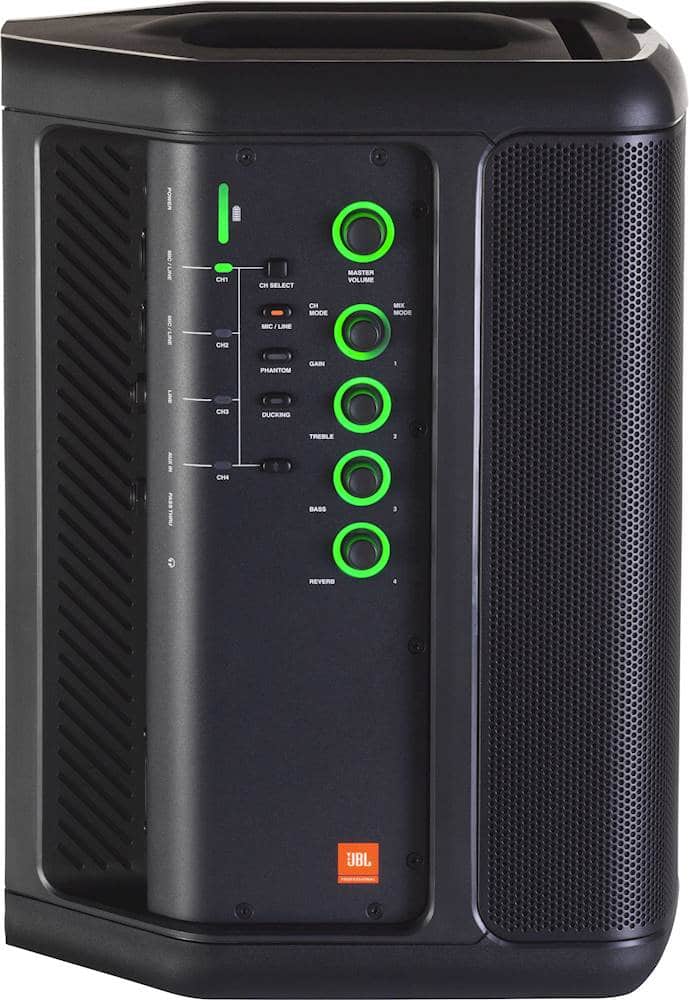
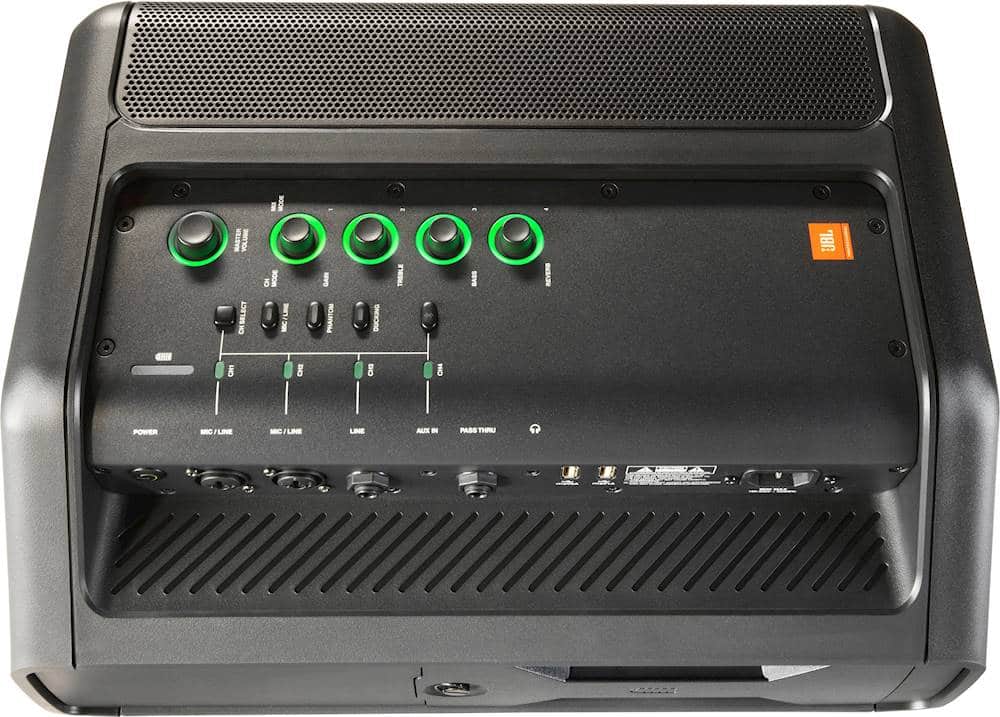
Here's where the philosophical differences between these speakers become most apparent. The JBL EON ONE Compact features a genuine 4-channel digital mixer built right into the speaker. This means you get two XLR/TRS combo jacks (the standard professional connectors used in studios and live venues), a dedicated Hi-Z input for instruments like electric guitars, and an auxiliary input for consumer devices.
The phantom power on channel 1 deserves special mention—this feature sends 48 volts through the microphone cable to power condenser microphones, the type used in professional recording and many high-quality vocal applications. Without phantom power, these microphones simply won't work.
The JBL's mixer also includes studio-quality effects powered by Lexicon (reverb, chorus, delay) and dbx processing (EQ and dynamics). These aren't toy-grade effects—Lexicon reverbs have been used on countless professional recordings, and dbx is a respected name in audio processing. You can adjust these effects, along with an 8-band output EQ, through JBL's smartphone app.
The ducking feature automatically lowers background music volume when speech is detected on microphone channels. This might seem like a small detail, but it's invaluable for presentations where you need music to fade seamlessly when you start speaking.
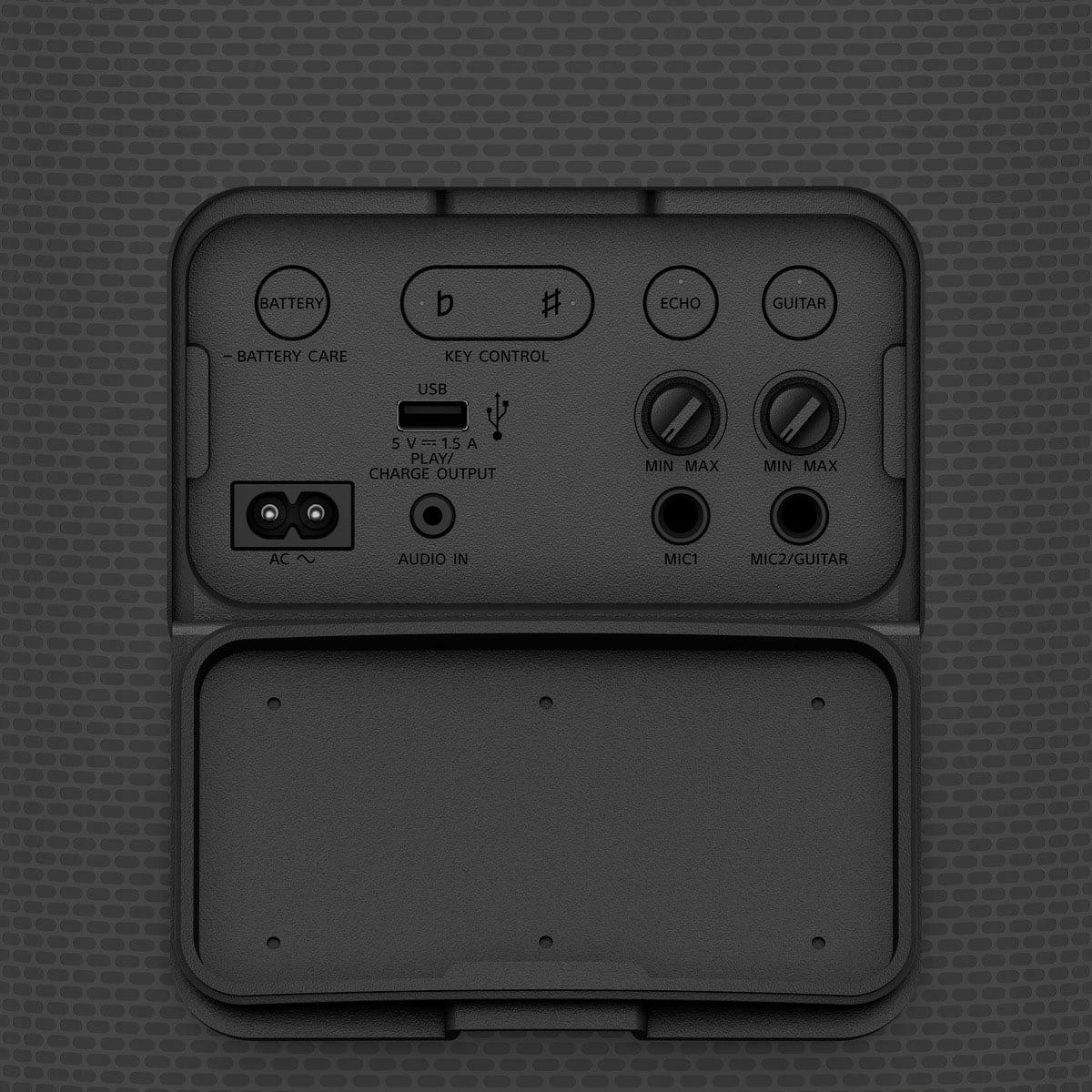
The Sony SRS-XV500 takes a different approach with two 1/4-inch inputs designed primarily for karaoke use. While these can accept microphones, they're not the balanced, low-noise inputs you'd find on professional equipment. The Sony does include echo and key transposition controls—useful for karaoke since you can shift the pitch of instrumental tracks to match your vocal range.
For connecting multiple speakers, the approaches diverge significantly. The JBL offers a traditional passthrough output that lets you daisy-chain additional EON ONE units, maintaining the same audio signal across all speakers. The Sony uses Sony's Party Connect technology, which can network up to 100 compatible Sony speakers wirelessly—impressive for large gatherings, though you're locked into Sony's ecosystem.
Battery performance represents one of the Sony SRS-XV500's strongest advantages. Sony claims up to 25 hours of playback, though this figure assumes moderate volume levels (around 36%) with certain features enabled. In real-world party conditions—higher volumes, lights active, bass boost engaged—expect closer to 8-12 hours, which is still impressive.
The Sony's quick charge feature provides 2.5 hours of playback from just 10 minutes of charging. For all-day events where you might not have consistent access to power outlets, this extended battery life and quick charging can be game-changing.
The JBL EON ONE Compact offers 12 hours of battery life at typical performance volumes—considerably less than the Sony, but adequate for most gigs and presentations. However, the JBL includes something the Sony lacks: a tool-free, swappable battery. You can purchase additional batteries and swap them in seconds, effectively providing unlimited runtime for extended events.
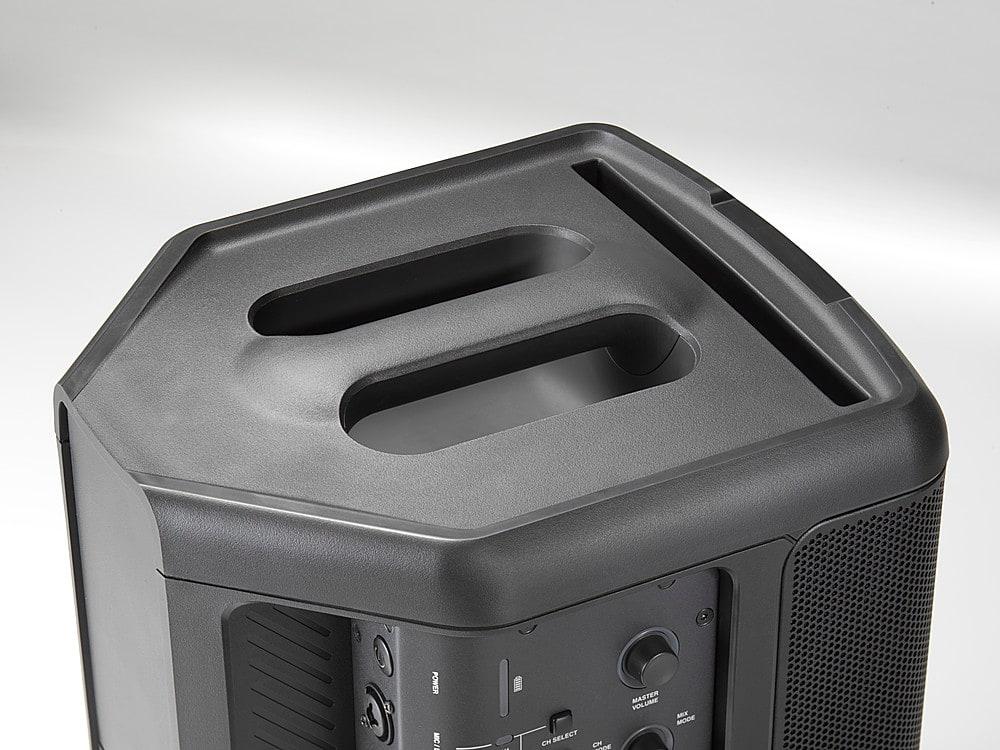
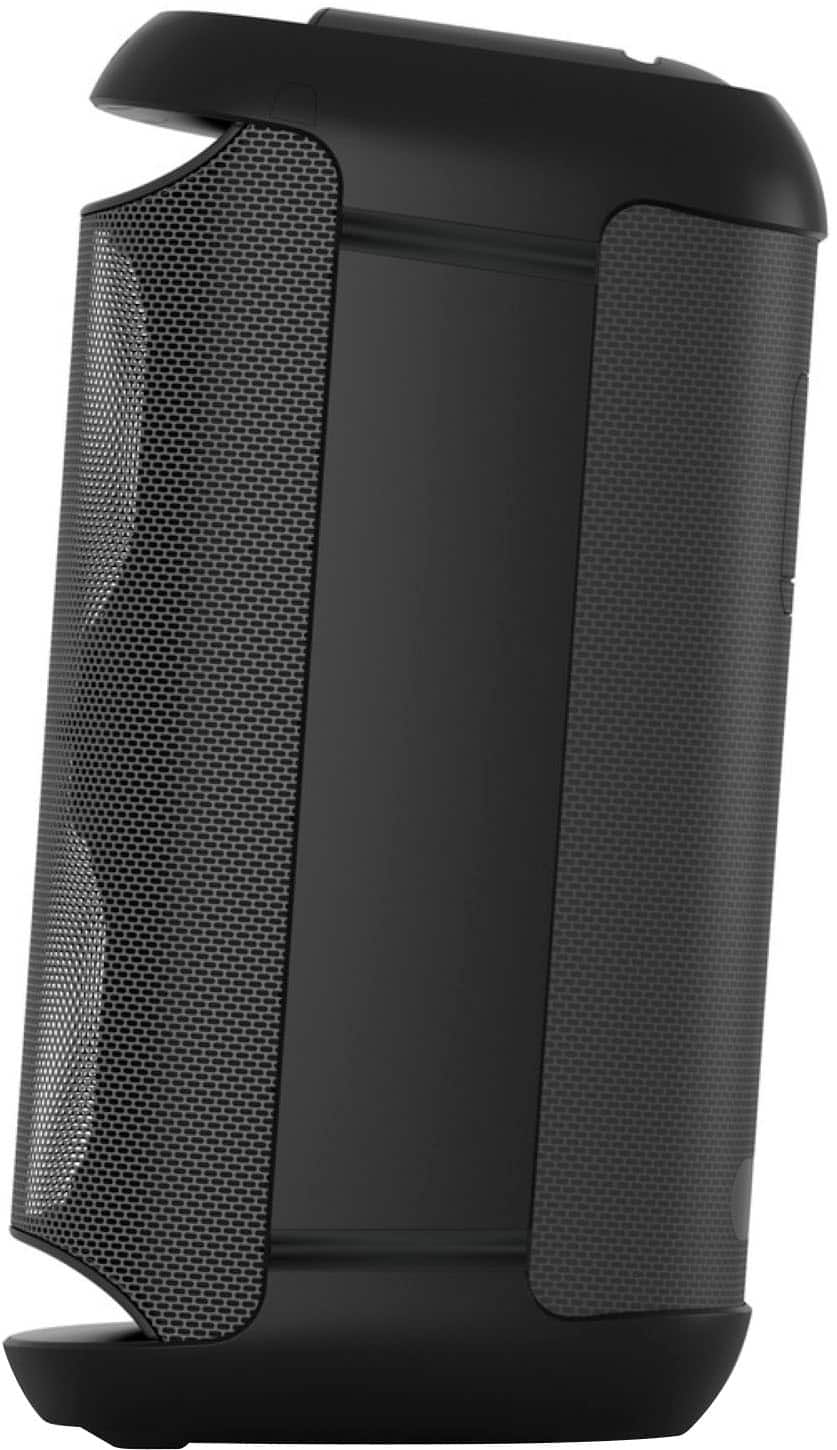
From a portability standpoint, the JBL weighs 17.6 pounds compared to the Sony's 24.7 pounds. More importantly, the JBL features an ergonomic fold-up handle that allows comfortable single-handed carrying, while the Sony's fixed front bar requires angled carrying with both hands.
Both speakers can operate while plugged into AC power, but the Sony actually delivers its best performance when connected to wall power, suggesting its battery operation involves some power limitations.
The construction philosophies reflect each product's target market. The JBL EON ONE Compact uses a polypropylene enclosure designed to withstand the rigors of professional use—loading into vehicles, setup and breakdown at venues, and general gigging abuse. JBL backs this with an exceptional 7-year warranty (3 years on the battery), demonstrating confidence in long-term reliability.
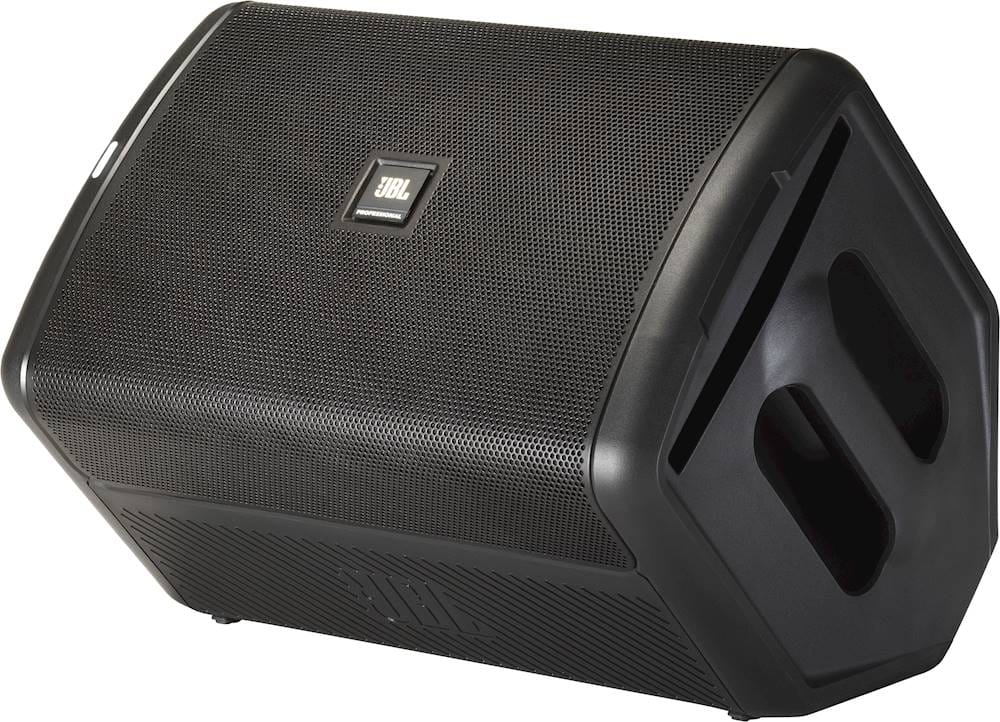
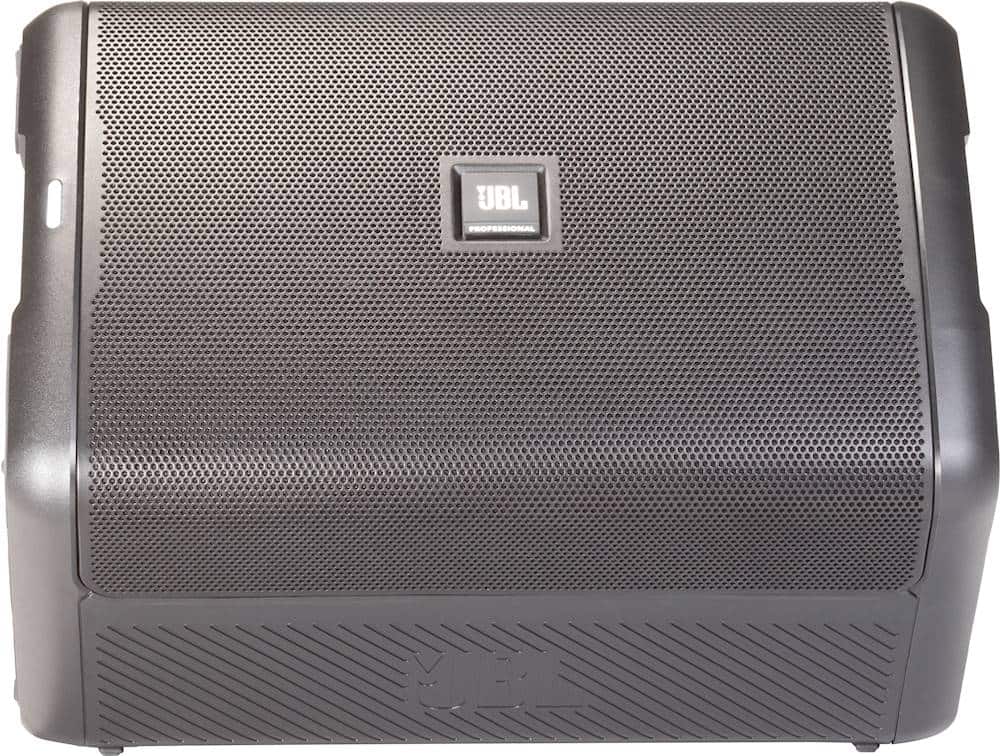
The speaker includes a standard 35mm pole mount socket, allowing it to be elevated on speaker stands for better sound dispersion. It can also function as a stage monitor by rotating it 90 degrees, making it versatile for different performance configurations.
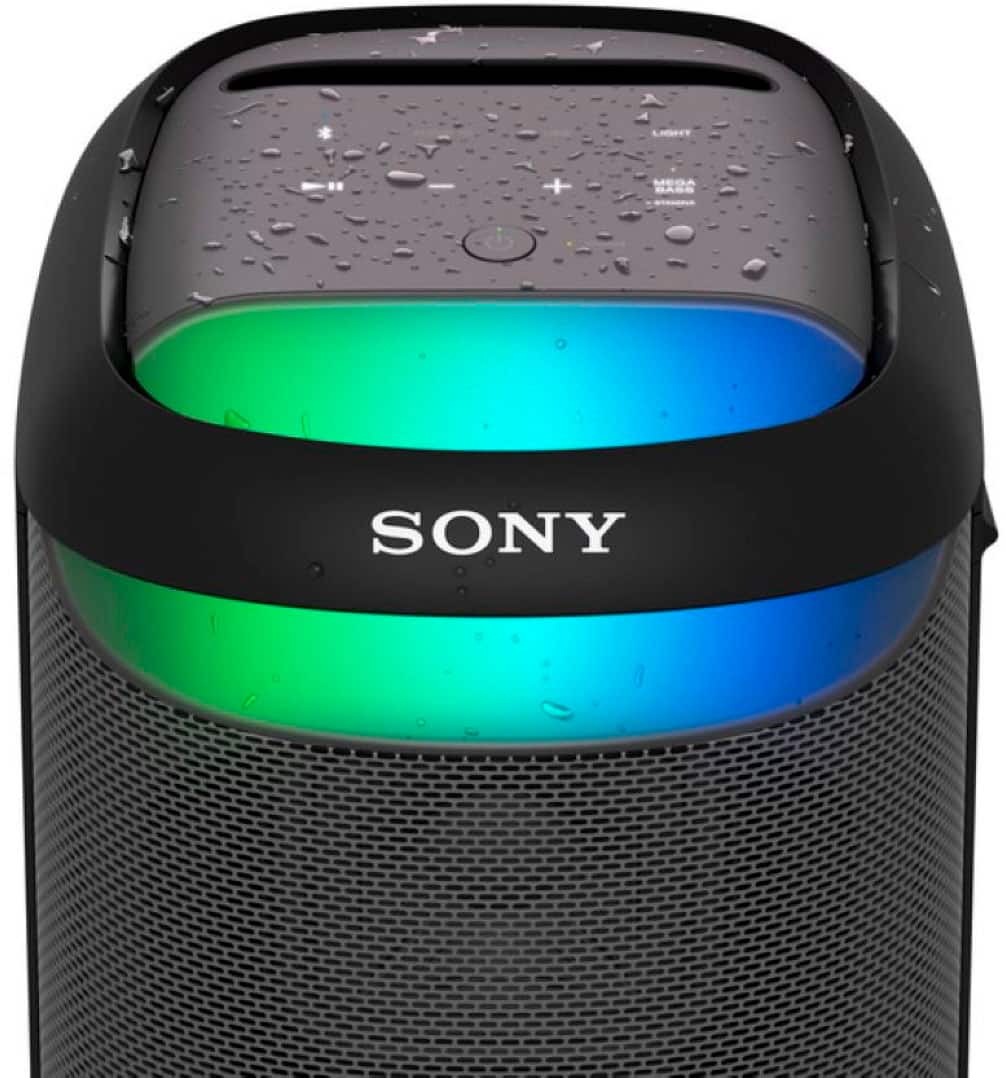
The Sony SRS-XV500 uses recycled plastic construction and carries an IPX4 splash-proof rating—adequate for poolside use or light rain, but not submersible. The one-year warranty is standard for consumer electronics but reflects the different expectations for product longevity.
Since 2020, when the JBL EON ONE Compact was released, the portable PA market has evolved toward more app-based control and wireless connectivity features. The JBL was ahead of its time with comprehensive smartphone app control, allowing users to adjust mixer settings, effects, and EQ remotely. This capability proves especially valuable for solo performers who need to adjust sound without walking back to the speaker.
The speaker's ability to link multiple units while maintaining individual channel control creates a scalable system that can grow from solo performance to small band setup without requiring additional mixing equipment.
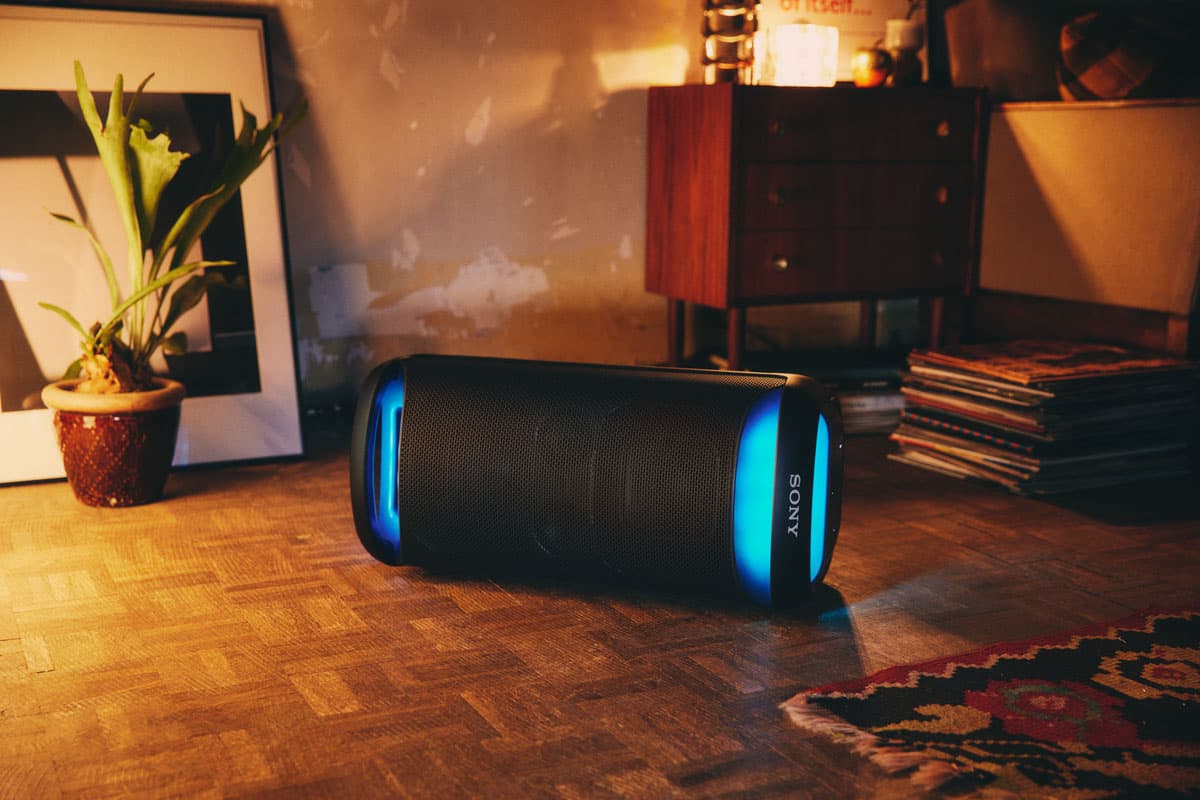
The Sony SRS-XV500, launched in 2024, incorporates newer Bluetooth 5.2 technology and supports LDAC codec for high-resolution audio streaming (though only from compatible Android devices). The RGB lighting system, while purely aesthetic, can sync to music and be customized through Sony's Fiestable app.
Sony's Party Connect represents a different approach to multi-speaker systems. Rather than traditional audio linking, it creates a wireless mesh network that can synchronize music across dozens of speakers. For large gatherings spanning multiple rooms or outdoor areas, this approach offers more flexibility than traditional wired connections.
Neither speaker is designed specifically for home theater use, but both can serve as temporary solutions or outdoor entertainment systems. The JBL EON ONE Compact would be the better choice for home theater applications due to its superior dynamic range and frequency response. Its ability to handle both dialogue and music without constant EQ adjustments makes it suitable for movie watching, though dedicated home theater speakers would perform better.
The Sony SRS-XV500's bass-heavy tuning and stereo configuration might seem appealing for movies, but the lack of true surround processing and its party-oriented sound signature make it less ideal for serious home theater use.
Based on extensive research into user experiences and professional reviews, clear patterns emerge for where each speaker excels. The JBL EON ONE Compact consistently impresses users who need reliable audio for performances. Solo musicians appreciate the ability to connect a microphone and instrument simultaneously while controlling levels and effects from their phone. Corporate presenters value the automatic ducking feature and clear speech reproduction.
The Sony SRS-XV500 shines in social settings where atmosphere matters more than audiophile-grade sound quality. Users consistently praise its battery life for all-day events and the visual appeal of its lighting effects. The karaoke features, while basic, prove adequate for casual use.
However, users attempting to use the Sony for serious musical performances often express frustration with its limited input options and the need for workarounds when connecting professional microphones or instruments.
Choose the JBL EON ONE Compact if you need professional audio quality for performances, presentations, or teaching. Musicians who gig regularly, even at coffee shops or small venues, will appreciate the superior sound clarity and mixing capabilities. The higher price point makes sense when audio quality cannot be compromised and when the speaker will see regular use where reliability matters.
The Sony SRS-XV500 makes more sense for casual users who prioritize battery life, entertainment features, and budget-friendly pricing. If your primary use involves backyard parties, beach gatherings, or occasional karaoke nights, the Sony's extended runtime and party-oriented features provide better value.
For users who might need both capabilities—occasional presentations and regular parties—the JBL proves more versatile, though at a higher cost. The Sony simply cannot match the JBL's professional audio capabilities, while the JBL can certainly handle party duties, even if it lacks RGB lighting.
At the time of writing, the price difference between these speakers reflects their fundamental design philosophies. The JBL EON ONE Compact delivers professional-grade audio performance in a compact, portable package—you're paying for superior drivers, amplification, and mixing capabilities that can handle serious audio work.
The Sony SRS-XV500 offers excellent value for casual entertainment needs, with exceptional battery life and party features at a more accessible price point.
Your choice ultimately depends on whether you need a PA system that can party, or a party speaker that can handle basic amplification duties. Both excel in their intended roles, but trying to use either outside its design purpose will likely lead to disappointment.
| JBL EON ONE Compact | Sony SRS-XV500 |
|---|---|
| Maximum Volume Output - Critical for performance and large gatherings | |
| 112 dB SPL (professional concert levels) | Not specified (consumer-grade output) |
| Frequency Response - Determines bass depth and overall sound quality | |
| 37.5Hz - 20kHz (exceptional bass extension) | 20Hz - 20kHz (theoretical spec, weaker real-world bass) |
| Driver Configuration - Affects sound clarity and power handling | |
| 8" woofer + 1" tweeter (professional-grade) | Dual 5.5" woofers + dual 2.4" tweeters (stereo setup) |
| Professional Inputs - Essential for microphones and instruments | |
| 4-channel mixer with XLR/TRS, phantom power, Hi-Z input | Two 1/4" karaoke inputs (no XLR or phantom power) |
| Battery Life - Key factor for portable use | |
| 12 hours (swappable battery system) | 25 hours (fixed battery, varies with lighting/volume) |
| Weight & Portability - Important for frequent transport | |
| 17.6 lbs with fold-up handle (single-hand carry) | 24.7 lbs with fixed bar handle (two-hand carry) |
| Built-in Effects - Enhances sound for performances | |
| Professional Lexicon reverb, chorus, delay + 8-band EQ | Basic echo and key transposition for karaoke |
| Mixer Features - Determines versatility for different audio sources | |
| 4-channel digital mixer with ducking, individual channel control | Basic mic volume and echo controls only |
| Water Resistance - Matters for outdoor events | |
| None specified (indoor/covered use recommended) | IPX4 splash-proof (suitable for poolside use) |
| Multi-Speaker Capability - For larger venues or stereo sound | |
| Passthrough linking with identical audio | Party Connect (up to 100 Sony speakers wirelessly) |
| App Control - Remote adjustment convenience | |
| JBL Pro Connect (full mixer and EQ control) | Sony Music Center + Fiestable (basic controls + lighting) |
| Lighting Effects - Entertainment value for parties | |
| None (focused on audio performance) | RGB lighting synchronized to music |
| Warranty Coverage - Indicates build quality expectations | |
| 7 years (3 years on battery) | 1 year standard consumer warranty |
| Target Use Case - Who each speaker is designed for | |
| Musicians, presenters, professional audio needs | Party hosts, karaoke enthusiasts, casual entertainment |
The JBL EON ONE Compact is significantly better for live music performances. It features professional XLR inputs, phantom power for condenser microphones, and a 4-channel digital mixer with studio-quality effects. The JBL delivers 112 dB SPL output with exceptional clarity, while the Sony SRS-XV500 is designed more for casual karaoke and party entertainment with basic 1/4" inputs.
The Sony SRS-XV500 offers up to 25 hours of battery life under optimal conditions, significantly longer than the JBL EON ONE Compact's 12-hour runtime. However, the JBL features a swappable battery system that allows unlimited runtime with spare batteries, while the Sony has a fixed internal battery.
The JBL EON ONE Compact gets considerably louder with professional-grade 112 dB SPL output and superior sound clarity. Reviews consistently show the JBL measuring 3-8 dB louder than the Sony SRS-XV500 at comparable settings. The JBL also extends bass response down to 37.5 Hz compared to the Sony's weaker low-frequency performance despite specifications claiming 20 Hz response.
Only the JBL EON ONE Compact properly supports professional microphones with XLR inputs and 48V phantom power for condenser mics. The Sony SRS-XV500 only has 1/4" inputs designed for basic dynamic microphones and karaoke use, requiring adapters or workarounds for professional microphones.
The JBL EON ONE Compact is more portable at 17.6 pounds with an ergonomic fold-up handle that allows single-handed carrying. The Sony SRS-XV500 weighs 24.7 pounds and requires two-handed carrying due to its fixed front bar handle design, making the JBL better for frequent transport.
Both work for outdoor parties, but serve different needs. The Sony SRS-XV500 excels with its 25-hour battery life, IPX4 splash resistance, and RGB lighting effects that enhance party atmosphere. The JBL EON ONE Compact provides superior sound quality and can handle both music and announcements, but lacks water resistance and party lighting features.
The JBL EON ONE Compact is excellent for presentations with professional microphone inputs, automatic ducking that lowers music when you speak, and clear vocal reproduction. The Sony SRS-XV500 can handle basic presentation needs but lacks professional features and may require workarounds for proper microphone connections.
Value depends on your needs. The Sony SRS-XV500 offers excellent value for casual entertainment with long battery life and party features at a lower price point. The JBL EON ONE Compact costs significantly more but delivers professional audio quality, mixing capabilities, and build quality that justify the premium for serious audio applications.
Yes, but differently. The JBL EON ONE Compact uses traditional passthrough connections to link multiple units with identical audio. The Sony SRS-XV500 uses Party Connect technology to wirelessly network up to 100 compatible Sony speakers, offering more flexibility for large area coverage but locking you into Sony's ecosystem.
The JBL EON ONE Compact offers more comprehensive app control through JBL Pro Connect, allowing full remote mixer control, EQ adjustment, and effects management. The Sony SRS-XV500 uses Sony Music Center and Fiestable apps for basic controls and lighting customization, but with less audio control depth than the JBL.
The Sony SRS-XV500 is specifically designed for karaoke with built-in echo effects, key transposition, and easy setup for casual singing. While the JBL EON ONE Compact can handle karaoke with superior audio quality and professional effects, it's overkill for basic karaoke needs and requires more technical knowledge to operate.
The JBL EON ONE Compact demonstrates superior build quality with a 7-year warranty (3 years on battery) and professional-grade polypropylene construction designed for gigging use. The Sony SRS-XV500 offers standard consumer durability with IPX4 splash resistance and a 1-year warranty, adequate for casual use but not built for heavy professional applications.
We've done our best to create useful and informative comparisons to help you decide what product to buy. Our research uses advanced automated methods to create this comparison and perfection is not possible - please contact us for corrections or questions. These are the sites we've researched in the creation of this article: bestbuy.com - crutchfield.com - noisegate.com.au - zzounds.com - jblpro.com - youtube.com - soundonsound.com - jblpro.com - youtube.com - youtube.com - jbl.com - samash.com - sweetwater.com - avnow.com - soundonsound.com - youtube.com - kh.jbl.com - talkbass.com - techradar.com - proav.com - gearspace.com - jazzguitar.be - sweetwater.com - youtube.com - crutchfield.com - forums.musicplayer.com - adn.harmanpro.com - device.report - bgs.cc - youtube.com - bestbuy.com - rtings.com - bestbuy.com - youtube.com - rtings.com - versus.com - youtube.com - versus.com - youtube.com - youtube.com - guidingtech.com - crutchfield.com - sony.com - sony.com - bestbuy.com - helpguide.sony.net - smappliance.com - youtube.com - helpguide.sony.net - videoandaudiocenter.com - electronics.sony.com - linqcdn.avbportal.com

Privacy Policy
Terms and Conditions - Affiliate Policy
Home Security
© Copyright 2008-2026.
11816 Inwood Rd #1211, Dallas, TX 75244