

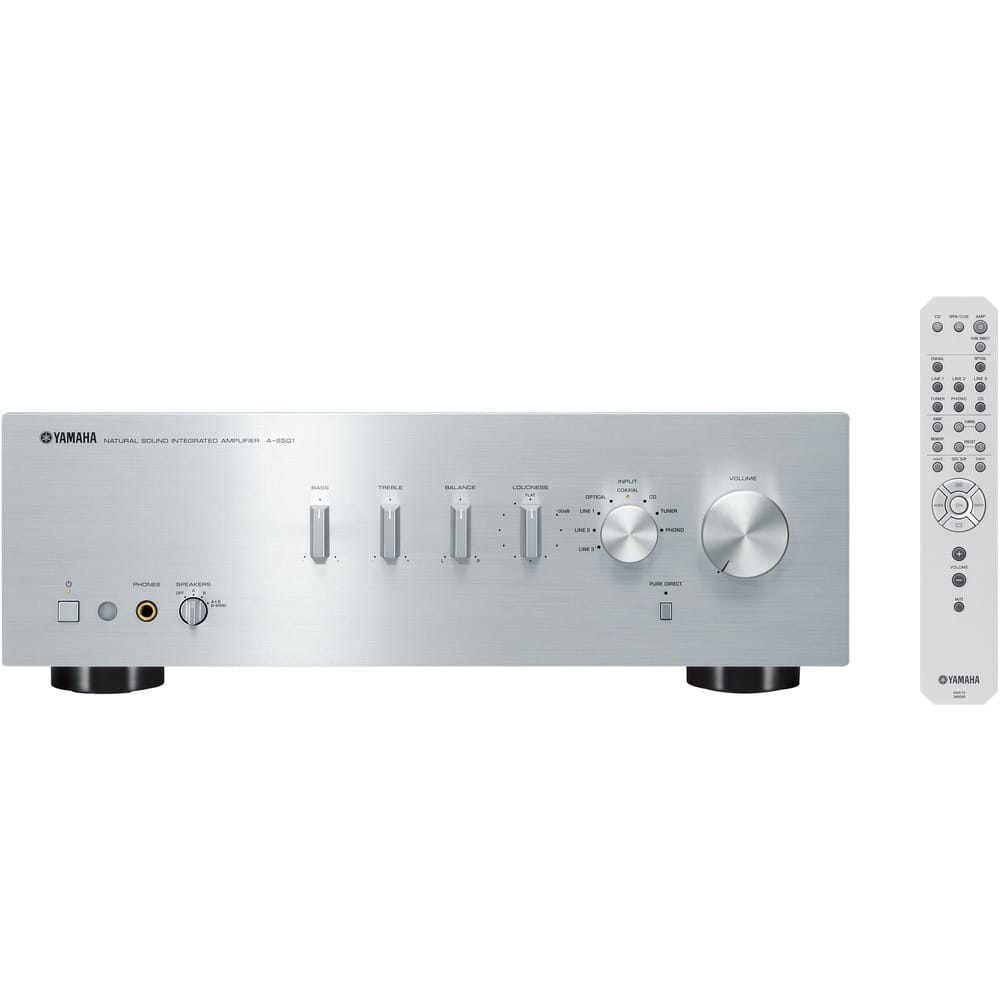
When shopping for an integrated amplifier today, you're essentially choosing between two different philosophies about how music should be delivered in your home. The traditional approach focuses on pure amplification with high-quality components, while the modern approach integrates wireless streaming and smart features directly into the amplifier. This fundamental split creates some fascinating comparisons, especially when looking at products like the SVS Prime Wireless Pro SoundBase and the Yamaha A-S501.
An integrated amplifier combines two essential components: a preamplifier (which controls volume and switches between sources) and a power amplifier (which provides the electrical muscle to drive your speakers). Think of it as the command center and power plant of your stereo system rolled into one box. The quality of both sections determines how your music sounds, but they serve different purposes that affect performance in distinct ways.
The preamplifier section handles delicate audio signals, managing volume control and source selection while adding minimal noise or distortion. A quality preamp preserves the subtle details in your music – the breath between vocal phrases or the decay of a piano note. The power amplifier section, meanwhile, takes these refined signals and amplifies them with enough current and voltage to move your speaker drivers. This is where specifications like watts per channel and damping factor (how well the amplifier controls speaker movement) become crucial.
Modern integrated amplifiers increasingly include digital-to-analog converters (DACs), which transform digital music files into analog signals your amplifier can process. The quality of this conversion significantly affects how streaming music and digital sources sound through your system.
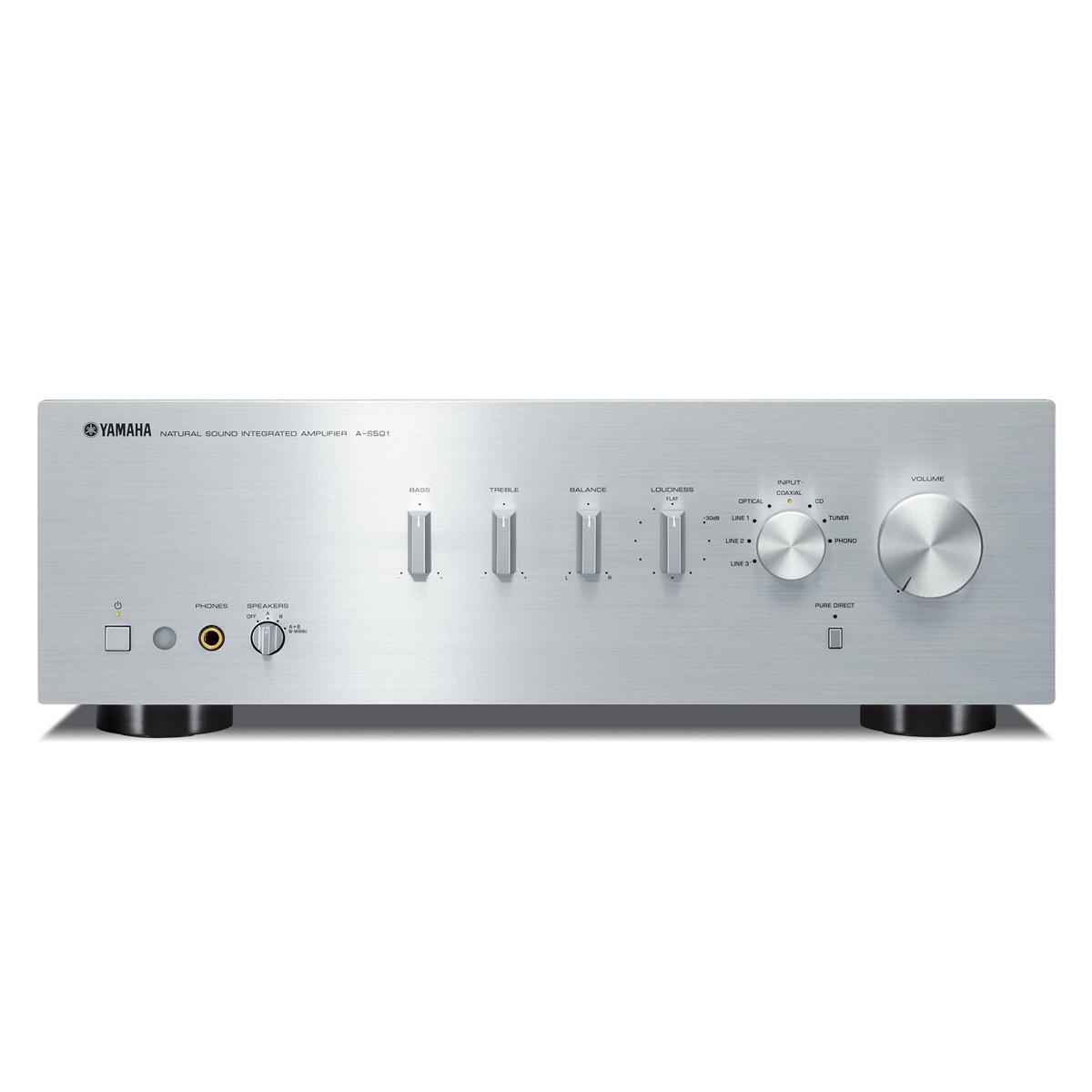
The Yamaha A-S501, released around 2014, represents the refined evolution of traditional integrated amplifier design. Yamaha built upon decades of experience creating hi-fi components, incorporating their ToP-ART (Total Purity Audio Reproduction Technology) – a design philosophy that organizes internal components symmetrically to minimize interference between left and right channels. This creates cleaner stereo imaging, where instruments appear more precisely positioned in the soundstage.
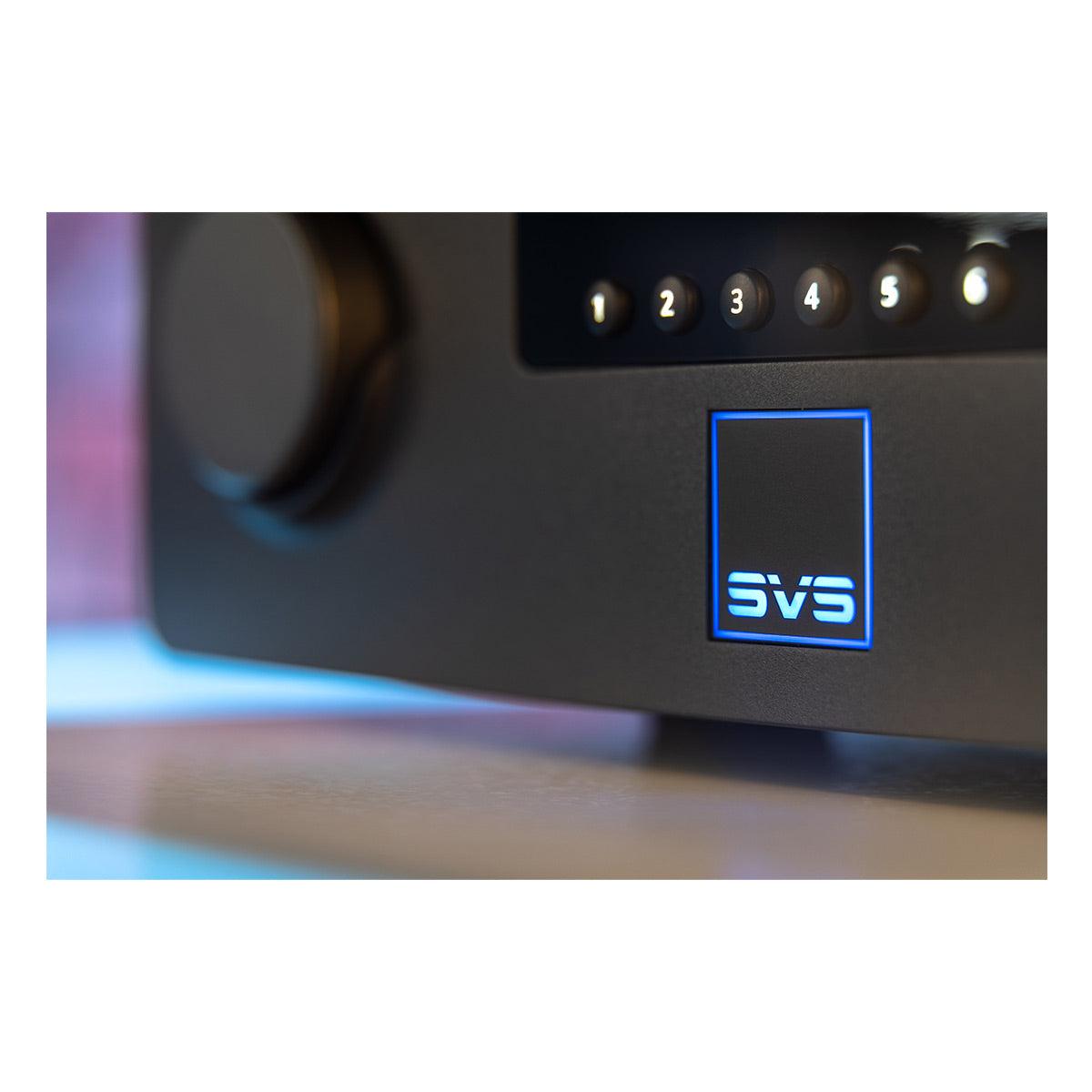
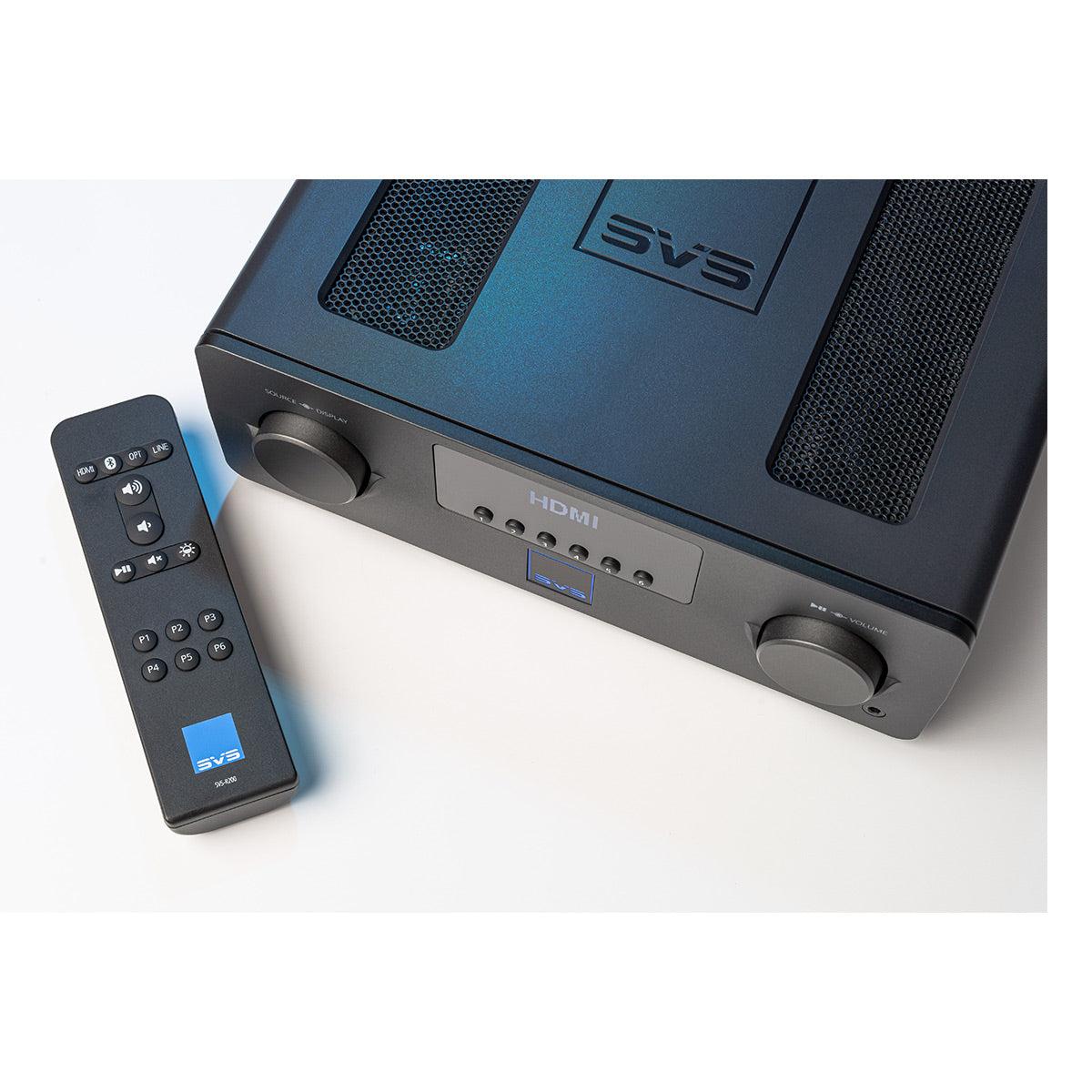
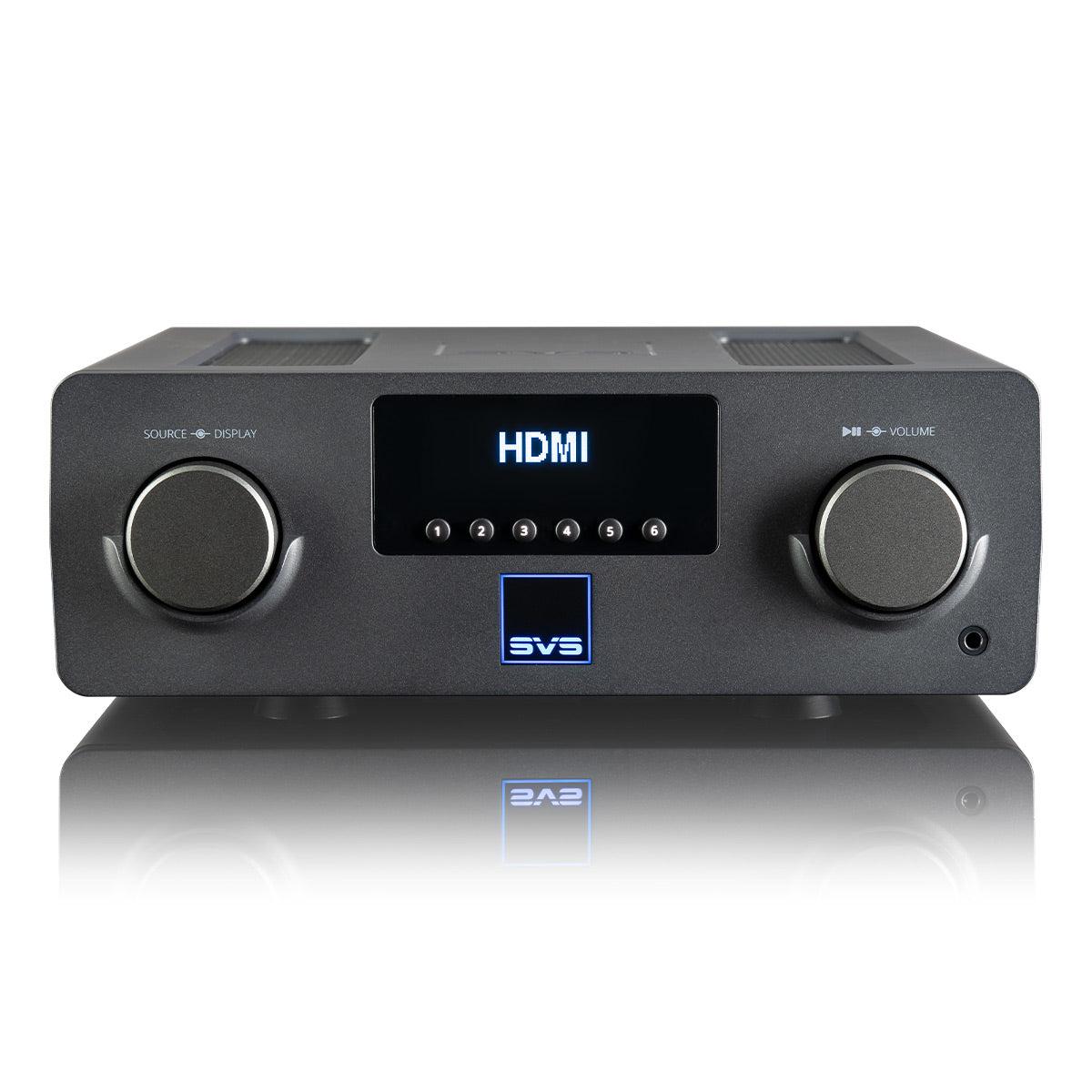
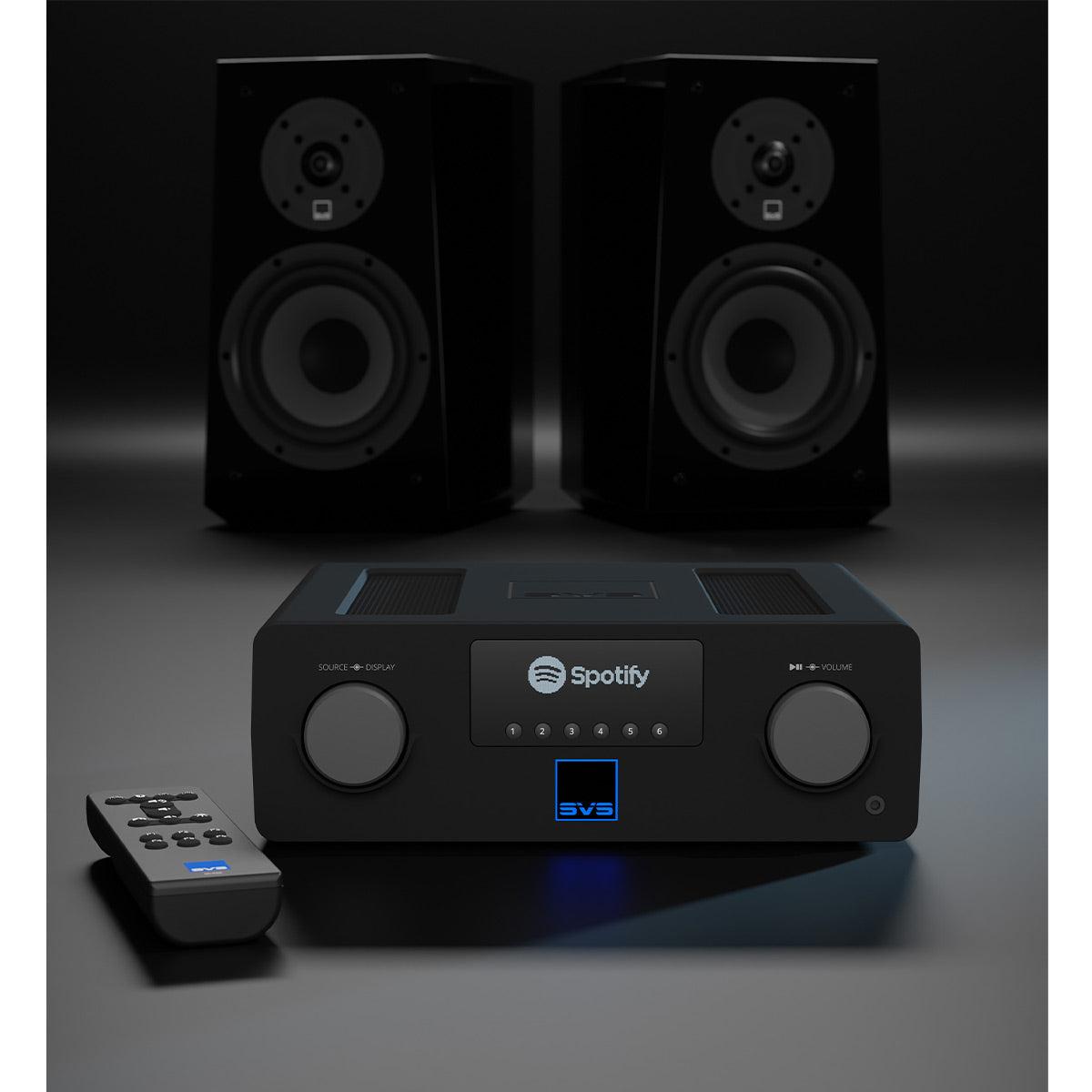
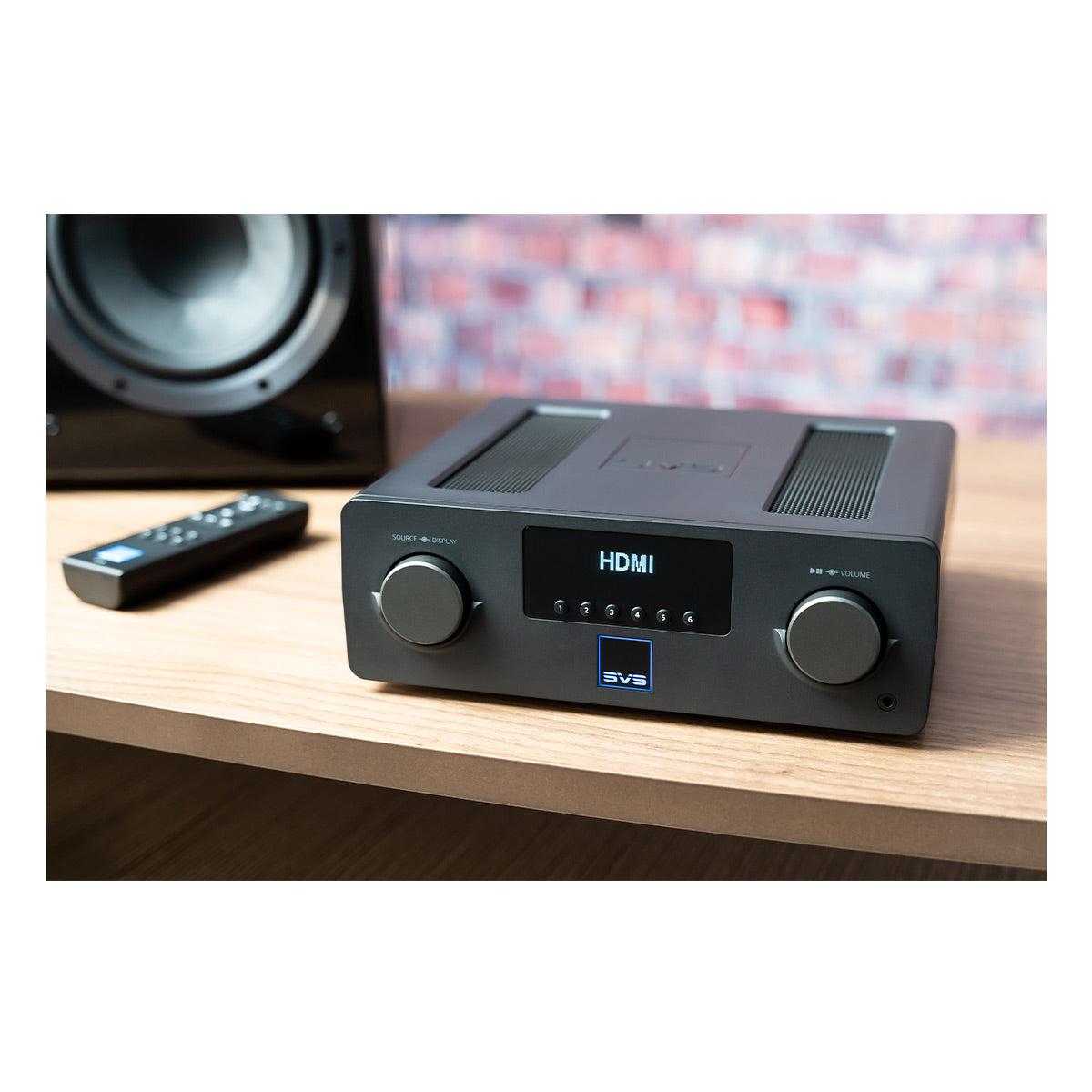
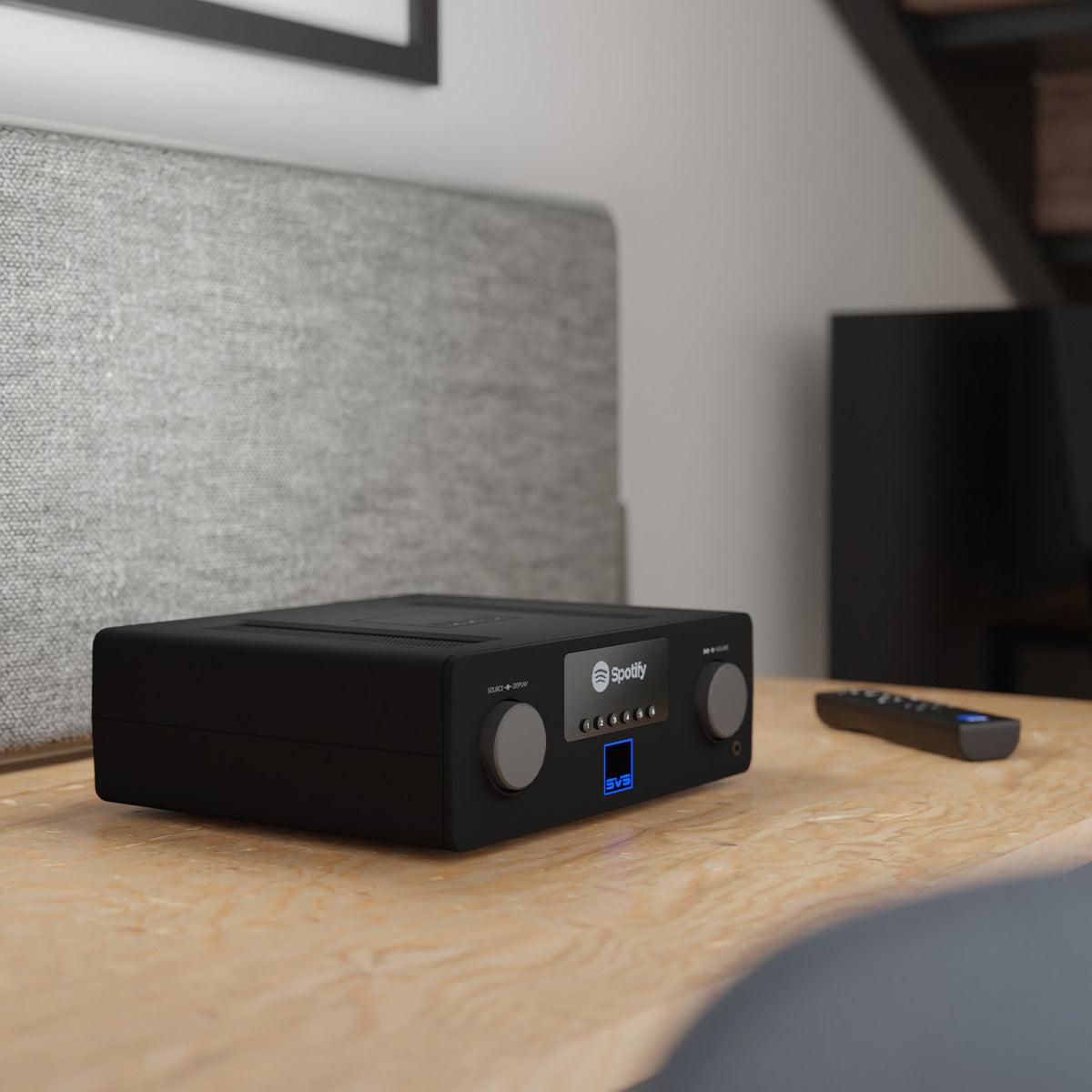
The SVS Prime Wireless Pro SoundBase, arriving in late 2022, takes a completely different approach. SVS, known primarily for subwoofers and speakers, designed this amplifier around the assumption that most people stream their music wirelessly. Rather than treating streaming as an add-on feature, they made it the centerpiece of the design, then built traditional amplification around it.
This eight-year gap between releases represents a seismic shift in how people consume music. In 2014, many listeners still preferred physical media or local digital files. By 2022, streaming services like Spotify, Tidal, and Apple Music dominated music consumption, fundamentally changing what features matter most in an amplifier.
When comparing amplifier power, the numbers tell only part of the story. The Yamaha A-S501 delivers 85 watts per channel into 8-ohm speakers, which represents the industry standard measurement. However, Yamaha also specifies much higher dynamic power ratings – up to 220 watts per channel into 2-ohm loads. This indicates the amplifier can deliver significant current bursts when music demands it, crucial for reproducing sudden musical peaks like drum strikes or orchestral crescendos.
The SVS Prime Wireless Pro SoundBase takes a different approach, rating its output at 150 watts per channel into 4-ohm speakers. This specification method makes direct comparison tricky, but real-world performance reviews consistently demonstrate the SVS can drive demanding speakers to high volumes without strain. The compact Class D amplification (a highly efficient switching design) in the SVS proves that physical size doesn't necessarily limit power delivery.
For most listeners, either amplifier provides sufficient power. The critical factor becomes current delivery – the amplifier's ability to provide instant power when music demands it. Both models handle this well, though they achieve it through different engineering approaches.
The sound characteristics of these amplifiers reflect their design priorities. The Yamaha A-S501 emphasizes purity and control, featuring a Pure Direct mode that bypasses tone controls and buffer circuits entirely. This creates the shortest possible signal path from input to output, minimizing any electronic interference with the original recording. Users consistently describe the Yamaha's sound as muscular and controlled, with particularly strong bass definition thanks to its high damping factor of 240.
The SVS Prime Wireless Pro SoundBase pursues a more neutral approach, designed to work well with various streaming sources and speaker types. Based on extensive user feedback, it maintains clarity and detail across different input methods, though Bluetooth connections show slightly less refinement than Wi-Fi or wired inputs. This makes sense given Bluetooth's compression requirements, which reduce audio quality compared to lossless streaming methods.
The continuously variable loudness control on the Yamaha A-S501 deserves special attention. Unlike simple bass and treble controls, this feature compensates for how human hearing works at different volume levels. At low volumes, we naturally hear less bass and treble, so the loudness control gradually boosts these frequencies to maintain tonal balance. This proves particularly valuable for late-night listening or background music.
Both amplifiers include 24-bit/192kHz DACs, but their implementation reveals different priorities. The Yamaha A-S501 treats digital inputs as one option among many, providing optical and coaxial connections that work reliably with CD players, TVs, and other digital sources. The DAC performs adequately for its intended purpose, though audiophiles seeking the ultimate digital performance might eventually upgrade to an external DAC.
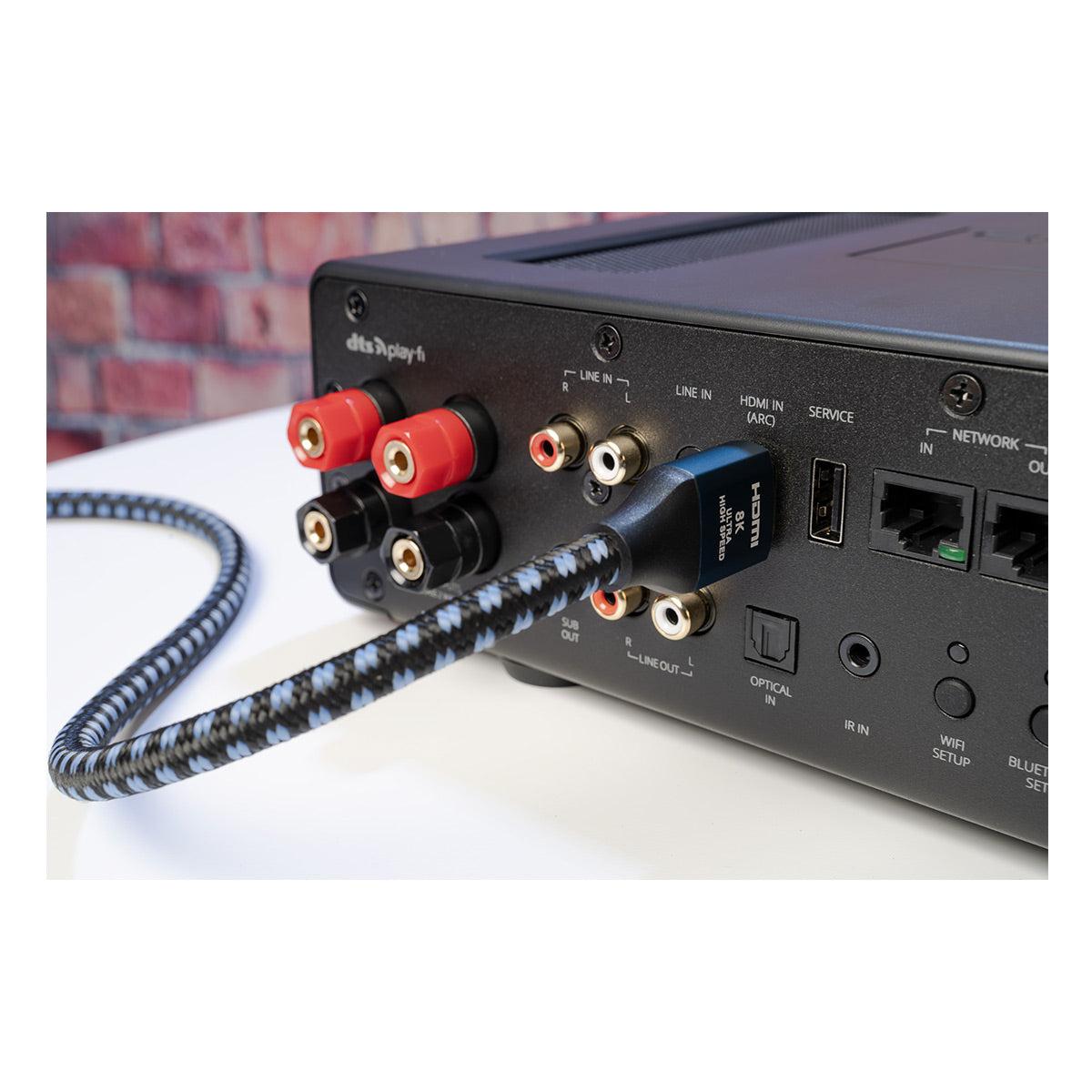
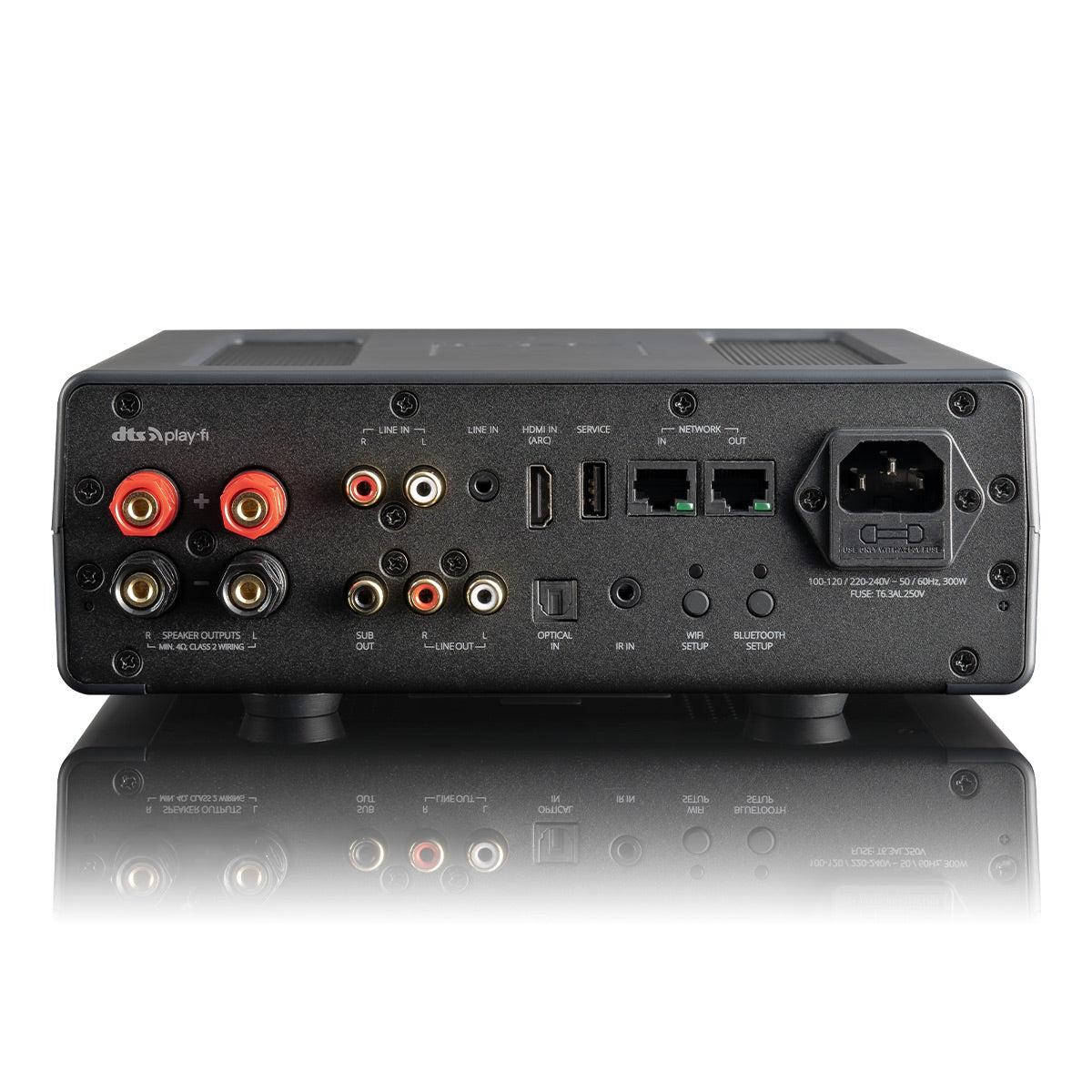
The SVS Prime Wireless Pro SoundBase makes digital streaming its primary focus, supporting high-resolution audio up to 24-bit/192kHz over Wi-Fi connections. More importantly, it includes HDMI eARC connectivity, allowing direct connection to modern TVs. This single cable can handle audio return from the TV while potentially controlling volume through the TV remote – a significant convenience factor for users integrating stereo systems with home theater setups.
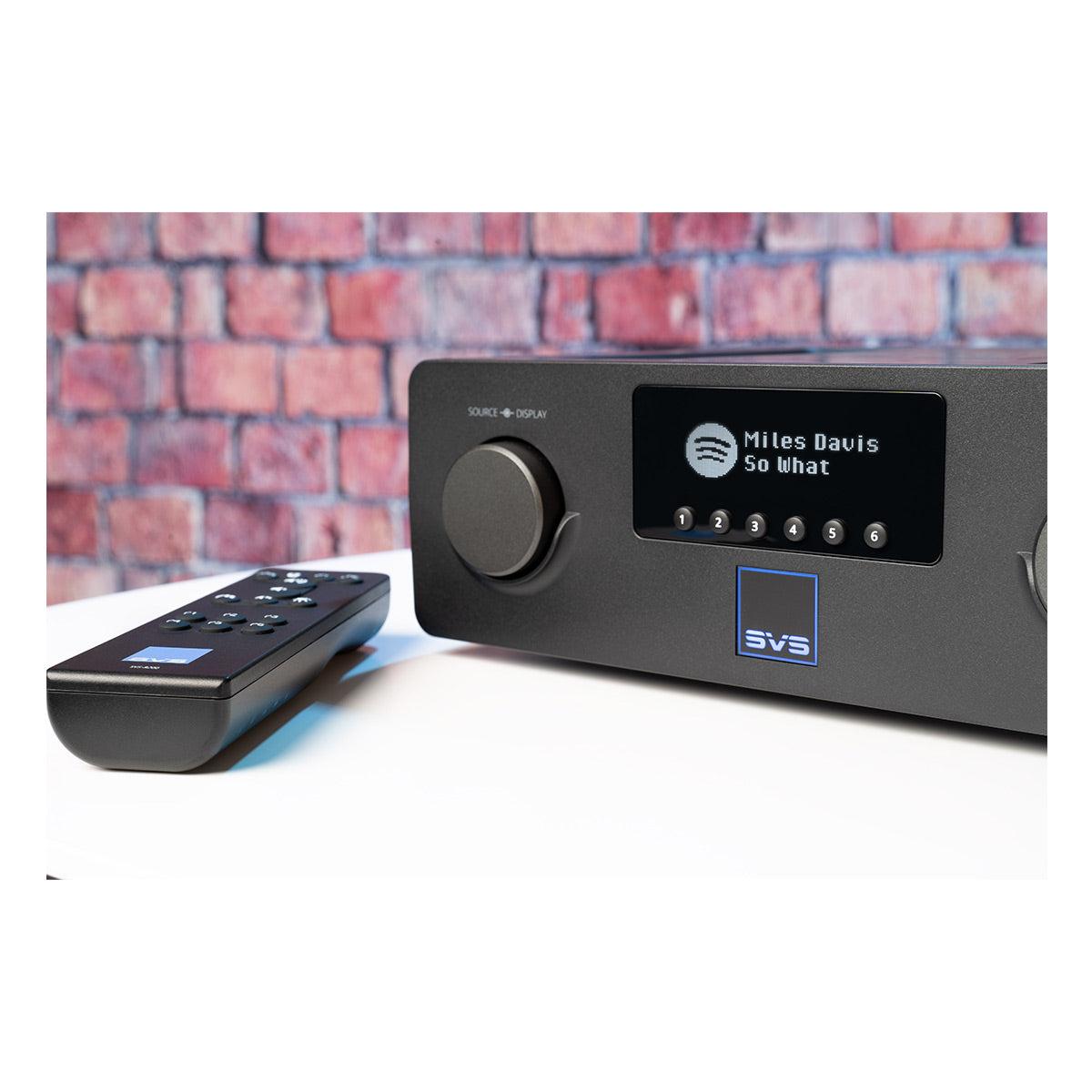
The streaming capabilities represent the SVS's biggest advantage. Wi-Fi streaming avoids Bluetooth's compression, DTS Play-Fi enables multiroom audio throughout the home, and support for services like Spotify Connect allows direct control from your music app. This eliminates the need for separate streaming devices in most cases.
The connectivity differences between these amplifiers highlight their target audiences. The Yamaha A-S501 provides six analog RCA inputs plus a moving magnet phono input for turntables. This analog-focused approach suits users with multiple sources – CD players, turntables, tape decks, or other analog components. The inclusion of two speaker outputs with A/B switching allows connection of multiple speaker pairs, useful for systems covering different rooms or outdoor areas.
The SVS Prime Wireless Pro SoundBase assumes most sources will connect wirelessly, providing fewer physical inputs but comprehensive wireless options. AirPlay 2 works seamlessly with Apple devices, Chromecast handles Android devices and Google services, and DTS Play-Fi creates a multiroom ecosystem. The HDMI input particularly benefits home theater integration, something increasingly important as TVs become primary entertainment sources.
Both include subwoofer outputs, though with important differences. The Yamaha A-S501 doesn't specify bass management capabilities in available documentation, while the SVS explicitly provides a full-range subwoofer output without built-in crossover filtering. This means connected subwoofers must handle their own low-pass filtering, which most powered subwoofers do automatically.
The user interface philosophy differs significantly between these amplifiers. The Yamaha A-S501 follows traditional hi-fi conventions with physical controls for each function, a comprehensive remote, and straightforward operation. The Pure Direct button provides instant access to bypass mode, while the loudness control offers precise adjustment for different listening scenarios. This direct, tactile approach appeals to users who prefer immediate physical control over their audio systems.
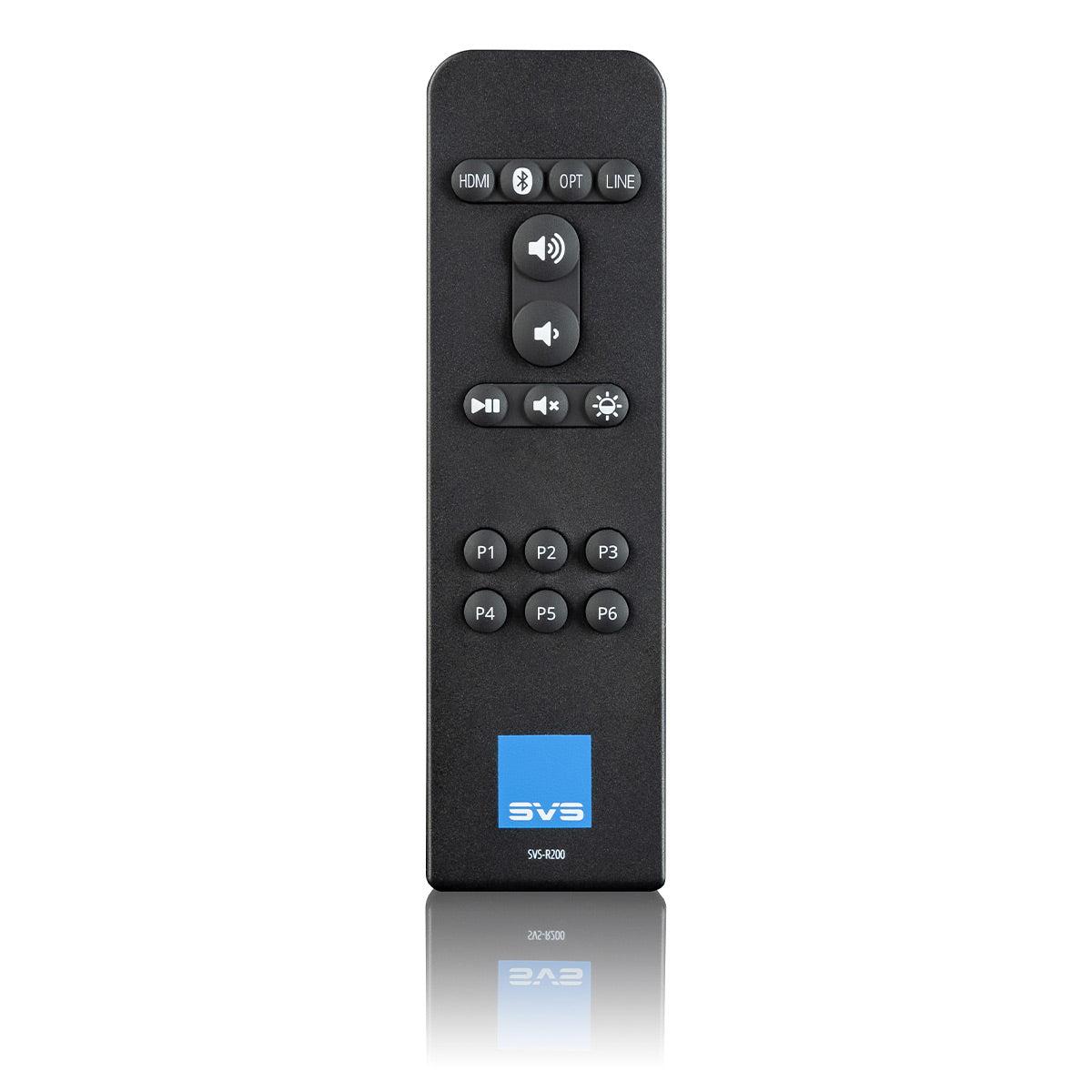
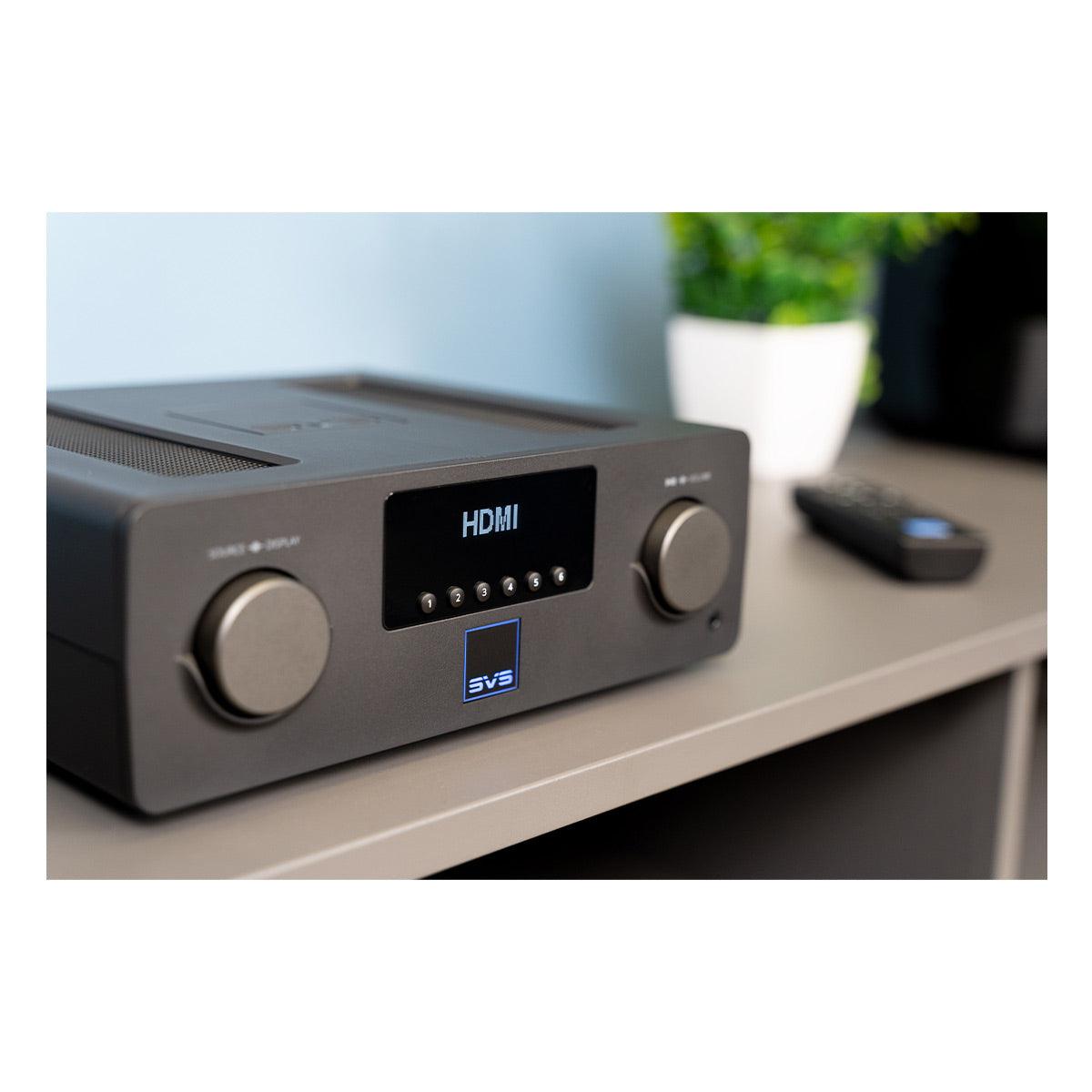
The SVS Prime Wireless Pro SoundBase emphasizes convenience and modern usability. Six preset buttons on the front panel can be programmed for instant access to favorite streaming services, playlists, or radio stations. The OLED display provides clear feedback about current sources and settings, while smartphone app control enables remote operation from anywhere in the room. Voice control compatibility with Alexa and Google Assistant adds another layer of convenience for smart home integration.
For users comfortable with streaming workflows, the SVS offers superior day-to-day usability. However, users preferring traditional hi-fi operation or those with limited smartphone comfort might find the Yamaha's direct controls more appealing.
Home theater integration increasingly influences stereo system decisions, as many users want their music system to handle TV audio effectively. The SVS Prime Wireless Pro SoundBase excels here, with HDMI eARC providing single-cable connection to modern TVs. This allows the stereo system to handle all TV audio – movies, shows, music streaming through TV apps – while potentially enabling TV remote volume control.
Combined with quality bookshelf speakers and a subwoofer, this setup significantly outperforms traditional soundbars while maintaining music system flexibility. The compact size of the SVS makes it practical for TV cabinet installation, and the preset buttons can include TV audio as one option alongside music streaming services.
The Yamaha A-S501 can handle TV audio through its optical input, but this requires separate remote control and doesn't integrate as seamlessly with TV operation. For users prioritizing home theater integration, this represents a meaningful practical difference in daily use.
Physical construction reveals different engineering priorities. The Yamaha A-S501 weighs over 22 pounds, housed in a substantial chassis with aluminum front panel and gold-plated connections. This traditional construction approach prioritizes vibration resistance and component isolation, with custom transformers and large capacitors providing clean, stable power delivery. Yamaha's reputation for reliability suggests this amplifier should provide decades of service.
The SVS Prime Wireless Pro SoundBase weighs just 5 pounds, achieving comparable performance through efficient Class D amplification and digital signal processing. While less traditional in construction, this approach reduces heat generation and power consumption while maintaining excellent performance. The trade-off involves greater dependence on software and firmware, which provides flexibility but introduces potential obsolescence concerns as streaming standards evolve.
At the time of writing, these amplifiers occupy different price segments, with the SVS commanding a premium over the Yamaha. This price difference reflects the significant development cost of integrating comprehensive streaming capabilities and the relative newness of the SVS product.
The Yamaha A-S501 represents excellent value for users building traditional stereo systems, providing proven amplification quality, comprehensive connectivity, and Yamaha's reliable engineering at a competitive price point. Adding external streaming capabilities later remains straightforward and potentially upgradeable as standards evolve.
The SVS Prime Wireless Pro SoundBase justifies its premium through convenience, modern feature integration, and space-saving design. For users prioritizing streaming, home theater integration, and contemporary usability, the additional cost delivers meaningful benefits that would be difficult to replicate by adding streaming devices to a traditional amplifier.
Choose the Yamaha A-S501 if you value traditional hi-fi principles, own vinyl records, prefer physical controls, or want to build your streaming capabilities separately. Its proven engineering, comprehensive analog connectivity, and lower cost make it ideal for listeners focused purely on sound quality and traditional source flexibility. The Pure Direct mode and overall design philosophy prioritize sonic purity above convenience features.
The SVS Prime Wireless Pro SoundBase suits users embracing modern music consumption patterns, those integrating stereo systems with TVs, or anyone prioritizing convenience and contemporary features. Its streaming capabilities, compact size, and smart home integration represent the future of hi-fi, though at a price premium that reflects these advanced features.
For home theater integration specifically, the SVS offers superior functionality through HDMI connectivity and preset convenience. Traditional stereo listening favors the Yamaha's pure amplification approach and traditional control methods.
Both amplifiers deliver excellent sound quality through different engineering approaches. Your choice ultimately depends on whether you prioritize streaming convenience and modern integration or prefer traditional hi-fi values with external streaming solutions. Either choice provides a solid foundation for an excellent audio system, just optimized for different listening preferences and usage patterns.
| SVS Prime Wireless Pro SoundBase | Yamaha A-S501 |
|---|---|
| Power Output - Determines how loud and dynamic your system can get | |
| 150W per channel @ 4Ω (compact but powerful for most speakers) | 85W per channel @ 8Ω, up to 220W dynamic @ 2Ω (excellent current delivery) |
| Wireless Streaming - Essential for modern music consumption | |
| Wi-Fi, AirPlay 2, Chromecast, DTS Play-Fi, Spotify Connect (comprehensive streaming) | None (requires external streaming device) |
| Physical Inputs - Connectivity for traditional sources | |
| RCA line, 3.5mm, optical digital, HDMI eARC (TV-focused) | 6x RCA, MM phono, optical, coaxial digital (vinyl and multi-source ready) |
| Size and Weight - Impact on placement flexibility | |
| 3.2" × 9.1" × 8.8", 5 lbs (fits anywhere, desktop-friendly) | 6" × 17.1" × 15.2", 22.7 lbs (traditional hi-fi footprint) |
| Home Theater Integration - TV audio handling capability | |
| HDMI eARC with single-cable TV connection and remote control | Optical input only (separate remote required) |
| User Interface - Daily operation convenience | |
| 6 preset buttons, OLED display, app control, voice assistant support | Traditional knobs and buttons, Pure Direct mode, remote control |
| Special Features - Unique capabilities that differentiate each product | |
| Multiroom audio, preset streaming shortcuts, compact Class D design | Pure Direct bypass mode, continuously variable loudness, ToP-ART technology |
| Build Philosophy - Engineering approach and target user | |
| Modern streaming-first design prioritizing convenience and integration | Traditional audiophile approach emphasizing signal purity and proven engineering |
The SVS Prime Wireless Pro SoundBase is significantly better for wireless streaming, offering Wi-Fi, AirPlay 2, Chromecast, DTS Play-Fi, and Spotify Connect built-in. The Yamaha A-S501 has no wireless capabilities and requires an external streaming device like a Chromecast or Apple TV for wireless music.
The SVS Prime Wireless Pro SoundBase connects directly to TVs via HDMI eARC, allowing single-cable connection and potential TV remote control. The Yamaha A-S501 can connect to TVs through its optical digital input but requires separate remote control and doesn't integrate as seamlessly.
Both amplifiers provide adequate power for most speakers, but they're rated differently. The SVS Prime Wireless Pro SoundBase delivers 150W per channel into 4-ohm loads, while the Yamaha A-S501 provides 85W per channel into 8-ohm loads with high dynamic power capability up to 220W per channel into 2-ohm loads.
You don't need a separate streaming device with the SVS Prime Wireless Pro SoundBase since it has comprehensive wireless streaming built-in. The Yamaha A-S501 requires an external streaming device like a Chromecast, Apple TV, or dedicated network streamer for wireless music playback.
The Yamaha A-S501 is better for vinyl records because it includes a built-in moving magnet (MM) phono stage for direct turntable connection. The SVS Prime Wireless Pro SoundBase lacks a phono input and would require an external phono preamp for turntable use.
The SVS Prime Wireless Pro SoundBase works excellently as a soundbar replacement when paired with bookshelf speakers and a subwoofer, thanks to its HDMI eARC connection and compact size. While the Yamaha A-S501 can handle TV audio through optical input, it's larger and doesn't integrate as seamlessly with TV systems.
The SVS Prime Wireless Pro SoundBase is much more compact at just 5 pounds and measuring 3.2" × 9.1" × 8.8", making it ideal for small spaces or TV cabinet installation. The Yamaha A-S501 weighs 22.7 pounds and measures 6" × 17.1" × 15.2", requiring traditional hi-fi rack space.
Yes, both amplifiers include digital inputs. The SVS Prime Wireless Pro SoundBase has optical digital input, while the Yamaha A-S501 offers both optical and coaxial digital inputs for connecting CD players, TVs, and other digital sources.
Value depends on your needs. The Yamaha A-S501 offers excellent value for traditional hi-fi users wanting proven engineering and comprehensive analog connectivity. The SVS Prime Wireless Pro SoundBase provides better value for users prioritizing streaming capabilities, TV integration, and modern convenience features.
The Yamaha A-S501 supports two pairs of speakers with A/B switching, allowing you to power speakers in different rooms or switch between setups. The SVS Prime Wireless Pro SoundBase has one pair of speaker outputs but can create multiroom audio through its DTS Play-Fi wireless capabilities.
The SVS Prime Wireless Pro SoundBase offers more convenient daily operation with smartphone app control, six preset buttons for instant streaming access, OLED display, and voice assistant compatibility. The Yamaha A-S501 uses traditional physical controls and remote operation, which some users prefer for direct tactile feedback.
Both work well for music and movies, but the SVS Prime Wireless Pro SoundBase excels for home theater integration with HDMI eARC connectivity and preset buttons that can include TV audio alongside streaming services. The Yamaha A-S501 handles both music and movies well but requires more setup for TV integration and separate remote control for different functions.
We've done our best to create useful and informative comparisons to help you decide what product to buy. Our research uses advanced automated methods to create this comparison and perfection is not possible - please contact us for corrections or questions. These are the sites we've researched in the creation of this article: soundandvision.com - crutchfield.com - futureaudiophile.com - dreamediaav.com - crutchfield.com - svsound.com - soundstageaccess.com - skybygramophone.com - hometheaterhifi.com - av-connection.com - crutchfield.com - soundstagenetwork.com - svsound.com - crutchfield.com - usa.yamaha.com - audioappraisal.com - crutchfield.com - bestbuy.com - europe.yamaha.com - whathifi.com - hifiheaven.net - youtube.com - omegabroadcast.com - avsforum.com - youtube.com - safeandsoundhq.com - vinylsound.ca - youtube.com

Privacy Policy
Terms and Conditions - Affiliate Policy
Home Security
© Copyright 2008-2026.
11816 Inwood Rd #1211, Dallas, TX 75244