

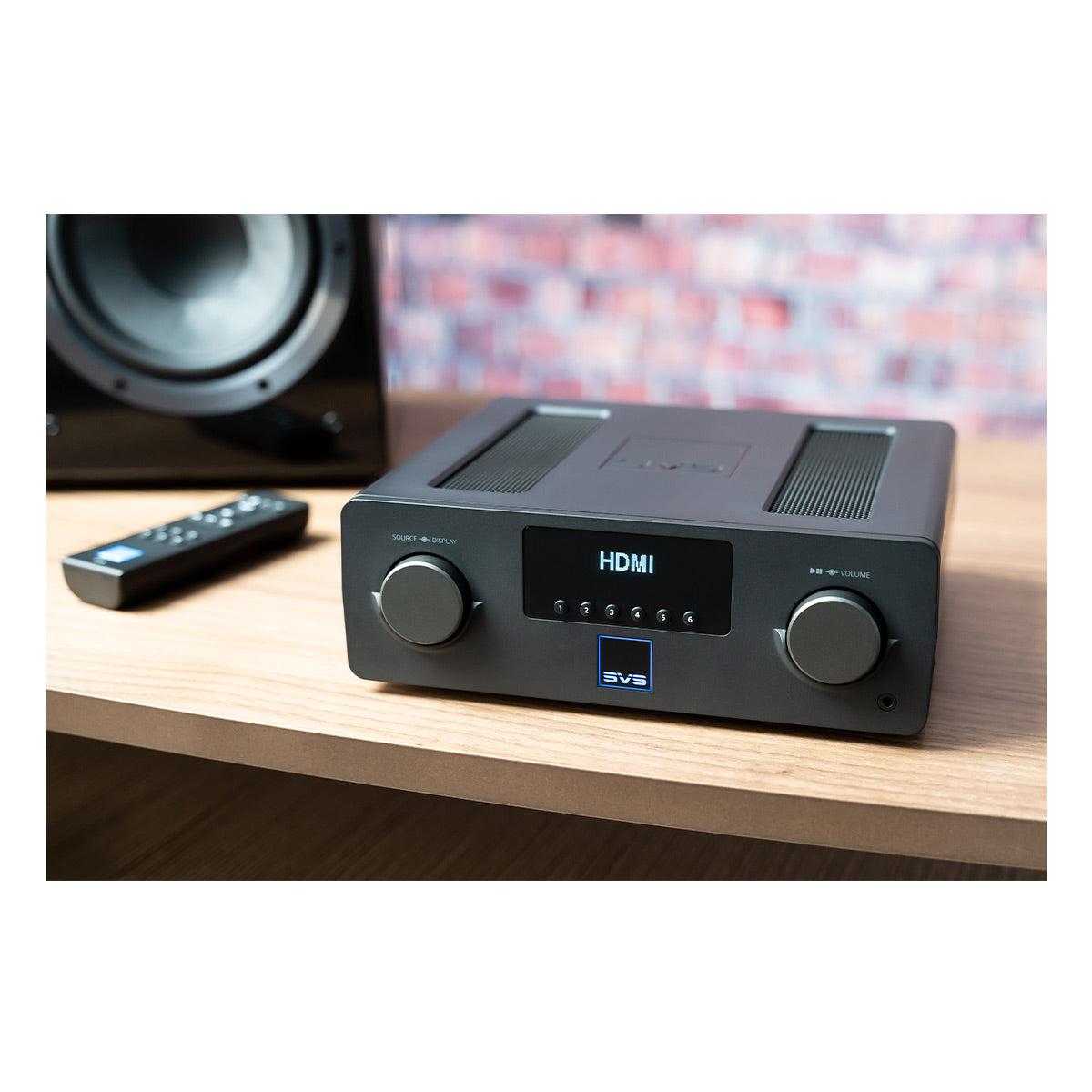
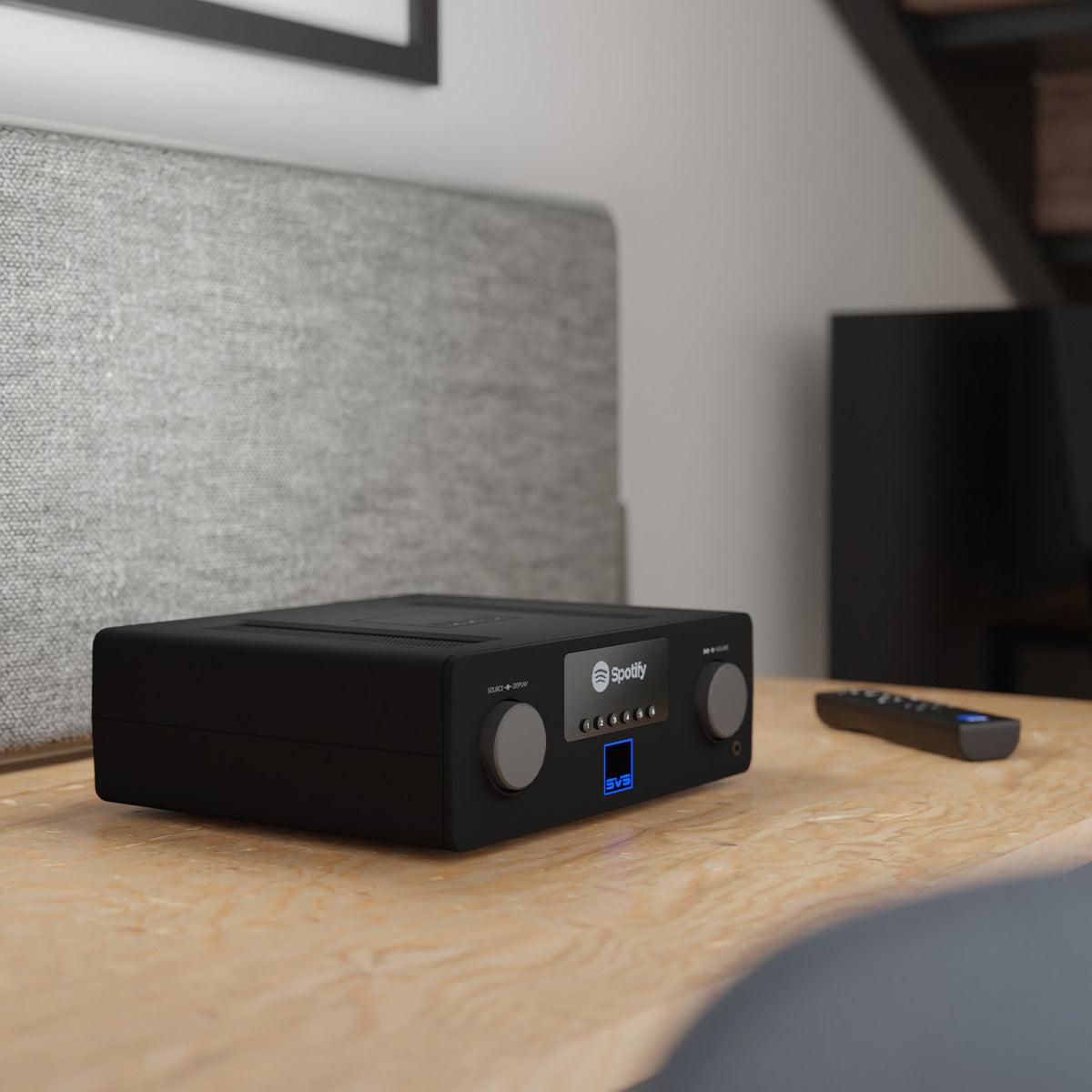
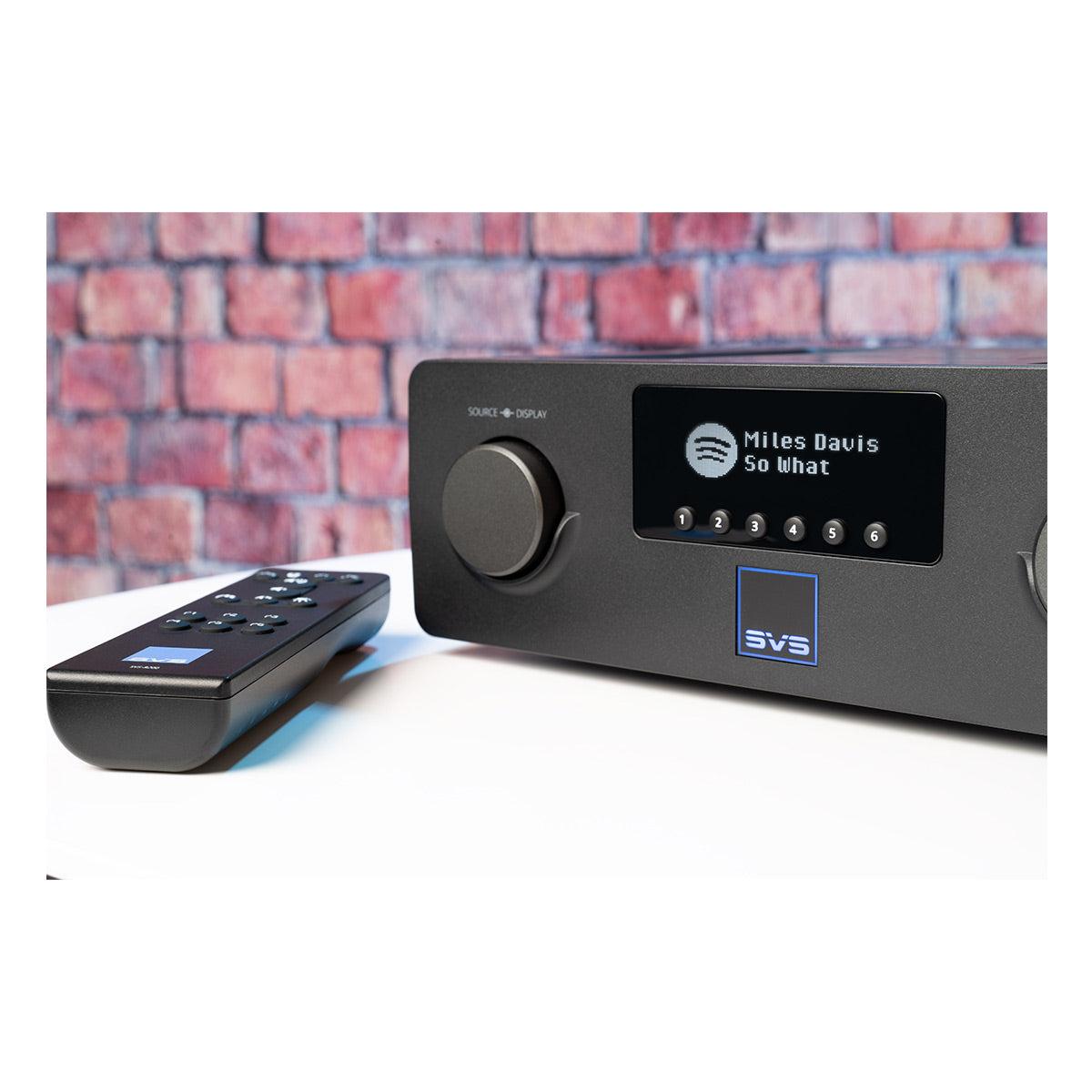
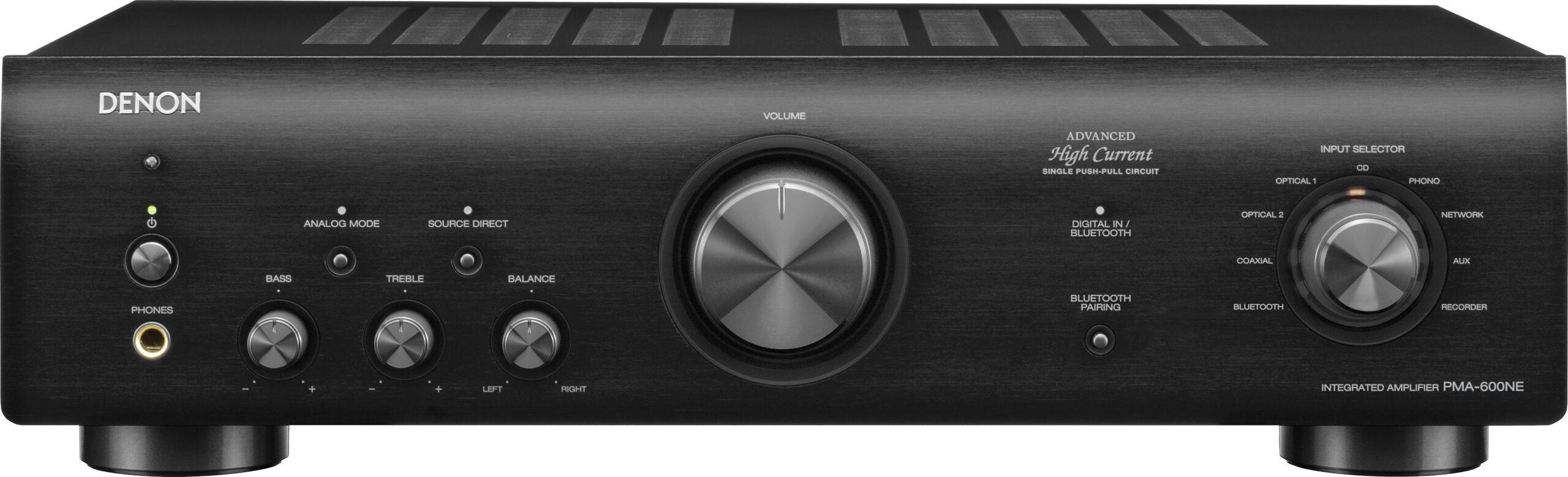
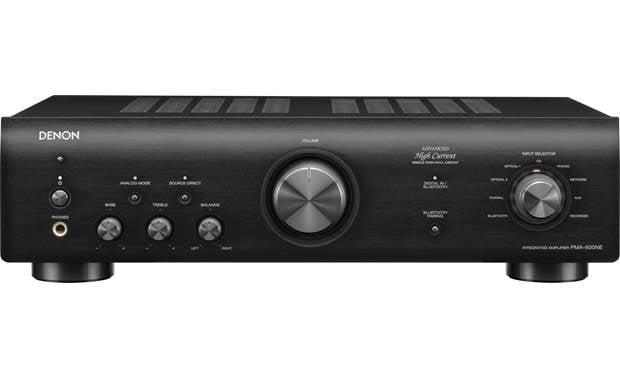
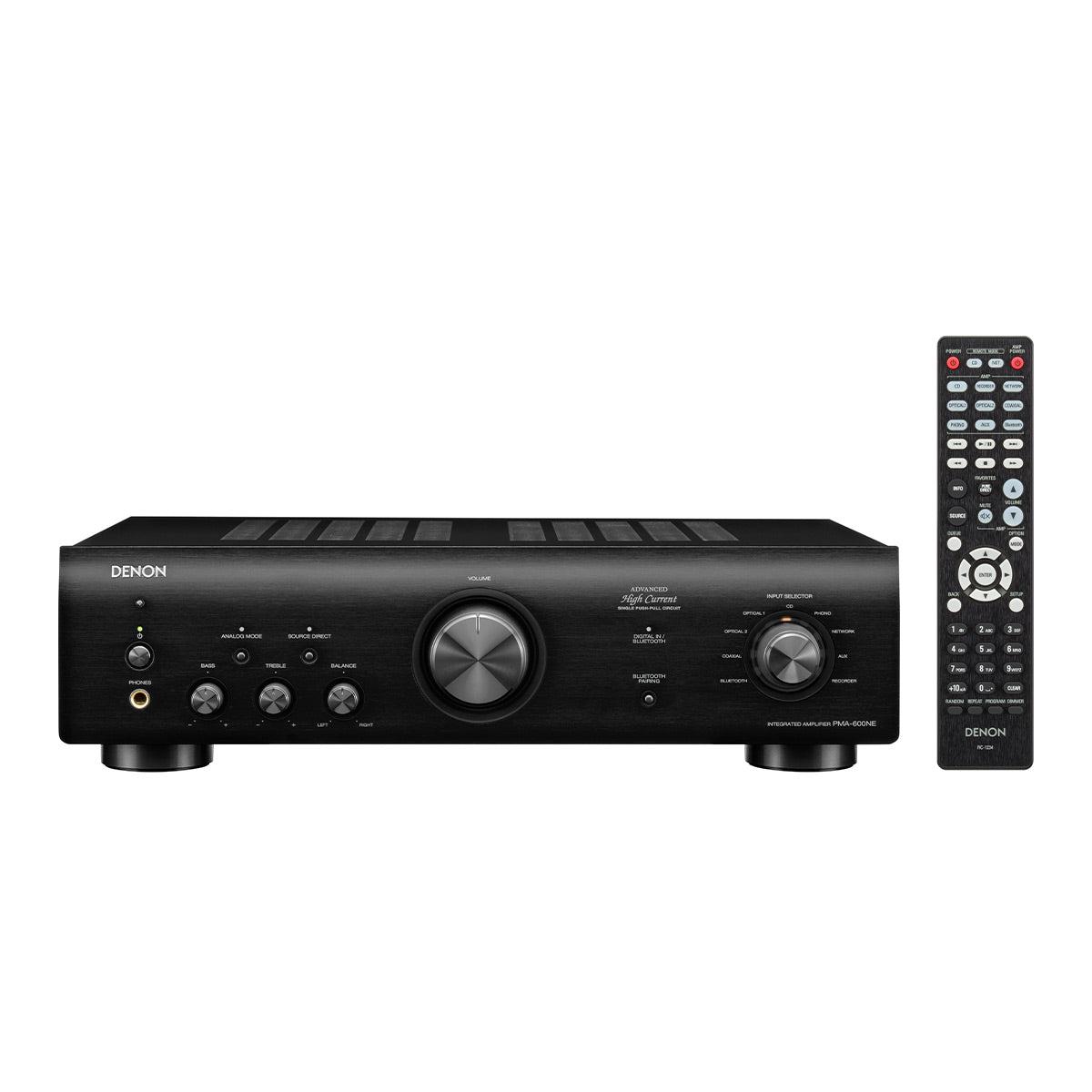
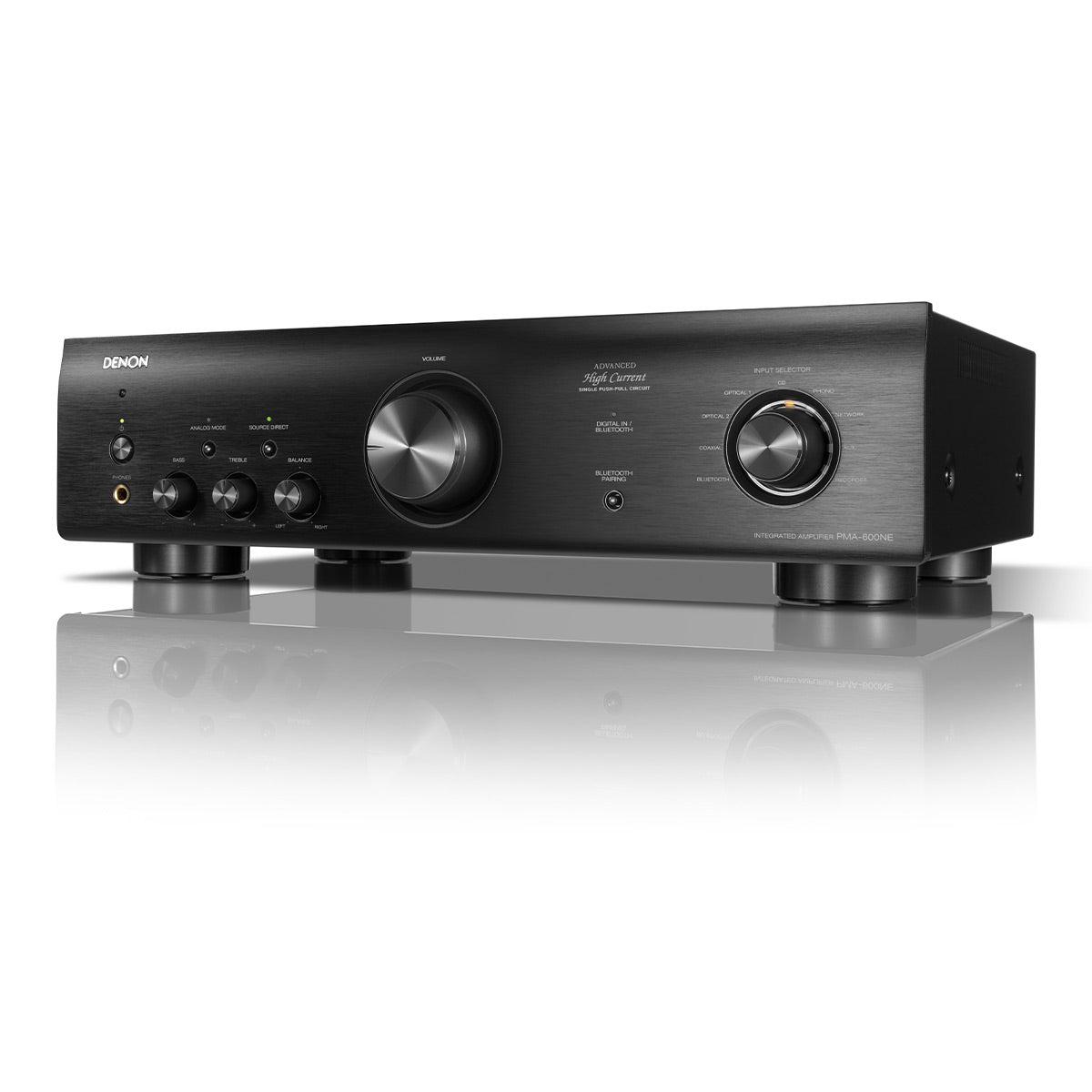
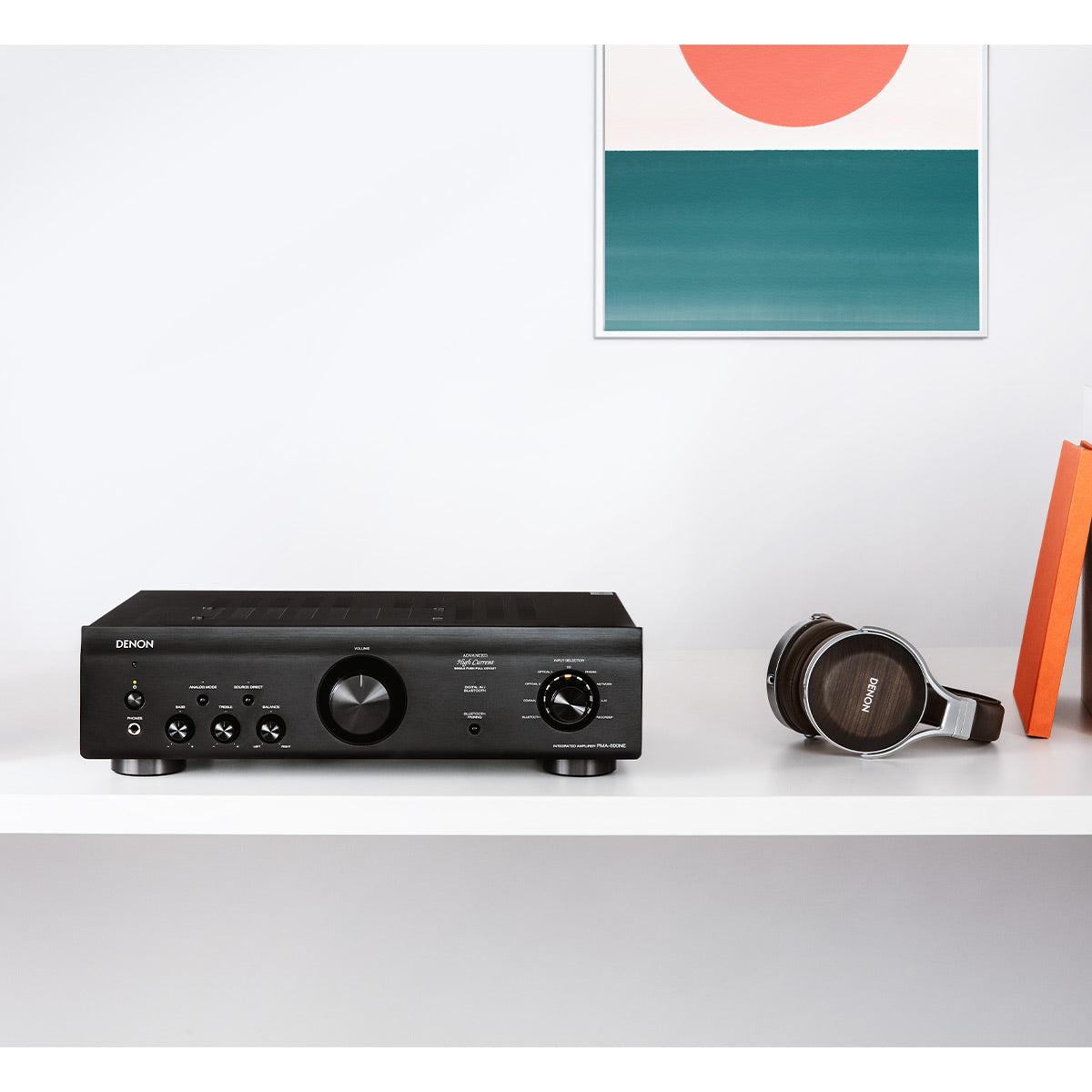
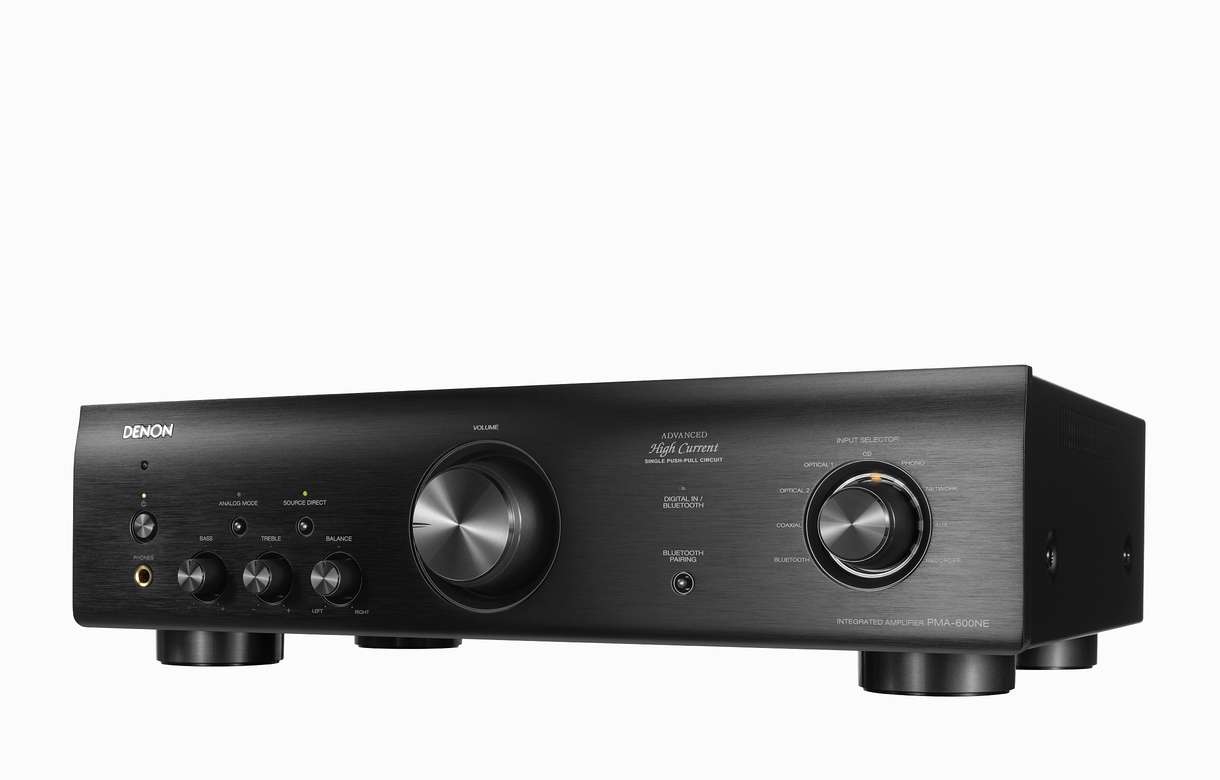
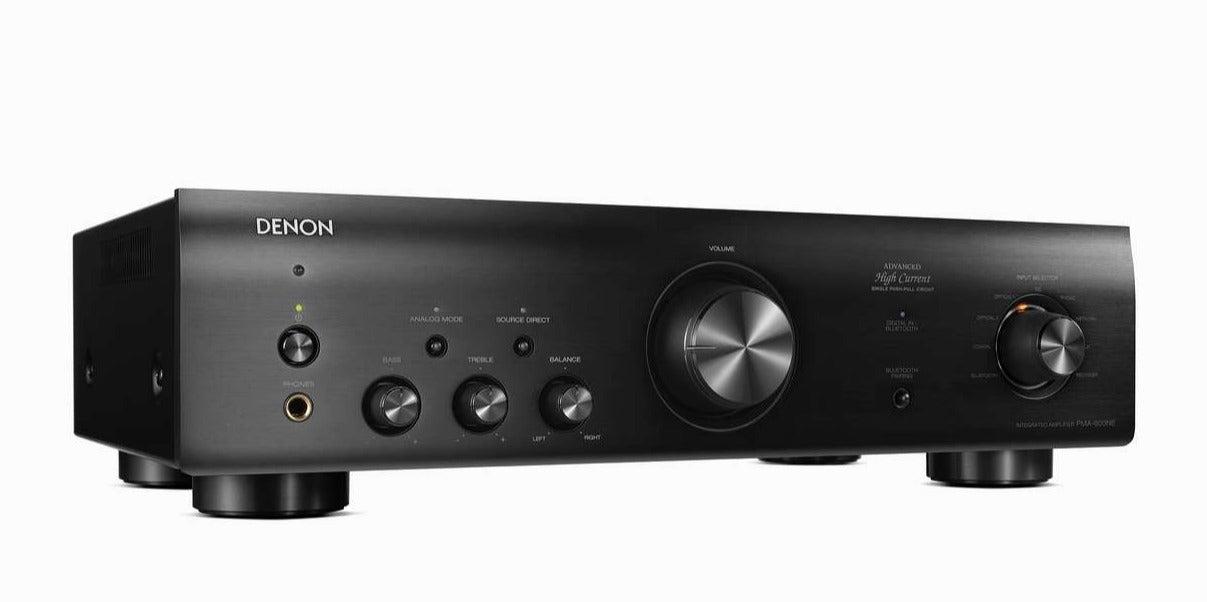
Shopping for an integrated amplifier in 2024 means navigating two very different philosophies. On one side, you have the streaming-first approach of the SVS Prime Wireless Pro SoundBase, which launched in late 2022 with comprehensive wireless capabilities built right in. On the other side sits the more traditional Denon PMA-600NE, a classic integrated amplifier that adds selective modern features to time-tested analog design principles.
The fundamental question isn't just which sounds better—it's which approach fits your listening habits and future needs. Let me walk you through what makes each of these amplifiers tick, and more importantly, help you figure out which one deserves a spot in your audio system.
An integrated amplifier is essentially the control center of your stereo system. It takes the tiny electrical signals from your music sources—whether that's a turntable, CD player, or streaming device—and boosts them with enough power to drive your speakers. Think of it as both a traffic controller (deciding which source you hear) and a power plant (making those signals strong enough to move speaker drivers).
The "integrated" part means you're getting both a preamplifier (which handles source switching and volume control) and a power amplifier (which provides the muscle to drive speakers) in one box. This is different from separates, where you'd have distinct preamp and power amp components.
Both the SVS and Denon include built-in DACs (Digital-to-Analog Converters), which convert digital music files into the analog signals your speakers need. However, they take dramatically different approaches to connectivity and features.
Power output is where these two amplifiers show their biggest philosophical difference. The SVS Prime Wireless Pro SoundBase delivers 150 watts per channel into 4-ohm speakers using Class-D amplification—that's 300 watts total. The Denon PMA-600NE provides 45 watts per channel into 8 ohms (70 watts into 4 ohms) using traditional Class A/B circuitry.
Now, before you assume more watts automatically means better sound, let's talk about what these numbers actually mean in your listening room. Class-D amplification (used in the SVS) is incredibly efficient—it wastes very little energy as heat and can pack serious power into compact chassis. It's the same technology powering many high-end audio systems today, though it was initially met with skepticism from traditional audiophiles.
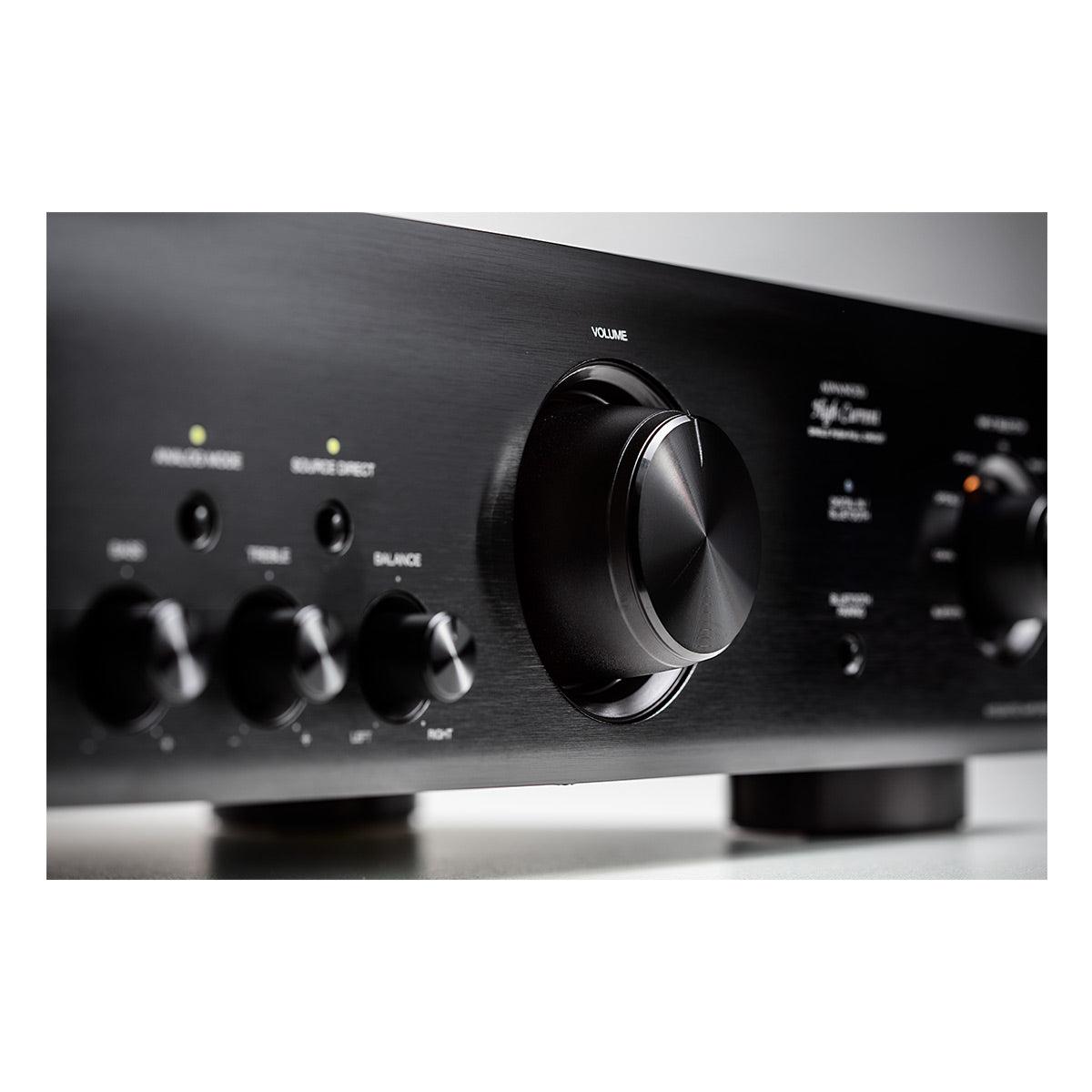
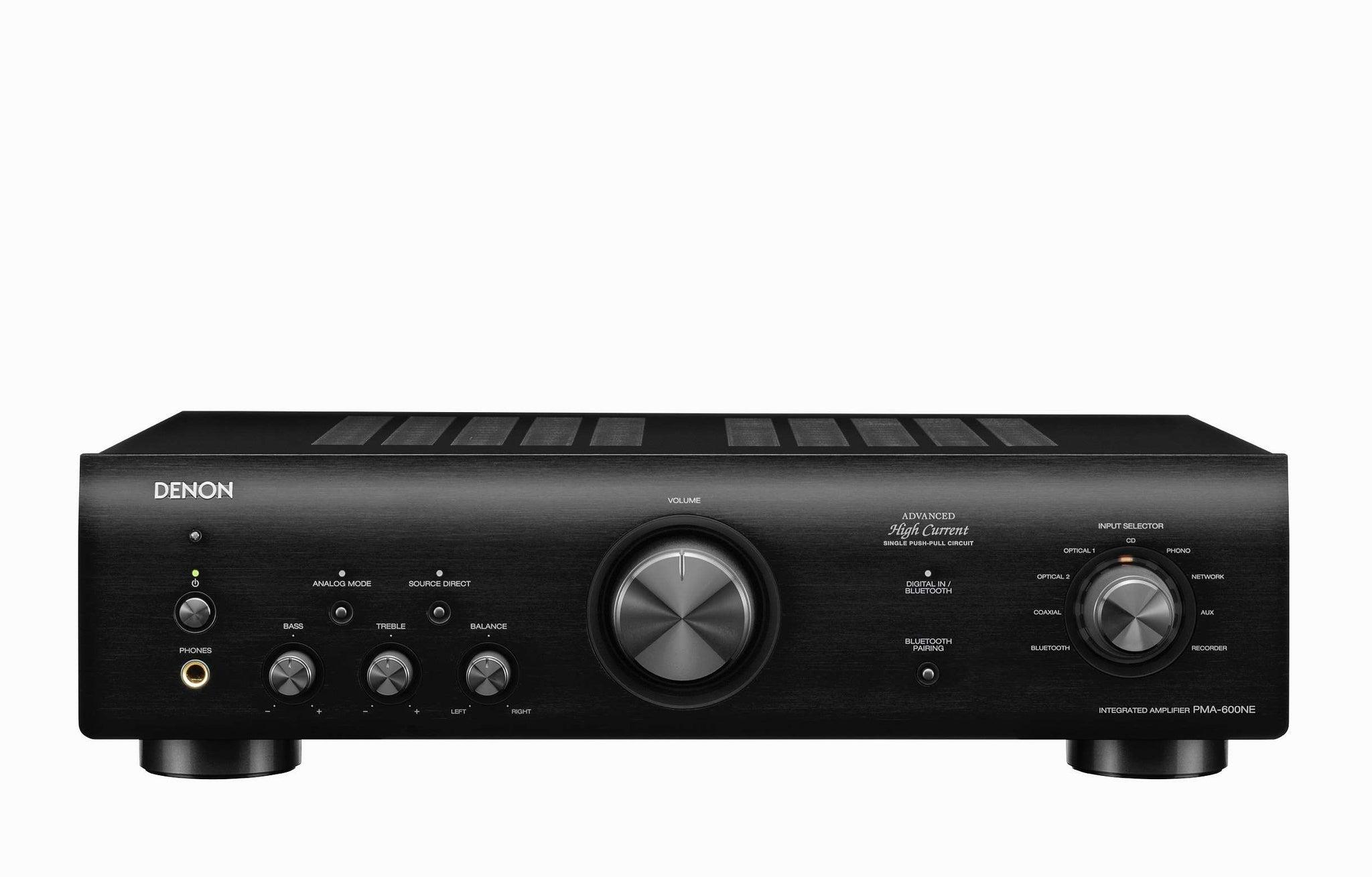
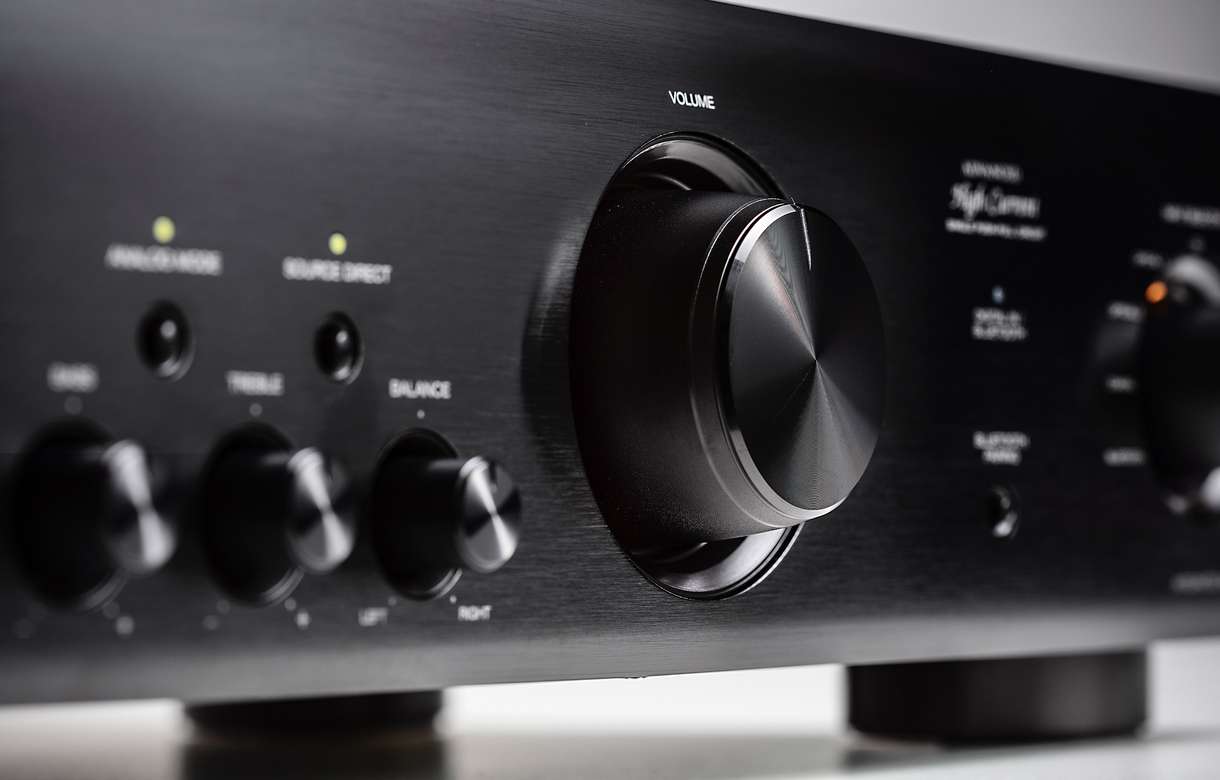
Class A/B amplification (in the Denon) runs warmer and less efficiently but often delivers what many consider a more natural, musical character. The Denon's Advanced High Current single-push-pull circuit is designed to maintain control and dynamics even with its more modest power output.
In practical terms, the SVS can drive virtually any speaker you throw at it, including large, inefficient tower speakers in big rooms. Our research into user experiences consistently shows it maintaining clarity and composure even when pushed to high volumes. The Denon, while having less raw power, can still drive most bookshelf speakers and moderately efficient floor-standing models to satisfying levels in typical rooms.
The key insight from expert reviews is that the Denon's 45-70 watts often sounds more powerful than the numbers suggest due to its high-current design, but it will hit its limits sooner than the SVS when driving demanding speakers or filling large spaces.
This is where the differences become stark. The SVS Prime Wireless Pro SoundBase was designed from the ground up for the streaming era. Its 24-bit/192kHz DAC is optimized specifically for high-resolution digital audio, and it supports lossless wireless streaming through DTS Play-Fi's Critical Listening Mode—a feature that maintains full audio quality over Wi-Fi connections.
The Denon PMA-600NE includes a PCM5141 DAC chip that technically supports the same 24-bit/192kHz resolution, but here's where technical measurements become important. According to detailed analysis from Audio Science Review, the Denon's internal DAC performance is compromised by high distortion levels that prevent it from fully utilizing even CD-quality audio's dynamic range. This doesn't mean it sounds bad—many users report satisfying results—but it suggests the Denon works better when paired with an external DAC for serious digital listening.
The SVS, by contrast, was engineered with streaming as a primary use case. It supports multiple wireless protocols simultaneously: Wi-Fi 802.11ac with dual-band capabilities, Bluetooth 5.0 with aptX and AAC codecs for high-quality wireless audio, Apple AirPlay 2 for seamless iOS integration, and Chromecast for Android devices. This isn't just about convenience—it's about maintaining audio quality across different connection types.
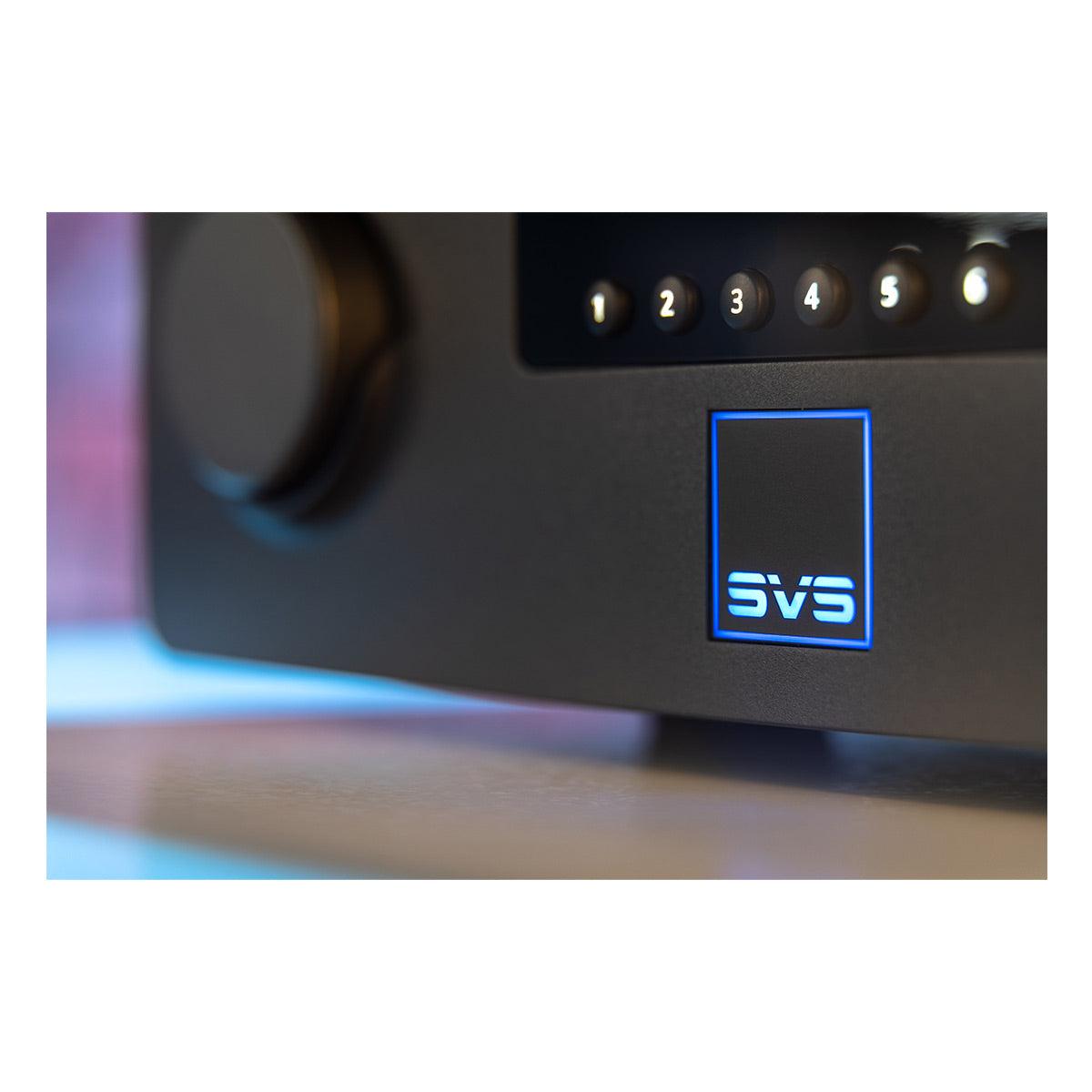
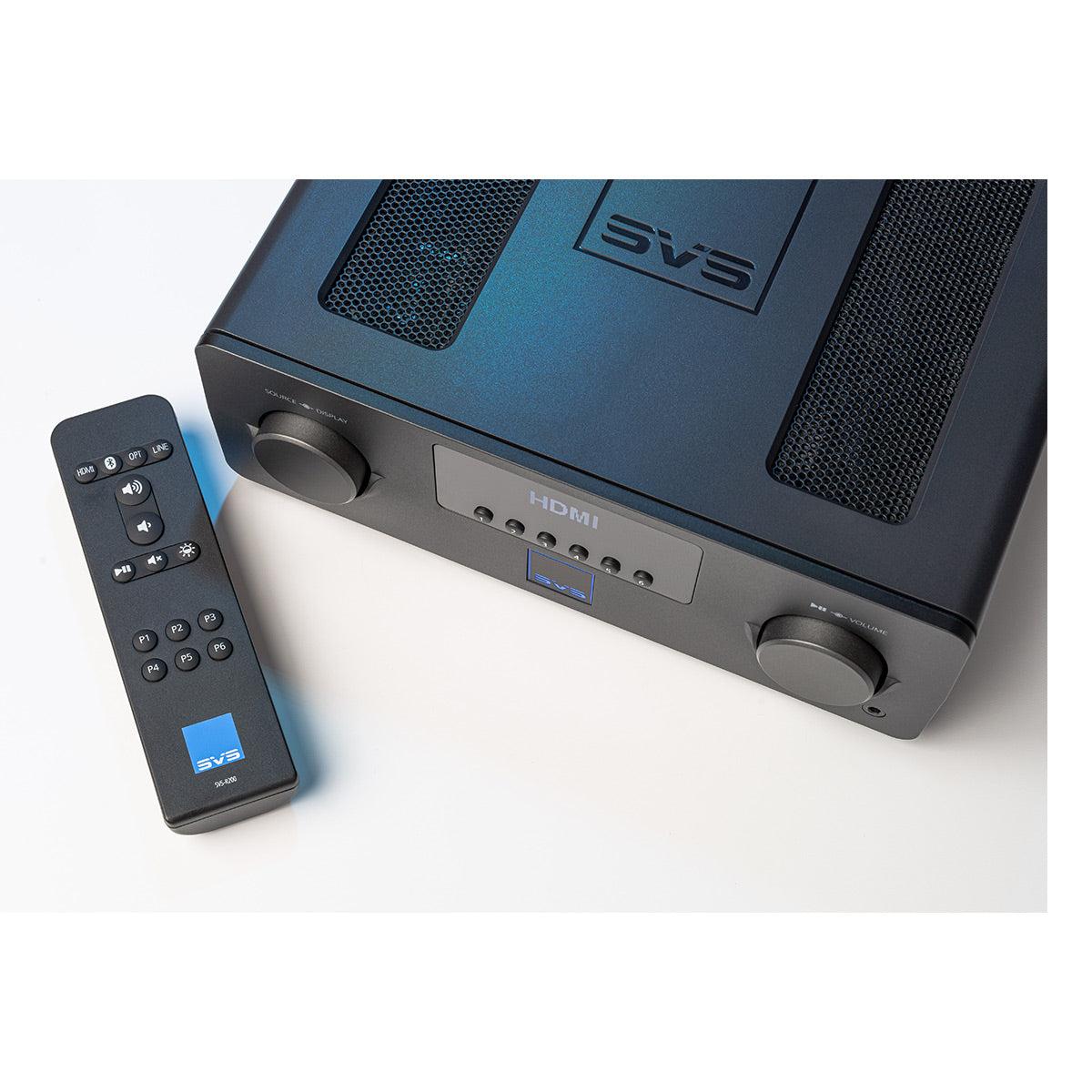
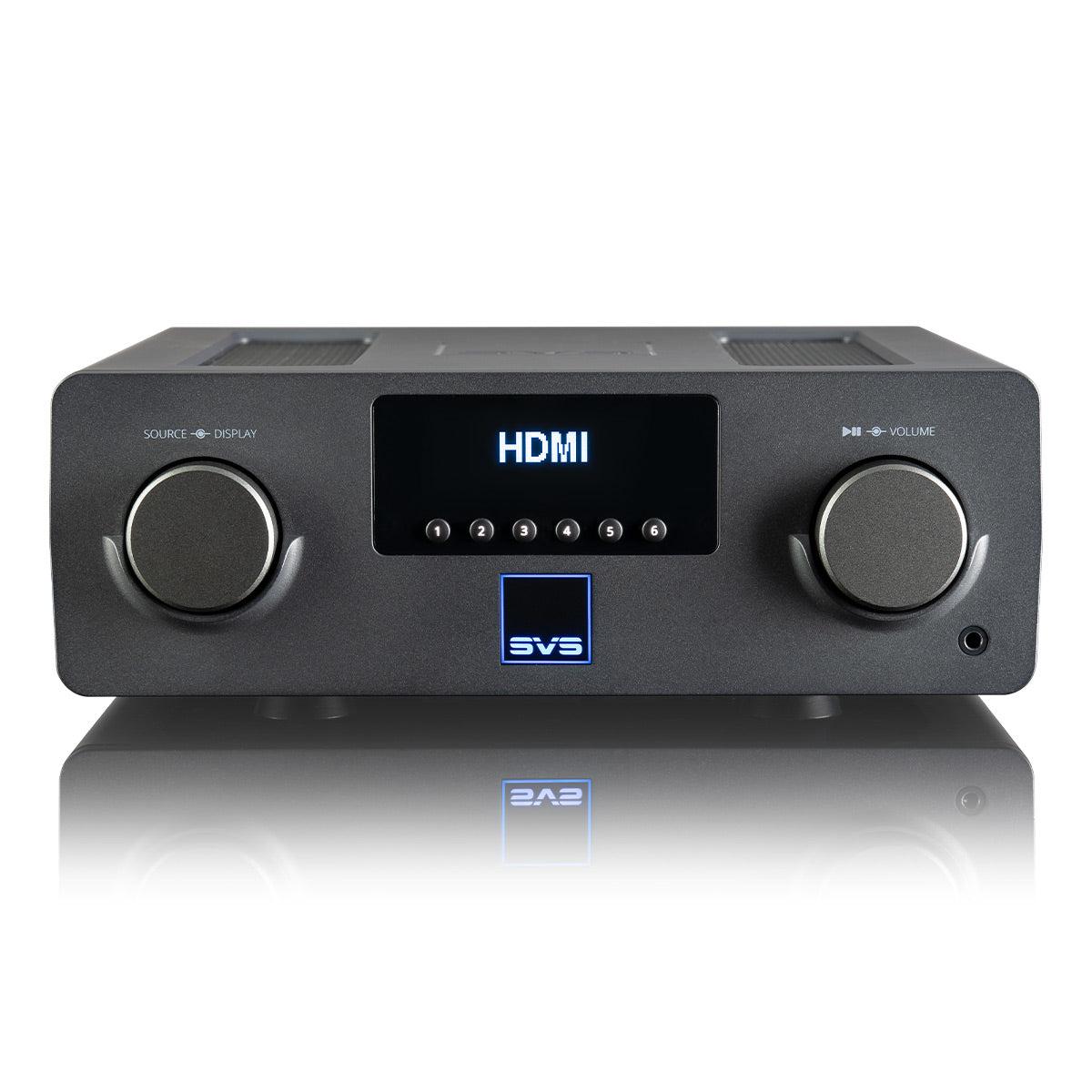
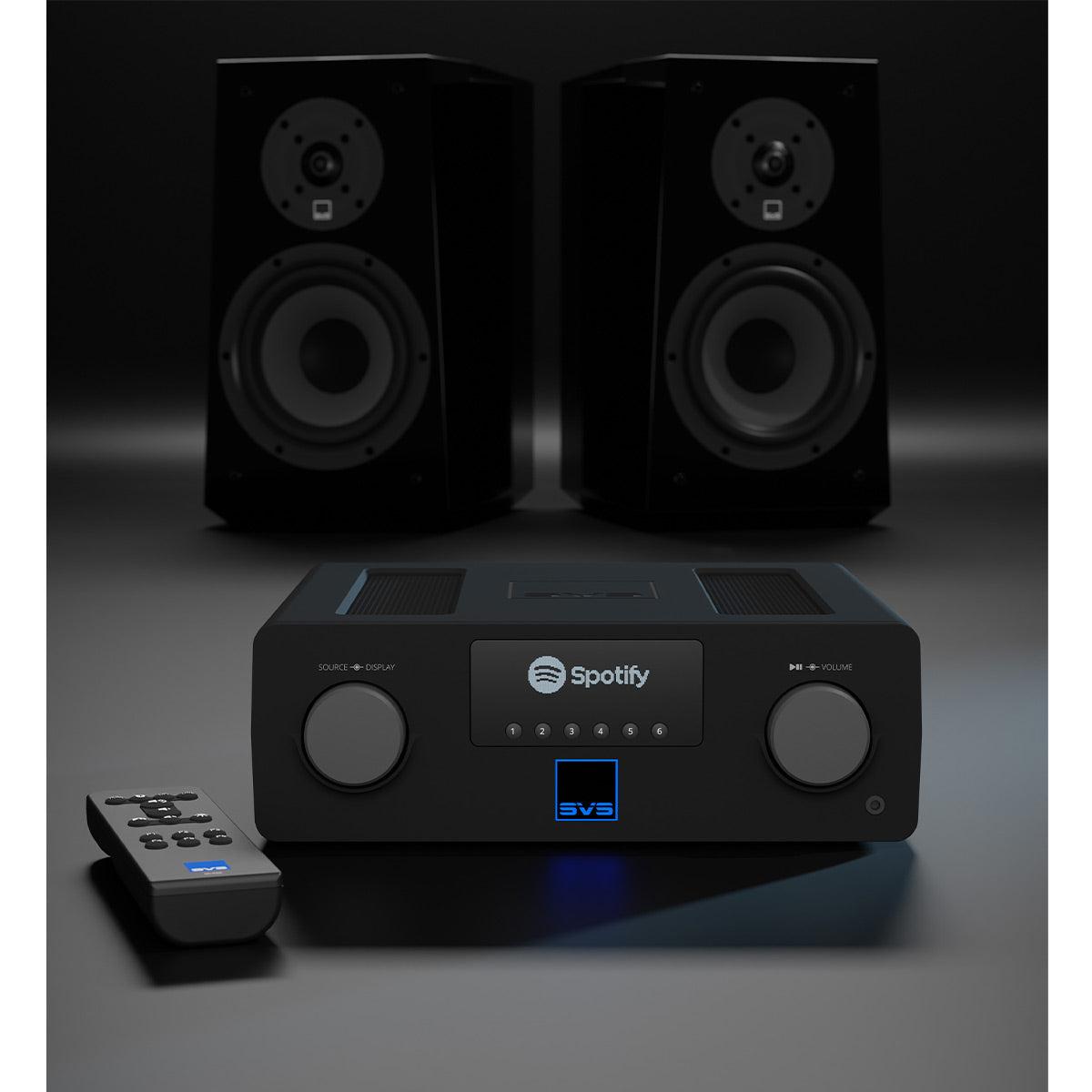
Here's where these amplifiers reveal completely different design philosophies. The SVS Prime Wireless Pro SoundBase essentially eliminates the need for external streaming devices. It connects directly to services like Spotify, Tidal, Qobuz, and Amazon Music HD. The six front-panel preset buttons let you jump instantly to favorite playlists or radio stations—a surprisingly useful feature that becomes habit-forming once you experience it.
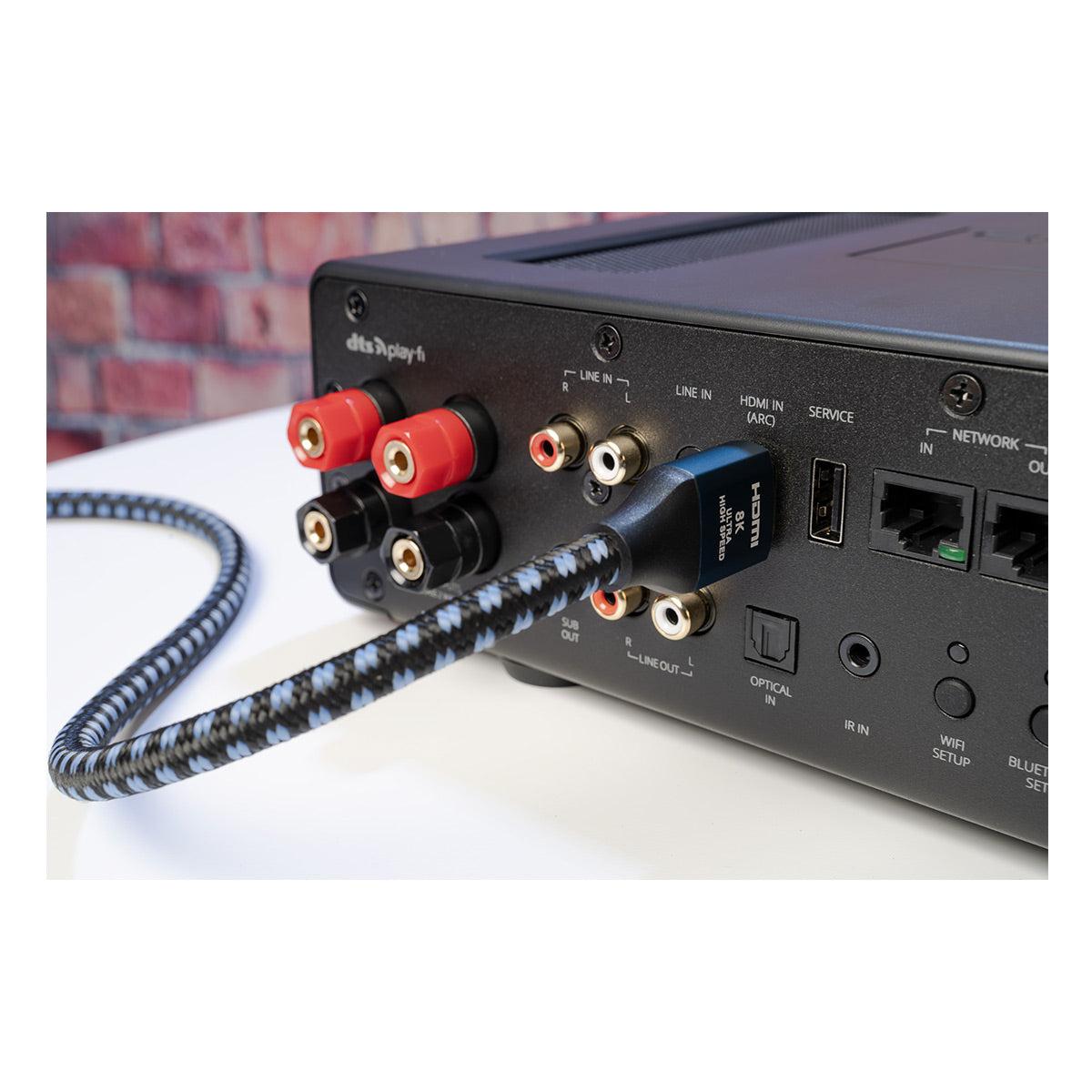
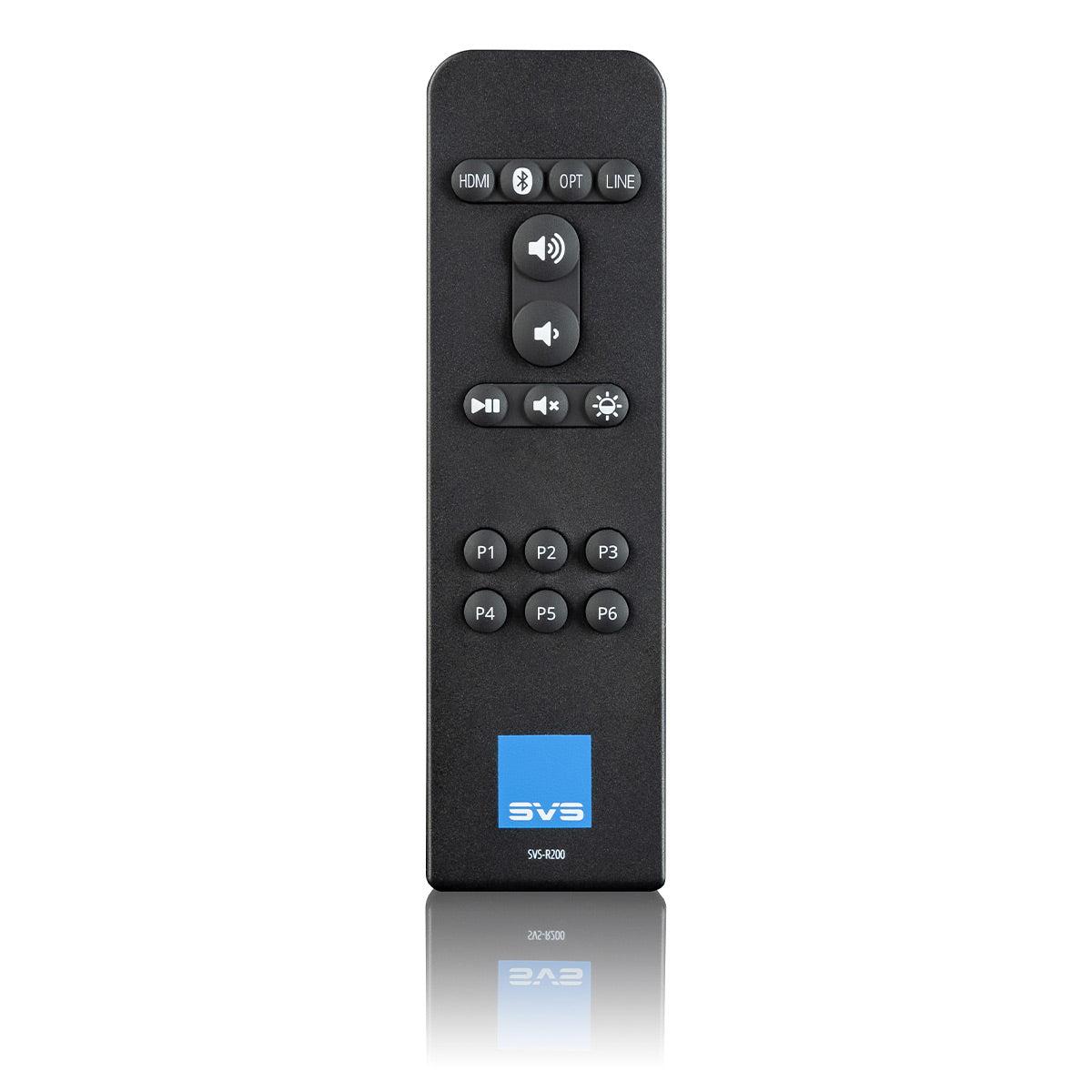
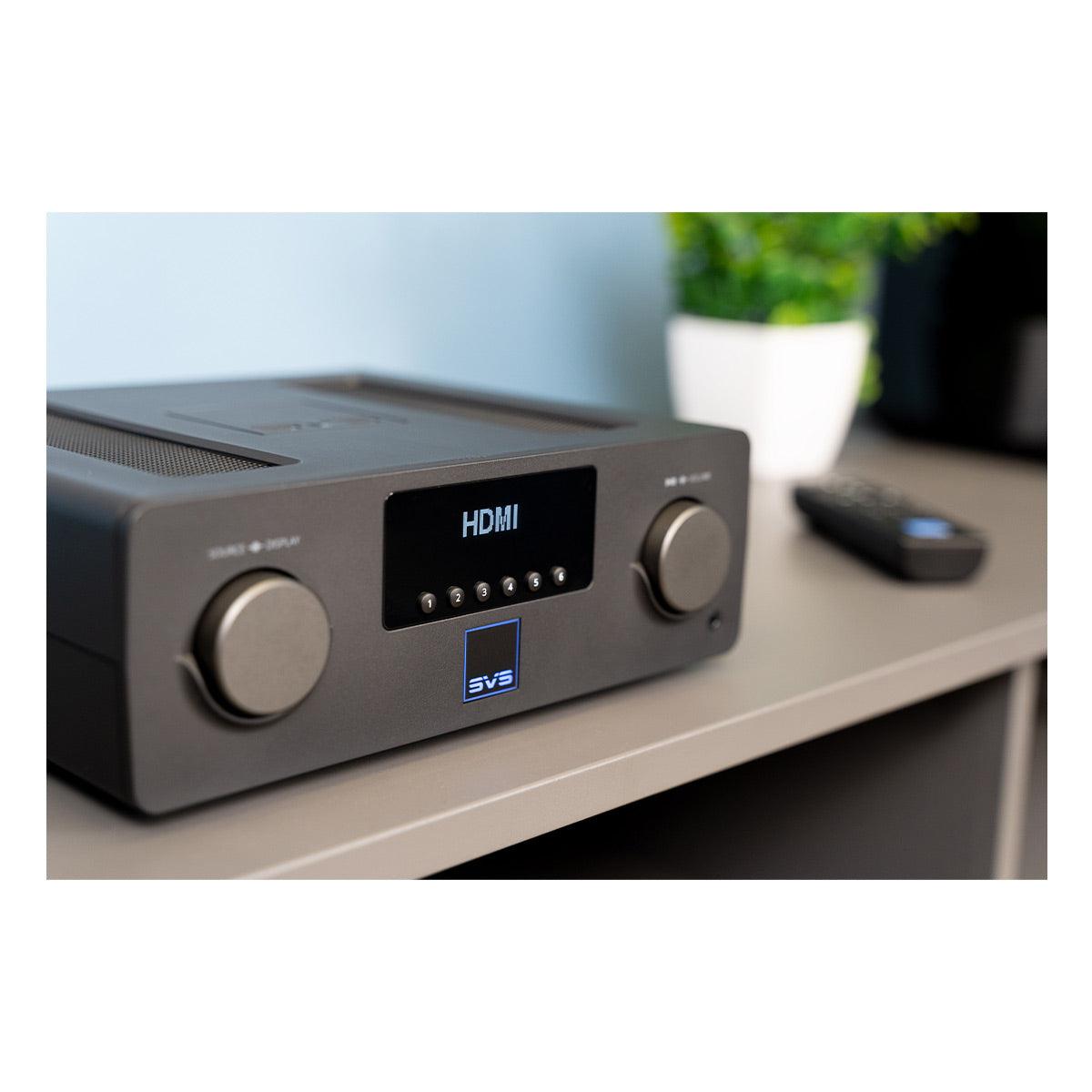
The HDMI ARC/eARC input deserves special attention because it transforms the SVS into an excellent TV audio upgrade. You can connect it directly to your TV with a single cable, and it'll automatically switch on and adjust volume with your TV remote. For anyone wanting to improve their TV's sound while maintaining a clean, minimal setup, this integration is genuinely game-changing.
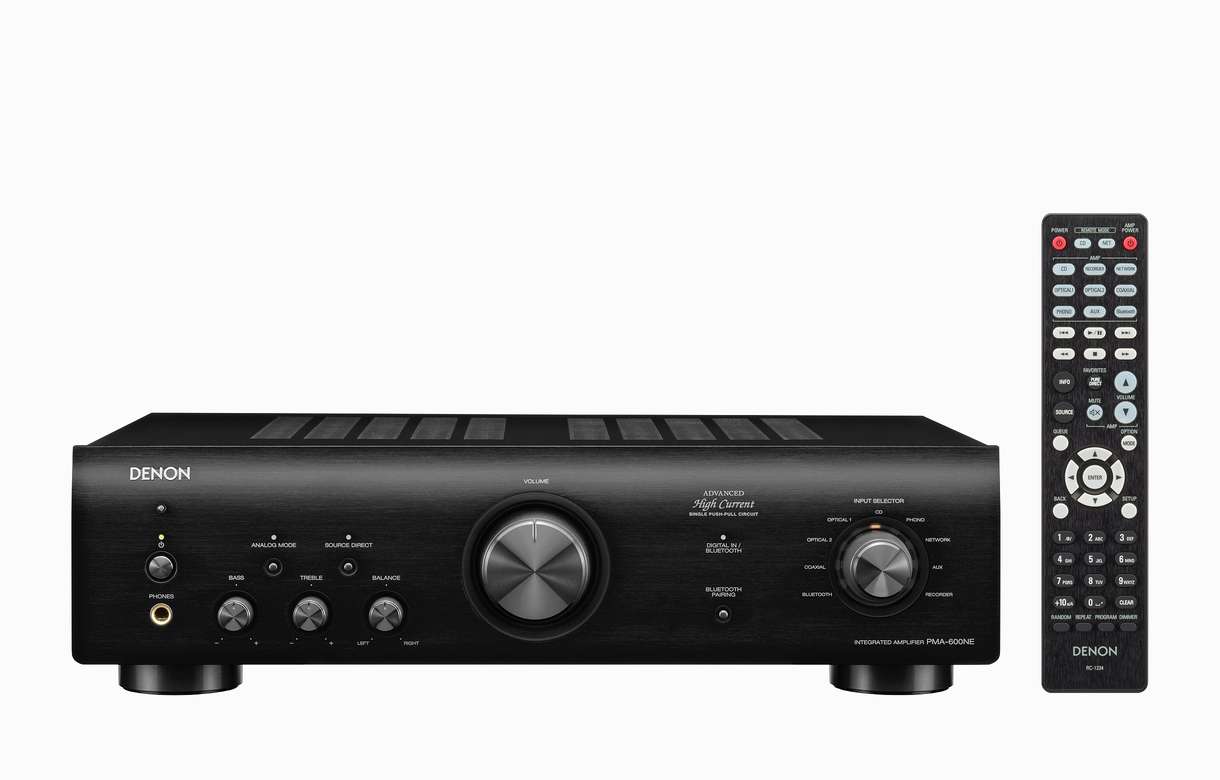
The Denon PMA-600NE takes a more traditional approach with basic Bluetooth 4.2 connectivity—no aptX support, no Wi-Fi, no streaming service integration. This means you'll need external devices (Apple TV, Chromecast, dedicated streamers) to access modern streaming services. Some listeners prefer this separation, arguing it allows them to choose best-in-class streaming components and upgrade them independently.
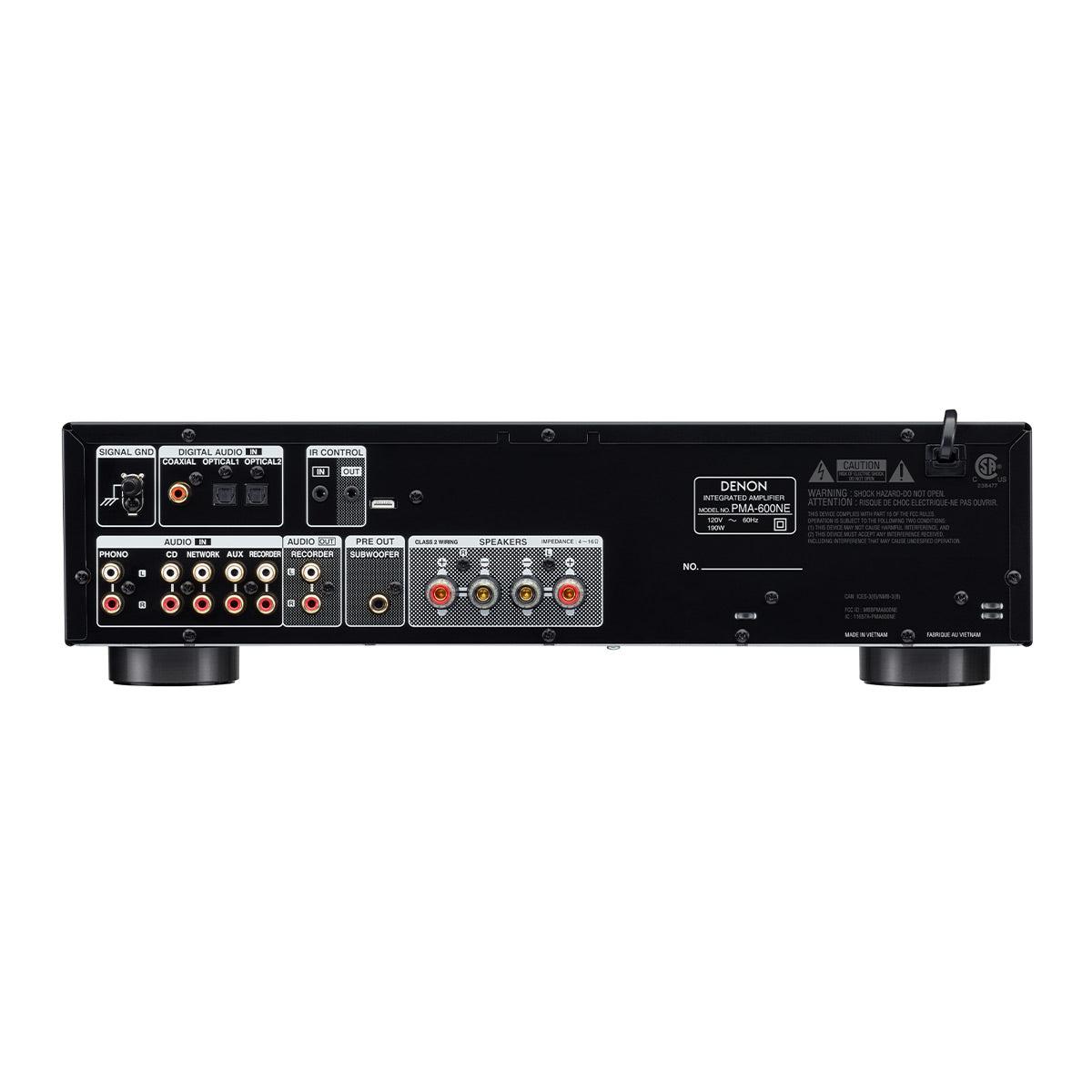
The Denon PMA-600NE shows its traditional hi-fi roots most clearly in analog performance. Its dedicated Moving Magnet (MM) phono input is genuinely excellent for the price point, with low noise and accurate RIAA equalization that brings out the best in vinyl records. If you have a turntable or plan to get one, this built-in phono stage saves you $100-200 compared to buying a separate phono preamp.
The Denon also provides bass and treble tone controls (±8dB adjustment range) and a Source Direct mode that bypasses these controls entirely for the purest signal path. This flexibility lets you fine-tune the sound to your preferences or room acoustics, then switch to Source Direct for critical listening.
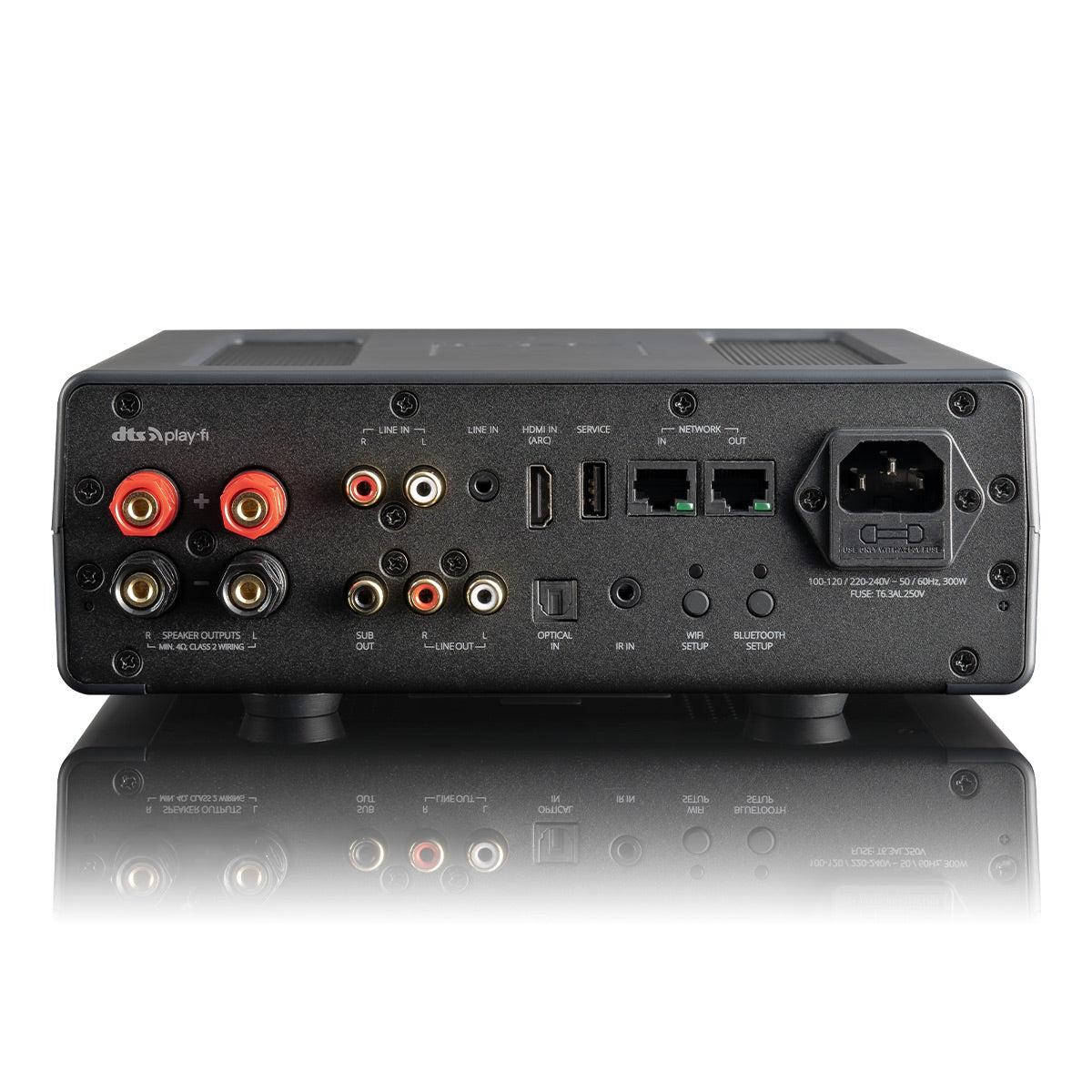
The SVS takes a more minimalist approach to analog inputs—RCA line inputs and a 3.5mm auxiliary input, but no phono stage. This reflects its streaming-first design philosophy, though you can certainly add an external phono preamp if needed.
Both amplifiers include subwoofer outputs, but with different approaches. The SVS provides a full-range signal, expecting your subwoofer to handle its own low-pass filtering. The Denon follows similar principles but integrates better with traditional hi-fi component thinking.
Based on extensive review analysis and user feedback, these amplifiers have distinct sonic personalities. The SVS Prime Wireless Pro SoundBase is consistently described as neutral and powerful, with excellent clarity and a broad soundstage. Its Class-D amplification delivers clean, dynamic sound that scales well with better speakers and source material.
The Denon PMA-600NE exhibits the warm, smooth character that Denon amplifiers are known for. Multiple reviews describe it as having a gentle lift in the lower midrange that adds body and richness to vocals and instruments. It's described as forgiving and musical—the kind of amplifier that makes long listening sessions enjoyable rather than fatiguing.
The Denon won't reveal every microscopic detail in your recordings, but it presents music in an engaging, natural way that prioritizes musical flow over analytical precision. The SVS, while not clinical, tends toward greater transparency and detail retrieval.
The SVS Prime Wireless Pro SoundBase excels in home theater applications thanks to its HDMI ARC/eARC connectivity. You can connect it directly to your TV, and it'll handle audio from all your TV's sources—streaming apps, cable boxes, gaming consoles, Blu-ray players. The amplifier automatically powers on when it detects a signal and can be controlled by your TV remote.
This makes the SVS an excellent foundation for a 2.1-channel system (stereo speakers plus subwoofer) that dramatically improves TV audio while maintaining simplicity. Many users report this setup providing more satisfying results than typical soundbars, with proper stereo imaging and the ability to use high-quality bookshelf or tower speakers.
The Denon PMA-600NE can certainly work in a TV setup, but you'll need to connect your TV's optical or analog audio output to the amplifier. This works fine but requires more remote juggling and doesn't provide the seamless integration of the SVS's HDMI connection.
At the time of writing, the SVS Prime Wireless Pro SoundBase commands a significant premium over the Denon PMA-600NE—roughly 60% more expensive. This price difference reflects their different target markets and feature sets.
The SVS delivers exceptional value when you consider what you're getting: a high-power amplifier, high-quality DAC, comprehensive streaming capabilities, and TV integration in one chassis. Buying equivalent functionality separately (traditional integrated amp + high-quality streamer + DAC) would typically cost significantly more and require multiple boxes and connections.
The Denon represents excellent traditional value, especially for vinyl enthusiasts. The included MM phono stage alone justifies a significant portion of the price, and the warm, musical sound appeals to listeners who prioritize engagement over analysis.
Since the Denon PMA-600NE launched several years ago, the streaming landscape has evolved considerably. High-resolution streaming has become mainstream, multi-room audio systems are increasingly popular, and TV audio integration is more important than ever. The SVS, launching in late 2022, was designed with these trends in mind.
The SVS's DTS Play-Fi platform receives regular updates, adding new streaming services and features over time. Its comprehensive wireless capabilities should remain relevant for years to come. The Denon, while lacking extensive streaming features, offers the advantage of component separability—you can upgrade your streaming setup without replacing the amplifier.
Choose the SVS Prime Wireless Pro SoundBase if you prioritize convenience, streaming integration, and future-proofing. It's ideal for listeners who primarily stream music, want excellent TV audio integration, or need the power to drive demanding speakers. The comprehensive wireless capabilities eliminate component complexity while delivering genuinely high-quality audio performance.
The SVS makes the most sense for modern listeners who want a complete audio solution that handles everything from Spotify to high-resolution streaming to TV audio with minimal fuss and maximum performance.
Choose the Denon PMA-600NE if you value traditional hi-fi virtues, have a vinyl collection, or prefer to control your streaming through separate components. Its warm, musical sound and excellent analog performance appeal to listeners who prioritize engagement and natural sound reproduction over ultimate transparency.
The Denon is perfect for traditional stereo setups, vinyl enthusiasts, or budget-conscious buyers who don't need extensive wireless capabilities but want genuine hi-fi sound quality and the flexibility to upgrade components independently.
Both amplifiers represent thoughtful engineering approaches to modern audio challenges. Your choice ultimately depends on whether you embrace streaming integration (SVS) or prefer traditional component flexibility (Denon). Either way, you'll end up with an amplifier that can serve as the foundation for years of musical enjoyment.
| SVS Prime Wireless Pro SoundBase | Denon PMA-600NE |
|---|---|
| Power Output - Determines which speakers you can drive and how loud | |
| 150W per channel (4Ω), 300W total - drives demanding speakers easily | 45W per channel (8Ω), 70W per channel (4Ω) - adequate for efficient speakers |
| Amplifier Type - Affects sound character and efficiency | |
| Class-D (highly efficient, compact, powerful) | Class A/B (traditional warmth, less efficient but musical) |
| Wireless Streaming - How you'll access modern music services | |
| Comprehensive: Wi-Fi, AirPlay 2, Chromecast, DTS Play-Fi, Spotify Connect | Basic Bluetooth 4.2 only (no aptX) - requires external streamers |
| Built-in Streaming Services - Eliminates need for external devices | |
| Native access to Spotify, Tidal, Qobuz, Amazon Music HD, Pandora | None - must use external streaming devices |
| Digital Inputs - Connection options for modern sources | |
| HDMI ARC/eARC, optical digital, USB-A | 2x optical, 1x coaxial digital |
| TV Integration - Simplifies home theater setup | |
| HDMI ARC/eARC with TV remote control integration | Optical/analog connections only - separate remote needed |
| Vinyl Support - Critical for turntable users | |
| No phono input (requires external phono preamp) | Dedicated MM phono input with quality RIAA equalization |
| Analog Inputs - Flexibility for traditional sources | |
| RCA line input, 3.5mm auxiliary | 5x RCA line inputs plus dedicated phono input |
| Sound Customization - Ability to tailor audio to your preferences | |
| Minimal tone controls, optimized for neutral sound | Bass/treble controls (±8dB), Source Direct bypass mode |
| User Interface - How you control the amplifier daily | |
| 6 preset buttons, OLED display, smartphone app control | Traditional controls, IR remote, basic front panel |
| DAC Quality - Affects digital music playback performance | |
| 24-bit/192kHz optimized for streaming | 24-bit/192kHz PCM5141 chip (measured performance limitations) |
| Multi-Room Audio - Whole-home music distribution | |
| DTS Play-Fi ecosystem support | Not supported - single room only |
| Release Year - Indicates how current the technology is | |
| Late 2022 (designed for modern streaming era) | Several years older (pre-streaming focus design) |
The SVS Prime Wireless Pro SoundBase delivers significantly more power with 150 watts per channel (300 watts total) compared to the Denon PMA-600NE which provides 45 watts per channel into 8 ohms. This makes the SVS better suited for driving demanding speakers and filling larger rooms with sound.
The SVS Prime Wireless Pro SoundBase offers comprehensive wireless streaming with Wi-Fi, Apple AirPlay 2, Chromecast, DTS Play-Fi, and Spotify Connect built-in. The Denon PMA-600NE only includes basic Bluetooth connectivity, so you'd need external streaming devices for services like Spotify or Apple Music.
The SVS Prime Wireless Pro SoundBase excels for TV connection with its HDMI ARC/eARC input that allows single-cable connection and TV remote control. The Denon PMA-600NE requires optical or analog connections from your TV and separate remote control, making it less convenient for home theater use.
The Denon PMA-600NE includes a built-in MM phono input, so you can connect most turntables directly without an external preamp. The SVS Prime Wireless Pro SoundBase lacks a phono input, requiring you to purchase a separate phono preamp for vinyl playback.
Both deliver excellent sound quality but with different characters. The SVS Prime Wireless Pro SoundBase provides neutral, detailed sound with excellent clarity, while the Denon PMA-600NE offers a warmer, more musical presentation that many find engaging for long listening sessions.
Yes, the SVS Prime Wireless Pro SoundBase offers comprehensive smartphone app control through DTS Play-Fi, plus voice control with Alexa and Google Assistant. The Denon PMA-600NE includes basic Bluetooth connectivity but relies primarily on its included IR remote and front panel controls.
The Denon PMA-600NE offers better value for traditional hi-fi setups, especially if you play vinyl records. The SVS Prime Wireless Pro SoundBase provides better value if you prioritize streaming convenience and TV integration, eliminating the need for multiple separate components.
Yes, both the SVS Prime Wireless Pro SoundBase and Denon PMA-600NE include subwoofer outputs. However, neither provides bass management, so you'll need a powered subwoofer with its own crossover controls for optimal integration with your main speakers.
The Denon PMA-600NE includes traditional bass and treble controls with ±8dB adjustment range, plus a Source Direct mode that bypasses tone controls. The SVS Prime Wireless Pro SoundBase focuses on neutral sound reproduction with minimal tone adjustment options.
The SVS Prime Wireless Pro SoundBase is generally easier to set up thanks to its comprehensive wireless capabilities and HDMI TV connection. The Denon PMA-600NE requires more traditional wired connections but may be simpler for users who prefer physical controls and don't need streaming features.
The SVS Prime Wireless Pro SoundBase with its 300-watt total output can easily drive large, demanding floor-standing speakers. The Denon PMA-600NE works well with efficient bookshelf speakers and moderately-sized towers but may struggle with very large or inefficient speakers in bigger rooms.
The SVS Prime Wireless Pro SoundBase is more future-proof with its comprehensive streaming capabilities, regular software updates, and modern connectivity options like HDMI ARC. The Denon PMA-600NE offers component flexibility, allowing you to upgrade streaming devices separately while keeping the amplifier long-term.
We've done our best to create useful and informative comparisons to help you decide what product to buy. Our research uses advanced automated methods to create this comparison and perfection is not possible - please contact us for corrections or questions. These are the sites we've researched in the creation of this article: soundandvision.com - crutchfield.com - futureaudiophile.com - dreamediaav.com - crutchfield.com - svsound.com - soundstageaccess.com - skybygramophone.com - hometheaterhifi.com - av-connection.com - crutchfield.com - soundstagenetwork.com - svsound.com - theaudiotailor.com.au - forums.whathifi.com - crutchfield.com - youtube.com - av.com - youtube.com - audiosciencereview.com - emotivalounge.proboards.com - forums.whathifi.com - audiosciencereview.com - crutchfield.com - melbournehifi.com.au - musicdirect.com - avstore.in - polkaudio.com - turntablelab.com

Privacy Policy
Terms and Conditions - Affiliate Policy
Home Security
© Copyright 2008-2026.
11816 Inwood Rd #1211, Dallas, TX 75244