


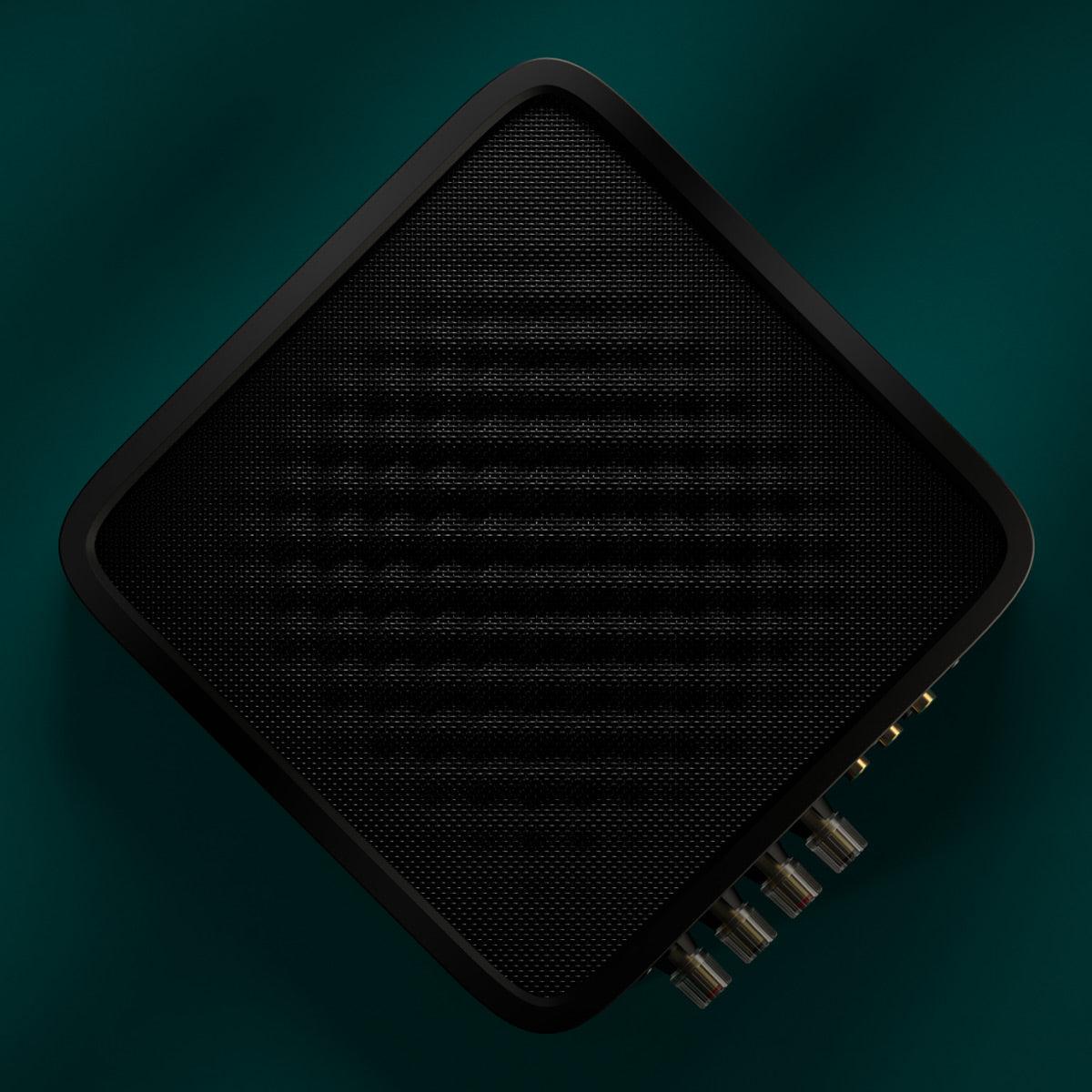


The world of home audio has been completely transformed by wireless streaming amplifiers. These clever devices combine three essential components—power amplifier, digital-to-analog converter (DAC), and wireless streaming capabilities—into a single box that can turn any pair of passive speakers into a modern smart audio system. Think of them as the Swiss Army knife of audio equipment.
But not all streaming amplifiers are created equal. Today we're comparing two very different approaches to this technology: the SVS Prime Wireless Pro SoundBase and the Marantz Model M1. At the time of writing, these products represent distinctly different philosophies in the streaming amplifier space, with the SVS focusing on maximum power and value, while the Marantz emphasizes audiophile-grade refinement and sophisticated signal processing.
Before diving into specifics, let's establish what makes a great streaming amplifier. The most crucial factors are power output (how loud and cleanly it can drive your speakers), streaming capabilities (which services it supports and how good they sound), connectivity options (how many different sources you can plug in), sound quality (the clarity and accuracy of audio reproduction), and overall user experience.
The streaming amplifier market has evolved rapidly since both of these products launched—the SVS Prime Wireless Pro SoundBase in late 2022 and the Marantz Model M1 in mid-2024. During this period, we've seen significant improvements in wireless streaming quality, with more services offering lossless and high-resolution audio, better app interfaces, and more sophisticated multi-room capabilities.
The most striking difference between these amplifiers is raw power output. The SVS Prime Wireless Pro SoundBase delivers a substantial 300 watts total (150 watts per channel into 4-ohm speakers), while the Marantz Model M1 provides 200 watts total (100 watts per channel into 8-ohm speakers, 125 watts into 4-ohm speakers).
This power difference matters more than the numbers might suggest. Speaker impedance (measured in ohms) represents how much electrical resistance speakers present to an amplifier—lower impedance speakers like 4-ohm models draw more current and require more robust amplification. The SVS is specifically designed to handle these demanding loads with authority, making it capable of driving large floor-standing speakers that might struggle with less powerful amplifiers.
Based on our research into user experiences and professional reviews, the SVS consistently demonstrates its ability to maintain clean, undistorted sound even at high volumes with power-hungry speakers. Users report successfully pairing it with everything from compact bookshelf speakers to large tower speakers without any signs of strain or thinning bass response.
The Marantz Model M1, despite its lower wattage specification, employs a different approach. Its end-to-end digital architecture and sophisticated power supply design punch above their weight. Multiple reviewers noted surprisingly authoritative bass response and dynamic range, with one describing the bass output as "shocking in its authority and control." This suggests that raw wattage specifications don't tell the complete story—the quality of the power delivery matters enormously.
For most users with moderately efficient speakers in typical listening rooms, the Marantz's power output will be more than adequate. However, if you're planning to drive large, inefficient speakers or need to fill a large space with sound, the SVS's additional power headroom becomes a significant advantage.
The sonic approaches of these two amplifiers reflect their manufacturers' different philosophies. The SVS Prime Wireless Pro SoundBase prioritizes neutrality and accuracy. Its 24-bit/192kHz DAC focuses on transparent reproduction, letting the original recording shine through without coloration. This approach appeals to listeners who want to hear exactly what the artist and recording engineer intended.
The Marantz Model M1 takes a more interventionist approach with its proprietary Marantz Musical Digital Filtering (MMDF) technology. This system, derived from the company's high-end CD players, offers selectable digital filter characteristics that allow users to subtly shape the sound signature. Even analog inputs are digitized for processing through this sophisticated filtering system.
MMDF represents a fascinating technical achievement—it maintains the characteristic Marantz "warmth and musicality" that the brand is known for while providing the precision of digital processing. Users can choose between different filter settings depending on their preference or the type of music they're listening to.
From our analysis of reviews and user feedback, the SVS excels at revealing detail and maintaining clarity across the frequency spectrum. Its sound signature is described as "pristine" and "revealing," making it excellent for critical listening and genres where accuracy matters most.
The Marantz, conversely, focuses on musical engagement. Reviewers consistently praise its ability to make music sound more involving and emotionally compelling, even if it's not as clinically accurate as the SVS. This difference becomes particularly apparent with genres like jazz, classical, and acoustic music, where the Marantz's processing can add a sense of natural warmth and dimension.
Modern streaming amplifiers live or die by their wireless capabilities, and here we see another clear philosophical divide. The SVS Prime Wireless Pro SoundBase takes a "more is better" approach, supporting an impressive array of streaming services and wireless protocols.
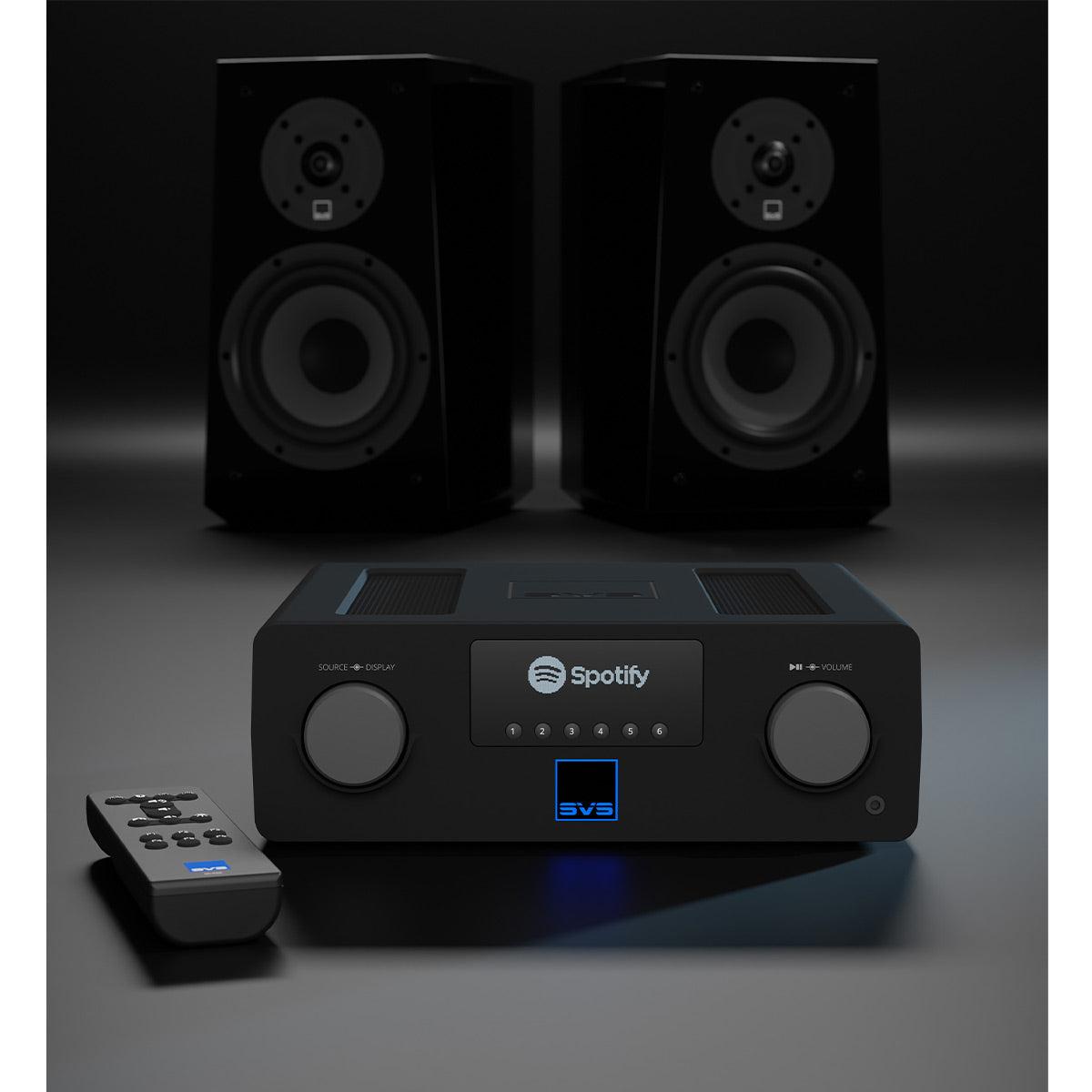
The SVS supports DTS Play-Fi (which offers lossless high-resolution streaming up to 24-bit/192kHz in Critical Listening Mode), Apple AirPlay 2, Google Chromecast, Spotify Connect, and Bluetooth 5.0 with advanced codecs like aptX and AAC. This broad compatibility means you can stream from virtually any device or service without worrying about format support.
DTS Play-Fi deserves special mention—it's one of the few multi-room systems that can stream truly lossless high-resolution audio. When you're playing a 24-bit/192kHz file from services like Qobuz or Amazon Music HD, the SVS can maintain that quality wirelessly, something many competing systems compress or downsample.
The Marantz Model M1 focuses on the HEOS ecosystem, which prioritizes integration and multi-room capabilities over sheer variety. HEOS built-in provides seamless control of multiple Marantz devices throughout your home, creating a cohesive whole-house audio system. The M1 also supports AirPlay 2, Bluetooth 4.2, and Spotify Connect, plus it's Roon Ready—a significant advantage for serious audiophiles who use Roon's advanced music management software.
Roon Ready certification means the Marantz appears as a native endpoint in Roon's interface, allowing for bit-perfect audio streaming and advanced features like digital signal processing, room correction, and extensive metadata display. For users already invested in the Roon ecosystem, this integration is invaluable.
The trade-off is that the Marantz has fewer standalone streaming options compared to the SVS. If you're not using Roon and prefer to access streaming services directly through the amplifier, the SVS's broader service support becomes a significant advantage.
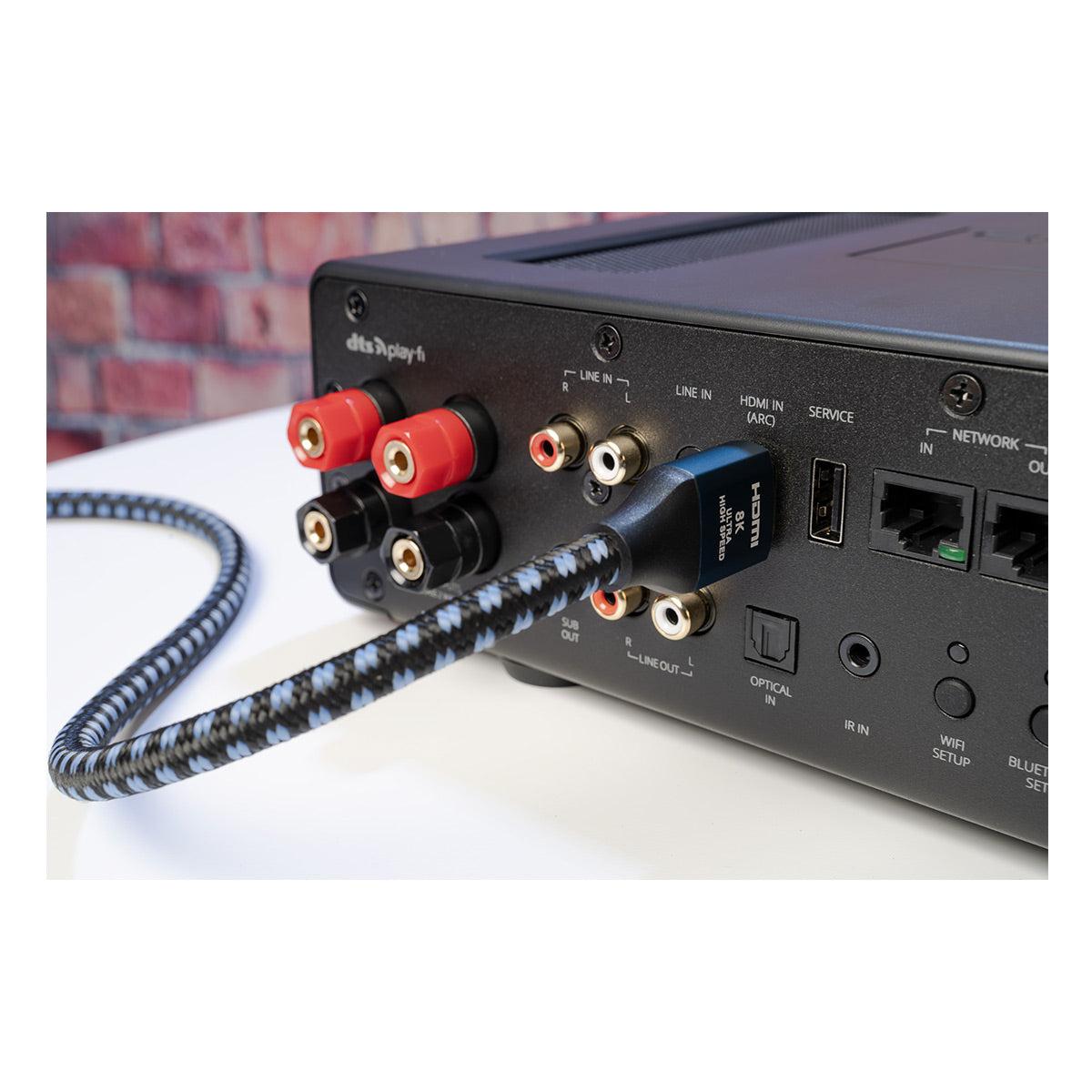
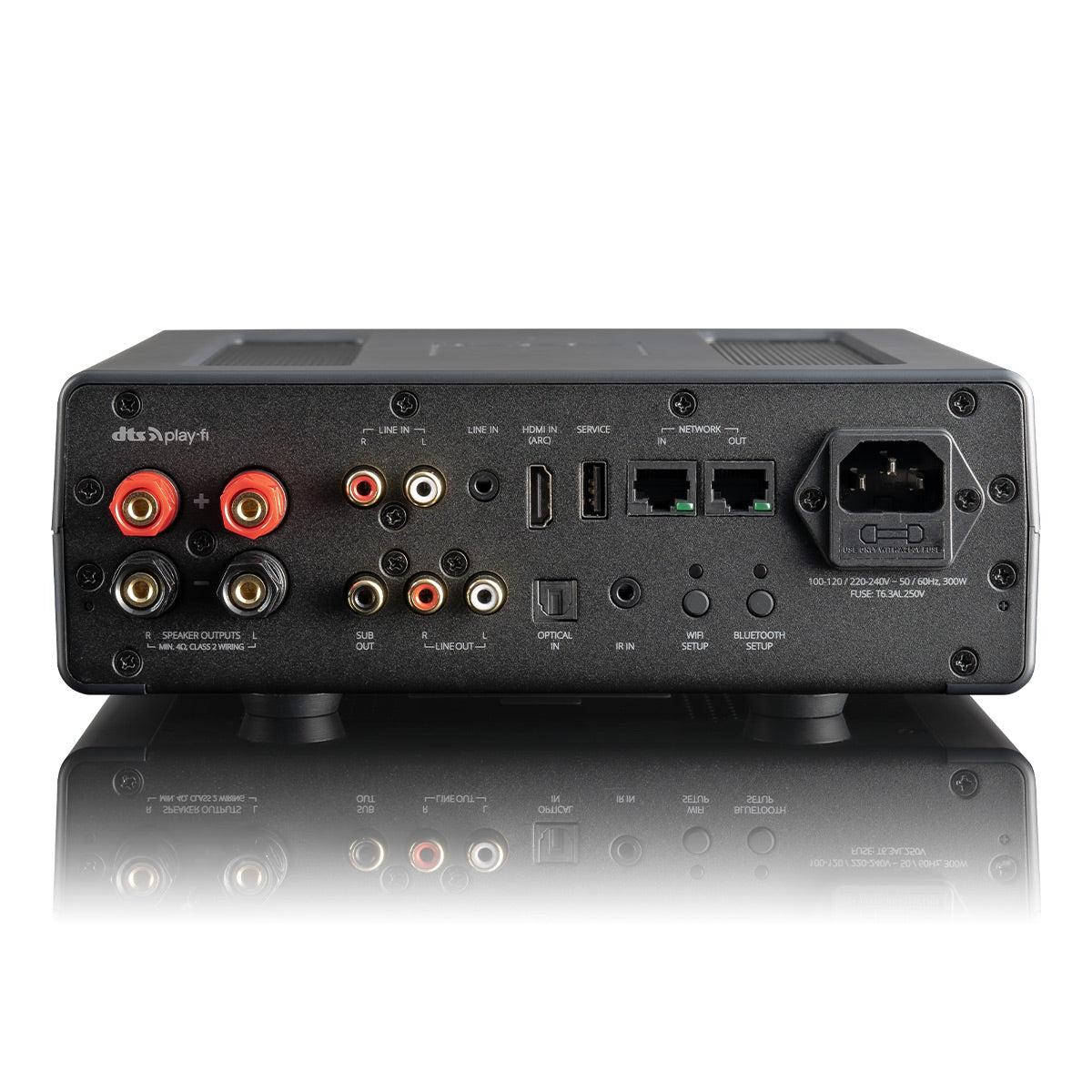
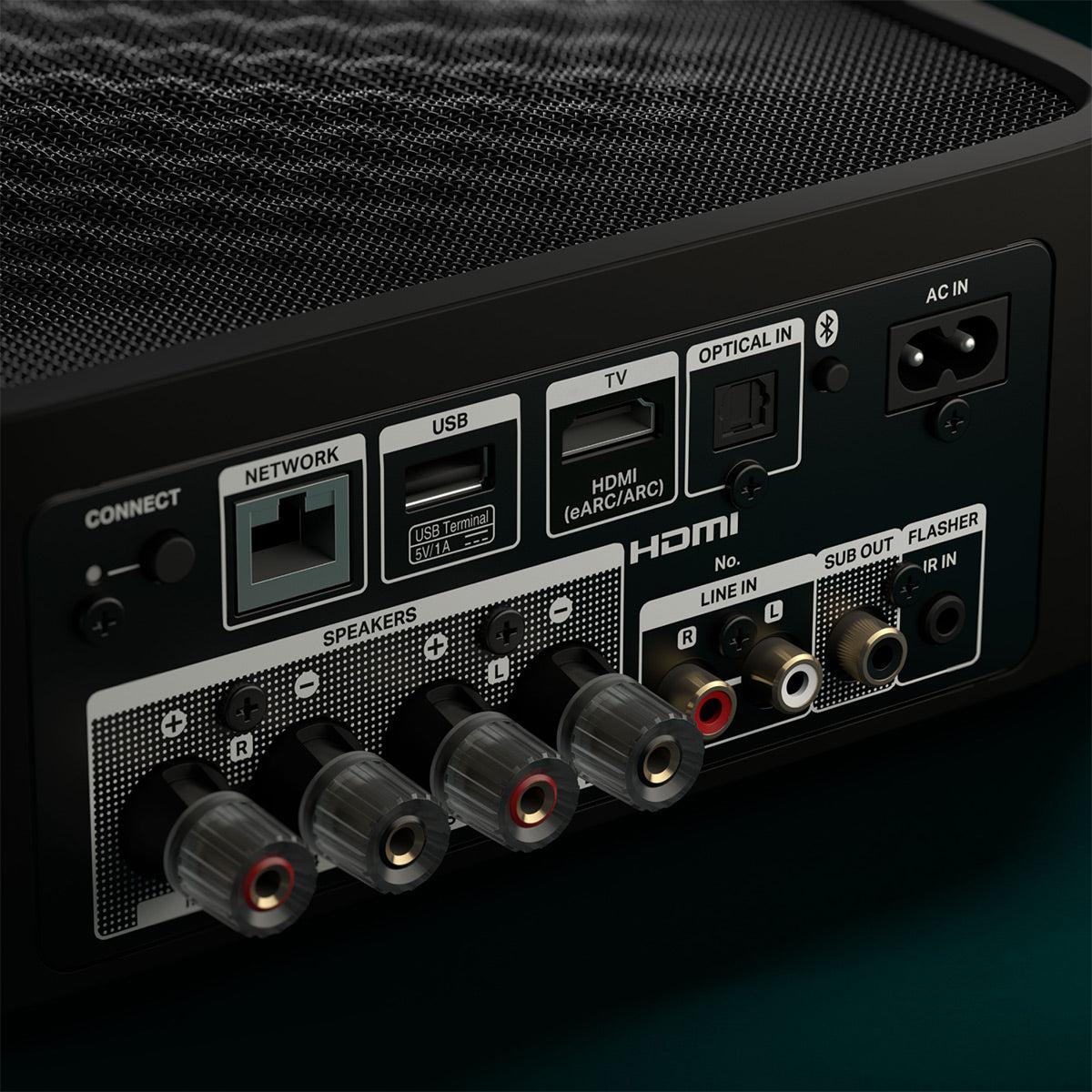
Physical connectivity reveals another key difference in design philosophy. The SVS Prime Wireless Pro SoundBase offers maximum flexibility with HDMI ARC/eARC, optical digital input, multiple analog inputs (RCA and 3.5mm), Ethernet, and a USB-A port for direct file playback. This comprehensive input selection makes it easy to connect everything from TVs and CD players to computers and mobile devices.
The HDMI ARC (Audio Return Channel) connection is particularly valuable for TV integration. ARC allows your TV to send audio back to the amplifier through the same HDMI cable, simplifying setup and enabling single-remote control. The enhanced version (eARC) supports higher-quality audio formats and is becoming standard on newer TVs.
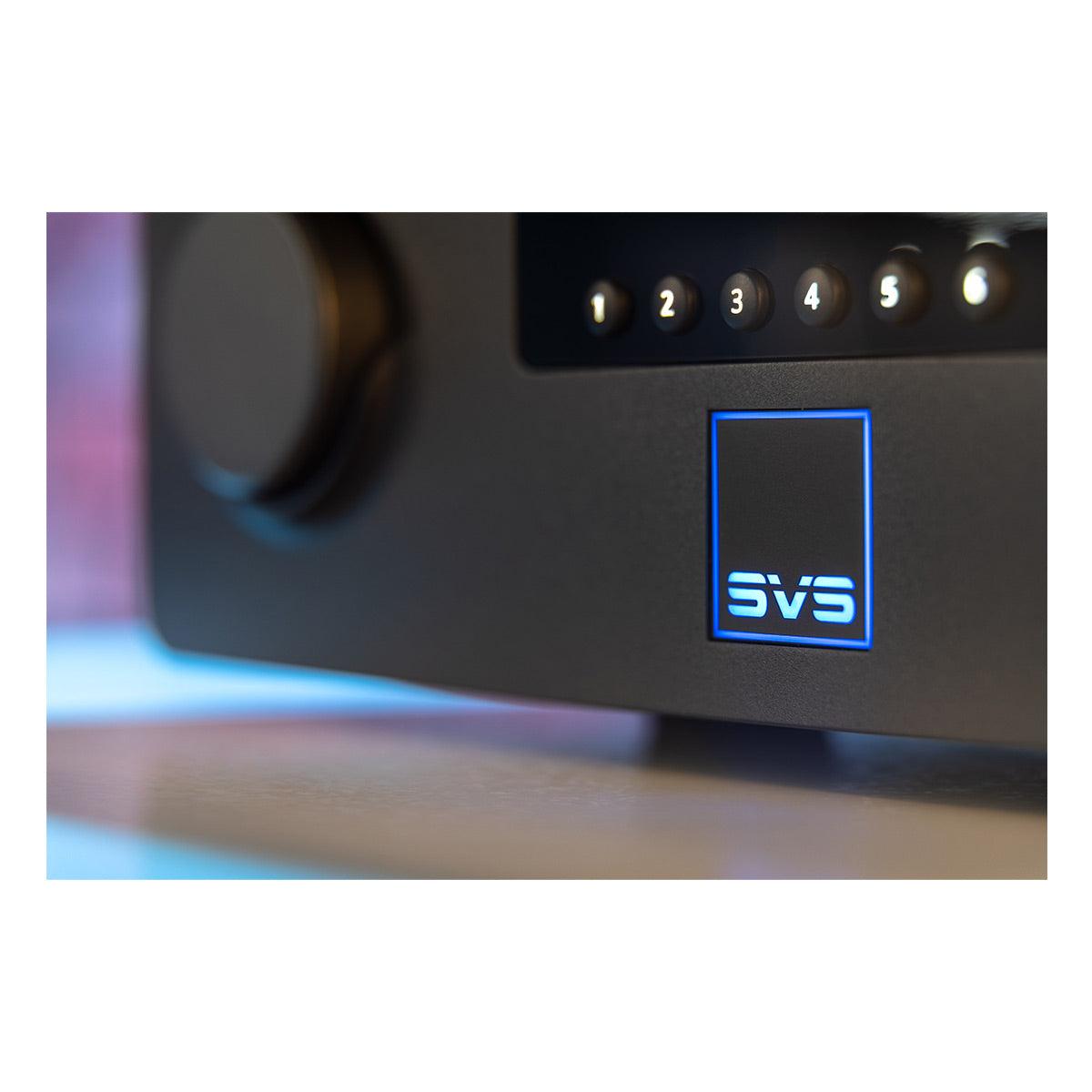
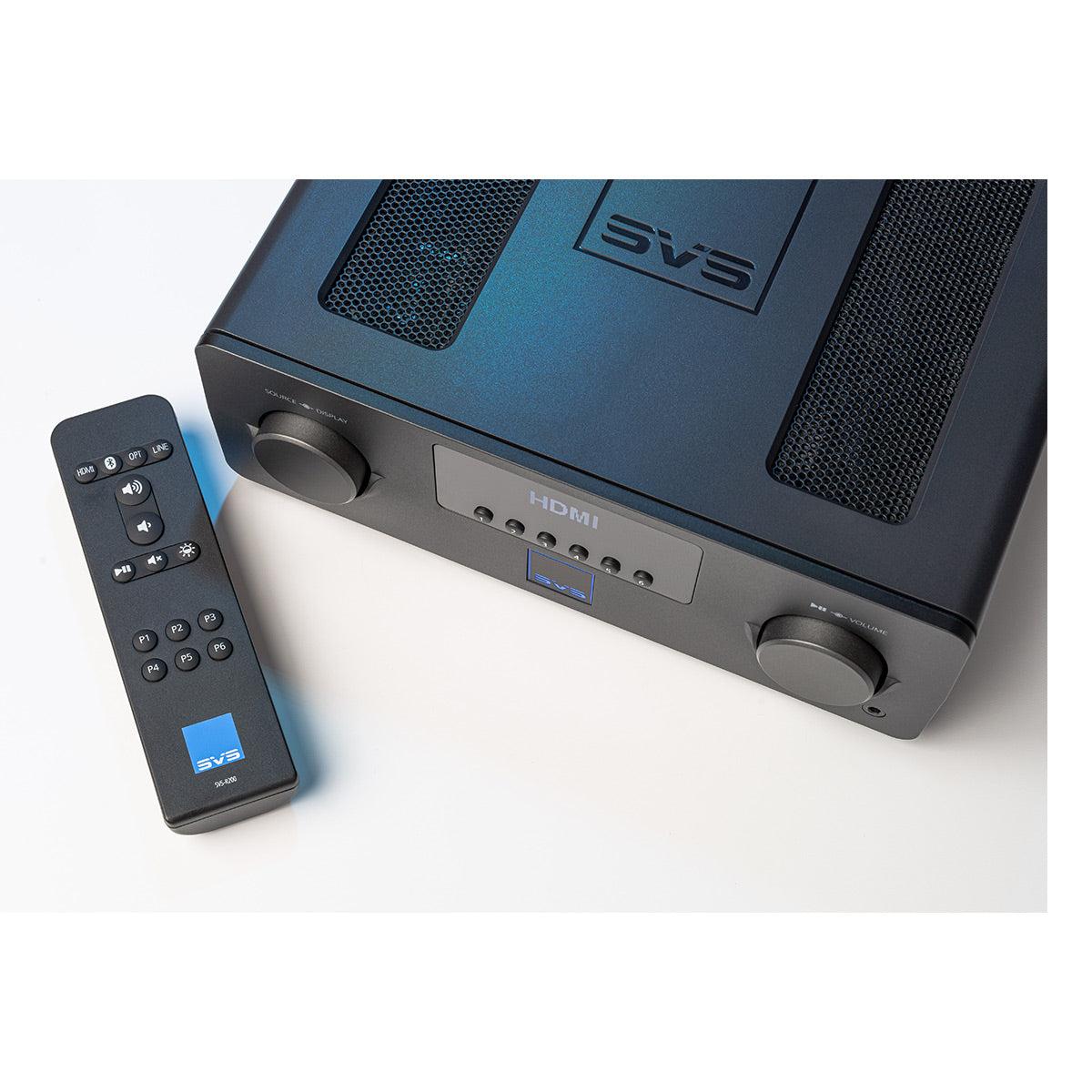
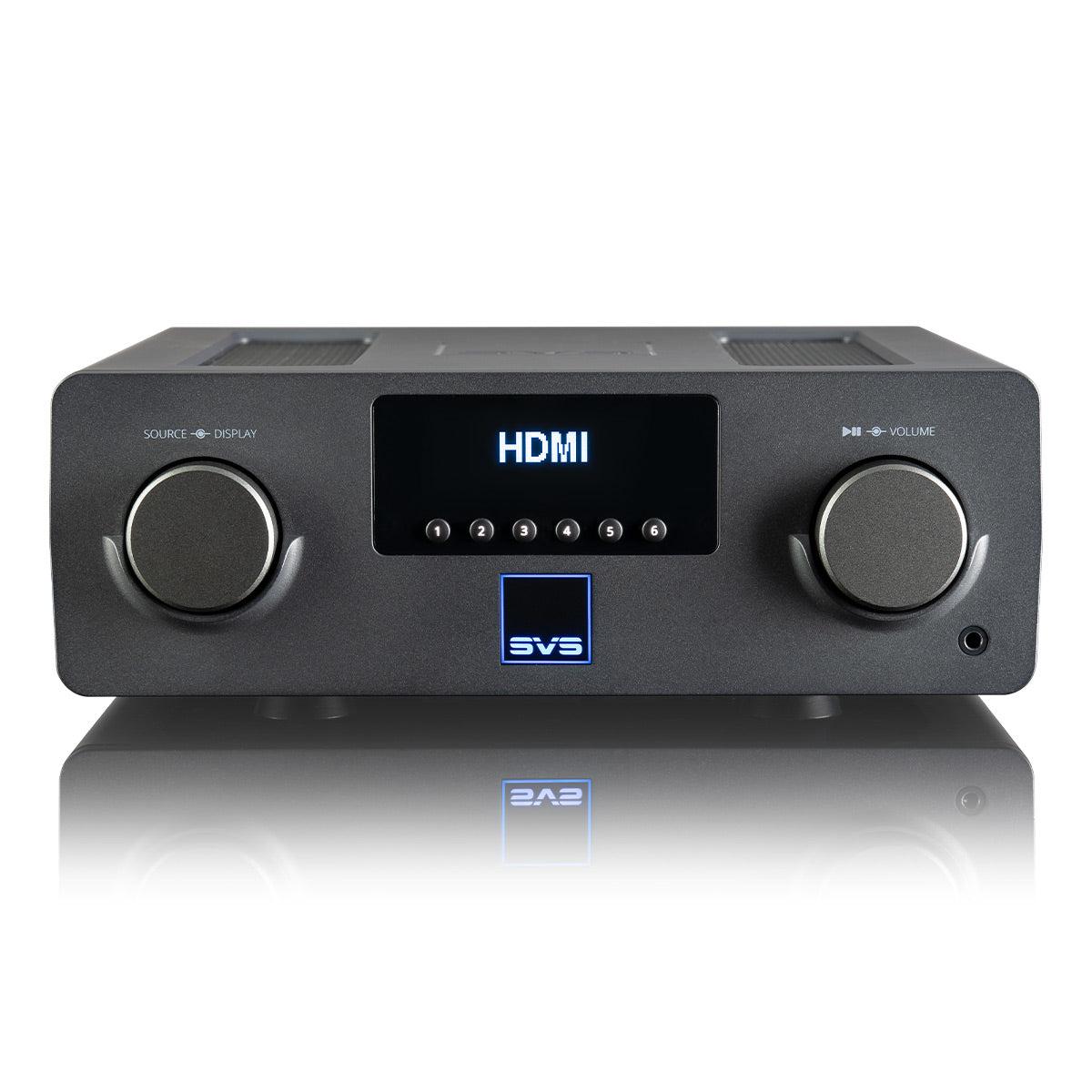
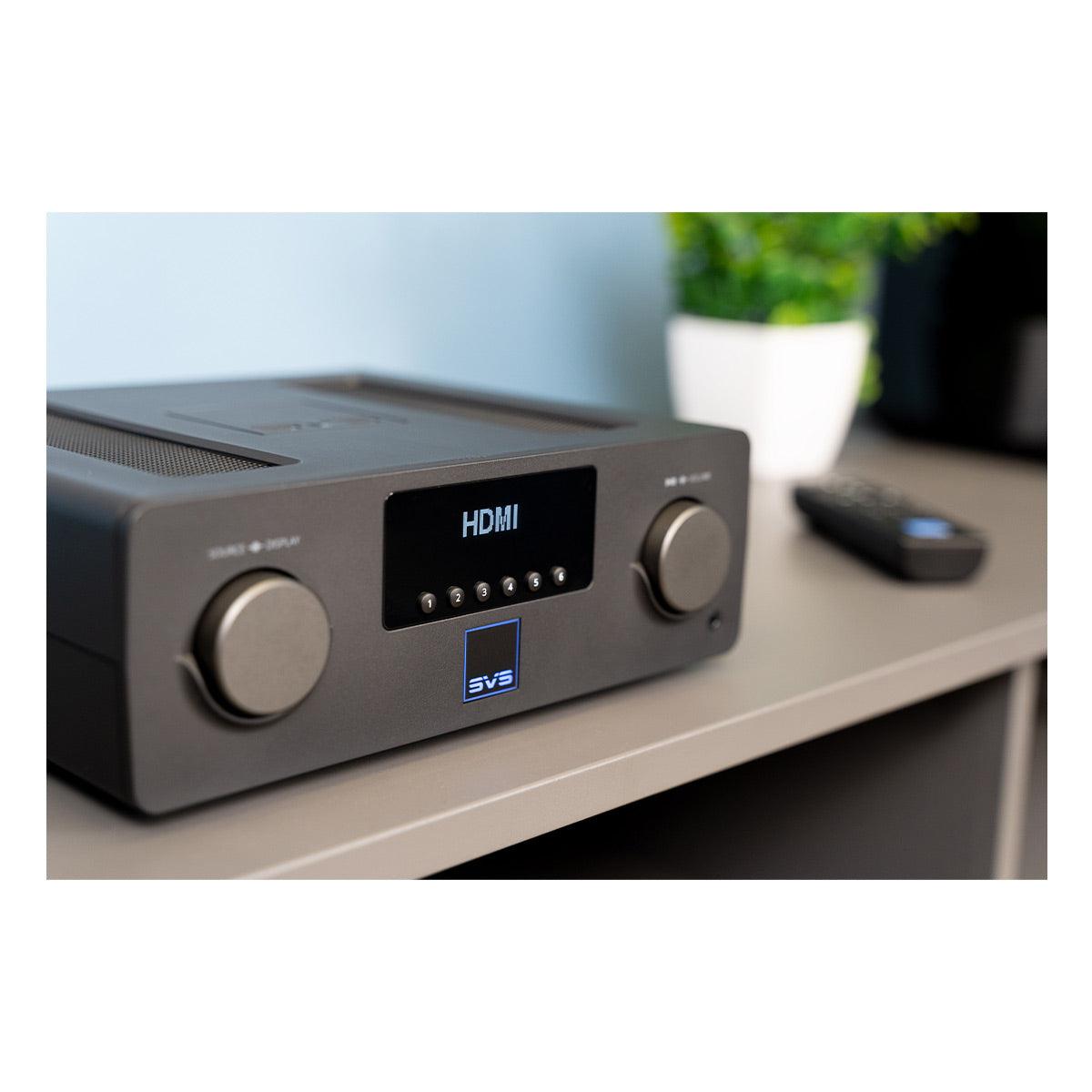
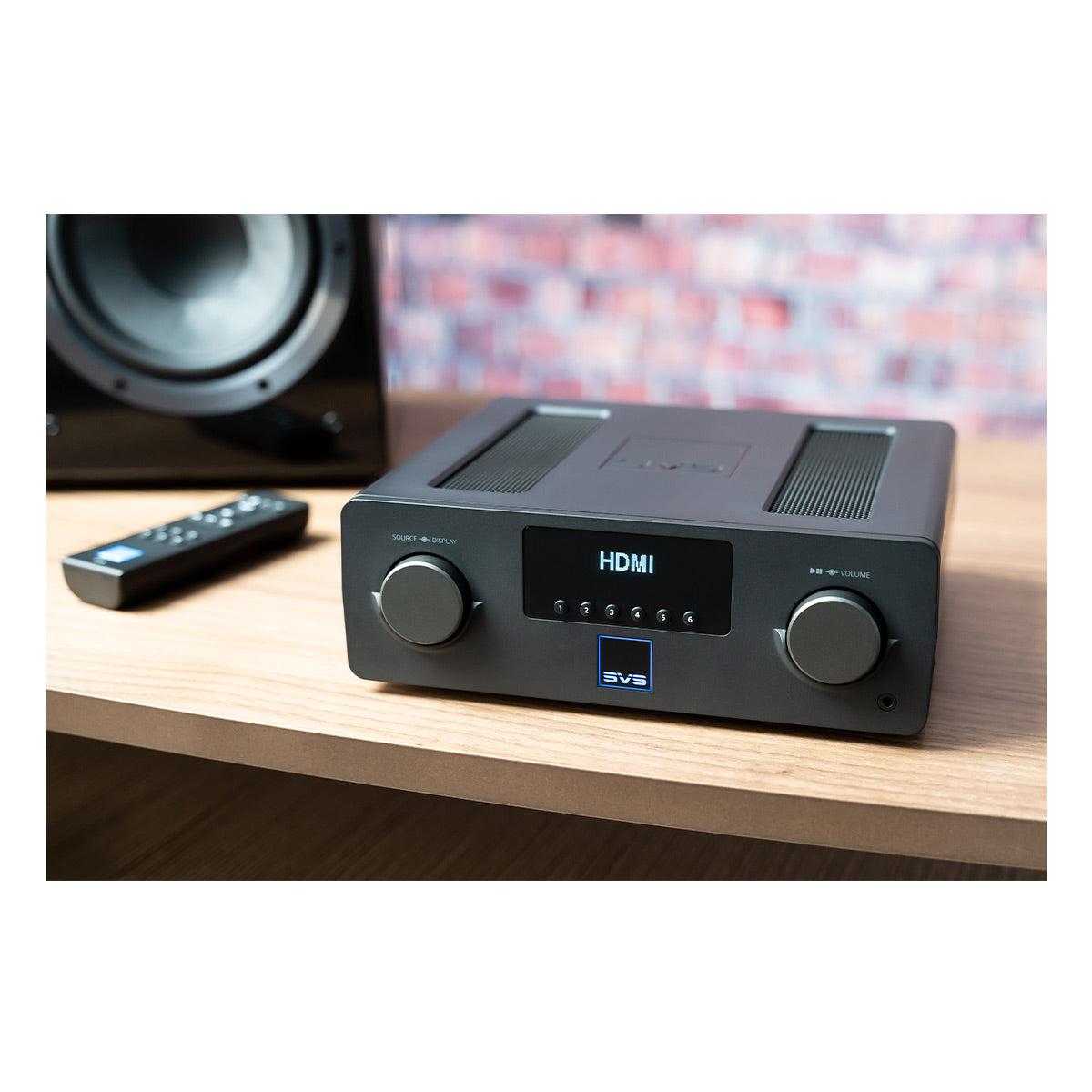
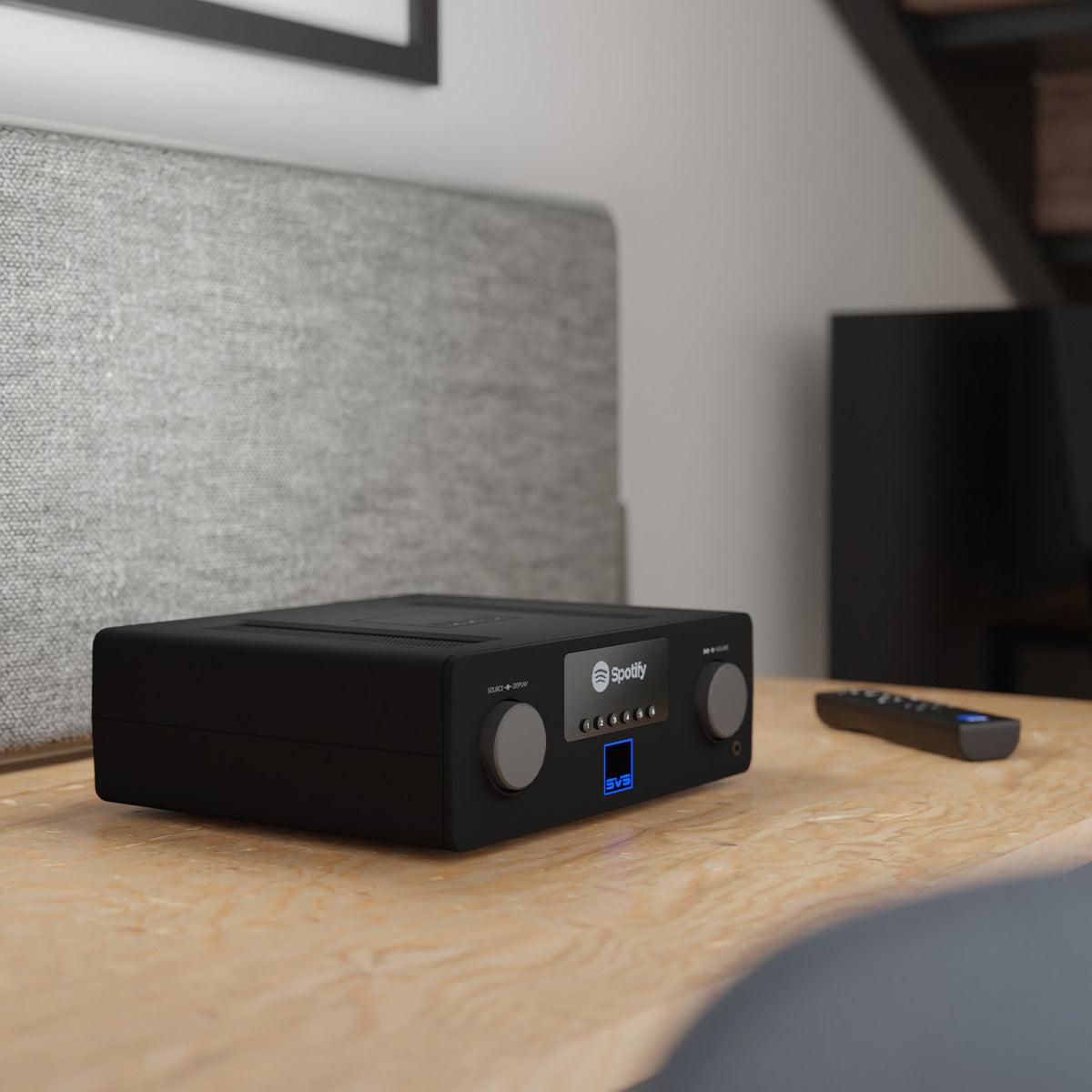
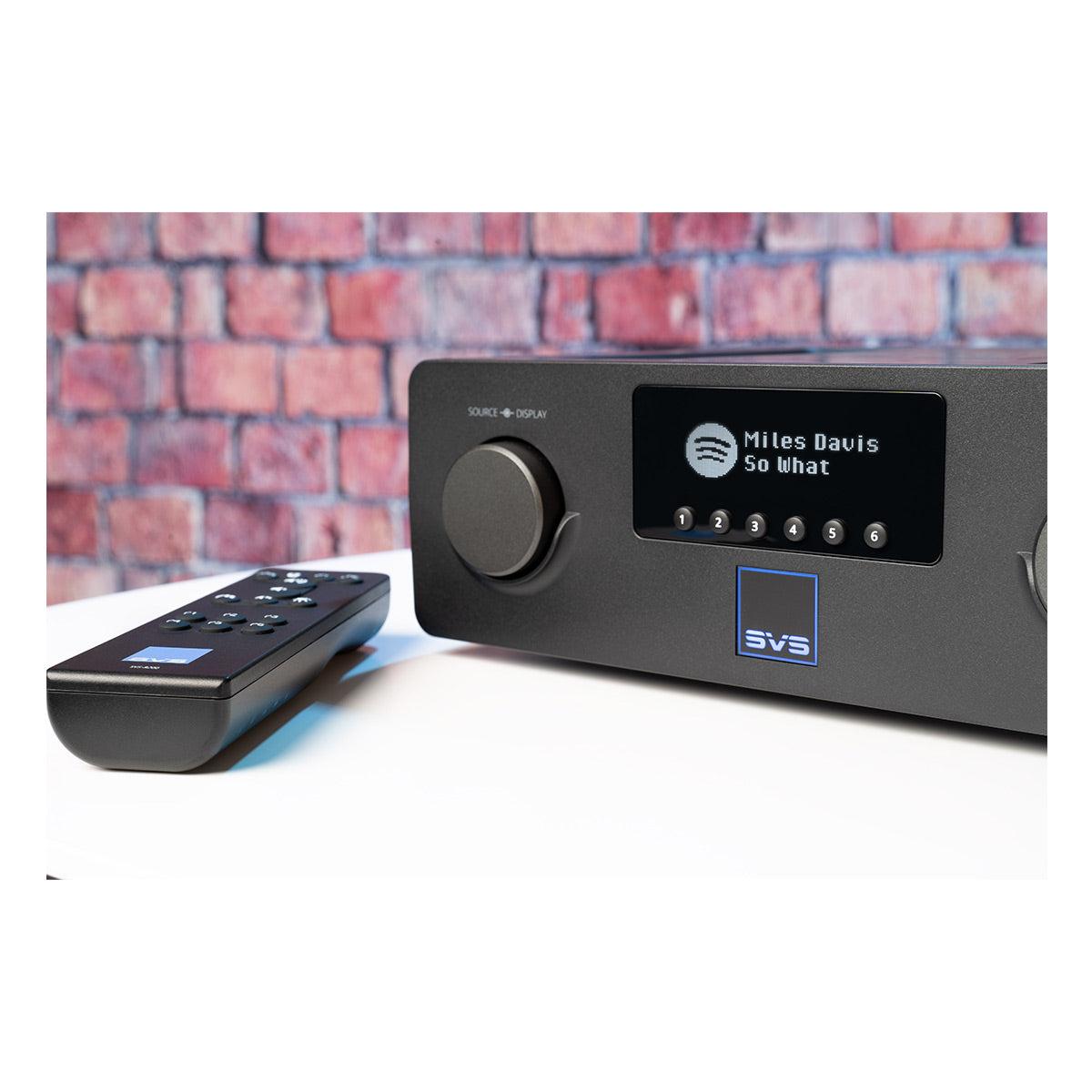
The SVS also includes six front-panel preset buttons—a surprisingly useful feature that lets you instantly access your favorite streaming services, playlists, or internet radio stations with a single press. Combined with its OLED display showing track information and system status, this creates an exceptionally user-friendly experience.
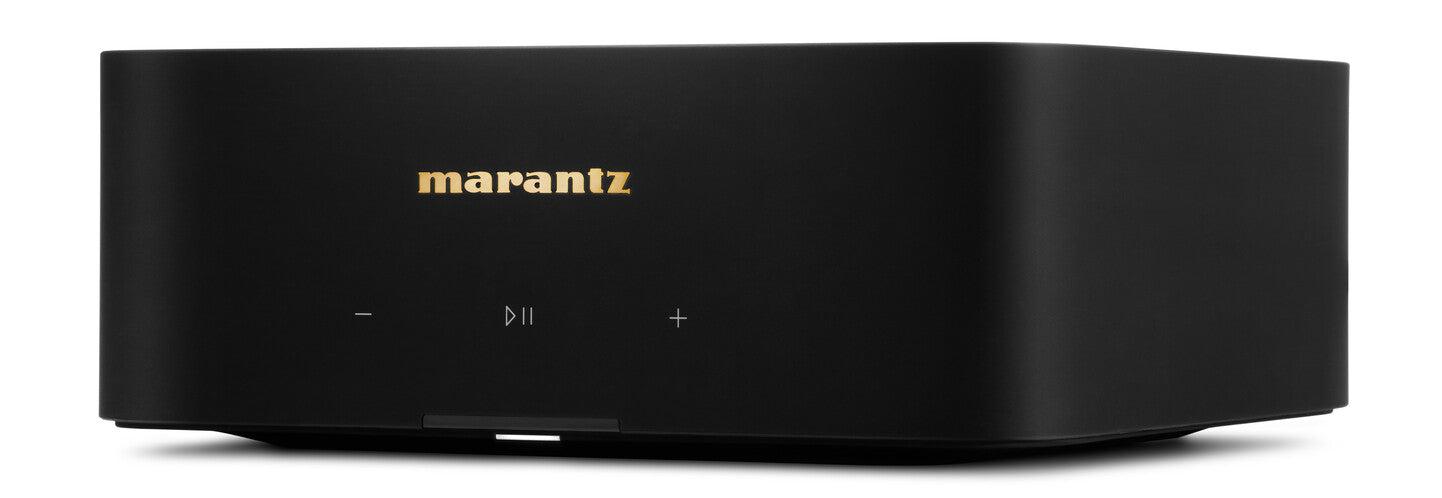
The Marantz Model M1 takes a more minimalist approach, focusing on essential connections while adding professional installation features. Beyond the standard inputs, it includes advanced subwoofer management with adjustable crossover filters, IR input for remote sensors, 12V trigger output for system automation, and TCP/IP control compatibility with professional systems like Crestron and Control4.
These custom installation features position the Marantz as a serious choice for whole-house audio systems or high-end home theaters where seamless integration matters more than having every possible input option.
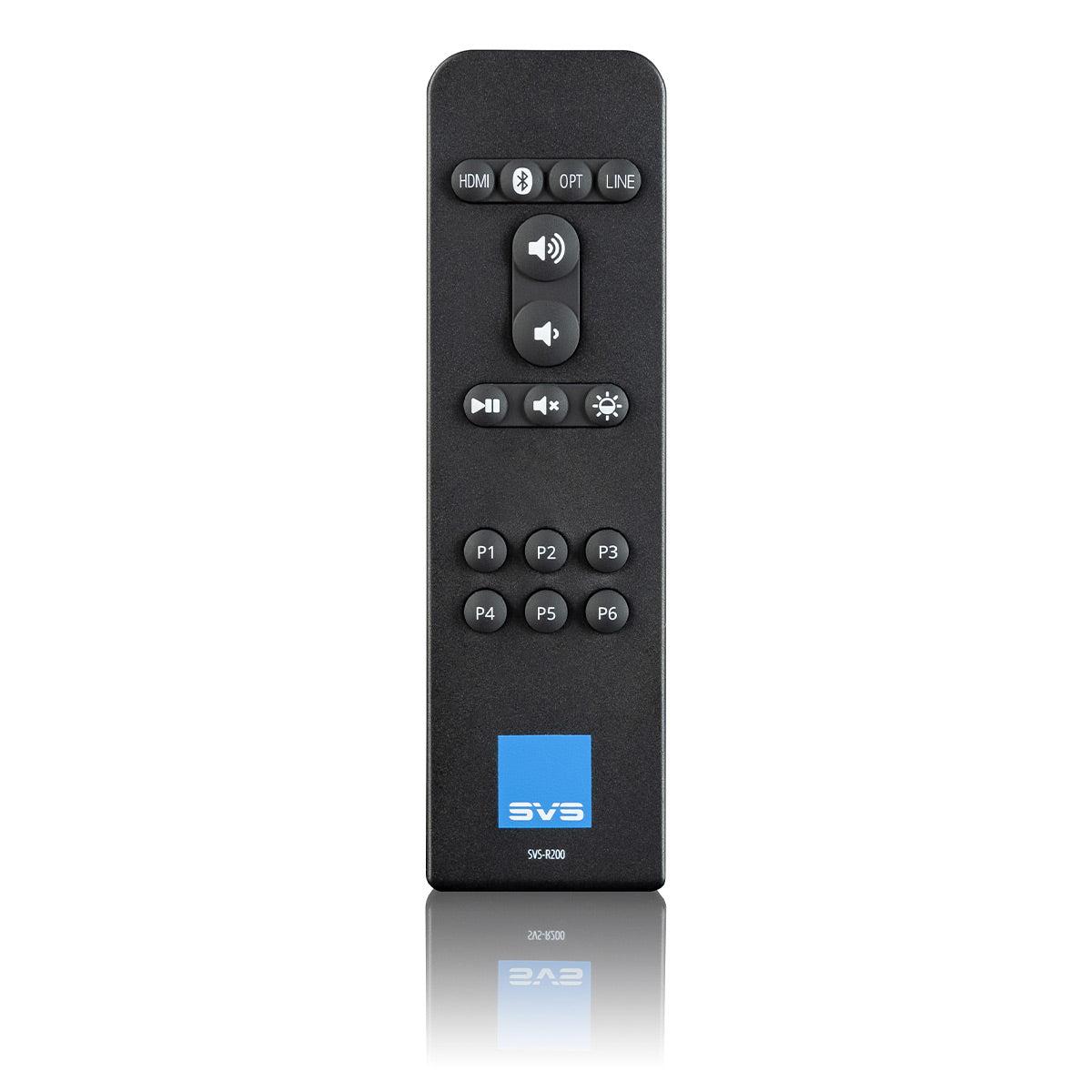
The user experience philosophies of these amplifiers couldn't be more different. The SVS Prime Wireless Pro SoundBase embraces physical control with its front-panel interface, preset buttons, OLED display, and included IR remote. You can control basic functions without ever touching a smartphone app—a significant advantage for family members who might not want to install yet another app or for situations where your phone isn't handy.
The DTS Play-Fi app provides advanced control when needed, but the SVS doesn't force you to use it for basic operations. This flexibility is particularly valuable for TV audio, where you want simple volume and input control.
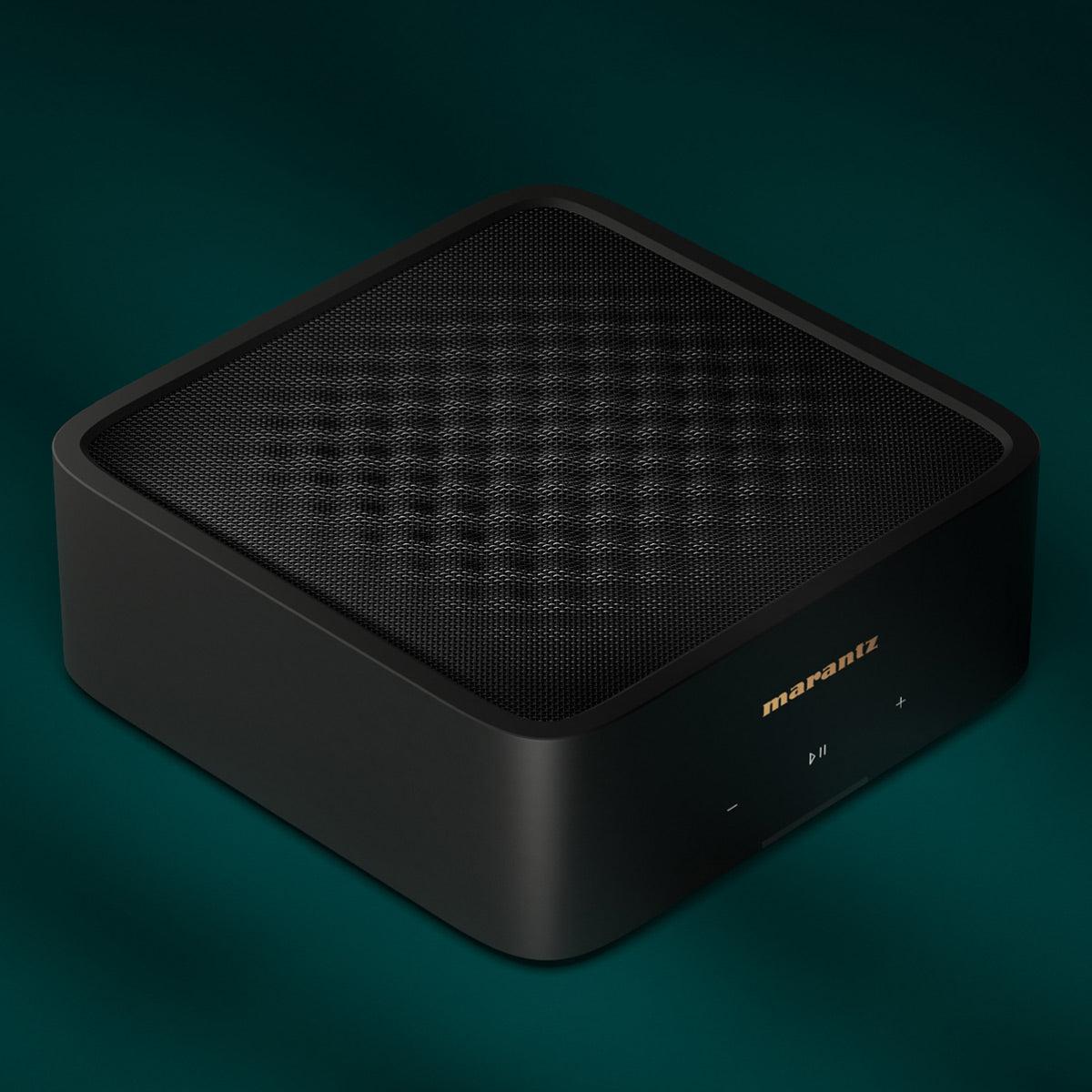
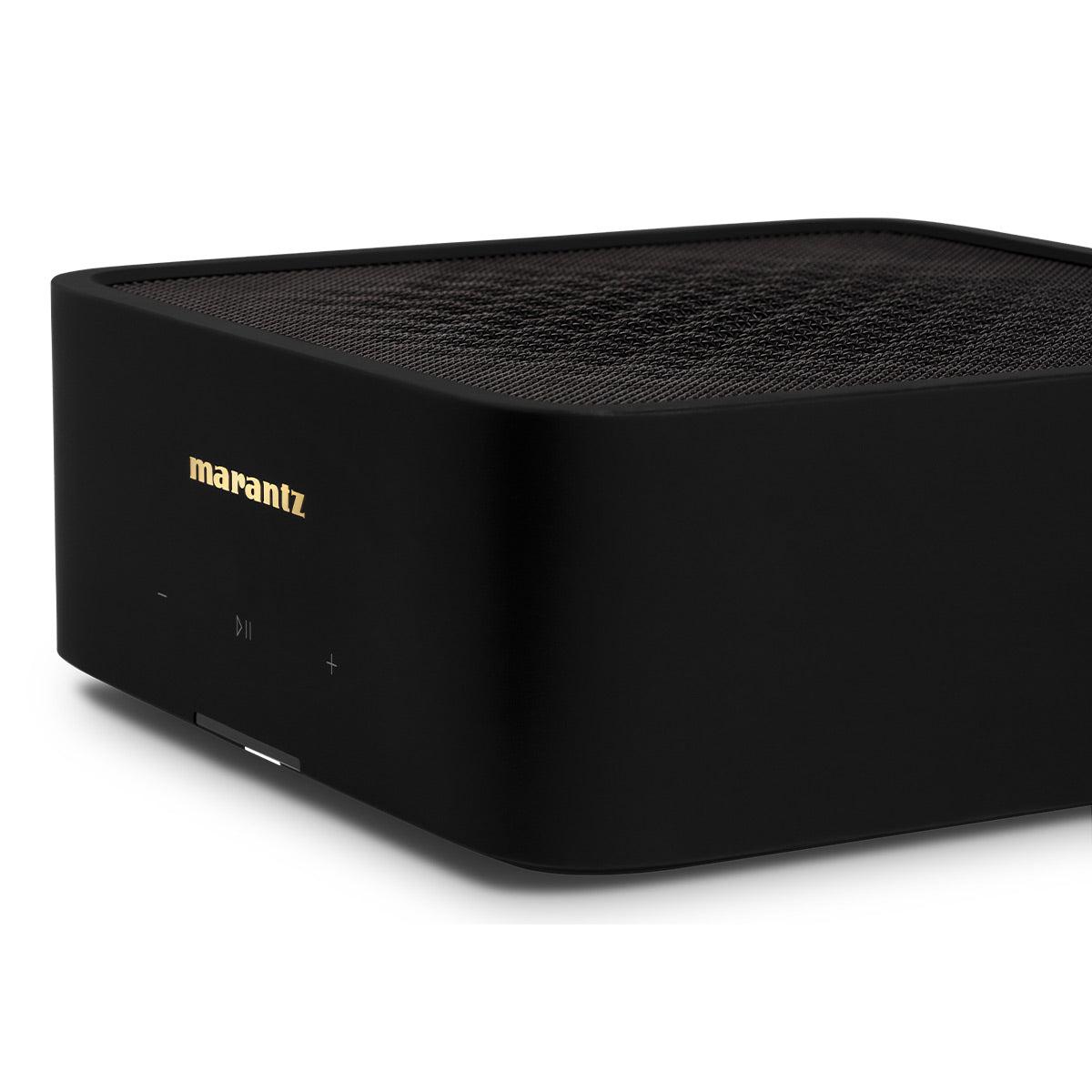
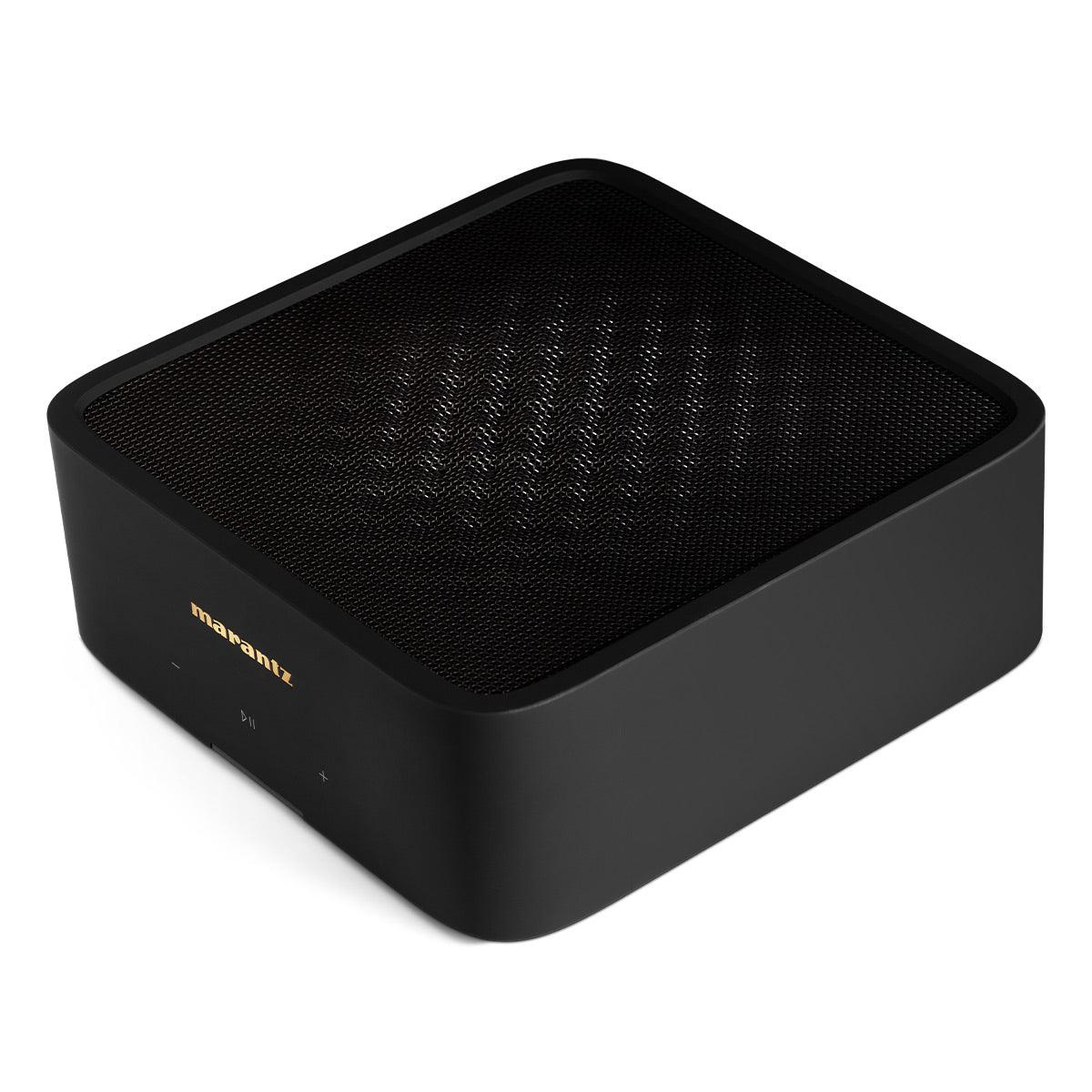
The Marantz Model M1 goes completely app-centric with no front-panel controls or display. Everything is managed through the HEOS app or your streaming service's native app when using AirPlay 2 or Chromecast. This creates an exceptionally clean aesthetic but requires smartphone dependency for all functions.
From our analysis of user feedback, this represents the most polarizing difference between the products. Some users love the Marantz's minimalist approach and find app control intuitive and feature-rich. Others find it frustrating, particularly for TV audio where they want immediate access to volume control without unlocking a phone and opening an app.
Both amplifiers can serve as simplified stereo soundbars for TV audio, but they approach this differently. The SVS Prime Wireless Pro SoundBase includes its soundbase design in the name—it's specifically intended to sit under TVs and enhance their audio. Its compact form factor and front-firing design make it ideal for this application.
The Marantz Model M1 brings more sophisticated home theater features with Dolby Digital+ decoding, dialogue enhancement, and virtual surround processing. These features can make TV audio more immersive and clear, particularly for streaming content and broadcasts that use Dolby Digital+ encoding.
For serious home theater applications, both products support 2.1 channel operation with subwoofer outputs, but their approaches differ significantly. The SVS provides a full-range subwoofer output, meaning you need a powered subwoofer with its own crossover control to properly integrate with your main speakers.
The Marantz offers more sophisticated bass management with adjustable high-pass and low-pass filters (40-250 Hz for speakers, 40-120 Hz for subwoofer). This allows for precise integration and can significantly improve overall system performance by preventing overlap between your speakers and subwoofer.
At the time of writing, the SVS Prime Wireless Pro SoundBase typically costs significantly less than the Marantz Model M1 while delivering substantially more power output. This creates a compelling value proposition for users who need maximum performance per dollar.
The SVS offers approximately 50% more power output for roughly 30% less money—a remarkable achievement in the audio world where power typically commands premium pricing. When you add its extensive connectivity options and user-friendly interface, the value proposition becomes even stronger.
The Marantz justifies its higher price through sophisticated signal processing, premium build quality (designed and built in Japan), advanced integration features, and a longer warranty period. The MMDF technology, professional installation features, and refined sonic character represent genuine technical advantages that may be worth the premium for the right user.
Since their respective launches, both products have benefited from firmware updates and ecosystem improvements. The streaming audio landscape has evolved toward higher-resolution formats and better app experiences, and both amplifiers have adapted well to these changes.
The SVS has seen improvements to its DTS Play-Fi implementation and streaming service compatibility. The Marantz has benefited from HEOS platform updates and enhanced Roon integration.
Looking forward, both products should remain relevant for years to come. Their HDMI eARC support ensures compatibility with current and future TV standards, and their high-resolution audio capabilities exceed what most streaming services currently offer.
The choice between these amplifiers ultimately depends on your specific needs and preferences. Choose the SVS Prime Wireless Pro SoundBase if you need maximum power to drive demanding speakers, prefer having physical controls and displays, want the best performance value, or are building a straightforward stereo or TV audio system.
The SVS excels in large rooms, with inefficient speakers, or situations where multiple family members need easy access to controls. Its extensive streaming service support and connectivity options make it future-proof and flexible for changing needs.
Choose the Marantz Model M1 if you prioritize audio quality refinement over raw power, are building or expanding a multi-room HEOS system, need professional custom installation features, or prefer minimalist aesthetics with app-only control. The Marantz is ideal for users with efficient speakers who value the company's signature musical sound and sophisticated processing.
Both represent excellent engineering and clear thinking about what streaming amplifiers should accomplish. The SVS democratizes high-performance audio by delivering exceptional power and features at an accessible price point. The Marantz advances the state of the art in digital audio processing while maintaining the musical engagement that made the brand legendary.
Your choice should ultimately align with your speakers' power requirements, your budget, your control preferences, and whether you value maximum performance or refined audio processing. Either way, you'll get a streaming amplifier that transforms passive speakers into a modern, connected audio system worthy of your music collection.
| SVS Prime Wireless Pro SoundBase | Marantz Model M1 |
|---|---|
| Power Output - Determines how loud and clean your speakers will sound | |
| 300W total (150W × 2 into 4Ω) - Can drive large, demanding speakers | 200W total (100W × 2 into 8Ω, 125W × 2 into 4Ω) - Sufficient for most speakers |
| Audio Processing - How the amplifier shapes and enhances sound | |
| 24-bit/192kHz DAC with neutral, transparent sound | Proprietary MMDF digital filtering with selectable characteristics for musical warmth |
| Streaming Ecosystem - Which services and multi-room systems you can use | |
| DTS Play-Fi, AirPlay 2, Chromecast, Spotify Connect - Broader service support | HEOS built-in, AirPlay 2, Spotify Connect, Roon Ready - Better for multi-room integration |
| High-Resolution Audio Support - Quality of wireless streaming | |
| Up to 24-bit/192kHz via DTS Play-Fi Critical Listening Mode | Up to 24-bit/192kHz PCM plus DSD 2.8/5.6 MHz support |
| Physical Connectivity - How many sources you can connect | |
| HDMI eARC, Optical, RCA, 3.5mm, USB-A, Ethernet, Subwoofer out | HDMI eARC, Optical, RCA, USB-A (storage only), Ethernet, Subwoofer out with crossover |
| User Interface - How you control the amplifier day-to-day | |
| 6 preset buttons, OLED display, IR remote, smartphone app | App-only control via HEOS - no physical controls or display |
| Subwoofer Integration - Bass management capabilities | |
| Full-range output (requires powered sub with crossover) | Adjustable high-pass (40-250Hz) and low-pass (40-120Hz) filters |
| Home Theater Features - TV audio enhancement capabilities | |
| HDMI eARC with basic TV audio support | HDMI eARC with Dolby Digital+ decoding, Dialog Enhancer, Virtual mode |
| Form Factor - Size and placement flexibility | |
| Compact soundbase design (3.23" H × 9.10" W × 8.81" D) | Rack-mountable amplifier with premium build quality |
| Custom Installation Features - Professional integration capabilities | |
| Basic setup with IR learning capability | IR input, 12V trigger, TCP/IP control, Crestron/Control4/AMX compatibility |
| Build Quality and Warranty - Long-term reliability and support | |
| 2-year parts and labor warranty | 5-year parts and labor warranty, designed and built in Japan |
The SVS Prime Wireless Pro SoundBase delivers significantly more power with 300 watts total (150 watts per channel into 4-ohm speakers), while the Marantz Model M1 provides 200 watts total (100 watts per channel into 8-ohm speakers). The SVS can drive larger, more demanding speakers and reach higher volumes without distortion.
The SVS Prime Wireless Pro SoundBase focuses on neutral, accurate sound reproduction with a high-quality 24-bit/192kHz DAC. The Marantz Model M1 uses proprietary Marantz Musical Digital Filtering (MMDF) technology to create a warmer, more musical sound signature that many listeners find more engaging for long listening sessions.
The SVS Prime Wireless Pro SoundBase supports more streaming platforms including DTS Play-Fi, AirPlay 2, Chromecast, and Spotify Connect with broader service compatibility. The Marantz Model M1 focuses on the HEOS ecosystem and is Roon Ready, making it better for multi-room audio and audiophile streaming setups.
Both amplifiers can enhance TV audio through HDMI eARC connections. The SVS Prime Wireless Pro SoundBase is specifically designed as a soundbase to sit under TVs, while the Marantz Model M1 offers more advanced home theater features including Dolby Digital+ decoding and dialogue enhancement for better movie audio.
The SVS Prime Wireless Pro SoundBase offers multiple control options including six preset buttons, an OLED display, IR remote, and smartphone app control. The Marantz Model M1 relies entirely on app-based control through HEOS with no physical controls or display, creating a cleaner look but requiring smartphone dependency.
Both amplifiers offer HDMI eARC, optical, and analog inputs, but the SVS Prime Wireless Pro SoundBase provides more flexibility with additional 3.5mm input and broader USB support. The Marantz Model M1 includes professional installation features like IR input, 12V trigger output, and custom integration system compatibility.
The SVS Prime Wireless Pro SoundBase typically costs less while delivering 50% more power output, making it an exceptional value for performance-focused buyers. The Marantz Model M1 costs more but includes sophisticated audio processing, premium build quality, and a longer warranty period.
Both amplifiers support high-resolution audio streaming. The SVS Prime Wireless Pro SoundBase can stream up to 24-bit/192kHz via DTS Play-Fi Critical Listening Mode. The Marantz Model M1 supports 24-bit/192kHz PCM plus DSD files up to 5.6 MHz, offering slightly broader format support for audiophile collections.
The SVS Prime Wireless Pro SoundBase provides a full-range subwoofer output requiring a powered subwoofer with its own crossover controls. The Marantz Model M1 offers superior bass management with adjustable high-pass and low-pass filters for more precise subwoofer integration and better overall system performance.
The SVS Prime Wireless Pro SoundBase is better suited for large rooms due to its higher power output and ability to drive demanding speakers to high volumes without strain. The Marantz Model M1 works well in most rooms but may struggle with very large spaces or inefficient speakers that require more power.
The Marantz Model M1 excels in multi-room setups through its built-in HEOS platform, allowing seamless integration with other HEOS-compatible devices throughout your home. The SVS Prime Wireless Pro SoundBase supports DTS Play-Fi for multi-room capabilities but offers fewer whole-house audio integration options.
Choose the SVS Prime Wireless Pro SoundBase if you need maximum power, prefer physical controls, want broad streaming service support, or prioritize value. Choose the Marantz Model M1 if you prefer refined audio processing, need multi-room integration, want professional installation features, or value premium build quality over raw power output.
We've done our best to create useful and informative comparisons to help you decide what product to buy. Our research uses advanced automated methods to create this comparison and perfection is not possible - please contact us for corrections or questions. These are the sites we've researched in the creation of this article: soundandvision.com - crutchfield.com - futureaudiophile.com - dreamediaav.com - crutchfield.com - svsound.com - soundstageaccess.com - skybygramophone.com - hometheaterhifi.com - av-connection.com - crutchfield.com - soundstagenetwork.com - svsound.com - bestbuy.com - crutchfield.com - audioadvisor.com - youtube.com - soundstagesimplifi.com - marantz.com - marantz.com - audioadvice.com - whathifi.com - manuals.marantz.com - audiosciencereview.com - youtube.com - marantz.com - sweetwater.com - audiosciencereview.com - accessories4less.com

Privacy Policy
Terms and Conditions - Affiliate Policy
Home Security
© Copyright 2008-2026.
11816 Inwood Rd #1211, Dallas, TX 75244