

When you're shopping for a modern amplifier that can power your speakers and stream music from your phone, you're entering the world of integrated network amplifiers. These devices combine several components that used to require separate boxes: a power amplifier (which makes the signal strong enough to drive speakers), a digital-to-analog converter or DAC (which converts digital music files into analog signals your speakers can use), and wireless streaming capabilities (so you can play music from Spotify, Apple Music, and other services without cables).
Today we're comparing two excellent options that take very different approaches: the SVS Prime Wireless Pro SoundBase and the Denon PMA-900HNE. Both arrived on the market around 2022, representing the latest thinking in how to blend traditional hi-fi sound quality with modern streaming convenience. However, they serve different types of users and listening situations.
Before diving into the comparison, it's worth understanding what makes a good integrated network amplifier. The most important factors are power output (how loud and dynamic your music can sound), connectivity options (what devices you can plug in or stream from), sound quality (how accurate and enjoyable the music reproduction is), and ecosystem integration (how well it works with your other devices and streaming services).
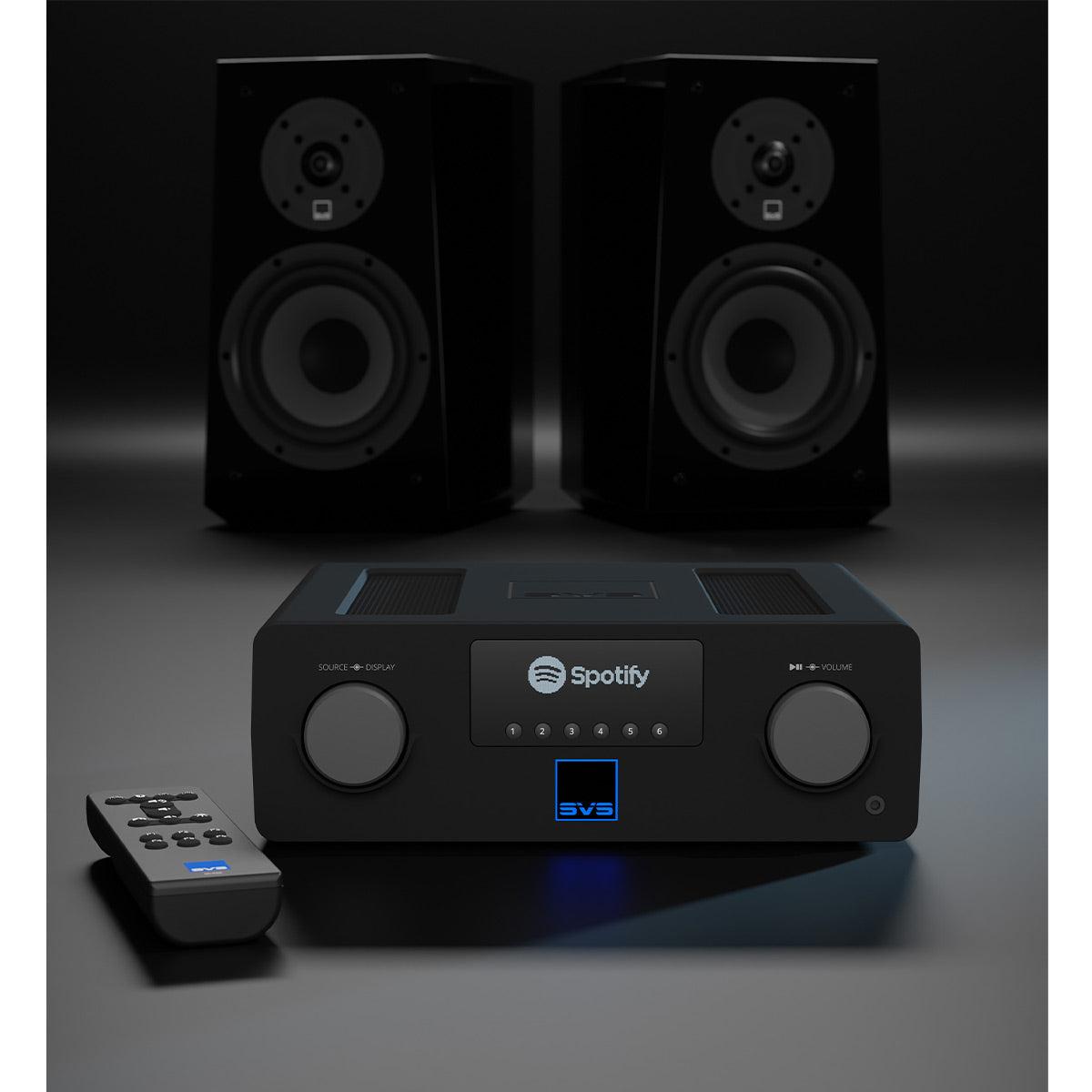
The SVS Prime Wireless Pro SoundBase represents a compact, power-focused approach. SVS built their reputation making excellent subwoofers, and they've applied that engineering expertise to create an amplifier that delivers surprising power from a small chassis. The Denon PMA-900HNE, meanwhile, comes from a company with decades of amplifier experience, offering a more traditional approach enhanced with modern streaming features.
When it comes to power output, the SVS SoundBase delivers an impressive 300 watts total power through Class-D amplification. This means 150 watts per channel when driving 4-ohm speakers, which is substantial power that can handle even large floor-standing speakers without breaking a sweat. Class-D amplification is a modern approach that uses switching technology to achieve high efficiency – meaning the amplifier stays cool and doesn't waste much electricity as heat.
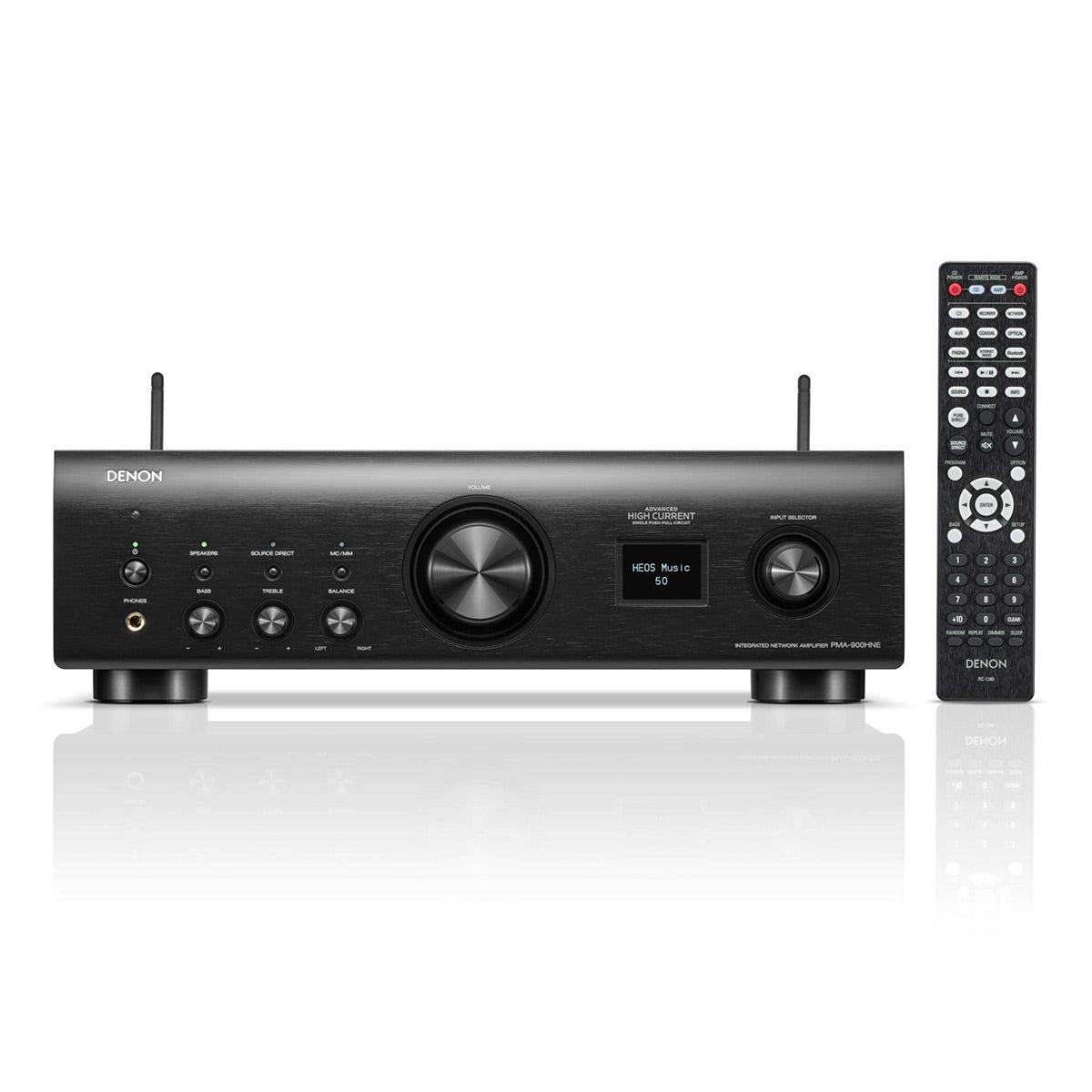
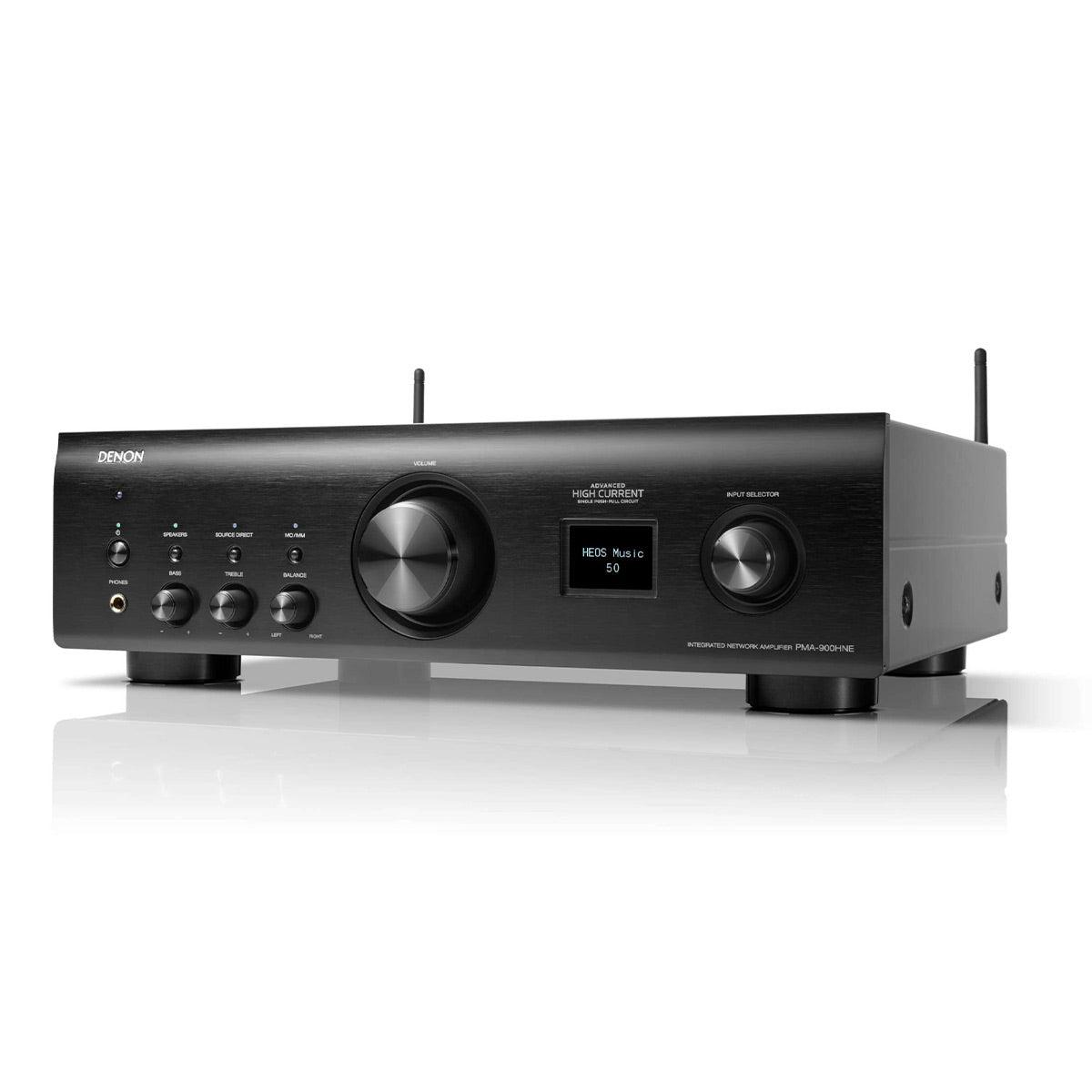
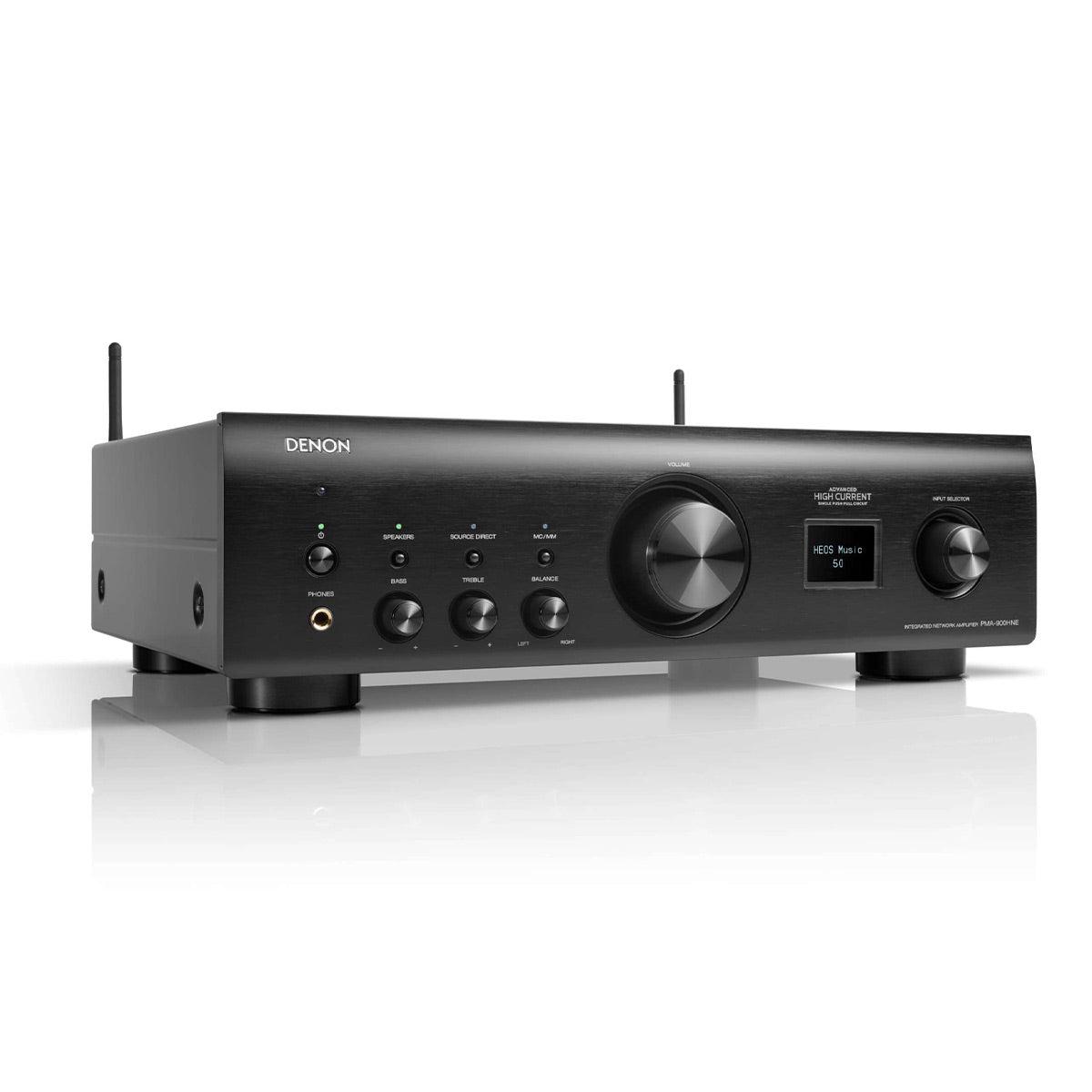
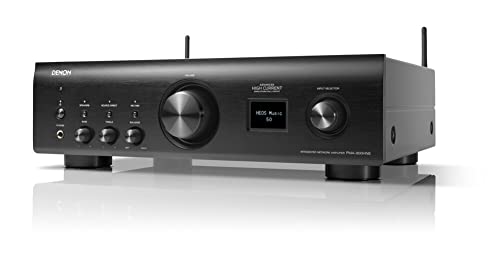
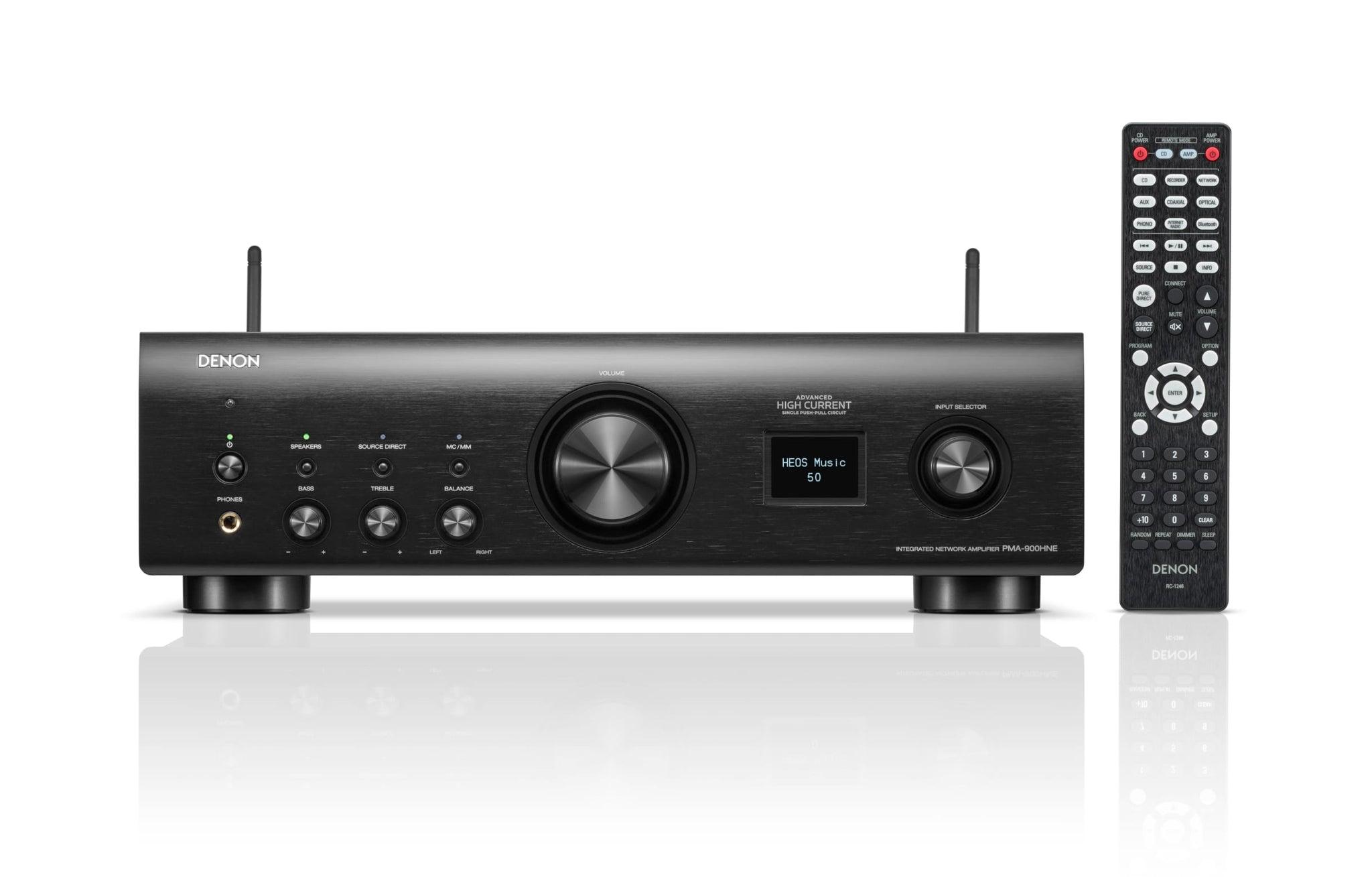
The Denon PMA-900HNE, by contrast, produces 170 watts total (85 watts per channel into 4-ohm speakers) using what Denon calls Advanced High Current single push-pull circuitry. This is a more traditional Class-AB design that typically sounds slightly warmer and more natural, though it's less efficient and produces more heat.
In practical terms, the power difference matters most if you have speakers that are hard to drive – either because they're inefficient (requiring more power to reach the same volume) or because you listen at high volumes in a large room. The SVS unit has nearly double the power reserves, which translates to better dynamics (the difference between quiet and loud passages) and less strain during complex musical passages.
However, power isn't everything. The Denon's Advanced High Current design is specifically engineered to maintain control and stability even when driving difficult speaker loads. While it has less raw power, it's designed to deliver that power in a very controlled, musical way that many audiophiles prefer.
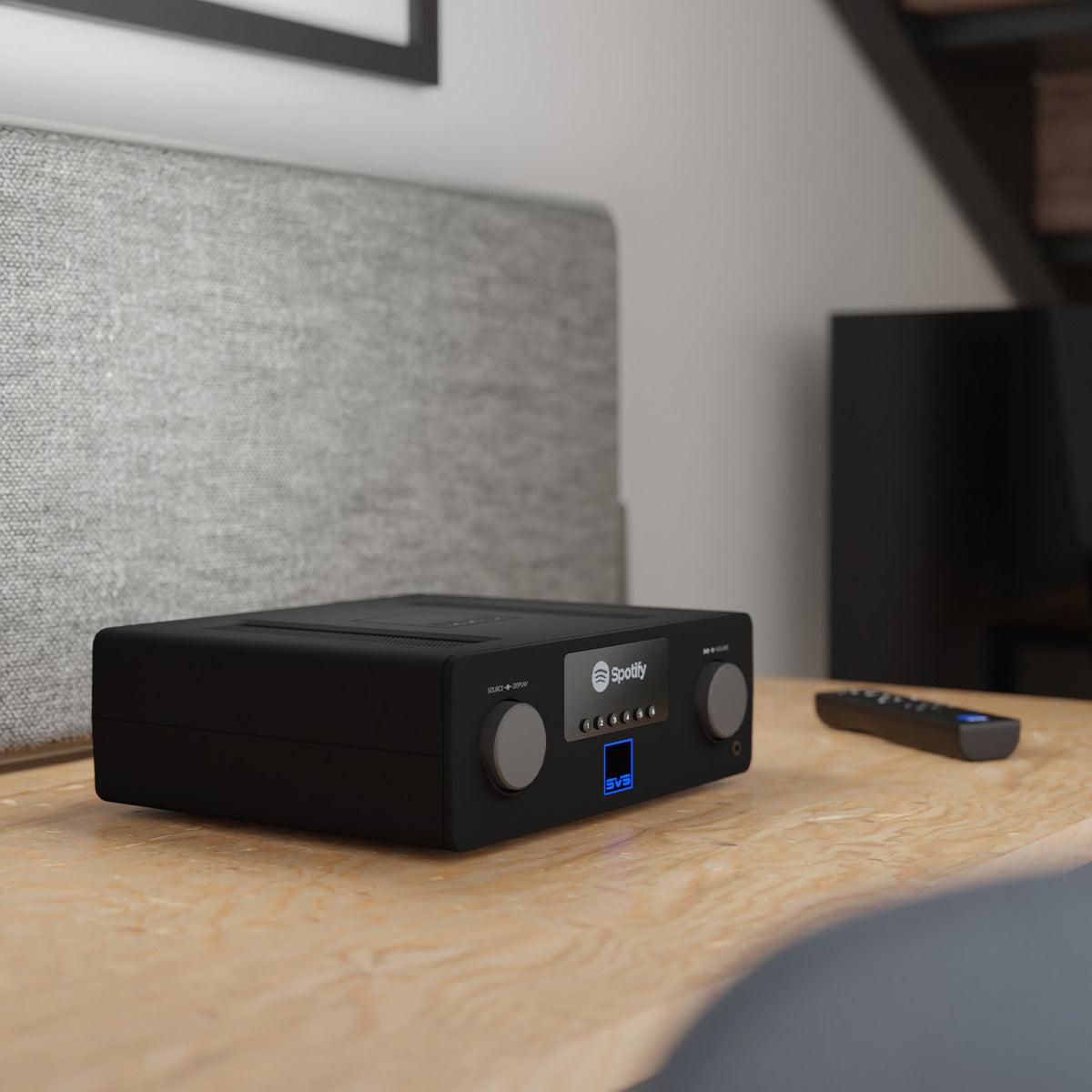
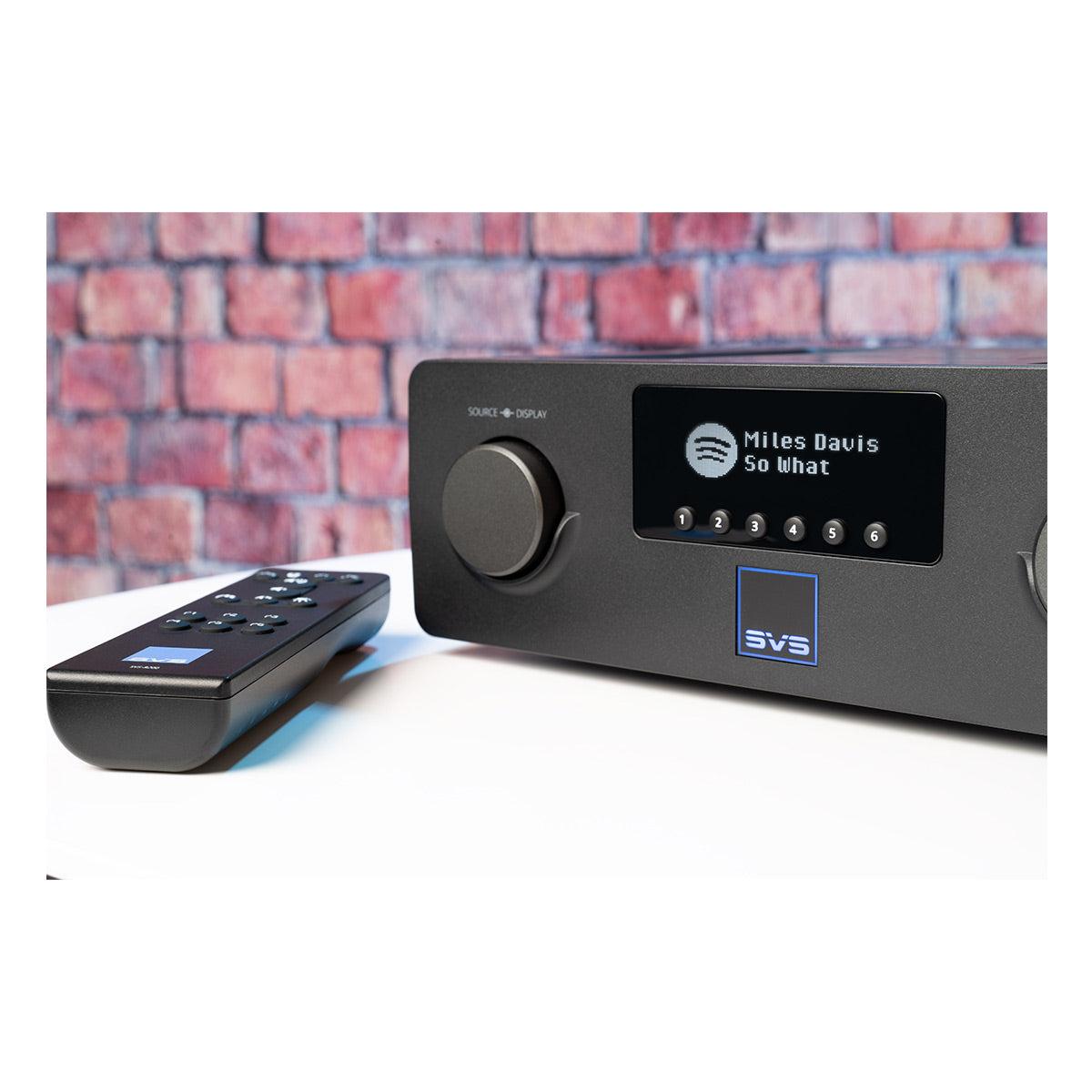
Here's where the two amplifiers diverge significantly. The SVS SoundBase uses the DTS Play-Fi platform for wireless streaming, which supports high-resolution audio up to 24-bit/192kHz over Wi-Fi. This technical specification means it can stream music files with much more detail than CD quality, preserving all the nuances that artists and engineers intended. It also supports Apple AirPlay 2 for iPhone users, Google Cast for Android devices, and Bluetooth 5.0 with advanced codecs like aptX for better wireless sound quality.
The Denon amplifier takes a different approach with HEOS Built-in technology. HEOS is Denon's proprietary multi-room audio system that can synchronize music playback across multiple rooms in your house. If you have other HEOS-compatible devices, you can create a whole-home audio system where different rooms play different music or all rooms play the same music in perfect sync. The Denon also supports Roon Ready certification, which is significant for serious music enthusiasts who use Roon's advanced music management software.
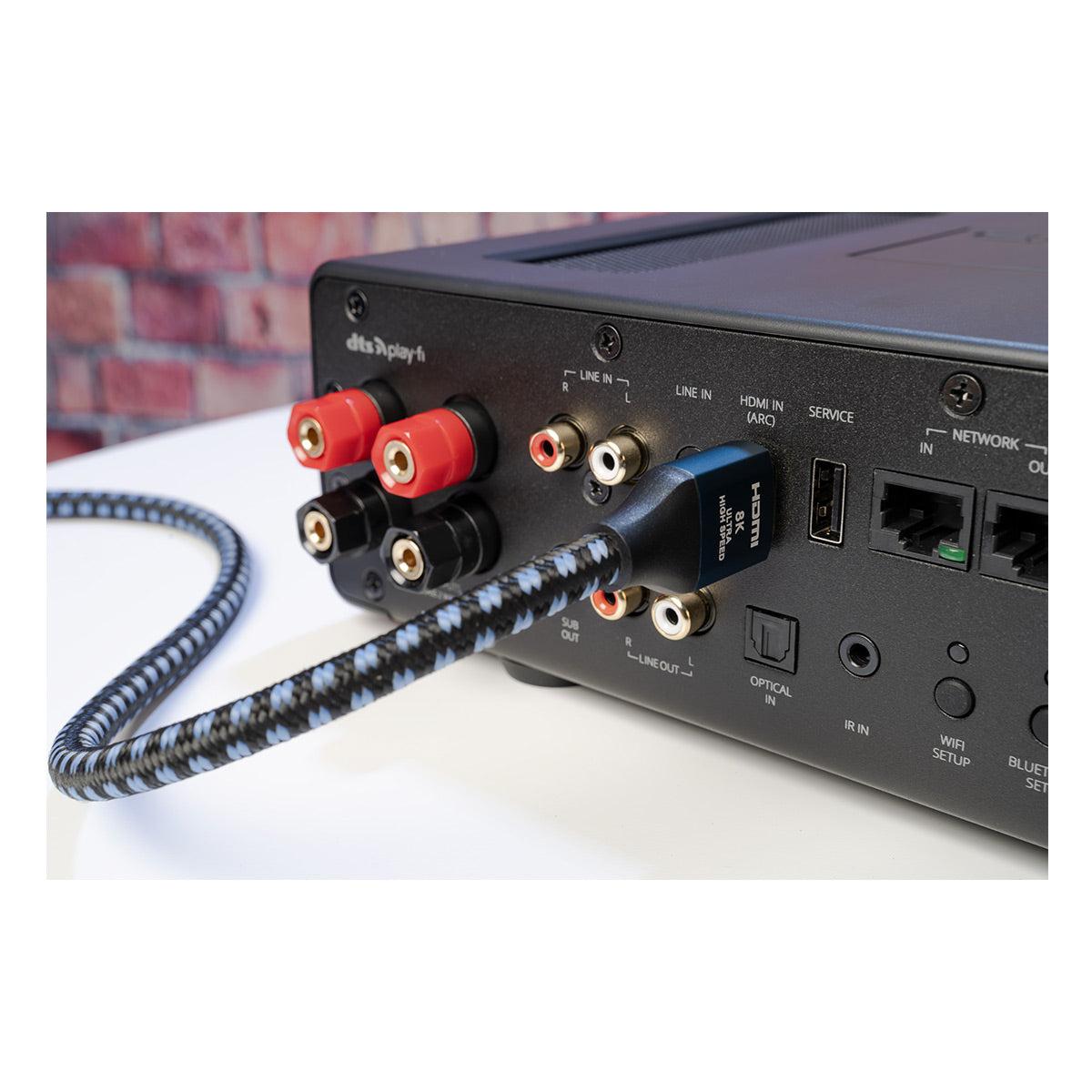
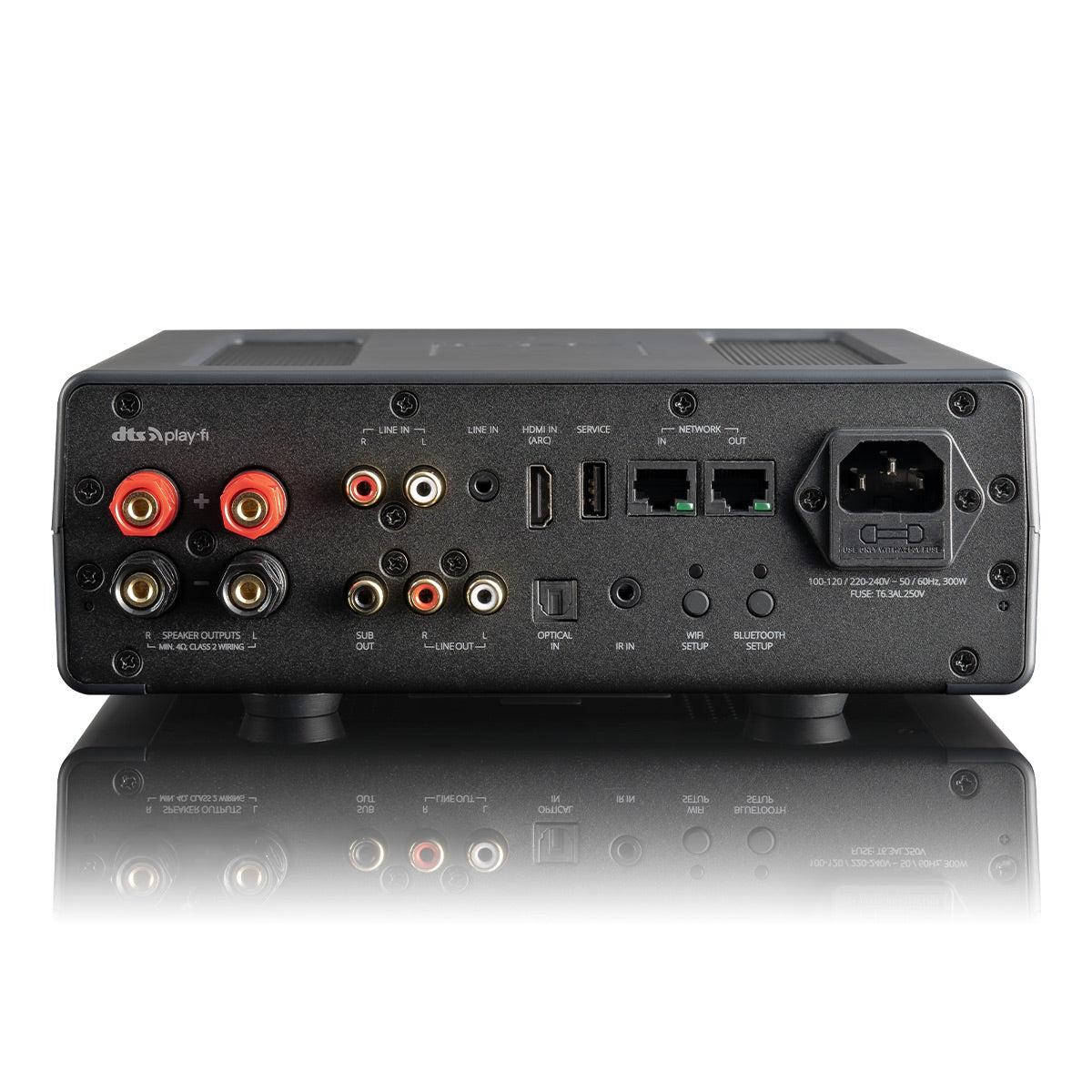
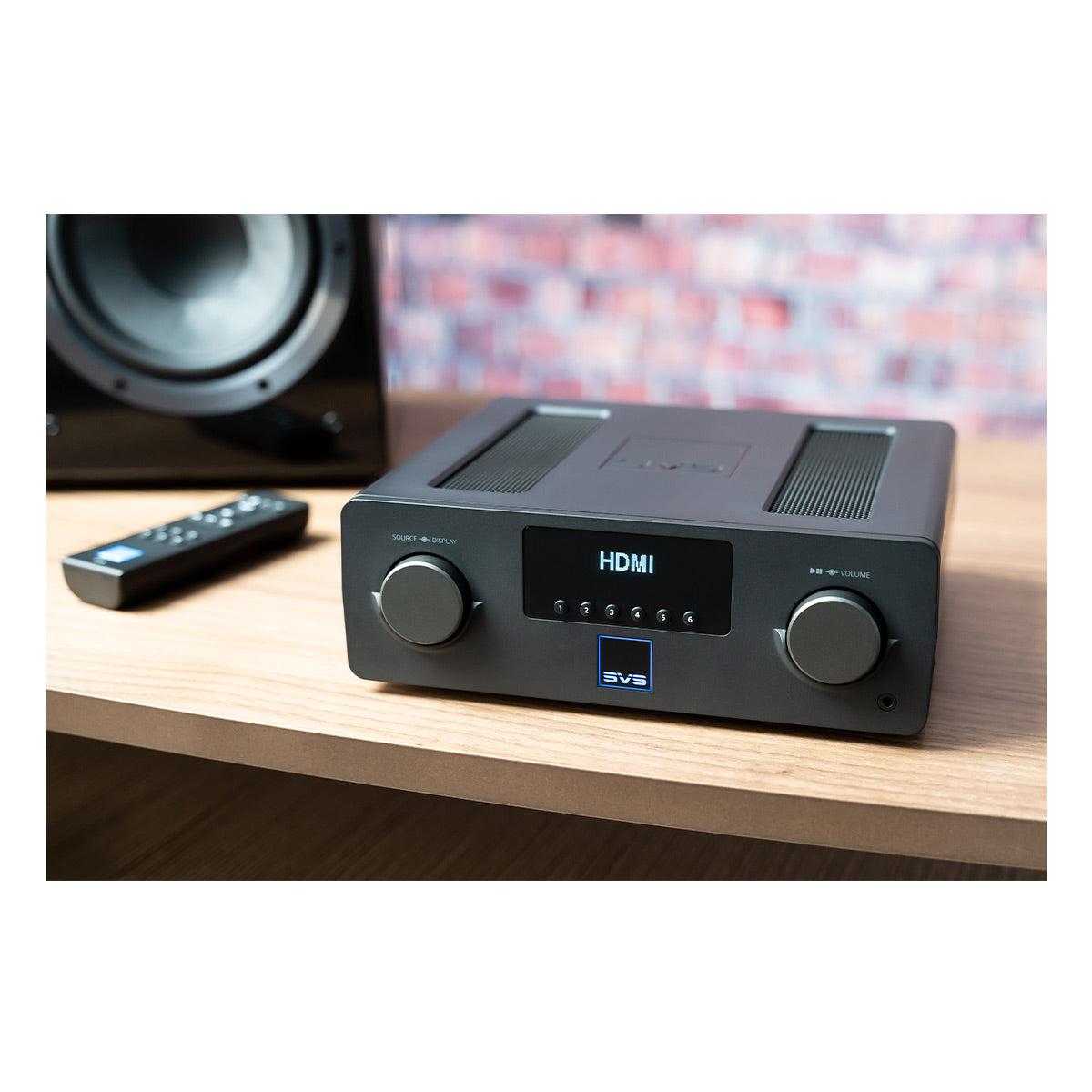
For physical connections, the differences are even more pronounced. The SVS unit focuses on modern digital inputs, including HDMI ARC/eARC for direct TV connection. This is particularly useful in a living room setup where you want your amplifier to automatically turn on when you start your TV and control volume with your TV remote.
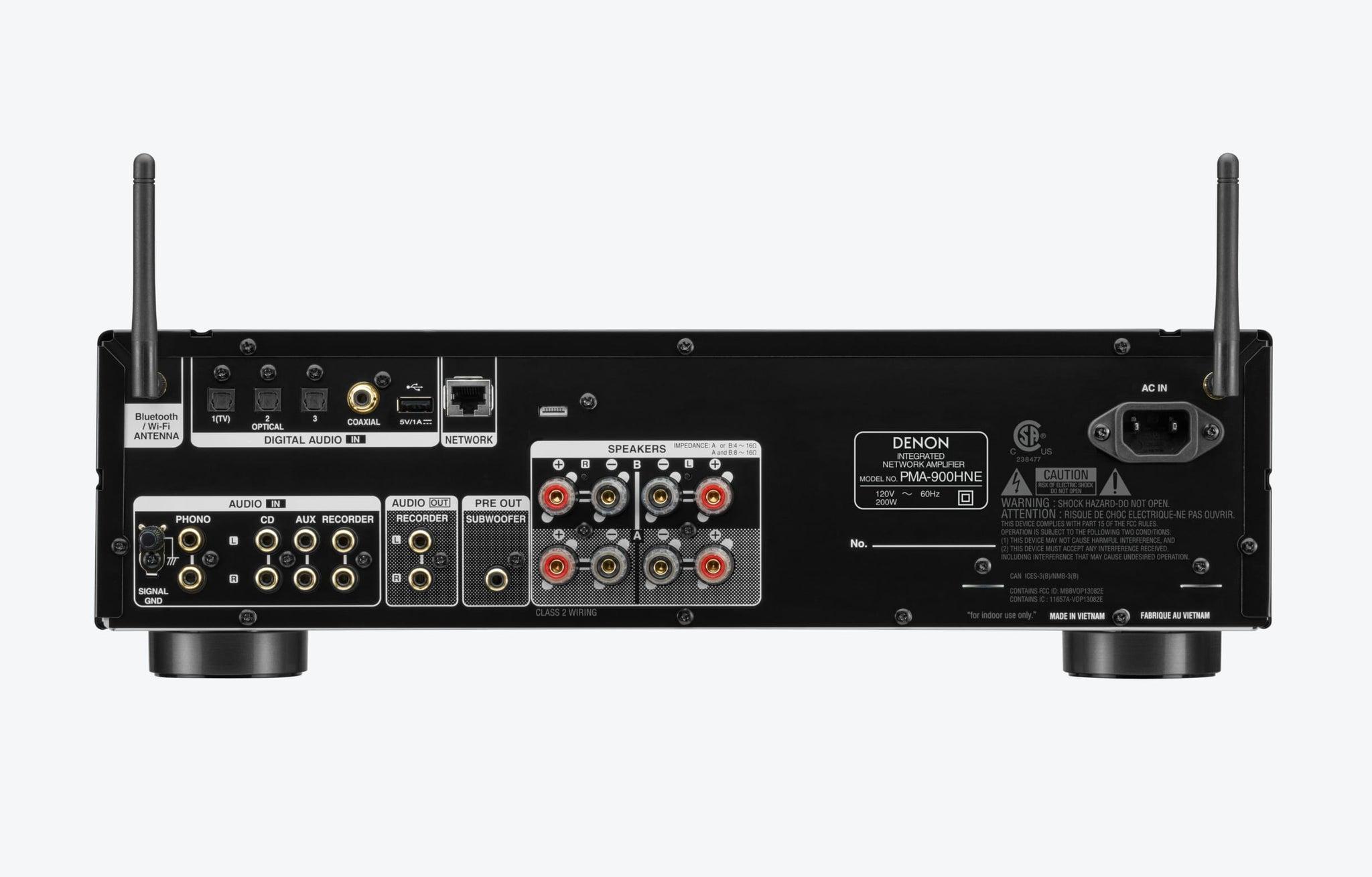
The Denon offers much more extensive connectivity with three optical digital inputs, one coaxial digital input, three analog RCA inputs, and – importantly for vinyl enthusiasts – a dedicated phono stage that works with both moving magnet and moving coil cartridges. A phono stage is a specialized amplifier circuit that boosts the very low signal from a turntable to line level while applying the proper equalization curve that's been standard since the vinyl era.
Based on extensive research into user and professional reviews, both amplifiers deliver excellent sound quality, but with different sonic characters. The SVS SoundBase is consistently described as neutral and powerful, with a wide soundstage (the sense of space and instrument placement in your room) and excellent clarity even at high volumes. This neutral approach means it doesn't color the music – you hear what the artist and recording engineer intended without the amplifier adding its own sonic signature.
The Denon PMA-900HNE is characterized as having a more traditionally musical sound – smooth, rich, and controlled with the warm character that Denon amplifiers have been known for decades. This doesn't mean it's inaccurate, but rather that it presents music in a slightly more forgiving, pleasant way that some listeners prefer, especially for longer listening sessions.
Both units feature high-quality DACs capable of processing 24-bit/192kHz digital audio. The Denon has a slight technical edge with a 105dB signal-to-noise ratio on its line inputs compared to the SVS's 100dB rating. Signal-to-noise ratio measures how much unwanted background noise the amplifier adds to your music – higher numbers mean quieter operation and better detail retrieval in quiet passages.
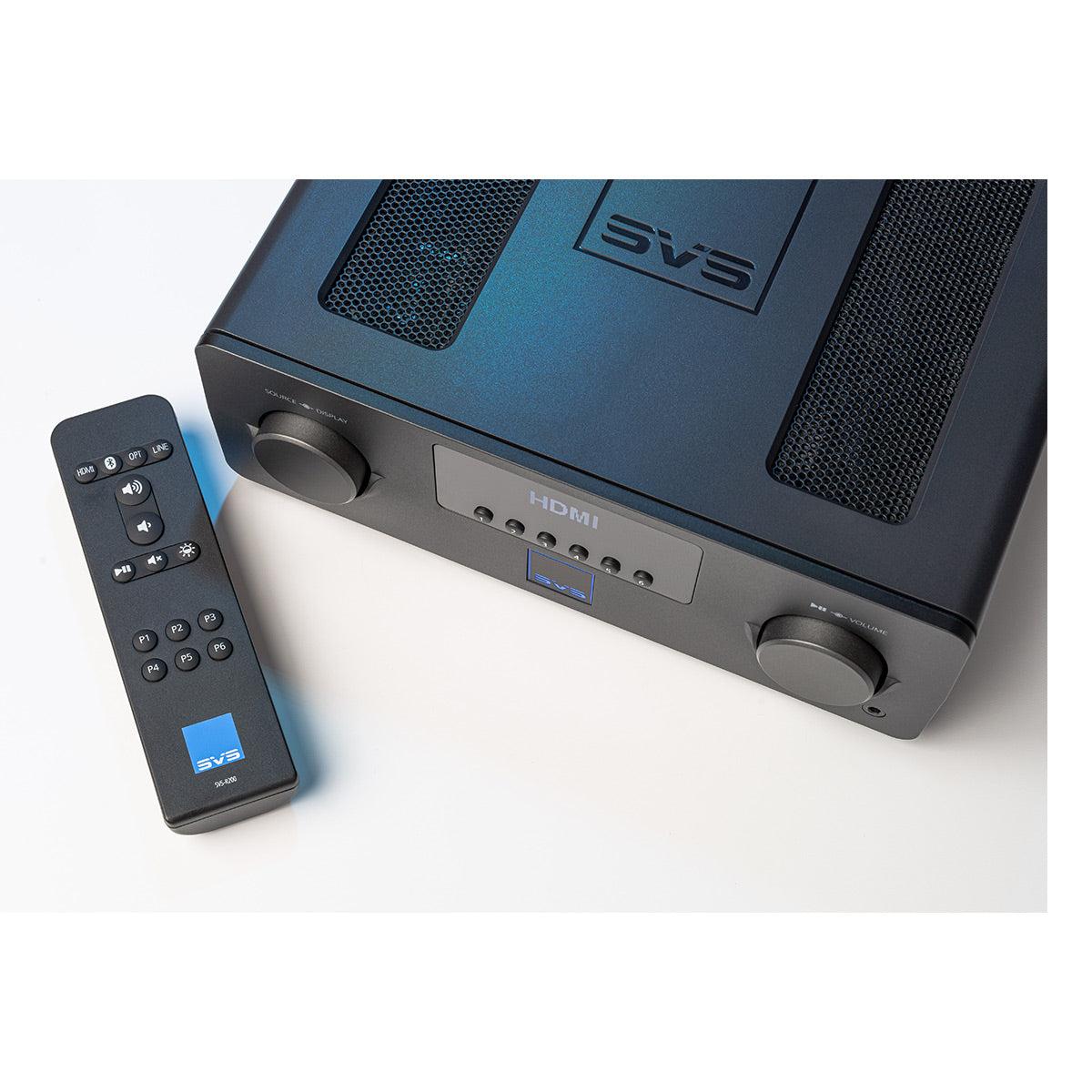
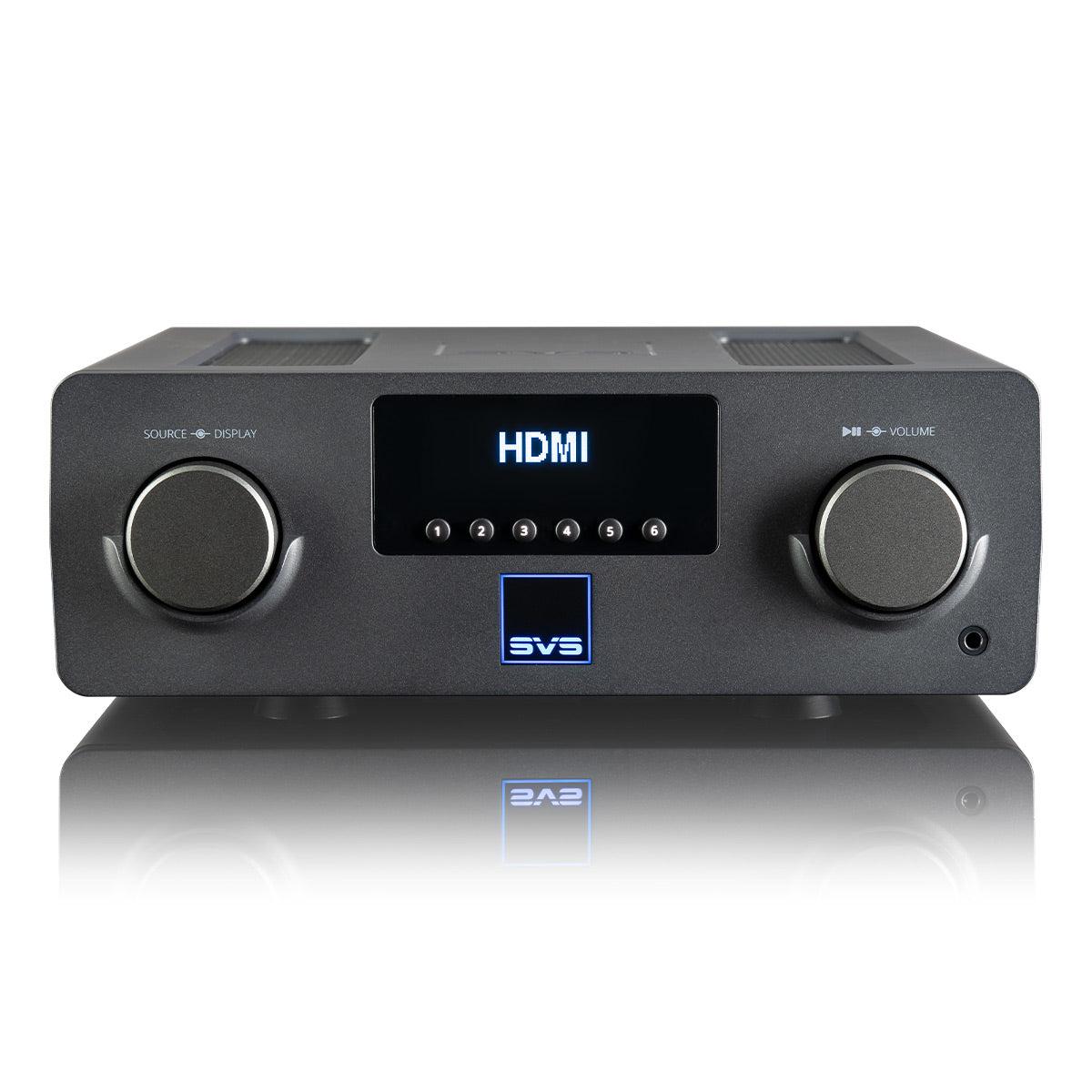
The physical differences between these amplifiers are striking. The SVS SoundBase is remarkably compact at roughly 3 inches tall and 9 inches wide, weighing just 5 pounds. This makes it perfect for tight spaces or minimalist setups where you want powerful amplification without a large footprint. Despite its small size, it feels solidly built with a clean, modern aesthetic.
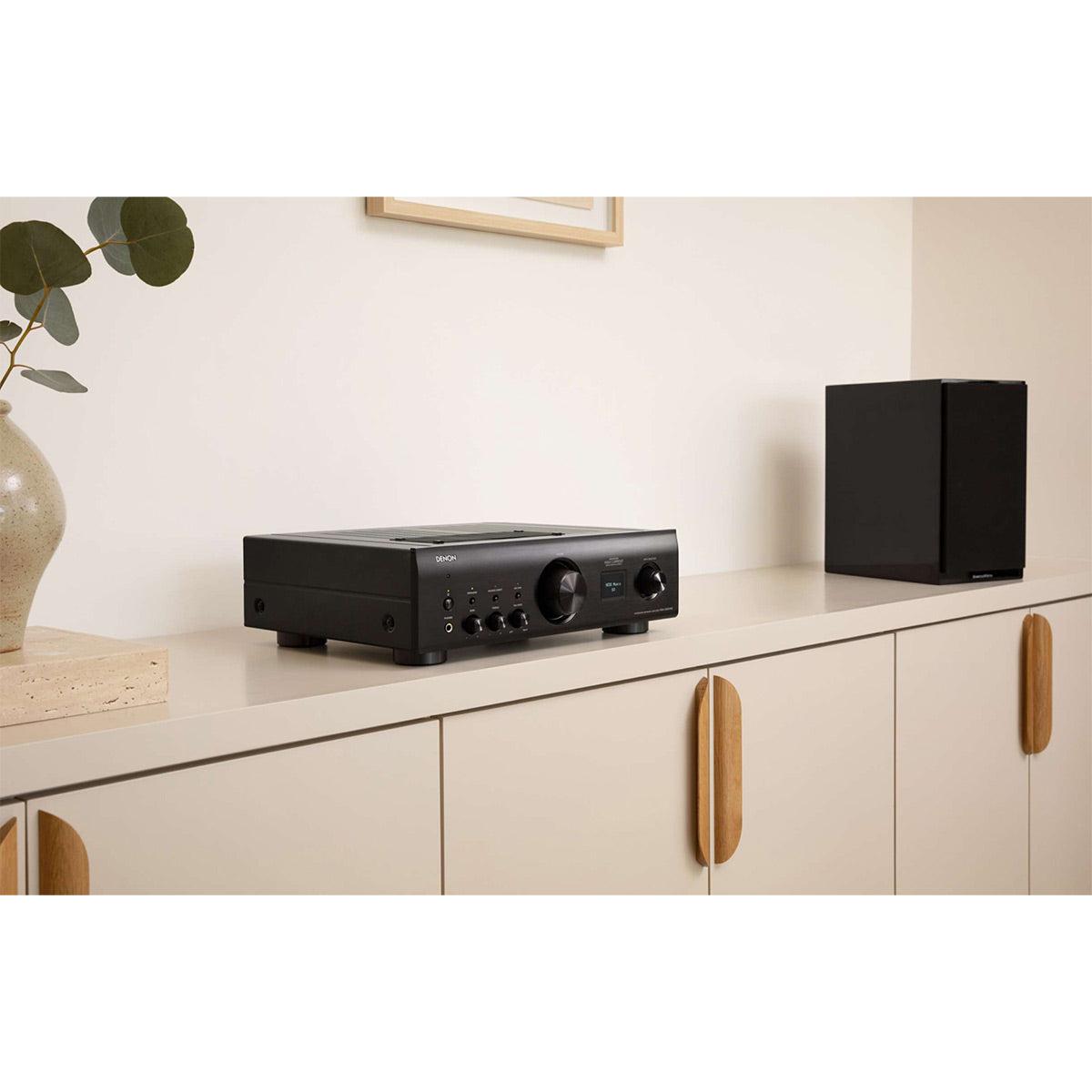
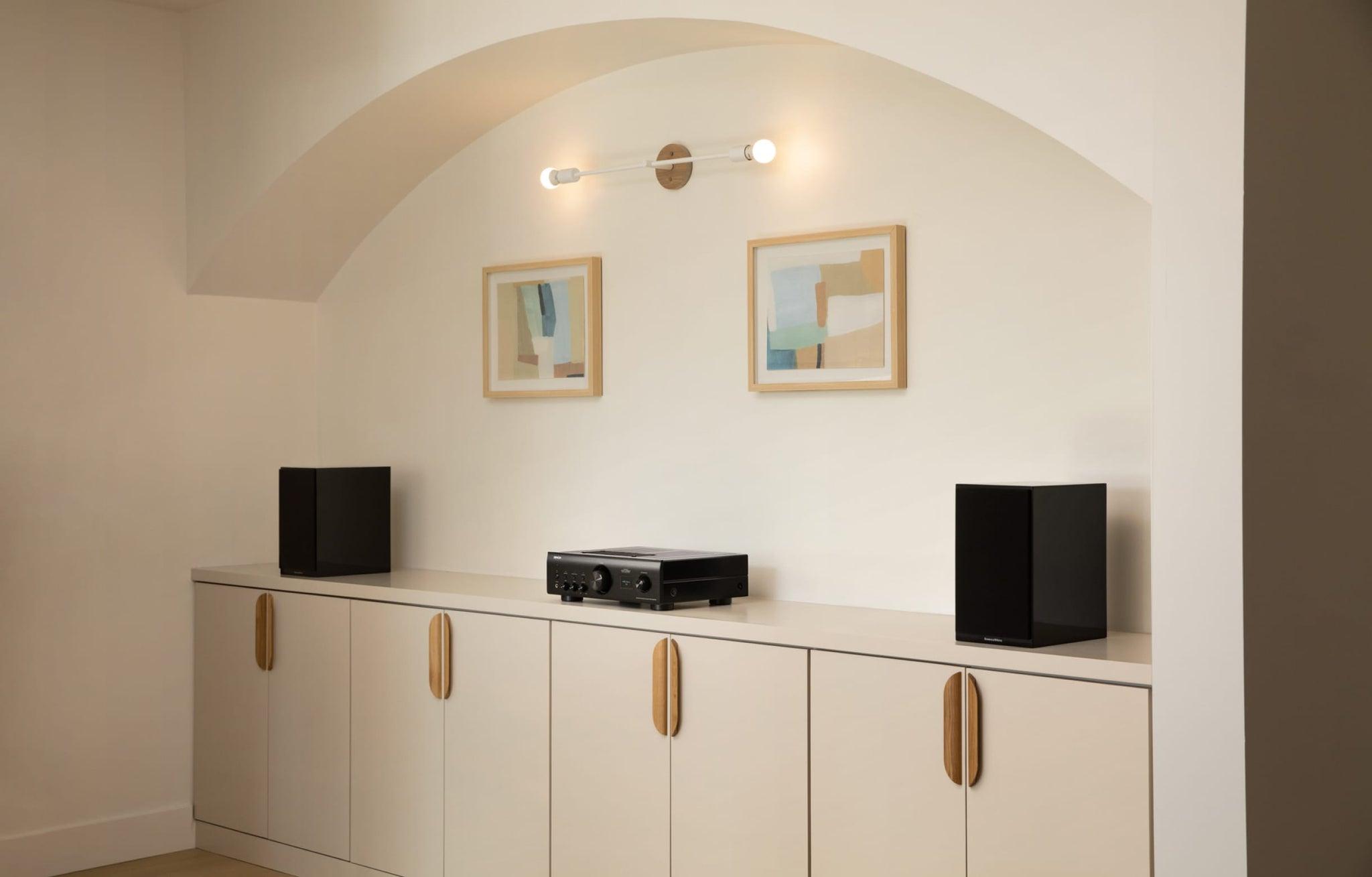
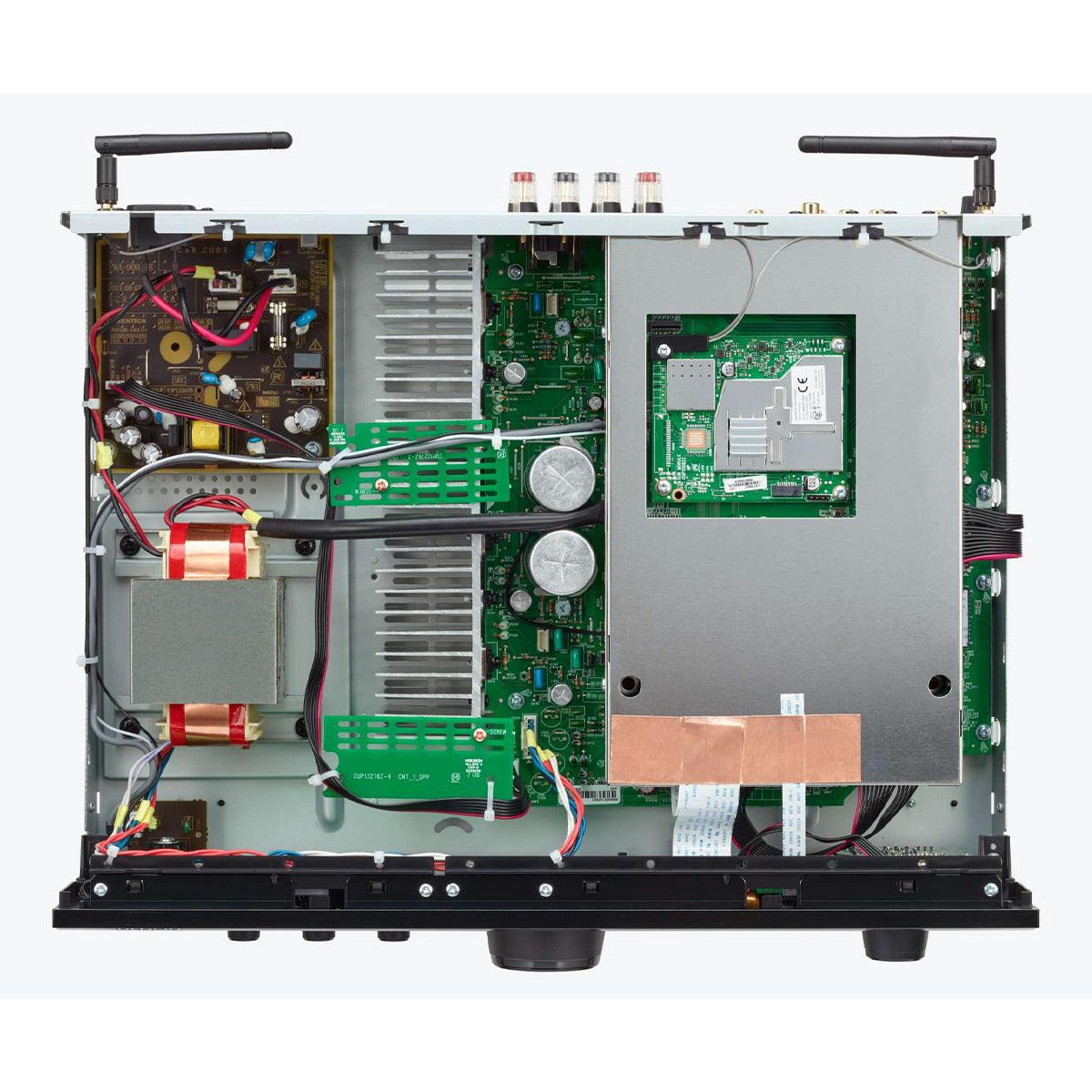
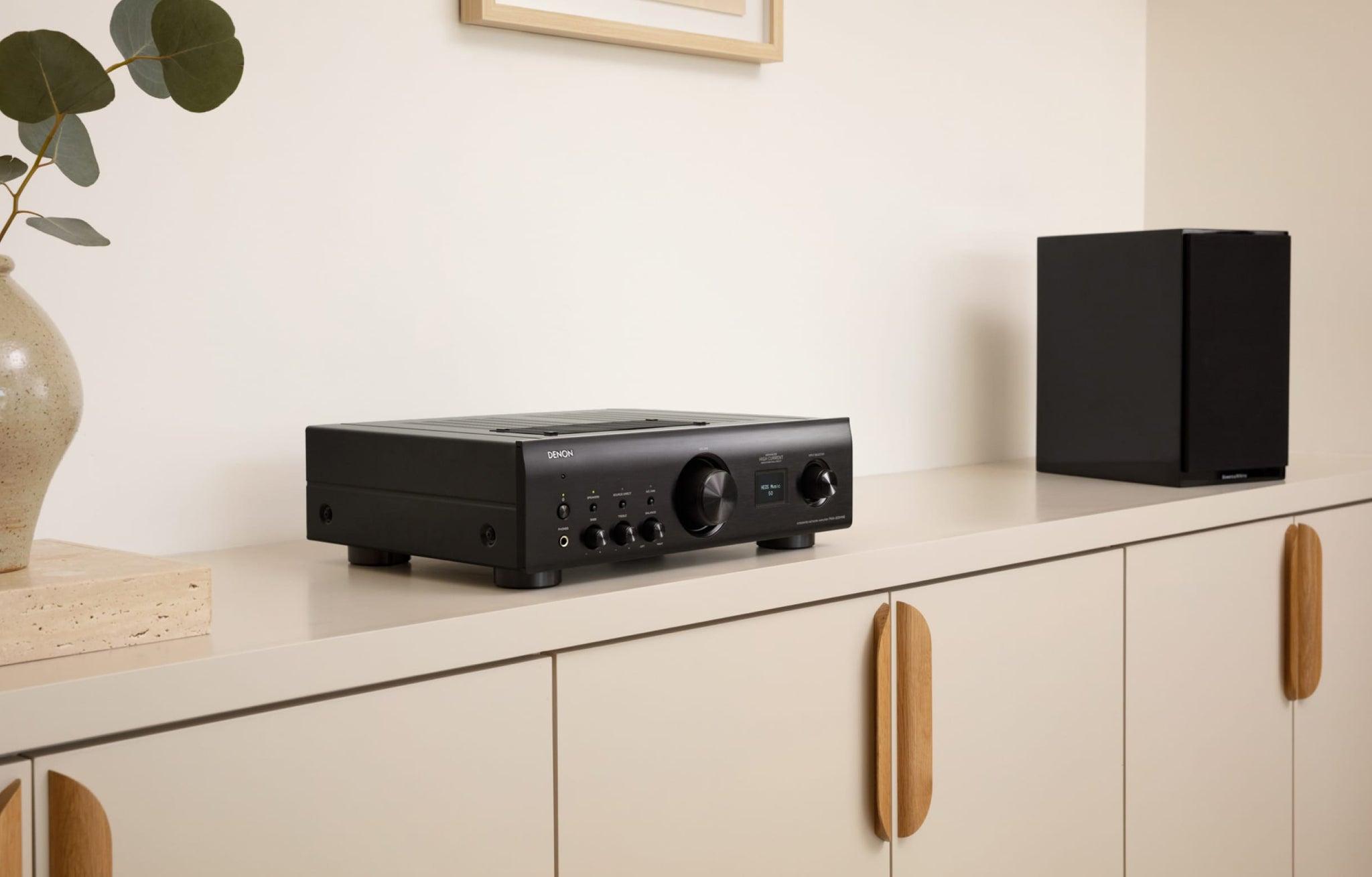
The Denon follows traditional integrated amplifier proportions – about 17 inches wide and weighing over 18 pounds. This substantial build quality includes a vibration-resistant chassis designed to minimize interference that could affect sound quality. The larger size allows for more robust power supplies and heat dissipation, which typically contributes to long-term reliability.
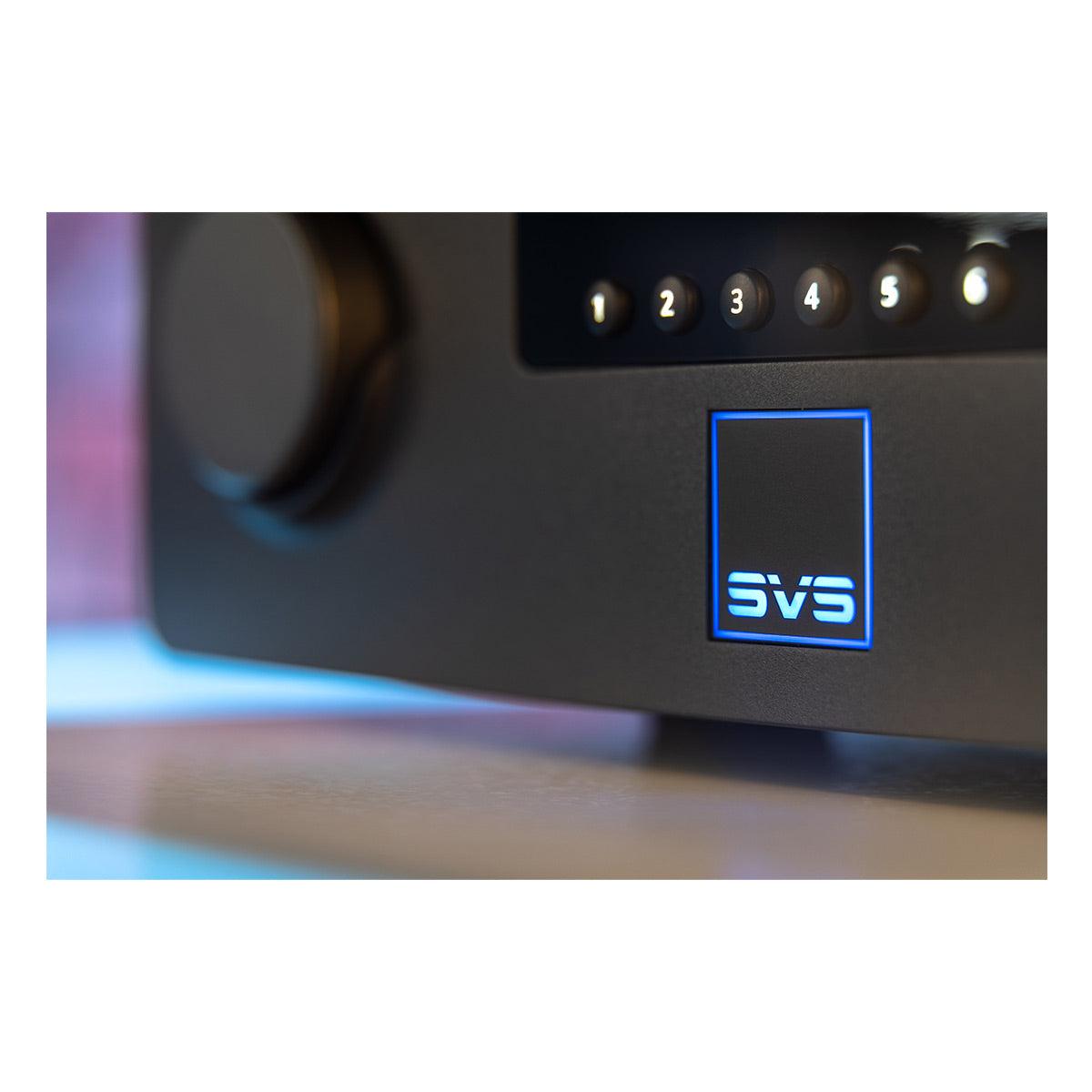
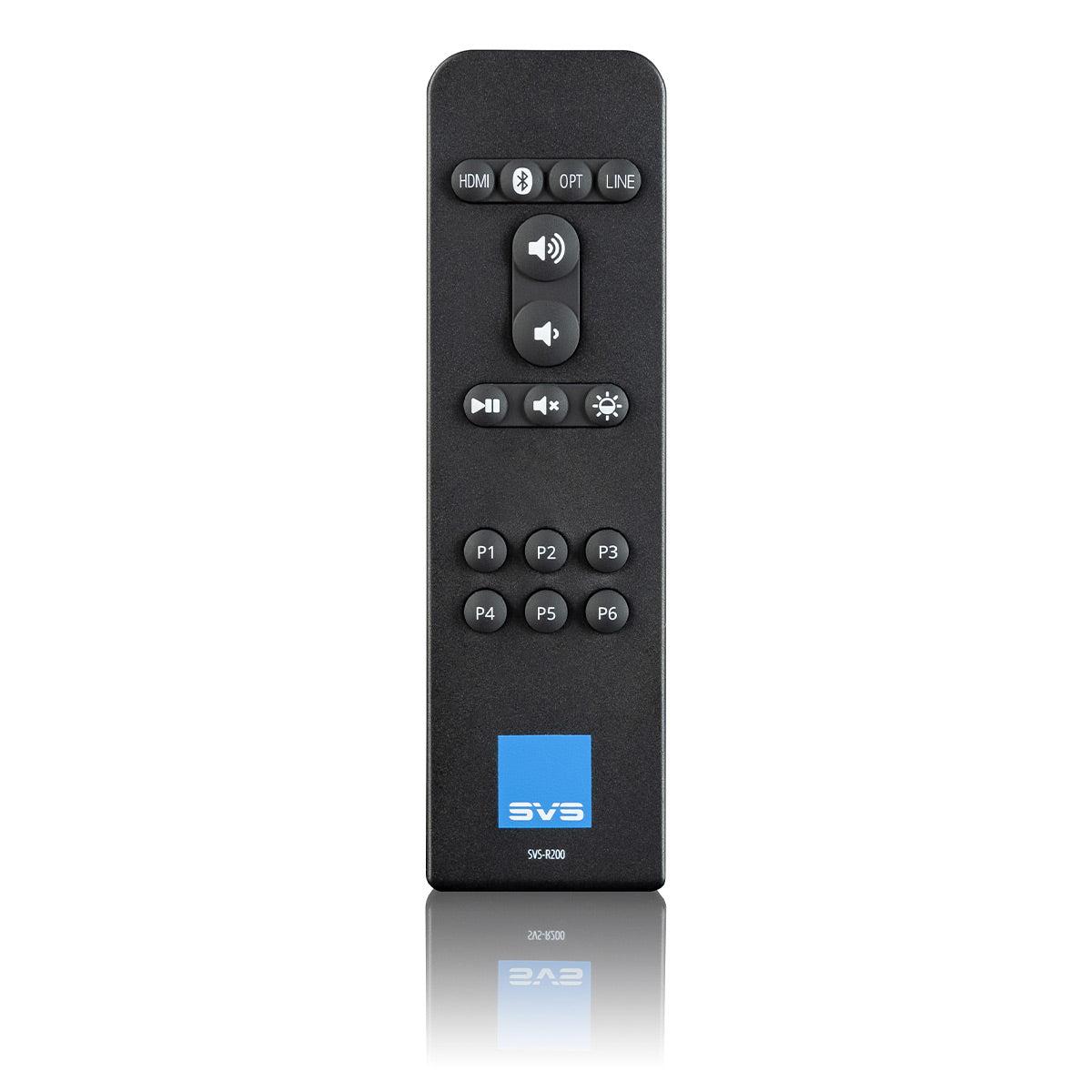
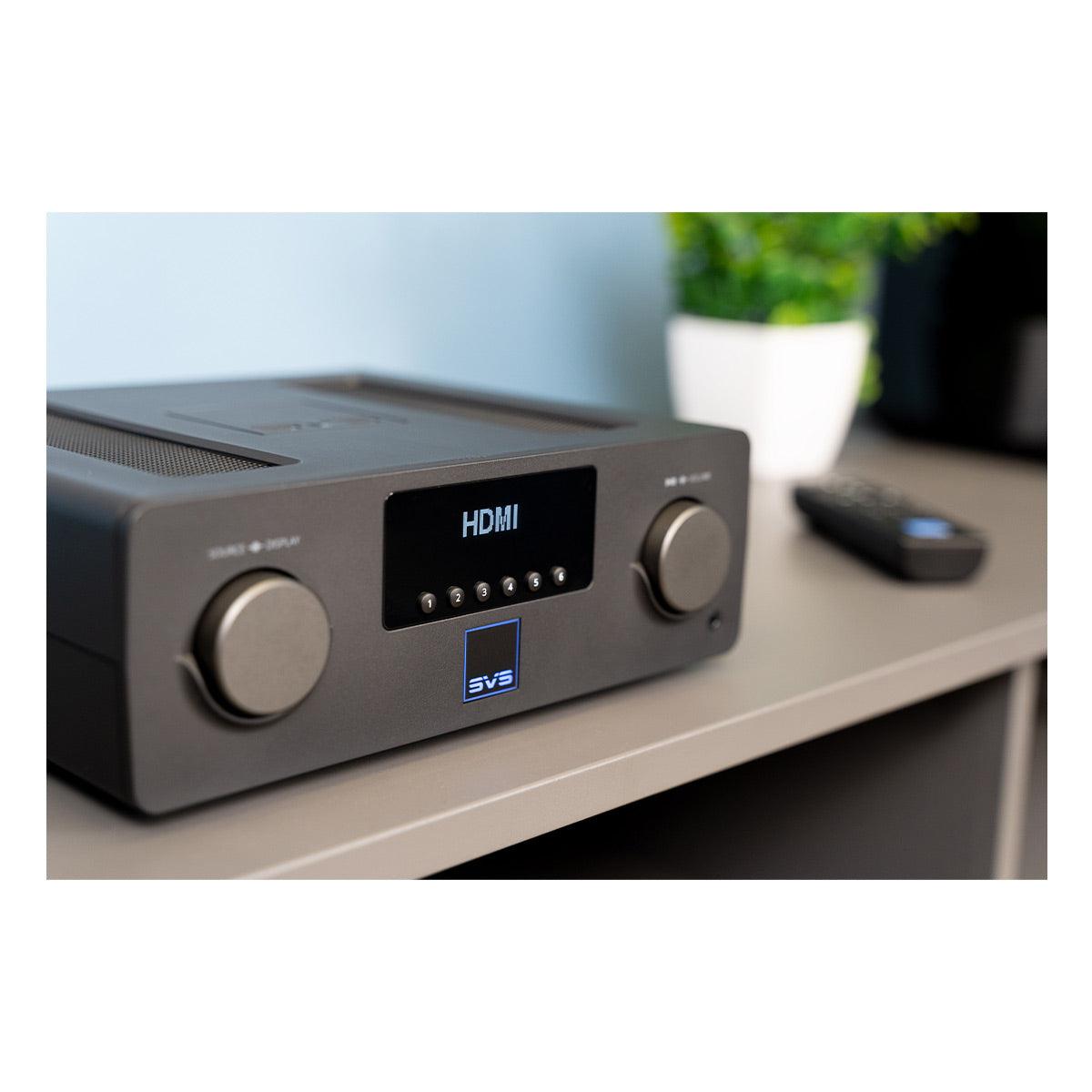
For user interface, the SVS takes a more modern approach with a large 3.15-inch OLED display that clearly shows source information, volume levels, and track details. Six preset buttons on the front panel provide one-touch access to your favorite streaming services or playlists – a surprisingly useful feature that many competing products lack.
The Denon uses a more traditional interface with a smaller OLED display and conventional amplifier controls. While less flashy, this approach will feel familiar to anyone who's used quality audio equipment before.
Both amplifiers support voice control, but through different ecosystems. The SVS unit works with Amazon Alexa and Google Assistant, allowing you to control playback and volume with voice commands. The Denon also supports these voice assistants but integrates more deeply with smart home systems through its HEOS platform.
For home theater integration, the SVS SoundBase has a clear advantage with its HDMI ARC/eARC input. This allows it to receive audio directly from your TV and automatically power on when you start watching. Many users find this creates a much cleaner, simpler setup than running separate cables for TV audio.
The Denon doesn't have HDMI inputs, but it does offer features like TV Auto Standby and IR learning, which can help integrate it with your television setup, though not as seamlessly as the SVS approach.
At the time of writing, both amplifiers fall into the mid-range integrated amplifier category, with the SVS unit positioned somewhat more aggressively on price while the Denon commands a modest premium. However, value comparisons need to consider what you're getting for your money.
The SVS SoundBase delivers exceptional power-per-dollar, making it an outstanding choice if you have speakers that need substantial amplification or if you listen at high volumes. Its compact size and modern streaming features provide additional value for users with space constraints or simple source requirements.
The Denon PMA-900HNE justifies its price premium through more comprehensive connectivity, multi-room capabilities, and the inclusion of a high-quality phono stage. If you have multiple sources or plan to expand your system over time, the additional inputs and features provide genuine value.
Both amplifiers arrived during a period of rapid evolution in streaming audio technology. Since their release, we've seen improvements in streaming codecs, better smartphone apps, and more stable wireless connections. However, both the DTS Play-Fi platform used by SVS and the HEOS system in the Denon continue to receive regular software updates that add new features and improve performance.
The integration of high-resolution streaming has become more important as services like Apple Music, Amazon Music HD, and Tidal have expanded their lossless catalogs. Both amplifiers are well-positioned to take advantage of these improvements, though the SVS's focus on streaming gives it a slight edge in this evolving landscape.
For home theater use, the SVS SoundBase presents a compelling option. Its HDMI ARC/eARC connection means you can run a single cable from your TV and get high-quality stereo sound for movies and shows. The substantial power output can drive tower speakers loud enough to create an immersive experience without a receiver, making it perfect for two-channel home theater setups.
The Denon can certainly work in a home theater context, but you'll need to run an optical cable from your TV or use its streaming capabilities for audio. This isn't necessarily worse, but it's less elegant than the SVS's direct HDMI integration.
The SVS Prime Wireless Pro SoundBase makes the most sense for users who prioritize streaming convenience, need substantial power, or have space constraints. It's ideal for apartment dwellers, streaming-first listeners, or anyone who wants to connect their amplifier directly to their TV. If you're building a simple, modern system around digital sources and want maximum performance from a compact package, the SVS is hard to beat.
The Denon PMA-900HNE serves users who want a more traditional hi-fi experience enhanced with modern streaming. If you have a turntable, multiple sources, or plan to build a multi-room audio system, the Denon's comprehensive connectivity and HEOS integration provide genuine advantages. It's also the better choice if you prefer the sonic character of traditional amplifier designs or want the security of a well-established brand with extensive dealer support.
Neither choice is wrong – they're simply designed for different users and situations. The SVS represents the future of compact, powerful streaming amplifiers, while the Denon bridges the gap between classic hi-fi and modern convenience. Consider your sources, your space, and your listening habits, and either amplifier will serve you well for years to come.
| SVS Prime Wireless Pro SoundBase | Denon PMA-900HNE |
|---|---|
| Power Output - Critical for driving speakers effectively and achieving dynamics | |
| 300W total (150W × 2 into 4Ω) - Excellent for demanding speakers | 170W total (85W × 2 into 4Ω) - Good for moderate efficiency speakers |
| Amplifier Type - Affects sound character and efficiency | |
| Class-D (high efficiency, compact, neutral sound) | Advanced High Current Class-AB (traditional warm sound, larger size) |
| Physical Size - Important for placement flexibility | |
| Ultra-compact: 3.2" × 9.1" × 8.8", 5 lbs | Traditional size: 17.1" × 5.1" × 15.4", 18.3 lbs |
| Streaming Platform - Determines app experience and multi-room capabilities | |
| DTS Play-Fi (solid streaming, limited multi-room) | HEOS Built-in (excellent multi-room, comprehensive smart home integration) |
| Digital Inputs - Flexibility for connecting sources | |
| 1 optical, HDMI ARC/eARC (TV-focused) | 3 optical + 1 coaxial (extensive digital connectivity) |
| Analog Inputs - Essential for turntables and legacy equipment | |
| 1 RCA line input (no phono stage) | 3 RCA inputs + dedicated MM/MC phono stage |
| High-Resolution Audio Support - Future-proofing for quality streaming | |
| 24-bit/192kHz via WiFi (DTS Play-Fi Critical Listening Mode) | 24-bit/192kHz PCM support with 105dB S/N ratio |
| TV Integration - Simplifies home theater setup | |
| HDMI ARC/eARC with auto power-on (seamless TV connection) | No HDMI (requires optical cable or streaming for TV audio) |
| Wireless Connectivity - Affects streaming quality and device compatibility | |
| Wi-Fi, Bluetooth 5.0 with aptX/AAC, AirPlay 2, Chromecast | Wi-Fi, Bluetooth 4.2, AirPlay 2, Roon Ready certification |
| User Interface - Daily usability and convenience | |
| Large 3.15" OLED display, 6 front preset buttons | Small OLED display, traditional amplifier controls |
| Subwoofer Output - Bass extension capabilities | |
| Full-range mono output (requires powered sub with crossover) | Mono output with fixed 100Hz low-pass filter |
| Ecosystem Compatibility - Long-term expandability | |
| Works with major streaming services, limited multi-room | HEOS multi-room, voice control, Roon Ready for audiophile setups |
| Ideal Use Case - Who benefits most from each approach | |
| Streaming-focused users, small spaces, TV integration, power-hungry speakers | Traditional hi-fi users, vinyl collectors, multi-room audio, multiple sources |
The SVS Prime Wireless Pro SoundBase delivers significantly more power with 300 watts total (150 watts per channel into 4-ohm speakers) compared to the Denon PMA-900HNE which provides 170 watts total (85 watts per channel). This makes the SVS SoundBase better suited for power-hungry speakers and high-volume listening.
Only the Denon PMA-900HNE has a built-in phono stage that supports both moving magnet (MM) and moving coil (MC) cartridges, allowing direct turntable connection. The SVS Prime Wireless Pro SoundBase lacks a phono input, so you'd need a separate phono preamp to connect a turntable.
The SVS Prime Wireless Pro SoundBase excels for TV integration with its HDMI ARC/eARC input, allowing a single cable connection that automatically powers on the amplifier when you start your TV. The Denon PMA-900HNE requires an optical cable connection from your TV and doesn't offer the same seamless integration.
The SVS SoundBase is remarkably compact at just 3.2" tall and weighing 5 pounds, perfect for small spaces. The Denon PMA-900HNE follows traditional amplifier dimensions at 17.1" wide and 18.3 pounds, requiring more shelf space but offering more robust construction.
The Denon PMA-900HNE uses HEOS Built-in technology, which provides excellent multi-room capabilities and can sync with other HEOS devices throughout your home. The SVS Prime Wireless Pro SoundBase uses DTS Play-Fi, which offers basic multi-room features but isn't as comprehensive as HEOS.
The Denon PMA-900HNE offers much more connectivity with 3 optical inputs, 1 coaxial input, 3 analog RCA inputs, plus phono and USB. The SVS SoundBase focuses on modern connections with HDMI ARC, 1 optical input, and 1 RCA input, prioritizing wireless streaming over wired sources.
Both deliver excellent sound quality but with different characters. The SVS Prime Wireless Pro SoundBase provides neutral, powerful sound with wide soundstage and excellent clarity. The Denon PMA-900HNE offers a warmer, more musical presentation with the smooth character Denon is known for. Choice depends on your sonic preferences.
Yes, both the SVS SoundBase and Denon PMA-900HNE support Amazon Alexa and Google Assistant voice control. However, the Denon integrates more deeply with smart home systems through its HEOS platform.
The SVS Prime Wireless Pro SoundBase offers exceptional power-per-dollar and modern streaming features in a compact package. The Denon PMA-900HNE provides broader connectivity, multi-room capabilities, and includes a high-quality phono stage, justifying its premium for users needing these features.
Yes, both support 24-bit/192kHz high-resolution audio. The SVS SoundBase delivers this through DTS Play-Fi's Critical Listening Mode over WiFi, while the Denon PMA-900HNE supports high-res through its network streaming capabilities and has Roon Ready certification for audiophile setups.
The SVS Prime Wireless Pro SoundBase offers simpler setup with its large OLED display, 6 preset buttons for one-touch access to favorites, and streamlined connectivity focused on modern sources. The Denon PMA-900HNE uses traditional amplifier controls that audiophiles will find familiar but may be less intuitive for casual users.
The Denon PMA-900HNE offers better expandability with multiple inputs for adding sources and HEOS multi-room capabilities for whole-home audio. The SVS Prime Wireless Pro SoundBase is more focused on its current feature set, though it receives software updates for streaming improvements. Choose the Denon if you plan to add more components over time.
We've done our best to create useful and informative comparisons to help you decide what product to buy. Our research uses advanced automated methods to create this comparison and perfection is not possible - please contact us for corrections or questions. These are the sites we've researched in the creation of this article: soundandvision.com - crutchfield.com - futureaudiophile.com - dreamediaav.com - crutchfield.com - svsound.com - soundstageaccess.com - skybygramophone.com - hometheaterhifi.com - av-connection.com - crutchfield.com - soundstagenetwork.com - svsound.com - crutchfield.com - e-catalog.com - theaudiotailor.com.au - extremehifi.com - whathifi.com - speakerdecision.com - youtube.com - audiosciencereview.com - sound-advice.online - crutchfield.com - crutchfield.com - sweetwater.com - watthifi.com - youtube.com - accessories4less.com - soundstageaccess.com - icav.us - safeandsoundhq.com - listenup.com - accessories4less.com - audiosciencereview.com

Privacy Policy
Terms and Conditions - Affiliate Policy
Home Security
© Copyright 2008-2026.
11816 Inwood Rd #1211, Dallas, TX 75244