

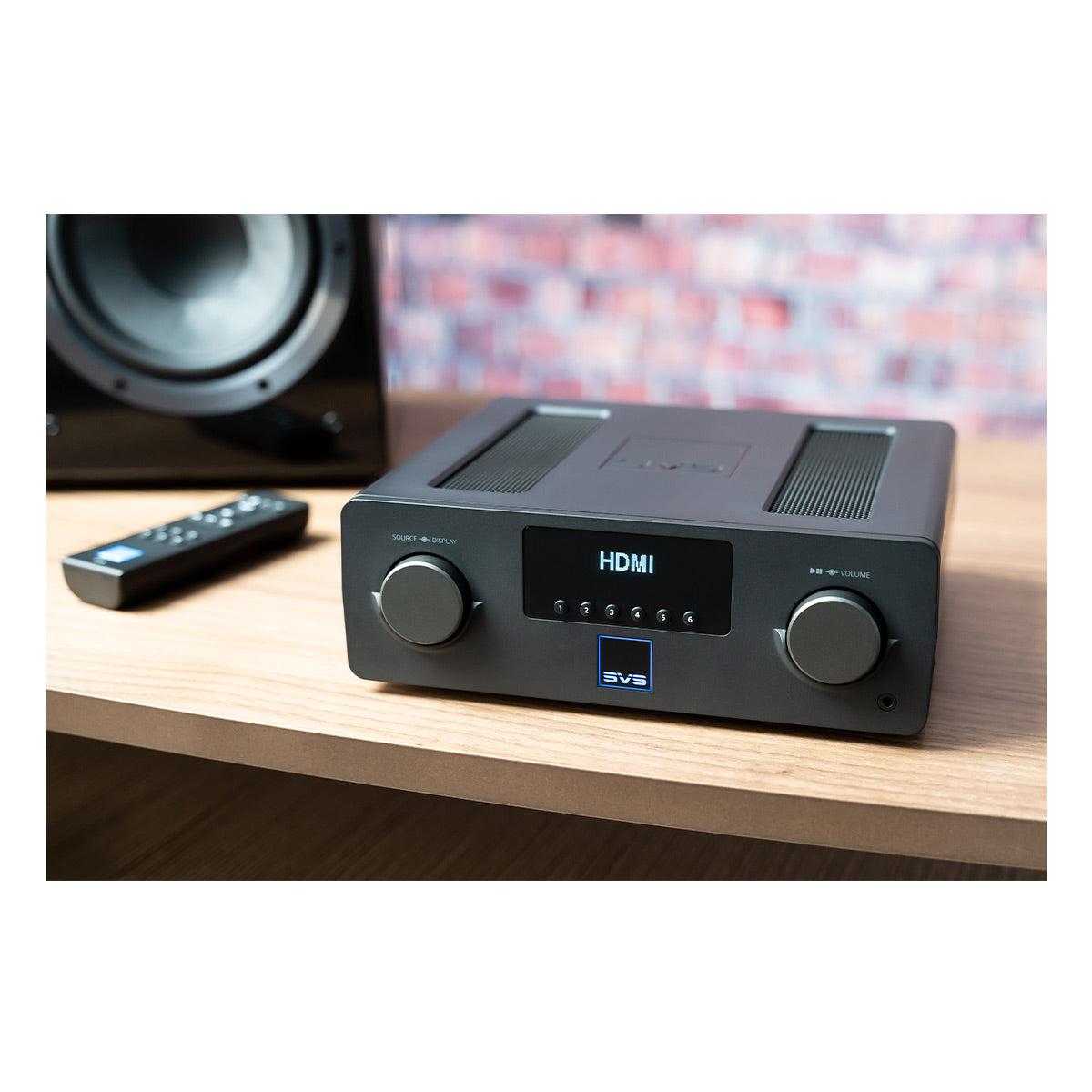
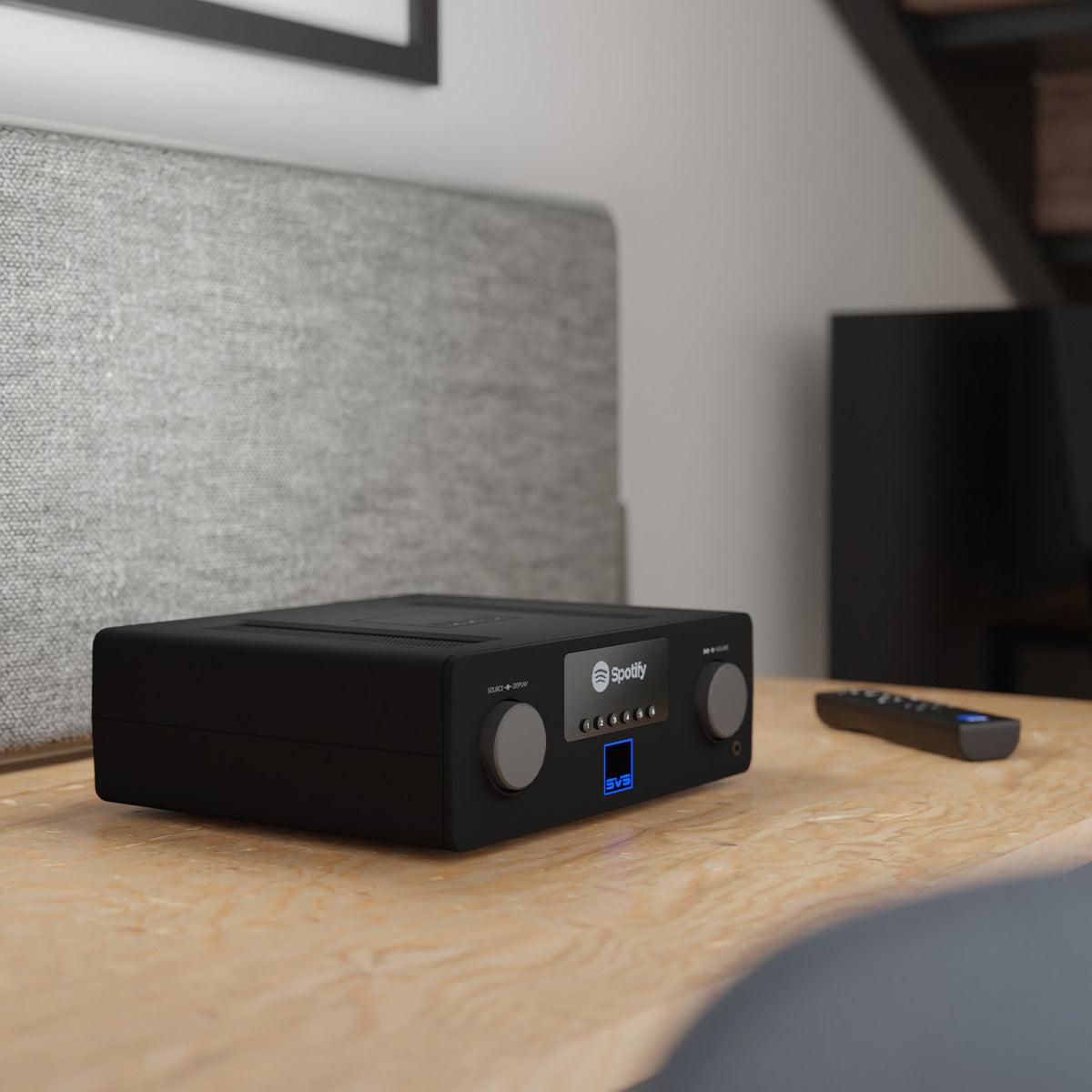
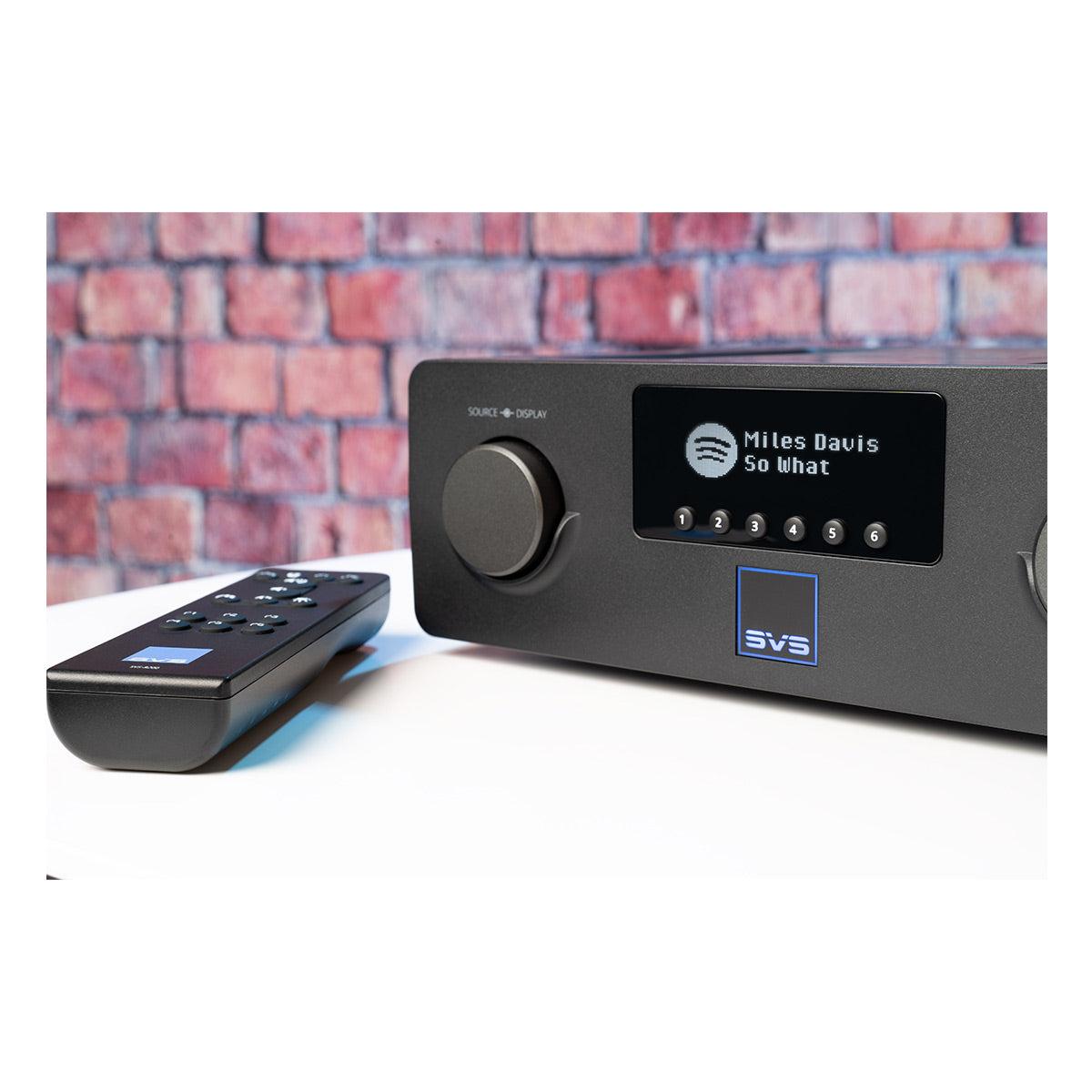
When I first started researching integrated amplifiers for this comparison, I was struck by how dramatically the category has evolved. We're looking at two products that represent fundamentally different philosophies about how people listen to music today. The SVS Prime Wireless Pro SoundBase, released in 2022, embodies the streaming-first approach that's reshaping home audio. Meanwhile, the Yamaha A-S801, which has been a mainstay since around 2015, represents the traditional audiophile path with modern digital conveniences added thoughtfully.
Both are integrated amplifiers—meaning they combine a preamplifier (which handles source selection and volume control) with a power amplifier (which drives your speakers) in one box. But that's where the similarities end. These two products are designed for completely different listening experiences, and understanding those differences will help you make the right choice for your setup.
The audio world has split into two camps over the past decade. On one side, you have streaming-focused products like the SVS Prime Wireless Pro SoundBase that prioritize convenience and wireless connectivity above all else. These amplifiers assume you're getting most of your music from Spotify, Apple Music, or Tidal, and they're designed to make that experience as seamless as possible.
On the other side, traditional integrated amplifiers like the Yamaha A-S801 maintain the flexibility and pure analog performance that serious listeners have valued for decades. They've added modern digital inputs, but the core philosophy remains: give the user maximum control and the cleanest possible signal path from any source.
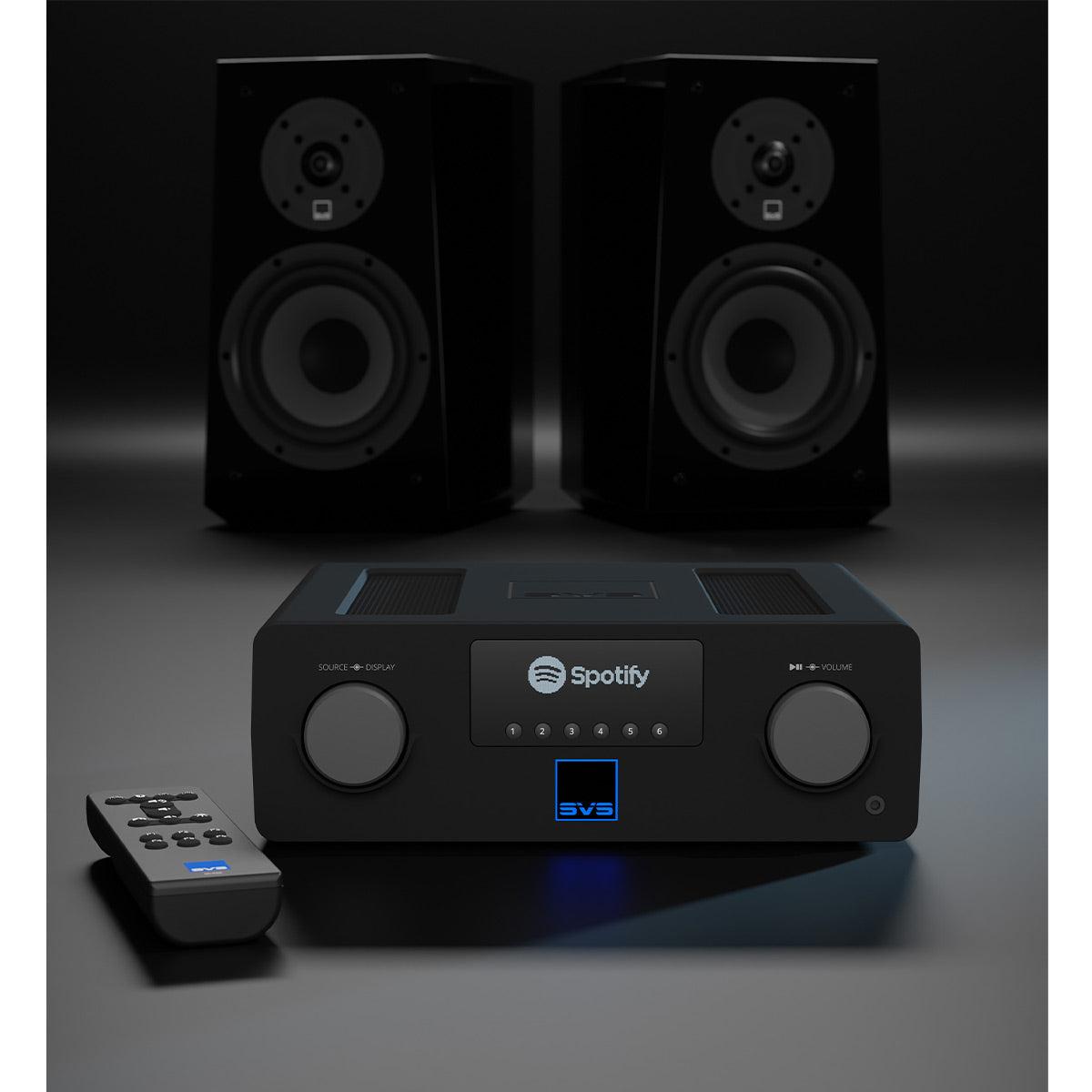
The SVS Prime Wireless Pro SoundBase weighs just five pounds and focuses entirely on wireless streaming through protocols like DTS Play-Fi, Apple AirPlay 2, and Chromecast. It's designed to disappear into your entertainment center while providing access to virtually every streaming service available. The approach is "plug in your speakers and start streaming"—no complex setup required.
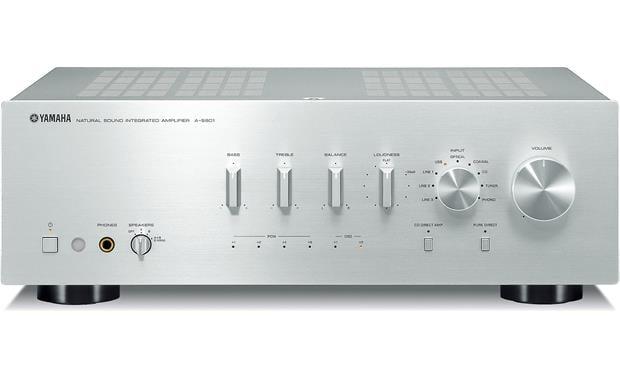
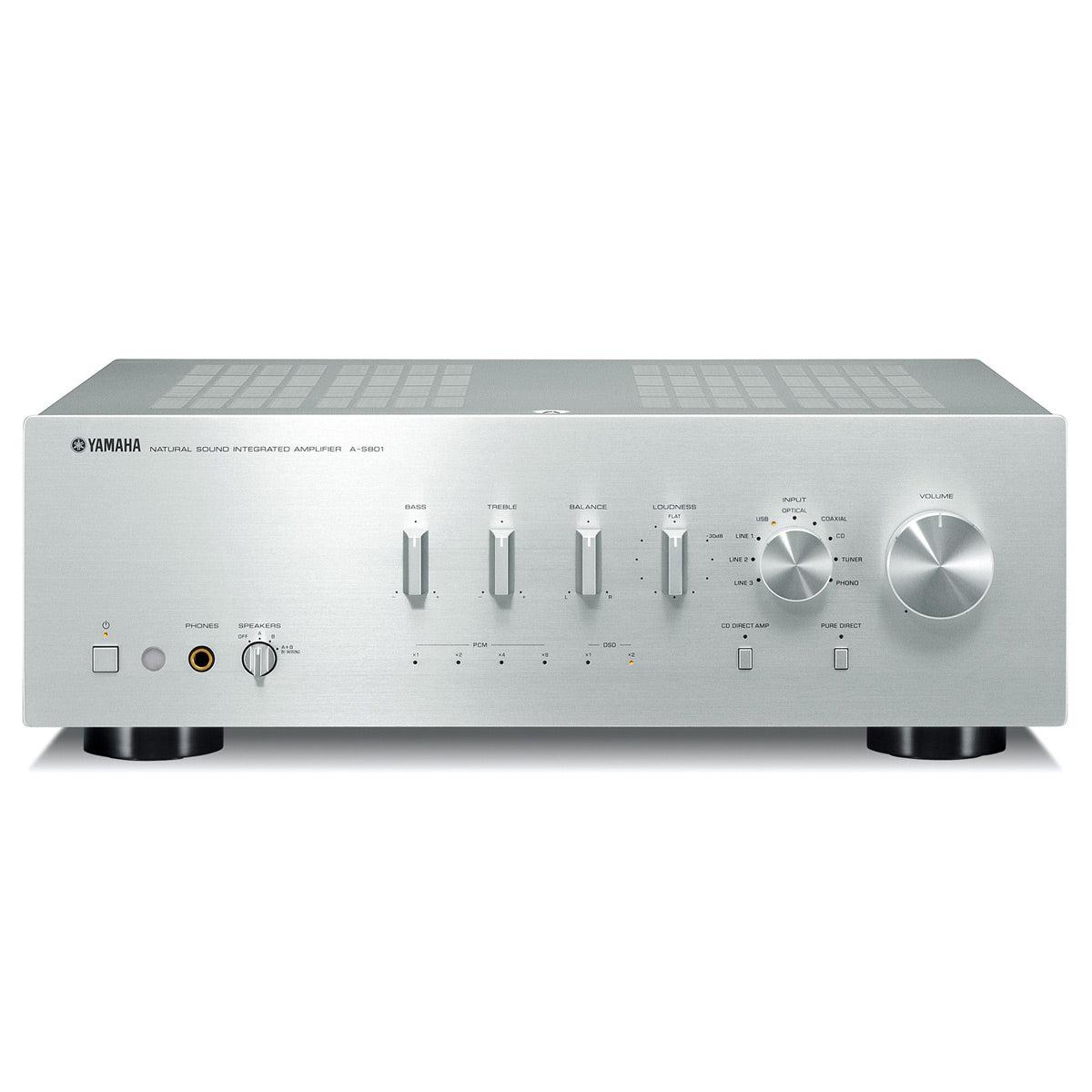
The Yamaha A-S801, at nearly 27 pounds, takes a different approach entirely. It includes a premium ESS SABRE DAC (digital-to-analog converter) that handles high-resolution files up to 32-bit/384kHz, plus a proper moving magnet phono stage for turntables, tone controls, and multiple signal path options. This amplifier says "bring me your best sources, and I'll make them sound their absolute best."
Understanding amplifier classes is crucial here. The SVS Prime Wireless Pro SoundBase uses Class D amplification, which is incredibly efficient—it converts almost all the electricity it uses into audio power rather than heat. This allows SVS to pack 150 watts per channel into a tiny chassis. Class D technology has improved dramatically since 2015, and modern implementations like this one can sound excellent while staying cool and compact.
The Yamaha A-S801 uses traditional Class AB amplification, which runs warmer but typically offers better linearity and lower distortion at higher volumes. While Yamaha doesn't publish exact wattage figures, our research into user experiences suggests it delivers substantially more current than the SVS, particularly important for demanding speakers.
Here's where it gets interesting: both amplifiers can drive most speakers to satisfying volumes, but they behave differently under stress. The SVS Prime Wireless Pro SoundBase maintains its composure with efficient speakers like bookshelf models or smaller towers. However, when pushed hard with power-hungry speakers, Class D amplifiers can start to compress the dynamic range—the difference between soft and loud passages becomes less pronounced.
The Yamaha A-S801 excels with difficult loads. Its robust power supply and Class AB design provide the current needed for speakers that dip to 4 ohms or lower. If you're planning to use demanding speakers like large towers or inefficient bookshelf models, this power difference becomes crucial for maintaining clean sound at higher volumes.
Both amplifiers include digital-to-analog converters, but they're optimized for completely different purposes. The SVS Prime Wireless Pro SoundBase uses a 24-bit/192kHz DAC that's specifically tuned for wireless streaming. It includes DTS Play-Fi's "Critical Listening Mode," which prioritizes audio quality over multi-room synchronization when you're sitting down for serious listening.
The streaming focus means the SVS shines with services like Qobuz or Amazon Music HD that offer high-resolution files. The wireless implementation is genuinely impressive—in our research, users consistently report that WiFi streaming sounds indistinguishable from wired connections when using high-quality sources.
The Yamaha A-S801 takes a different approach with its ESS SABRE ES9010K2M DAC. This is the same chip found in dedicated DACs costing several hundred dollars on their own. It supports not just high-resolution PCM files up to 32-bit/384kHz, but also DSD (Direct Stream Digital) files at 2.8MHz and 5.6MHz—formats used for some of the highest-quality digital recordings available.
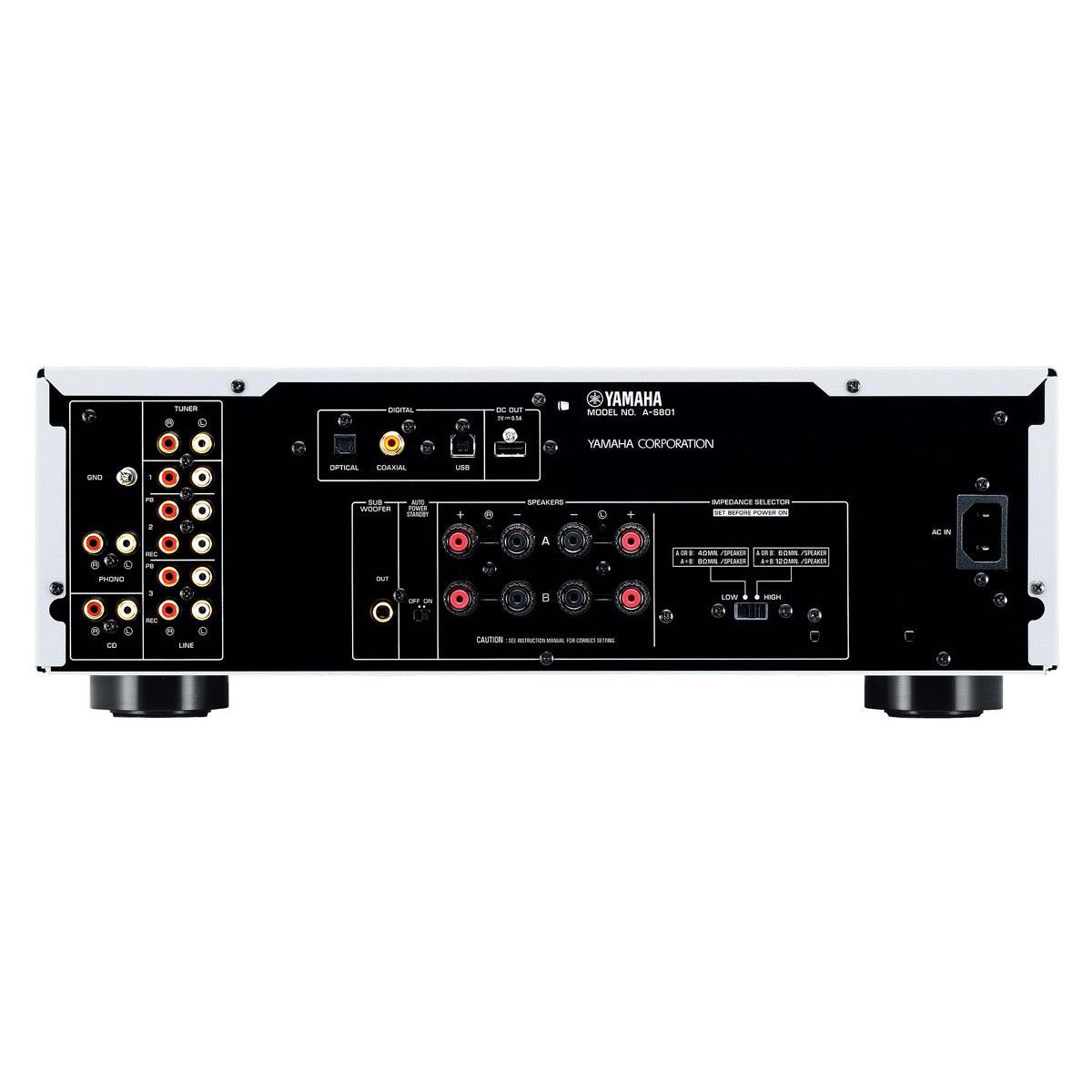
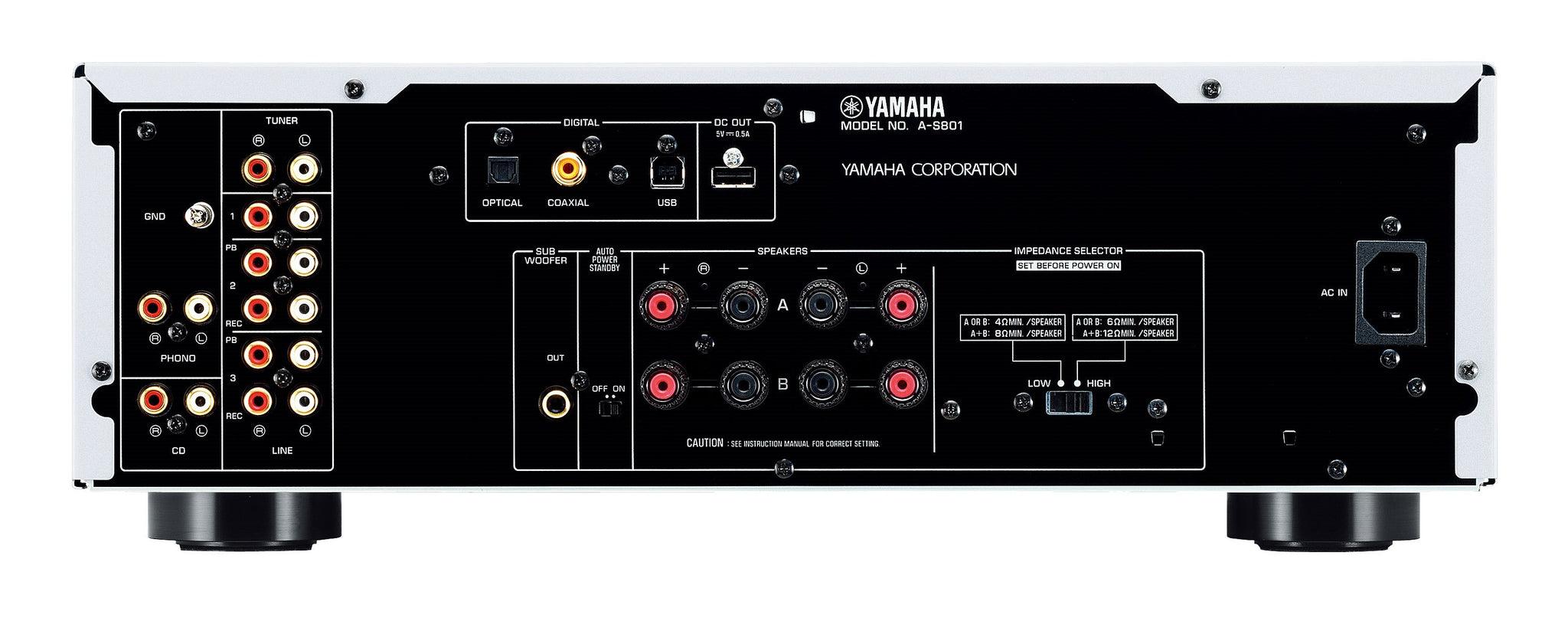
More importantly, the Yamaha includes USB, optical, and coaxial digital inputs, giving you flexibility in how you connect digital sources. The USB input can accept signals directly from a computer, making it excellent for playing high-resolution files stored locally or streamed through applications like Roon or Audirvana that bypass your computer's built-in audio processing.
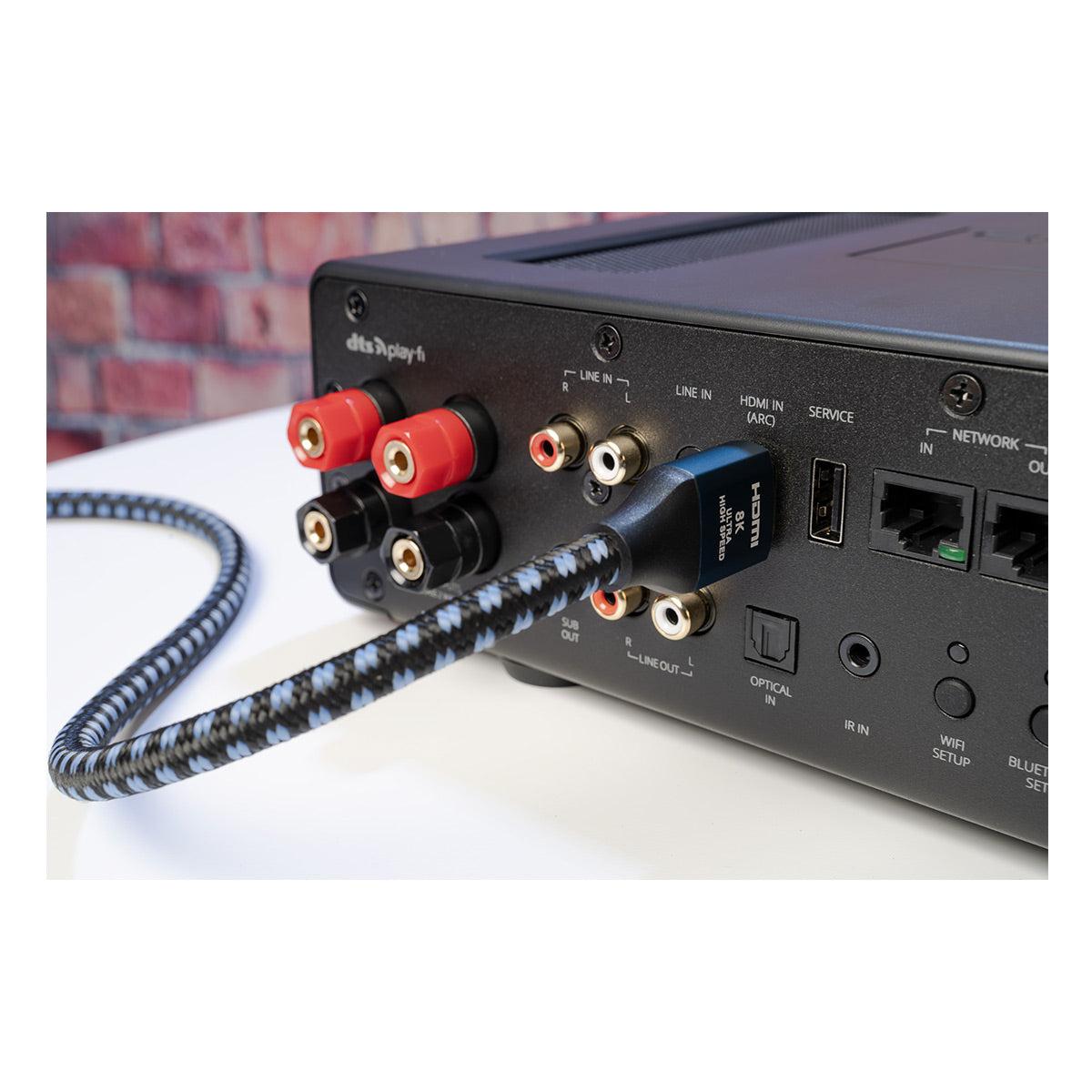
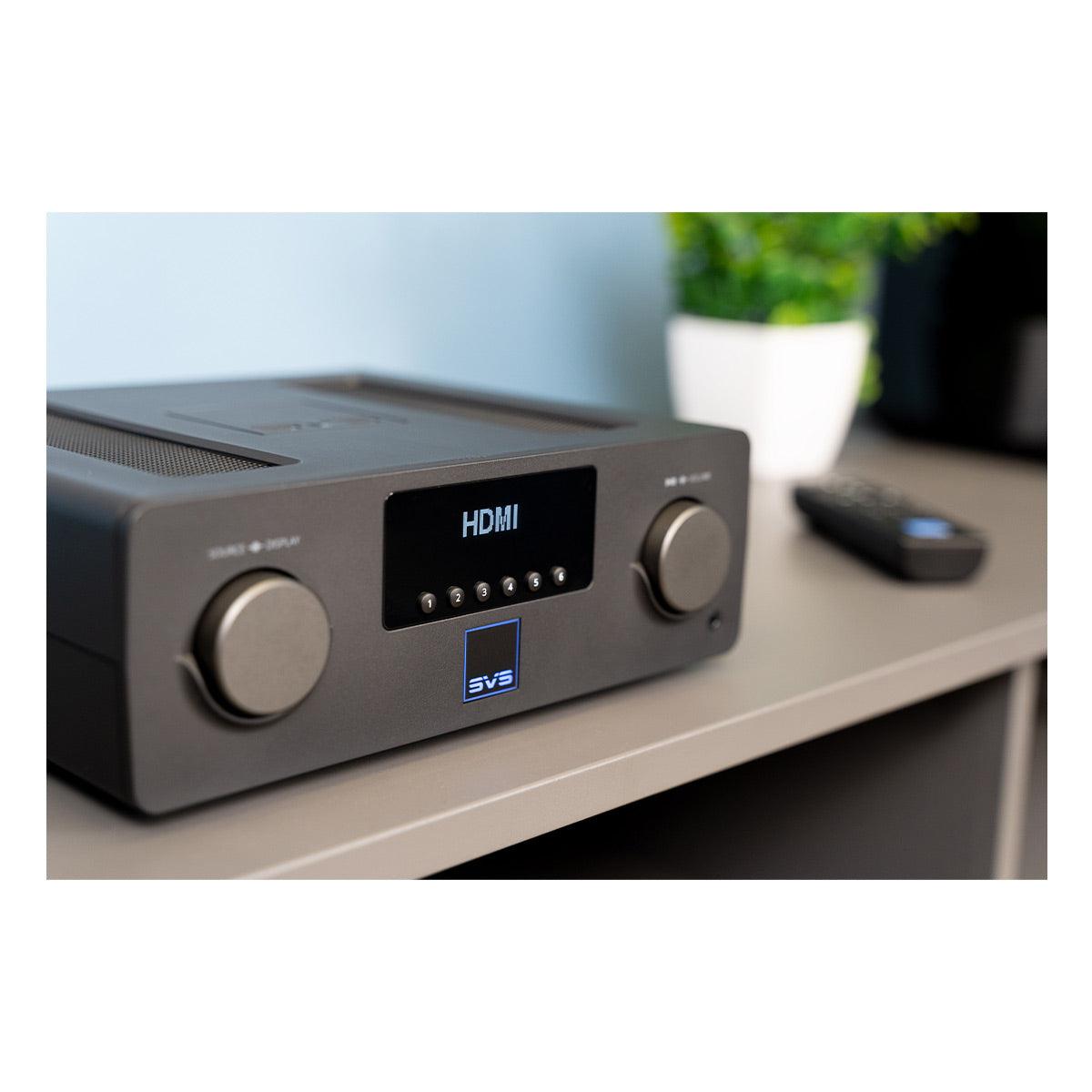
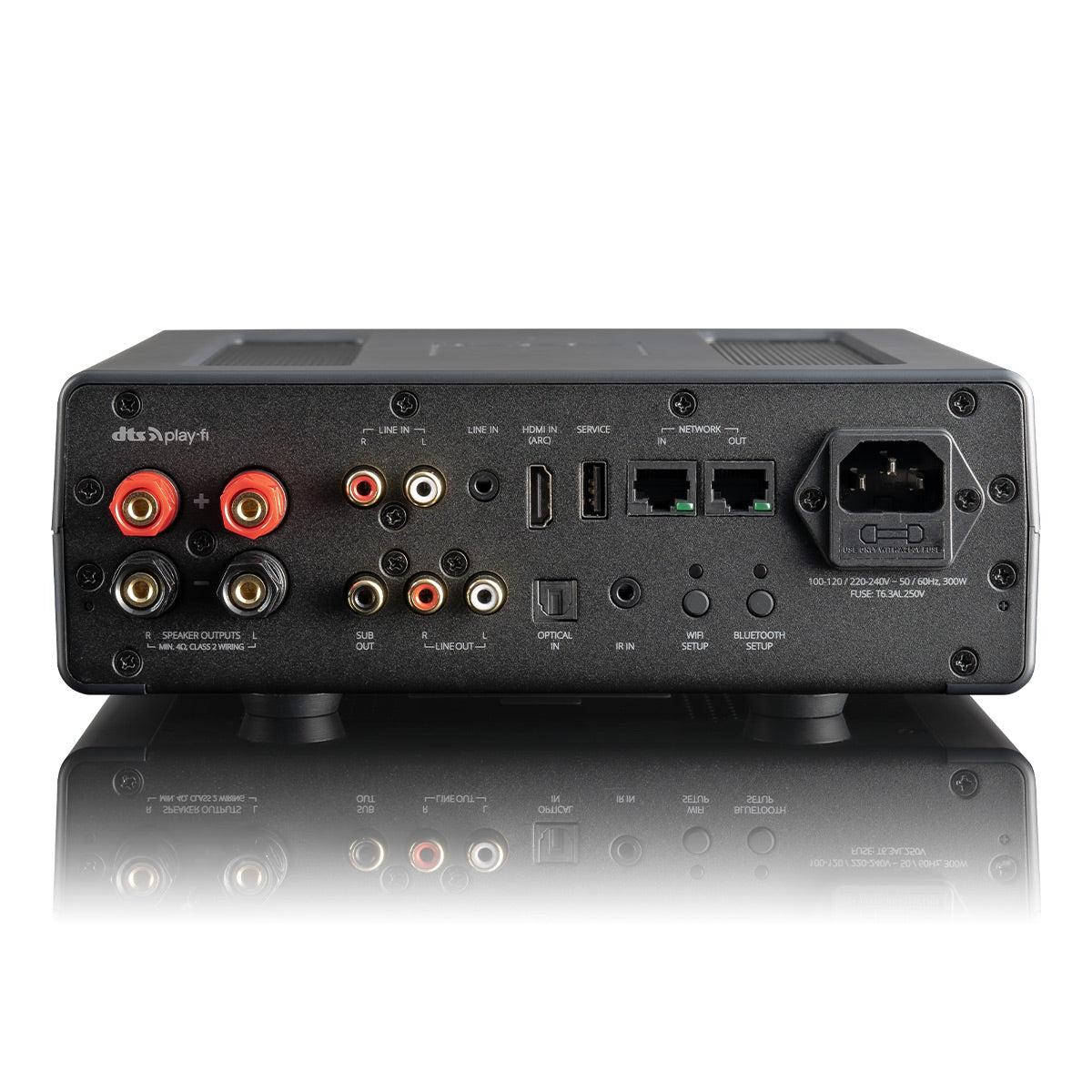
The connectivity differences reveal each amplifier's target audience clearly. The SVS Prime Wireless Pro SoundBase includes HDMI ARC/eARC, making it an excellent choice for improving TV audio. You can connect it directly to your TV's HDMI output, and it will automatically switch on when you start watching, then switch off when you're done. This integration makes it particularly appealing for people who want better TV sound without the complexity of a full AV receiver.
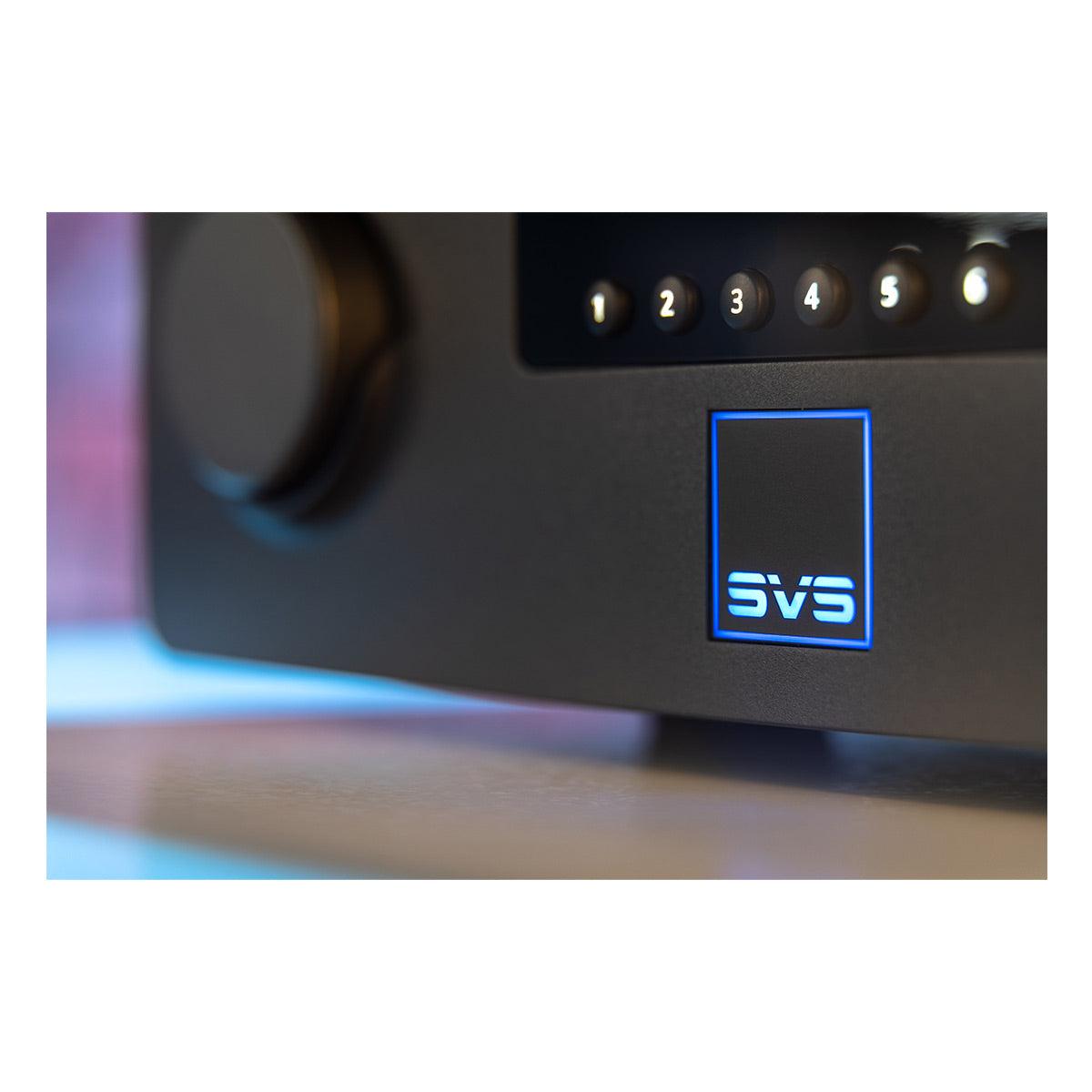
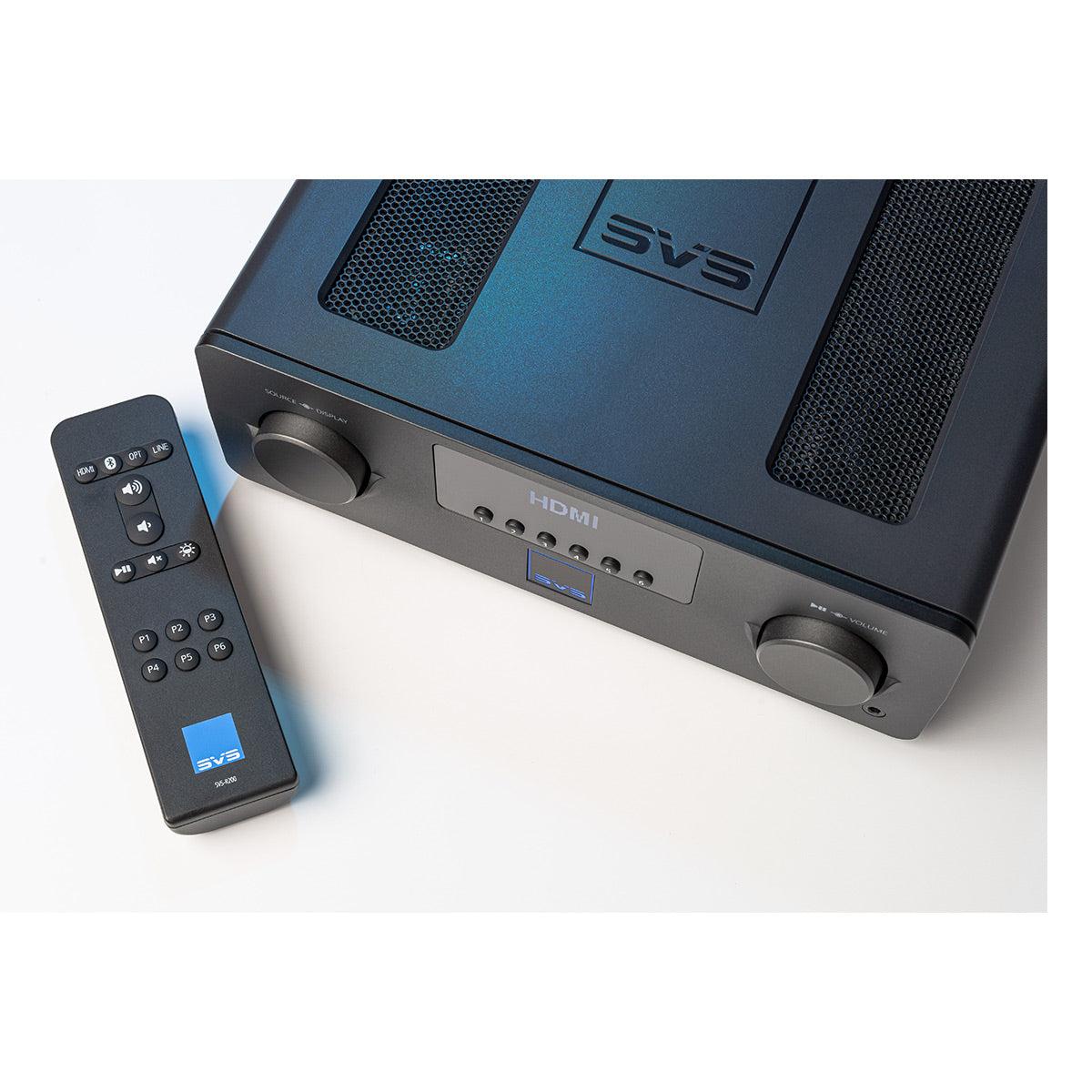
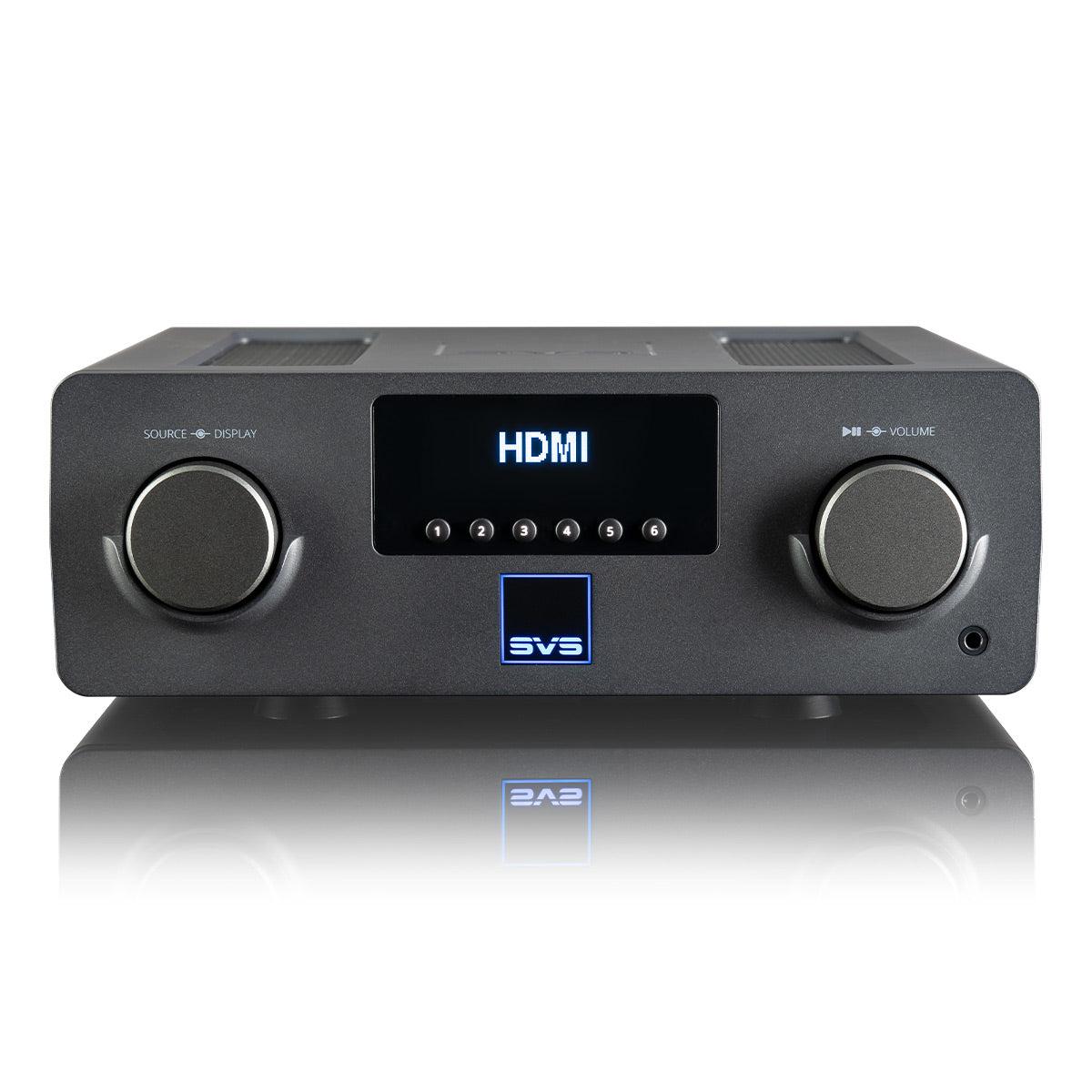
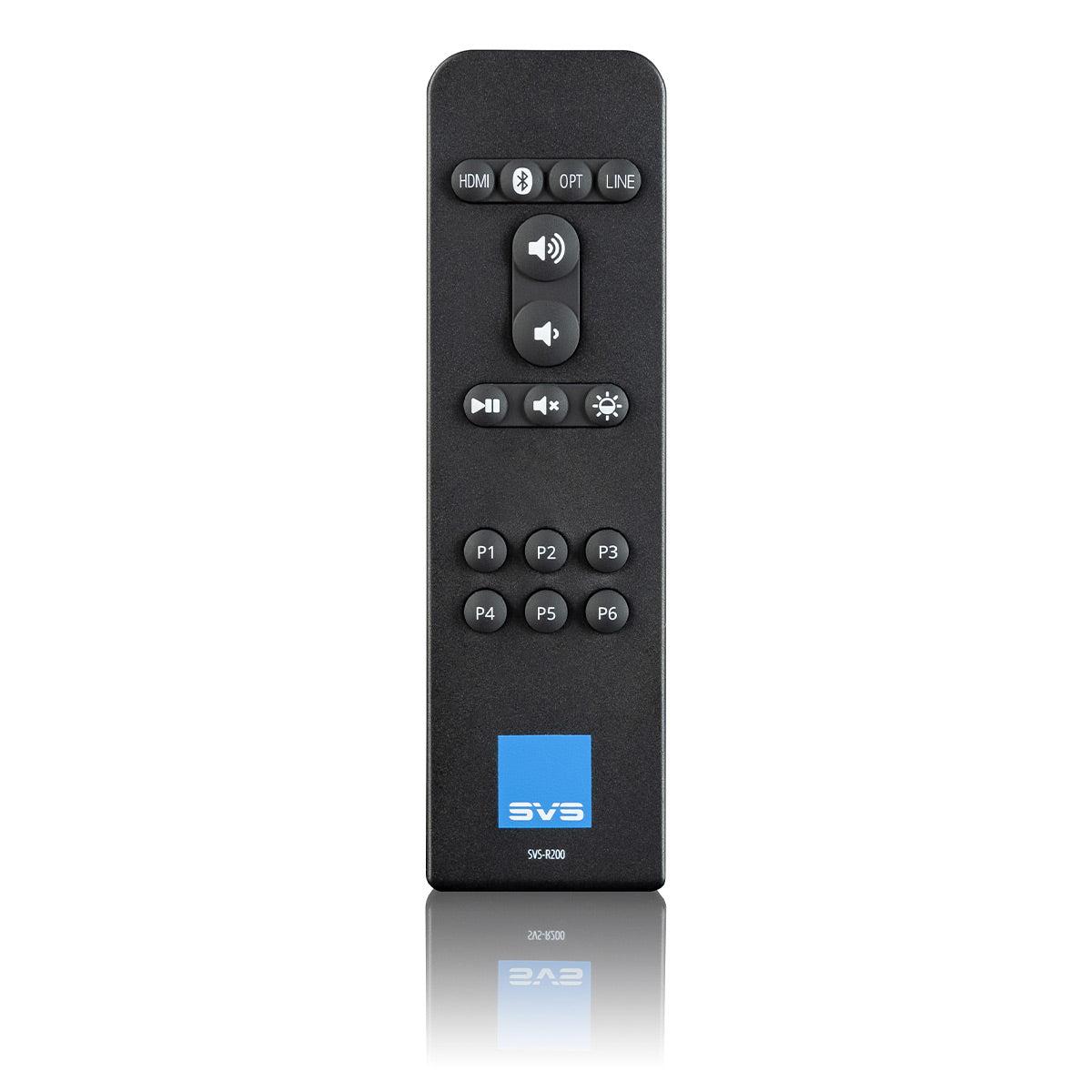
For music, the SVS supports virtually every wireless protocol that matters: DTS Play-Fi for multi-room audio, Apple AirPlay 2 for iPhone users, Chromecast for Android users, and Bluetooth with aptX for universal compatibility. The front panel includes six preset buttons that can be programmed for instant access to your favorite playlists or radio stations—a surprisingly useful feature that eliminates the need to grab your phone for common listening choices.
However, the SVS Prime Wireless Pro SoundBase makes some significant compromises. It includes only basic analog inputs and no phono stage for turntables. The subwoofer output is also full-range, meaning it doesn't include bass management—your subwoofer needs its own crossover controls to blend properly with your main speakers.
The Yamaha A-S801 offers comprehensive connectivity that appeals to serious listeners. Six analog RCA inputs include a proper moving magnet phono stage that, based on user feedback, outperforms many standalone phono preamps in its price range. This matters enormously if you own or plan to buy a turntable, as a quality phono stage can cost $200-400 on its own.
The Yamaha also includes a proper headphone amplifier that can drive high-impedance headphones like the Sennheiser HD600 series—something the SVS cannot do. Recording outputs allow you to connect tape decks or external processors, and the build quality throughout uses gold-plated connectors and heavy-gauge internal wiring.
This is where the two amplifiers' different philosophies become most apparent. The SVS Prime Wireless Pro SoundBase prioritizes a smooth, engaging sound that works well with compressed streaming sources and a wide variety of speakers. Its Class D amplification and streaming-optimized DAC produce what users consistently describe as clear, dynamic sound with good bass extension and a wide soundstage.
However, the SVS doesn't include tone controls or signal path optimization. What you hear is essentially what the streaming service sends, processed through the built-in DAC and amplified. For many listeners, this is perfect—it's simple, consistent, and works well with the vast majority of music available through streaming services.
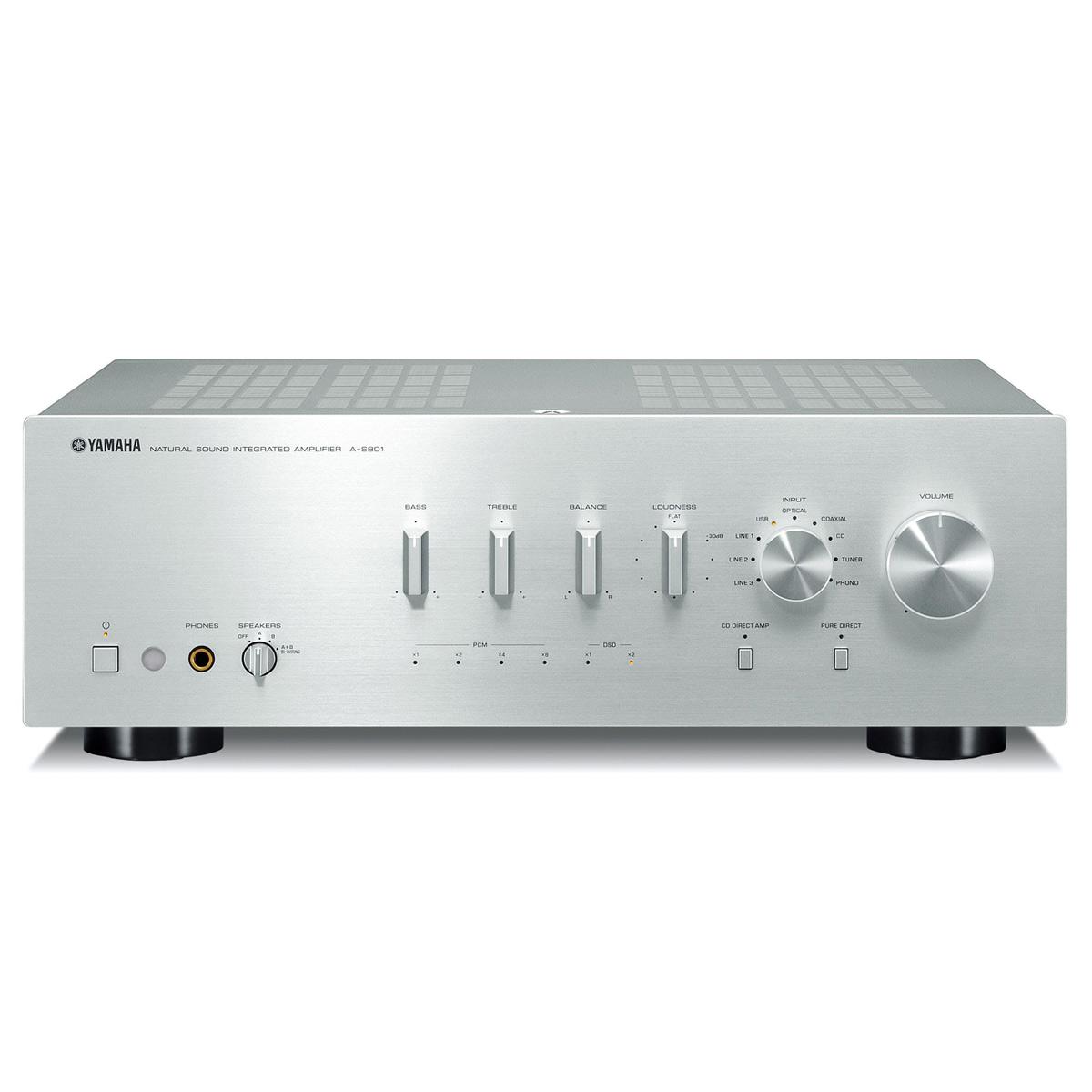
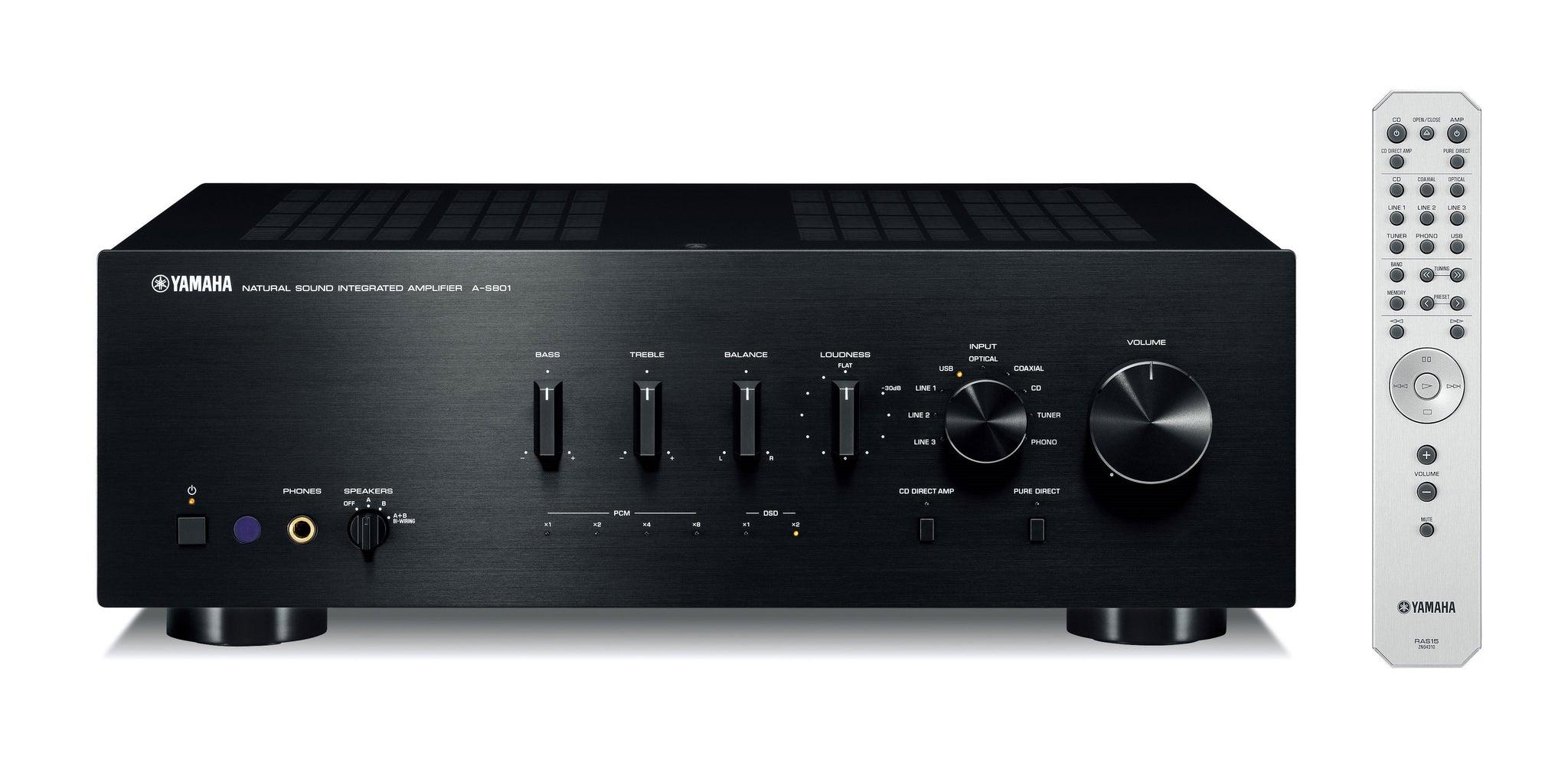
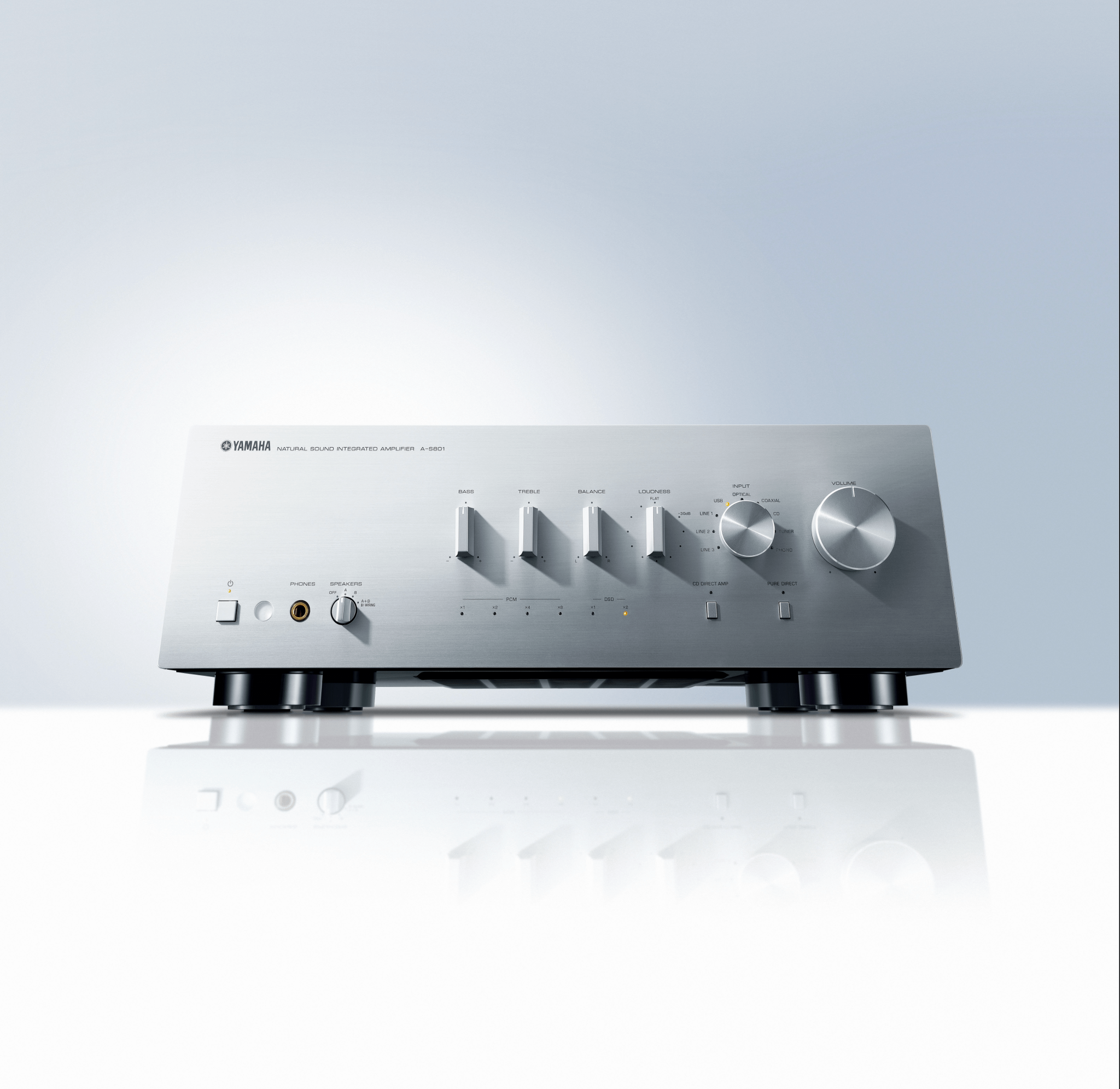
The Yamaha A-S801 takes a more traditional approach that gives you control over the sound. Bass and treble controls allow you to tailor the sound to your room and preferences, while the variable loudness control compensates for the way our hearing changes at different volume levels—we naturally hear less bass and treble at low volumes, and this feature adjusts the tonal balance accordingly.
More significantly, the Yamaha includes "Pure Direct" and "CD Direct" modes that bypass unnecessary circuitry for the cleanest possible signal path. Pure Direct mode eliminates the buffer amplifier, tone controls, and balance control from the signal path entirely. CD Direct mode not only engages Pure Direct but also switches directly to the CD input and powers down unused input sections to minimize electrical interference.
Based on our research into user experiences, these signal path optimizations make a meaningful difference with high-quality sources. Users consistently report improved clarity and soundstage width when using Pure Direct mode with well-recorded material.
Both amplifiers can improve TV audio, but they approach it differently. The SVS Prime Wireless Pro SoundBase includes HDMI ARC/eARC connectivity that allows direct connection to modern TVs. This creates a simple setup where the amplifier automatically powers on when you watch TV and handles volume control through your TV remote.
The streaming focus also means you can easily play music while watching TV with the sound muted, or transition seamlessly from TV watching to music listening. The compact size makes it easy to integrate into entertainment centers, and the lack of heat generation means it can be placed in enclosed spaces without ventilation concerns.
The Yamaha A-S801 takes a more traditional approach to home theater integration. While it includes optical and coaxial digital inputs for TV connection, you'll need to manually switch inputs and adjust volume separately. However, this traditional approach offers advantages for serious movie watching—the superior power delivery and dynamic range handling can make action movies more impactful, particularly if you're using demanding tower speakers.
The Yamaha's ability to drive a wider range of speakers also means you're not limited to easy-to-drive models that work well in smaller rooms. If you want to fill a large family room with clean, powerful sound for both music and movies, the additional power and current capability becomes crucial.
After researching user experiences and expert opinions extensively, clear usage patterns emerge for each amplifier. The SVS Prime Wireless Pro SoundBase excels in modern, convenience-focused systems. If you stream 80% or more of your music, want simple TV audio improvement, and prefer controlling everything through smartphone apps, this amplifier eliminates complexity while delivering genuinely good sound quality.
The SVS makes particular sense for apartment dwellers or anyone with space constraints. Its cool operation and compact size allow placement options that would be impossible with traditional amplifiers. The streaming integration is also genuinely superior—having access to multiple streaming services, internet radio, and multi-room audio in one box provides convenience that's hard to replicate with traditional components.
However, the SVS Prime Wireless Pro SoundBase shows its limitations with demanding speakers or critical listening sessions. While it can drive most speakers adequately, it doesn't have the current capability or thermal management for sustained high-volume use with inefficient speakers.
The Yamaha A-S801 appeals to listeners who want maximum flexibility and performance. If you own or plan to buy a turntable, need to drive demanding speakers, or want the option to fine-tune your sound through tone controls and signal path selection, this amplifier provides capabilities that the SVS simply cannot match.
The Yamaha also makes sense for anyone building a system they plan to keep for many years. Its traditional connectivity and robust build quality suggest it will remain relevant and functional much longer than streaming-focused products that may become obsolete as wireless protocols evolve.
At the time of writing, the SVS Prime Wireless Pro SoundBase represents excellent value for streaming-focused listeners, typically priced several hundred dollars below the Yamaha A-S801. For many people, the convenience and good sound quality justify the feature limitations.
However, the Yamaha A-S801 provides substantially more amplifier per dollar when you consider its premium DAC, phono stage, headphone amplifier, and superior power delivery. If you value flexibility and maximum performance over convenience, the additional cost brings meaningful capabilities that would cost much more to achieve with separate components.
The choice ultimately comes down to your listening habits and priorities. The SVS Prime Wireless Pro SoundBase transforms any pair of passive speakers into a modern streaming system with minimal fuss. The Yamaha A-S801 provides the foundation for a serious stereo system that can grow and evolve with your interests over many years.
Both represent thoughtful approaches to integrated amplification, but they're designed for fundamentally different listeners and use cases. Choose the SVS for convenience and modern connectivity; choose the Yamaha for maximum performance and traditional flexibility.
| SVS Prime Wireless Pro SoundBase | Yamaha A-S801 |
|---|---|
| Power Output - Critical for driving demanding speakers and achieving clean sound at high volumes | |
| 150W x 2 (Class D - efficient but may compress dynamics with difficult loads) | 100W x 2 rated, but higher current delivery (Class AB - better for power-hungry speakers) |
| Digital Audio Support - Important for high-resolution streaming and file playback | |
| 24-bit/192kHz via WiFi streaming (optimized for wireless services) | 32-bit/384kHz PCM + DSD support via USB (premium ESS SABRE DAC) |
| Wireless Streaming - Essential for modern convenience and multi-room audio | |
| WiFi, AirPlay 2, Chromecast, Spotify Connect, DTS Play-Fi multi-room | None (requires separate streamer for wireless functionality) |
| Analog Inputs - Matters for turntables, CD players, and other traditional sources | |
| Basic RCA line inputs only (no phono stage for turntables) | 6 RCA inputs including built-in MM phono stage for turntables |
| TV Integration - Important for simplified home theater setups | |
| HDMI ARC/eARC with automatic switching and TV remote control | Optical/coaxial digital inputs only (manual switching required) |
| Physical Controls - Affects daily usability and sound customization | |
| 6 preset buttons, app-based control, minimal physical controls | Traditional bass/treble/balance knobs, Pure Direct mode, full remote |
| Build Quality & Size - Impacts longevity, placement options, and thermal management | |
| 5 lbs, compact design, cool operation (fits in tight spaces) | 27 lbs, robust construction, requires ventilation (built for longevity) |
| Headphone Support - Important for private listening with quality headphones | |
| 3.5mm output (limited power for high-impedance headphones) | Dedicated 1/4" amplifier (drives demanding headphones like HD600) |
| Subwoofer Integration - Critical for full-range sound in most rooms | |
| Full-range output (requires sub with built-in crossover) | Subwoofer output with tone controls for better integration |
| Signal Path Options - Affects sound quality for audiophile listening | |
| Fixed signal path through streaming DAC | Pure Direct and CD Direct modes bypass unnecessary circuitry |
The SVS Prime Wireless Pro SoundBase is specifically designed for wireless streaming with built-in WiFi, Apple AirPlay 2, Chromecast, and Spotify Connect. It can stream high-resolution audio up to 24-bit/192kHz wirelessly. The Yamaha A-S801 has no wireless streaming capabilities and requires a separate streamer or wired connections from your devices.
The SVS Prime Wireless Pro SoundBase connects directly to TVs via HDMI ARC/eARC, allowing automatic switching and volume control through your TV remote. The Yamaha A-S801 connects to TVs through optical or coaxial digital inputs but requires manual switching between inputs.
While the SVS Prime Wireless Pro SoundBase is rated at 150 watts per channel, the Yamaha A-S801 delivers higher current output despite its 100-watt rating. The Yamaha's Class AB design provides better power delivery for demanding speakers, especially those with 4-ohm impedances or low sensitivity ratings.
The Yamaha A-S801 includes a built-in moving magnet phono stage, allowing direct connection of most turntables. The SVS Prime Wireless Pro SoundBase has no phono input and requires a separate phono preamp or a turntable with built-in preamp to play vinyl records.
The SVS Prime Wireless Pro SoundBase weighs only 5 pounds, runs cool, and fits easily in entertainment centers or tight spaces. The Yamaha A-S801 weighs 27 pounds, generates more heat, and requires adequate ventilation around the unit.
The Yamaha A-S801 includes traditional bass, treble, balance, and variable loudness controls with physical knobs. The SVS Prime Wireless Pro SoundBase has limited sound adjustment options, relying primarily on app-based controls and the source material's natural sound.
The SVS Prime Wireless Pro SoundBase excels in home theater setups with HDMI ARC connectivity, automatic TV integration, and the ability to stream music while watching TV. The Yamaha A-S801 can improve TV audio through digital inputs but requires manual switching and separate volume control.
Both support high-resolution audio, but differently. The SVS Prime Wireless Pro SoundBase streams high-res files up to 24-bit/192kHz wirelessly from services like Tidal and Qobuz. The Yamaha A-S801 supports even higher resolution files up to 32-bit/384kHz and DSD through its USB input, plus has a premium ESS SABRE DAC.
The Yamaha A-S801 includes a dedicated headphone amplifier with a 1/4" jack that can drive high-impedance headphones like Sennheiser HD600s. The SVS Prime Wireless Pro SoundBase has a basic 3.5mm headphone output with limited power for demanding headphones.
The SVS Prime Wireless Pro SoundBase provides excellent value for streaming-focused users, eliminating the need for separate streaming devices. The Yamaha A-S801 offers better value for serious listeners, including features like a premium DAC, phono stage, and headphone amplifier that would cost hundreds extra as separate components.
Both amplifiers include subwoofer outputs, but the SVS Prime Wireless Pro SoundBase provides a full-range signal requiring your subwoofer to have its own crossover controls. The Yamaha A-S801 also provides a full-range subwoofer output but offers bass management through its tone controls for better integration.
The Yamaha A-S801 features robust construction, premium components, and traditional connectivity that suggests longer lifespan and better resale value. The SVS Prime Wireless Pro SoundBase relies on wireless protocols and streaming technology that may become obsolete as technology evolves, though it offers excellent performance for current streaming needs.
We've done our best to create useful and informative comparisons to help you decide what product to buy. Our research uses advanced automated methods to create this comparison and perfection is not possible - please contact us for corrections or questions. These are the sites we've researched in the creation of this article: soundandvision.com - crutchfield.com - futureaudiophile.com - dreamediaav.com - crutchfield.com - svsound.com - soundstageaccess.com - skybygramophone.com - hometheaterhifi.com - av-connection.com - crutchfield.com - soundstagenetwork.com - svsound.com - crutchfield.com - usa.yamaha.com - audioholics.com - crutchfield.com - theabsolutesound.com - crutchfield.com - hifiheaven.net - musicdirect.com - superbestaudiofriends.org - skybygramophone.com - safeandsoundhq.com - audiosciencereview.com - accessories4less.com - europe.yamaha.com - cnet.com

Privacy Policy
Terms and Conditions - Affiliate Policy
Home Security
© Copyright 2008-2026.
11816 Inwood Rd #1211, Dallas, TX 75244