

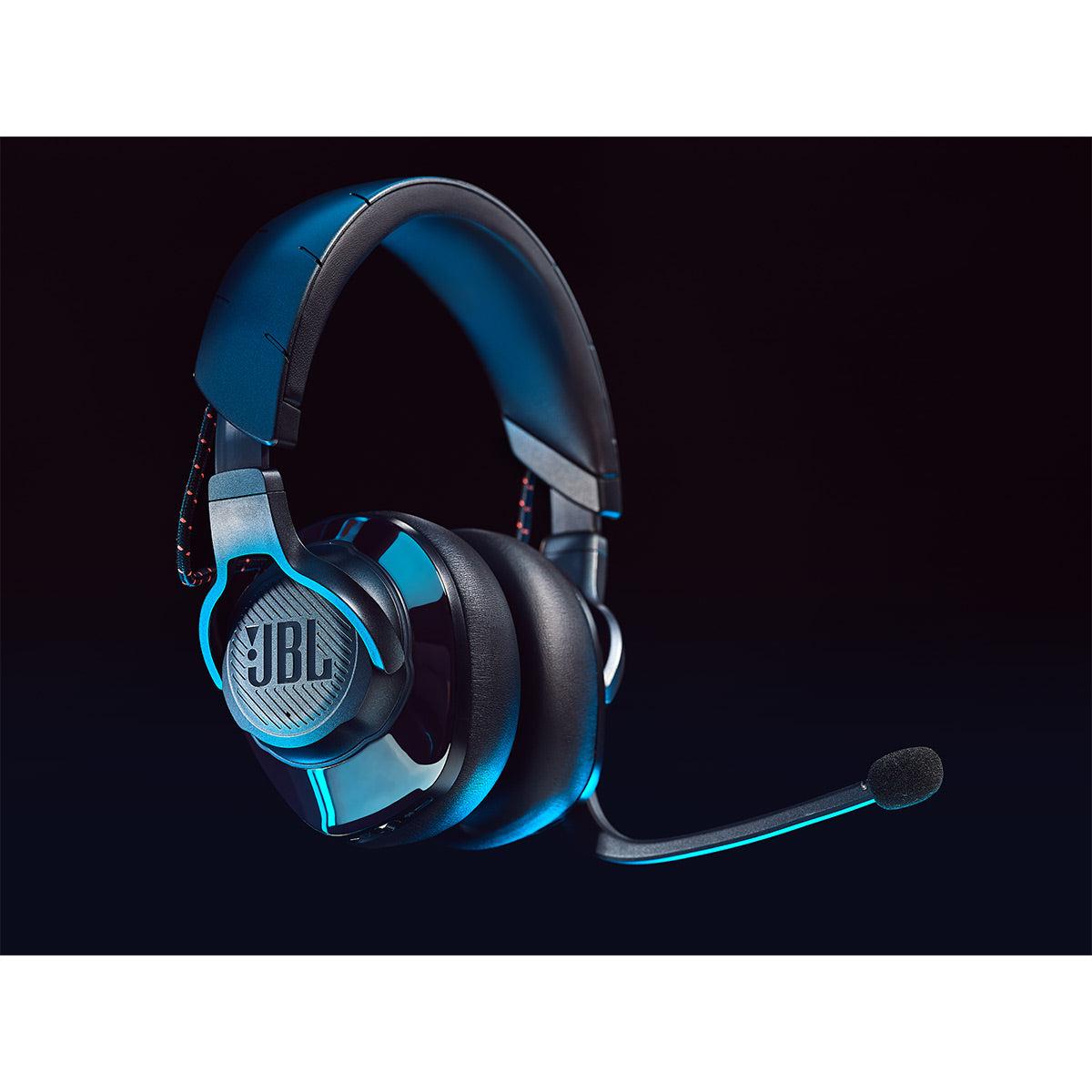
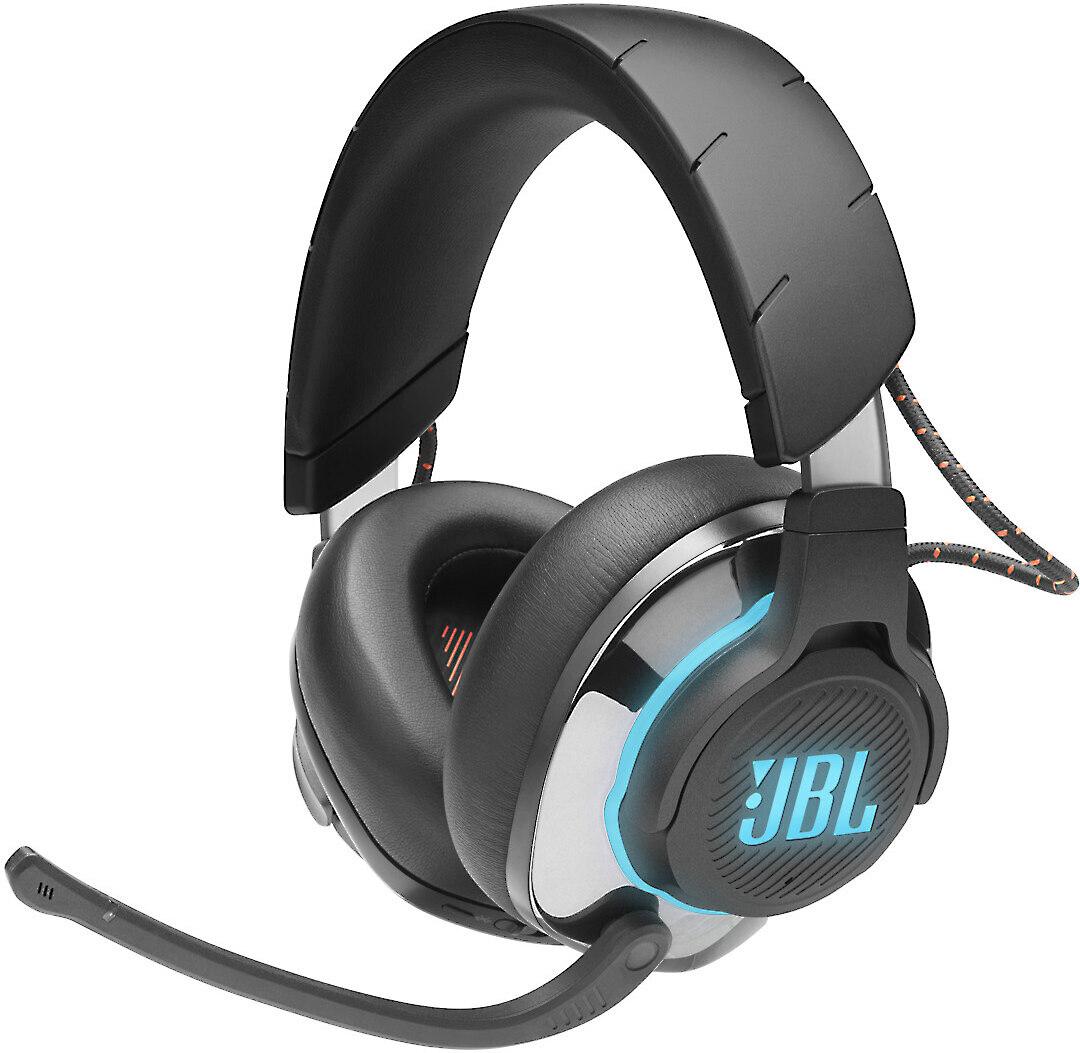
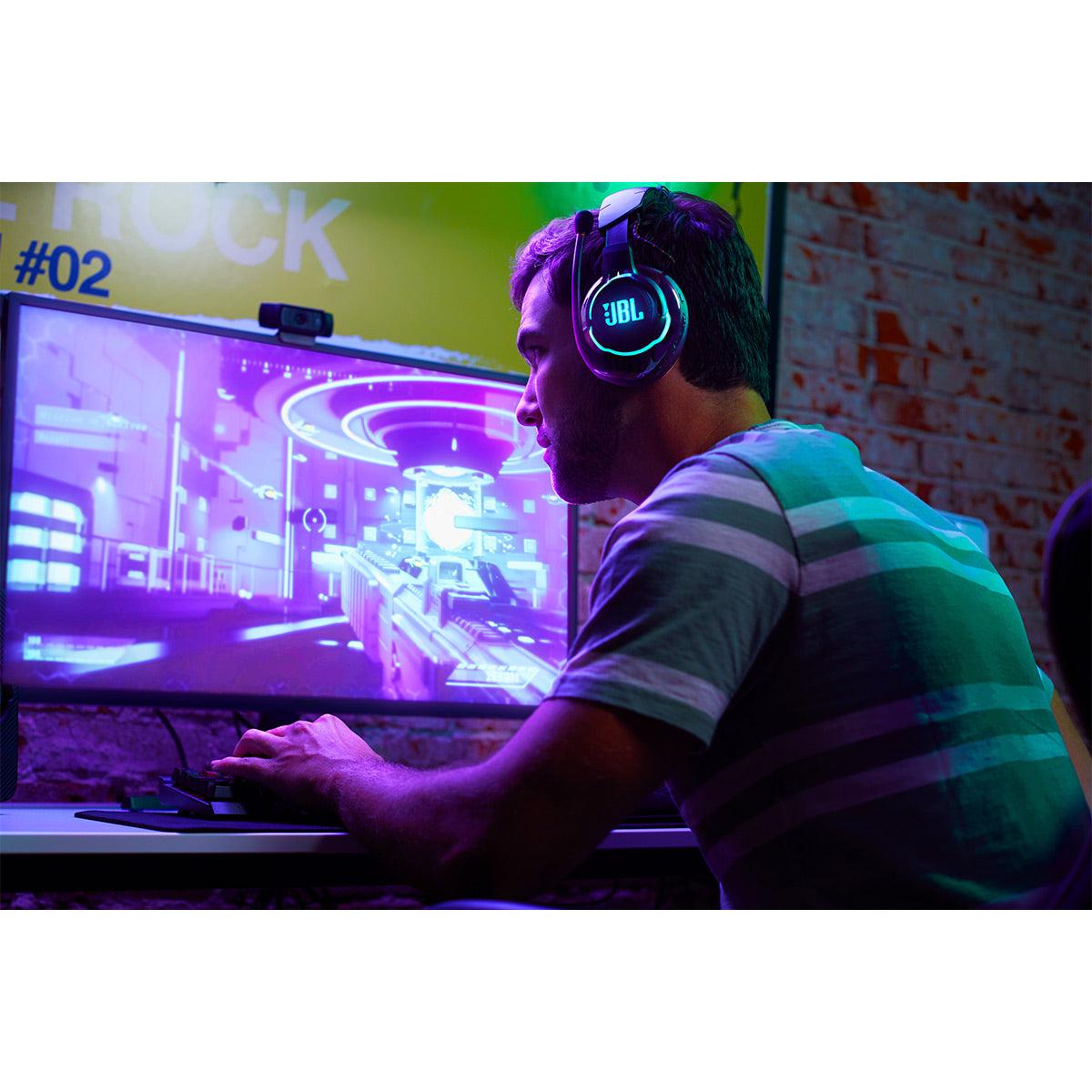
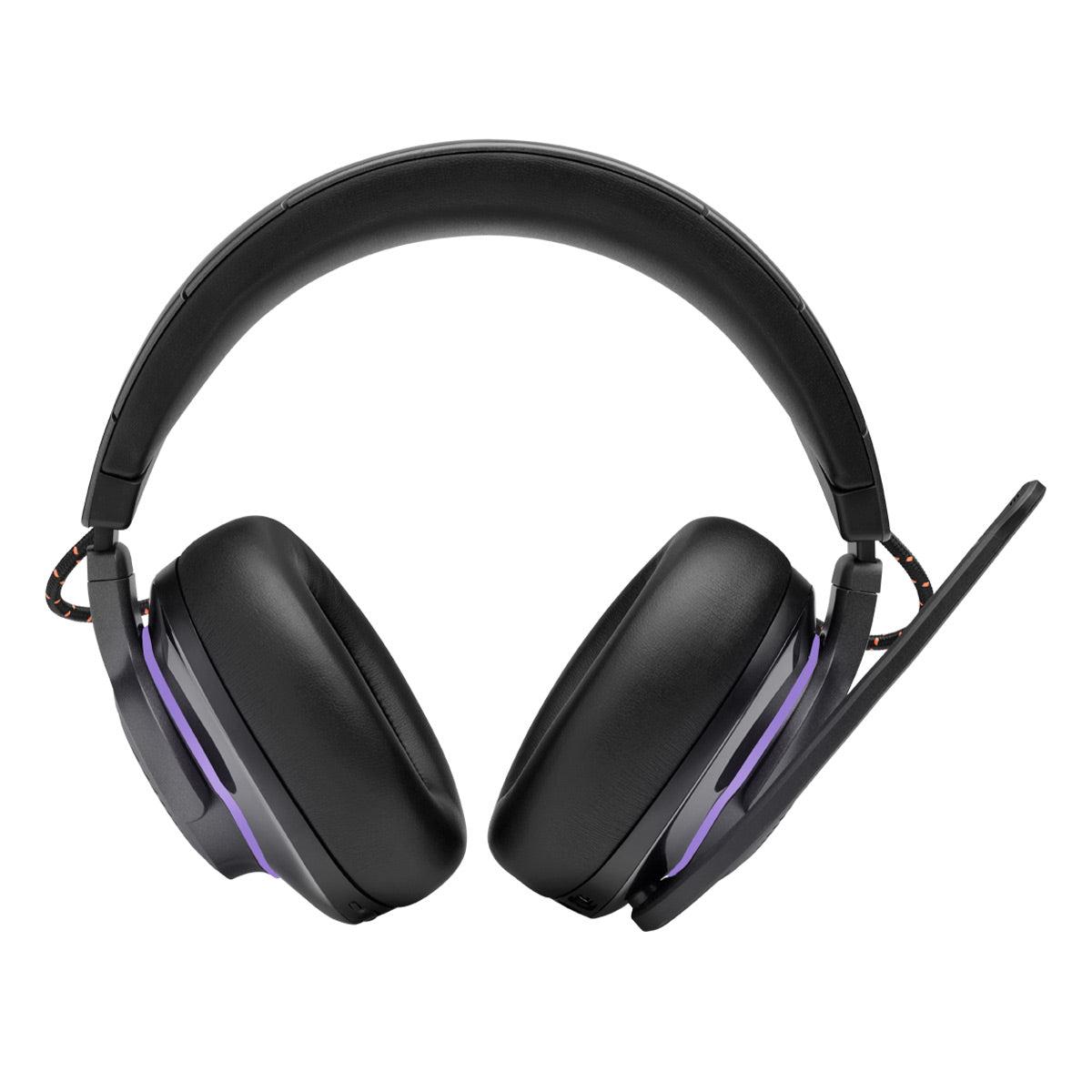
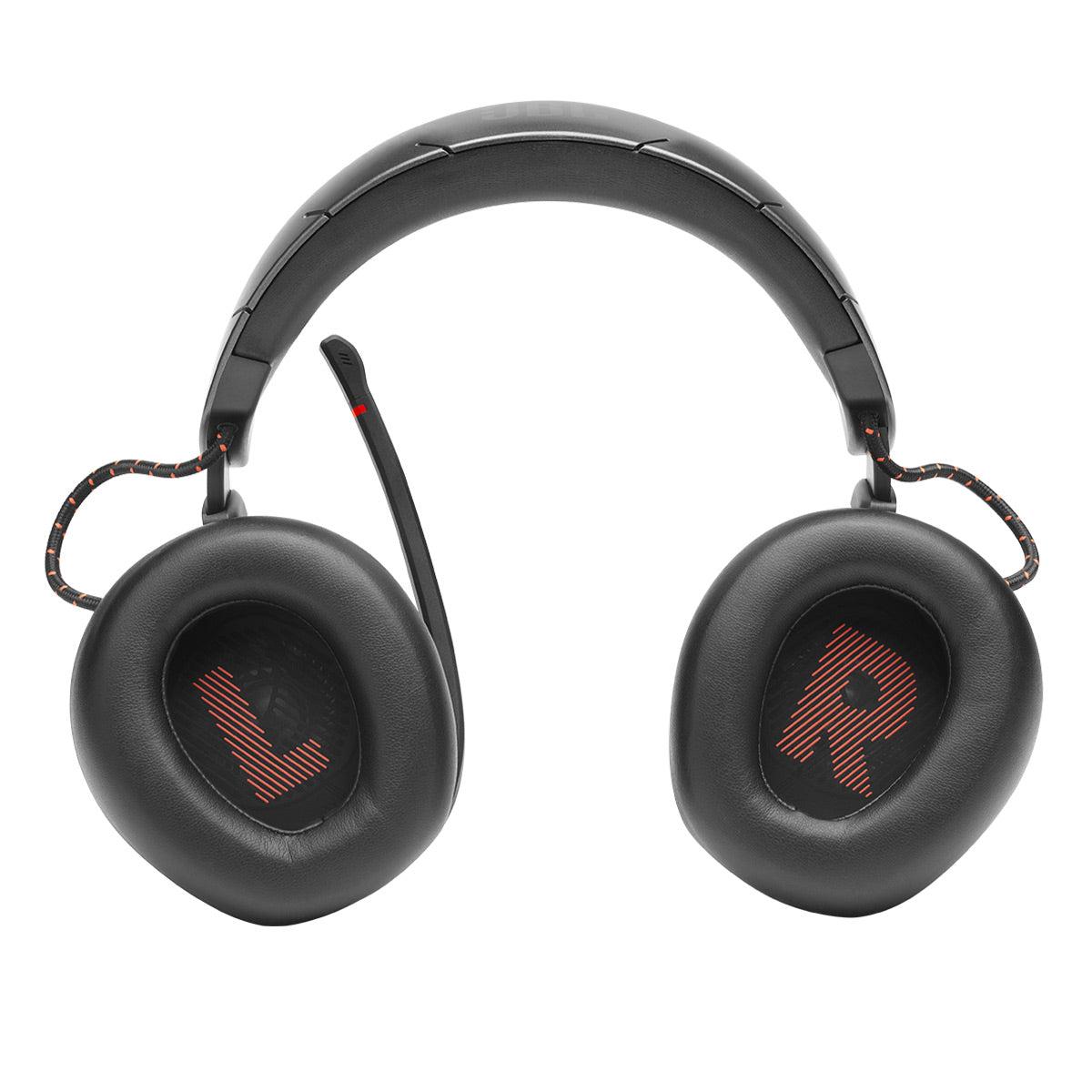
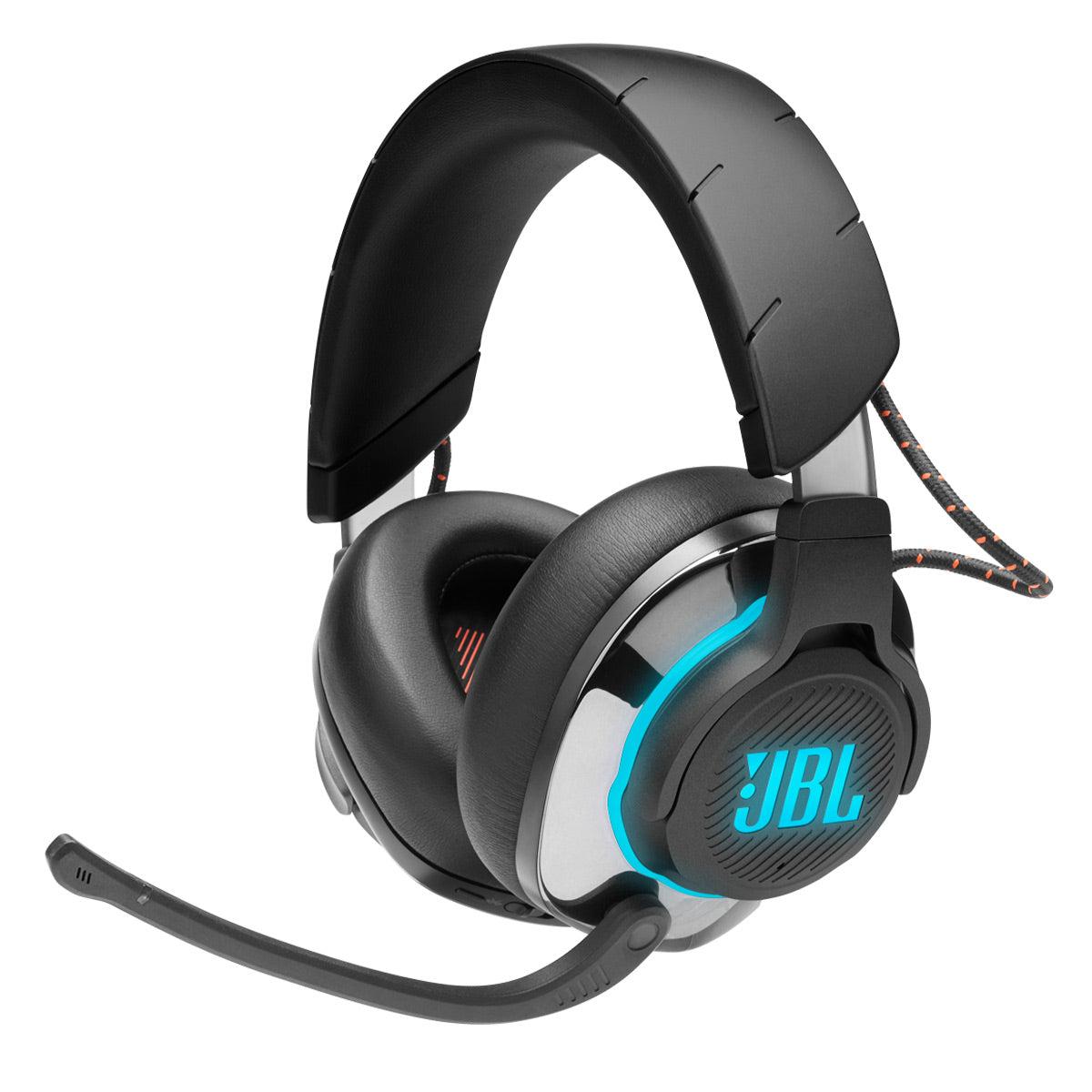
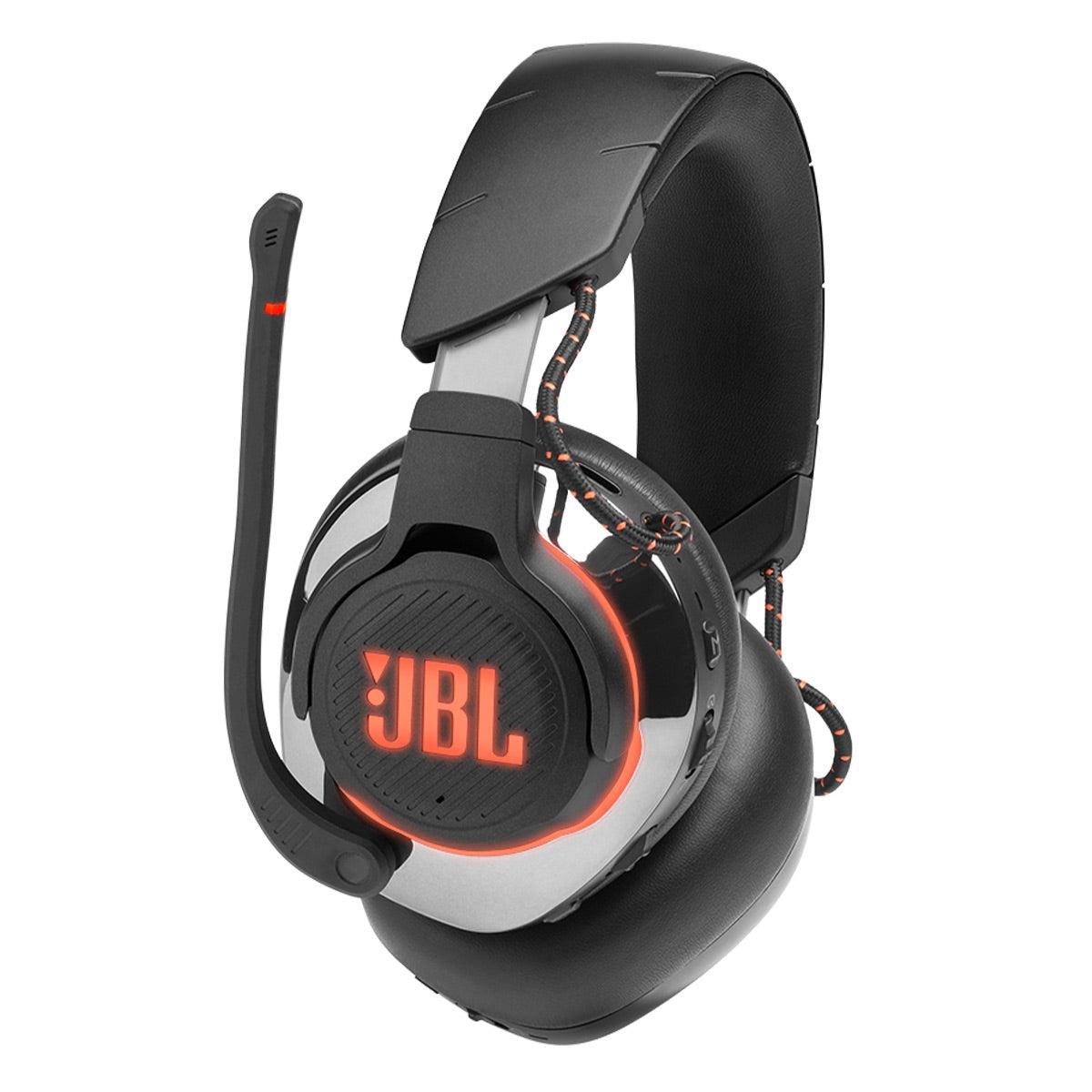
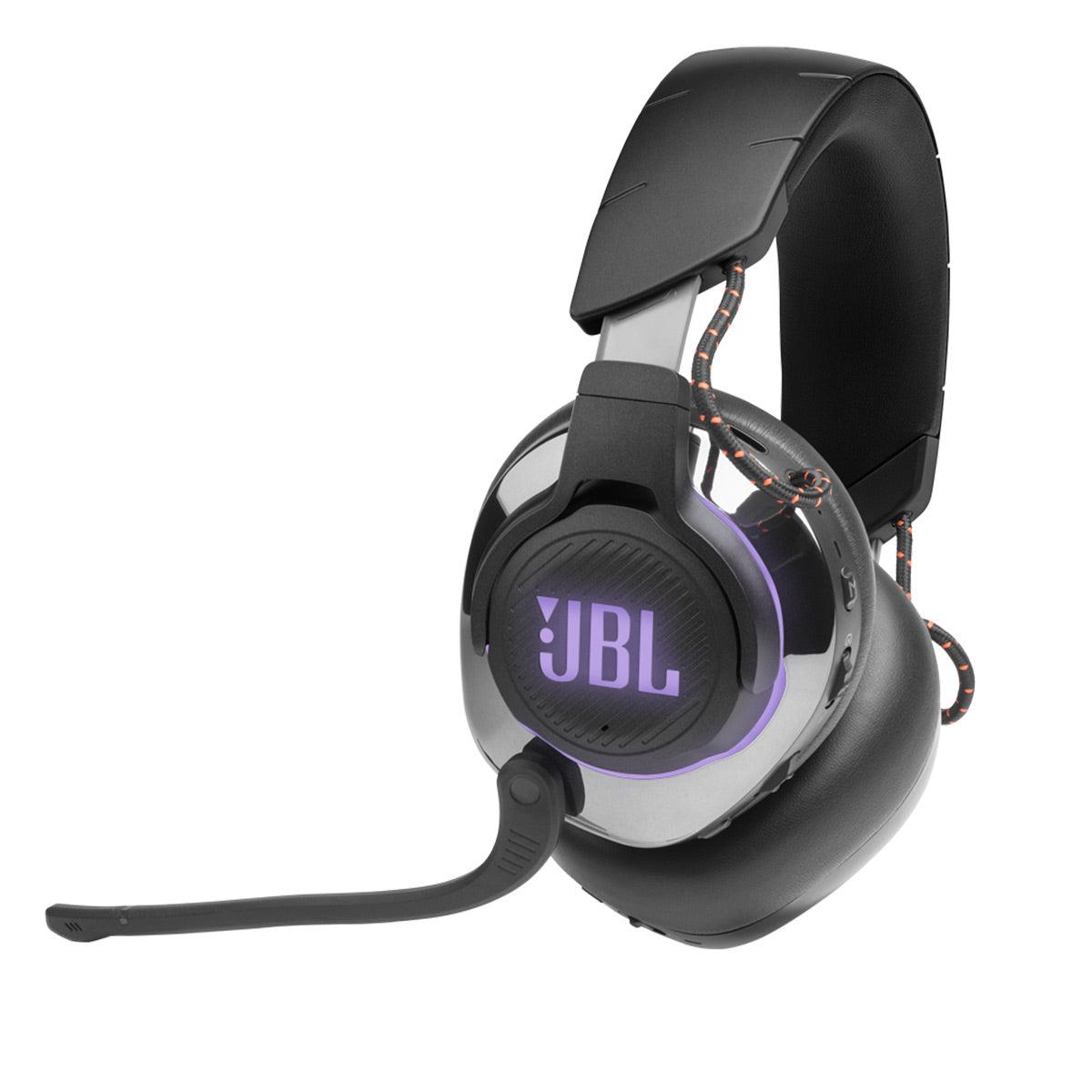
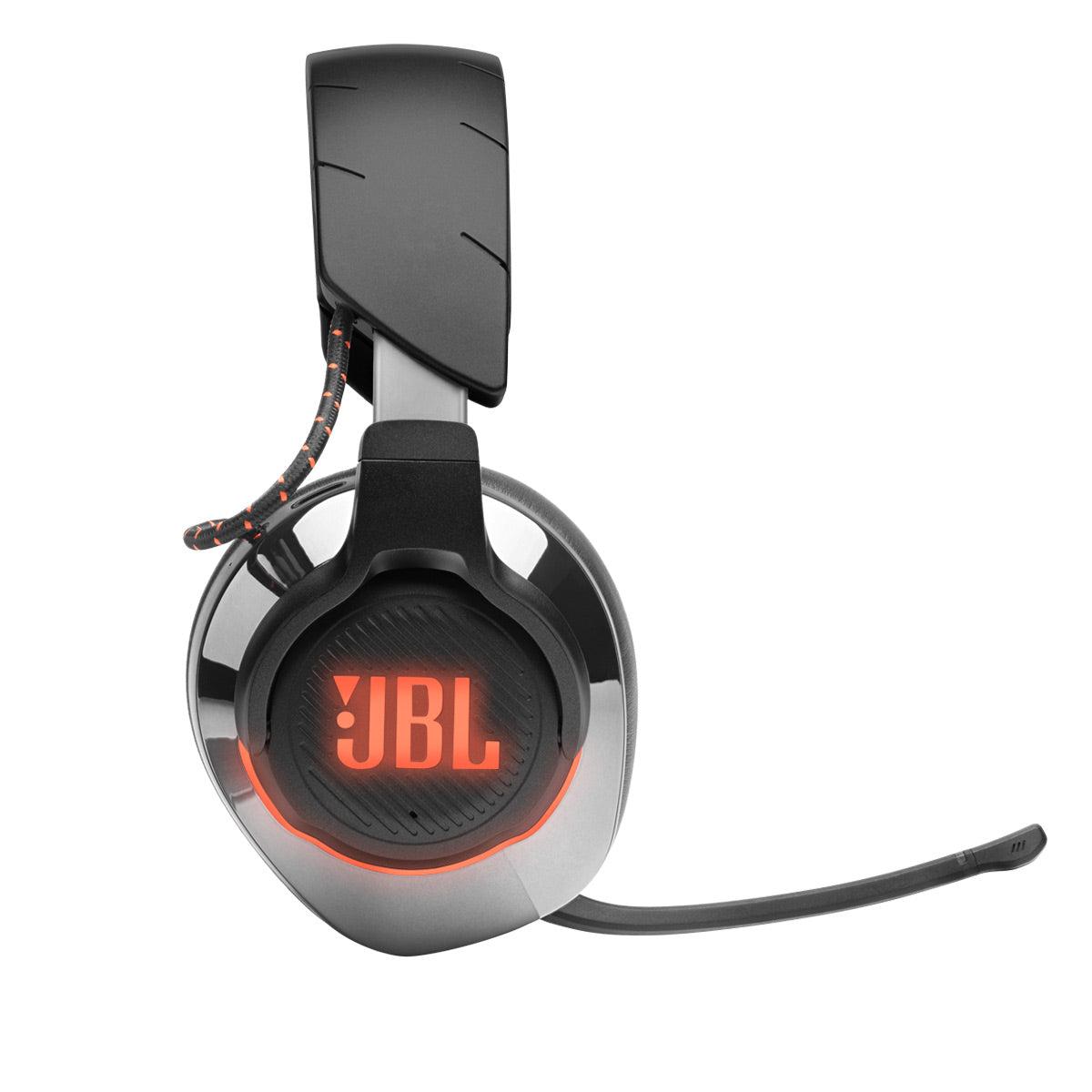
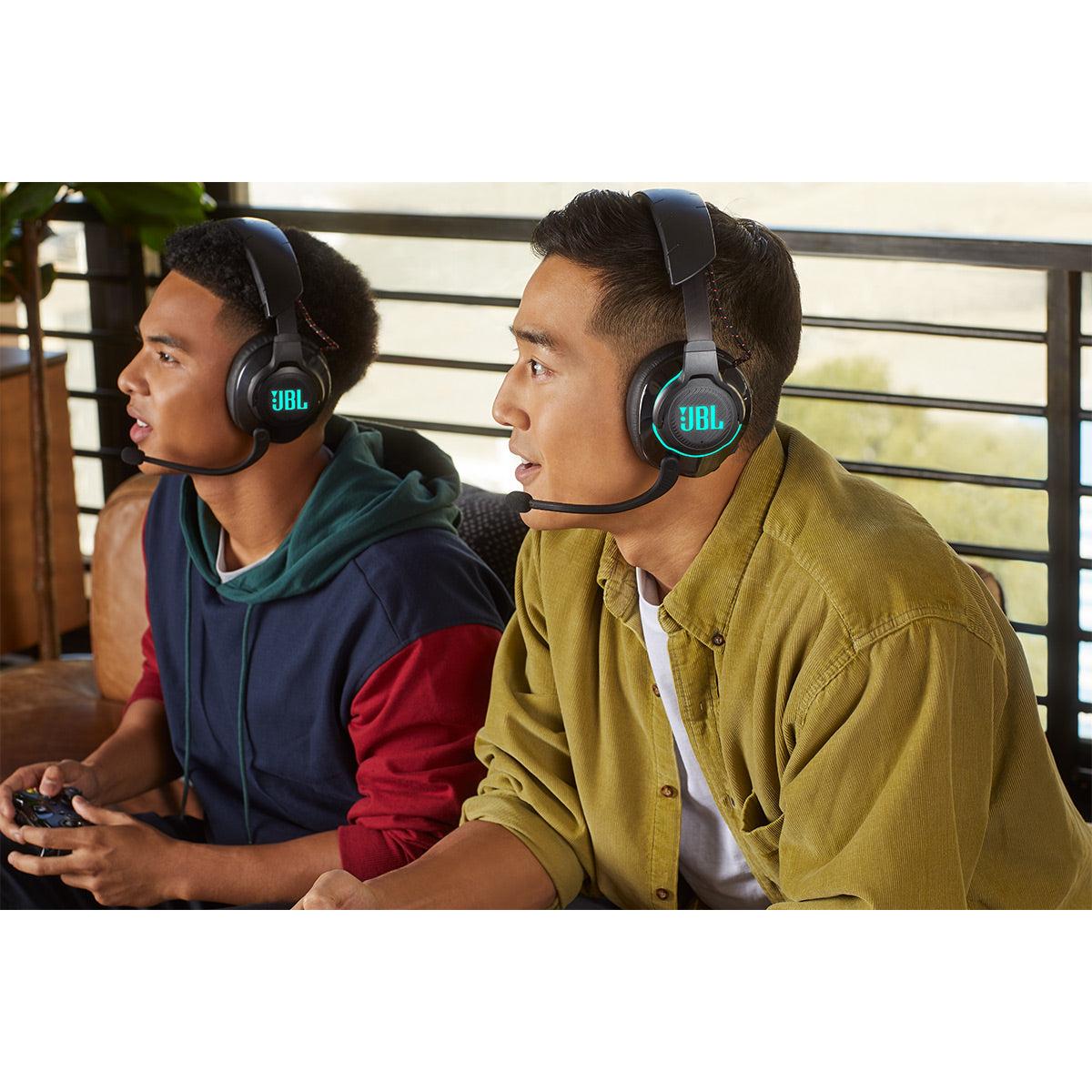
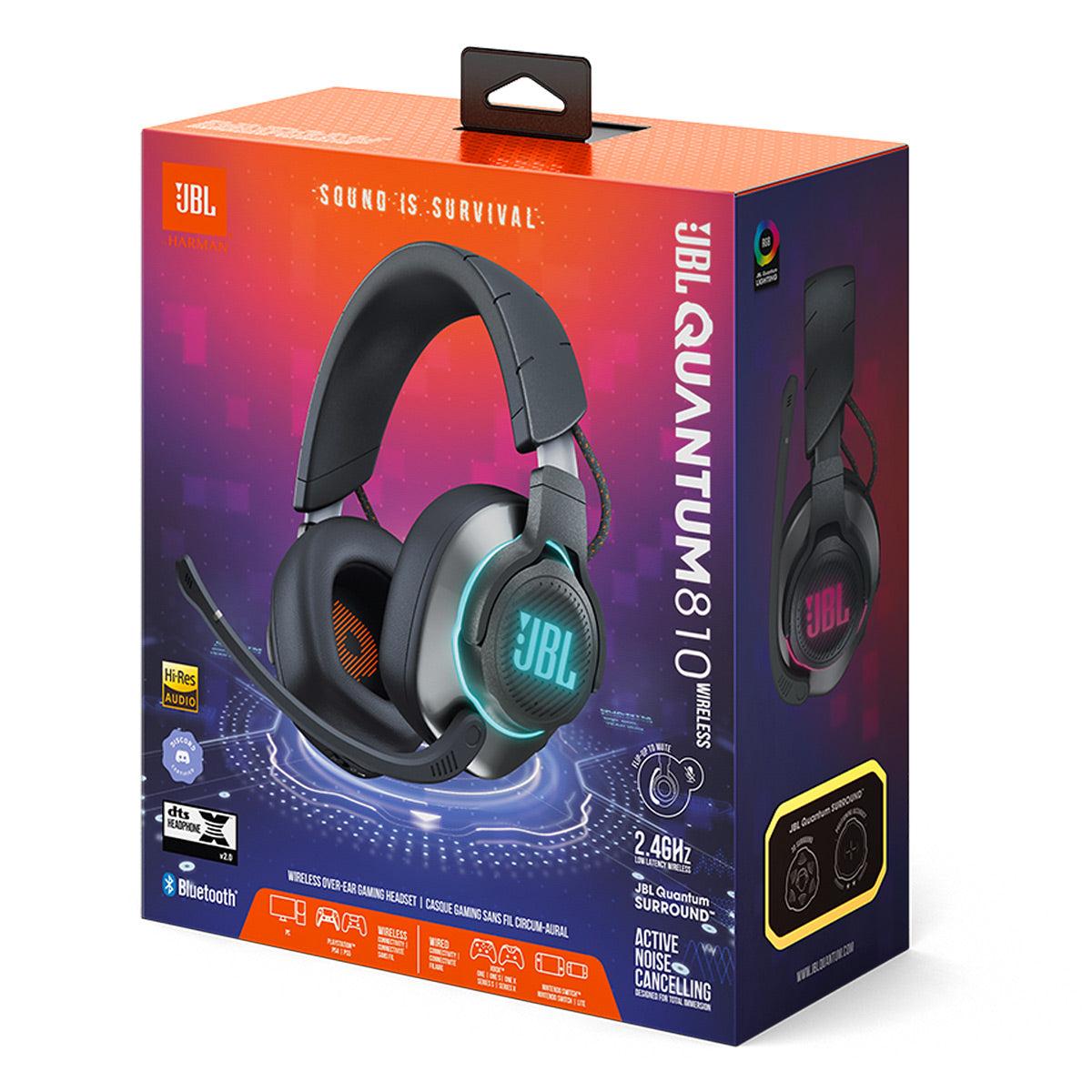
When you're dropping serious cash on a premium gaming headset, you want to know you're making the right choice. Two headsets consistently dominate the high-end wireless gaming conversation: the JBL Quantum 810 and the SteelSeries Arctis Nova Pro Wireless. Both promise flagship-level performance, but they take very different approaches to achieving it.
I've spent considerable time researching these headsets, diving deep into technical specs, user feedback, and professional reviews to understand what really matters when you're choosing between them. The reality is both are excellent headsets, but they serve different types of gamers and use cases. Let me break down everything you need to know to make the right decision for your setup.
Before we dive into the specifics, it's worth understanding what separates a $200+ gaming headset from the $50 options flooding the market. Premium gaming headsets need to excel across multiple demanding criteria that cheaper alternatives simply can't match.
First, they need exceptional audio quality that goes beyond just "loud and bassy." We're talking about precise spatial audio that lets you pinpoint enemy footsteps in competitive shooters, rich soundscapes that immerse you in single-player adventures, and frequency response that reveals subtle audio details most headsets miss entirely.
Second, the microphone quality becomes crucial at this price point. You're not just chatting with friends—you might be streaming, creating content, or leading competitive teams where crystal-clear communication can make or break your performance.
Finally, premium headsets must deliver professional-level comfort and build quality. When you're gaming for hours at a time, every gram of weight and degree of clamping force matters. The materials need to withstand years of heavy use without degrading.
Both the Quantum 810 and Arctis Nova Pro Wireless clear these basic requirements, but they achieve them through notably different design philosophies.
The JBL Quantum 810 launched in 2022 as JBL's flagship gaming headset, representing their most serious attempt to challenge established gaming audio brands. JBL brought their decades of professional audio expertise to gaming, focusing on raw driver performance and comprehensive feature sets at a competitive price point.
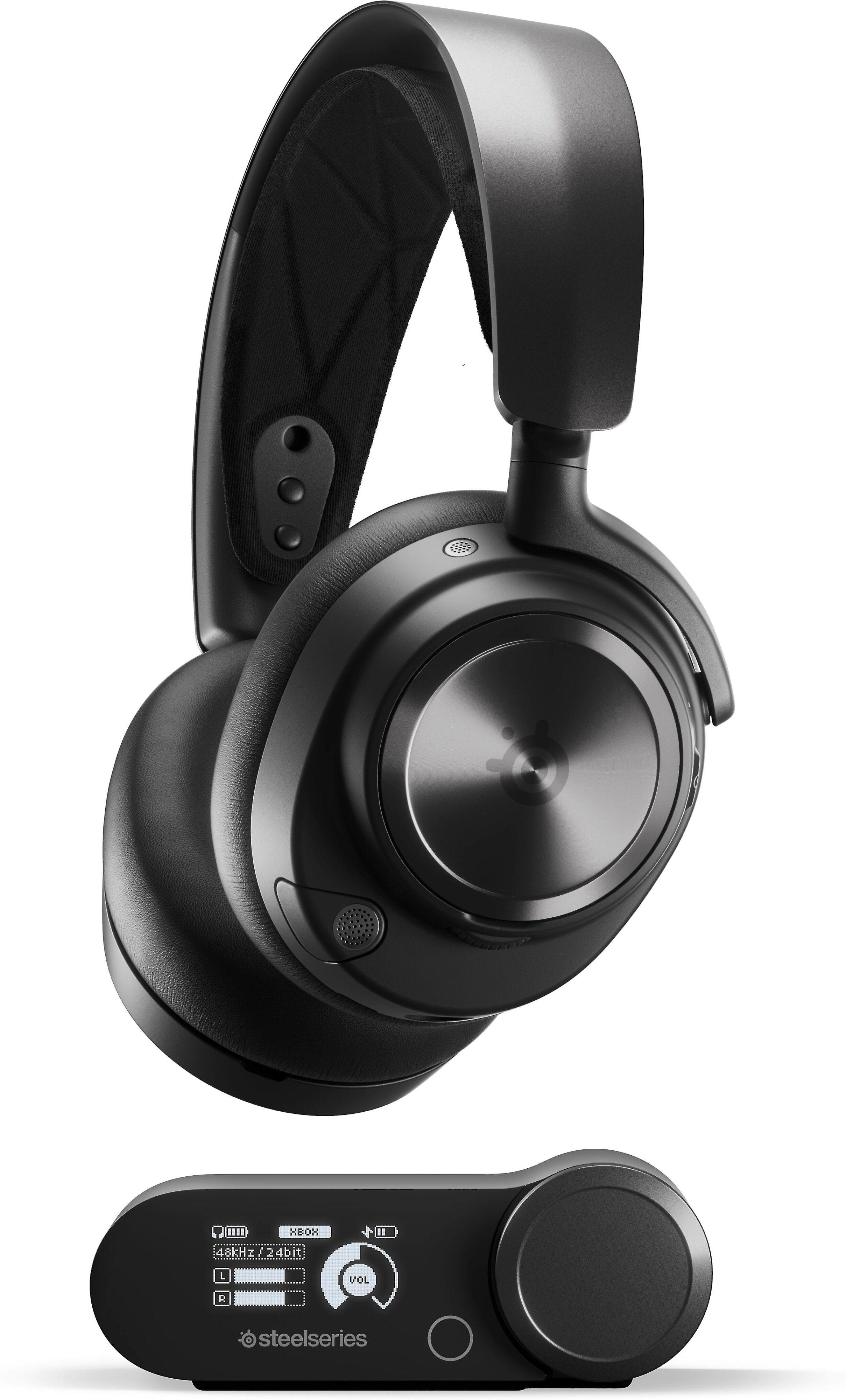
The SteelSeries Arctis Nova Pro Wireless also debuted in 2022, but as the evolution of SteelSeries' already-successful Arctis Pro line. Rather than just incrementally improving their existing design, SteelSeries reimagined what a premium gaming headset could be, introducing genuinely innovative features that solved real problems gamers face.
At the time of writing, the Quantum 810 typically costs about $50-70 less than the Arctis Nova Pro Wireless, positioning it as the more value-focused option. However, that price difference tells only part of the story.
The most fundamental difference between these headsets lies in their driver technology. The JBL Quantum 810 packs substantial 50mm dynamic drivers—significantly larger than the 40mm drivers in the SteelSeries Arctis Nova Pro Wireless. In audio terms, larger drivers generally mean more air movement, which translates to potentially more impactful bass response and a wider soundstage.
This size advantage becomes particularly noticeable in games with rich, atmospheric soundtracks or explosive action sequences. Racing games, for instance, benefit enormously from the Quantum 810's ability to reproduce the deep rumble of engines and environmental effects. The larger drivers also excel in single-player adventures where immersion matters more than competitive precision.
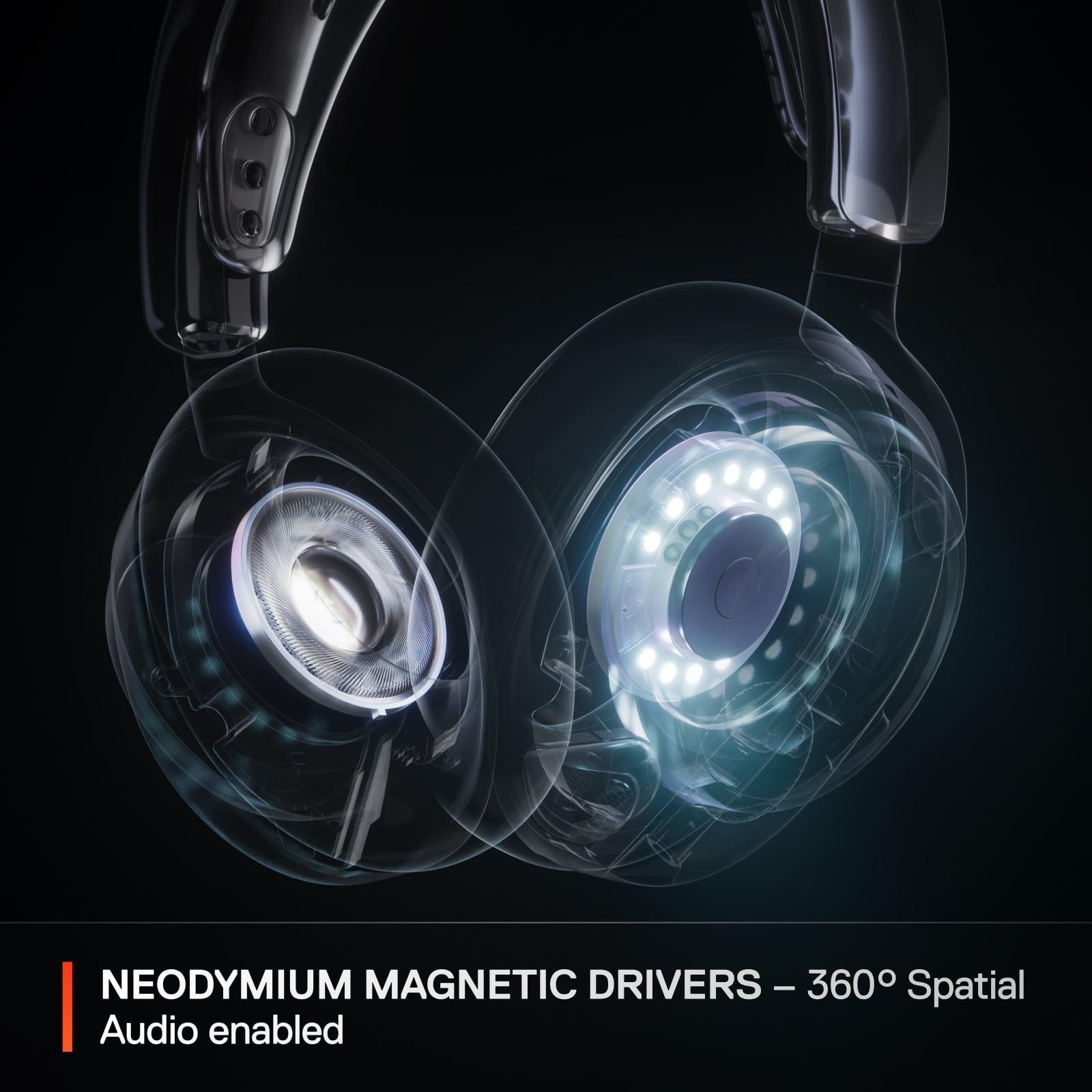
However, driver size isn't everything. The Arctis Nova Pro Wireless compensates with its Nova Pro Acoustic System, which uses premium neodymium magnets and advanced tuning to extract maximum performance from smaller drivers. The result is exceptionally clean mids and highs that reveal subtle audio details many headsets miss.
From a technical standpoint, the Quantum 810 offers a frequency response of 20Hz-40kHz in wired mode, covering the full range of human hearing and beyond. The Arctis Nova Pro Wireless matches this in wired mode but drops to 10-22kHz wirelessly—still excellent, but not quite as extended in the extreme highs.
Both headsets implement sophisticated spatial audio processing, but through different technologies. The JBL Quantum 810 uses DTS Headphone:X v2.0 combined with JBL's proprietary QuantumSURROUND processing. This combination excels at creating convincing 3D audio environments where you can accurately locate threats and environmental cues.
The SteelSeries Arctis Nova Pro Wireless takes a more software-driven approach with its 360° Spatial Audio system, integrated deeply with the SteelSeries GG Sonar Audio Suite. What sets this apart is the level of customization available—you can create game-specific audio profiles that optimize spatial processing for different titles.
For competitive gaming, both systems work well, but the Arctis Nova Pro Wireless edges ahead due to its more granular control options. Being able to fine-tune spatial processing for specific games like Counter-Strike, Valorant, or Apex Legends can provide subtle but meaningful competitive advantages.
Both headsets include active noise cancellation (ANC), but they implement it with different philosophies. ANC works by using external microphones to detect ambient noise, then generating inverse sound waves to cancel it out—like creating anti-noise to neutralize distracting sounds.
The JBL Quantum 810 tunes its ANC specifically for gaming environments, effectively reducing distracting background noise like air conditioning, traffic, or household sounds while preserving important game audio cues. This approach works well for maintaining immersion without sacrificing situational awareness.
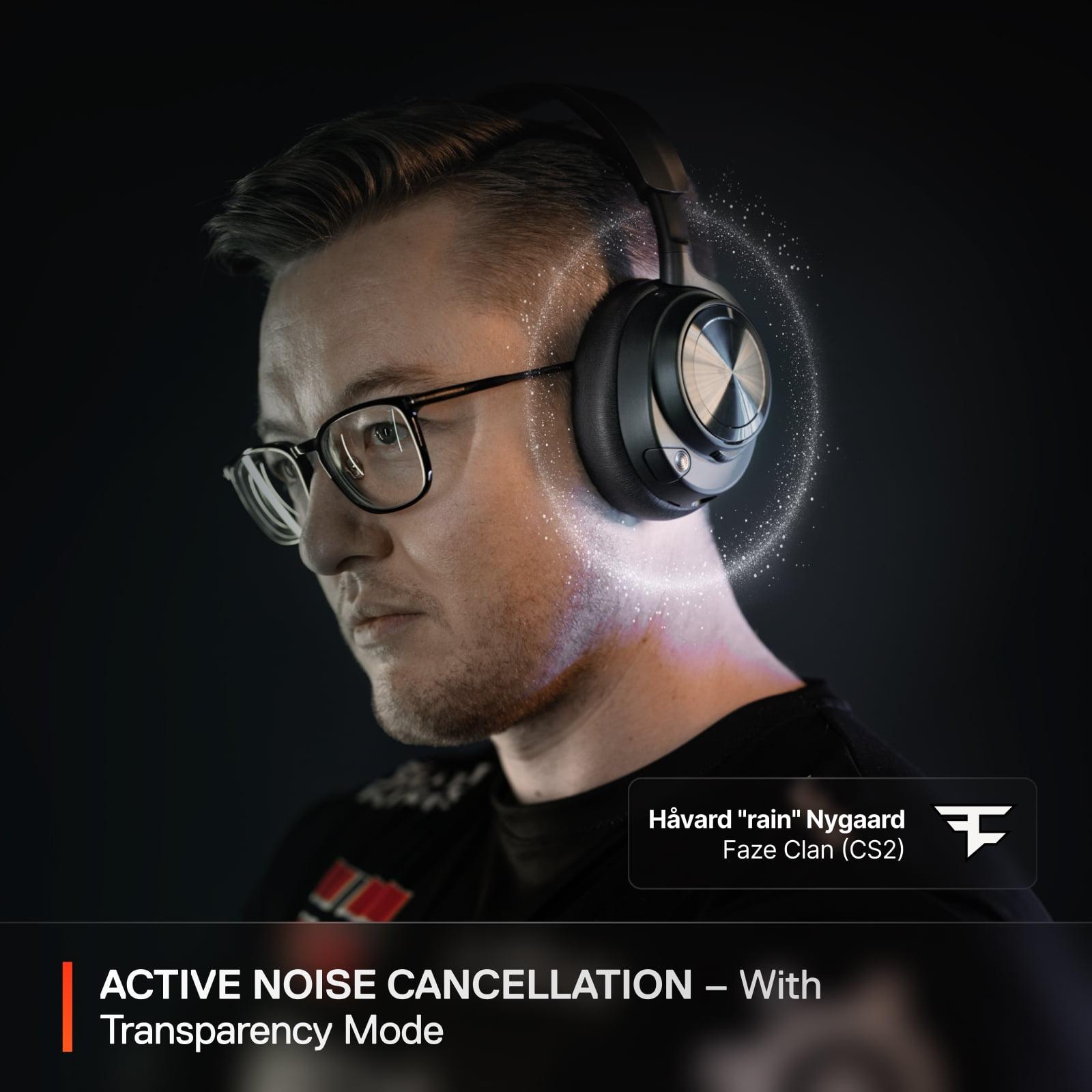
The SteelSeries Arctis Nova Pro Wireless uses a more sophisticated four-microphone hybrid ANC system that provides stronger noise cancellation overall. More importantly, it includes a transparency mode that lets you hear your surroundings without removing the headset—invaluable for quickly responding to family members or delivery notifications.
In practice, the Arctis Nova Pro Wireless provides more versatile noise management, while the Quantum 810 offers a more gaming-optimized approach.
Premium gaming headsets need professional-quality microphones, and both deliver, albeit through different designs. The JBL Quantum 810 features a unidirectional boom microphone with flip-to-mute functionality. "Unidirectional" means it primarily picks up sound from one direction—your mouth—while rejecting background noise from other directions.
The microphone includes echo-canceling technology and is Discord-certified, meaning it meets Discord's standards for voice chat quality. However, user feedback suggests the microphone can be overly sensitive on PC platforms, sometimes requiring manual adjustment to avoid sounding too "hot" or harsh.
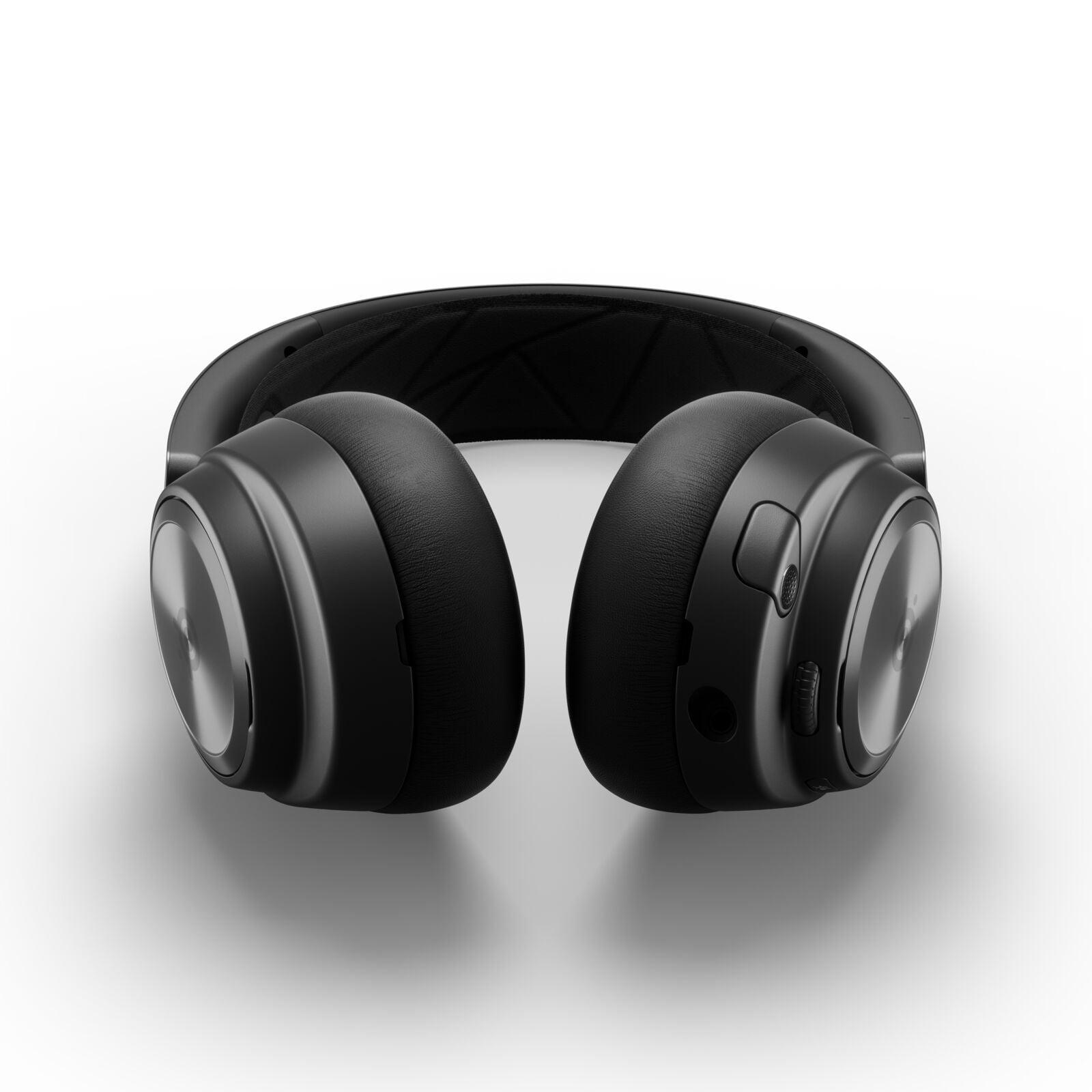
The SteelSeries Arctis Nova Pro Wireless takes a more elegant approach with its fully retractable bidirectional microphone. "Bidirectional" means it picks up sound from two directions, which can actually be beneficial for voice clarity in some situations. When you're not using the microphone, it completely disappears into the headset, maintaining a clean aesthetic.
Based on extensive user feedback and professional reviews, the SteelSeries microphone consistently delivers more natural, broadcast-quality voice reproduction across different platforms. The retractable design also eliminates the common problem of accidentally hitting or bending a fixed boom microphone.
For content creators or anyone who frequently uses voice chat, the Arctis Nova Pro Wireless provides noticeably superior microphone performance.
This category showcases the most dramatic difference between these headsets. The JBL Quantum 810 takes a traditional approach with a single high-capacity battery providing up to 43 hours of use (with RGB lighting disabled). That's genuinely impressive longevity that should last most users several days of heavy gaming.
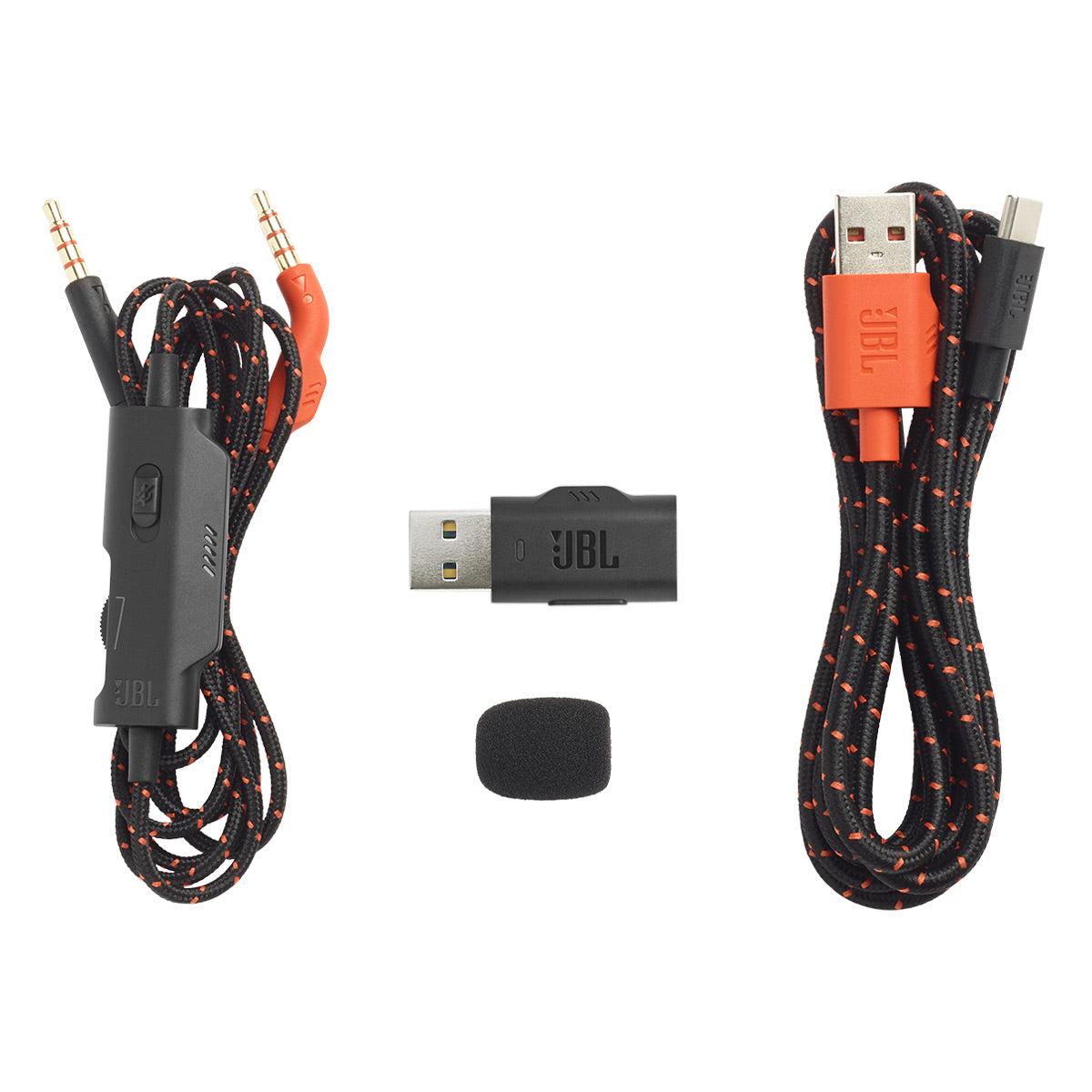
The headset supports simultaneous charging and use, so you can plug in a USB-C cable and continue gaming while the battery charges. Full charging takes about 3.5 hours, which is reasonable for the capacity provided.
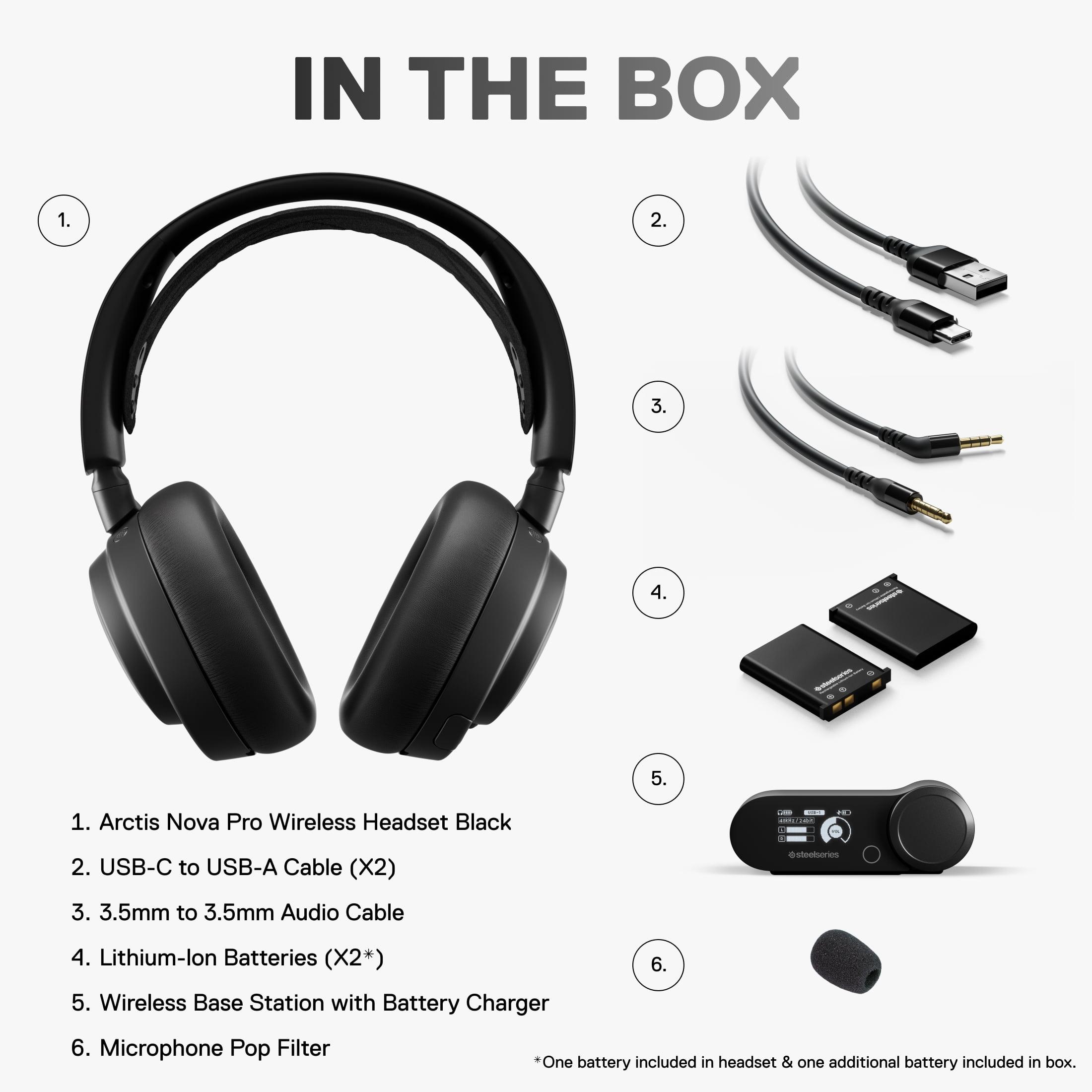
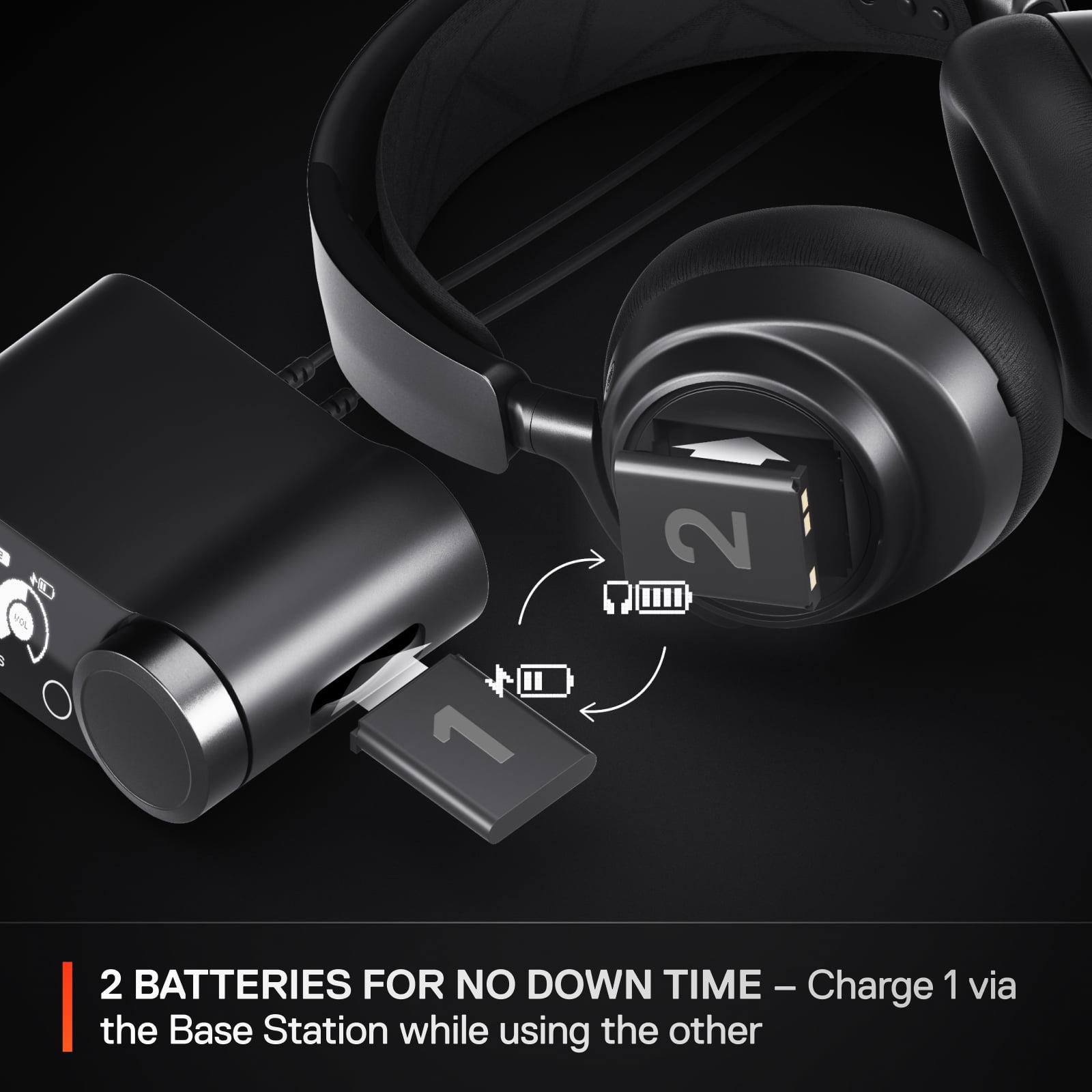
However, the SteelSeries Arctis Nova Pro Wireless completely reimagines battery management with its innovative dual hot-swappable battery system. Each battery provides 18-22 hours of use, but here's the genius: the wireless base station continuously charges the spare battery. When your active battery dies, you simply pop it out and swap in the fully charged spare in about 10 seconds.
This system provides effectively unlimited gaming time. You never need to interrupt your session to charge, never need to deal with cables, and never risk being caught with a dead headset at a crucial moment. For serious gamers who frequently have long gaming sessions or participate in tournaments, this feature alone can justify the price premium.
The base station deserves special mention because it serves multiple functions beyond just charging batteries. It acts as a wireless transmitter, control center with an OLED display, and connection hub for multiple devices. The convenience factor is genuinely game-changing.
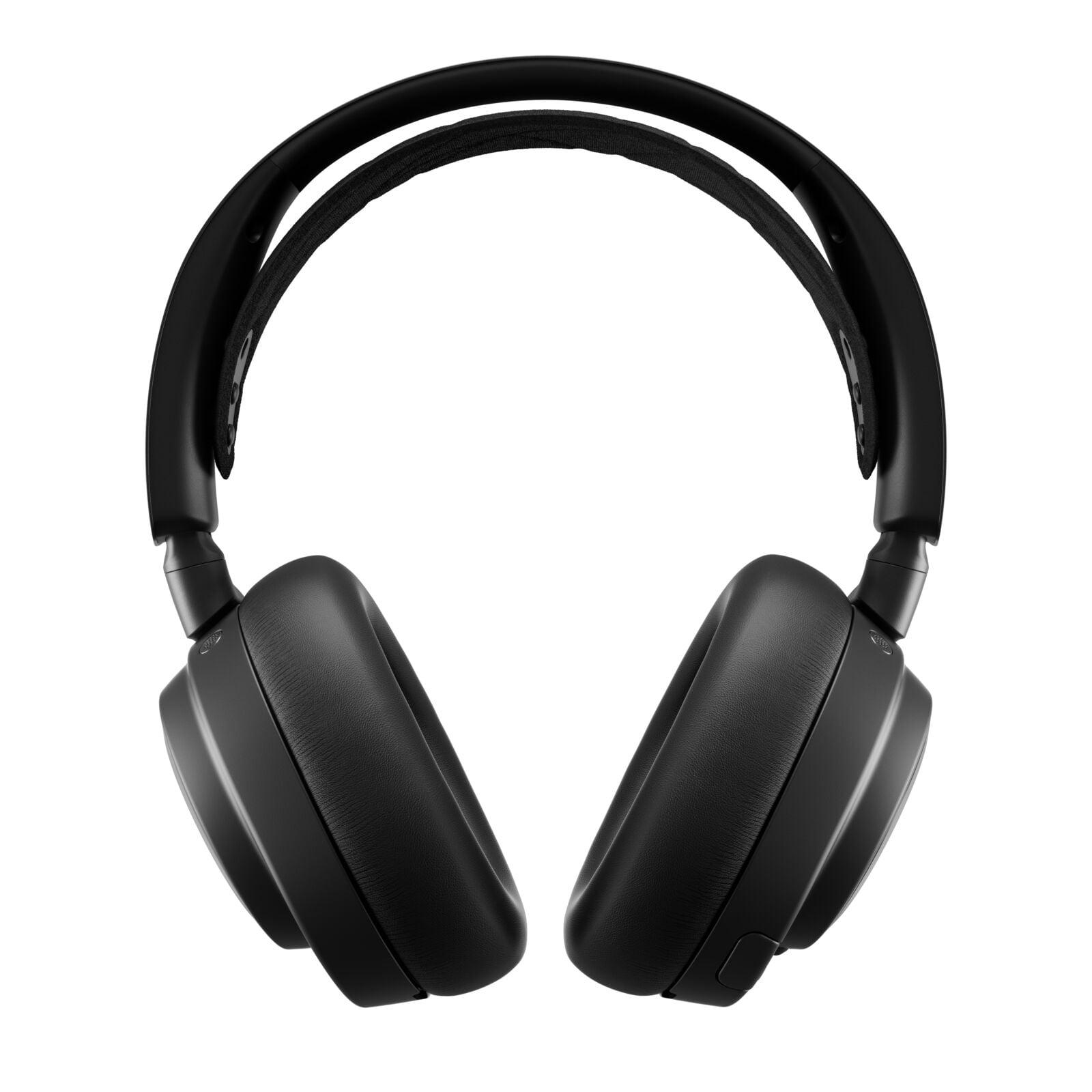
Comfort becomes increasingly critical as headset prices rise because premium buyers expect to use these devices for extended periods. The SteelSeries Arctis Nova Pro Wireless weighs 337 grams compared to the JBL Quantum 810's 418 grams. That 81-gram difference might not sound significant, but it becomes noticeable during multi-hour gaming sessions.
The Arctis Nova Pro Wireless uses a ski-goggle-inspired headband design that distributes weight evenly across the top of your head, reducing pressure points. The ear cushions use AirWeave performance fabric that resists heat buildup—a common problem with closed-back headsets during long use.
The Quantum 810 counters with leather-wrapped memory foam ear cushions that provide excellent initial comfort and effective passive noise isolation. The memory foam conforms to your ears over time, potentially providing better long-term comfort for some users. However, the heavier weight and leather material can contribute to heat buildup during extended use.
One consideration some users report with the Arctis Nova Pro Wireless is that the ear cups can be relatively shallow, potentially causing the internal ANC microphones to touch users' ears. This isn't universal, but it's worth considering if you have larger ears or wear glasses.
Both headsets use high-quality materials and construction that should withstand years of regular use. The Arctis Nova Pro Wireless includes a longer two-year warranty compared to the Quantum 810's one-year coverage, suggesting greater manufacturer confidence in long-term reliability.
Modern gaming headsets need to work seamlessly across multiple platforms, and both excel here, though with different strengths. The JBL Quantum 810 features Bluetooth 5.2—a newer standard than the Arctis Nova Pro Wireless's Bluetooth 5.0 implementation. Bluetooth 5.2 offers improved connection stability, lower latency, and better power efficiency.
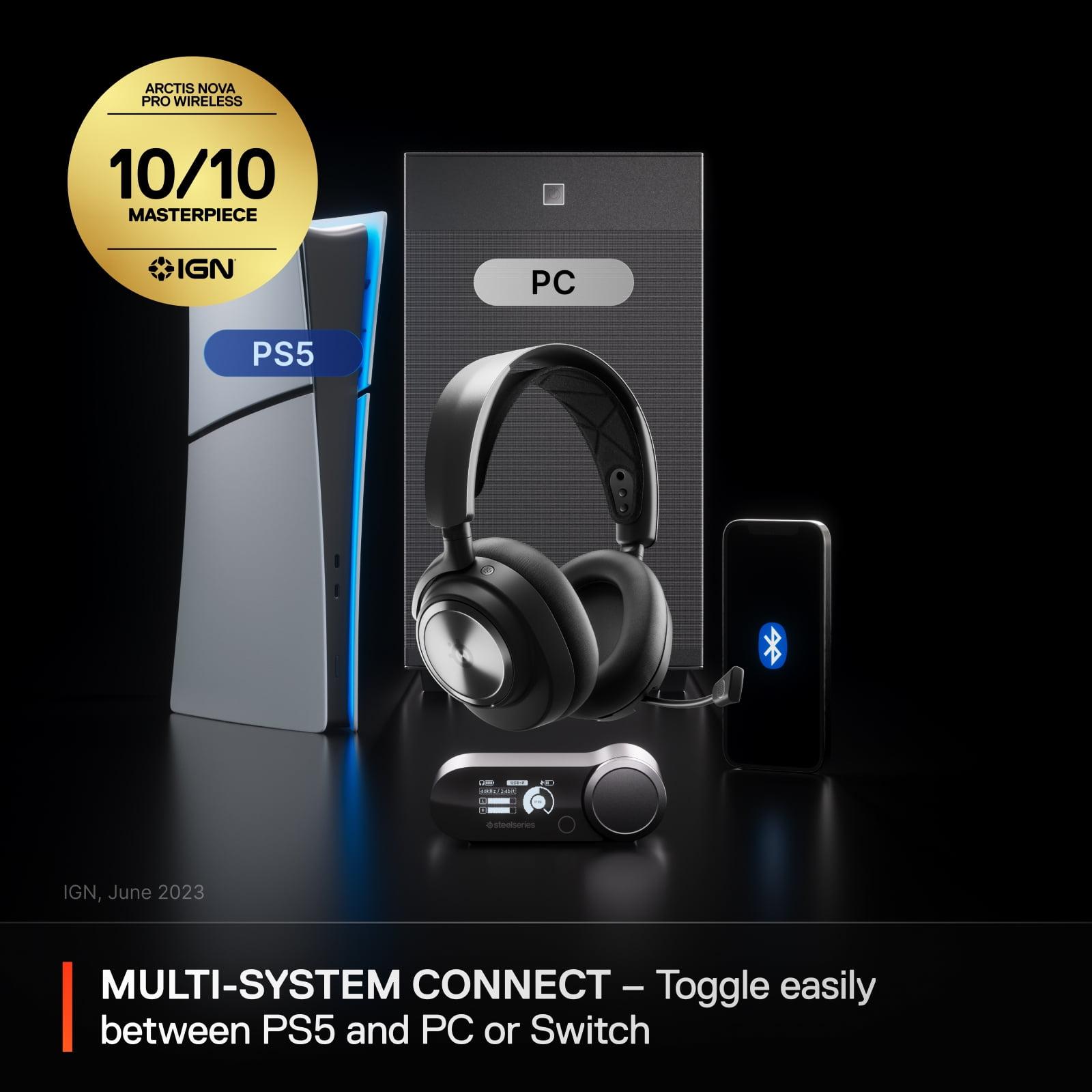
However, the SteelSeries compensates with its Multi-System Connect feature through the base station. Two USB-C inputs let you connect to different devices simultaneously—for example, PC and PlayStation 5, or PC and Nintendo Switch. You can seamlessly switch between systems or even mix audio from both sources.
This capability becomes particularly valuable if you game across multiple platforms or want to monitor mobile notifications while gaming on console. The ability to take phone calls through Bluetooth while maintaining game audio from a console is genuinely convenient.
Both headsets work across virtually all gaming platforms, but the Arctis Nova Pro Wireless provides more sophisticated device management through its base station ecosystem.
Software support significantly impacts the long-term value of premium gaming headsets. The JBL Quantum 810 uses the QuantumENGINE software, which provides comprehensive EQ customization, RGB lighting control, and surround sound adjustment. The software includes game-specific presets and allows detailed microphone tuning.
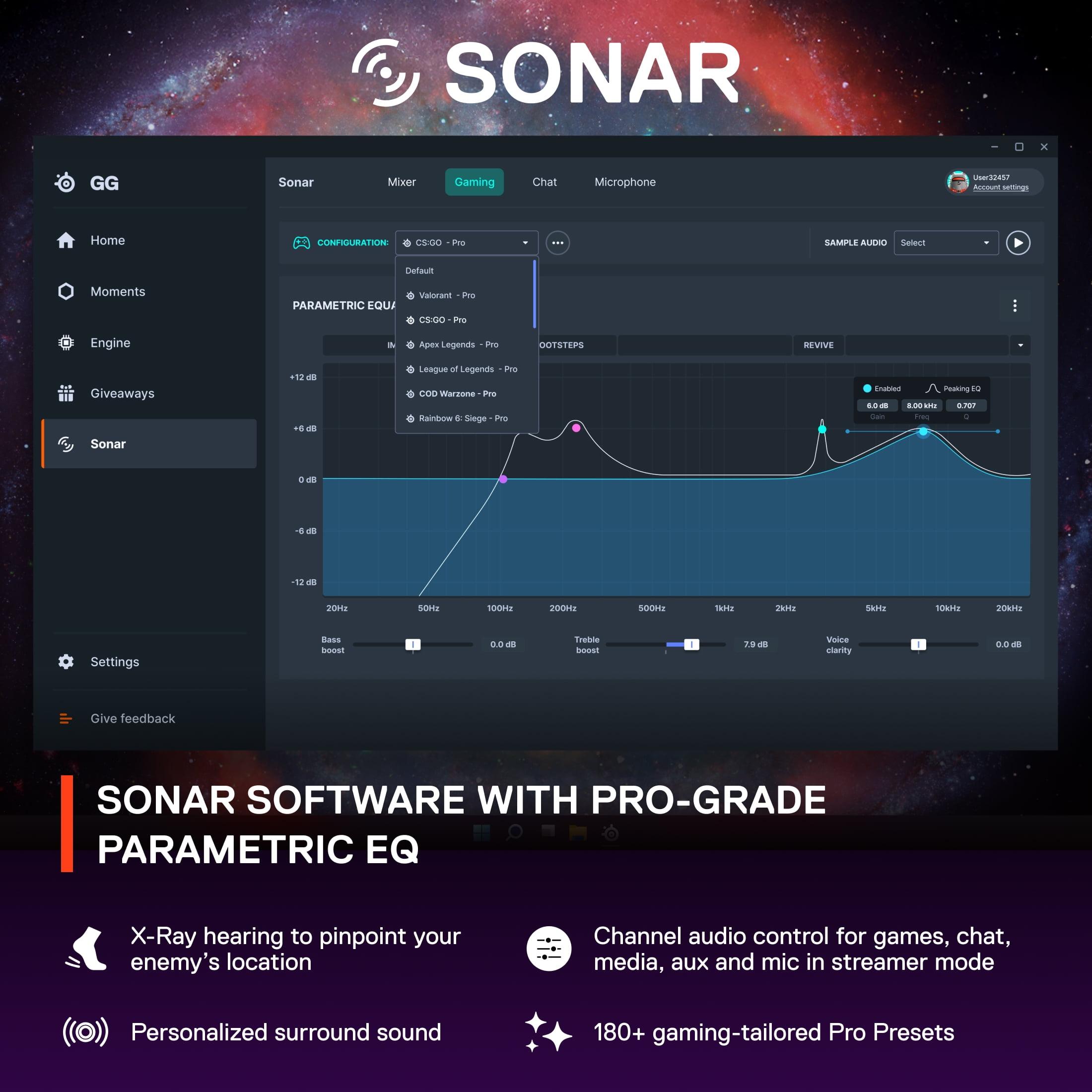
The SteelSeries GG Sonar Audio Suite offers more advanced audio processing tools, including a professional-grade 10-band parametric EQ. "Parametric" means you can adjust not just the level of specific frequencies, but also how wide or narrow those adjustments are, providing much more precise control over your audio signature.
More importantly, the Arctis Nova Pro Wireless base station provides immediate hardware access to these controls. You can adjust EQ settings, switch between connected devices, and modify audio levels directly from the base station without opening software or interrupting gameplay.
This hardware-software integration represents a more mature approach to audio customization that serious audio enthusiasts will appreciate.
While both headsets are designed primarily for gaming, they can serve double duty for movies, music, and general entertainment. The JBL Quantum 810's larger drivers and Hi-Res audio certification make it particularly well-suited for music listening and movie watching. The frequency response extends well beyond gaming requirements, revealing subtle details in high-quality audio sources.
The SteelSeries Arctis Nova Pro Wireless excels in home theater scenarios due to its multi-device connectivity. You can connect it to your TV or streaming device while maintaining the ability to take phone calls or receive notifications without switching connections.
For users who want one premium headset for both gaming and general entertainment, the Quantum 810 provides better pure audio performance, while the Arctis Nova Pro Wireless offers superior convenience and connectivity options.
After extensive research and evaluation, both headsets excel in different areas, making the choice dependent on your specific needs and priorities.
Choose the JBL Quantum 810 if you prioritize raw audio performance and value. The larger drivers provide more impactful bass and potentially wider soundstage, making it excellent for immersive gaming and music listening. The RGB lighting adds visual appeal to gaming setups, and the newer Bluetooth 5.2 standard offers improved connectivity. At its lower price point, it delivers premium features that compete with significantly more expensive alternatives.
The Quantum 810 is ideal for gamers who primarily play on PC where the full feature set is available, who value impactful bass response for immersive games, and who want premium gaming headset features without the highest-tier pricing.
Choose the SteelSeries Arctis Nova Pro Wireless if convenience, innovation, and professional-grade features matter most to you. The hot-swappable battery system eliminates charging downtime entirely—a unique advantage in the gaming headset market. The base station provides sophisticated multi-device connectivity and immediate access to audio controls.
The Arctis Nova Pro Wireless is perfect for serious gamers who have long gaming sessions, who frequently switch between multiple gaming platforms, who prioritize the lightest weight for extended comfort, and who are willing to pay premium pricing for cutting-edge convenience features.
Both headsets represent excellent value within their respective price ranges, but they serve different user profiles. The JBL Quantum 810 provides exceptional audio performance and features at a more accessible premium price point, while the SteelSeries Arctis Nova Pro Wireless justifies its higher cost through genuine innovation and professional-grade convenience features that aren't available anywhere else in the market.
Your choice ultimately depends on whether you value raw audio performance and affordability (JBL) or convenience innovation and professional features (SteelSeries). Both will serve you well for years to come.
| JBL Quantum 810 Wireless Gaming Headset | SteelSeries Arctis Nova Pro Wireless Gaming Headset |
|---|---|
| Driver Size - Larger drivers typically deliver more impactful bass and wider soundstage | |
| 50mm dynamic drivers (more bass impact) | 40mm neodymium drivers (more precise, detailed sound) |
| Battery System - Critical for uninterrupted gaming sessions | |
| Single battery: 43 hours total, 3.5hr charge time | Dual hot-swappable batteries: 44 hours total, zero downtime |
| Weight - Directly affects comfort during extended gaming | |
| 418g (may cause fatigue in long sessions) | 337g (81g lighter, more comfortable for marathon gaming) |
| Bluetooth Version - Affects connection stability and latency | |
| Bluetooth 5.2 (newer standard, better stability) | Bluetooth 5.0 (older but still reliable) |
| Microphone Design - Important for voice chat and streaming | |
| Fixed boom mic with flip-mute (can be overly sensitive) | Fully retractable bidirectional mic (broadcast quality, disappears when not used) |
| Multi-Device Connectivity - Essential for gamers with multiple systems | |
| Standard wireless + Bluetooth (basic dual connection) | Base station with dual USB-C inputs (seamless system switching) |
| Active Noise Cancellation - Helps maintain focus in noisy environments | |
| Gaming-optimized ANC (preserves game audio cues) | Hybrid 4-mic ANC with transparency mode (stronger cancellation, more versatile) |
| RGB Lighting - Aesthetic appeal for gaming setups | |
| Customizable RGB lighting (significant battery drain when active) | No RGB lighting (cleaner, professional aesthetic) |
| Wireless Range - Freedom of movement while gaming | |
| Standard 2.4GHz range (not specified) | 12-meter Bluetooth range (exceptional wireless freedom) |
| Software Ecosystem - Customization and optimization capabilities | |
| JBL QuantumENGINE (comprehensive EQ, game presets) | SteelSeries GG Sonar (professional 10-band parametric EQ, hardware controls) |
| Warranty Coverage - Protection for your investment | |
| 1 year limited warranty | 2 years limited warranty (greater manufacturer confidence) |
| Base Station - Command center functionality | |
| None included (standard USB dongle) | Wireless base station with OLED display, charging dock, device switching |
| Audio Certification - Quality standards for audiophile performance | |
| Hi-Res Audio certified, DTS Headphone:X v2.0 | Hi-Res capable, 360° Spatial Audio |
The SteelSeries Arctis Nova Pro Wireless delivers more precise, detailed audio with exceptional clarity in mids and highs, making it ideal for competitive gaming where hearing subtle audio cues matters. The JBL Quantum 810 offers more impactful bass with its larger 50mm drivers, providing better immersion for single-player games and music. Both support Hi-Res audio and advanced spatial sound processing.
The JBL Quantum 810 provides up to 43 hours of continuous use on a single charge, which is excellent for extended gaming sessions. The SteelSeries Arctis Nova Pro Wireless offers 44 hours total through its innovative dual hot-swappable battery system, allowing you to swap batteries in 10 seconds for unlimited gaming without downtime.
The SteelSeries Arctis Nova Pro Wireless is significantly lighter at 337g compared to the JBL Quantum 810's 418g, making it more comfortable during marathon gaming. The Arctis Nova Pro also features a ski-goggle headband design that distributes weight evenly, while the Quantum 810 uses leather-wrapped memory foam that some find initially more plush.
Both headsets offer excellent multi-platform compatibility. The JBL Quantum 810 works with PC, PlayStation, Xbox, Nintendo Switch, and mobile devices through wireless, Bluetooth, or wired connections. The SteelSeries Arctis Nova Pro Wireless provides the same compatibility but adds seamless device switching through its base station with dual USB-C inputs.
The SteelSeries Arctis Nova Pro Wireless features a superior retractable bidirectional microphone that delivers broadcast-quality voice capture and completely disappears when not in use. The JBL Quantum 810 has a fixed boom microphone that's Discord-certified but can be overly sensitive and requires more manual adjustment across different platforms.
The JBL Quantum 810 excels for music and movies thanks to its larger 50mm drivers and Hi-Res audio certification, providing rich, detailed sound across all content types. The SteelSeries Arctis Nova Pro Wireless offers excellent audio quality for entertainment but focuses more on precision and clarity rather than the impactful bass that enhances music and movie experiences.
The JBL Quantum 810 typically costs less while offering premium features like large drivers, RGB lighting, active noise cancellation, and excellent battery life, making it better value for budget-conscious buyers. The SteelSeries Arctis Nova Pro Wireless costs more but justifies the premium through unique innovations like hot-swappable batteries and the wireless base station.
Both headsets feature active noise cancellation, but with different approaches. The JBL Quantum 810 uses gaming-optimized ANC that reduces ambient noise while preserving important game audio cues. The SteelSeries Arctis Nova Pro Wireless employs a more sophisticated four-microphone hybrid system with stronger noise cancellation and includes a transparency mode for environmental awareness.
The JBL Quantum 810 features newer Bluetooth 5.2 technology for improved connection stability and lower latency compared to the Arctis Nova Pro's Bluetooth 5.0. However, the SteelSeries Arctis Nova Pro Wireless compensates with superior multi-device management through its base station, allowing simultaneous connections and seamless switching between two systems.
The JBL Quantum 810 offers comprehensive customization through QuantumENGINE software with EQ presets, RGB control, and surround sound adjustments. The SteelSeries Arctis Nova Pro Wireless provides more advanced audio tools through its GG Sonar software, including a professional 10-band parametric EQ, plus immediate hardware controls via the base station.
The SteelSeries Arctis Nova Pro Wireless edges ahead for competitive gaming due to its more precise audio imaging, lighter weight for extended tournament play, superior microphone quality for team communication, and advanced software customization options. The JBL Quantum 810 still performs excellently in competitive scenarios but focuses more on overall immersion than competitive precision.
The JBL Quantum 810 uses traditional USB-C charging with play-and-charge capability, requiring 3.5 hours for a full charge. The SteelSeries Arctis Nova Pro Wireless revolutionizes charging with its base station that continuously charges spare batteries, eliminating the need to ever plug cables into the headset and providing truly uninterrupted gaming sessions.
We've done our best to create useful and informative comparisons to help you decide what product to buy. Our research uses advanced automated methods to create this comparison and perfection is not possible - please contact us for corrections or questions. These are the sites we've researched in the creation of this article: techradar.com - youtube.com - gamingtrend.com - gamingaustralia.com.au - youtube.com - jbl.com - jbl.com - youtube.com - harmanaudio.com - versus.com - microcenter.com - crutchfield.com - jbl.com - mm.jbl.com - cdwg.com - jbl.com - en.jblthailand.com - nfm.com - jblonlinestore.com - scribd.com - harmanaudio.com - samsung.com - soundguys.com - youtube.com - youtube.com - youtube.com - gamerant.com - youtube.com - head-fi.org - youtube.com - rtings.com - rtings.com - tomshardware.com - youtube.com - techpowerup.com - bestbuy.com - shi.com - steelseries.com - bestbuy.com

Privacy Policy
Terms and Conditions - Affiliate Policy
Home Security
© Copyright 2008-2026.
11816 Inwood Rd #1211, Dallas, TX 75244