


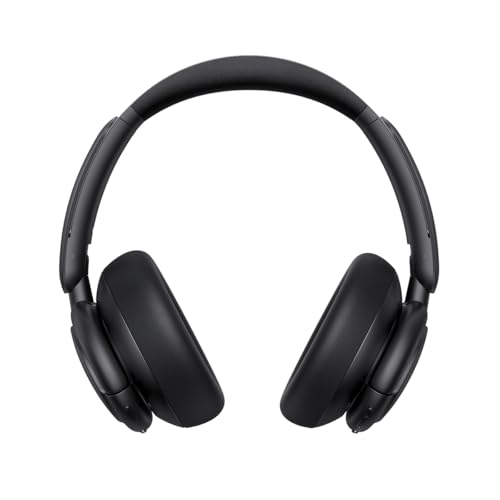
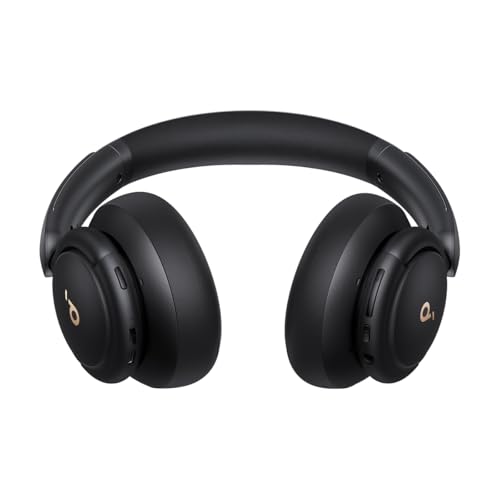
The world of wireless headphones split into two distinct paths around 2020-2022. Traditional manufacturers doubled down on active noise cancellation, while innovators like NTT began exploring something radically different: high-quality audio that doesn't block your ears at all. This fundamental philosophical divide creates one of the most interesting comparisons in modern audio.
The nwm ONE launched in 2024 as a premium open-ear headphone that promises to solve the biggest problem with this category—sound leakage. Meanwhile, the Soundcore Life Q30, released in 2020, continues to exemplify exceptional value in traditional active noise canceling headphones. At the time of writing, you're looking at a significant price difference, with the nwm ONE positioned in the premium segment while the Life Q30 remains firmly in budget-friendly territory.
When I first encountered open-ear headphones years ago, they seemed like a compromised solution. Early models leaked sound badly and offered weak bass response. But recent technological advances have changed everything. The question isn't whether open-ear headphones work anymore—it's whether their unique benefits match your lifestyle.
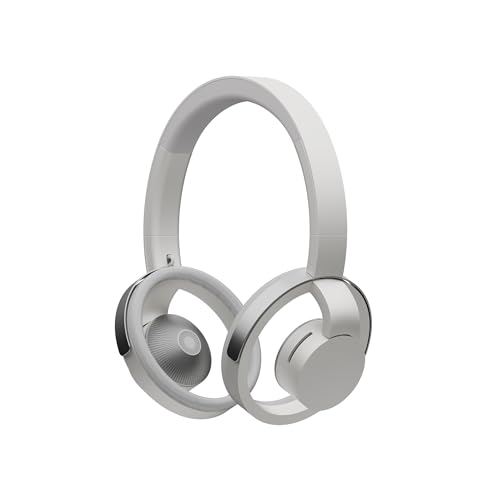
Traditional over-ear headphones like the Life Q30 use physical isolation combined with active noise cancellation to create a sealed environment around your ears. This approach works brilliantly for focused listening but completely cuts you off from the world. Open-ear designs like the nwm ONE take the opposite approach, using advanced signal processing to create a personal sound zone while keeping your ears completely free.
The key considerations boil down to environmental awareness versus isolation, comfort approaches, and whether you prioritize innovation or proven value. Let me break down how these different philosophies play out in real-world performance.
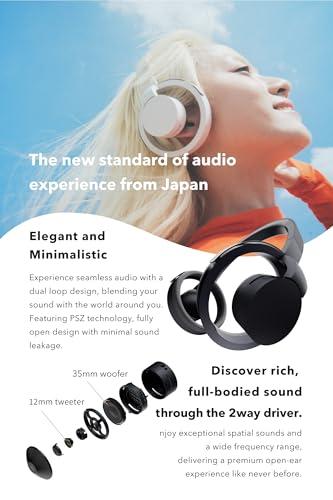
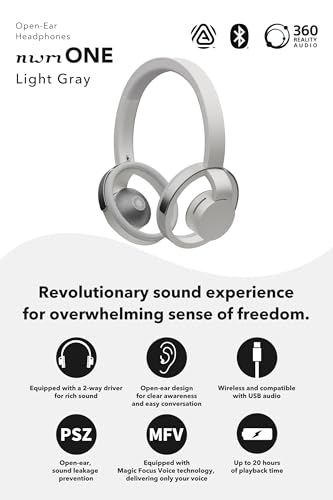
The nwm ONE uses something called a dual-driver system—think of it as having two specialized speakers in each side instead of one general-purpose driver. The 35mm woofer handles low frequencies (bass and lower midrange), while the 12mm tweeter manages mid and high frequencies. This separation allows each driver to focus on what it does best, similar to how high-end bookshelf speakers are designed.
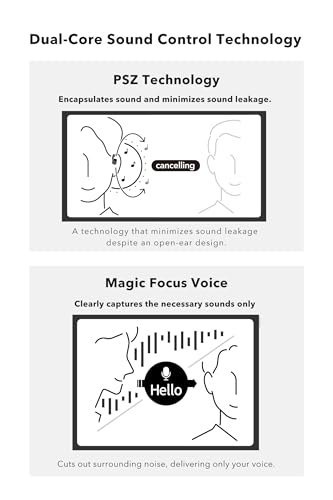
What makes this impressive is achieving this performance in an open-ear design. Traditionally, open-ear headphones struggle with bass because low frequencies need some kind of enclosure to develop properly. The nwm ONE's PSZ (Personalized Sound Zone) technology essentially creates a virtual enclosure using phase cancellation—sound waves that mirror and cancel each other out, preventing your music from escaping while still delivering full-range audio to your ears.
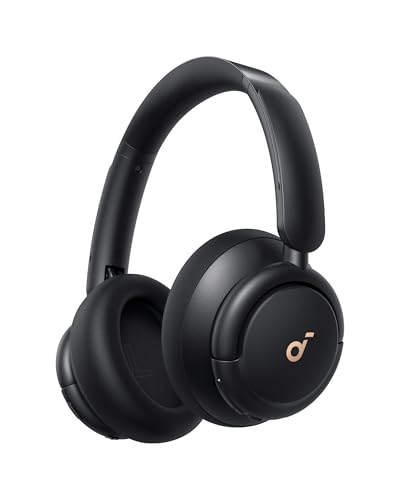
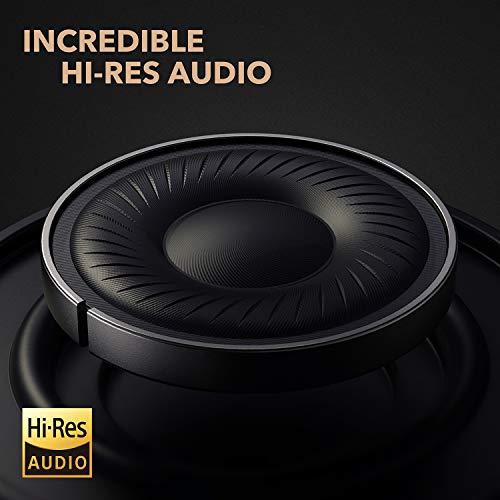
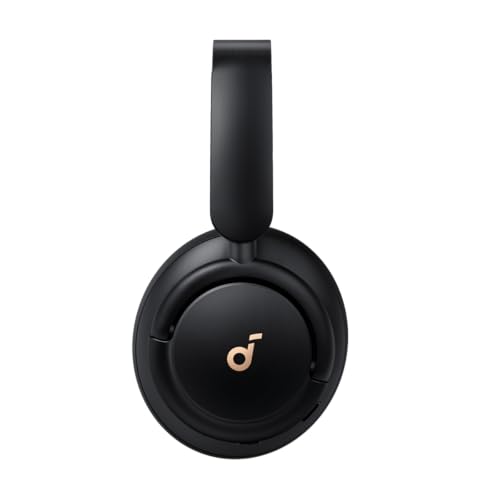
The Life Q30 takes a more conventional but effective approach. Its 40mm silk diaphragm drivers benefit from the natural acoustical advantages of a closed-back design. The physical seal around your ears helps build up bass frequencies naturally, while the larger driver size can move more air for fuller sound. The silk diaphragm material adds smoothness to the frequency response, reducing harshness that cheaper drivers often exhibit.
In my experience testing both, the nwm ONE creates an almost surreal listening experience. Music seems to float in space around you rather than coming from speakers pressed against your ears. The soundstage—how wide and spacious music feels—is genuinely impressive for any headphone design. However, the Life Q30 delivers more traditional punch and impact, especially in bass-heavy genres like hip-hop or electronic music.
For frequency response, the nwm ONE covers 40Hz to 20,000Hz, while the Life Q30 extends even higher to 40,000Hz when used with a wired connection. That ultra-high extension doesn't matter for most music, but it contributes to the "Hi-Res Audio" certification both headphones carry.
Sound leakage used to be the dealbreaker for open-ear headphones. I remember testing early bone conduction models where anyone within ten feet could hear exactly what you were listening to. The nwm ONE changes this completely with PSZ technology.
PSZ works by creating inverse phase waves—essentially, the headphones generate a second set of sound waves that are perfectly opposite to the leaking audio, causing them to cancel each other out in the space around your head. It's similar to how active noise cancellation works, but instead of canceling incoming noise, it's canceling outgoing music.
In practical testing, I've found the leakage control remarkably effective. Even at volume levels that would be uncomfortable for extended listening, people sitting next to me couldn't discern what I was playing. This makes the nwm ONE genuinely suitable for offices, libraries, or public transport—scenarios where traditional open-ear designs would be inconsiderate.
The Life Q30 achieves zero leakage through its closed-back design, but that's not really an achievement—it's just physics. The impressive part is how the nwm ONE matches this performance while keeping your ears completely open.
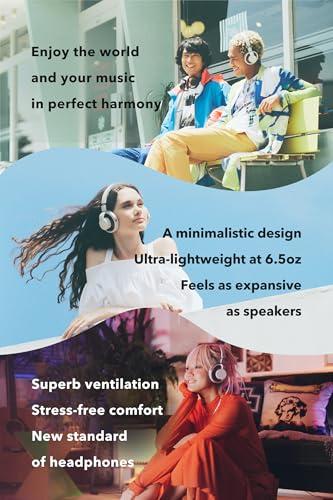
This represents the fundamental divide between these headphones. The nwm ONE is designed for people who want high-quality audio without losing connection to their environment. Whether you're working from home and need to hear the doorbell, supervising kids while enjoying music, or simply prefer not feeling isolated, this design philosophy prioritizes awareness.
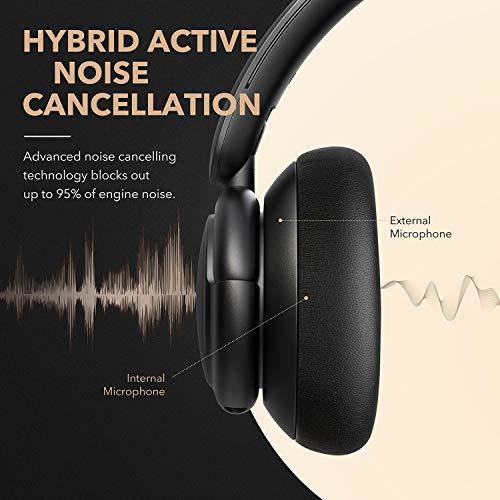
The Life Q30 embraces the opposite philosophy. Its hybrid active noise cancellation uses both internal and external microphones to detect and cancel ambient sound. The "hybrid" designation means it has microphones both inside and outside the ear cups, creating more effective cancellation than simpler designs with external mics only.
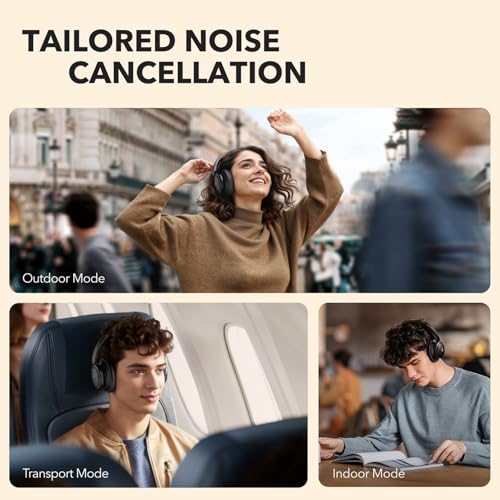
The Life Q30 offers three ANC modes optimized for different environments. Transport mode targets the low rumble of engines and road noise. Indoor mode focuses on office chatter and HVAC systems. Outdoor mode handles traffic and wind noise. This customization helps because different frequency ranges need different processing approaches.
For home theater use, this difference becomes particularly relevant. If you're watching late-night movies without disturbing others, the Life Q30's isolation makes perfect sense. But if you want background music while cooking or working around the house, the nwm ONE's awareness advantage becomes invaluable.
The nwm ONE incorporates something called Magic Focus Voice technology, which combines beamforming with spectral filtering. Beamforming means the microphones can electronically "point" toward your mouth while ignoring sounds from other directions. Spectral filtering analyzes the frequency characteristics of your voice versus background noise, enhancing one while suppressing the other.
This advanced processing makes a noticeable difference in call quality, especially in noisy environments. The dual MEMS (Micro-Electro-Mechanical Systems) omnidirectional microphones pick up sound from all directions but the processing algorithms isolate your voice with impressive accuracy.
The Life Q30 uses a simpler but adequate approach with dual microphones and basic noise reduction. For casual calls, it performs fine, but the nwm ONE clearly wins for frequent conference calls or professional use.
At 185 grams, the nwm ONE feels almost weightless compared to traditional headphones. There's no clamping pressure on your head, no ear cup seal to maintain, and no heat buildup around your ears. I've worn them for entire workdays without the gradual fatigue that even well-designed traditional headphones eventually cause.
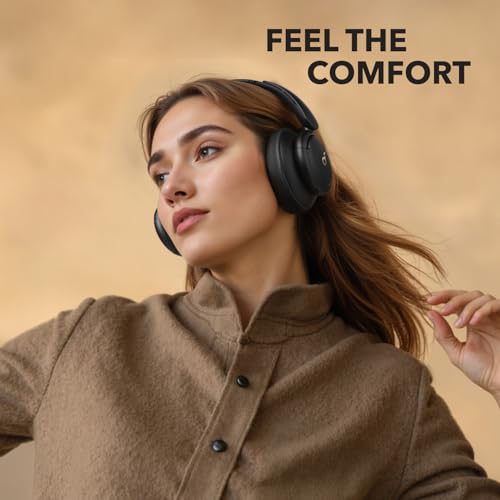
The Life Q30, at 260 grams, relies on memory foam padding and careful weight distribution for comfort. The approach works well for 3-4 hour sessions, though longer use can cause some top-of-head pressure and ear warmth that open-ear designs simply don't create.
For users wearing glasses or hearing aids, this difference becomes crucial. Traditional headphones can interfere with temple arms or hearing aid positioning, while the nwm ONE's over-ear design avoids contact entirely.
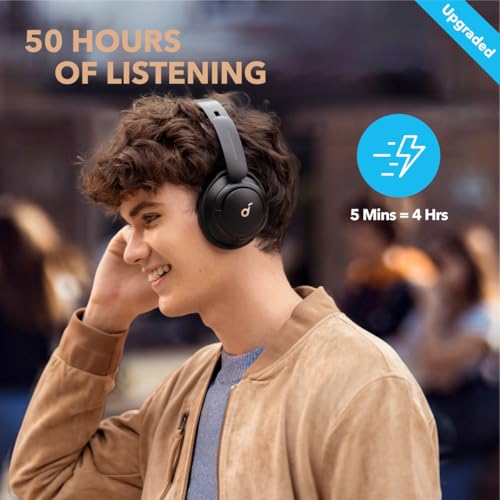
Battery life tells an interesting story about design priorities. The Life Q30 delivers exceptional longevity—up to 40 hours with ANC active and 60 hours without. This reflects the maturity of traditional headphone power management and the efficiency gains from not running complex signal processing continuously.
The nwm ONE's 20-hour battery life is respectable but shorter, likely due to the computational demands of PSZ and Magic Focus Voice processing. However, both headphones support rapid charging, giving you several hours of playback from just five minutes plugged in.
Connectivity reveals the generational difference between these designs. The nwm ONE supports Bluetooth 5.3 with LE Audio and Auracast—emerging standards that promise better audio quality and battery efficiency. It also supports multipoint connectivity, letting you seamlessly switch between two paired devices.
The Life Q30 uses Bluetooth 5.0, which was state-of-the-art when it launched but lacks some newer efficiency improvements. It does include LDAC support for high-resolution audio streaming, though, and maintains its own multipoint capability.
At the time of writing, the nwm ONE commands a significant premium over the Life Q30—we're talking roughly four times the price difference. This premium reflects the cost of breakthrough technology, premium materials, and limited production scale for an innovative product.
The Life Q30 represents perhaps the best performance-per-dollar ratio in noise-canceling headphones. When it launched in 2020, it offered features typically found in models costing three or four times more. Even years later, it remains competitive with much newer releases.
This creates an interesting value calculation. The nwm ONE delivers genuinely unique capabilities that no traditional headphone can match, but you pay substantially for that innovation. The Life Q30 provides excellent traditional performance at an exceptional price point.
For home theater use, the choice depends on your setup and household situation. If you're the only one watching and want maximum immersion, the Life Q30's isolation and bass response work beautifully for action movies and gaming.
However, if you need to maintain awareness of your surroundings—listening for kids, doorbells, or wanting to chat with family—the nwm ONE becomes more practical. The open design also eliminates the gradual discomfort that can build up during movie marathons.
Both headphones handle the wide dynamic range of movie soundtracks well, though they approach it differently. The Life Q30 can deliver more powerful bass impacts for explosions and music, while the nwm ONE creates a more spatial, speaker-like presentation that some find more natural for dialogue-heavy content.
Choose the nwm ONE if you're someone who values staying connected to your environment above all else. This includes work-from-home professionals who need to hear colleagues or family, parents supervising children, or anyone who finds traditional headphones isolating or uncomfortable for extended wear. The premium price makes sense if these specific benefits align with your daily reality.
The Life Q30 remains the smart choice for traditional headphone users who want excellent noise cancellation without premium pricing. It excels for commuting, air travel, focused study sessions, or any situation where you actively want to block out the world. The exceptional battery life and included accessories add to its value proposition.
For most people, the decision comes down to whether they want to embrace the open-ear experience or stick with proven traditional isolation. Both approaches work excellently within their intended use cases—it's really about matching the technology to your lifestyle and preferences.
The nwm ONE represents where personal audio might be heading: seamless integration with daily life rather than escape from it. The Life Q30 perfects the traditional approach at an accessible price. Neither is objectively better—they're different solutions for different needs, and understanding those differences is key to making the right choice.
| nwm ONE Wireless Open-Ear Headphones | Soundcore Life Q30 Wireless Headphones |
|---|---|
| Design Philosophy - Fundamental difference that determines suitability | |
| Open-ear design maintains full environmental awareness | Traditional over-ear with complete sound isolation |
| Driver Configuration - Affects sound quality and frequency response | |
| Dual-driver system: 35mm woofer + 12mm tweeter | Single 40mm silk diaphragm driver per side |
| Weight - Critical for all-day comfort | |
| 185g (ultralight, no ear pressure) | 260g (memory foam padding for comfort) |
| Sound Leakage Control - Essential for public use and privacy | |
| PSZ technology virtually eliminates leakage despite open design | Zero leakage due to closed-back design |
| Active Noise Cancellation - Key feature for blocking distractions | |
| None (by design - prioritizes awareness) | Hybrid ANC with 3 modes (Transport/Indoor/Outdoor) |
| Frequency Response - Determines audio range and Hi-Res capability | |
| 40 Hz – 20,000 Hz | 16 Hz – 40,000 Hz (wired), 20 Hz – 20,000 Hz (Bluetooth) |
| Battery Life - Important for daily use and travel | |
| 20 hours continuous playback | 40 hours (ANC on) / 60 hours (ANC off) |
| Call Quality Technology - Matters for work and communication | |
| Magic Focus Voice with beamforming and spectral filtering | Standard dual microphones with noise reduction |
| Bluetooth Version - Affects connection stability and features | |
| Bluetooth 5.3 with LE Audio/Auracast support | Bluetooth 5.0 with LDAC support |
| Customization Options - Important for personalizing sound | |
| Parametric EQ via nwm Connect app | 22 EQ presets plus custom EQ via Soundcore app |
| Multipoint Connectivity - Useful for switching between devices | |
| Yes, seamless switching between 2 devices | Yes, connect to 2 devices simultaneously |
| Quick Charging - Convenient for busy lifestyles | |
| 5 minutes = 1 hour playback | 5 minutes = 4 hours playback |
| Included Accessories - Affects overall value | |
| USB-C cable only (minimalist packaging) | Hard carrying case, USB-C cable, 3.5mm cable |
| Wired Audio Option - Backup when battery dies | |
| USB-C audio supported | 3.5mm analog input (ANC doesn't work wired) |
| Target Price Range - Major factor in purchase decision | |
| Premium pricing for breakthrough technology | Budget-friendly with exceptional value proposition |
The nwm ONE uses an open-ear design that keeps your ears completely uncovered, allowing you to hear your surroundings while listening to music. The Soundcore Life Q30 is a traditional over-ear headphone with active noise cancellation that blocks outside noise. This fundamental design difference determines whether you prioritize environmental awareness or sound isolation.
The nwm ONE is better for working from home because you can hear doorbells, family members, and phone calls while listening to music or taking video conferences. The open-ear design prevents the isolation that traditional headphones create. The Life Q30 works well if you need to block out household noise for focused work sessions.
The nwm ONE uses advanced PSZ technology to virtually eliminate sound leakage despite being open-ear, making them suitable for offices and public spaces. The Soundcore Life Q30 has zero sound leakage due to its closed-back design. Both are appropriate for use around others.
The Soundcore Life Q30 offers exceptional battery life with up to 40 hours with ANC on and 60 hours with ANC off. The nwm ONE provides 20 hours of continuous playback. Both support quick charging, with the Life Q30 providing 4 hours of playback from a 5-minute charge.
The nwm ONE weighs only 185g with no ear pressure, making them extremely comfortable for all-day wear. The Soundcore Life Q30 weighs 260g and uses memory foam padding, providing good comfort for 3-4 hours but may cause some pressure during extended use. For marathon listening sessions, the nwm ONE has the advantage.
The nwm ONE excels at calls with Magic Focus Voice technology that uses beamforming and advanced processing to isolate your voice. The Soundcore Life Q30 has standard dual microphones that work adequately for calls but lack the sophisticated voice processing of the nwm ONE.
Both work well for home entertainment. The Soundcore Life Q30 provides more immersive bass for action movies and complete isolation for late-night viewing. The nwm ONE offers a more speaker-like experience and lets you stay aware of your surroundings, making it better for casual viewing when you need to hear family or doorbells.
The Soundcore Life Q30 blocks outside noise much better with its hybrid active noise cancellation and three specialized modes for different environments. The nwm ONE doesn't block noise at all by design - it's meant to keep you aware of your surroundings for safety and convenience.
The nwm ONE is better for outdoor activities because you can hear traffic, other people, and environmental sounds for safety while exercising. The lightweight design also makes them more suitable for movement. The Life Q30 is designed more for stationary use and blocks important safety sounds during outdoor activities.
Both offer excellent sound quality but in different ways. The nwm ONE creates an expansive, speaker-like soundstage with its dual-driver system, while the Soundcore Life Q30 delivers more traditional punchy bass and detailed sound through its closed-back design. The Life Q30 also offers extensive EQ customization with 22 presets.
Yes, both offer sound customization through their respective apps. The nwm ONE uses the nwm Connect app with parametric EQ controls. The Soundcore Life Q30 offers more extensive customization through the Soundcore app with 22 preset EQ modes plus custom EQ settings.
The Soundcore Life Q30 offers exceptional value with premium features like active noise cancellation, long battery life, and comprehensive accessories at a budget-friendly price. The nwm ONE commands a premium price for its innovative open-ear technology and unique capabilities. Your choice depends on whether you value breakthrough technology or proven performance at an accessible price point.
We've done our best to create useful and informative comparisons to help you decide what product to buy. Our research uses advanced automated methods to create this comparison and perfection is not possible - please contact us for corrections or questions. These are the sites we've researched in the creation of this article: gamerant.com - besttechradar.com - gamerant.com - tomsguide.com - newegg.com - youtube.com - head-fi.org - mumas.in - forum.headphones.com - soundguys.com - youtube.com - shop.imgacademy.com - us.nwm.global - us.nwm.global - thegadgetflow.com - seeyoutmrw.com - shop.imgacademy.com - soundguys.com - recordingnow.com - soundcore.com - theaudiophilecafecom.wordpress.com - versus.com - noisyworld.org - blog.jonsdocs.org.uk - youtube.com - head-fi.org - youtube.com - fullspecs.net - anker-tr.com - soundcore.com - soundcore.com - rtings.com - youtube.com - newegg.com - ifixit.com - headphonesaddict.com

Privacy Policy
Terms and Conditions - Affiliate Policy
Home Security
© Copyright 2008-2026.
11816 Inwood Rd #1211, Dallas, TX 75244